
Chapter 23 Cardiovascular diseases Types of Cardiovascular diseases
- Slides: 11
Chapter 23 Cardiovascular diseases
Types of Cardiovascular diseases �Chronic diseases- Diseases that persist for a long period or recur throughout life. �Usually caused by risk factors that are behavioral, environmental, or hereditary. �Most common chronic diseases are cardiovascular diseases. �A cardiovascular disease is one of the heart and blood vessels.
Cardiovascular Diseases �Hypertension- A person who’s blood pressure consistently measures 140/90 or higher. �Known as the “silent killer. ” �Over time it can lead to heart disease. �Strain on heart and blood vessels. � 1 out of 3 American adults has hypertension. �Exercise, maintaining a healthy weight, reducing stress, and eating foods low in sodium reduce the risk of hypertension.
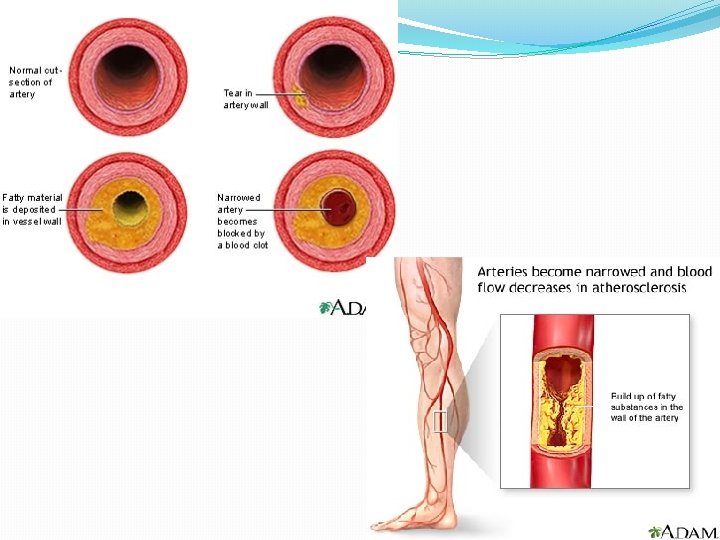
Atherosclerosis �Disease in which fatty substances, including cholesterol build up inside artery walls. �These deposits, called plaque, cause the artery walls to thicken and narrow. �Narrowed vessels make it harder for blood to flow. �Saturated fats can increase the risk of atherosclerosis. �Can also increase your risk of developing other cardiovascular diseases.
Arteriosclerosis �Hardening of the artery walls. �Develops when arteries lose their elasticity and become stiff. �People who suffer from atherosclerosis often have arteriosclerosis as well.
Coronary Heart Disease �Occurs when atherosclerosis starts to develop in the arteries that supply blood to the heart. �As the coronary arteries narrow, blood flow to the heart decreases. �Chest pain occurs when an area of the heart does not get enough oxygen rich blood, which is called Angina pectoris. �Coronary heart disease can lead to a heart attack.
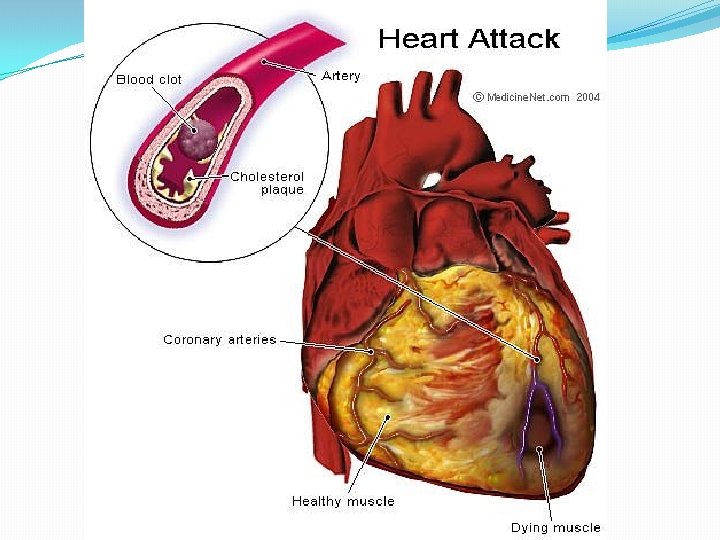
Heart Attack �Occurs when some of the tissue in the heart doesn’t receive its normal blood supply and dies. �Usually caused by a blood clot that forms in the coronary artery. �The more heart tissue that dies, the more severe the heart attack.
Heart Attacks �About 50% of people who have a heart attack survive. �Each year about 1 million people in the U. S. suffer a heart attack. �Four major risk factors for heart attacks are high blood pressure, high levels of cholesterol in the blood, physical inactivity, and smoking.
Arrhythmia �Irregular heartbeats. �May beat too slowly, too quickly, or with an uneven rhythm. �Fibrillation- a life-threatening arrhythmia in which the heart twitches rapidly in an uncoordinated fashion. �Some can be controlled by medications. �Others require surgery to implant an artificial pacemaker.