
CHAPTER 23 23 Chordates Powerpoints revised by Franklyn
CHAPTER 23 23 Chordates Powerpoints revised by Franklyn Tan Te 23 -1 Copyright © Mc. Graw-Hill Education. All rights reserved. No reproduction or distribution without the prior written consent of Mc. Graw-Hill Education.
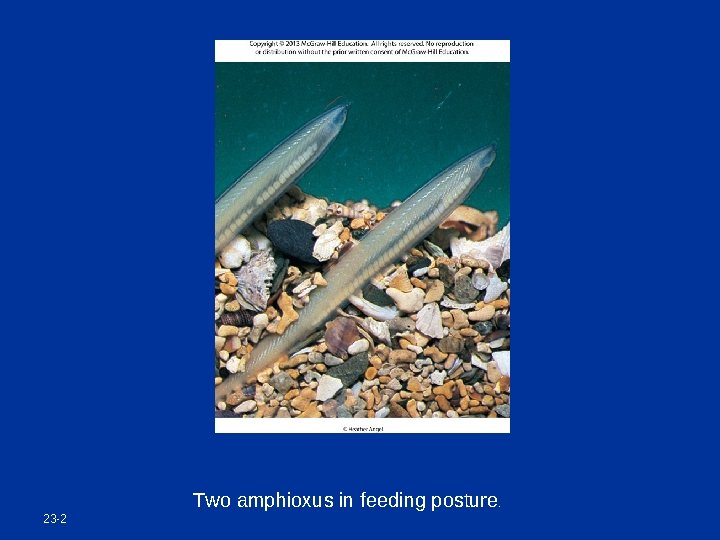
Two amphioxus in feeding posture. 23 -2
A Long Way from Amphioxus is small fishlike translucent animal that exhibits the five distinctive hallmarks of Phylum Chordata Amphioxus have a dorsal tubular nerve cord, supportive notochord, pharyngeal pouches or slits, endostyle for feeding, and a postanal tail for propulsion Normally found half buried in sand on the sea floor and filters organic particles Very inconspicuous and with no commercial value; useful in zoology 23 -3
A Long Way from Amphioxus However, Amphioxus lacks one of the most important vertebrate characteristics: a distinct head with special sense organs This vertebrate adaptation is an important feature to shift to an active form of predation, such that Amphioxus may have diverged from vertebrate ancestry Amphioxus resembles closely the chordate condition immediately before the origin of vertebrates 23 -4
The Chordates The name Chordata comes from the notochord that either found in early development or throughout life Notochord is a rodlike, semirigid body of fluid-filled cells enclosed in a fibrous sheath that extends the length of body Usually found above the gut and just below the nervous system Mainly serves to stiffen the body, providing skeletal scaffolding for the attachment of swimming muscles 23 -5
The Chordates share many features with some invertebrates: bilateral symmetry, anterioposterior axis, coelom, tube-withina-tube body plan, metamerism, and cephalization Exact phylogenetic position of chordates is still unclear but have two possible lines of descent In the Protostomia branch of arthropodannelid-mollusc group but has now lost favor In the Deuterostomia branch of echinodermhemichordate assemblage that has gained consideration due to man similarities 23 -6
The Chordates share many characteristics with deuterostomes that include radial cleavage, anus from blastopore, mouth from secondary opening and coelom from enterocoelous pouches although many chordates may have schizocoelous coeloms Chordates have fundamental unity of organs and organ systems compared o other groups and ecologically most adaptable and able to occupy most kinds of habitats 23 -7
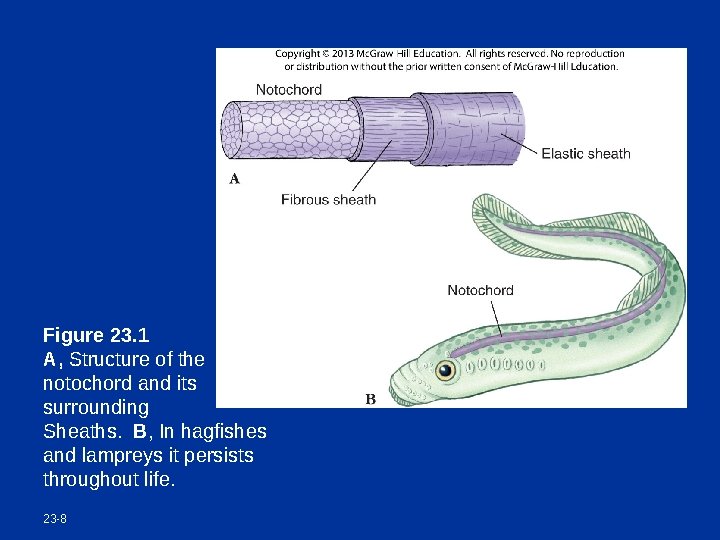
Figure 23. 1 A, Structure of the notochord and its surrounding Sheaths. B, In hagfishes and lampreys it persists throughout life. 23 -8
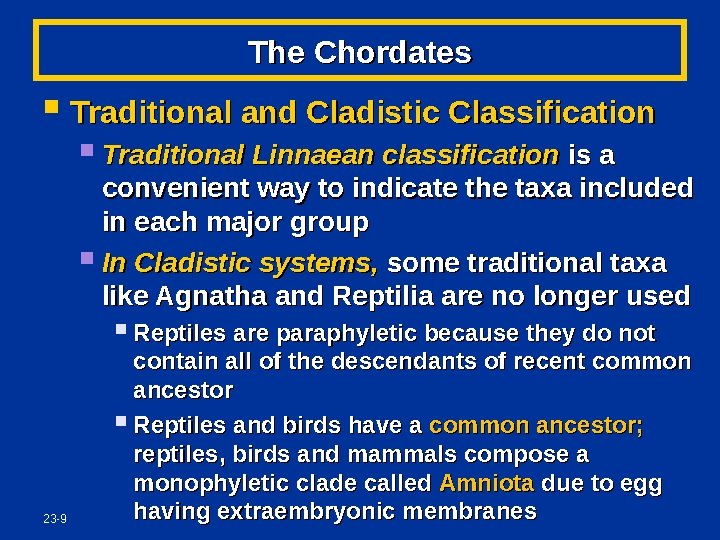
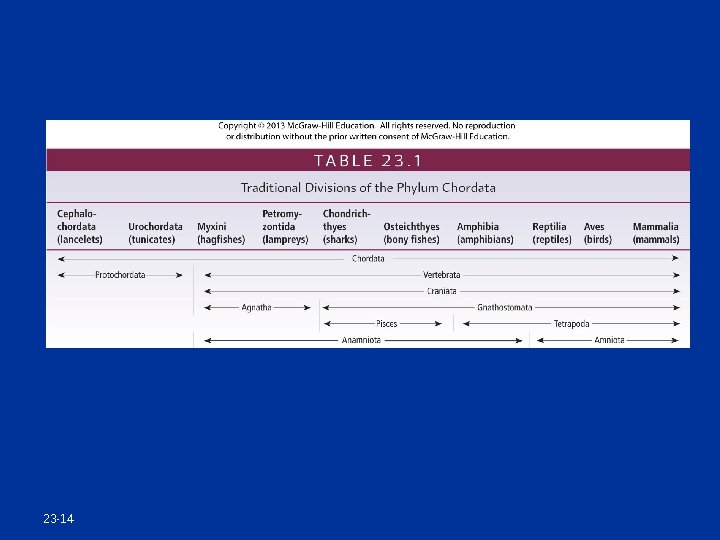
The Chordates Traditional and Cladistic Classification Traditional Linnaean classification is a convenient way to indicate the taxa included in each major group In Cladistic systems, some traditional taxa like Agnatha and Reptilia are no longer used Reptiles are paraphyletic because they do not contain all of the descendants of recent common ancestor Reptiles and birds have a common ancestor; reptiles, birds and mammals compose a monophyletic clade called Amniota due to egg having extraembryonic membranes 23 -9
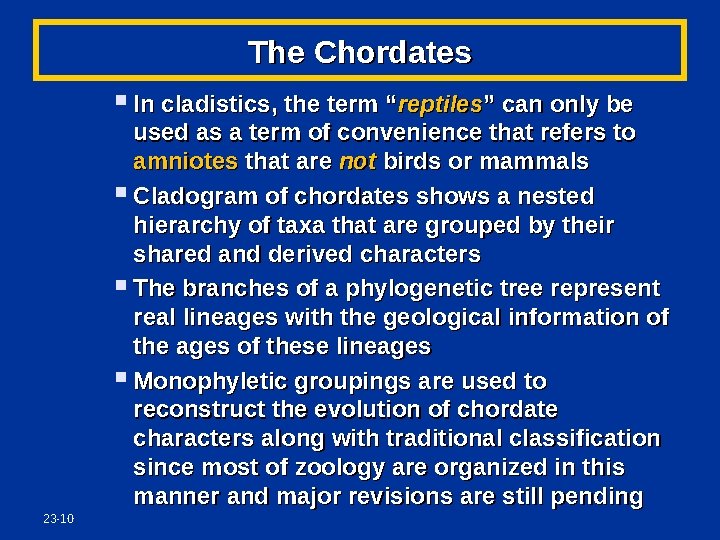
The Chordates In cladistics, the term “reptiles” can only be used as a term of convenience that refers to amniotes that are not birds or mammals Cladogram of chordates shows a nested hierarchy of taxa that are grouped by their shared and derived characters The branches of a phylogenetic tree represent real lineages with the geological information of the ages of these lineages Monophyletic groupings are used to reconstruct the evolution of chordate characters along with traditional classification since most of zoology are organized in this manner and major revisions are still pending 23 -10
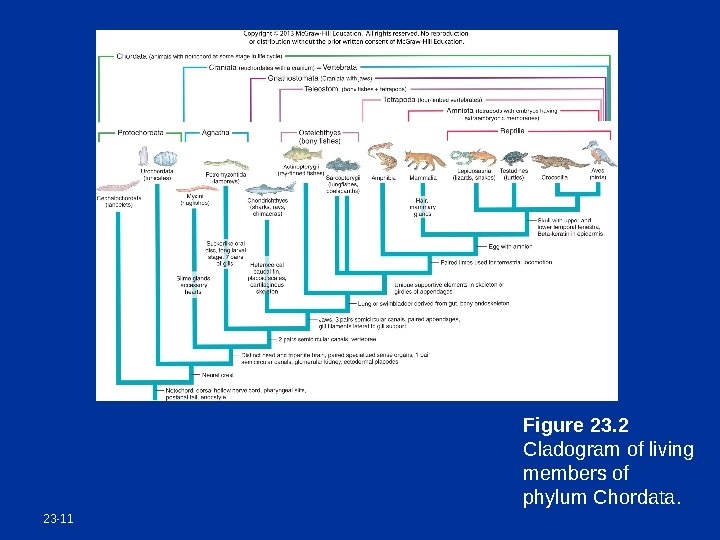
Figure 23. 2 Cladogram of living members of phylum Chordata. 23 -11
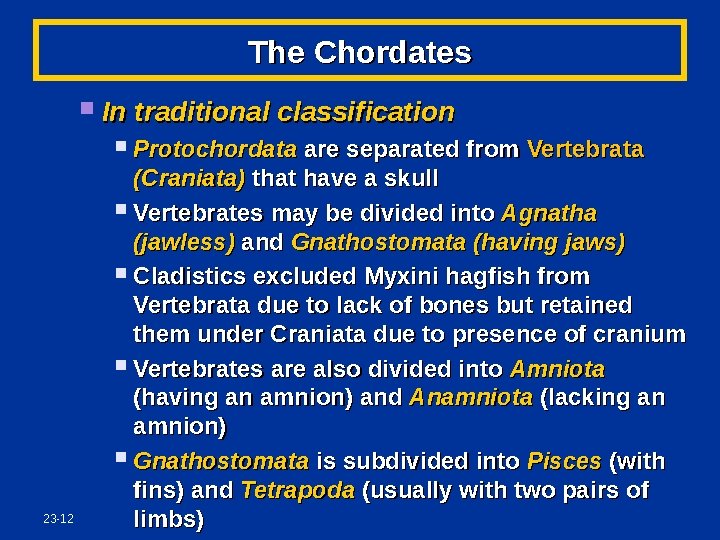
The Chordates In traditional classification Protochordata are separated from Vertebrata (Craniata) that have a skull Vertebrates may be divided into Agnatha (jawless) and Gnathostomata (having jaws) Cladistics excluded Myxini hagfish from Vertebrata due to lack of bones but retained them under Craniata due to presence of cranium Vertebrates are also divided into Amniota (having an amnion) and Anamniota (lacking an amnion) Gnathostomata is subdivided into Pisces (with fins) and Tetrapoda (usually with two pairs of limbs) 23 -12
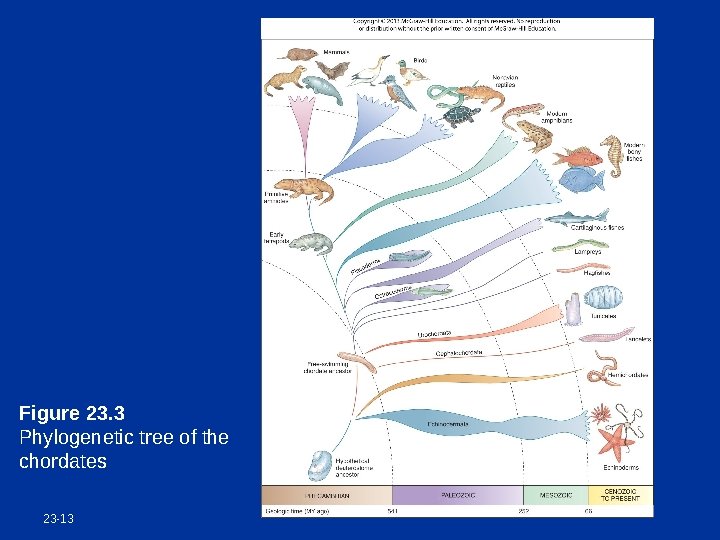
Figure 23. 3 Phylogenetic tree of the chordates 23 -13
23 -14
Five Chordate Hallmarks Notochord Rod like flexible structure extending the length of the body First part of the endoskeleton to appear in the embryo Hydrostatic organ with fluid in cells or compartments between cells Muscles attach to notochord and can bend without shortening to permit undulation Persists throughout life in protochordates and jawless vertebrates 23 -15
Five Chordate Hallmarks In all vertebrates, except hagfishes, a series of cartilaginous or bony vertebrae form from mesenchymal cells derived from blocks of mesodermal cells (somites) lateral to notochord In most vertebrates, the notochord is replaced by vertebrae but some remnants may persist between or within vertebrae 23 -16
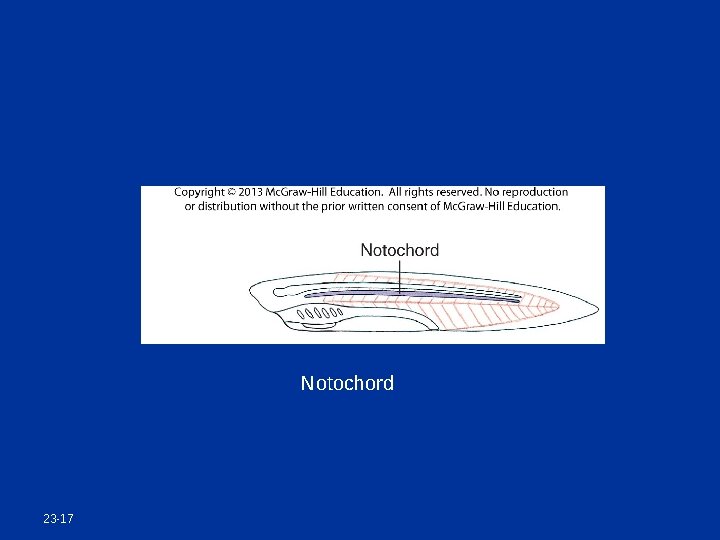
Notochord 23 -17
Five Chordate Hallmarks Dorsal Tubular Nerve Cord In most invertebrate phyla, the nerve cord is solid and ventral to digestive tract In chordates, a single, tubular cord is dorsal to digestive tract Anterior end enlarges to form the brain Hollow cord is produced in the embryo by infolding of ectodermal cells on the dorsal side of body above the notochord In vertebrates, the nerve cord passes through the protective neural arches and the brain is surrounded by bony or cartilaginous cranium 23 -18
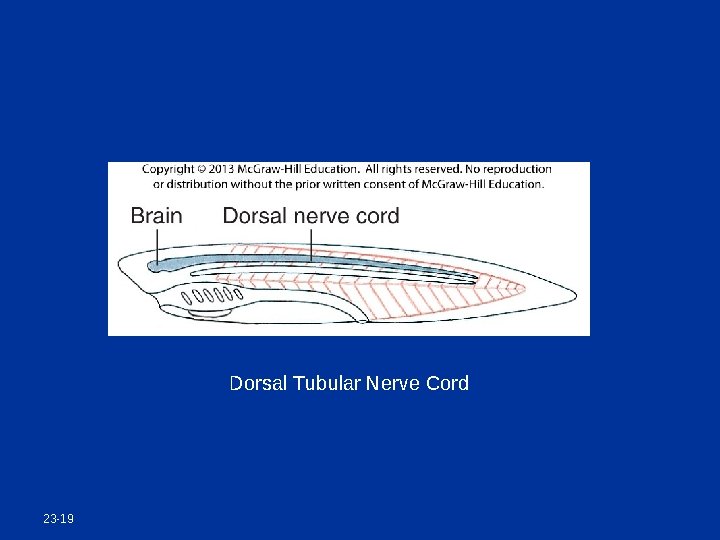
Dorsal Tubular Nerve Cord 23 -19
Five Chordate Hallmarks Pharyngeal Pouches and Slits Pharyngeal slits lead from pharyngeal cavity to the outside Formed by the inpocketing of the ectoderm and the invagination of endoderm of pharynx In aquatic chordates, two pockets break through to form pharyngeal slit In amniotes, pockets may not break through and only pouches are formed instead of slits 23 -20
Five Chordate Hallmarks In terrestrial tetrapods, the pharyngeal pouches give rise to a variety of structures: Eustachian tube, middle ear cavity, tonsils, and parathyroid glands Perforated pharynx functions as filter-feeding apparatus in protochordates Water with suspended particles is pulled in by ciliary action through the mouth and out via the pharyngeal slits Vertebrates use muscular pharyngeal contractions to move water through the pharynx 23 -21
Five Chordate Hallmarks 23 -22 Protochordates have simple aortic vessels surrounded by connective tissue that carry blood through the pharynx Fishes added a capillary network with thin gas-permeable walls that improved gas exchange and led to the evolution of gills
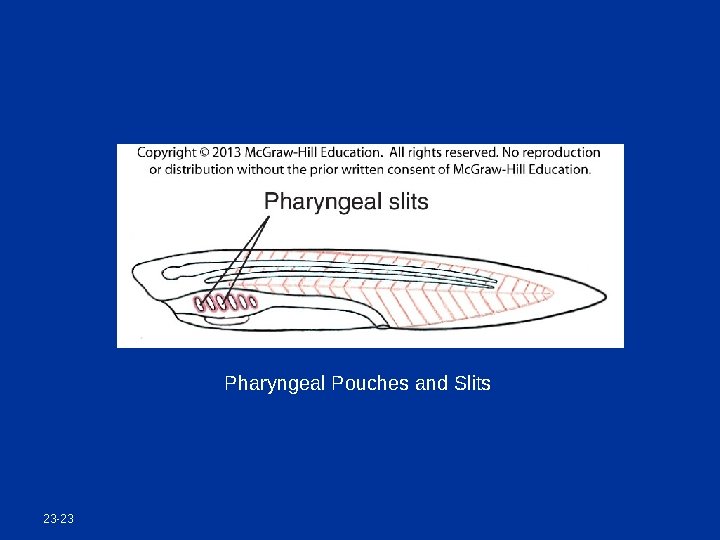
Pharyngeal Pouches and Slits 23 -23
Five Chordate Hallmarks Endostyle or Thyroid Gland The endostyle was not recognized as a chordate characteristic until recently Endostyle or its derivative, the thyroid gland, is found in all chordates Usually found on the pharyngeal floor and secretes mucus to trap small food particles coming in from the mouth Some cells in the endostyle secrete iodinated proteins homologous with the iodinated-hormone-secreting thyroid gland of adult lampreys and all other vertebrates 23 -24
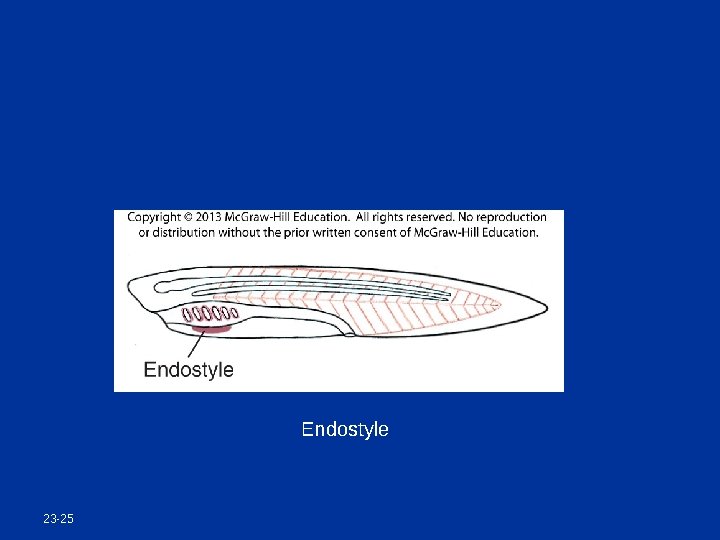
Endostyle 23 -25
Five Chordate Hallmarks Postanal Tail Postanal tail, plus somatic musculature, and the stiffened notochord can provide motility for larval tunicates and Amphioxus during their free-swimming stages. Efficiency increased in fishes due to addition of fins; became smaller and vestigial in other groups like mammals that may have waggable tails 23 -26
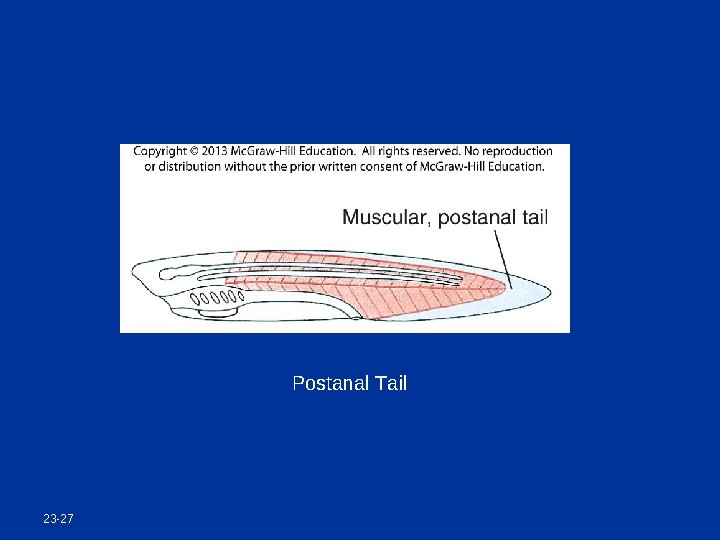
Postanal Tail 23 -27
Ancestry and Evolution Since the earliest protochordates were soft-bodied, these would not have left many well-preserved fossils Most work has been conducted on developmental stages where early features are more evolutionarily conserved An early theory that chordates evolved within the protostome lineage was discarded due to embryonic evidence Chordates are deuterostomes and are a natural grouping that have a common origin in Precambrian seas 23 -28
Ancestry and Evolution Anatomical, developmental, and molecular evidence indicate that chordates arose about 540 million years ago from a lineage related to echinoderms and hemichordates Molecular data suggest that a clade containing both echinoderms and hemichordates is the sister group of chordates 23 -29
Subphylum Urochordata Urochordates are “tail chordates” but commonly known as tunicates About 1600 species of tunicates identified; found in all seas and at all depths Most are sessile as adults Tunic is a tough, nonliving tissue containing cellulose that surrounds tunicates In most species, only the larval form bears all the chordate hallmarks but adults loose many of these characters and retain the notochord only in the tail region 23 -30
Subphylum Urochordata is divided into 3 classes: Ascidiacea, Appendicularia, and Thaliacea with Ascidiacea being the most common and most diverse Ascidiacea are the common “sea squirts” because they forcefully discharge water from the excurrent siphon when irritated Most are attached on substrates like pilings and ship bottoms such that they are very abundant intertidal creatures in many areas Ascidians may be solitary, colonial, or compound forms wherein many individuals share a common tunic and some have own incurrent siphon but share excurrent siphon 23 -31
Subphylum Urochordata Solitary ascidians are usually spherical or cylindrical with the mantle lining the tunic Incurrent or oral siphon marks anterior side while excurrent or atrial siphon marks dorsal side 23 -32 Water entering the incurrent siphon passes through a ciliated and perforated pharynx that forms an elaborate basketwork which allows water to flow though slits and into atrial cavity then out through excurrent siphon Feeding depends on the formation of a mucous net that is secreted by the endostyle and ciliary action to move water
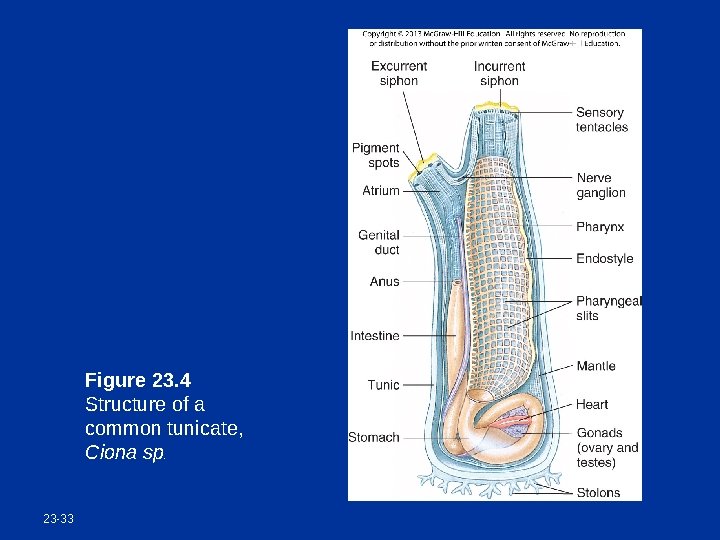
Figure 23. 4 Structure of a common tunicate, Ciona sp. 23 -33
Subphylum Urochordata Cilia on the pharynx pull mucus into a sheet that spreads dorsally on the inner face of the pharynx Food particles trapped in the sheet are worked into a rope and carried back to the esophagus and stomach Nutrients are absorbed in the midgut and waste matter is discharged by the anus through the excurrent siphon 23 -34 Ascidian circulation has a ventral heart and two large vessels that connect to a diffuse system of smaller vessels leading to pharyngeal basket and other organs
Subphylum Urochordata Nervous system has one nerve ganglion and a plexus of nerves on dorsal side of pharynx 23 -35 Weird feature of ascidians is that the heart drives blood first in one direction for a few beats and then reverses direction Another remarkable feature is that Ascidians concentrate very rare elements, such as vanadium and niobium, in their blood in dramatically high concentrations Subneural gland is beneath the nerve ganglion and samples incoming water and may have an endocrine function
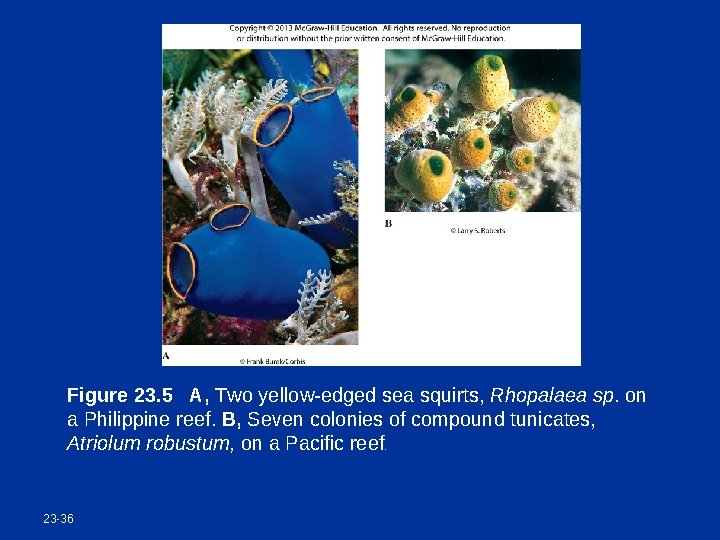
Figure 23. 5 A, Two yellow-edged sea squirts, Rhopalaea sp. on a Philippine reef. B, Seven colonies of compound tunicates, Atriolum robustum, on a Pacific reef. 23 -36
Subphylum Urochordata Sea squirts are hermaphroditic with a single ovary and a single testes Gametes are carried into the atrial cavity and released to the water where fertilization occurs Adult sea squirts normally retain 2 of the 5 chordate features, namely pharyngeal slits and endostyle However, the tadpole larvae have all 5 chordate characteristics and does not feed but swims awhile before attaching to the substrate using adhesive papillae Larvae undergoes dramatic metamorphosis and develops into a sessile adult 23 -37
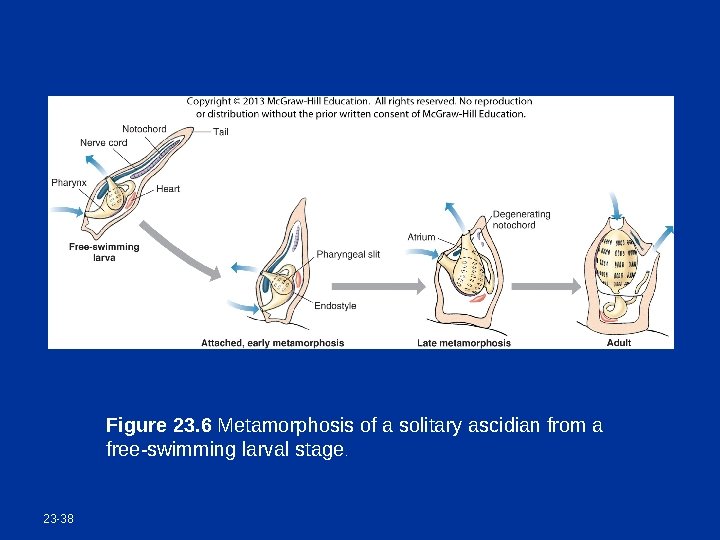
Figure 23. 6 Metamorphosis of a solitary ascidian from a free-swimming larval stage. 23 -38
Subphylum Urochordata Thalacians are Salps which are pelagic with barrel or lemon-shaped, transparent, and gelatinous body Can be single or colonial chains reaching up to several meters in length Thalacians body is surrounded by bands of circular muscle with incurrent and excurrent siphons at opposite ends Pump water through body by muscular contraction rather than ciliary action; used in locomotion, feeding, and respiration Most of the body is hollow with viscera forming a compact mass on the ventral side 23 -39
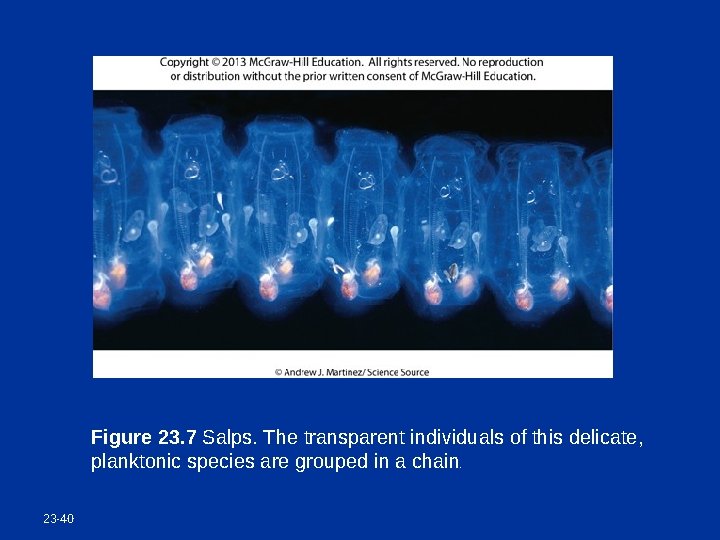
Figure 23. 7 Salps. The transparent individuals of this delicate, planktonic species are grouped in a chain. 23 -40
Subphylum Urochordata Many Thalacians have luminous organs that give light at night time Thalacians have complex life history and adapted to respond to sudden increase in food supply like algae blooms 23 -41 Can alternate between sexual and asexual reproduction to increase population quickly
Subphylum Urochordata Appendicularians look like tiny pelagic bentshaped tadpoles which resemble the larval stages of other tunicates 23 -42 Feed by building a delicate hollow sphere of mucus interlaced with filters and passages for water entry that allows phytoplankton and bacteria to be trapped on a feeding filter inside sphere and drawn into mouth through a tube When filters become clogged with wastes, they are left behind a new sphere is built Like Thalacians, the Appendicularians can quickly build up their population density when food is abundant
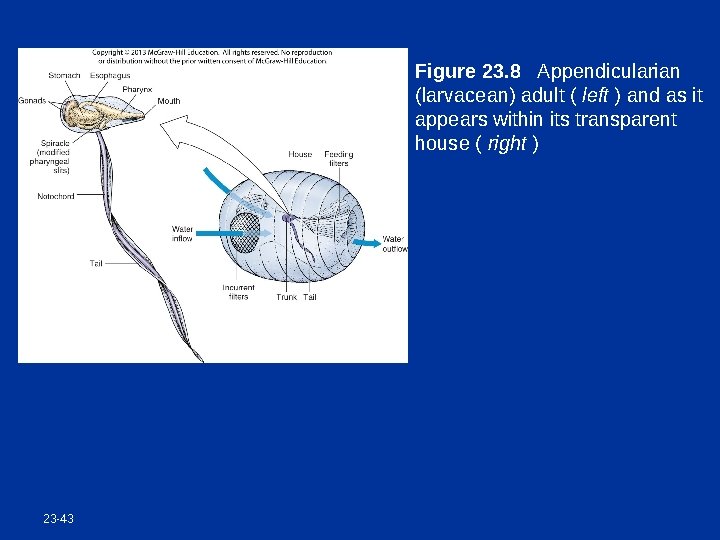
Figure 23. 8 Appendicularian (larvacean) adult ( left ) and as it appears within its transparent house ( right ) 23 -43
Subphylum Cephalochordata Lancelets are slender, laterally compressed, translucent animals that are about 3– 7 cm long Live in sandy sediments of coastal waters around the world Originally had the generic name Amphioxus, but priority is now in the genus Branchiostoma, although still use Amphioxus for convenience About 29 species of Amphioxus are described with 5 occurring in North 23 -44 American coastal waters
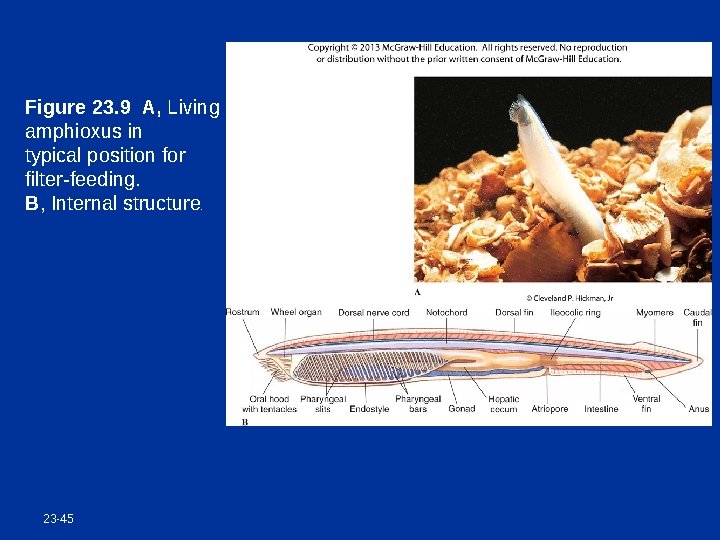
Figure 23. 9 A, Living amphioxus in typical position for filter-feeding. B, Internal structure. 23 -45
Subphylum Cephalochordata Amphioxus has the five distinctive characteristics of chordates in simple form Water enters the mouth driven by cilia in the buccal cavity and pharynx Water then passes through pharyngeal slits where food is trapped in mucus secreted by the endostyle Food is moved through gut via cilia and particles are separated from mucus then passed into hepatic cecum where they are phagocytized and digested intracellularly Food can also be concentrated in areas called the ileocolic ring 23 -46
Subphylum Cephalochordata Closed circulatory system is complex and similar to fish but lacks a heart Blood is pumped by peristaltic contractions in ventral aorta, passes upward through branchial arteries in pharyngeal bars to paired dorsal aortas, which later form single dorsal aorta Blood moves by microcirculation through tissues and returns to ventral aorta Blood lacks erythrocytes and hemoglobin so may not do much respiration and mainly transports nutrients 23 -47 Like in tunicates, filtered water passes through the atrium and leaves body by an atriopore which is similar to the excurrent siphon
Subphylum Cephalochordata No gills along pharynx, so gas exchange occurs across body wall Hollow nerve cord lies above the notochord Pairs of spinal nerve roots emerging at each trunk segment Sense organs are simple, including an unpaired ocellus that functions as a photoreceptor Anterior nerve cord is not enlarged, yet is homologous to vertebrate brain 23 -48 Sexes are separate and gametes are released in the atrium and out via atriopore
Subphylum Cephalochordata Fertilization is external after gametes mix Cleavage is holoblastic and a gastrula forms by invagination Larvae soon hatch after egg deposition and gradually assume the shape of adults Amphioxus has all the chordate features but also have more that show the vertebrate body plan Hepatic cecum is a diverticulum resembling the vertebrate pancreas in secreting digestive enzymes along with liver Trunk muscles resemble vertebrate patterns Possess basic circulatory plan of vertebrates 23 -49
Subphylum Vertebrate (Craniata) Adaptations That Guided Early Vertebrate Evolution Earliest vertebrates were substantially larger than protochordates and considerably more active Modifications of skeletal structures and muscles increased speed and mobility Higher activity level and size of vertebrates required structures specialized in the location, capture, and digestion of food and adaptations designed to support a high metabolic rate 23 -50
Subphylum Vertebrate (Craniata) Musculoskeletal modifications occurred in most vertebrates that possess both an exoskeleton and endoskeleton made of cartilage or bone Endoskeleton permits almost unlimited body size with much greater economy of building materials compared to arthropods Vertebrates have disclike centra that replaced the notochord and neural spines provide more area for attachment of segmented muscles Segmented body muscles (myomeres) changed from V-shaped muscles of ancestral chordates to W-shaped muscles of vertebrates which allowed for powerful control over body 23 -51
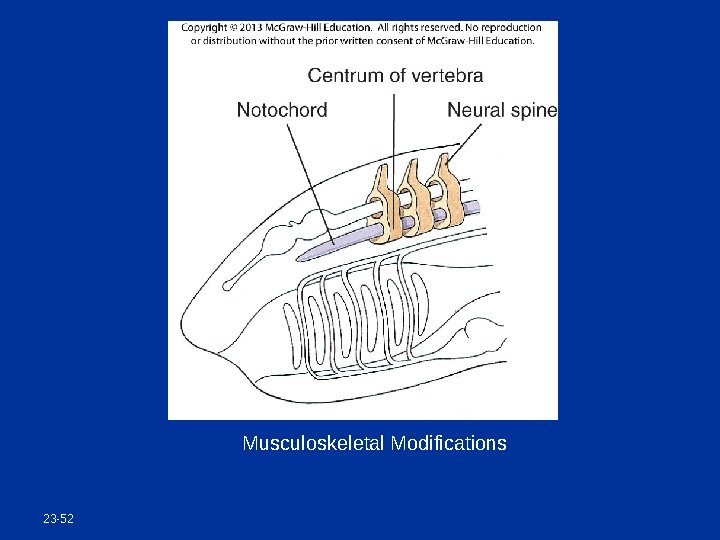
Musculoskeletal Modifications 23 -52
Subphylum Vertebrate (Craniata) Endoskeleton probably composed initially of cartilage and later of bone Cartilage grows faster and is more flexible than bone which is an ideal first framework Endoskeleton of living hagfishes, lampreys, sharks and their kin, and even some “bony” fishes, like sturgeons, composed of cartilage Bone formation may have been adaptive for early vertebrates since the structural strength of bone is superior to cartilage Makes bone more ideal for muscle attachment in areas of high mechanical stress 23 -53 Also unique to vertebrates are fin rays of dermal origin used in fins and aid in swimming
Subphylum Vertebrate (Craniata) Bone may have also evolved as a means of mineral storage and homeostasis Phosphorus and calcium are used for many physiological processes in organisms with high metabolic rates Some of the earliest fishes, including Ostracoderms and Placoderms were partly covered in a bony, dermal armor, which were modified in later fishes as scales Most vertebrates are protected with keratinized structures derived from the epidermis like reptilian scales, hair, feathers, claws, and horns 23 -54
Subphylum Vertebrate (Craniata) Physiology upgrades for vertebrates included digestive, respiratory, circulatory, and excretory systems modified to meet increased metabolic demand Perforated pharynx evolved as a filter-feeding device in early chordates but in vertebrates, the use of pharyngeal muscles created a powerful pump to move water Role of pharynx shifted from feeding to gas exchange with development of highly vascularized gills Liver and pancreas enabled vertebrates to handle increased food intake 23 -55
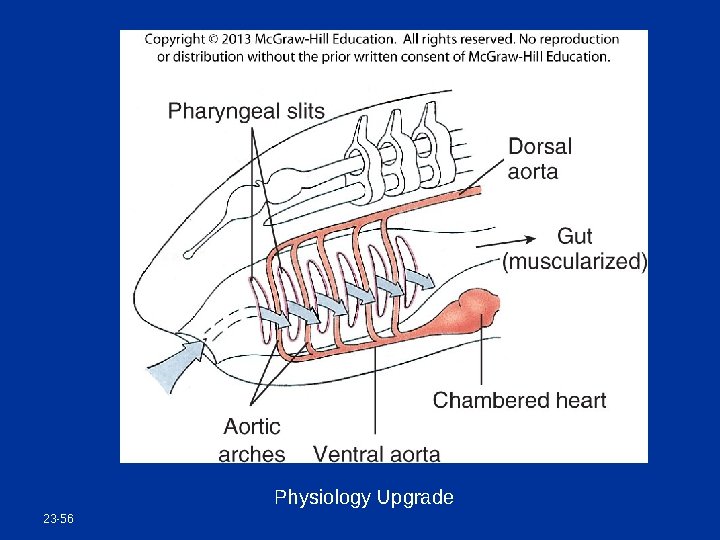
Physiology Upgrade 23 -56
Subphylum Vertebrate (Craniata) Transport of nutrients gases, and other substances was enhanced by the ventral 3 chambered heart and erythrocytes containing hemoglobin Vertebrates possess paired, glomerular kidneys to remove metabolic waste products and regulate body fluid composition New head, brain, and sensory systems was required when vertebrates shifted from filter feeding to active predation 23 -57 Developed new sensory, motor, and integrative controls for locating and capturing larger prey
Subphylum Vertebrate (Craniata) Anterior end of nerve cord enlarged as a tripartite brain with forebrain, midbrain, and hindbrain, which was protected by cartilaginous or bony cranium Paired special sense organs for distance reception evolved Includes eyes with lenses and retinas for vision; inner ears for equilibrium and sound reception; chemoreceptors for taste; olfactory receptors for smell; lateral line receptors for vibration and electroreceptors that detect electrical currents when prey is near 23 -58
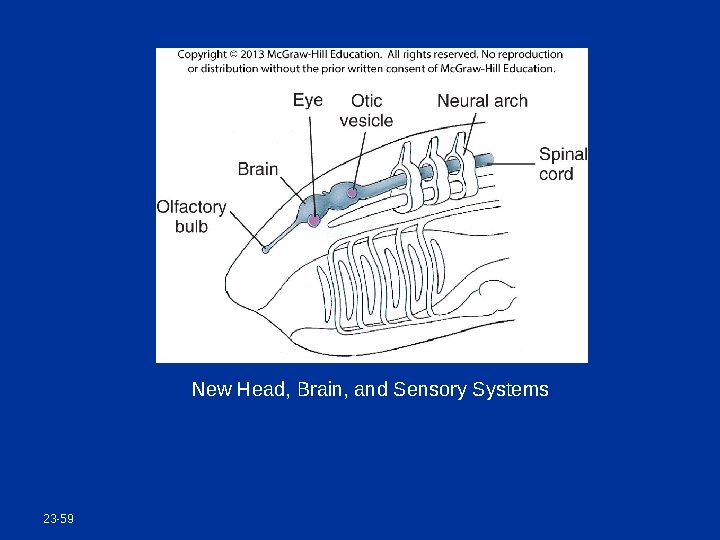
New Head, Brain, and Sensory Systems 23 -59
Subphylum Vertebrate (Craniata) Neural crest and ectodermal placodes were two embryonic innovations present only in vertebrates that allowed the development of vertebrate head and special sense organs Neural crest are a population of ectodermal cells lying along length of the embryonic neural tube Contributes to formation of many different structures like most of the cranium, pharyngeal skeleton, tooth dentine, some cranial nerves, ganglia, Schwann cells, and some endocrine glands and Schwann cells Also regulate development of adjacent tissue, such as tooth enamel and pharyngeal muscles (branchiomeres) 23 -60
Subphylum Vertebrate (Craniata) Ectodermal placodes are plate-like ectodermal thickenings on either side of neural tube Give rise to olfactory epithelium, lens of eye, inner ear epithelium, some ganglia, some cranial nerves, lateral-line mechanoreceptors, and electroreceptors Vertebrate head with sensory structures located adjacent to mouth (later equipped with prey-capturing jaws) stemmed from new embryonic tissues 23 -61
Subphylum Vertebrate (Craniata) Studies of the distribution of homeoboxcontaining genes that control the body plan of chordate embryos suggest that the Hox genes were duplicated at about the time of the origin of vertebrates One copy of Hox genes is found in Amphioxus and other invertebrates while living gnathostomes have 4 copies Perhaps additional copies of genes that control body plan provided genetic material free to evolve a more complex kind of animal 23 -62
Subphylum Vertebrate (Craniata) The Search for the Ancestral Vertebrate Jawless ostracoderms from the early Paleozoic vertebrate fossil record share organ system development with living vertebrates Pikaia sp. is a ribbon-shaped fishlike creature with myomeres and notochord discovered in the Burgess Shale 23 -63 Indicates organ systems must have originated in early vertebrate and invertebrate lineage Has superficial resemblance to Amphioxus and may be a cephalochordate
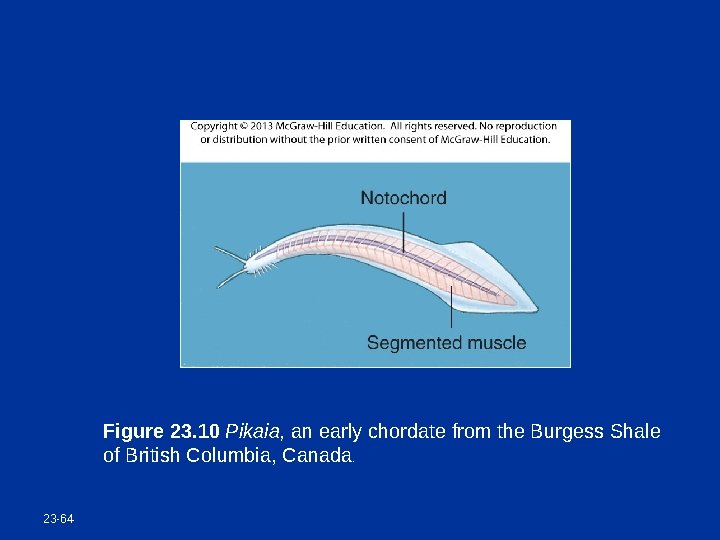
Figure 23. 10 Pikaia, an early chordate from the Burgess Shale of British Columbia, Canada. 23 -64
Subphylum Vertebrate (Craniata) Haikouella lanceolata is a small fishlike creature known from over 300 fossil specimens and provides a wealth of information on the evolution of vertebrates Possessed a notochord, pharynx, and dorsal nerve cord and may have had pharyngeal muscles, paired eyes, and an enlarged brain Not a vertebrate because it lacks distinctive vertebrate characteristics such as a cranium, an ear, and a distinctive telencephalon (anterior lobe of the brain) Some hypothesize Haikouella is the sister taxon of vertebrates but still highly debated 23 -65
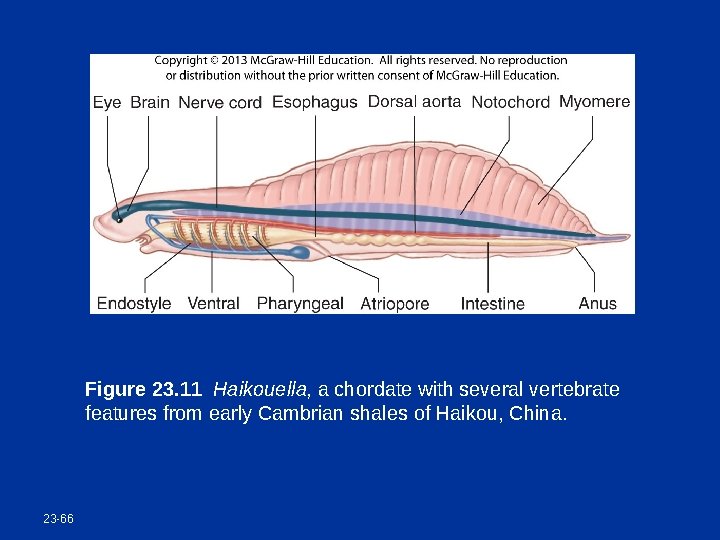
Figure 23. 11 Haikouella, a chordate with several vertebrate features from early Cambrian shales of Haikou, China. 23 -66
Evolutionary History Chordate Evolution and Amphioxus Chordates have taken two paths in early evolution with one path leading to the sedentary urochordates and the second path goes to active, mobile cephalochordates and vertebrates In 1928, Walter Garstang, postulated that the ancestral chordate was a sedentary filterfeeder, like adult tunicates and had ascidian life cycle Garstang also suggested that the early vertebrate lost the ability to metamorphose and developed gonads but retained larval form 23 -67
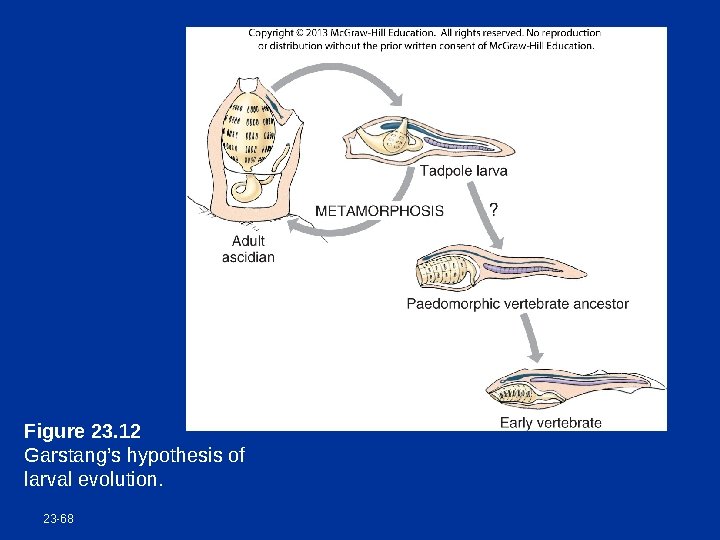
Figure 23. 12 Garstang’s hypothesis of larval evolution. 23 -68
Evolutionary History The free-swimming larvae form adults and became the ancestor form for cephalochordates and vertebrates Continued development and evolution with cephalization resulted in paedomorphosis which is the evolutionary retention of larval traits in an adult body Genetic and developmental evidence has allowed Garstang’s hypothesis to be tested and many zoologist reject it Numerous phylogenetic reconstructions and fossil evidence place cephalochordates as sister taxon to vertebrates and urochordates 23 -69
Evolutionary History Many zoologists still consider amphioxus largely to retain the prevertebrate and ancestral vertebrate body structure Cephalochordates share several common characteristics with vertebrates that are absent from tunicates like segmented myomeres, ventral and dorsal aortas, and other features However, Amphioxus is unlike the most recent common ancestor of vertebrates because it lacks the tripartite brain, chambered heart, special sensory organs, muscular gut and pharynx, and neural crest tissue inferred to have been present in chordate ancestor 23 -70
Evolutionary History Ammocoete larvae of lampreys used as a model for ancestral vertebrae body plan The larvae closely resembles Amphioxus and were initially considered as adults of Petromyzontidans since they are so different compared to their adult forms Ammocoete larvae have long, slender body with oral hood around mouth like Amphioxus but filter feed using muscular pumping instead of using cilia to move water through pharynx Arrangement of body muscles, notochord, and circulatory system closely resemble Amphioxus but also have several additional features 23 -71
Evolutionary History 23 -72 These additional features include chambered heart, tripartite brain, special sense organs, ectodermal plates, pituitary gland, distinct kidneys, true liver, gall bladder, and pancreatic tissues Amphioxus also have numerous gill slits but ammocoete larvae have only seven pairs Ammocoete larvae displays the most ancestral condition of living vertebrates and have many shared derived characters that closely show the ancestral vertebrate body plan
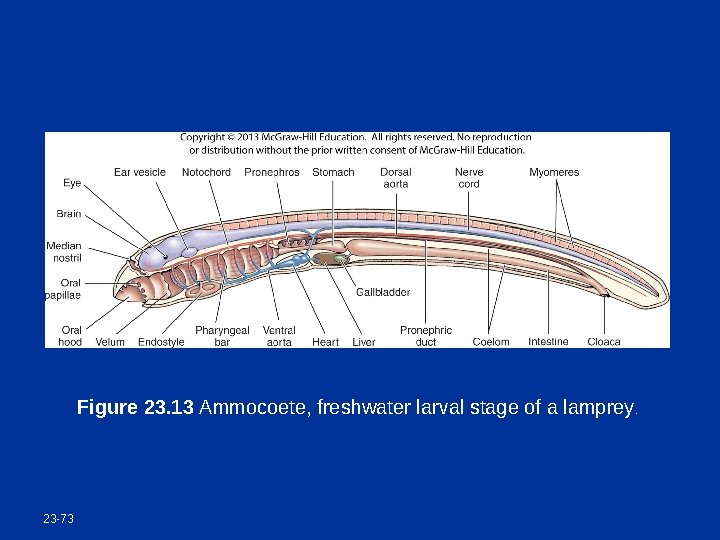
Figure 23. 13 Ammocoete, freshwater larval stage of a lamprey. 23 -73
Evolutionary History The Earliest Vertebrates Ostracoderms were armored jawless fishes, which were the earliest known vertebrate fossils found in the late Cambrian deposits These show many vertebrate characteristics like heart, pair eyes, ear capsules, and rudimentary vertebrae Earliest Ostracoderms had armor with bone in dermis but lacked paired fins that later fishes used for stability 23 -74
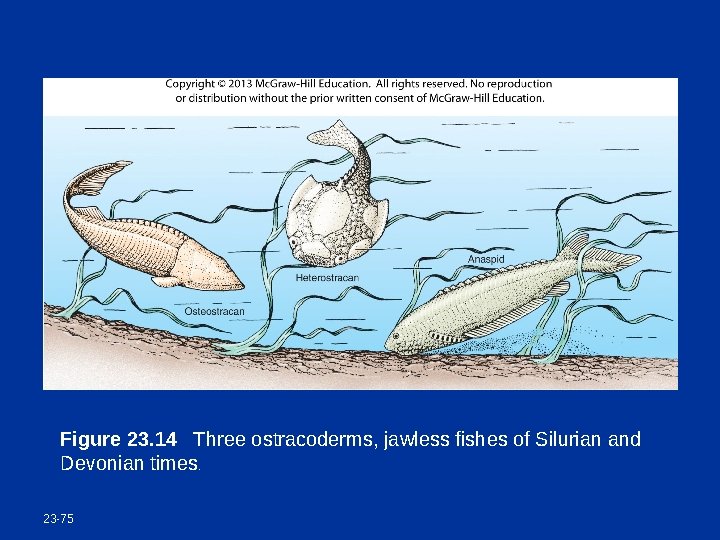
Figure 23. 14 Three ostracoderms, jawless fishes of Silurian and Devonian times. 23 -75
Evolutionary History Heterostracans were one of the early group of ostracoderms that lacked fins and probably could not swim well Had slit like or circular mouth that filtered particles from the ocean floor Sucked in water by muscular pumping instead of using cilia Some believe they may have been able to feed on soft-bodied animals too During the Devonian period, heterostracans saw a major diversification producing numerous peculiar-looking forms but never evolved jaws or paired fins 23 -76
Evolutionary History Osteostracans coexisted with heterostracans but developed paired pectoral fins that stabilized movement Usually small, covered with dermal armor made of bone with a single head shield Had sophisticated nervous system and sense organs like modern Lampreys Anaspids are more streamlined than other Ostracoderms and had impressive diversification in Silurian and Devonian periods All Ostracoderms became extinct by end of Devonian period 23 -77
Evolutionary History For decades strange microscopic tooth-like fossils called conodonts have been used to date paleozoic marine sediments without knowing what kind of creature originally possessed these elements Complete conodont animals were later discovered in the early 1980 s that had phosphatized toothlike elements, W-shaped myomeres, cranium, notochord, and paired eye and otic capsules, all of which clearly indicate they belong to vertebrate clade 23 -78
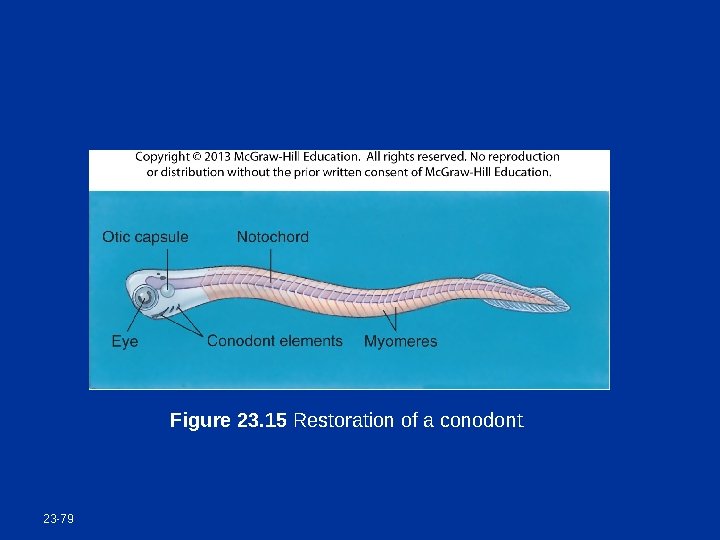
Figure 23. 15 Restoration of a conodont. 23 -79
Evolutionary History All jawed vertebrates are called Gnathostomes whether living or extinct Gnathostomes constitute a monophyletic group since the presence of jaws is a derived character state shared by all jawed fishes and tetrapods Agnathans, defined by the absence of jaws, is paraphyletic since many vertebrate ancestor groups lack jaws Having jaws was one of the most important events in vertebrate evolution as this allowed predation on large and active food 23 -80
Evolutionary History Evidence indicates jaws arose from the modification of 1 st two cartilaginous gill arches Expansion of the arches and the development of associated muscles may have first increased gill support and ventilation to meet increased metabolism The gill arches and jaws form from upper and lower bars that bend forward and are hinged in the middle Both gill arches and jaws are derived from neural crest cells rather than from mesoderm Jaw musculature is homologous to the musculature that originally supported gills 23 -81
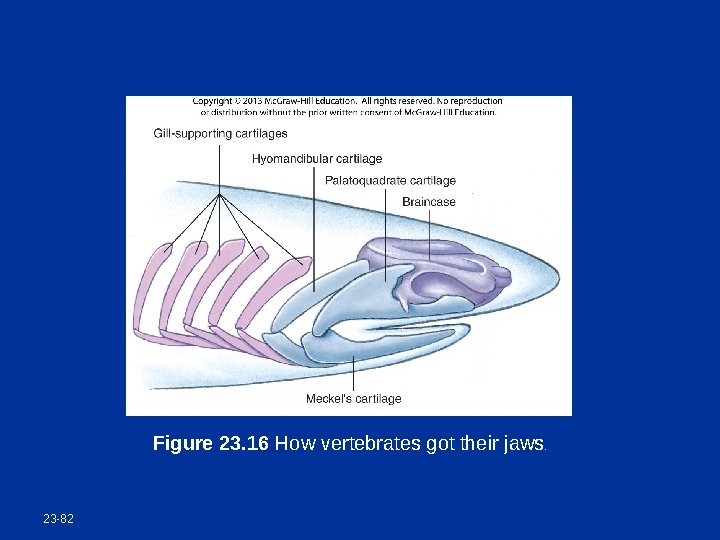
Figure 23. 16 How vertebrates got their jaws. 23 -82
Evolutionary History Additional features from the drastic modification of gill arches include formation of ear ossicles in the mammalian ear Gnathosomes also developed paired pectoral and pelvic fins for more stable swimming The combined evolution of jaws and paired appendages that later formed into limbs for locomotion on land led to the formation of modern fishes and all tetrapods 23 -83
Evolutionary History One of the earliest jawed vertebrates are called Placoderms that appeared in the early Silurian and were heavily armored and many were grotesque 23 -84 Had diamond shaped scales and large plates of bone but went extinct and left on descendants Acanthodians are another jawed bony group that underwent a great diversification into bony fishes that dominate waters today
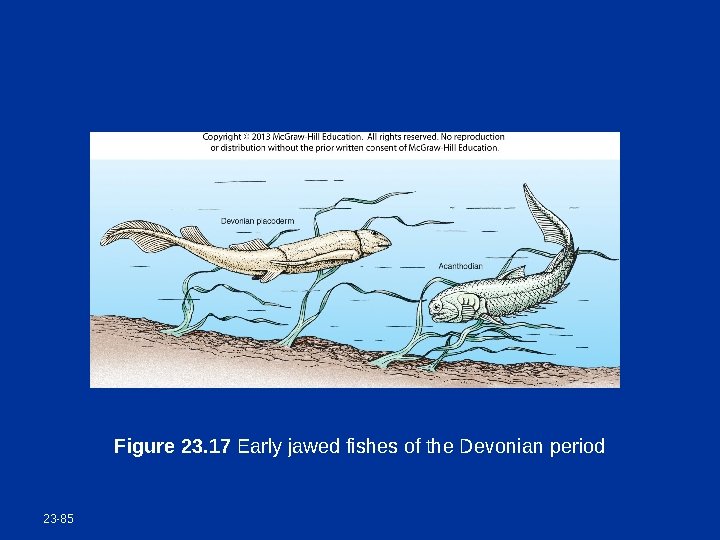
Figure 23. 17 Early jawed fishes of the Devonian period 23 -85
- Slides: 85