
Chapter 23 2 The Urinary System Basic processes
Chapter 23 -2 The Urinary System
Basic processes of urine formation La. Pointe Spring ‘ 12 Slide # 2 • Filtration • Blood pressure • Water and solutes across glomerular capillaries • Reabsorption • The removal of water and solutes from the filtrate (9599% of fluid filtered is reabsorbed) • Secretion • Transport of solutes from the peritubular fluid into the tubular fluid
Renal function La. Pointe Spring ‘ 12 Slide # 3 • Most regions of the nephron perform a combination of functions • General functions can be identified as • Filtration in the renal corpuscle • Nutrient reabsorption along the PCT • Ion and water reabsorption along entire nephron and collecting ducts • Active secretion at PCT, DCT, and collecting ducts • Loop of Henle regulates final volume and solute concentration
Reabsorption and secretion La. Pointe Spring ‘ 12 Slide # 4 • Accomplished via diffusion, osmosis, and carriermediated transport • Transcellular transport • Substances pass through cells of tubule wall. • Apical membrane: surface that faces filtrate. The lumenal side. • Basolateral membrane: faces interstitial fluid. The sides the part of the cell attached to the basement membrane • Paracellular transport – between the cells
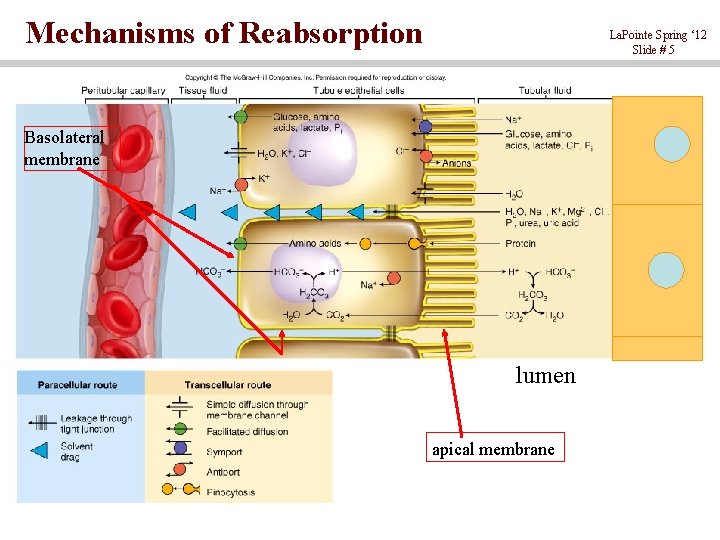
Mechanisms of Reabsorption La. Pointe Spring ‘ 12 Slide # 5 Basolateral membrane lumen apical membrane

Paracellular transport La. Pointe Spring ‘ 12 Slide # 6 1 2 3 3 H 2 O 4 solute 1 solute uptake 2 tranport to basolateral space 3 osmotic gradient pulls water in 4 solvent drag brings in more solute
Carrier Mediated Transport La. Pointe Spring ‘ 12 Slide # 7 • See chapter 3 • • Facilitated diffusion Active transport Countertransport • Carrier proteins have a transport maximum (Tm) • Determines renal threshold - plasma concentration of a solute at which it will begin appearing in the urine.
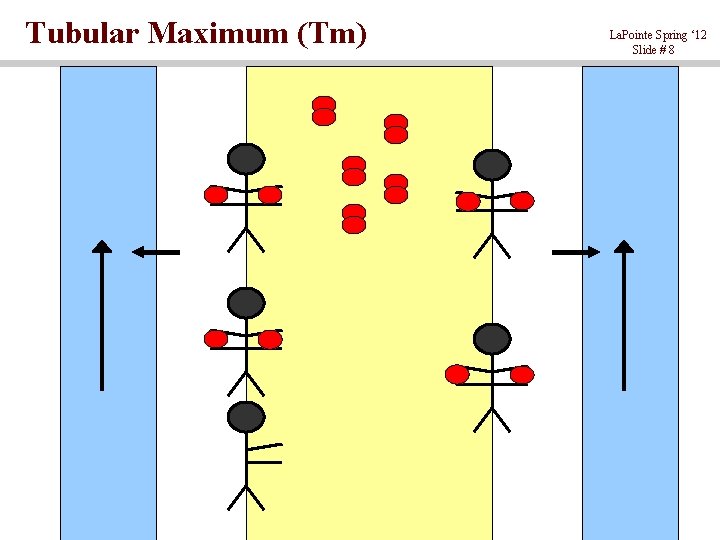
Tubular Maximum (Tm) La. Pointe Spring ‘ 12 Slide # 8
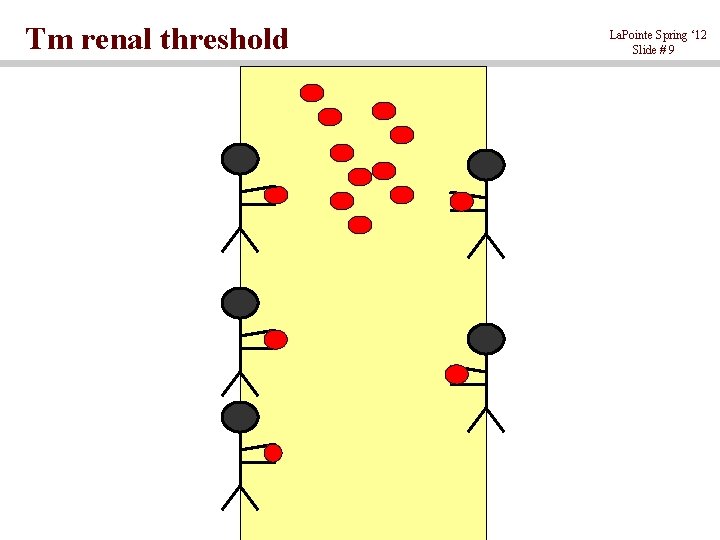
Tm renal threshold La. Pointe Spring ‘ 12 Slide # 9
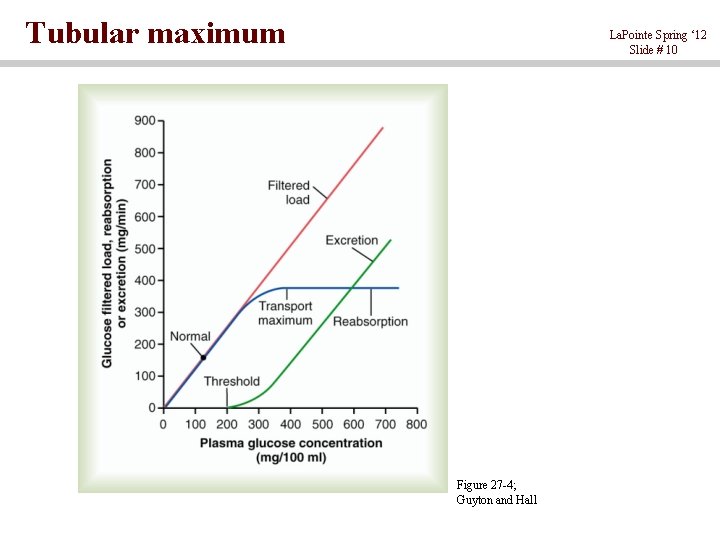
Tubular maximum La. Pointe Spring ‘ 12 Slide # 10 Figure 27 -4; Guyton and Hall
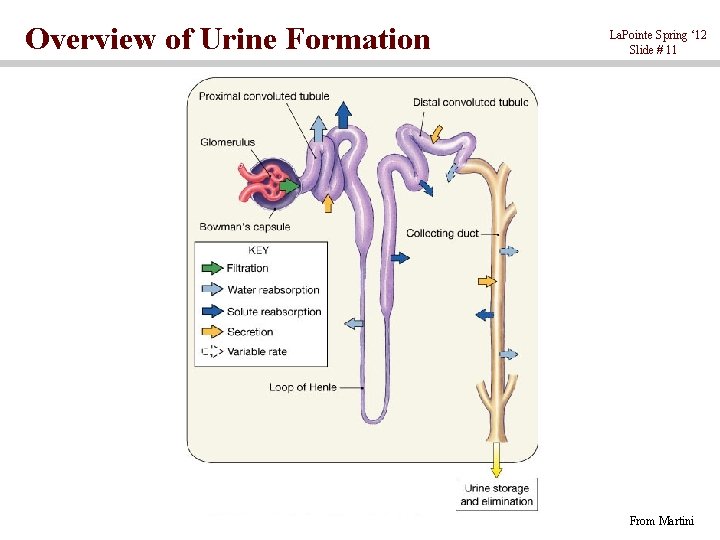
Overview of Urine Formation La. Pointe Spring ‘ 12 Slide # 11 From Martini
Reabsorption and secretion La. Pointe Spring ‘ 12 Slide # 12 • Glomerular filtration produces fluid similar to plasma without proteins • The PCT reabsorbs 60 -70% of the filtrate produced • Reabsorption of most organic nutrients (glucose, amino acids, lipids, etc) • Active and passive reabsorption of sodium, bicarbonate, and other ions • Reabsorption of water • Secretion also occurs in the PCT
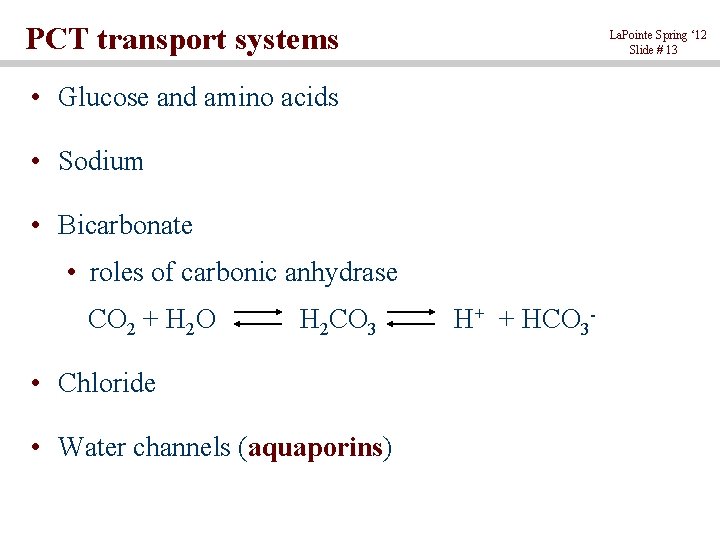
PCT transport systems La. Pointe Spring ‘ 12 Slide # 13 • Glucose and amino acids • Sodium • Bicarbonate • roles of carbonic anhydrase CO 2 + H 2 O H 2 CO 3 • Chloride • Water channels (aquaporins) H+ + HCO 3 -
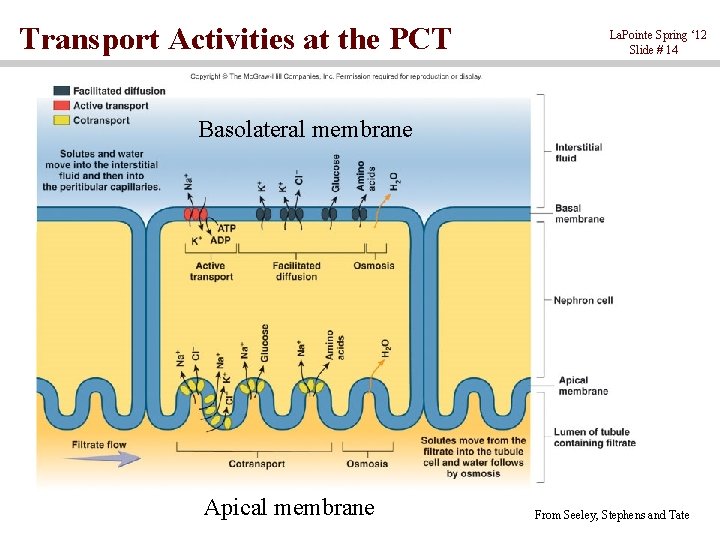
Transport Activities at the PCT La. Pointe Spring ‘ 12 Slide # 14 Basolateral membrane Apical membrane From Seeley, Stephens and Tate
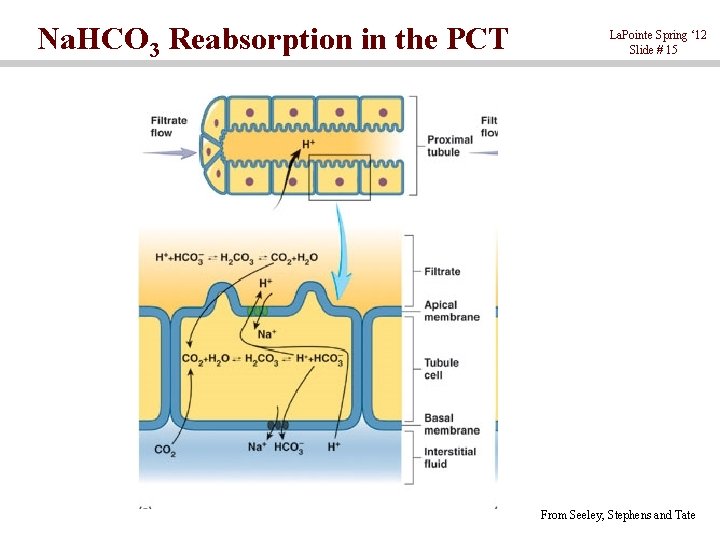
Na. HCO 3 Reabsorption in the PCT La. Pointe Spring ‘ 12 Slide # 15 From Seeley, Stephens and Tate
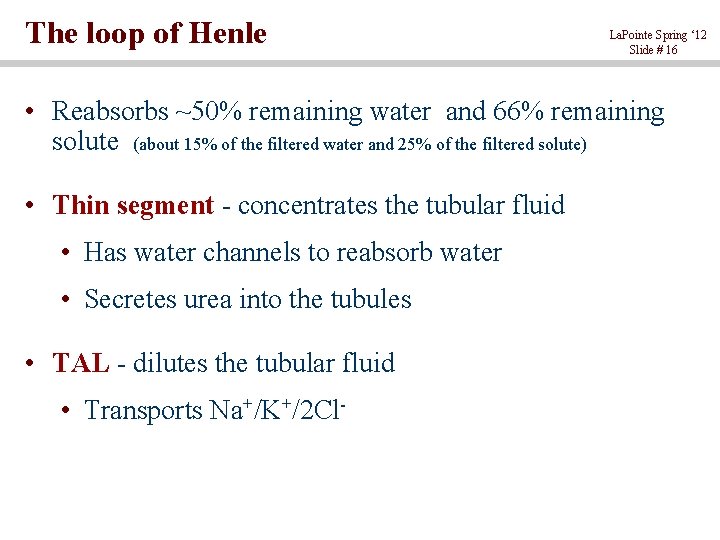
The loop of Henle La. Pointe Spring ‘ 12 Slide # 16 • Reabsorbs ~50% remaining water and 66% remaining solute (about 15% of the filtered water and 25% of the filtered solute) • Thin segment - concentrates the tubular fluid • Has water channels to reabsorb water • Secretes urea into the tubules • TAL - dilutes the tubular fluid • Transports Na+/K+/2 Cl-
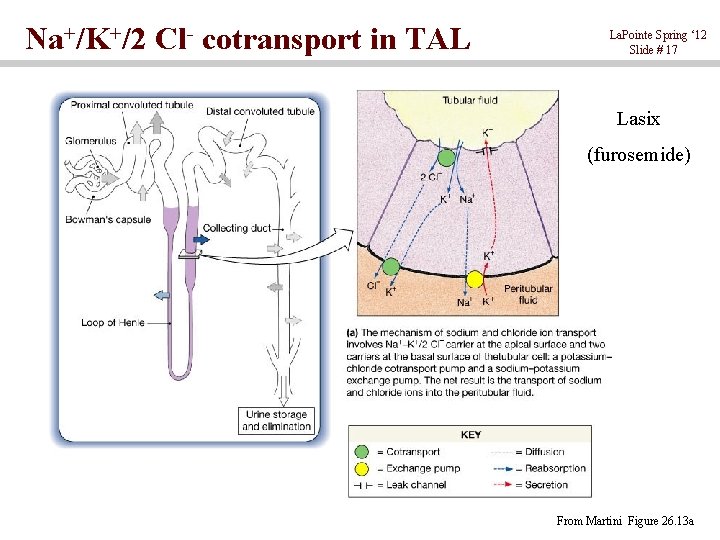
Na+/K+/2 Cl- cotransport in TAL La. Pointe Spring ‘ 12 Slide # 17 Lasix (furosemide) From Martini Figure 26. 13 a
Reabsorption and secretion at the DCT • DCT performs final adjustment of urine • Active secretion or absorption • Absorption • Tubular cells actively reabsorb Na+ and Cl • In exchange for K+ or H+ (secreted) La. Pointe Spring ‘ 12 Slide # 18
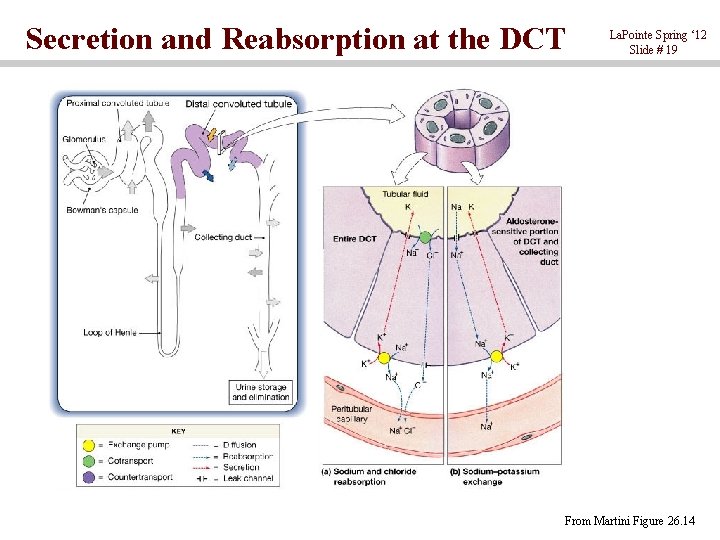
Secretion and Reabsorption at the DCT La. Pointe Spring ‘ 12 Slide # 19 From Martini Figure 26. 14
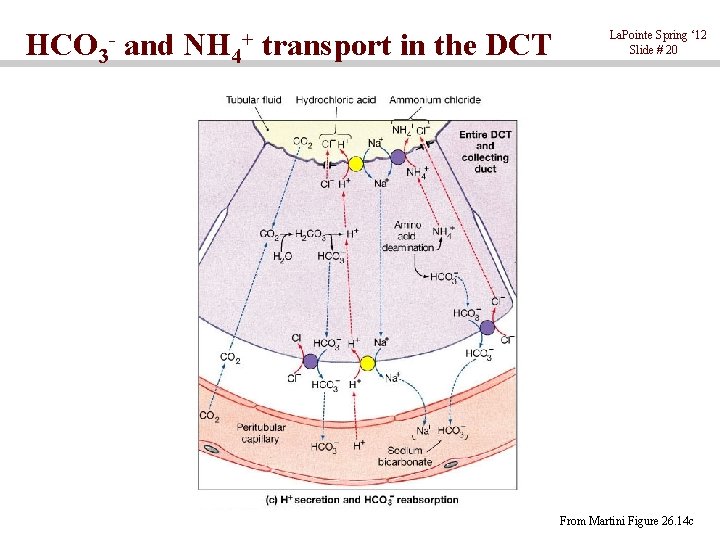
HCO 3 - and NH 4+ transport in the DCT La. Pointe Spring ‘ 12 Slide # 20 From Martini Figure 26. 14 c
Reabsorption and secretion along the collecting ducts La. Pointe Spring ‘ 12 Slide # 21 • Water and solute loss is regulated by aldosterone and ADH • Reabsorption • Sodium ion, bicarbonate (explained in next chapter), and urea • Secretion • hydrogen ions (affected by acid base status as described in next chapter)
Cells of the collecting ducts La. Pointe Spring ‘ 12 Slide # 22 • Principle cells • Water channels (aquaporins) • Na + channels • Sodium reabsorption is regulated by aldosterone and water reabsorption is regulated by ADH • Intercalated cells • Mostly secrete H+ in exchange for K+ via an H+ /K+ ATPase similar to the stomach • Also have an H+ ATPase
Control of urine volume and osmotic concentration • Final urine volume and osmotic concentration are regulated by controlling water reabsorption in the collecting ducts • Precise control allowed via facultative water reabsorption La. Pointe Spring ‘ 12 Slide # 23
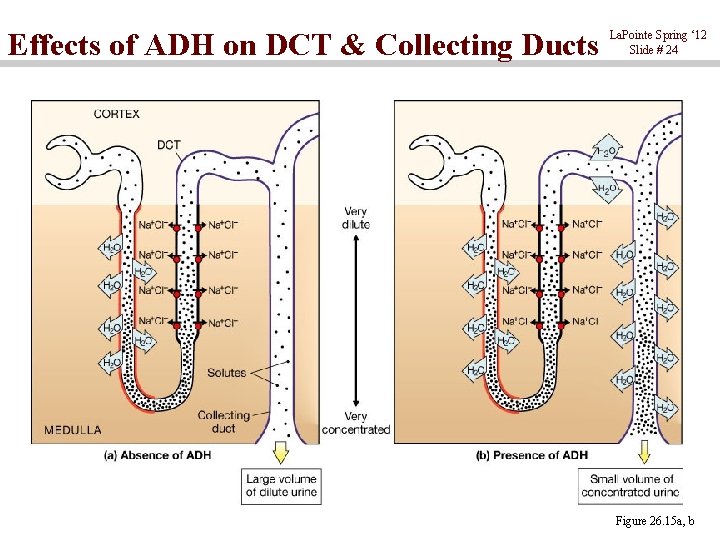
Effects of ADH on DCT & Collecting Ducts La. Pointe Spring ‘ 12 Slide # 24 Figure 26. 15 a, b
Balance and homeostasis La. Pointe Spring ‘ 12 Slide # 25
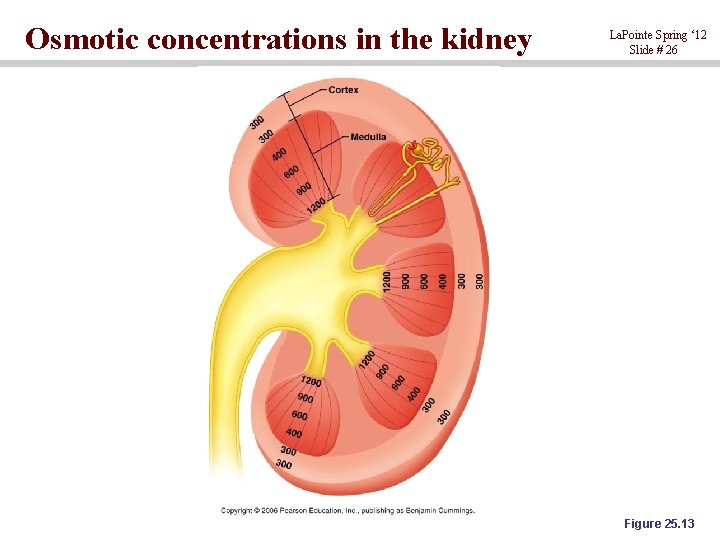
Osmotic concentrations in the kidney La. Pointe Spring ‘ 12 Slide # 26 Figure 25. 13
Countercurrent multiplication La. Pointe Spring ‘ 12 Slide # 27 • Loop of Henle • Functional differences between ascending and descending limbs of loop • Creates osmotic gradient in medulla • Facilitates reabsorption of water and solutes before the DCT • Permits passive reabsorption of water from tubular fluid • Collecting duct reabsorbs urea and sends it back to the descending loop – keeps recycling and thus concentrating the urea
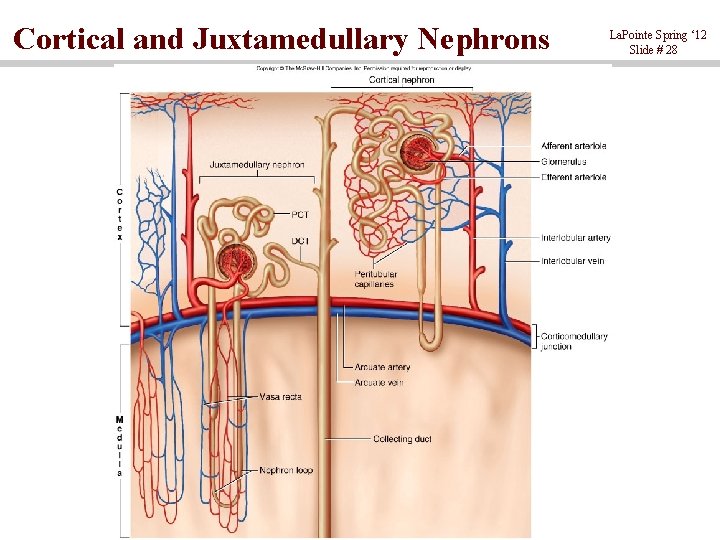
Cortical and Juxtamedullary Nephrons La. Pointe Spring ‘ 12 Slide # 28
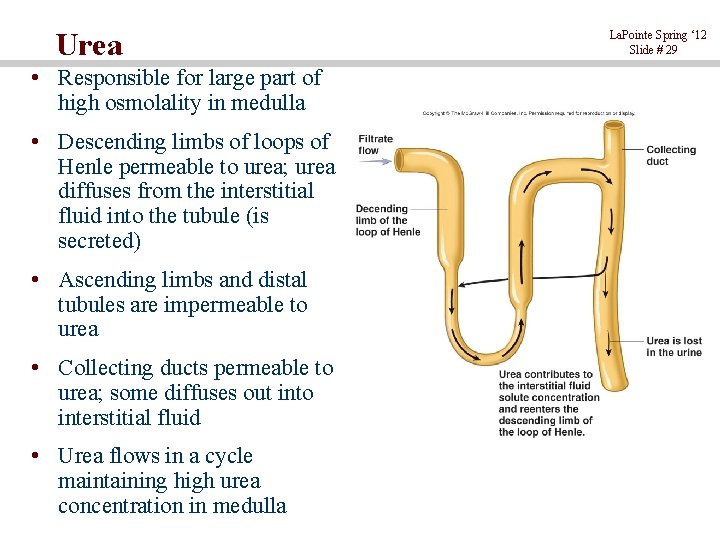
Urea • Responsible for large part of high osmolality in medulla • Descending limbs of loops of Henle permeable to urea; urea diffuses from the interstitial fluid into the tubule (is secreted) • Ascending limbs and distal tubules are impermeable to urea • Collecting ducts permeable to urea; some diffuses out into interstitial fluid • Urea flows in a cycle maintaining high urea concentration in medulla La. Pointe Spring ‘ 12 Slide # 29
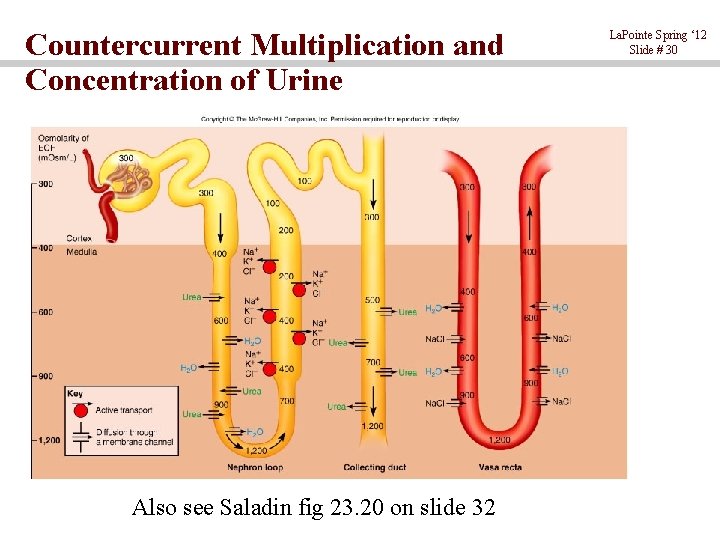
Countercurrent Multiplication and Concentration of Urine Also see Saladin fig 23. 20 on slide 32 La. Pointe Spring ‘ 12 Slide # 30
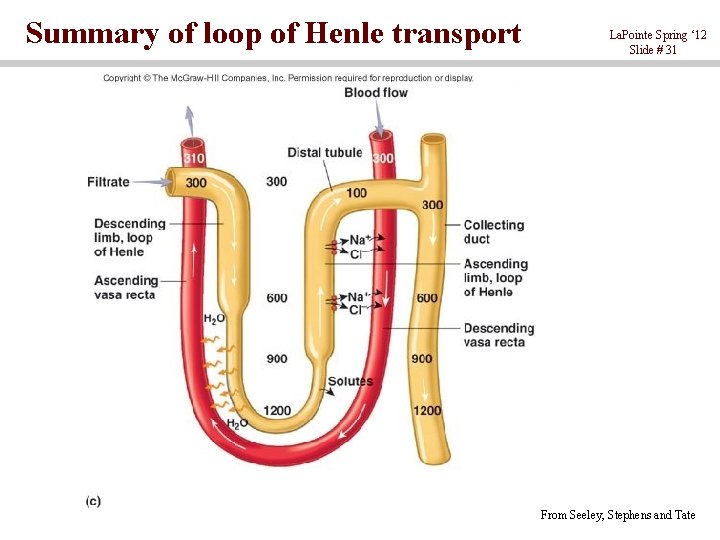
Summary of loop of Henle transport La. Pointe Spring ‘ 12 Slide # 31 From Seeley, Stephens and Tate
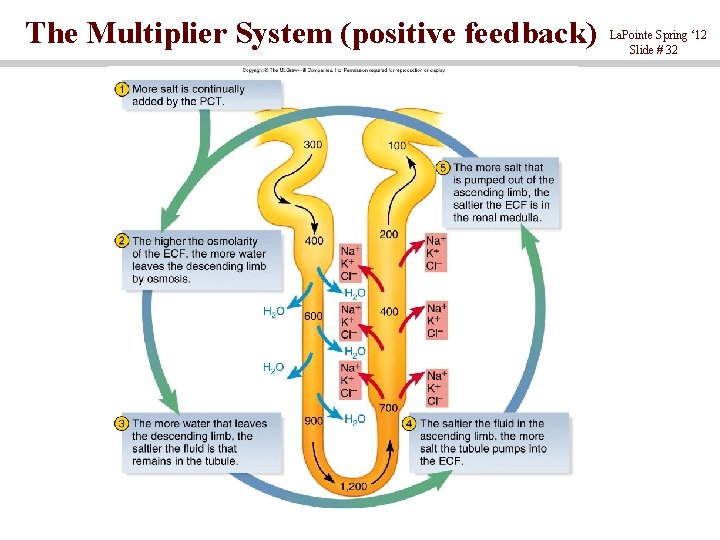
The Multiplier System (positive feedback) La. Pointe Spring ‘ 12 Slide # 32
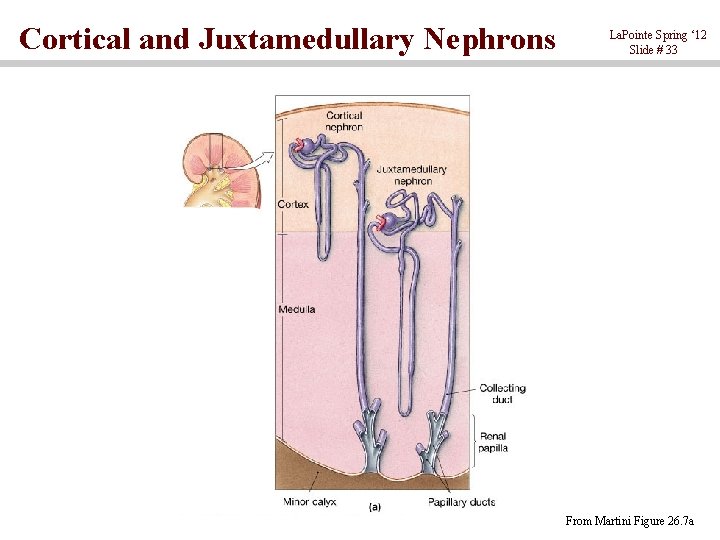
Cortical and Juxtamedullary Nephrons La. Pointe Spring ‘ 12 Slide # 33 From Martini Figure 26. 7 a
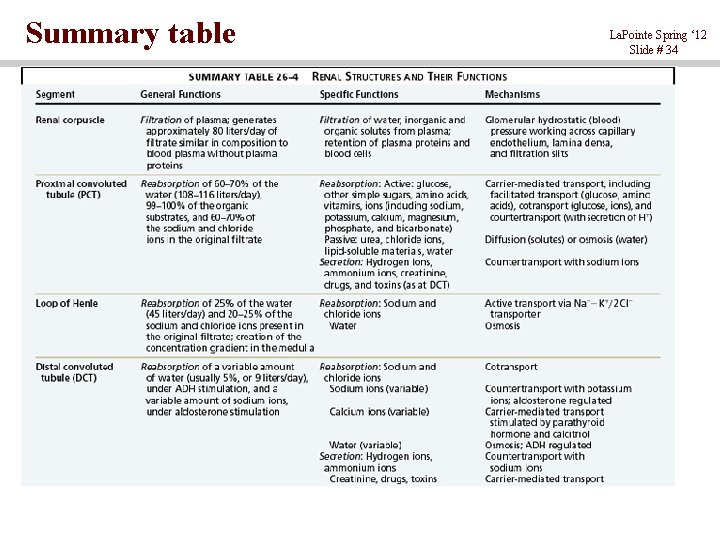
Summary table La. Pointe Spring ‘ 12 Slide # 34
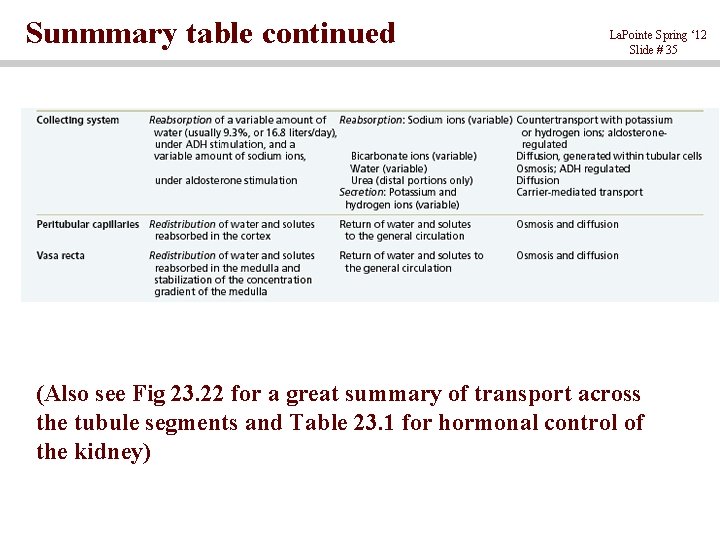
Sunmmary table continued La. Pointe Spring ‘ 12 Slide # 35 (Also see Fig 23. 22 for a great summary of transport across the tubule segments and Table 23. 1 for hormonal control of the kidney)
The ureters • Pair of muscular tubes • Extend from renal pelvis to the bladder • Peristaltic contractions force urine toward the urinary bladder La. Pointe Spring ‘ 12 Slide # 36
The urinary bladder La. Pointe Spring ‘ 12 Slide # 37 • Hollow, muscular organ • Reservoir for the storage of urine • Contraction of detrusor muscle voids bladder (read book for micturation reflex) • Internal features include • Trigone • Neck • Internal urethral sphincter • Rugae
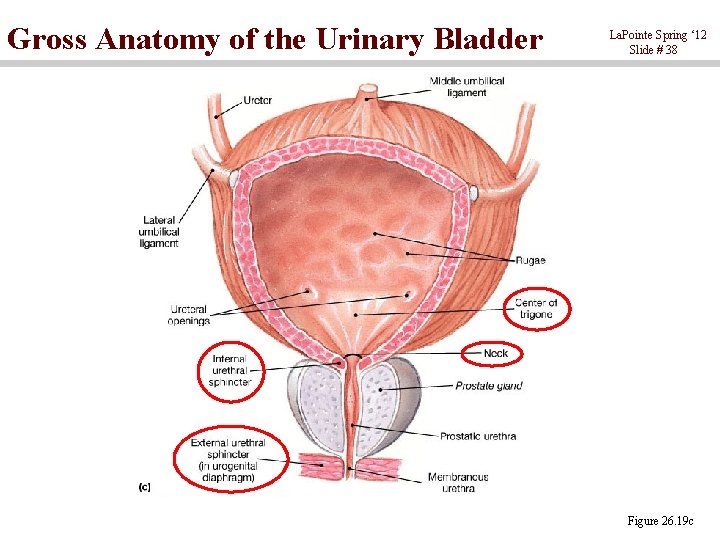
Gross Anatomy of the Urinary Bladder La. Pointe Spring ‘ 12 Slide # 38 Figure 26. 19 c
The urethra La. Pointe Spring ‘ 12 Slide # 39 • Extends from the urinary bladder to the exterior of the body • Passes through external urinary sphincter (urogenital diaphragm) • Differs in length and function in males and females
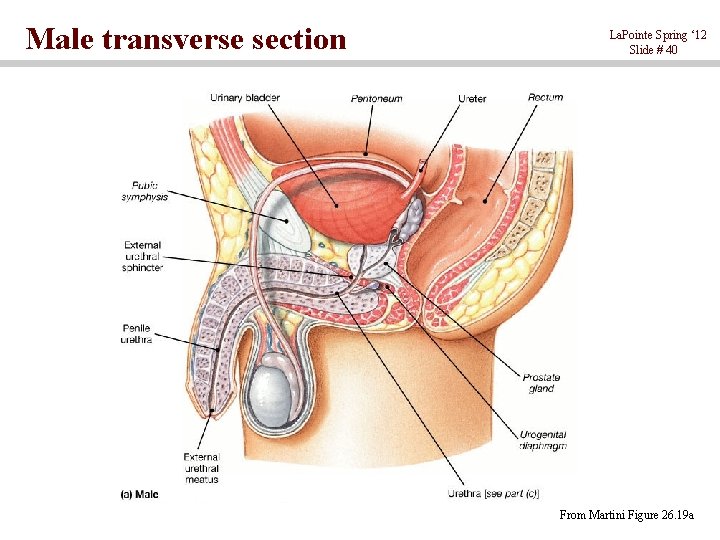
Male transverse section La. Pointe Spring ‘ 12 Slide # 40 From Martini Figure 26. 19 a
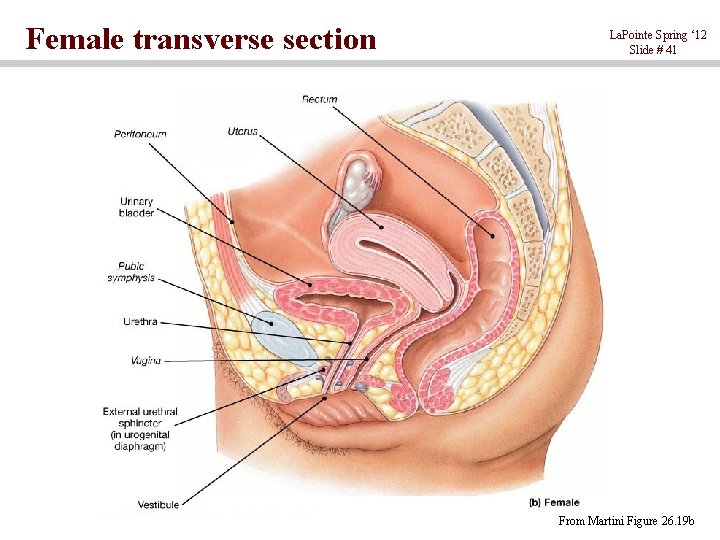
Female transverse section La. Pointe Spring ‘ 12 Slide # 41 From Martini Figure 26. 19 b
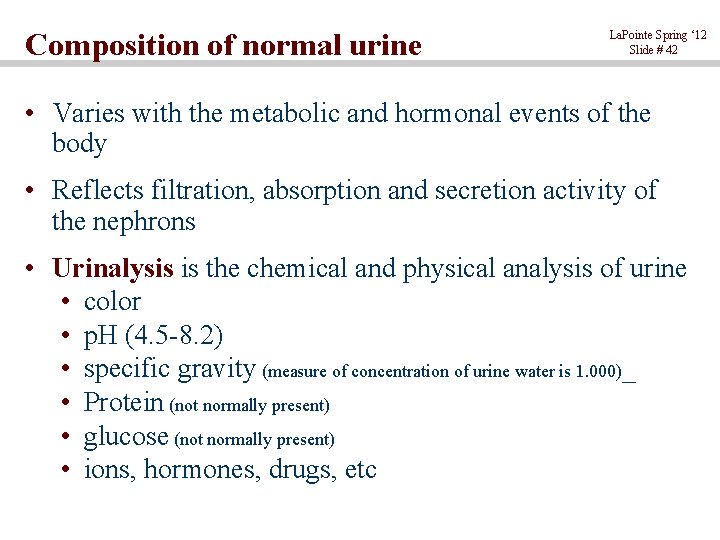
Composition of normal urine La. Pointe Spring ‘ 12 Slide # 42 • Varies with the metabolic and hormonal events of the body • Reflects filtration, absorption and secretion activity of the nephrons • Urinalysis is the chemical and physical analysis of urine • color • p. H (4. 5 -8. 2) • specific gravity (measure of concentration of urine water is 1. 000)_ • Protein (not normally present) • glucose (not normally present) • ions, hormones, drugs, etc
- Slides: 42