
Chapter 22 The Great Depression Begins Election of
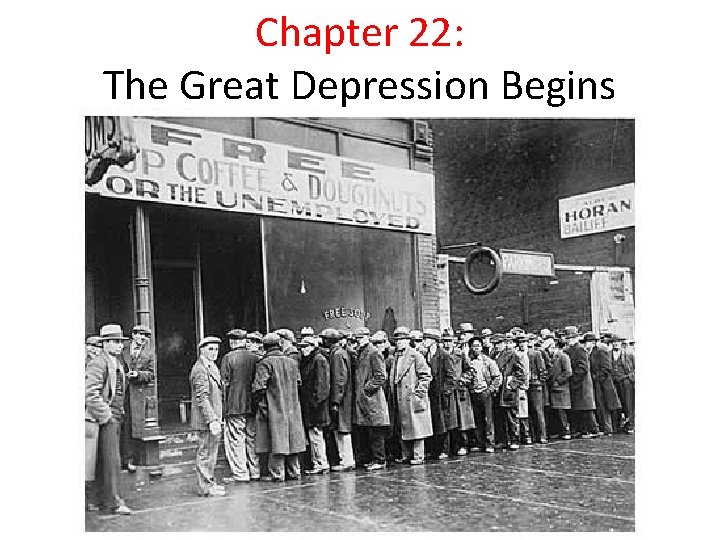
Chapter 22: The Great Depression Begins
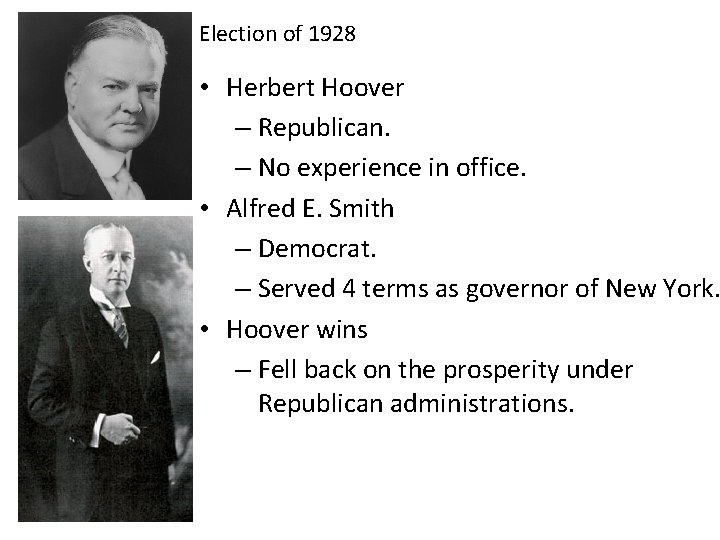
Election of 1928 • Herbert Hoover – Republican. – No experience in office. • Alfred E. Smith – Democrat. – Served 4 terms as governor of New York. • Hoover wins – Fell back on the prosperity under Republican administrations.
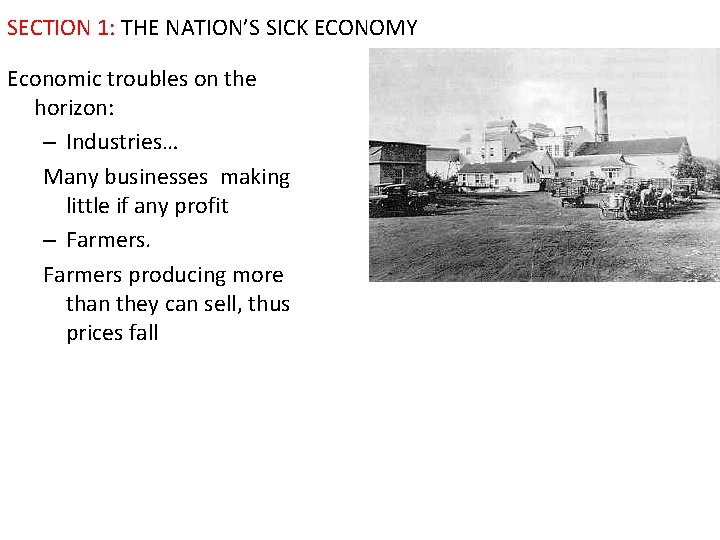
SECTION 1: THE NATION’S SICK ECONOMY Economic troubles on the horizon: – Industries… Many businesses making little if any profit – Farmers producing more than they can sell, thus prices fall
Economic troubles on the horizon: – § § § Consumers People have less money to spend Rising prices Stagnant wages – Credit § Many people living beyond their means § Credit is easy to obtain – Uneven distribution of income § During the 20’s nearly half of Americas families earned less than $1500/year § The wealthiest 5% took in 1/3 of the nations income § The poorest 40% earned just over 10% of the nations income
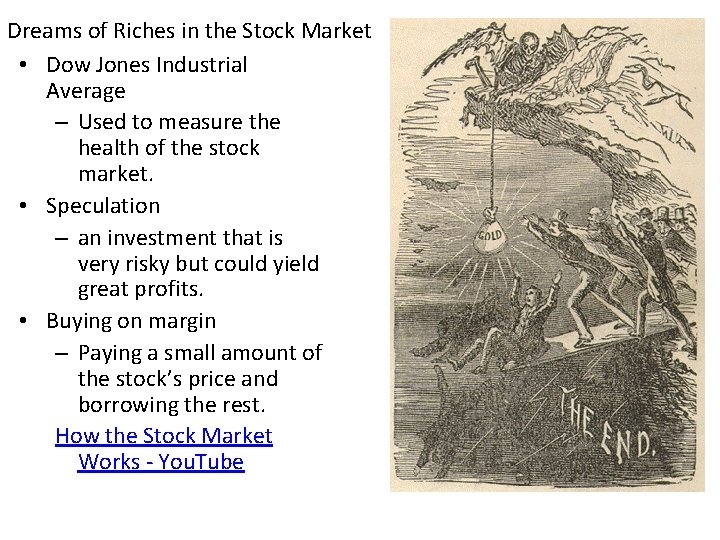
Dreams of Riches in the Stock Market • Dow Jones Industrial Average – Used to measure the health of the stock market. • Speculation – an investment that is very risky but could yield great profits. • Buying on margin – Paying a small amount of the stock’s price and borrowing the rest. How the Stock Market Works - You. Tube
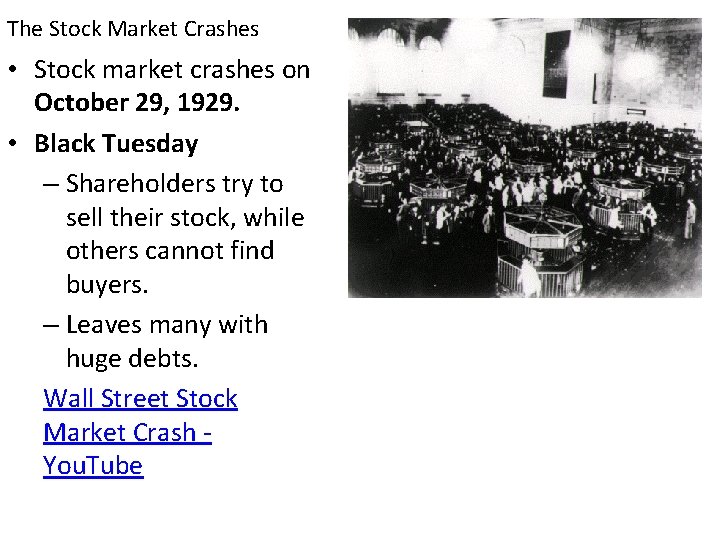
The Stock Market Crashes • Stock market crashes on October 29, 1929. • Black Tuesday – Shareholders try to sell their stock, while others cannot find buyers. – Leaves many with huge debts. Wall Street Stock Market Crash You. Tube
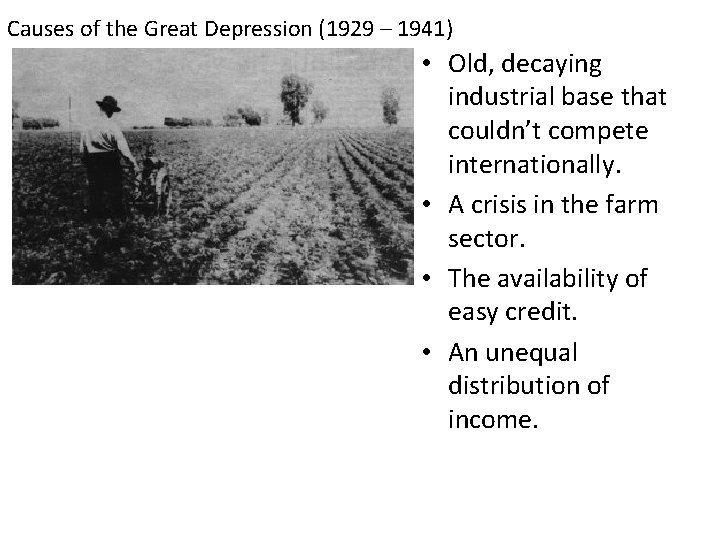
Causes of the Great Depression (1929 – 1941) • Old, decaying industrial base that couldn’t compete internationally. • A crisis in the farm sector. • The availability of easy credit. • An unequal distribution of income.
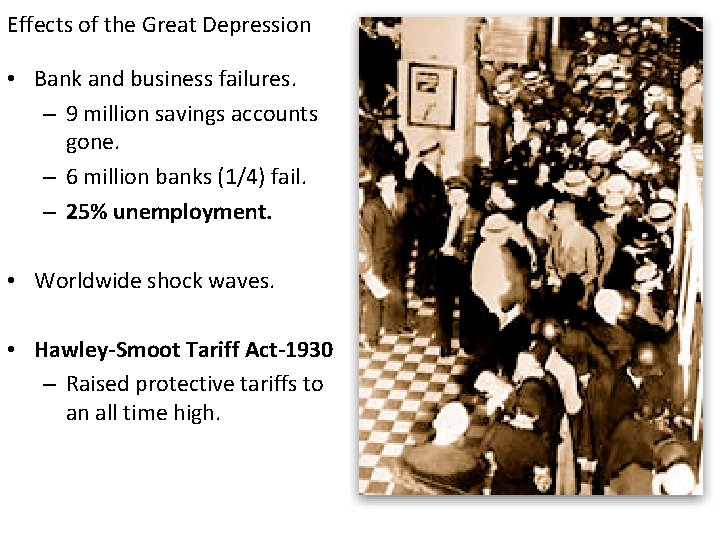
Effects of the Great Depression • Bank and business failures. – 9 million savings accounts gone. – 6 million banks (1/4) fail. – 25% unemployment. • Worldwide shock waves. • Hawley-Smoot Tariff Act-1930 – Raised protective tariffs to an all time high.
Make a Prediction Think about the economic situation in Post WWI Europe and America and try to predict the impact of the Hawley. Smoot Tariff.
Hawley-Smoot Tariff goes awry Reduced the flow of goods into the U. S. , thus denying other nations of cash which could have been used to purchase American goods. Europe responded by raising tariffs on American goods. Impacted unemployment by hurting companies that could no longer export goods to Europe
Bell Work What were some of the problems America faced on the eve of the stock market crash?
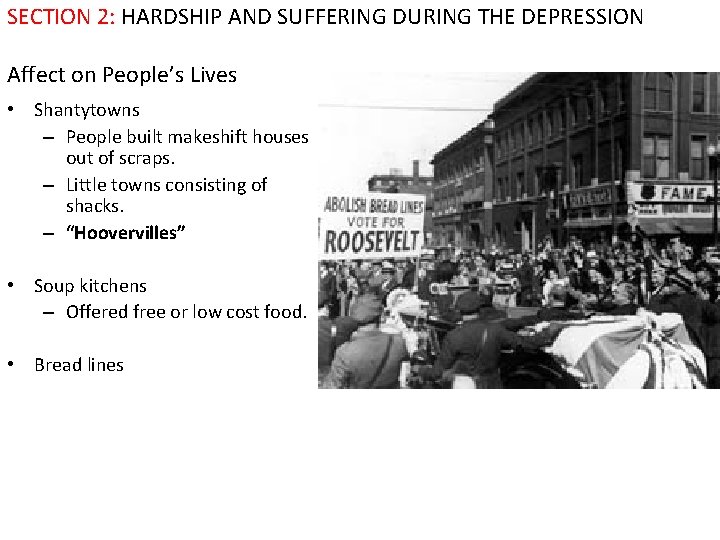
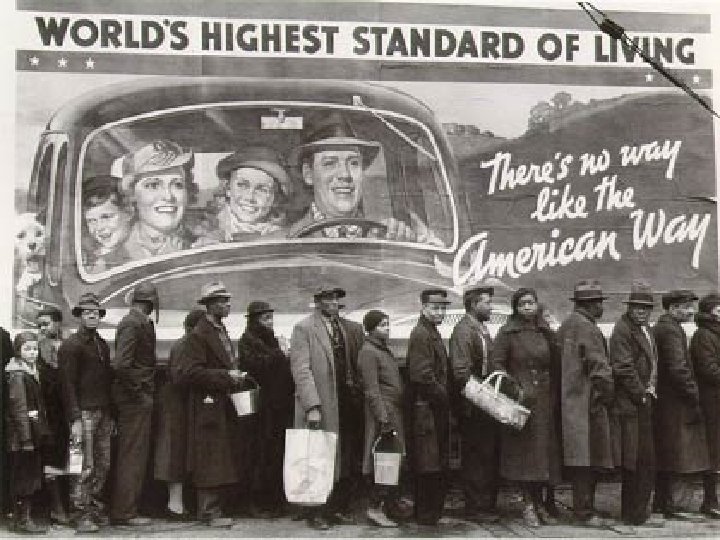
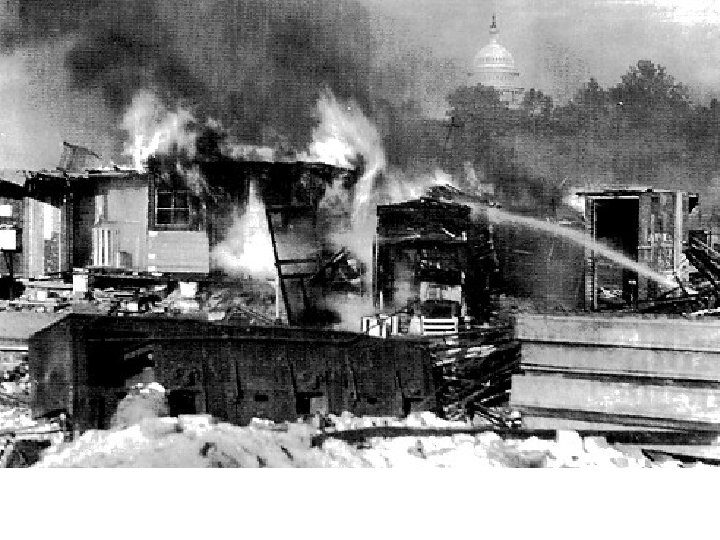
SECTION 2: HARDSHIP AND SUFFERING DURING THE DEPRESSION Affect on People’s Lives • Shantytowns – People built makeshift houses out of scraps. – Little towns consisting of shacks. – “Hoovervilles” • Soup kitchens – Offered free or low cost food. • Bread lines
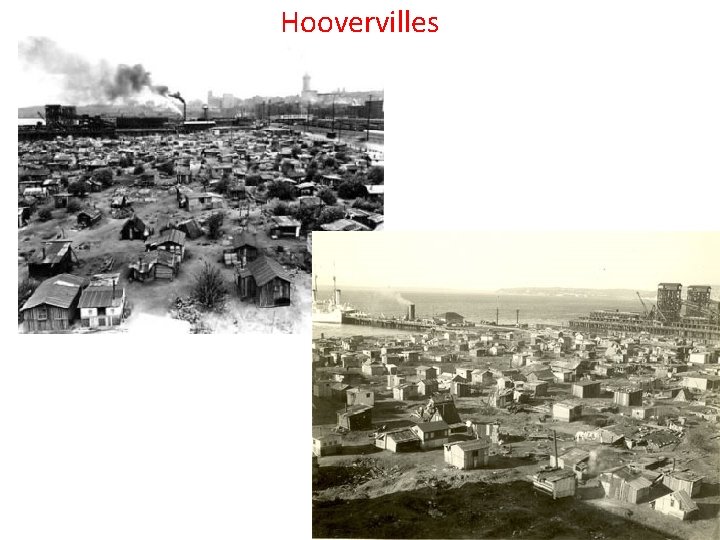
Hoovervilles
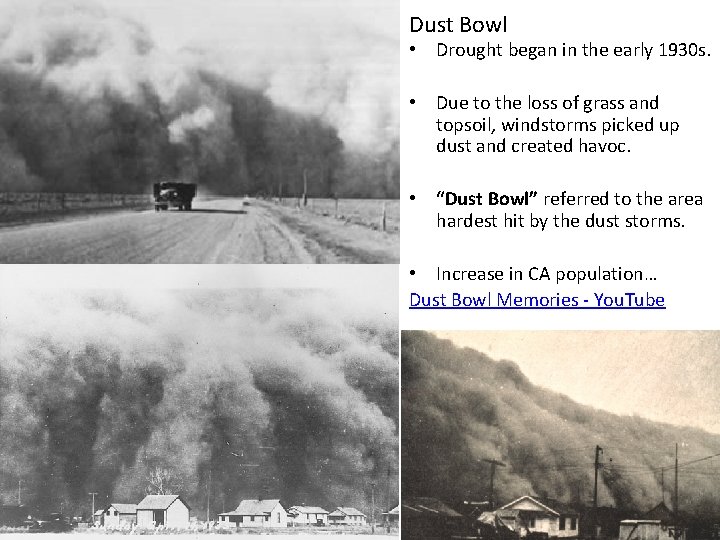
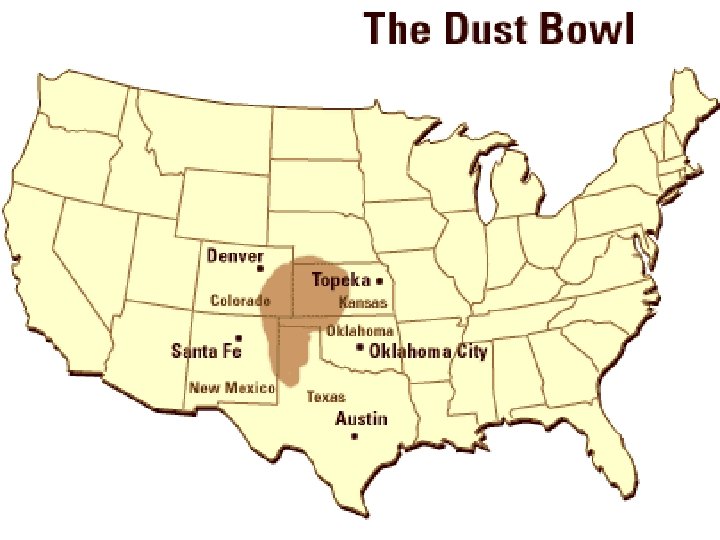
Dust Bowl • Drought began in the early 1930 s. • Due to the loss of grass and topsoil, windstorms picked up dust and created havoc. • “Dust Bowl” referred to the area hardest hit by the dust storms. • Increase in CA population… Dust Bowl Memories - You. Tube
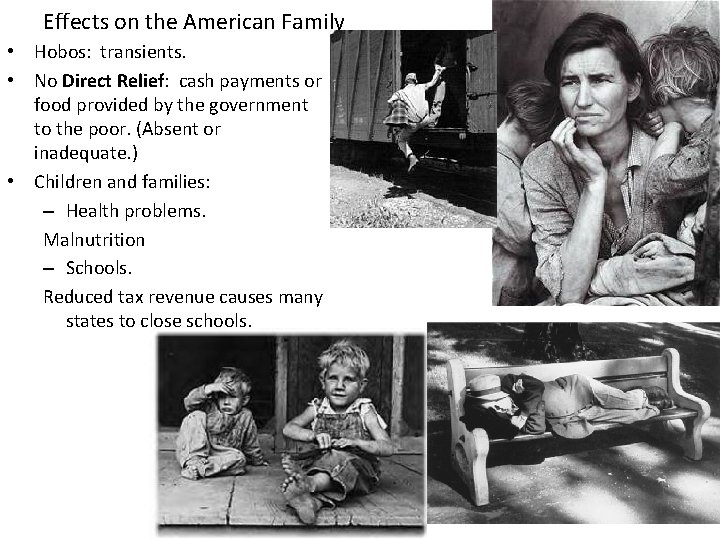
Effects on the American Family • Hobos: transients. • No Direct Relief: cash payments or food provided by the government to the poor. (Absent or inadequate. ) • Children and families: – Health problems. Malnutrition – Schools. Reduced tax revenue causes many states to close schools.
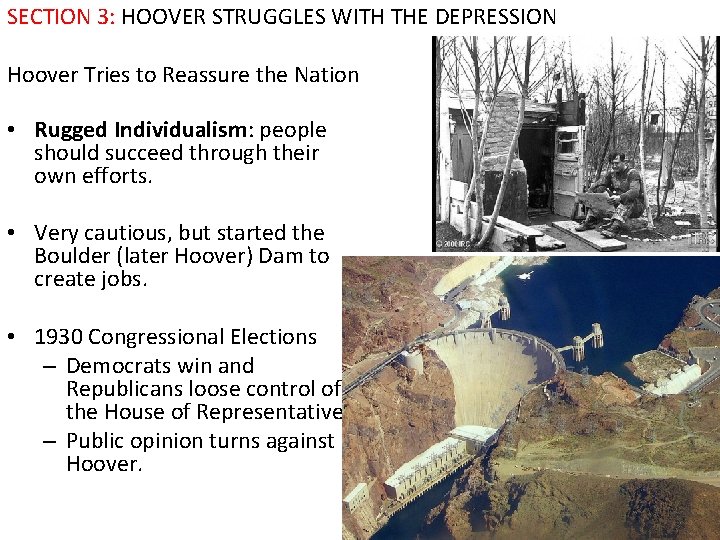
SECTION 3: HOOVER STRUGGLES WITH THE DEPRESSION Hoover Tries to Reassure the Nation • Rugged Individualism: people should succeed through their own efforts. • Very cautious, but started the Boulder (later Hoover) Dam to create jobs. • 1930 Congressional Elections – Democrats win and Republicans loose control of the House of Representatives. – Public opinion turns against Hoover.
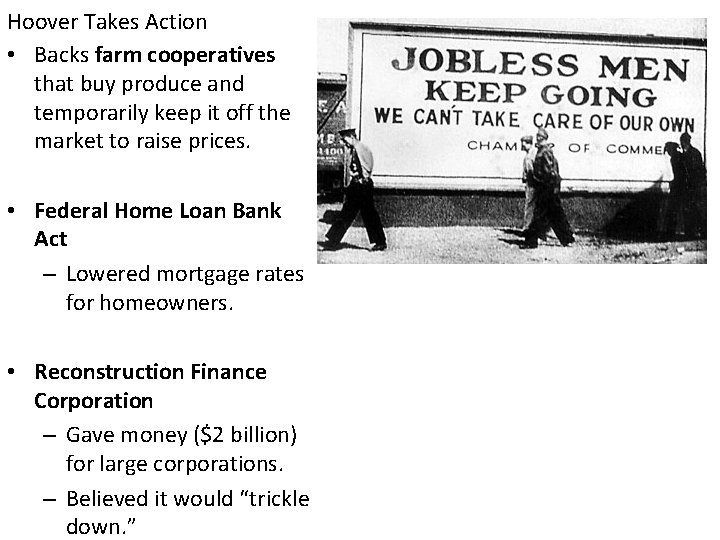
Hoover Takes Action • Backs farm cooperatives that buy produce and temporarily keep it off the market to raise prices. • Federal Home Loan Bank Act – Lowered mortgage rates for homeowners. • Reconstruction Finance Corporation – Gave money ($2 billion) for large corporations. – Believed it would “trickle down. ”
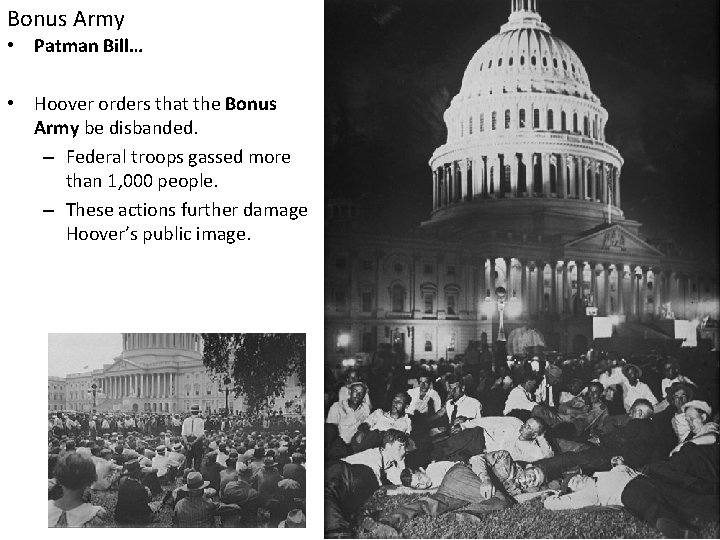
Bonus Army • Patman Bill… • Hoover orders that the Bonus Army be disbanded. – Federal troops gassed more than 1, 000 people. – These actions further damage Hoover’s public image.
Chapter 23: The New Deal
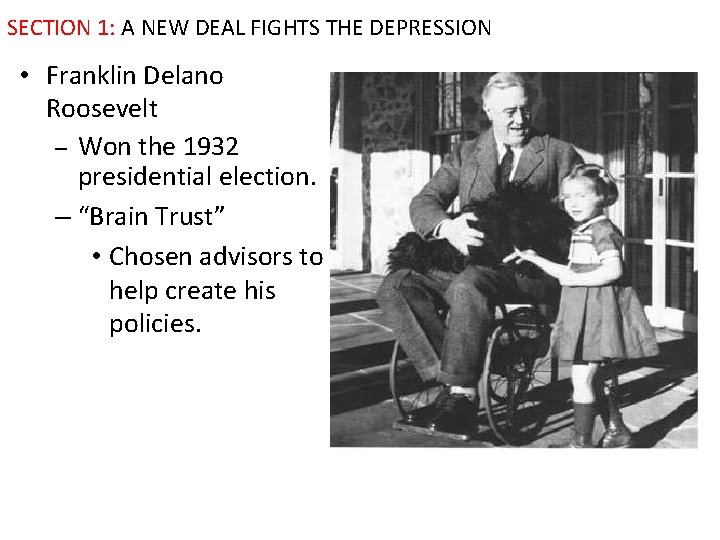
SECTION 1: A NEW DEAL FIGHTS THE DEPRESSION • Franklin Delano Roosevelt – Won the 1932 presidential election. – “Brain Trust” • Chosen advisors to help create his policies.
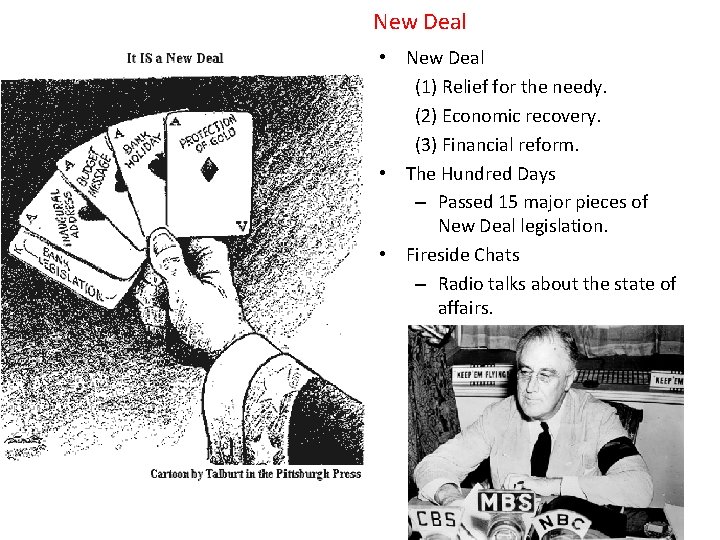
New Deal • New Deal (1) Relief for the needy. (2) Economic recovery. (3) Financial reform. • The Hundred Days – Passed 15 major pieces of New Deal legislation. • Fireside Chats – Radio talks about the state of affairs.
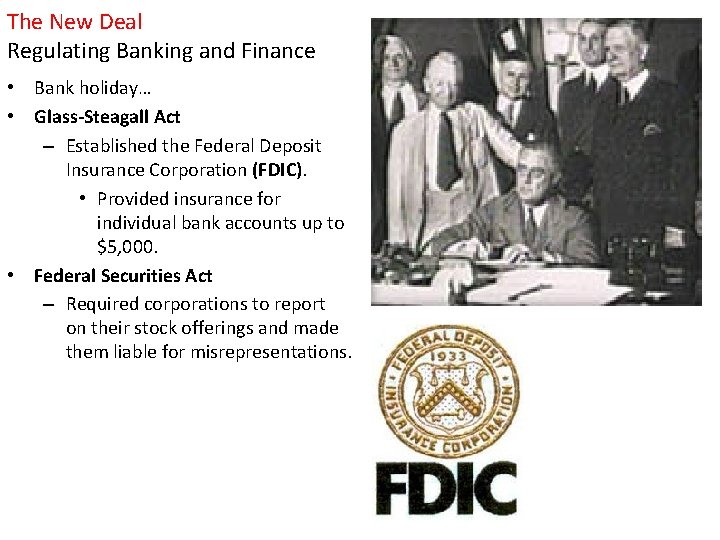
The New Deal Regulating Banking and Finance • Bank holiday… • Glass-Steagall Act – Established the Federal Deposit Insurance Corporation (FDIC). • Provided insurance for individual bank accounts up to $5, 000. • Federal Securities Act – Required corporations to report on their stock offerings and made them liable for misrepresentations.
Bell Work What were the 3 Rs’ of the New Deal?
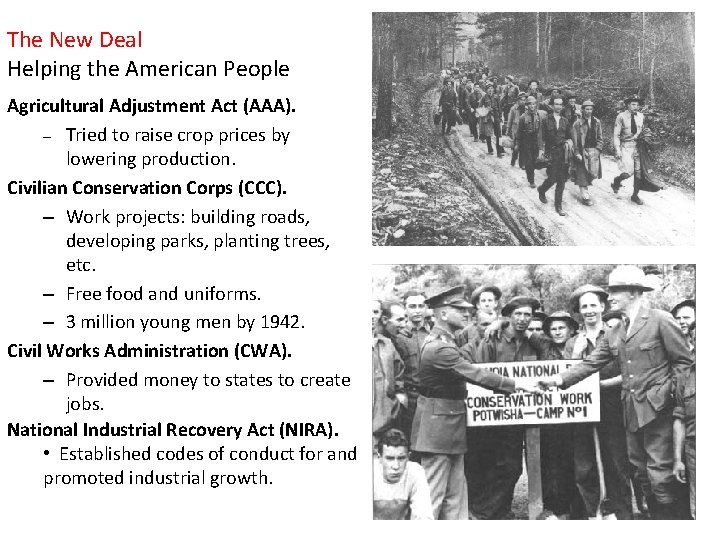
The New Deal Helping the American People Agricultural Adjustment Act (AAA). – Tried to raise crop prices by lowering production. Civilian Conservation Corps (CCC). – Work projects: building roads, developing parks, planting trees, etc. – Free food and uniforms. – 3 million young men by 1942. Civil Works Administration (CWA). – Provided money to states to create jobs. National Industrial Recovery Act (NIRA). • Established codes of conduct for and promoted industrial growth.
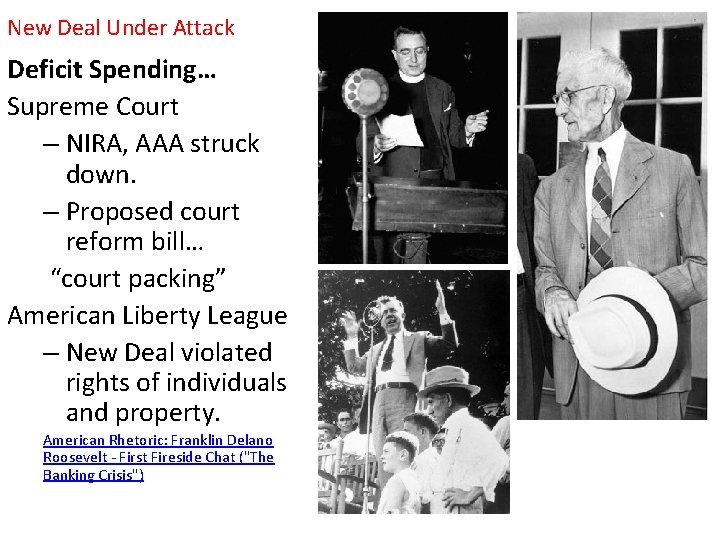
New Deal Under Attack Deficit Spending… Supreme Court – NIRA, AAA struck down. – Proposed court reform bill… “court packing” American Liberty League – New Deal violated rights of individuals and property. American Rhetoric: Franklin Delano Roosevelt - First Fireside Chat ("The Banking Crisis")
The Fireside Chats After listening to the speech, work together in groups of three or to determine the main points that FDR is making. You should focus on: • The key elements of the bank holiday he has announced. • Specific examples of how he explains the banking system. • Examples of simple, yet powerful imagery and language that he employs. • The overall effectiveness of the speech. Then, answer the following question. . .
Why you believe this speech would have been so effective in 1933?
Bell Work Why were FDR’s fireside chats so important?
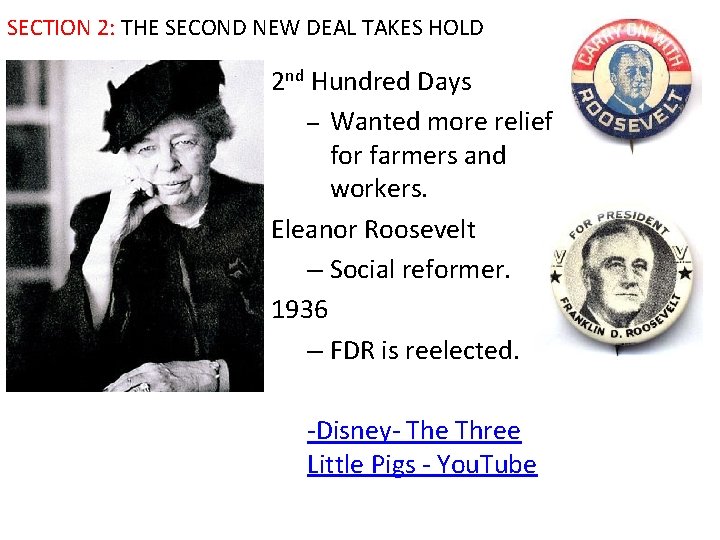
SECTION 2: THE SECOND NEW DEAL TAKES HOLD 2 nd Hundred Days – Wanted more relief for farmers and workers. Eleanor Roosevelt – Social reformer. 1936 – FDR is reelected. -Disney- The Three Little Pigs - You. Tube
Allegorical elements of the Disney’s Three Little Pigs. Allegory: § a story, poem, or picture that can be interpreted to reveal a deeper hidden meaning, typically a moral or political one § an allegory is a story with two meanings, a literal meaning and a symbolic meaning.
Allegorical elements of the Disney’s Three Little Pigs= Americans Wolf= Great Depression Message: If we work hard and work together, we can get through these tough times. ''Wisdom along with courage is enough to defeat big bad wolves of every description and send them slinking away. '‘ --Walt Disney
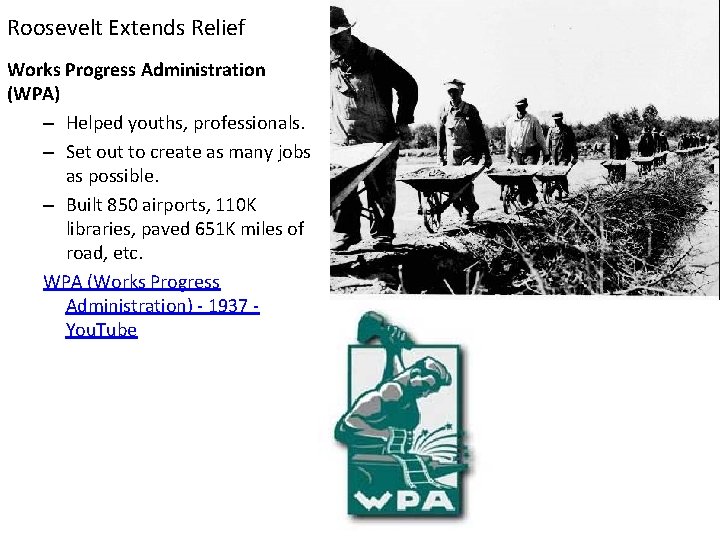
Roosevelt Extends Relief Works Progress Administration (WPA) – Helped youths, professionals. – Set out to create as many jobs as possible. – Built 850 airports, 110 K libraries, paved 651 K miles of road, etc. WPA (Works Progress Administration) - 1937 You. Tube
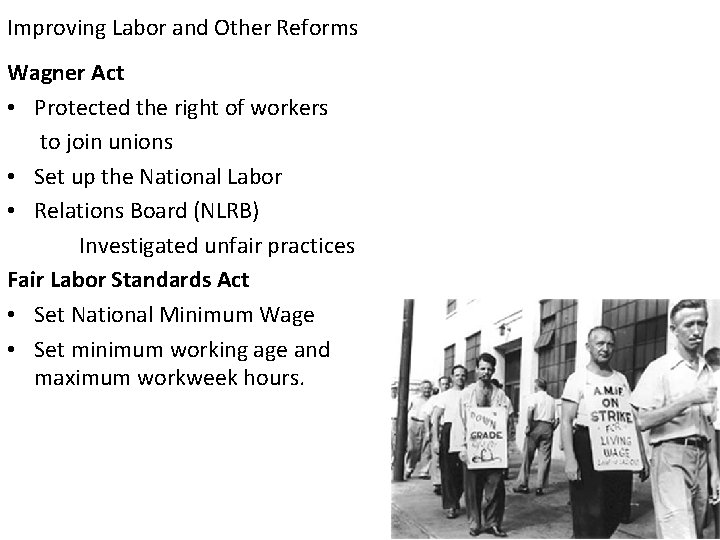
Improving Labor and Other Reforms Wagner Act • Protected the right of workers to join unions • Set up the National Labor • Relations Board (NLRB) Investigated unfair practices Fair Labor Standards Act • Set National Minimum Wage • Set minimum working age and maximum workweek hours.
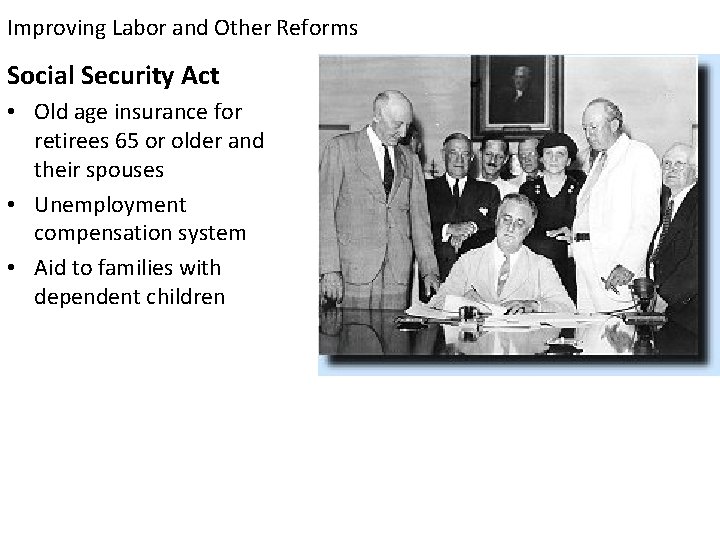
Improving Labor and Other Reforms Social Security Act • Old age insurance for retirees 65 or older and their spouses • Unemployment compensation system • Aid to families with dependent children
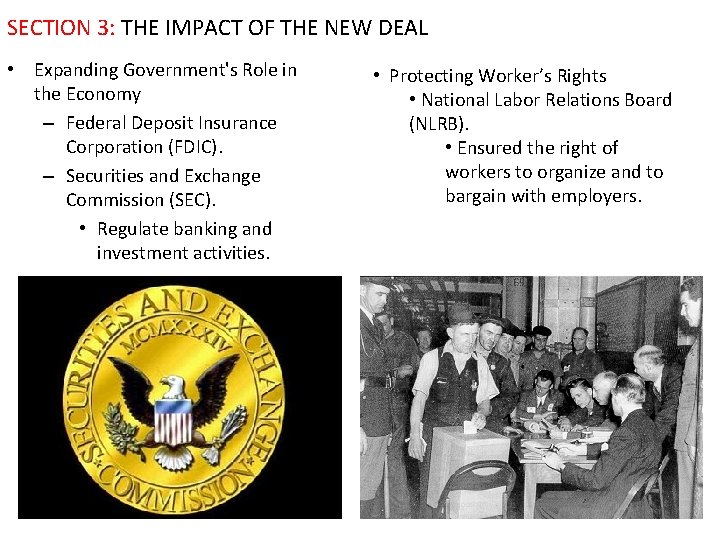
SECTION 3: THE IMPACT OF THE NEW DEAL • Expanding Government's Role in the Economy – Federal Deposit Insurance Corporation (FDIC). – Securities and Exchange Commission (SEC). • Regulate banking and investment activities. • Protecting Worker’s Rights • National Labor Relations Board (NLRB). • Ensured the right of workers to organize and to bargain with employers.
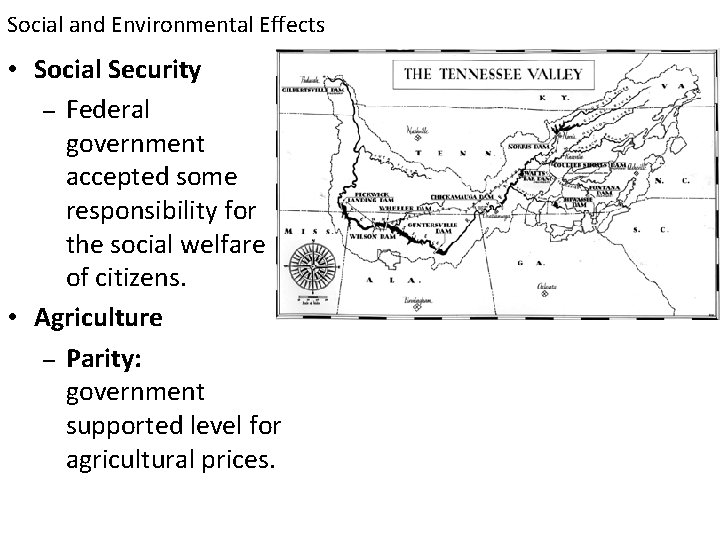
Social and Environmental Effects • Social Security – Federal government accepted some responsibility for the social welfare of citizens. • Agriculture – Parity: government supported level for agricultural prices.
Ultimate Effects of the New Deal The New Deal Increased the national debt through massive deficit spending Greatly increased the government’s power and influence over the economy Made the government take social responsibility for its people Put millions back to work Improved the nation’s infrastructure Reformed the financial system (banking and stock market). Helps to bring the U. S. out of the Depression before WWII brings us completely out
The New Deal Affects Many Groups African Americans • FDR employs a group of influential AA to advise him on racial issues • Despite his effort to promote racial equality, FDR was not committed to full Civil Rights for African Americans because he was afraid of upsetting southern whites. • FDR did not support a federal anti-lynching law or a law to abolish the poll tax
The New Deal Affects Many Groups Women • First woman is appointed to a Cabinet Position • First woman ambassador • FDR appoints a number of women as federal judges Despite these gains women still struggle for equal rights 82% of Americans polled believe a wife should not work if her husband is employed.
FDR does not like deficit spending, thus he does not launch a third phase of reform By 1937, manufacturing is back to 1929 levels and unemployment is 14% By 1939 the New Deal was effectively over and FDR was becoming increasingly concerned with events in Europe
- Slides: 43