
Chapter 22 Room Plan Components Introduction Roof design
- Slides: 22
Chapter 22 Room Plan Components
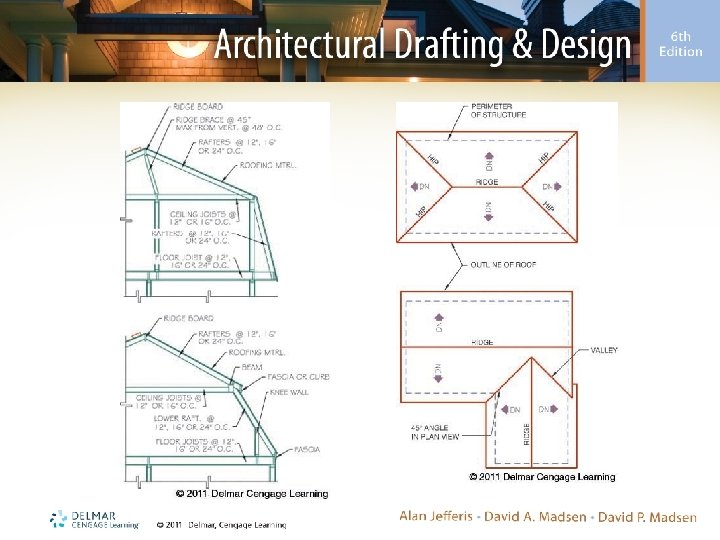
Introduction • Roof design is considered before the plan – Designer considers shape, type, and aesthetics as floor plan and elevations are drawn – Drafter should understand types, pitches, shapes, and materials
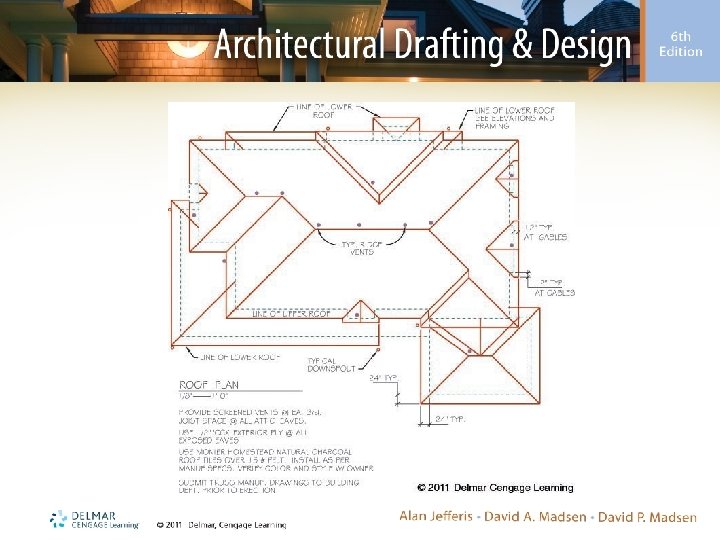
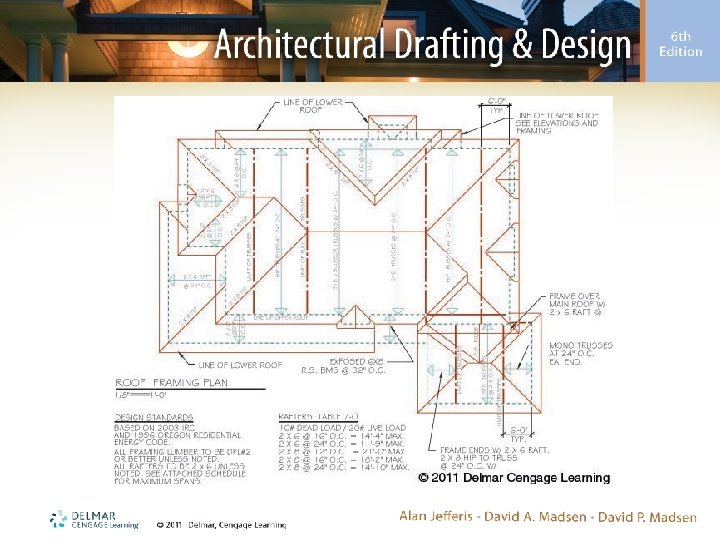
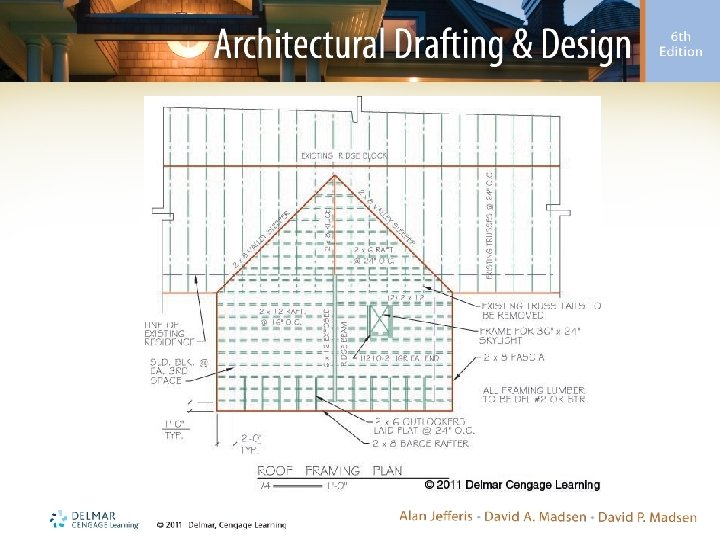
Types of Roof Plans • Roof plan – Used to show roof shape • Roof framing plan – Usually required for complicated roof shapes – Shows size and direction of construction members required to frame the roof
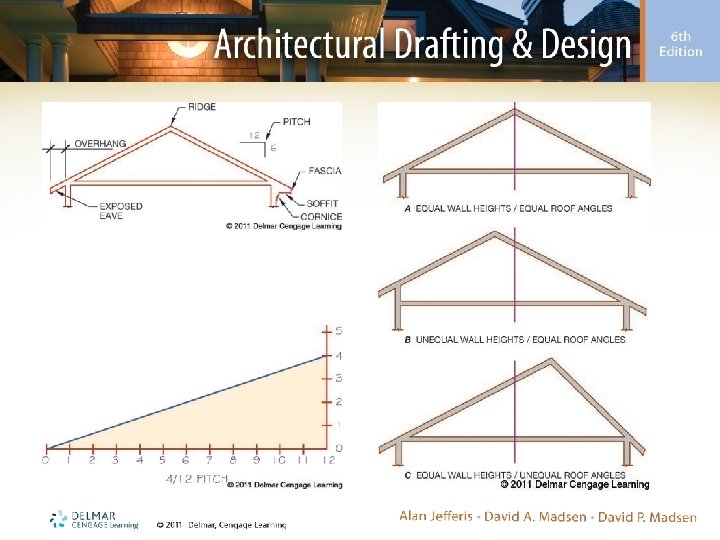
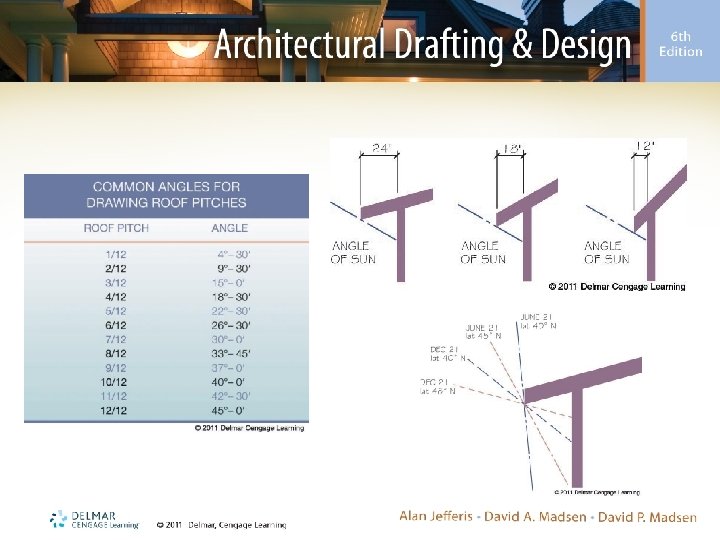
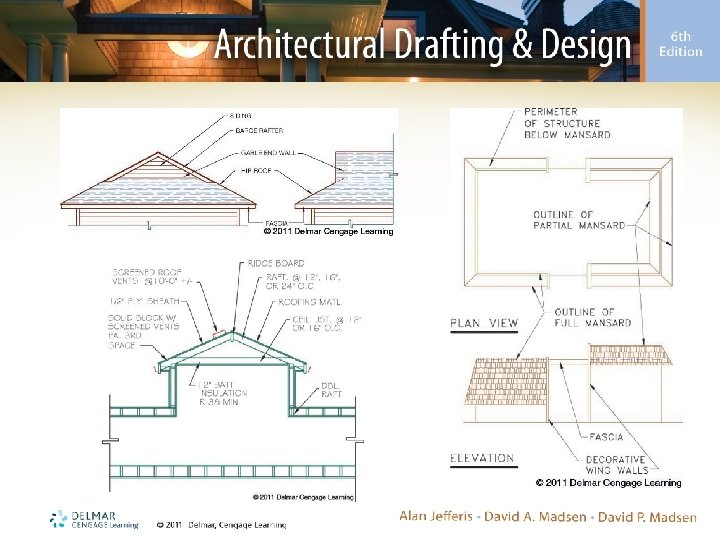
Common Roof Terms • Common terms: – Ridge – Overhangs • Roof pitch (e. g. , slight, gradual, moderate, and steep slopes) • Sun angle • Overhang size – Eves and rakes • Boxed and soffited eaves – Cornice – Fascias and barge rafters
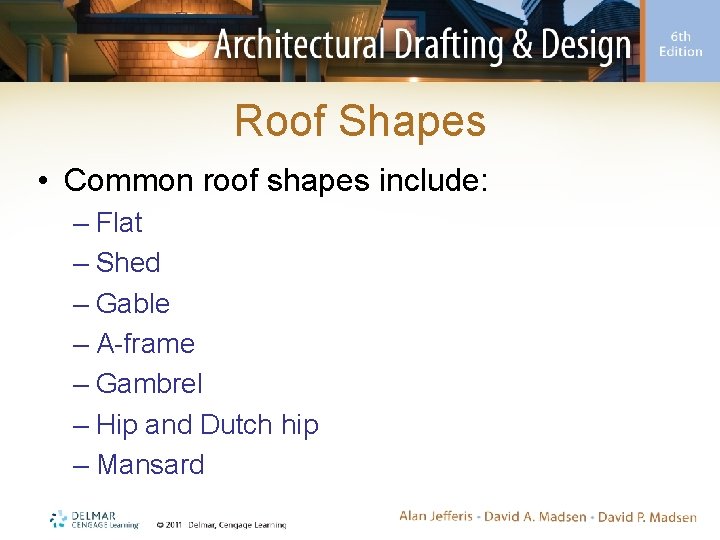
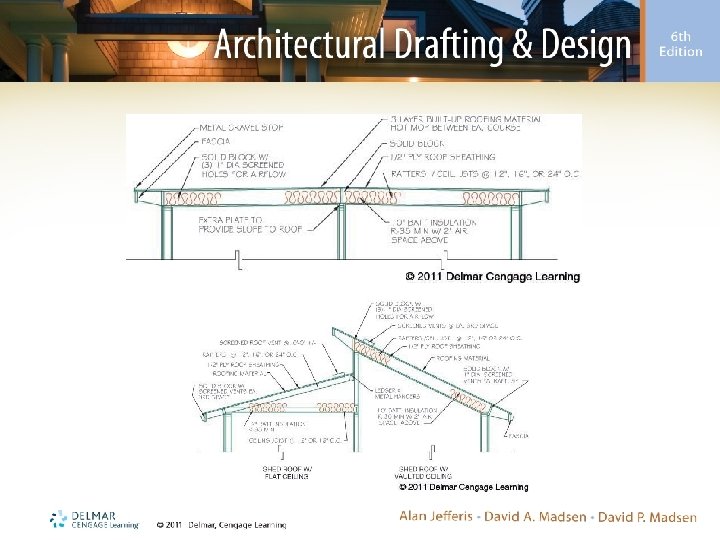
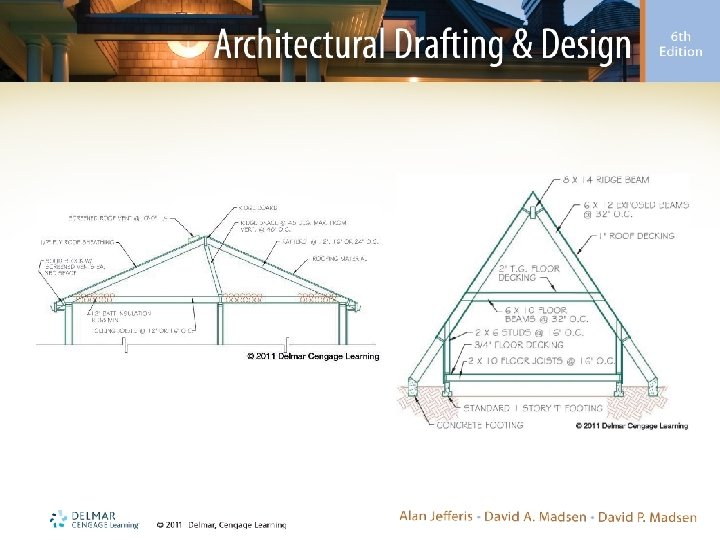
Roof Shapes • Common roof shapes include: – Flat – Shed – Gable – A-frame – Gambrel – Hip and Dutch hip – Mansard
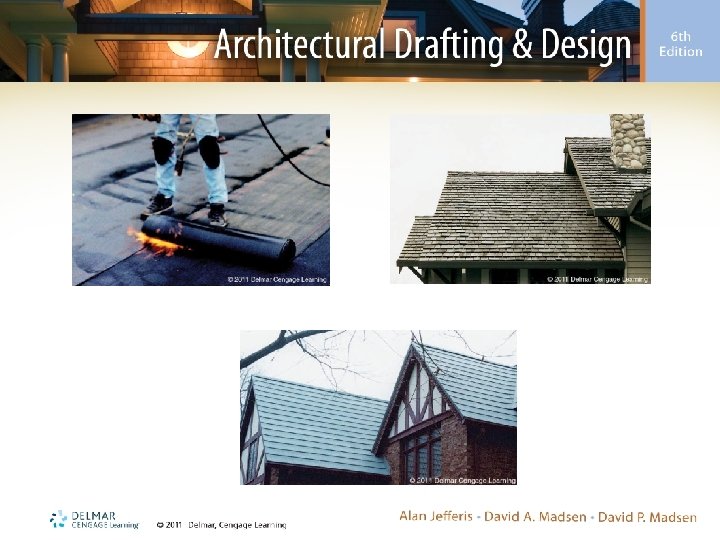
Roofing Materials • Material depends on: – Pitch – Exterior style – Cost – Weather
Roofing Materials (cont’d. ) • Types of materials: – Built-up roofing • Felt and asphalt used on flat or low-sloped roofs – Shingles • Asphalt, fiberglass, and wood • Wood is also used for shakes (thicker shingles with irregular texture) • Masonite and metal
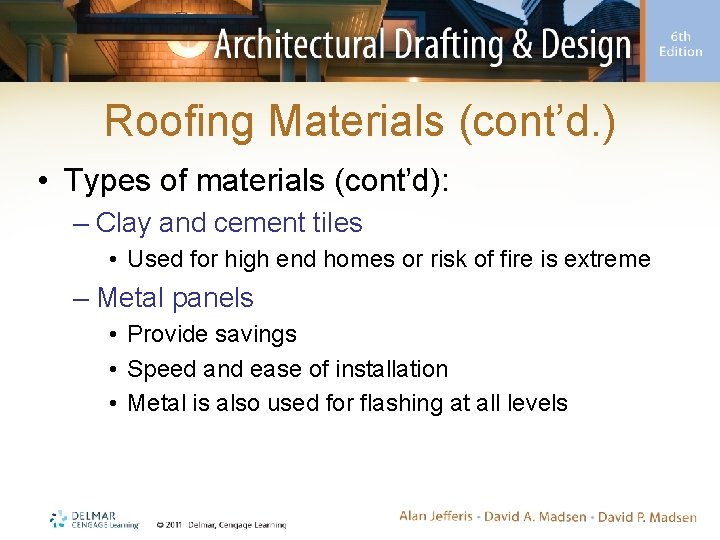
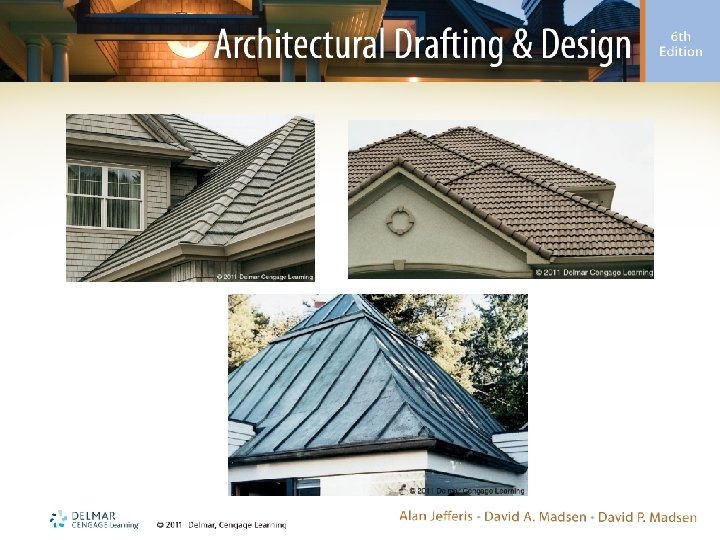
Roofing Materials (cont’d. ) • Types of materials (cont’d): – Clay and cement tiles • Used for high end homes or risk of fire is extreme – Metal panels • Provide savings • Speed and ease of installation • Metal is also used for flashing at all levels
Roof Ventilation and Access • Attic is the space formed between ceiling joists and rafters – Typically provided with vents covered with 1/16" minimum and ¼" maximum screen mesh – Vents must have an area equal to 1/150 of attic – Area can be reduced to 1/300 • 50% (not more than 80%) of ventilating area is provided by ventilators in the upper portion of space
Roof Ventilation and Access (cont’d. ) • Unvented attics – Area is completely contained in building thermal envelope – Additional requirements • Refer to the text
Roof Ventilation and Access (cont’d. ) • Attic access – Drafter must specify how to get in if area is 30 sq ft or more and height is 30" or more – Actual opening is usually shown on floor plan • Location must be considered when roof plan is being drawn • Minimum size is 22" × 30" with 30" minimum headroom