
Chapter 22 Prokaryotes Bacteria and Archaea General Biology
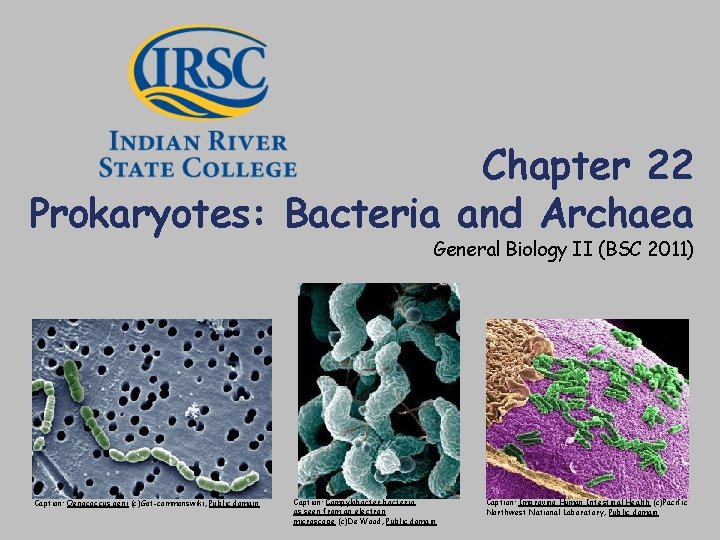
Chapter 22 Prokaryotes: Bacteria and Archaea General Biology II (BSC 2011) Caption: Oenococcus oeni (c)Got-commonswiki, Public domain Caption: Campylobacteria as seen from an electron microscope (c)De Wood, Public domain Caption: Improving Human Intestinal Health (c)Pacific Northwest National Laboratory, Public domain
HISTORY OF MICROBIOLOGY • The size of prokaryotic cells led to their being undiscovered for most of human history. • In 1546, Italian physician Girolamo Fracastoro suggested that disease was caused by unseen organisms. • Two technology strands that allows study of microbes: § Microscopy for visualization § Infectious disease investigations
• Antony van Leeuwenhoek was first to observe and accurately describe microbial life § Modern electron microscopes allowed the study of cell substructure • Louis Pasteur refuted idea of spontaneous generation
Robert Koch studied anthrax (causative agent is Bacillus anthracis) and proposed four postulates to prove a causal relationship between a microorganism and an individual: 1. The microorganism must be present in every case of the disease and absent from healthy individuals. 2. The putative causative agent must be isolated and grown in pure culture. 3. The same disease must result when the cultured microorganism is used to infect a healthy host. 4. The same microorganism must be isolated again from the diseased host.
PROKARYOTIC DIVERSITY • Oldest, structurally simplest, and most abundant forms of life. • Abundant for over a billion years before eukaryotes. • 90 to 99% unknown and undescribed • Less than 1% cause disease • Fall into 2 domains § Bacteria (also called Eubacteria) § Archaea (formerly called Archaebacteria) ²Many Archaeans are extremophiles (live in extreme environments)
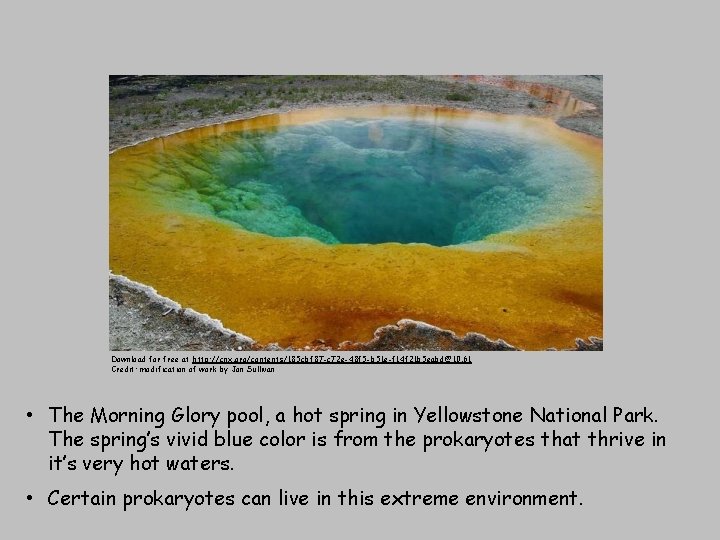
Download for free at http: //cnx. org/contents/185 cbf 87 -c 72 e-48 f 5 -b 51 e-f 14 f 21 b 5 eabd@10. 61 Credit: modification of work by Jon Sullivan • The Morning Glory pool, a hot spring in Yellowstone National Park. The spring’s vivid blue color is from the prokaryotes that thrive in it’s very hot waters. • Certain prokaryotes can live in this extreme environment.
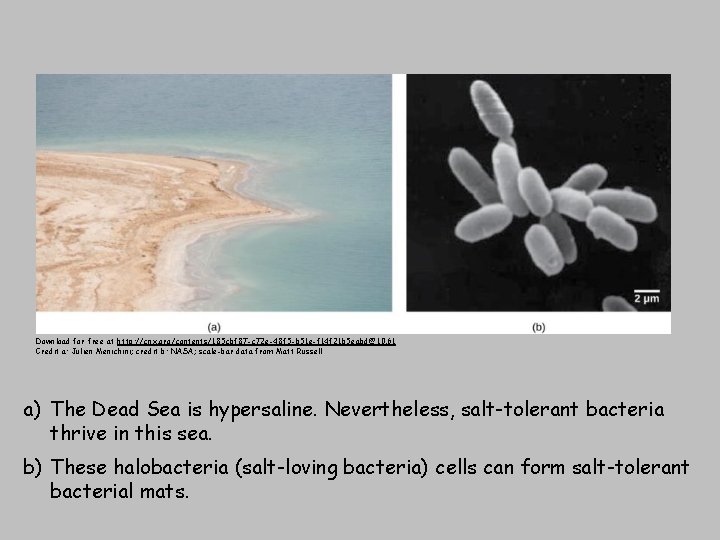
Download for free at http: //cnx. org/contents/185 cbf 87 -c 72 e-48 f 5 -b 51 e-f 14 f 21 b 5 eabd@10. 61 Credit a: Julien Menichini; credit b: NASA; scale-bar data from Matt Russell a) The Dead Sea is hypersaline. Nevertheless, salt-tolerant bacteria thrive in this sea. b) These halobacteria (salt-loving bacteria) cells can form salt-tolerant bacterial mats.
PROKARYOTES DIFFER FROM EUKARYOTES Unicellularity • Prokaryotes are single-celled • Only eukaryotic cells can be multicellular • Prokaryotes may stick together to form associations and biofilms Cell size • Size varies tremendously but are generally much smaller than eukaryotes • Most prokaryotes are less than 1 mm in diameter Nucleoid • Prokaryotic chromosome is single, circular, double-stranded DNA • Found in the nucleoid region of the cell • Often have plasmids Cell division and genetic recombination • Most divide by binary fission, don’t go through mitosis process that eukaryotes do • Exchange genetic material extensively
PROKARYOTES DIFFER FROM EUKARYOTES Genetic recombination • Occurs through horizontal gene transfer, no sexual reproduction • NOT a form of reproduction Internal compartmentalization • Prokaryotes have no membrane-bounded organelles • No internal compartment • Ribosomes differ from eukaryotic form Flagella • Simple in structure • Different from eukaryotic flagella Metabolic diversity • Oxygenic and anoxygenic photosynthesis • Chemolithotrophic • They can use energy stored in bonds of inorganic molecules
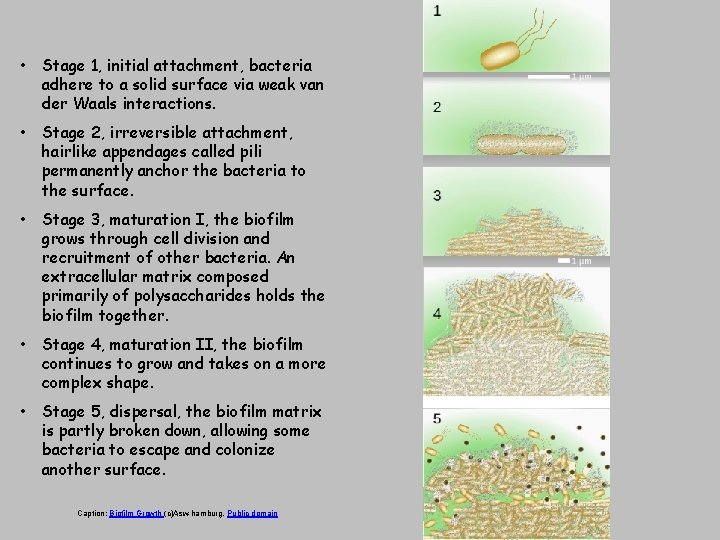
• Stage 1, initial attachment, bacteria adhere to a solid surface via weak van der Waals interactions. • Stage 2, irreversible attachment, hairlike appendages called pili permanently anchor the bacteria to the surface. • Stage 3, maturation I, the biofilm grows through cell division and recruitment of other bacteria. An extracellular matrix composed primarily of polysaccharides holds the biofilm together. • Stage 4, maturation II, the biofilm continues to grow and takes on a more complex shape. • Stage 5, dispersal, the biofilm matrix is partly broken down, allowing some bacteria to escape and colonize another surface. Caption: Biofilm Growth (c)Asw-hamburg, Public domain
Bacteria and Archaea Differ Fundamentally They differ in four key areas: • Plasma membranes • Cell walls • DNA replication • Gene expression
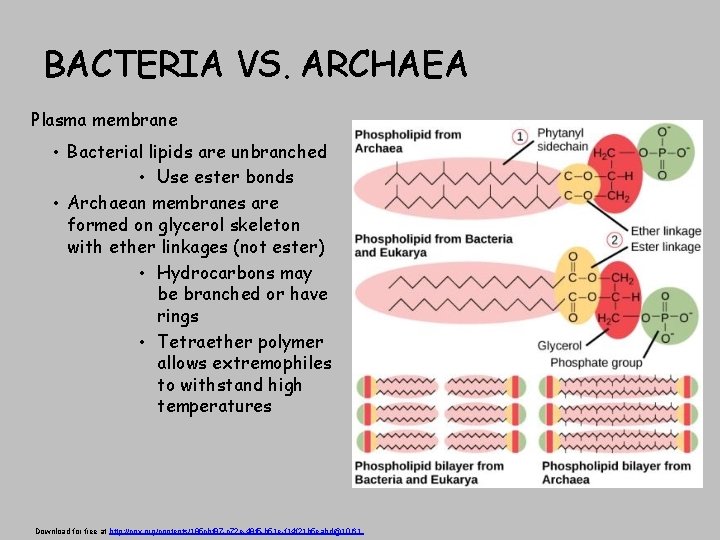
BACTERIA VS. ARCHAEA Plasma membrane • Bacterial lipids are unbranched • Use ester bonds • Archaean membranes are formed on glycerol skeleton with ether linkages (not ester) • Hydrocarbons may be branched or have rings • Tetraether polymer allows extremophiles to withstand high temperatures Download for free at http: //cnx. org/contents/185 cbf 87 -c 72 e-48 f 5 -b 51 e-f 14 f 21 b 5 eabd@10. 61
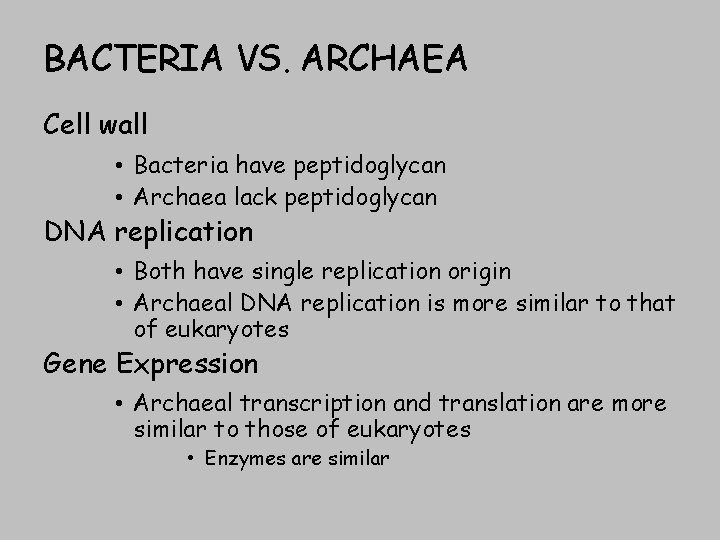
BACTERIA VS. ARCHAEA Cell wall • Bacteria have peptidoglycan • Archaea lack peptidoglycan DNA replication • Both have single replication origin • Archaeal DNA replication is more similar to that of eukaryotes Gene Expression • Archaeal transcription and translation are more similar to those of eukaryotes • Enzymes are similar
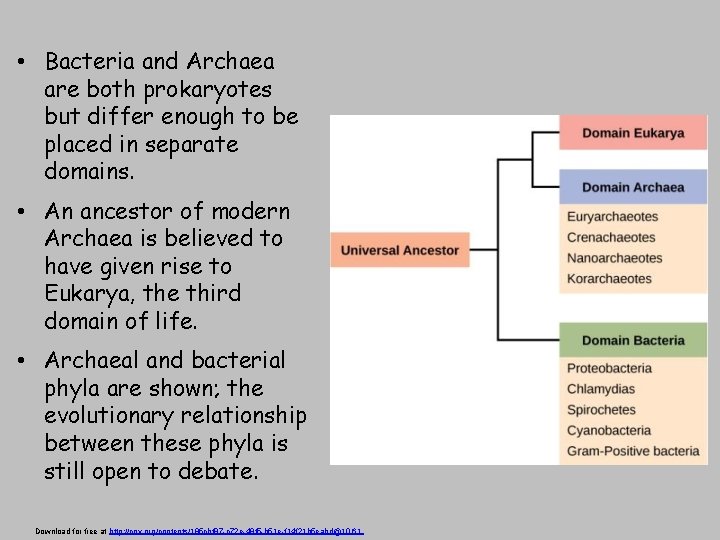
• Bacteria and Archaea are both prokaryotes but differ enough to be placed in separate domains. • An ancestor of modern Archaea is believed to have given rise to Eukarya, the third domain of life. • Archaeal and bacterial phyla are shown; the evolutionary relationship between these phyla is still open to debate. Download for free at http: //cnx. org/contents/185 cbf 87 -c 72 e-48 f 5 -b 51 e-f 14 f 21 b 5 eabd@10. 61
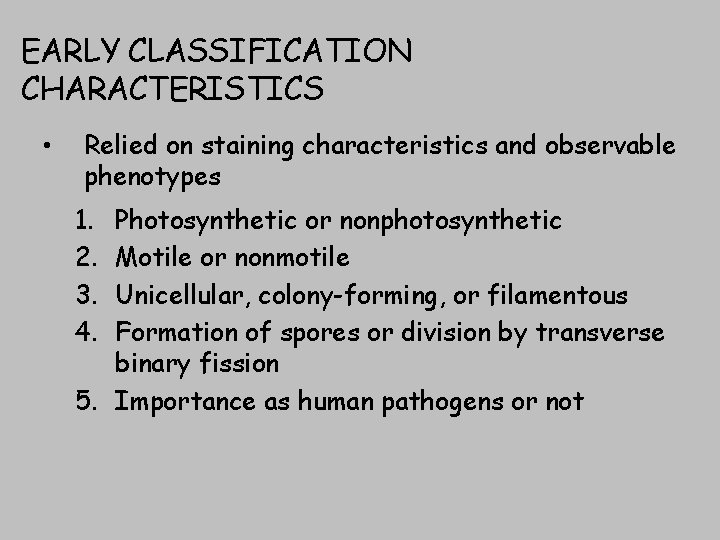
EARLY CLASSIFICATION CHARACTERISTICS • Relied on staining characteristics and observable phenotypes 1. 2. 3. 4. Photosynthetic or nonphotosynthetic Motile or nonmotile Unicellular, colony-forming, or filamentous Formation of spores or division by transverse binary fission 5. Importance as human pathogens or not
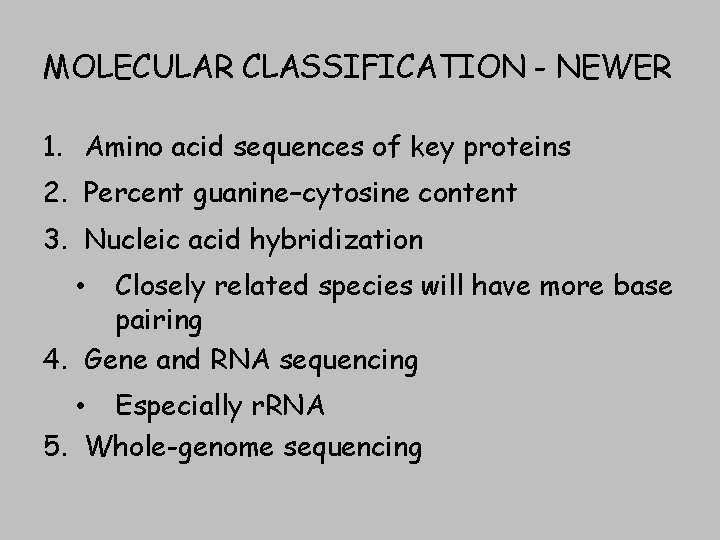
MOLECULAR CLASSIFICATION - NEWER 1. Amino acid sequences of key proteins 2. Percent guanine–cytosine content 3. Nucleic acid hybridization Closely related species will have more base pairing 4. Gene and RNA sequencing • • Especially r. RNA 5. Whole-genome sequencing
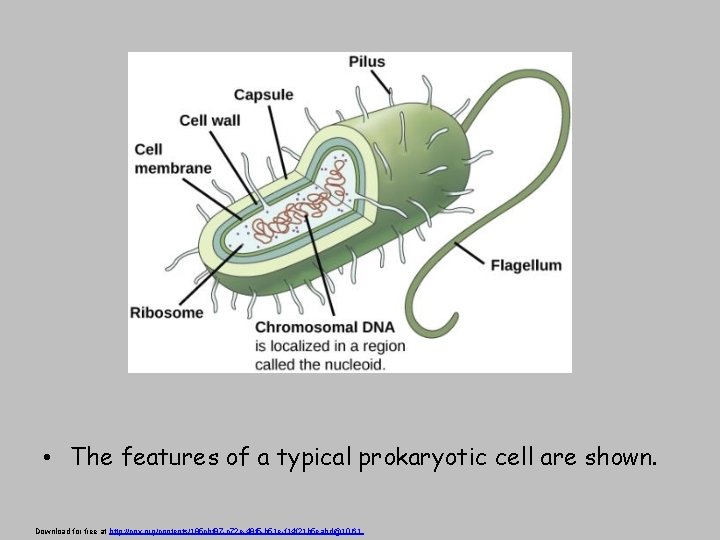
• The features of a typical prokaryotic cell are shown. Download for free at http: //cnx. org/contents/185 cbf 87 -c 72 e-48 f 5 -b 51 e-f 14 f 21 b 5 eabd@10. 61
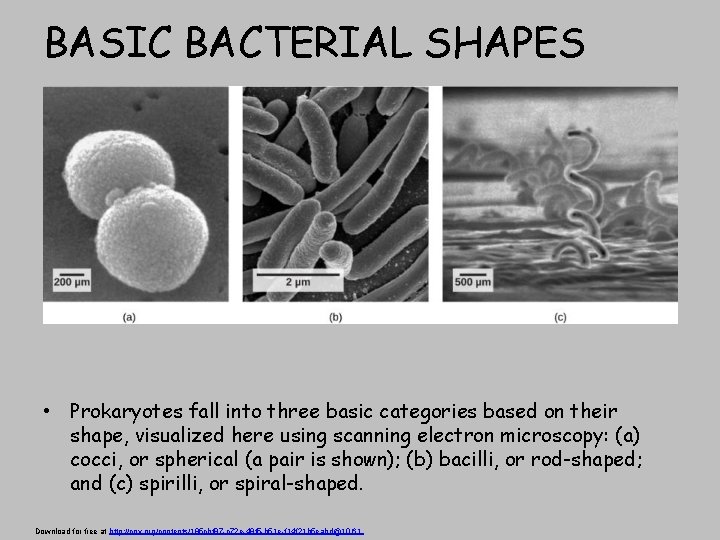
BASIC BACTERIAL SHAPES • Prokaryotes fall into three basic categories based on their shape, visualized here using scanning electron microscopy: (a) cocci, or spherical (a pair is shown); (b) bacilli, or rod-shaped; and (c) spirilli, or spiral-shaped. Download for free at http: //cnx. org/contents/185 cbf 87 -c 72 e-48 f 5 -b 51 e-f 14 f 21 b 5 eabd@10. 61
Based on these molecular data, several prokaryotic groupings have been proposed Bergey’s Manual of Systematic Bacteriology, 2 nd edition • 3 of 5 volumes completed Large scale sequencing of random samples indicates vast majority of bacteria have never been cultured or studied in detail
Major groups of Prokaryotes: • Archaeans – includes groups like Euryarchaeota • Bacteria • Chlamydias • Gram positive bacteria • Low G/C – examples are bacilli, Clostridium • High G/C - example is Streptomyces • Spirochetes • Photosynthetic – example is cyanobacteria • Proteobacteria – examples are E. coli, Pseudomonas, Salmonella
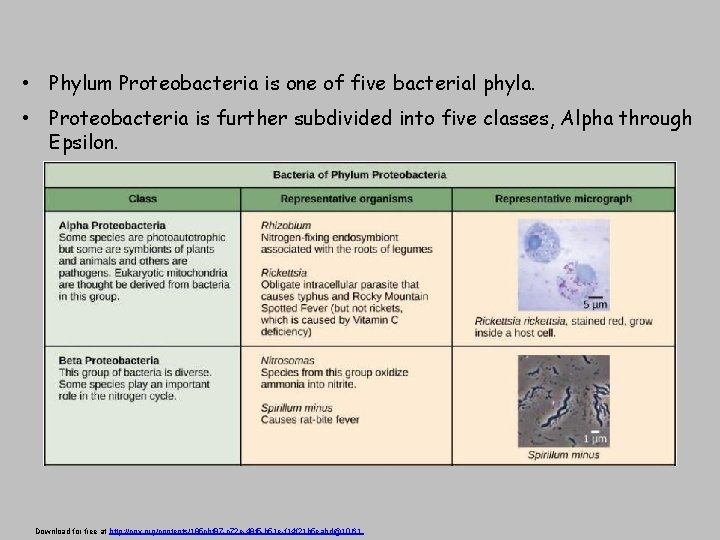
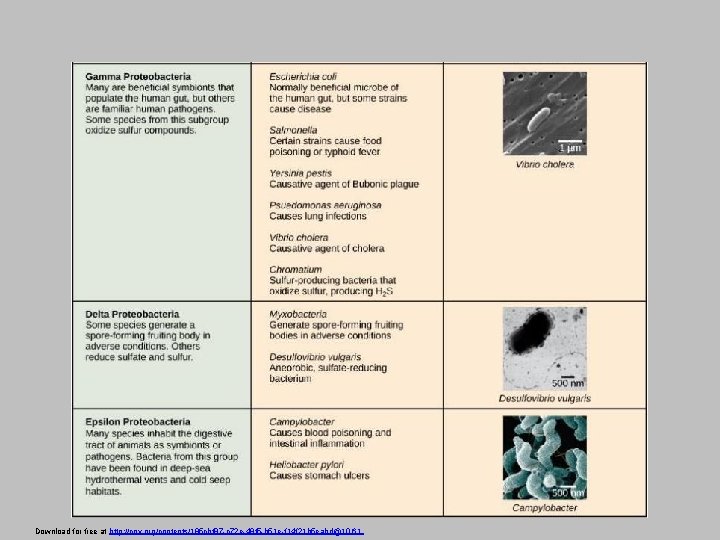
• Phylum Proteobacteria is one of five bacterial phyla. • Proteobacteria is further subdivided into five classes, Alpha through Epsilon. Download for free at http: //cnx. org/contents/185 cbf 87 -c 72 e-48 f 5 -b 51 e-f 14 f 21 b 5 eabd@10. 61
Download for free at http: //cnx. org/contents/185 cbf 87 -c 72 e-48 f 5 -b 51 e-f 14 f 21 b 5 eabd@10. 61
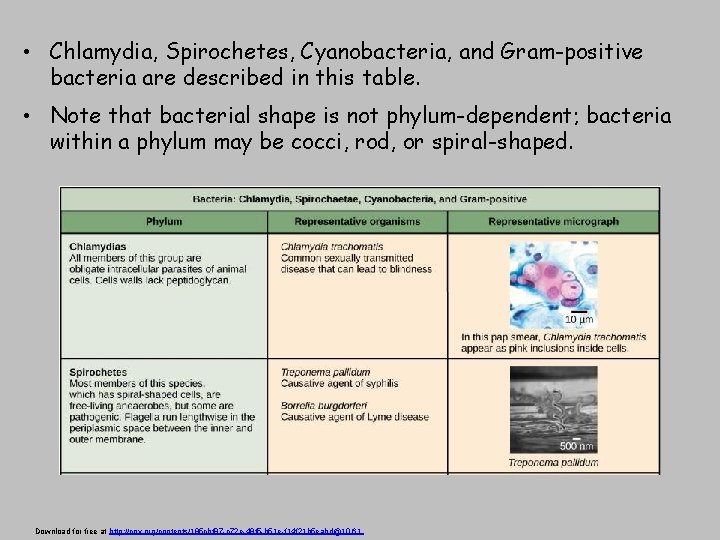
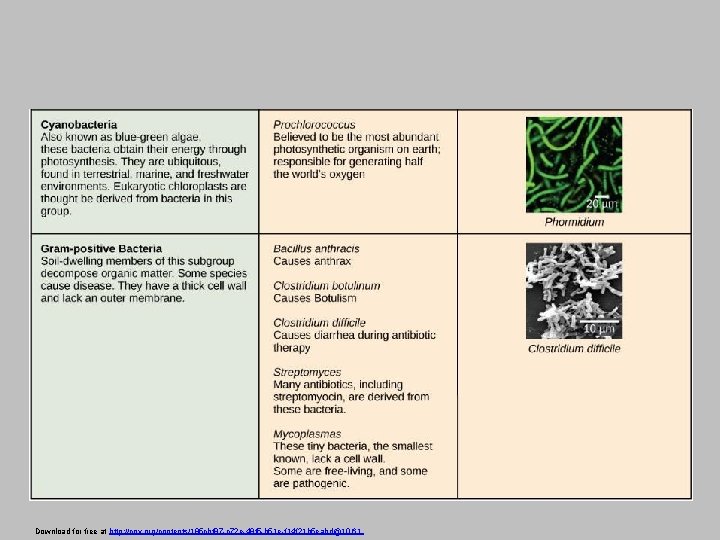
• Chlamydia, Spirochetes, Cyanobacteria, and Gram-positive bacteria are described in this table. • Note that bacterial shape is not phylum-dependent; bacteria within a phylum may be cocci, rod, or spiral-shaped. Download for free at http: //cnx. org/contents/185 cbf 87 -c 72 e-48 f 5 -b 51 e-f 14 f 21 b 5 eabd@10. 61
Download for free at http: //cnx. org/contents/185 cbf 87 -c 72 e-48 f 5 -b 51 e-f 14 f 21 b 5 eabd@10. 61
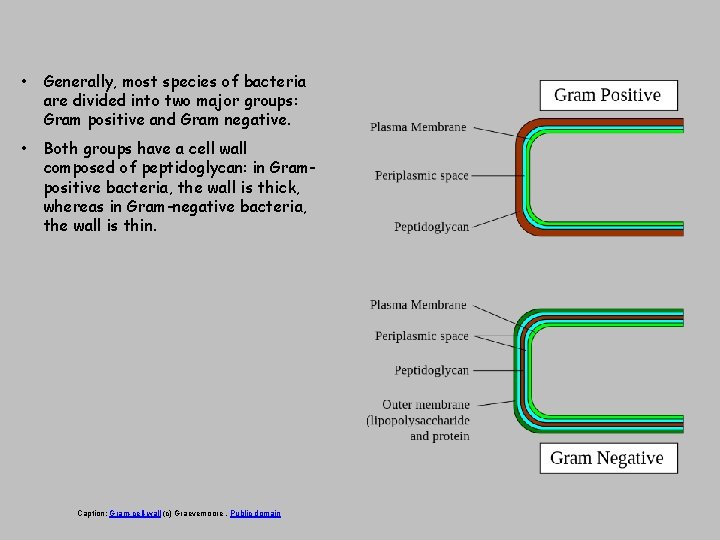
• Generally, most species of bacteria are divided into two major groups: Gram positive and Gram negative. • Both groups have a cell wall composed of peptidoglycan: in Grampositive bacteria, the wall is thick, whereas in Gram-negative bacteria, the wall is thin. Caption: Gram-cell-wall (c) Graevemoore , Public domain
Cell wall • Peptidoglycan forms a rigid network • Maintains shape • Withstands hypotonic environments • Archaea have a similar molecule • Gram stain • Gram-positive bacteria have a thicker peptidoglycan wall and stain a purple color • Gram-negative bacteria contain less peptidoglycan and do not retain the purple-colored dye – retain counterstain and look pink
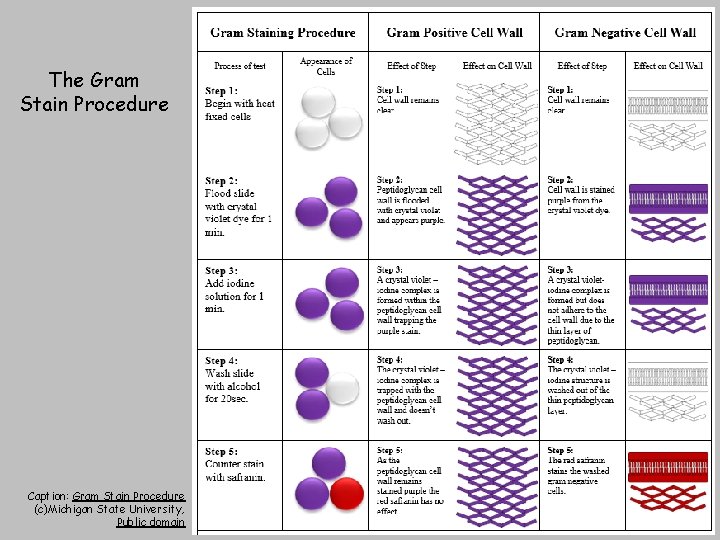
The Gram Stain Procedure Caption: Gram Stain Procedure (c)Michigan State University, Public domain
S-layer • Rigid paracrystalline layer found in some bacteria and Archaea • Outside of peptidoglycan or outer membrane layers in gram-negative and gram-positive bacteria • Diverse functions – often involves adhesion Capsule • Gelatinous layer found in some bacteria • Aids in attachment • Protects from the immune system
Flagella • Slender, rigid, helical structures • Composed of the protein flagellin • Involved in locomotion – spins like propeller Pili • Short, hairlike structures • Found in gram-negative bacteria • Aid in attachment and conjugation
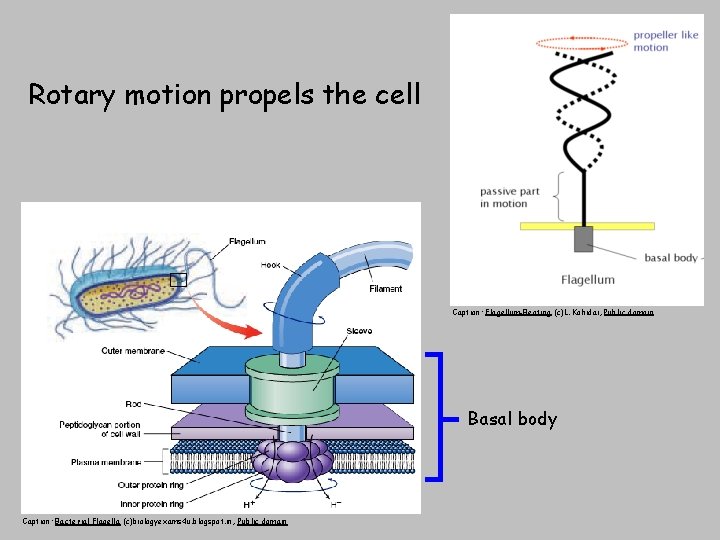
Rotary motion propels the cell Caption: Flagellum-Beating (c)L. Kohidai, Public domain Basal body Caption: Bacterial Flagella (c)biologyexams 4 u. blogspot. in, Public domain
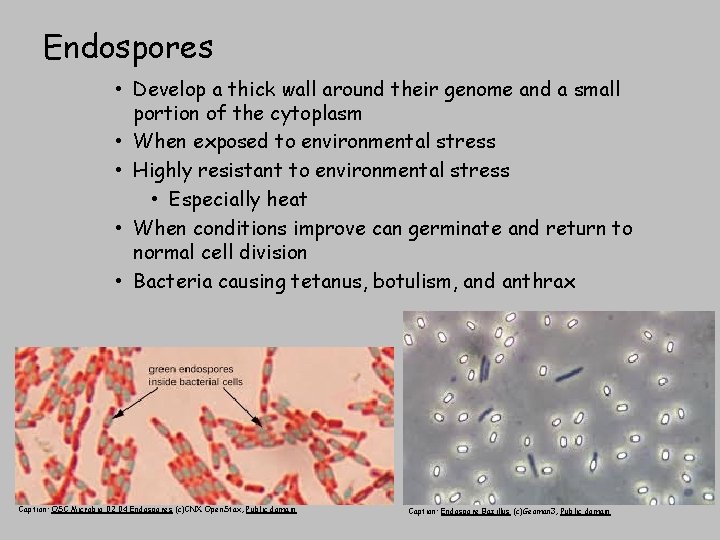
Endospores • Develop a thick wall around their genome and a small portion of the cytoplasm • When exposed to environmental stress • Highly resistant to environmental stress • Especially heat • When conditions improve can germinate and return to normal cell division • Bacteria causing tetanus, botulism, and anthrax Caption: OSC Microbio 02 04 Endospores (c)CNX Open. Stax, Public domain Caption: Endospore Bazillus (c)Geoman 3, Public domain
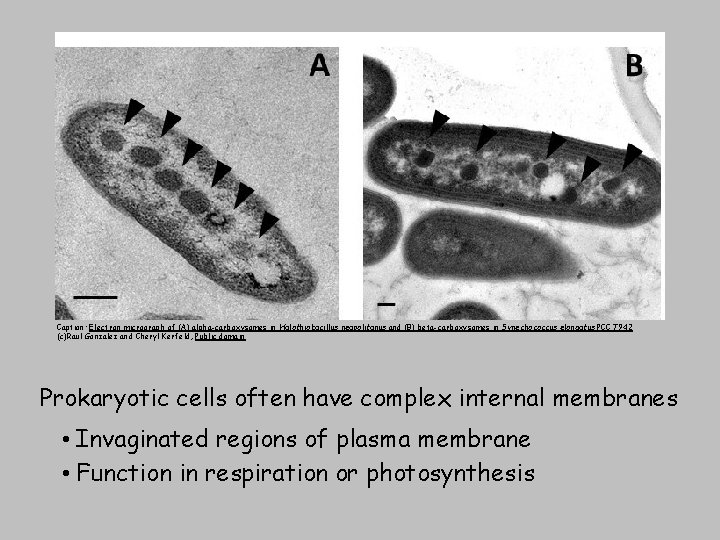
Caption: Electron micrograph of (A) alpha-carboxysomes in Halothiobacillus neapolitanus and (B) beta-carboxysomes in Synechococcus elongatus PCC 7942 (c)Raul Gonzalez and Cheryl Kerfeld, Public domain Prokaryotic cells often have complex internal membranes • Invaginated regions of plasma membrane • Function in respiration or photosynthesis
Nucleoid region • Contains the single, circular chromosome • May also contain plasmids Ribosomes • Smaller than those of eukaryotes • Differ in protein and RNA content • Targeted by some antibiotics
PROKARYOTIC METABOLISM Acquisition of Carbon • Autotrophs – from inorganic CO 2 • Photoautotrophs – energy from Sun • Chemolithoautotrophs – energy from oxidizing inorganic substances • Heterotrophs – from organic molecules • Photoheterotrophs – light as energy source but obtain organic carbon made by other organisms • Chemoheterotroph – both carbon atoms and energy from organic molecules • Humans are also an example
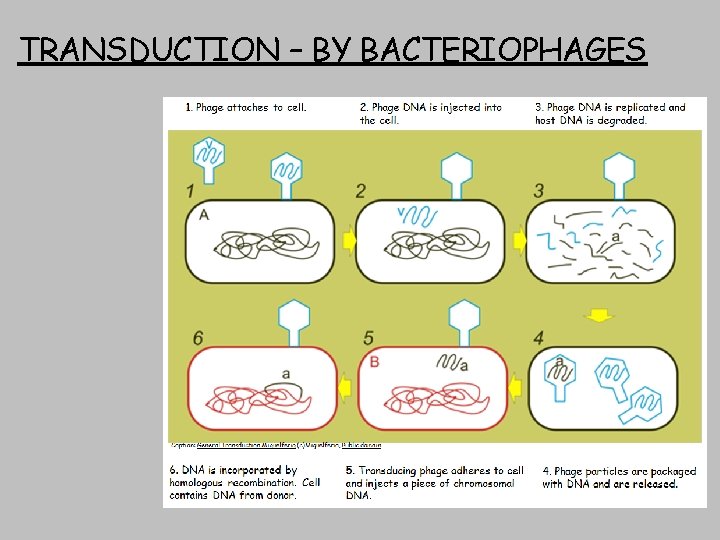
PROKARYOTIC GENETICS • Prokaryotes divide by binary fission • Prokaryotes do not reproduce sexually • However, genetic variation is still important • 3 types of horizontal gene transfer • Conjugation – cell-to-cell contact • Transduction – by bacteriophages • Transformation – from the environment • All 3 processes also observed in Archaea.
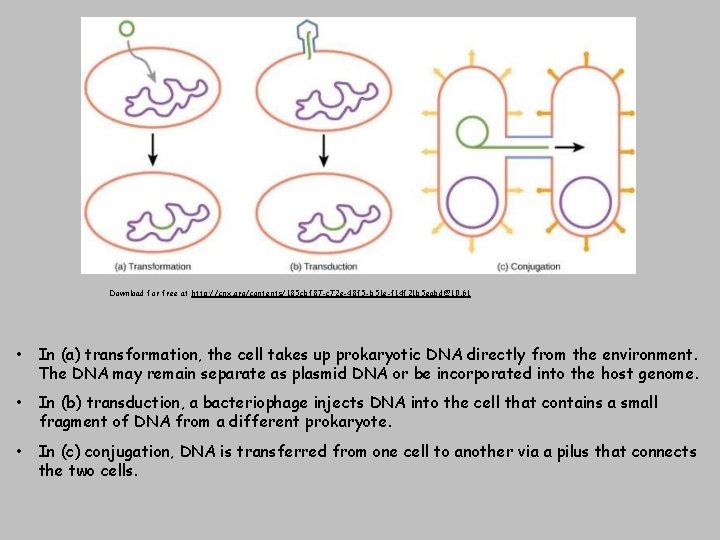
Download for free at http: //cnx. org/contents/185 cbf 87 -c 72 e-48 f 5 -b 51 e-f 14 f 21 b 5 eabd@10. 61 • In (a) transformation, the cell takes up prokaryotic DNA directly from the environment. The DNA may remain separate as plasmid DNA or be incorporated into the host genome. • In (b) transduction, a bacteriophage injects DNA into the cell that contains a small fragment of DNA from a different prokaryote. • In (c) conjugation, DNA is transferred from one cell to another via a pilus that connects the two cells.
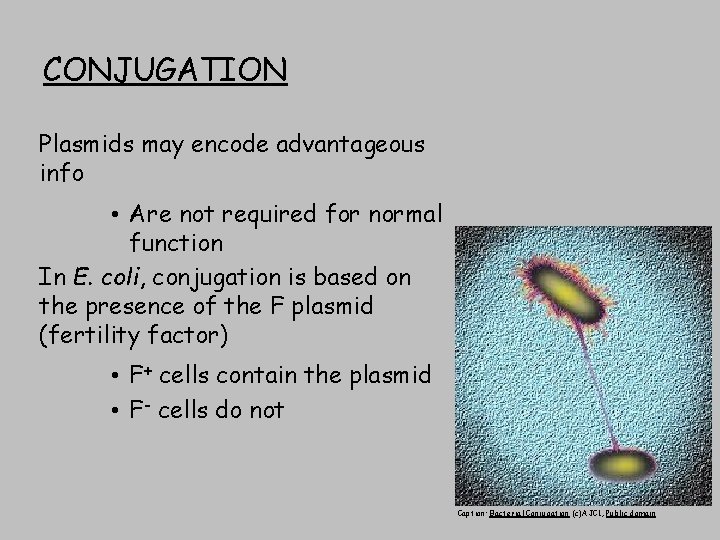
CONJUGATION Plasmids may encode advantageous info • Are not required for normal function In E. coli, conjugation is based on the presence of the F plasmid (fertility factor) • F+ cells contain the plasmid • F- cells do not Caption: Bacterial Conjugation (c)AJC 1, Public domain
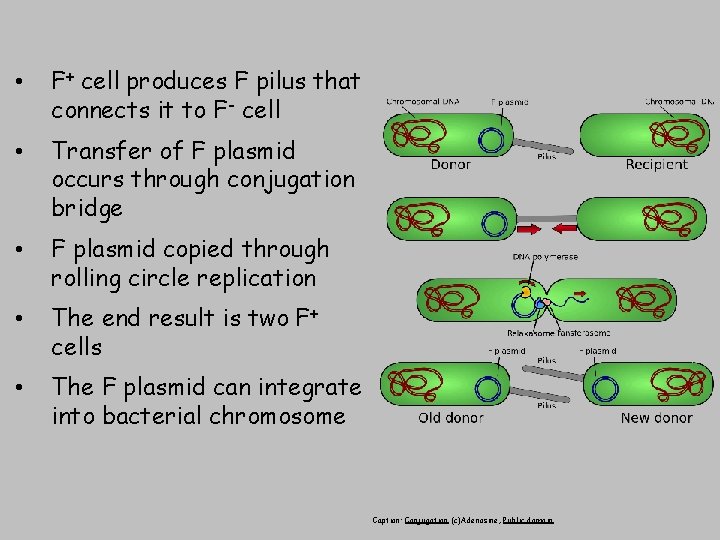
• F+ cell produces F pilus that connects it to F- cell • Transfer of F plasmid occurs through conjugation bridge • F plasmid copied through rolling circle replication • The end result is two F+ cells • The F plasmid can integrate into bacterial chromosome Caption: Conjugation (c)Adenosine, Public domain
TRANSDUCTION – BY BACTERIOPHAGES
TRANSFORMATION Natural transformation • Occurs in many bacterial species • DNA that is released from a dead cell is picked up by another live cell • Proteins involved in transformation are encoded by bacterial chromosome • Not an accident like plasmid or phage biology
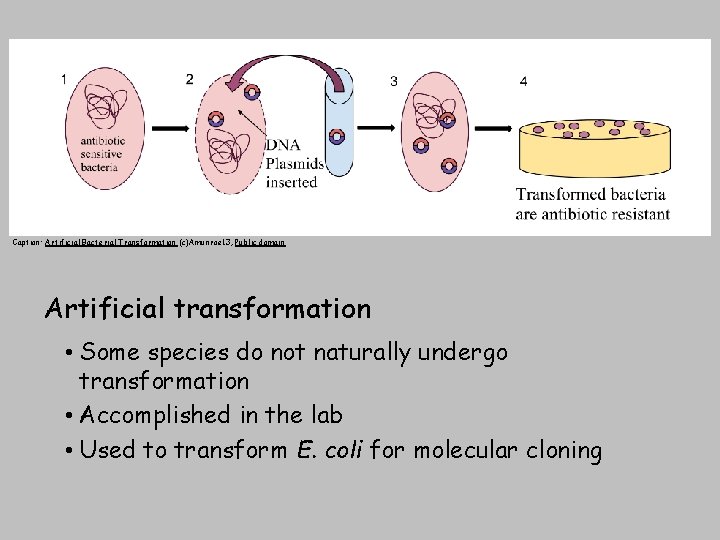
Caption: Artificial Bacterial Transformation (c)Amunroe 13, Public domain Artificial transformation • Some species do not naturally undergo transformation • Accomplished in the lab • Used to transform E. coli for molecular cloning
R (resistance) plasmids • Encode antibiotic resistance genes • Acquire genes through transposable elements • Important factor in appearance of antibiotic resistant strains of Staphylococcus aureus Virulence plasmids or transduction • Encode genes for pathogenic traits • Enterobacteriaceae • E. coli O 157: H 7 strain
• Mutations can arise spontaneously in bacteria as with any organism § Radiation and chemicals increase likelihood • Auxotrophs are nutritional mutants § Studied using replica plating • Mutations (and plasmids) can spread rapidly in a population § Methicilin-Resistant Staphylococcus aureus (MRSA) § Vancomycin-Resistant Staphylococcus aureus (VRSA)
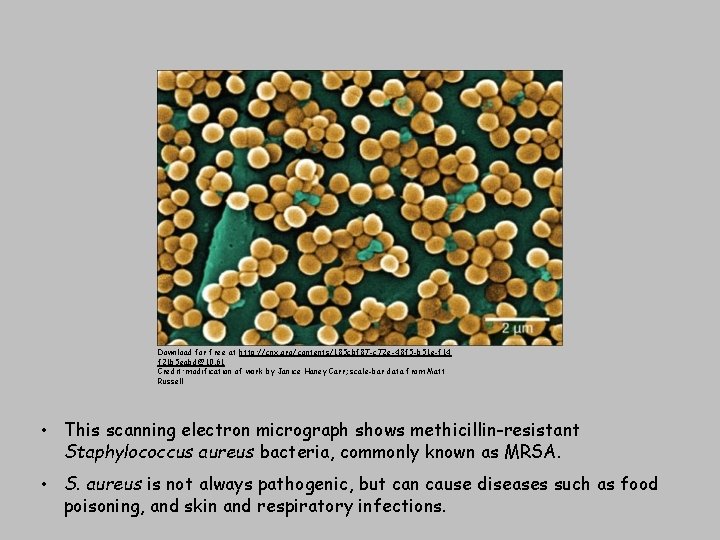
Download for free at http: //cnx. org/contents/185 cbf 87 -c 72 e-48 f 5 -b 51 e-f 14 f 21 b 5 eabd@10. 61 Credit: modification of work by Janice Haney Carr; scale-bar data from Matt Russell • This scanning electron micrograph shows methicillin-resistant Staphylococcus aureus bacteria, commonly known as MRSA. • S. aureus is not always pathogenic, but can cause diseases such as food poisoning, and skin and respiratory infections.
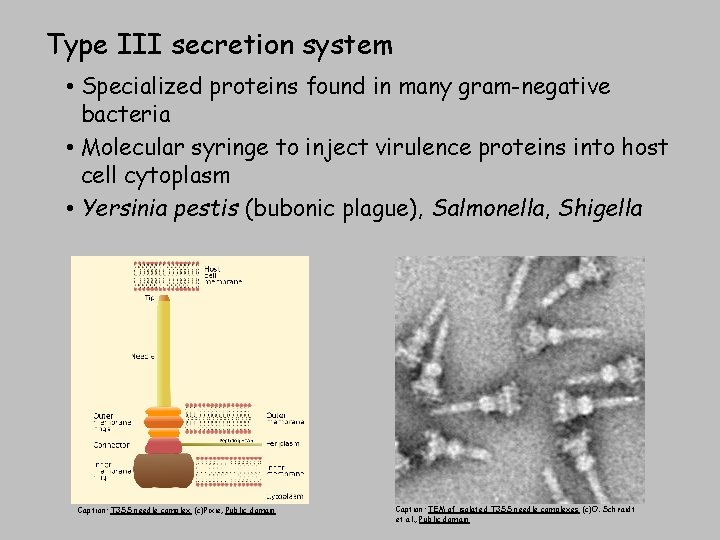
Type III secretion system • Specialized proteins found in many gram-negative bacteria • Molecular syringe to inject virulence proteins into host cell cytoplasm • Yersinia pestis (bubonic plague), Salmonella, Shigella Caption: T 3 SS needle complex (c)Pixie, Public domain Caption: TEM of isolated T 3 SS needle complexes (c)O. Schraidt et al. , Public domain
• Salmonella enterica serovar Typhi, the causative agent of Typhoid fever, is a Gram-negative, rod-shaped gamma protobacterium. • Typhoid fever, which is spread through feces, causes intestinal hemorrhage, high fever, delirium and dehydration. • Today, between 16 and 33 million cases of this re-emerging disease occur annually, resulting in over 200, 000 deaths. • Carriers of the disease can be asymptomatic. In a famous case in the early 1900 s, a cook named Mary Mallon unknowingly spread the disease to over fifty people, three of whom died. • Other Salmonella serotypes cause food poisoning.
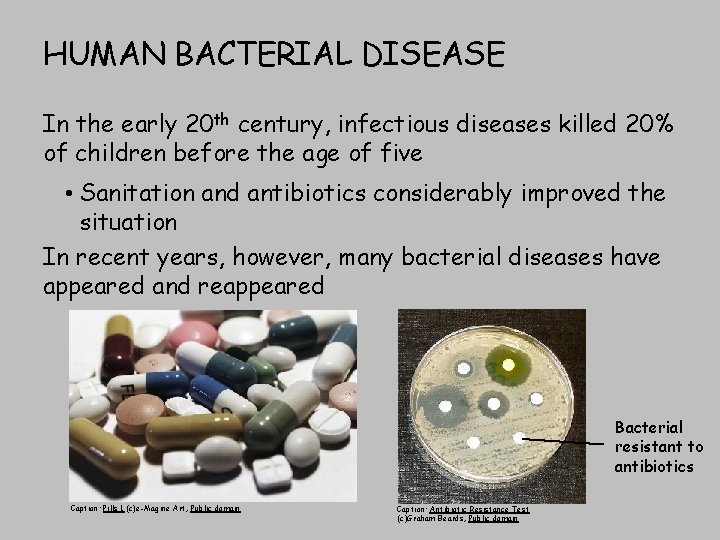
HUMAN BACTERIAL DISEASE In the early 20 th century, infectious diseases killed 20% of children before the age of five • Sanitation and antibiotics considerably improved the situation In recent years, however, many bacterial diseases have appeared and reappeared Bacterial resistant to antibiotics Caption: Pills 1 (c)e-Magine Art, Public domain Caption: Antibiotic Resistance Test (c)Graham Beards, Public domain
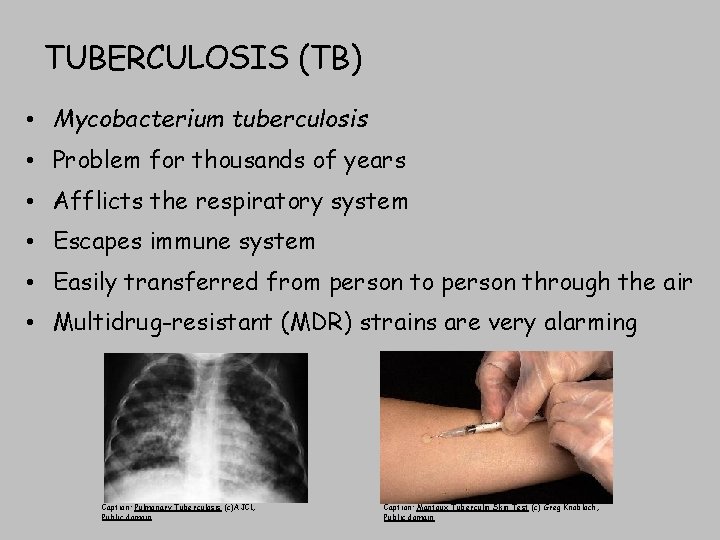
TUBERCULOSIS (TB) • Mycobacterium tuberculosis • Problem for thousands of years • Afflicts the respiratory system • Escapes immune system • Easily transferred from person to person through the air • Multidrug-resistant (MDR) strains are very alarming Caption: Pulmonary Tuberculosis (c)AJC 1, Public domain Caption: Mantoux Tuberculin Skin Test (c) Greg Knobloch, Public domain
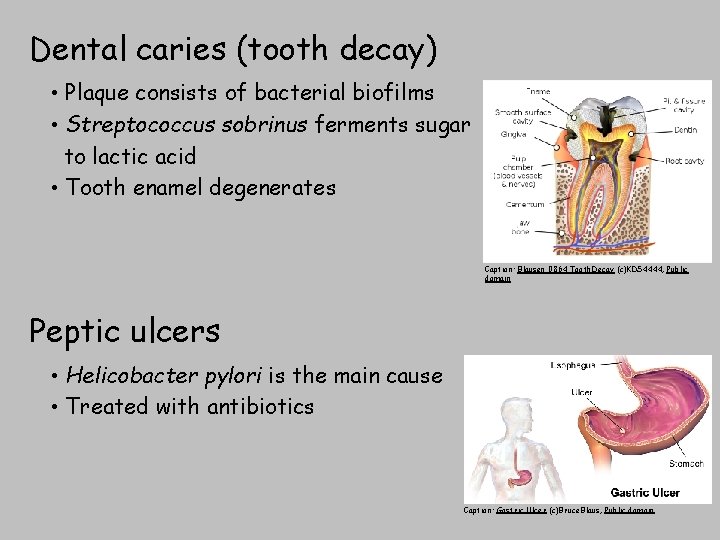
Dental caries (tooth decay) • Plaque consists of bacterial biofilms • Streptococcus sobrinus ferments sugar to lactic acid • Tooth enamel degenerates Caption: Blausen 0864 Tooth. Decay (c)KDS 4444, Public domain Peptic ulcers • Helicobacter pylori is the main cause • Treated with antibiotics Caption: Gastric Ulcer (c)Bruce. Blaus, Public domain
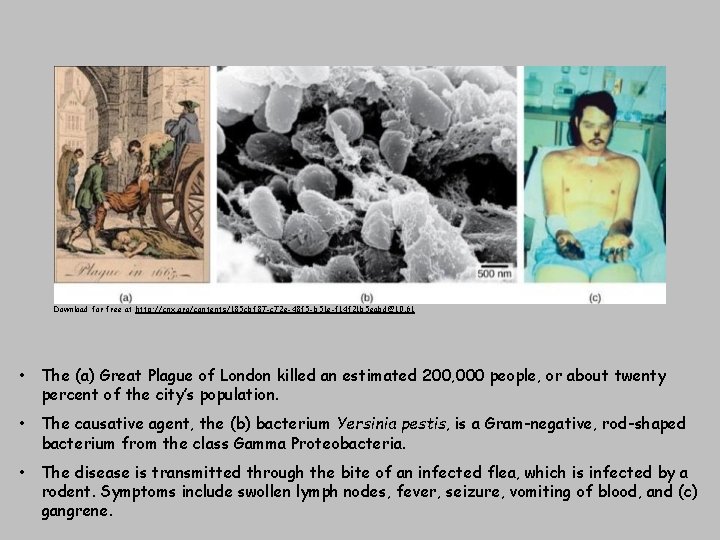
Download for free at http: //cnx. org/contents/185 cbf 87 -c 72 e-48 f 5 -b 51 e-f 14 f 21 b 5 eabd@10. 61 • The (a) Great Plague of London killed an estimated 200, 000 people, or about twenty percent of the city’s population. • The causative agent, the (b) bacterium Yersinia pestis, is a Gram-negative, rod-shaped bacterium from the class Gamma Proteobacteria. • The disease is transmitted through the bite of an infected flea, which is infected by a rodent. Symptoms include swollen lymph nodes, fever, seizure, vomiting of blood, and (c) gangrene.
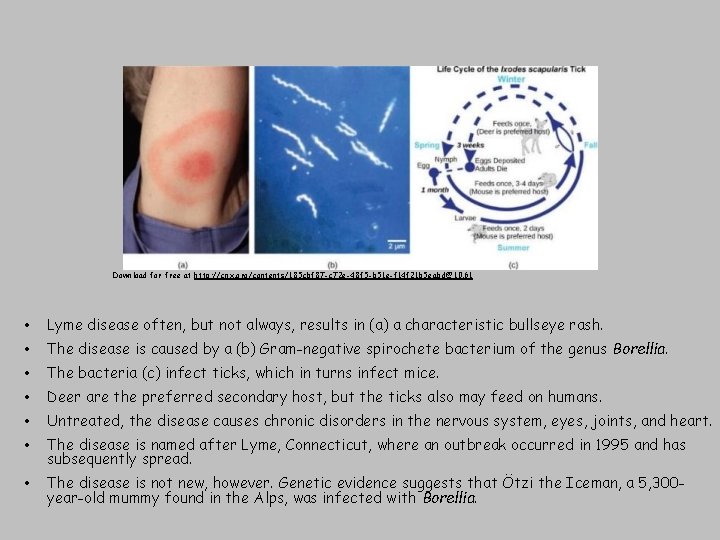
Download for free at http: //cnx. org/contents/185 cbf 87 -c 72 e-48 f 5 -b 51 e-f 14 f 21 b 5 eabd@10. 61 • Lyme disease often, but not always, results in (a) a characteristic bullseye rash. • The disease is caused by a (b) Gram-negative spirochete bacterium of the genus Borellia. • The bacteria (c) infect ticks, which in turns infect mice. • Deer are the preferred secondary host, but the ticks also may feed on humans. • Untreated, the disease causes chronic disorders in the nervous system, eyes, joints, and heart. • The disease is named after Lyme, Connecticut, where an outbreak occurred in 1995 and has subsequently spread. • The disease is not new, however. Genetic evidence suggests that Ötzi the Iceman, a 5, 300 year-old mummy found in the Alps, was infected with Borellia.
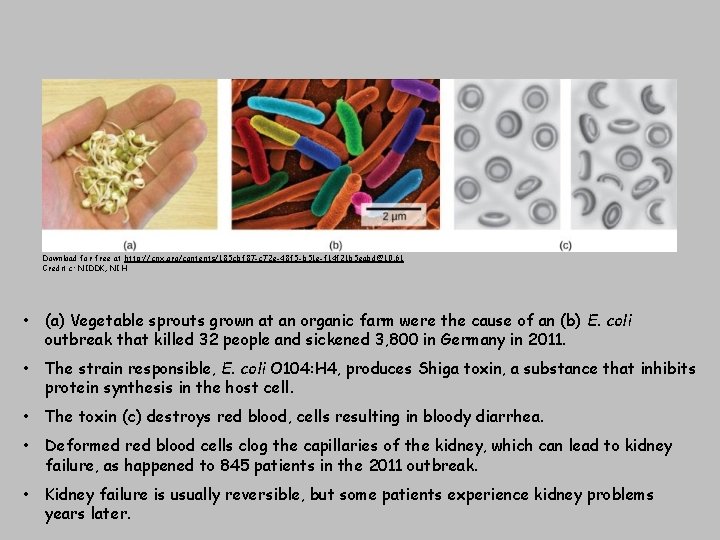
Download for free at http: //cnx. org/contents/185 cbf 87 -c 72 e-48 f 5 -b 51 e-f 14 f 21 b 5 eabd@10. 61 Credit c: NIDDK, NIH • (a) Vegetable sprouts grown at an organic farm were the cause of an (b) E. coli outbreak that killed 32 people and sickened 3, 800 in Germany in 2011. • The strain responsible, E. coli O 104: H 4, produces Shiga toxin, a substance that inhibits protein synthesis in the host cell. • The toxin (c) destroys red blood, cells resulting in bloody diarrhea. • Deformed red blood cells clog the capillaries of the kidney, which can lead to kidney failure, as happened to 845 patients in the 2011 outbreak. • Kidney failure is usually reversible, but some patients experience kidney problems years later.
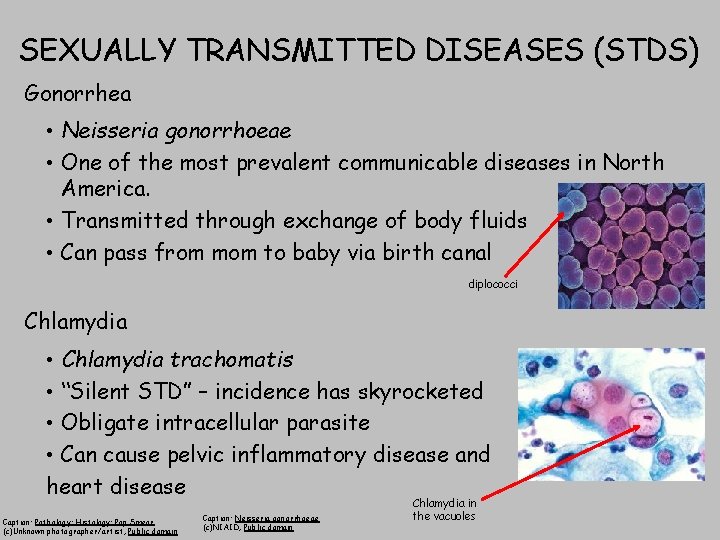
SEXUALLY TRANSMITTED DISEASES (STDS) Gonorrhea • Neisseria gonorrhoeae • One of the most prevalent communicable diseases in North America. • Transmitted through exchange of body fluids • Can pass from mom to baby via birth canal diplococci Chlamydia • Chlamydia trachomatis • “Silent STD” – incidence has skyrocketed • Obligate intracellular parasite • Can cause pelvic inflammatory disease and heart disease Caption: Pathology: Histology: Pap Smear (c)Unknown photographer/artist, Public domain Caption: Neisseria gonorrhoeae (c)NIAID, Public domain Chlamydia in the vacuoles
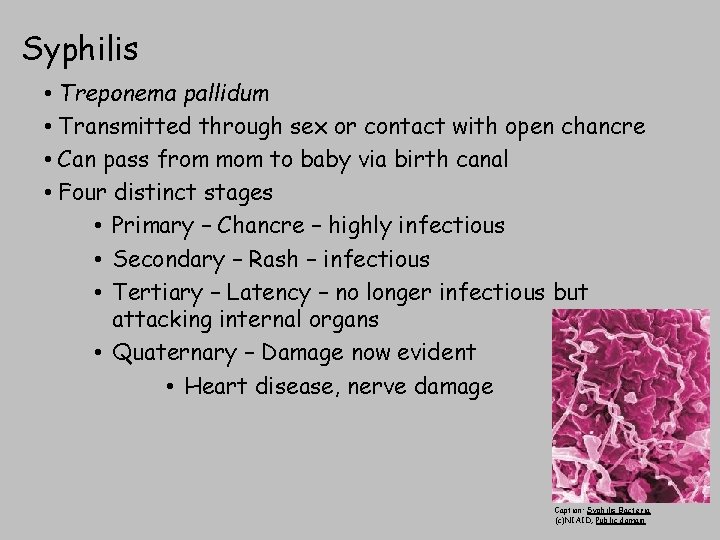
Syphilis • Treponema pallidum • Transmitted through sex or contact with open chancre • Can pass from mom to baby via birth canal • Four distinct stages • Primary – Chancre – highly infectious • Secondary – Rash – infectious • Tertiary – Latency – no longer infectious but attacking internal organs • Quaternary – Damage now evident • Heart disease, nerve damage Caption: Syphilis Bacteria (c)NIAID, Public domain
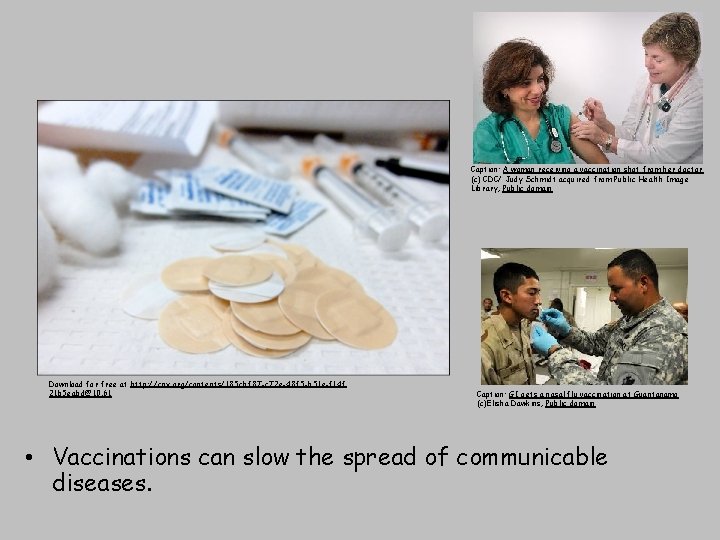
Caption: A woman receiving a vaccination shot from her doctor (c) CDC/ Judy Schmidt acquired from Public Health Image Library, Public domain Download for free at http: //cnx. org/contents/185 cbf 87 -c 72 e-48 f 5 -b 51 e-f 14 f 21 b 5 eabd@10. 61 Caption: GI gets a nasal flu vaccination at Guantanamo (c)Elisha Dawkins, Public domain • Vaccinations can slow the spread of communicable diseases.
BENEFICIAL PROKARYOTES Only a small percentage is pathogenic Bacteria are vital to the environment Decomposers release a dead organism’s atoms to the environment Fixation • Photosynthesizers fix carbon into sugars • Ancient cyanobacteria added oxygen to air • Nitrogen fixers reduce N 2 to NH 3 (ammonia) • Anabaena in aquatic environments • Rhizobium in soil
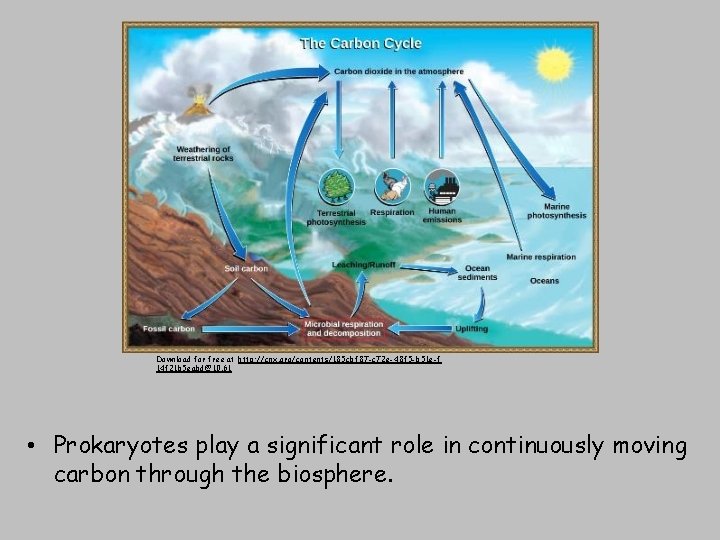
Download for free at http: //cnx. org/contents/185 cbf 87 -c 72 e-48 f 5 -b 51 e-f 14 f 21 b 5 eabd@10. 61 • Prokaryotes play a significant role in continuously moving carbon through the biosphere.
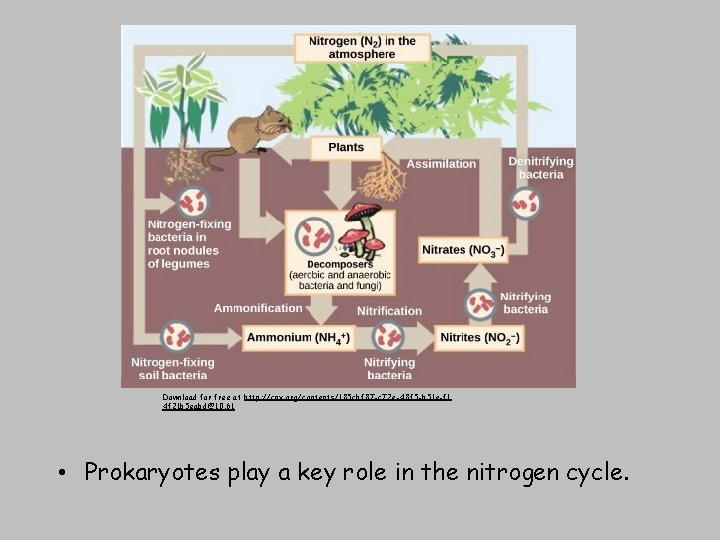
Download for free at http: //cnx. org/contents/185 cbf 87 -c 72 e-48 f 5 -b 51 e-f 1 4 f 21 b 5 eabd@10. 61 • Prokaryotes play a key role in the nitrogen cycle.
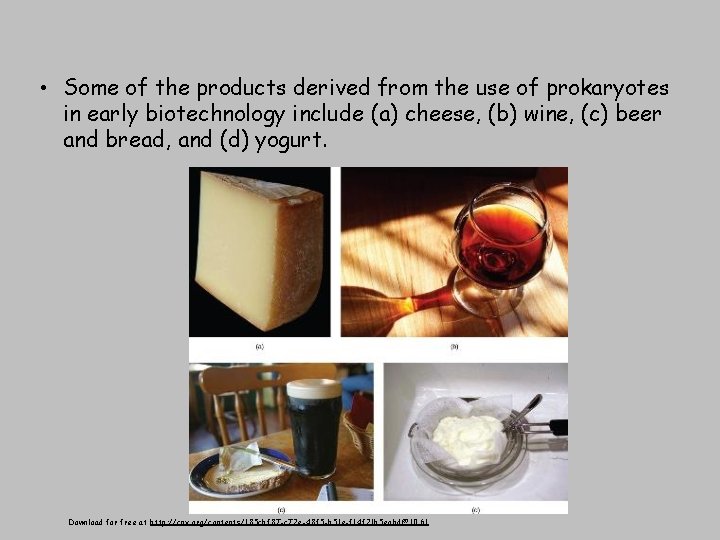
• Some of the products derived from the use of prokaryotes in early biotechnology include (a) cheese, (b) wine, (c) beer and bread, and (d) yogurt. Download for free at http: //cnx. org/contents/185 cbf 87 -c 72 e-48 f 5 -b 51 e-f 14 f 21 b 5 eabd@10. 61
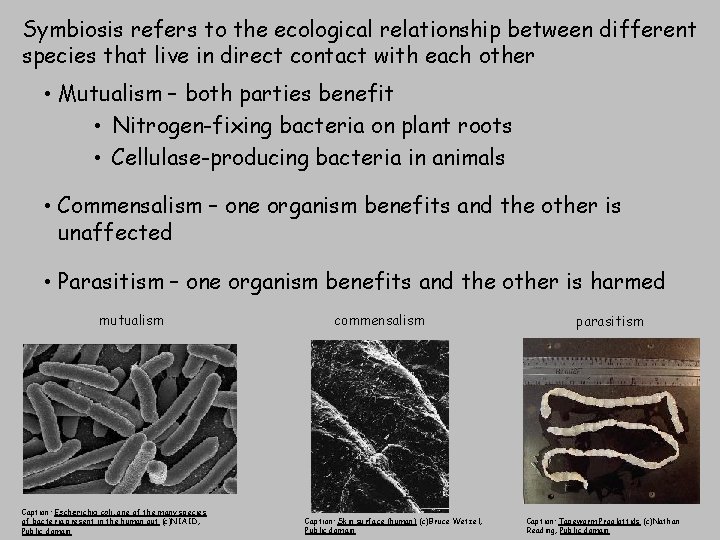
Symbiosis refers to the ecological relationship between different species that live in direct contact with each other • Mutualism – both parties benefit • Nitrogen-fixing bacteria on plant roots • Cellulase-producing bacteria in animals • Commensalism – one organism benefits and the other is unaffected • Parasitism – one organism benefits and the other is harmed mutualism Caption: Escherichia coli, one of the many species of bacteria present in the human gut (c)NIAID, Public domain commensalism Caption: Skin surface (human) (c)Bruce Wetzel, Public domain parasitism Caption: Tapeworm Proglottids (c)Nathan Reading, Public domain
Bacteria are used in genetic engineering • “Biofactories” that produce various chemicals, including insulin and antibiotics Bacteria are used for bioremediation • Remove pollutants from water, air, and soil • Biostimulation/Bioenhancement – adds nutrients to encourage growth of naturally occurring microbes • Exxon Valdez oil spill
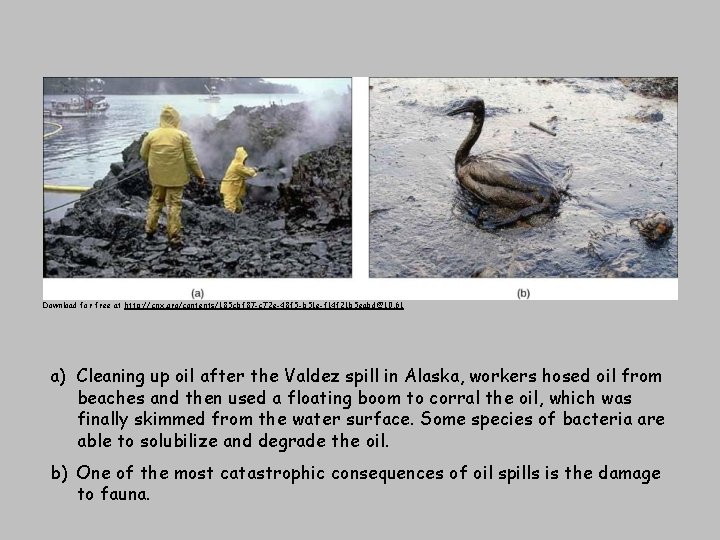
Download for free at http: //cnx. org/contents/185 cbf 87 -c 72 e-48 f 5 -b 51 e-f 14 f 21 b 5 eabd@10. 61 a) Cleaning up oil after the Valdez spill in Alaska, workers hosed oil from beaches and then used a floating boom to corral the oil, which was finally skimmed from the water surface. Some species of bacteria are able to solubilize and degrade the oil. b) One of the most catastrophic consequences of oil spills is the damage to fauna.
- Slides: 62