
Chapter 22 Organic Chemistry Organic Chemistry The study
- Slides: 14
Chapter 22 Organic Chemistry
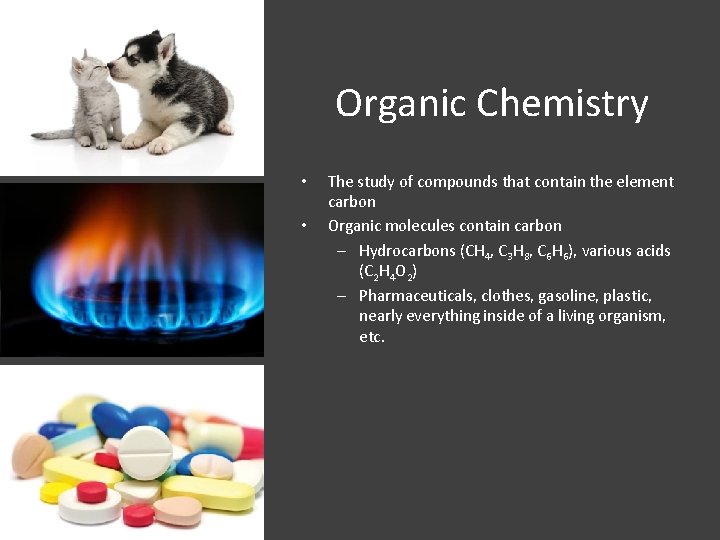
Organic Chemistry • • The study of compounds that contain the element carbon Organic molecules contain carbon – Hydrocarbons (CH 4, C 3 H 8, C 6 H 6), various acids (C 2 H 4 O 2) – Pharmaceuticals, clothes, gasoline, plastic, nearly everything inside of a living organism, etc.
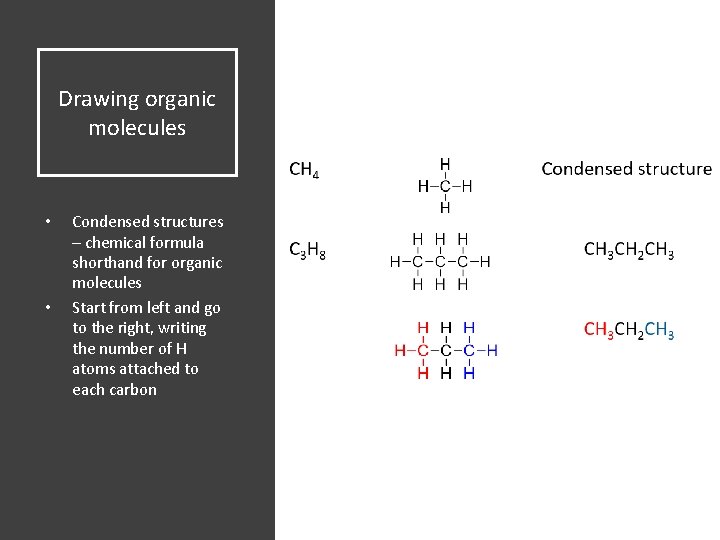
Drawing organic molecules • • Condensed structures – chemical formula shorthand for organic molecules Start from left and go to the right, writing the number of H atoms attached to each carbon
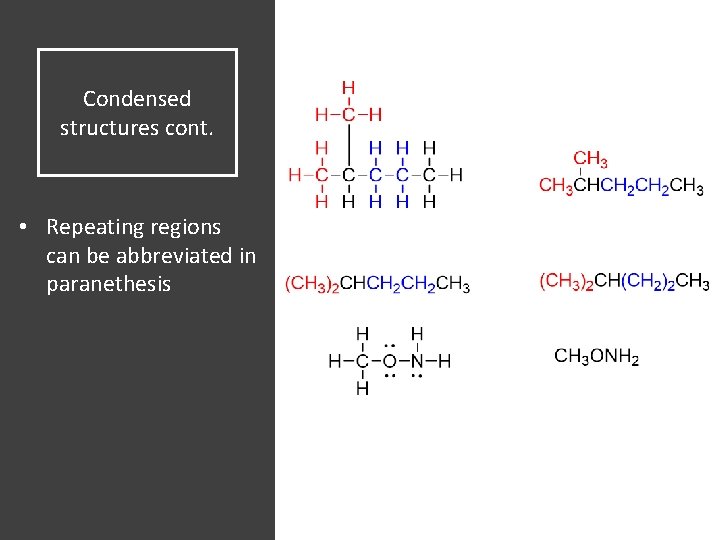
Condensed structures cont. • Repeating regions can be abbreviated in paranethesis
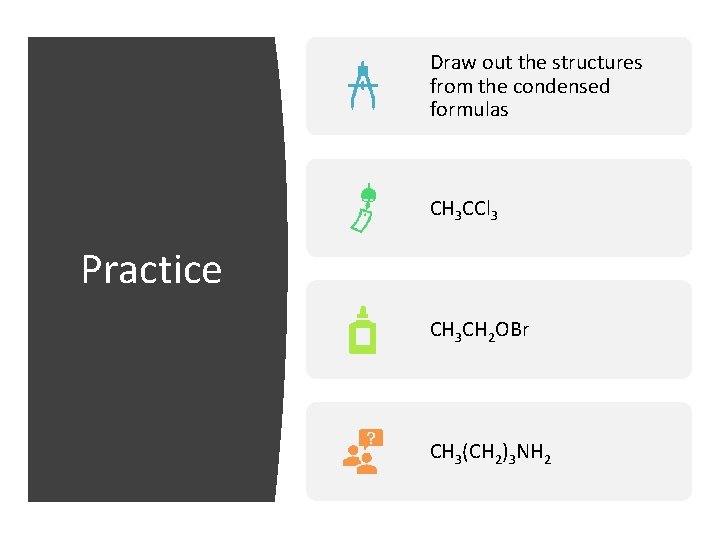
Draw out the structures from the condensed formulas CH 3 CCl 3 Practice CH 3 CH 2 OBr CH 3(CH 2)3 NH 2
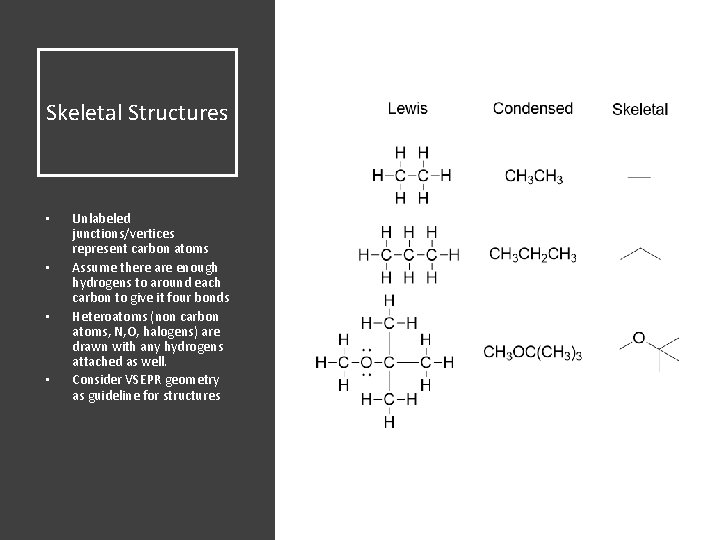
Skeletal Structures • • Unlabeled junctions/vertices represent carbon atoms Assume there are enough hydrogens to around each carbon to give it four bonds Heteroatoms (non carbon atoms, N, O, halogens) are drawn with any hydrogens attached as well. Consider VSEPR geometry as guideline for structures
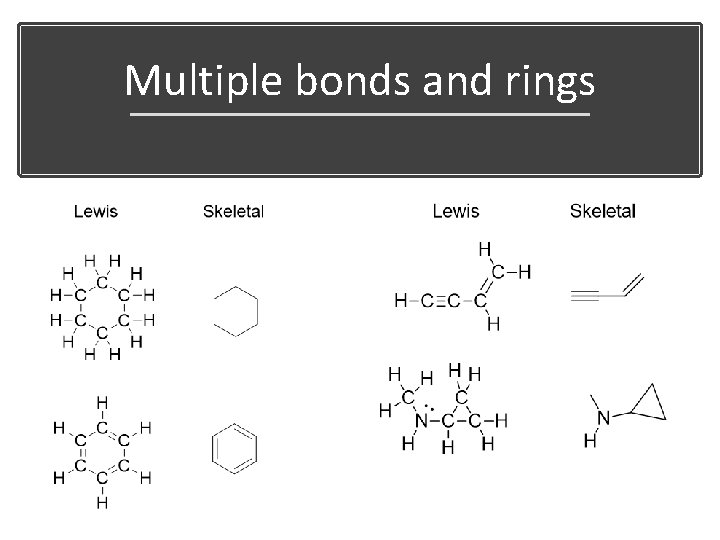
Multiple bonds and rings
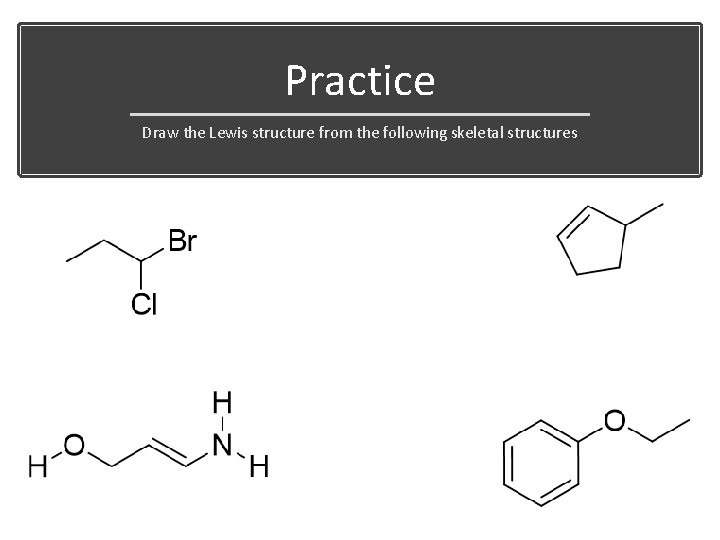
Practice Draw the Lewis structure from the following skeletal structures
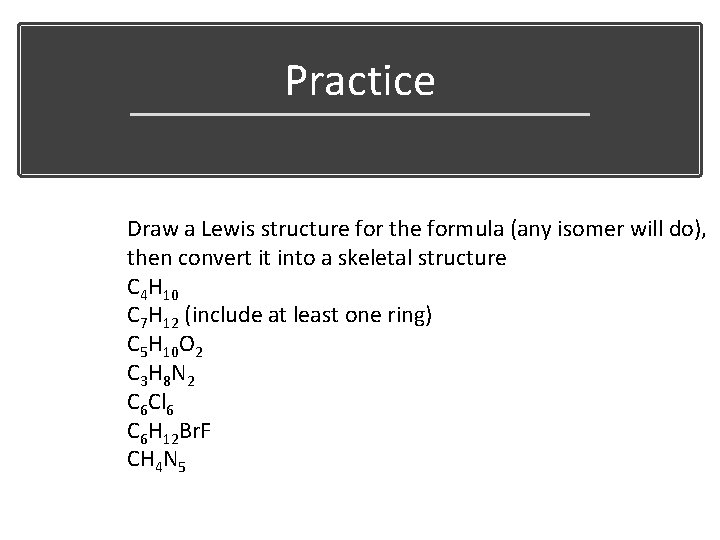
Practice Draw a Lewis structure for the formula (any isomer will do), then convert it into a skeletal structure C 4 H 10 C 7 H 12 (include at least one ring) C 5 H 10 O 2 C 3 H 8 N 2 C 6 Cl 6 C 6 H 12 Br. F CH 4 N 5
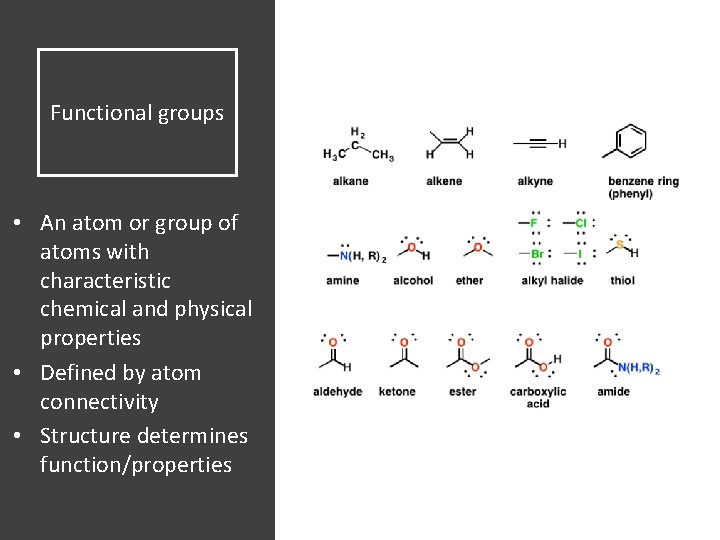
Functional groups • An atom or group of atoms with characteristic chemical and physical properties • Defined by atom connectivity • Structure determines function/properties
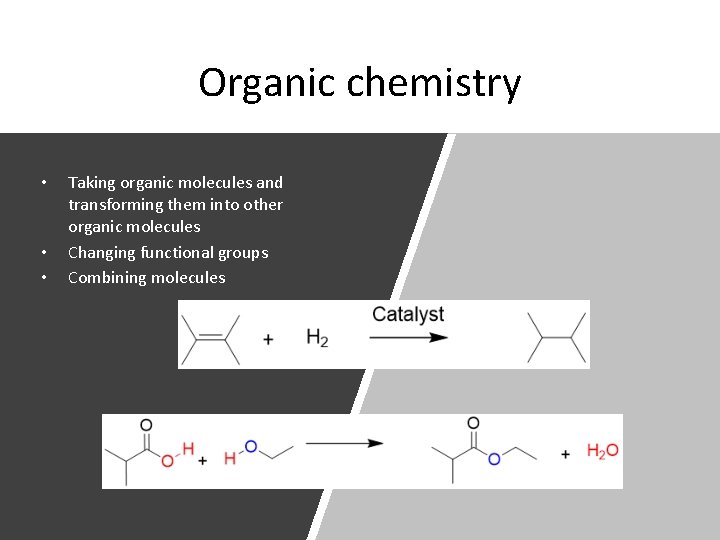
Organic chemistry • • • Taking organic molecules and transforming them into other organic molecules Changing functional groups Combining molecules
Chapter 22 Review ORGANIC MOLECULES DRAWING ORGANIC MOLECULES INTRO TO ORGANIC CHEMISTRY