
Chapter 22 Nutrition and Digestion Power Point Lectures

- Slides: 104
Chapter 22 Nutrition and Digestion Power. Point® Lectures for Campbell Essential Biology, Fifth Edition, and Campbell Essential Biology with Physiology, Fourth Edition – Eric J. Simon, Jean L. Dickey, and Jane B. Reece Lectures by Edward J. Zalisko © 2013 Pearson Education, Inc.
Biology and Society: The “Secret” to Shedding Pounds • About 50 million Americans go on a diet each year. – Weight loss is a growing industry. – Yet only about 5% of dieters are able to reach their goal weight and maintain it for the long term. © 2013 Pearson Education, Inc.
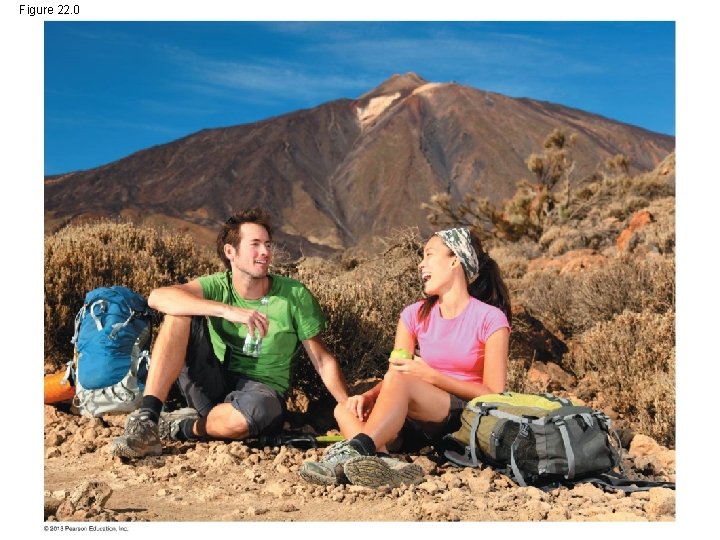
Figure 22. 0
Biology and Society: The “Secret” to Shedding Pounds • More than a third of American adults are obese (very overweight). • Obesity is estimated to contribute to 300, 000 deaths per year in the United States. • The United Nations World Health Organization recognizes obesity as a major global health problem.
Biology and Society: The “Secret” to Shedding Pounds • There really is no trick to managing your weight. – Add up the calories from the food you eat. – Subtract the calories that your body burns. – If you take in more than you burn, you will gain weight. – If you burn more than you take in, you will lose weight.
OVERVIEW OF ANIMAL NUTRITION • Food provides the raw materials that animals, including people, need to – build tissue and – fuel cellular work. However, food primarily consists of large, complex molecules that are not in a form an animal’s cells can use. Thus, the body must break down these nutrients - digest them – to make the useful. © 2013 Pearson Education, Inc.
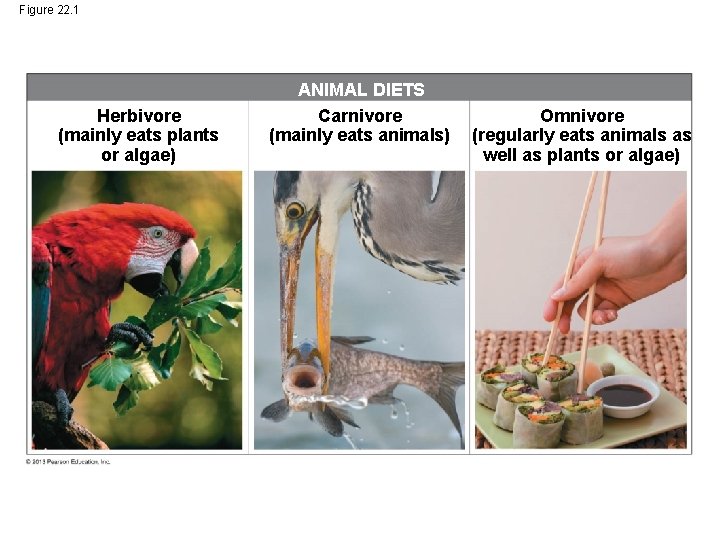
Animal Diets • All animals eat other organisms, dead or alive, whole or by piece. • Herbivores such as cattle, gorilla and sea urchins - mainly feed on plants or algae. • Carnivores such as lions, snakes and spiders mainly eat other animals. • Omnivores such as crows and cockroaches eat – animals and – plants or algae. © 2013 Pearson Education, Inc.
Figure 22. 1 Herbivore (mainly eats plants or algae) ANIMAL DIETS Carnivore (mainly eats animals) Omnivore (regularly eats animals as well as plants or algae)
The Four Stages of Food Processing • Ingestion is another word for eating. You ingest pizza when you bite off a piece. • Digestion is the breakdown of food into molecules small enough for the body to absorb. The tomato sauce on a pizza, for example, is broken down to simple sugars and amino acids. © 2013 Pearson Education, Inc.
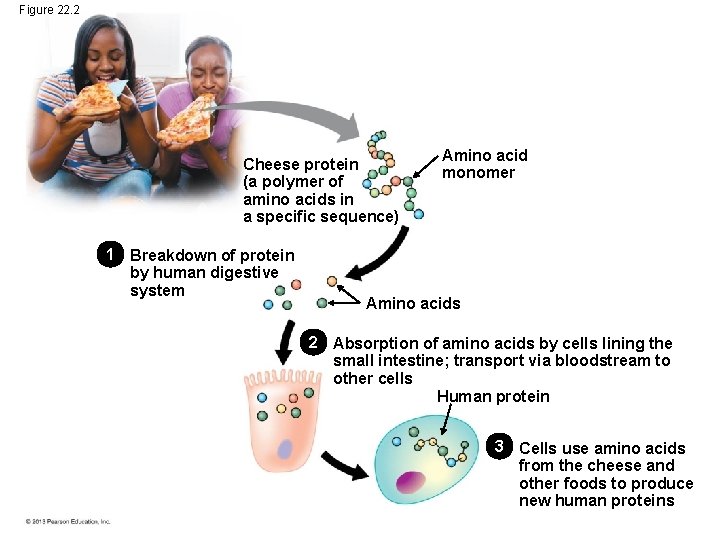
The Four Stages of Food Processing • Absorption is the uptake of the small nutrient molecules by cells lining the digestive tract. For instance, amino acids made available by the breakdown of cheese protein in pizza are absorbed by the cells lining the small intestine and transferred to the bloodstream, which distributes them throughout the body. • Elimination is the disposal of undigested materials left over from food. © 2013 Pearson Education, Inc.
Digestion: A Closer Look • Digestion usually begins with physical processes such as chewing. • Such mechanical digestion beaks chunks of food into small pieces, exposing them to chemical digestion, the breakdown of food by digestive enzymes. • Food molecules that are polymers, such as carbohydrates and proteins, are broken down via chemical digestion into monomers. © 2013 Pearson Education, Inc.
Digestion: A Closer Look • The dismantling of food molecules is necessary for two reasons. – First, the molecules are too large to cross membranes of animal cells; they must be broken down into molecules that are small enough for cells to absorb. – Second, most food molecules – the proteins in cheese, for example – are different from the molecules that make up an animal’s body. © 2013 Pearson Education, Inc.
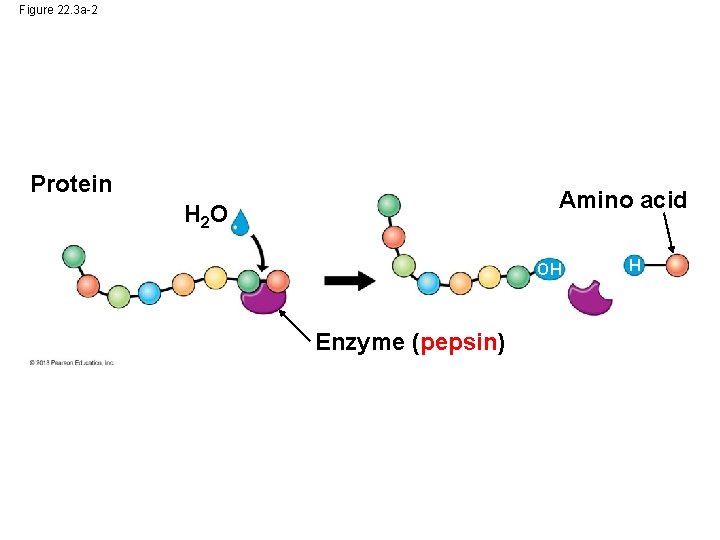
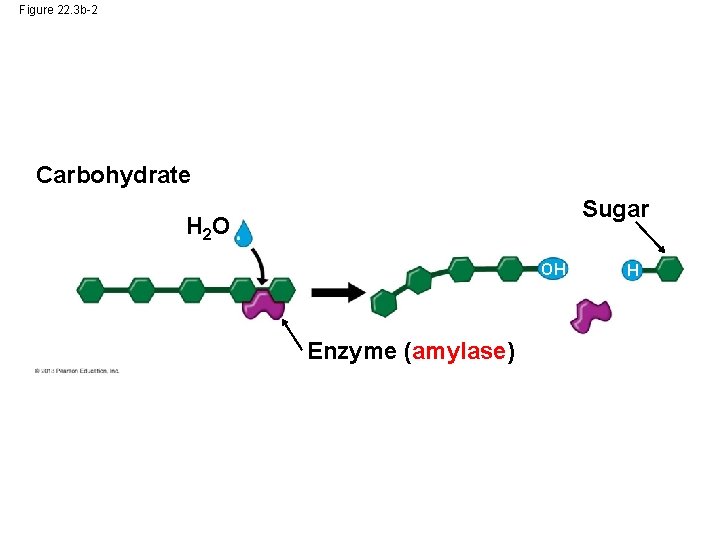
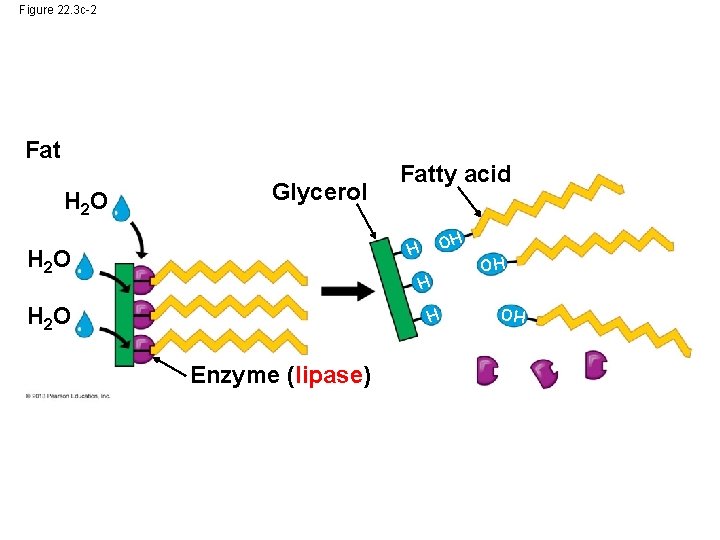
Digestion: A Closer Look • Chemical digestion happens via hydrolysis, chemical reactions that break down large molecules by the addition of water molecules. • Like most of life’s chemical reactions, digestion requires enzymes. • For example, lipases are enzymes that digest fats. © 2013 Pearson Education, Inc.
Figure 22. 2 Cheese protein (a polymer of amino acids in a specific sequence) 1 Breakdown of protein by human digestive system Amino acid monomer Amino acids 2 Absorption of amino acids by cells lining the small intestine; transport via bloodstream to other cells Human protein 3 Cells use amino acids from the cheese and other foods to produce new human proteins
Figure 22. 3 a-2 Protein Amino acid H 2 O OH Enzyme (pepsin) H
Figure 22. 3 b-2 Carbohydrate Sugar H 2 O OH Enzyme (amylase) H
Figure 22. 3 c-2 Fat H 2 O Glycerol Fatty acid OH H H 2 O H Enzyme (lipase) OH
Digestive Compartments • How do animals digest their food without digesting their own cells and tissues? • After all, digestive enzymes break down the same kinds of biological molecules that make up the animal body • In animals, chemical digestion is contained safely within some kind of compartment. © 2013 Pearson Education, Inc.
Digestive Compartments • As a cell engulfs food by phagocytosis, – a food vacuole forms, – which then fuses with a lysosome filled with digestive enzymes, and – as food is digested, small food molecules pass through the vacuole membrane into the cytoplasm, which nourishes the cell. – This type of digestion is common in protists, but sponges are the only animals that digest food solely within their cells. © 2013 Pearson Education, Inc.
Digestive Compartments • Most animals use a digestive compartment to process food. • Such compartments allow animals to digest pieces of food that are much larger than a single cell. • Gastrovascular cavities – are digestive compartments surrounded by cells and – have only a single opening. © 2013 Pearson Education, Inc.
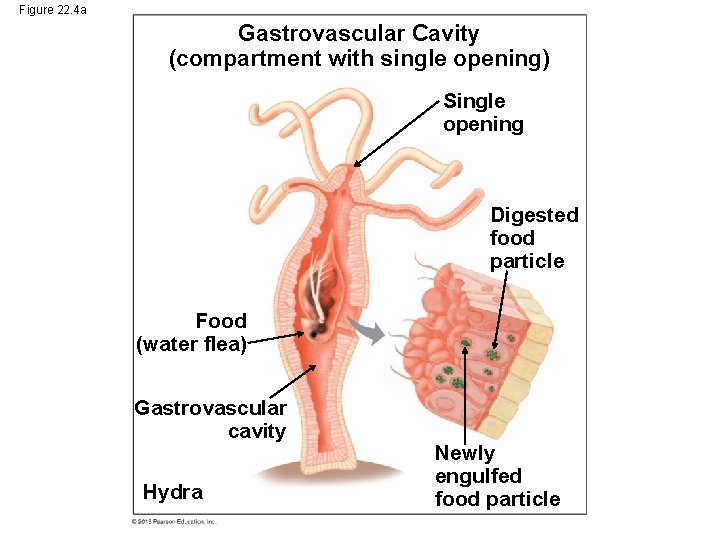
Digestive Compartments • Simpler animals, including cnidarians (hydras and jellies) and flatworms have gastrovascular cavities – are digestive compartments surrounded by cells and – have only a single opening – for both the entrance for food and the exit of undigested wastes © 2013 Pearson Education, Inc.
Figure 22. 4 a Gastrovascular Cavity (compartment with single opening) Single opening Digested food particle Food (water flea) Gastrovascular cavity Hydra Newly engulfed food particle
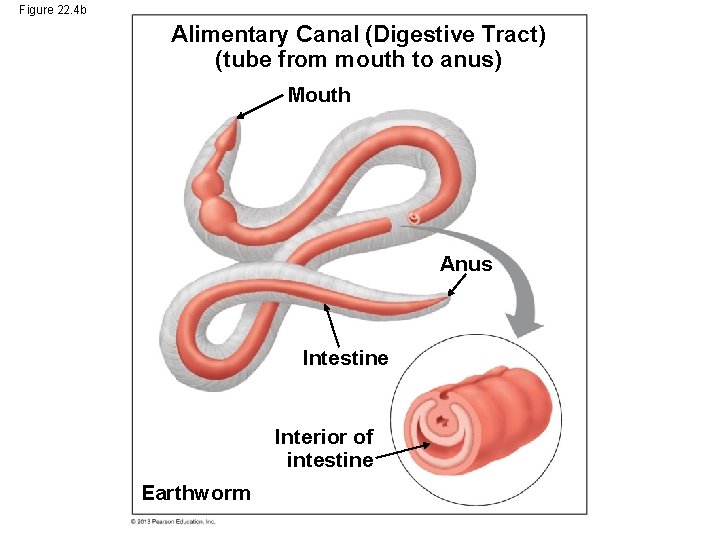
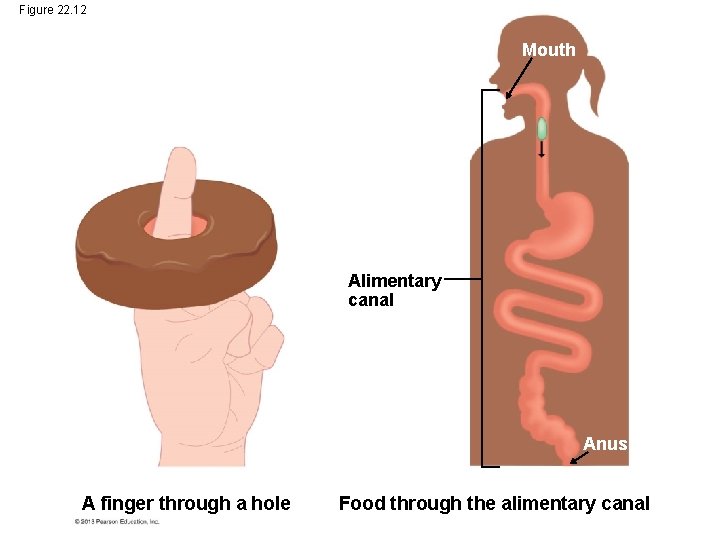
Digestive Compartments • The vast majority of animals, including earthworms and humans, have a digestive tube with two separate openings – a mouth at one end an anus at the other. • This is called digestive tract or alimentary canal • Food moves through specialized regions that digest and absorb nutrients in a step-wise fashion. • An alimentary canal is a disassemply line © 2013 Pearson Education, Inc.
Figure 22. 4 b Alimentary Canal (Digestive Tract) (tube from mouth to anus) Mouth Anus Intestine Interior of intestine Earthworm
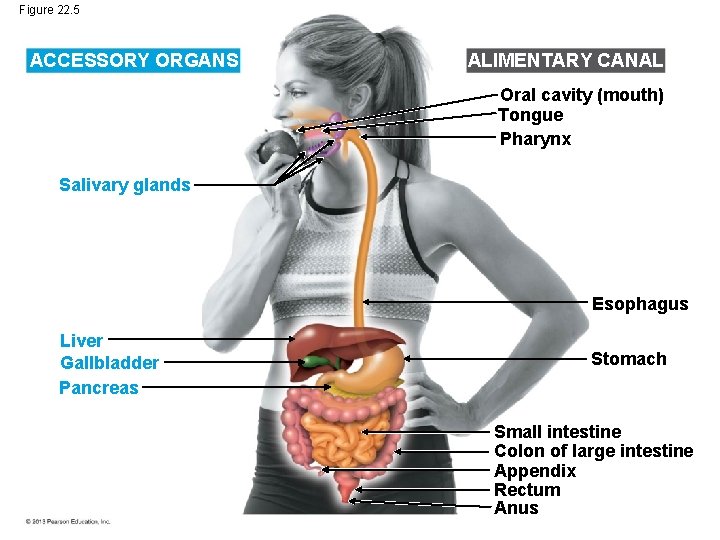
A TOUR OF THE HUMAN DIGESTIVE SYSTEM System Map • The human digestive system consists of – a digestive tube, the alimentary canal (or gut) – Mouth > pharynx > esophagus > stomach > small intestine > large intestine > rectum > anus – accessory organs that secrete digestive chemicals. – Salivary glands, pancreas, liver, gall bladder. © 2013 Pearson Education, Inc.
Figure 22. 5 ACCESSORY ORGANS ALIMENTARY CANAL Oral cavity (mouth) Tongue Pharynx Salivary glands Esophagus Liver Gallbladder Pancreas Stomach Small intestine Colon of large intestine Appendix Rectum Anus
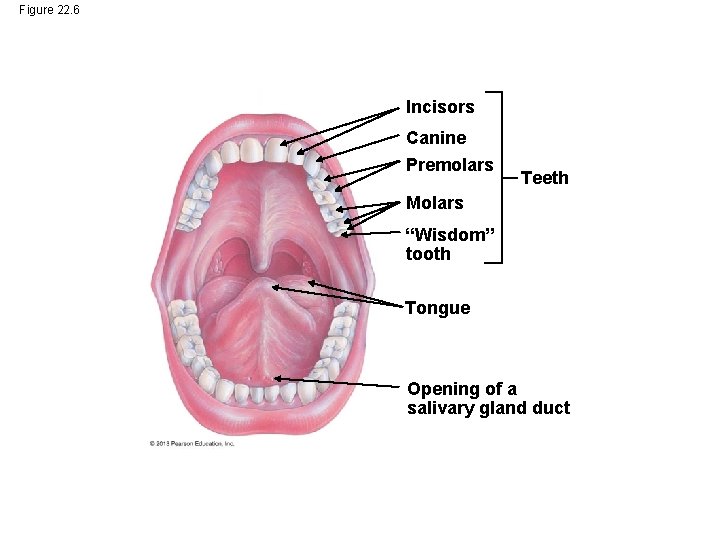
The Mouth • The mouth, or oral cavity, is where we ingest (take in) food and begin to digest it. • Mechanical digeston begins here as our teeth cut, smash and grind the food. • Typically, an adult person has 32 teeth, which include incisors, canines, premolars and molars © 2013 Pearson Education, Inc.
Figure 22. 6 Incisors Canine Premolars Teeth Molars “Wisdom” tooth Tongue Opening of a salivary gland duct
The Mouth • Chemical digestion begins in the mouth with the secretion of saliva from salivary glands. • Saliva contains digestive enzymes like salivary amylase • This enzyme breaks down starch, a major ingredient in pizza crust. © 2013 Pearson Education, Inc.
The Mouth • The muscular tongue – tastes, – shapes food into a ball, and – pushes the food to the back of the mouth for swallowing. © 2013 Pearson Education, Inc.
The Pharynx • The pharynx (throat) – Intersection of the pathways for swallowing and breathing – connects the mouth to the esophagus and – opens to the trachea, which leads to the lungs. • During swallowing, a reflex – moves the opening of the trachea upward and – tips the epiglottis to close the trachea entrance. © 2013 Pearson Education, Inc.
The Pharynx Like a crossing guard at a dangerous intersection, the epiglottis directs the closing of the trachea, ensuring that food will go down the esophagus. You can see this action in the bobbing of your Adam’s apple every time you swallow. Occassionally, food begins “to go down the wrong pipe, ” which irritates the lining of the trachea and triggers a strong coughing reflex that helps keep the airway clear of food. © 2013 Pearson Education, Inc.
Figure 22. 7 BREATHING SWALLOWING Epiglottis up Pharynx Air flowing into open trachea (windpipe) Epiglottis down Adam’s apple Esophagus closed Trachea closed Food flowing into open esophagus
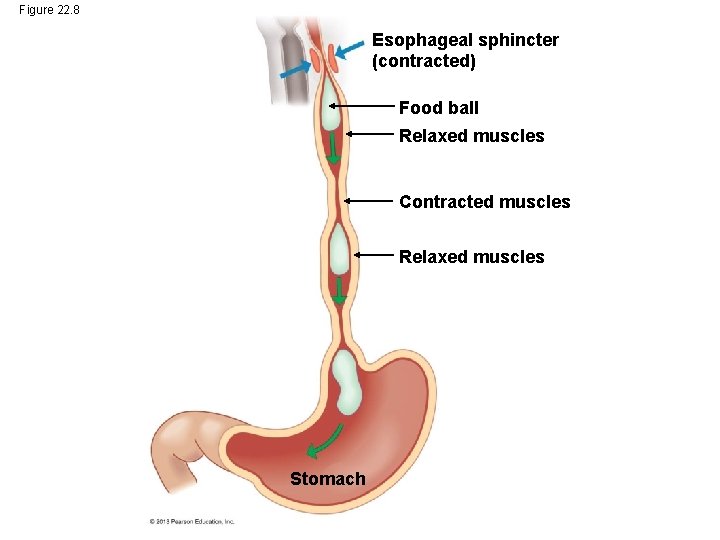
The Esophagus • The esophagus – is a muscular tube, – connects the pharynx to the stomach, and – moves food down by peristalsis, alternating waves of muscular contraction and relaxation. – peristalsis moves the food along all the way from the esophagus to the anus. © 2013 Pearson Education, Inc.
Figure 22. 8 Esophageal sphincter (contracted) Food ball Relaxed muscles Contracted muscles Relaxed muscles Stomach
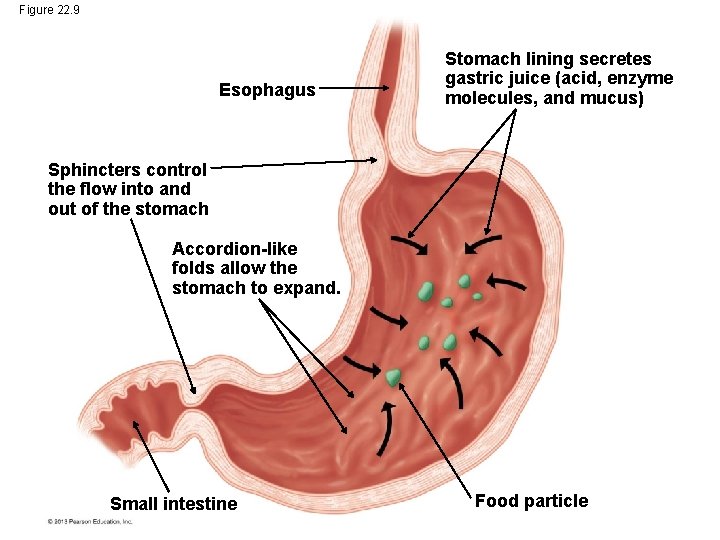
The Stomach • The stomach – can store food for several hours and – churns food into a thick soup called chyme. – elastic wall and accordion-like folds, can stretchto hold up to two liters (1/2 gallon) © 2013 Pearson Education, Inc.
The Stomach • Fluid in the stomach contains gastric juice, made of – strong acid – strong enough to dissolve nails – digestive enzymes, – mucus, and – the enzyme pepsin, which digests proteins. – At the downstream end of the stomach is a sphincter (valve) that regulates the transfer of chyme from the stomach to the small intestine. © 2013 Pearson Education, Inc.
The Stomach • It takes 2 – 6 hours for the stomach to empty after a meal, long enough for stomach acids and pepsin to begin digestion. • What keeps the stomach from digesting itself? – Mucus coating the stomach lining helps protect it – Timing is also a factor: Nerve and hormone signals regulate secretion of gastric juice so that it is discharged only when food is in the stomach. – The stomach replaces its lining once every three days. © 2013 Pearson Education, Inc.
Figure 22. 9 Esophagus Stomach lining secretes gastric juice (acid, enzyme molecules, and mucus) Sphincters control the flow into and out of the stomach Accordion-like folds allow the stomach to expand. Small intestine Food particle
Stomach Ailments • Heartburn is caused by backflow of chyme into the esophagus. • Some people suffer this backflow frequently and severely enough to harm the lining of the esophagus – a condition known as GERD (gastroesophageal reflux disease) • Gastric ulcers are – erosions of the stomach lining and – often caused by the bacterium Helicobacter pylori. © 2013 Pearson Education, Inc.
Stomach Ailments • Gastric ulcers are – erosions of the stomach lining and – often caused by the bacterium Helicobacter pylori. – in severe ulcers, the erosion can produce a hole in the stomach wall and cause life-threatening internal bleeding an infection. – (The cause of ulcers was established in 1984 when biologist Barry Marshall experimented on himself by drinking beef soup laced with H. pylori bacteria – he won the 2005 Nobel Prize) © 2013 Pearson Education, Inc.
Stomach Ailments • Gastric ulcers – Affected people can get relief by taking medications that contain bismuth – Most ulcers can be treated with antibiotics © 2013 Pearson Education, Inc.
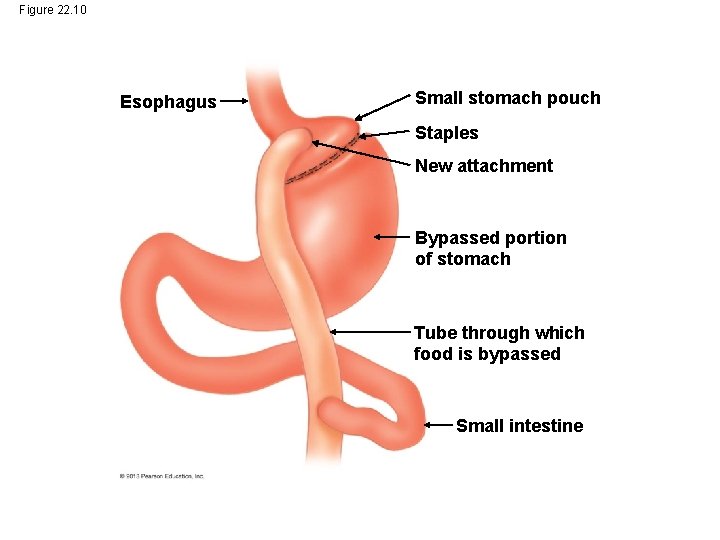
Weight Loss Surgeries • The most common weight loss surgery in the United States is gastric bypass. – Staples are used to reduce the stomach to about the size of a chicken egg. – The first 18 inches of the small intestine are bypassed by attaching the downstream intestine directly to the reduced stomach pouch. – Patients quickly feel full and body’s ability to absorb is reduced. © 2013 Pearson Education, Inc.
Figure 22. 10 Esophagus Small stomach pouch Staples New attachment Bypassed portion of stomach Tube through which food is bypassed Small intestine
Weight Loss Surgeries – When accompanied with healthy lifestyle, weight loss surgeries are successful in 90% of patients – However, all surgeries carry risks (there is about 1% mortality rate) – Patients must carefully monitor their diet to ensure proper nutrition – Weight loss surgeries are effective but they are only recommended as a last resort. © 2013 Pearson Education, Inc.
The Small Intestine • The small intestine is – the longest part of the alimentary canal – At a length of about 20 feet – Not small in length, but small in diameter compared to the large intestine. – the major organ for chemical digestion and absorption of nutrients into the bloodstream. © 2013 Pearson Education, Inc.
Chemical Digestion in the Small Intestine • Most chemical digestion occurs in the duodenum, the first foot of the small intestine. • Now the small intestine takes over with an arsenal of enzymes that dismantle food molecules into smaller molecules. • In the duodenum, chyme from the stomach mixes with – pancreatic juice, – bile, and – a digestive juice secreted by the intestinal lining. © 2013 Pearson Education, Inc.
Chemical Digestion in the Small Intestine • In the duodenum, chyme from the stomach mixes with – pancreatic juice, – bile, and – a digestive juice secreted by the intestinal lining. © 2013 Pearson Education, Inc.
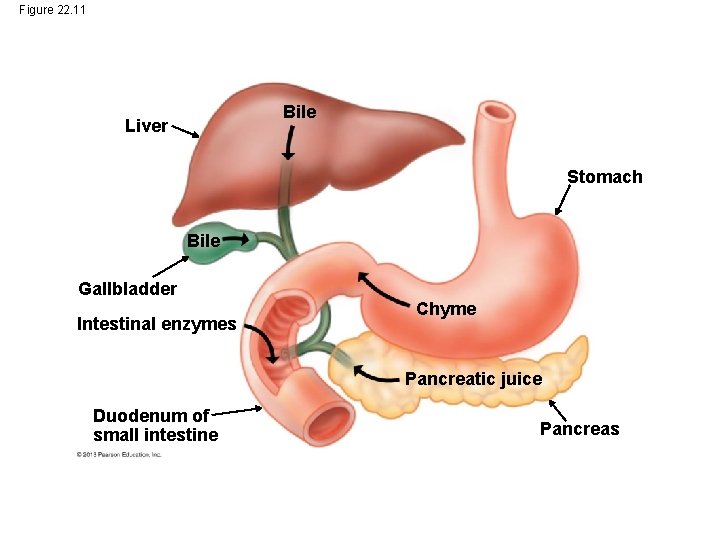
Figure 22. 11 Bile Liver Stomach Bile Gallbladder Intestinal enzymes Chyme Pancreatic juice Duodenum of small intestine Pancreas
Chemical Digestion in the Small Intestine • The duodenum receives digestive juices from the pancreas, the liver, the gallbladder and the intestinal lining itself. • The pancreas – is a large gland that secretes pancreatic juice – pancreatic juice neutralizes the acid from the stomach and contains many digestive enzymes – pancreatic amylase, lipase, protease and nuclease © 2013 Pearson Education, Inc.
Chemical Digestion in the Small Intestine • Bile is produced by the liver and stored and secreted from the gallbladder – Secreted through duct into the duodenum – Contains salts that break up fats into small droplets – Can crystalize to form gallstones which cause pain and block bile secretion – Surgical removal of gallbladder is common cure. © 2013 Pearson Education, Inc.
Absorption of Nutrients • In the duodenum, nutrients are – completely digested and – ready to be absorbed. • Nutrients only enter the body if they are absorbed into the walls of the digestive tract. © 2013 Pearson Education, Inc.
Figure 22. 12 Mouth Alimentary canal Anus A finger through a hole Food through the alimentary canal
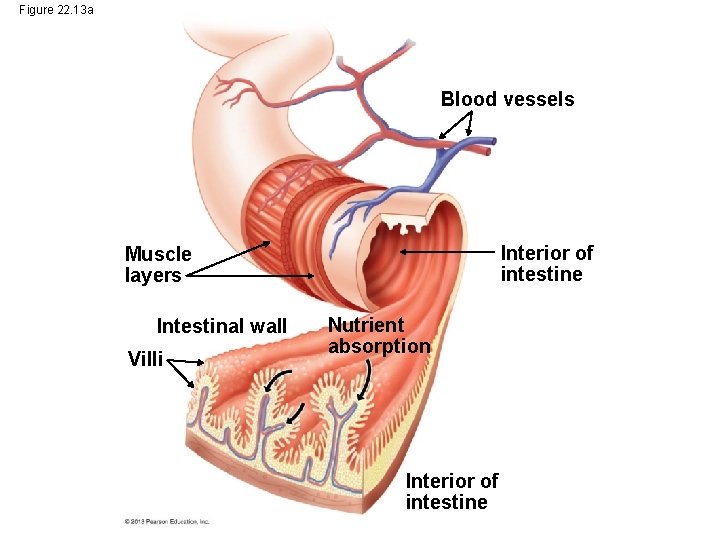
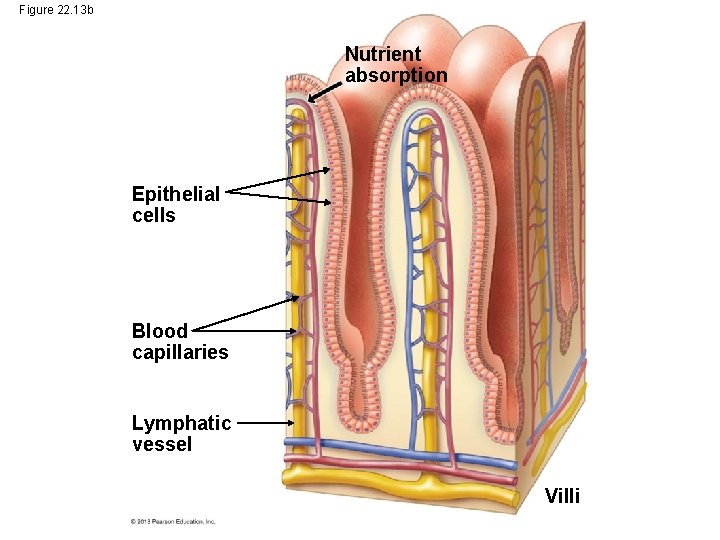
Absorption of Nutrients • Most digestion is complete by the time the food reaches the end of the duodenum. • The next several meters of the small intestine are specialized for absorption. • The structure of the intestinal lining (epithelium) fits this function. • The surface area of this epithelium is huge – 300 square meters – the area of a tennis court. © 2013 Pearson Education, Inc.
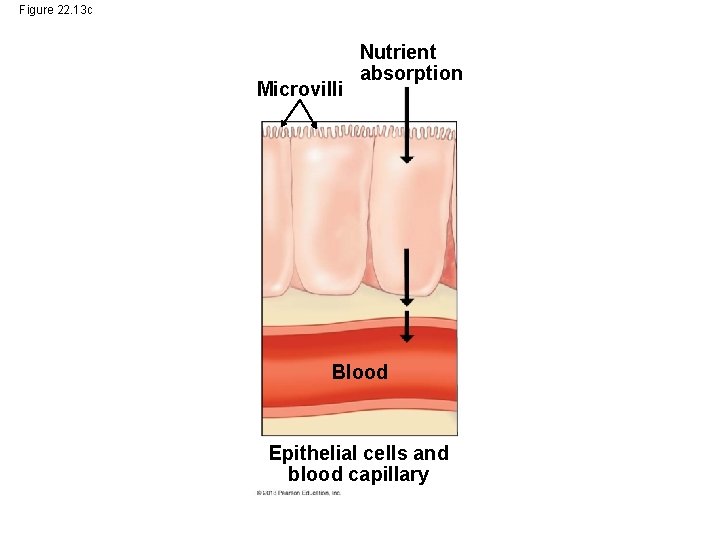
Absorption of Nutrients • The intestinal lining not only has large folds, like the stomach, but also has finger-like outgrowths called villi • Each cell of epithelium adds even more surface area by having microscopic projections called microvilli • Across this expansive surface of intestinal epithelium, nutrients are transported into the network of small blood vessels and lymphatic vessels in the core of each villus © 2013 Pearson Education, Inc.
Figure 22. 13 a Blood vessels Interior of intestine Muscle layers Intestinal wall Villi Nutrient absorption Interior of intestine
Figure 22. 13 b Nutrient absorption Epithelial cells Blood capillaries Lymphatic vessel Villi
Figure 22. 13 c Microvilli Nutrient absorption Blood Epithelial cells and blood capillary
Absorption of Nutrients • Normally the small intestine is free of microorganisms, but improper sanitation can lead to infection by various bacteria • The disease cholera for example, is caused by ingestion of the bacterium Vibrio cholera. • As it multiplies in the small intestine, this bacteria releases a toxin that leads to profuse watery vomiting and diarrhea, which can lead to dehydration and death. • Primarily found in developing countries © 2013 Pearson Education, Inc.
Absorption of Nutrients • Cholera often appears after a natural disaster such as a earthquake or hurricane • When many people are displaced without proper sanitation or water © 2013 Pearson Education, Inc.
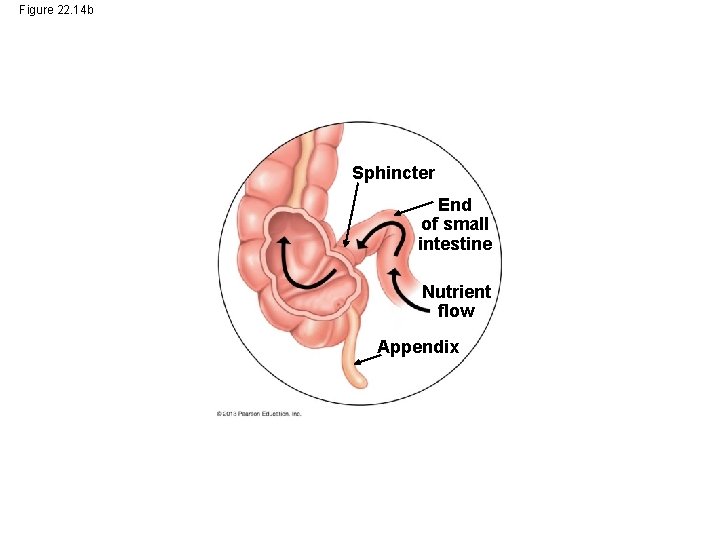
The Large Intestine • The large intestine is – shorter, but wider, than the small intestine and – about 1. 5 meters in length. • At the junction of the small and large intestine is a small, finger-like extension called the appendix. – The appendix contains white blood cells that make minor contributions to the immune system. – Appendicitis is a bacterial infection of the appendix. © 2013 Pearson Education, Inc.
The Large Intestine • The colon (large intestine) –Main function is to absorb water –About 2 gallons of digestive juice and water pour into the colon each day. –About 90% of this water is absorbed back into the blood and body fluids each day. –The small intestine absorbs much of the water and the colon finishes the job –As water is absorbed, undigested material becomes more solid as moved along by peristalsis © 2013 Pearson Education, Inc.
The Large Intestine –The end product of undigested materials is an endproduct called feces. –Feces also contains enormous numbers of intestinal bacteria, normal inhabitants of the colon. –Some bacteria, such as Escherichia coli, produce B vitamins and Vitamin K that are absorbed through the colon wall and help supplement the diet © 2013 Pearson Education, Inc.
The Large Intestine If the lining of the colon is infected by viral or bacterial infection (“stomach bug”), diarrhea may result Colon cannot absorb water properly Prolonged diarrhea can cause life-threatening dehydration, especially among young and old Opposite problem, constipation, occurs when peristalsis moves feces along too slowly Feces becomes too compacted because too much water has been reabsorbed. © 2013 Pearson Education, Inc.
The Large Intestine Several intestinal disorders characterized by inflammation (painful swelling) of intestinal wall. Celiac disease results when gluten, wheat protein, triggers an immune reaction Leads to swelling and lack of nutrient absorption Crohn’s disease, a chronic inflammation that can periodically flare up along any part of the alimentary canal Investigating the cause and treatment of Crohn’s is an active area of medical research today. © 2013 Pearson Education, Inc.
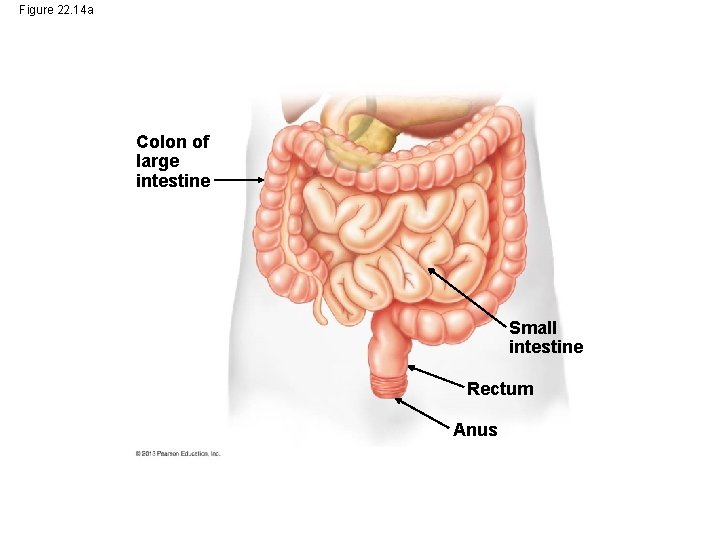
The Large Intestine • The rectum – forms the last 15 cm (6 inches) of the large intestine and – stores feces until elimination. • The anus – consists of two sphincters smooth and skeletal muscle and – regulates the opening of the rectum. © 2013 Pearson Education, Inc.
Figure 22. 14 a Colon of large intestine Small intestine Rectum Anus
Figure 22. 14 b Sphincter End of small intestine Nutrient flow Appendix
https: //www. youtube. com/watch? v=s 06 Xza. Kq. E Lk Digestive System (11. 41)
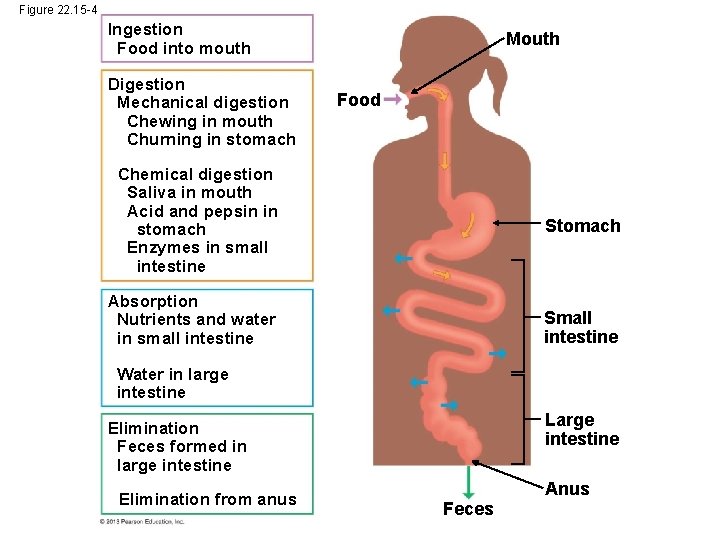
Figure 22. 15 -4 Ingestion Food into mouth Digestion Mechanical digestion Chewing in mouth Churning in stomach Mouth Food Chemical digestion Saliva in mouth Acid and pepsin in stomach Enzymes in small intestine Stomach Absorption Nutrients and water in small intestine Small intestine Water in large intestine Large intestine Elimination Feces formed in large intestine Elimination from anus Feces Anus
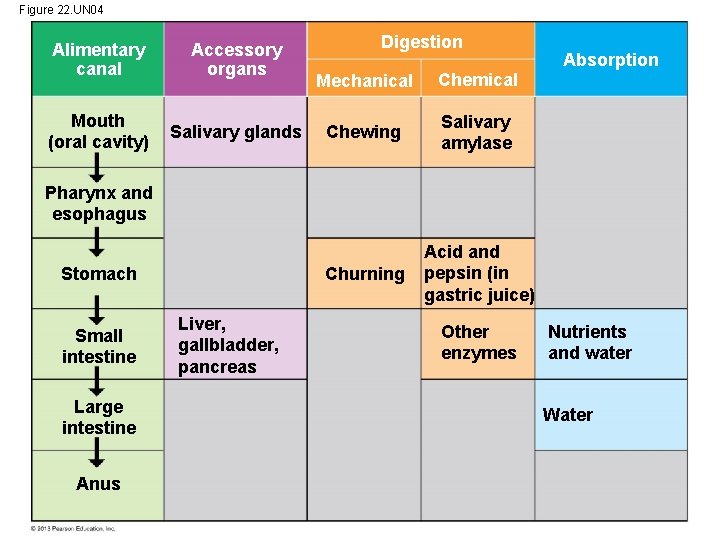
Figure 22. UN 04 Alimentary canal Accessory organs Mouth (oral cavity) Salivary glands Digestion Mechanical Chemical Chewing Salivary amylase Churning Acid and pepsin (in gastric juice) Absorption Pharynx and esophagus Stomach Small intestine Large intestine Anus Liver, gallbladder, pancreas Other enzymes Nutrients and water Water
HUMAN NUTRITIONAL REQUIREMENTS • Proper nutrition provides – fuel for cellular work, – materials for building molecules, and – essential nutrients for health. © 2013 Pearson Education, Inc.
HUMAN NUTRITIONAL REQUIREMENTS • A healthy human diet is rich in whole grains, vegetables, fruits and calcium, along with moderate quantities of protein from lean meats, eggs, nuts or beans • Nutritionists recommend limited consumption of fats and sugars (primarily to help maintain a healthy weight) as well as limited salt. © 2013 Pearson Education, Inc.
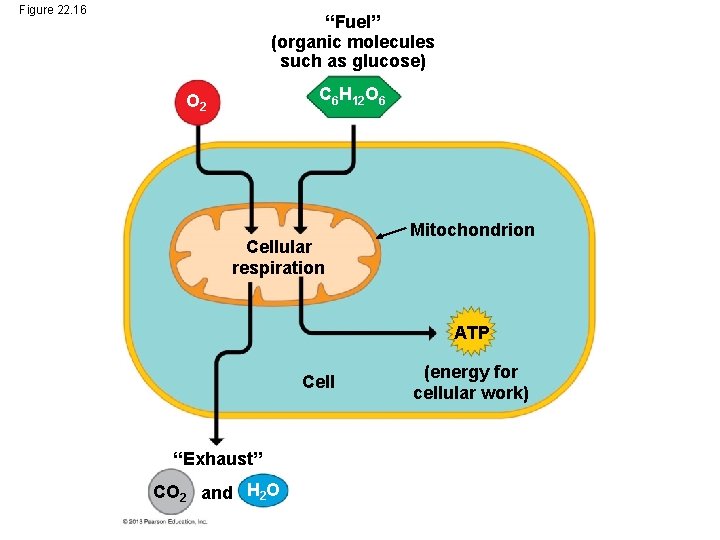
Food as Fuel • Cells can extract energy stored in the organic molecules of food through the process of cellular respiration and expend that energy as cellular work. • Using oxygen, cellular respiration breaks down glucose and other food molecules. • This generates many molecules of ATP for cells to use as direct source of energy and releasing carbon dioxide and water as waste “exhaust” © 2013 Pearson Education, Inc.
Figure 22. 16 “Fuel” (organic molecules such as glucose) C 6 H 12 O 6 O 2 Cellular respiration Mitochondrion ATP Cell “Exhaust” CO 2 and H 2 O (energy for cellular work)
Calories • Calories are a measure of the energy – stored in your food and – used in daily activities. © 2013 Pearson Education, Inc.
Calories • A calorie is the amount of energy required to raise the temperature of one gram of water by 1°C. • A kilocalorie (kcal) is – 1, 000 calories, – the unit listed on food labels, and – often called Calories with an uppercase C. – 1 Calorie = 1000 calories © 2013 Pearson Education, Inc.
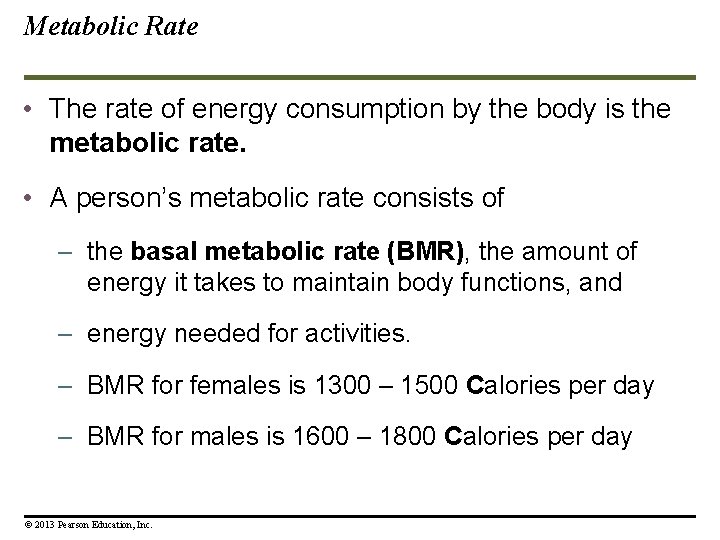
Metabolic Rate • The rate of energy consumption by the body is the metabolic rate. • A person’s metabolic rate consists of – the basal metabolic rate (BMR), the amount of energy it takes to maintain body functions, and – energy needed for activities. – BMR for females is 1300 – 1500 Calories per day – BMR for males is 1600 – 1800 Calories per day © 2013 Pearson Education, Inc.
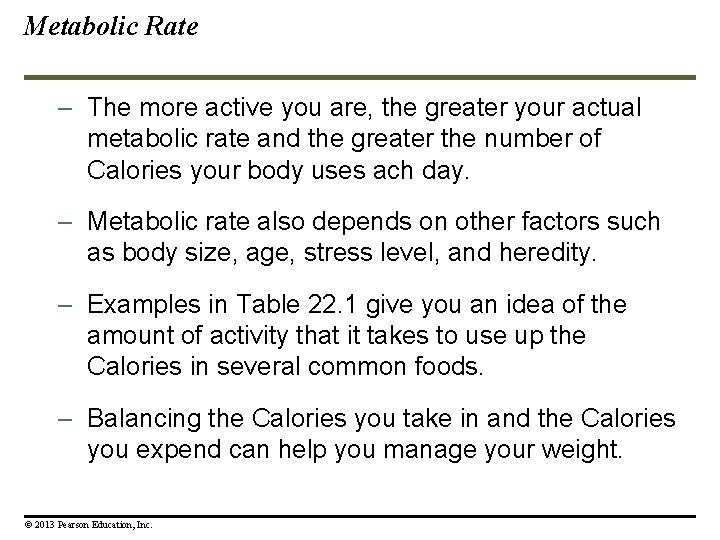
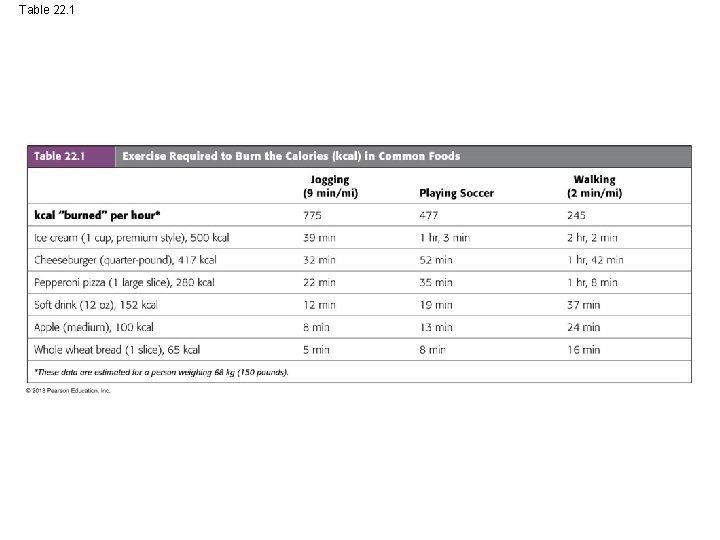
Metabolic Rate – The more active you are, the greater your actual metabolic rate and the greater the number of Calories your body uses ach day. – Metabolic rate also depends on other factors such as body size, age, stress level, and heredity. – Examples in Table 22. 1 give you an idea of the amount of activity that it takes to use up the Calories in several common foods. – Balancing the Calories you take in and the Calories you expend can help you manage your weight. © 2013 Pearson Education, Inc.
Table 22. 1
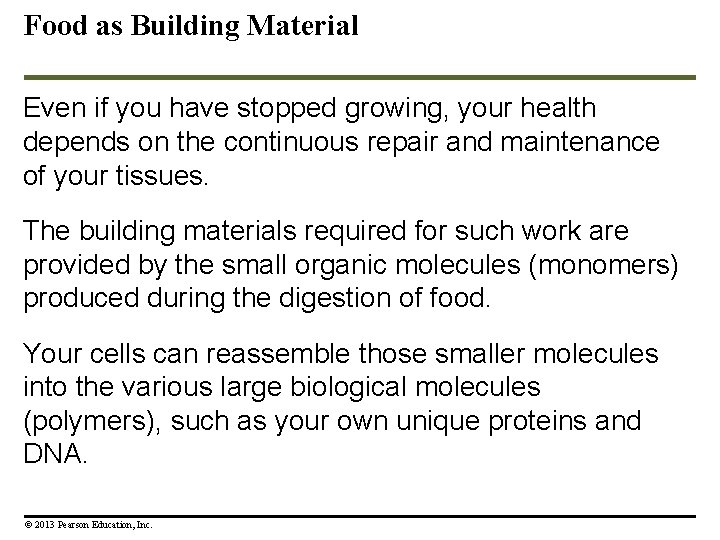
Food as Building Material Even if you have stopped growing, your health depends on the continuous repair and maintenance of your tissues. The building materials required for such work are provided by the small organic molecules (monomers) produced during the digestion of food. Your cells can reassemble those smaller molecules into the various large biological molecules (polymers), such as your own unique proteins and DNA. © 2013 Pearson Education, Inc.
Metabolic Rate • Within limits, your metabolism can change organic material from one form to another and compensate for nutrients that are lacking in your diet. • For instance, if a cell has a shortage of a particular amino acid, it may be able to make that amino acid from an excess supply of a different amino acid. • However, certain substances – essential nutrients – cannot be made from other materials. © 2013 Pearson Education, Inc.
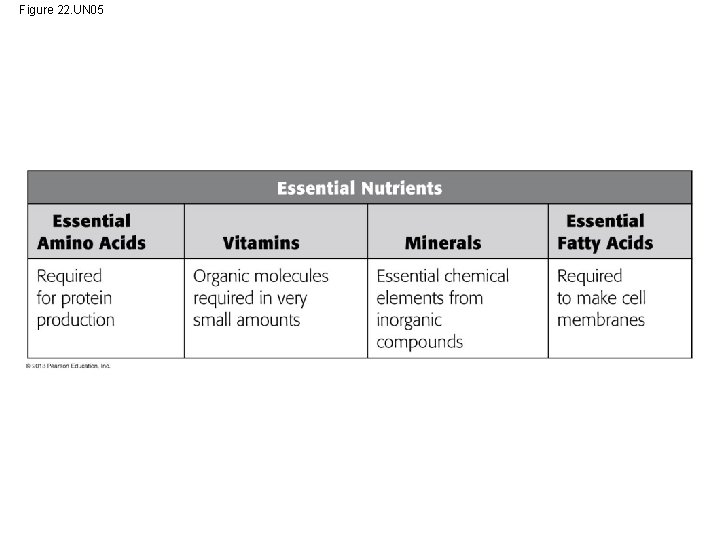
Metabolic Rate • Essential nutrients – the body must receive them in preassembled form: – Essential amino acids – Vitamins – Minerals – Essential fatty acids © 2013 Pearson Education, Inc.
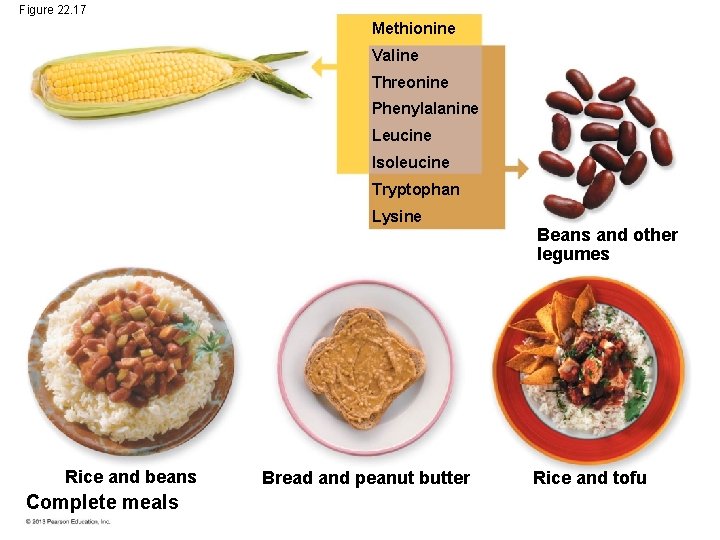
Essential Amino Acids • In humans, eight essential amino acids – must be obtained from the diet and – are in different proportions in different foods. • All eight essential amino acids can be consumed by eating – meat, eggs, or milk or – a variety of plants, typically grains and legumes such as beans, peanuts, and peas. © 2013 Pearson Education, Inc.
Figure 22. 17 Methionine Valine Threonine Phenylalanine Leucine Isoleucine Tryptophan Lysine Rice and beans Complete meals Bread and peanut butter Beans and other legumes Rice and tofu
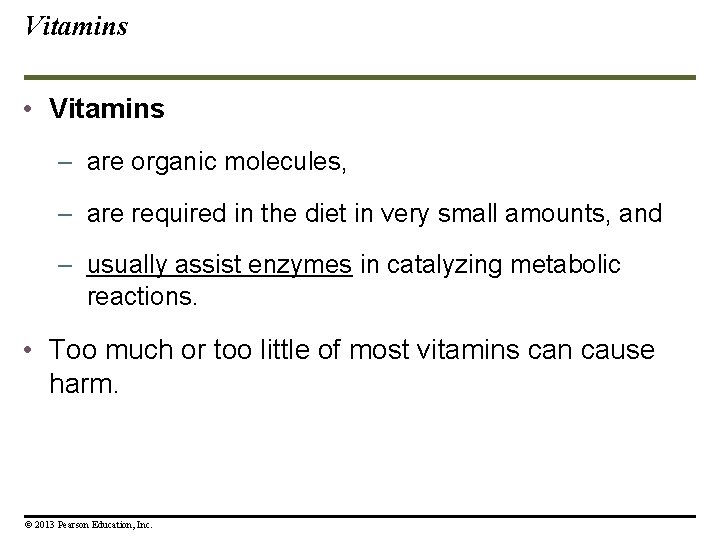
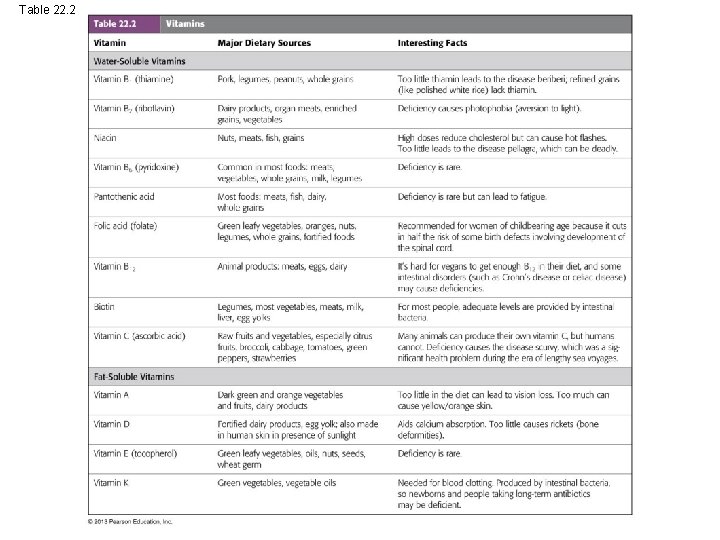
Vitamins • Vitamins – are organic molecules, – are required in the diet in very small amounts, and – usually assist enzymes in catalyzing metabolic reactions. • Too much or too little of most vitamins can cause harm. © 2013 Pearson Education, Inc.
Table 22. 2
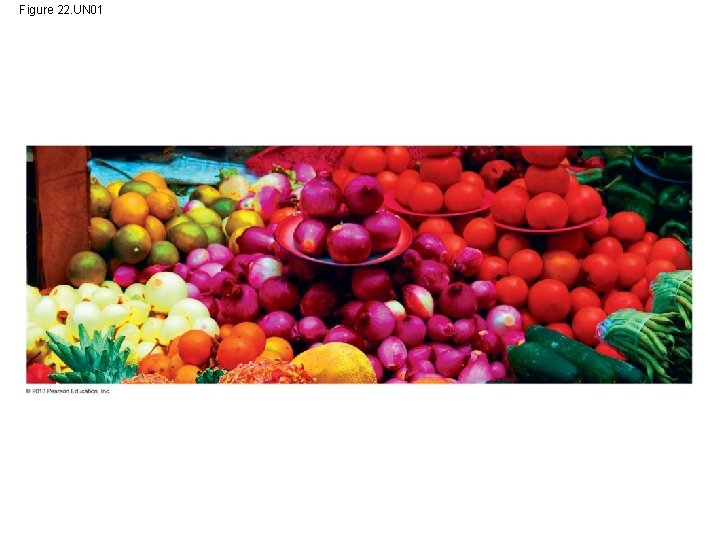
Figure 22. UN 01
Minerals • Minerals are inorganic substances required in the diet. • Like vitamin deficiencies, mineral deficiencies can cause health problems • For example, calcium is needed for building bones and teeth and for the proper functioning of nerves and muscles. • It can be obtained from dairy products, legumes and dark green vegetables like spinach. • Too little can result in osteoporosis © 2013 Pearson Education, Inc.
Minerals Mineral excess can also cause problems. For example, we require sodium for nerves and muscles to function, but the average American consumes about 20 times the required amount of sodium, mainly in the form on salt (sodium chloride) added to processed foods. Excess sodium can lead to high blood pressure. © 2013 Pearson Education, Inc.
Essential Fatty Acids • Our cells make fats and other lipids by combining fatty acids and other molecules, such as glycerol. • We can make most of the required fatty acids, in turn, from simpler molecules. • Essential fatty acids must be obtained in the diet. • One essential fatty acid, linoleic acid, is especially important because it is needed to make some of the phospholipids of cell membranes. © 2013 Pearson Education, Inc.
Figure 22. UN 05
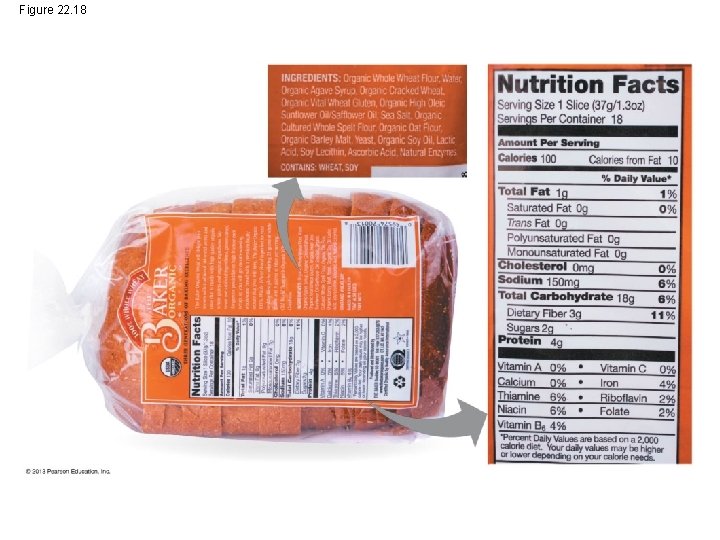
Decoding Food Labels • To help consumers assess the nutritional value of packaged foods, the United States Food and Drug Administration (FDA) requires two blocks of information on food labels. • One lists the ingredients by weight. • The other lists key nutrients, emphasizing the ones associated with disease and the ones associated with a healthy diet. © 2013 Pearson Education, Inc.
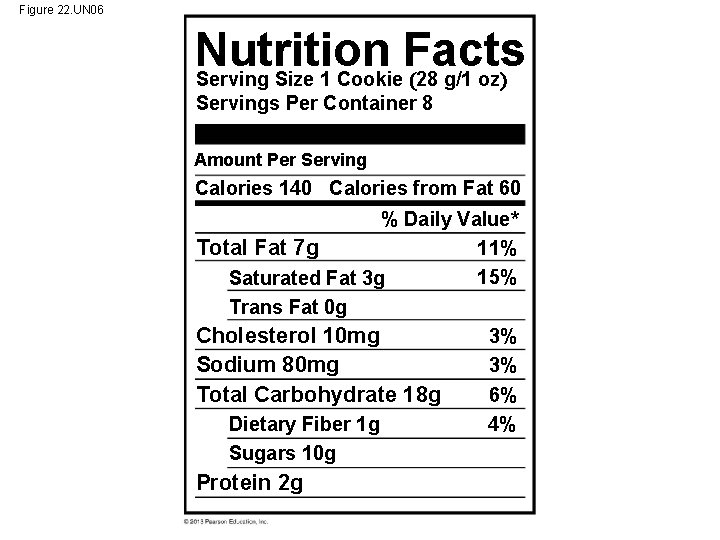
Decoding Food Labels • You should note the serving size and adjust the rest of the nutritional information to reflect your actual serving. • For example, if the serving size is 1 cup of cereal but you are eating 2 cups, you must double all of the values, • You’ll see a wide variety of data – including Calories, fat, cholesterol, carbohydrates, fiber, protein, vitamins, minerals – expressed as amount per serving and as percentages of daily value. © 2013 Pearson Education, Inc.
Decoding Food Labels • (Daily values are based on a 2, 000 Calorie per day diet; these values are therefore “one-size-fits-all” numbers that should be used as rough guidelines. ) • If you pay attention, you’ll find that serving sizes are often surprising: a single cookie or snack-sized bag of chips may actually contain multiple servings – therefore, many for calories than a quick glance would indicate. • Reading food labels carefully can help you make informed choices © 2013 Pearson Education, Inc.
Figure 22. 18
Figure 22. UN 06 Nutrition Facts Serving Size 1 Cookie 28 g/1 oz Servings Per Container 8 Amount Per Serving Calories 140 Calories from Fat 60 % Daily Value* Total Fat 7 g 11% 15% Saturated Fat 3 g Trans Fat 0 g Cholesterol 10 mg 3% Sodium 80 mg 3% Total Carbohydrate 18 g 6% Dietary Fiber 1 g 4% Sugars 10 g Protein 2 g
NUTRITIONAL DISORDERS • Dietary problems can cause severe health problems. © 2013 Pearson Education, Inc.
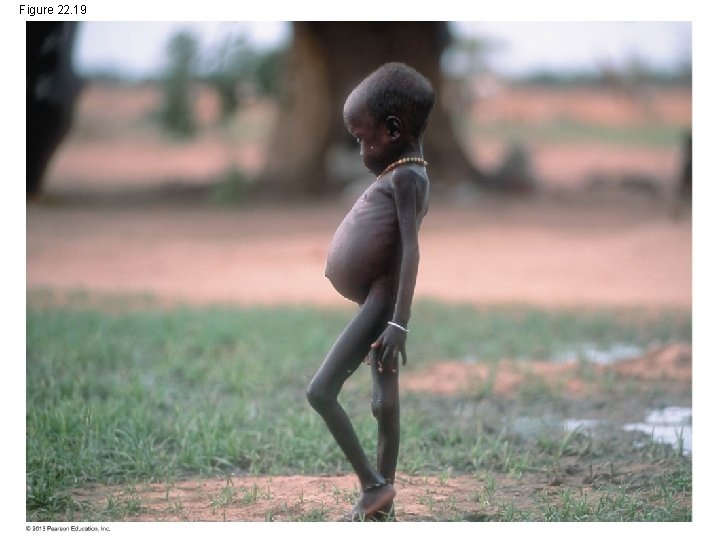
Malnutrition • Malnutrition refers to health problems caused by an – improper or – insufficient diet. • Protein deficiency – causes the most human suffering and – is concentrated where there is a great gap between food supply and population size. © 2013 Pearson Education, Inc.
Figure 22. 19
Eating Disorders • Eating disorders – affect millions of Americans, – are more common in women than men, and – result in malnutrition. © 2013 Pearson Education, Inc.
Eating Disorders • Anorexia nervosa is self-starvation, even when a person is underweight. • Bulimia involves – binge eating, – purging through induced vomiting, – abuse of laxatives, and/or – excessive exercise. © 2013 Pearson Education, Inc.
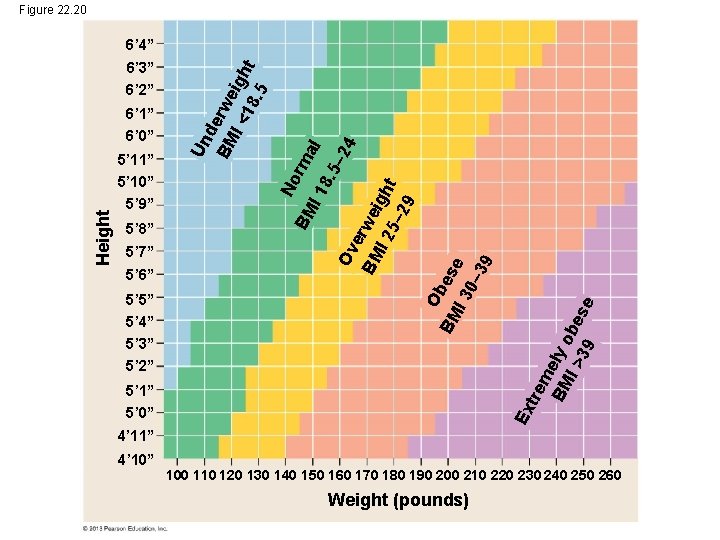
Obesity • Obesity – is a too-high body mass index (BMI), – is the nutritional disorder of greatest concern, – affects about one-third of all Americans, and – increases the risk of heart attack, diabetes, and other diseases. © 2013 Pearson Education, Inc.
Figure 22. 20 5’ 3” 5’ 2” Ex 5’ 1” 5’ 0” tre me BM ly o I > be 39 se 5’ 5” 5’ 4” O BM bese I 3 0– 39 5’ 7” 5’ 6” Ov e BM rwei I 2 ght 5– 29 5’ 8” al I 1 8. 5 – 2 4 5’ 11” 5’ 10” 5’ 9” BM Height 6’ 1” 6’ 0” No rm 6’ 3” 6’ 2” Un d BM erwe I < igh 18. 5 t 6’ 4” 4’ 11” 4’ 10” 100 110 120 130 140 150 160 170 180 190 200 210 220 230 240 250 260 Weight (pounds)