
Chapter 22 Fatty Acid Metabolism 2019 W H
Chapter 22 Fatty Acid Metabolism © 2019 W. H. Freeman and Company
CHAPTER 22 Fatty Acid Metabolism
Ch. 22 Learning Objectives By the end of this chapter, you should be able to: 1. Identify the repeated steps of fatty acid degradation. 2. Describe ketone bodies and their role in metabolism. 3. Explain how fatty acids are synthesized. 4. Explain how fatty acid metabolism is regulated.
Ch. 22 Outline • 22. 1 Triacylglycerols Are Highly Concentrated Energy Stores • 22. 2 The Use of Fatty Acids as Fuel Requires Three Stages of Processing • 22. 3 Unsaturated and Odd-Chain Fatty Acids Require Additional Steps for Degradation • 22. 4 Ketone Bodies Are a Fuel Source Derived from Fats • 22. 5 Fatty Acids Are Synthesized by Fatty Acid Synthase • 22. 6 The Elongation and Unsaturation of Fatty Acids Are Accomplished by Accessory Enzyme Systems • 22. 7 Acetyl Co. A Carboxylase Plays a Key Role in Controlling Fatty Acid Metabolism

Fatty Acid Functions • Fatty acids have four major functions: 1. Fatty acids are fuel molecules stored as triacylglycerols. 2. Fatty acids are components of phospholipids and glycolipids. 3. Fatty acids are attached to proteins to localize the proteins to membranes. 4. Fatty acids function as hormones and intracellular messengers.

Triacylglycerol • Fatty acids are stored in adipose tissue as triacylglycerols (TAG) in which fatty acids are linked to glycerol with ester linkages.
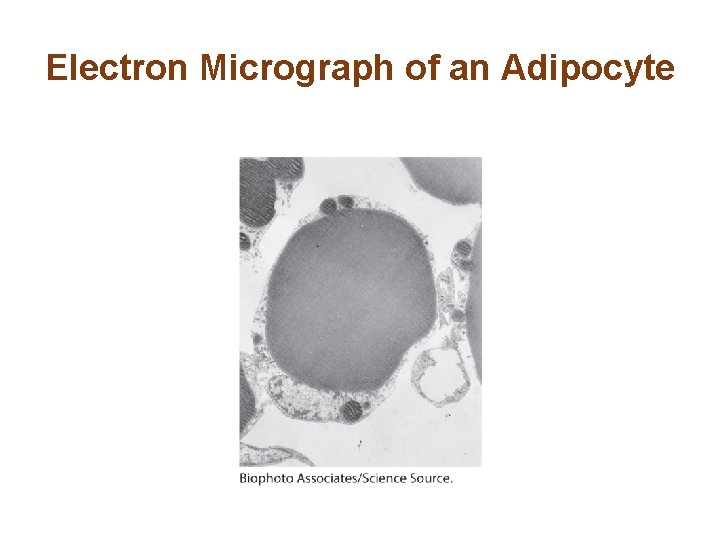
Electron Micrograph of an Adipocyte
Fatty Acid Degradation and Synthesis Mirror Each Other in Their Chemical Reactions • Fatty acid degradation and synthesis consist of four steps that are the reverse of each other with regard to their chemistry. • Fatty acid degradation is an oxidative process that yields acetyl Co. A. • Fatty acid synthesis is a reductive process that begins with a modified version of acetyl Co. A (i. e. , malonyl Co. A).
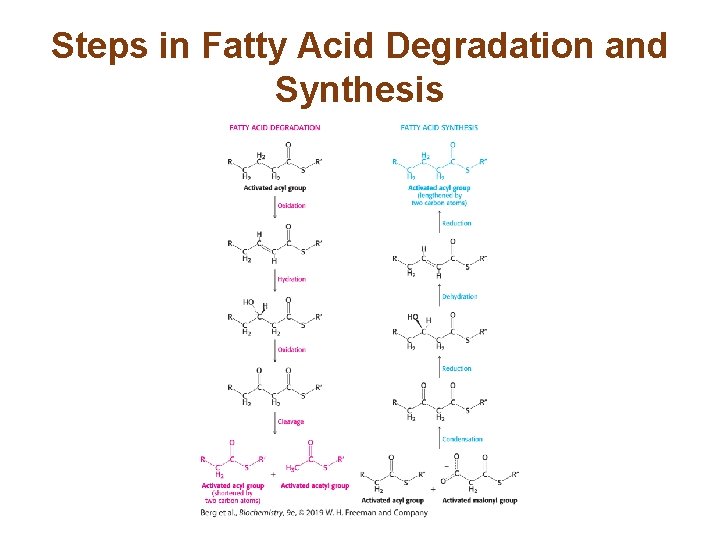
Steps in Fatty Acid Degradation and Synthesis
Section 22. 1 Triacylglycerols Are Highly Concentrated Energy Stores • Triacylglycerols (TAGs) are energy-rich. Because they are hydrophobic and reduced, a gram of anhydrous fat stores more than six times the energy of a gram of hydrated glycogen. • TAGs are stored in large droplets in the cytoplasm of adipocytes. Adipose tissue is located throughout the body, with subcutaneous (below the skin) and visceral (around the internal organs) deposits being most prominent.
Dietary Lipids Are Digested by Pancreatic Lipases • Triacylglycerols from the diet form lipid droplets in the stomach. Bile acids, secreted as bile salts by the gallbladder, insert into the lipid droplets, rendering them more accessible to digestion by lipases. • Lipases, secreted by the pancreas, convert the triacylglycerols into two fatty acids and monoacylglycerol. • The digestion products are carried as micelles to the intestinal epithelium cells for absorption.
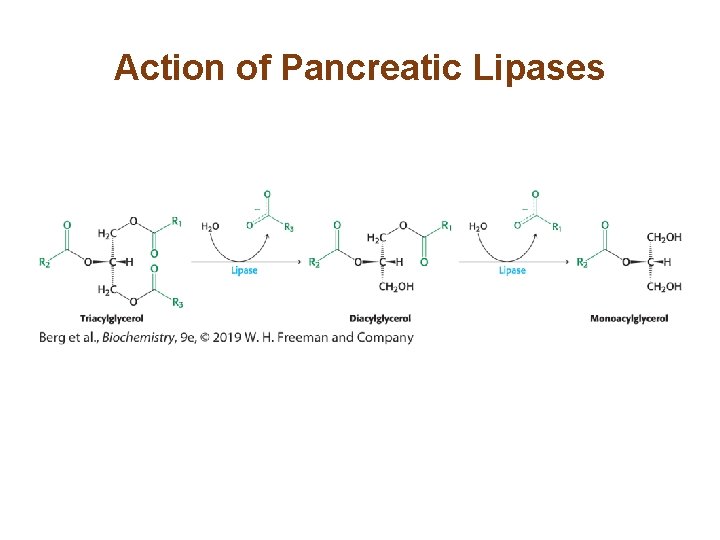
Action of Pancreatic Lipases
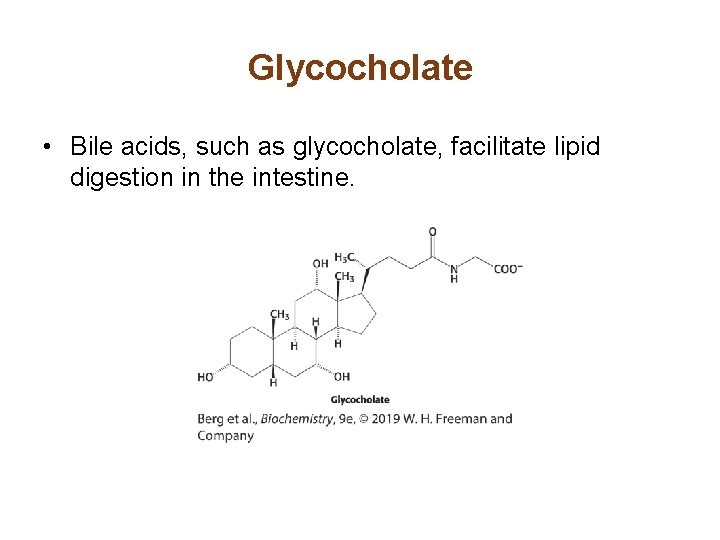
Glycocholate • Bile acids, such as glycocholate, facilitate lipid digestion in the intestine.
Dietary Lipids are Transported in Chylomicrons • In the intestine, triacylglycerols are reformed from free fatty acids and monoacylglycerol and packaged into lipoprotein particles called chylomicrons. • The chylomicrons eventually enter the blood so that the triacylglycerols can be absorbed by tissues.
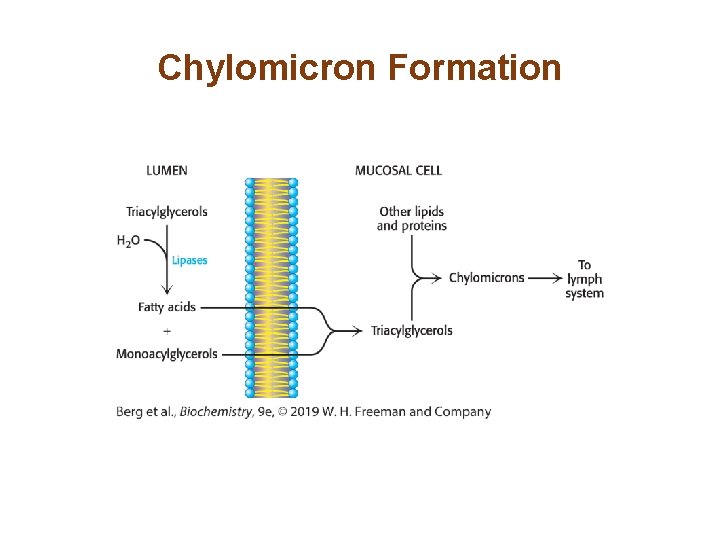
Chylomicron Formation
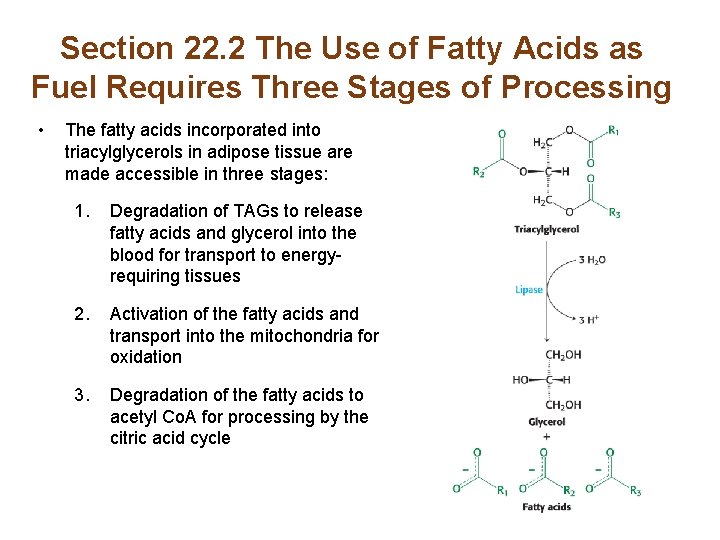
Section 22. 2 The Use of Fatty Acids as Fuel Requires Three Stages of Processing • The fatty acids incorporated into triacylglycerols in adipose tissue are made accessible in three stages: 1. Degradation of TAGs to release fatty acids and glycerol into the blood for transport to energyrequiring tissues 2. Activation of the fatty acids and transport into the mitochondria for oxidation 3. Degradation of the fatty acids to acetyl Co. A for processing by the citric acid cycle
Triacylglycerols are Hydrolyzed by Hormone-stimulated Lipases • Triacylglycerols are stored in adipocytes in a lipid droplet. • Epinephrine and glucagon, acting through 7 TM receptors, stimulate lipid breakdown (lipolysis). • Protein kinase A phosphorylates perilipin, which is associated with the lipid droplet, and hormone-sensitive lipase. • Phosphorylation of perilipin results in the activation of adipocyte triacylglyceride lipase (ATGL). ATGL initiates the breakdown of lipids. • The glycerol released during lipolysis is absorbed by the liver for use in glycolysis or gluconeogenesis.
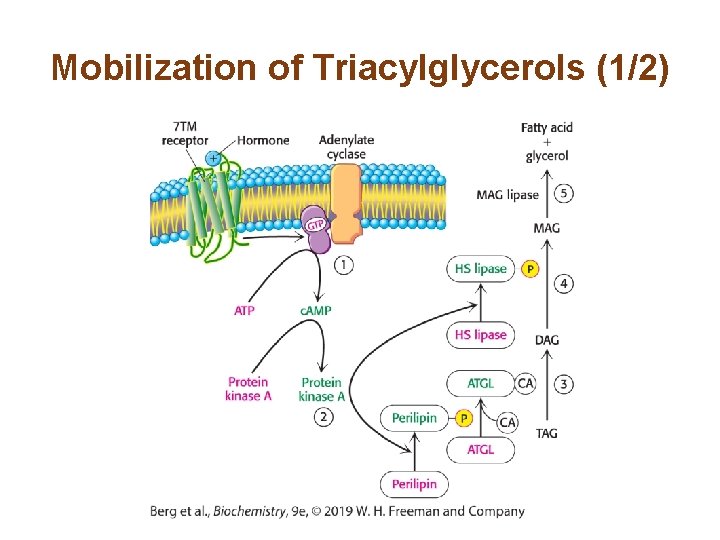
Mobilization of Triacylglycerols (1/2)
Mobilization of Triacylglycerols (2/2) • If the coactivator that is required for AGTL function is missing or defective, Chanarin-Dorfman syndrome results. This is primarily associated with fat accumulation throughout the body, since it is not released from AGTL. • Although adipocytes are the primary site of triacylglycerol metabolism, the liver also plays a critical role. Hepatocytes of the liver function in all areas of lipid metabolism (import, synthesis, storage, and secretion).
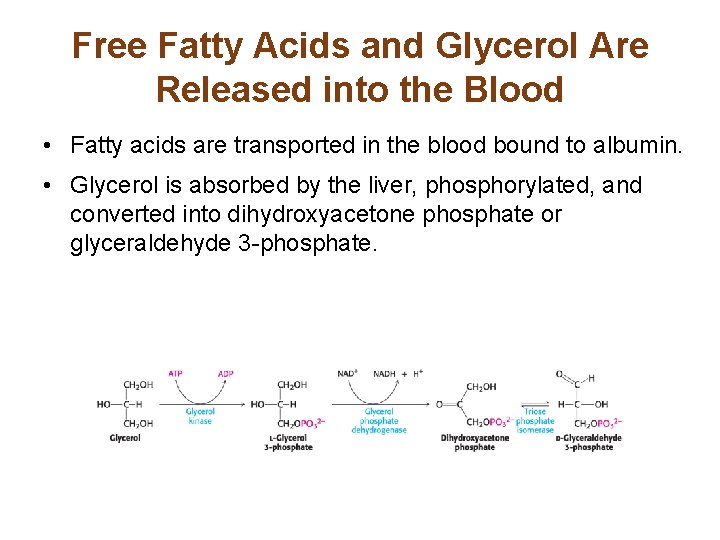
Free Fatty Acids and Glycerol Are Released into the Blood • Fatty acids are transported in the blood bound to albumin. • Glycerol is absorbed by the liver, phosphorylated, and converted into dihydroxyacetone phosphate or glyceraldehyde 3 -phosphate.
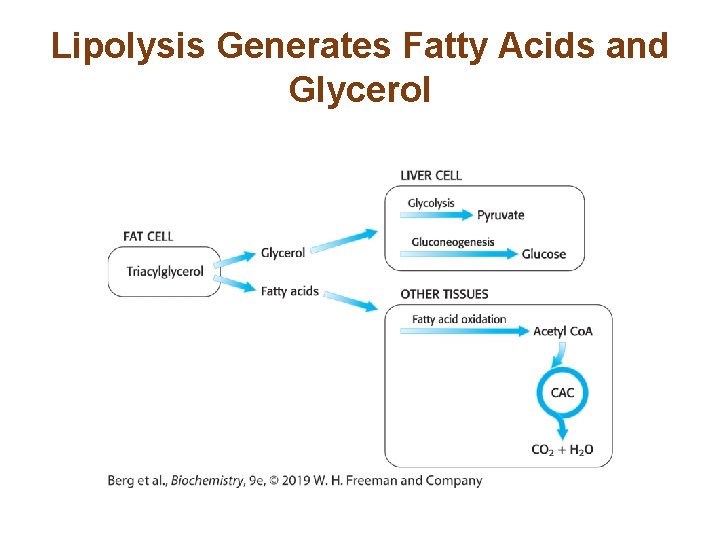
Lipolysis Generates Fatty Acids and Glycerol
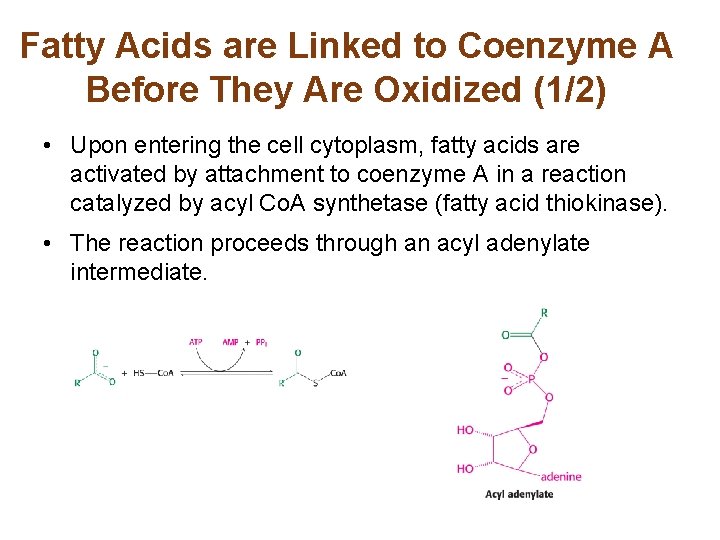
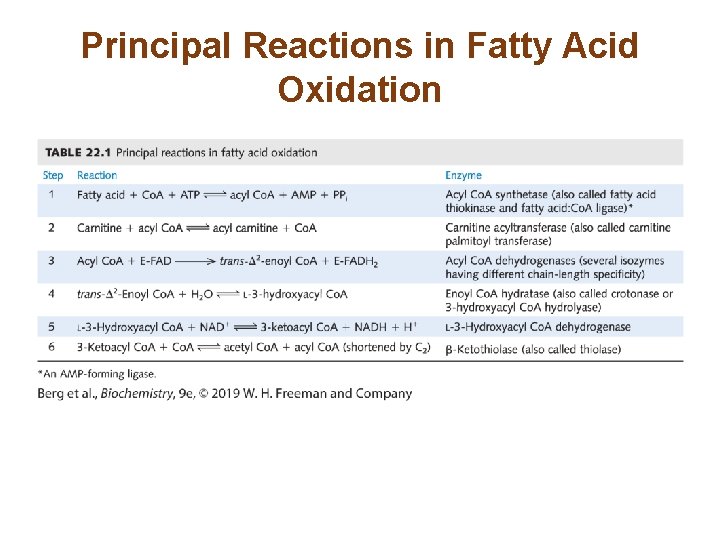
Fatty Acids are Linked to Coenzyme A Before They Are Oxidized (1/2) • Upon entering the cell cytoplasm, fatty acids are activated by attachment to coenzyme A in a reaction catalyzed by acyl Co. A synthetase (fatty acid thiokinase). • The reaction proceeds through an acyl adenylate intermediate.
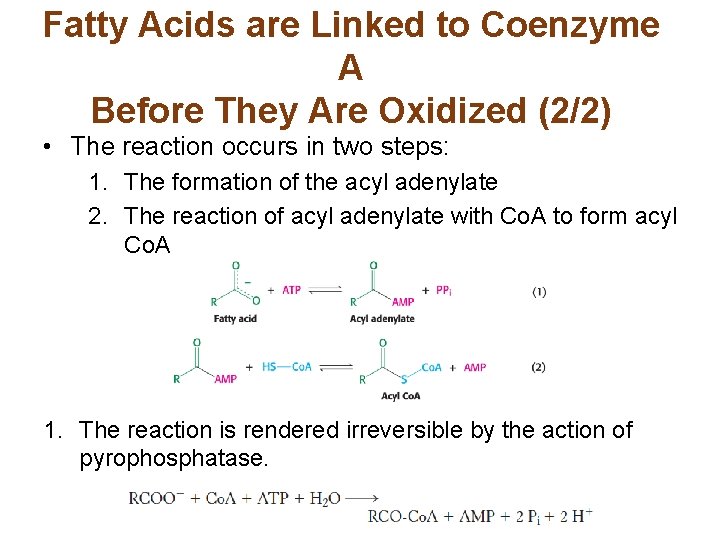
Fatty Acids are Linked to Coenzyme A Before They Are Oxidized (2/2) • The reaction occurs in two steps: 1. The formation of the acyl adenylate 2. The reaction of acyl adenylate with Co. A to form acyl Co. A 1. The reaction is rendered irreversible by the action of pyrophosphatase.
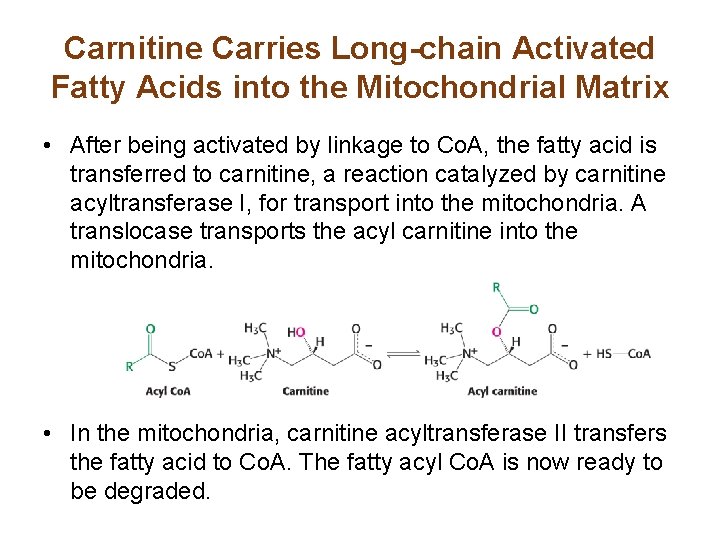
Carnitine Carries Long-chain Activated Fatty Acids into the Mitochondrial Matrix • After being activated by linkage to Co. A, the fatty acid is transferred to carnitine, a reaction catalyzed by carnitine acyltransferase I, for transport into the mitochondria. A translocase transports the acyl carnitine into the mitochondria. • In the mitochondria, carnitine acyltransferase II transfers the fatty acid to Co. A. The fatty acyl Co. A is now ready to be degraded.
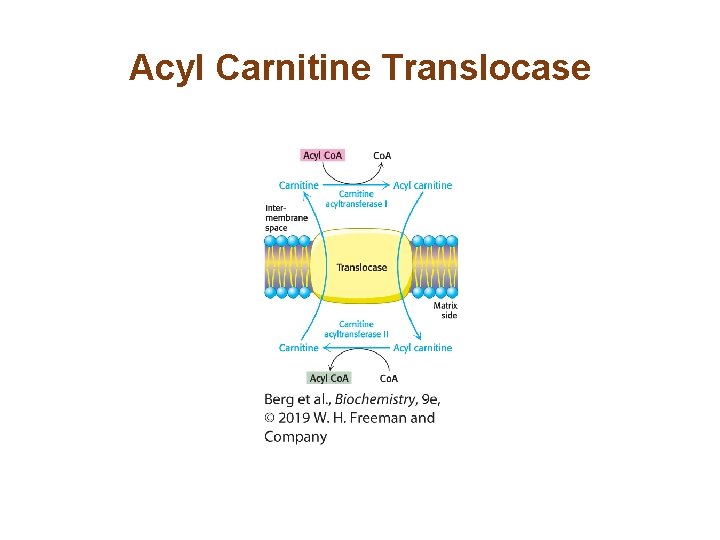
Acyl Carnitine Translocase
Diseases Related to Carnitine • Several diseases have been linked to a deficiency of carnitine, the transferase, or the translocase. • Symptoms of carnitine deficiency range from mild muscle cramping to extreme weakness or even death. • These diseases show that impaired flow of a metabolite between cellular compartments can lead to a pathological condition.
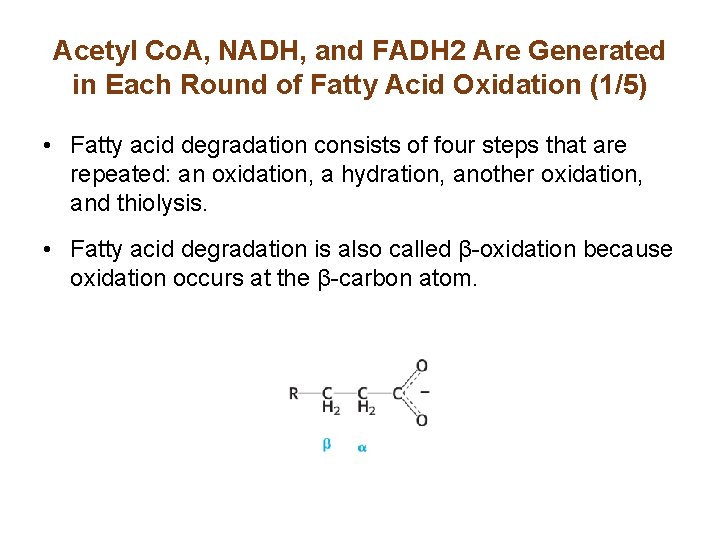
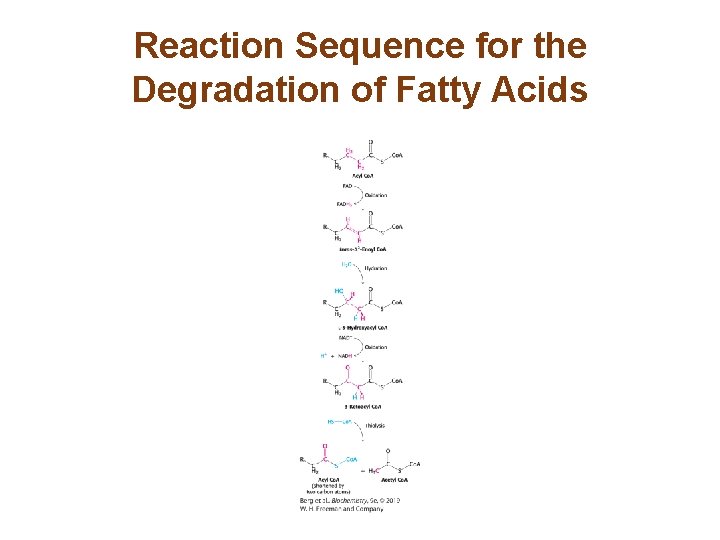
Acetyl Co. A, NADH, and FADH 2 Are Generated in Each Round of Fatty Acid Oxidation (1/5) • Fatty acid degradation consists of four steps that are repeated: an oxidation, a hydration, another oxidation, and thiolysis. • Fatty acid degradation is also called β-oxidation because oxidation occurs at the β-carbon atom.
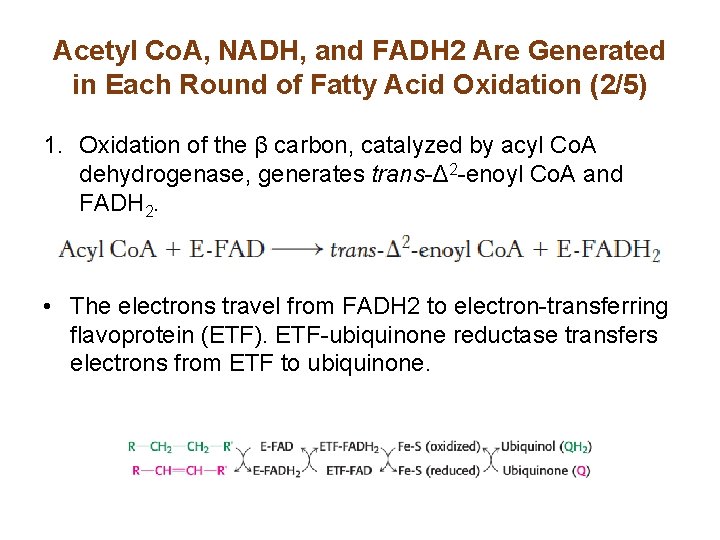
Acetyl Co. A, NADH, and FADH 2 Are Generated in Each Round of Fatty Acid Oxidation (2/5) 1. Oxidation of the β carbon, catalyzed by acyl Co. A dehydrogenase, generates trans-Δ 2 -enoyl Co. A and FADH 2. • The electrons travel from FADH 2 to electron-transferring flavoprotein (ETF). ETF-ubiquinone reductase transfers electrons from ETF to ubiquinone.
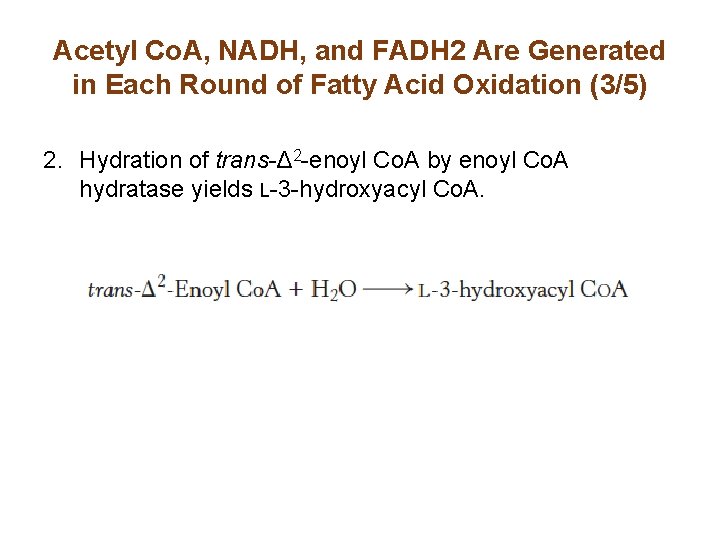
Acetyl Co. A, NADH, and FADH 2 Are Generated in Each Round of Fatty Acid Oxidation (3/5) 2. Hydration of trans-Δ 2 -enoyl Co. A by enoyl Co. A hydratase yields L-3 -hydroxyacyl Co. A.
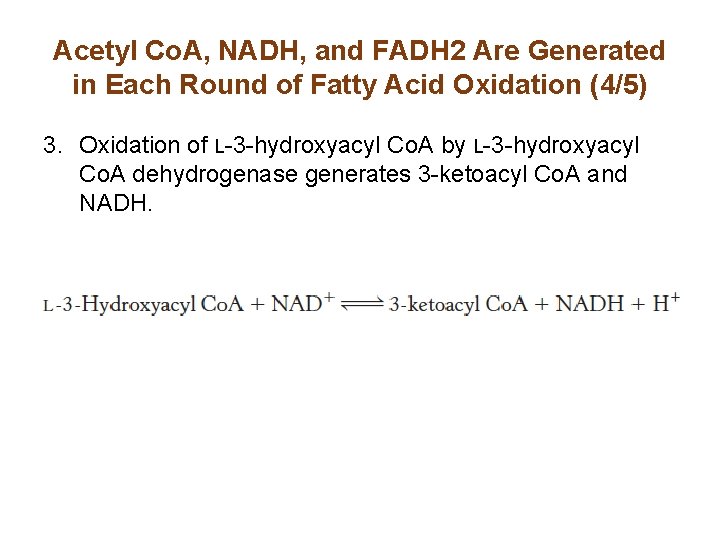
Acetyl Co. A, NADH, and FADH 2 Are Generated in Each Round of Fatty Acid Oxidation (4/5) 3. Oxidation of L-3 -hydroxyacyl Co. A by L-3 -hydroxyacyl Co. A dehydrogenase generates 3 -ketoacyl Co. A and NADH.
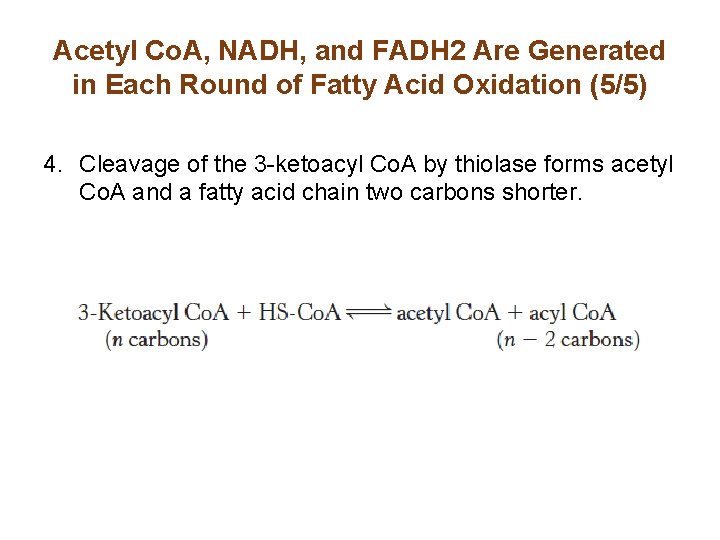
Acetyl Co. A, NADH, and FADH 2 Are Generated in Each Round of Fatty Acid Oxidation (5/5) 4. Cleavage of the 3 -ketoacyl Co. A by thiolase forms acetyl Co. A and a fatty acid chain two carbons shorter.
Reaction Sequence for the Degradation of Fatty Acids
Principal Reactions in Fatty Acid Oxidation
First Three Rounds in the Degradation of Palmitate
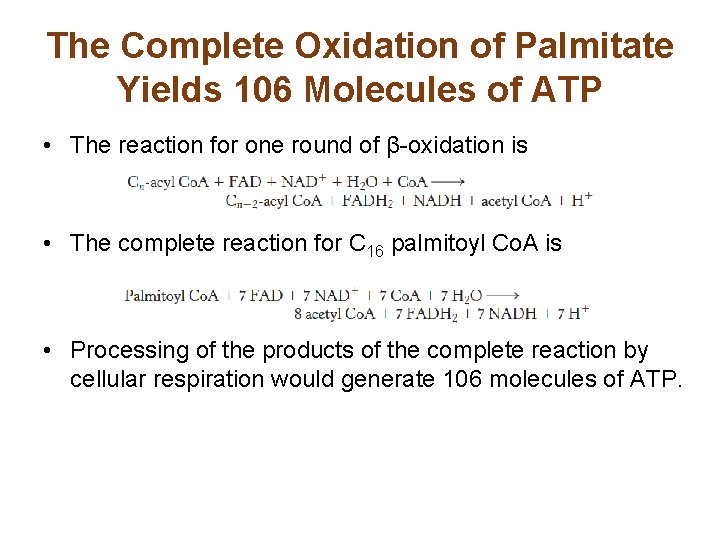
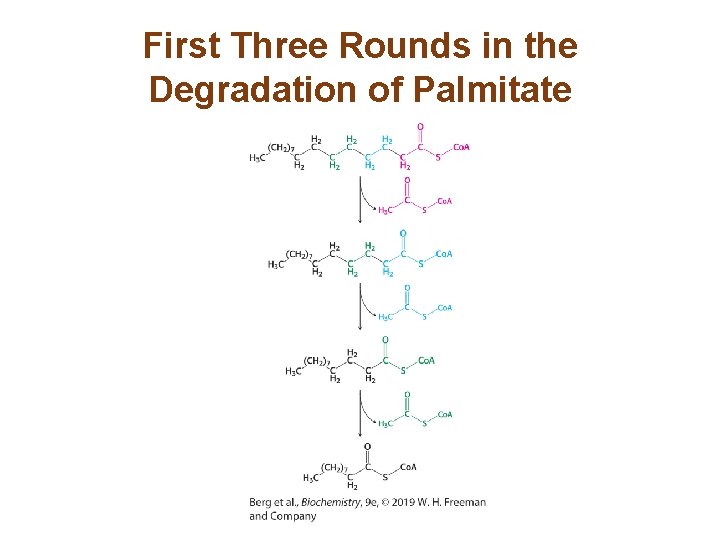
The Complete Oxidation of Palmitate Yields 106 Molecules of ATP • The reaction for one round of β-oxidation is • The complete reaction for C 16 palmitoyl Co. A is • Processing of the products of the complete reaction by cellular respiration would generate 106 molecules of ATP.
Section 22. 3 Unsaturated and Odd-Chain Fatty Acids Require Additional Steps for Degradation • An isomerase and a reductase are required for the oxidation of unsaturated fatty acids. • β-oxidation alone cannot degrade unsaturated fatty acids. When monounsaturated fatty acids are degraded by β-oxidation, cis-Δ 3 -enoyl Co. A is formed, which cannot be processed by acyl Co. A dehydrogenase. • Cis-Δ 3 -enoyl Co. A isomerase converts the double bond into trans-Δ 2 -enoyl Co. A, a normal substrate for β-oxidation.
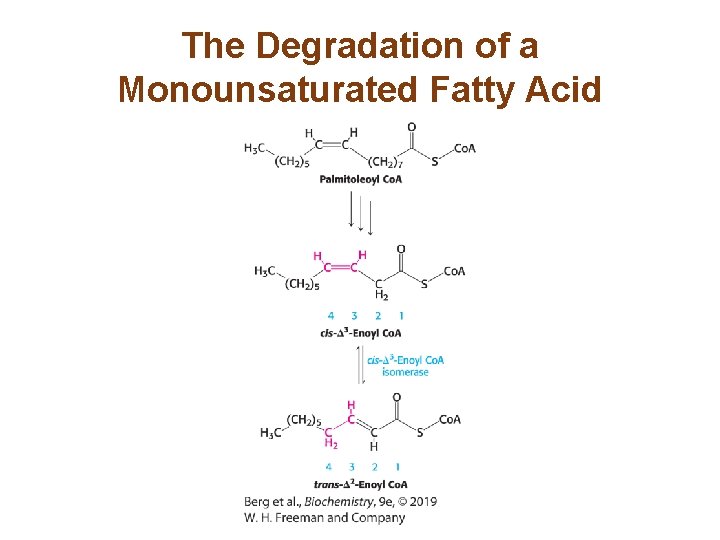
The Degradation of a Monounsaturated Fatty Acid
An Isomerase and a Reductase Are Required for the Oxidation of Unsaturated Fatty Acids • When polyunsaturated fatty acids are degraded by βoxidation, cis-Δ 3 -enoyl Co. A isomerase is also required. 2, 4 -Dienoyl Co. A is also generated, but cannot be processed by the normal enzymes. • 2, 4 -Dienoyl Co. A is converted into trans-Δ 3 -enoyl Co. A by 2, 4 -dienoyl Co. A reductase, and the isomerase converts this product to trans-Δ 2 -enoyl Co. A, a normal substrate • Unsaturated fatty acids with odd numbers of double bonds require only the isomerase. Those with even numbers of double bonds require both the isomerase and reductase.
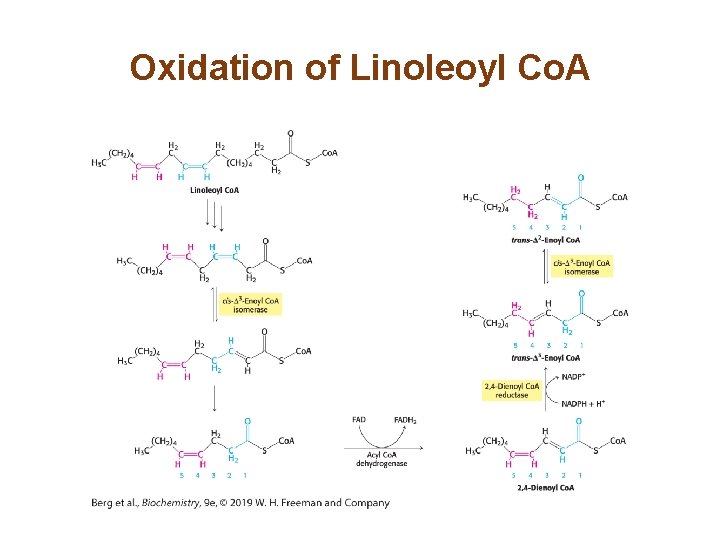
Oxidation of Linoleoyl Co. A
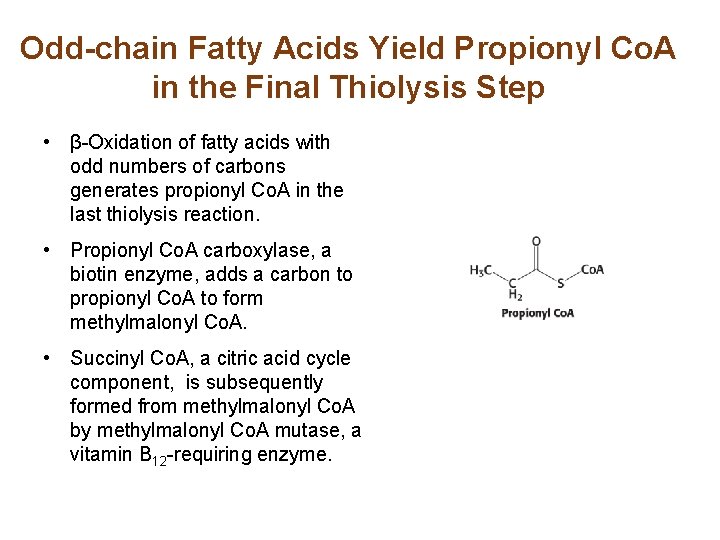
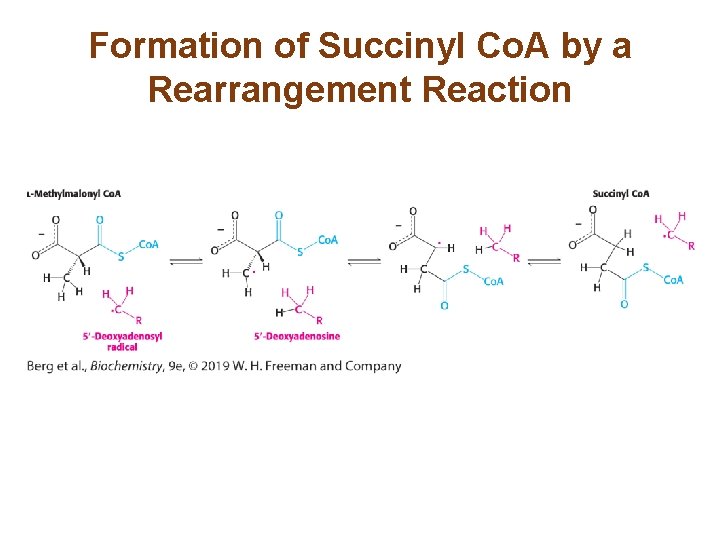
Odd-chain Fatty Acids Yield Propionyl Co. A in the Final Thiolysis Step • β-Oxidation of fatty acids with odd numbers of carbons generates propionyl Co. A in the last thiolysis reaction. • Propionyl Co. A carboxylase, a biotin enzyme, adds a carbon to propionyl Co. A to form methylmalonyl Co. A. • Succinyl Co. A, a citric acid cycle component, is subsequently formed from methylmalonyl Co. A by methylmalonyl Co. A mutase, a vitamin B 12 -requiring enzyme.
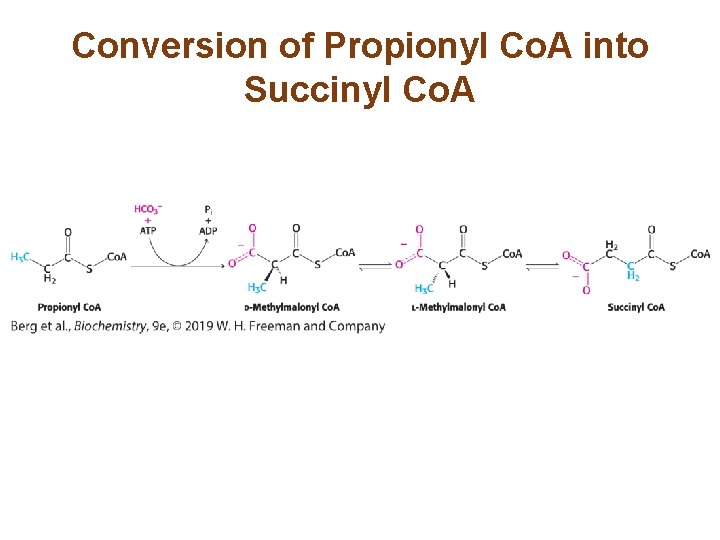
Conversion of Propionyl Co. A into Succinyl Co. A
Vitamin B 12 Contains a Corrin Ring and a Cobalt Atom • Cobalamin (vitamin B 12)-requiring enzymes catalyze three types of reactions: 1. Intramolecular rearrangements 2. Methylations 3. Reduction of ribonucleotides to deoxyribonucleotides • In mammals, vitamin B 12 is required only for the conversion of L-methylmalonyl Co. A into succinyl Co. A and for the synthesis of methionine. • The core of cobalamin is a corrin ring with a cobalt atom.
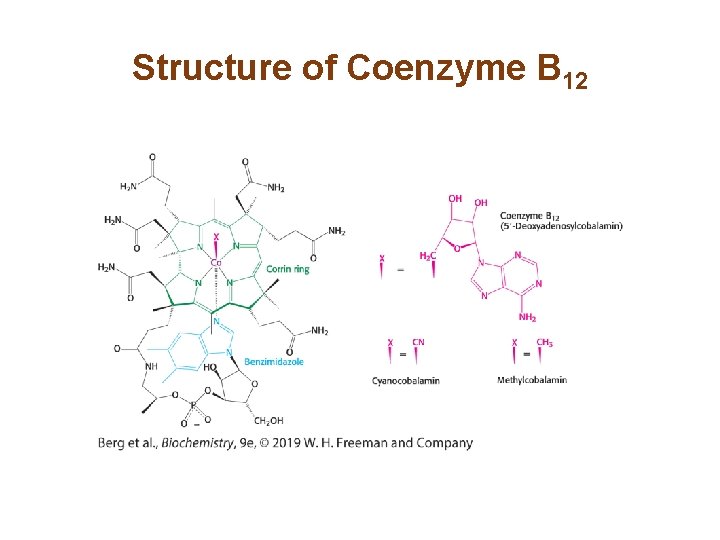
Structure of Coenzyme B 12
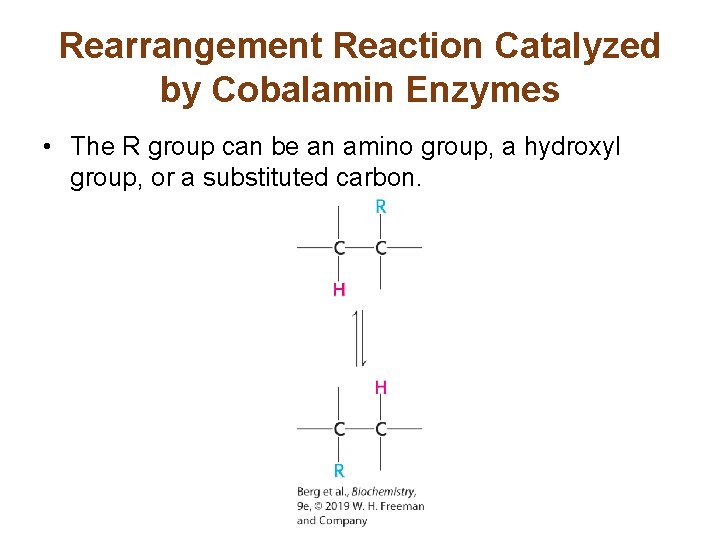
Rearrangement Reaction Catalyzed by Cobalamin Enzymes • The R group can be an amino group, a hydroxyl group, or a substituted carbon.
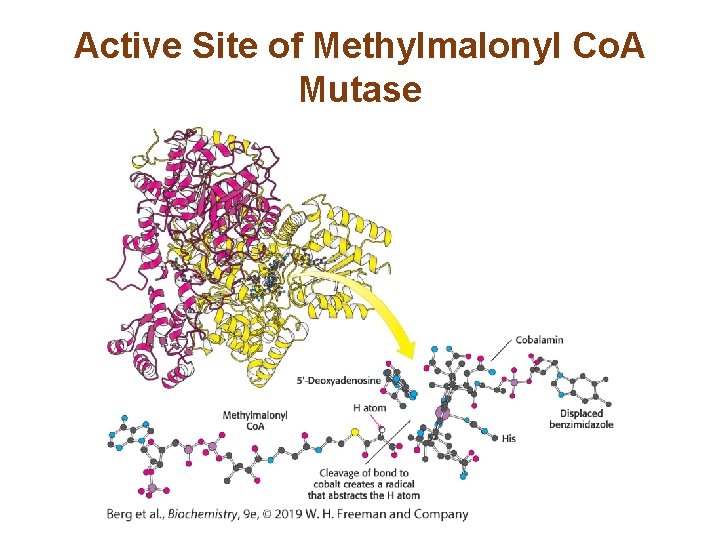
Mechanism: Methylmalonyl Co. A Mutase Catalyzes a Rearrangement to Form Succinyl Co. A • Coenzyme B 12 catalyzes exchanges of two groups bonded to adjacent carbon atoms. • The mutase reaction begins with the generation of a 5 deoxyadenosyl radical and the Co 2+ form of the coenzyme. • The radical removes a hydrogen atom from the substrate, generating a substrate radical, which spontaneously rearranges: the carbonyl Co. A migrates to the adjacent carbon atom that relinquished the hydrogen atom. • This product radical removes a proton from 5 deoxyadenosine, regenerating the deoxyadenosyl radical and forming succinyl Co. A.
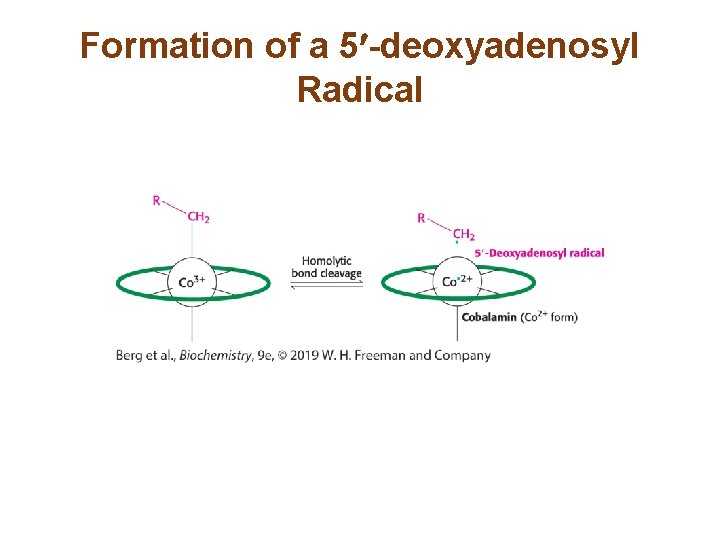
Formation of a 5 -deoxyadenosyl Radical
Formation of Succinyl Co. A by a Rearrangement Reaction
Active Site of Methylmalonyl Co. A Mutase
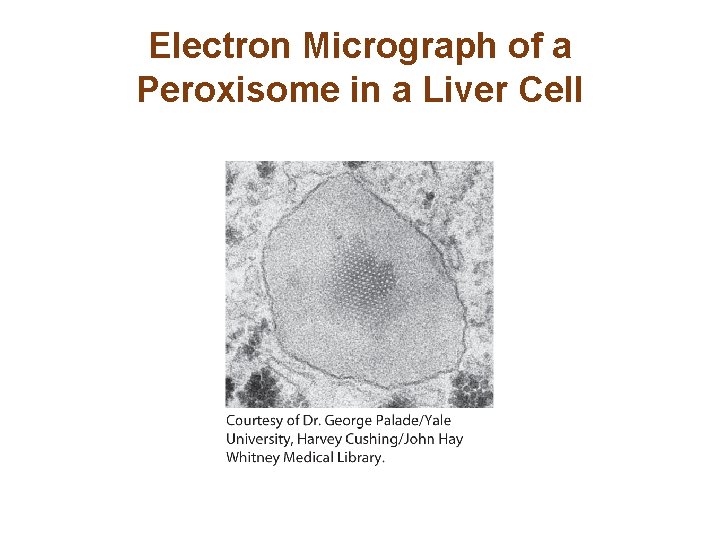
Fatty Acids Are Also Oxidized in Peroxisomes • Oxidation of long-chain fatty acids can occur in peroxisomes. Oxidation halts with the formation of octanoyl Co. A. • The first dehydration in peroxisomal fatty acid degradation requires a flavoprotein dehydrogenase that generates H 2 O 2, which is converted into water and oxygen by catalase. • Subsequent steps are identical to β-oxidation.
Electron Micrograph of a Peroxisome in a Liver Cell
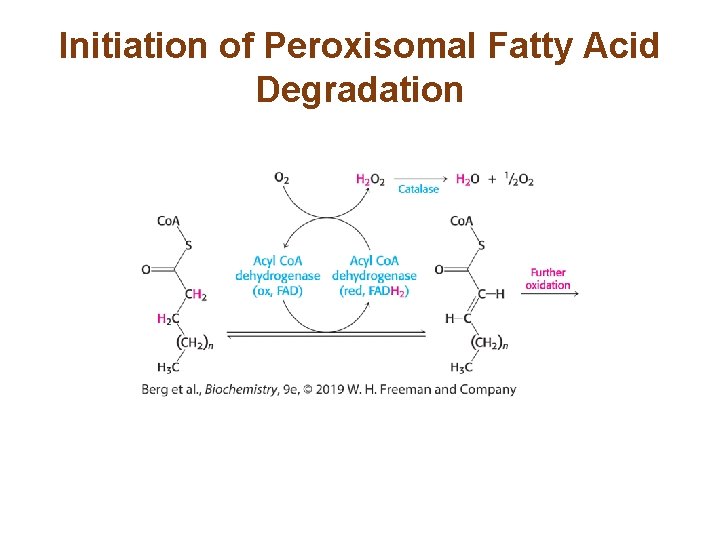
Initiation of Peroxisomal Fatty Acid Degradation
Some Fatty Acids May Contribute to the Development of Pathological Conditions • The mechanism by which saturated fats as well as unsaturated fats for cooking that have been intentionally modified by hydrogenation to improve their shelf life (some of which are known as trans fats) is an area of active investigation. • Some evidence suggests that they promote an inflammatory response and may mute the action of insulin and other hormones.
Section 22. 4 Ketone Bodies Are a Fuel Source Derived from Fats • Acetyl Co. A formed in fatty acid oxidation enters the citric acid cycle only if fat and carbohydrate degradation are properly balanced. • Acetyl Co. A needs to combine with oxaloacetate in the first step of the citric acid cycle. However, the availability of oxaloacetate depends on carbohydrate availability (since oxaloacetate is normally formed from pyruvate, a product of glycolysis). • In fasting or diabetes, oxaloacetate is used to form glucose in the gluconeogenic pathway. In these situations, acetyl Co. A is diverted to form acetoacetate and D-3 -hydroxybutyrate. These two molecules as well as acetone are often referred to as ketone bodies. • Abnormally high levels of ketone bodies are present in the blood of untreated diabetics.
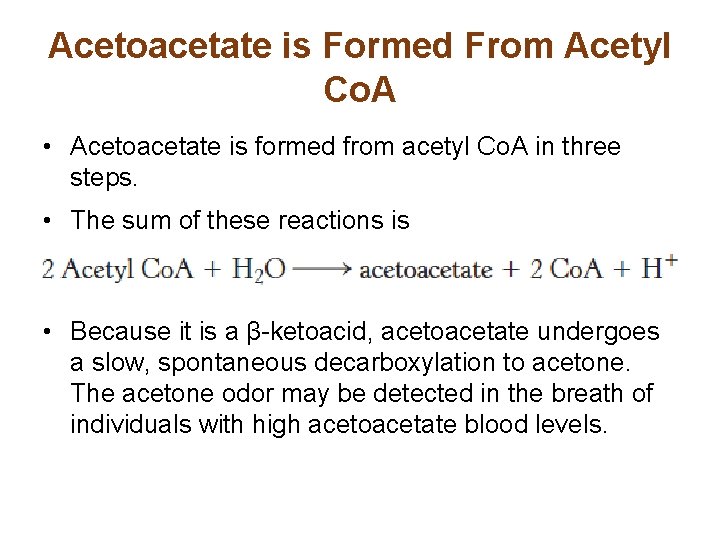
Acetoacetate is Formed From Acetyl Co. A • Acetoacetate is formed from acetyl Co. A in three steps. • The sum of these reactions is • Because it is a β-ketoacid, acetoacetate undergoes a slow, spontaneous decarboxylation to acetone. The acetone odor may be detected in the breath of individuals with high acetoacetate blood levels.
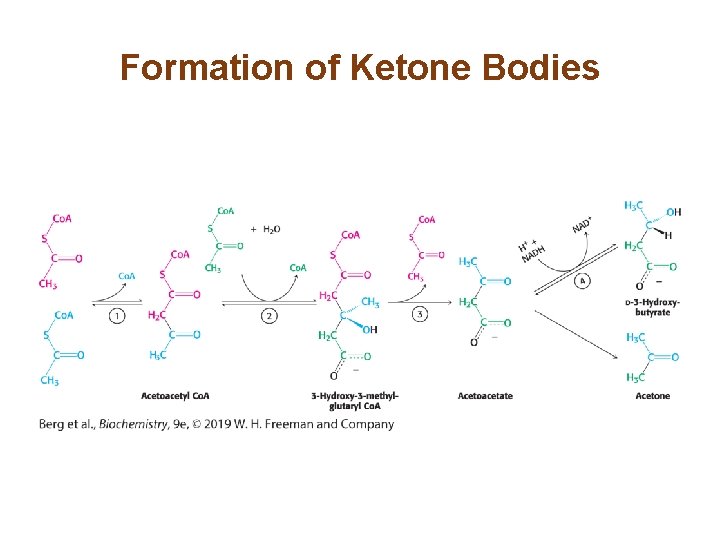
Formation of Ketone Bodies
Ketone Bodies Are a Major Fuel in Some Tissues (1/2) • The liver is the major site of production of acetoacetate and 3 -hydroxybutyrate. • These molecules are then transported from the liver mitochondria into the blood by transport proteins and are delivered to other tissues, including the heart and kidney.
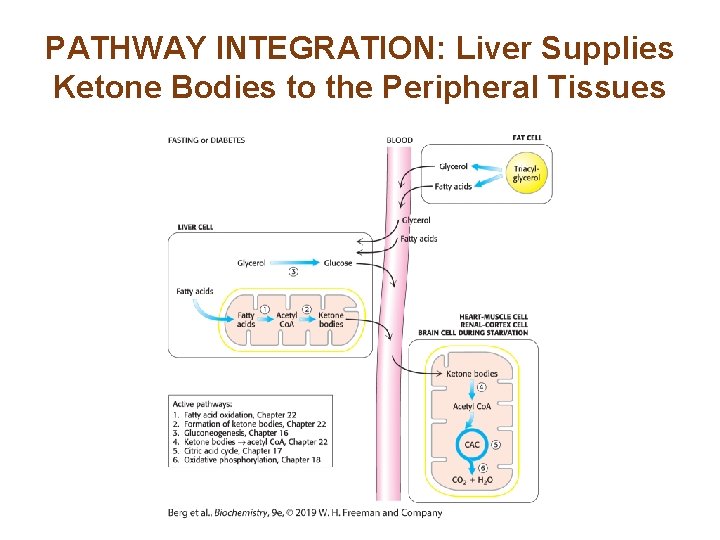
PATHWAY INTEGRATION: Liver Supplies Ketone Bodies to the Peripheral Tissues
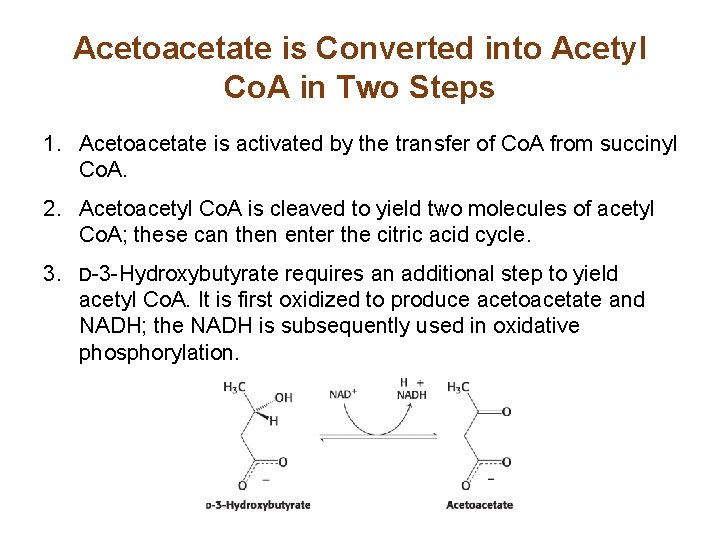
Acetoacetate is Converted into Acetyl Co. A in Two Steps 1. Acetoacetate is activated by the transfer of Co. A from succinyl Co. A. 2. Acetoacetyl Co. A is cleaved to yield two molecules of acetyl Co. A; these can then enter the citric acid cycle. 3. D-3 -Hydroxybutyrate requires an additional step to yield acetyl Co. A. It is first oxidized to produce acetoacetate and NADH; the NADH is subsequently used in oxidative phosphorylation.
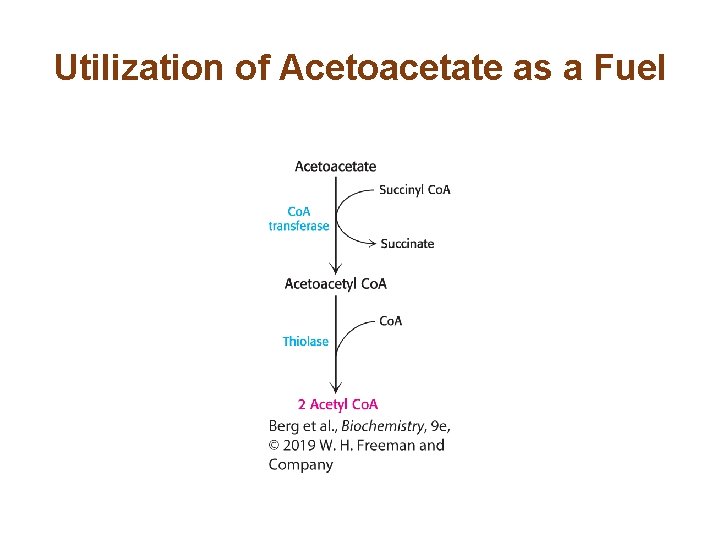
Utilization of Acetoacetate as a Fuel
Ketone Bodies Are a Major Fuel in Some Tissues (2/2) • Ketone bodies are a water-soluble, transportable form of acetyl units. • Acetoacetate also has a regulatory role. High concentration indicates an abundance of acetyl units and leads to a decreased rate of lipolysis in adipose tissue. • High concentration of ketone bodies in the blood can be life threatening. (E. g. , diabetic ketosis in patients that are unable to produce insulin). – – The liver in these patients cannot absorb glucose; it cannot provide oxaloacetate to process fatty acid-derived acetyl Co. A. Their adipose cells continue to release fatty acids into the bloodstream, which are then taken up by the liver and converted into large amounts of ketone bodies, which are moderately strong acids. Resulting acidosis dangerously impairs central nervous system function.
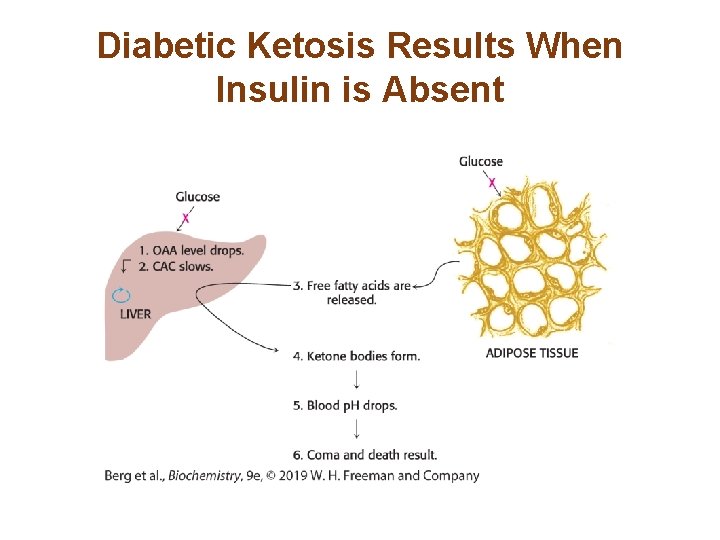
Diabetic Ketosis Results When Insulin is Absent
Animals Cannot Convert Fatty Acids Into Glucose • Fats are converted into acetyl Co. A, which is then processed by the citric acid cycle. • Oxaloacetate, a citric acid cycle intermediate, is a precursor to glucose. • However, acetyl Co. A derived from fats cannot lead to the net synthesis of oxaloacetate or glucose because, although two carbons enter the cycle when acetyl Co. A condenses with oxaloacetate, two carbons are lost as CO 2 before oxaloacetate is generated.
Section 22. 5 Fatty Acids Are Synthesized by Fatty Acid Synthase • Fatty acids are synthesized and degraded by different pathways. Important differences: 1. Synthesis occurs in the cytoplasm and degradation in the mitochondrial matrix. 2. In synthesis, the carrier is acyl carrier protein (ACP), whereas in degradation, the carrier is Co. A. 3. In synthesis, all of the enzymes are in a single polypeptide, and in degradation they are distinct. 4. In synthesis, the donor of two-carbon units is malonyl Co. A (an activated form of acetyl Co. A). In degradation, the release of two-carbon units is in the form of acetyl Co. A. 5. The reductant in fatty acid synthesis is NADPH, whereas the oxidants in degradation are NAD+ and FAD. 6. The isomeric form of the hydroxyacyl intermediate differs: the D form is used in synthesis, while the L form is found in degradation.
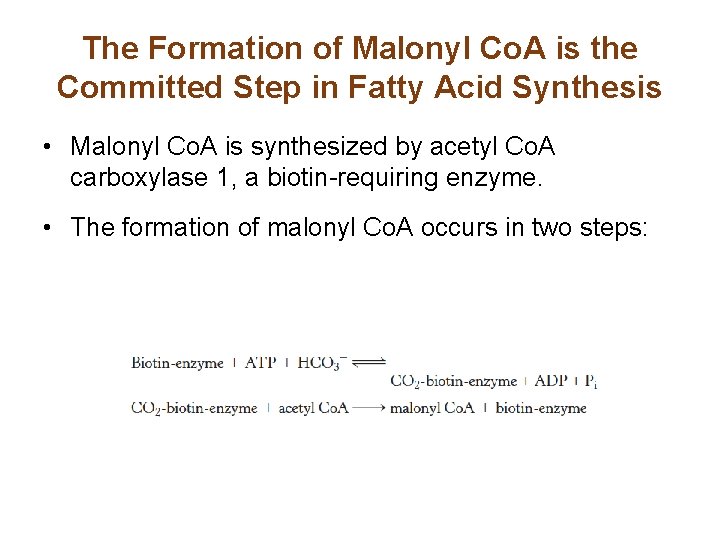
The Formation of Malonyl Co. A is the Committed Step in Fatty Acid Synthesis • Malonyl Co. A is synthesized by acetyl Co. A carboxylase 1, a biotin-requiring enzyme. • The formation of malonyl Co. A occurs in two steps:
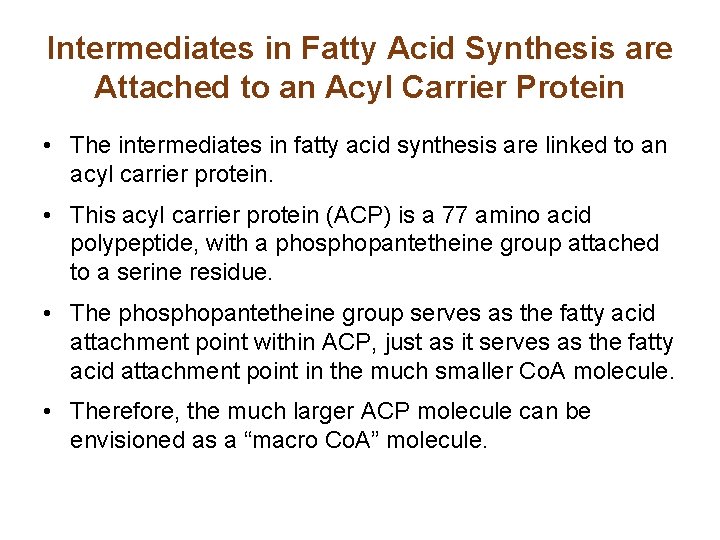
Intermediates in Fatty Acid Synthesis are Attached to an Acyl Carrier Protein • The intermediates in fatty acid synthesis are linked to an acyl carrier protein. • This acyl carrier protein (ACP) is a 77 amino acid polypeptide, with a phosphopantetheine group attached to a serine residue. • The phosphopantetheine group serves as the fatty acid attachment point within ACP, just as it serves as the fatty acid attachment point in the much smaller Co. A molecule. • Therefore, the much larger ACP molecule can be envisioned as a “macro Co. A” molecule.
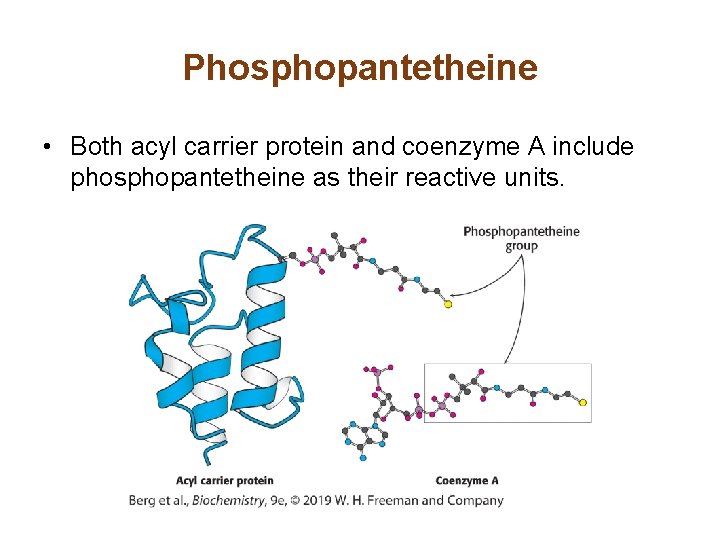
Phosphopantetheine • Both acyl carrier protein and coenzyme A include phosphopantetheine as their reactive units.
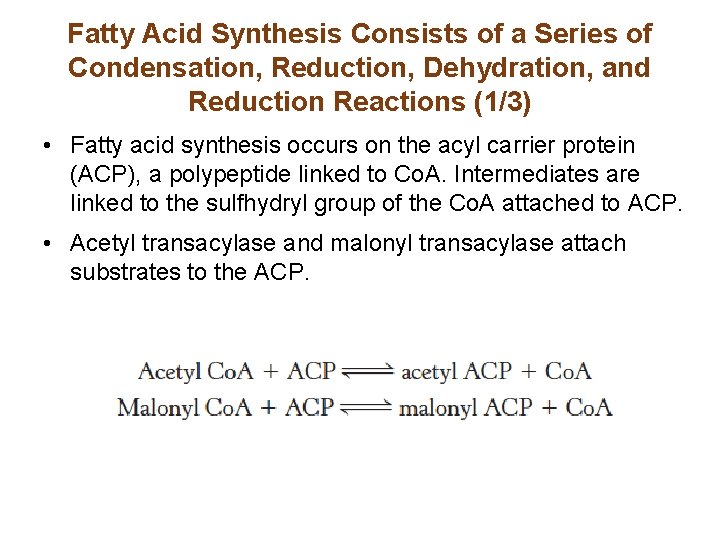
Fatty Acid Synthesis Consists of a Series of Condensation, Reduction, Dehydration, and Reduction Reactions (1/3) • Fatty acid synthesis occurs on the acyl carrier protein (ACP), a polypeptide linked to Co. A. Intermediates are linked to the sulfhydryl group of the Co. A attached to ACP. • Acetyl transacylase and malonyl transacylase attach substrates to the ACP.
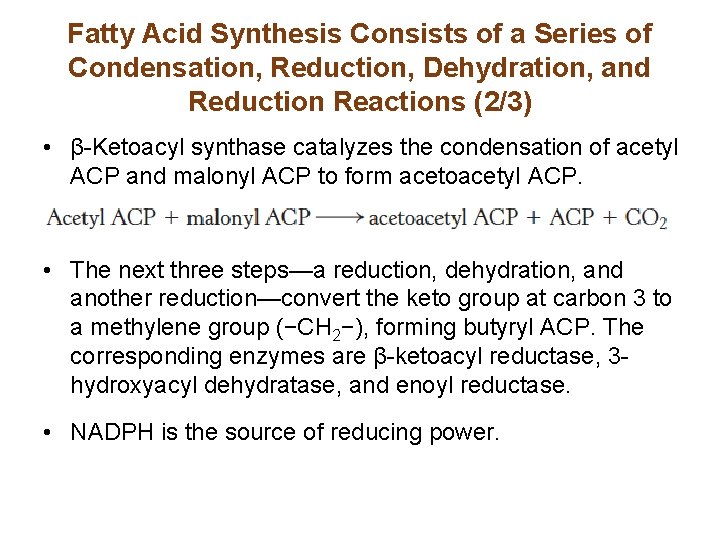
Fatty Acid Synthesis Consists of a Series of Condensation, Reduction, Dehydration, and Reduction Reactions (2/3) • β-Ketoacyl synthase catalyzes the condensation of acetyl ACP and malonyl ACP to form acetoacetyl ACP. • The next three steps—a reduction, dehydration, and another reduction—convert the keto group at carbon 3 to a methylene group (−CH 2−), forming butyryl ACP. The corresponding enzymes are β-ketoacyl reductase, 3 hydroxyacyl dehydratase, and enoyl reductase. • NADPH is the source of reducing power.
Fatty Acid Synthesis Consists of a Series of Condensation, Reduction, Dehydration, and Reduction Reactions (3/3) • The second round of synthesis begins with the condensation of malonyl Co. A with the newly synthesized butyryl ACP, forming C 6 -β-ketoacyl ACP. • The reduction, dehydration, reduction sequence is repeated. • Synthesis continues until C 16 -acyl ACP is formed; this is cleaved by thioesterase to yield palmitate.
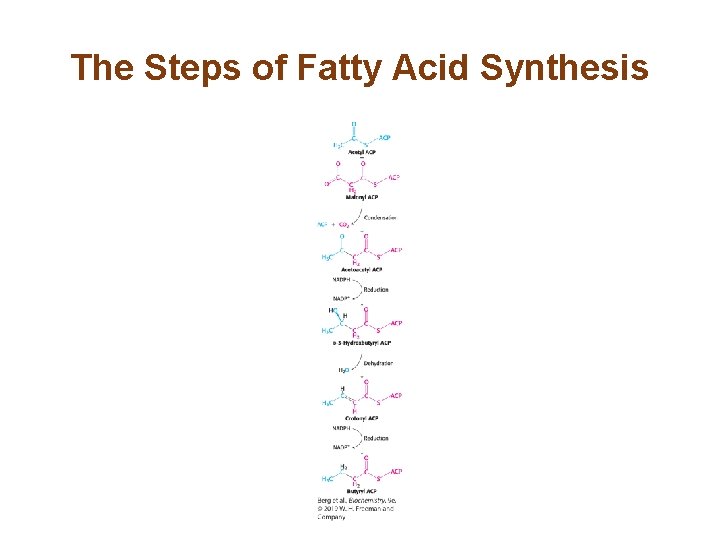
The Steps of Fatty Acid Synthesis
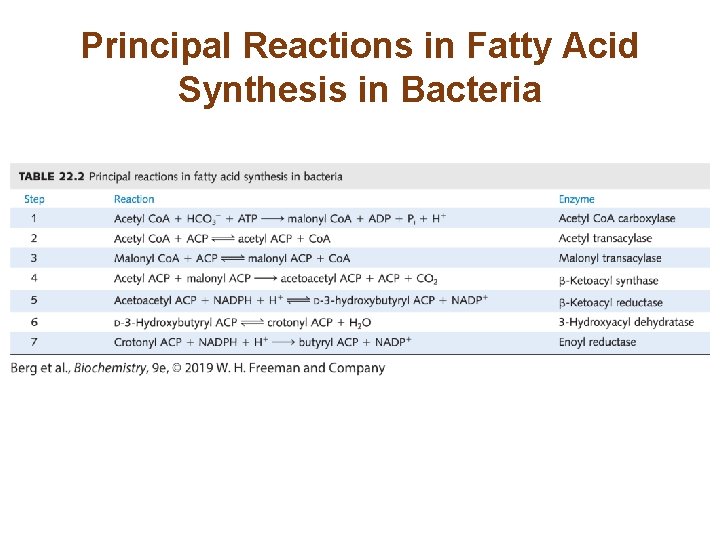
Principal Reactions in Fatty Acid Synthesis in Bacteria
Fatty Acids Are Synthesized by a Multifunctional Enzyme Complex in Animals (1/2) • The fatty acid synthesis reactions are similar in E. coli and animals. • In animals, all of the enzymes required for fatty acid synthesis are components of a single polypeptide chain. • The functional enzyme is a homodimer with two distinct compartments. • The selecting and condensing compartment binds the acetyl and malonyl substrates and condenses them. • The modification compartment carries out the reduction and dehydration activities required for elongation.
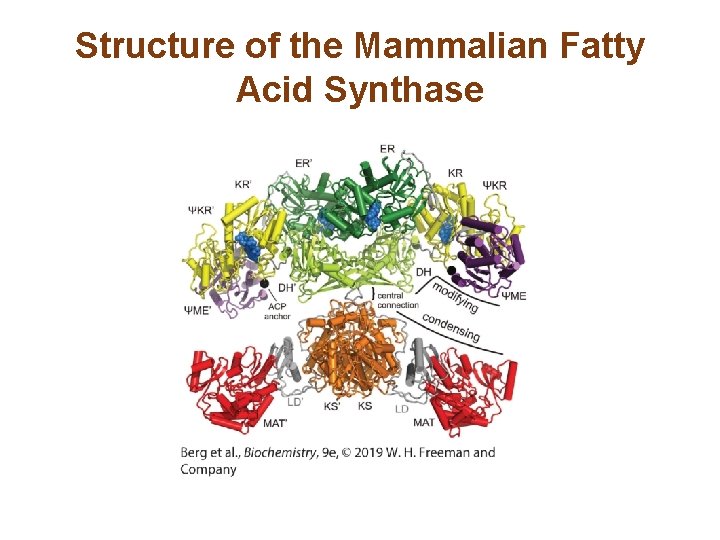
Structure of the Mammalian Fatty Acid Synthase
Fatty Acids Are Synthesized by a Multifunctional Enzyme Complex in Animals (2/2) • A catalytic cycle of mammalian fatty acid synthase involves seven steps: 1. 2. 3. 4. 5. 6. 7. ACP delivers an acetyl unit to the synthase (KS) and accepts a malonyl unit from MAT. ACP delivers the malonyl unit to KS, which forms the ketoacyl product, still attached to ACP visits the reductase (KR), which reduces the keto group to an alcohol. The alcohol product is delivered to the dehydratase (DH), which introduces a double bond with the release of water. The enoyl product visits the reductase (ER), which reduces the double bond. ACP hands off the reduced product to KS and receives another malonyl from MAT. KS condenses the two molecules on ACP, which is ready for another reaction cycle.
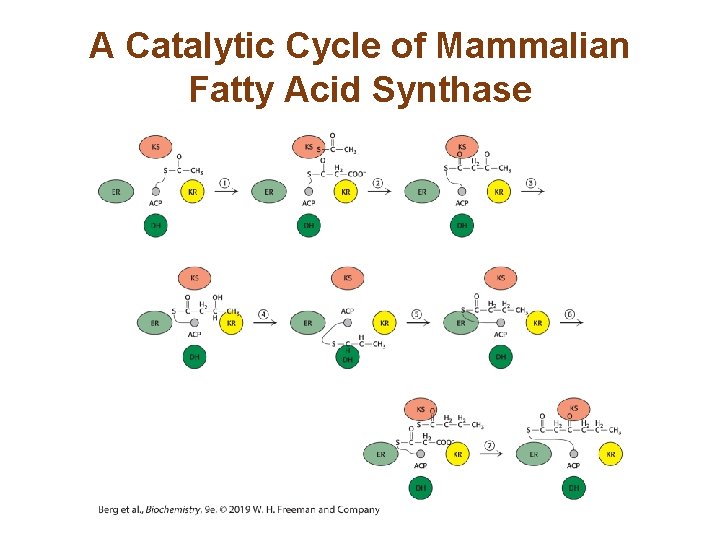
A Catalytic Cycle of Mammalian Fatty Acid Synthase
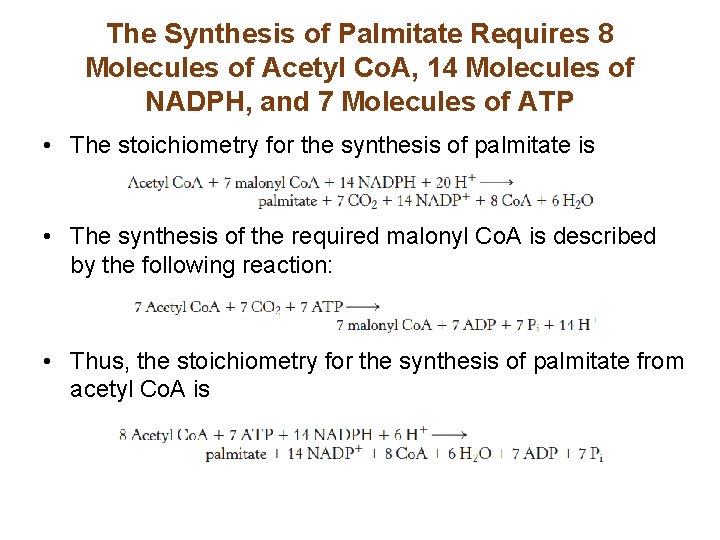
The Synthesis of Palmitate Requires 8 Molecules of Acetyl Co. A, 14 Molecules of NADPH, and 7 Molecules of ATP • The stoichiometry for the synthesis of palmitate is • The synthesis of the required malonyl Co. A is described by the following reaction: • Thus, the stoichiometry for the synthesis of palmitate from acetyl Co. A is
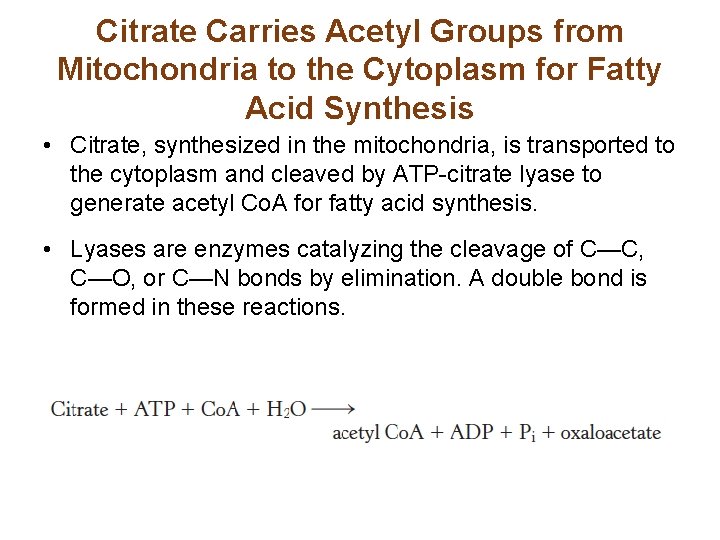
Citrate Carries Acetyl Groups from Mitochondria to the Cytoplasm for Fatty Acid Synthesis • Citrate, synthesized in the mitochondria, is transported to the cytoplasm and cleaved by ATP-citrate lyase to generate acetyl Co. A for fatty acid synthesis. • Lyases are enzymes catalyzing the cleavage of C—C, C—O, or C—N bonds by elimination. A double bond is formed in these reactions.
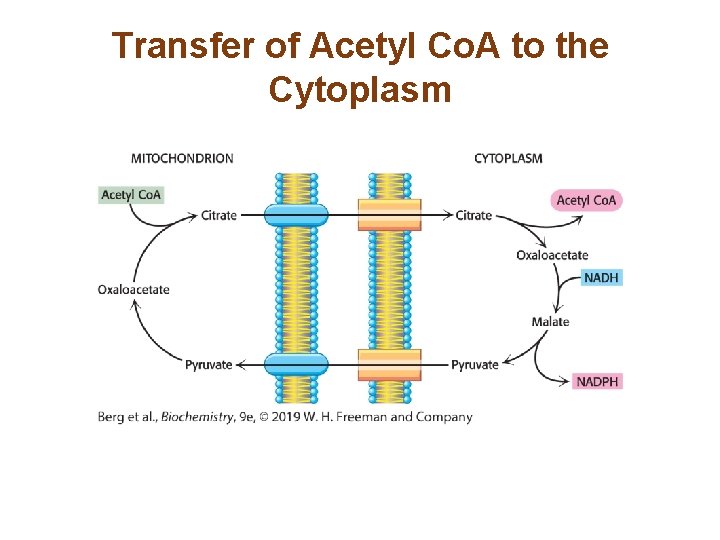
Transfer of Acetyl Co. A to the Cytoplasm
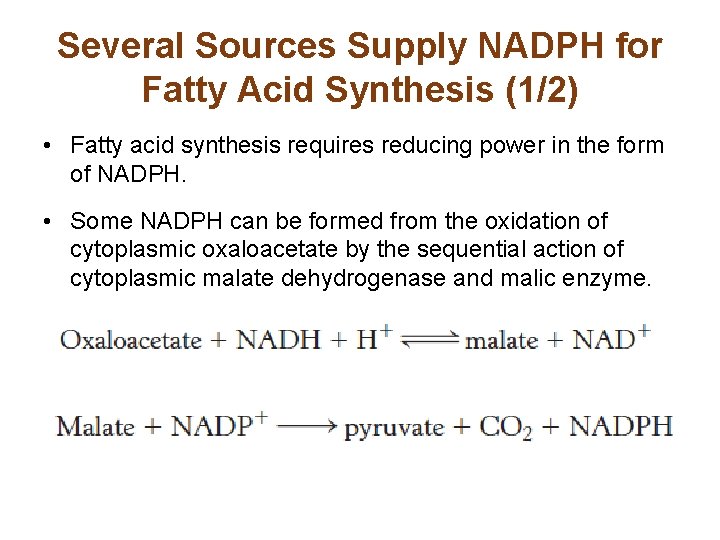
Several Sources Supply NADPH for Fatty Acid Synthesis (1/2) • Fatty acid synthesis requires reducing power in the form of NADPH. • Some NADPH can be formed from the oxidation of cytoplasmic oxaloacetate by the sequential action of cytoplasmic malate dehydrogenase and malic enzyme.
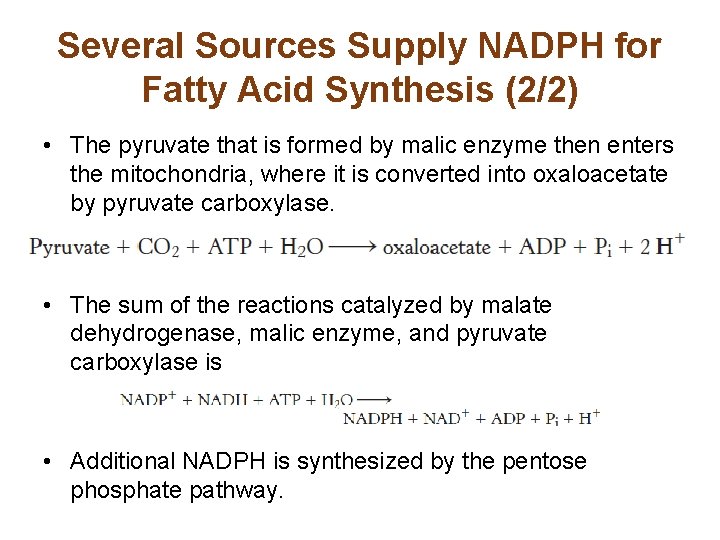
Several Sources Supply NADPH for Fatty Acid Synthesis (2/2) • The pyruvate that is formed by malic enzyme then enters the mitochondria, where it is converted into oxaloacetate by pyruvate carboxylase. • The sum of the reactions catalyzed by malate dehydrogenase, malic enzyme, and pyruvate carboxylase is • Additional NADPH is synthesized by the pentose phosphate pathway.
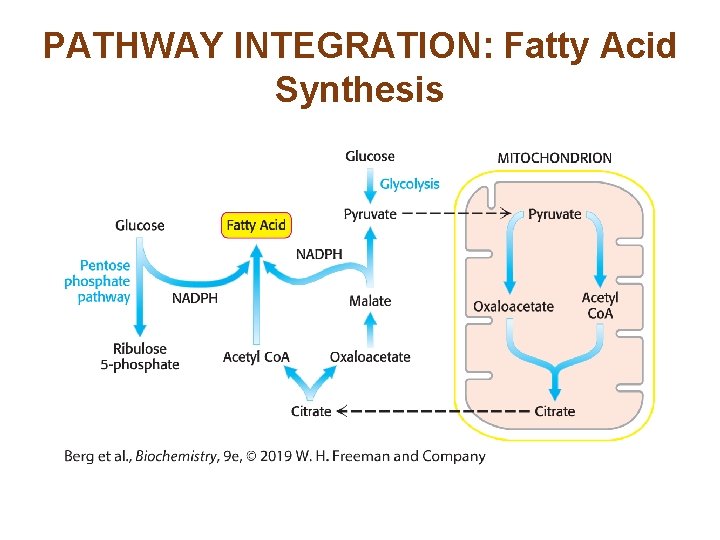
PATHWAY INTEGRATION: Fatty Acid Synthesis
Fatty Acid Metabolism is Altered in Tumor Cells • Tumors require large amounts of fatty acid synthesis to produce precursors for membrane synthesis. • β-Ketoacyl ACP synthase inhibitors inhibit phospholipid synthesis and subsequent cell growth in some cancers, apparently by inducing apoptosis. – Mice treated with these inhibitors also showed dramatic weight loss because they ate less, suggesting that such drugs may be used to treat obesity. • Acetyl Co. A carboxylase may also be a target for inhibiting cancer cell growth.
Triacylglycerols May Become an Important Renewable Energy Source • Triacylglycerols are a promising material for renewable biodiesel fuel. • First, CO 2, CO, and H 2 are captured from municipal waste or created from other waste sources. • Next, the gases are fed to acetogenic bacteria, an anaerobic species that uses the Wood-Ljungdahl pathway, which can generate acetate from these gases. • The acetate can then be harvested and used as a carbon source for oleaginous yeast, which can efficiently synthesize and accumulate triacylglycerols for biodiesel and other renewable products.
Section 22. 6 The Elongation and Unsaturation of Fatty Acids Are Accomplished by Accessory Enzyme Systems • Fatty acid synthase cannot generate fatty acids longer than C 16 palmitate. • Longer fatty acids are synthesized by enzymes attached to the endoplasmic reticulum. • These enzymes extend palmitate by adding two-carbon units, using malonyl Co. A as a substrate.
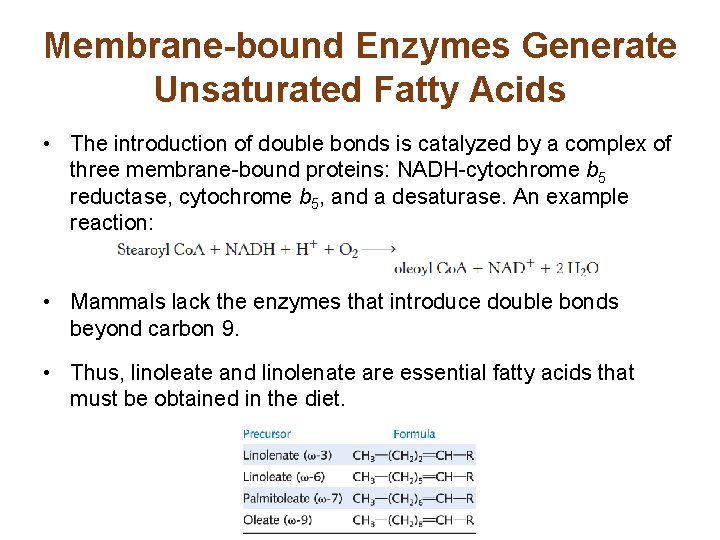
Membrane-bound Enzymes Generate Unsaturated Fatty Acids • The introduction of double bonds is catalyzed by a complex of three membrane-bound proteins: NADH-cytochrome b 5 reductase, cytochrome b 5, and a desaturase. An example reaction: • Mammals lack the enzymes that introduce double bonds beyond carbon 9. • Thus, linoleate and linolenate are essential fatty acids that must be obtained in the diet.
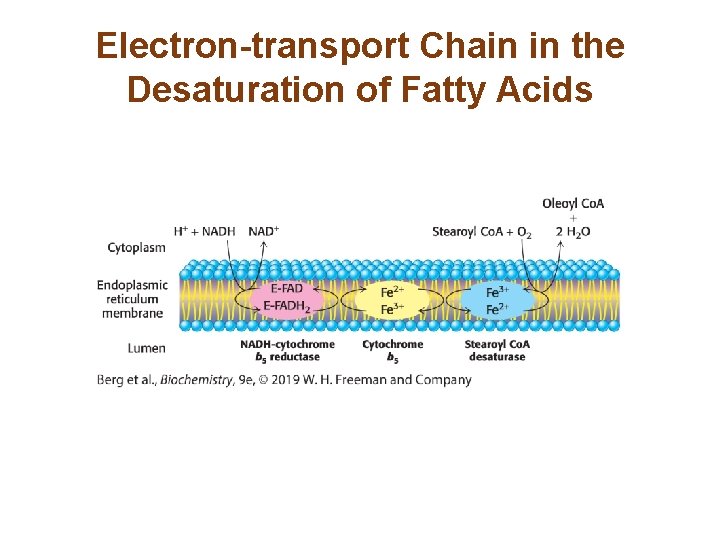
Electron-transport Chain in the Desaturation of Fatty Acids
Eicosanoid Hormones are Derived from Polyunsaturated Fatty Acids • Arachidonate, a 20 -carbon fatty acid with four double bonds, is derived from linoleate. • Arachidonate is a precursor for a variety of signal molecules 20 carbons long, collectively called the eicosanoids. • These signal molecules, which include prostaglandins, are local hormones because they are short-lived and only affect nearby cells.
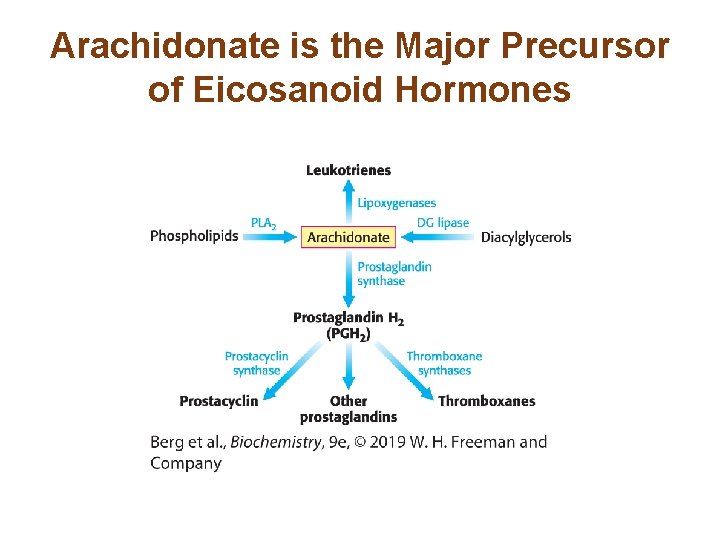
Arachidonate is the Major Precursor of Eicosanoid Hormones
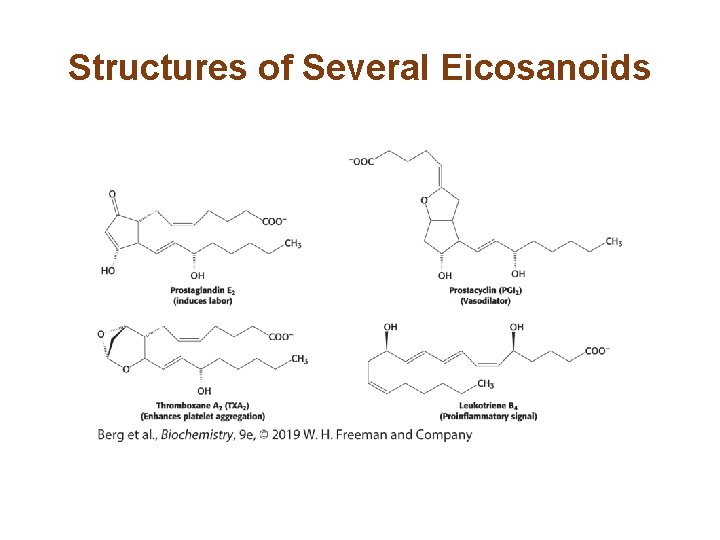
Structures of Several Eicosanoids
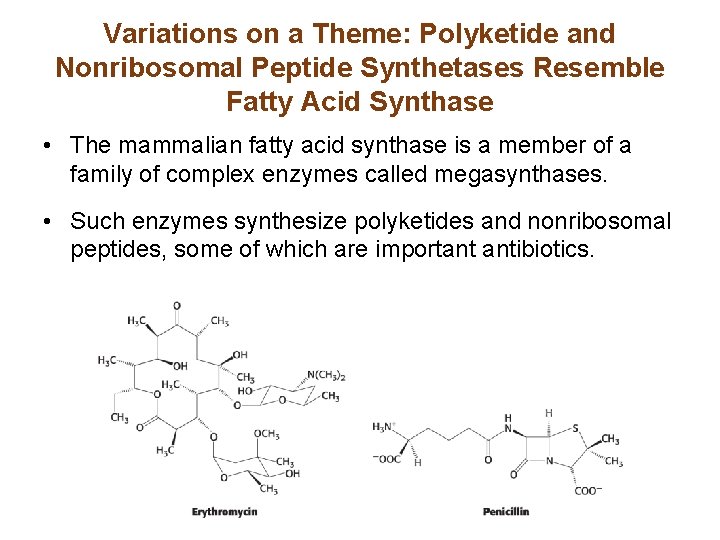
Variations on a Theme: Polyketide and Nonribosomal Peptide Synthetases Resemble Fatty Acid Synthase • The mammalian fatty acid synthase is a member of a family of complex enzymes called megasynthases. • Such enzymes synthesize polyketides and nonribosomal peptides, some of which are important antibiotics.
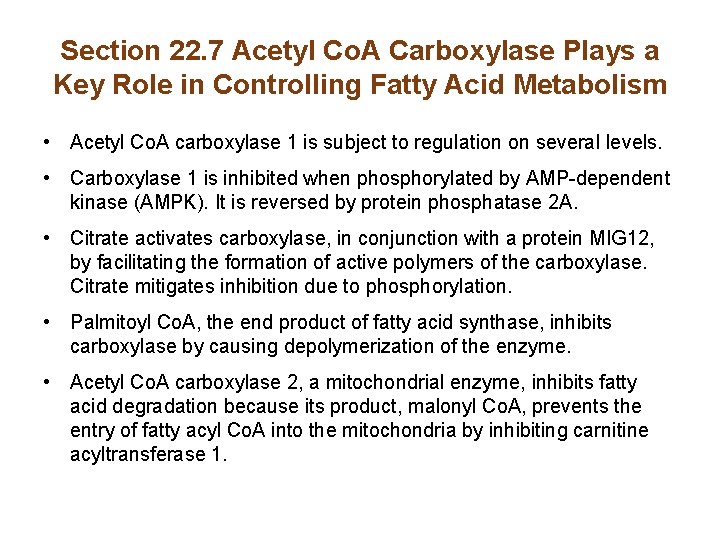
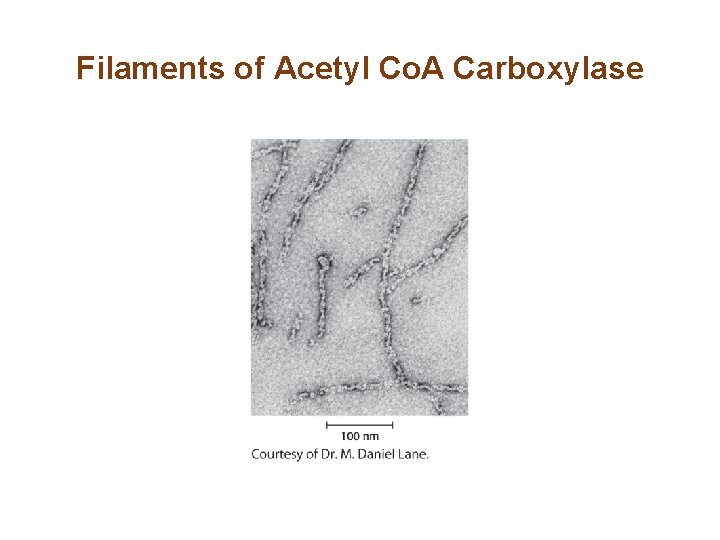
Section 22. 7 Acetyl Co. A Carboxylase Plays a Key Role in Controlling Fatty Acid Metabolism • Acetyl Co. A carboxylase 1 is subject to regulation on several levels. • Carboxylase 1 is inhibited when phosphorylated by AMP-dependent kinase (AMPK). It is reversed by protein phosphatase 2 A. • Citrate activates carboxylase, in conjunction with a protein MIG 12, by facilitating the formation of active polymers of the carboxylase. Citrate mitigates inhibition due to phosphorylation. • Palmitoyl Co. A, the end product of fatty acid synthase, inhibits carboxylase by causing depolymerization of the enzyme. • Acetyl Co. A carboxylase 2, a mitochondrial enzyme, inhibits fatty acid degradation because its product, malonyl Co. A, prevents the entry of fatty acyl Co. A into the mitochondria by inhibiting carnitine acyltransferase 1.
Control of Acetyl Co. A Carboxylase
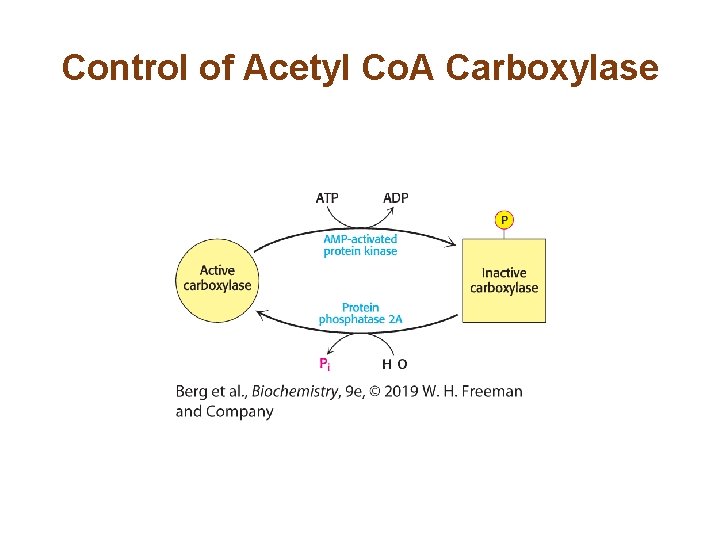
Filaments of Acetyl Co. A Carboxylase
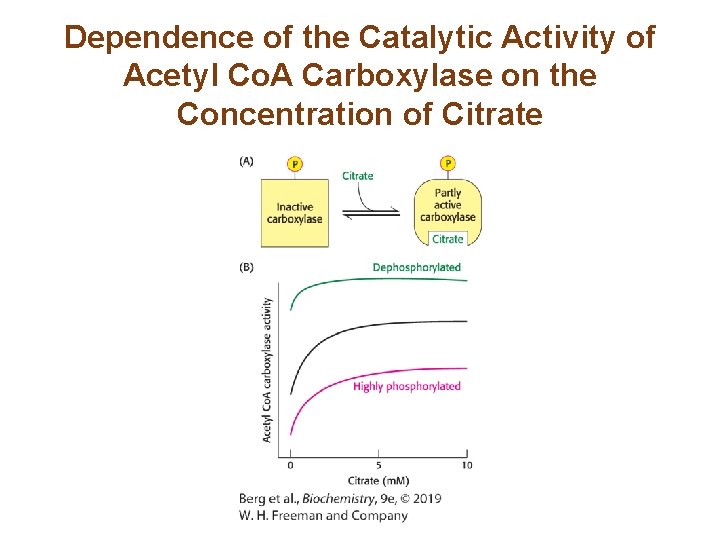
Dependence of the Catalytic Activity of Acetyl Co. A Carboxylase on the Concentration of Citrate
Acetyl Co. A Carboxylase is Regulated by a Variety of Hormones • Glucagon and epinephrine inhibit carboxylase by enhancing AMPK activity. • Insulin stimulates the dephosphorylation and activation of carboxylase. • The enzymes of fatty acid synthesis are regulated by adaptive control. If adequate fats are not present in the diet, the synthesis of enzymes required for fatty acid synthesis is enhanced.
AMP-activated Protein Kinase is a Key Regulator of Metabolism • AMPK inhibits fatty acid synthesis while also stimulating fatty acid oxidation. • There are several isozymic forms of this trimeric protein, and it regulates other metabolic processes as well. • In general, AMPK activates ATP-generating pathways and inhibits ATP-requiring pathways. • It is required in early embryo development as well as in inflammatory responses.
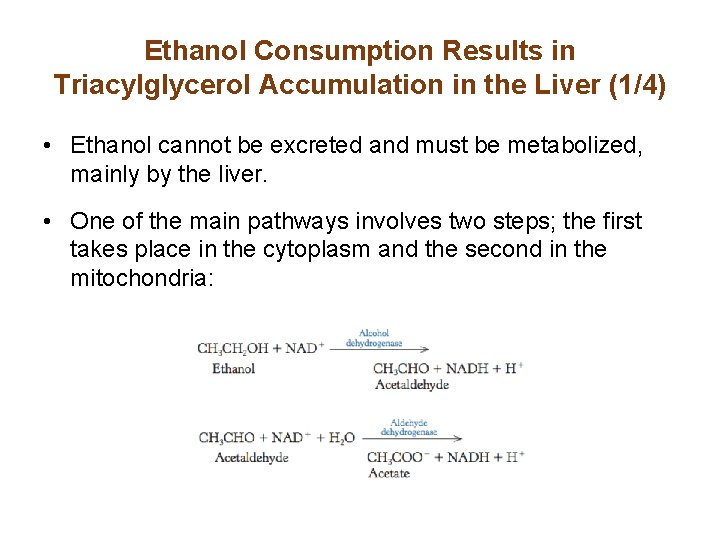
Ethanol Consumption Results in Triacylglycerol Accumulation in the Liver (1/4) • Ethanol cannot be excreted and must be metabolized, mainly by the liver. • One of the main pathways involves two steps; the first takes place in the cytoplasm and the second in the mitochondria:
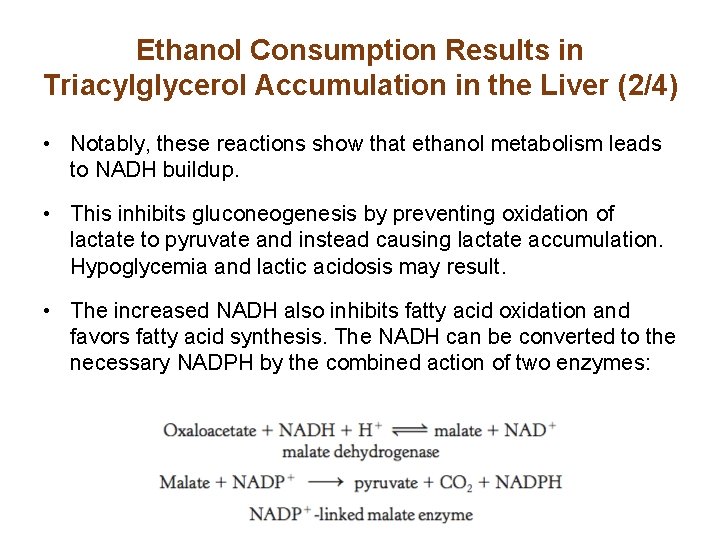
Ethanol Consumption Results in Triacylglycerol Accumulation in the Liver (2/4) • Notably, these reactions show that ethanol metabolism leads to NADH buildup. • This inhibits gluconeogenesis by preventing oxidation of lactate to pyruvate and instead causing lactate accumulation. Hypoglycemia and lactic acidosis may result. • The increased NADH also inhibits fatty acid oxidation and favors fatty acid synthesis. The NADH can be converted to the necessary NADPH by the combined action of two enzymes:
Ethanol Consumption Results in Triacylglycerol Accumulation in the Liver (3/4) • The resulting acetate can also be readily converted to the acetyl Co. A that is needed for fatty acid synthesis. • As a result, alcohol consumption favors accumulation of triacylglycerols in the liver, leading to a condition known as fatty liver. This condition may progress to obesity and type 2 diabetes.
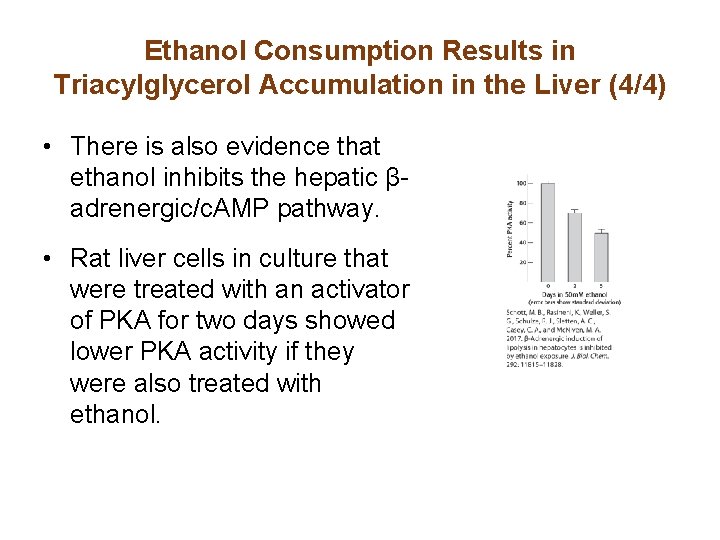
Ethanol Consumption Results in Triacylglycerol Accumulation in the Liver (4/4) • There is also evidence that ethanol inhibits the hepatic βadrenergic/c. AMP pathway. • Rat liver cells in culture that were treated with an activator of PKA for two days showed lower PKA activity if they were also treated with ethanol.
- Slides: 100