
Chapter 22 Evolution by Natural Selection AP Biology
Chapter 22. Evolution by Natural Selection AP Biology
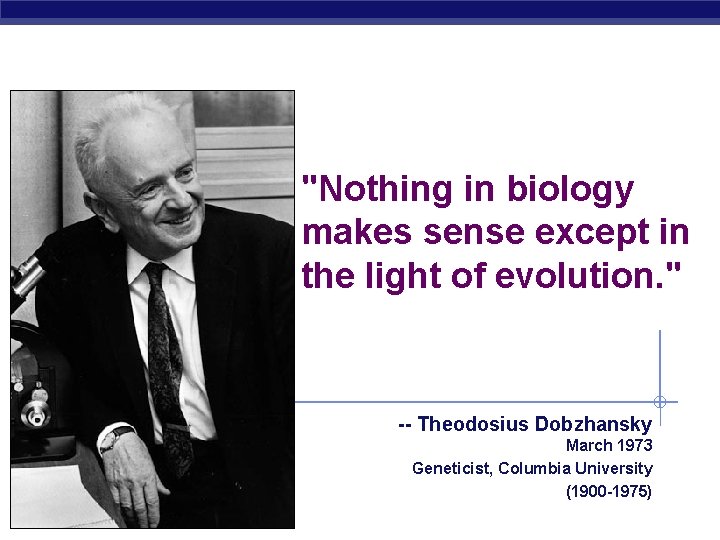
"Nothing in biology makes sense except in the light of evolution. " -- Theodosius Dobzhansky March 1973 Geneticist, Columbia University (1900 -1975) AP Biology
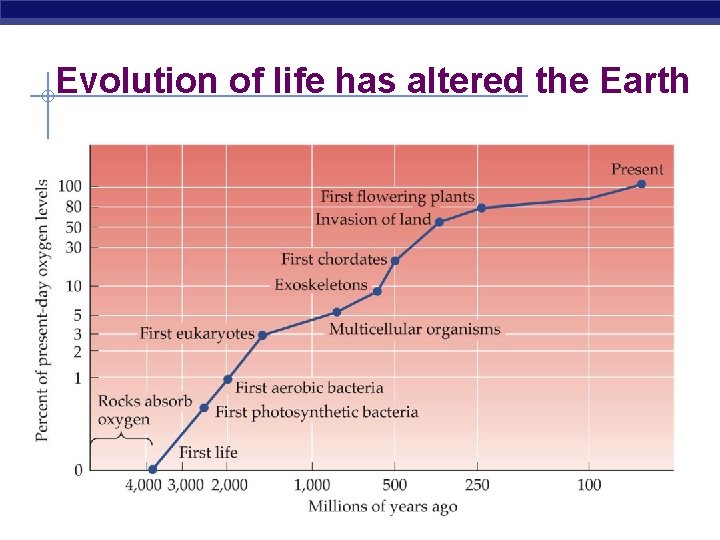
Evolution of life has altered the Earth AP Biology
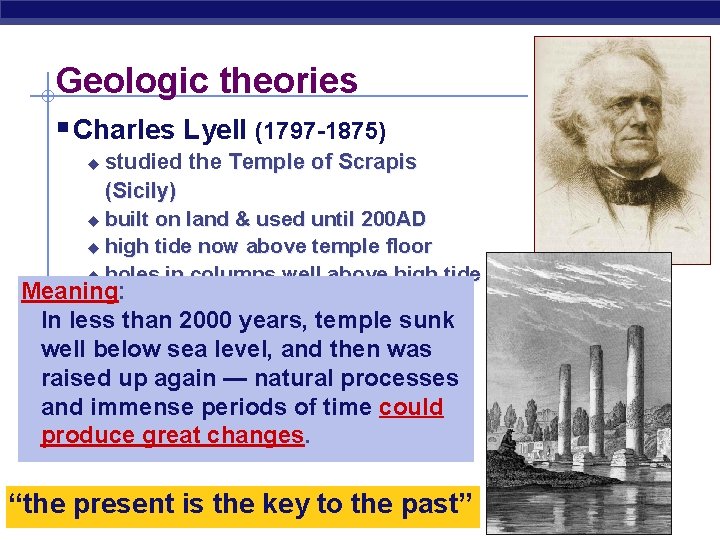
Geologic theories § Charles Lyell (1797 -1875) studied the Temple of Scrapis (Sicily) u built on land & used until 200 AD u high tide now above temple floor u holes in columns well above high tide u Meaning: In less than 2000 years, temple sunk well below sea level, and then was raised up again — natural processes and immense periods of time could produce great changes. “the present is the key to the past” AP Biology
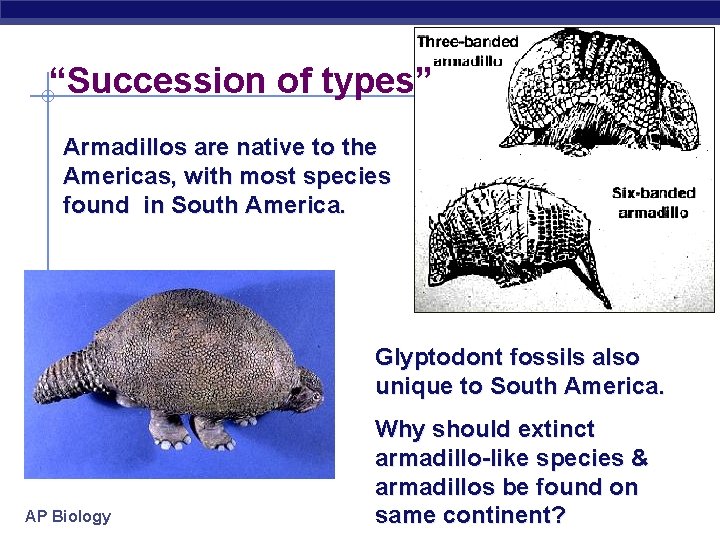
“Succession of types” Armadillos are native to the Americas, with most species found in South America. Glyptodont fossils also unique to South America. AP Biology Why should extinct armadillo-like species & armadillos be found on same continent?
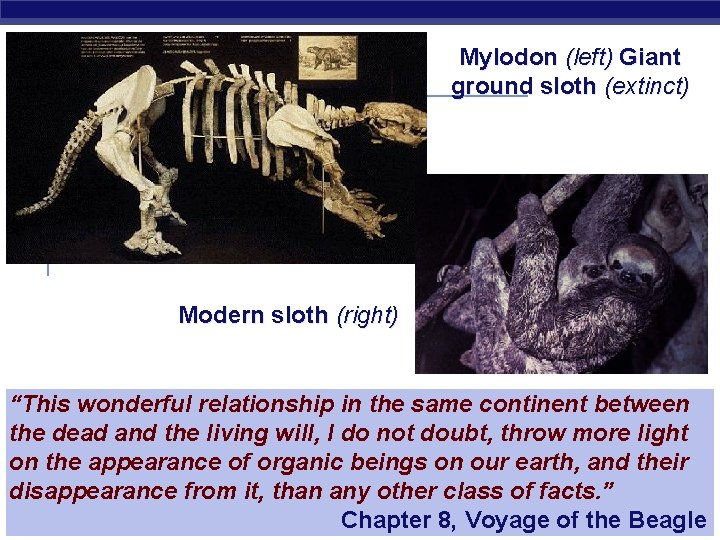
Mylodon (left) Giant ground sloth (extinct) Modern sloth (right) “This wonderful relationship in the same continent between the dead and the living will, I do not doubt, throw more light on the appearance of organic beings on our earth, and their disappearance from it, than any other class of facts. ” AP Biology Chapter 8, Voyage of the Beagle
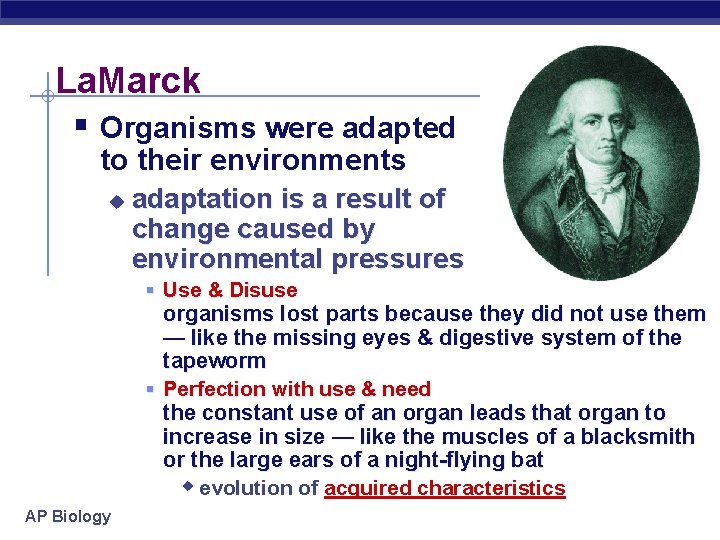
La. Marck § Organisms were adapted to their environments u adaptation is a result of change caused by environmental pressures § Use & Disuse organisms lost parts because they did not use them — like the missing eyes & digestive system of the tapeworm § Perfection with use & need the constant use of an organ leads that organ to increase in size — like the muscles of a blacksmith or the large ears of a night-flying bat w evolution of acquired characteristics AP Biology
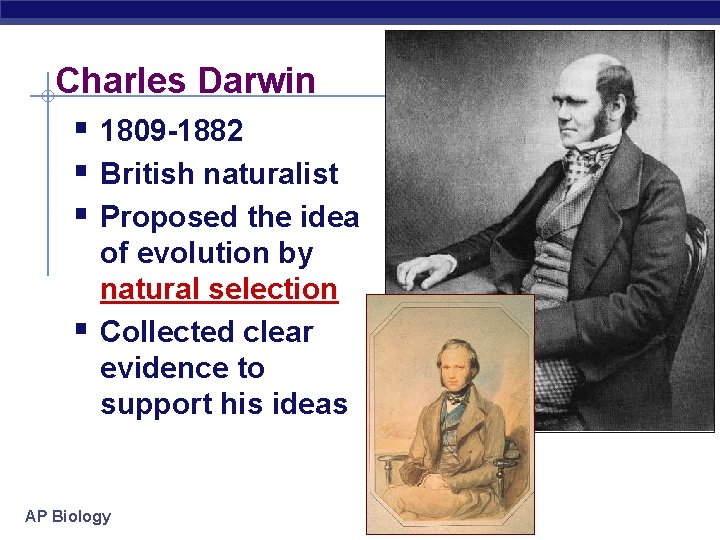
Charles Darwin § 1809 -1882 § British naturalist § Proposed the idea § of evolution by natural selection Collected clear evidence to support his ideas AP Biology
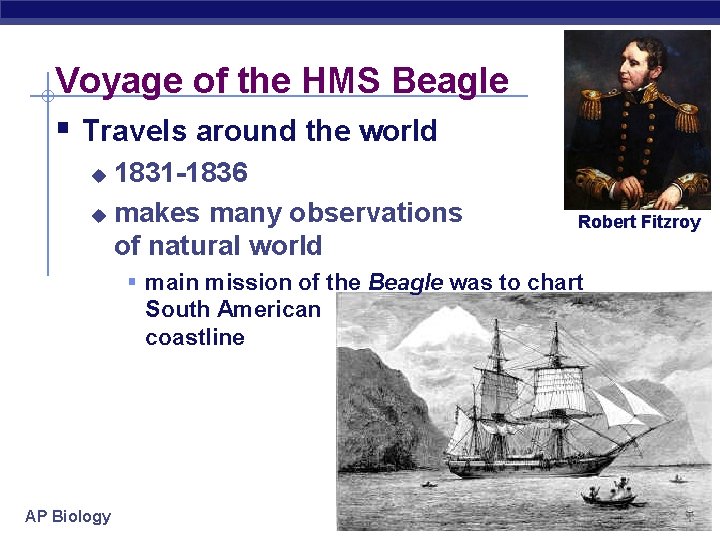
Voyage of the HMS Beagle § Travels around the world 1831 -1836 u makes many observations of natural world u Robert Fitzroy § main mission of the Beagle was to chart South American coastline AP Biology
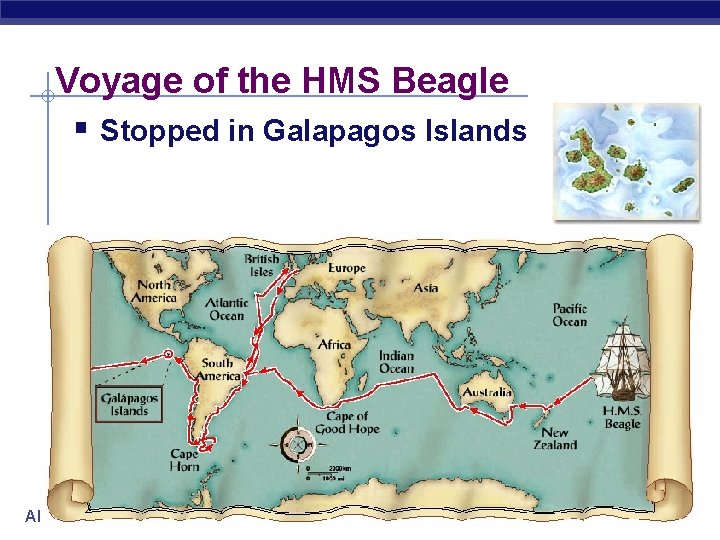
Voyage of the HMS Beagle § Stopped in Galapagos Islands AP Biology
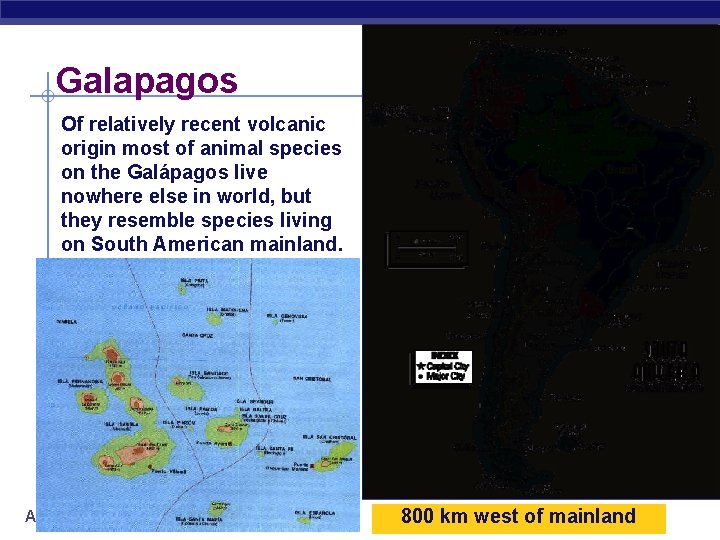
Galapagos Of relatively recent volcanic origin most of animal species on the Galápagos live nowhere else in world, but they resemble species living on South American mainland. AP Biology 800 km west of mainland
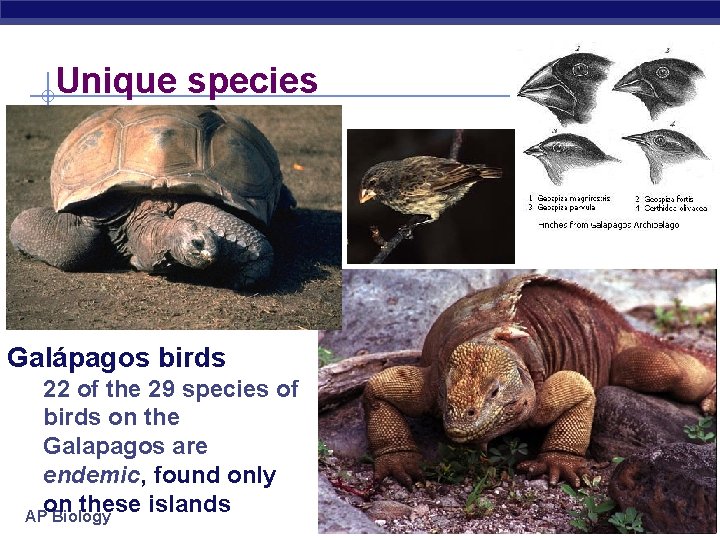
Unique species Galápagos birds 22 of the 29 species of birds on the Galapagos are endemic, found only on these islands AP Biology
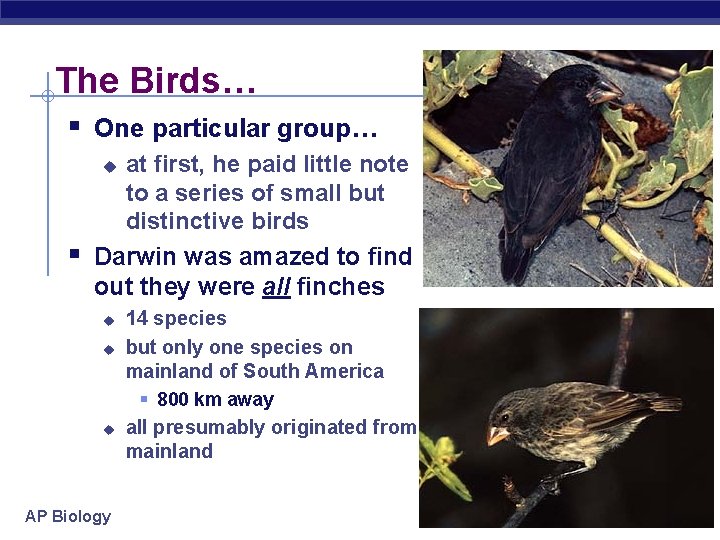
The Birds… § One particular group… at first, he paid little note to a series of small but distinctive birds Darwin was amazed to find out they were all finches u § u u 14 species but only one species on mainland of South America § 800 km away u AP Biology all presumably originated from mainland
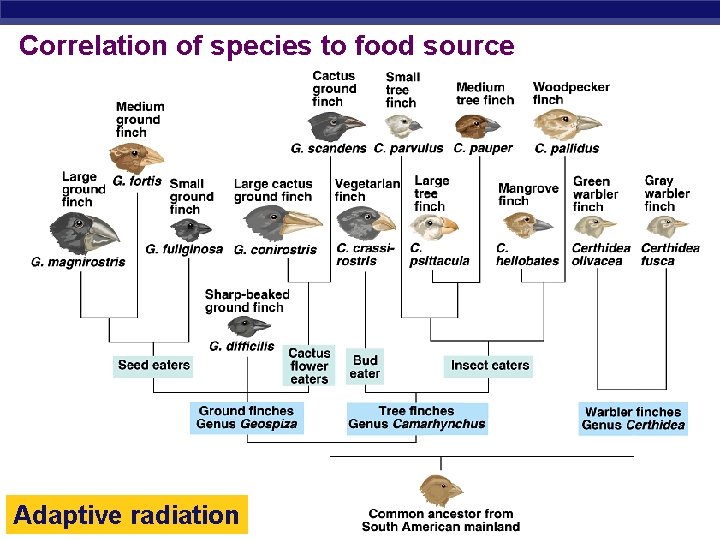
Correlation of species to food source AP Biology radiation Adaptive
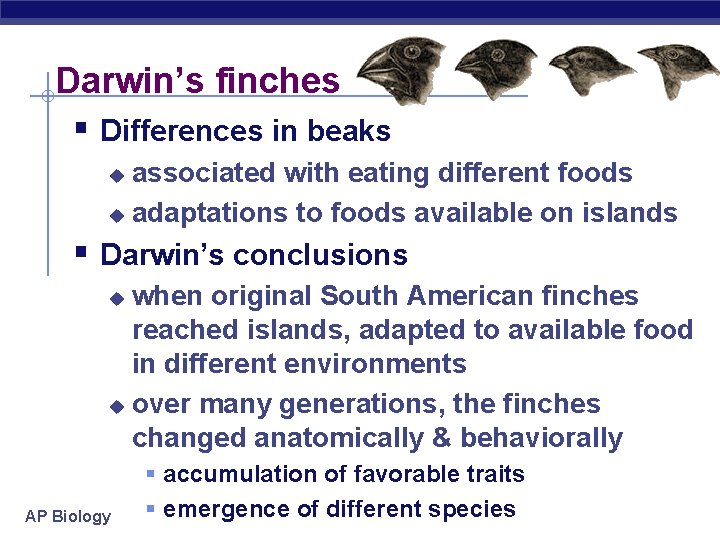
Darwin’s finches § Differences in beaks associated with eating different foods u adaptations to foods available on islands u § Darwin’s conclusions when original South American finches reached islands, adapted to available food in different environments u over many generations, the finches changed anatomically & behaviorally u AP Biology § accumulation of favorable traits § emergence of different species
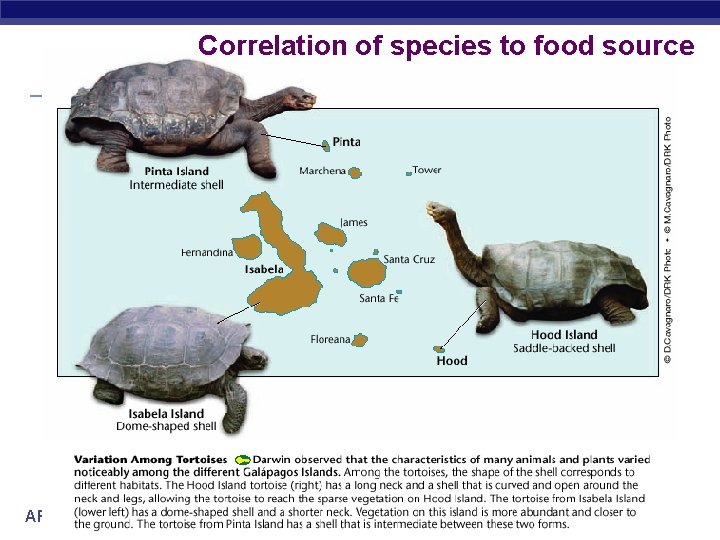
Correlation of species to food source AP Biology
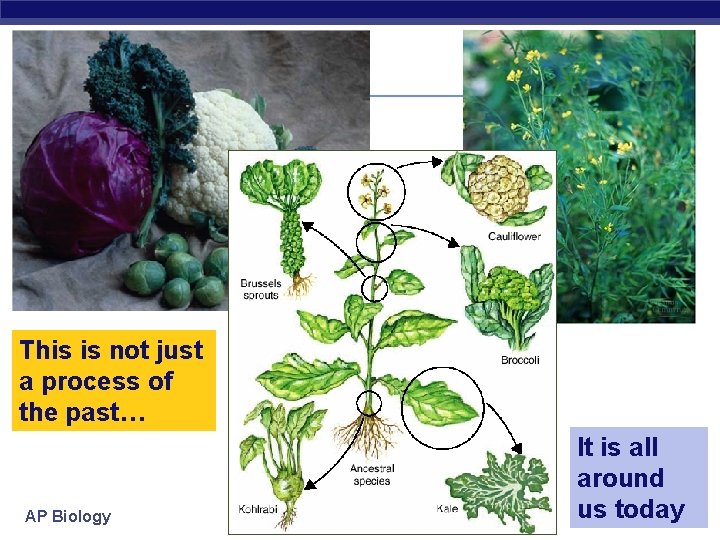
This is not just a process of the past… AP Biology It is all around us today
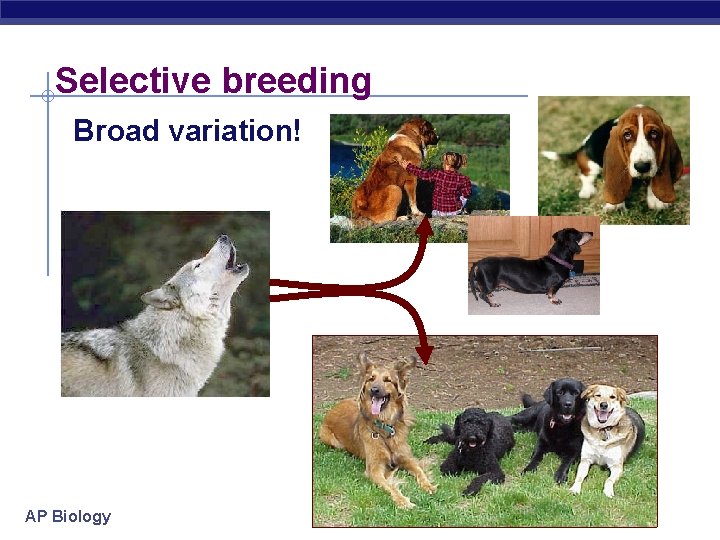
Selective breeding Broad variation! AP Biology
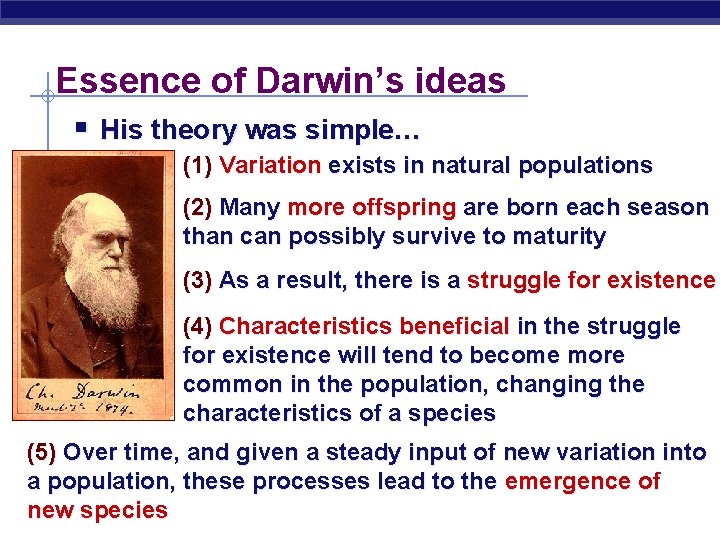
Essence of Darwin’s ideas § His theory was simple… (1) Variation exists in natural populations (2) Many more offspring are born each season than can possibly survive to maturity (3) As a result, there is a struggle for existence (4) Characteristics beneficial in the struggle for existence will tend to become more common in the population, changing the characteristics of a species (5) Over time, and given a steady input of new variation into a population, these processes lead to the emergence of new species AP Biology
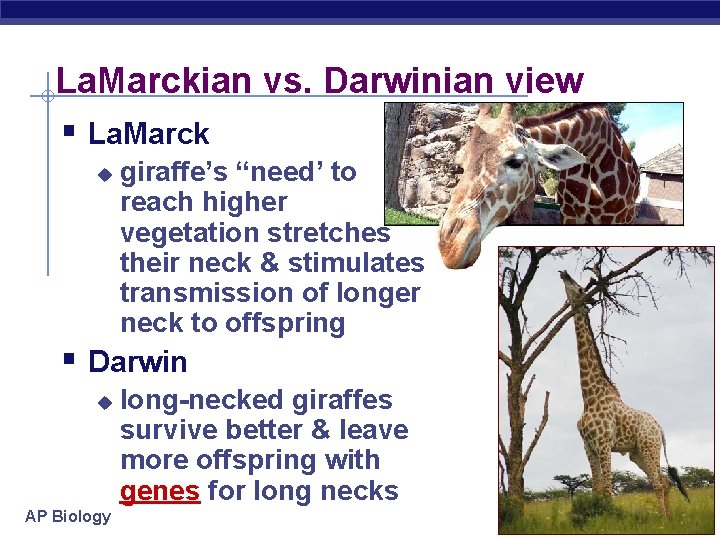
La. Marckian vs. Darwinian view § La. Marck u giraffe’s “need’ to reach higher vegetation stretches their neck & stimulates transmission of longer neck to offspring § Darwin u AP Biology long-necked giraffes survive better & leave more offspring with genes for long necks
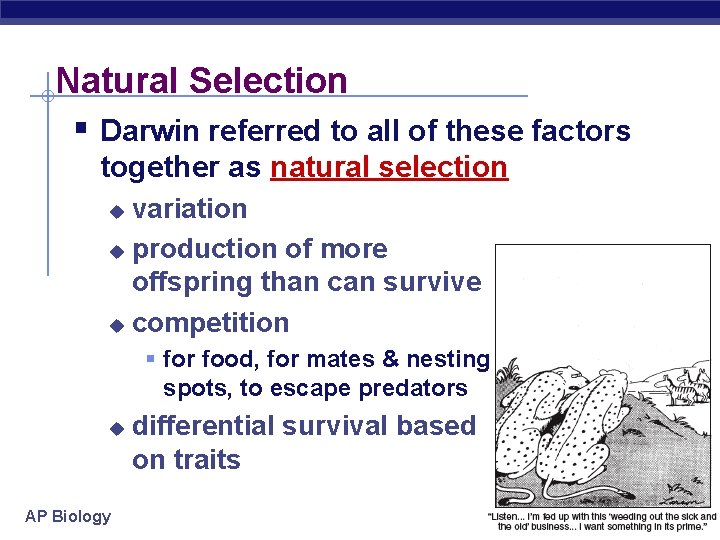
Natural Selection § Darwin referred to all of these factors together as natural selection variation u production of more offspring than can survive u competition u § for food, for mates & nesting spots, to escape predators u AP Biology differential survival based on traits
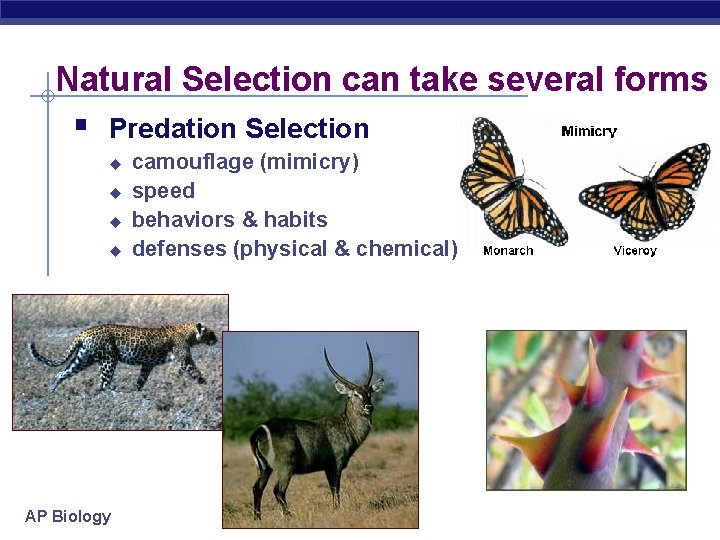
Natural Selection can take several forms § Predation Selection u u AP Biology camouflage (mimicry) speed behaviors & habits defenses (physical & chemical)
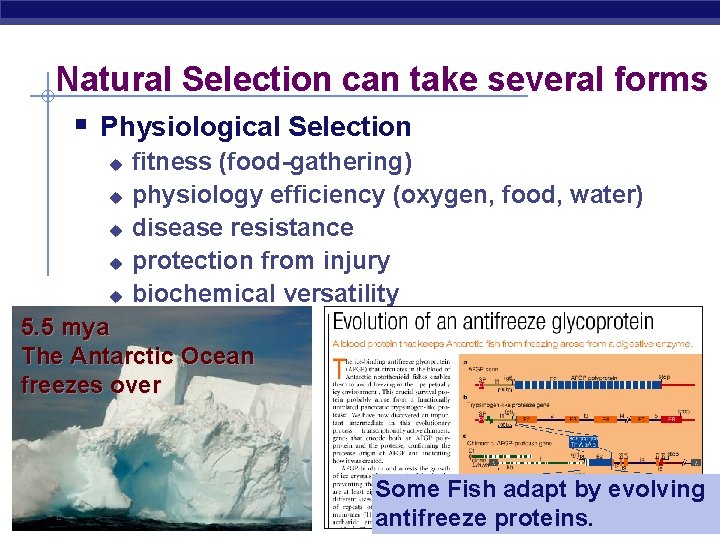
Natural Selection can take several forms § Physiological Selection fitness (food-gathering) u physiology efficiency (oxygen, food, water) u disease resistance u protection from injury u biochemical versatility 5. 5 mya The Antarctic Ocean freezes over u AP Biology Some Fish adapt by evolving antifreeze proteins.
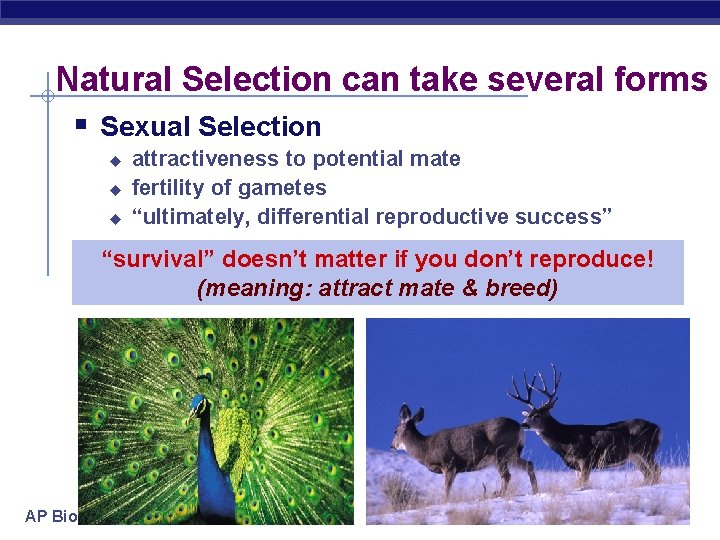
Natural Selection can take several forms § Sexual Selection u u u attractiveness to potential mate fertility of gametes “ultimately, differential reproductive success” “survival” doesn’t matter if you don’t reproduce! (meaning: attract mate & breed) AP Biology
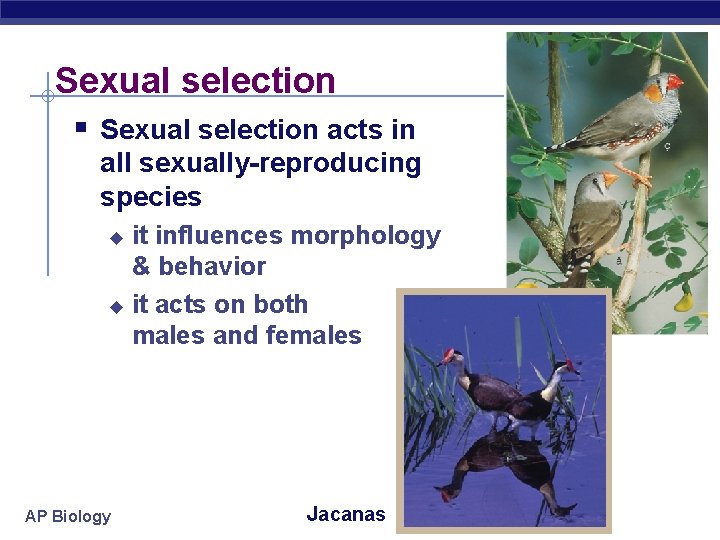
Sexual selection § Sexual selection acts in all sexually-reproducing species it influences morphology & behavior u it acts on both males and females u AP Biology Jacanas
- Slides: 25