
Chapter 22 and 23 INDUSTRIAL REVOLUTION DOES TECHNOLOGY
- Slides: 24
Chapter 22 and 23 INDUSTRIAL REVOLUTION DOES TECHNOLOGY BENEFIT SOCIETY?
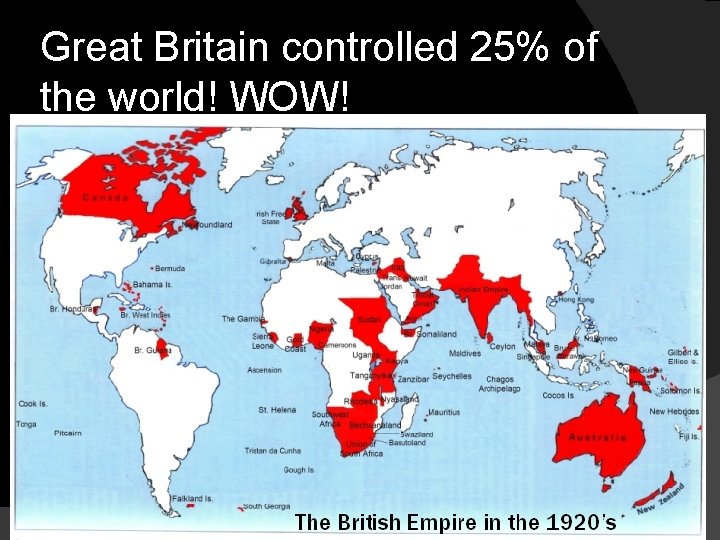
Great Britain controlled 25% of the world! WOW!
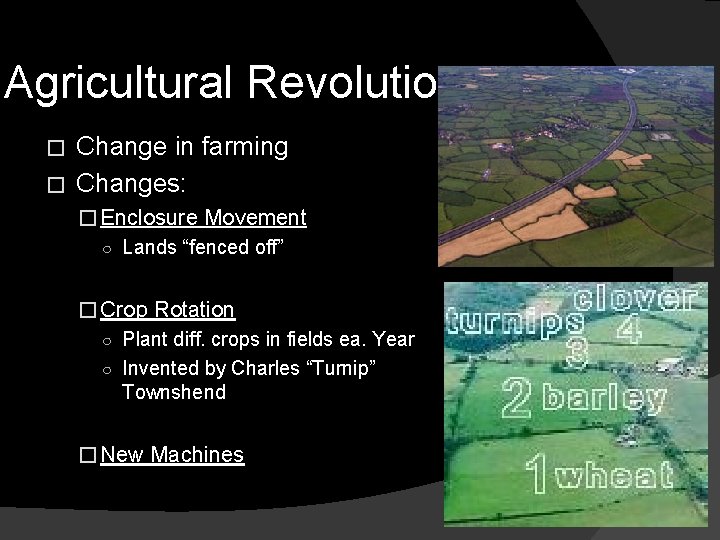
Agricultural Revolution Change in farming � Changes: � � Enclosure Movement ○ Lands “fenced off” � Crop Rotation ○ Plant diff. crops in fields ea. Year ○ Invented by Charles “Turnip” Townshend � New Machines
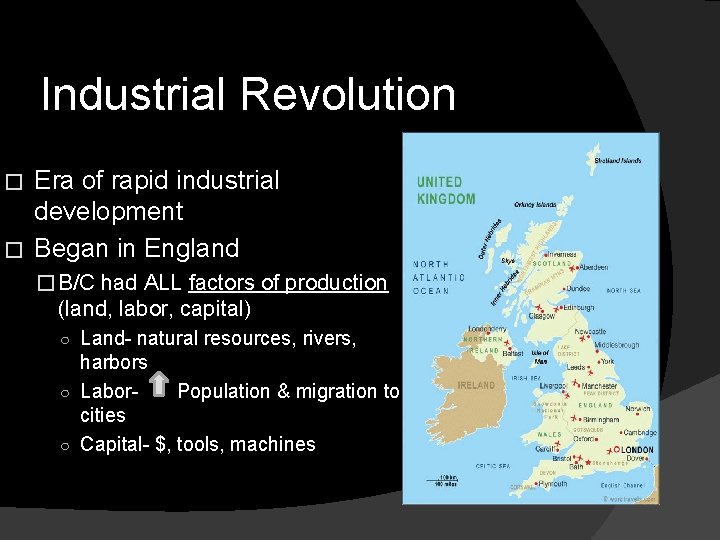
Industrial Revolution Era of rapid industrial development � Began in England � � B/C had ALL factors of production (land, labor, capital) ○ Land- natural resources, rivers, harbors ○ Labor. Population & migration to cities ○ Capital- $, tools, machines
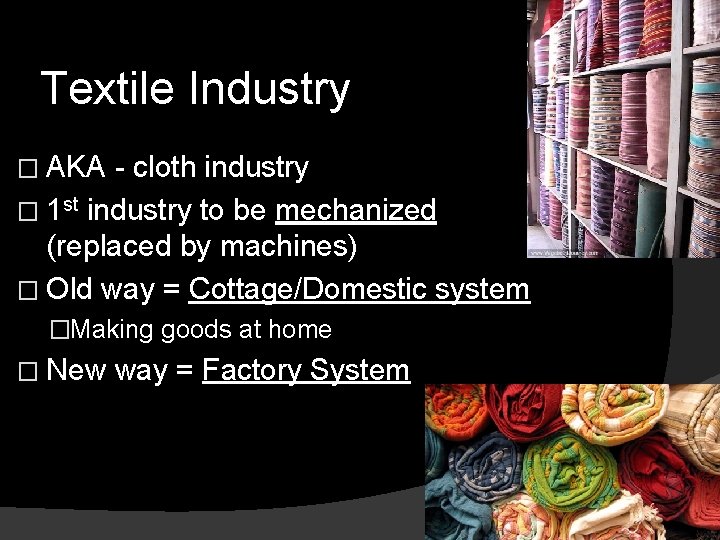
Textile Industry � AKA - cloth industry � 1 st industry to be mechanized (replaced by machines) � Old way = Cottage/Domestic system �Making goods at home � New way = Factory System
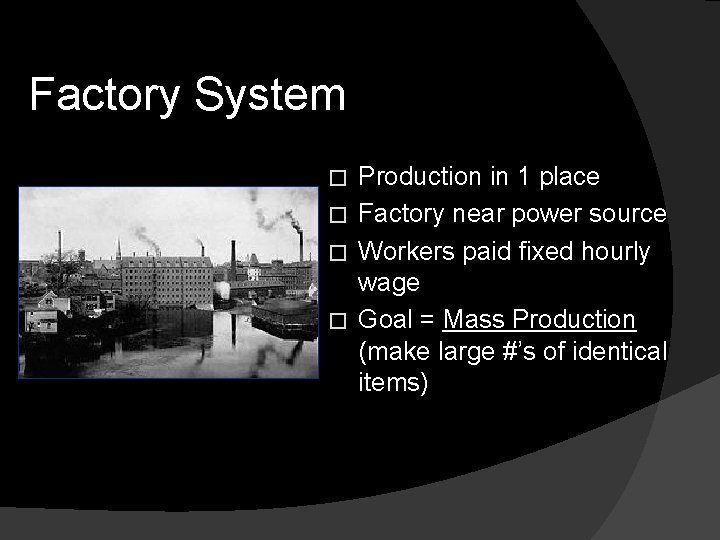
Factory System Production in 1 place � Factory near power source � Workers paid fixed hourly wage � Goal = Mass Production (make large #’s of identical items) �
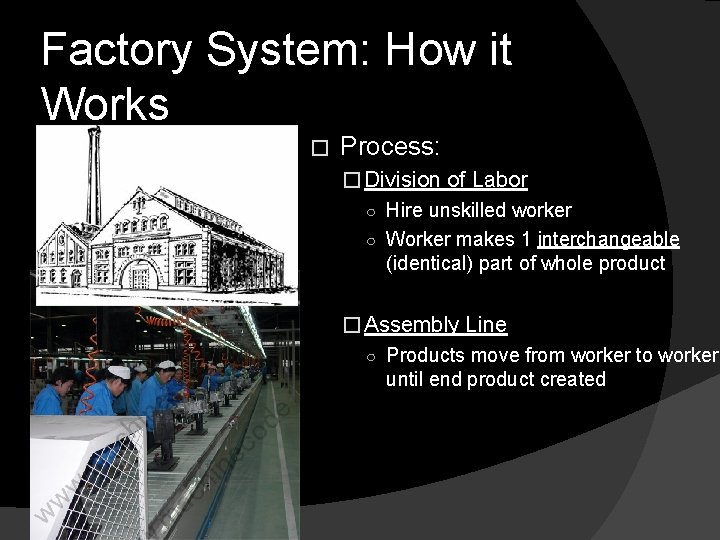
Factory System: How it Works � Process: � Division of Labor ○ Hire unskilled worker ○ Worker makes 1 interchangeable (identical) part of whole product � Assembly Line ○ Products move from worker to worker until end product created
How did the Industrial Revolution Change Society?
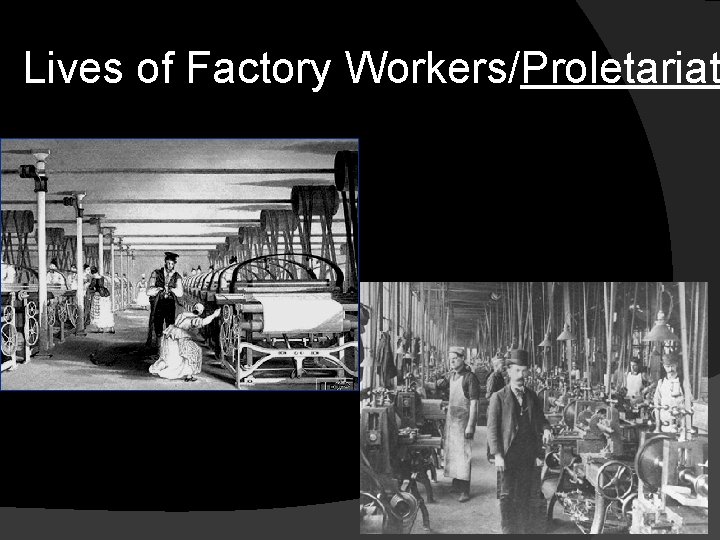
Lives of Factory Workers/Proletariat
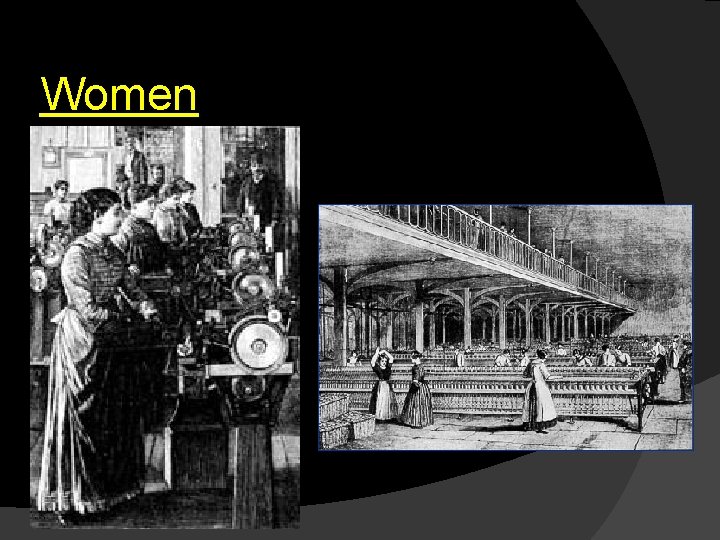
Women
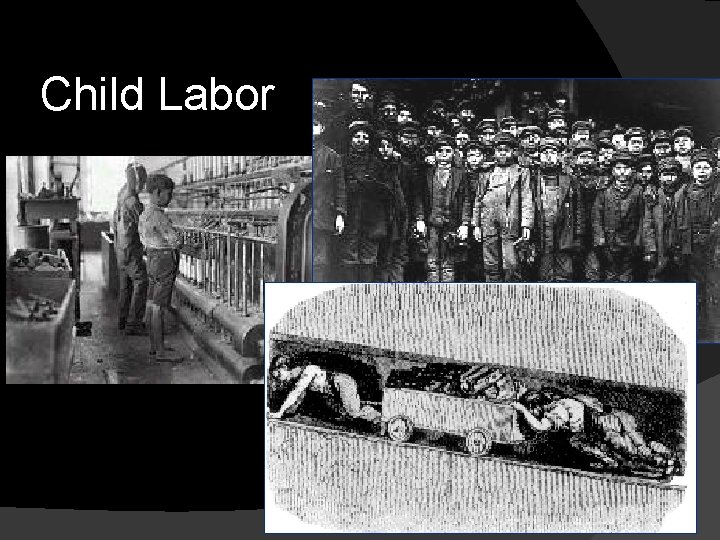
Child Labor
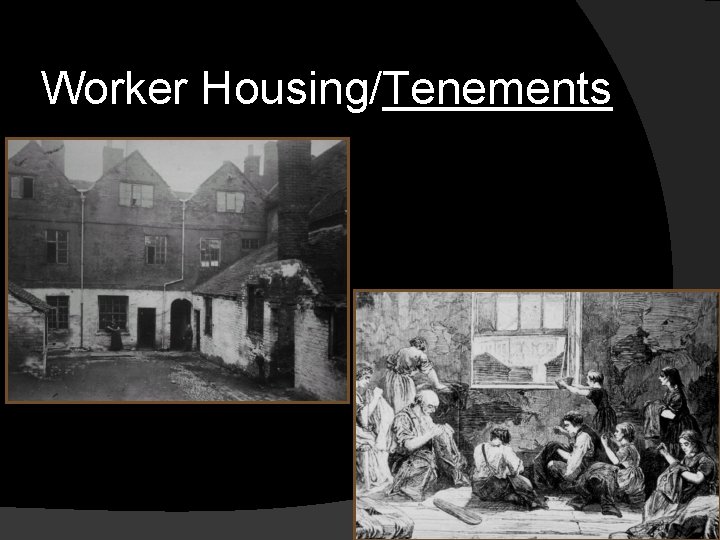
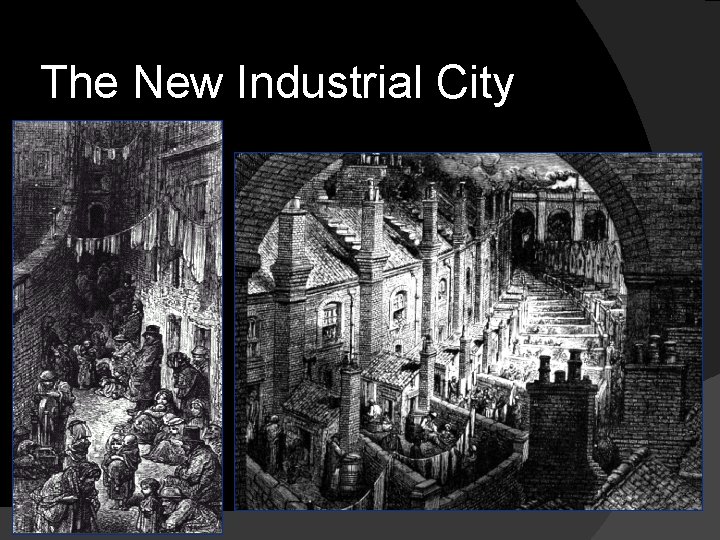
Worker Housing/Tenements
The New Industrial City
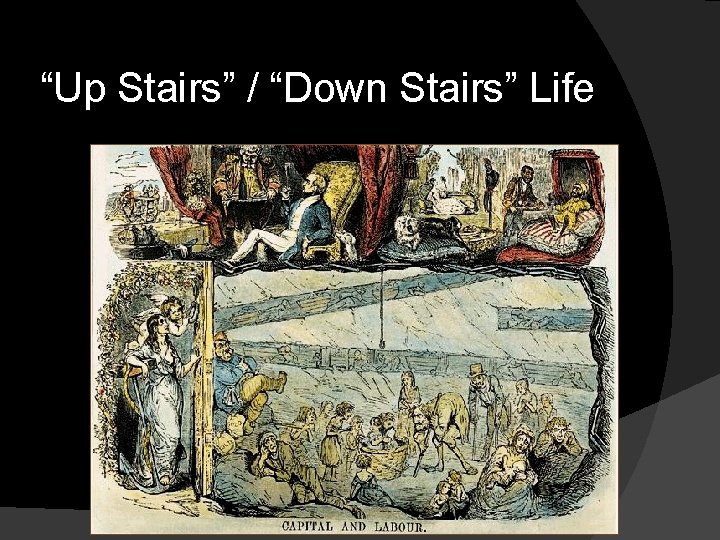
“Up Stairs” / “Down Stairs” Life
Factory Owners/Capitalists � Capitalism �Econ. system where individuals or corporations, not gov. , own factors of prod. � Corporation �Businesses form groups to work together � Monopoly �Corporation controls almost all prod. of good
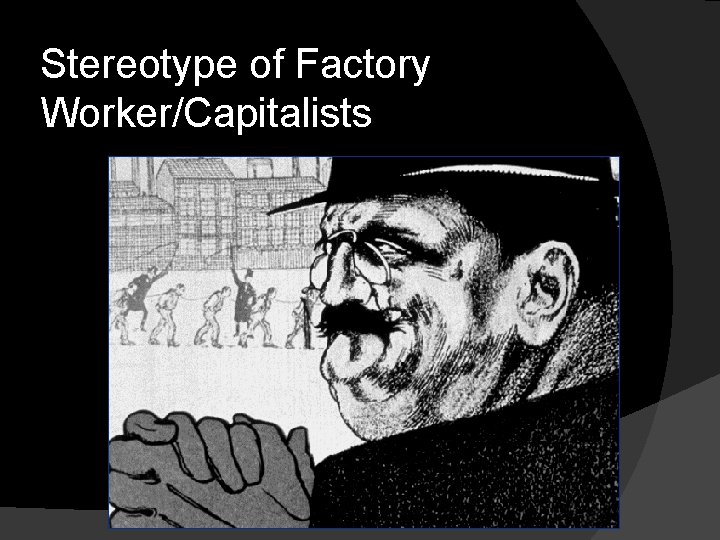
Stereotype of Factory Worker/Capitalists
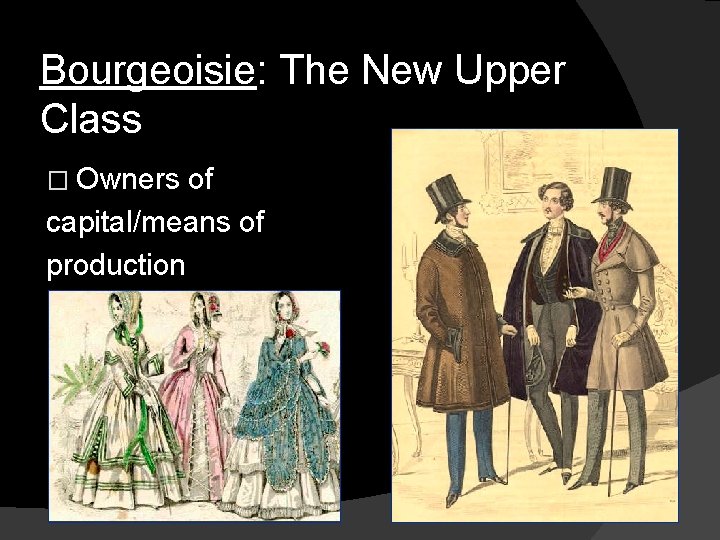
Bourgeoisie: The New Upper Class � Owners of capital/means of production
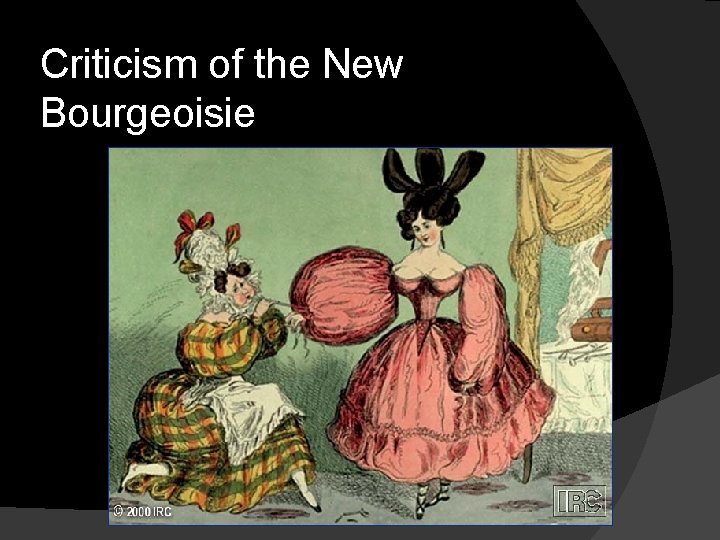
Criticism of the New Bourgeoisie
New Economic Theories � � Mercantilism OUT! Free Enterprise (no laws or regulations) IN! �Adam Smith ○ 2 Natural Laws of Business 1. 2. Law Supply and Demand Law of Competition ○ Consequence � Business Cycle – alternating periods of � and New laissez-faire (“leave things alone”) theory appealed to Factory Owners/Capitalists WHY?
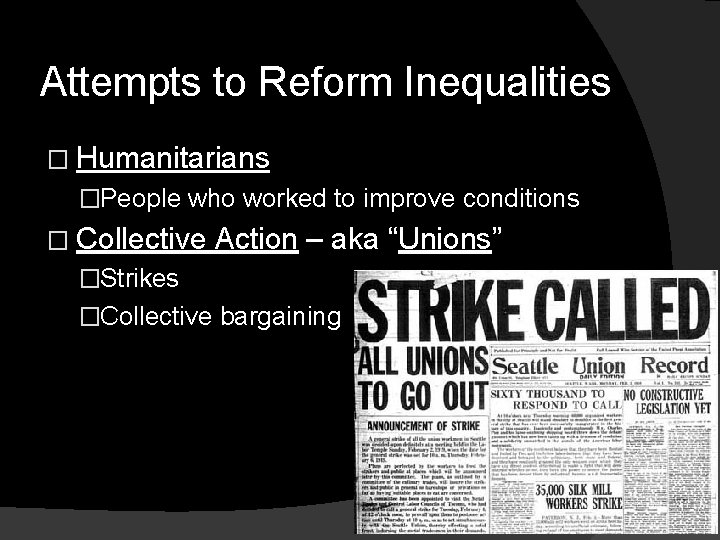
Attempts to Reform Inequalities � Humanitarians �People who worked to improve conditions � Collective Action – aka “Unions” �Strikes �Collective bargaining
Attempts to Reforms � Factory Acts (1802 & 1833) �Shorter workdays �Age requirements �Improve fact. conditions � Factory Acts Unsuccessful �Not enforced �Ex: Triangle Shirtwaist Fire (1911)
A New System All Together � Socialism �Econ. & political system �Gov. own means of production (Mo. P) �Gov. operates (Mo. P) for benefit of all people � Many variations of Socialism �Utopian Socialism-All people would own all means of production in common and share the products. �Marxism-believed that each stage of history involved inequality. The rich and the poor. He dreamed of Revolution in which the workers of the world would unite to gain political power.
Government Types Cont. �Communism-Government owns all means of production and controlled all economic planning. No civil rights! �Democratic Socialism- Northern and Western Europe. People retain partial control over economic planning through the election of government officials.
Do the advancements of the Industrial Revolution out way the hardships and inequalities that developed because of the Industrial Revolution?