
Chapter 21 Ecosystems 21 1 Terrestrial Biomes I
Chapter 21 – Ecosystems
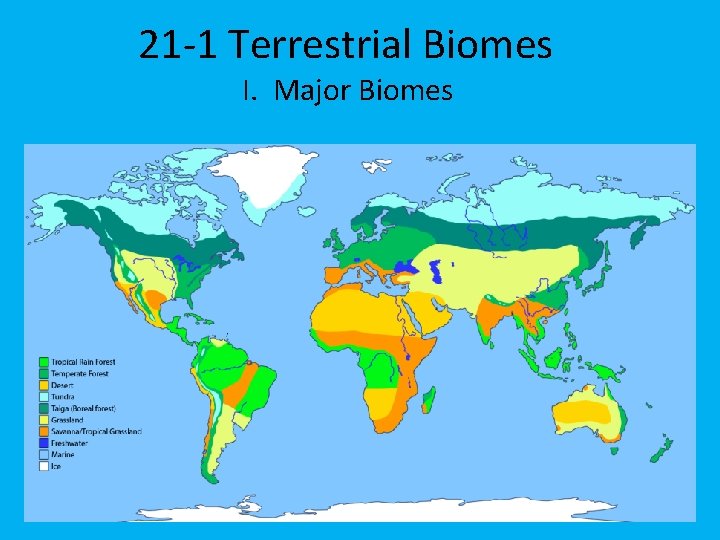
21 -1 Terrestrial Biomes I. Major Biomes
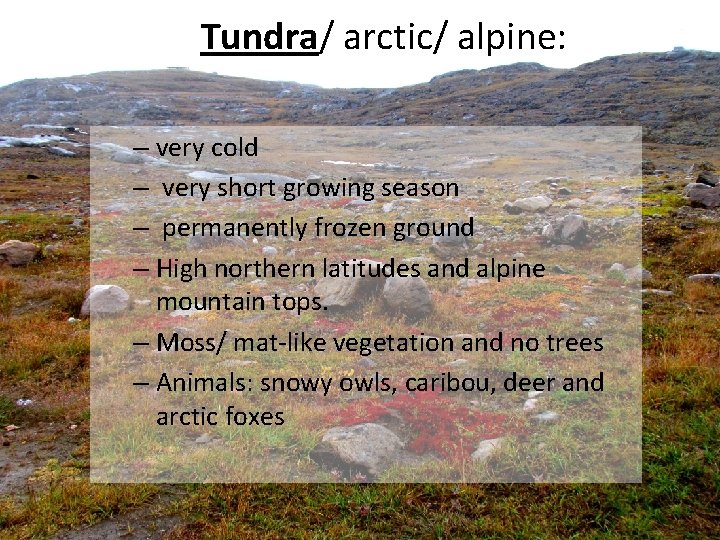
Tundra/ arctic/ alpine: – very cold – very short growing season – permanently frozen ground – High northern latitudes and alpine mountain tops. – Moss/ mat-like vegetation and no trees – Animals: snowy owls, caribou, deer and arctic foxes
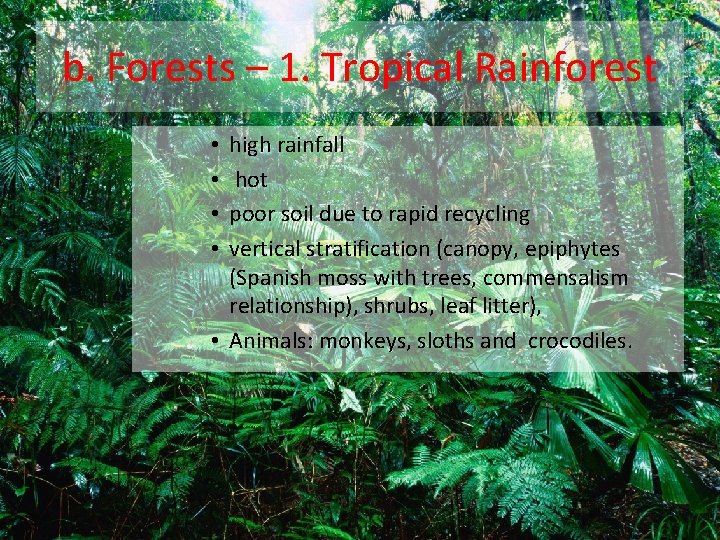
b. Forests – 1. Tropical Rainforest high rainfall hot poor soil due to rapid recycling vertical stratification (canopy, epiphytes (Spanish moss with trees, commensalism relationship), shrubs, leaf litter), • Animals: monkeys, sloths and crocodiles. • •
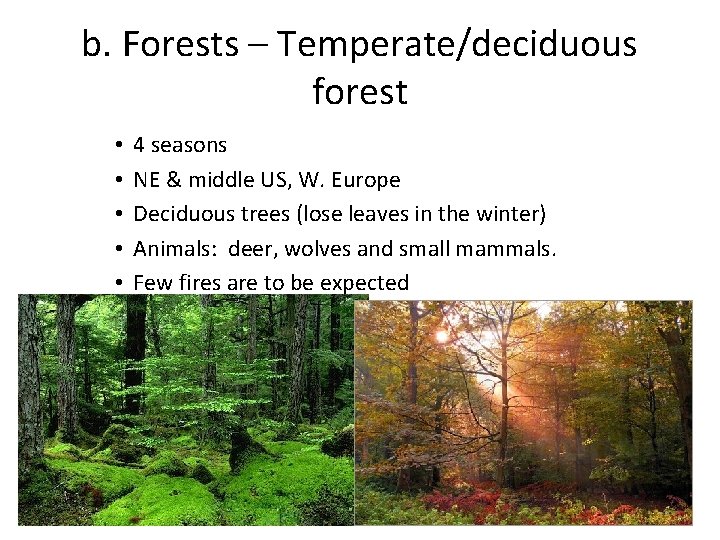
b. Forests – Temperate/deciduous forest • • • 4 seasons NE & middle US, W. Europe Deciduous trees (lose leaves in the winter) Animals: deer, wolves and small mammals. Few fires are to be expected
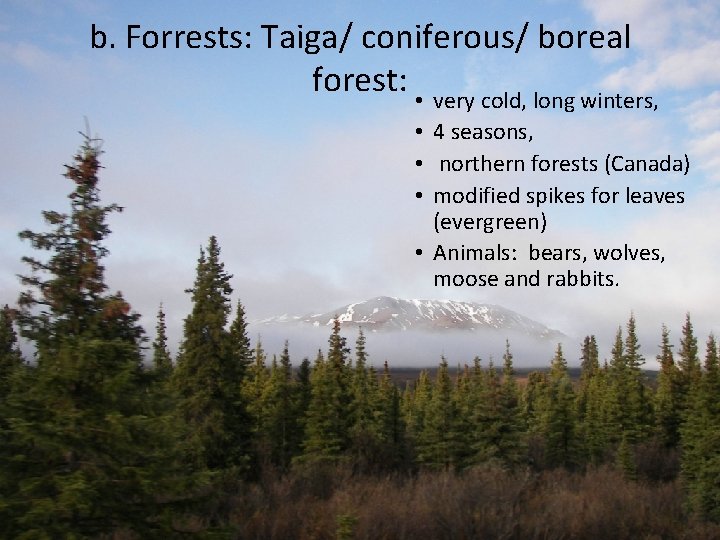
b. Forrests: Taiga/ coniferous/ boreal forest: • very cold, long winters, • 4 seasons, • northern forests (Canada) • modified spikes for leaves (evergreen) • Animals: bears, wolves, moose and rabbits.
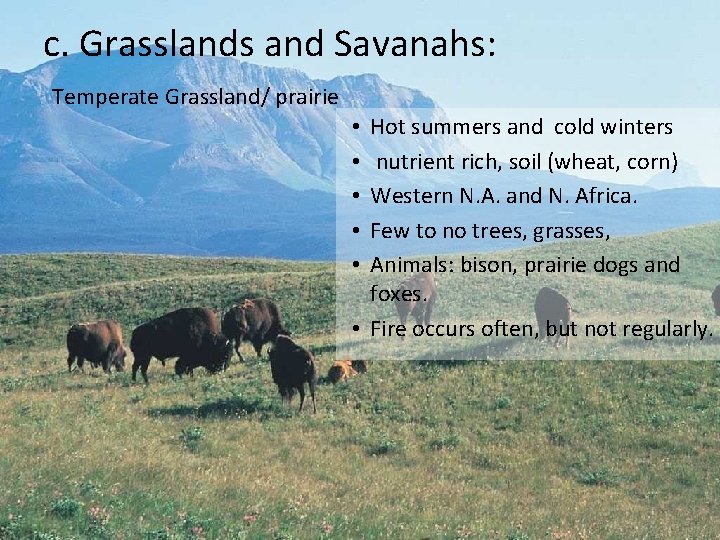
c. Grasslands and Savanahs: Temperate Grassland/ prairie Hot summers and cold winters nutrient rich, soil (wheat, corn) Western N. A. and N. Africa. Few to no trees, grasses, Animals: bison, prairie dogs and foxes. • Fire occurs often, but not regularly. • • •
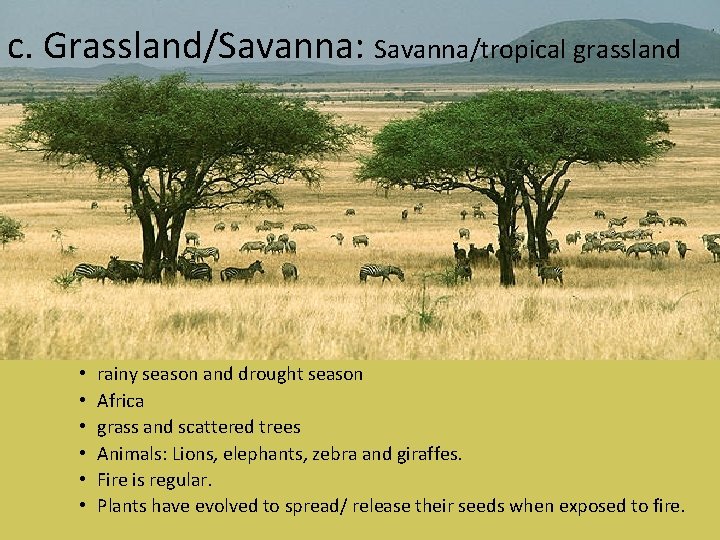
c. Grassland/Savanna: Savanna/tropical grassland • • • rainy season and drought season Africa grass and scattered trees Animals: Lions, elephants, zebra and giraffes. Fire is regular. Plants have evolved to spread/ release their seeds when exposed to fire.
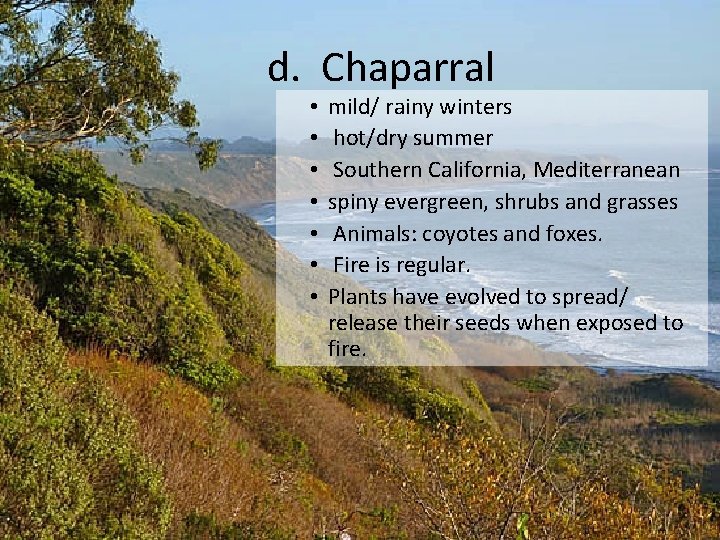
d. Chaparral • • mild/ rainy winters hot/dry summer Southern California, Mediterranean spiny evergreen, shrubs and grasses Animals: coyotes and foxes. Fire is regular. Plants have evolved to spread/ release their seeds when exposed to fire.
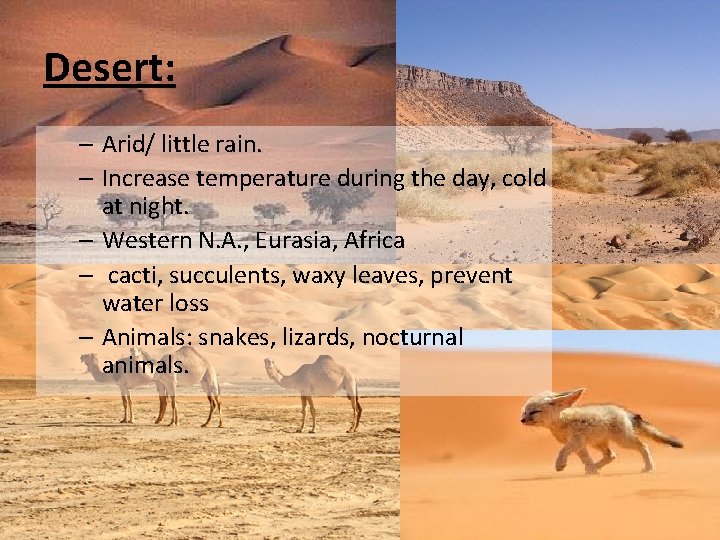
Desert: – Arid/ little rain. – Increase temperature during the day, cold at night. – Western N. A. , Eurasia, Africa – cacti, succulents, waxy leaves, prevent water loss – Animals: snakes, lizards, nocturnal animals.
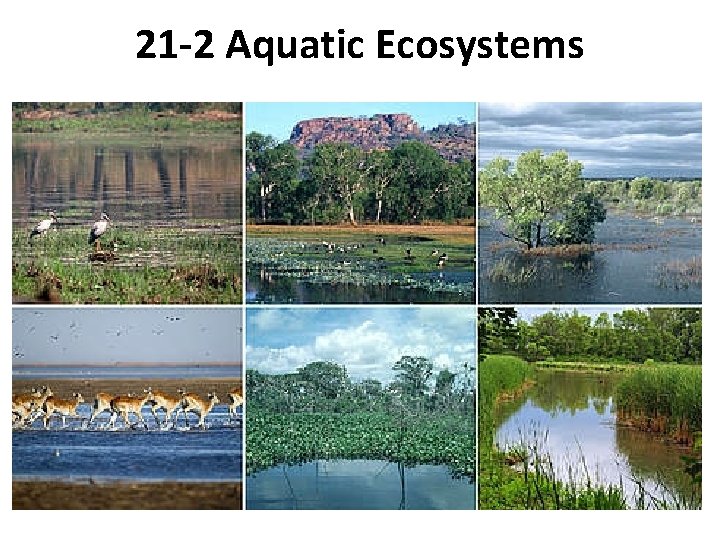
21 -2 Aquatic Ecosystems
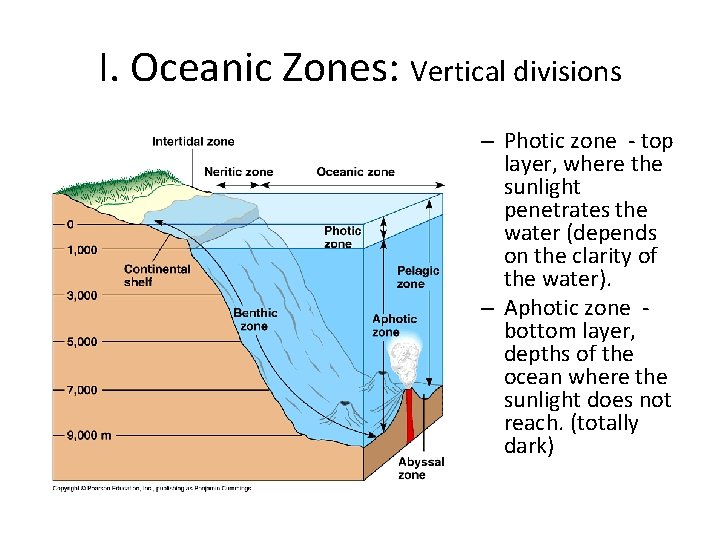
I. Oceanic Zones: Vertical divisions – Photic zone - top layer, where the sunlight penetrates the water (depends on the clarity of the water). – Aphotic zone bottom layer, depths of the ocean where the sunlight does not reach. (totally dark)
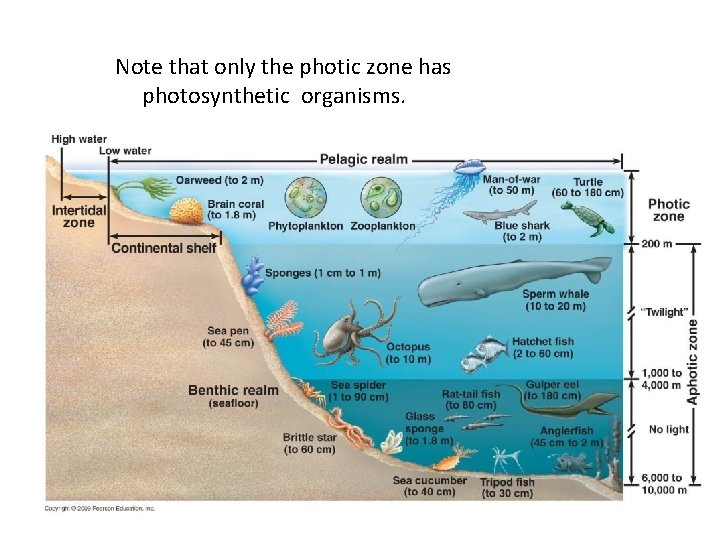
Note that only the photic zone has photosynthetic organisms.
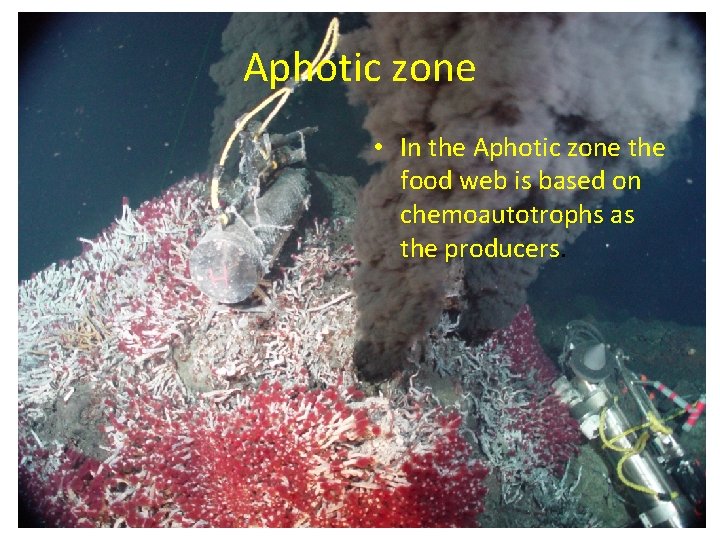
Aphotic zone • In the Aphotic zone the food web is based on chemoautotrophs as the producers.
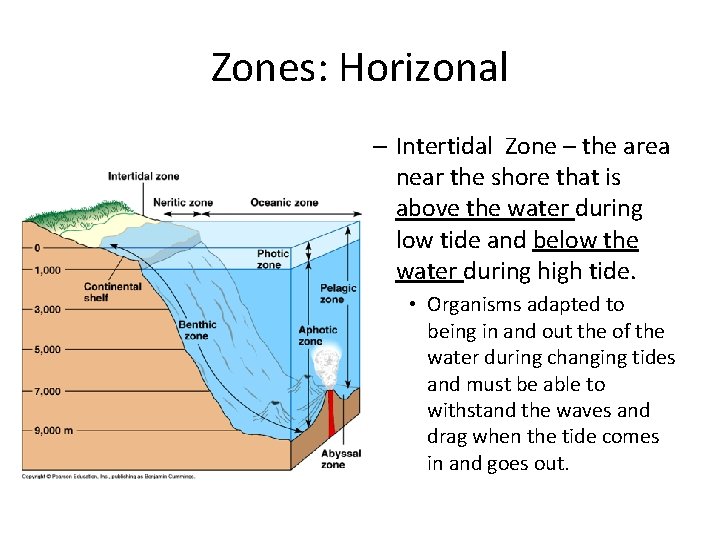
Zones: Horizonal – Intertidal Zone – the area near the shore that is above the water during low tide and below the water during high tide. • Organisms adapted to being in and out the of the water during changing tides and must be able to withstand the waves and drag when the tide comes in and goes out.
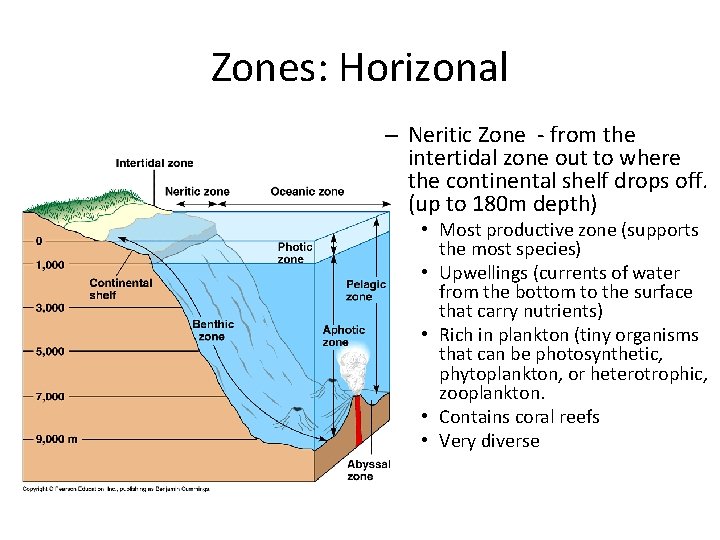
Zones: Horizonal – Neritic Zone - from the intertidal zone out to where the continental shelf drops off. (up to 180 m depth) • Most productive zone (supports the most species) • Upwellings (currents of water from the bottom to the surface that carry nutrients) • Rich in plankton (tiny organisms that can be photosynthetic, phytoplankton, or heterotrophic, zooplankton. • Contains coral reefs • Very diverse
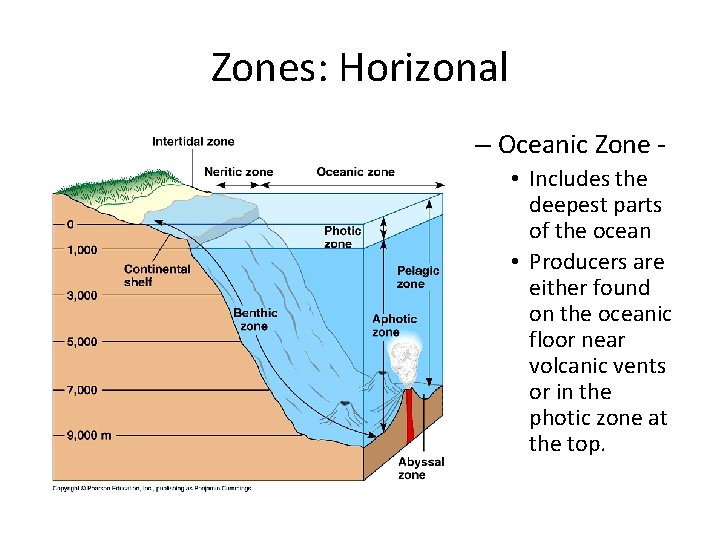
Zones: Horizonal – Oceanic Zone • Includes the deepest parts of the ocean • Producers are either found on the oceanic floor near volcanic vents or in the photic zone at the top.
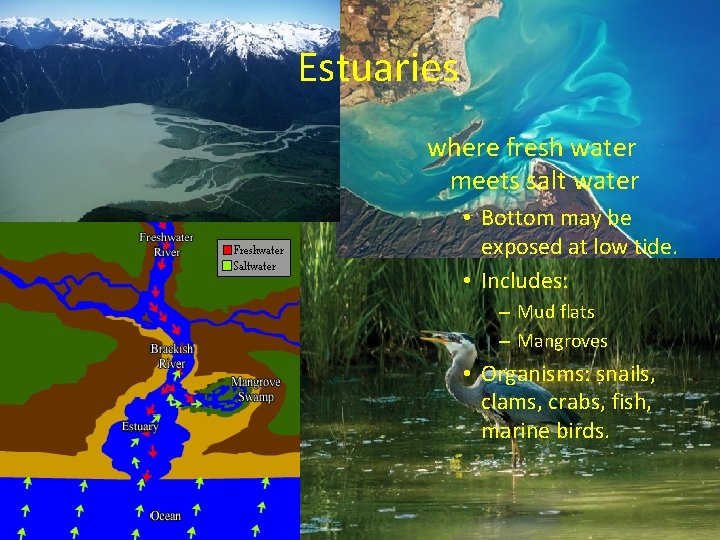
Estuaries where fresh water meets salt water • Bottom may be exposed at low tide. • Includes: – Mud flats – Mangroves • Organisms: snails, clams, crabs, fish, marine birds.
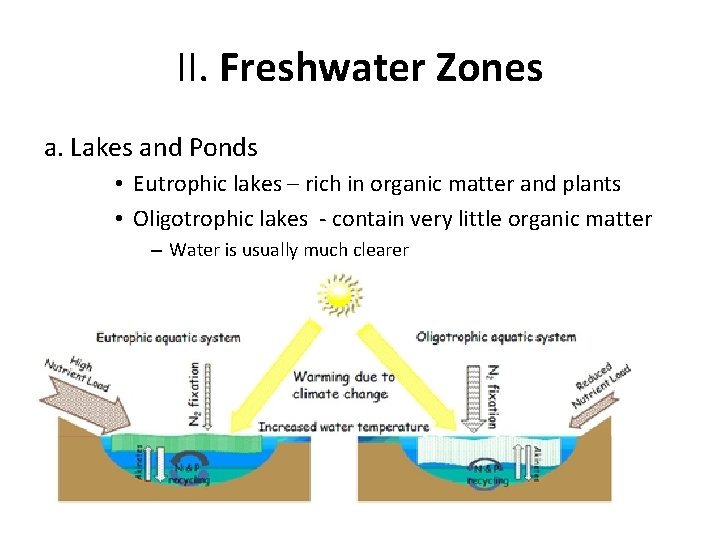
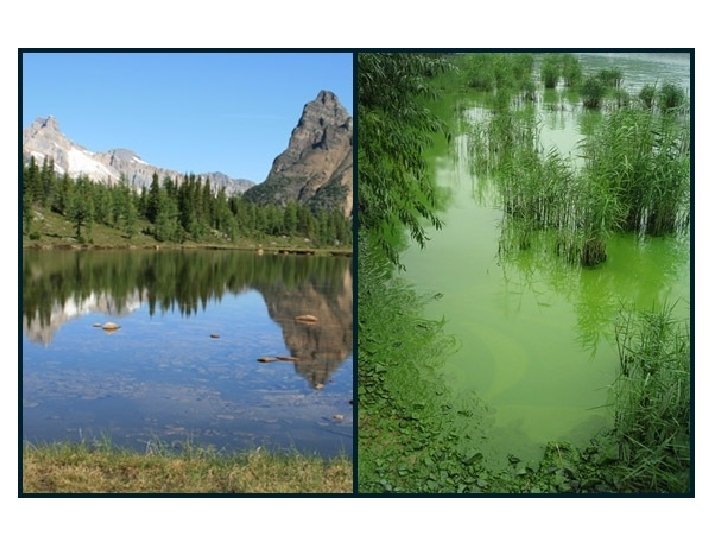
II. Freshwater Zones a. Lakes and Ponds • Eutrophic lakes – rich in organic matter and plants • Oligotrophic lakes - contain very little organic matter – Water is usually much clearer
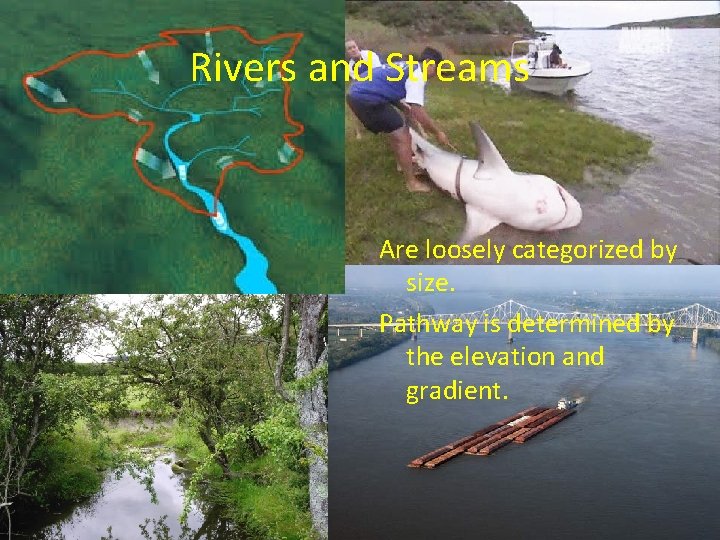
Rivers and Streams Are loosely categorized by size. Pathway is determined by the elevation and gradient.
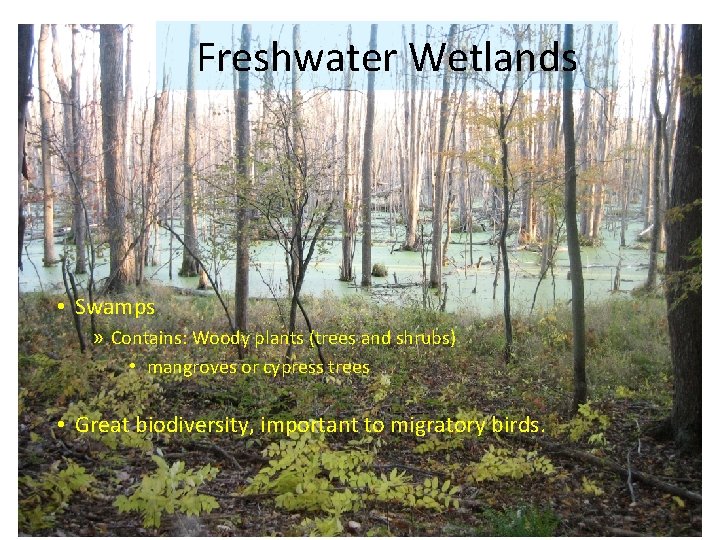
Freshwater Wetlands • Swamps » Contains: Woody plants (trees and shrubs) • mangroves or cypress trees • Great biodiversity, important to migratory birds.
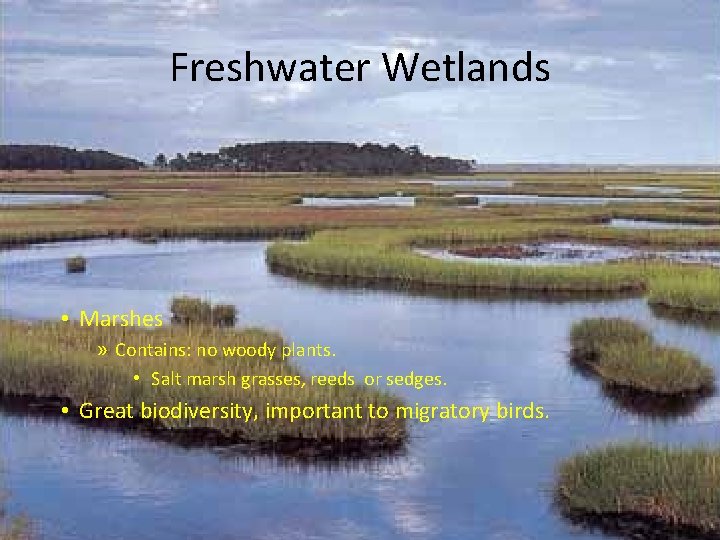
Freshwater Wetlands • Marshes » Contains: no woody plants. • Salt marsh grasses, reeds or sedges. • Great biodiversity, important to migratory birds.
- Slides: 23