
Chapter 21 Development of nervous system The Nobel
Chapter 21. Development of nervous system
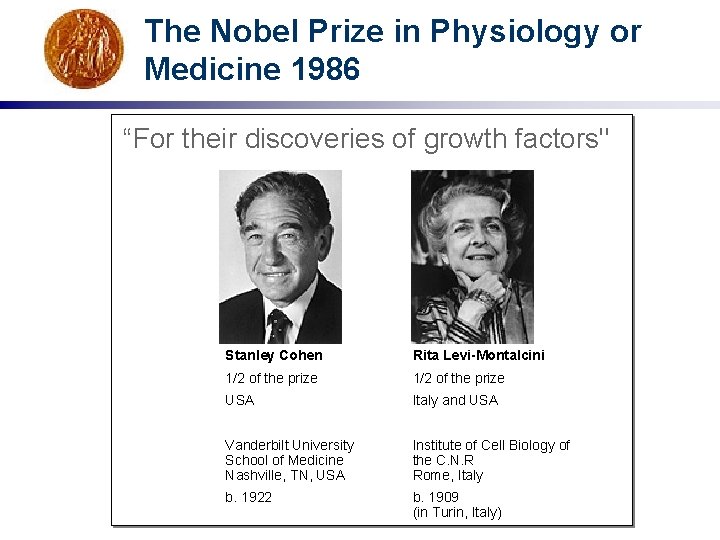
The Nobel Prize in Physiology or Medicine 1986 “For their discoveries of growth factors" Stanley Cohen Rita Levi-Montalcini 1/2 of the prize USA Italy and USA Vanderbilt University School of Medicine Nashville, TN, USA Institute of Cell Biology of the C. N. R Rome, Italy b. 1922 b. 1909 (in Turin, Italy)
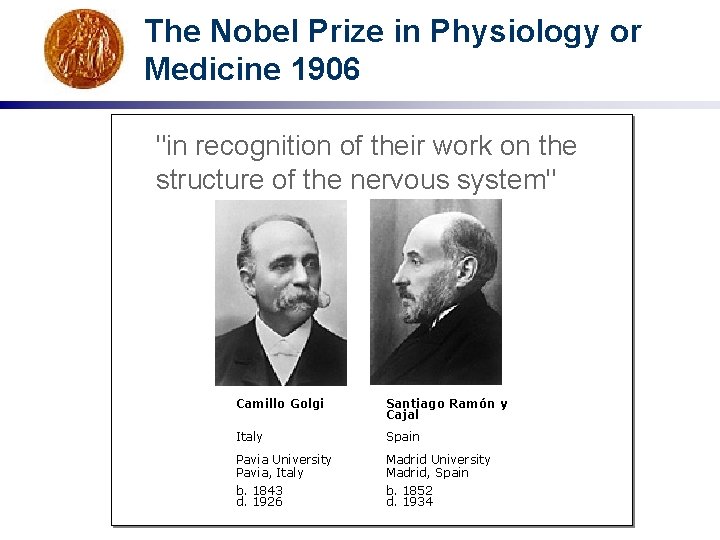
The Nobel Prize in Physiology or Medicine 1906 "in recognition of their work on the structure of the nervous system" Camillo Golgi Santiago Ramón y Cajal Italy Spain Pavia University Pavia, Italy b. 1843 d. 1926 Madrid University Madrid, Spain b. 1852 d. 1934

Nerve Nets In Jellyfish
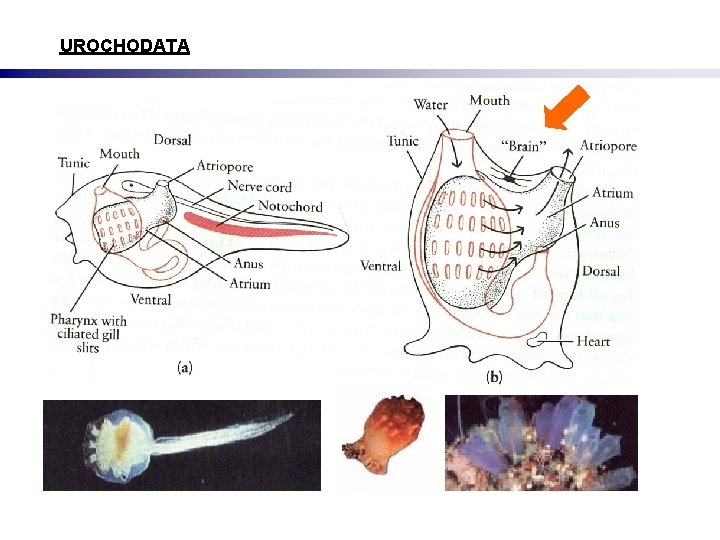
UROCHODATA
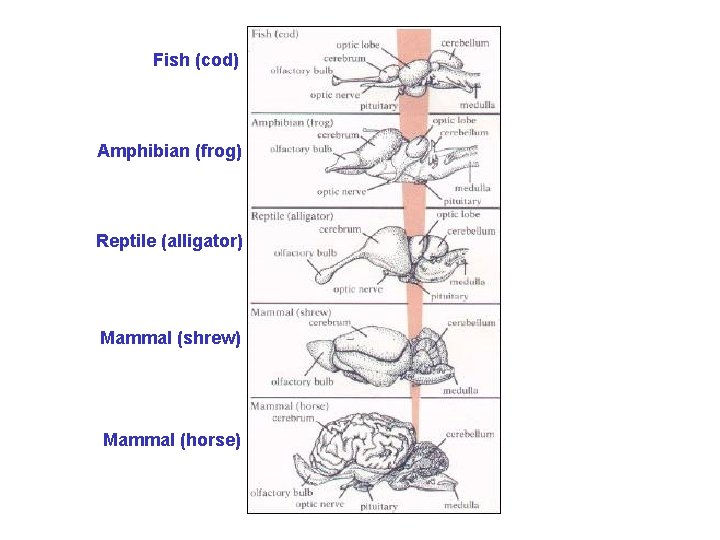
Fish (cod) Amphibian (frog) Reptile (alligator) Mammal (shrew) Mammal (horse)
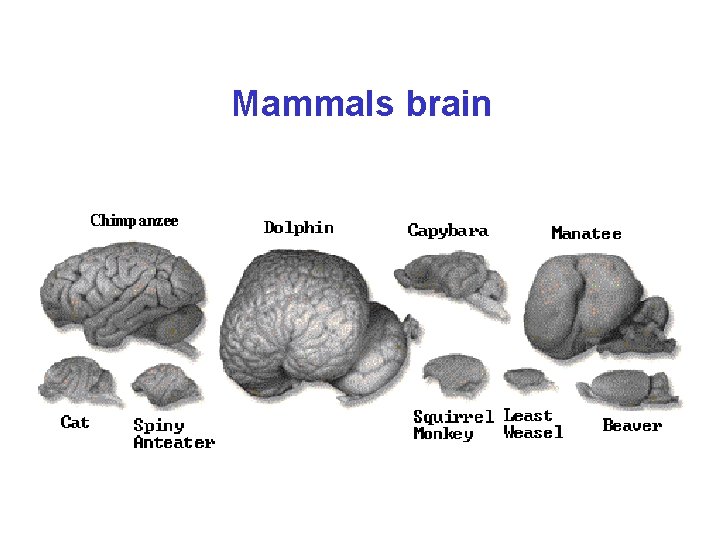
Mammals brain
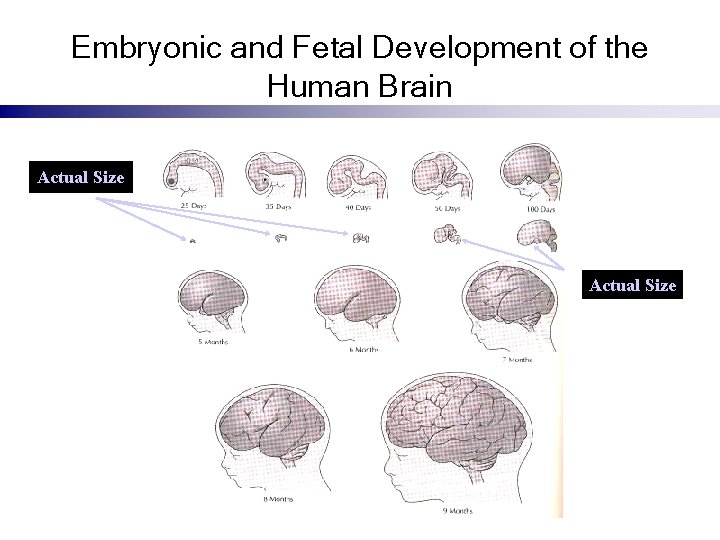
Embryonic and Fetal Development of the Human Brain Actual Size
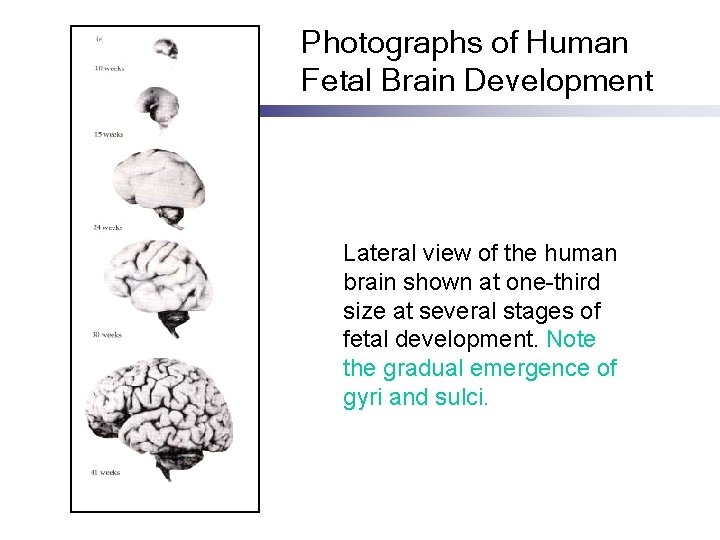
Photographs of Human Fetal Brain Development Lateral view of the human brain shown at one-third size at several stages of fetal development. Note the gradual emergence of gyri and sulci.
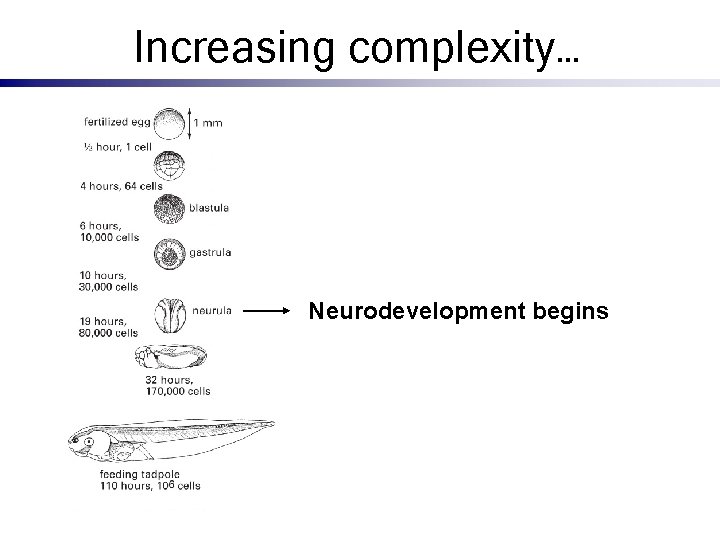
Increasing complexity… Neurodevelopment begins
Neural tube formation, the first step
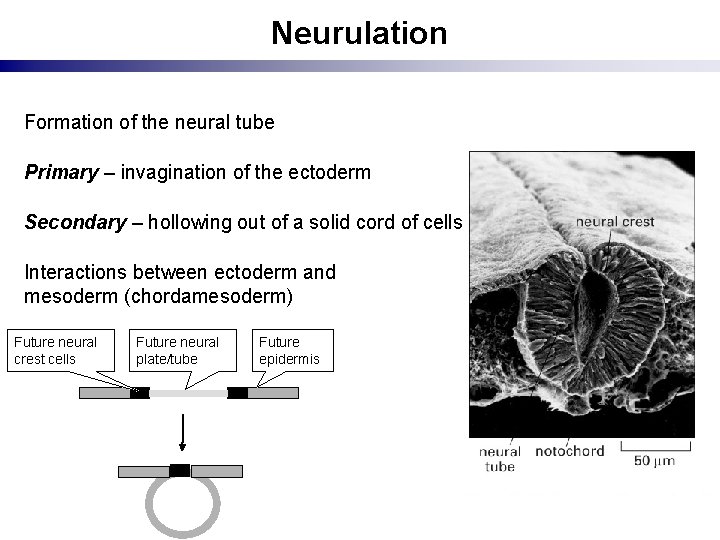
Neurulation Formation of the neural tube Primary – invagination of the ectoderm Secondary – hollowing out of a solid cord of cells Interactions between ectoderm and mesoderm (chordamesoderm) Future neural crest cells Future neural plate/tube Future epidermis
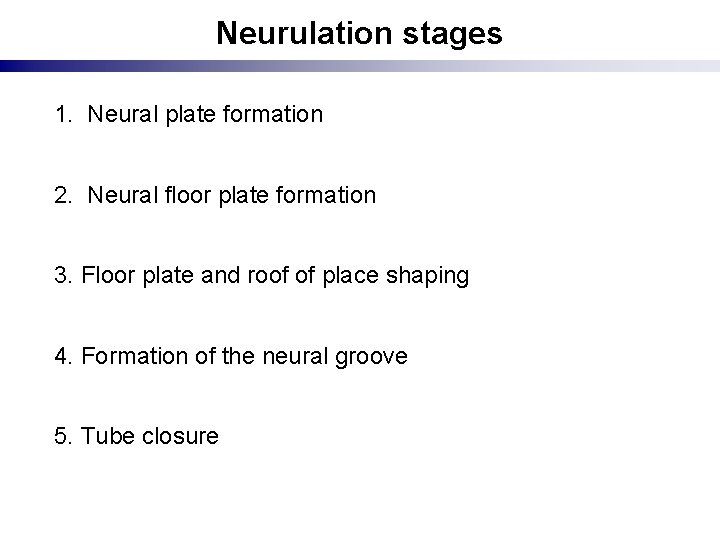
Neurulation stages 1. Neural plate formation 2. Neural floor plate formation 3. Floor plate and roof of place shaping 4. Formation of the neural groove 5. Tube closure
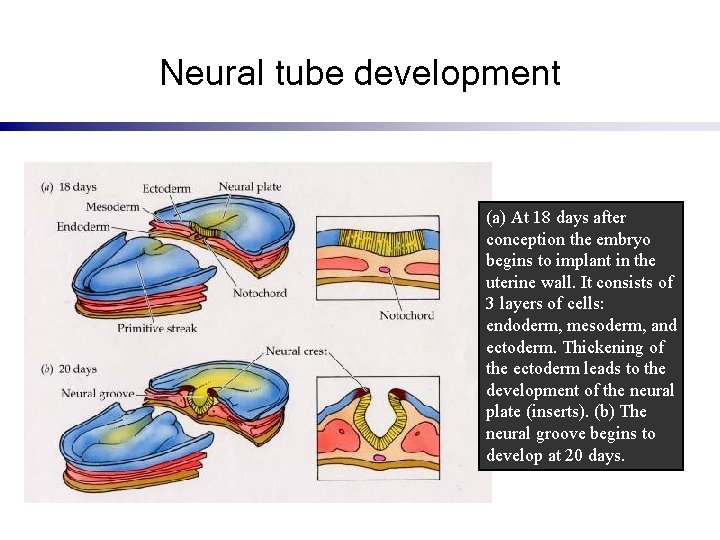
Neural tube development (a) At 18 days after conception the embryo begins to implant in the uterine wall. It consists of 3 layers of cells: endoderm, mesoderm, and ectoderm. Thickening of the ectoderm leads to the development of the neural plate (inserts). (b) The neural groove begins to develop at 20 days.
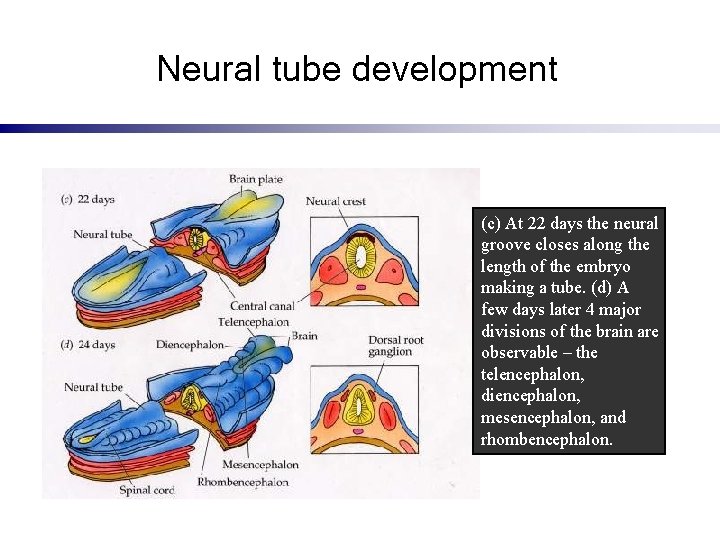
Neural tube development (c) At 22 days the neural groove closes along the length of the embryo making a tube. (d) A few days later 4 major divisions of the brain are observable – the telencephalon, diencephalon, mesencephalon, and rhombencephalon.
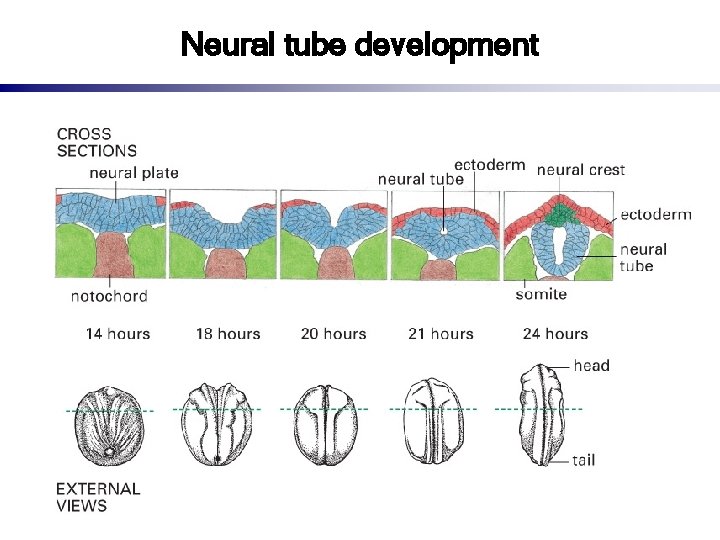
Neural tube development
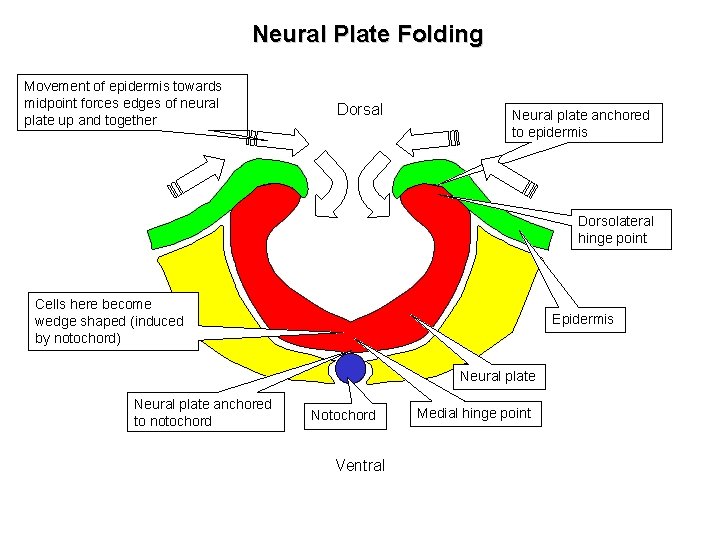
Neural Plate Folding Movement of epidermis towards midpoint forces edges of neural plate up and together Dorsal Neural plate anchored to epidermis Dorsolateral hinge point Cells here become wedge shaped (induced by notochord) Epidermis Neural plate anchored to notochord Notochord Ventral Medial hinge point
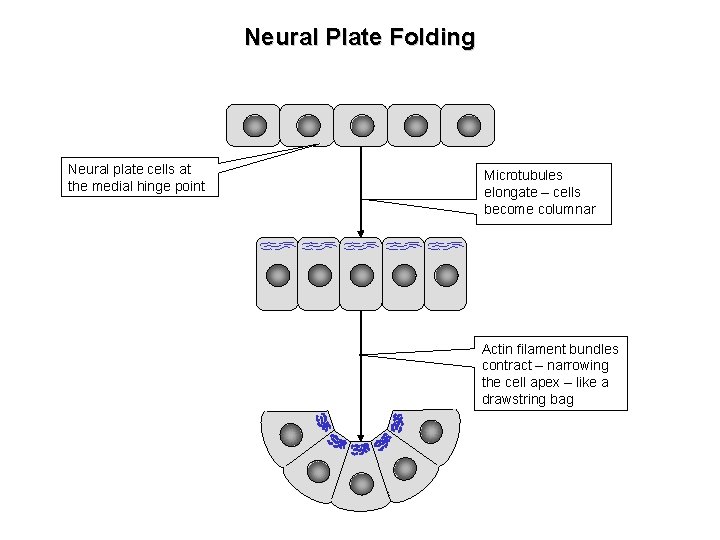
Neural Plate Folding Neural plate cells at the medial hinge point Microtubules elongate – cells become columnar Actin filament bundles contract – narrowing the cell apex – like a drawstring bag
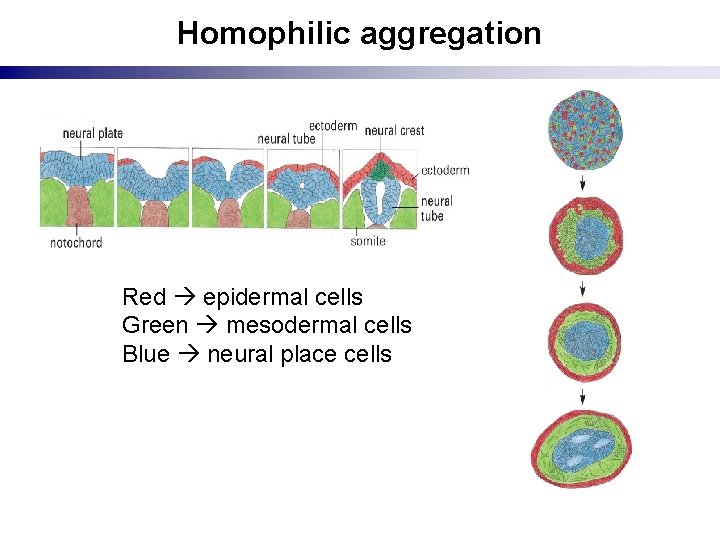
Homophilic aggregation Red epidermal cells Green mesodermal cells Blue neural place cells
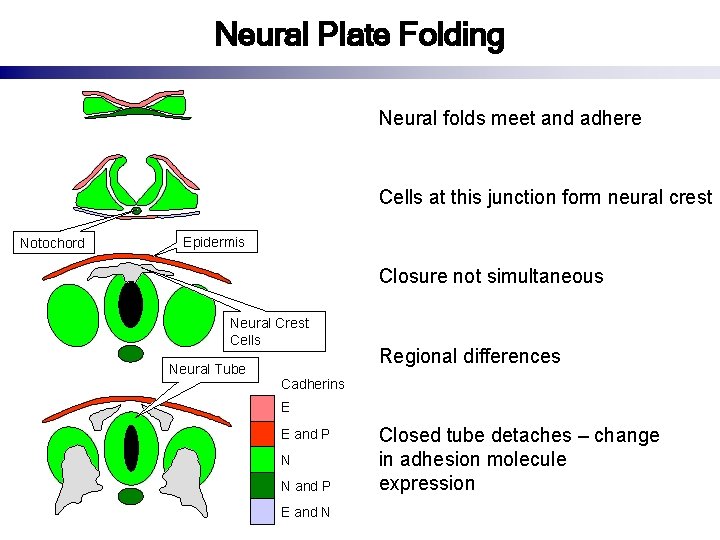
Neural Plate Folding Neural folds meet and adhere Cells at this junction form neural crest Notochord Epidermis Closure not simultaneous Neural Crest Cells Neural Tube Regional differences Cadherins E E and P N N and P E and N Closed tube detaches – change in adhesion molecule expression
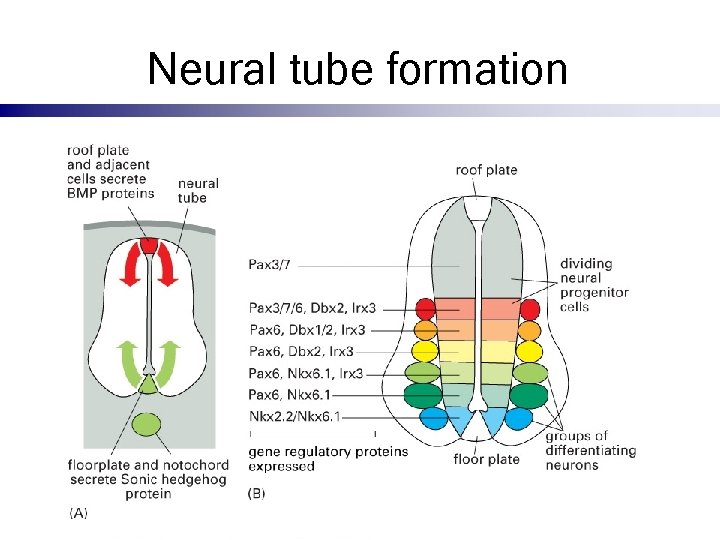
Neural tube formation
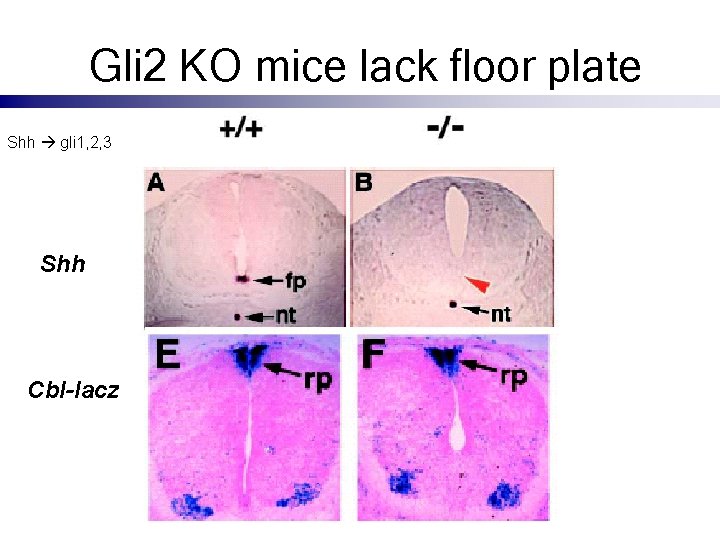
Gli 2 KO mice lack floor plate Shh gli 1, 2, 3 Shh Cbl-lacz
Eight phase of Neuronal development at cellular level
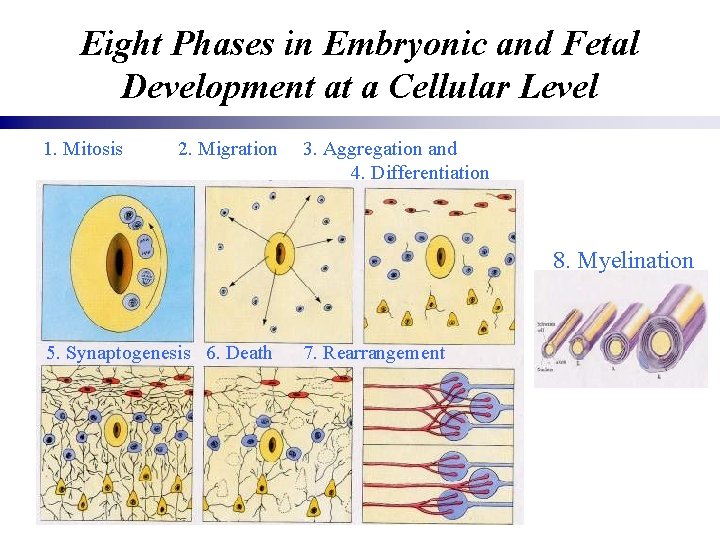
Eight Phases in Embryonic and Fetal Development at a Cellular Level 1. Mitosis 2. Migration 3. Aggregation and 4. Differentiation 8. Myelination 5. Synaptogenesis 6. Death 7. Rearrangement
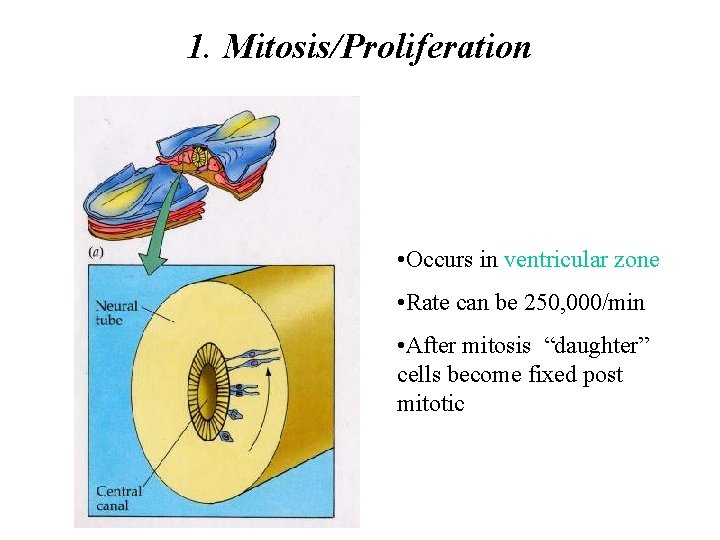
1. Mitosis/Proliferation • Occurs in ventricular zone • Rate can be 250, 000/min • After mitosis “daughter” cells become fixed post mitotic
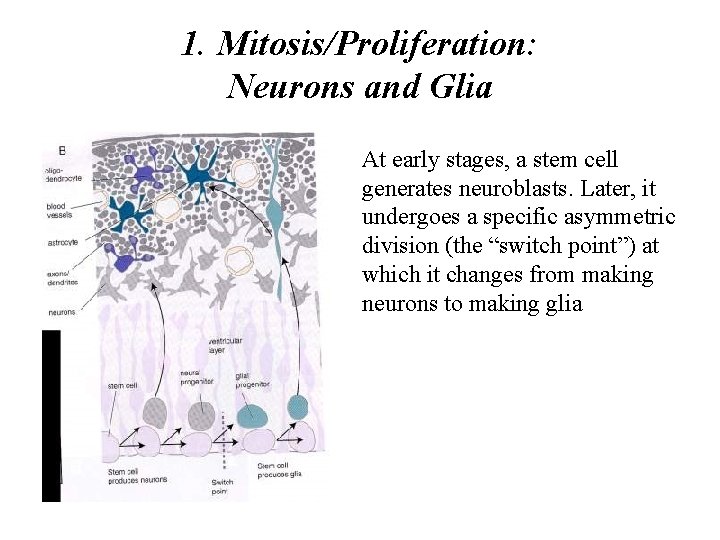
1. Mitosis/Proliferation: Neurons and Glia At early stages, a stem cell generates neuroblasts. Later, it undergoes a specific asymmetric division (the “switch point”) at which it changes from making neurons to making glia
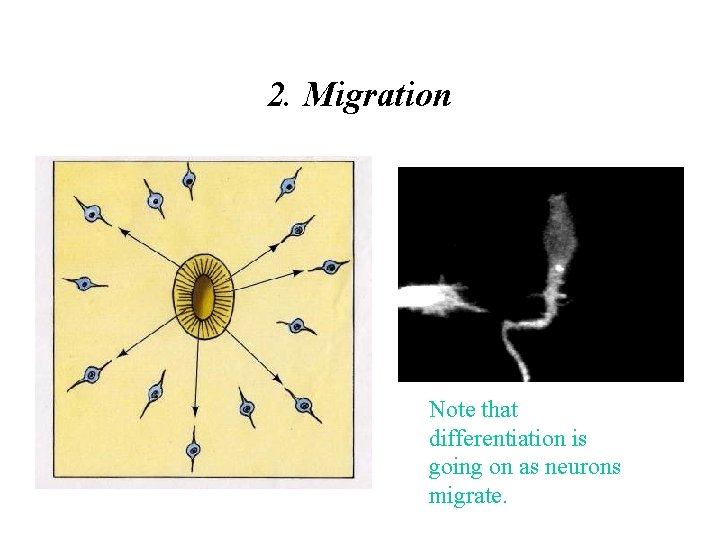
2. Migration Note that differentiation is going on as neurons migrate.
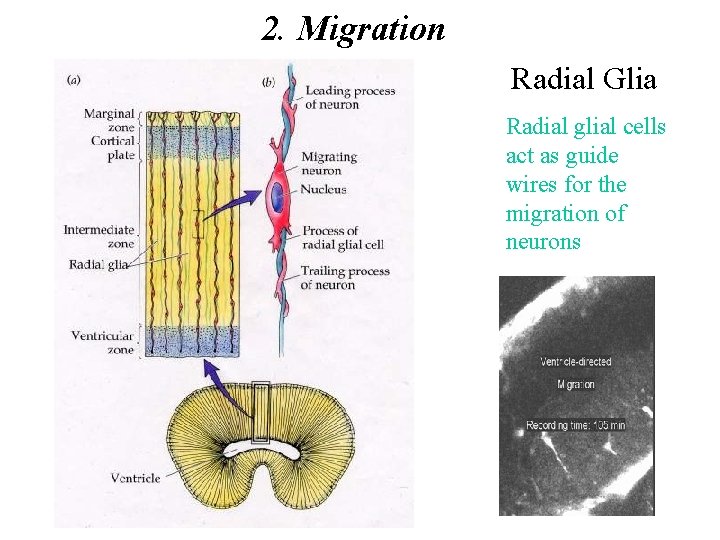
2. Migration Radial Glia Radial glial cells act as guide wires for the migration of neurons
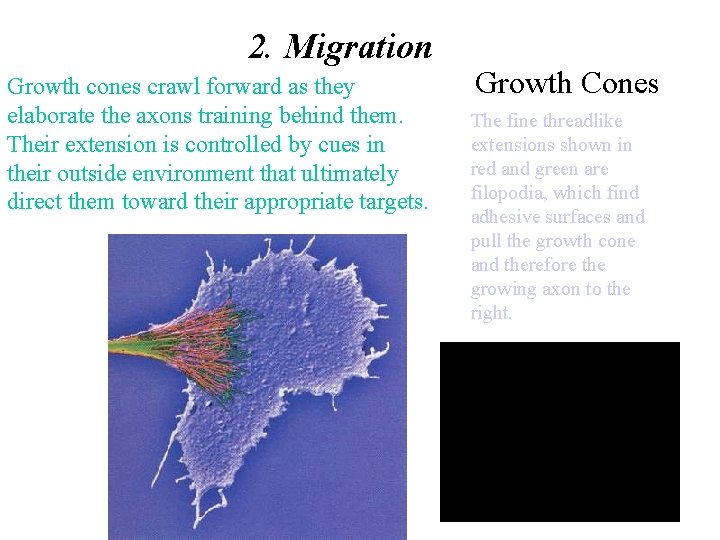
2. Migration Growth cones crawl forward as they elaborate the axons training behind them. Their extension is controlled by cues in their outside environment that ultimately direct them toward their appropriate targets. Growth Cones The fine threadlike extensions shown in red and green are filopodia, which find adhesive surfaces and pull the growth cone and therefore the growing axon to the right.
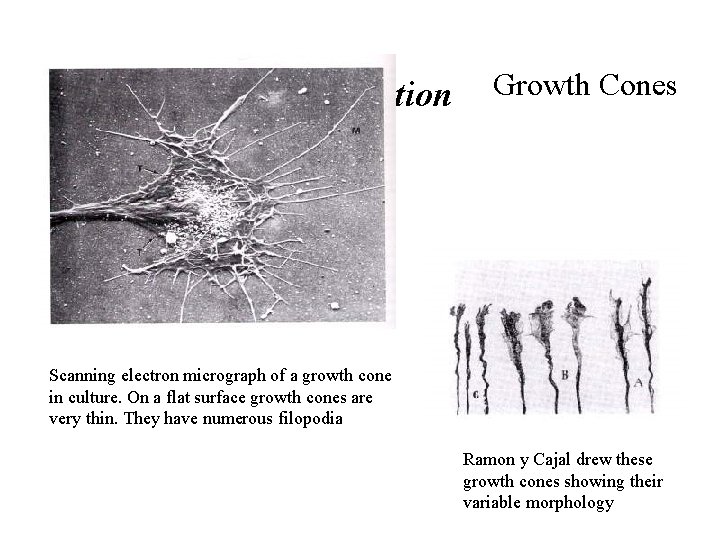
2. Migration Growth Cones Scanning electron micrograph of a growth cone in culture. On a flat surface growth cones are very thin. They have numerous filopodia Ramon y Cajal drew these growth cones showing their variable morphology
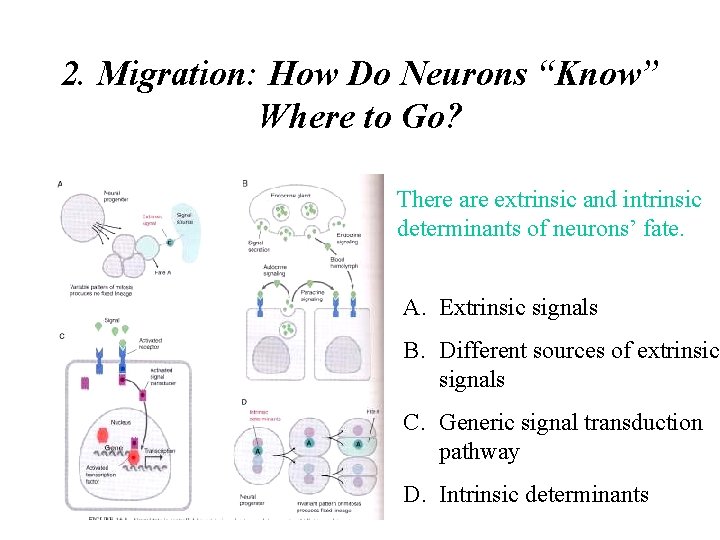
2. Migration: How Do Neurons “Know” Where to Go? There are extrinsic and intrinsic determinants of neurons’ fate. A. Extrinsic signals B. Different sources of extrinsic signals C. Generic signal transduction pathway D. Intrinsic determinants
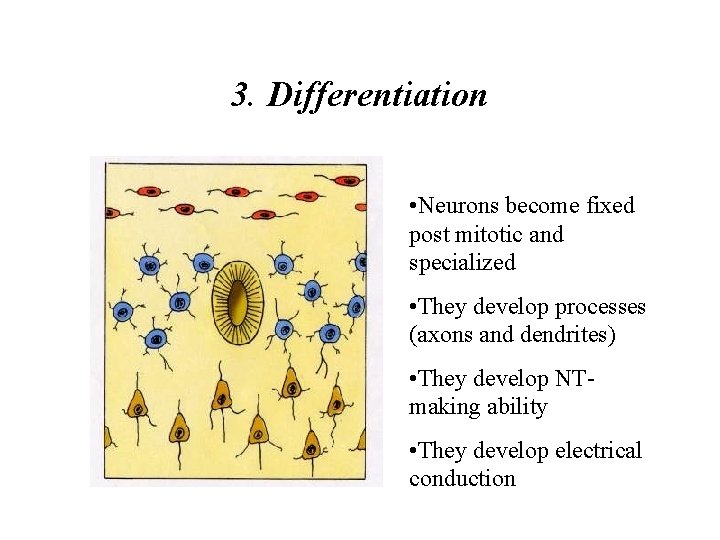
3. Differentiation • Neurons become fixed post mitotic and specialized • They develop processes (axons and dendrites) • They develop NTmaking ability • They develop electrical conduction
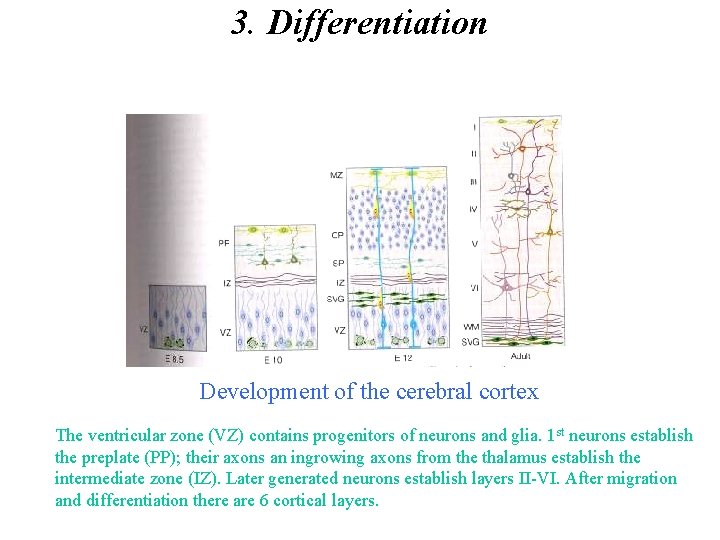
3. Differentiation Development of the cerebral cortex The ventricular zone (VZ) contains progenitors of neurons and glia. 1 st neurons establish the preplate (PP); their axons an ingrowing axons from the thalamus establish the intermediate zone (IZ). Later generated neurons establish layers II-VI. After migration and differentiation there are 6 cortical layers.
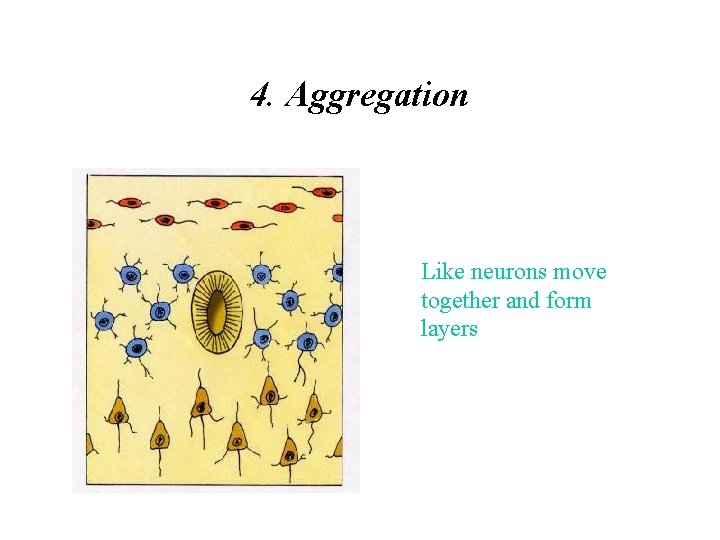
4. Aggregation Like neurons move together and form layers
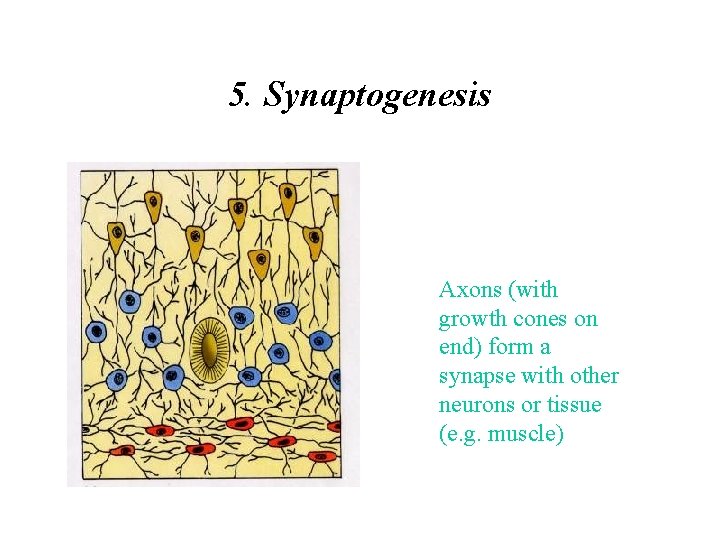
5. Synaptogenesis Axons (with growth cones on end) form a synapse with other neurons or tissue (e. g. muscle)
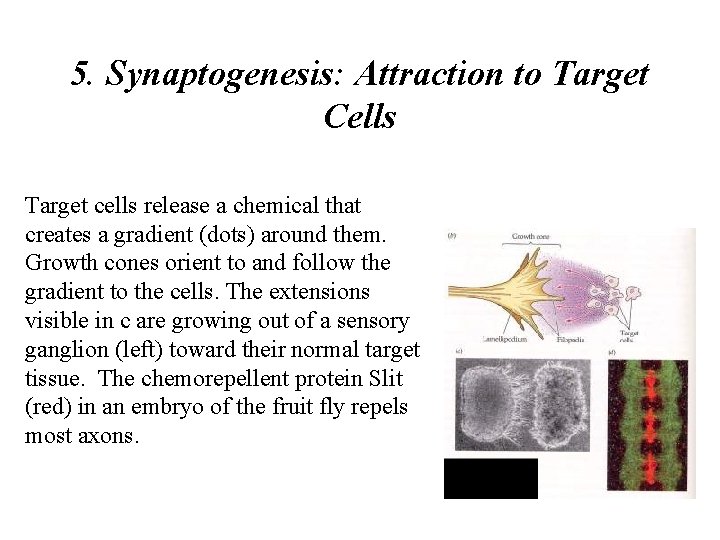
5. Synaptogenesis: Attraction to Target Cells Target cells release a chemical that creates a gradient (dots) around them. Growth cones orient to and follow the gradient to the cells. The extensions visible in c are growing out of a sensory ganglion (left) toward their normal target tissue. The chemorepellent protein Slit (red) in an embryo of the fruit fly repels most axons.
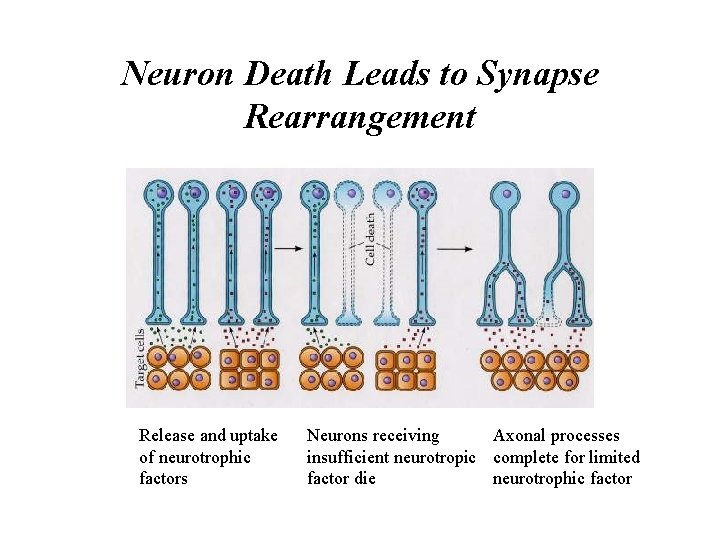
Neuron Death Leads to Synapse Rearrangement Release and uptake of neurotrophic factors Neurons receiving Axonal processes insufficient neurotropic complete for limited factor die neurotrophic factor
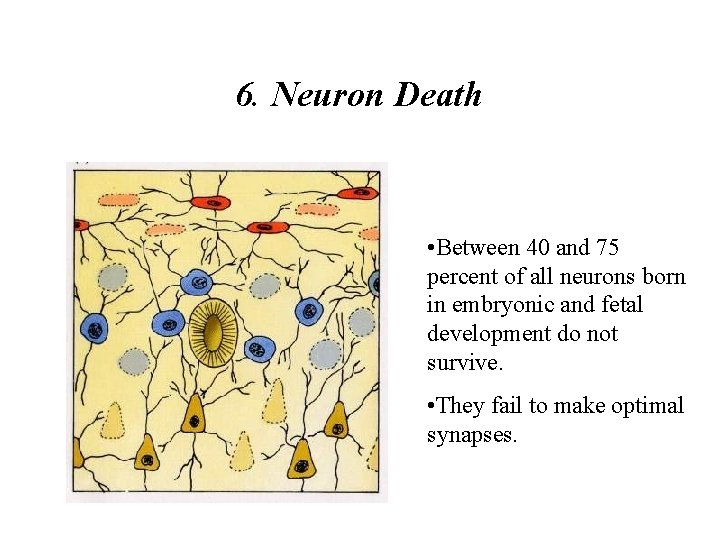
6. Neuron Death • Between 40 and 75 percent of all neurons born in embryonic and fetal development do not survive. • They fail to make optimal synapses.
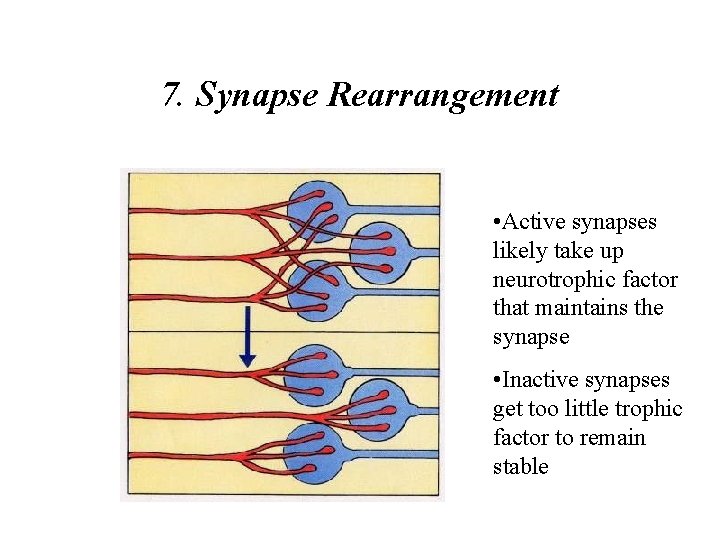
7. Synapse Rearrangement • Active synapses likely take up neurotrophic factor that maintains the synapse • Inactive synapses get too little trophic factor to remain stable
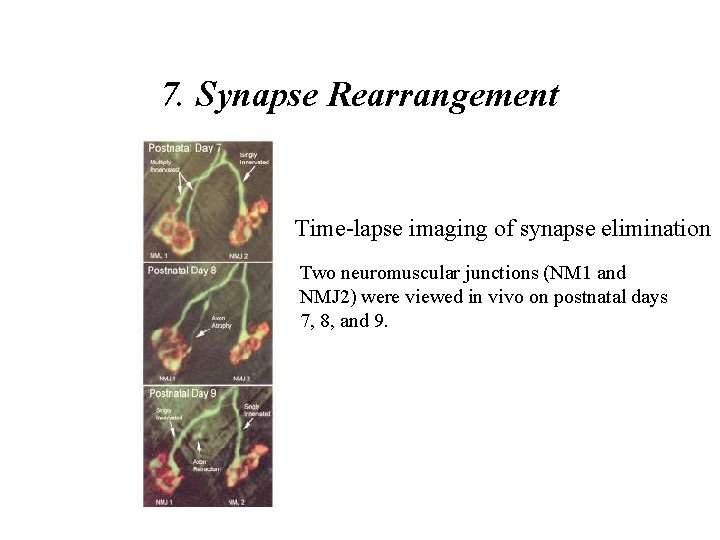
7. Synapse Rearrangement Time-lapse imaging of synapse elimination Two neuromuscular junctions (NM 1 and NMJ 2) were viewed in vivo on postnatal days 7, 8, and 9.
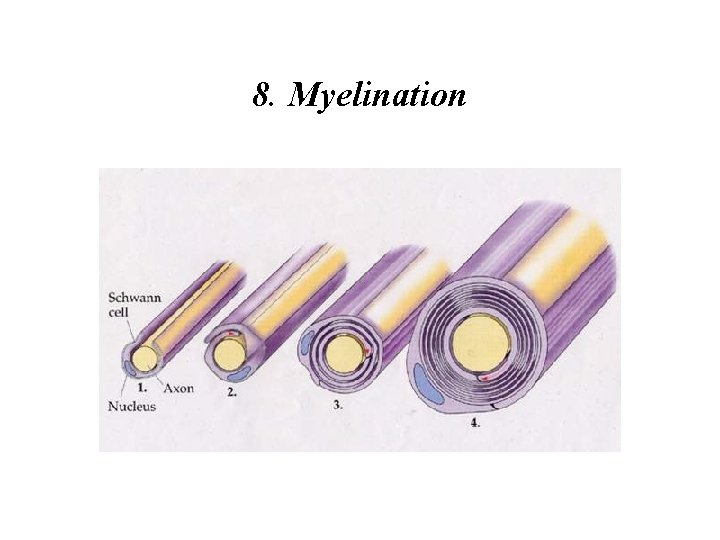
8. Myelination
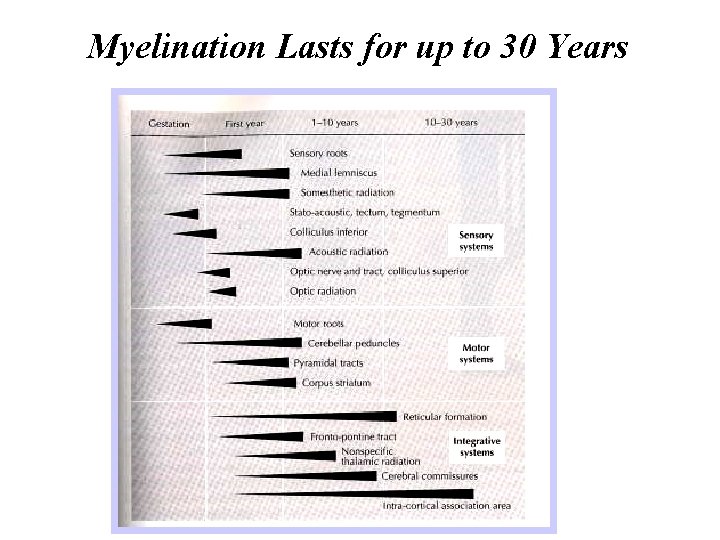
Myelination Lasts for up to 30 Years
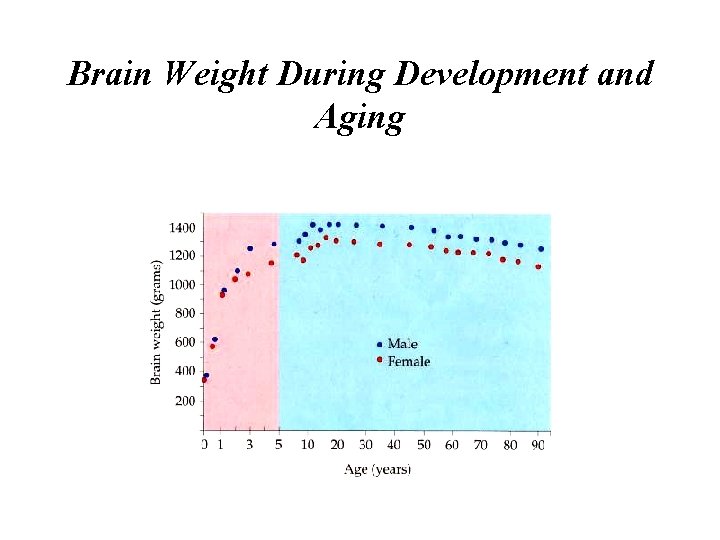
Brain Weight During Development and Aging
The second step, neural tube generates three cell types Before NT closure… • Epidermis (disappears after closure) • Crest cells • CNS cells
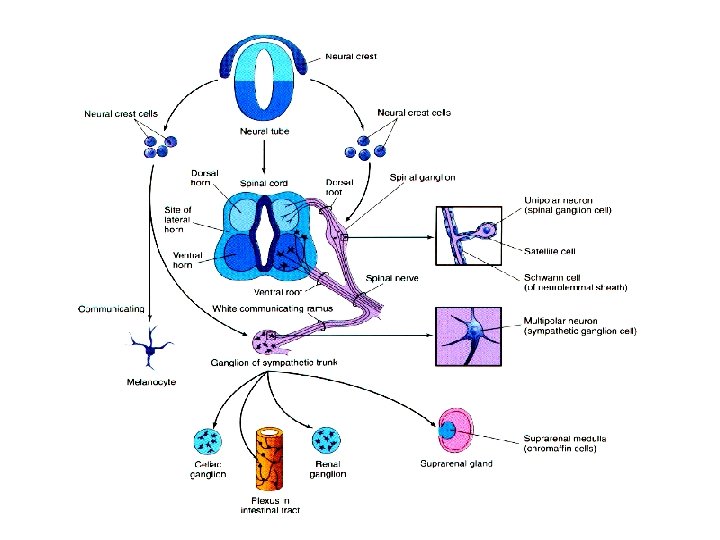
Neural Crest · Neural crest tissue found ONLY IN VERTEBRATES. forms melanocytes, much of the head skeleton, peripheral glial cells, peripheral & autonomic nerurons, and chromaffin cells of the adrenal gland cells. · Epithelial cells at margin of neural plate become migratory (“amoeboid”).
Neural Crest · slug and Rho. B genes · Stop N-cadherin expression · Migratory pathways 1. Dorsolateral pathway = between ectoderm and mesoderm; form melanocytes 2. Ventral pathway = through somite; form all other neural crest tissues · “Avoid” the notochord.
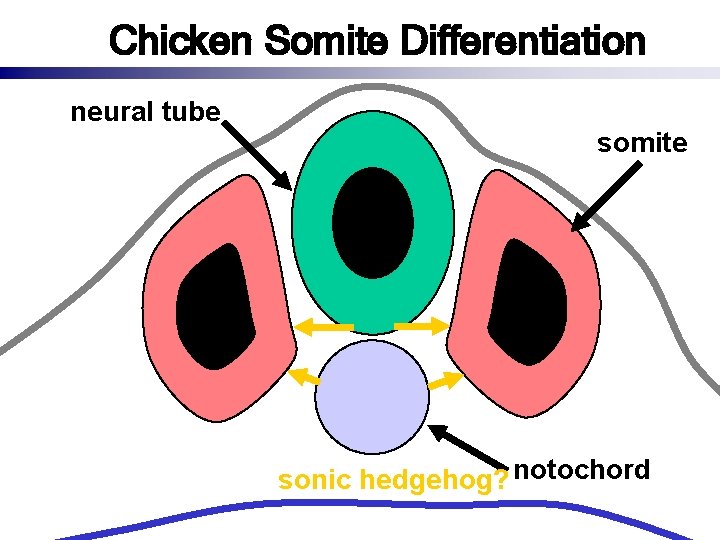
Chicken Somite Differentiation neural tube somite sonic hedgehog? notochord
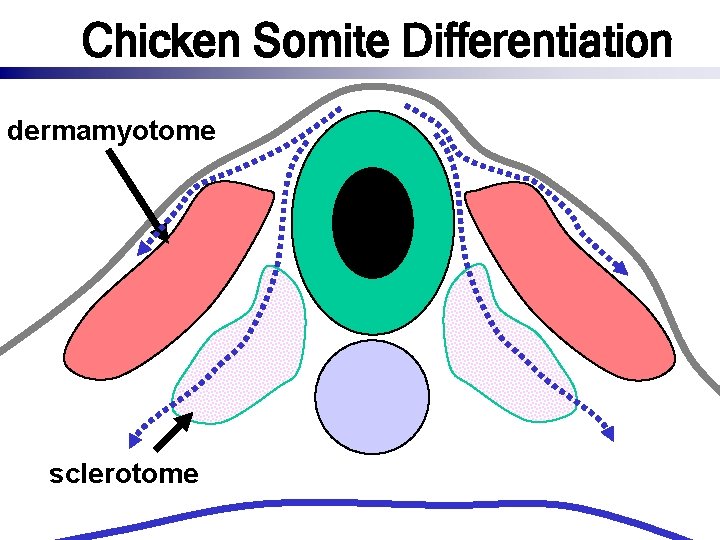
Chicken Somite Differentiation dermamyotome sclerotome
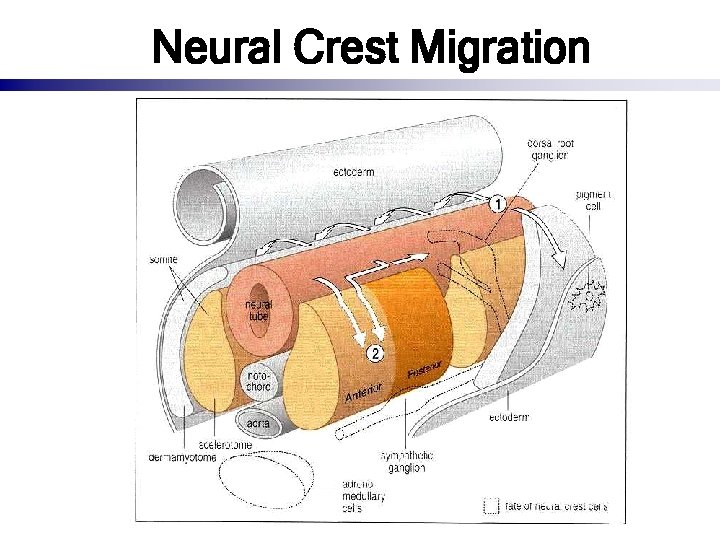
Neural Crest Migration
Neural Crest Migration · Dorsolateral pathway neural crest does not behave segmentally. · Ventral pathway neural crest behaves segmentally. · Spinal ganglia are segmental; associated with the somites. · Dorsal root ganglion forms in the anterior of each somite.
Neural Crest Migration · Extracellular matrix molecules “define” migration pathways. · Integrins in neural crest cell membranes. · Ephrin = protein followed by many neural crest cells · Most neural crest cells have Eph receptors (integrins) to follow ephrin pathways.
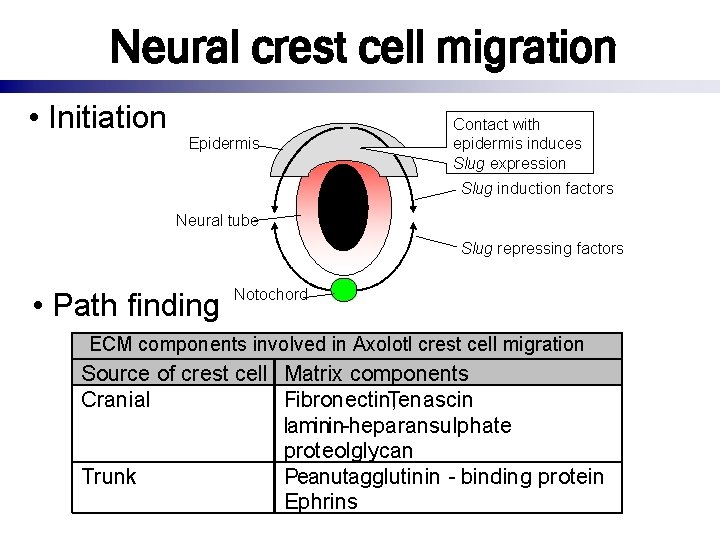
Neural crest cell migration • Initiation Epidermis Contact with epidermis induces Slug expression Slug induction factors Neural tube Slug repressing factors • Path finding Notochord ECM components involved in Axolotl crest cell migration Source of crest cells Matrix components Cranial Fibronectin, Tenascin laminin-heparansulphate proteolglycan Trunk Peanut agglutinin - binding protein Ephrins
Neural Crest Migration · Anterior-Posterior regions of neural crest. · Is neural crest cell fate determined before migration? · Seems to be little determination before migration, except… between the anterior to posterior regions.

Neural Crest Fate Map
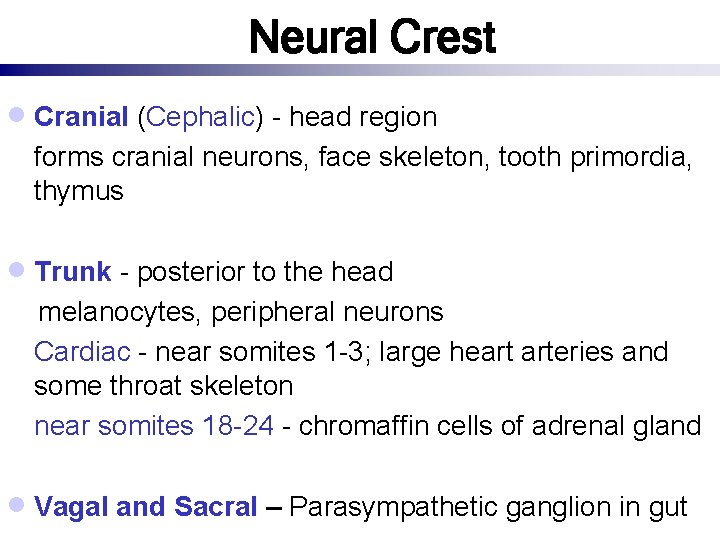
Neural Crest · Cranial (Cephalic) - head region forms cranial neurons, face skeleton, tooth primordia, thymus · Trunk - posterior to the head melanocytes, peripheral neurons Cardiac - near somites 1 -3; large heart arteries and some throat skeleton near somites 18 -24 - chromaffin cells of adrenal gland · Vagal and Sacral – Parasympathetic ganglion in gut
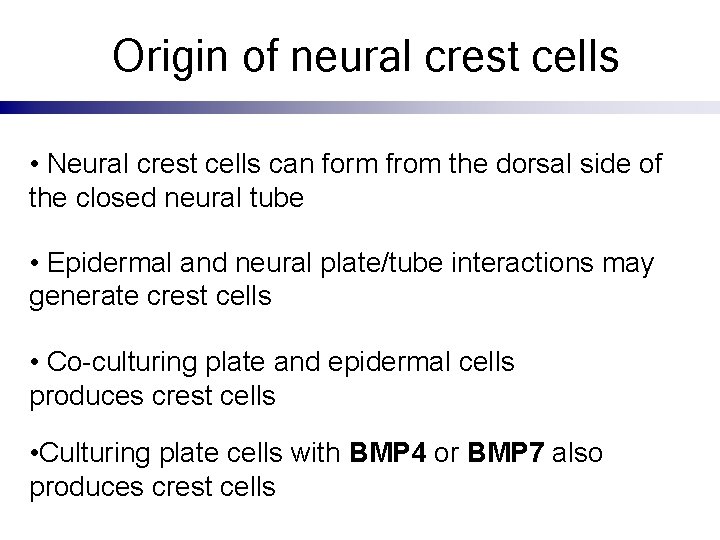
Origin of neural crest cells • Neural crest cells can form from the dorsal side of the closed neural tube • Epidermal and neural plate/tube interactions may generate crest cells • Co-culturing plate and epidermal cells produces crest cells • Culturing plate cells with BMP 4 or BMP 7 also produces crest cells
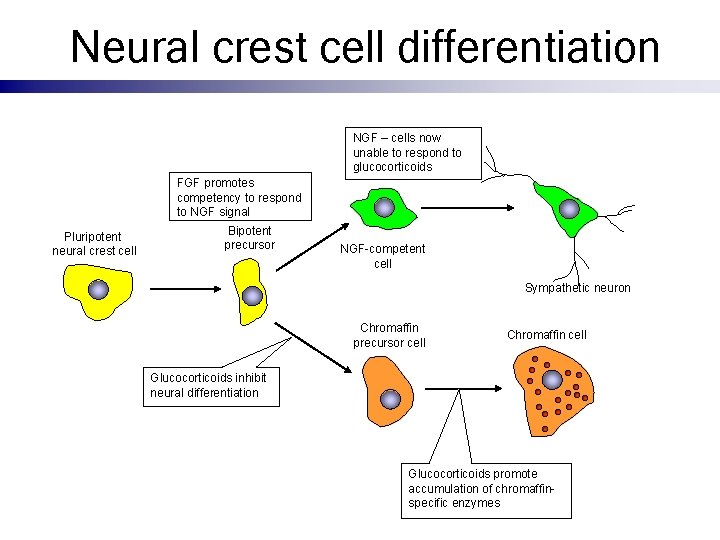
Neural crest cell differentiation NGF – cells now unable to respond to glucocorticoids FGF promotes competency to respond to NGF signal Pluripotent neural crest cell Bipotent precursor NGF-competent cell Sympathetic neuron Chromaffin precursor cell Chromaffin cell Glucocorticoids inhibit neural differentiation Glucocorticoids promote accumulation of chromaffinspecific enzymes

Formation of brain
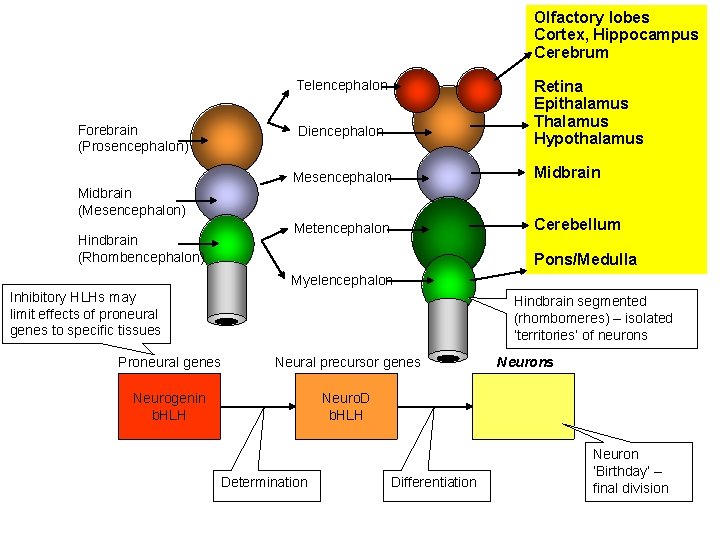
Olfactory lobes Cortex, Hippocampus Cerebrum Telencephalon Forebrain (Prosencephalon) Retina Epithalamus Thalamus Hypothalamus Diencephalon Mesencephalon Midbrain Metencephalon Cerebellum Midbrain (Mesencephalon) Hindbrain (Rhombencephalon) Pons/Medulla Myelencephalon Inhibitory HLHs may limit effects of proneural genes to specific tissues Hindbrain segmented (rhombomeres) – isolated ‘territories’ of neurons Proneural genes Neural precursor genes Neurogenin b. HLH Neuro. D b. HLH Determination Differentiation Neurons Neuron ‘Birthday’ – final division
Differentiated neurons make functional neural networks
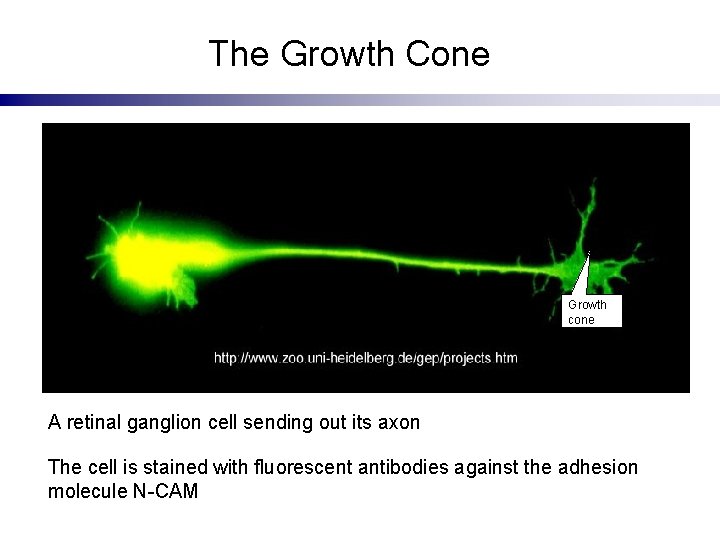
The Growth Cone Growth cone A retinal ganglion cell sending out its axon The cell is stained with fluorescent antibodies against the adhesion molecule N-CAM
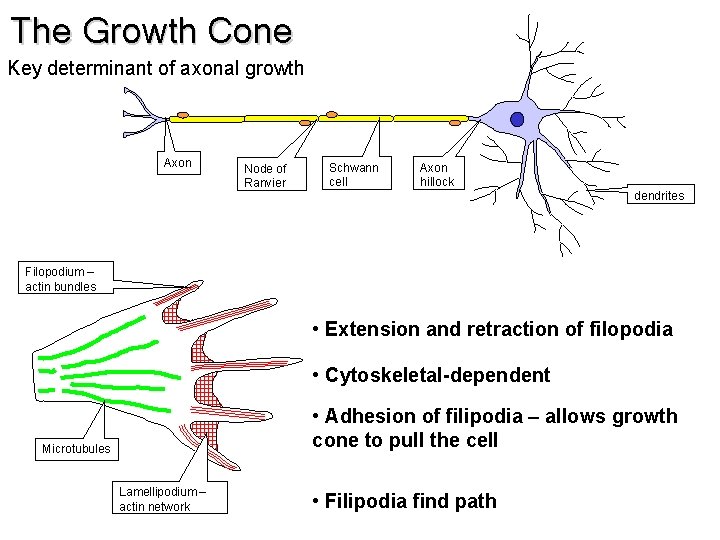
The Growth Cone Key determinant of axonal growth Axon Node of Ranvier Schwann cell Axon hillock dendrites Filopodium – actin bundles • Extension and retraction of filopodia • Cytoskeletal-dependent • Adhesion of filipodia – allows growth cone to pull the cell Microtubules Lamellipodium – actin network • Filipodia find path
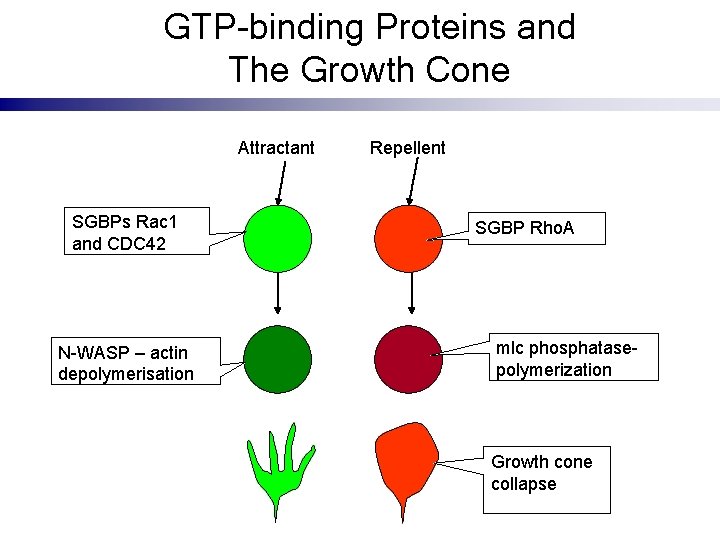
GTP-binding Proteins and The Growth Cone Attractant SGBPs Rac 1 and CDC 42 N-WASP – actin depolymerisation Repellent SGBP Rho. A mlc phosphatase- polymerization Growth cone collapse
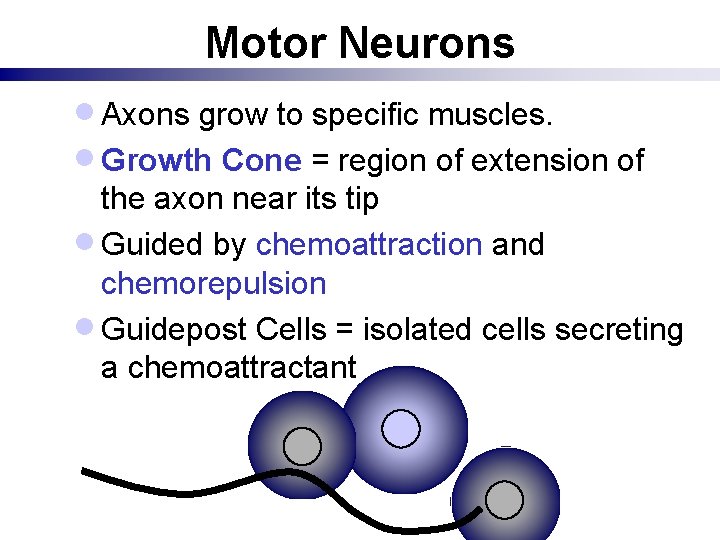
Motor Neurons · Axons grow to specific muscles. · Growth Cone = region of extension of the axon near its tip · Guided by chemoattraction and chemorepulsion · Guidepost Cells = isolated cells secreting a chemoattractant
Motor Neurons · Long-range chemoattractants & chemorepulsants = diffusable substances released by cells forming a gradient · E. g. , netrins (a) & semaphorins (r) · Short-range chemoattractants & chemorepulsants = gradient of a substance within cells (a tissue) or an extracellular matrix · E. g. , ligands & cadherins
Neuronal Apoptosis · NGF (neuronal growth factor) = chemoattractant & essential for the survival of neurons · neurotrophins (e. g. , NGF) · Trk receptor proteins in neurons bind to neurotrophins. · “Competition” for neurotrophins secreted by target tissues. · Too little neurotrophin = apoptosis
Commisural Growth Cones · Commisural neuron axons grow to the floor plate. It produces a chemoattractive netrin-1 gradient. · Semaphorins (chemorepellants) then produced cause the axon to grow dorsally to the other side.
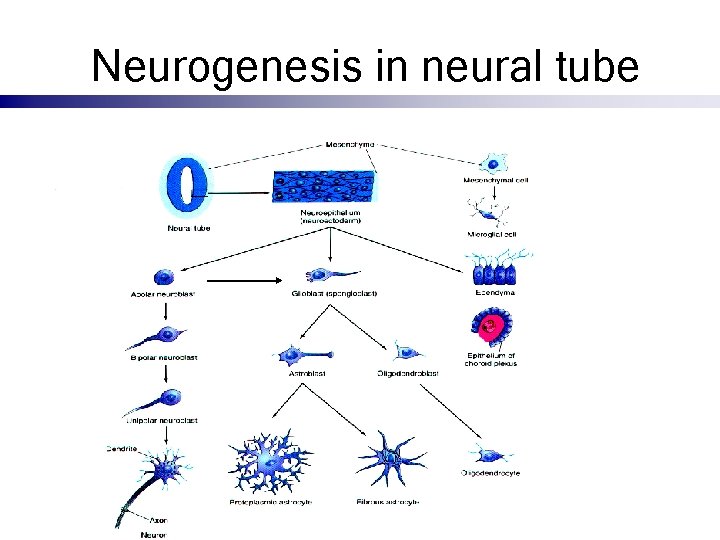
Neurogenesis in neural tube
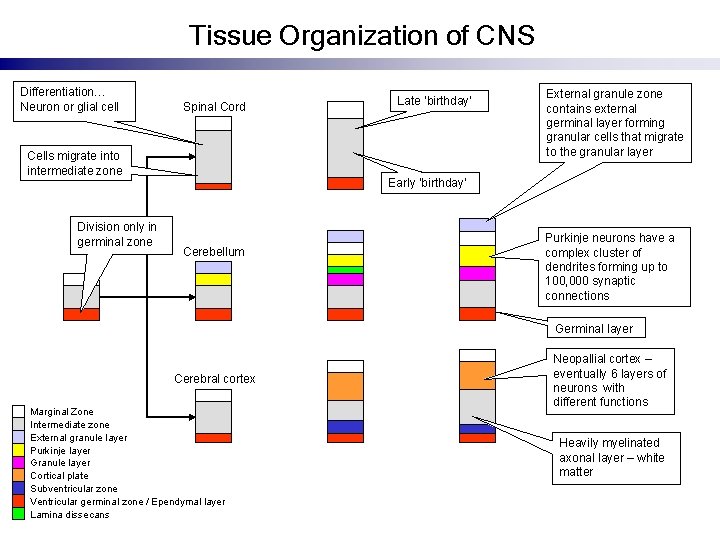
Tissue Organization of CNS Differentiation… Neuron or glial cell Spinal Cord Cells migrate into intermediate zone Division only in germinal zone Late ‘birthday’ External granule zone contains external germinal layer forming granular cells that migrate to the granular layer Early ‘birthday’ Cerebellum Purkinje neurons have a complex cluster of dendrites forming up to 100, 000 synaptic connections Germinal layer Cerebral cortex Marginal Zone Intermediate zone External granule layer Purkinje layer Granule layer Cortical plate Subventricular zone Ventricular germinal zone / Ependymal layer Lamina dissecans Neopallial cortex – eventually 6 layers of neurons with different functions Heavily myelinated axonal layer – white matter
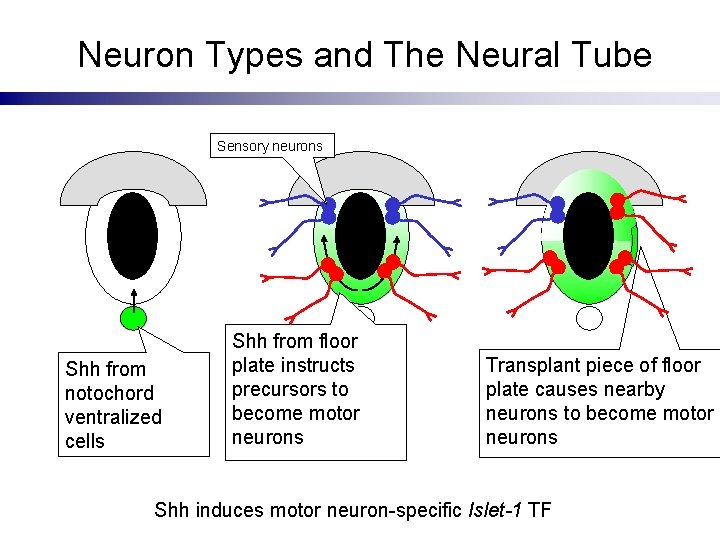
Neuron Types and The Neural Tube Sensory neurons Shh from notochord ventralized cells Shh from floor plate instructs precursors to become motor neurons Transplant piece of floor plate causes nearby neurons to become motor neurons Shh induces motor neuron-specific Islet-1 TF
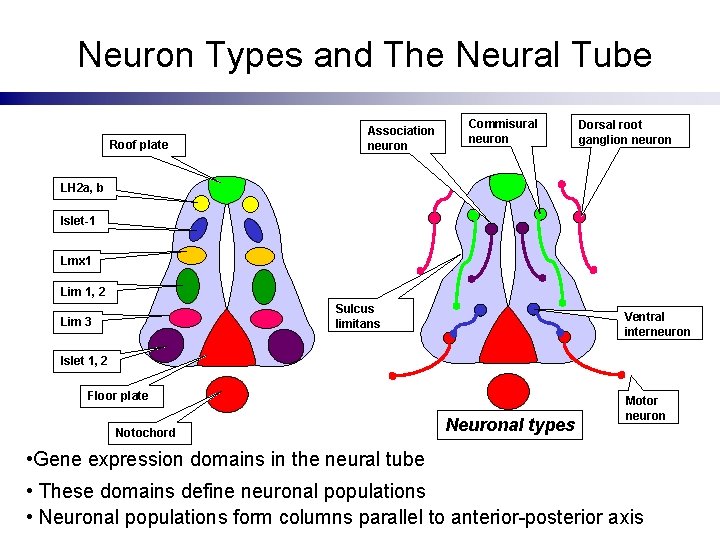
Neuron Types and The Neural Tube Roof plate Association neuron Commisural neuron Dorsal root ganglion neuron LH 2 a, b Islet-1 Lmx 1 Lim 1, 2 Sulcus limitans Lim 3 Ventral interneuron Islet 1, 2 Floor plate Notochord Neuronal types Motor neuron • Gene expression domains in the neural tube • These domains define neuronal populations • Neuronal populations form columns parallel to anterior-posterior axis
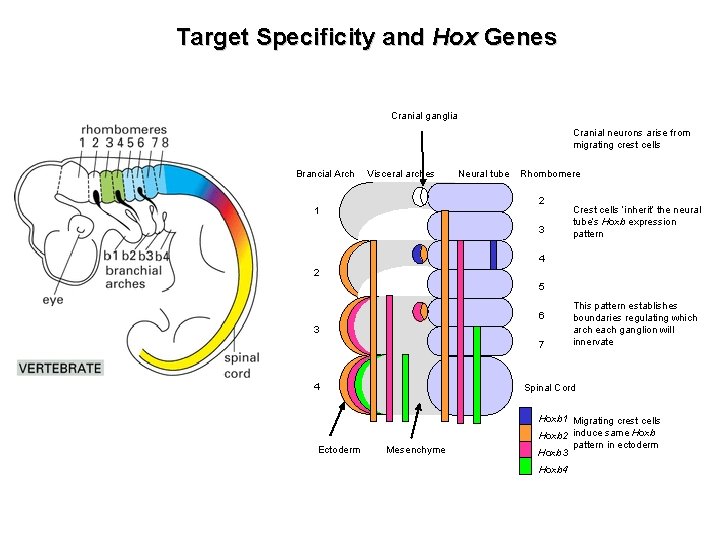
Target Specificity and Hox Genes Cranial ganglia Cranial neurons arise from migrating crest cells Brancial Arch Visceral arches Neural tube Rhombomere 2 1 3 Crest cells ‘inherit’ the neural tube’s Hoxb expression pattern 4 2 5 6 3 7 4 Ectoderm This pattern establishes boundaries regulating which arch each ganglion will innervate Spinal Cord Mesenchyme Hoxb 1 Migrating crest cells Hoxb 2 induce same Hoxb pattern in ectoderm Hoxb 3 Hoxb 4
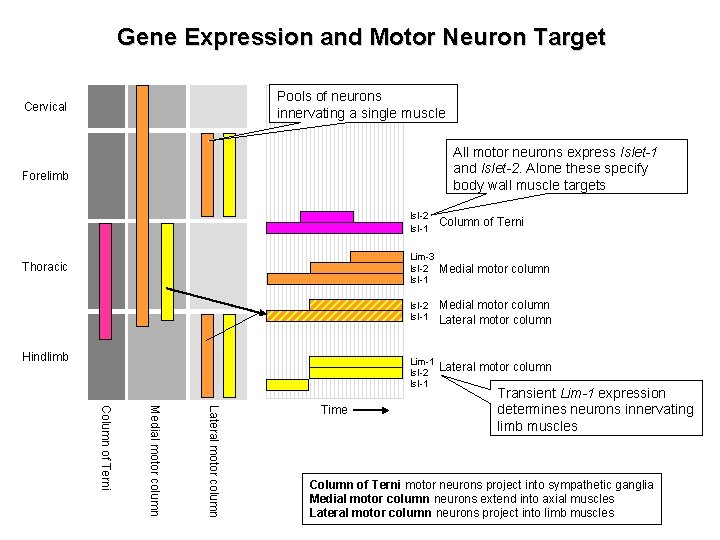
Gene Expression and Motor Neuron Target Pools of neurons innervating a single muscle Cervical All motor neurons express Islet-1 and Islet-2. Alone these specify body wall muscle targets Forelimb Thoracic Hindlimb Lateral motor column Medial motor column Column of Terni Time Isl-2 Isl-1 Column of Terni Lim-3 Isl-2 Isl-1 Medial motor column Lateral motor column Lim-1 Isl-2 Isl-1 Lateral motor column Transient Lim-1 expression determines neurons innervating limb muscles Column of Terni motor neurons project into sympathetic ganglia Medial motor column neurons extend into axial muscles Lateral motor column neurons project into limb muscles
How neurons know where to go?
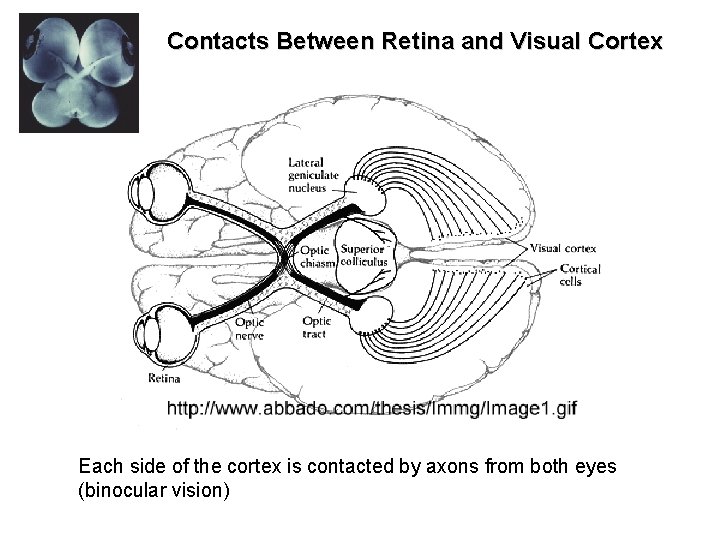
Contacts Between Retina and Visual Cortex Each side of the cortex is contacted by axons from both eyes (binocular vision)
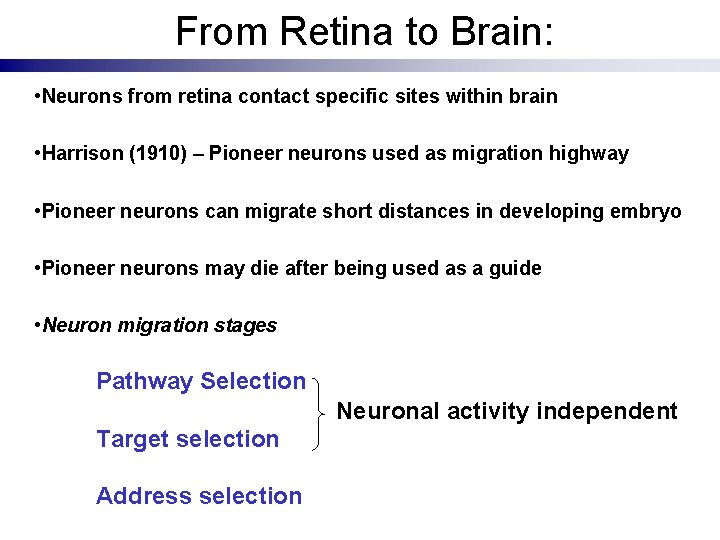
From Retina to Brain: • Neurons from retina contact specific sites within brain • Harrison (1910) – Pioneer neurons used as migration highway • Pioneer neurons can migrate short distances in developing embryo • Pioneer neurons may die after being used as a guide • Neuron migration stages Pathway Selection Neuronal activity independent Target selection Address selection
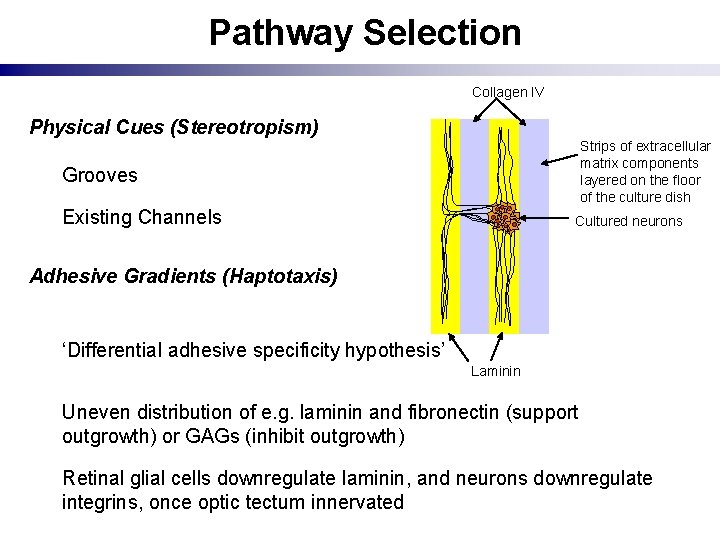
Pathway Selection Collagen IV Physical Cues (Stereotropism) Strips of extracellular matrix components layered on the floor of the culture dish Grooves Existing Channels Cultured neurons Adhesive Gradients (Haptotaxis) ‘Differential adhesive specificity hypothesis’ Laminin Uneven distribution of e. g. laminin and fibronectin (support outgrowth) or GAGs (inhibit outgrowth) Retinal glial cells downregulate laminin, and neurons downregulate integrins, once optic tectum innervated
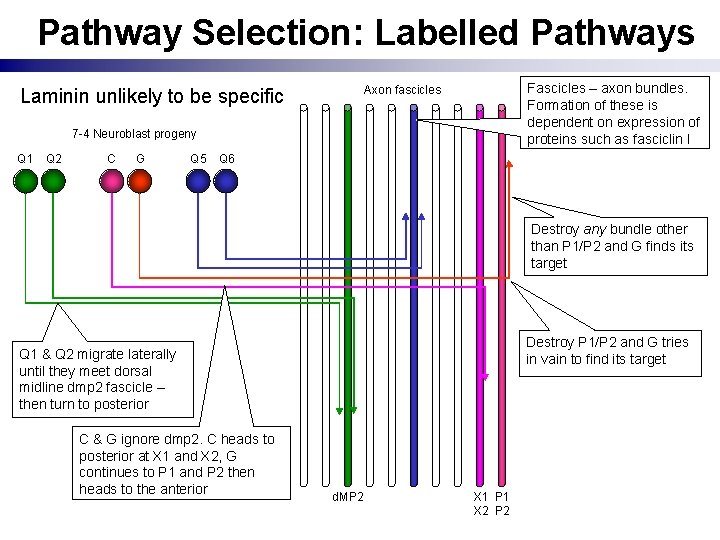
Pathway Selection: Labelled Pathways Fascicles – axon bundles. Formation of these is dependent on expression of proteins such as fasciclin I Axon fascicles Laminin unlikely to be specific 7 -4 Neuroblast progeny Q 1 Q 2 C G Q 5 Q 6 Destroy any bundle other than P 1/P 2 and G finds its target Destroy P 1/P 2 and G tries in vain to find its target Q 1 & Q 2 migrate laterally until they meet dorsal midline dmp 2 fascicle – then turn to posterior C & G ignore dmp 2. C heads to posterior at X 1 and X 2, G continues to P 1 and P 2 then heads to the anterior d. MP 2 X 1 P 1 X 2 P 2
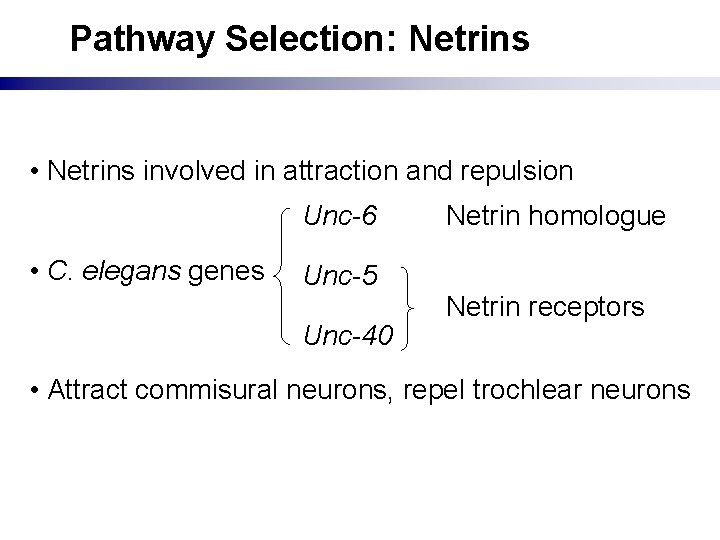
Pathway Selection: Netrins • Netrins involved in attraction and repulsion Unc-6 • C. elegans genes Unc-5 Unc-40 Netrin homologue Netrin receptors • Attract commisural neurons, repel trochlear neurons
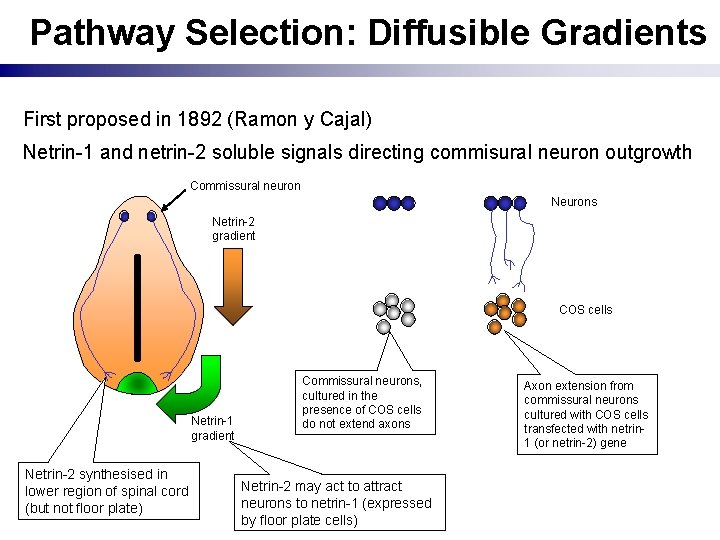
Pathway Selection: Diffusible Gradients First proposed in 1892 (Ramon y Cajal) Netrin-1 and netrin-2 soluble signals directing commisural neuron outgrowth Commissural neuron Neurons Netrin-2 gradient COS cells Netrin-1 gradient Netrin-2 synthesised in lower region of spinal cord (but not floor plate) Commissural neurons, cultured in the presence of COS cells do not extend axons Netrin-2 may act to attract neurons to netrin-1 (expressed by floor plate cells) Axon extension from commissural neurons cultured with COS cells transfected with netrin 1 (or netrin-2) gene
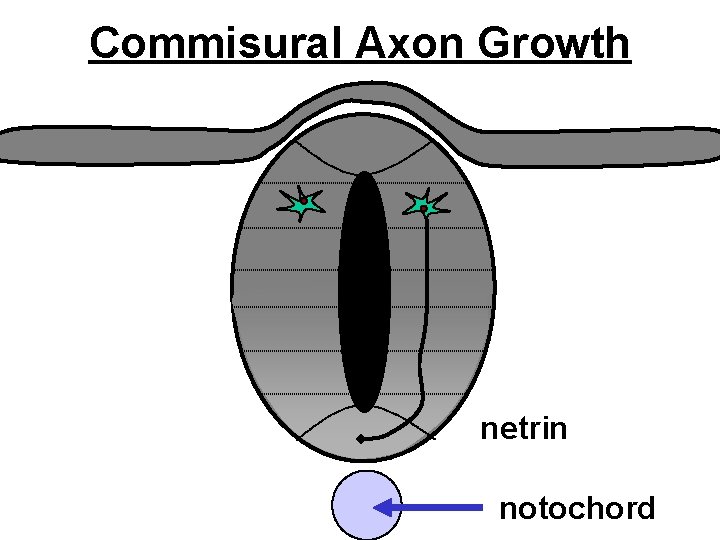
Commisural Axon Growth netrin notochord
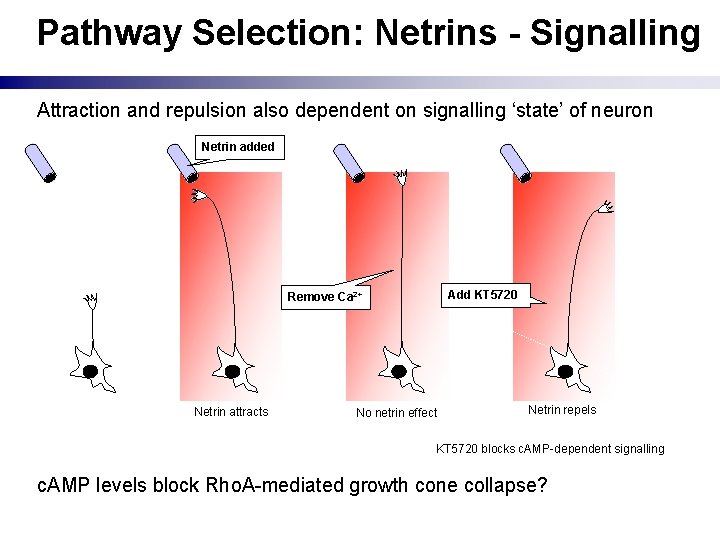
Pathway Selection: Netrins - Signalling Attraction and repulsion also dependent on signalling ‘state’ of neuron Netrin added Add KT 5720 Remove Ca 2+ Netrin attracts No netrin effect Netrin repels KT 5720 blocks c. AMP-dependent signalling c. AMP levels block Rho. A-mediated growth cone collapse?
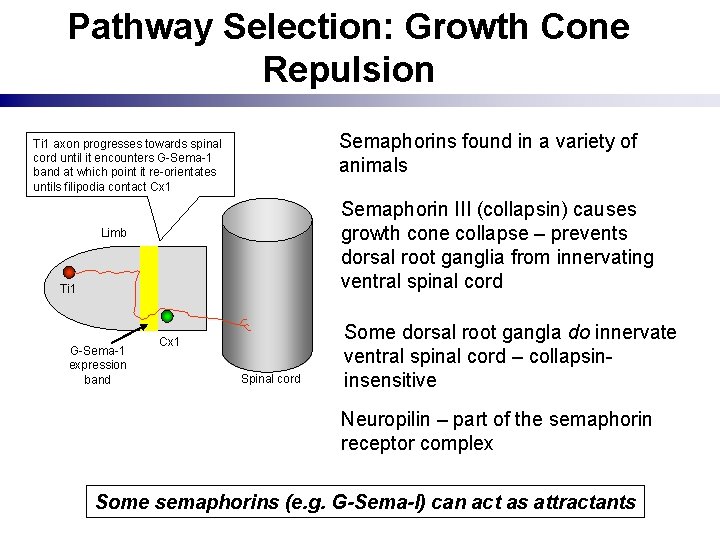
Pathway Selection: Growth Cone Repulsion Semaphorins found in a variety of animals Ti 1 axon progresses towards spinal cord until it encounters G-Sema-1 band at which point it re-orientates untils filipodia contact Cx 1 Semaphorin III (collapsin) causes growth cone collapse – prevents dorsal root ganglia from innervating ventral spinal cord Limb Ti 1 G-Sema-1 expression band Cx 1 Spinal cord Some dorsal root gangla do innervate ventral spinal cord – collapsininsensitive Neuropilin – part of the semaphorin receptor complex Some semaphorins (e. g. G-Sema-I) can act as attractants
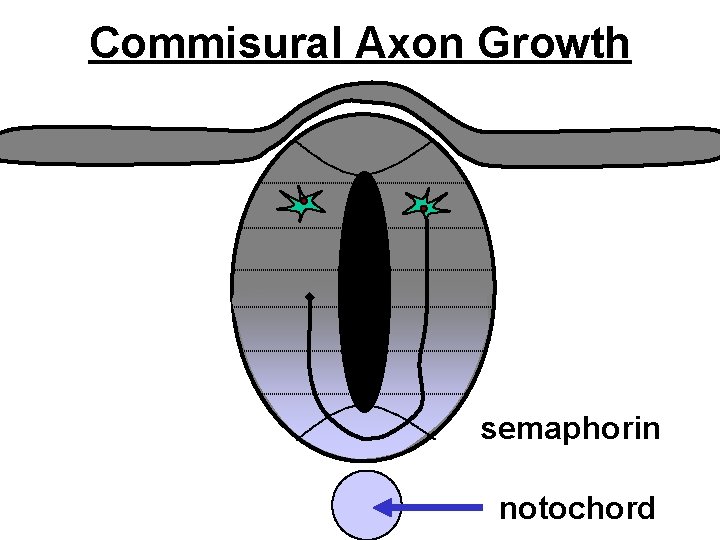
Commisural Axon Growth semaphorin notochord
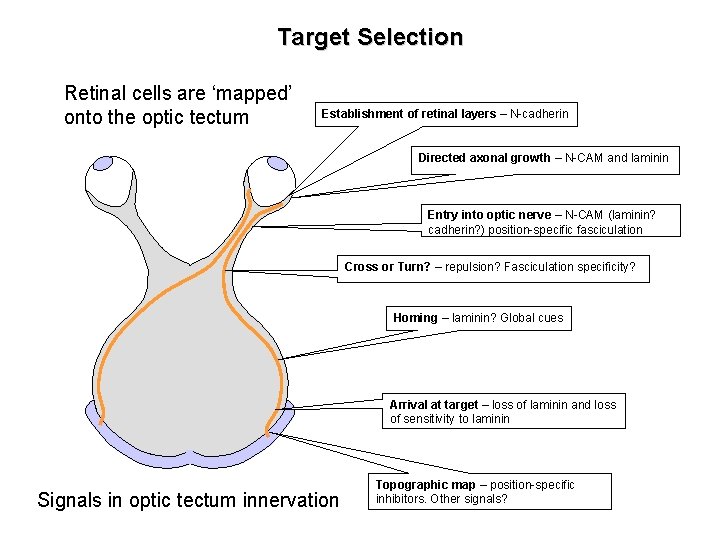
Target Selection Retinal cells are ‘mapped’ onto the optic tectum Establishment of retinal layers – N-cadherin Directed axonal growth – N-CAM and laminin Entry into optic nerve – N-CAM (laminin? cadherin? ) position-specific fasciculation Cross or Turn? – repulsion? Fasciculation specificity? Homing – laminin? Global cues Arrival at target – loss of laminin and loss of sensitivity to laminin Signals in optic tectum innervation Topographic map – position-specific inhibitors. Other signals?
Target Selection: Signals • Ephrins bind to Eph receptors (receptor tyrosine kinases) • Ephrins are repulsive or attractive depending on Ephrin. Eph receptor combination • Gradient of RAGS and ELF-1 from posterior tectum • RAGS and ELF-1 repel temporal retinal axons • RAGS and ELF-1 expression dependent upon expression of Engrailed • Expressing Engrailed in anterior tectum results in RAGS/ELF-1 expression throughout tectum and failure of temporal axons to contact any part of tectum
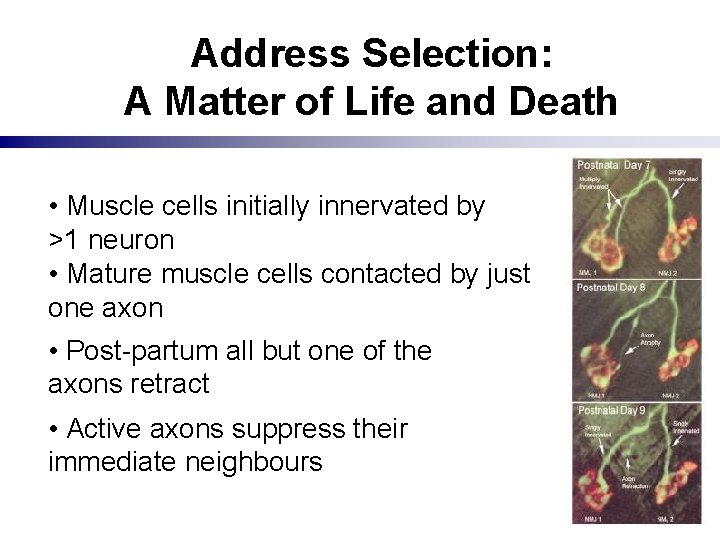
Address Selection: A Matter of Life and Death • Muscle cells initially innervated by >1 neuron • Mature muscle cells contacted by just one axon • Post-partum all but one of the axons retract • Active axons suppress their immediate neighbours
- Slides: 89