
Chapter 21 channels of distribution Section 21 1
Chapter 21 channels of distribution Section 21. 1 Distribution Section 21. 2 Distribution Planning
Section 21. 1 Distribution Explain the concept of channel of distribution. Identify channel members. Compare different channels of distribution.
Section 21. 1 Distribution: How It Works To make a place decision, marketers must decide on a channel of distribution The path a product takes from its producer or manufacturer to the final user.
Section 21. 1 Distribution: How It Works Merchant intermediaries take title of goods and services. Agent intermediaries do not. intermediary Middleman business involved in sales transactions that move products from the manufacturer to the final user.
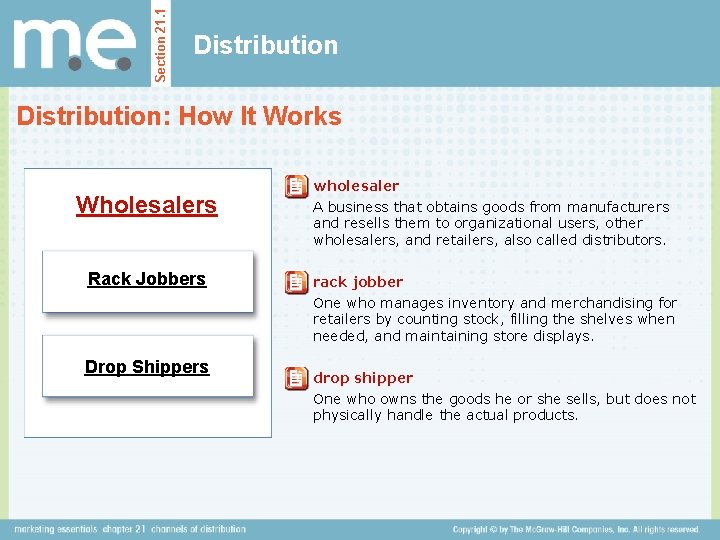
Section 21. 1 Distribution: How It Works Wholesalers Rack Jobbers Drop Shippers wholesaler A business that obtains goods from manufacturers and resells them to organizational users, other wholesalers, and retailers, also called distributors. rack jobber One who manages inventory and merchandising for retailers by counting stock, filling the shelves when needed, and maintaining store displays. drop shipper One who owns the goods he or she sells, but does not physically handle the actual products.
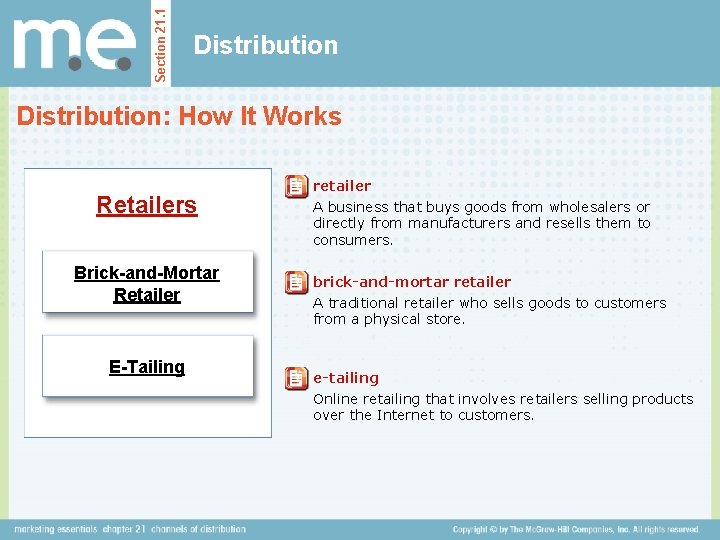
Section 21. 1 Distribution: How It Works Retailers Brick-and-Mortar Retailer E-Tailing retailer A business that buys goods from wholesalers or directly from manufacturers and resells them to consumers. brick-and-mortar retailer A traditional retailer who sells goods to customers from a physical store. e-tailing Online retailing that involves retailers selling products over the Internet to customers.
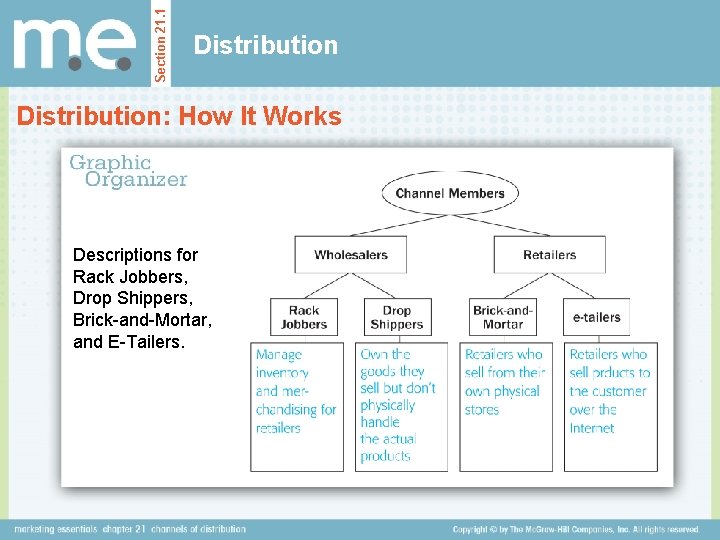
Section 21. 1 Distribution: How It Works Descriptions for Rack Jobbers, Drop Shippers, Brick-and-Mortar, and E-Tailers.
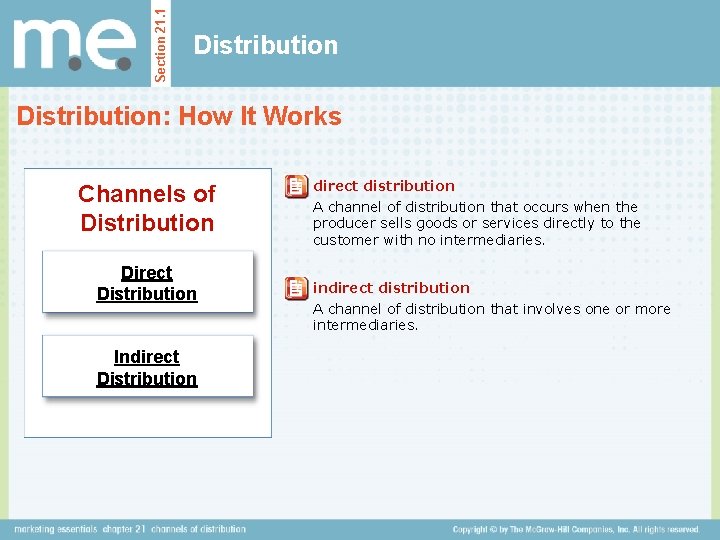
Section 21. 1 Distribution: How It Works Channels of Distribution Direct Distribution Indirect Distribution direct distribution A channel of distribution that occurs when the producer sells goods or services directly to the customer with no intermediaries. indirect distribution A channel of distribution that involves one or more intermediaries.
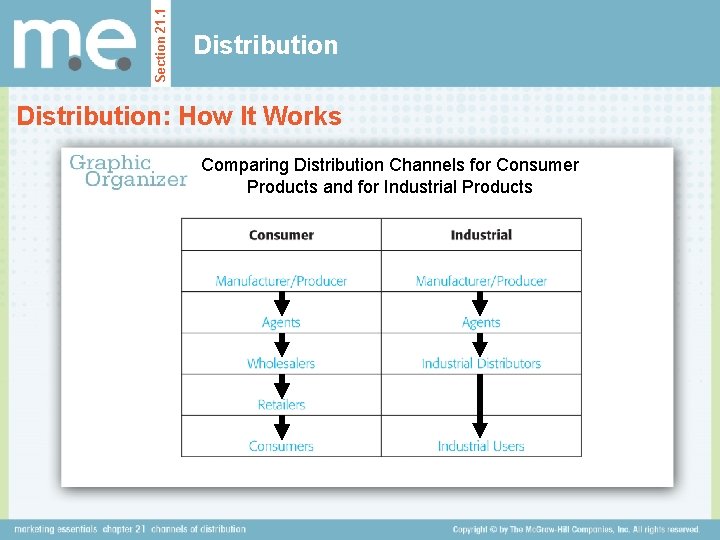
Section 21. 1 Distribution: How It Works Comparing Distribution Channels for Consumer Products and for Industrial Products
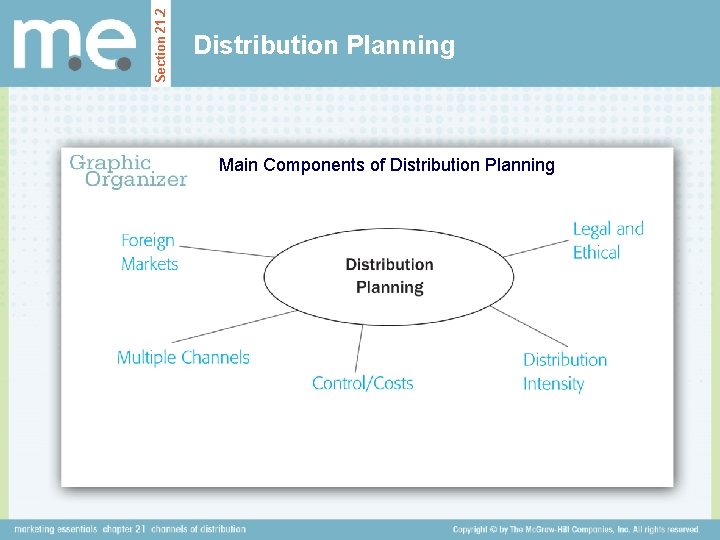
Section 21. 2 Distribution Planning Main Components of Distribution Planning
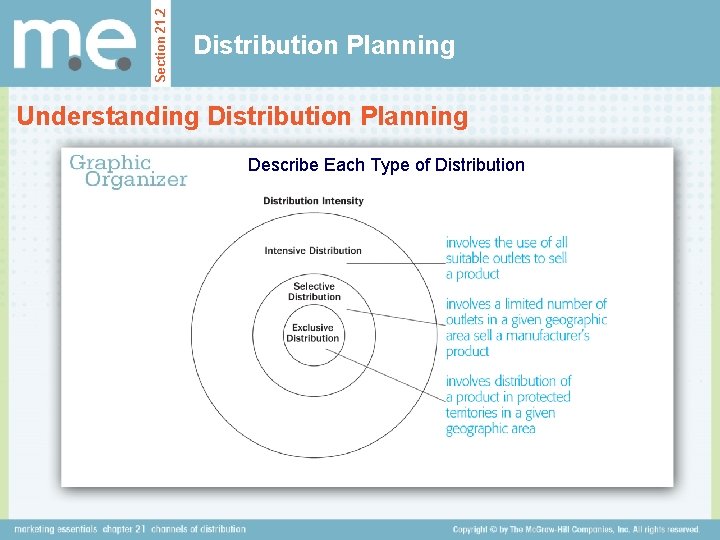
Section 21. 2 Distribution Planning Understanding Distribution Planning Describe Each Type of Distribution
Chapter 22 physical distribution Section 22. 1 Transportation Section 22. 2 Inventory Storage
Section 22. 1 Transportation • Describe the nature and scope of physical distribution. • Identify transportation systems and services that move products from manufacturers to consumers.
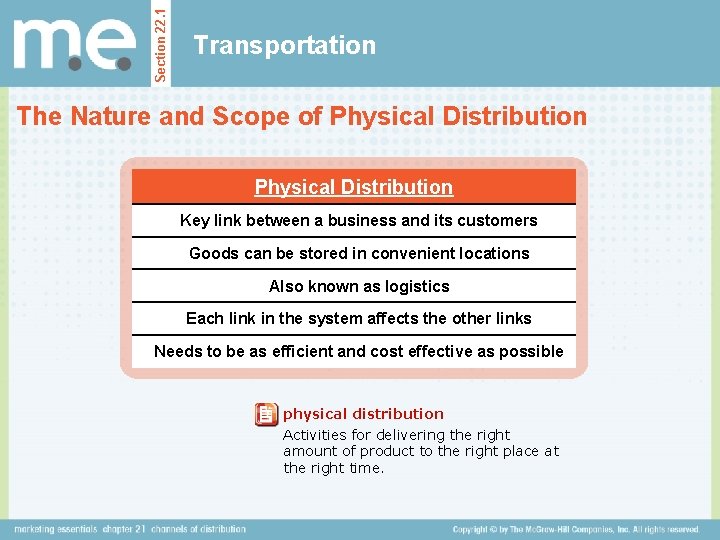
Section 22. 1 Transportation The Nature and Scope of Physical Distribution Key link between a business and its customers Goods can be stored in convenient locations Also known as logistics Each link in the system affects the other links Needs to be as efficient and cost effective as possible physical distribution Activities for delivering the right amount of product to the right place at the right time.
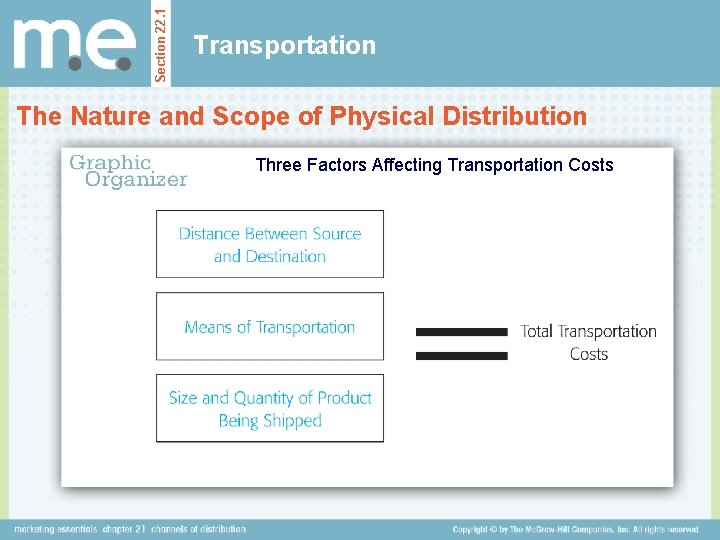
Section 22. 1 Transportation The Nature and Scope of Physical Distribution Three Factors Affecting Transportation Costs
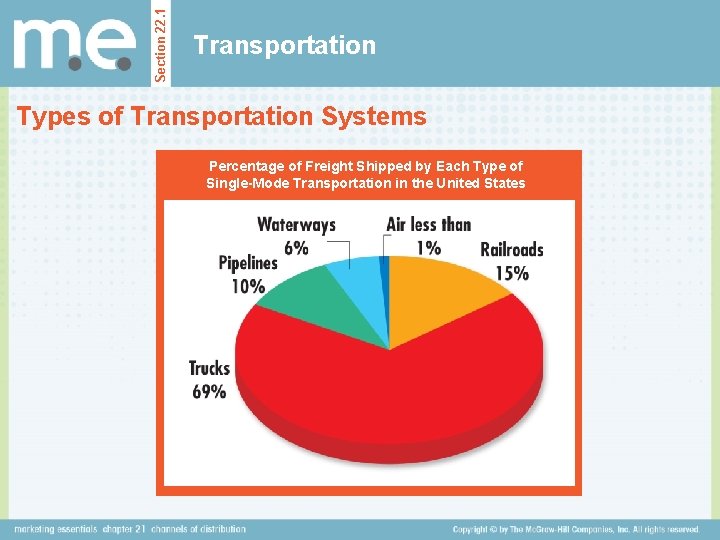
Section 22. 1 Transportation Types of Transportation Systems Percentage of Freight Shipped by Each Type of Single-Mode Transportation in the United States
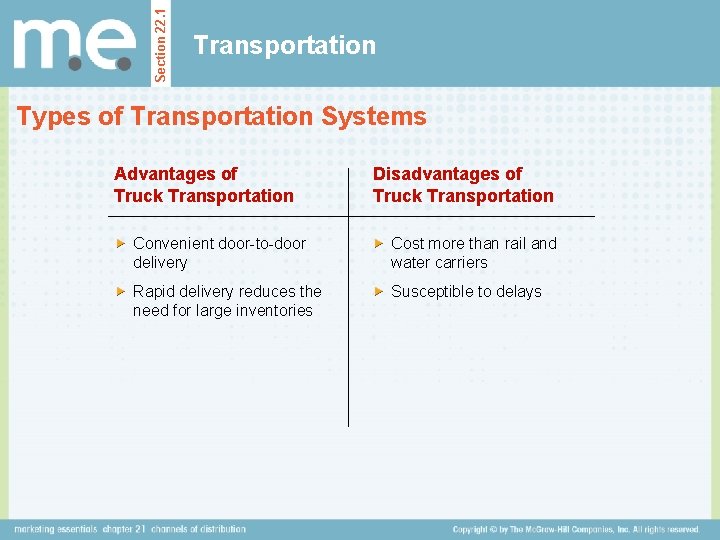
Section 22. 1 Transportation Types of Transportation Systems Advantages of Truck Transportation Disadvantages of Truck Transportation Convenient door-to-door delivery Cost more than rail and water carriers Rapid delivery reduces the need for large inventories Susceptible to delays
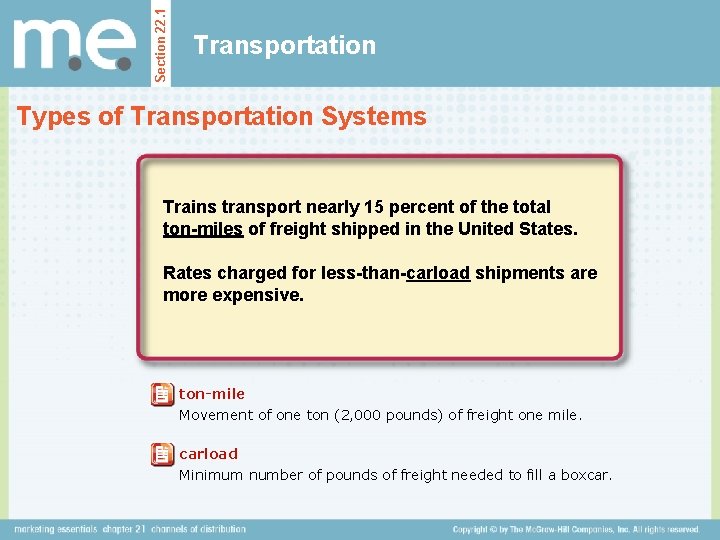
Section 22. 1 Transportation Types of Transportation Systems Trains transport nearly 15 percent of the total ton-miles of freight shipped in the United States. Rates charged for less-than-carload shipments are more expensive. ton-mile Movement of one ton (2, 000 pounds) of freight one mile. carload Minimum number of pounds of freight needed to fill a boxcar.
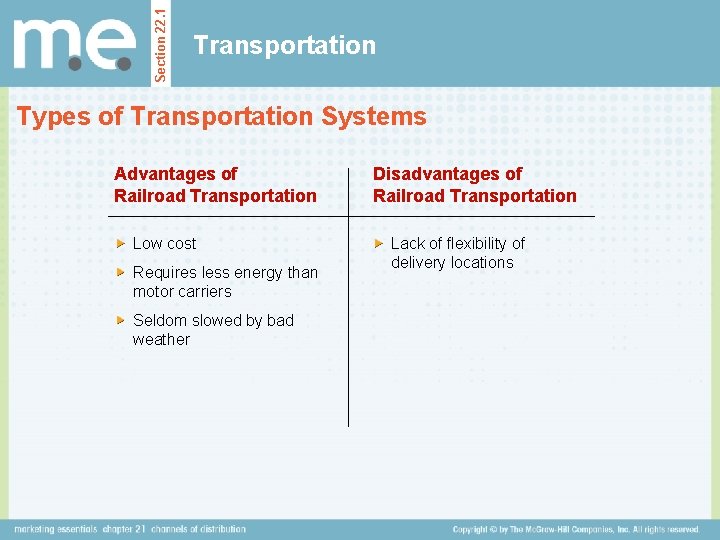
Section 22. 1 Transportation Types of Transportation Systems Advantages of Railroad Transportation Low cost Requires less energy than motor carriers Seldom slowed by bad weather Disadvantages of Railroad Transportation Lack of flexibility of delivery locations
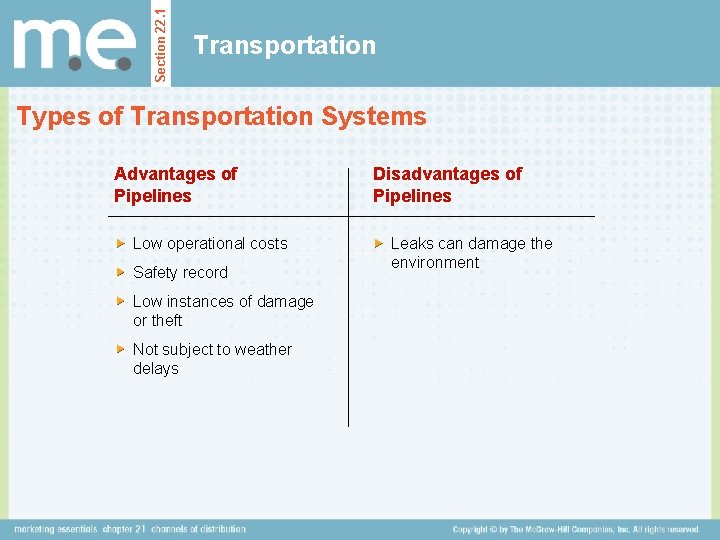
Section 22. 1 Transportation Types of Transportation Systems Advantages of Pipelines Low operational costs Safety record Low instances of damage or theft Not subject to weather delays Disadvantages of Pipelines Leaks can damage the environment
Section 22. 1 Transportation Types of Transportation Systems Advantages of Marine Shipping Low cost Disadvantages of Marine Shipping Slow Freight must be off-loaded onto railroad cars or motor carriers Affected by bad weather
Section 22. 1 Transportation Types of Transportation Systems Advantages of Air Cargo Services Disadvantages of Air Cargo Services Speed High cost Reduced inventory expenses and storage costs Mechanical breakdowns Weather delays
Section 22. 2 Inventory Storage Inventory storage allows a business to keep its products in a safe location until they are needed or ready to be sold.
Chapter 23 purchasing Section 23. 1 The Role of the Buyer Section 23. 2 The Purchasing Process
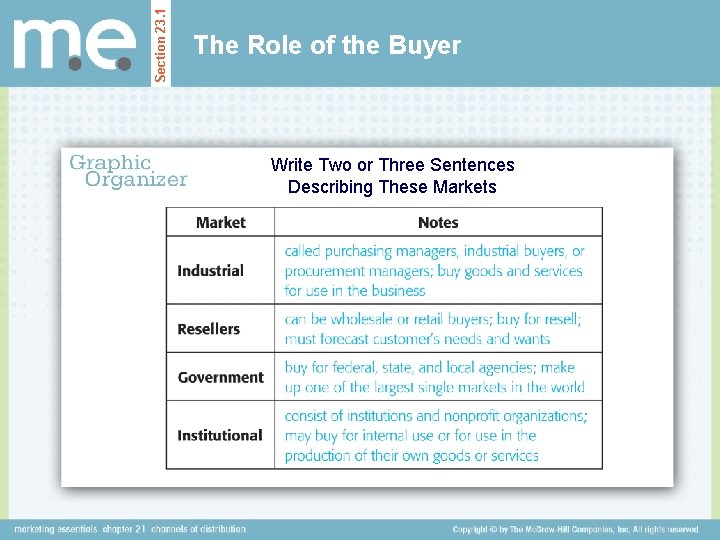
Section 23. 1 The Role of the Buyer Write Two or Three Sentences Describing These Markets
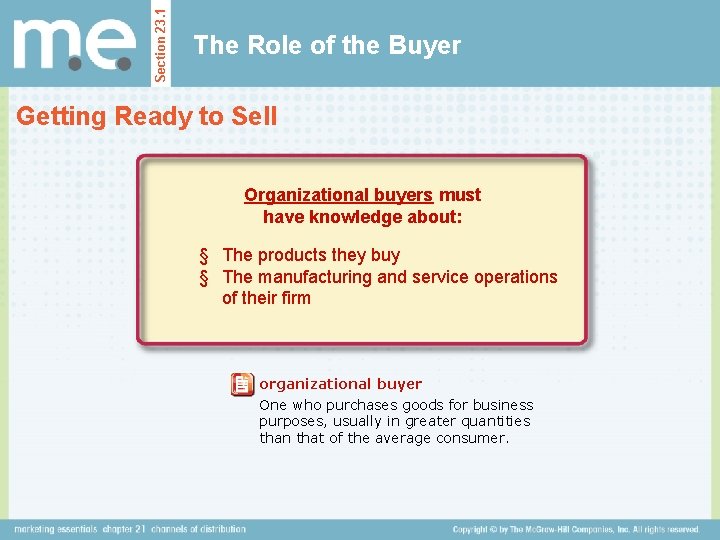
Section 23. 1 The Role of the Buyer Getting Ready to Sell Organizational buyers must have knowledge about: § The products they buy § The manufacturing and service operations of their firm organizational buyer One who purchases goods for business purposes, usually in greater quantities than that of the average consumer.
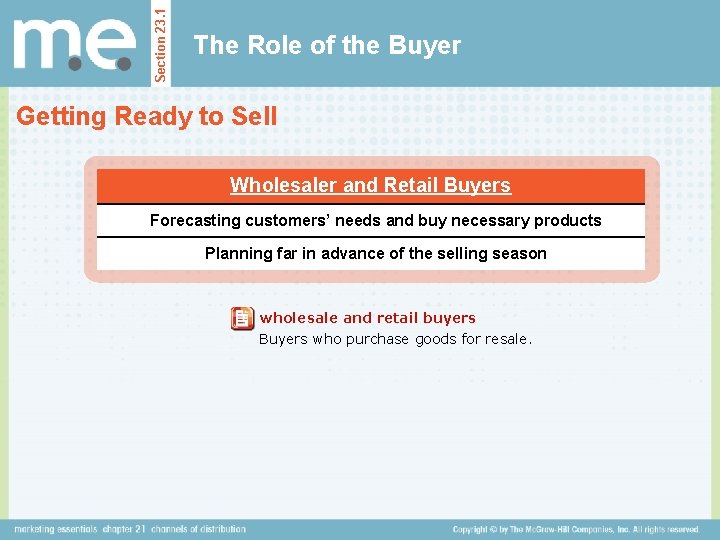
Section 23. 1 The Role of the Buyer Getting Ready to Sell Wholesaler and Retail Buyers Forecasting customers’ needs and buy necessary products Planning far in advance of the selling season wholesale and retail buyers Buyers who purchase goods for resale.
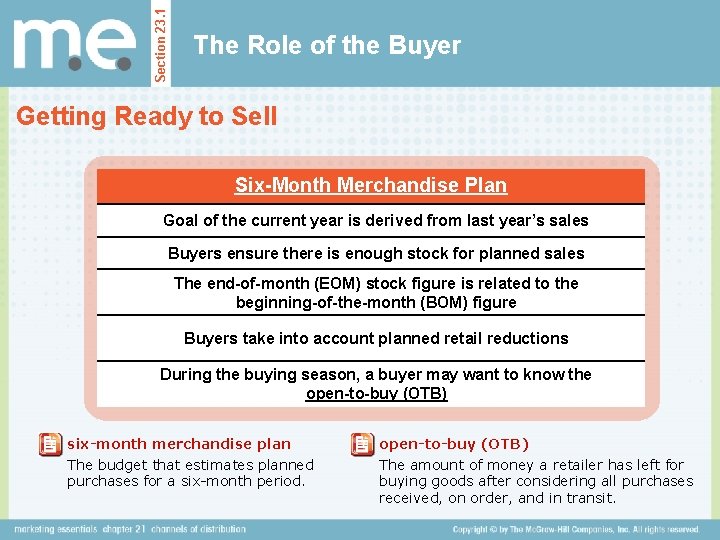
Section 23. 1 The Role of the Buyer Getting Ready to Sell Six-Month Merchandise Plan Goal of the current year is derived from last year’s sales Buyers ensure there is enough stock for planned sales The end-of-month (EOM) stock figure is related to the beginning-of-the-month (BOM) figure Buyers take into account planned retail reductions During the buying season, a buyer may want to know the open-to-buy (OTB) six-month merchandise plan The budget that estimates planned purchases for a six-month period. open-to-buy (OTB) The amount of money a retailer has left for buying goods after considering all purchases received, on order, and in transit.
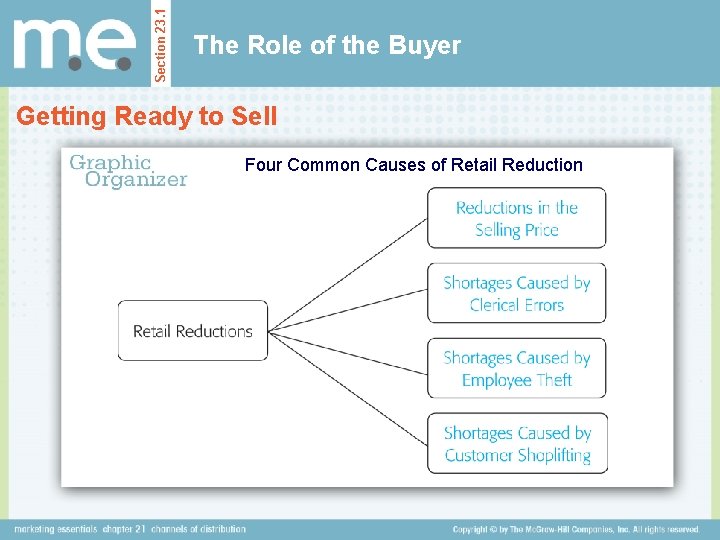
Section 23. 1 The Role of the Buyer Getting Ready to Sell Four Common Causes of Retail Reduction
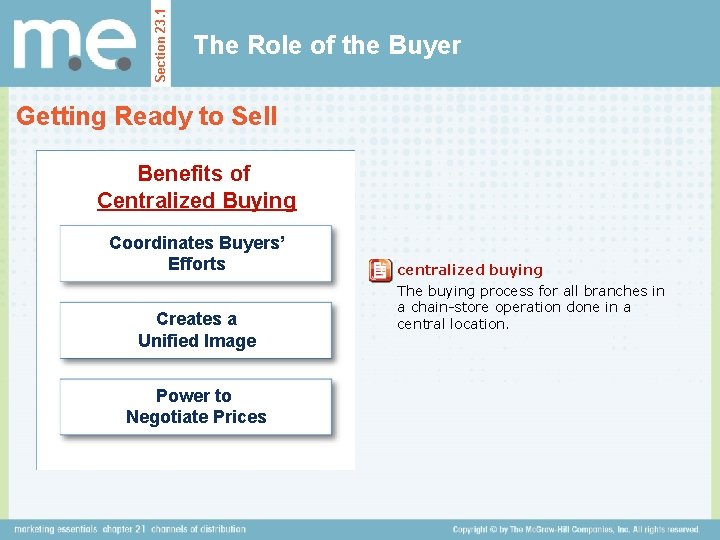
Section 23. 1 The Role of the Buyer Getting Ready to Sell Benefits of Centralized Buying Coordinates Buyers’ Efforts Creates a Unified Image Power to Negotiate Prices centralized buying The buying process for all branches in a chain-store operation done in a central location.
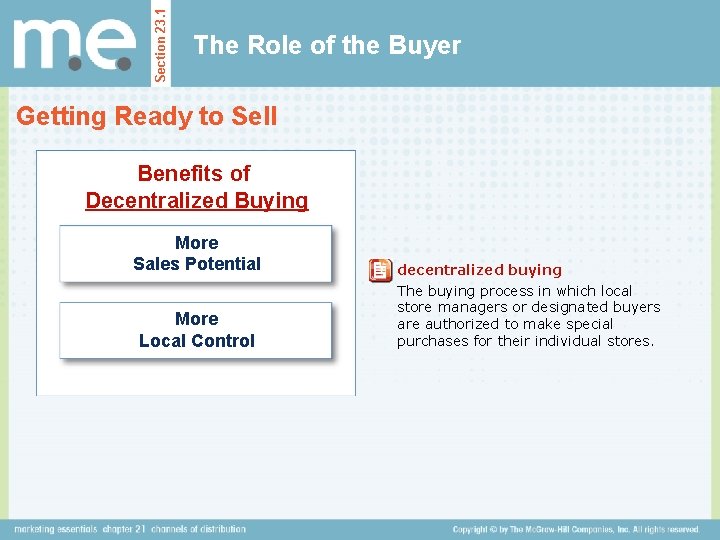
Section 23. 1 The Role of the Buyer Getting Ready to Sell Benefits of Decentralized Buying More Sales Potential More Local Control decentralized buying The buying process in which local store managers or designated buyers are authorized to make special purchases for their individual stores.
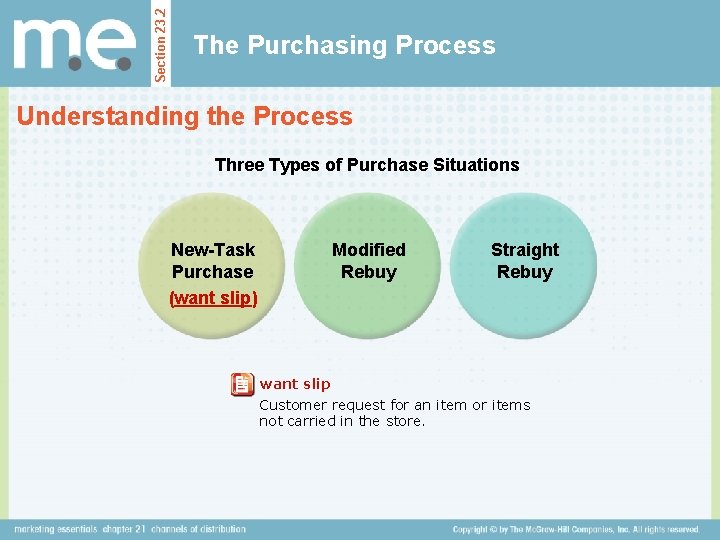
Section 23. 2 The Purchasing Process Understanding the Process Three Types of Purchase Situations New-Task Purchase (want slip) Modified Rebuy Straight Rebuy want slip Customer request for an item or items not carried in the store.
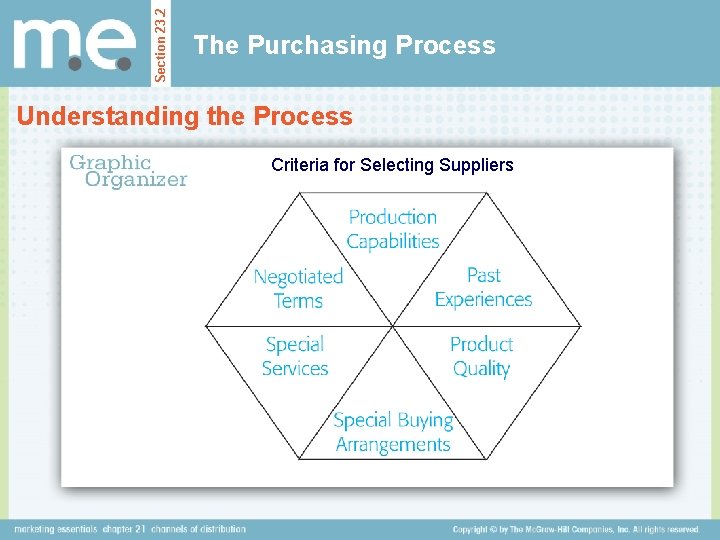
Section 23. 2 The Purchasing Process Understanding the Process Criteria for Selecting Suppliers
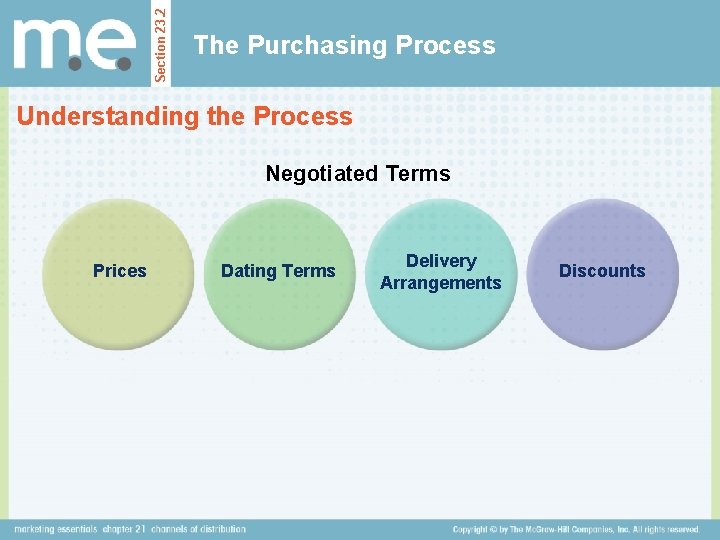
Section 23. 2 The Purchasing Process Understanding the Process Negotiated Terms Prices Dating Terms Delivery Arrangements Discounts
Chapter 24 stock handling and inventory control Section 24. 1 Stock Handling Section 24. 2 Inventory Control
Section 24. 1 Stock Handling Describe the receiving process. Explain stock handling techniques used in receiving deliveries.
Section 24. 2 Inventory Control Inventory Management The inventory managed by a business depends on the type of business. inventory Amount of merchandise on hand at any particular time, including raw materials, parts from suppliers, manufactured subassemblies, work-in-process, packing materials, or finished goods.
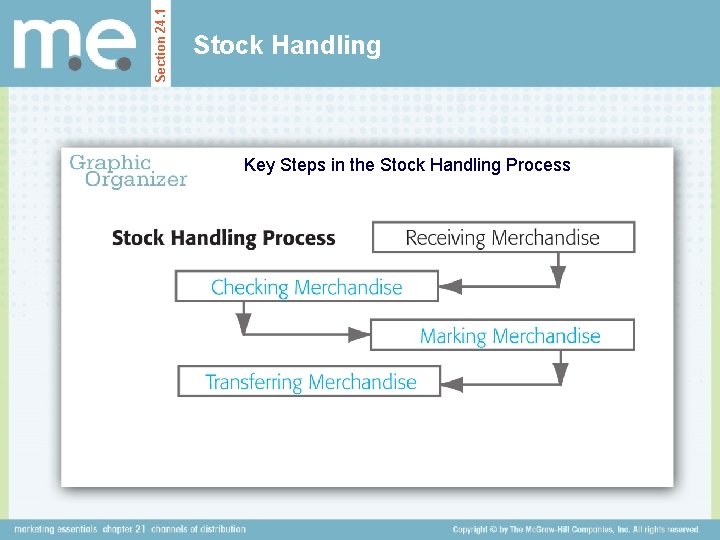
Section 24. 1 Stock Handling Key Steps in the Stock Handling Process
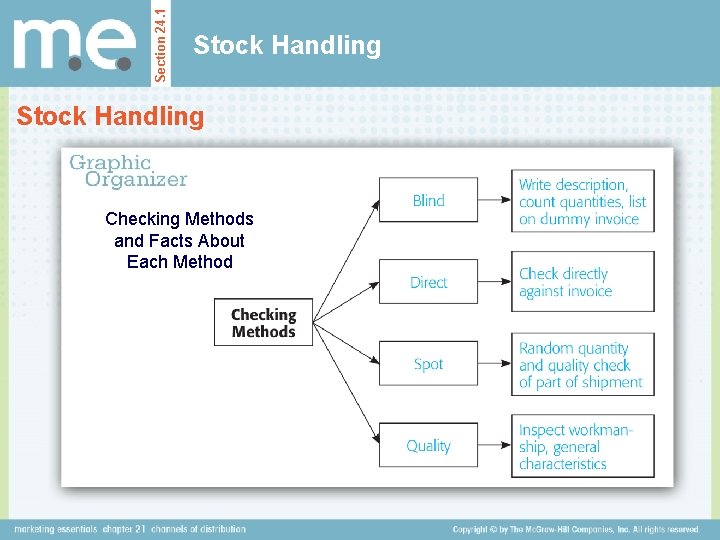
Section 24. 1 Stock Handling Checking Methods and Facts About Each Method
Section 24. 2 Inventory Control Inventory owned by a business represents a capital investment until the products are sold. Effective inventory management and accurate inventory systems increase profits.
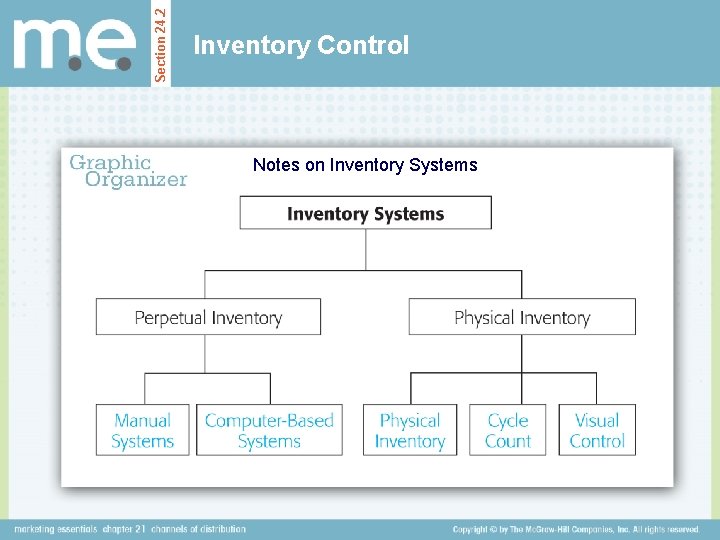
Section 24. 2 Inventory Control Notes on Inventory Systems
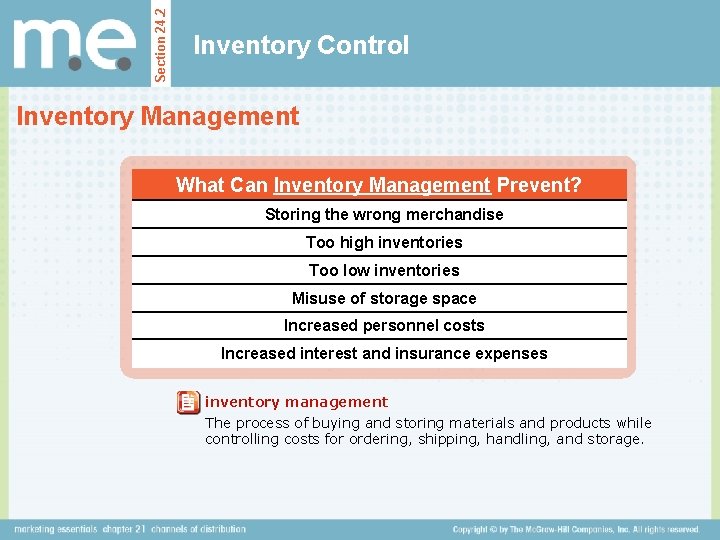
Section 24. 2 Inventory Control Inventory Management What Can Inventory Management Prevent? Storing the wrong merchandise Too high inventories Too low inventories Misuse of storage space Increased personnel costs Increased interest and insurance expenses inventory management The process of buying and storing materials and products while controlling costs for ordering, shipping, handling, and storage.
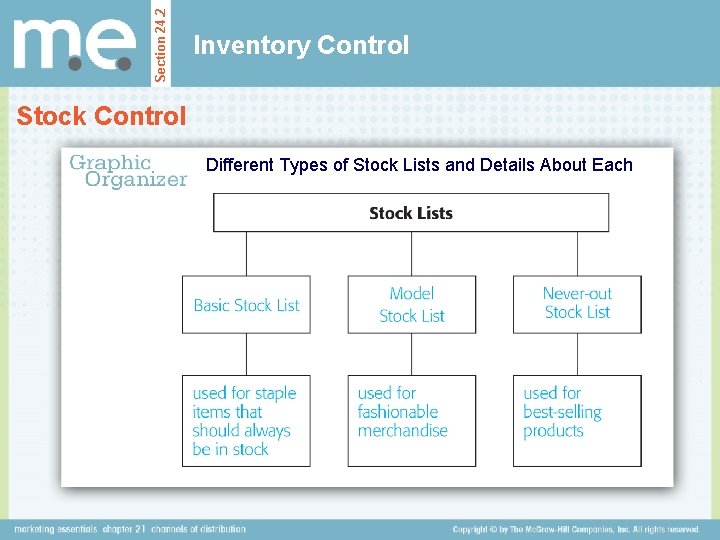
Section 24. 2 Inventory Control Stock Control Different Types of Stock Lists and Details About Each
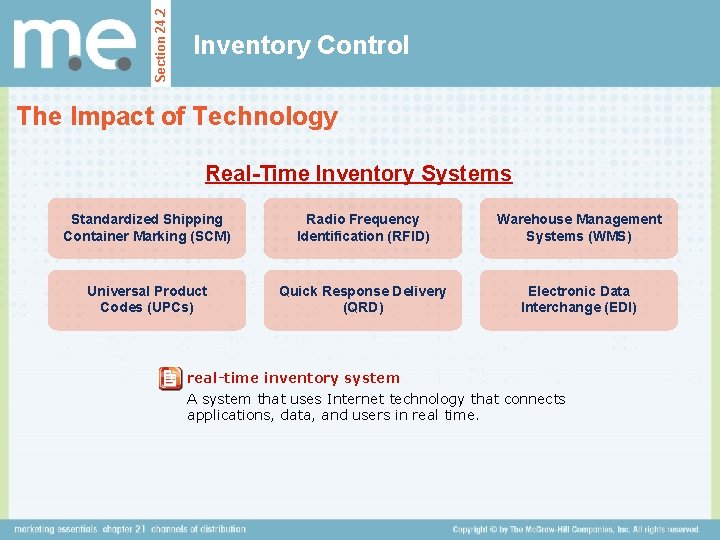
Section 24. 2 Inventory Control The Impact of Technology Real-Time Inventory Systems Standardized Shipping Container Marking (SCM) Radio Frequency Identification (RFID) Warehouse Management Systems (WMS) Universal Product Codes (UPCs) Quick Response Delivery (QRD) Electronic Data Interchange (EDI) real-time inventory system A system that uses Internet technology that connects applications, data, and users in real time.
- Slides: 44