
Chapter 21 Care of the NEWBORN M Gie
Chapter 21 Care of the NEWBORN M. Gie Arch er, MS, RN, CNE E. Boyet, RN , MSN, WHN P-BC C. Lutkenha us MSN, RN C-OB Updated 5/ 2015
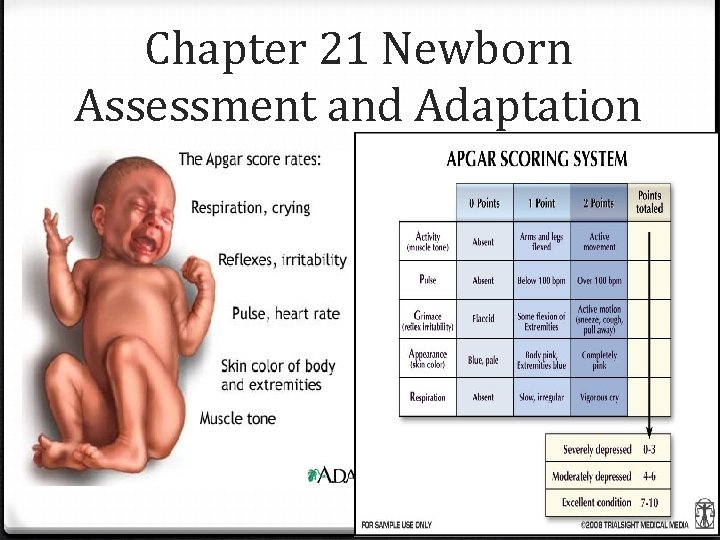
Chapter 21 Newborn Assessment and Adaptation
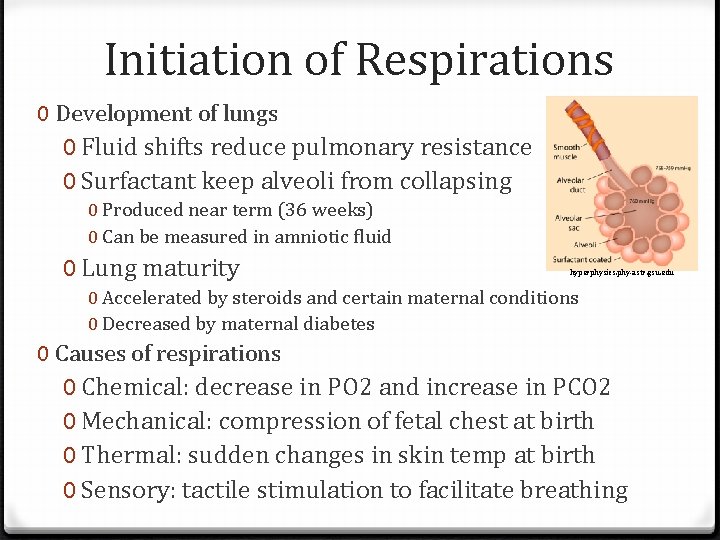
Initiation of Respirations 0 Development of lungs 0 Fluid shifts reduce pulmonary resistance 0 Surfactant keep alveoli from collapsing 0 Produced near term (36 weeks) 0 Can be measured in amniotic fluid 0 Lung maturity hyperphysics. phy-astr. gsu. edu 0 Accelerated by steroids and certain maternal conditions 0 Decreased by maternal diabetes 0 Causes of respirations 0 Chemical: decrease in PO 2 and increase in PCO 2 0 Mechanical: compression of fetal chest at birth 0 Thermal: sudden changes in skin temp at birth 0 Sensory: tactile stimulation to facilitate breathing
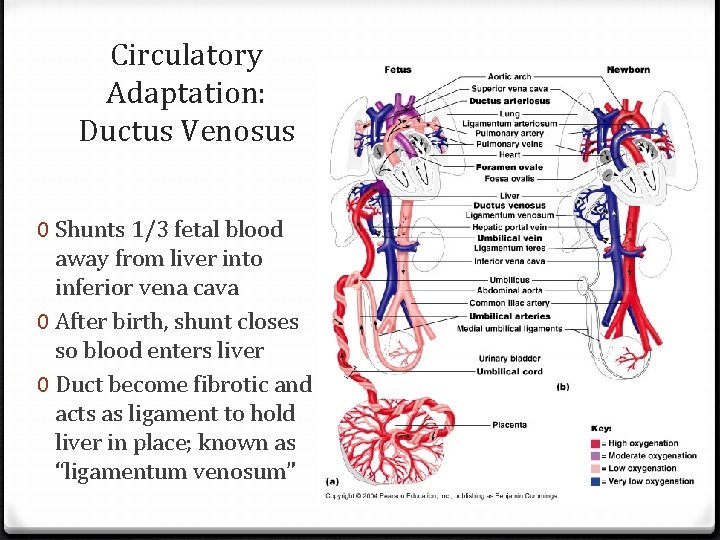
Circulatory Adaptation: Ductus Venosus 0 Shunts 1/3 fetal blood away from liver into inferior vena cava 0 After birth, shunt closes so blood enters liver 0 Duct become fibrotic and acts as ligament to hold liver in place; known as “ligamentum venosum”

Neurologic Adaptation: Thermoregulation 0 Newborn characteristics leading to heat loss: 0 Blood vessels close to skin surface 0 Little subcutaneous (white) fat 0 Large skin surface news. medicalexpo. com

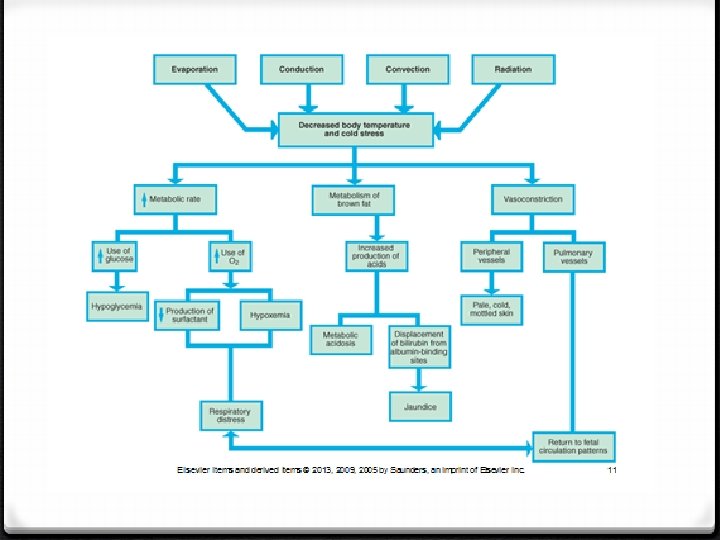
Methods of heat loss 0 Evaporation – drying of skin causes cooling 0 Conduction – coming in contact with cool objects moves heat from body to object 0 Convection – heat transferred to surrounding area 0 Radiation – heat transferred to objects not in direct contact with body labspace. open. ac. uk

Thermogenesis 0 Methods of heat production: 0 Increase activity 0 Flexion 0 Metabolism 0 Vasoconstriction 0 Nonshivering thermogenesis (brown fat)
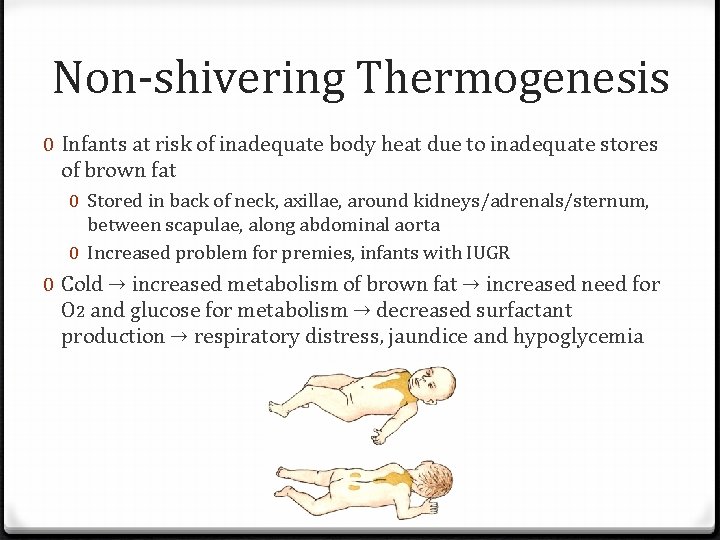
Non-shivering Thermogenesis 0 Infants at risk of inadequate body heat due to inadequate stores of brown fat 0 Stored in back of neck, axillae, around kidneys/adrenals/sternum, between scapulae, along abdominal aorta 0 Increased problem for premies, infants with IUGR 0 Cold → increased metabolism of brown fat → increased need for O 2 and glucose for metabolism → decreased surfactant production → respiratory distress, jaundice and hypoglycemia
Signs of Hypoglycemia 0 Jitteriness, tremors 0 Poor muscle tone 0 Sweating 0 Tachypnea 0 Grunting 0 Cyanosis 0 Apnea 0 Diaphoresis 0 Low temperature 0 Poor suck 0 High-pitched cry 0 Lethargy 0 Irritability 0 Seizures, coma
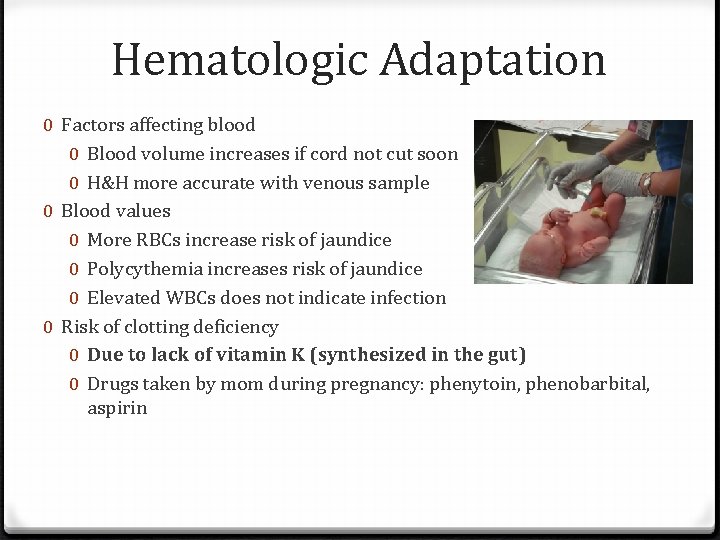
Hematologic Adaptation 0 Factors affecting blood 0 Blood volume increases if cord not cut soon 0 H&H more accurate with venous sample 0 Blood values 0 More RBCs increase risk of jaundice 0 Polycythemia increases risk of jaundice 0 Elevated WBCs does not indicate infection 0 Risk of clotting deficiency 0 Due to lack of vitamin K (synthesized in the gut) 0 Drugs taken by mom during pregnancy: phenytoin, phenobarbital, aspirin
GI System pregnancy. about. com www. growingkids. co. uk 0 Stomach expands from marble-walnut-ping pong ball capacity over 1 st 2 weeks 0 Intestines make infant prone to diarrhea 0 Normal flora established in first few days after feeding begins 0 Digestive enzymes not present until 3 -6 months 0 Rationale for cereal (complex carbs) delay
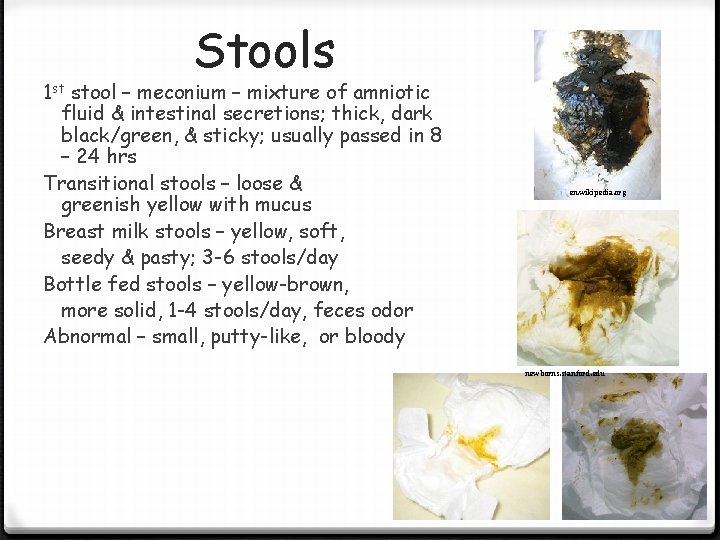
Stools 1 st stool – meconium – mixture of amniotic fluid & intestinal secretions; thick, dark black/green, & sticky; usually passed in 8 – 24 hrs Transitional stools – loose & greenish yellow with mucus Breast milk stools – yellow, soft, seedy & pasty; 3 -6 stools/day Bottle fed stools – yellow-brown, more solid, 1 -4 stools/day, feces odor Abnormal – small, putty-like, or bloody en. wikipedia. org newborns. stanford. edu
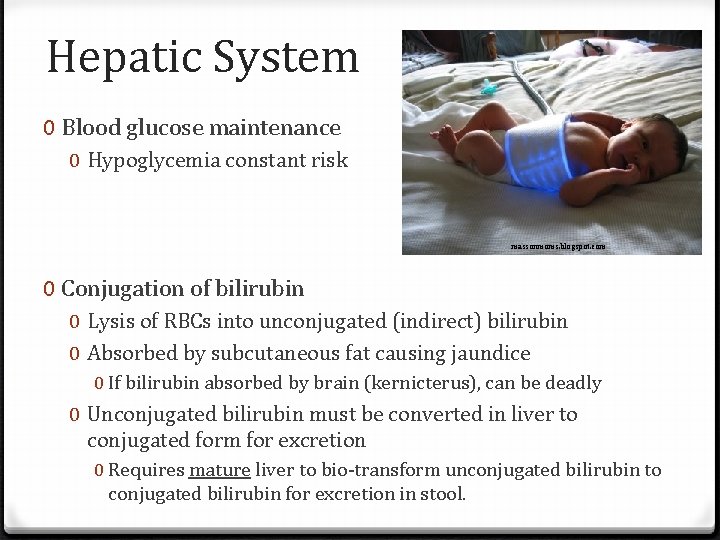
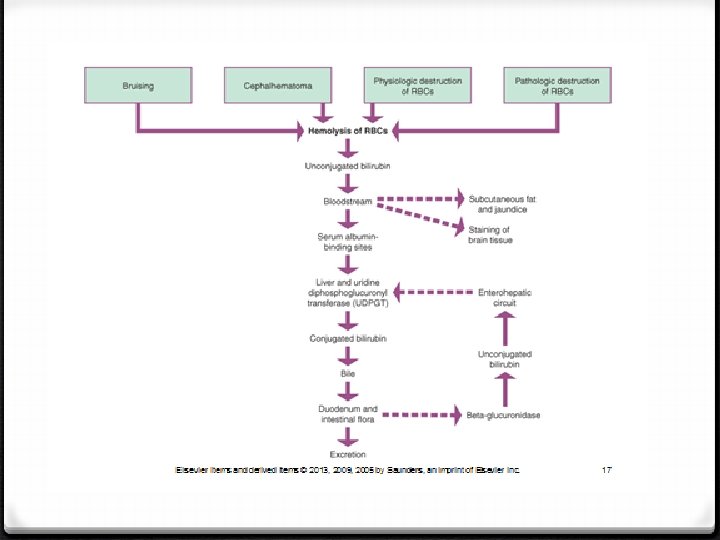
Hepatic System 0 Blood glucose maintenance 0 Hypoglycemia constant risk massonmoms. blogspot. com 0 Conjugation of bilirubin 0 Lysis of RBCs into unconjugated (indirect) bilirubin 0 Absorbed by subcutaneous fat causing jaundice 0 If bilirubin absorbed by brain (kernicterus), can be deadly 0 Unconjugated bilirubin must be converted in liver to conjugated form for excretion 0 Requires mature liver to bio-transform unconjugated bilirubin to conjugated bilirubin for excretion in stool.
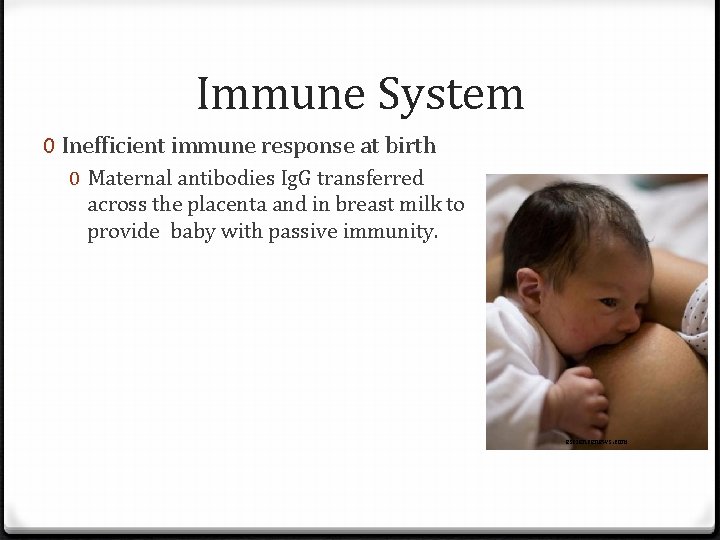
Immune System 0 Inefficient immune response at birth 0 Maternal antibodies Ig. G transferred across the placenta and in breast milk to provide baby with passive immunity. esciencenews. com
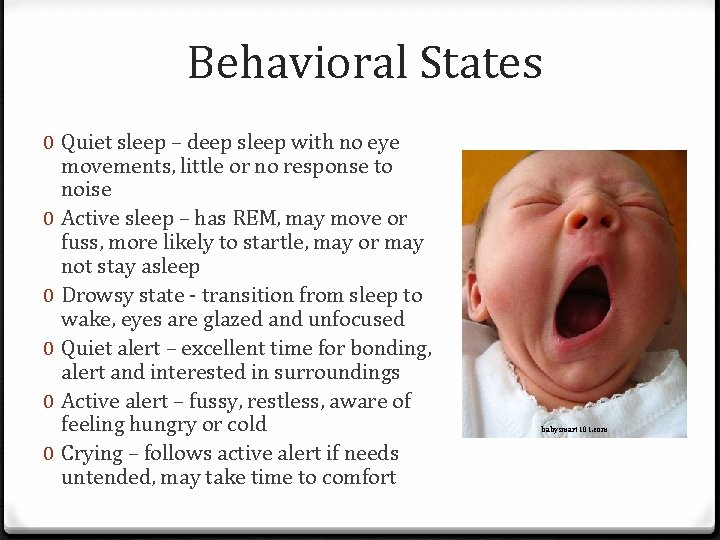
Behavioral States 0 Quiet sleep – deep sleep with no eye movements, little or no response to noise 0 Active sleep – has REM, may move or fuss, more likely to startle, may or may not stay asleep 0 Drowsy state - transition from sleep to wake, eyes are glazed and unfocused 0 Quiet alert – excellent time for bonding, alert and interested in surroundings 0 Active alert – fussy, restless, aware of feeling hungry or cold 0 Crying – follows active alert if needs untended, may take time to comfort babysmart 101. com
Assessment of Cardiopulmonary Status 0 Airway 0 Heart sounds 0 Respiratory rate 0 Breath sounds 0 Signs of respiratory distress 0 Tachypnea, retractions, flaring cares, cyanosis, grunting, retractions, asymmetry 0 Color 0 Pallor 0 Ruddy albert. uk. com 0 Normal 120 -160 0 Position of PMI 0 Rhythm and murmurs 0 Brachial and femoral pulses 0 BP R arm, L leg 0 Capillary refill
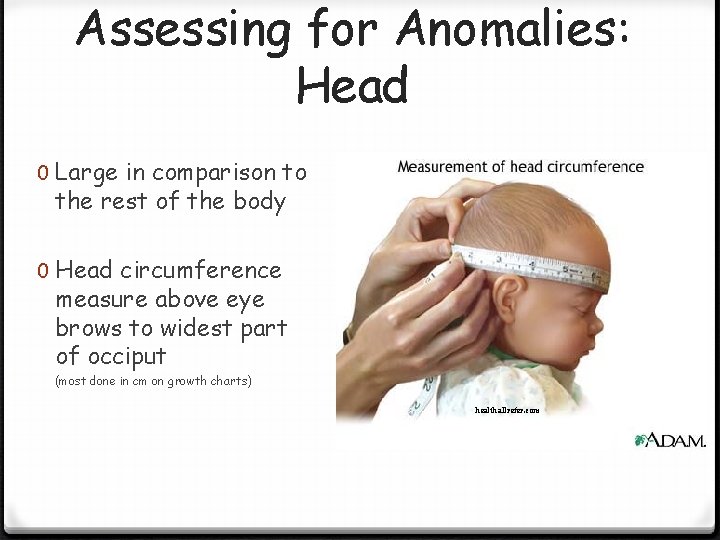
Assessing for Anomalies: Head 0 Large in comparison to the rest of the body 0 Head circumference measure above eye brows to widest part of occiput (most done in cm on growth charts) health. allrefer. com
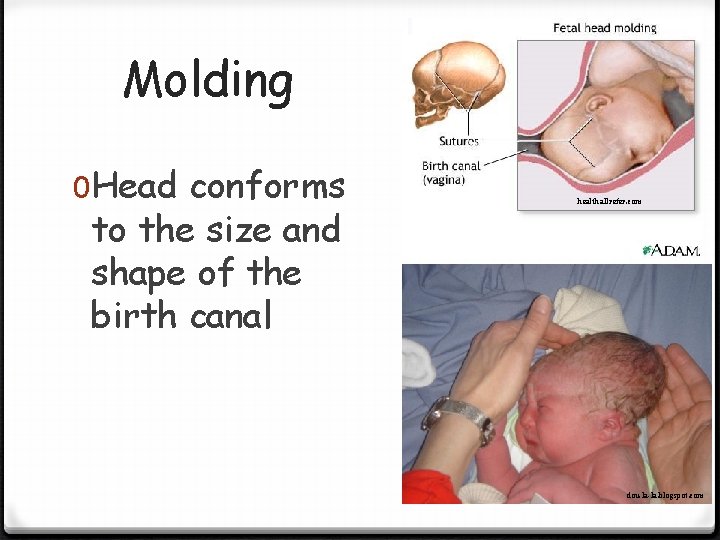
Molding 0 Head conforms to the size and shape of the birth canal health. allrefer. com dou-la-la. blogspot. com
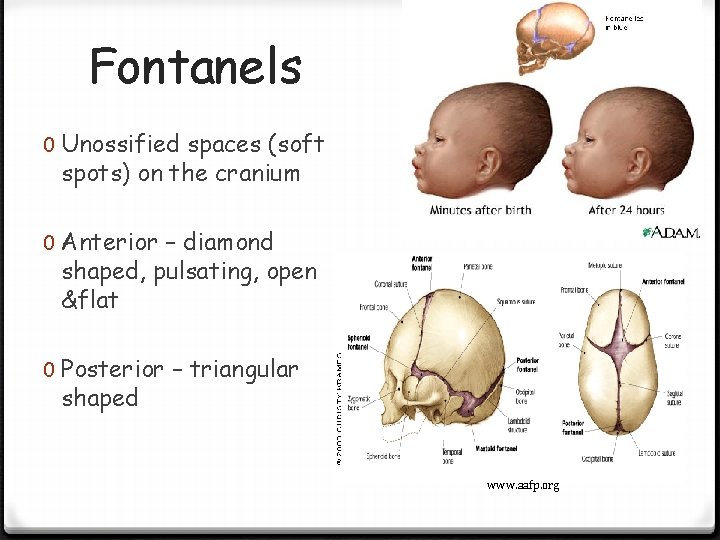
Fontanels 0 Unossified spaces (soft spots) on the cranium 0 Anterior – diamond shaped, pulsating, open &flat 0 Posterior – triangular shaped www. aafp. org
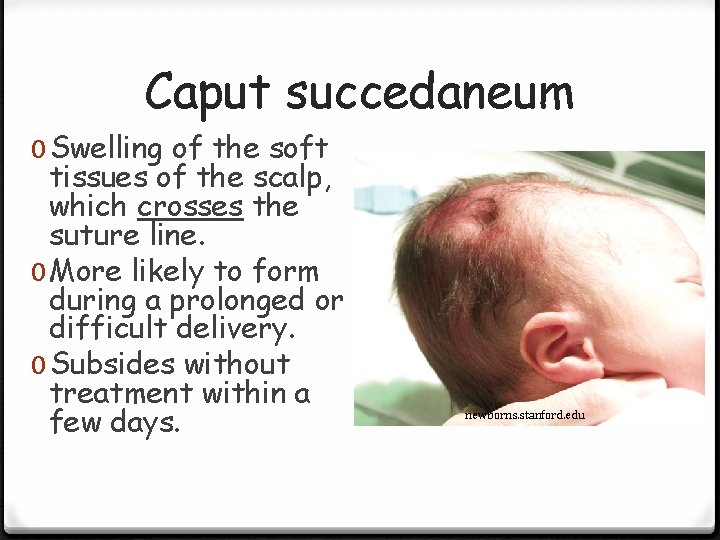
Caput succedaneum 0 Swelling of the soft tissues of the scalp, which crosses the suture line. 0 More likely to form during a prolonged or difficult delivery. 0 Subsides without treatment within a few days. newborns. stanford. edu
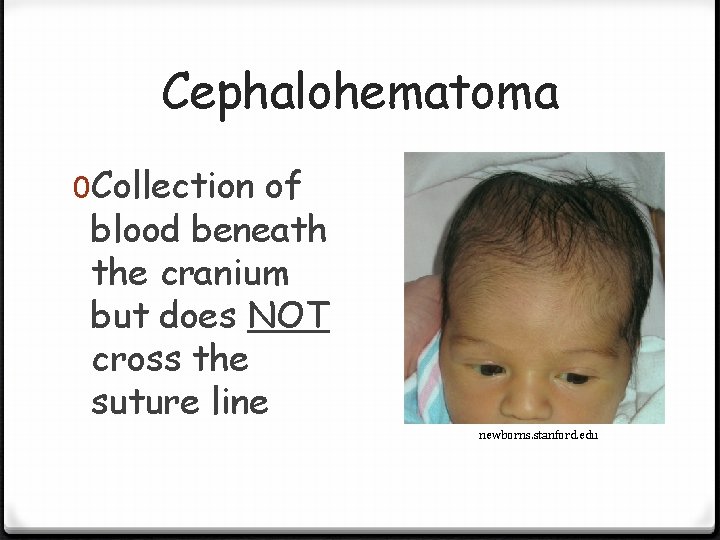
Cephalohematoma 0 Collection of blood beneath the cranium but does NOT cross the suture line newborns. stanford. edu
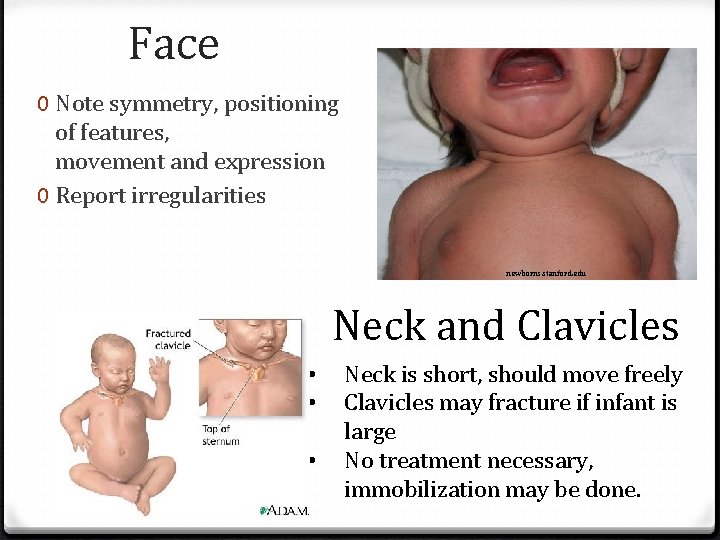
Face 0 Note symmetry, positioning of features, movement and expression 0 Report irregularities newborns. stanford. edu Neck and Clavicles • • • Neck is short, should move freely Clavicles may fracture if infant is large No treatment necessary, immobilization may be done.
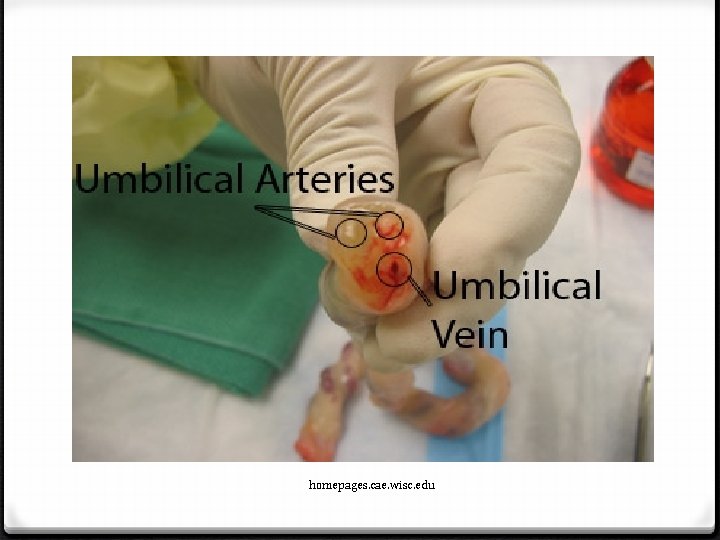
homepages. cae. wisc. edu
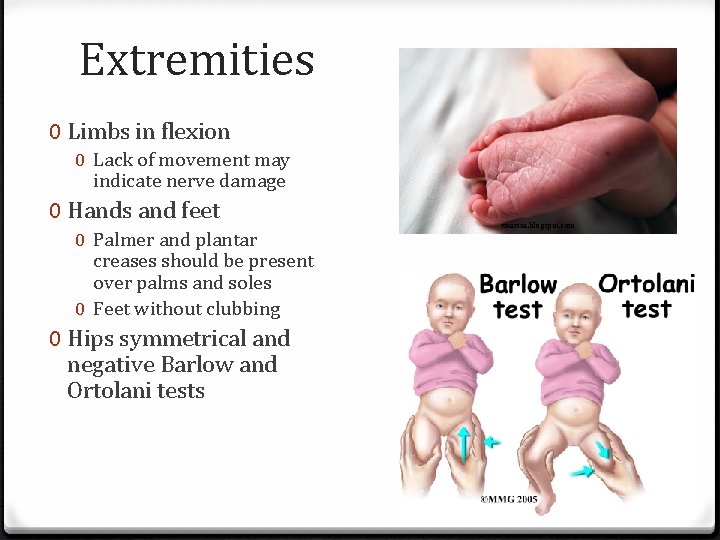
Extremities 0 Limbs in flexion 0 Lack of movement may indicate nerve damage 0 Hands and feet 0 Palmer and plantar creases should be present over palms and soles 0 Feet without clubbing 0 Hips symmetrical and negative Barlow and Ortolani tests rixa. blogspot. com
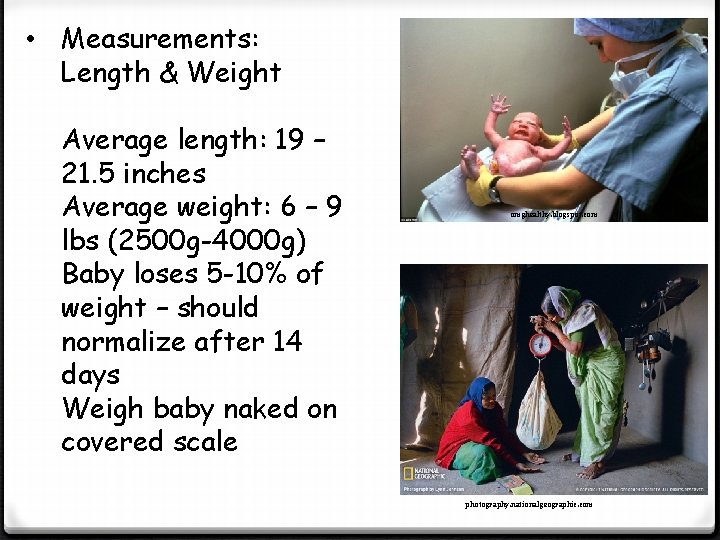
• Measurements: Length & Weight Average length: 19 – 21. 5 inches Average weight: 6 – 9 lbs (2500 g-4000 g) Baby loses 5 -10% of weight – should normalize after 14 days Weigh baby naked on covered scale omghealthy. blogspot. com photography. nationalgeographic. com
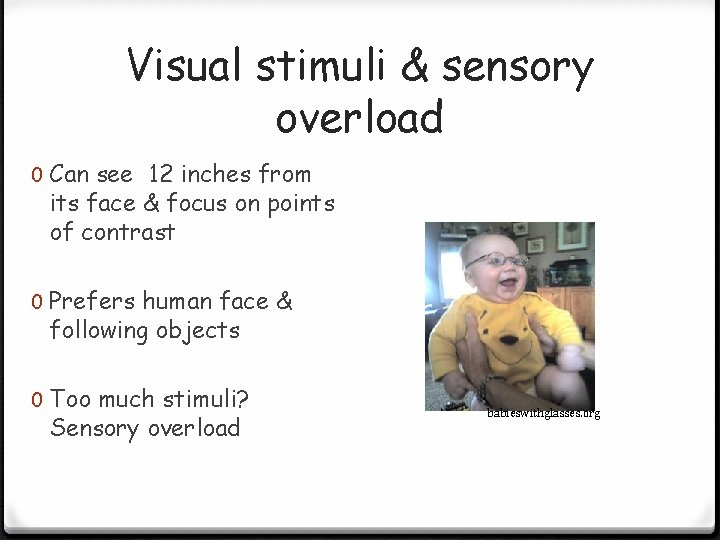
Visual stimuli & sensory overload 0 Can see 12 inches from its face & focus on points of contrast 0 Prefers human face & following objects 0 Too much stimuli? Sensory overload babieswithglasses. org
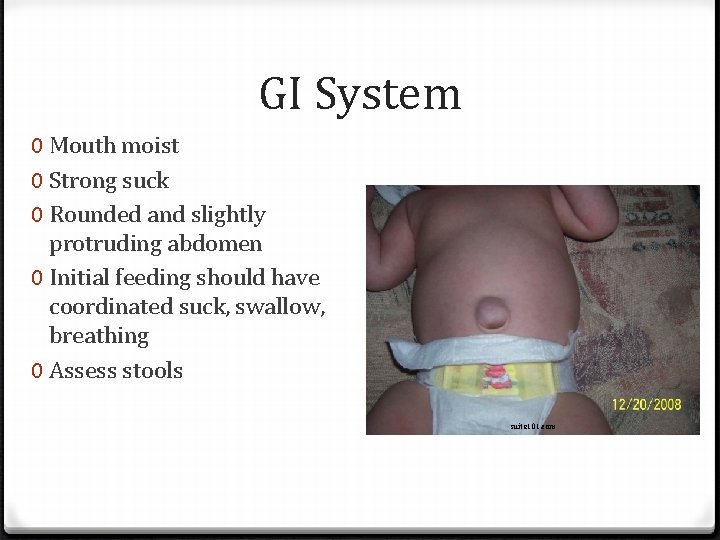
GI System 0 Mouth moist 0 Strong suck 0 Rounded and slightly protruding abdomen 0 Initial feeding should have coordinated suck, swallow, breathing 0 Assess stools suite 101. com
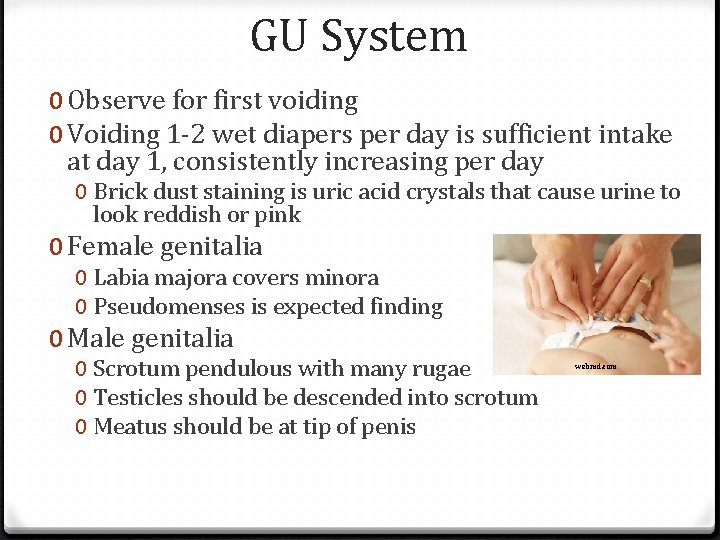
GU System 0 Observe for first voiding 0 Voiding 1 -2 wet diapers per day is sufficient intake at day 1, consistently increasing per day 0 Brick dust staining is uric acid crystals that cause urine to look reddish or pink 0 Female genitalia 0 Labia majora covers minora 0 Pseudomenses is expected finding 0 Male genitalia 0 Scrotum pendulous with many rugae 0 Testicles should be descended into scrotum 0 Meatus should be at tip of penis webmd. com
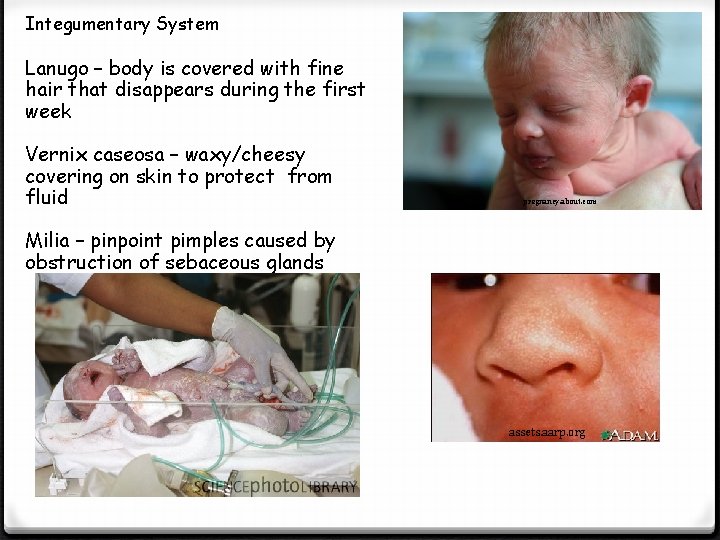
Integumentary System Lanugo – body is covered with fine hair that disappears during the first week Vernix caseosa – waxy/cheesy covering on skin to protect from fluid pregnancy. about. com Milia – pinpoint pimples caused by obstruction of sebaceous glands assets. aarp. org
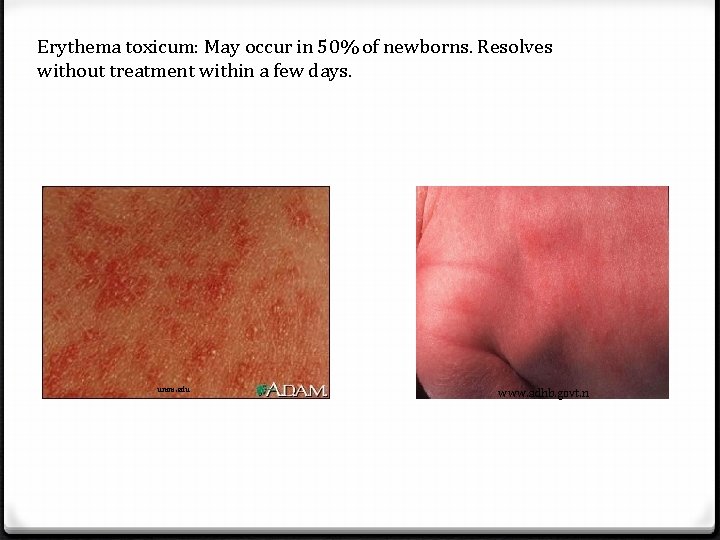
Erythema toxicum: May occur in 50% of newborns. Resolves without treatment within a few days. umm. edu www. adhb. govt. n
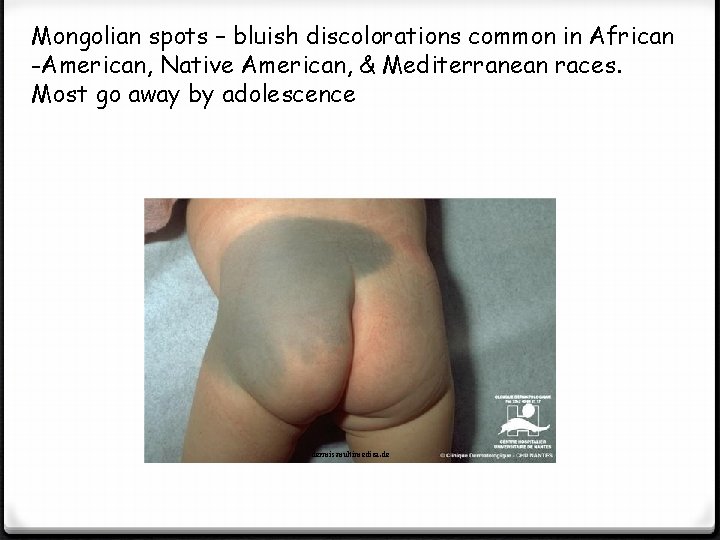
Mongolian spots – bluish discolorations common in African -American, Native American, & Mediterranean races. Most go away by adolescence dermis. multimedica. de
Assessment of Gestational Age Ballard Score based on two parts: 0 1. neuromuscular 0 2. physical characteristics 0 Gestational age is appropriate when neonate scores between 10 -90 th percentiles
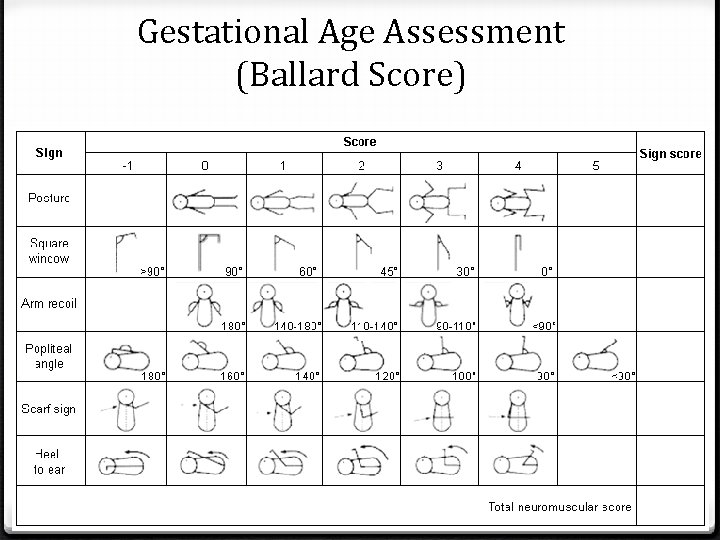
Gestational Age Assessment (Ballard Score)
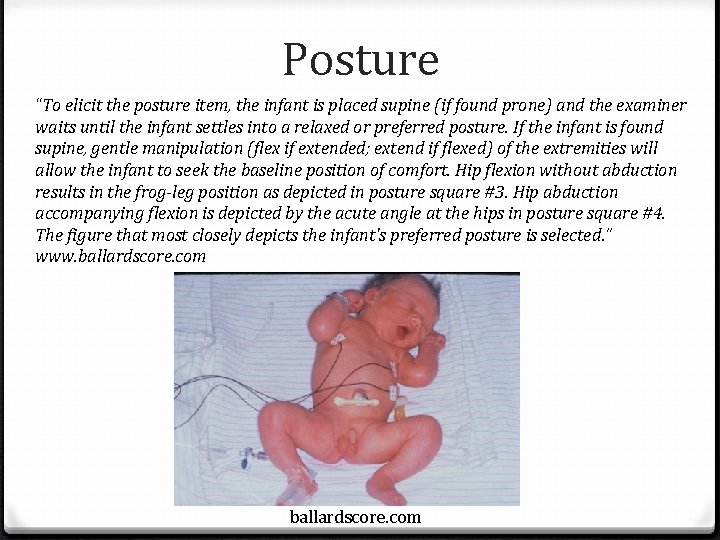
Posture “To elicit the posture item, the infant is placed supine (if found prone) and the examiner waits until the infant settles into a relaxed or preferred posture. If the infant is found supine, gentle manipulation (flex if extended; extend if flexed) of the extremities will allow the infant to seek the baseline position of comfort. Hip flexion without abduction results in the frog-leg position as depicted in posture square #3. Hip abduction accompanying flexion is depicted by the acute angle at the hips in posture square #4. The figure that most closely depicts the infant's preferred posture is selected. ” www. ballardscore. com
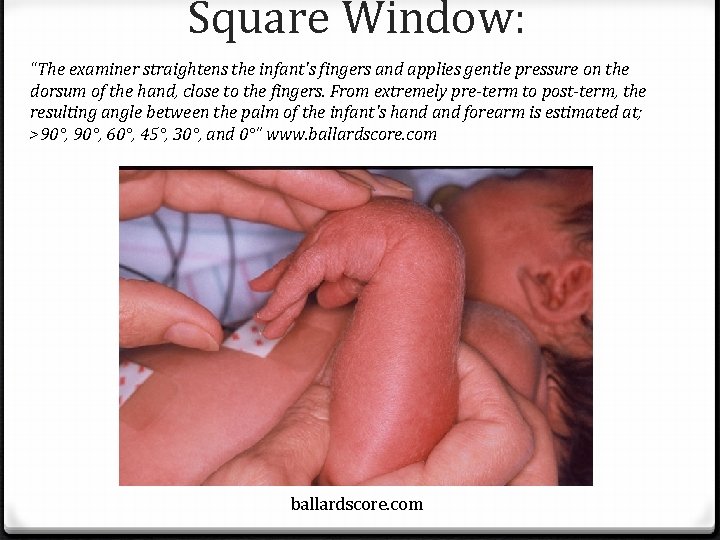
Square Window: “The examiner straightens the infant's fingers and applies gentle pressure on the dorsum of the hand, close to the fingers. From extremely pre-term to post-term, the resulting angle between the palm of the infant's hand forearm is estimated at; >90°, 60°, 45°, 30°, and 0°” www. ballardscore. com
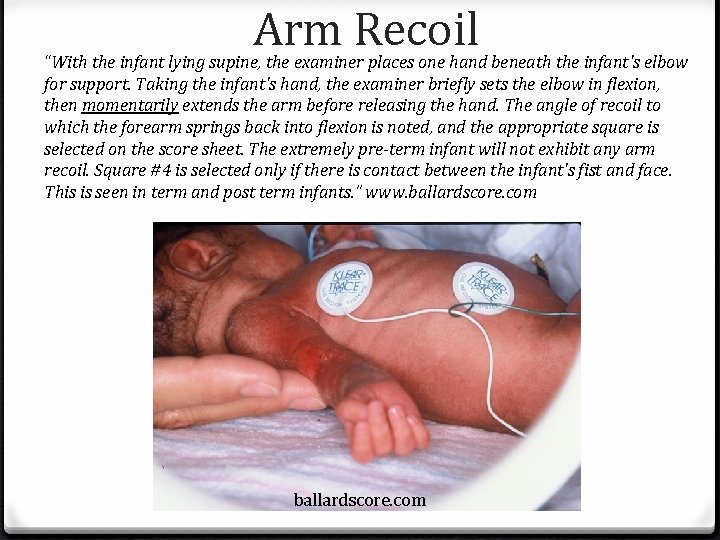
Arm Recoil “With the infant lying supine, the examiner places one hand beneath the infant's elbow for support. Taking the infant's hand, the examiner briefly sets the elbow in flexion, then momentarily extends the arm before releasing the hand. The angle of recoil to which the forearm springs back into flexion is noted, and the appropriate square is selected on the score sheet. The extremely pre-term infant will not exhibit any arm recoil. Square #4 is selected only if there is contact between the infant's fist and face. This is seen in term and post term infants. ” www. ballardscore. com
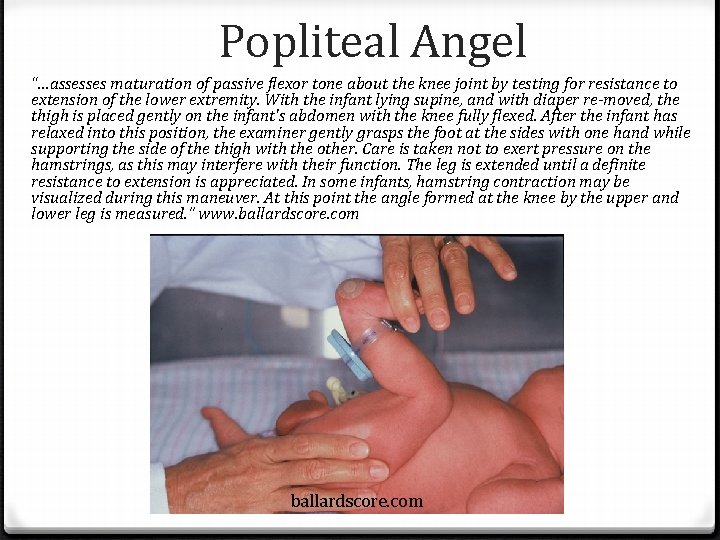
Popliteal Angel “…assesses maturation of passive flexor tone about the knee joint by testing for resistance to extension of the lower extremity. With the infant lying supine, and with diaper re-moved, the thigh is placed gently on the infant's abdomen with the knee fully flexed. After the infant has relaxed into this position, the examiner gently grasps the foot at the sides with one hand while supporting the side of the thigh with the other. Care is taken not to exert pressure on the hamstrings, as this may interfere with their function. The leg is extended until a definite resistance to extension is appreciated. In some infants, hamstring contraction may be visualized during this maneuver. At this point the angle formed at the knee by the upper and lower leg is measured. ” www. ballardscore. com
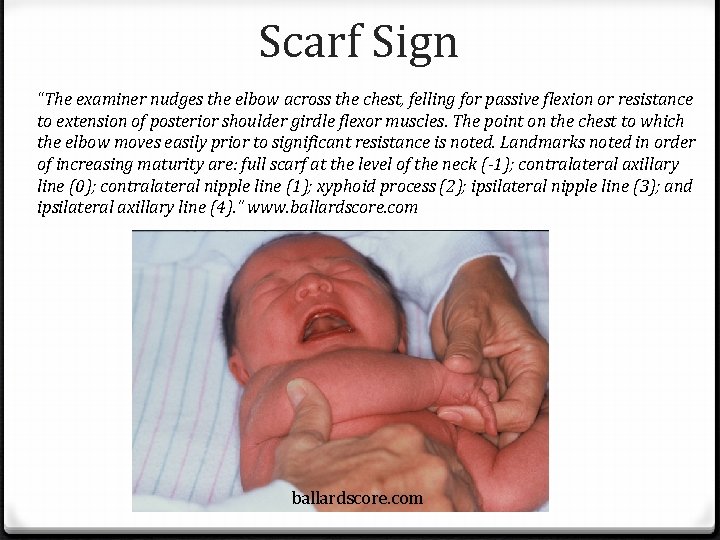
Scarf Sign “The examiner nudges the elbow across the chest, felling for passive flexion or resistance to extension of posterior shoulder girdle flexor muscles. The point on the chest to which the elbow moves easily prior to significant resistance is noted. Landmarks noted in order of increasing maturity are: full scarf at the level of the neck (-1); contralateral axillary line (0); contralateral nipple line (1); xyphoid process (2); ipsilateral nipple line (3); and ipsilateral axillary line (4). ” www. ballardscore. com
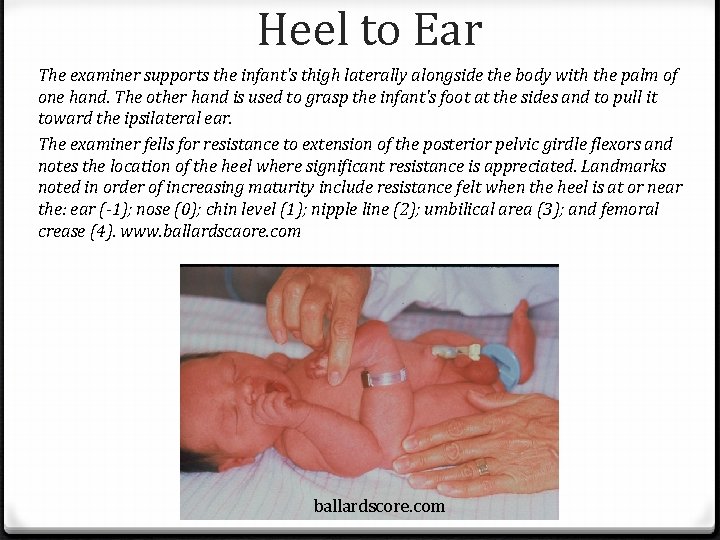
Heel to Ear The examiner supports the infant's thigh laterally alongside the body with the palm of one hand. The other hand is used to grasp the infant's foot at the sides and to pull it toward the ipsilateral ear. The examiner fells for resistance to extension of the posterior pelvic girdle flexors and notes the location of the heel where significant resistance is appreciated. Landmarks noted in order of increasing maturity include resistance felt when the heel is at or near the: ear (-1); nose (0); chin level (1); nipple line (2); umbilical area (3); and femoral crease (4). www. ballardscaore. com ballardscore. com
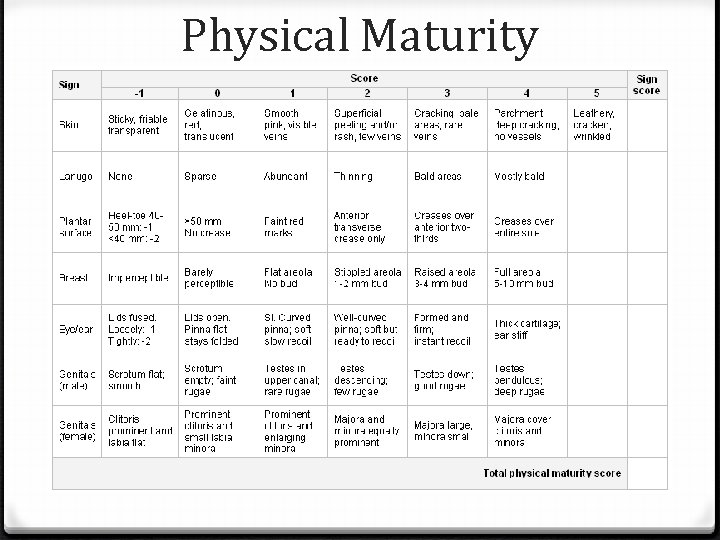
Physical Maturity
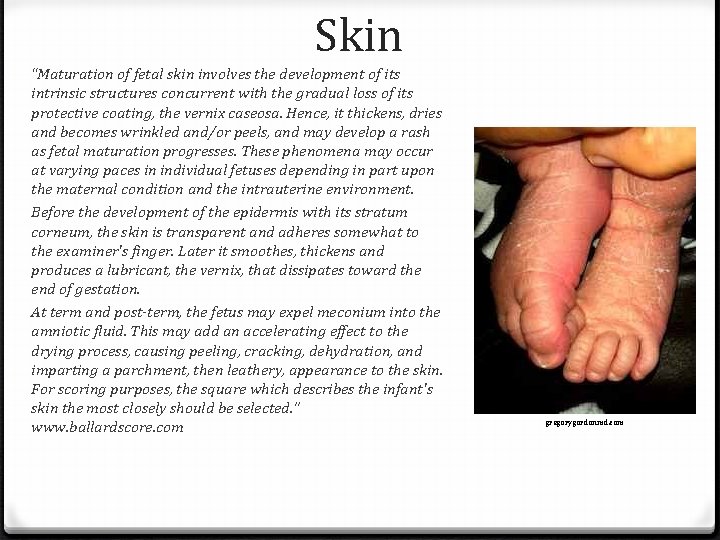
Skin “Maturation of fetal skin involves the development of its intrinsic structures concurrent with the gradual loss of its protective coating, the vernix caseosa. Hence, it thickens, dries and becomes wrinkled and/or peels, and may develop a rash as fetal maturation progresses. These phenomena may occur at varying paces in individual fetuses depending in part upon the maternal condition and the intrauterine environment. Before the development of the epidermis with its stratum corneum, the skin is transparent and adheres somewhat to the examiner's finger. Later it smoothes, thickens and produces a lubricant, the vernix, that dissipates toward the end of gestation. At term and post-term, the fetus may expel meconium into the amniotic fluid. This may add an accelerating effect to the drying process, causing peeling, cracking, dehydration, and imparting a parchment, then leathery, appearance to the skin. For scoring purposes, the square which describes the infant's skin the most closely should be selected. ” www. ballardscore. com gregorygordonmd. com
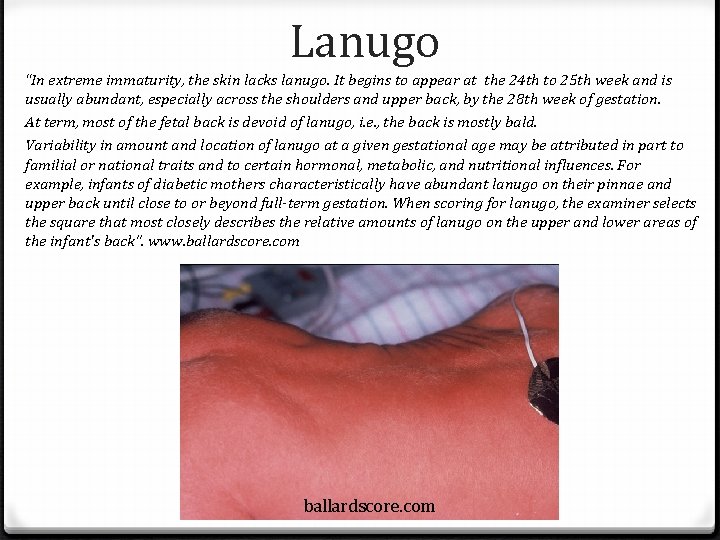
Lanugo “In extreme immaturity, the skin lacks lanugo. It begins to appear at the 24 th to 25 th week and is usually abundant, especially across the shoulders and upper back, by the 28 th week of gestation. At term, most of the fetal back is devoid of lanugo, i. e. , the back is mostly bald. Variability in amount and location of lanugo at a given gestational age may be attributed in part to familial or national traits and to certain hormonal, metabolic, and nutritional influences. For example, infants of diabetic mothers characteristically have abundant lanugo on their pinnae and upper back until close to or beyond full-term gestation. When scoring for lanugo, the examiner selects the square that most closely describes the relative amounts of lanugo on the upper and lower areas of the infant's back”. www. ballardscore. com
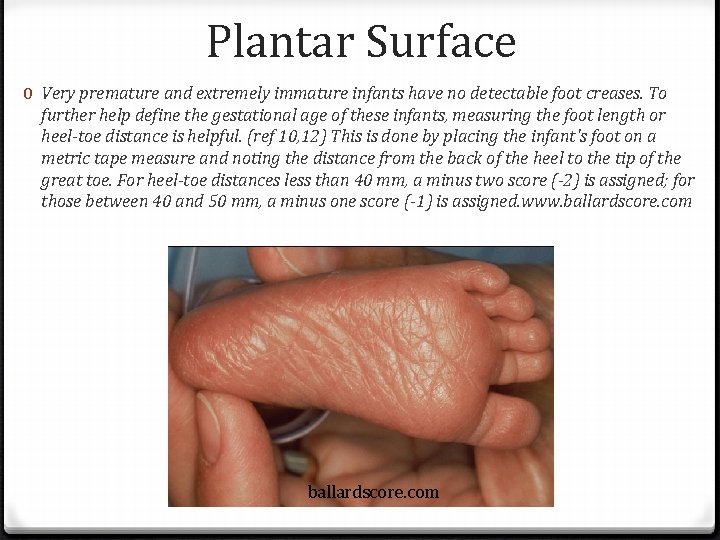
Plantar Surface 0 Very premature and extremely immature infants have no detectable foot creases. To further help define the gestational age of these infants, measuring the foot length or heel-toe distance is helpful. (ref 10, 12) This is done by placing the infant's foot on a metric tape measure and noting the distance from the back of the heel to the tip of the great toe. For heel-toe distances less than 40 mm, a minus two score (-2) is assigned; for those between 40 and 50 mm, a minus one score (-1) is assigned. www. ballardscore. com
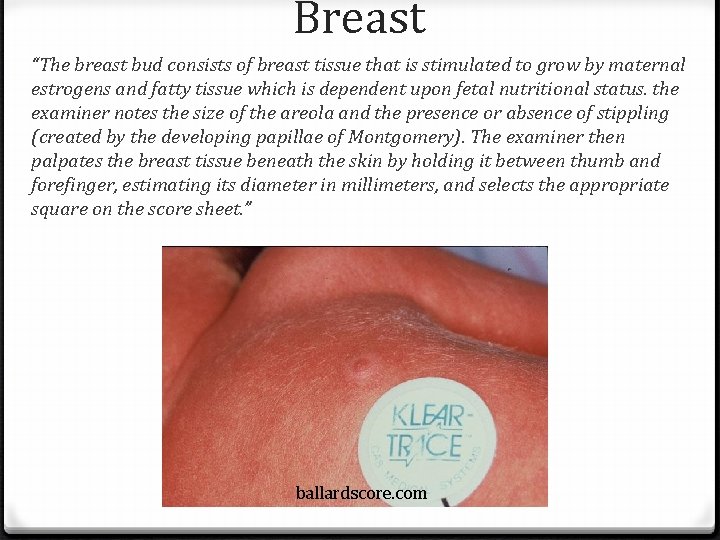
Breast “The breast bud consists of breast tissue that is stimulated to grow by maternal estrogens and fatty tissue which is dependent upon fetal nutritional status. the examiner notes the size of the areola and the presence or absence of stippling (created by the developing papillae of Montgomery). The examiner then palpates the breast tissue beneath the skin by holding it between thumb and forefinger, estimating its diameter in millimeters, and selects the appropriate square on the score sheet. ” ballardscore. com
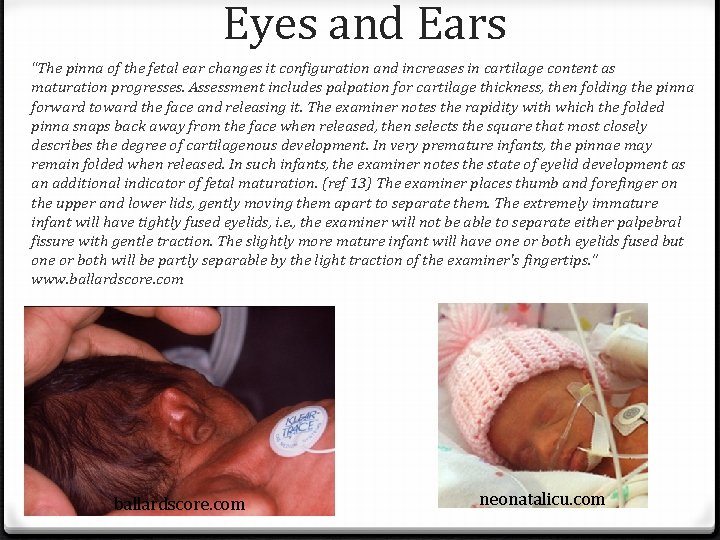
Eyes and Ears “The pinna of the fetal ear changes it configuration and increases in cartilage content as maturation progresses. Assessment includes palpation for cartilage thickness, then folding the pinna forward toward the face and releasing it. The examiner notes the rapidity with which the folded pinna snaps back away from the face when released, then selects the square that most closely describes the degree of cartilagenous development. In very premature infants, the pinnae may remain folded when released. In such infants, the examiner notes the state of eyelid development as an additional indicator of fetal maturation. (ref 13) The examiner places thumb and forefinger on the upper and lower lids, gently moving them apart to separate them. The extremely immature infant will have tightly fused eyelids, i. e. , the examiner will not be able to separate either palpebral fissure with gentle traction. The slightly more mature infant will have one or both eyelids fused but one or both will be partly separable by the light traction of the examiner's fingertips. ” www. ballardscore. com neonatalicu. com
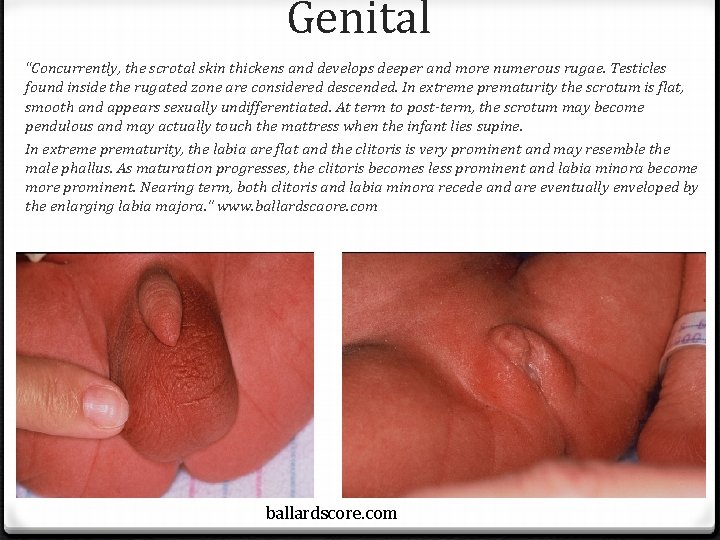
Genital “Concurrently, the scrotal skin thickens and develops deeper and more numerous rugae. Testicles found inside the rugated zone are considered descended. In extreme prematurity the scrotum is flat, smooth and appears sexually undifferentiated. At term to post-term, the scrotum may become pendulous and may actually touch the mattress when the infant lies supine. In extreme prematurity, the labia are flat and the clitoris is very prominent and may resemble the male phallus. As maturation progresses, the clitoris becomes less prominent and labia minora become more prominent. Nearing term, both clitoris and labia minora recede and are eventually enveloped by the enlarging labia majora. ” www. ballardscaore. com ballardscore. com
Chapter 22– The Normal New born: Nursing Car e
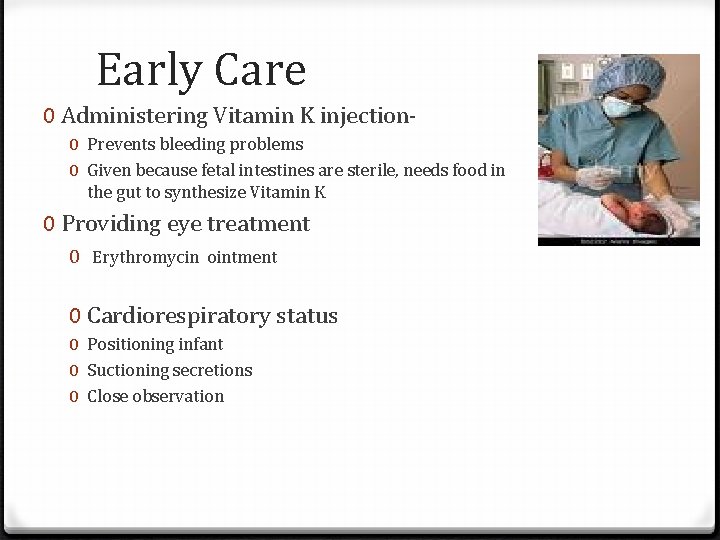
Early Care 0 Administering Vitamin K injection 0 Prevents bleeding problems 0 Given because fetal intestines are sterile, needs food in the gut to synthesize Vitamin K 0 Providing eye treatment 0 Erythromycin ointment 0 Cardiorespiratory status 0 Positioning infant 0 Suctioning secretions 0 Close observation
Question The nurse administers vitamin K to the newborn for what reason? 0 Most mothers have a diet deficient in vitamin K, which results in the infant being deficient. 0 Vitamin K prevents the synthesis of prothrombin in the liver and must be given by injection. 0 Bacteria that synthesize vitamin K are not present in the newborn's intestinal tract. 0 The supply of vitamin K is inadequate for at least 3 -4 months, and the newborn must be supplemented
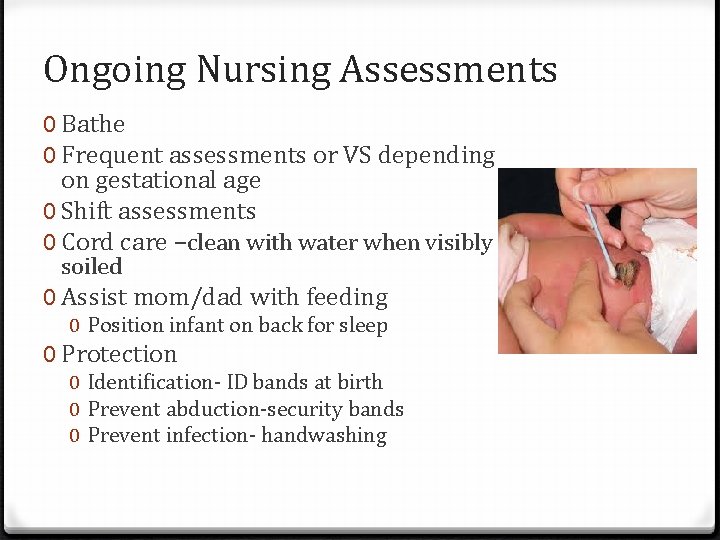
Ongoing Nursing Assessments 0 Bathe 0 Frequent assessments or VS depending on gestational age 0 Shift assessments 0 Cord care –clean with water when visibly soiled 0 Assist mom/dad with feeding 0 Position infant on back for sleep 0 Protection 0 Identification- ID bands at birth 0 Prevent abduction-security bands 0 Prevent infection- handwashing
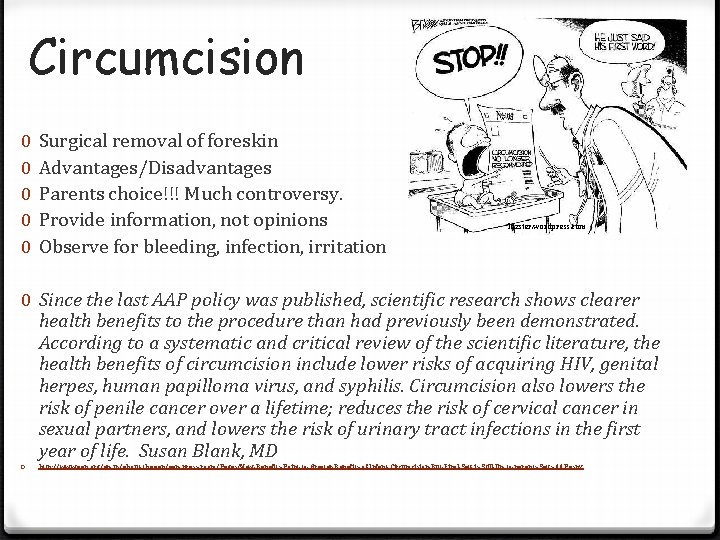
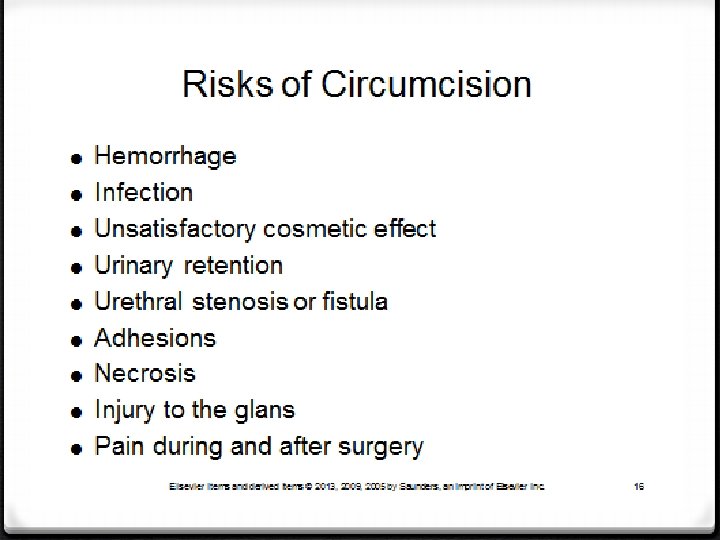
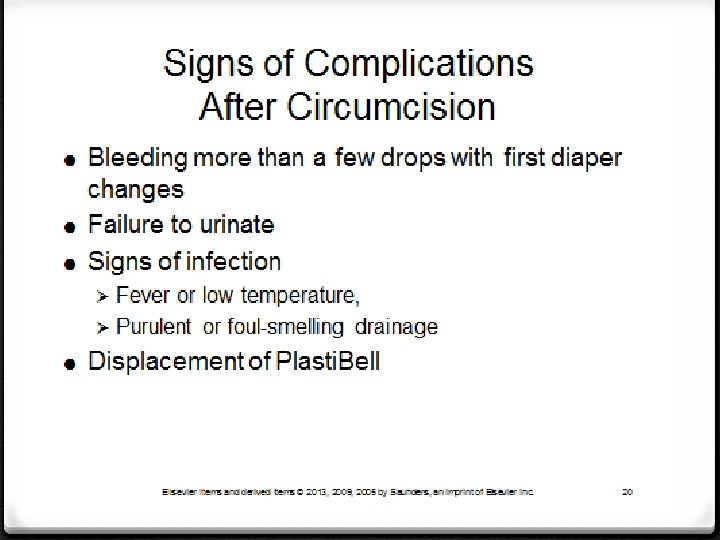
Circumcision 0 0 0 Surgical removal of foreskin Advantages/Disadvantages Parents choice!!! Much controversy. Provide information, not opinions Observe for bleeding, infection, irritation lozster. wordpress. com 0 Since the last AAP policy was published, scientific research shows clearer health benefits to the procedure than had previously been demonstrated. According to a systematic and critical review of the scientific literature, the health benefits of circumcision include lower risks of acquiring HIV, genital herpes, human papilloma virus, and syphilis. Circumcision also lowers the risk of penile cancer over a lifetime; reduces the risk of cervical cancer in sexual partners, and lowers the risk of urinary tract infections in the first year of life. Susan Blank, MD 0 http: //www. aap. org/en-us/about-the-aap/aap-press-room/Pages/New-Benefits-Point-to-Greater-Benefits-of-Infant-Circumcision-But-Final-Say-is-Still-Up-to-parents-Says-AAP. aspx
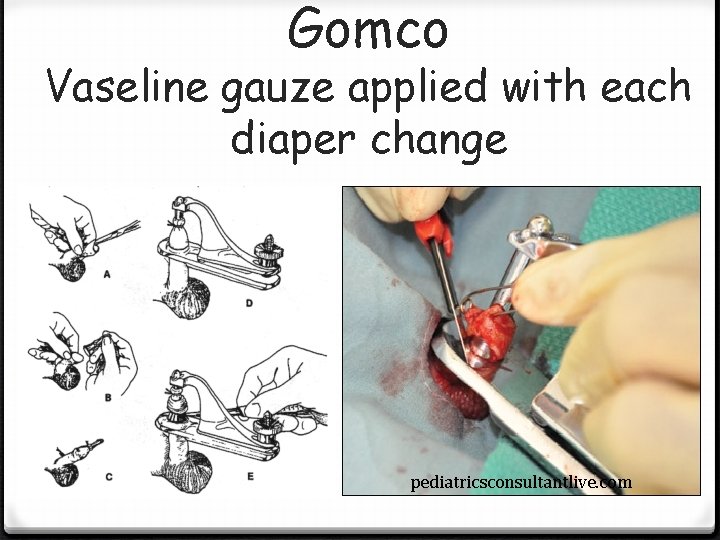
Gomco Vaseline gauze applied with each diaper change pediatricsconsultantlive. com
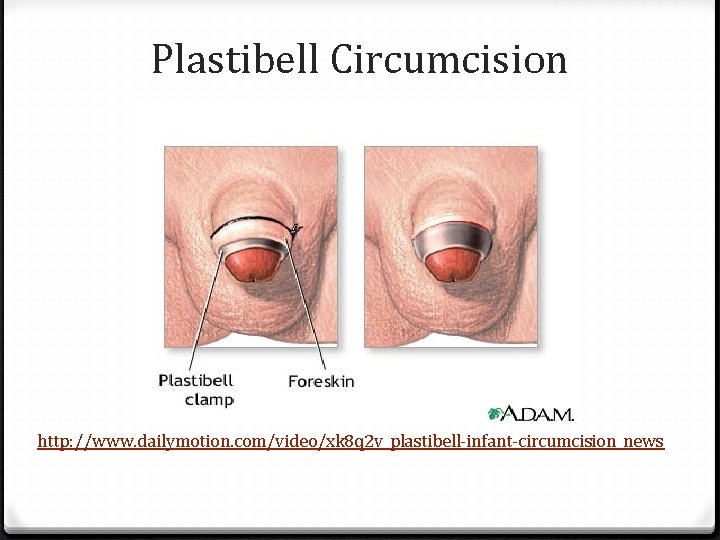
Plastibell Circumcision http: //www. dailymotion. com/video/xk 8 q 2 v_plastibell-infant-circumcision_news
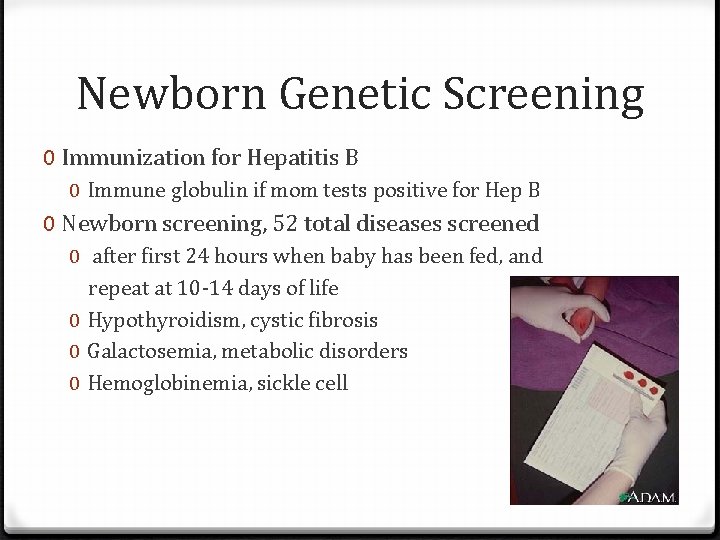
Newborn Genetic Screening 0 Immunization for Hepatitis B 0 Immune globulin if mom tests positive for Hep B 0 Newborn screening, 52 total diseases screened 0 after first 24 hours when baby has been fed, and repeat at 10 -14 days of life 0 Hypothyroidism, cystic fibrosis 0 Galactosemia, metabolic disorders 0 Hemoglobinemia, sickle cell
Discharge and Follow-up 0 Discharge varies according to maternal and neonate’s needs 0 Most laws allows 48 hours for vaginal delivery and 96 hours for cesarean delivery 0 Give simple and exact discharge instructions 0 Follow-up appointment 2 -3 days after leaving hospital 0 Some hospitals don’t offer circumcision so it will have to be done in the pediatrician’s office.
allmotivated. com Newborn Nutrition Chapter 23
Nutritional Needs of the Newborn 0 39 -50 kcal/d of breast milk or formula 0 Infants lose up to 10% of birth weight during first few days and regains by 2 weeks of age 0 Neonates digest simple carbs and proteins well; fat less well 0 Vitamins and minerals present in both 0 Additional water not necessary
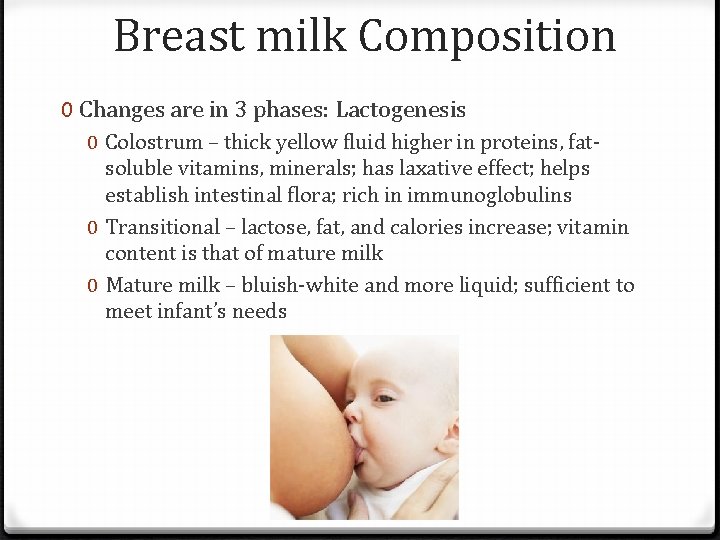
Breast milk Composition 0 Changes are in 3 phases: Lactogenesis 0 Colostrum – thick yellow fluid higher in proteins, fatsoluble vitamins, minerals; has laxative effect; helps establish intestinal flora; rich in immunoglobulins 0 Transitional – lactose, fat, and calories increase; vitamin content is that of mature milk 0 Mature milk – bluish-white and more liquid; sufficient to meet infant’s needs
Breast milk Composition (cont) 0 Proteins – easy to digest; low concentrations of tyrosine and phenylalanine 0 Carbohydrates from lactose – promotes calcium absorption and normal intestinal flora 0 Fat is ½ of milk calories – more easily digested than cow’s milk fat 0 Foremilk is the milk (typically lower in fat) available at the beginning of a feeding; hind milk is milk at the end of a feeding, which has a higher fat content than the foremilk at that feeding.

Formula Composition 0 Unmodified cow’s milk (store bought) not recommended for infants younger than 12 months 0 Soy or protein formulas for infants with allergies 0 If allergic to cow’s milk, may also be allergic to soy milk 0 Special formulas available for infants with special problems like lactase deficiency, galactosemia, or Phenylketonuria (PKU)
Breastfeeding Benefits 0 Mother 0 Enhances uterine involution 0 More likely to rest while feeding 0 More likely to eat well 0 May help weight loss 0 May enhance bonding 0 Economical and convenient 0 Makes travel easier 0 May reduce risk of some cancers 0 No equipment to wash 0 Baby 0 Less likely to have allergic reactions 0 Helps prevent infections 0 Meets nutritional needs 0 Easily digested 0 No possibility of improper dilution 0 Unlikely to be contaminated 0 Less likely to result in overfeeding 0 No constipation
Normal Breastfeeding 0 Milk is synthesized when suckling from nutrients removed from mother’s blood 0 Prolactin stimulates milk production; suckling continues to increase prolactin release. Oxytocin released to “let-down” milk from milk glands in response to suckling 0 Causes uterus to contract to prevent hemorrhage 0 Pain or anxiety can inhibit let-down 0 Continued milk production requires constant removal (supply and demand)
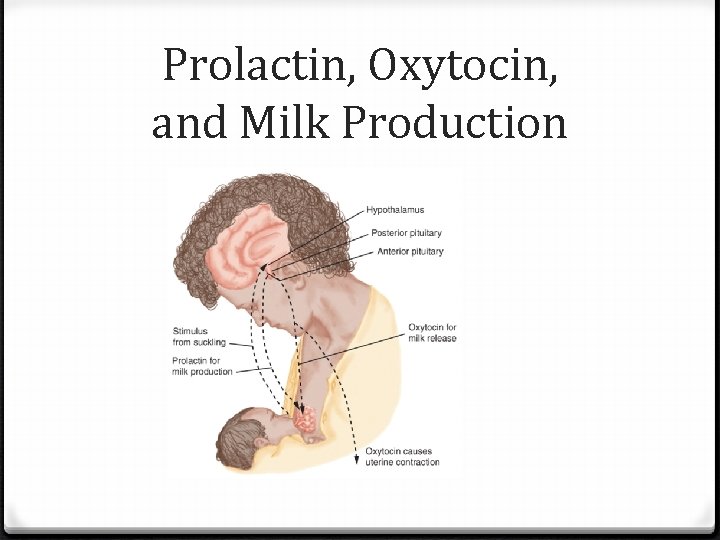
Prolactin, Oxytocin, and Milk Production

Formula Feeding 0 Reasons to select formula 0 Medical conditions, little experience, lack of knowledge, personal preference, culture, employment, support 0 Combination feeding delayed until breastfeeding wellestablished fearlessformulafeeder. com
- Slides: 74