
Chapter 20 Thyristors and Optoelectronic Devices Silicon Unilateral
- Slides: 40
Chapter 20 Thyristors and Optoelectronic Devices
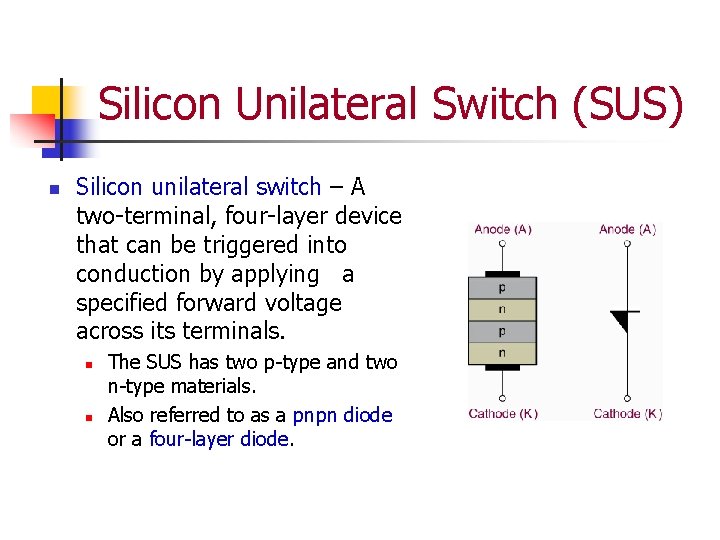
Silicon Unilateral Switch (SUS) n Silicon unilateral switch – A two-terminal, four-layer device that can be triggered into conduction by applying a specified forward voltage across its terminals. n n The SUS has two p-type and two n-type materials. Also referred to as a pnpn diode or a four-layer diode.
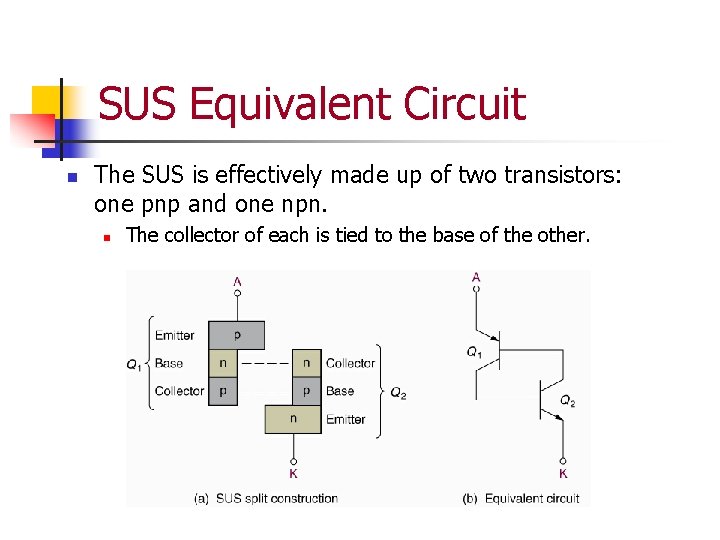
SUS Equivalent Circuit n The SUS is effectively made up of two transistors: one pnp and one npn. n The collector of each is tied to the base of the other.
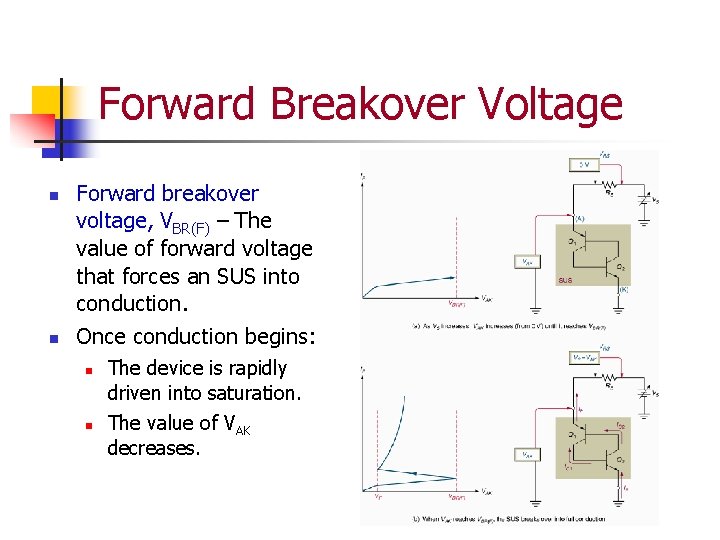
Forward Breakover Voltage n n Forward breakover voltage, VBR(F) – The value of forward voltage that forces an SUS into conduction. Once conduction begins: n n The device is rapidly driven into saturation. The value of VAK decreases.
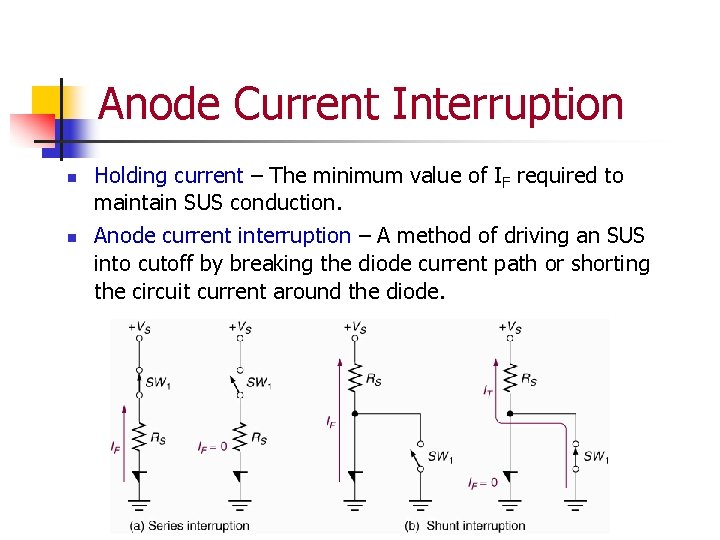
Anode Current Interruption n n Holding current – The minimum value of IF required to maintain SUS conduction. Anode current interruption – A method of driving an SUS into cutoff by breaking the diode current path or shorting the circuit current around the diode.
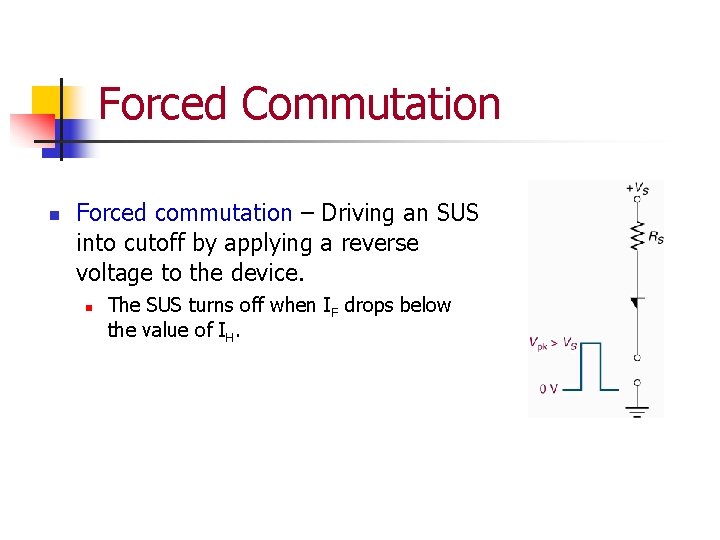
Forced Commutation n Forced commutation – Driving an SUS into cutoff by applying a reverse voltage to the device. n The SUS turns off when IF drops below the value of IH.
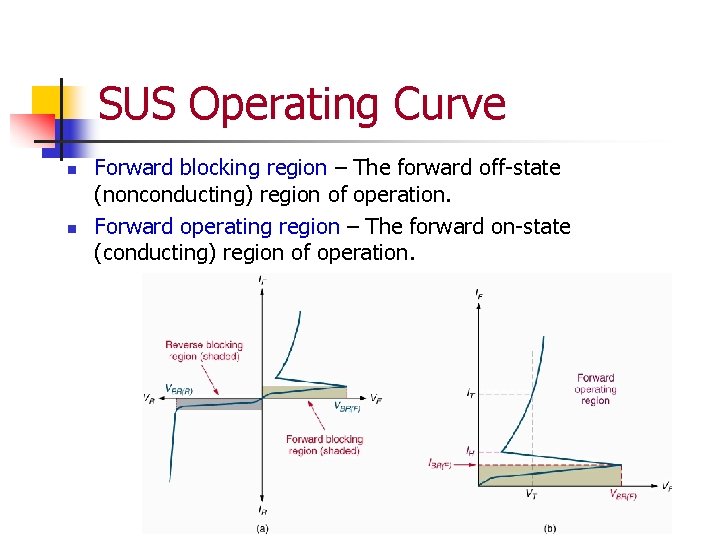
SUS Operating Curve n n Forward blocking region – The forward off-state (nonconducting) region of operation. Forward operating region – The forward on-state (conducting) region of operation.
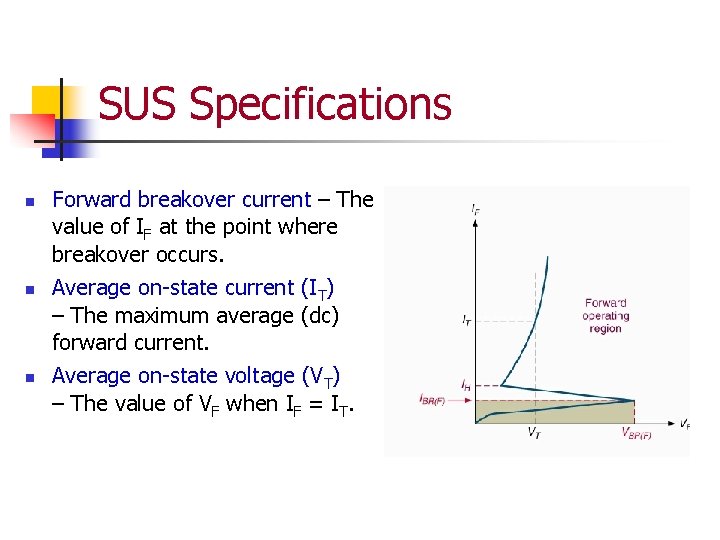
SUS Specifications n n n Forward breakover current – The value of IF at the point where breakover occurs. Average on-state current (IT) – The maximum average (dc) forward current. Average on-state voltage (VT) – The value of VF when IF = IT.
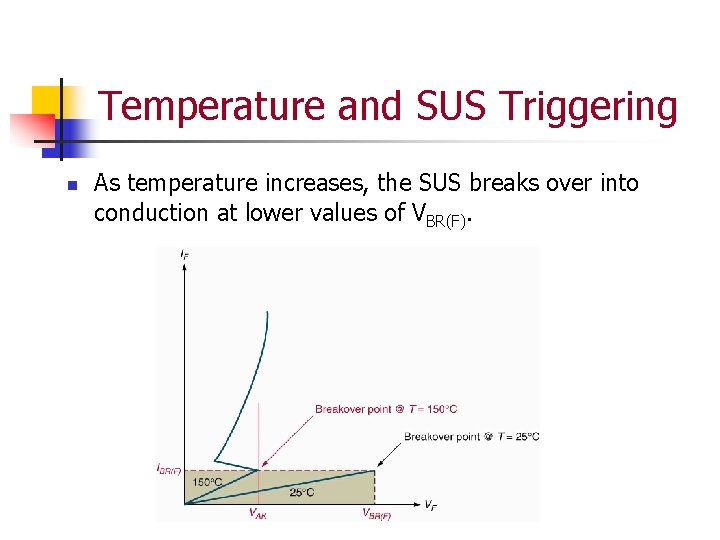
Temperature and SUS Triggering n As temperature increases, the SUS breaks over into conduction at lower values of VBR(F).
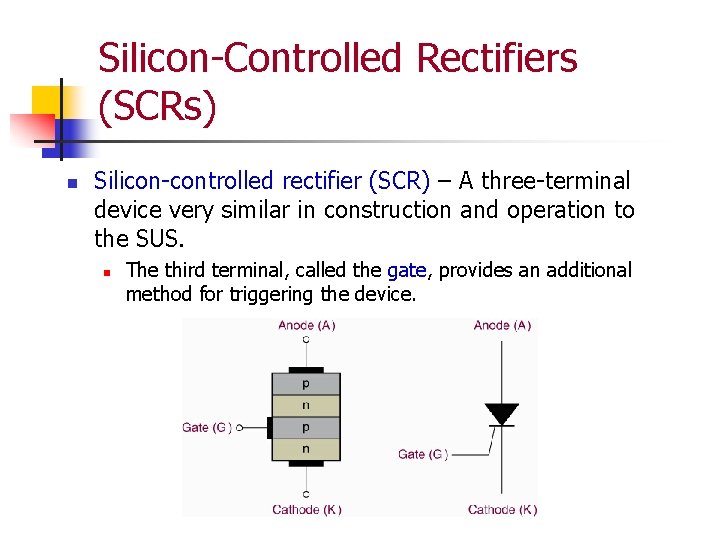
Silicon-Controlled Rectifiers (SCRs) n Silicon-controlled rectifier (SCR) – A three-terminal device very similar in construction and operation to the SUS. n The third terminal, called the gate, provides an additional method for triggering the device.
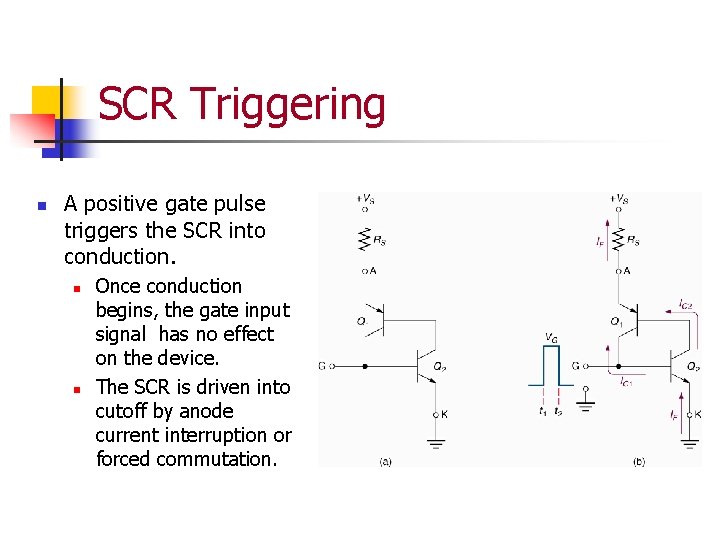
SCR Triggering n A positive gate pulse triggers the SCR into conduction. n n Once conduction begins, the gate input signal has no effect on the device. The SCR is driven into cutoff by anode current interruption or forced commutation.
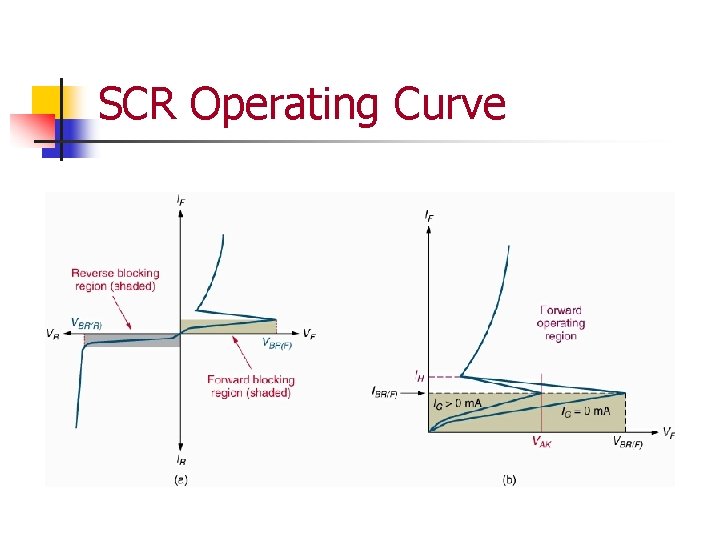
SCR Operating Curve
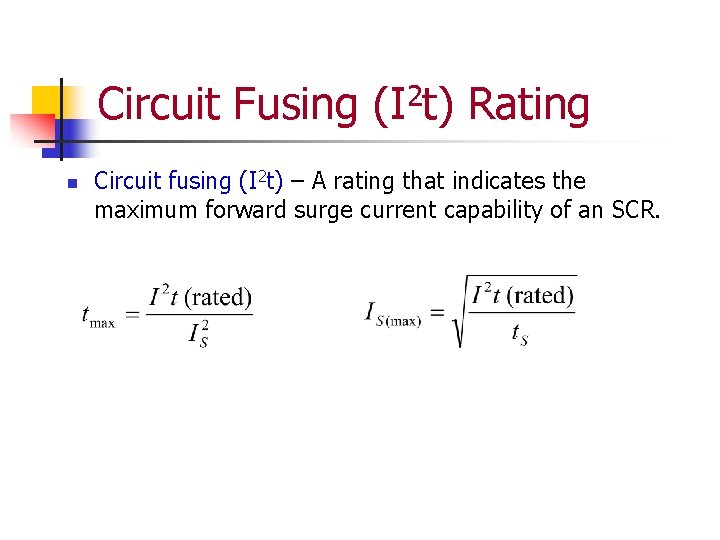
Circuit Fusing (I 2 t) Rating n Circuit fusing (I 2 t) – A rating that indicates the maximum forward surge current capability of an SCR.
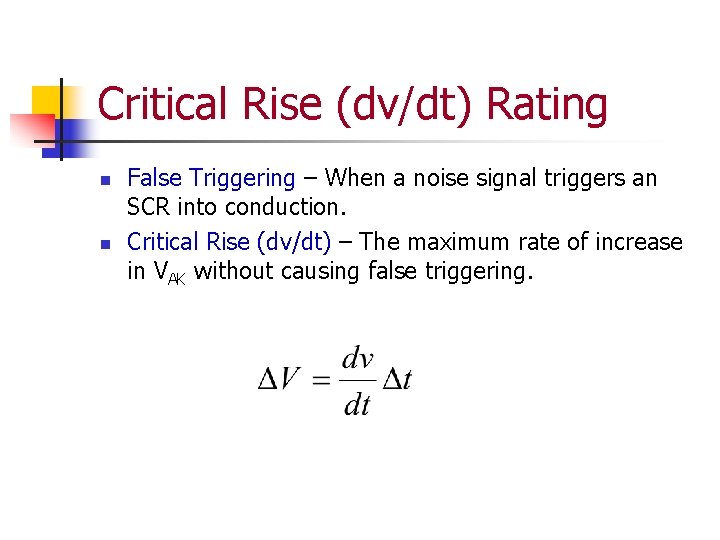
Critical Rise (dv/dt) Rating n n False Triggering – When a noise signal triggers an SCR into conduction. Critical Rise (dv/dt) – The maximum rate of increase in VAK without causing false triggering.
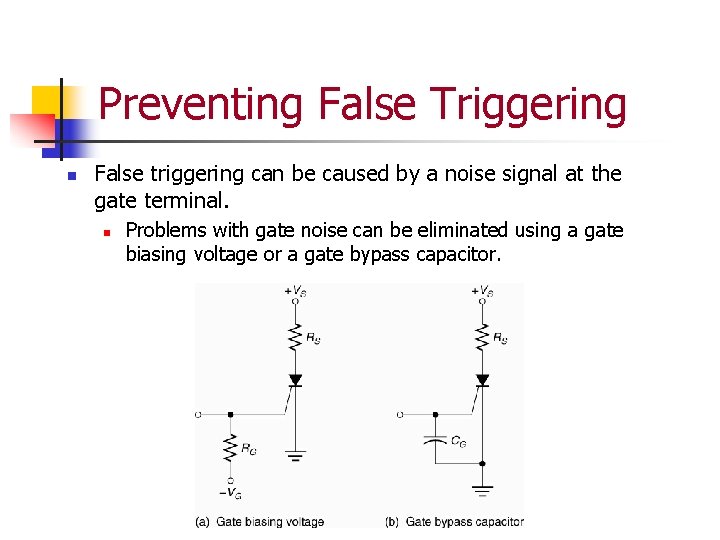
Preventing False Triggering n False triggering can be caused by a noise signal at the gate terminal. n Problems with gate noise can be eliminated using a gate biasing voltage or a gate bypass capacitor.
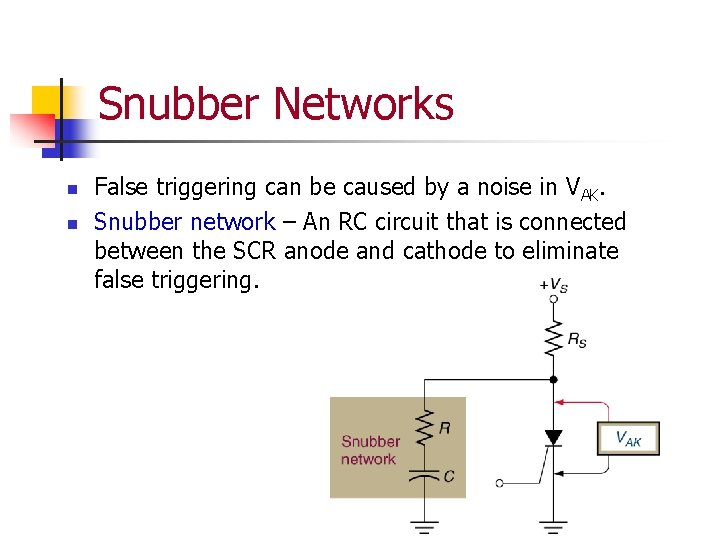
Snubber Networks n n False triggering can be caused by a noise in VAK. Snubber network – An RC circuit that is connected between the SCR anode and cathode to eliminate false triggering.
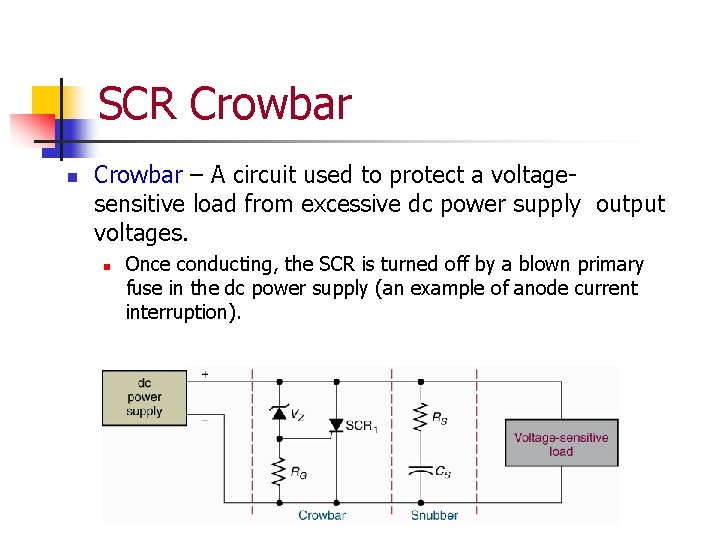
SCR Crowbar n Crowbar – A circuit used to protect a voltagesensitive load from excessive dc power supply output voltages. n Once conducting, the SCR is turned off by a blown primary fuse in the dc power supply (an example of anode current interruption).
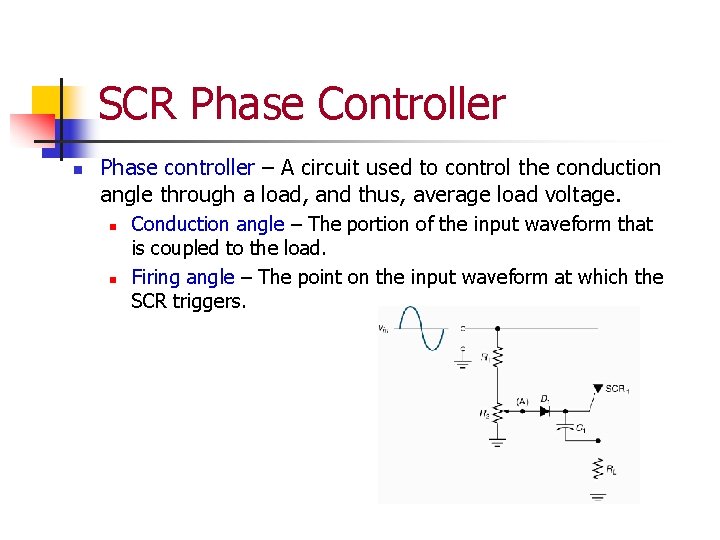
SCR Phase Controller n Phase controller – A circuit used to control the conduction angle through a load, and thus, average load voltage. n n Conduction angle – The portion of the input waveform that is coupled to the load. Firing angle – The point on the input waveform at which the SCR triggers.
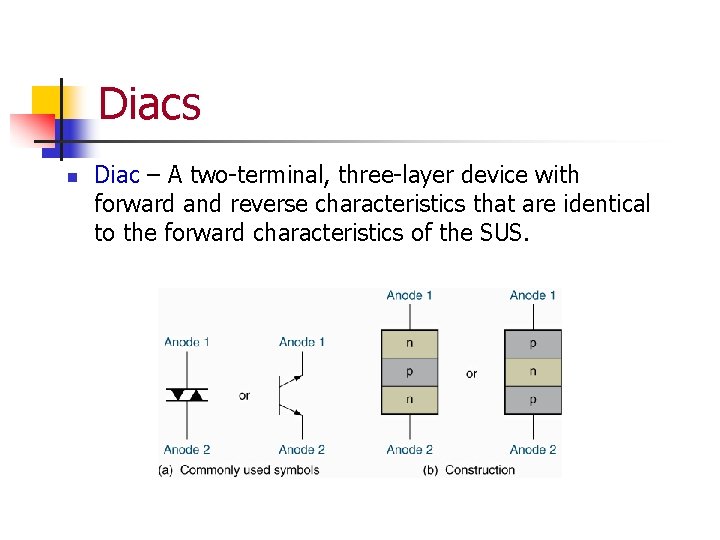
Diacs n Diac – A two-terminal, three-layer device with forward and reverse characteristics that are identical to the forward characteristics of the SUS.
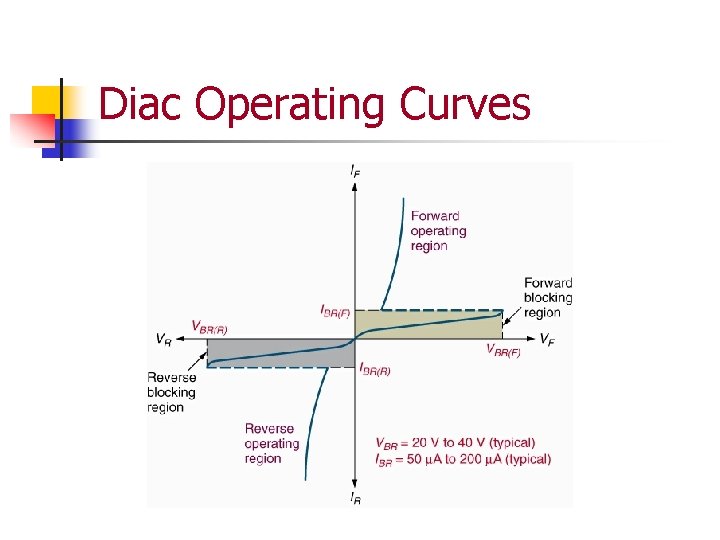
Diac Operating Curves
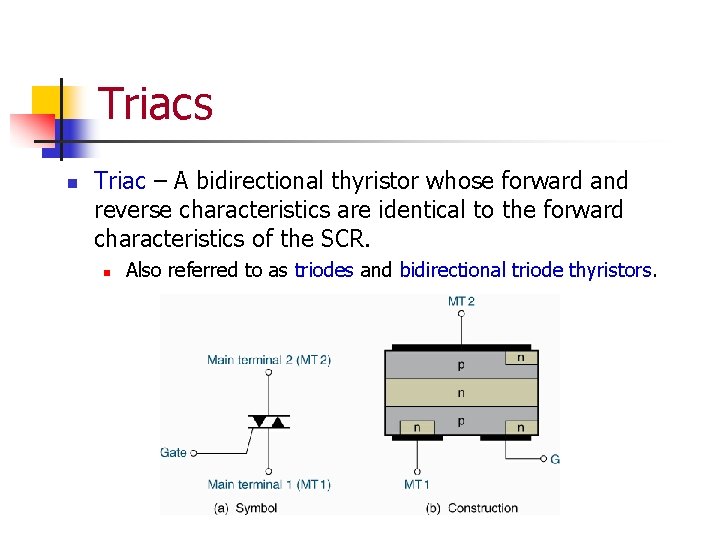
Triacs n Triac – A bidirectional thyristor whose forward and reverse characteristics are identical to the forward characteristics of the SCR. n Also referred to as triodes and bidirectional triode thyristors.
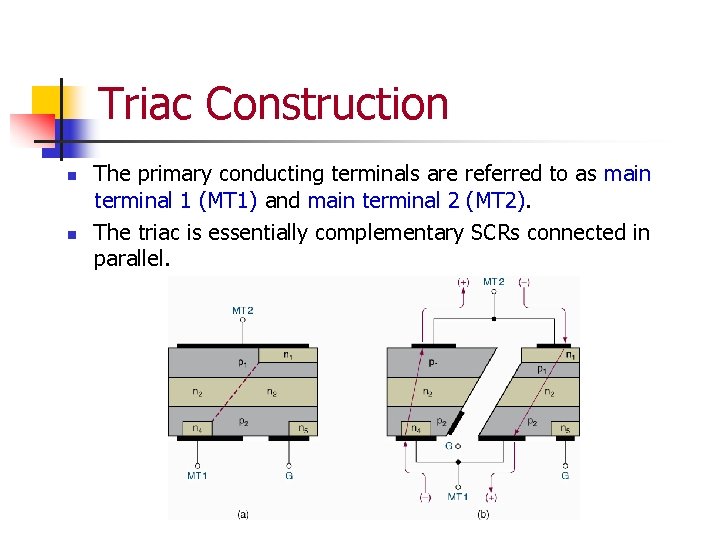
Triac Construction n n The primary conducting terminals are referred to as main terminal 1 (MT 1) and main terminal 2 (MT 2). The triac is essentially complementary SCRs connected in parallel.
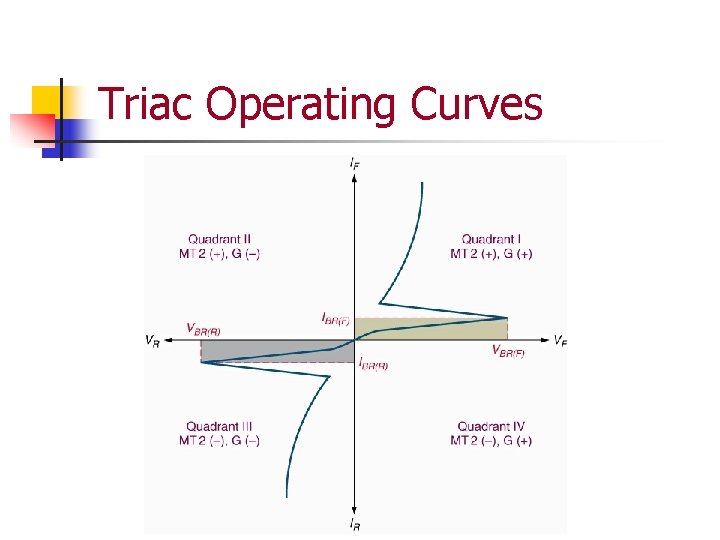
Triac Operating Curves
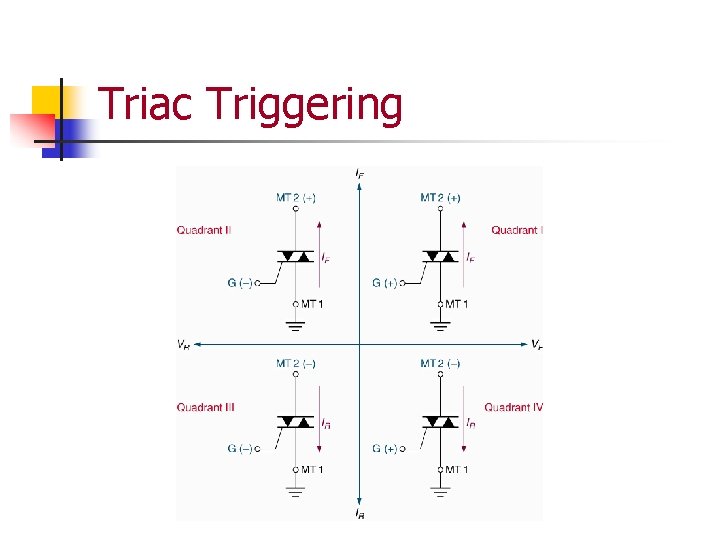
Triac Triggering
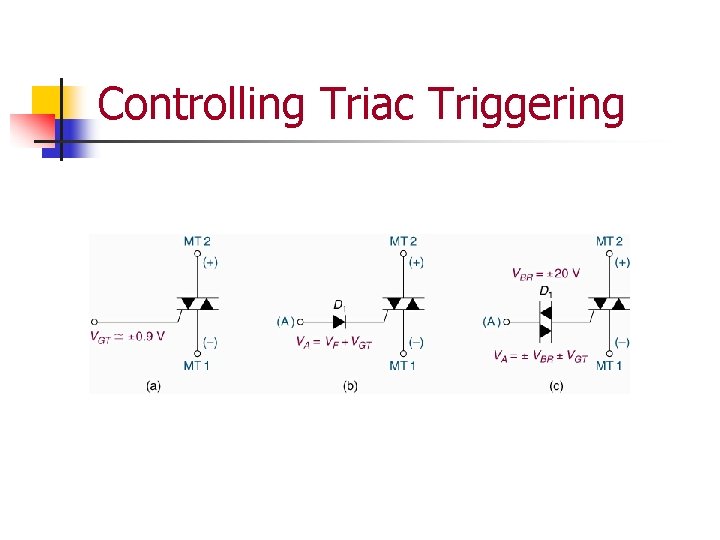
Controlling Triac Triggering
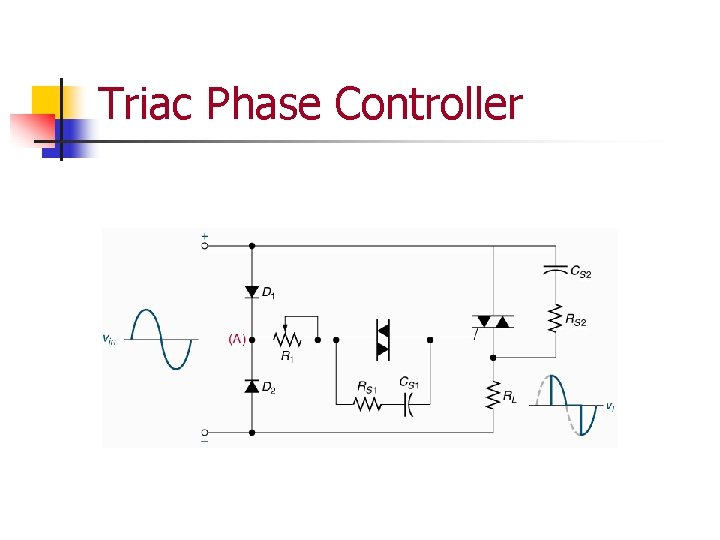
Triac Phase Controller
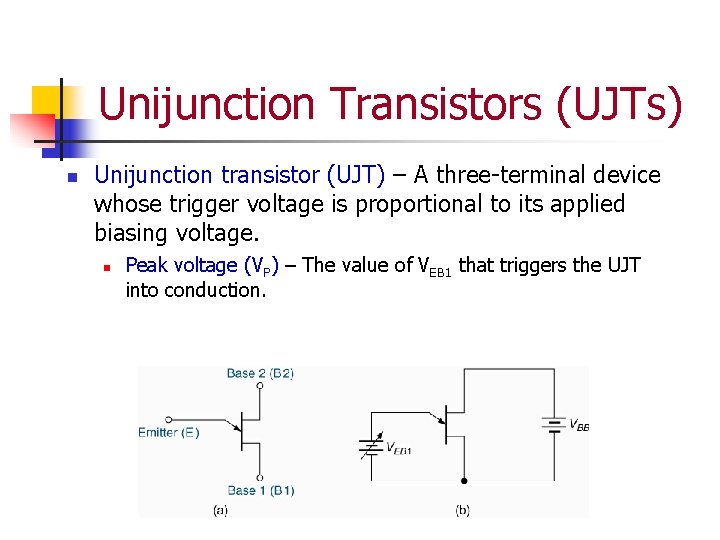
Unijunction Transistors (UJTs) n Unijunction transistor (UJT) – A three-terminal device whose trigger voltage is proportional to its applied biasing voltage. n Peak voltage (VP) – The value of VEB 1 that triggers the UJT into conduction.
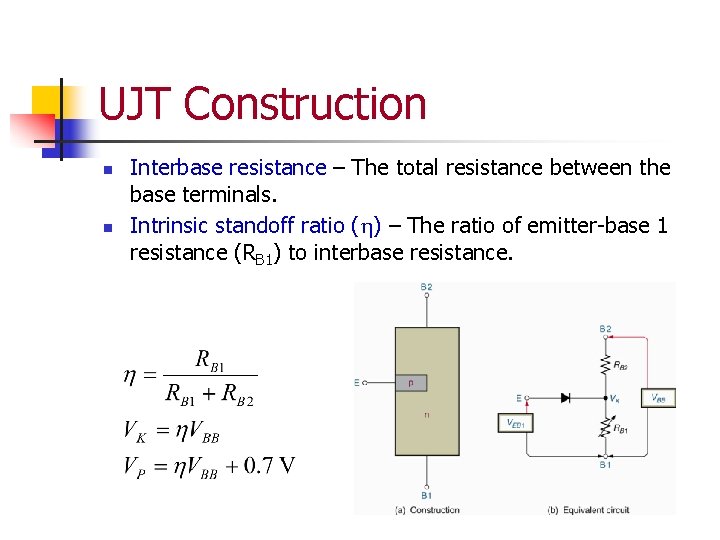
UJT Construction n n Interbase resistance – The total resistance between the base terminals. Intrinsic standoff ratio (h) – The ratio of emitter-base 1 resistance (RB 1) to interbase resistance.
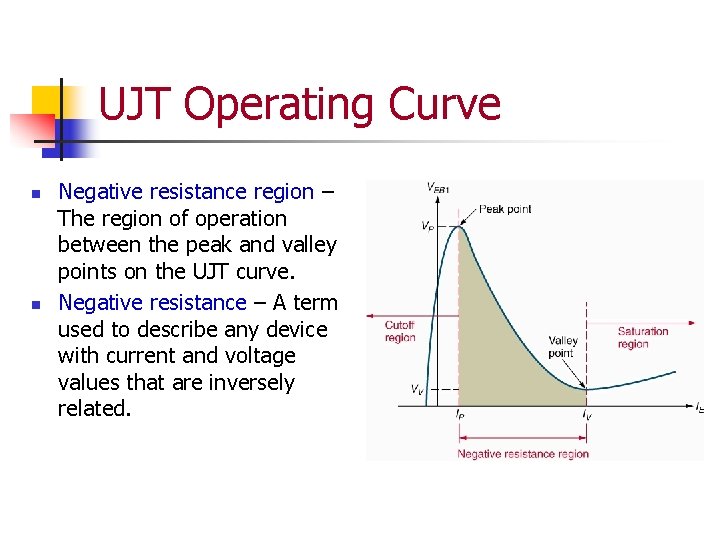
UJT Operating Curve n n Negative resistance region – The region of operation between the peak and valley points on the UJT curve. Negative resistance – A term used to describe any device with current and voltage values that are inversely related.
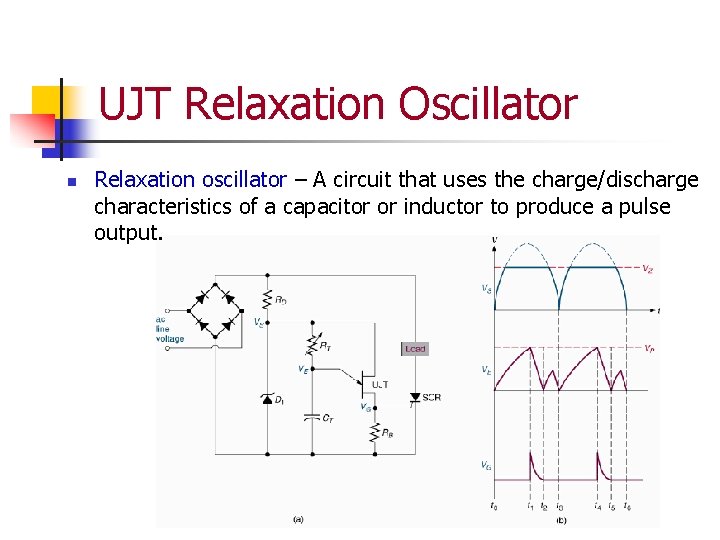
UJT Relaxation Oscillator n Relaxation oscillator – A circuit that uses the charge/discharge characteristics of a capacitor or inductor to produce a pulse output.
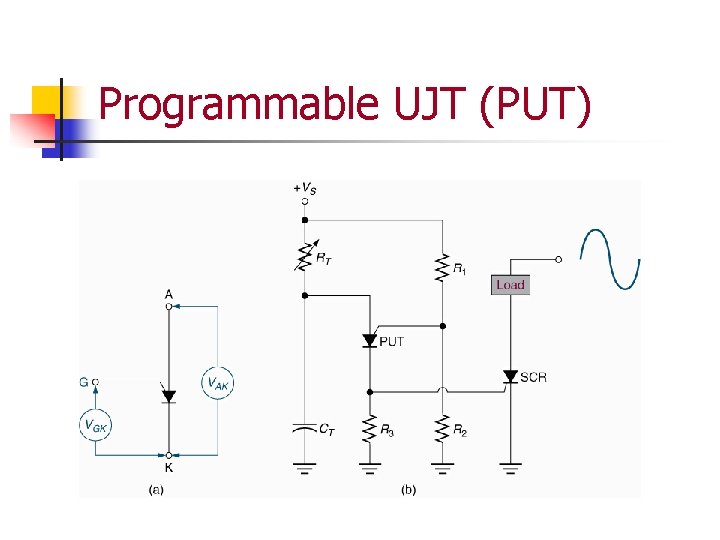
Programmable UJT (PUT)
Light Emitters and Detectors n Light emitter – Optoelectronic devices that produce light. n n The LED is an example of a light emitter. Light detector – Optoelectronic devices that respond to light.
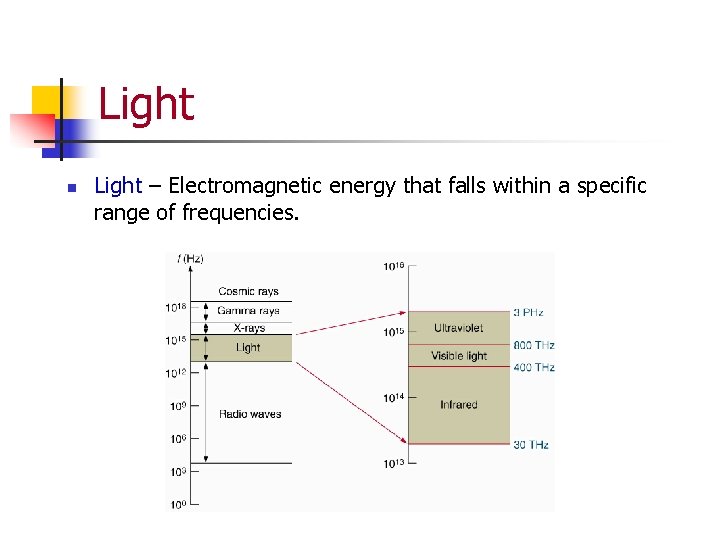
Light n Light – Electromagnetic energy that falls within a specific range of frequencies.
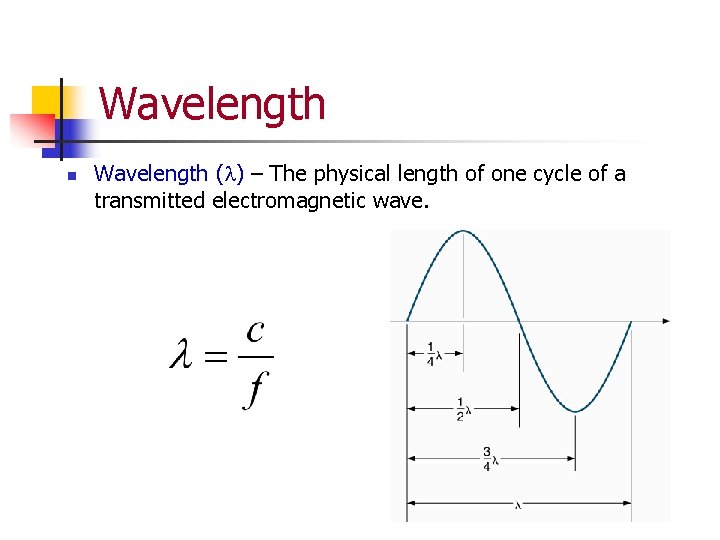
Wavelength n Wavelength (l) – The physical length of one cycle of a transmitted electromagnetic wave.
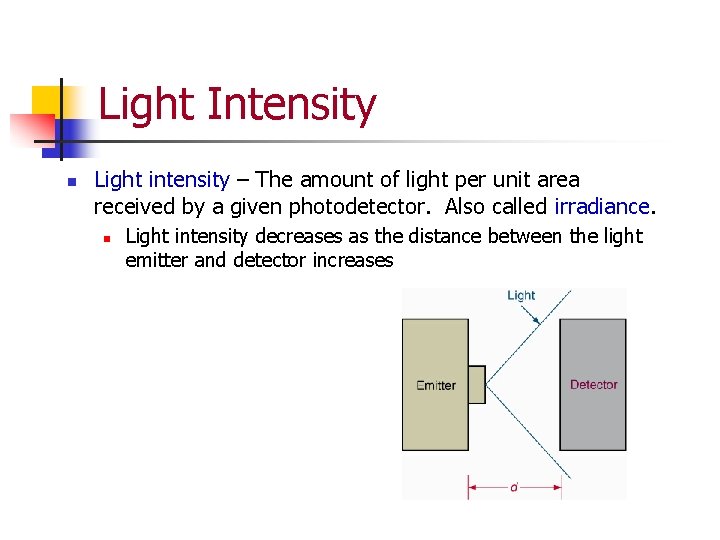
Light Intensity n Light intensity – The amount of light per unit area received by a given photodetector. Also called irradiance. n Light intensity decreases as the distance between the light emitter and detector increases
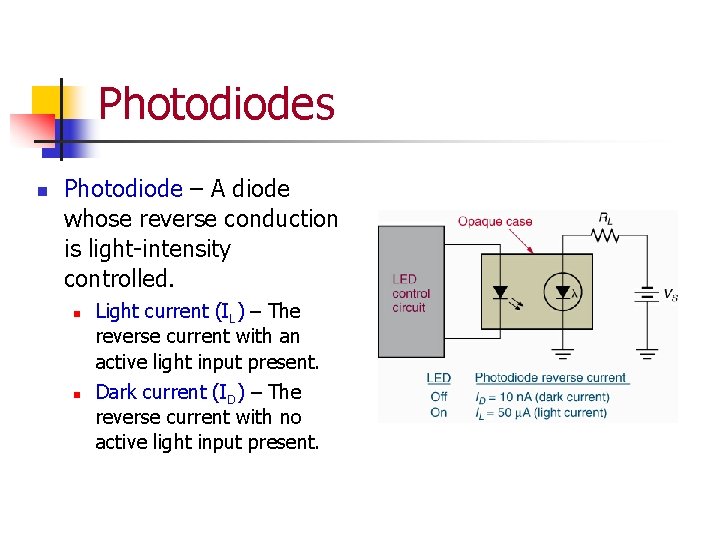
Photodiodes n Photodiode – A diode whose reverse conduction is light-intensity controlled. n n Light current (IL) – The reverse current with an active light input present. Dark current (ID) – The reverse current with no active light input present.
Photodiode Ratings n n n Wavelength of peak spectral response (l. S) – The wavelength that causes the strongest response in a photodetector. Sensitivity – The response of a photodetector to a specified light intensity, measured in m. A/m. W/cm 2. Spectral response – A measure of a photodetector’s response to a chance in input wavelength.
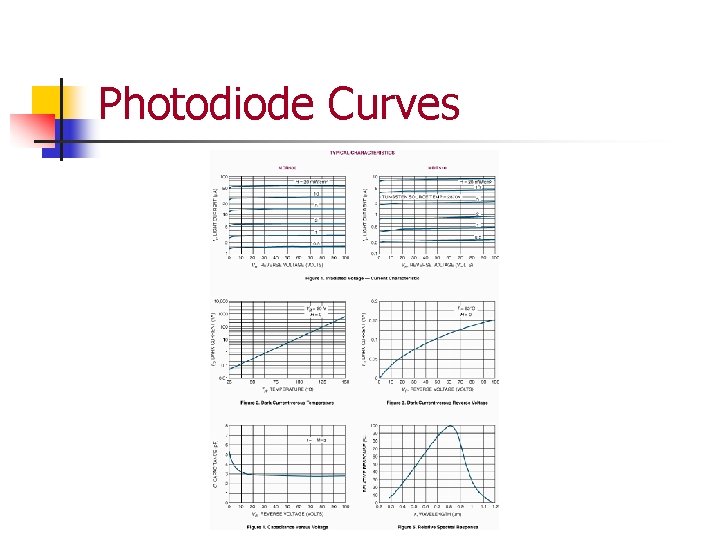
Photodiode Curves
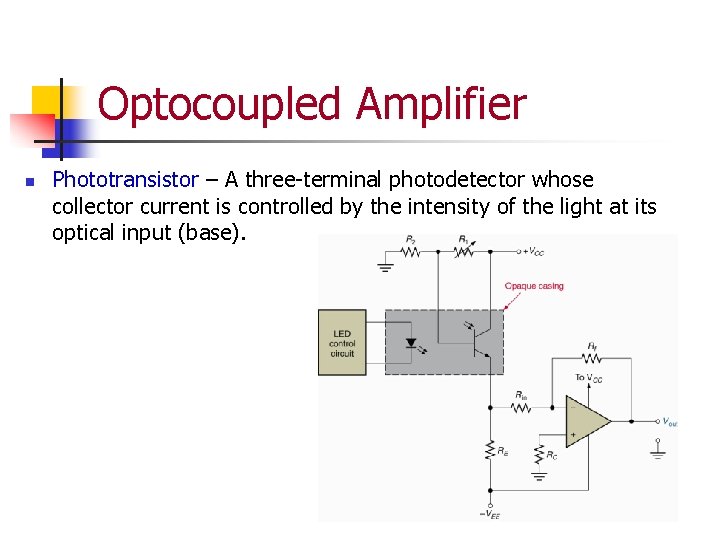
Optocoupled Amplifier n Phototransistor – A three-terminal photodetector whose collector current is controlled by the intensity of the light at its optical input (base).
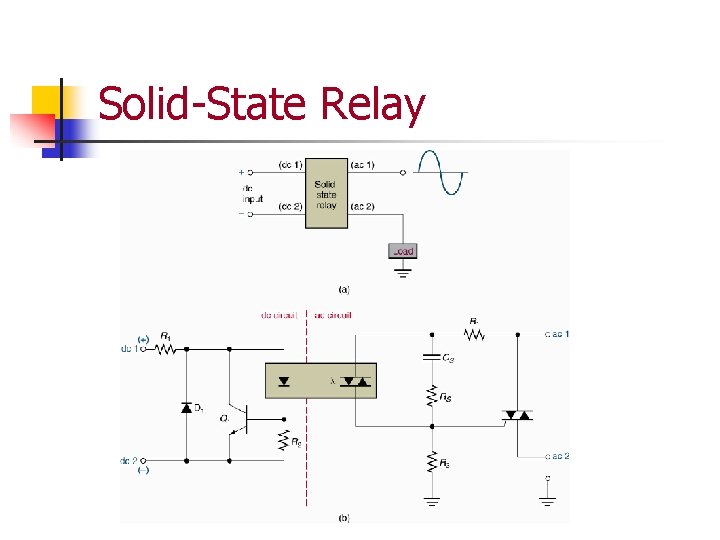
Solid-State Relay