
Chapter 20 The Industrial Revolution NEW AGRICULTURAL REVOLUTION
- Slides: 63
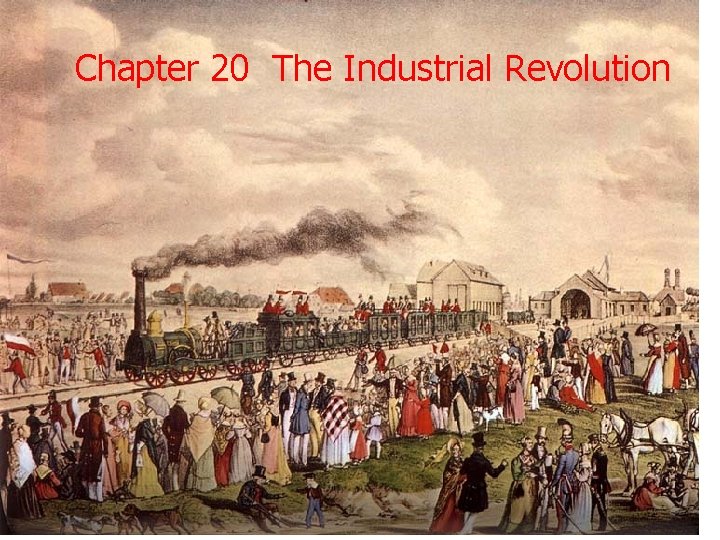
Chapter 20 The Industrial Revolution
NEW AGRICULTURAL REVOLUTION n n new agricultural revolution allowed the Industrial Revolution to begin in Britain greatly improved quality and quantity of farm products n n reduction in the risk of famine women healthier and had stronger babies
discovery of scientific farming n n the system of crop rotation Charles (Turnip) Townshend – urged farmers to grow turnips/clovers which restored nutrients to the soil n turnips/clover could also be used for fodder (feed for animals) so herds didn't need to be thinned during winter months
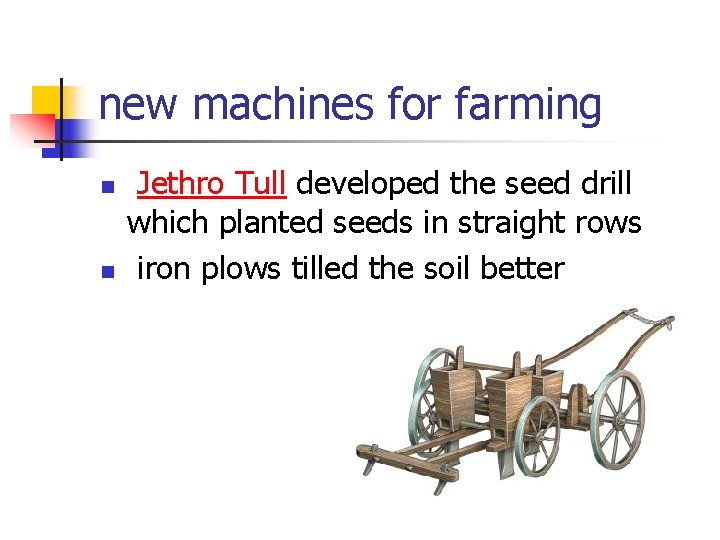
new machines for farming n n Jethro Tull developed the seed drill which planted seeds in straight rows iron plows tilled the soil better
enclosure movement n fencing off of public lands by landowners made agriculture more efficient n n n larger amounts of land farmed increased farm output as well as profits forced many small farmers off their land
Development of Steam Power n n steam will become the major source of energy - especially in the textile industry Thomas Newcomen developed a steam-powered pump to take water out of mines
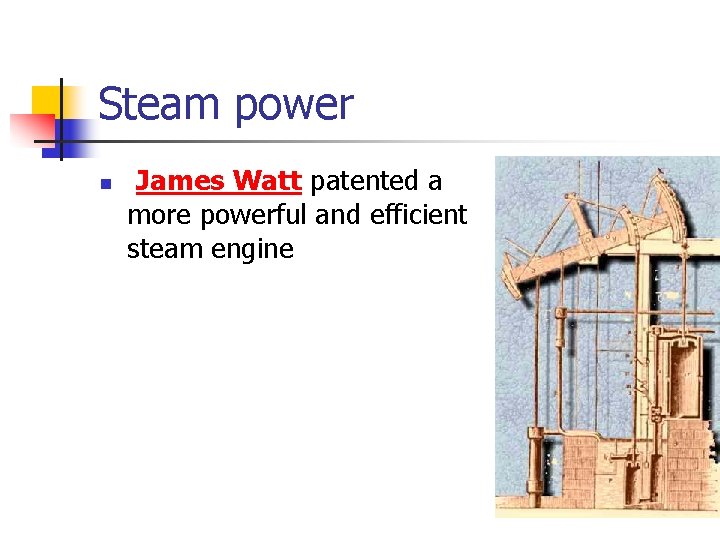
Steam power n James Watt patented a more powerful and efficient steam engine
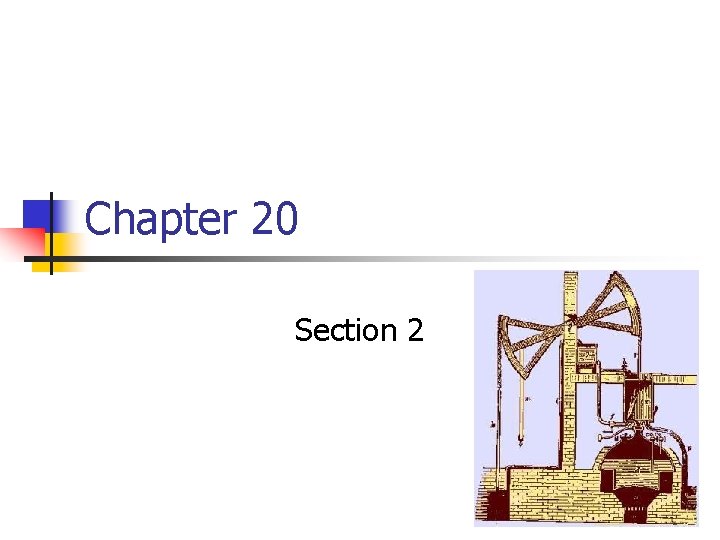
Chapter 20 Section 2
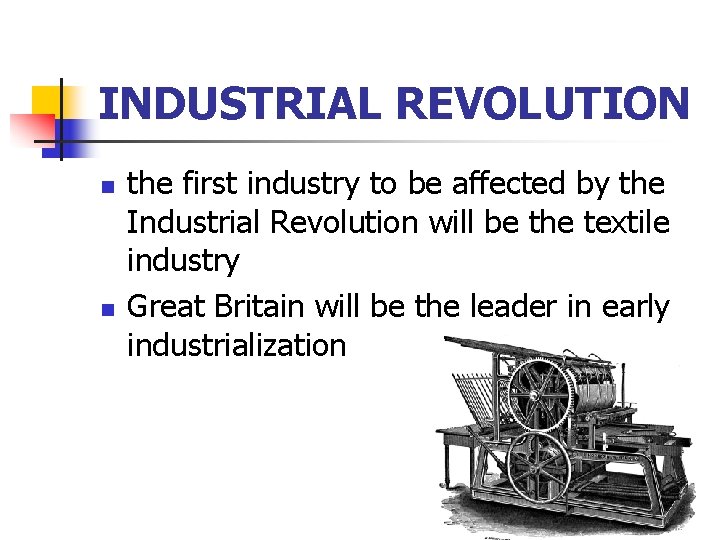
INDUSTRIAL REVOLUTION n n the first industry to be affected by the Industrial Revolution will be the textile industry Great Britain will be the leader in early industrialization
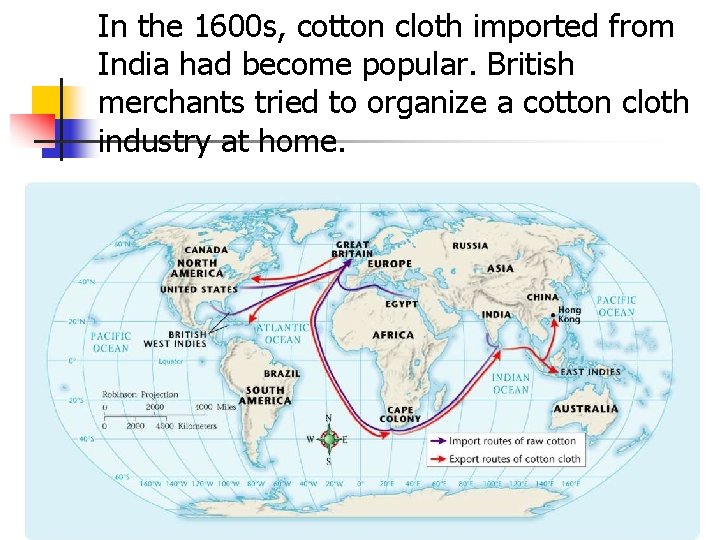
In the 1600 s, cotton cloth imported from India had become popular. British merchants tried to organize a cotton cloth industry at home.
Britain had: n n n good natural resources (deposits of iron and coal, short swift rivers, good harbors) large labor force business people with capital to buy new machines and build factories markets for finished goods government supported industrialism British society was mobile
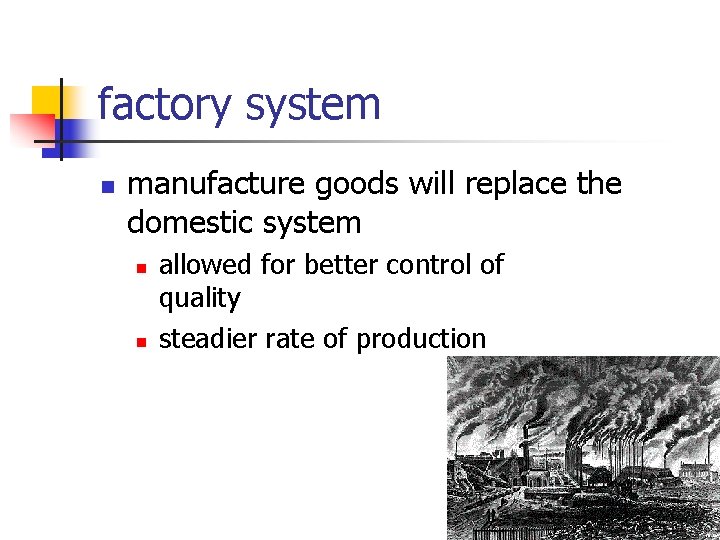
factory system n manufacture goods will replace the domestic system n n allowed for better control of quality steadier rate of production
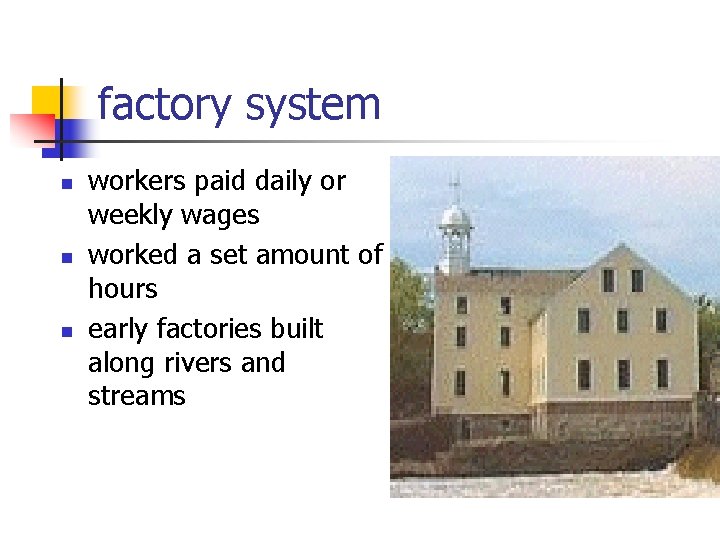
factory system n n n workers paid daily or weekly wages worked a set amount of hours early factories built along rivers and streams
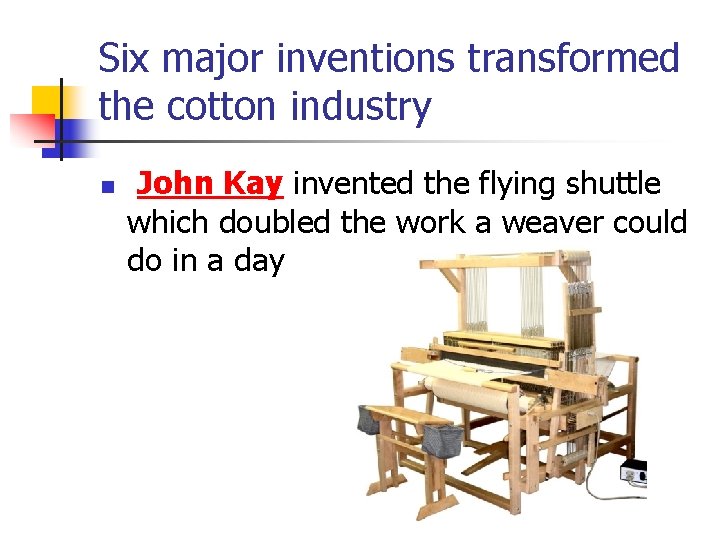
Six major inventions transformed the cotton industry n John Kay invented the flying shuttle which doubled the work a weaver could do in a day
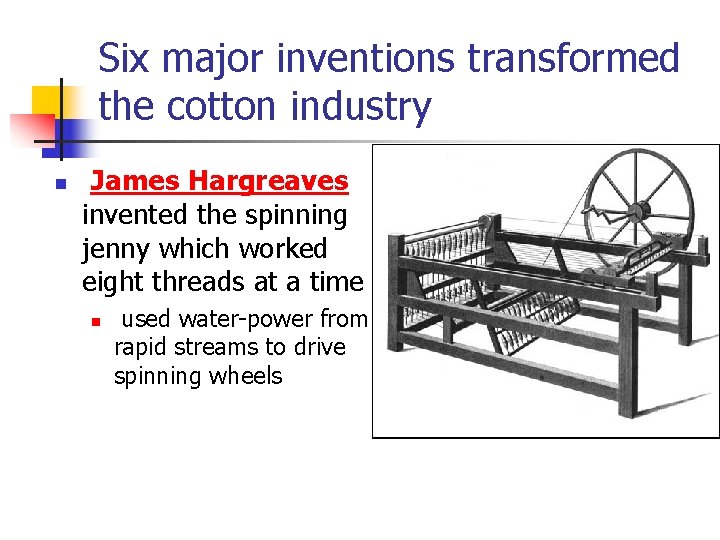
Six major inventions transformed the cotton industry n James Hargreaves invented the spinning jenny which worked eight threads at a time n used water-power from rapid streams to drive spinning wheels
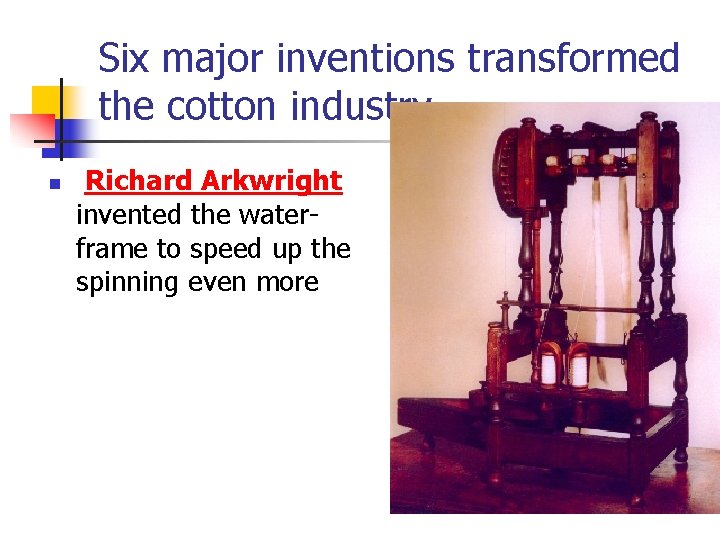
Six major inventions transformed the cotton industry n Richard Arkwright invented the waterframe to speed up the spinning even more
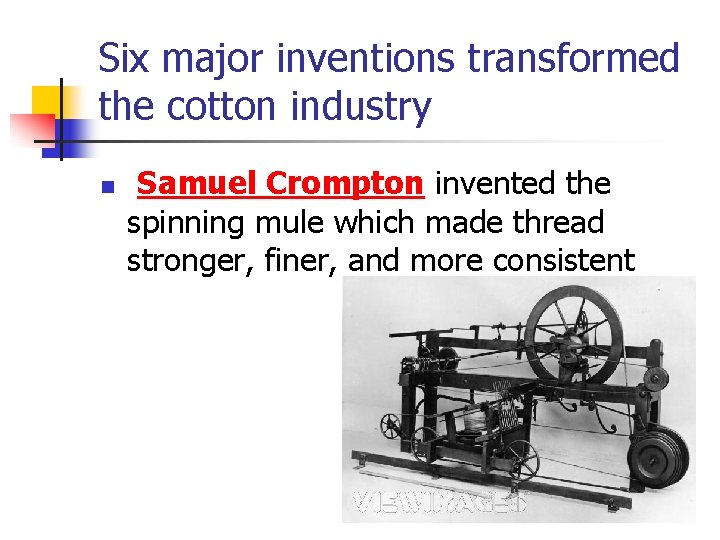
Six major inventions transformed the cotton industry n Samuel Crompton invented the spinning mule which made thread stronger, finer, and more consistent
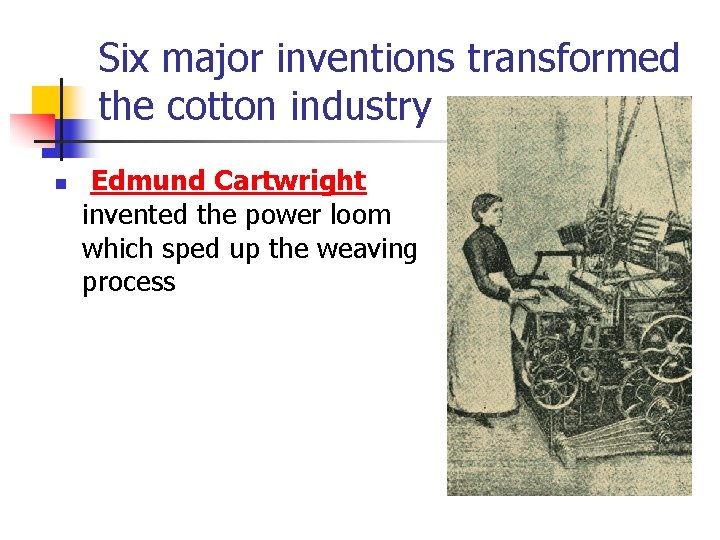
Six major inventions transformed the cotton industry n Edmund Cartwright invented the power loom which sped up the weaving process
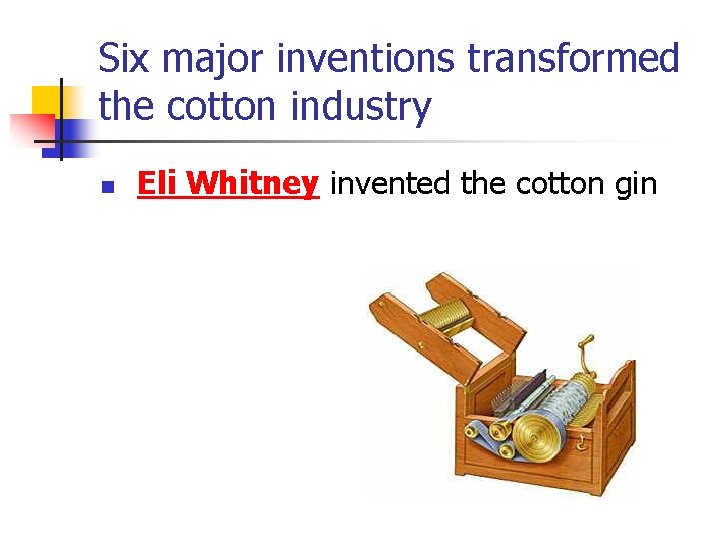
Six major inventions transformed the cotton industry n Eli Whitney invented the cotton gin
the spread of industrialization n Britain had tried to keep the secrets of industrialization n n engineers, mechanics, and toolmakers forbidden to leave Britain Belgium will be one of the first on the continent of Europe to challenge Britain by 1870 s. countries such as Germany and the United States will begin to challenge Britain's industrial supremacy
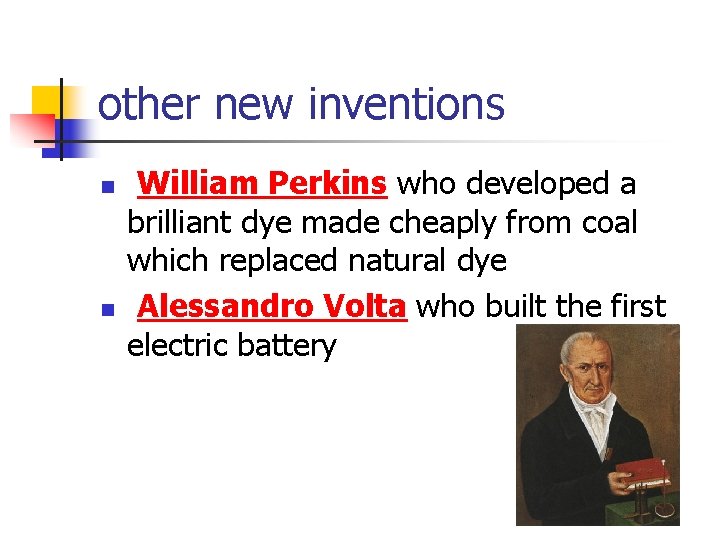
other new inventions n n William Perkins who developed a brilliant dye made cheaply from coal which replaced natural dye Alessandro Volta who built the first electric battery
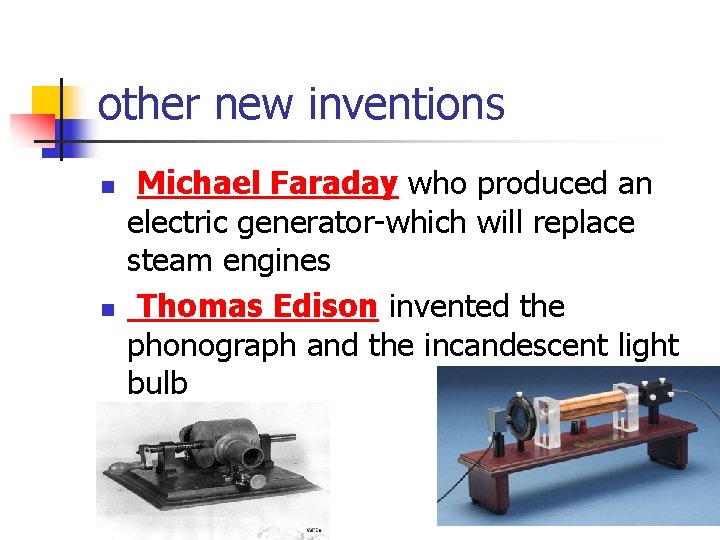
other new inventions n n Michael Faraday who produced an electric generator-which will replace steam engines Thomas Edison invented the phonograph and the incandescent light bulb
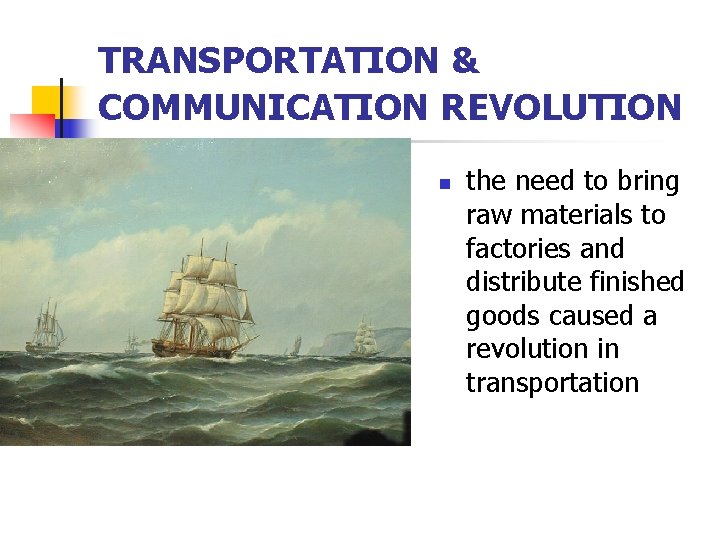
TRANSPORTATION & COMMUNICATION REVOLUTION n the need to bring raw materials to factories and distribute finished goods caused a revolution in transportation
TRANSPORTATION & COMMUNICATION REVOLUTION n John Mc. Adam invented a road surface made of crushed stone which allowed roads/to be used in all weather conditions
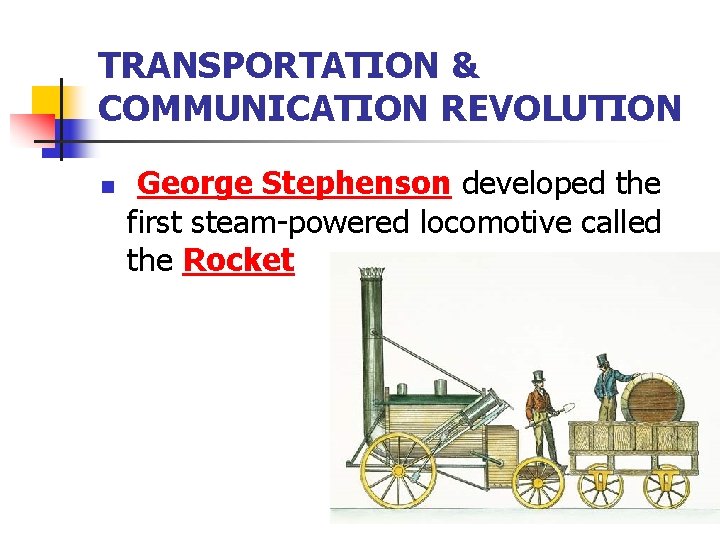
TRANSPORTATION & COMMUNICATION REVOLUTION n George Stephenson developed the first steam-powered locomotive called the Rocket
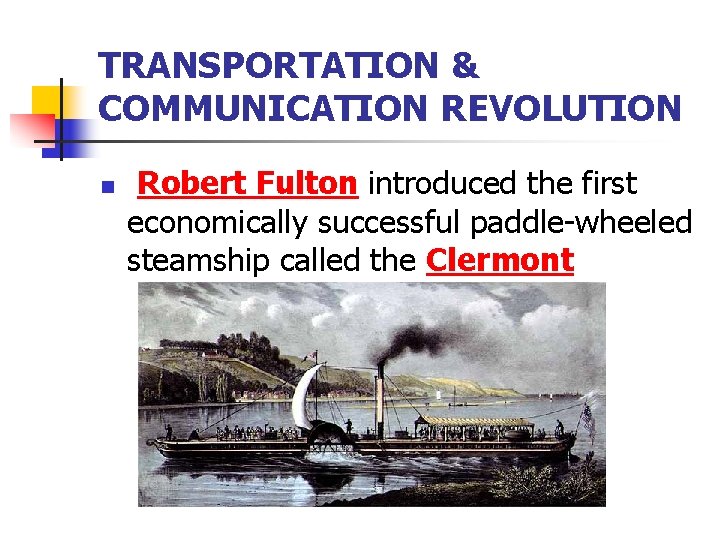
TRANSPORTATION & COMMUNICATION REVOLUTION n Robert Fulton introduced the first economically successful paddle-wheeled steamship called the Clermont
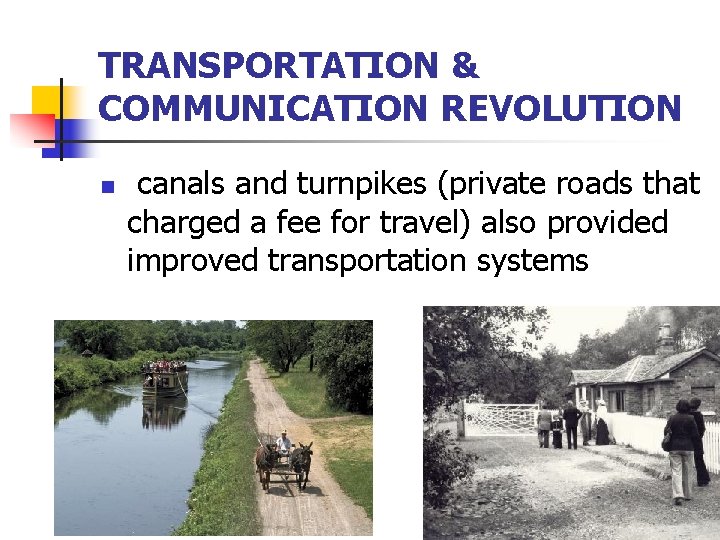
TRANSPORTATION & COMMUNICATION REVOLUTION n canals and turnpikes (private roads that charged a fee for travel) also provided improved transportation systems
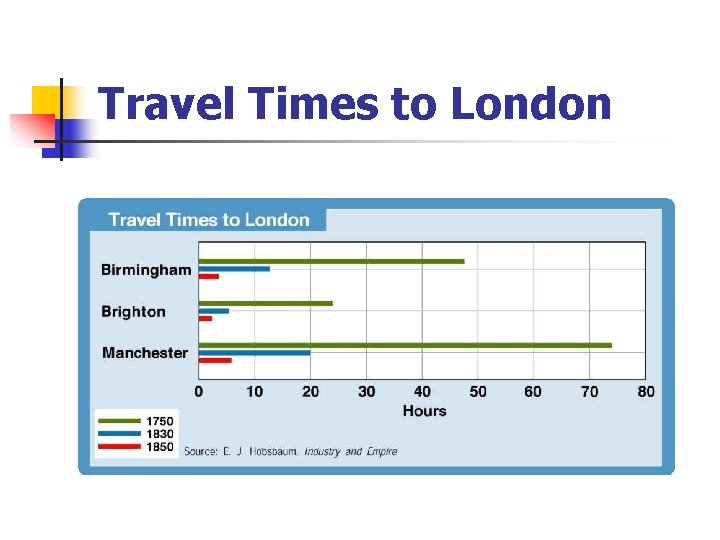
Travel Times to London
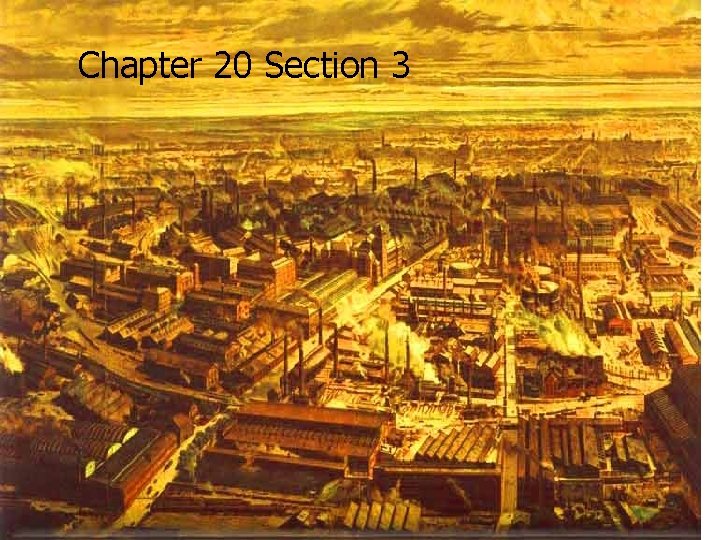
Chapter 20 Section 3
EARLY INDUSTRIAL CITIES n n entrepreneurs who helped set the Industrial Revolution in motion made millions of dollars but for-the common worker it only brought poverty and harsh living conditions working people could only look forward to dangerous working conditions, unsafe, unsanitary, and overcrowded housing; and unrelenting poverty during the Industrial Revolution
EARLY INDUSTRIAL CITIES n Industrial Revolution. brought rapid urbanization n n movement of people to cities changes in farming soaring population growth ever-increasing demand for workers overnight many towns around mines (coal/iron) became cities—misery festered in these new cities
EARLY INDUSTRIAL CITIES n industrial cities were sharply divided by wealth—wealthy and middle-class lived in pleasant neighborhoods
n poor lived in foul-smelling slums (small rooms in tenement buildings) n n n no lighting in narrow alleys no running water no sewage or sanitation system (waste/garbage rotted in the streets) pigs roamed streets eating garbage disease spread rapidly (17 years was average life span of working class) no building codes
FACTORY SYSTEM n heart of new industrial city was the factory — very harsh way of life for workers n n n working hours were long 12 to 16 hour shifts no holidays, vacations, or sick leaves six days a week dangerous because machines didn't have safety devices (no compensation for workers injured) fumes and poor ventilation made the air foul loud noises assaulted the ears lighting was poor
FACTORY SYSTEM n women made up much of the industrial work force n n n preferred by employers because they could be controlled easier than men & paid less women adapted more easily to machines after working long hours women had to return home to take care of family (very grim existence)
FACTORY SYSTEM n factories and mines also hired children -boys & girls n n orphans were particularly liked because they had no protection paid less than women and men-worked long hours
Reforms Britain will lead the reform factory reform movement n n Factory Act 1833 limited the working day for children; 9 -13 years no more than 8 hours and 14 -18 limited to 12 hours a day
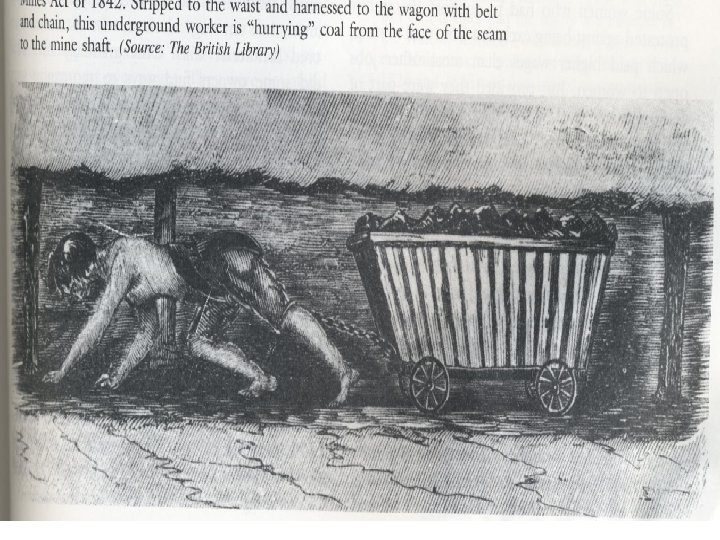
Reforms n Mines Act (1842) barred employers from hiring women or girls to work in mines (minimum age for hiring boys set at 13)
Reforms n Ten Hours Act limited the work day for women and children under 18 years to 10 hours (1874 10 hour day extended to all workers)
Labor Unions n n n At first labor unions were outlawed by many governments who they saw as dangerous organizations unions were formed to gain better wages, hours, and working conditions for workers Britain passed the Combination Acts which will officially outlaw labor unions in Britain
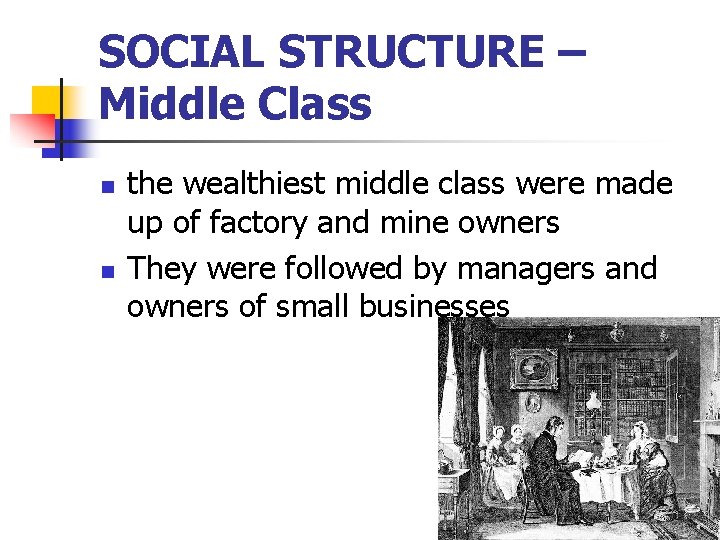
SOCIAL STRUCTURE – Middle Class n n the wealthiest middle class were made up of factory and mine owners They were followed by managers and owners of small businesses
Middle Class n n most middle families tried to live polite, respectable lives As a sign of their new standard of living, middle-class women were encouraged to become “ladies. ” They took up “ladylike” activities, such as drawing, embroidery, or playing the piano. A “lady” did not work outside the home or do housework. Instead, the family hired a maid-servant. The family then set about educating its daughters to provide the same type of happy, well-furnished home for their future husbands. Sons gained an education that allowed them to become businessmen.
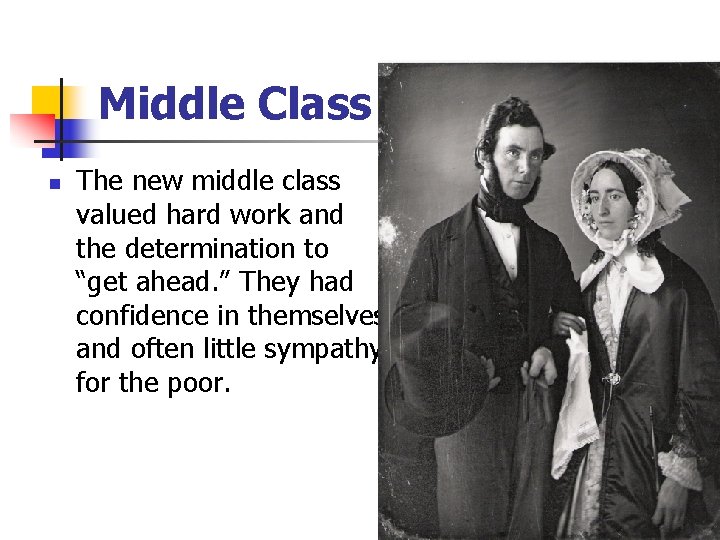
Middle Class n The new middle class valued hard work and the determination to “get ahead. ” They had confidence in themselves and often little sympathy for the poor.
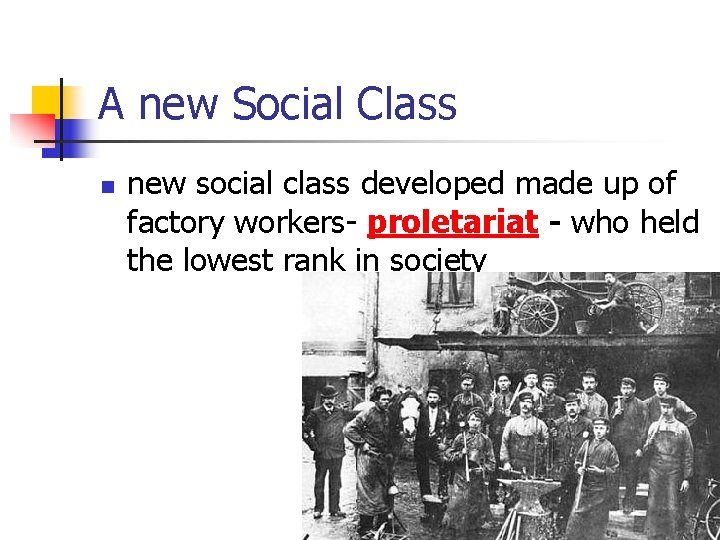
A new Social Class n new social class developed made up of factory workers- proletariat - who held the lowest rank in society
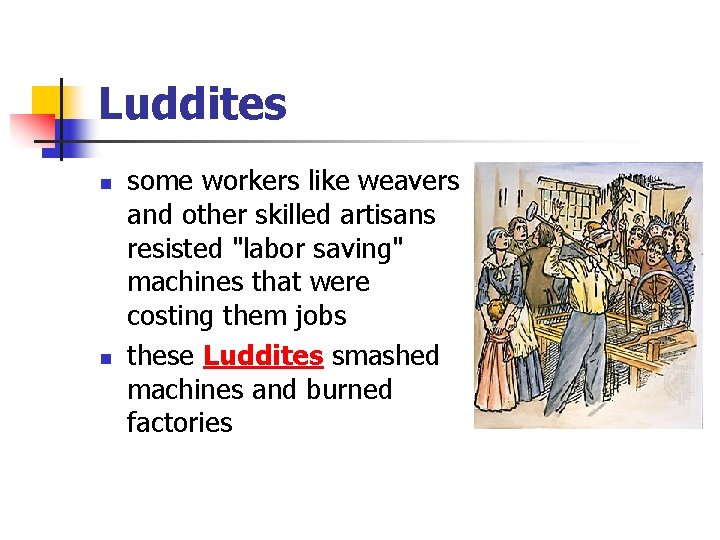
Luddites n n some workers like weavers and other skilled artisans resisted "labor saving" machines that were costing them jobs these Luddites smashed machines and burned factories
Methodist n many of the working class found comfort in a new religious movement known as Methodism founded by John Wesley n n n worked, to reduce social evils campaigning against alcohol and the slave trade people needed to adopt sober, moral ways
Chapter 20 Section 4
Laissez-Faire Economics The physiocrats of the Enlightenment argued that government should not interfere in the free operation of the economy. In the early 1800 s, middleclass business leaders embraced this laissez faire, or “hands-off” approach.
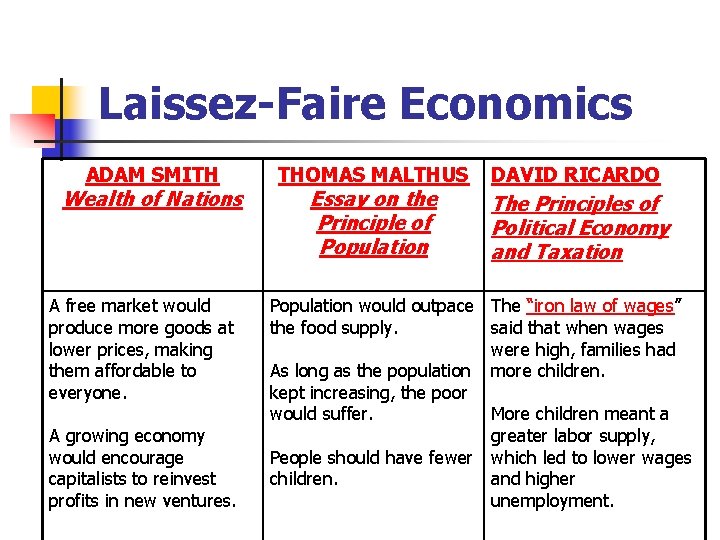
Laissez-Faire Economics ADAM SMITH Wealth of Nations A free market would produce more goods at lower prices, making them affordable to everyone. A growing economy would encourage capitalists to reinvest profits in new ventures. THOMAS MALTHUS Essay on the Principle of Population DAVID RICARDO The Principles of Political Economy and Taxation Population would outpace The “iron law of wages” the food supply. said that when wages were high, families had As long as the population more children. kept increasing, the poor would suffer. More children meant a greater labor supply, People should have fewer which led to lower wages children. and higher unemployment.
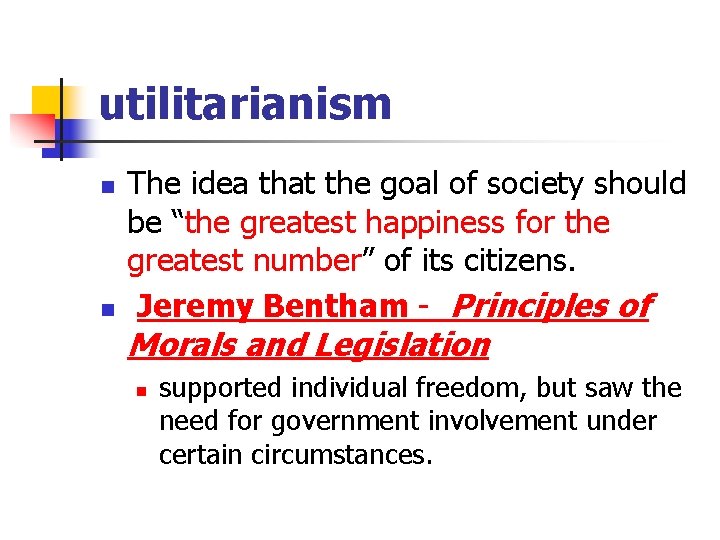
utilitarianism n n The idea that the goal of society should be “the greatest happiness for the greatest number” of its citizens. Jeremy Bentham - Principles of Morals and Legislation n supported individual freedom, but saw the need for government involvement under certain circumstances.
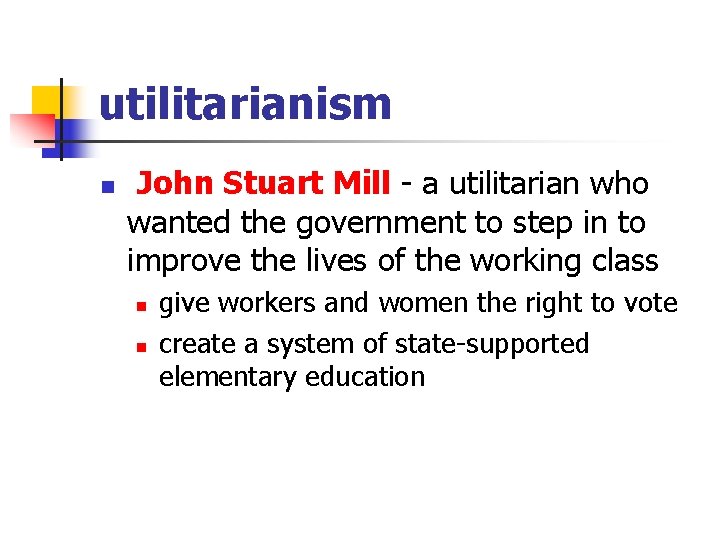
utilitarianism n John Stuart Mill - a utilitarian who wanted the government to step in to improve the lives of the working class n n give workers and women the right to vote create a system of state-supported elementary education
EMERGENCE OF SOCIALISM n n n Socialism can be defined as state ownership of the means of production Goal was a society that operated for the welfare of all the people socialist wanted to ensure that property would serve the interests of all the people
Utopians n Some socialists of the early 19 th century became known as Utopians n n n believed that they could set up communities in which all property was owned together no difference between rich and poor (no strife)
Utopians n n most noted Utopian was Robert Owen who set up a socialist community in New Harmony, Indiana the people shared both the ownership of property and the fruits of their labor the experiment failed
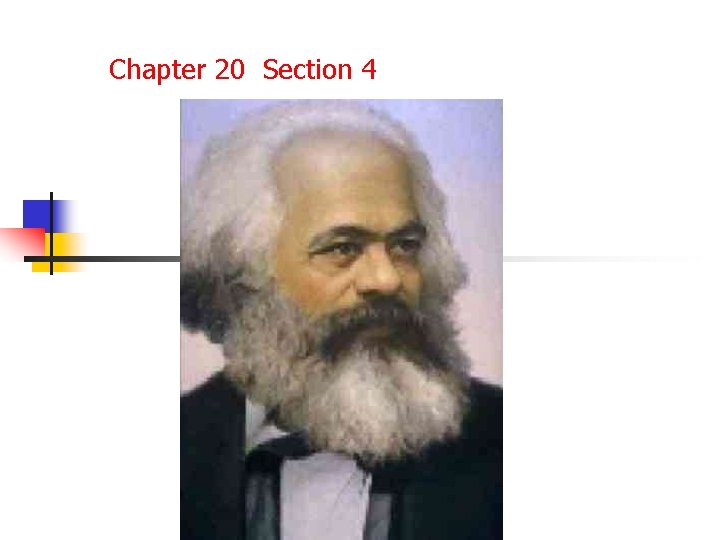
Communism—a more militant form of socialism n Karl Marx & Frederick Engels –wrote The Communist Manifesto n economics determines the course of history
Communism Karl Marx outlined a new economic theory: n The entire course of history was a class struggle between the “haves” and the “have-nots. ” n The modern class struggle pitted the bourgeoisie against the proletariat, or working class. n n In the end, the proletariat would take control of the means of production and set up a classless, communist society. In such a society, wealth and power would be equally shared. Despite a number of weaknesses, Marx’s theory had a wide influence on industrial Europe.
Communism n n According to Marx, the modern class struggle pitted the bourgeoisie against the proletariat. In the end, he predicted, the proletariat would be triumphant. It would then take control of the means of production and set up a classless, communist society. Such a society would mark the end of the struggles people had endured throughout history, because wealth and power would be equally shared. Marx despised capitalism. He believed it created prosperity for only a few and poverty for many. He called for an international struggle to bring about its downfall. “Working men of all countries, ” he urged, “unite!”
ADVANCES IN TRANSPORTATION n n n Rise of the automobile industry in late 1800 s Nikolaus Otto invented a gasoline-powered internal combustion engine Gottlieb Daimler used gasoline motor to power a bicycle (aka _____) Karl Benz developed a water-cooled internal combustion engine with electric ignition Internal combustion engine revolutionized transportation
TRANSPORTATION n n n Rudolf Diesel patented an engine that burned oil directly in its cylinders to produce power Orville and Wilbur Wright made the first successful flight in an airplane Ferdinand von Zeppelin built the first efficient dirigible, a powered balloon
ADVANCES IN COMMUNICATION n n n Samuel F. B. Morse invented the telegraph which sent messages by electrical impulses Alexander Graham Bell invented the telephone Guglielmo Marconi invented the wireless (aka _____)
OTHER ADVANCES DURING INDUSTRIAL REVOLUTION n n n New machines and technology greatly improved worker productivity or the amount of goods a worker can turn out in a specific time—mass production of goods Eli Whitney developed the idea of interchangeable parts Henry Ford developed the assembly line which broke complex jobs down into small tasks to produce a completed product
IRON PRODUCTION n n Abraham Darby used coke, a form of coal to heat iron ore to remove impurities Henry Cort developed a process that made iron stronger and less likely to crack under pressure Henry Bessemer developed a procedure that made the production of steel, and alloy of iron, cheaper and easier Burning off impurities in iron to produce steel