
CHAPTER 20 THE FRENCH REVOLUTION Section 1 The


- Slides: 24
CHAPTER 20: THE FRENCH REVOLUTION Section 1 – The Revolution Begins
CAUSES OF THE REVOLUTION The Revolution Begins: Part 1
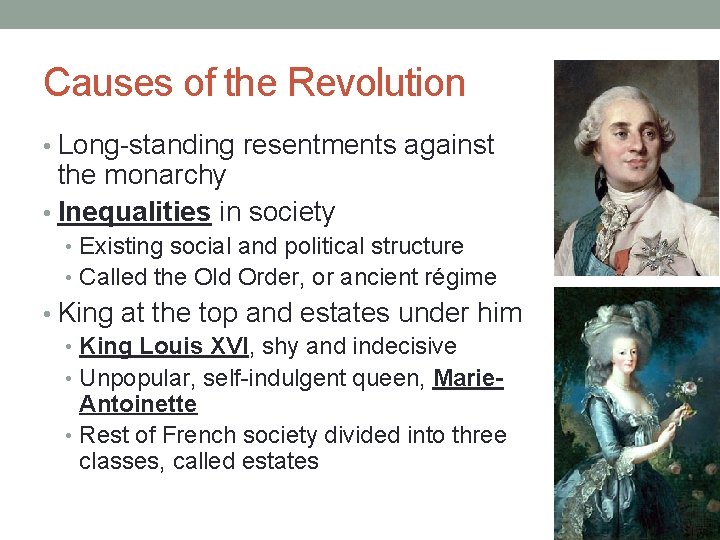
Causes of the Revolution • Long-standing resentments against the monarchy • Inequalities in society • Existing social and political structure • Called the Old Order, or ancient régime • King at the top and estates under him • King Louis XVI, shy and indecisive • Unpopular, self-indulgent queen, Marie. Antoinette • Rest of French society divided into three classes, called estates
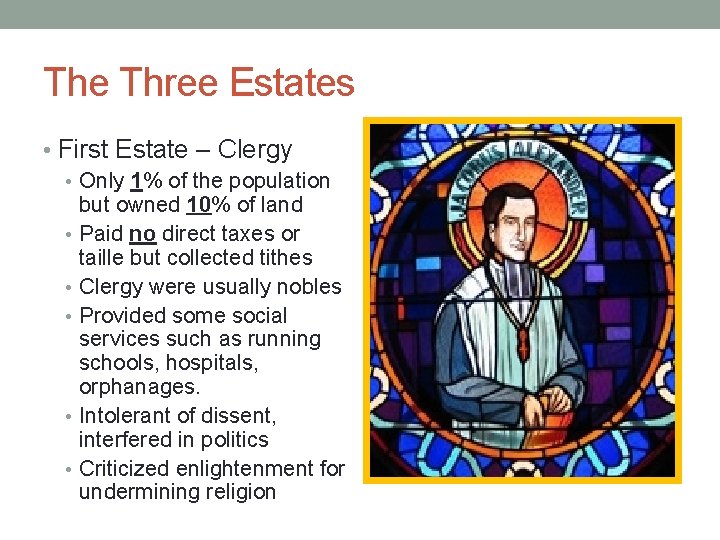
The Three Estates • First Estate – Clergy • Only 1% of the population but owned 10% of land • Paid no direct taxes or taille but collected tithes • Clergy were usually nobles • Provided some social services such as running schools, hospitals, orphanages. • Intolerant of dissent, interfered in politics • Criticized enlightenment for undermining religion
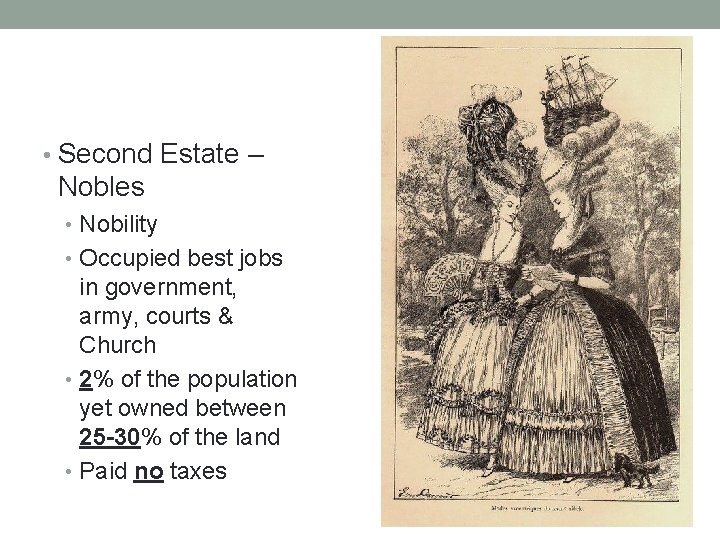
• Second Estate – Nobles • Nobility • Occupied best jobs in government, army, courts & Church • 2% of the population yet owned between 25 -30% of the land • Paid no taxes
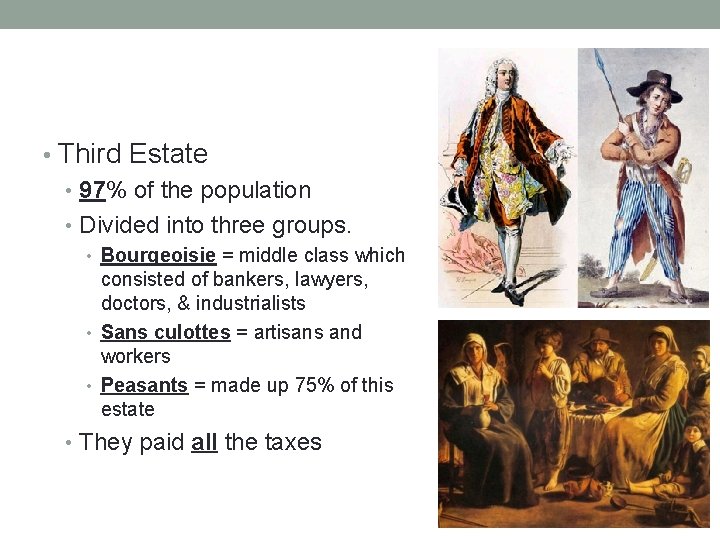
• Third Estate • 97% of the population • Divided into three groups. • Bourgeoisie = middle class which consisted of bankers, lawyers, doctors, & industrialists • Sans culottes = artisans and workers • Peasants = made up 75% of this estate • They paid all the taxes
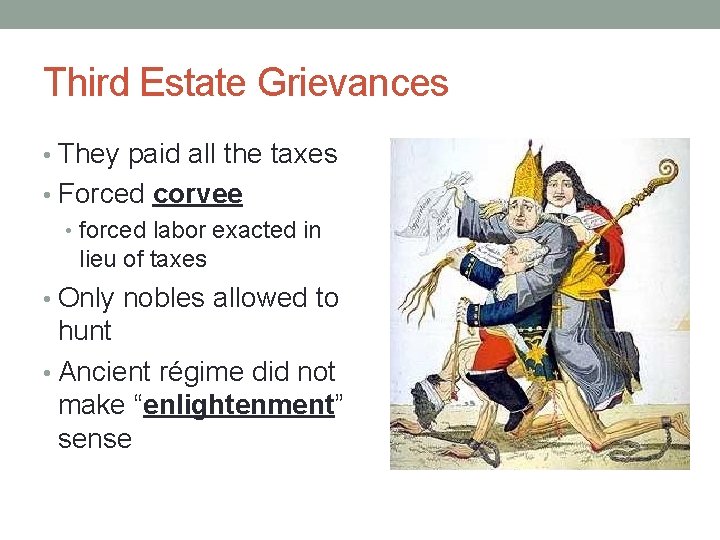
Third Estate Grievances • They paid all the taxes • Forced corvee • forced labor exacted in lieu of taxes • Only nobles allowed to hunt • Ancient régime did not make “enlightenment” sense
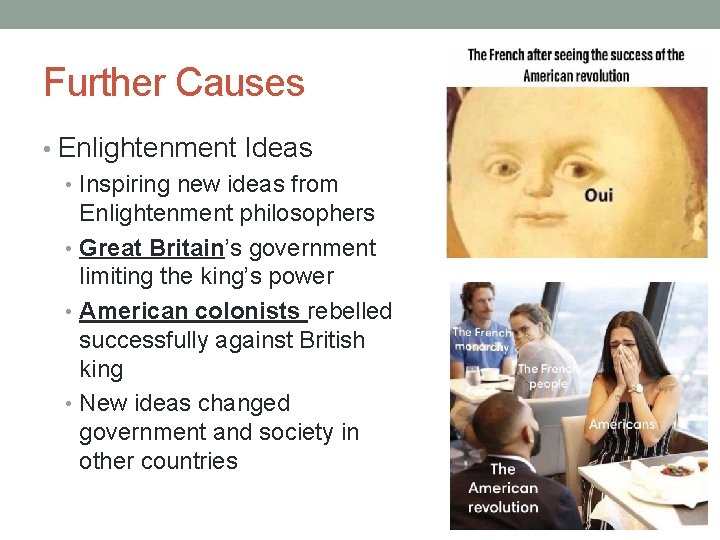
Further Causes • Enlightenment Ideas • Inspiring new ideas from Enlightenment philosophers • Great Britain’s government limiting the king’s power • American colonists rebelled successfully against British king • New ideas changed government and society in other countries
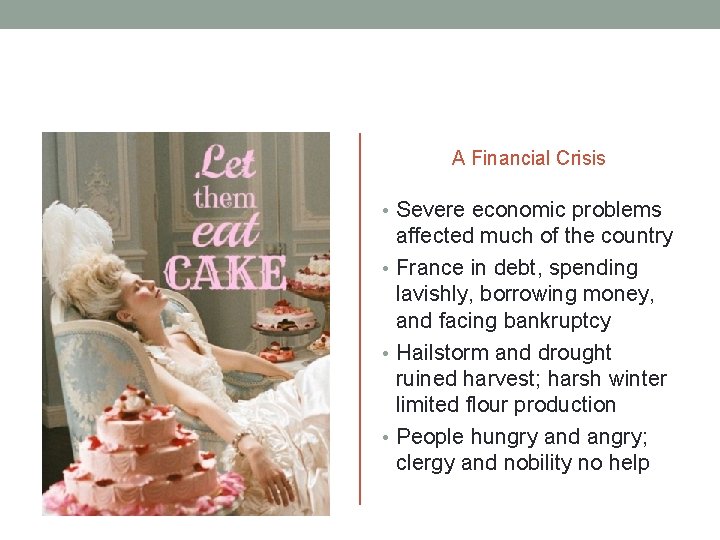
A Financial Crisis • Severe economic problems affected much of the country • France in debt, spending lavishly, borrowing money, and facing bankruptcy • Hailstorm and drought ruined harvest; harsh winter limited flour production • People hungry and angry; clergy and nobility no help
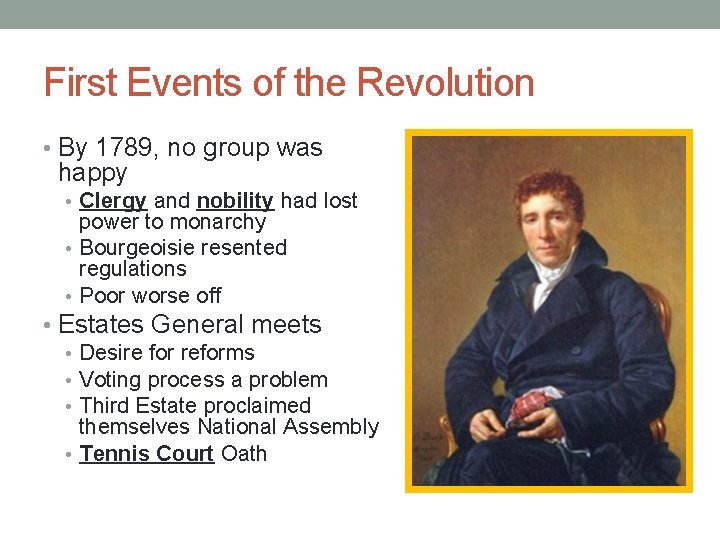
First Events of the Revolution • By 1789, no group was happy • Clergy and nobility had lost power to monarchy • Bourgeoisie resented regulations • Poor worse off • Estates General meets • Desire for reforms • Voting process a problem • Third Estate proclaimed themselves National Assembly • Tennis Court Oath
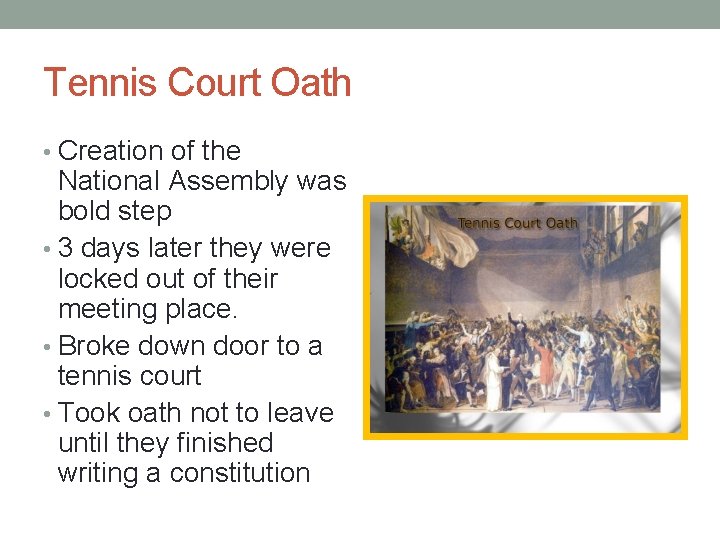
Tennis Court Oath • Creation of the National Assembly was bold step • 3 days later they were locked out of their meeting place. • Broke down door to a tennis court • Took oath not to leave until they finished writing a constitution
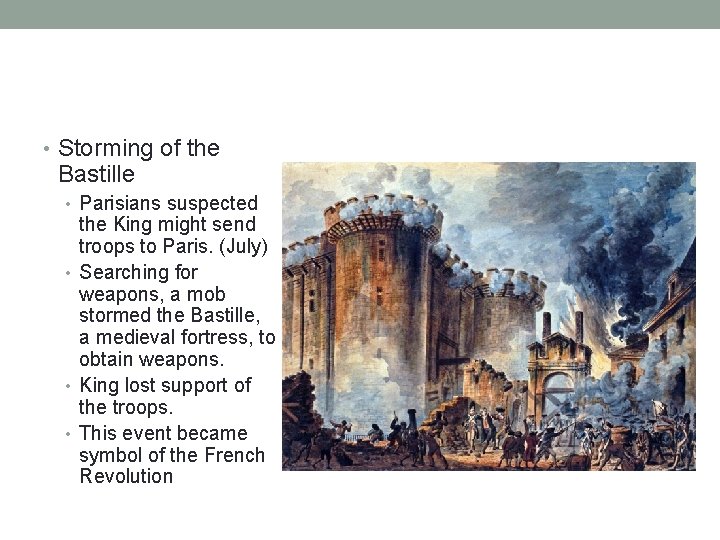
• Storming of the Bastille • Parisians suspected the King might send troops to Paris. (July) • Searching for weapons, a mob stormed the Bastille, a medieval fortress, to obtain weapons. • King lost support of the troops. • This event became symbol of the French Revolution
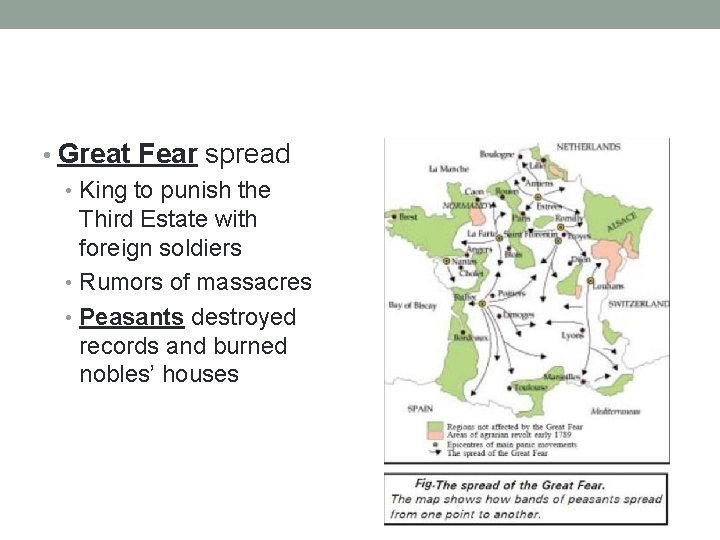
• Great Fear spread • King to punish the Third Estate with foreign soldiers • Rumors of massacres • Peasants destroyed records and burned nobles’ houses
END PART 1 TO BE CONTINUED…
CREATING A NEW NATION The Revolution Begins: Part 2
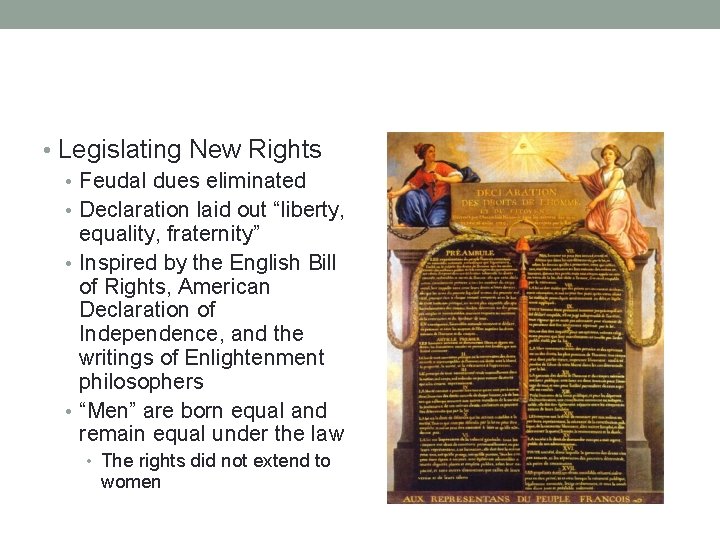
• Legislating New Rights • Feudal dues eliminated • Declaration laid out “liberty, equality, fraternity” • Inspired by the English Bill of Rights, American Declaration of Independence, and the writings of Enlightenment philosophers • “Men” are born equal and remain equal under the law • The rights did not extend to women
DECLARATION OF THE RIGHTS OF MAN WORKSHEET • Read The Declaration of the Rights of Man handout and answer the questions on the back.
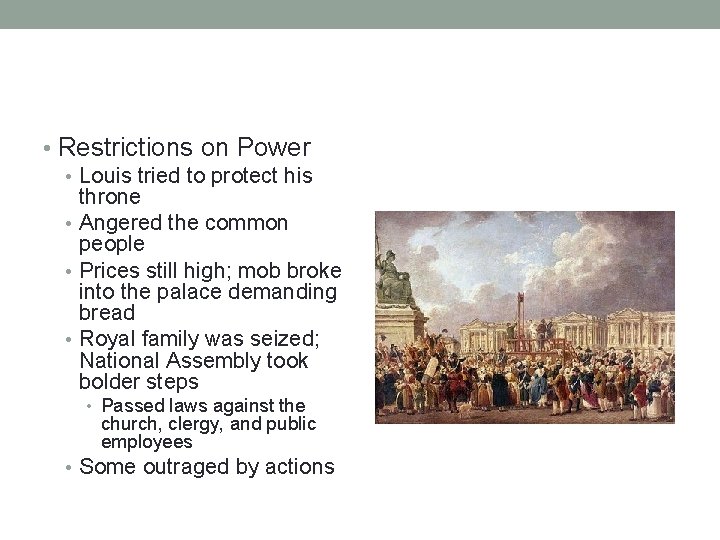
• Restrictions on Power • Louis tried to protect his throne • Angered the common people • Prices still high; mob broke into the palace demanding bread • Royal family was seized; National Assembly took bolder steps • Passed laws against the church, clergy, and public employees • Some outraged by actions
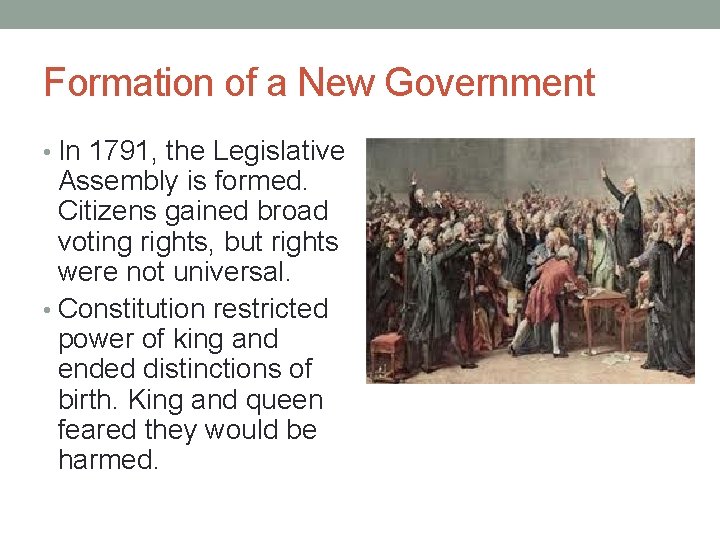
Formation of a New Government • In 1791, the Legislative Assembly is formed. Citizens gained broad voting rights, but rights were not universal. • Constitution restricted power of king and ended distinctions of birth. King and queen feared they would be harmed.
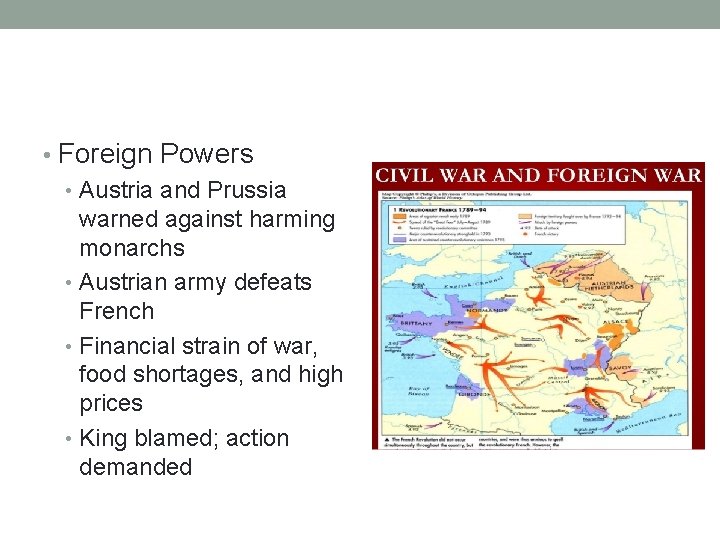
• Foreign Powers • Austria and Prussia warned against harming monarchs • Austrian army defeats French • Financial strain of war, food shortages, and high prices • King blamed; action demanded
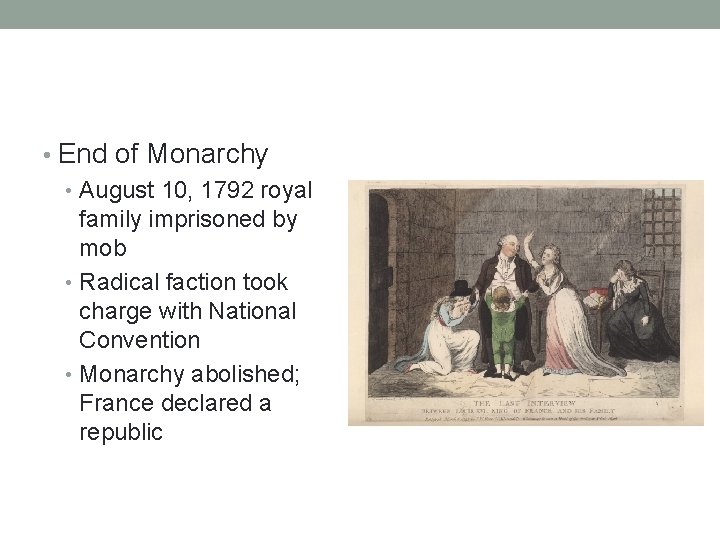
• End of Monarchy • August 10, 1792 royal family imprisoned by mob • Radical faction took charge with National Convention • Monarchy abolished; France declared a republic
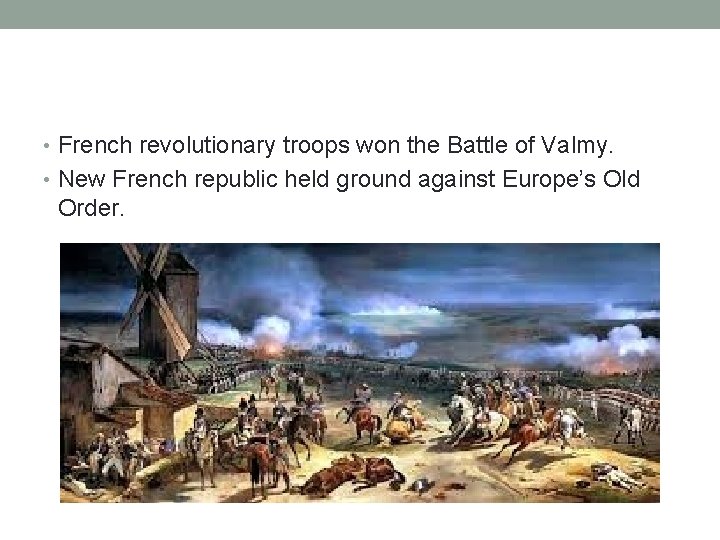
• French revolutionary troops won the Battle of Valmy. • New French republic held ground against Europe’s Old Order.
END