
Chapter 20 Section 20 4 Mutations and Genetic



- Slides: 16
Chapter 20 Section 20. 4 Mutations and Genetic Variation
Mutations are changes in the sequence of a DNA molecule. Mutations provide a source of new genetic variation to a population. Mutations can be: ◦ Beneficial – help an organism survive. ◦ Neutral – does not affect survival. ◦ Harmful – hinder an organisms survival.
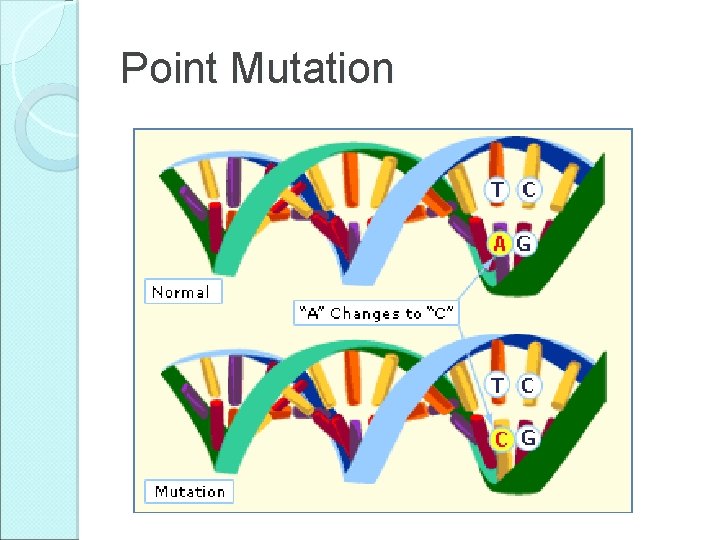
2 Main Types of Mutations Point Mutation - a mutation that alters only one base pair. Gene Mutation - a mutation that changes the coding for amino acids.
Point Mutation
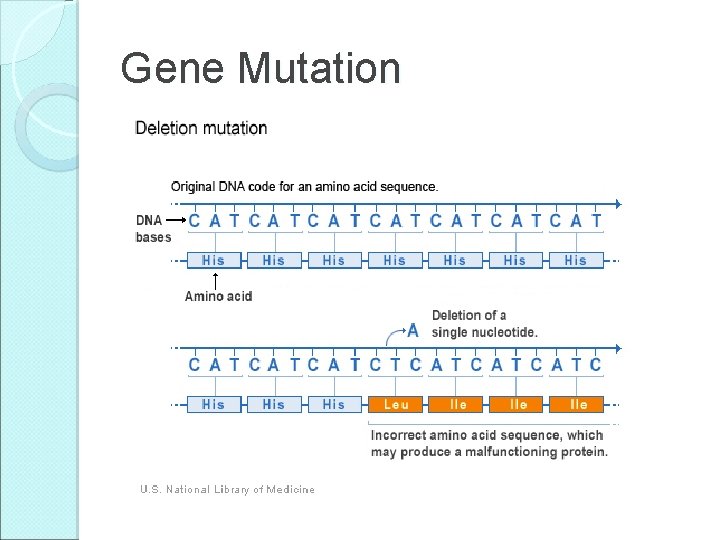
Gene Mutation
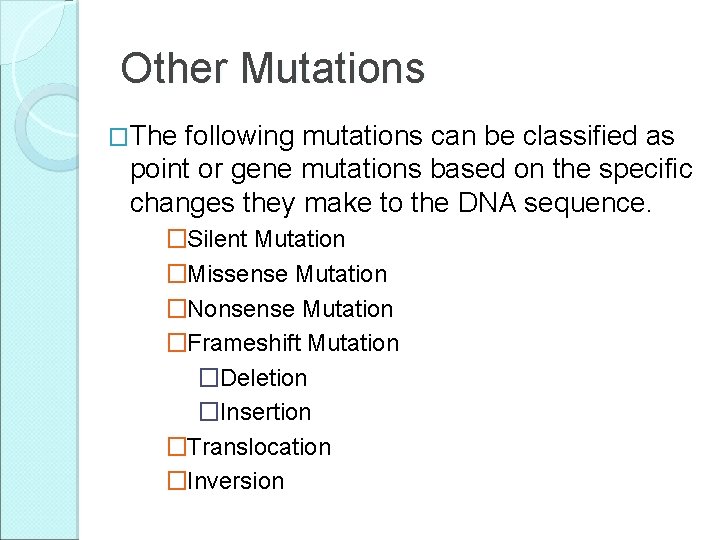
Other Mutations �The following mutations can be classified as point or gene mutations based on the specific changes they make to the DNA sequence. �Silent Mutation �Missense Mutation �Nonsense Mutation �Frameshift Mutation �Deletion �Insertion �Translocation �Inversion
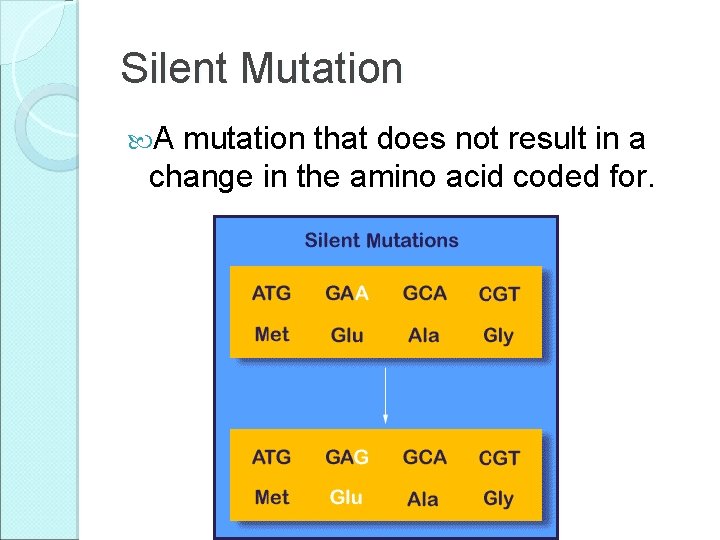
Silent Mutation A mutation that does not result in a change in the amino acid coded for.
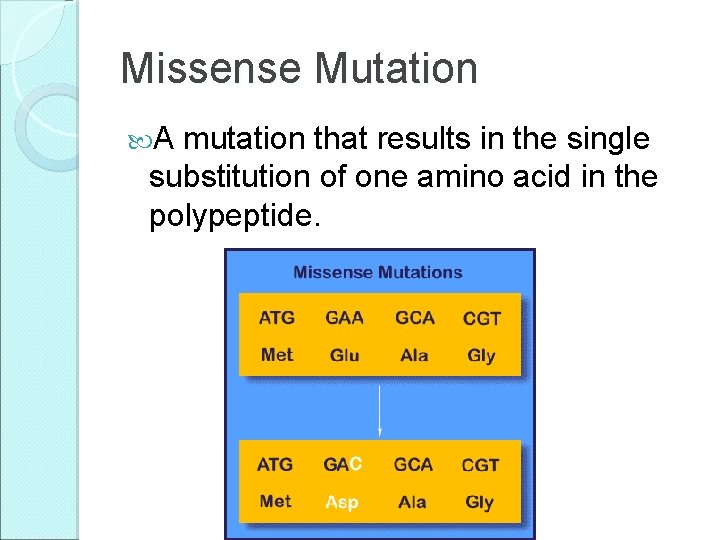
Missense Mutation A mutation that results in the single substitution of one amino acid in the polypeptide.
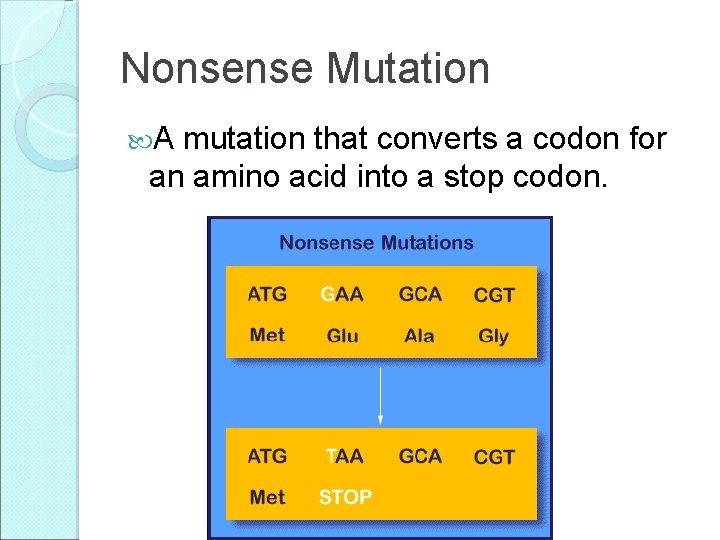
Nonsense Mutation A mutation that converts a codon for an amino acid into a stop codon.
Frameshift Mutation A mutation that causes the reading frame of codons to change. Can either be caused by the insertion or deletion of nucleotides.
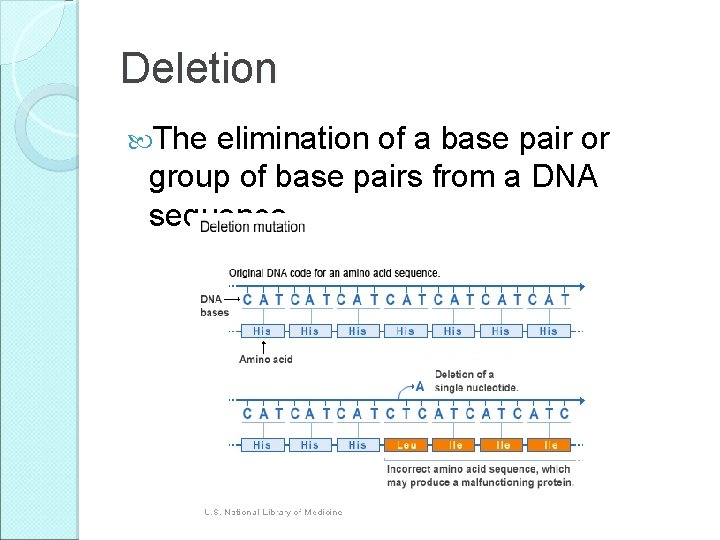
Deletion The elimination of a base pair or group of base pairs from a DNA sequence.
Insertion The placement of an extra nucleotide(s) in a DNA sequence.
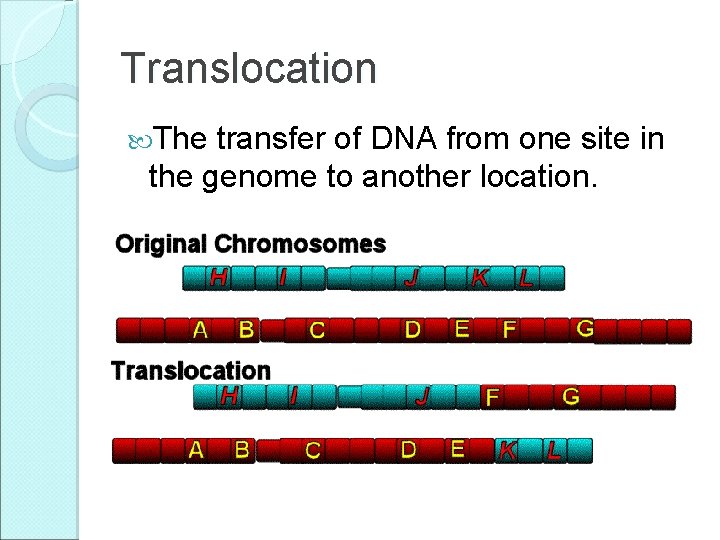
Translocation The transfer of DNA from one site in the genome to another location.
Inversion The reversal of a segment of DNA.
Causes of Genetic Mutation Genetic mutations can either be spontaneous or induced. Spontaneous mutations – occur as a result of errors made during DNA replication. Induced mutations – are caused by a foreign chemical agent or radiation. ◦ Substances that induce mutations are known as mutagenic agents. ◦ Examples: UV radiation, cosmic rays, X-rays, tobacco, viruses, alcohol, STI’s, etc.
Inferring Relationships from DNA Sequences Phylogeny – the proposed evolutionary history of a species or group. The phylogeny of a species can be determined based on the sequences of DNA. More closely related organisms will have more similar DNA.