
Chapter 20 Section 2 Marine Ecosystems Life in
- Slides: 12
Chapter 20 Section 2 Marine Ecosystems Life in the Ocean • Abiotic Factors Marine ecosystems are shaped by abiotic factors including _________, and the ________ that passes into the water. • Plankton Trillions of plankton live in the ocean. Plankton are ______________ • ____________________. < Back Next > Preview Main
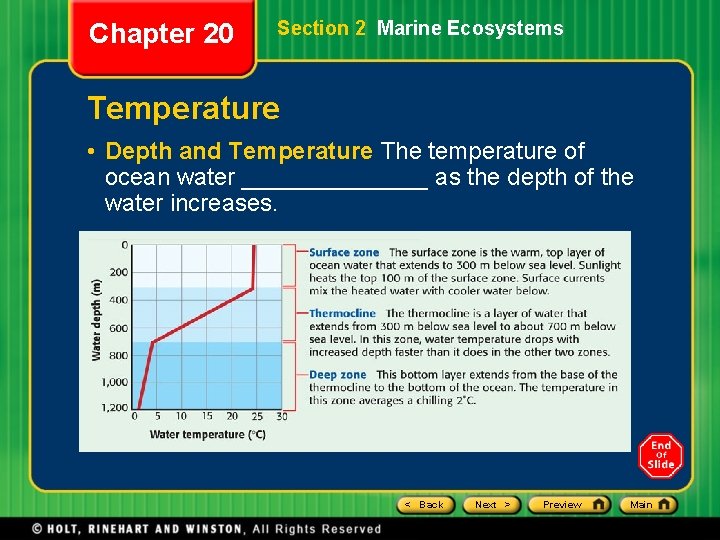
Chapter 20 Section 2 Marine Ecosystems Temperature • Depth and Temperature The temperature of ocean water _______ as the depth of the water increases. < Back Next > Preview Main
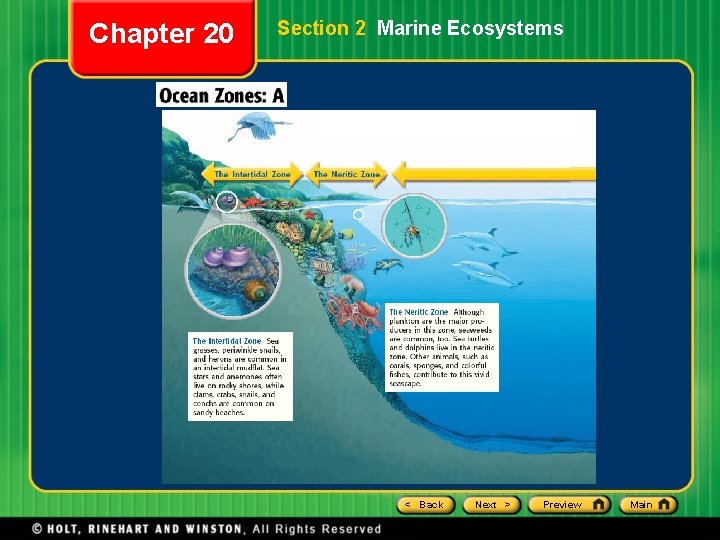
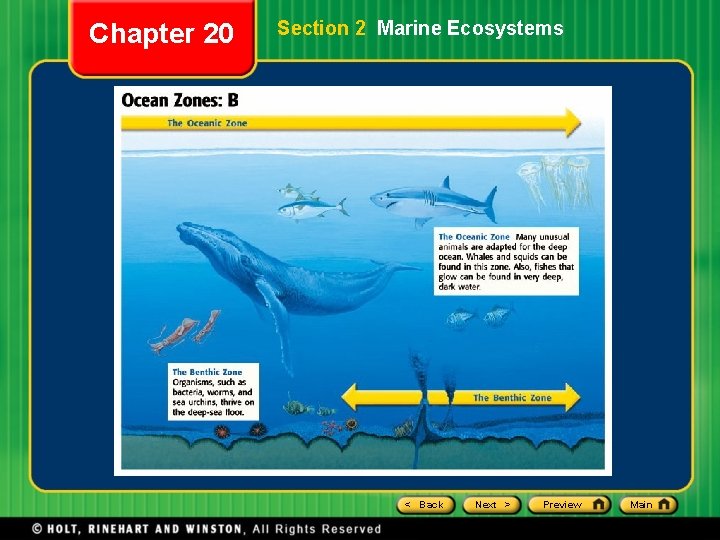
Chapter 20 Section 2 Marine Ecosystems Depth and Sunlight • The Intertidal Zone The intertidal zone is the place where ______________. • The Neritic Zone As you move farther away from shore, into the neritic zone, the water becomes ___________. • The Oceanic Zone In the oceanic zone, the sea floor _______________ • The Benthic Zone The benthic zone is the ocean floor. The deepest part does not get any ____________. < Back Next > Preview Main
Chapter 20 Section 2 Marine Ecosystems < Back Next > Preview Main
Chapter 20 Section 2 Marine Ecosystems < Back Next > Preview Main
Chapter 20 Section 2 Marine Ecosystems A Closer Look • Intertidal Areas Intertidal areas are found _____ the shore. These areas include mudflats, sandy beaches, and rocky shores. • Coral Reefs Coral reefs are found in ____, ______ areas of the ____zone. Reefs provide homes for many marine animals and plants. • Estuaries An area where ________ from rivers spills into the ocean is called an estuary. Plants and animals living in estuaries must be able to survive in a changing concentration of salt. < Back Next > Preview Main
Chapter 20 Section 2 Marine Ecosystems A Closer Look, continued • The Sargasso Sea An ecosystem called the Sargasso Sea is found in the middle of the _______ Ocean. The ecosystem contains floating rafts of _____. • Polar Ice The Arctic Ocean and the ocean around Antarctica have icy waters, which are rich in _________. Many fishes, birds, and mammals live in this ecosystem. < Back Next > Preview Main
Chapter 20 Section 3 Freshwater Ecosystems Stream and River Ecosystems • Water in Streams and Rivers The water in brooks, streams, and rivers may flow from melting ice or snow. Or the water may come from a spring. • Tributaries Each stream of water that joins a ____________is called a tributary. < Back Next > Preview Main
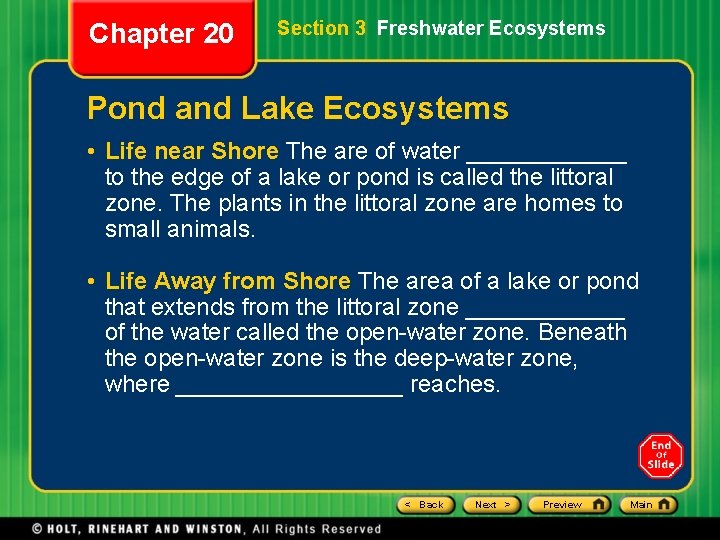
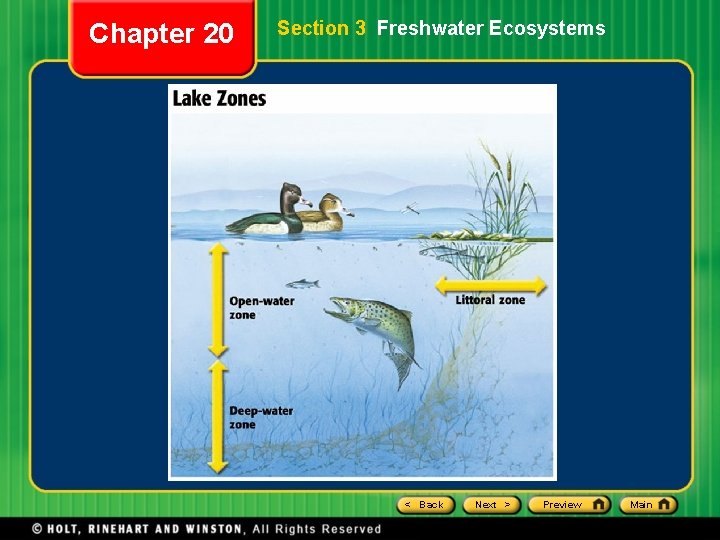
Chapter 20 Section 3 Freshwater Ecosystems Pond and Lake Ecosystems • Life near Shore The are of water ______ to the edge of a lake or pond is called the littoral zone. The plants in the littoral zone are homes to small animals. • Life Away from Shore The area of a lake or pond that extends from the littoral zone ______ of the water called the open-water zone. Beneath the open-water zone is the deep-water zone, where _________ reaches. < Back Next > Preview Main
Chapter 20 Section 3 Freshwater Ecosystems < Back Next > Preview Main
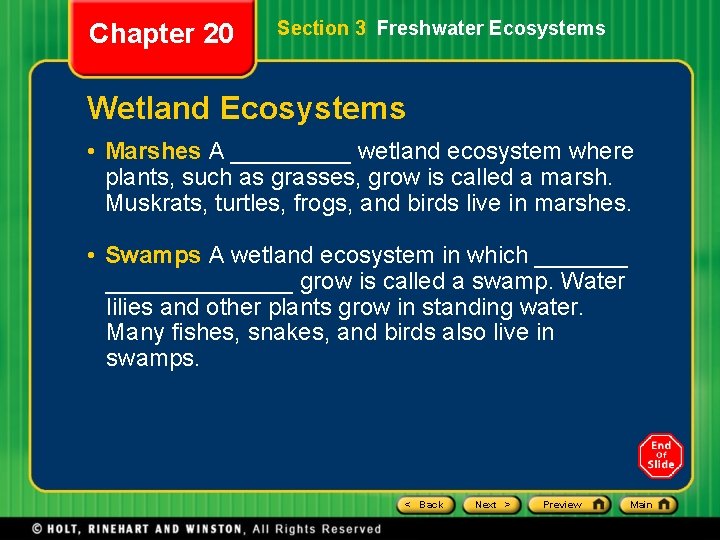
Chapter 20 Section 3 Freshwater Ecosystems Wetland Ecosystems • Marshes A _____ wetland ecosystem where plants, such as grasses, grow is called a marsh. Muskrats, turtles, frogs, and birds live in marshes. • Swamps A wetland ecosystem in which ______________ grow is called a swamp. Water lilies and other plants grow in standing water. Many fishes, snakes, and birds also live in swamps. < Back Next > Preview Main
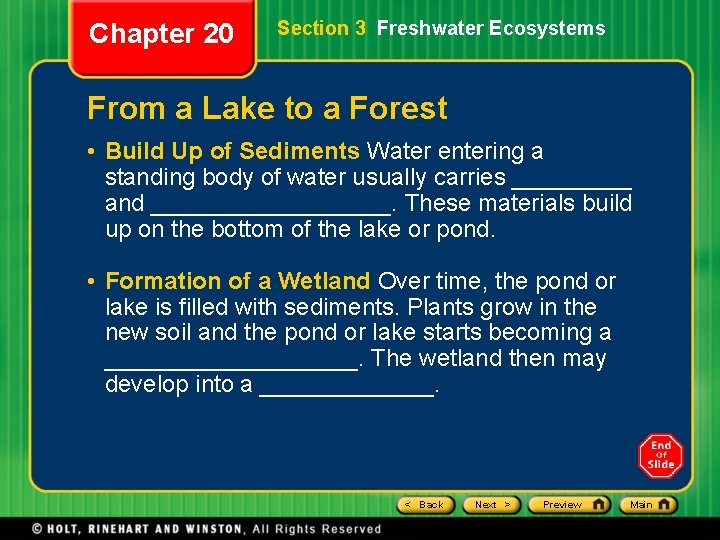
Chapter 20 Section 3 Freshwater Ecosystems From a Lake to a Forest • Build Up of Sediments Water entering a standing body of water usually carries _____ and _________. These materials build up on the bottom of the lake or pond. • Formation of a Wetland Over time, the pond or lake is filled with sediments. Plants grow in the new soil and the pond or lake starts becoming a __________. The wetland then may develop into a _______. < Back Next > Preview Main