
Chapter 20 Reptiles 20 1 Introduction This chapter

- Slides: 27
Chapter 20 Reptiles 20 -1
Introduction • This chapter will describe the characteristics of reptiles • Four orders of reptiles will be compared • You will learn proper methods for handing and feeding reptiles as well as their housing and equipment needs 20 -2
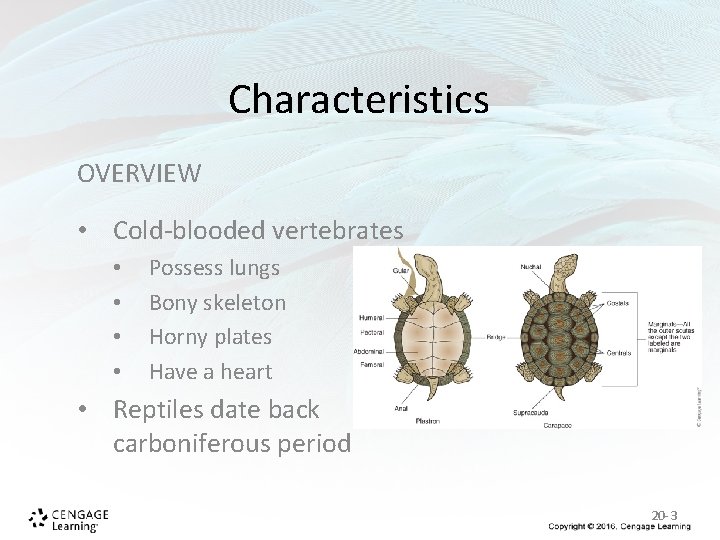
Characteristics OVERVIEW • Cold-blooded vertebrates • • Possess lungs Bony skeleton Horny plates Have a heart • Reptiles date back carboniferous period 20 -3
Characteristics PHYSICAL FEATURES • Three body types • Turtles and tortoises form scutes • Snakes cannot close their eyelids • Tongues of reptiles vary considerably • Either oviparous or ovoviviparous 20 -4
Characteristics HIBERNATION • Temperate zones • Systems barely function • Hibernation for breeding • • • Stimulates ovulation and production of sperm Between 39 and 50°F Varies with species 20 -5
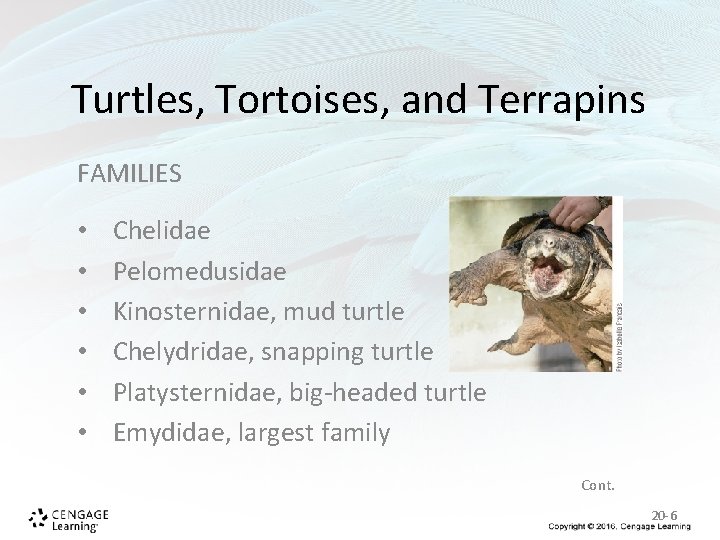
Turtles, Tortoises, and Terrapins FAMILIES • • • Chelidae Pelomedusidae Kinosternidae, mud turtle Chelydridae, snapping turtle Platysternidae, big-headed turtle Emydidae, largest family Cont. 20 -6
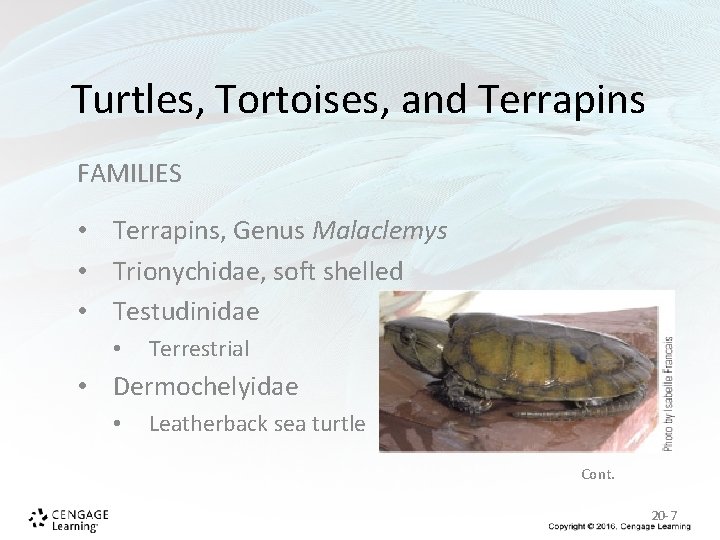
Turtles, Tortoises, and Terrapins FAMILIES • Terrapins, Genus Malaclemys • Trionychidae, soft shelled • Testudinidae • Terrestrial • Dermochelyidae • Leatherback sea turtle Cont. 20 -7
Turtles, Tortoises, and Terrapins FAMILIES • Cheloniidae, hard-shell sea turtle • Dermatemyidae • Central American river turtle • Carettochelyidae • Papua New Guinea plateless river turtle 20 -8
Snakes, Pythons, and Boas FAMILIES • • • Leptotyphlopidae, thread snake Typhlopidae, blind snake Anomalepidae, dawn blind snake Acrochordidae, wart snake Aniliidae, coral pipe snake Cont. 20 -9
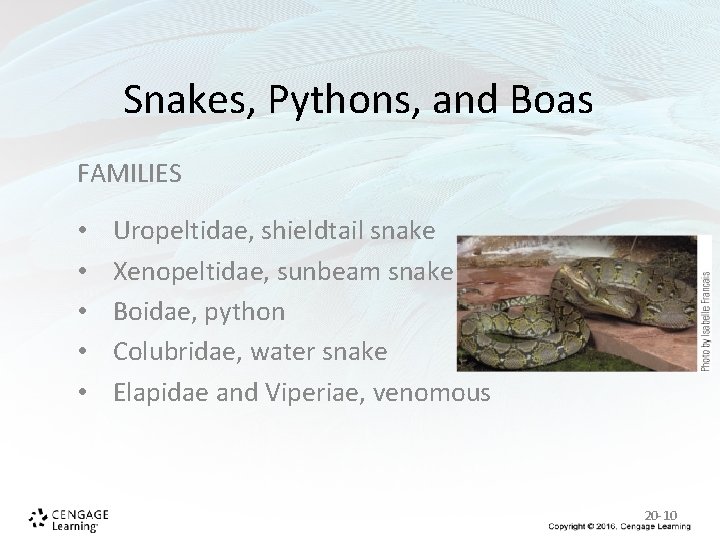
Snakes, Pythons, and Boas FAMILIES • • • Uropeltidae, shieldtail snake Xenopeltidae, sunbeam snake Boidae, python Colubridae, water snake Elapidae and Viperiae, venomous 20 -10
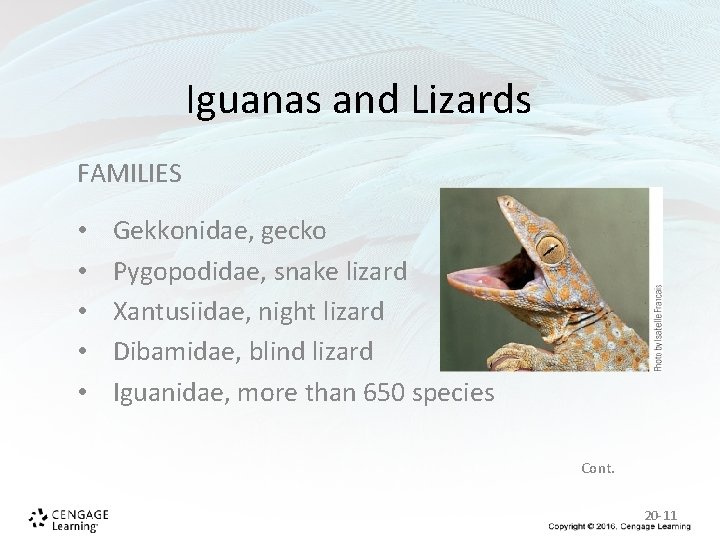
Iguanas and Lizards FAMILIES • • • Gekkonidae, gecko Pygopodidae, snake lizard Xantusiidae, night lizard Dibamidae, blind lizard Iguanidae, more than 650 species Cont. 20 -11
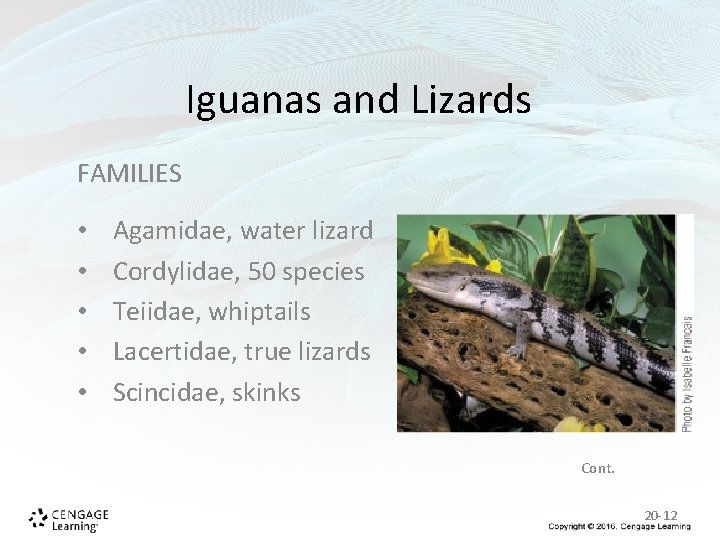
Iguanas and Lizards FAMILIES • • • Agamidae, water lizard Cordylidae, 50 species Teiidae, whiptails Lacertidae, true lizards Scincidae, skinks Cont. 20 -12
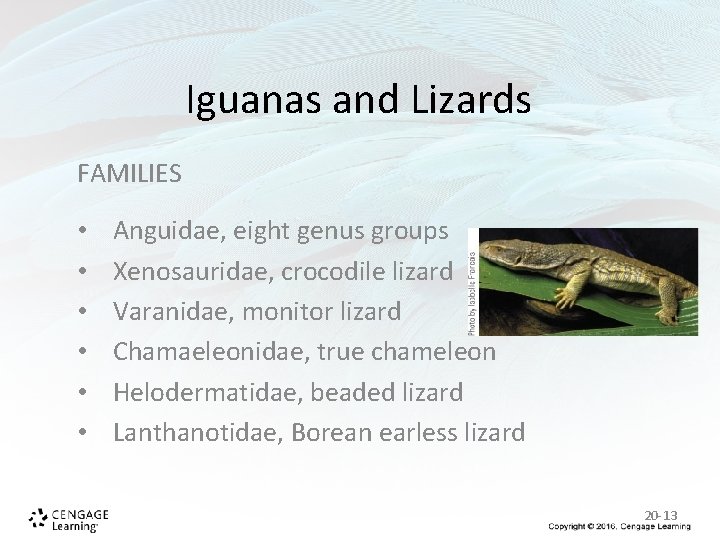
Iguanas and Lizards FAMILIES • • • Anguidae, eight genus groups Xenosauridae, crocodile lizard Varanidae, monitor lizard Chamaeleonidae, true chameleon Helodermatidae, beaded lizard Lanthanotidae, Borean earless lizard 20 -13
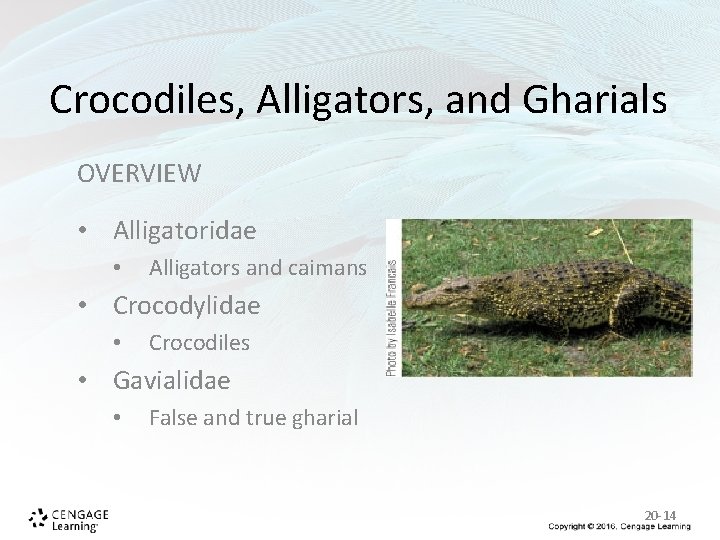
Crocodiles, Alligators, and Gharials OVERVIEW • Alligatoridae • Alligators and caimans • Crocodylidae • Crocodiles • Gavialidae • False and true gharial 20 -14
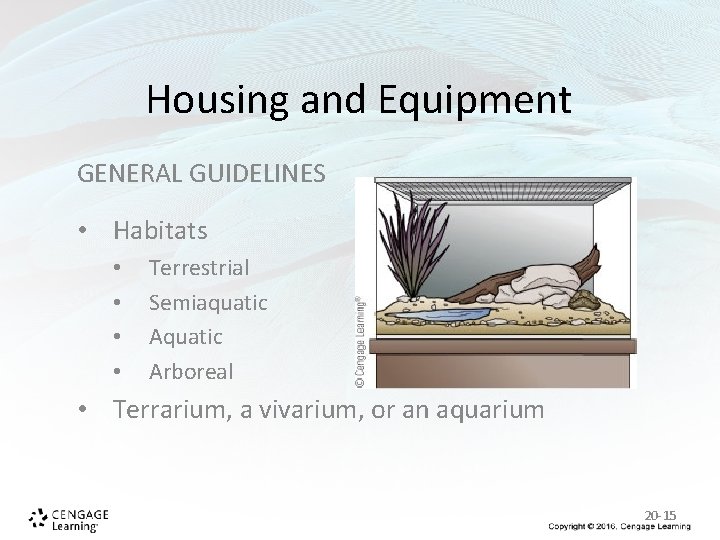
Housing and Equipment GENERAL GUIDELINES • Habitats • • Terrestrial Semiaquatic Arboreal • Terrarium, a vivarium, or an aquarium 20 -15
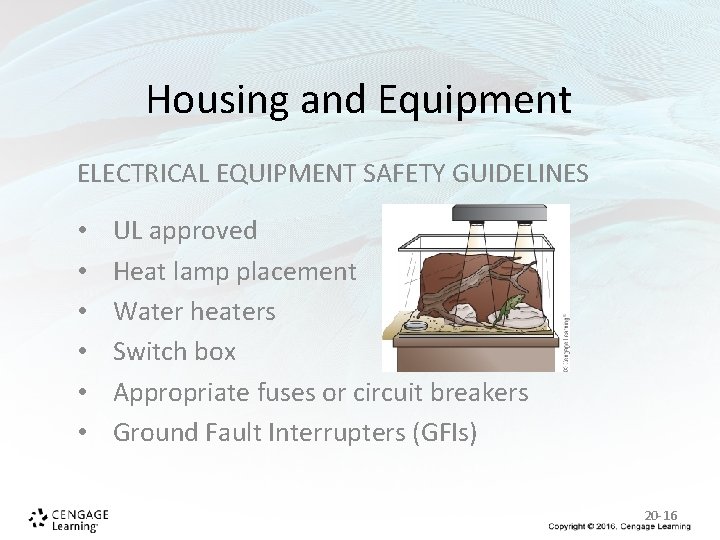
Housing and Equipment ELECTRICAL EQUIPMENT SAFETY GUIDELINES • • • UL approved Heat lamp placement Water heaters Switch box Appropriate fuses or circuit breakers Ground Fault Interrupters (GFIs) 20 -16
Feeding TURTLES • Feed every day • Aquatic turtle food • • Commercial pellets Raw/live food • Land turtle food • • Herbivores Omnivores 20 -17
Feeding SNAKES • Small snakes • • Small fish Insects • Medium snakes • Baby mice and rats • Big snakes • Full-grown mice 20 -18
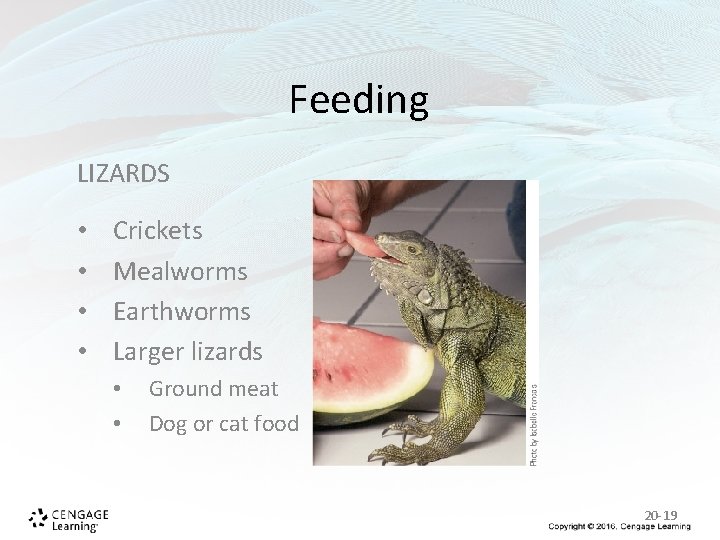
Feeding LIZARDS • • Crickets Mealworms Earthworms Larger lizards • • Ground meat Dog or cat food 20 -19
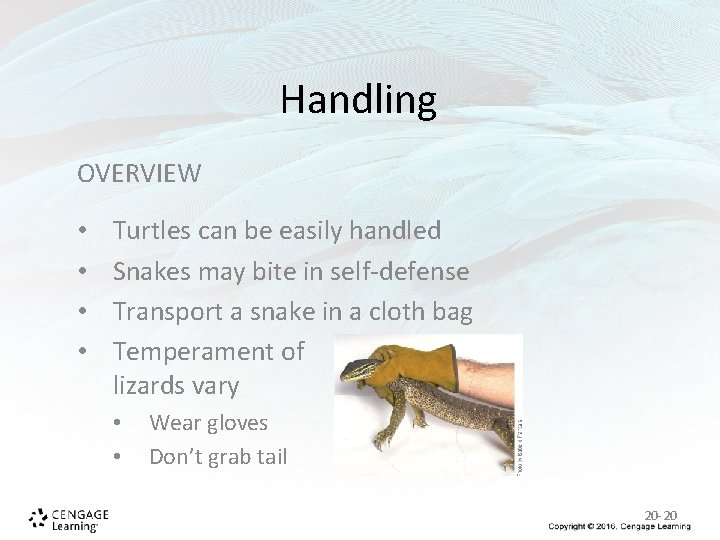
Handling OVERVIEW • • Turtles can be easily handled Snakes may bite in self-defense Transport a snake in a cloth bag Temperament of lizards vary • • Wear gloves Don’t grab tail 20 -20
Diseases and Ailments OVERVIEW • • • Bacterial diseases Shedding External parasites Internal parasites Vitamin D deficiencies 20 -21
Reproduction TURTLES • Male climbs onto the carapace • Are oviparous • When young hatch • • • On their own Inherit instincts for survival Difficult to tell the sex of young turtles 20 -22
Reproduction SNAKES • • • Oviparous, ovoviviparous, or viviparous Little difference between males and females “Popping” juvenile snakes “Probing” adult snakes Oviduct 20 -23
Reproduction LIZARDS AND IGUANAS • • • Most species are oviparous Sharp egg tooth on the end of their snout Definite differences in males and females No mothering instincts Left to fend for themselves 20 -24
Reproduction CROCODILIANS • • • Usually mate in the water Lay hard-shelled eggs Deposited in nests Females guard nest Dig top of nest open May gather young in their mouths 20 -25
Summary • Reptiles are cold-blooded vertebrates that possess lungs and breathe atmospheric air • To be successful at raising reptiles in captivity, it is important to duplicate the animal’s original habitat as closely as possible • Reptiles are ectotherms; they are unable to generate their own body heat and take on the temperature of their environment Cont. 20 -26
Summary • If the animal appears healthy, if it is eating, and if it does not appear to have any parasites, chances are good the animal will survive for a long time in captivity 20 -27