
CHAPTER 20 Molecular Genetics PART 1 DNA STRUCTURE
- Slides: 12
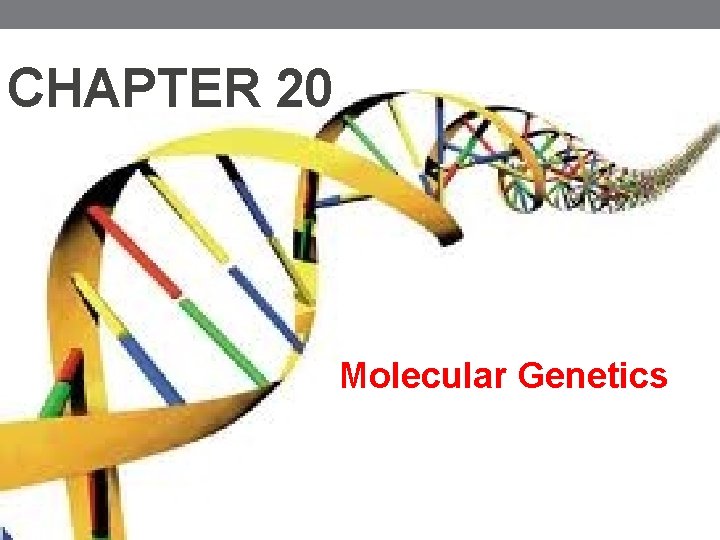
CHAPTER 20 Molecular Genetics
PART 1 - DNA STRUCTURE AND REPLICATION
What is DNA? • Two types of DNA discovered by Phoebus Levene • DNA (deoxyribonucleic acid): governs process of heredity • RNA (ribonucleic acid): plays a role in gene expression and protein synthesis and has a similar structure to DNA • http: //www. youtube. com/watch? v=qy 8 dk 5 i. S 1 f 0
DNA • Important in the life of a cell for several reasons: • Directs cell activity • Allows traits to be passed on to successive generations of cells • Mutations- arise when DNA is altered, the code is changed.
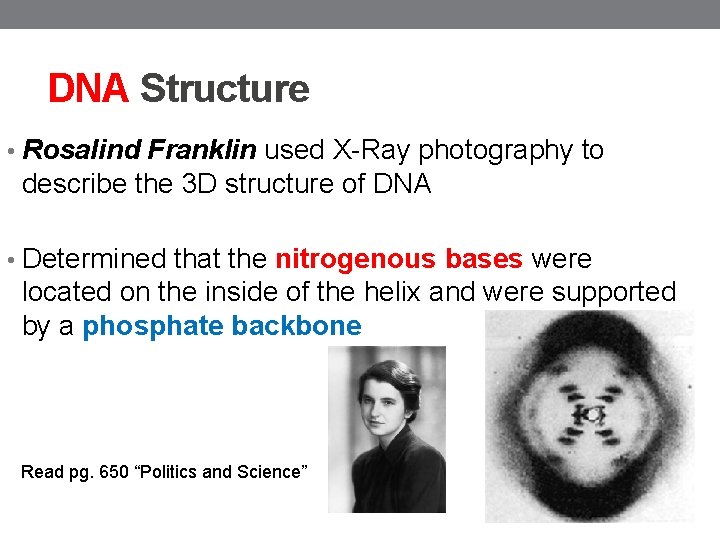
DNA Structure • Rosalind Franklin used X-Ray photography to describe the 3 D structure of DNA • Determined that the nitrogenous bases were located on the inside of the helix and were supported by a phosphate backbone Read pg. 650 “Politics and Science”
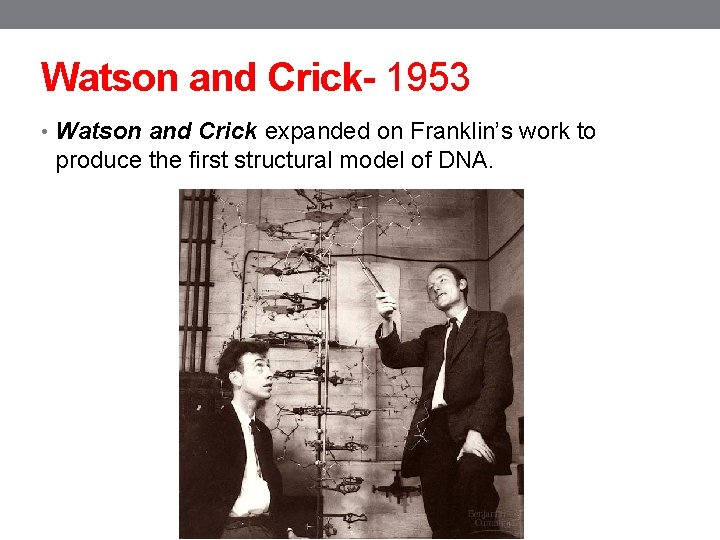
Watson and Crick- 1953 • Watson and Crick expanded on Franklin’s work to produce the first structural model of DNA.
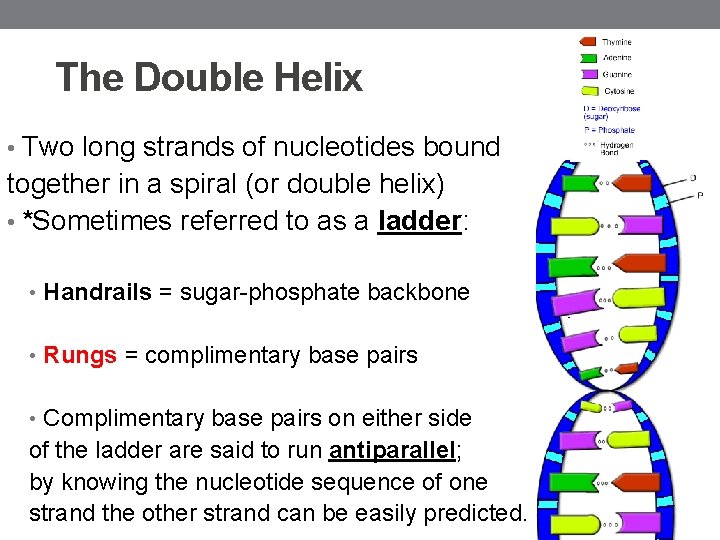
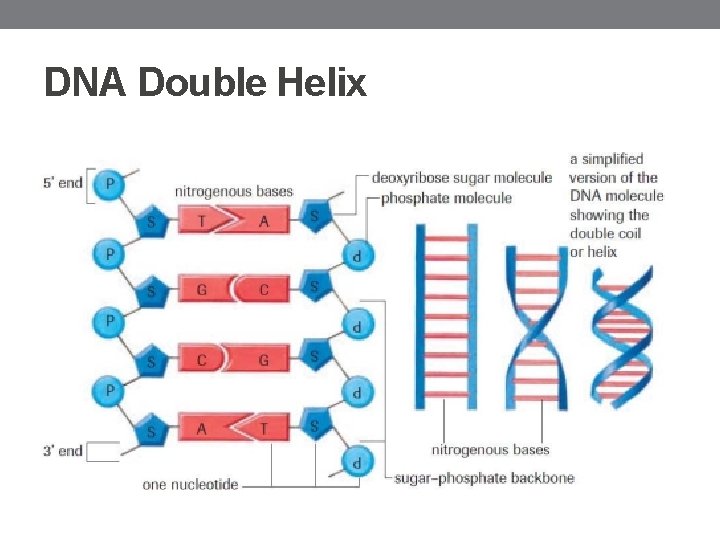
The Double Helix • Two long strands of nucleotides bound together in a spiral (or double helix) • *Sometimes referred to as a ladder: • Handrails = sugar-phosphate backbone • Rungs = complimentary base pairs • Complimentary base pairs on either side of the ladder are said to run antiparallel; by knowing the nucleotide sequence of one strand the other strand can be easily predicted.
DNA Double Helix
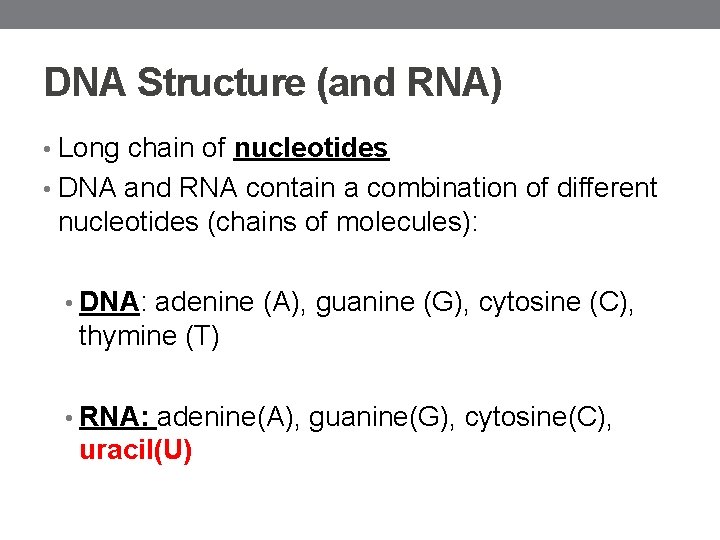
DNA Structure (and RNA) • Long chain of nucleotides • DNA and RNA contain a combination of different nucleotides (chains of molecules): • DNA: adenine (A), guanine (G), cytosine (C), thymine (T) • RNA: adenine(A), guanine(G), cytosine(C), uracil(U)
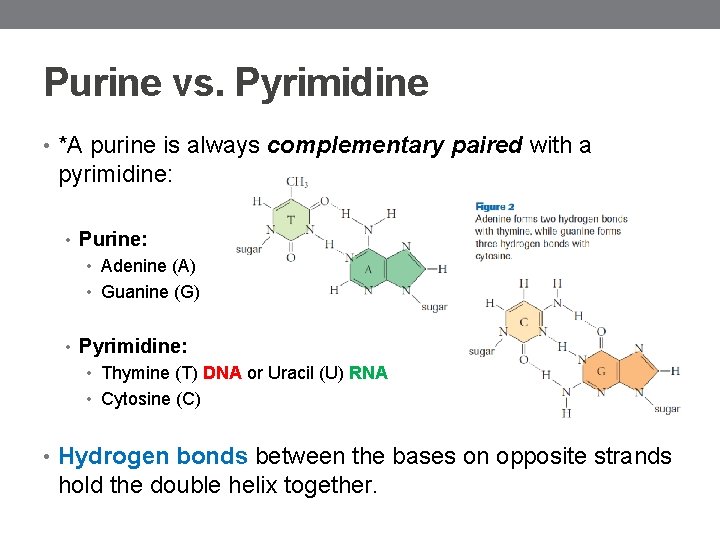
Purine vs. Pyrimidine • *A purine is always complementary paired with a pyrimidine: • Purine: • Adenine (A) • Guanine (G) • Pyrimidine: • Thymine (T) DNA or Uracil (U) RNA • Cytosine (C) • Hydrogen bonds between the bases on opposite strands hold the double helix together.
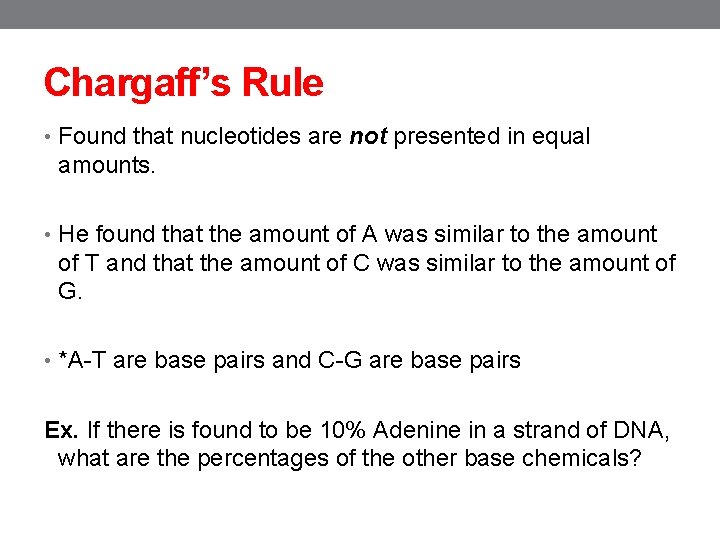
Chargaff’s Rule • Found that nucleotides are not presented in equal amounts. • He found that the amount of A was similar to the amount of T and that the amount of C was similar to the amount of G. • *A-T are base pairs and C-G are base pairs Ex. If there is found to be 10% Adenine in a strand of DNA, what are the percentages of the other base chemicals?
http: //www. youtube. com/watch? v=sf 0 YXn. AFBs 8 To Do: • Label DNA hand out • DNA Drawing from Memory • Page 663 #1 -3 • Finish reading Section 20. 1