
Chapter 20 Lecture Outline See separate Power Point

- Slides: 30
Chapter 20 Lecture Outline See separate Power. Point slides for all figures and tables preinserted into Power. Point without notes. Copyright © 2016 Mc. Graw-Hill Education. Permission required for reproduction or display. 1
Cancer 2
Points to ponder • What are characteristics of cancer cells? • What are three stages in the development of cancer? • What are angiogenesis and metastasis? • How do proto-oncogene and tumor-suppressor genes normally act, and how can they become cancerous? • Explain different types of cancer, depending on tissue type involved. • What are some genetic and environmental causes of cancer? • What does CAUTION stand for in regards to cancer? 3
Points to ponder • What are some regular screening tests you can get to help prevent cancer? • Know how to do self exams. • What are tumor marker and genetic tests? • What are some standard treatments for cancer? • What are some newer cancer therapies? • What is your opinion on controlling tobacco? 4
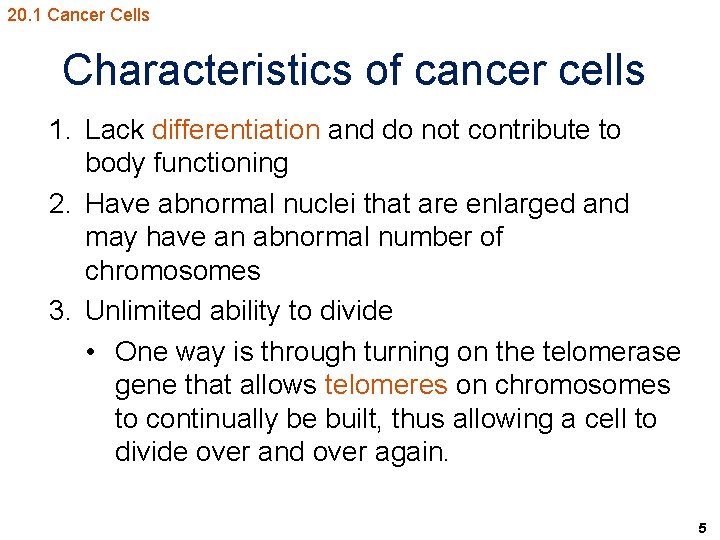
20. 1 Cancer Cells Characteristics of cancer cells 1. Lack differentiation and do not contribute to body functioning 2. Have abnormal nuclei that are enlarged and may have an abnormal number of chromosomes 3. Unlimited ability to divide • One way is through turning on the telomerase gene that allows telomeres on chromosomes to continually be built, thus allowing a cell to divide over and over again. 5
20. 1 Cancer Cells Characteristics of cancer cells 4. Form tumors • Benign tumors are usually encapsulated and do not invade adjacent tissue, while a cancerous tumor usually is not encapsulated and eventually invades surrounding tissue. 5. Can divide without growth factors 6. Become abnormal gradually through a multistage process 7. Undergo angiogenesis and metastasis 6
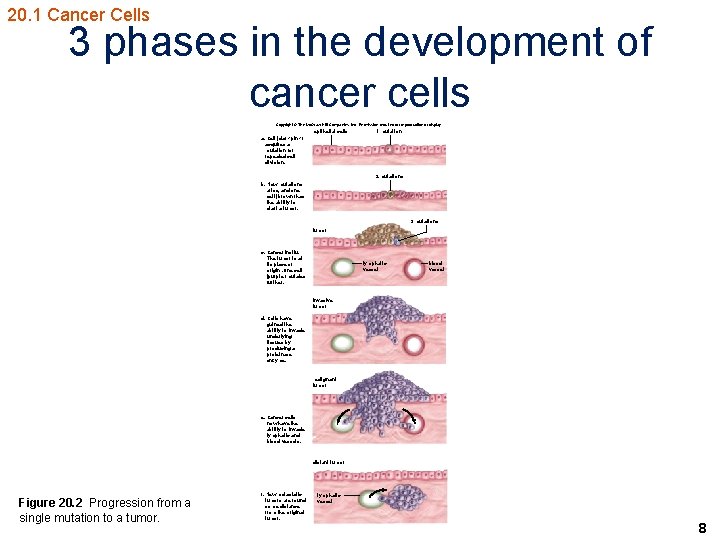
20. 1 Cancer Cells 3 phases in the development of cancer cells • Initiation – a single cell undergoes a mutation that causes it to divide repeatedly • Promotion – a tumor develops and cells within the tumor mutate • Progression – a cell mutates in such a way that allows it to invade surrounding tissue 7
20. 1 Cancer Cells 3 phases in the development of cancer cells Copyright © The Mc. Graw-Hill Companies, Inc. Permission required for reproduction or display. epithelial cells 1 mutation a. Cell (dark pink) acquires a mutation for repeated cell division. 2 mutations b. New mutations arise, and one cell (brown) has the ability to start a tumor. 3 mutations tumor c. Cancer insitu. The tumor is at its place of origin. One cell (purple) mutates further. lymphatic vessel blood vessel invasive tumor d. Cells have gained the ability to invade underlying tissues by producing a proteinase enzyme. malignant tumor e. Cancer cells now have the ability to invade lymphatic and blood vessels. distant tumor Figure 20. 2 Progression from a single mutation to a tumor. f. New metastatic tumors are found some distance from the original tumor. lymphatic vessel 8
20. 1 Cancer Cells What are angiogenesis and metastasis? • Angiogenesis is the formation of new blood vessels to supply nutrients and oxygen to the tumor. • Metastasis occurs when cells move into the bloodstream or lymphatic vessels and form new tumors at distant sites from the primary tumor. 9
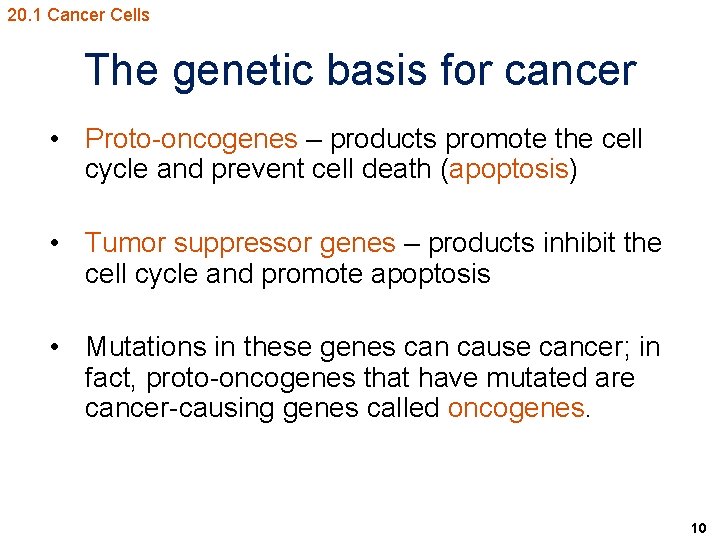
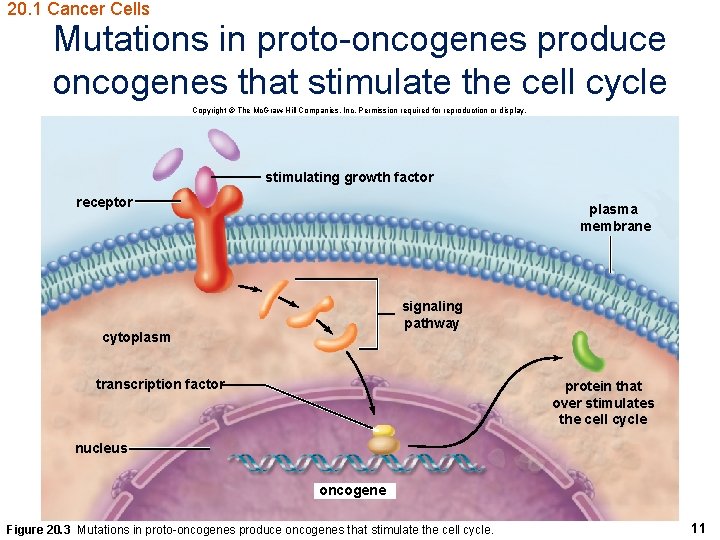
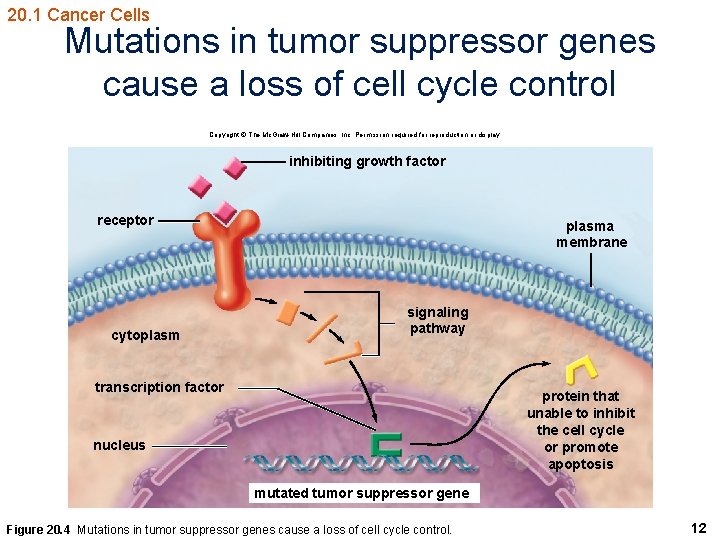
20. 1 Cancer Cells The genetic basis for cancer • Proto-oncogenes – products promote the cell cycle and prevent cell death (apoptosis) • Tumor suppressor genes – products inhibit the cell cycle and promote apoptosis • Mutations in these genes can cause cancer; in fact, proto-oncogenes that have mutated are cancer-causing genes called oncogenes. 10
20. 1 Cancer Cells Mutations in proto-oncogenes produce oncogenes that stimulate the cell cycle Copyright © The Mc. Graw-Hill Companies, Inc. Permission required for reproduction or display. stimulating growth factor receptor plasma membrane signaling pathway cytoplasm transcription factor protein that over stimulates the cell cycle nucleus oncogene Figure 20. 3 Mutations in proto-oncogenes produce oncogenes that stimulate the cell cycle. 11
20. 1 Cancer Cells Mutations in tumor suppressor genes cause a loss of cell cycle control Copyright © The Mc. Graw-Hill Companies, Inc. Permission required for reproduction or display. inhibiting growth factor receptor cytoplasma membrane signaling pathway transcription factor protein that unable to inhibit the cell cycle or promote apoptosis nucleus mutated tumor suppressor gene Figure 20. 4 Mutations in tumor suppressor genes cause a loss of cell cycle control. 12
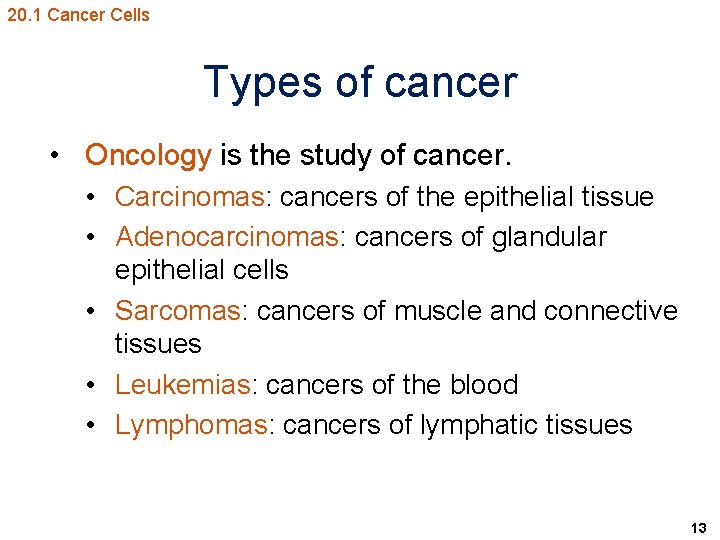
20. 1 Cancer Cells Types of cancer • Oncology is the study of cancer. • Carcinomas: cancers of the epithelial tissue • Adenocarcinomas: cancers of glandular epithelial cells • Sarcomas: cancers of muscle and connective tissues • Leukemias: cancers of the blood • Lymphomas: cancers of lymphatic tissues 13
20. 2 Causes and Prevention of Cancer Causes of cancer • Genetics • Environmental carcinogens – Radiation – Environmental carcinogens (tobacco smoke and pollutants) – Viruses 14
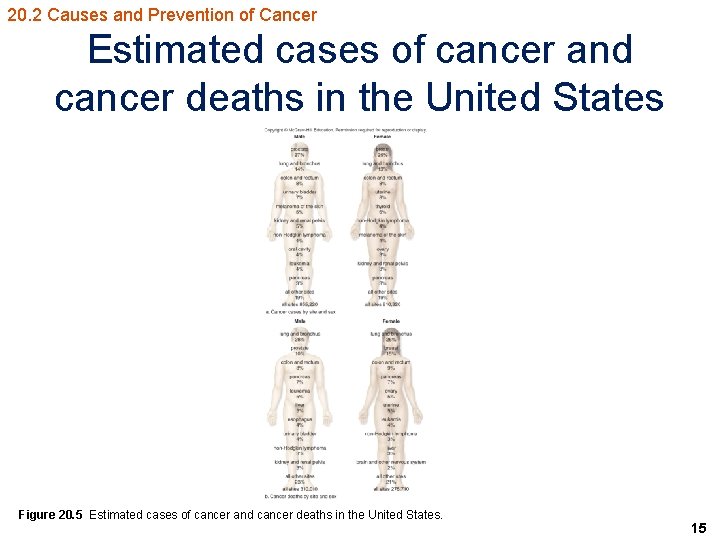
20. 2 Causes and Prevention of Cancer Estimated cases of cancer and cancer deaths in the United States Figure 20. 5 Estimated cases of cancer and cancer deaths in the United States. 15
20. 2 Causes and Prevention of Cancer Genetic causes of cancer • Examples of genes associated with cancer – BRCA 1 and BRCA 2 are tumor suppressor genes that are associated with breast cancer. – RB is a tumor suppressor gene that is associated with an eye tumor. – RET is a proto-oncogene that is associated with thyroid cancer. • Mutations of these genes predispose individuals to certain cancers but it takes at least one more acquired mutation during their lifetime to develop cancer. 16
20. 2 Causes and Prevention of Cancer Transposons • Transposons (“jumping genes”) are small, mobile sequences of DNA that have the ability to move throughout the genome, sometimes causing mutations. • If a transposon causes a loss of cell cycle control, it can cause cancer. 17
20. 2 Causes and Prevention of Cancer Environmental causes of cancer • Radiation – Environmental factors such as UV light (in sunlight or tanning lights) and X-rays can cause mutations. • Organic chemicals – Tobacco smoke increases cancer of lungs, mouth, larynx, and others. – Pollutants such as metals, dust, chemicals, and pesticides increase the risk of cancer. 18
20. 2 Causes and Prevention of Cancer Environmental causes of cancer • Viruses – Hepatitis B and C viruses can cause liver cancer. – Epstein-Barr virus can cause Burkitt lymphoma. – Human papillomavirus can cause cervical cancer. – HTLV-1 (human T-cell lymphotropic virus, type 1) can cause hairy cell leukemia. – HIV and Kaposi’s sarcoma, associated herpesvirus (KSHV), can cause Kaposi’s sarcoma and certain lymphomas. 19
20. 3 Diagnosis of Cancer 7 warning signs of cancer • • Change in bowel or bladder habits A sore that does not heal Unusual bleeding or discharge Thickening or lump in breast or elsewhere Indigestion or difficulty in swallowing Obvious change in wart or mole Nagging cough or hoarseness 20
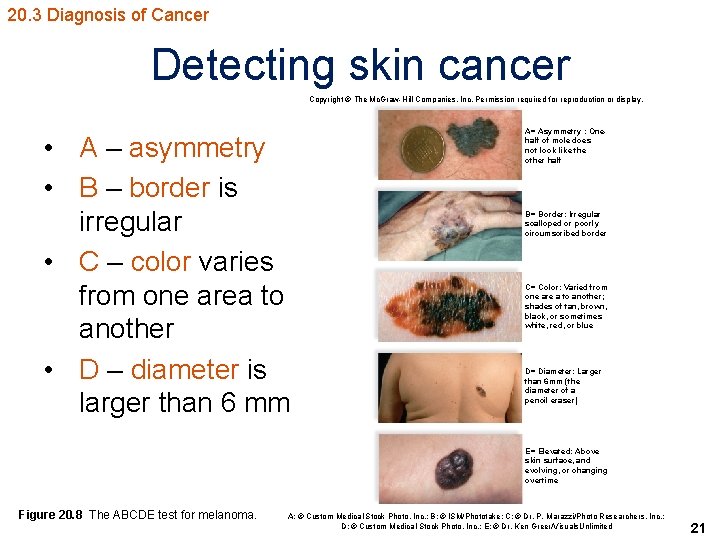
20. 3 Diagnosis of Cancer Detecting skin cancer Copyright © The Mc. Graw-Hill Companies, Inc. Permission required for reproduction or display. • A – asymmetry • B – border is irregular • C – color varies from one area to another • D – diameter is larger than 6 mm A= Asymmetry : Onehalf of mole does not look like the other half B= Border: Irregular scalloped or poorly circumscribed border C= Color: Varied from one are a to another; shades of tan, brown, black, or sometimes white, red, or blue D= Diameter: Larger than 6 mm (the diameter of a pencil eraser) E= Elevated: Above skin surface, and evolving, or changing overtime Figure 20. 8 The ABCDE test for melanoma. A: © Custom Medical Stock Photo, Inc. ; B: © ISM/Phototake; C: © Dr. P. Marazzi/Photo Researchers, Inc. ; D: © Custom Medical Stock Photo, Inc. ; E: © Dr. Ken Greer/Visuals. Unlimited 21
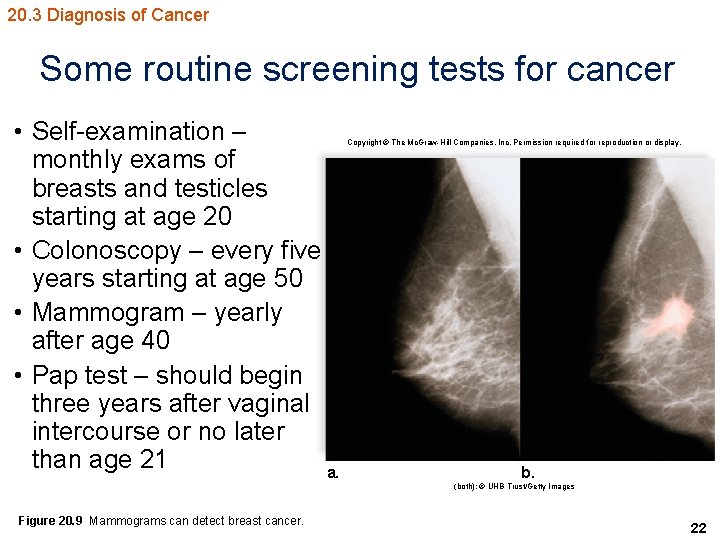
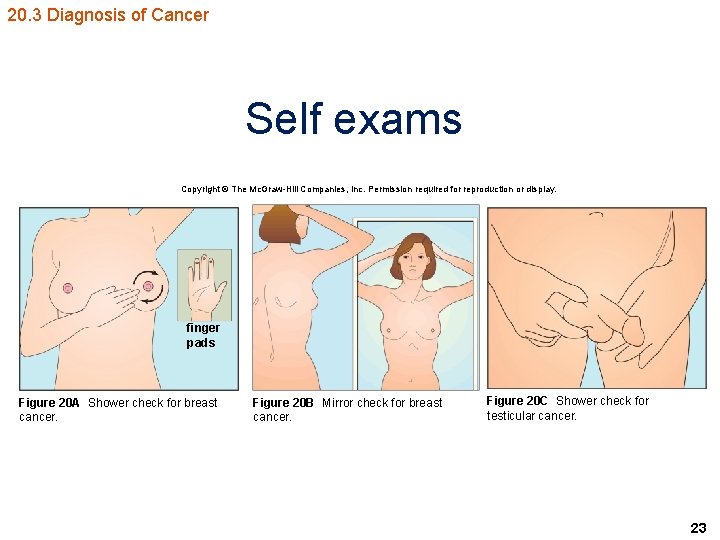
20. 3 Diagnosis of Cancer Some routine screening tests for cancer • Self-examination – monthly exams of breasts and testicles starting at age 20 • Colonoscopy – every five years starting at age 50 • Mammogram – yearly after age 40 • Pap test – should begin three years after vaginal intercourse or no later than age 21 a. Copyright © The Mc. Graw-Hill Companies, Inc. Permission required for reproduction or display. b. (both): © UHB Trust/Getty Images Figure 20. 9 Mammograms can detect breast cancer. 22
20. 3 Diagnosis of Cancer Self exams Copyright © The Mc. Graw-Hill Companies, Inc. Permission required for reproduction or display. finger pads Figure 20 A Shower check for breast cancer. Figure 20 B Mirror check for breast cancer. Figure 20 C Shower check for testicular cancer. 23
20. 3 Diagnosis of Cancer Other ways to detect cancer • Tumor marker tests – blood tests for tumor antigens/antibodies – CEA (carcinoembryonic antigen) antigen can be detected in someone with colon cancer – PSA (prostate-specific antigen) test for prostate cancer – AFP (alpha-fetoprotein) test for liver tumors 24
20. 3 Diagnosis of Cancer Other ways to detect cancer • Genetic tests – tests for mutations in protooncogenes and tumor suppressor genes – RET gene (thyroid cancer) – P 16 gene (associated with melanoma) – BRCA 1 (breast cancer) • A diagnosis of cancer can be confirmed by performing a biopsy. 25
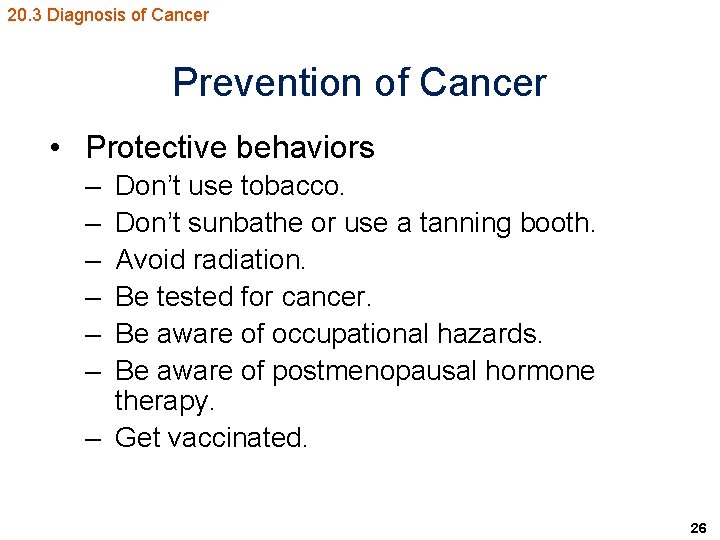
20. 3 Diagnosis of Cancer Prevention of Cancer • Protective behaviors – – – Don’t use tobacco. Don’t sunbathe or use a tanning booth. Avoid radiation. Be tested for cancer. Be aware of occupational hazards. Be aware of postmenopausal hormone therapy. – Get vaccinated. 26
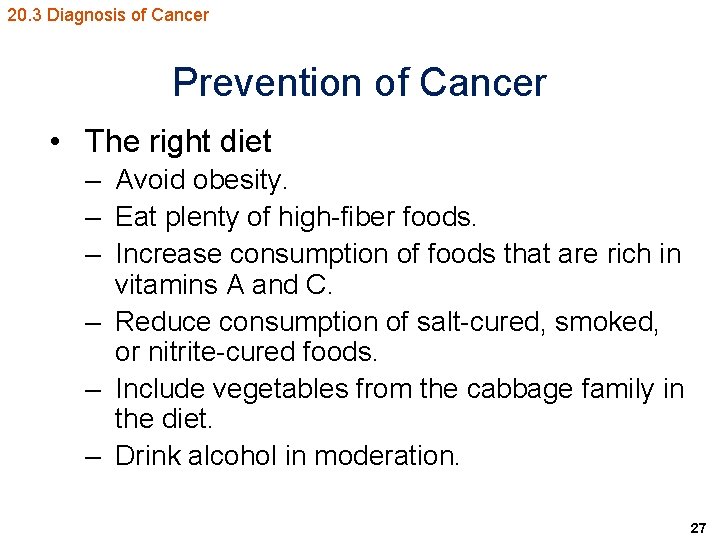
20. 3 Diagnosis of Cancer Prevention of Cancer • The right diet – Avoid obesity. – Eat plenty of high-fiber foods. – Increase consumption of foods that are rich in vitamins A and C. – Reduce consumption of salt-cured, smoked, or nitrite-cured foods. – Include vegetables from the cabbage family in the diet. – Drink alcohol in moderation. 27
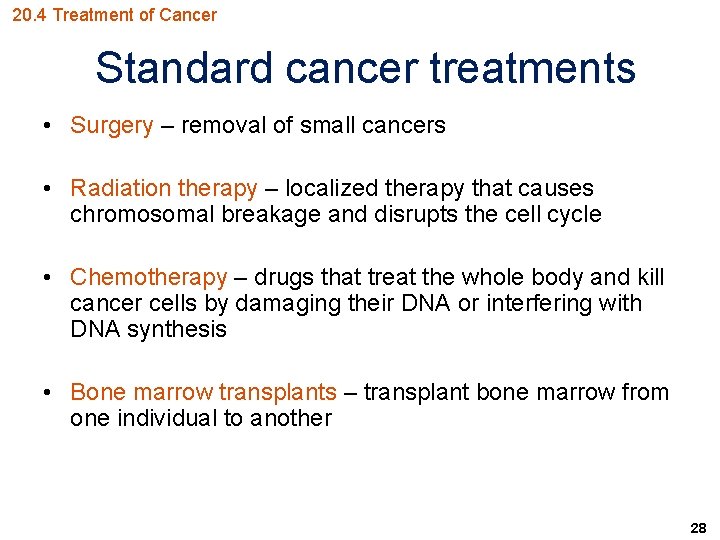
20. 4 Treatment of Cancer Standard cancer treatments • Surgery – removal of small cancers • Radiation therapy – localized therapy that causes chromosomal breakage and disrupts the cell cycle • Chemotherapy – drugs that treat the whole body and kill cancer cells by damaging their DNA or interfering with DNA synthesis • Bone marrow transplants – transplant bone marrow from one individual to another 28
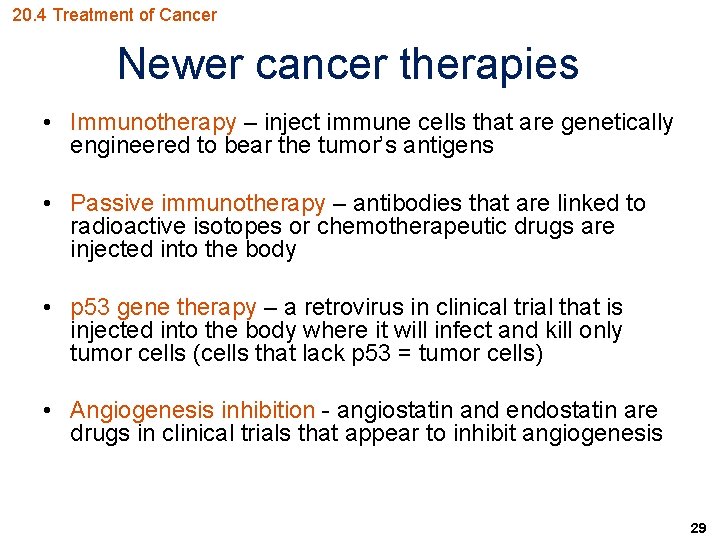
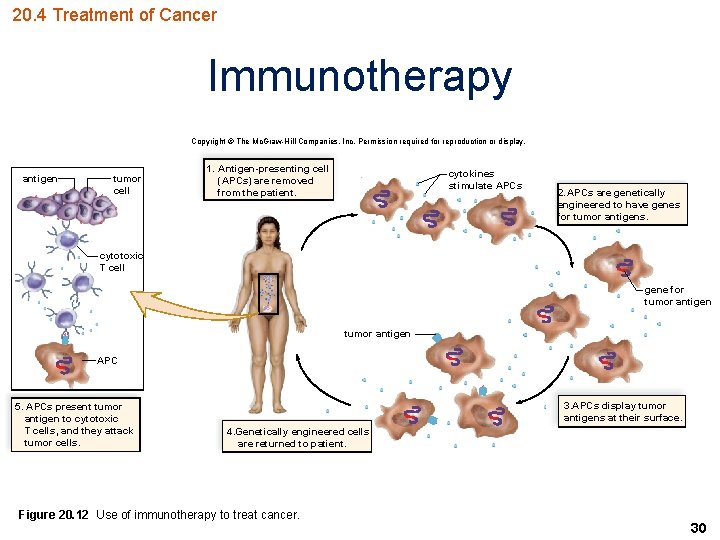
20. 4 Treatment of Cancer Newer cancer therapies • Immunotherapy – inject immune cells that are genetically engineered to bear the tumor’s antigens • Passive immunotherapy – antibodies that are linked to radioactive isotopes or chemotherapeutic drugs are injected into the body • p 53 gene therapy – a retrovirus in clinical trial that is injected into the body where it will infect and kill only tumor cells (cells that lack p 53 = tumor cells) • Angiogenesis inhibition - angiostatin and endostatin are drugs in clinical trials that appear to inhibit angiogenesis 29
20. 4 Treatment of Cancer Immunotherapy Copyright © The Mc. Graw-Hill Companies, Inc. Permission required for reproduction or display. antigen tumor cell 1. Antigen-presenting cell (APCs) are removed from the patient. cytokines stimulate APCs 2. APCs are genetically engineered to have genes for tumor antigens. cytotoxic T cell gene for tumor antigen APC 5. APCs present tumor antigen to cytotoxic T cells, and they attack tumor cells. 3. APCs display tumor antigens at their surface. 4. Genetically engineered cells are returned to patient. Figure 20. 12 Use of immunotherapy to treat cancer. 30