
Chapter 20 Geologic structures How rocks respond to
- Slides: 60
Chapter 20 Geologic structures
How rocks respond to tectonic forces!
Tectonic forces • Forces generated inside the earth are called tectonic forces. • Tectonic forces are expressed in terms of Stress and the resulting Strain.
• Stress: force applied per unit area. • Strain: resulting change in size or shape or both.
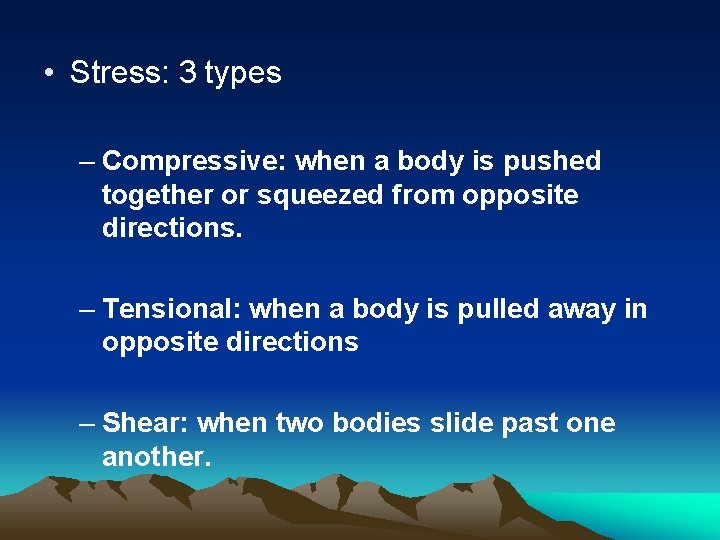
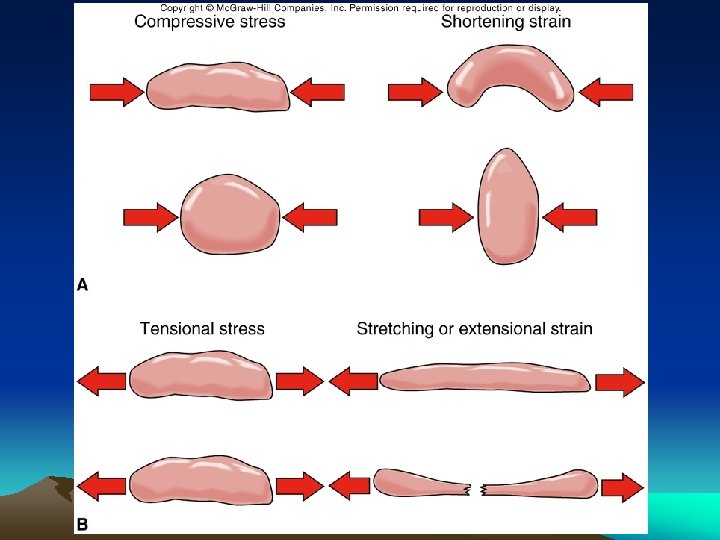
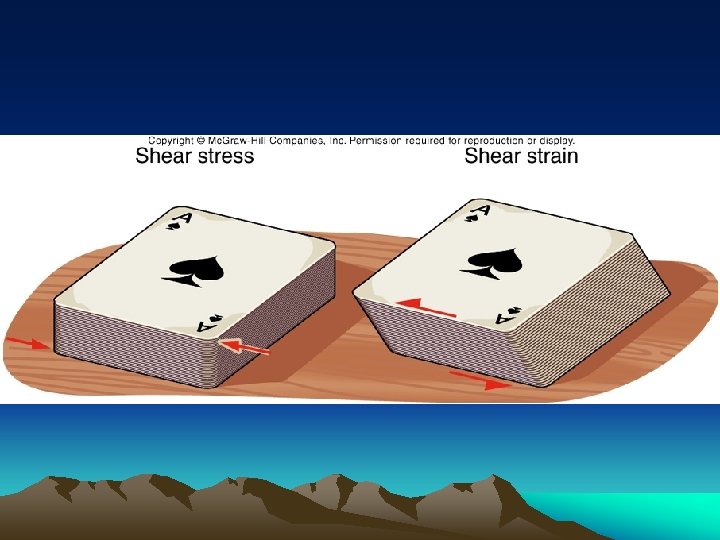
• Stress: 3 types – Compressive: when a body is pushed together or squeezed from opposite directions. – Tensional: when a body is pulled away in opposite directions – Shear: when two bodies slide past one another.
How rocks respond to stresses? • Rock behavior depends on; – Amount and rate of applied stress – Type of rock – T&P conditions
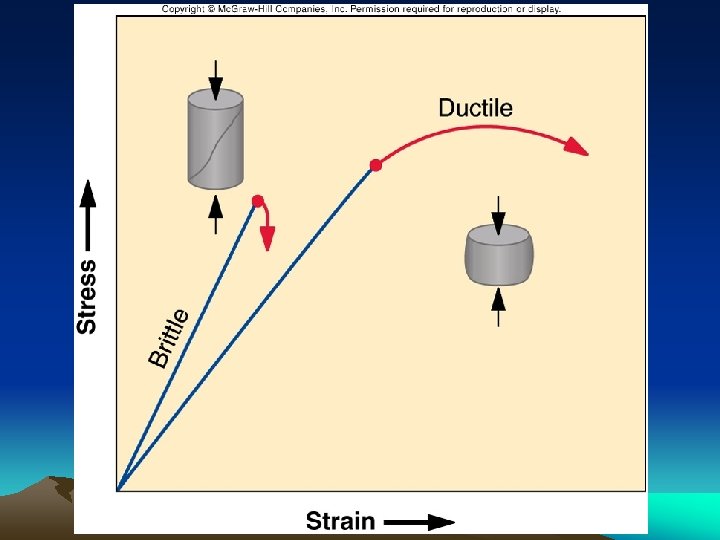
• Rocks behavior is of 3 types; – Elastic: deformed body recovers its original shape after the stress is released. – Ductile: deformed body does not return to its original position and its bends. – Brittle: deformed body will fracture at stresses higher than the elastic limit.
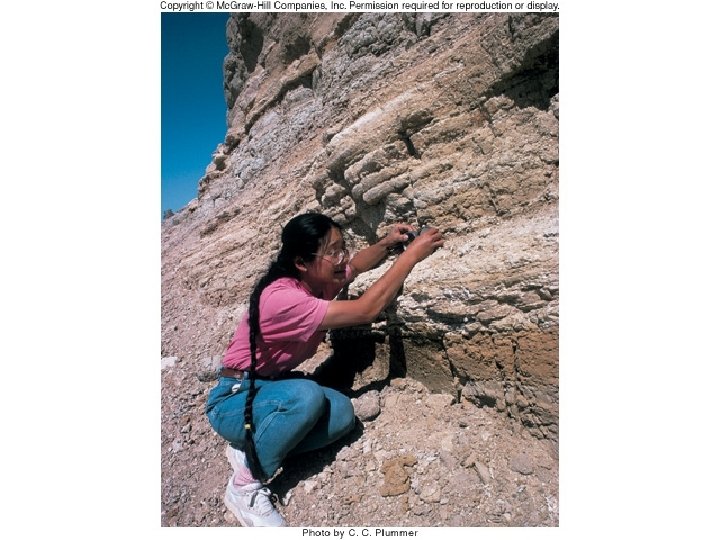
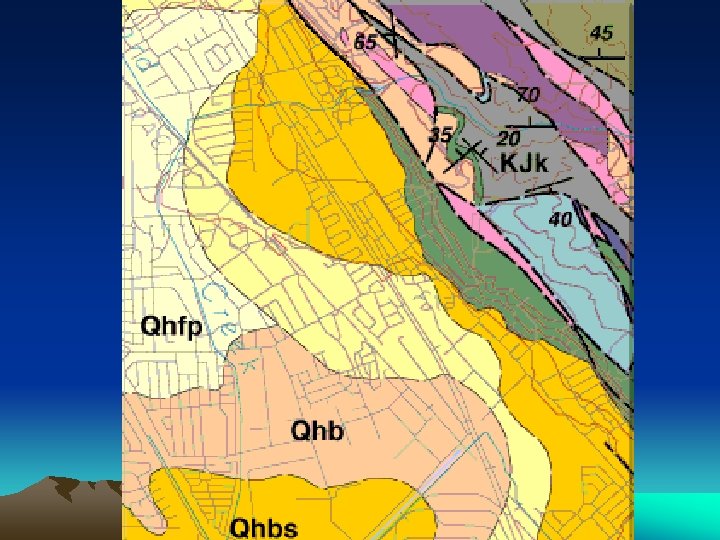
Geologic field methods Geologic maps • What is a map? – Representation of the 3 D world on a 2 D flat surface. • Maps are designed to show where things are. • A geologic map shows the distribution of geologic features, including different kinds of rocks and structures.
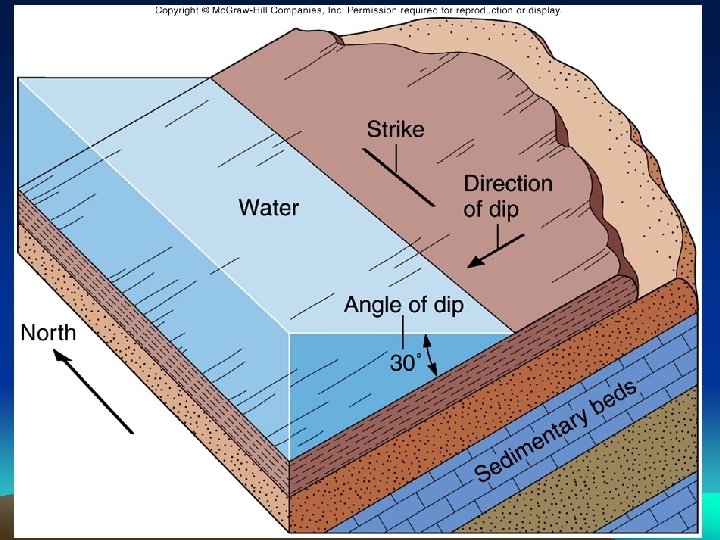
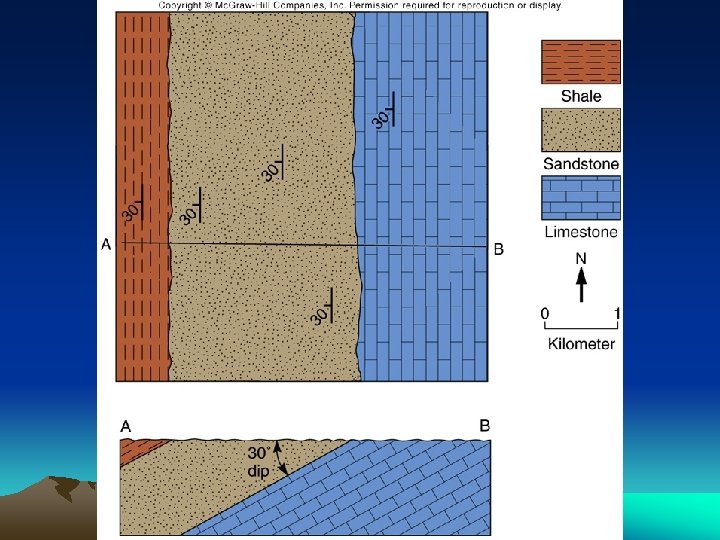
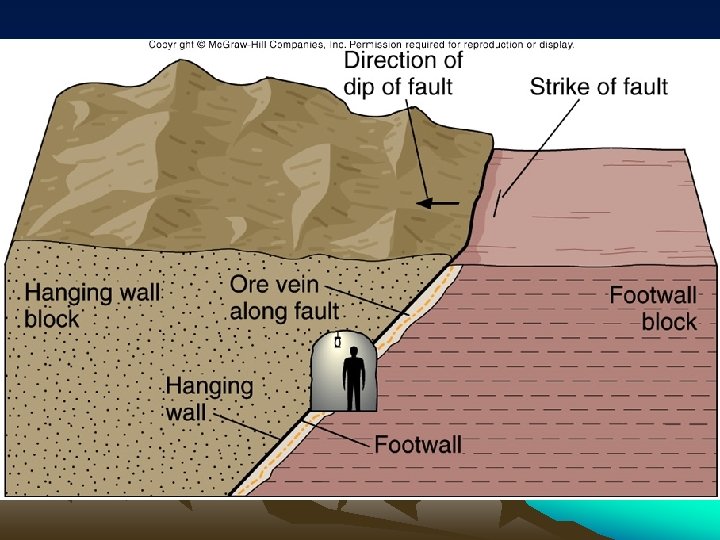
What is Strike and Dip? • Strike is the compass direction of a linear or planar feature. – N 30°E – N 45°W • Dip is the angle an inclined plane makes with the horizontal. – 30°NE
Geologic structures • They may be; – Folds – Faults – Joints
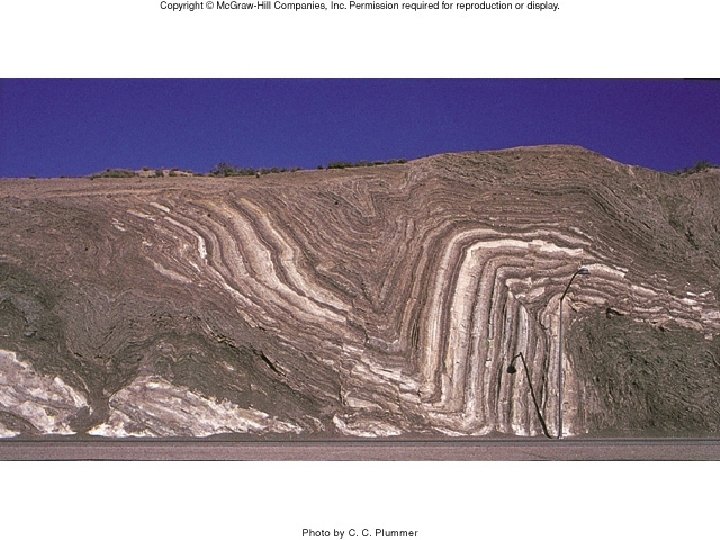
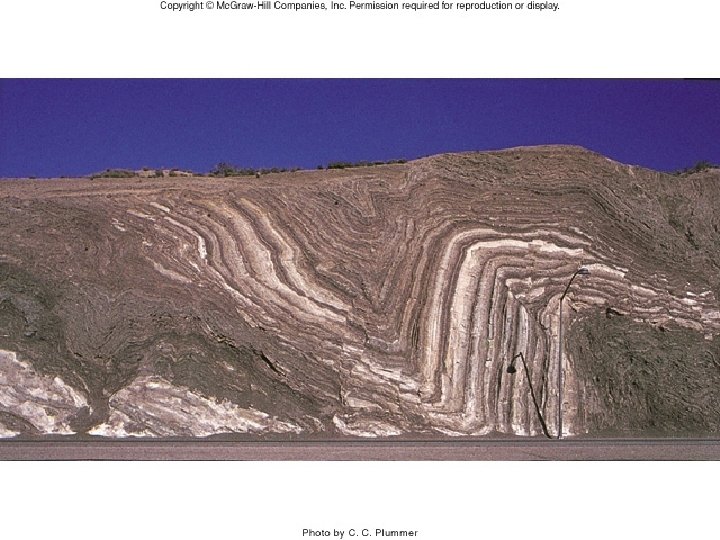
• Folds: bends or curved features in layered rocks. Best displayed in sed. rocks. • Folds are the result of ductile deformation.
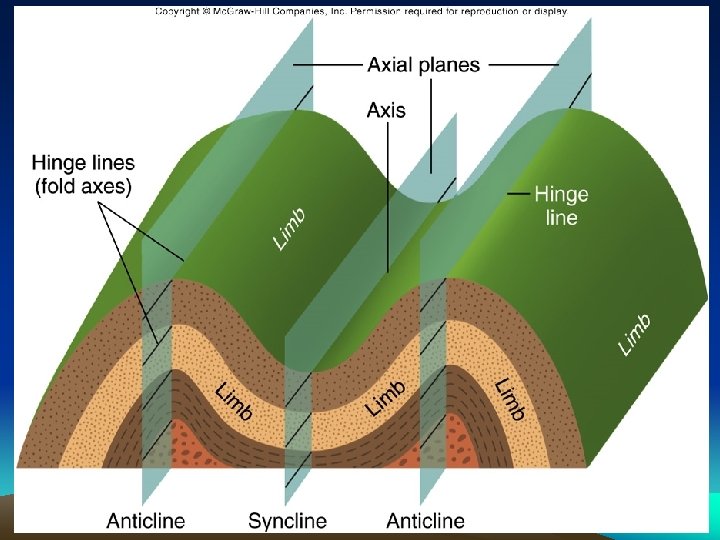
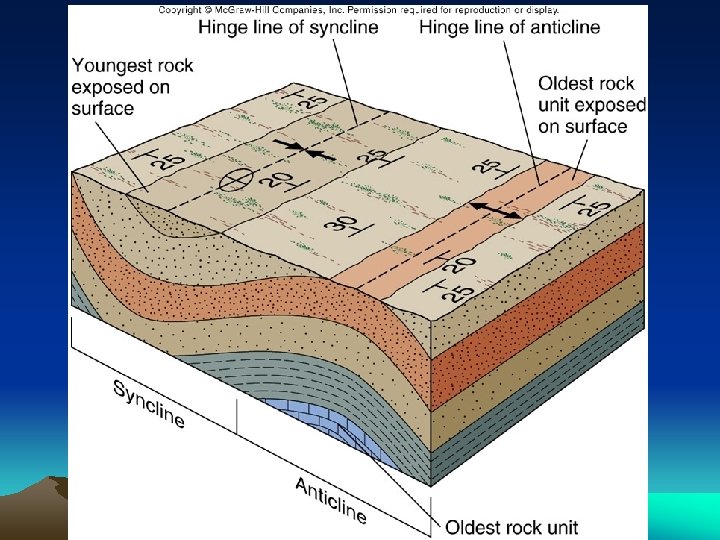
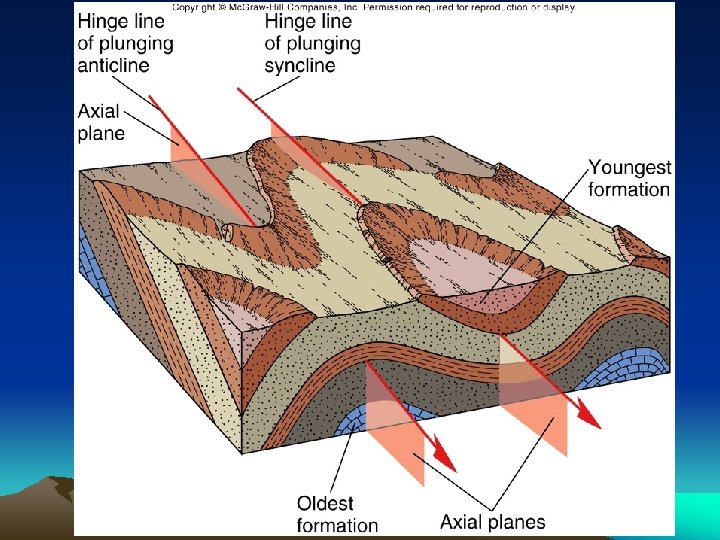
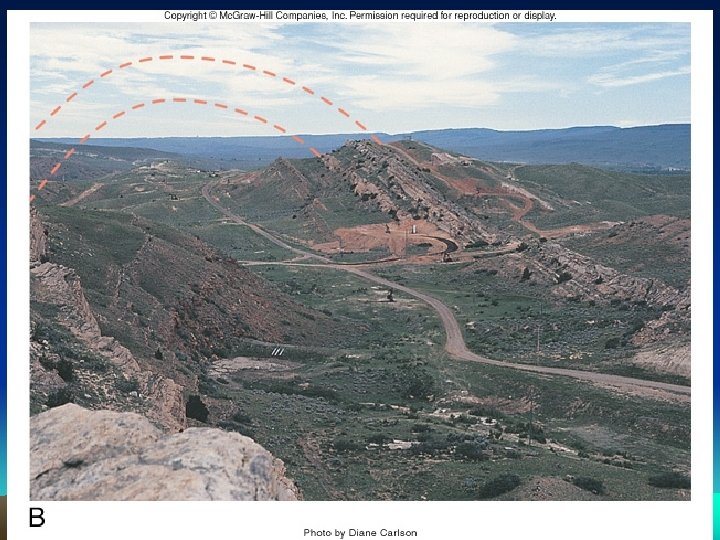
• Fold geometry: – Anticline: arching upwards – Syncline: arching downwards • Parts of a fold: – Limb: side of a fold – Hinge point: highest point on a fold – Hinge line: line joining hinge points. Also called fold axis. – Axial plane: plane joining all hinge lines.
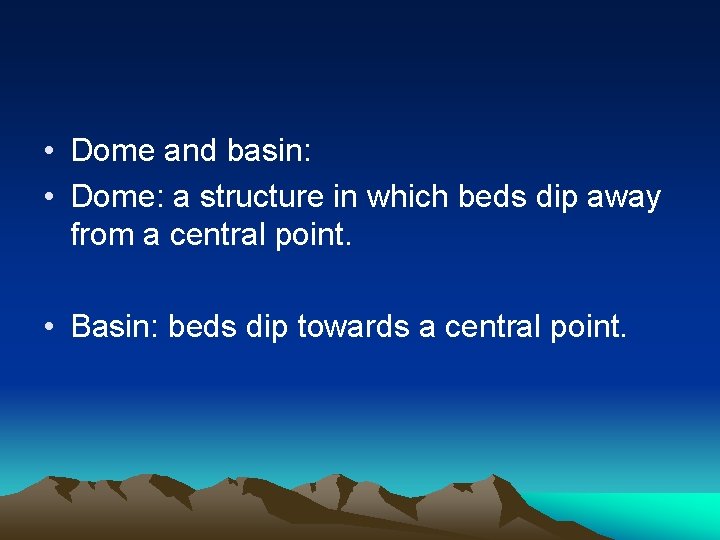
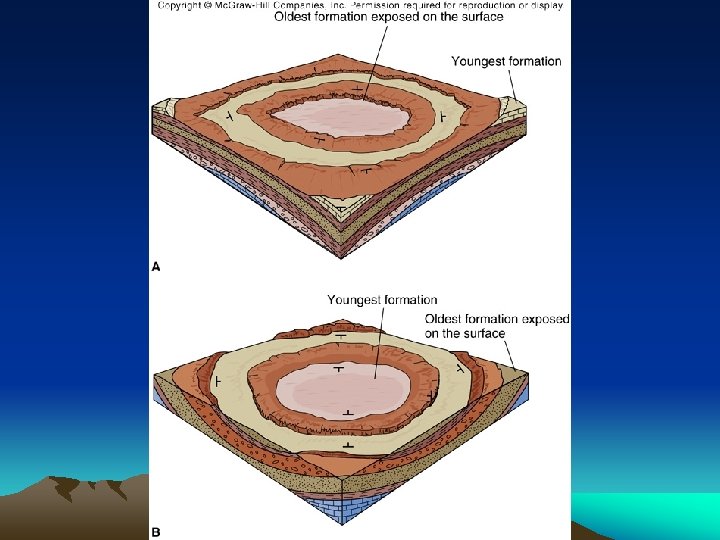
• Dome and basin: • Dome: a structure in which beds dip away from a central point. • Basin: beds dip towards a central point.
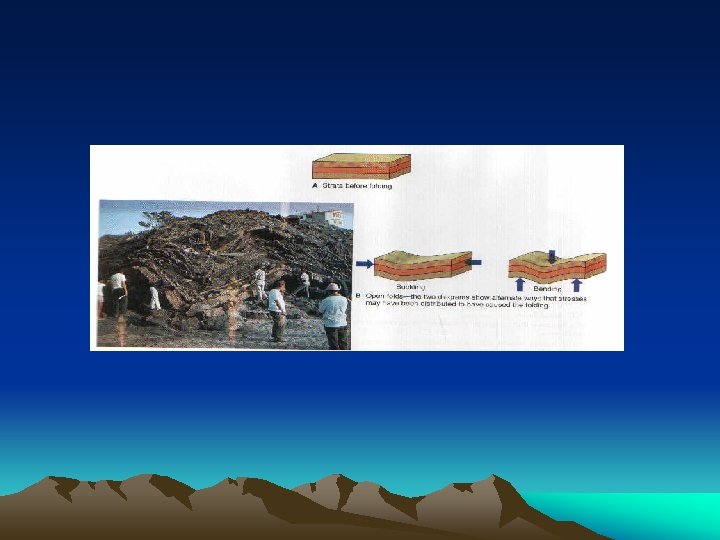
Types of folds • • Open Isoclinal Overturned Recumbent • Open: limbs have gentle dips indicating moderate stresses.
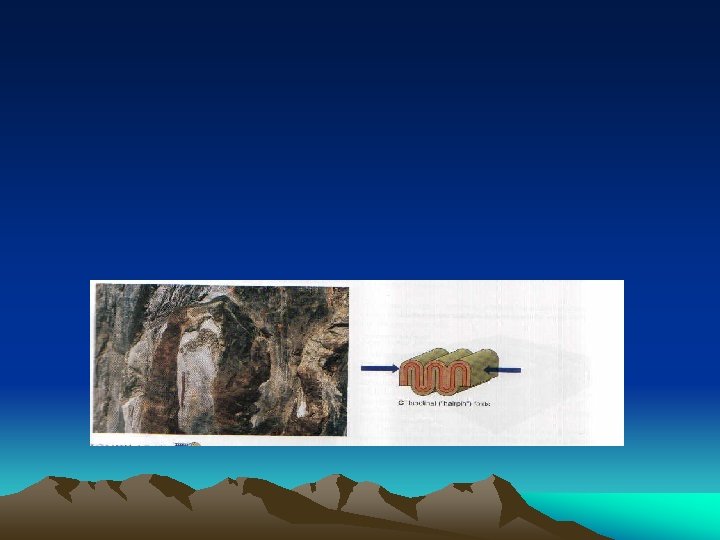
• Isoclinal: limbs parallel to one another indicating intense stresses.
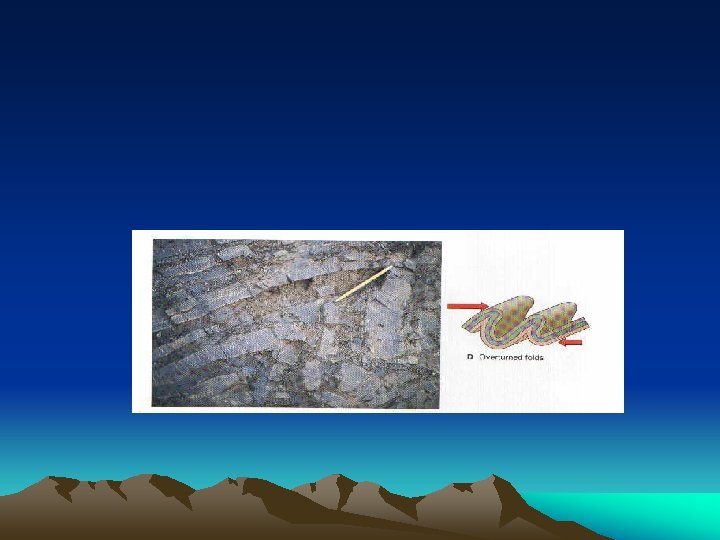
• Overturned: axial plane inclined and the limbs dip in the same direction. Indicate unequal compressive stresses.
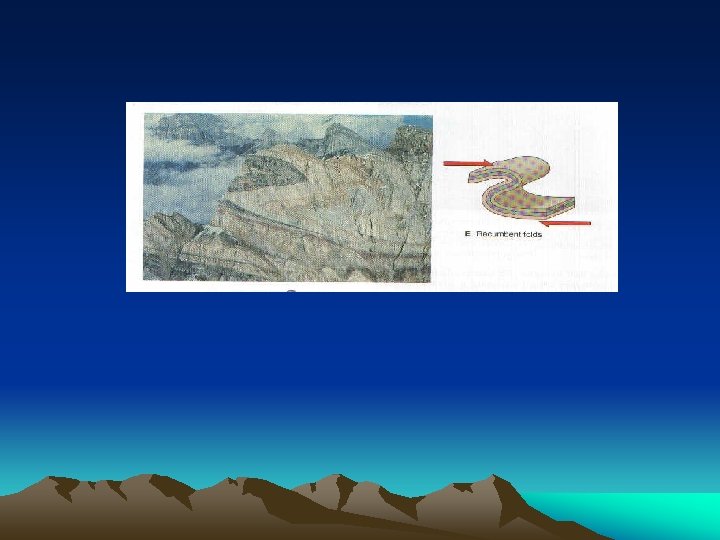
• Recumbent: the limbs and axial planes are essentially horizontal. Extreme stresses are indicated.
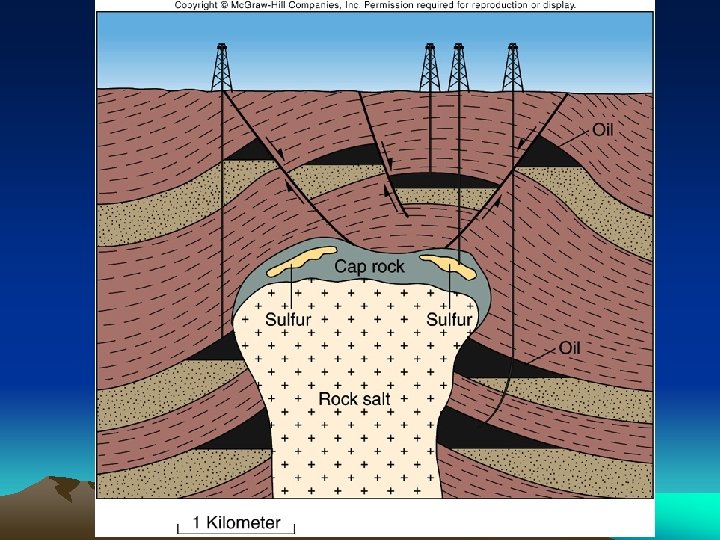
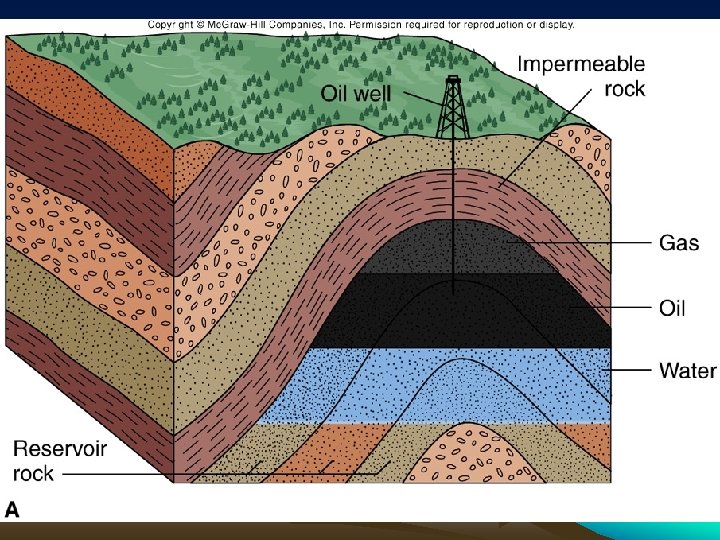
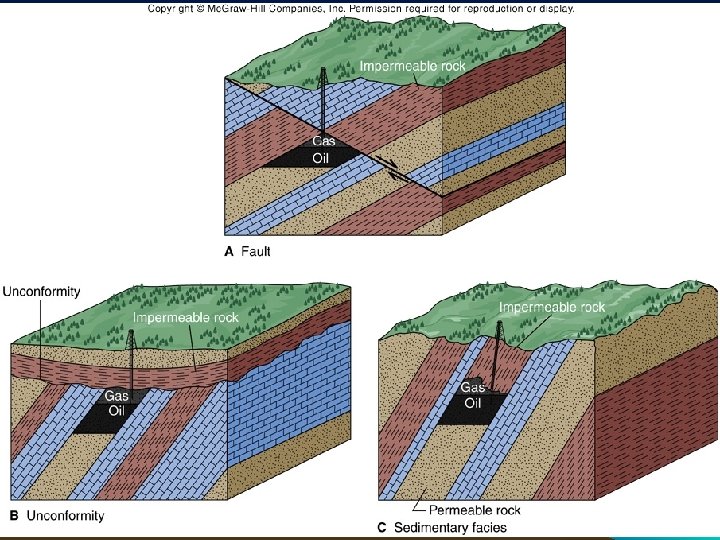
Geologic structures and OIL • Oil and gas are concentrated in the core of an anticline where they are trapped by an impermeable layer.
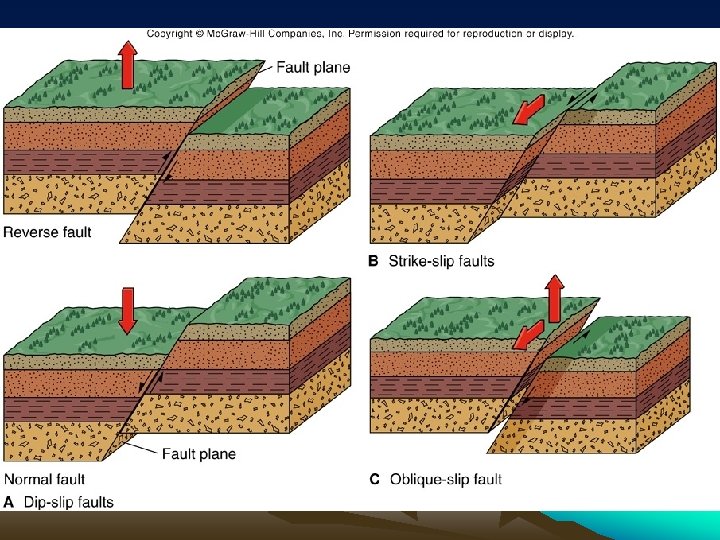
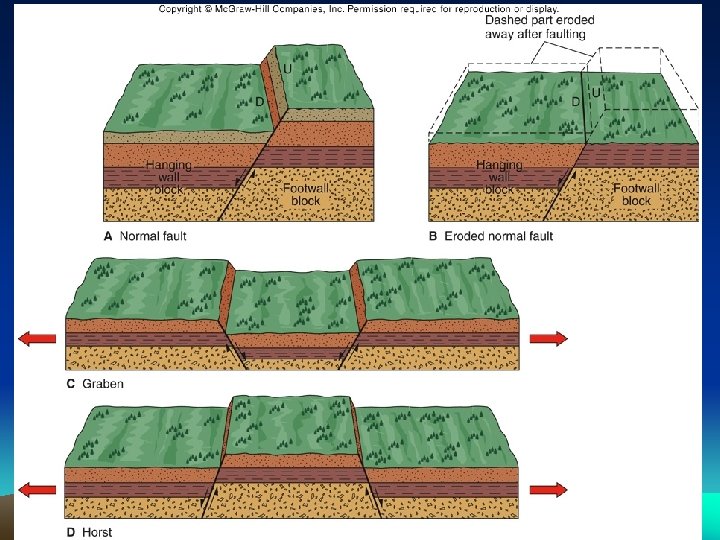
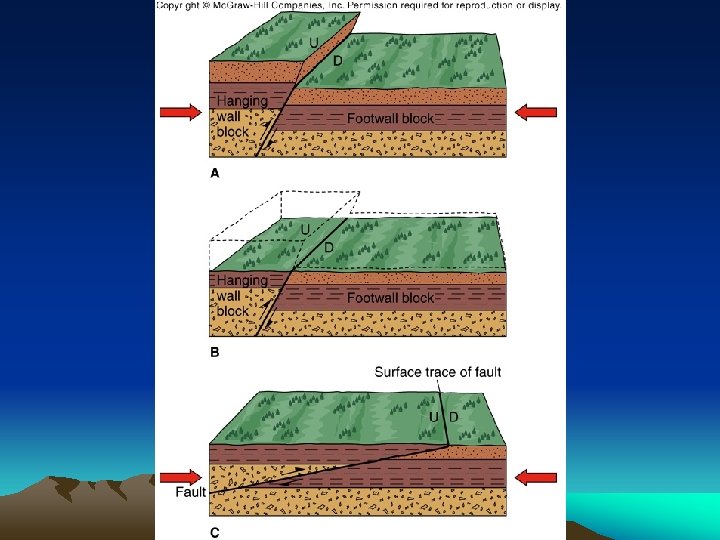
Faults • Fracture in rocks along which there has been some movement. • Parts of a fault: – Hanging wall – Footwall – Fault plane
Types of faults • 3 types: – Dip slip: – Strike slip: – Oblique slip:
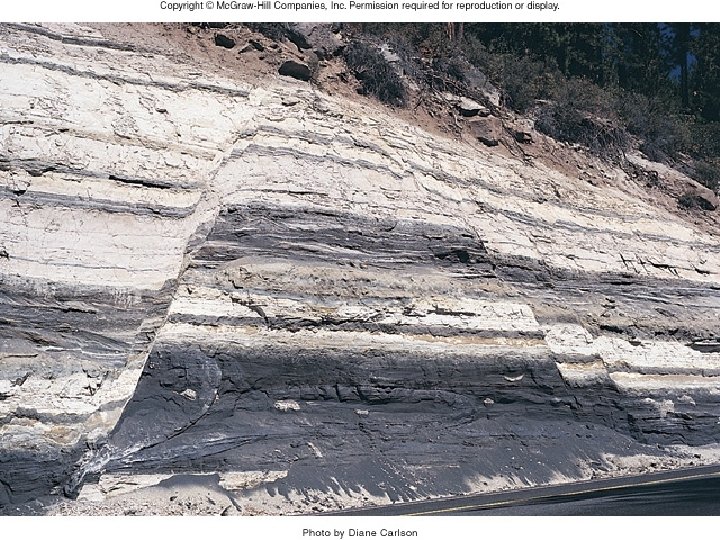
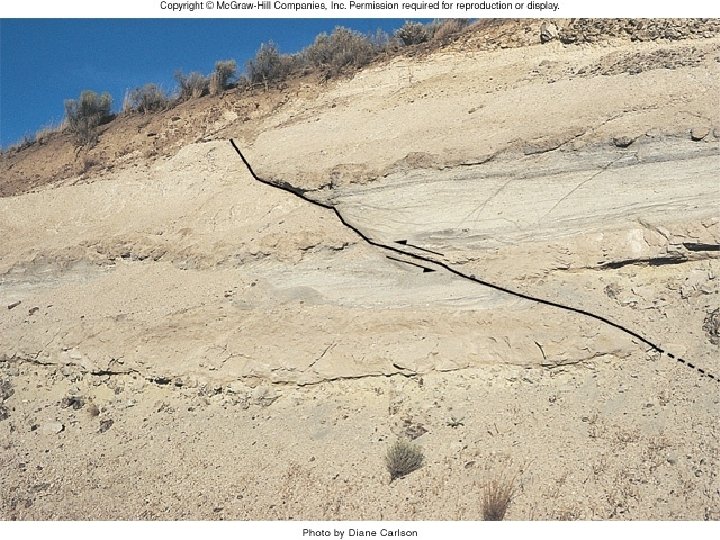
• Dip-slip faults: movement is parallel to the dip of the fault plane.
Two types of dip slip faults: normal and reverse – Normal fault: H. W. moves downwards relative to the F. W. – Reverse fault: H. W. moves upwards relative to the F. W. A thrust fault is a low angle reverse fault.
• Graben and Horst: • A graben is a block of rock which is moved downwards due to two normal faults. • A horst is an uplifted block of rocks due to two normal faults.
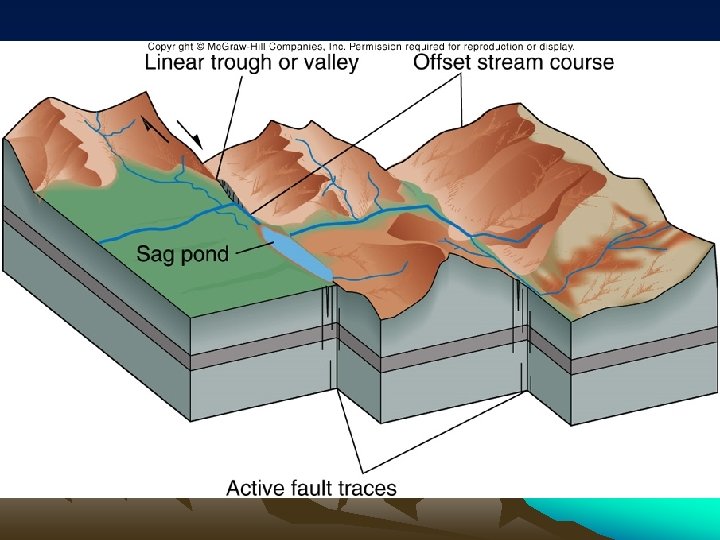
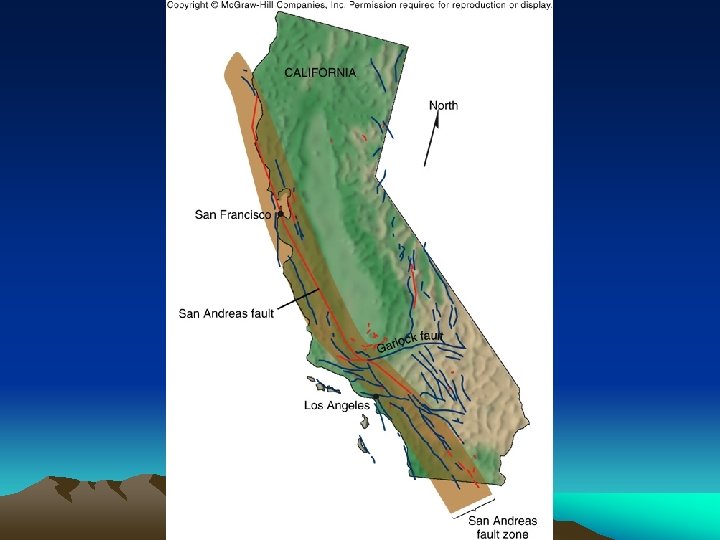
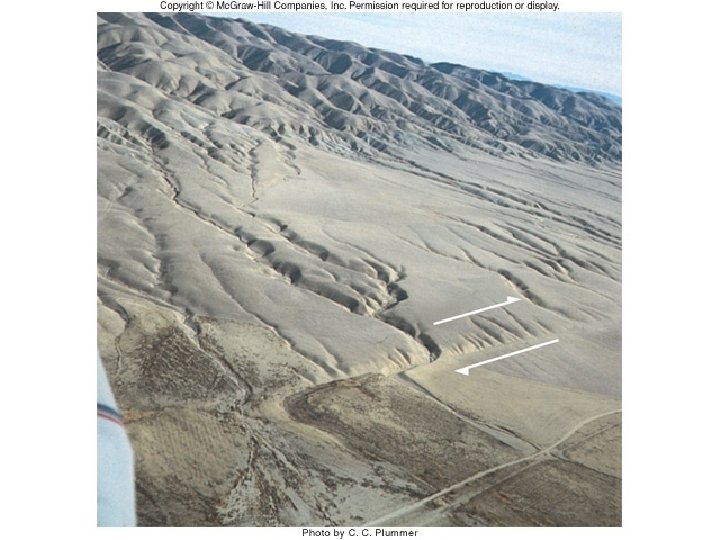
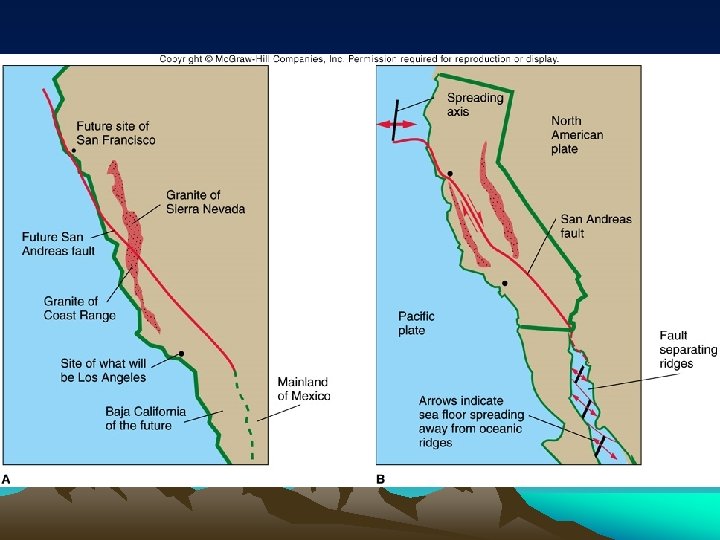
• Strike-slip faults: movement is parallel to the strike of the fault surface. • San Andeas fault in CA.
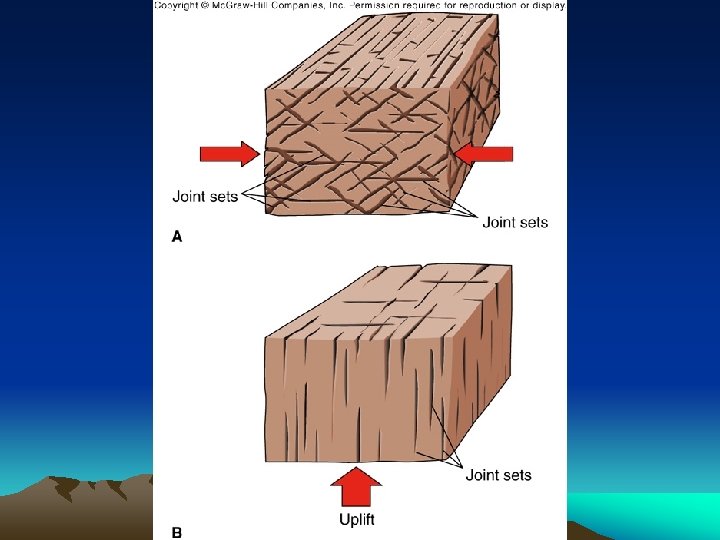
Joints • Joints are regular fractures along which there has been negligible movement.
Joints Joint sets form where they are oriented parallel to one another. • Joints indicate the direction of applied stresses.