
Chapter 20 Galaxies Determining Distance Measuring distances to
- Slides: 17
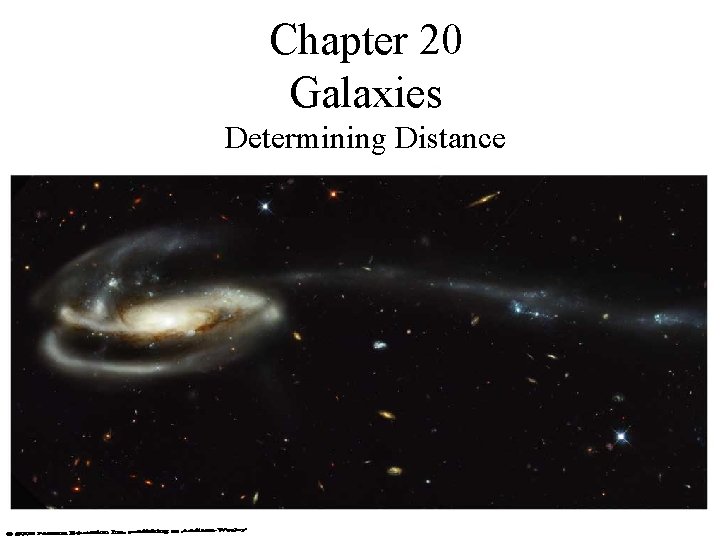
Chapter 20 Galaxies Determining Distance
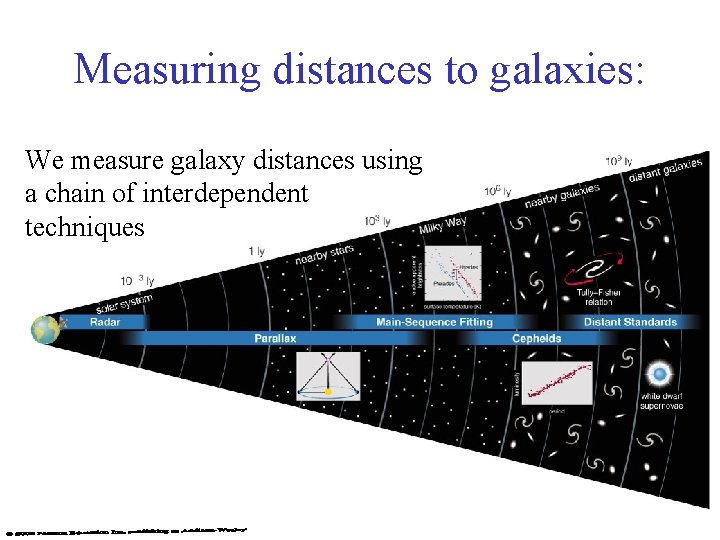
Measuring distances to galaxies: We measure galaxy distances using a chain of interdependent techniques
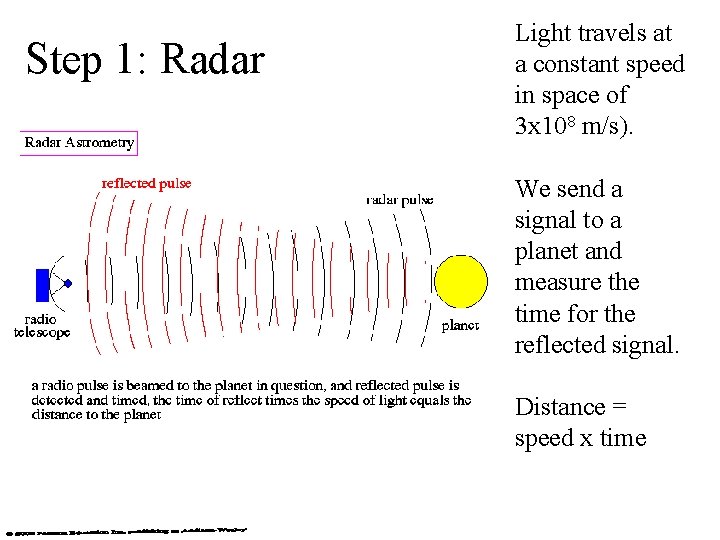
Step 1: Radar Light travels at a constant speed in space of 3 x 10⁸ m/s). We send a signal to a planet and measure the time for the reflected signal. Distance = speed x time
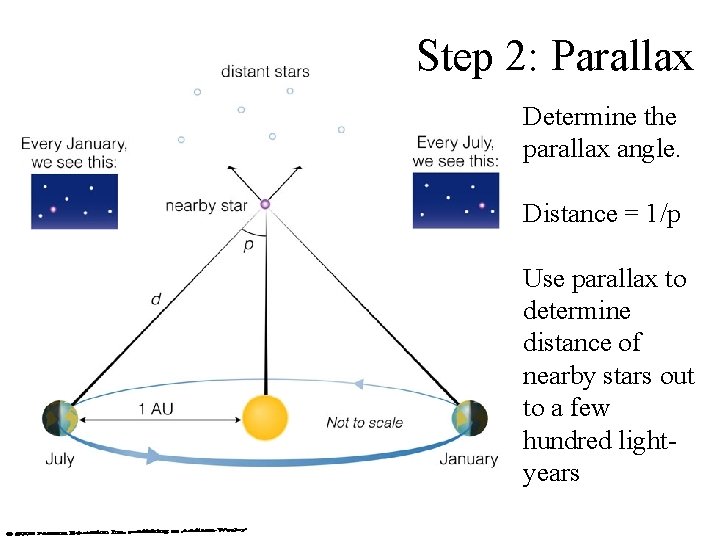
Step 2: Parallax Determine the parallax angle. Distance = 1/p Use parallax to determine distance of nearby stars out to a few hundred lightyears
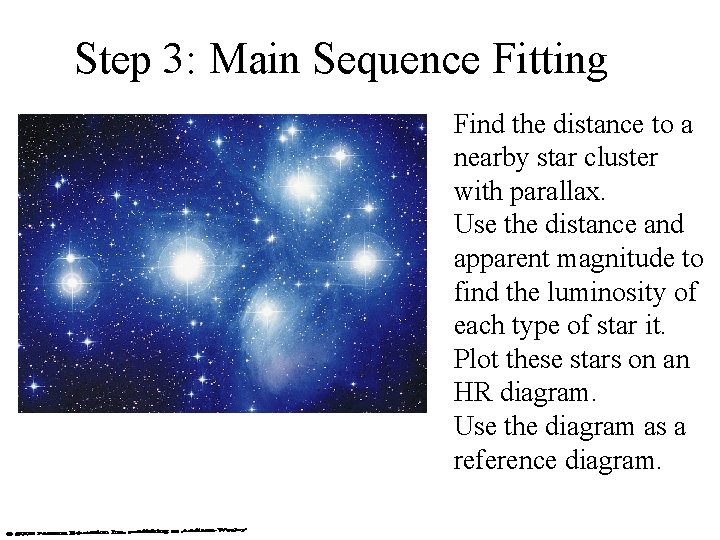
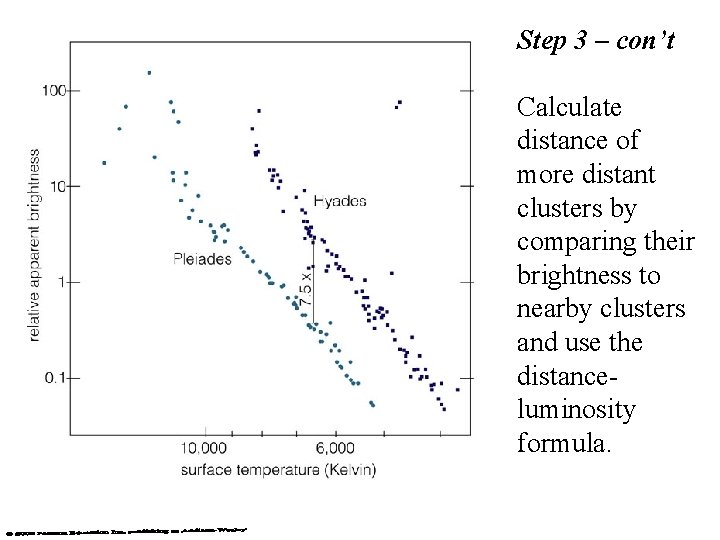
Step 3: Main Sequence Fitting Find the distance to a nearby star cluster with parallax. Use the distance and apparent magnitude to find the luminosity of each type of star it. Plot these stars on an HR diagram. Use the diagram as a reference diagram.
Step 3 – con’t Calculate distance of more distant clusters by comparing their brightness to nearby clusters and use the distanceluminosity formula.
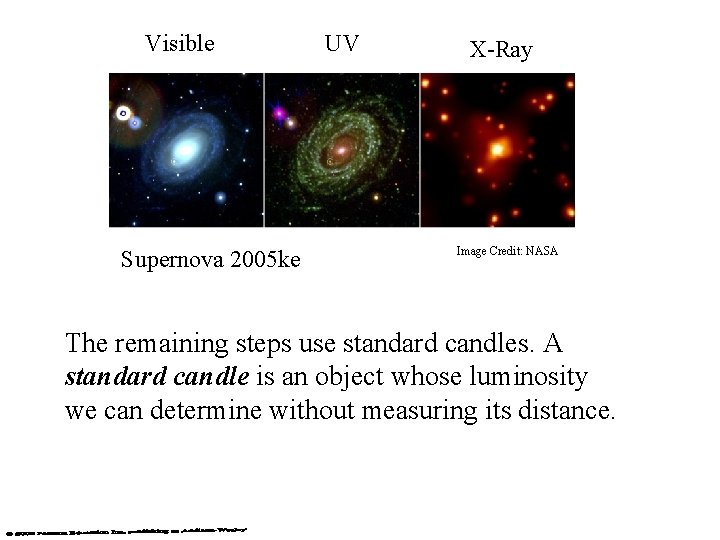
Visible Supernova 2005 ke UV X-Ray Image Credit: NASA The remaining steps use standard candles. A standard candle is an object whose luminosity we can determine without measuring its distance.
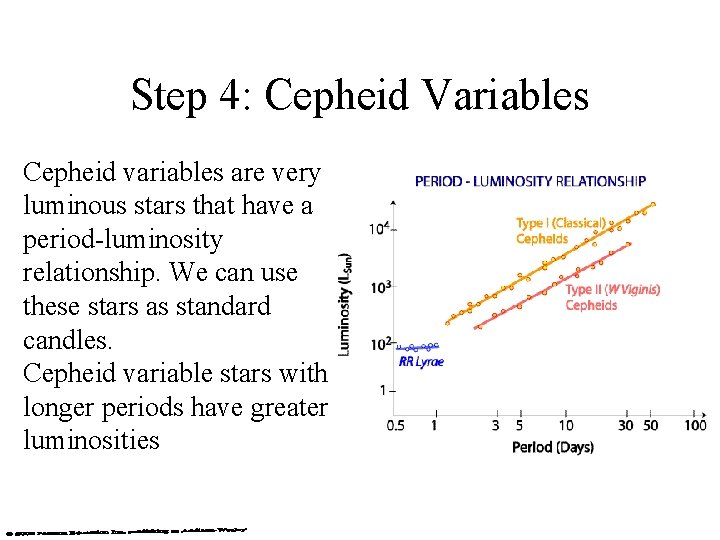
Step 4: Cepheid Variables Cepheid variables are very luminous stars that have a period-luminosity relationship. We can use these stars as standard candles. Cepheid variable stars with longer periods have greater luminosities
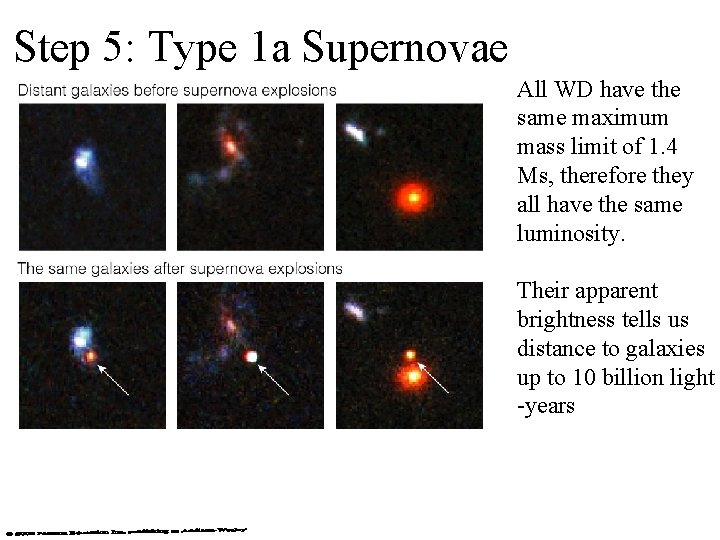
Step 5: Type 1 a Supernovae All WD have the same maximum mass limit of 1. 4 Ms, therefore they all have the same luminosity. Their apparent brightness tells us distance to galaxies up to 10 billion light -years
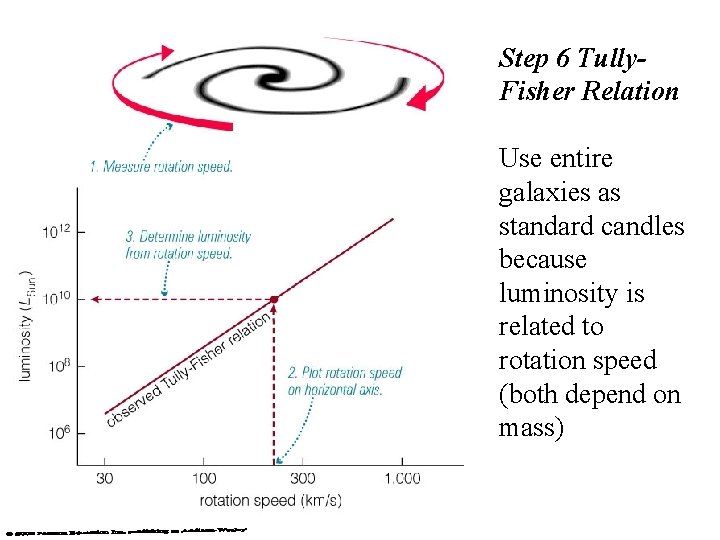
Step 6 Tully. Fisher Relation Use entire galaxies as standard candles because luminosity is related to rotation speed (both depend on mass)
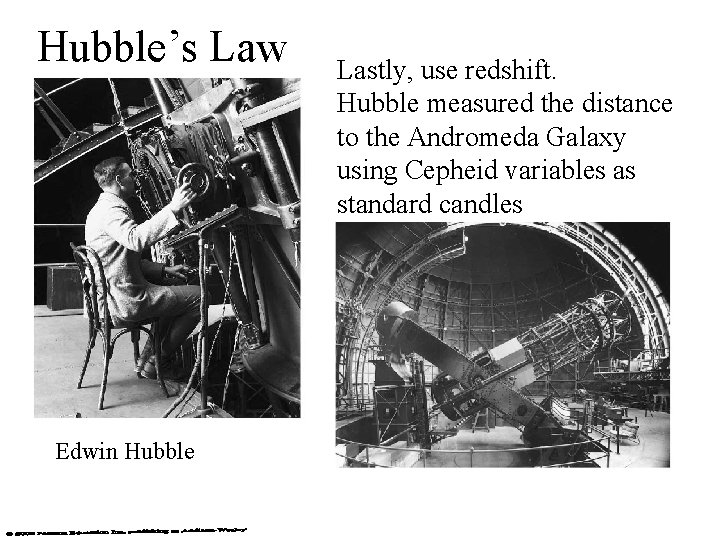
Hubble’s Law Edwin Hubble Lastly, use redshift. Hubble measured the distance to the Andromeda Galaxy using Cepheid variables as standard candles
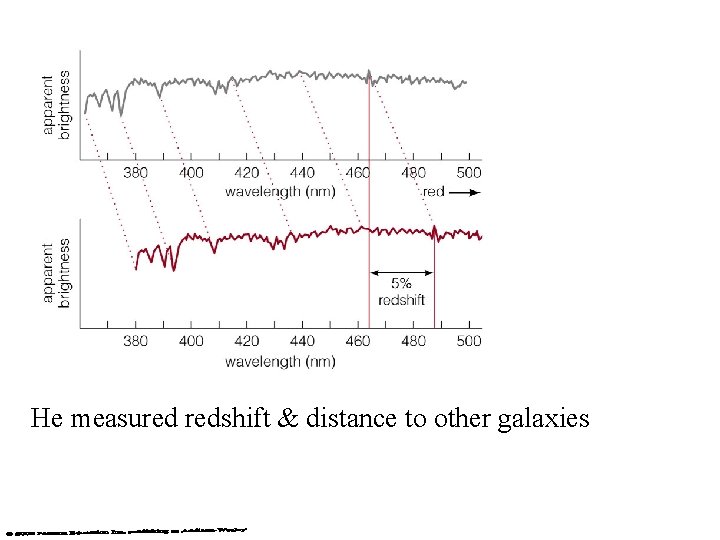
He measured redshift & distance to other galaxies
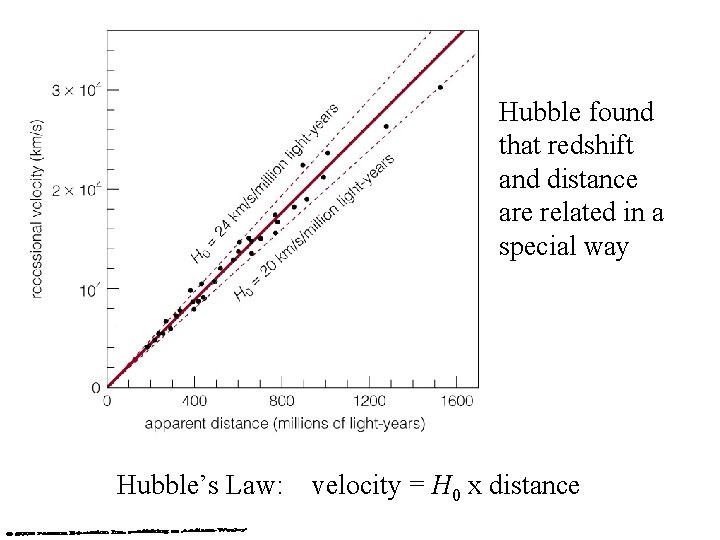
Hubble found that redshift and distance are related in a special way Hubble’s Law: velocity = H 0 x distance
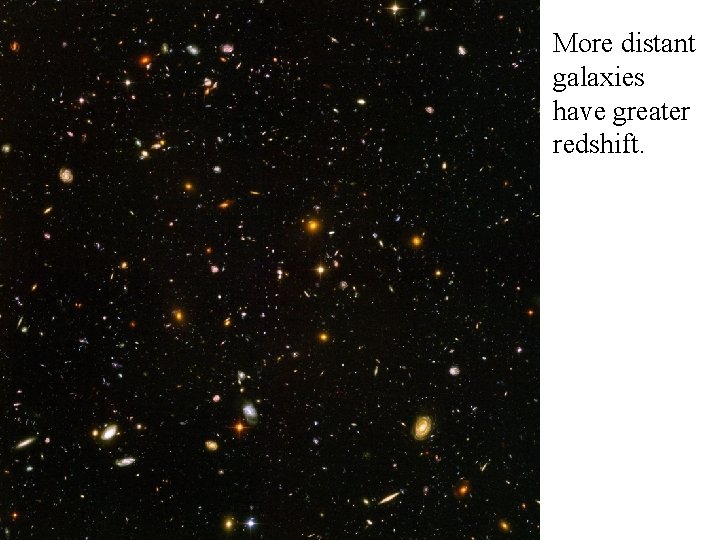
More distant galaxies have greater redshift.
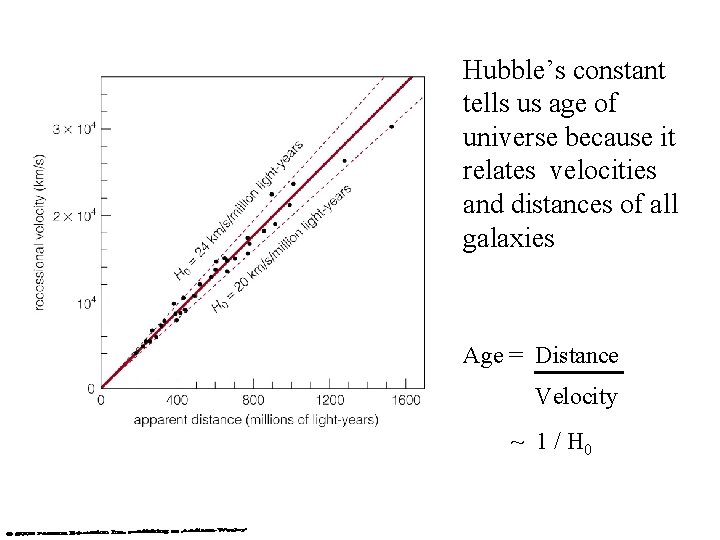
Hubble’s constant tells us age of universe because it relates velocities and distances of all galaxies Age = Distance Velocity ~ 1 / H 0
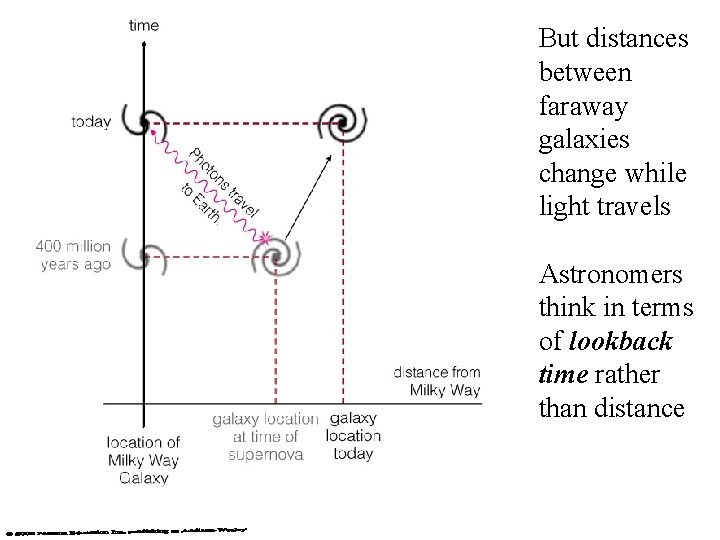
But distances between faraway galaxies change while light travels distance? Astronomers think in terms of lookback time rather than distance
Expansion of the Universe