
Chapter 20 Biotechnology Overview The DNA Toolbox Sequencing
Chapter 20: Biotechnology
Overview: The DNA Toolbox • Sequencing of the human genome was completed by 2007 • DNA sequencing has depended on advances in technology, starting with making recombinant DNA • In recombinant DNA, nucleotide sequences from two different sources, often two species, are combined in vitro into the same DNA molecule
• Methods for making recombinant DNA are central to genetic engineering, the direct manipulation of genes for practical purposes • DNA technology has revolutionized biotechnology, the manipulation of organisms or their genetic components to make useful products
DNA Cloning • Most methods for cloning pieces of DNA in the laboratory share general features, such as the use of bacteria and their plasmids • Plasmids are small circular DNA molecules that replicate separately from the bacterial chromosome • Cloned genes are useful for making copies of a particular gene and producing a protein product
• Gene cloning involves using bacteria to make multiple copies of a gene • Foreign DNA is inserted into a plasmid, and the recombinant plasmid is inserted into a bacterial cell • Reproduction in the bacterial cell results in cloning of the plasmid including the foreign DNA • This results in the production of multiple copies of a single gene

Fig. 20 -2 Bacterium 1 Gene inserted into plasmid Bacterial Plasmid chromosome Recombinant DNA (plasmid) Cell containing gene of interest Gene of interest DNA of chromosome 2 Plasmid put into bacterial cell Recombinant bacterium 3 Host cell grown in culture to form a clone of cells containing the “cloned” gene of interest Gene of Interest Protein expressed by gene of interest Copies of gene Basic Protein harvested 4 Basic research and various applications research on gene Gene for pest resistance inserted into plants Gene used to alter bacteria for cleaning up toxic waste Protein dissolves blood clots in heart attack therapy Basic research on protein Human growth hormone treats stunted growth
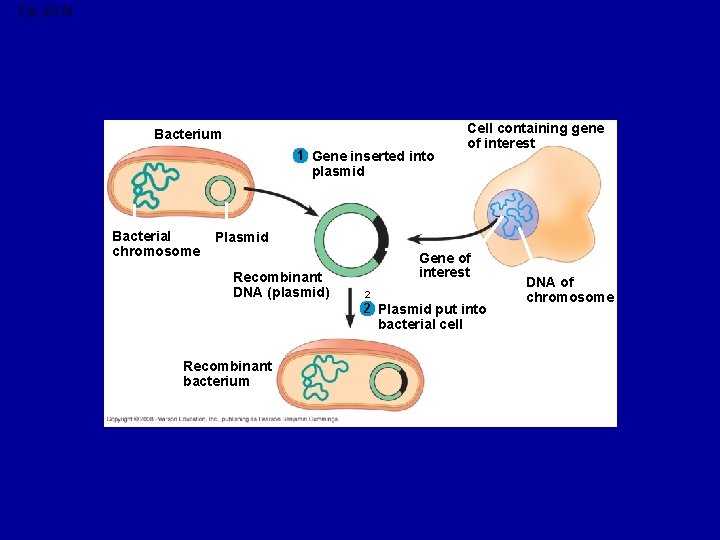
Fig. 20 -2 a Bacterium 1 Gene inserted into Cell containing gene of interest plasmid Bacterial chromosome Plasmid Recombinant DNA (plasmid) Gene of interest 2 2 Plasmid put into bacterial cell Recombinant bacterium DNA of chromosome
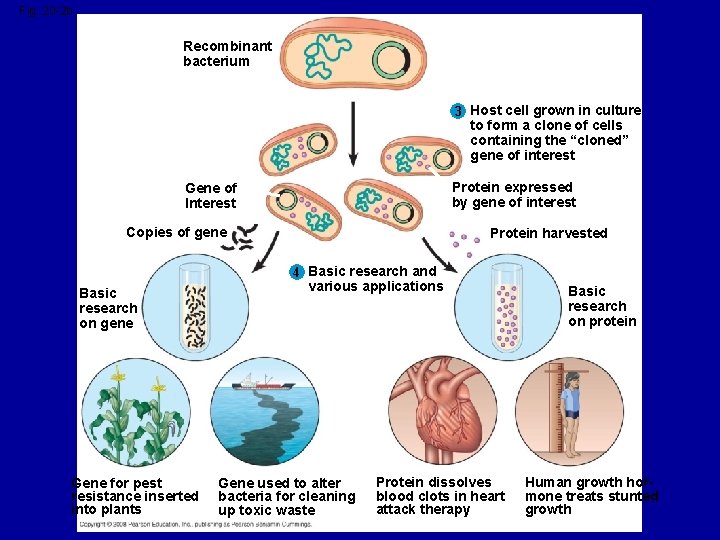
Fig. 20 -2 b Recombinant bacterium 3 Host cell grown in culture to form a clone of cells containing the “cloned” gene of interest Protein expressed by gene of interest Gene of Interest Copies of gene Protein harvested 4 Basic research and Basic research on gene Gene for pest resistance inserted into plants various applications Gene used to alter bacteria for cleaning up toxic waste Protein dissolves blood clots in heart attack therapy Basic research on protein Human growth hormone treats stunted growth
Using Restriction Enzymes to Make Recombinant DNA • Bacterial restriction enzymes cut DNA molecules at specific DNA sequences called restriction sites • A restriction enzyme usually makes many cuts, yielding restriction fragments • The most useful restriction enzymes cut DNA in a staggered way, producing fragments with “sticky ends” that bond with complementary sticky ends of other fragments
• DNA ligase is an enzyme that seals the bonds between restriction fragments
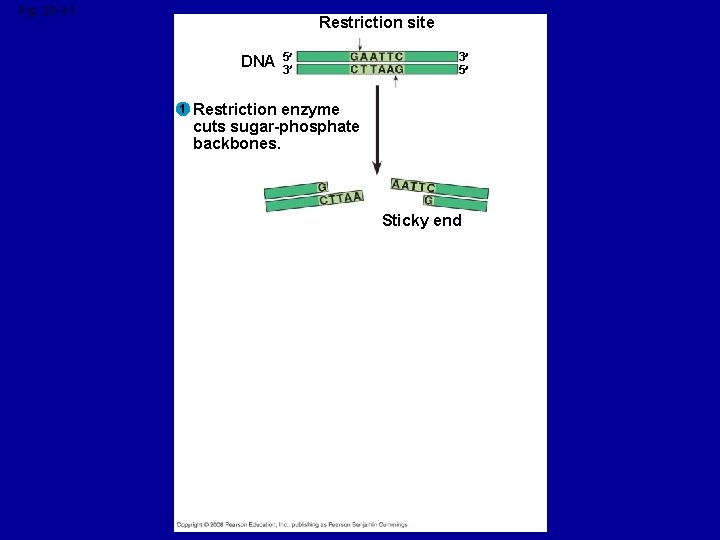
Fig. 20 -3 -1 Restriction site DNA 1 5 3 3 5 Restriction enzyme cuts sugar-phosphate backbones. Sticky end
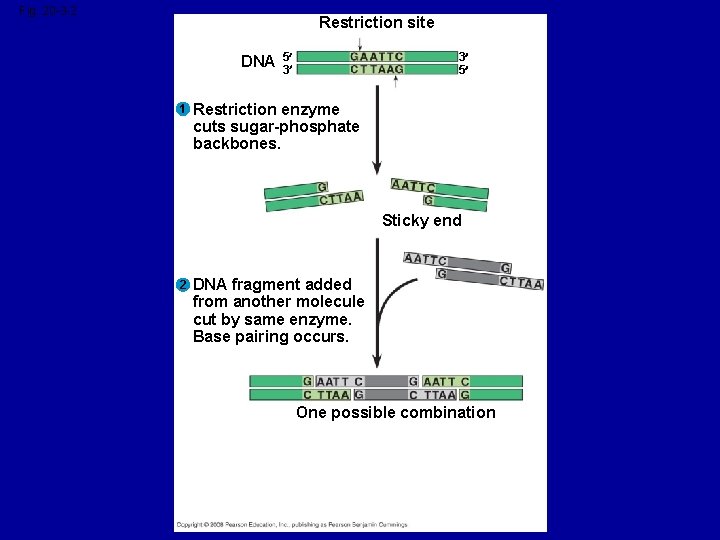
Fig. 20 -3 -2 Restriction site DNA 1 5 3 3 5 Restriction enzyme cuts sugar-phosphate backbones. Sticky end 2 DNA fragment added from another molecule cut by same enzyme. Base pairing occurs. One possible combination
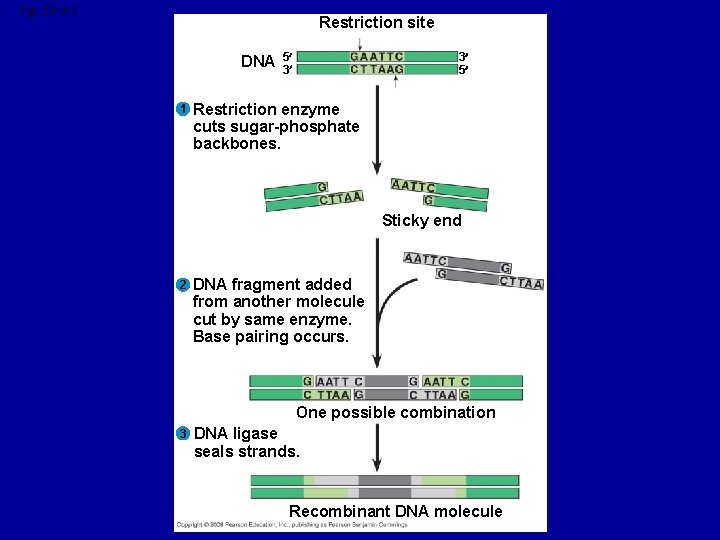
Fig. 20 -3 -3 Restriction site DNA 1 5 3 3 5 Restriction enzyme cuts sugar-phosphate backbones. Sticky end 2 DNA fragment added from another molecule cut by same enzyme. Base pairing occurs. One possible combination 3 DNA ligase seals strands. Recombinant DNA molecule
Cloning a Eukaryotic Gene in a Bacterial Plasmid • In gene cloning, the original plasmid is called a cloning vector • A cloning vector is a DNA molecule that can carry foreign DNA into a host cell and replicate there
Producing Clones of Cells Carrying Recombinant Plasmids • Several steps are required to clone the hummingbird β-globin gene in a bacterial plasmid: – The hummingbird genomic DNA and a bacterial plasmid are isolated – Both are digested with the same restriction enzyme – The fragments are mixed, and DNA ligase is added to bond the fragment sticky ends

– Some recombinant plasmids now contain hummingbird DNA – The DNA mixture is added to bacteria that have been genetically engineered to accept it – The bacteria are plated on a type of agar that selects for the bacteria with recombinant plasmids – This results in the cloning of many hummingbird DNA fragments, including the β-globin gene
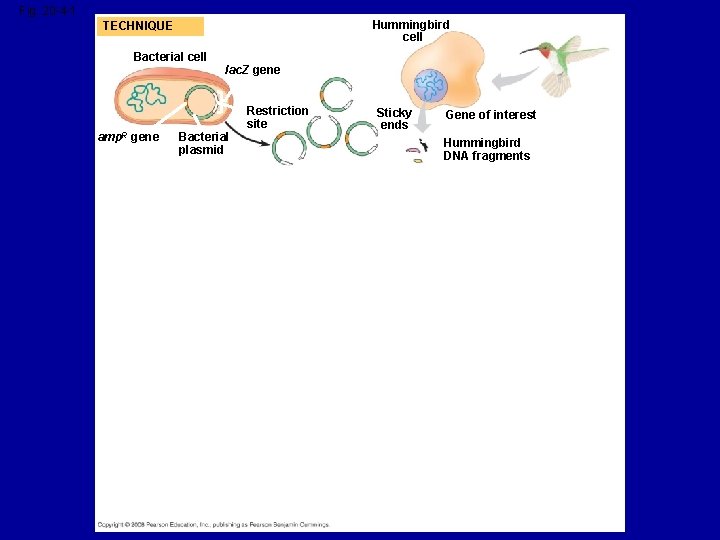
Fig. 20 -4 -1 Hummingbird cell TECHNIQUE Bacterial cell amp. R gene lac. Z gene Bacterial plasmid Restriction site Sticky ends Gene of interest Hummingbird DNA fragments
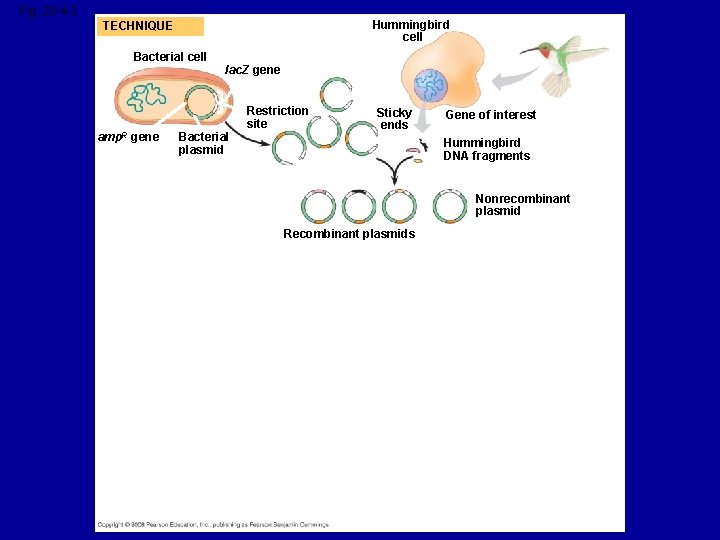
Fig. 20 -4 -2 Hummingbird cell TECHNIQUE Bacterial cell amp. R gene lac. Z gene Bacterial plasmid Restriction site Sticky ends Gene of interest Hummingbird DNA fragments Nonrecombinant plasmid Recombinant plasmids
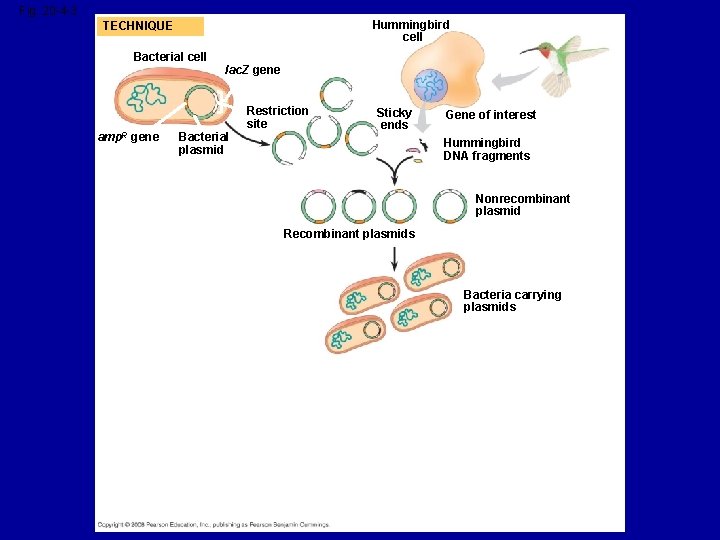
Fig. 20 -4 -3 Hummingbird cell TECHNIQUE Bacterial cell amp. R gene lac. Z gene Bacterial plasmid Restriction site Sticky ends Gene of interest Hummingbird DNA fragments Nonrecombinant plasmid Recombinant plasmids Bacteria carrying plasmids
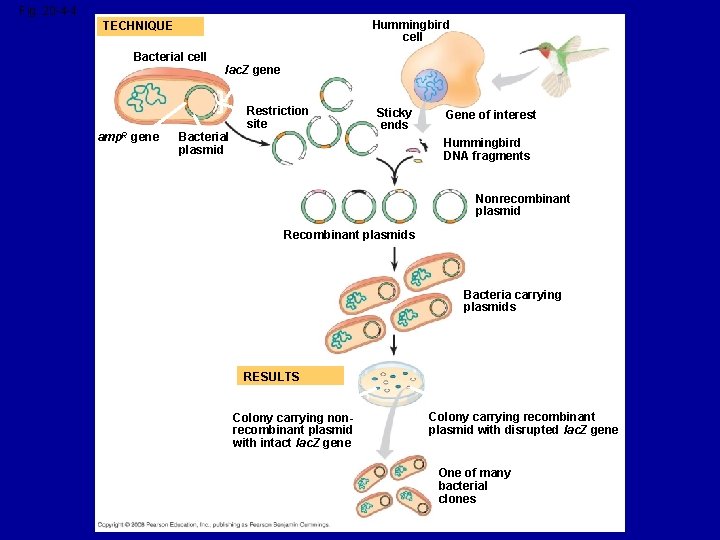
Fig. 20 -4 -4 Hummingbird cell TECHNIQUE Bacterial cell amp. R gene lac. Z gene Bacterial plasmid Restriction site Sticky ends Gene of interest Hummingbird DNA fragments Nonrecombinant plasmid Recombinant plasmids Bacteria carrying plasmids RESULTS Colony carrying nonrecombinant plasmid with intact lac. Z gene Colony carrying recombinant plasmid with disrupted lac. Z gene One of many bacterial clones
Storing Cloned Genes in DNA Libraries • A genomic library that is made using bacteria is the collection of recombinant vector clones produced by cloning DNA fragments from an entire genome
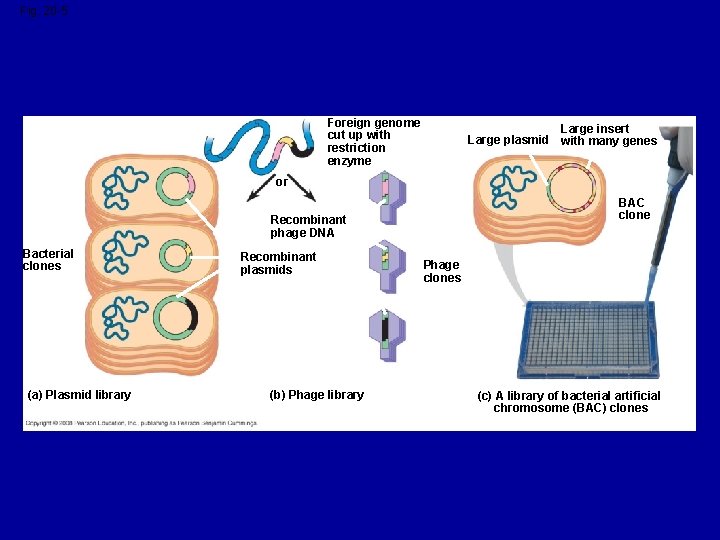
Fig. 20 -5 Foreign genome cut up with restriction enzyme Large insert Large plasmid with many genes or BAC clone Recombinant phage DNA Bacterial clones (a) Plasmid library Recombinant plasmids (b) Phage library Phage clones (c) A library of bacterial artificial chromosome (BAC) clones
Screening a Library for Clones Carrying a Gene of Interest • A clone carrying the gene of interest can be identified with a nucleic acid probe having a sequence complementary to the gene • This process is called nucleic acid hybridization
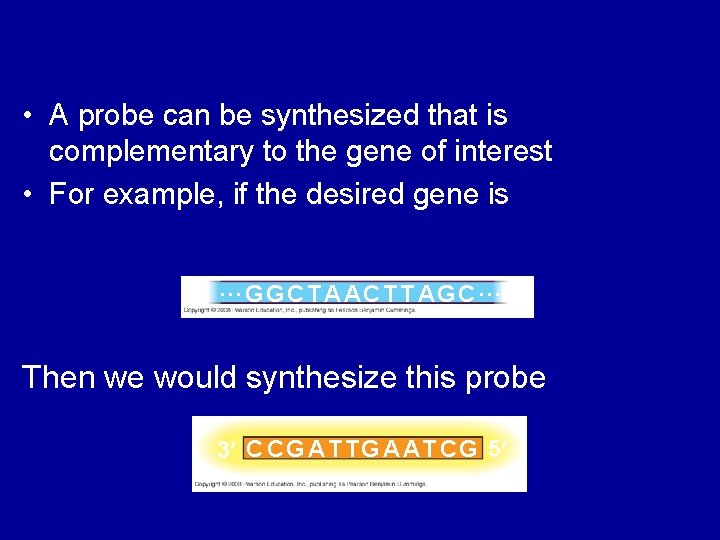
• A probe can be synthesized that is complementary to the gene of interest • For example, if the desired gene is 5 … G G C T AA C TT A G C … 3 Then we would synthesize this probe 3 C C G A TT G A A T C G 5
• The DNA probe can be used to screen a large number of clones simultaneously for the gene of interest • Once identified, the clone carrying the gene of interest can be cultured
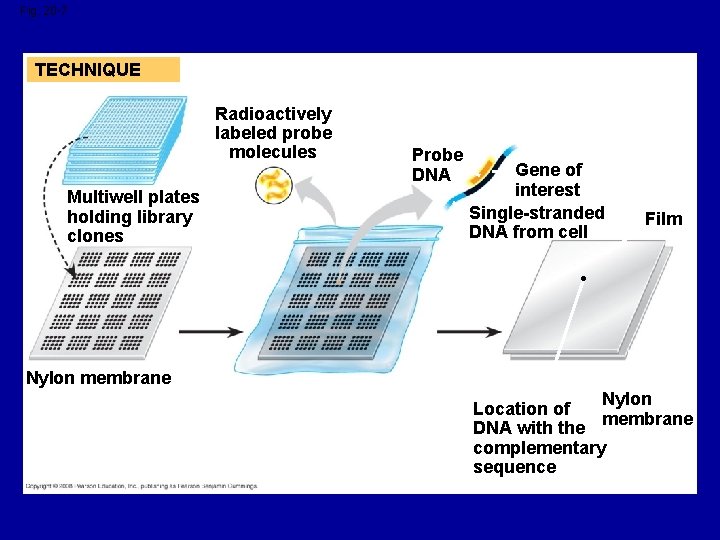
Fig. 20 -7 TECHNIQUE Radioactively labeled probe molecules Multiwell plates holding library clones Probe DNA Gene of interest Single-stranded DNA from cell Film • Nylon membrane Nylon Location of membrane DNA with the complementary sequence
Expressing Cloned Eukaryotic Genes • After a gene has been cloned, its protein product can be produced in larger amounts for research • Cloned genes can be expressed as protein in either bacterial or eukaryotic cells
Bacterial Expression Systems • Several technical difficulties hinder expression of cloned eukaryotic genes in bacterial host cells • To overcome differences in promoters and other DNA control sequences, scientists usually employ an expression vector, a cloning vector that contains a highly active prokaryotic promoter
Amplifying DNA in Vitro: The Polymerase Chain Reaction (PCR) • The polymerase chain reaction, PCR, can produce many copies of a specific target segment of DNA • A three-step cycle—heating, cooling, and replication—brings about a chain reaction that produces an exponentially growing population of identical DNA molecules
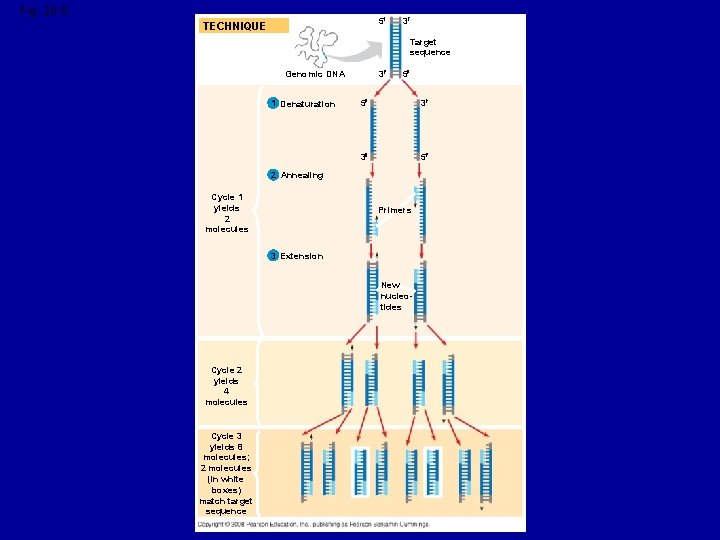
Fig. 20 -8 5 TECHNIQUE 3 Target sequence 3 Genomic DNA 1 Denaturation 5 5 3 3 5 2 Annealing Cycle 1 yields 2 molecules Primers 3 Extension New nucleotides Cycle 2 yields 4 molecules Cycle 3 yields 8 molecules; 2 molecules (in white boxes) match target sequence
Gel Electrophoresis and Southern Blotting • One indirect method of rapidly analyzing and comparing genomes is gel electrophoresis • This technique uses a gel as a molecular sieve to separate nucleic acids or proteins by size • A current is applied that causes charged molecules to move through the gel • Molecules are sorted into “bands” by their size
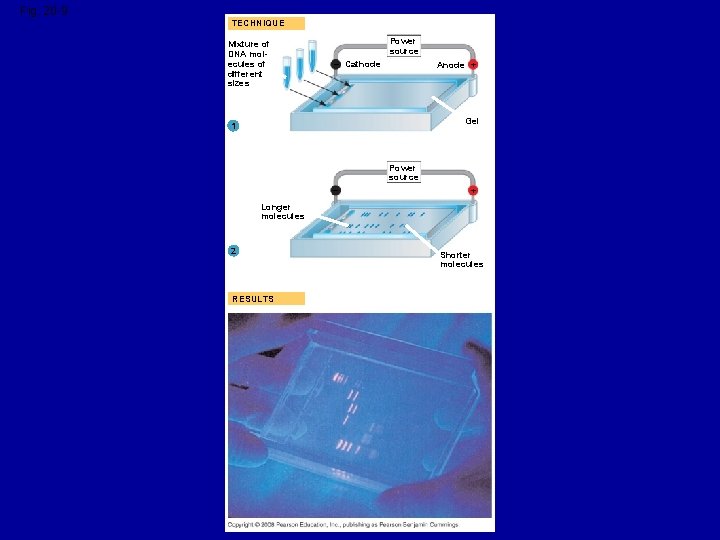
Fig. 20 -9 TECHNIQUE Mixture of DNA molecules of different sizes Power source – Cathode Anode + Gel 1 Power source – + Longer molecules 2 RESULTS Shorter molecules
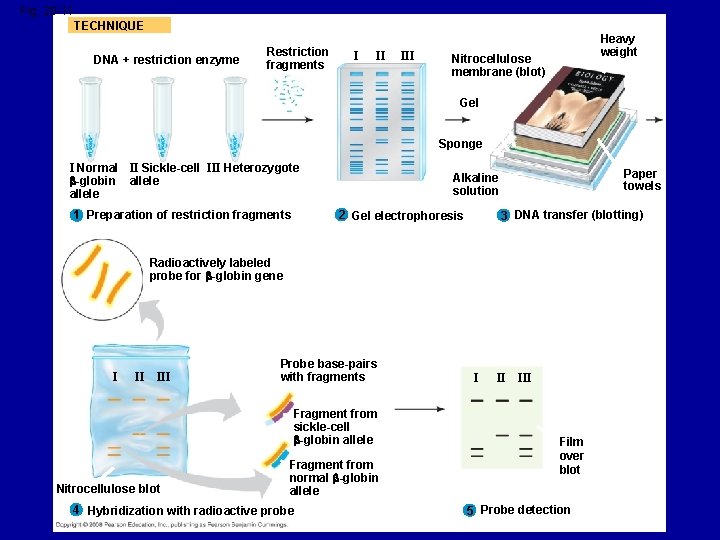
Fig. 20 -11 TECHNIQUE DNA + restriction enzyme Restriction fragments I II III Heavy weight Nitrocellulose membrane (blot) Gel Sponge I Normal II Sickle-cell III Heterozygote -globin allele 2 Gel electrophoresis 1 Preparation of restriction fragments Paper towels Alkaline solution 3 DNA transfer (blotting) Radioactively labeled probe for -globin gene I II III Probe base-pairs with fragments Fragment from sickle-cell -globin allele Nitrocellulose blot Fragment from normal -globin allele 4 Hybridization with radioactive probe I II III Film over blot 5 Probe detection
• Reverse transcriptase-polymerase chain reaction (RT-PCR) is quicker and more sensitive • Reverse transcriptase is added to m. RNA to make c. DNA, which serves as a template for PCR amplification of the gene of interest • The products are run on a gel and the m. RNA of interest identified
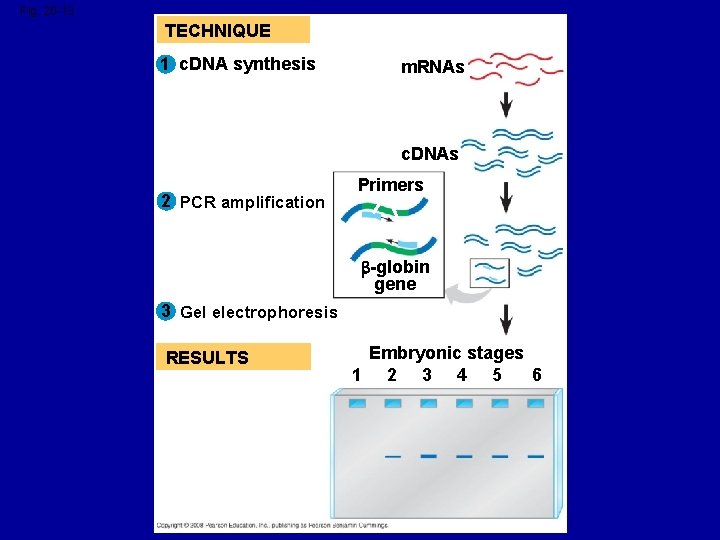
Fig. 20 -13 TECHNIQUE 1 c. DNA synthesis m. RNAs c. DNAs 2 PCR amplification Primers -globin gene 3 Gel electrophoresis RESULTS Embryonic stages 1 2 3 4 5 6
Cloning • Organismal cloning produces one or more organisms genetically identical to the “parent” that donated the single cell
Cloning Plants: Single-Cell Cultures • One experimental approach for testing genomic equivalence is to see whether a differentiated cell can generate a whole organism • A totipotent cell is one that can generate a complete new organism, can become any cell in body
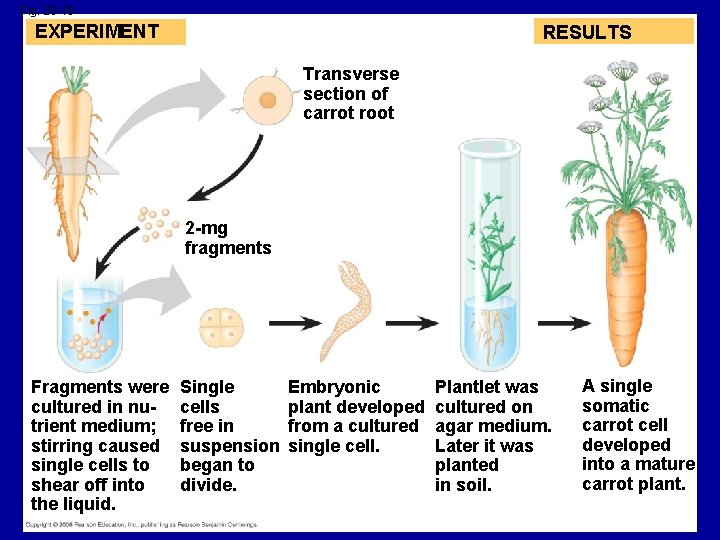
Fig. 20 -16 EXPERIMENT RESULTS Transverse section of carrot root 2 -mg fragments Fragments were cultured in nutrient medium; stirring caused single cells to shear off into the liquid. Single cells free in suspension began to divide. Embryonic plant developed from a cultured single cell. Plantlet was cultured on agar medium. Later it was planted in soil. A single somatic carrot cell developed into a mature carrot plant.
Cloning Animals: Nuclear Transplantation • In nuclear transplantation, the nucleus of an unfertilized egg cell or zygote is replaced with the nucleus of a differentiated cell • The older the donor nucleus, the lower the percentage of normally developing tadpoles
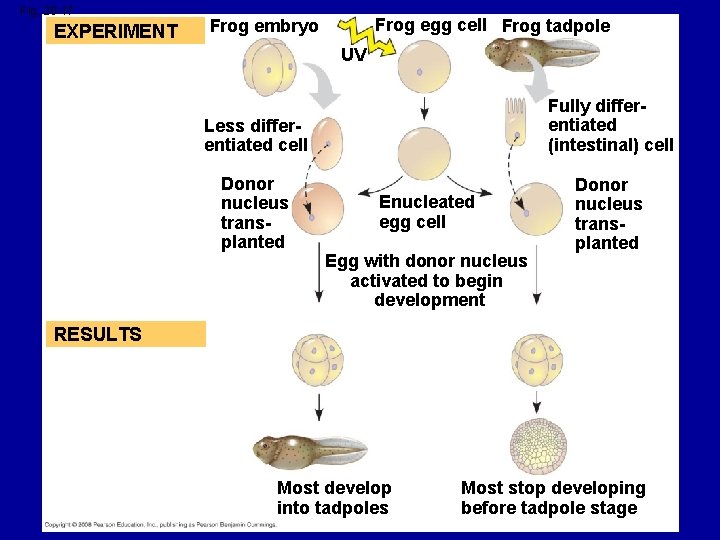
Fig. 20 -17 EXPERIMENT Frog egg cell Frog tadpole Frog embryo UV Less differentiated cell Fully differentiated (intestinal) cell Donor nucleus transplanted Enucleated egg cell Egg with donor nucleus activated to begin development RESULTS Most develop into tadpoles Most stop developing before tadpole stage
Reproductive Cloning of Mammals • In 1997, Scottish researchers announced the birth of Dolly, a lamb cloned from an adult sheep by nuclear transplantation from a differentiated mammary cell • Dolly’s premature death in 2003, as well as her arthritis, led to speculation that her cells were not as healthy as those of a normal sheep, possibly reflecting incomplete reprogramming of the original transplanted nucleus
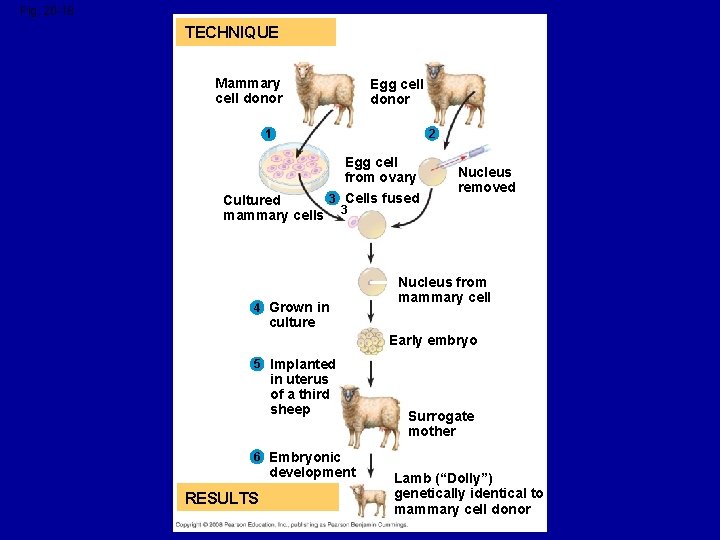
Fig. 20 -18 TECHNIQUE Mammary cell donor Egg cell donor 2 1 Egg cell from ovary 3 Cells fused Cultured mammary cells 3 4 Grown in Nucleus removed Nucleus from mammary cell culture Early embryo 5 Implanted in uterus of a third sheep Surrogate mother 6 Embryonic development RESULTS Lamb (“Dolly”) genetically identical to mammary cell donor
• Since 1997, cloning has been demonstrated in many mammals, including mice, cats, cows, horses, mules, pigs, and dogs • CC (for Carbon Copy) was the first cat cloned; however, CC differed somewhat from her female “parent”
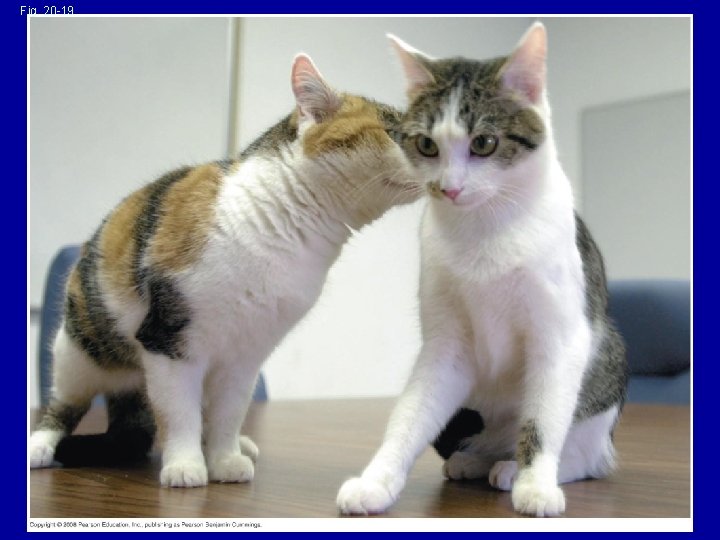
Fig. 20 -19
Stem Cells of Animals • A stem cell is a relatively unspecialized cell that can reproduce itself indefinitely and differentiate into specialized cells of one or more types • Stem cells isolated from early embryos at the blastocyst stage are called embryonic stem cells; these are able to differentiate into all cell types • The adult body also has stem cells, which replace nonreproducing specialized cells
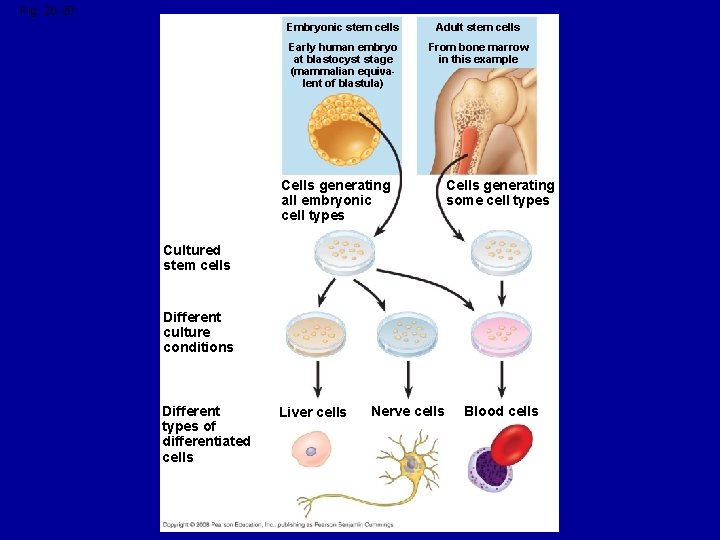
Fig. 20 -20 Embryonic stem cells Adult stem cells Early human embryo at blastocyst stage (mammalian equivalent of blastula) From bone marrow in this example Cells generating all embryonic cell types Cells generating some cell types Cultured stem cells Different culture conditions Different types of differentiated cells Liver cells Nerve cells Blood cells
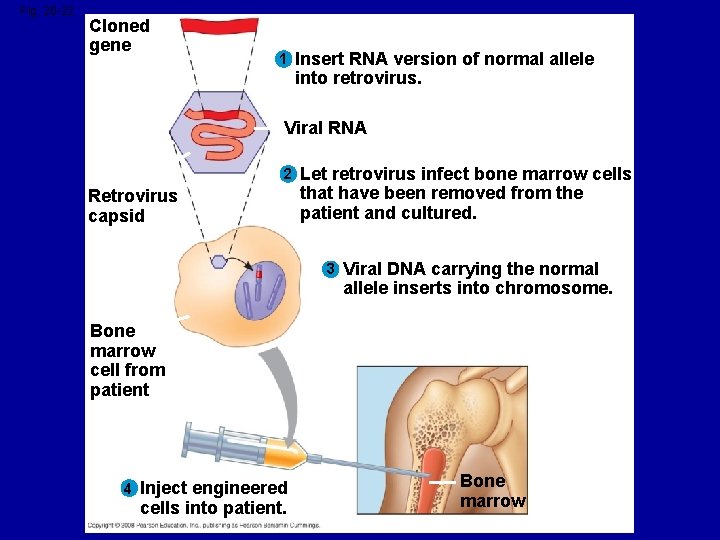
Fig. 20 -22 Cloned gene 1 Insert RNA version of normal allele into retrovirus. Viral RNA 2 Retrovirus capsid Let retrovirus infect bone marrow cells that have been removed from the patient and cultured. 3 Viral DNA carrying the normal allele inserts into chromosome. Bone marrow cell from patient 4 Inject engineered cells into patient. Bone marrow
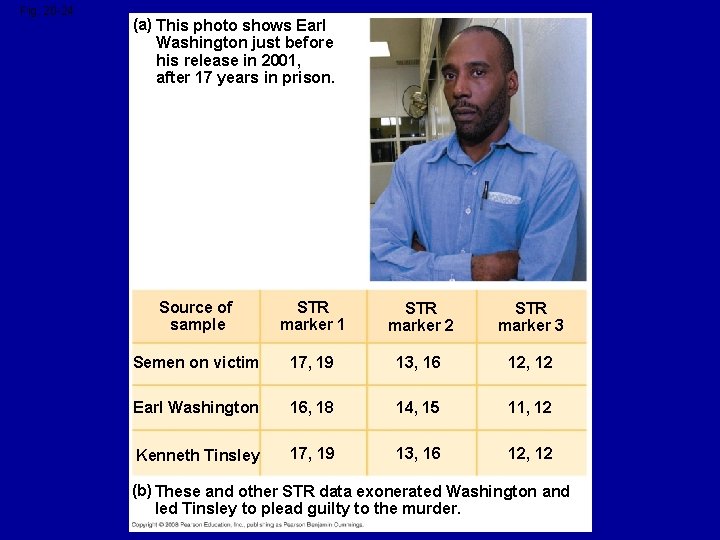
Fig. 20 -24 (a) This photo shows Earl Washington just before his release in 2001, after 17 years in prison. Source of sample STR marker 1 STR marker 2 STR marker 3 Semen on victim 17, 19 13, 16 12, 12 Earl Washington 16, 18 14, 15 11, 12 Kenneth Tinsley 17, 19 13, 16 12, 12 (b) These and other STR data exonerated Washington and led Tinsley to plead guilty to the murder.
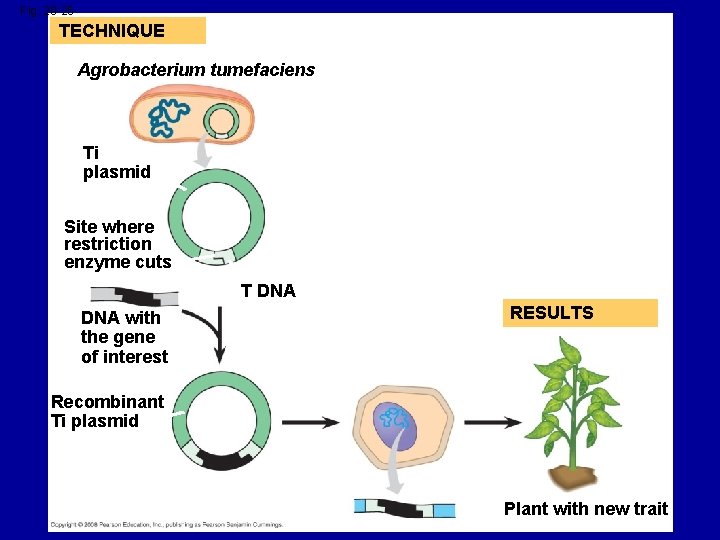
Fig. 20 -25 TECHNIQUE Agrobacterium tumefaciens Ti plasmid Site where restriction enzyme cuts T DNA with the gene of interest RESULTS Recombinant Ti plasmid Plant with new trait
- Slides: 49