
CHAPTER 20 ACIDS AND BASES 20 1 PROPERTIES
CHAPTER 20 ACIDS AND BASES
20. 1 PROPERTIES OF ACIDS General formula of acid is HX • Sour taste • Aqueous solutions are electrolytes • Cause indicators to change color – BLUE LITMUS +ACID> RED • React with some metals to produce H 2(g) • React with hydroxides to produce salt and water
Properties of Bases General formula XOH where X is a metal • Taste bitter • Feel slippery • Change the color of an indicator – RED LITMUS> BLUE • Aqueous solutions are electrolytes • React with acids to produce salt and water
Naming Acids • Binary acids ----have prefix hydro ----have suffix -ic • Ternary Acids ---contain polyatomic --- have suffix –ic Ex. hydrochloric Ex. nitric
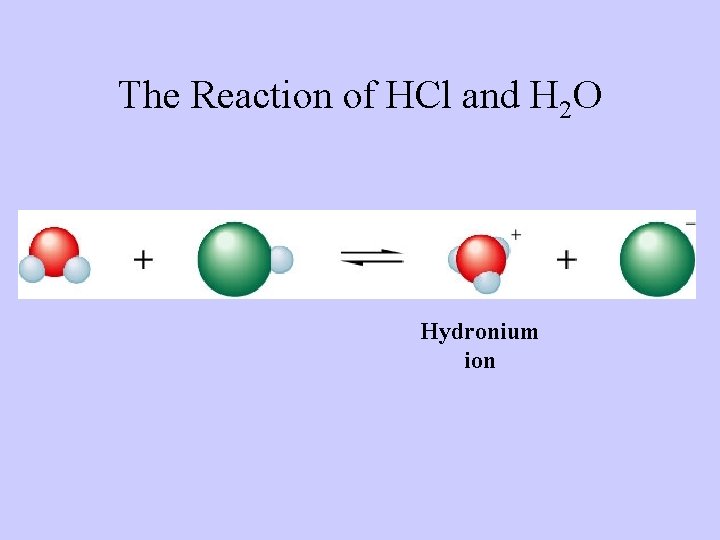
The Reaction of HCl and H 2 O Hydronium ion
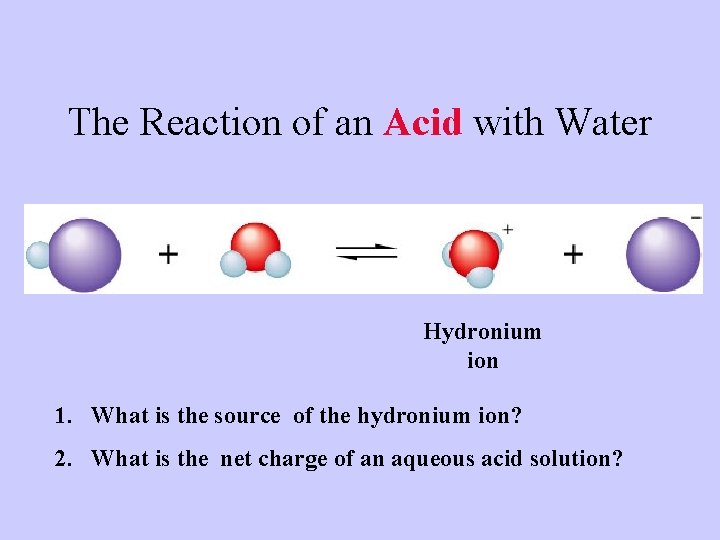
The Reaction of an Acid with Water Hydronium ion 1. What is the source of the hydronium ion? 2. What is the net charge of an aqueous acid solution?
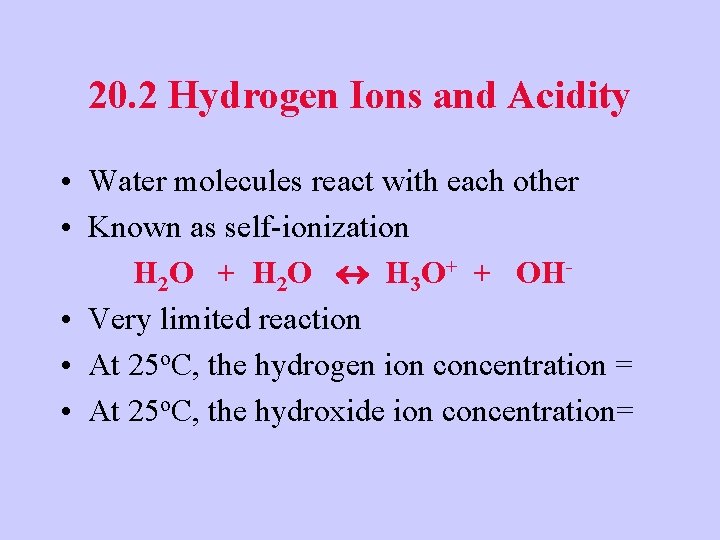
20. 2 Hydrogen Ions and Acidity • Water molecules react with each other • Known as self-ionization H 2 O + H 2 O H 3 O+ + OH • Very limited reaction • At 25 o. C, the hydrogen ion concentration = • At 25 o. C, the hydroxide ion concentration=
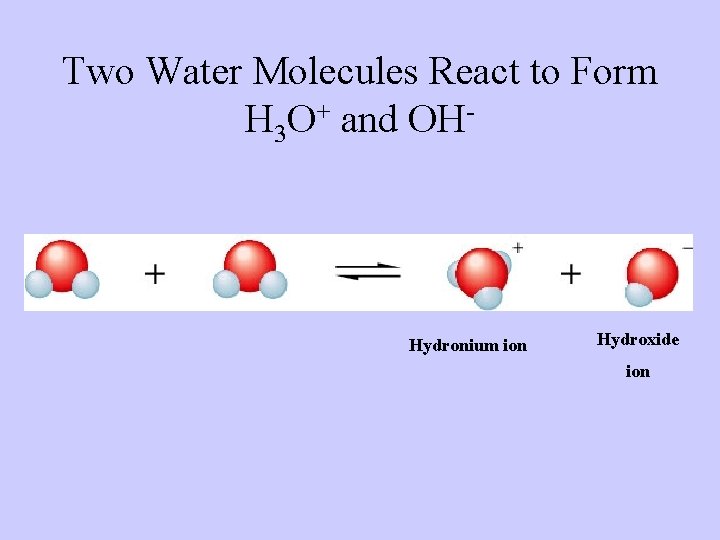
Two Water Molecules React to Form H 3 O+ and OH- Hydronium ion Hydroxide ion
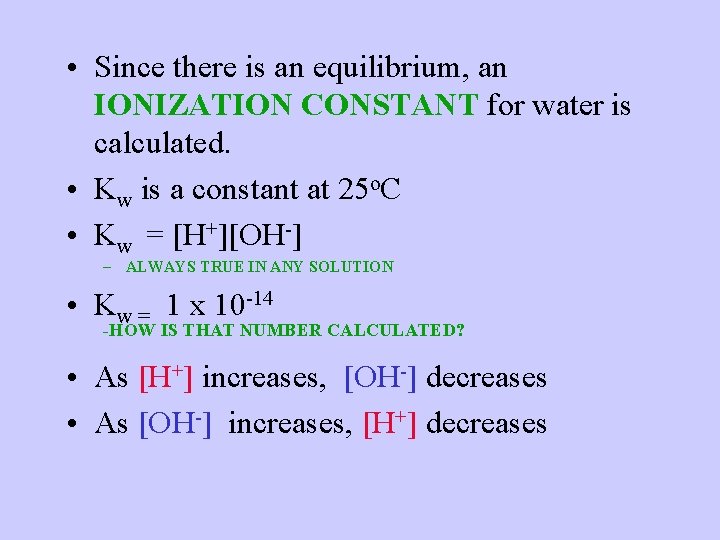
• Since there is an equilibrium, an IONIZATION CONSTANT for water is calculated. • Kw is a constant at 25 o. C • Kw = [H+][OH-] – ALWAYS TRUE IN ANY SOLUTION • Kw = 1 x 10 -14 -HOW IS THAT NUMBER CALCULATED? • As [H+] increases, [OH-] decreases • As [OH-] increases, [H+] decreases
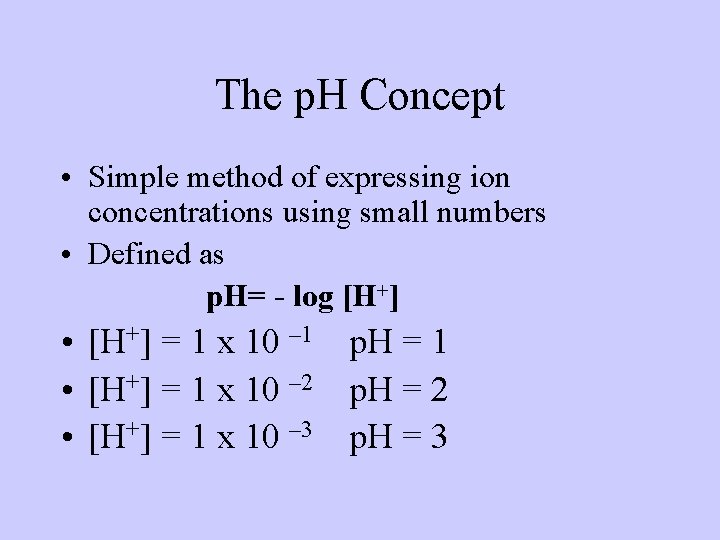
The p. H Concept • Simple method of expressing ion concentrations using small numbers • Defined as p. H= - log [H+] • [H+] = 1 x 10 – 1 p. H = 1 • [H+] = 1 x 10 – 2 p. H = 2 • [H+] = 1 x 10 – 3 p. H = 3
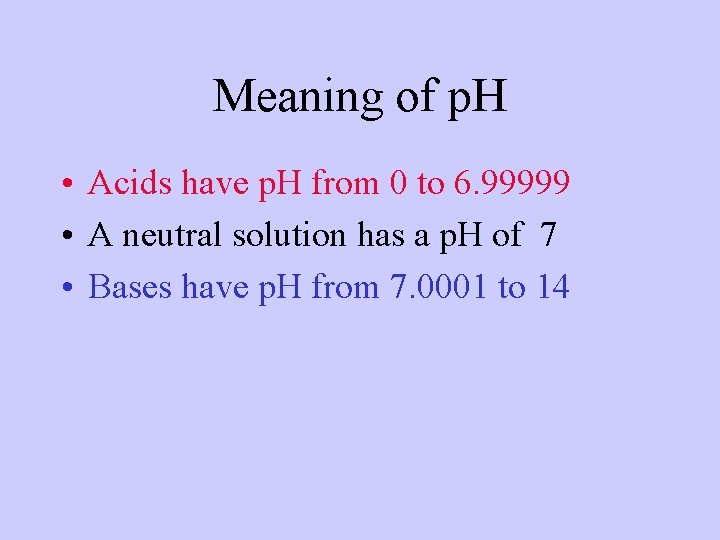
Meaning of p. H • Acids have p. H from 0 to 6. 99999 • A neutral solution has a p. H of 7 • Bases have p. H from 7. 0001 to 14
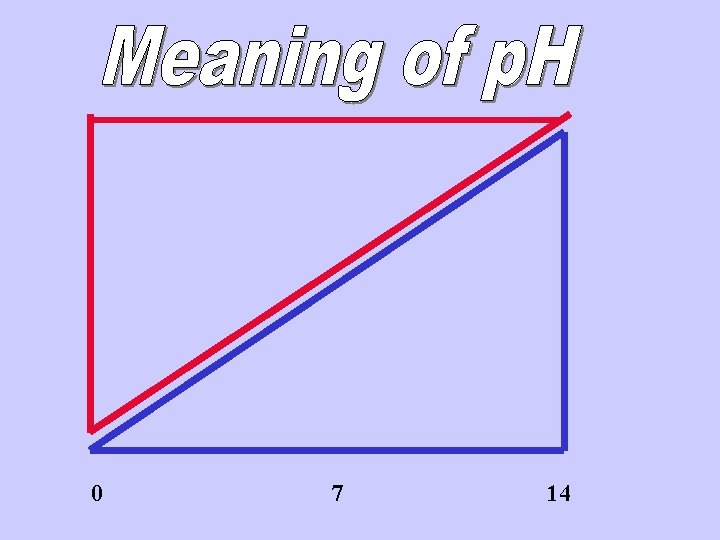
0 7 14
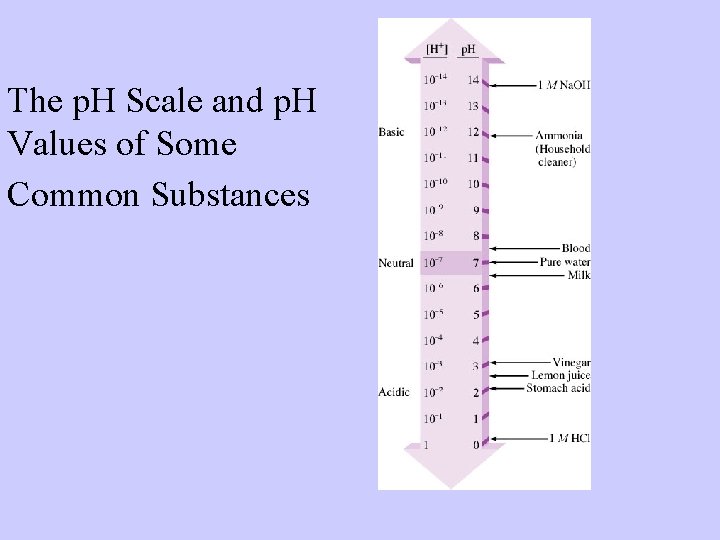
The p. H Scale and p. H Values of Some Common Substances
Measuring p. H • Can use a variety of different indicators • Indicators are themselves acids or bases that change color with the changing concentration of [H+] • Some more common ones shown on page 590, including Phenol Red which is used for swimming pools and phenolphthalein • Can use p. H meter or probes
20. 3 Arrhenius Acids and Bases • Definition – Bases yield a hydroxide ion in solution – Acids yield a hydrogen ion in solution • Acids may be mono, di, or tri protic. – Examples: • Sulfuric (H 2 SO 4) • Phosphoric(H 3 PO 4)
Bronsted-Lowry Acids and Bases • • Acid is a hydrogen ion donor Base is a hydrogen ion acceptor This definition shows how NH 3 is basic. A conjugate acid is formed when a base gains a hydrogen ion. • A conjugate base is formed when an acid donates a hydrogen ion. • An acid –base pair are related by the loss or gain of a hydrogen atom.
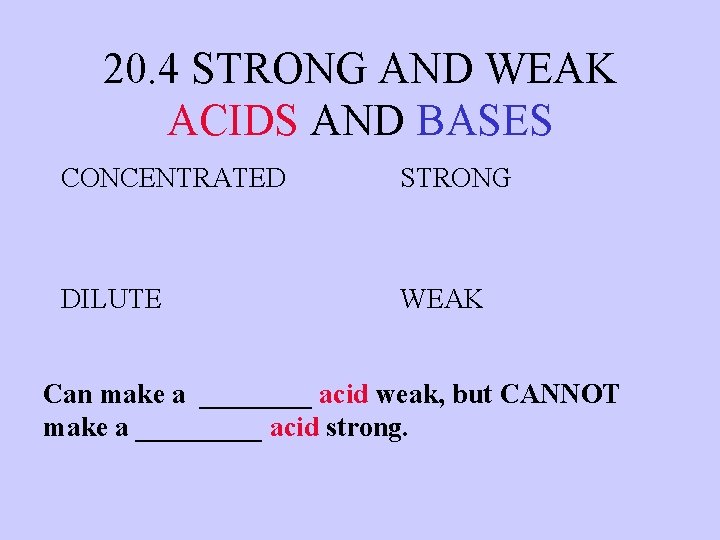
20. 4 STRONG AND WEAK ACIDS AND BASES CONCENTRATED STRONG DILUTE WEAK Can make a ____ acid weak, but CANNOT make a _____ acid strong.
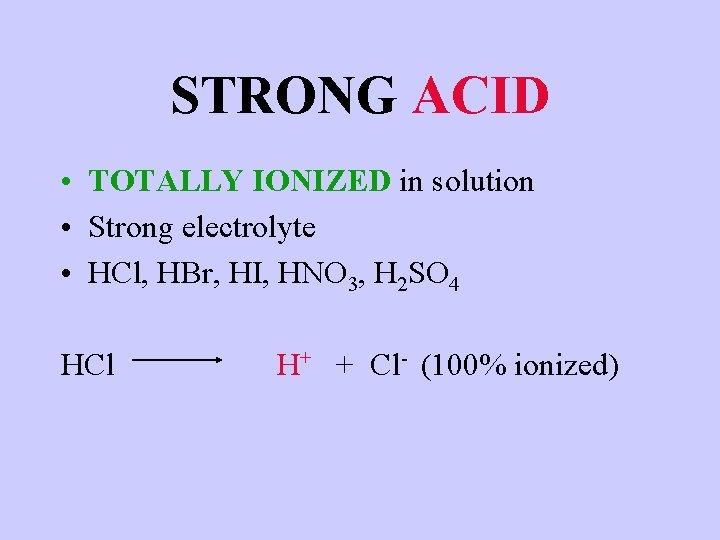
STRONG ACID • TOTALLY IONIZED in solution • Strong electrolyte • HCl, HBr, HI, HNO 3, H 2 SO 4 HCl H+ + Cl- (100% ionized)
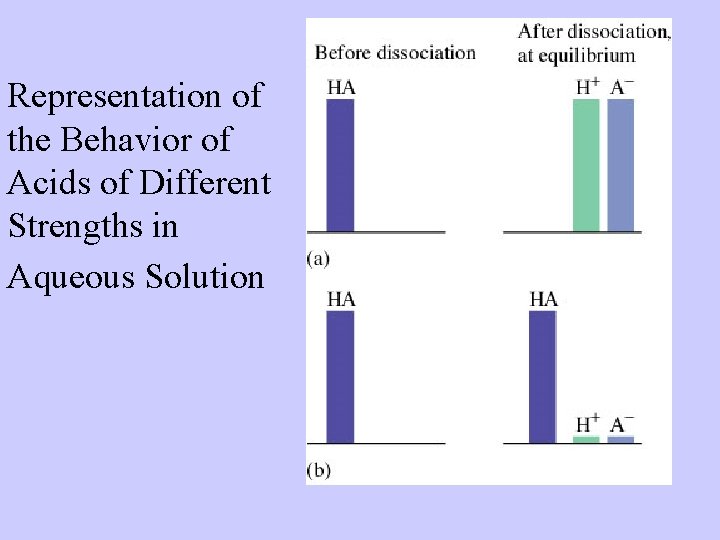
Representation of the Behavior of Acids of Different Strengths in Aqueous Solution
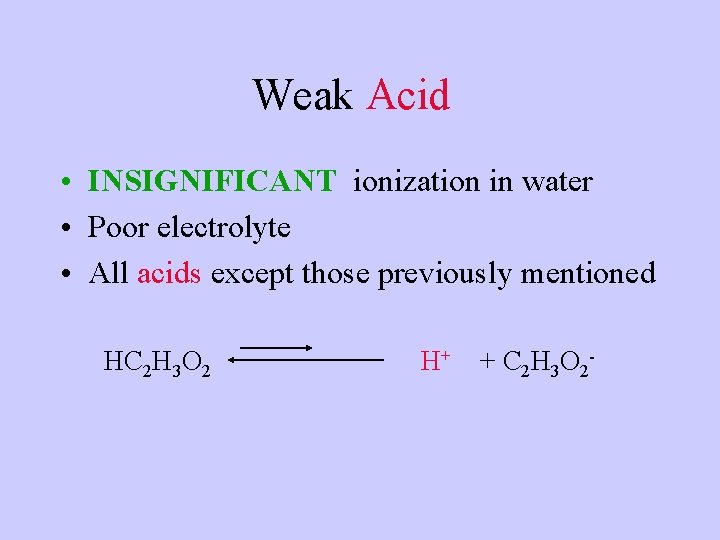
Weak Acid • INSIGNIFICANT ionization in water • Poor electrolyte • All acids except those previously mentioned HC 2 H 3 O 2 H+ + C 2 H 3 O 2 -
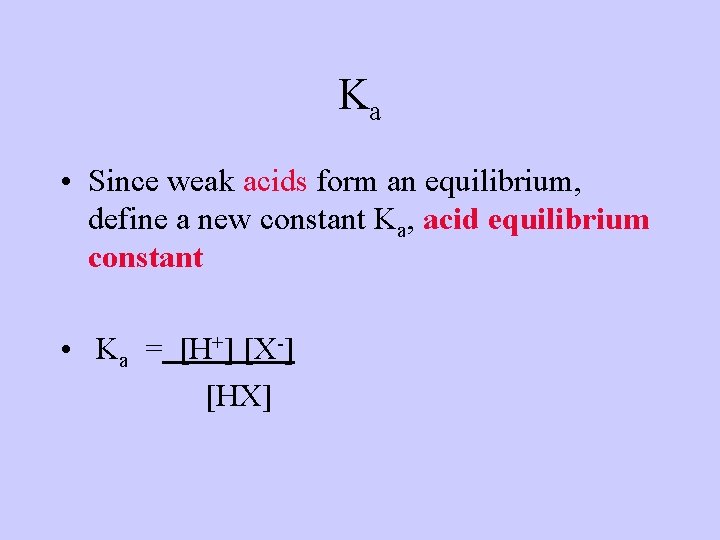
Ka • Since weak acids form an equilibrium, define a new constant Ka, acid equilibrium constant • Ka = [H+] [X-] [HX]
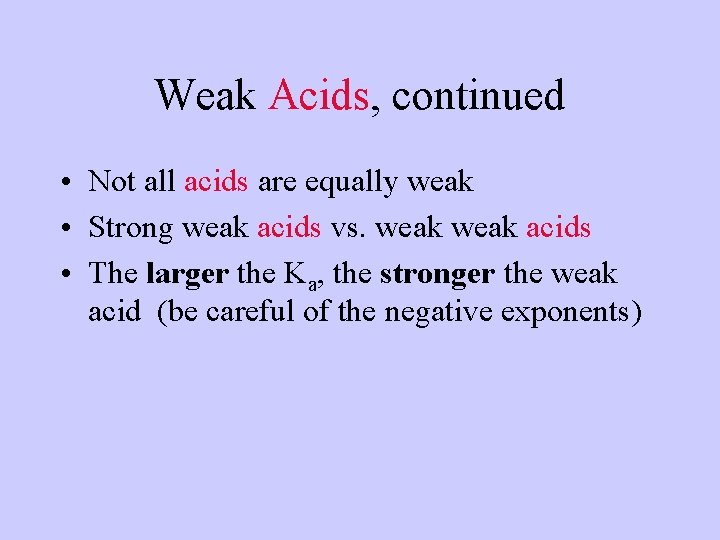
Weak Acids, continued • Not all acids are equally weak • Strong weak acids vs. weak acids • The larger the Ka, the stronger the weak acid (be careful of the negative exponents)
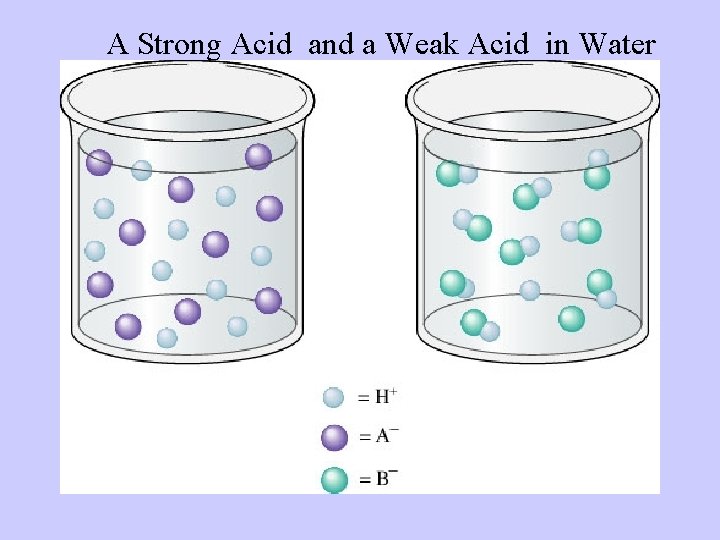
A Strong Acid and a Weak Acid in Water
- Slides: 23