
Chapter 2 Vehicle Construction Technology Objectives Explain the
Chapter 2 Vehicle Construction Technology
Objectives • Explain the past and present designs of motor vehicles • Summarize the various types of frames commonly used on modern cars, trucks, vans, and SUVs • Compare and contrast modern body-overframe and unibody construction technology • Locate the major parts of a perimeter frame • Locate the major parts of a unibody frame
Objectives (continued) • Compare a conventional full frame with modern hydroformed frames • Identify the major structural components, sections, and assemblies of a motor vehicle • Explain how simulated and actual crash tests are used to evaluate the structural integrity of a motor vehicle
Objectives (continued) • Describe the layperson’s names for body shapes used on passenger vehicles • Answer ASE-style review questions relating to vehicle construction
Introduction • Vehicle construction – How a passenger car, truck, van, or SUV is assembled at the factory – Typical car has over 15, 000 parts • During collision repair, repair methods used should closely duplicate how the car was manufactured
Body and Chassis • Major parts of vehicle – Body, chassis, frame • Vehicle body – Protective outer hull, or “skin, ” around the outside of automobile – Made from steel, aluminum, fiberglass, plastic, or composite • Vehicle chassis – Frame, engine, suspension system, steering system, and other mechanical parts with body removed
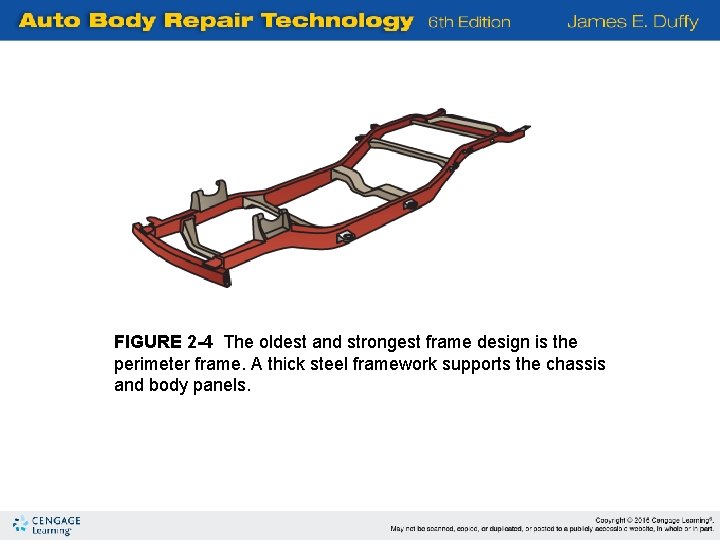
FIGURE 2 -4 The oldest and strongest frame design is the perimeter frame. A thick steel framework supports the chassis and body panels.
Vehicle Frame • Vehicle frame – High-strength structure used to support all other parts of vehicle • Usually made of steel or aluminum • Body-over-frame construction – Separate body structure bolted to thick steel framework • Commonly used on pickup trucks, SUVs, and most full-size vans
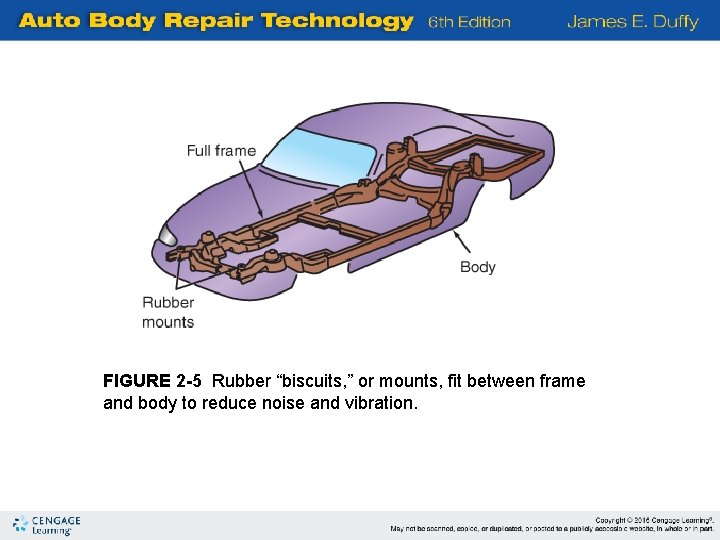
FIGURE 2 -5 Rubber “biscuits, ” or mounts, fit between frame and body to reduce noise and vibration.
Vehicle Frame (continued) • Unibody construction – Body parts welded or adhesive-bonded together to form integral frame – No separate heavy-gauge steel frame under body is needed – Requires more complex assembly techniques, new materials, and completely different approach to repairs when compared with body -over-frame vehicles

FIGURE 2 -7 Unibody vehicles consist of small body panels welded together to serve as the vehicle frame. Unibody vehicles are light yet very strong. They are built for controlled collapse during a collision to help keep the passenger compartment intact.
Major Body Sections • Front section (nose section, or front clip) – Everything between front bumper and firewall • Center section (midsection) – Body parts that form the passenger compartment • Rear section (tail section, or rear clip) – Rear quarter panels, trunk or rear floor pan, rear frame rails, trunk or deck lid, rear bumper, and related parts
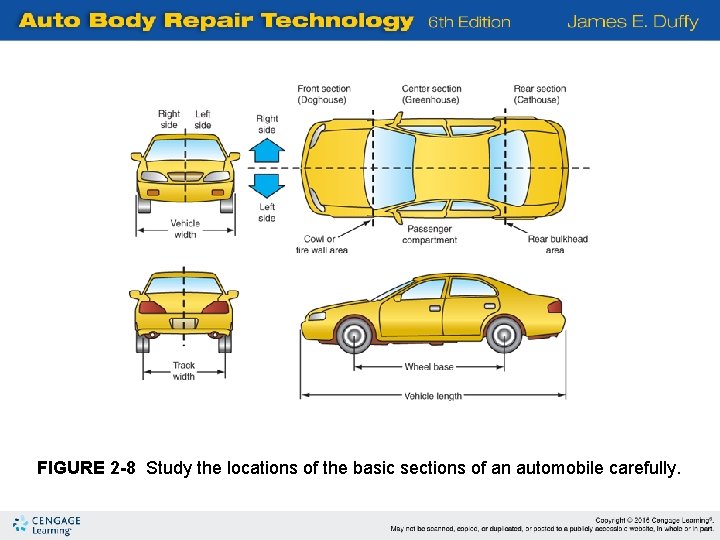
FIGURE 2 -8 Study the locations of the basic sections of an automobile carefully.
Major Body Sections (continued) • Vehicle left and right sides – Determined by standing behind the vehicle or sitting in driver’s seat – Vehicle’s left side is to your left; right side is to your right • Drive line configuration – How power is transmitted from engine to drive wheels • Front-wheel drive; rear-engine, rearwheel drive; mid-engine, rear-wheel drive; four-wheel drive; and all-wheel drive

FIGURE 2 -9 (A) Front-engine, front-wheel drive with a transverse engine mounting is the most common drive line configuration. (B) Front-wheel drive arrangement with engine placed longitudinally in the engine compartment. (C) Front-engine, rear-wheel drive setup is still common on many sports sedans. (D) Mid-engine, rear-wheel drive layout is the least common.
Body Classifications • Methods of classifying vehicles – Engine type (gas or diesel), drive line type (automatic or manual transmission, front-wheel versus rear-wheel drive), etc. • Car size – Compact, micro, intermediate, full size or luxury • Body shapes and roof designs – Sedan, hardtop, hatchback, convertible, station wagon, crossover, van, SUV, pickup truck
Body Classifications (continued) • Part/panel nomenclature – Stationary, hinged, fastened, welded, press-fit, and adhesive-bonded parts • Body panels – Steel, aluminum, or plastic sheet stamped or molded into body part
Auto Body Repair History • First motor cars were nothing more than horse buggy with engine • Henry Ford developed Model T – First car mass produced on assembly line – Introduced and sold in 1908 • In mid-to late 1920 s, two largest car manufacturers were Ford and General Motors • Up through 1960 s, American automobiles were manufactured in pretty much the same way, with similar characteristics
Auto Body Repair History (continued) • By the 60 s, people wanted speed, power, and styling in their cars • In 1970 s – Strict fuel economy and emission control laws and standards put in place – Arab oil embargo: raised demand for increased fuel efficiency – Foreign car makers captured increasing share of domestic new car market
Auto Body Repair History (continued) • Modern motor vehicles are more powerful, cleaner running, and safer than ever • Hybrid car is a glimpse into the future – Tremendous potential to reduce fuel consumption and exhaust emissions • Five construction areas in which domestic automobiles have changed since mid-1970 s: – Body/frame construction, weight, part composition, suspension/steering, and engine location/drive
Auto Body Repair History (continued) • Repairing vehicles has become more complex in recent years • Modern body technicians need a great deal of knowledge and skill
Unibody Panels • Competent collision repair technician should be able to quickly locate and identify major panels • Front section parts – Frame rails, cowl, front fender aprons, shock towers, radiator core support, hood, dash panel, front fenders, bumper, grille • Center section parts – Floor pan, pillars, rocker panels, rear shelf, bulkhead panel, doors, roof panel, dash assembly
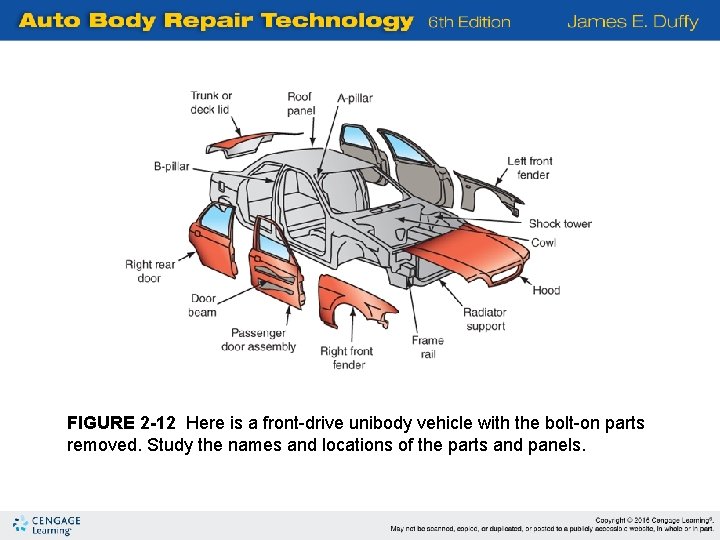
FIGURE 2 -12 Here is a front-drive unibody vehicle with the bolt-on parts removed. Study the names and locations of the parts and panels.
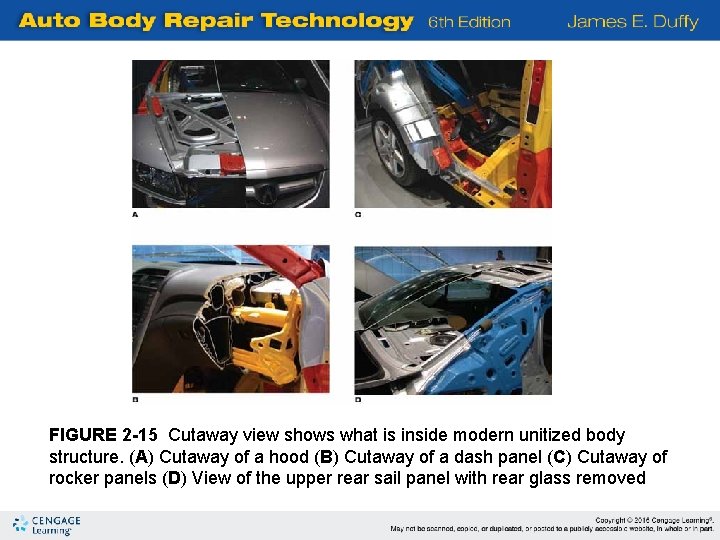
FIGURE 2 -15 Cutaway view shows what is inside modern unitized body structure. (A) Cutaway of a hood (B) Cutaway of a dash panel (C) Cutaway of rocker panels (D) View of the upper rear sail panel with rear glass removed
Unibody Panels (continued) • Rear section parts – Rear frame rails, trunk floor panel, deck lid, rear hatch, quarter panels, rear body panel, rear shock towers, wheelhousings, upper rear panel • Cross members – Provide added strength for holding various chassis parts • Body bracing – Fastens between two body panels to increase stiffness and strength
Unibody Design Factors • Semi-unitized frame – Uses heavier gauge steel “stub” rails bolted to front and rear of the body or platform structure • Unibody torque boxes – Allow controlled twisting and crushing of structure during severe collisions • Unibody is often compared to an eggshell • “Stressed hull structure” – When force is applied lengthwise, it gets dispersed through entire shell reducing damage
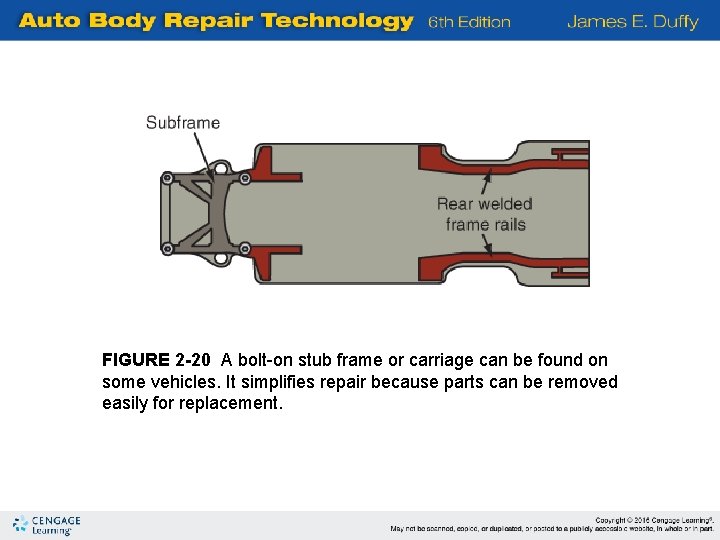
FIGURE 2 -20 A bolt-on stub frame or carriage can be found on some vehicles. It simplifies repair because parts can be removed easily for replacement.
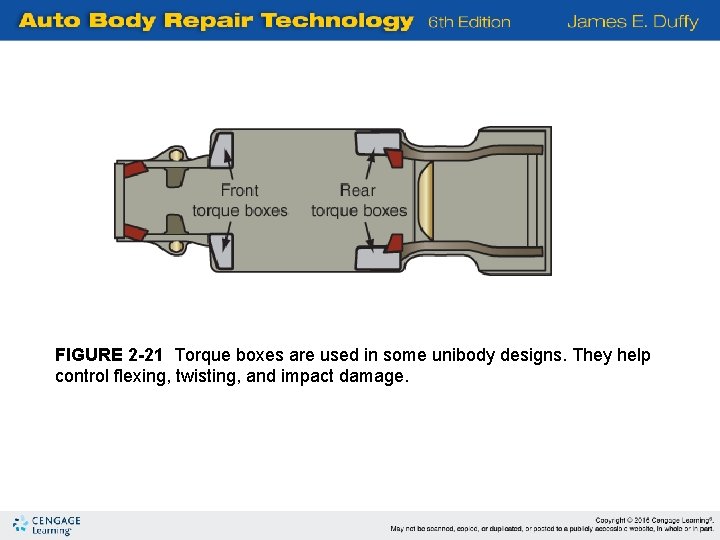
FIGURE 2 -21 Torque boxes are used in some unibody designs. They help control flexing, twisting, and impact damage.
Unibody Design Factors (continued) • Crush zones – Areas in unibody intentionally made weaker in order to collapse in a predetermined fashion during collision • Aerodynamics – Measurement of how well a motor vehicle moves through wind without resistance
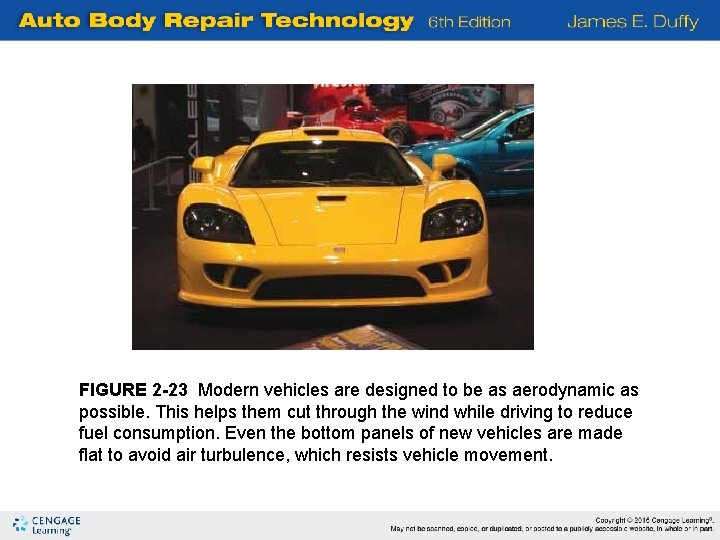
FIGURE 2 -23 Modern vehicles are designed to be as aerodynamic as possible. This helps them cut through the wind while driving to reduce fuel consumption. Even the bottom panels of new vehicles are made flat to avoid air turbulence, which resists vehicle movement.
Unibody Design Factors (continued) • General unibody characteristics – Lightweight structure, highly rigid and resistant to bending or twisting – Vehicle more compact and lighter – Extra sound-deadening materials needed to quiet passenger compartment • Four basic unibody structures – Front-engine, front drive (FF); front-engine, reardrive (FR); mid-engine, rear-drive (MR); and rearengine, rear-drive (RR)
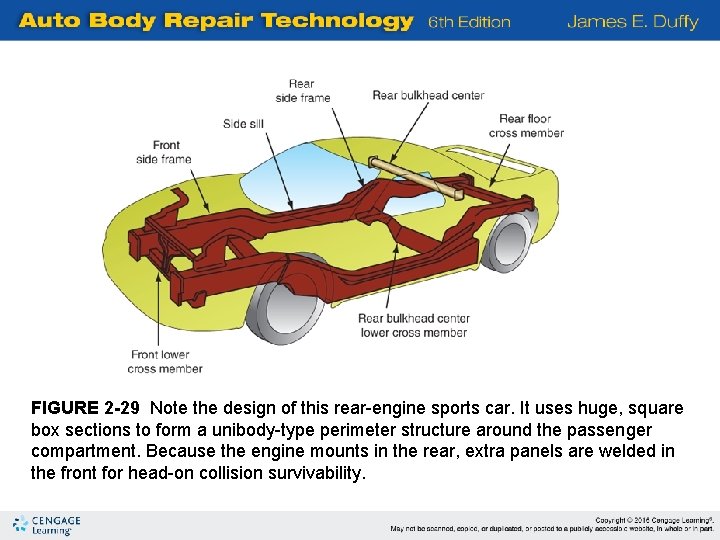
FIGURE 2 -29 Note the design of this rear-engine sports car. It uses huge, square box sections to form a unibody-type perimeter structure around the passenger compartment. Because the engine mounts in the rear, extra panels are welded in the front for head-on collision survivability.
Unibody Design Factors (continued) • Space frame – Metal body structure covered with outer skin of plastic or fiberglass panels • Various smaller body and trim parts and some large body panels are made of plastic • Composite unibody – Made of specially formulated plastics and other materials, such as carbon fiber
Unibody Design Factors (continued) • Aluminum construction – Reduces vehicle’s curb weight to reduce fuel consumption while increasing performance – Resists rust and corrosion much longer than steel
Body-Over-Frame Considerations • Body-over-frame construction – Fewer road-induced vibrations and noise – Frame absorbs high amounts of energy during collisions – Thick framework protects undersurfaces of panels – Suspension and powertrain parts can be quickly assembled on the basic frame – Vehicle ride height is often higher off the ground
Body-Over-Frame Considerations (continued) • Body-over-frame construction (continued) – Total vehicle weight is increased, lowering fuel economy and handling – Higher load-carrying ability • Full frame designs – Ladder frame, perimeter frame, X-frame
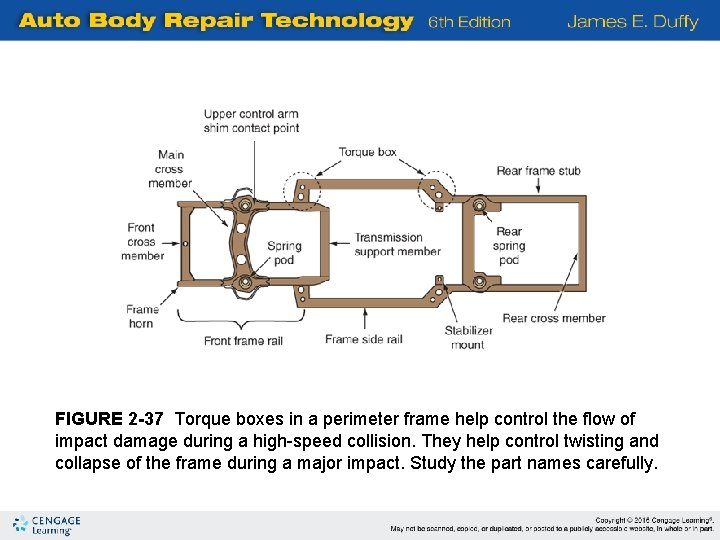
FIGURE 2 -37 Torque boxes in a perimeter frame help control the flow of impact damage during a high-speed collision. They help control twisting and collapse of the frame during a major impact. Study the part names carefully.
Crash Testing • Computer-simulated crash testing helps to determine how well a new vehicle might survive a crash – Used before building a prototype or first real vehicle to find weak or faulty structural areas • Certified crash tests: done using real vehicles • Types of crash tests – Full frontal, offset front, side impact, whiplash, bumper

Crash Testing (continued) • Major U. S. crash testing agencies – National Highway Traffic Safety Administration (NHTSA) – Insurance Institute for Highway Safety (IIHS) • NCAP ratings • Insurance rating system
Summary • The term vehicle construction refers to how a passenger car, truck, van, or SUV is assembled at the factory. The vehicle body provides a protective outer hull or “skin” around the outside of a motor vehicle. • The vehicle chassis includes the frame, engine, suspension system, steering system, and other mechanical parts with the body removed. • The vehicle frame is a high-strength structure used to support all other parts of the vehicle. The perimeter frame is similar in construction to the ladder frame.
Summary • Body-over-frame construction has a separate body structure bolted to a thick steel framework. • Unibody construction uses body parts welded or adhesivebonded (glued) together to form an integral (built-in) frame. • The front section, also called the nose section, includes everything between the front bumper and the fire wall. The center section, or mid-section, typically includes the body parts that form the passenger compartment. The rear section (tail section or rear clip) commonly consists of the rear quarter panels, trunk or rear floor pan, rear frame rails, trunk or deck lid, rear bumper, and related parts.
Summary • A panel is a steel or plastic sheet stamped or molded into a body part. • The frame rails are the box members extending out near the bottom of the front and rear sections of a unibody. • The cowl is the panel at the rear of the front section, right in front of the windshield. • The shock towers or strut towers are reinforced body areas for holding the upper parts of the suspension system.
Summary • The radiator core support is the framework around the front of the body structure for holding the cooling system radiator and related parts. • The floor pan is the main structural section in the bottom of the passenger compartment. • Pillars are vertical body members that hold the roof panel in place and protect the vehicle in case of a rollover accident. • Rocker panels, or door sills, are strong beams that fit at the bottom of the door openings.
Summary • The doors are complex assemblies made up of an outer skin, inner door frame, door panel, window regulator, glass, and related parts. Door hinges bolt or weld between the pillars and door frame. • The quarter panels are the large, side body sections that extend from the side doors back to the rear bumper. • Cross members are thick-gauge supports that extend across the frame rails of both unitized and full frame vehicles.
Summary • Crush zones areas in the unibody that are made weaker to intentionally collapse during a collision. • Aerodynamics is a measurement of how well a motor vehicle moves through wind without resistance. • Anticorrosion materials are used to prevent rusting of metal parts. Sound-deadening materials are used to help quiet the passenger compartment.
Summary • Similar to a unibody, a space frame has a metal body structure covered with an outer skin of plastic or fiberglass panels. A composite unibody is made of specially formulated plastics and other materials, such as carbon fiber, to form the vehicle. • Certified crash tests are done using a real vehicle and sensor-equipped dummies that show much impact passengers would suffer during a collision. An insurance rating system uses a number scale to rate the vehicle’s accident survivability during a collision.
- Slides: 47