
Chapter 2 Types of Early Childhood Programs Terms
- Slides: 14
Chapter 2 Types of Early Childhood Programs
Terms to Know q family child care home q child care centers q custodial care q Montessori approach q Head Start q school-age child care programs q checking-in services q parent cooperatives q laboratory schools q universal prekindergarten (UPK) q accredited
Family Child Care Homes q Family child care homes: a type of program where child care is provided in a private home § Program Child may attend up to 12 hours a day Developmental curriculum may be planned, if caregiver has received training
Child Care Centers q Child care centers: provide full-day care and education § Custodial care: focuses on meeting the child’s physical needs § Ideally, the program should meet needs in all areas of development. Social Emotional Cognitive Physical
Montessori Schools q Montessori approach: teach children how to learn, stressing § § § independence sensory training academic experience proper nutrition cleanliness Manners § http: //www. youtube. com/watch? v=OM 1 Gu 9 KXVkk&safe=active
Head Start q Head start: federal program that provides child care and education to four- and five-year-olds from low-income families § Education: The curriculum is designed to build self-esteem that will lead to future success in school. Self-confidence Curiosity Self-discipline
Head Start § Nutrition: provide at least one snack and one hot meal every day § Health: children receive a total health plan Dental Medical Mental health § Parental involvement: parents participate in different activities Recruiting new children Assisting in the center Taking part in policy meetings
Kindergarten q Kindergarten is part of most private and public school systems. § Schedules Half-day Full-day/alternating day sessions
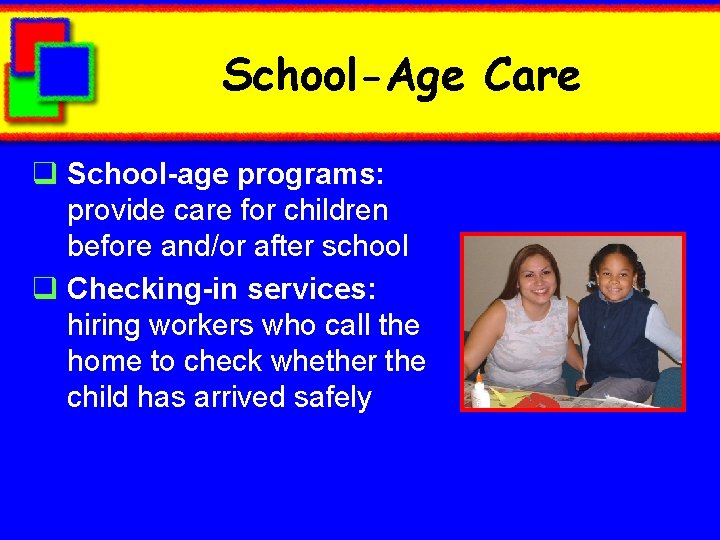
School-Age Care q School-age programs: provide care for children before and/or after school q Checking-in services: hiring workers who call the home to check whether the child has arrived safely
Parent Cooperatives q Parent cooperatives: formed and run by parents who wish to take part in their children’s preschool experience § Advantages Teachers can devote more time to curriculum, parents take care of the administrative activities Special relationship between parents and teachers § Disadvantages Lack of control on teacher’s part in making rules
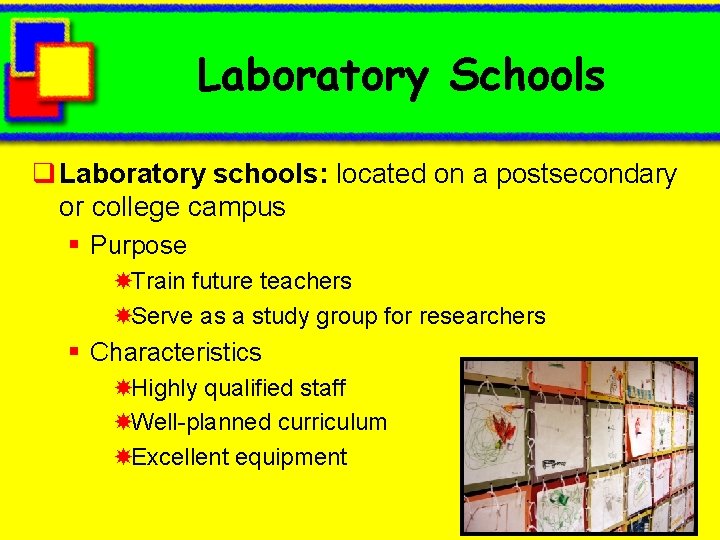
Laboratory Schools q Laboratory schools: located on a postsecondary or college campus § Purpose Train future teachers Serve as a study group for researchers § Characteristics Highly qualified staff Well-planned curriculum Excellent equipment
High School Child Care Programs q High school child care programs: located in high schools that have started vocational training for child care occupations § Characteristics: Operates two or three days a week Curriculum is planned by high school students High school students are supervised by a teacher
Universal Pre-Kindergarten q Universal pre-kindergarten (UPK): programs designed for three- and four-year-olds in which a literary-rich environment is provided § Children from these programs start kindergarten eager to learn § Children who lack early learning experiences are at a disadvantage
Selecting a Child Care Program q Factors to consider: § § § type of program quality of program cost adult-child ratio group size § security and cleanness of environment § condition of facilities § training and experience of the staff