
CHAPTER 2 Theories and Therapies Copyright 2018 Elsevier




- Slides: 55
CHAPTER 2 Theories and Therapies Copyright © 2018, Elsevier Inc. All rights reserved.
Introduction • Psychological theories help us to explain behavior • Psychological therapies are treatments based on these theories • An overview of theories and therapies and their relevance to nursing and psychiatric mental health nursing are described in this chapter • Remember – the etiology of all psychiatric illness are twofold • 1) • 2) 2
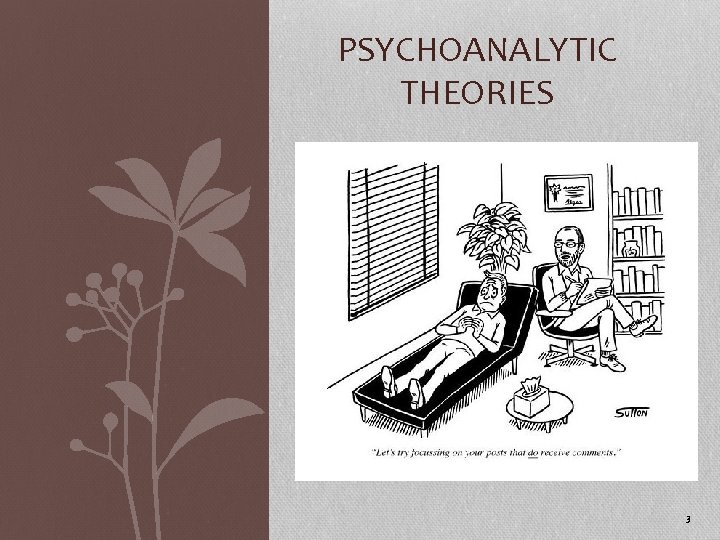
PSYCHOANALYTIC THEORIES 3
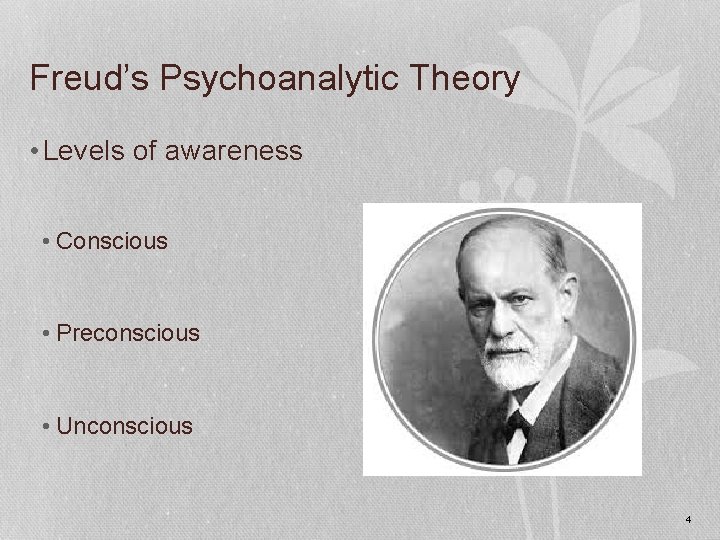
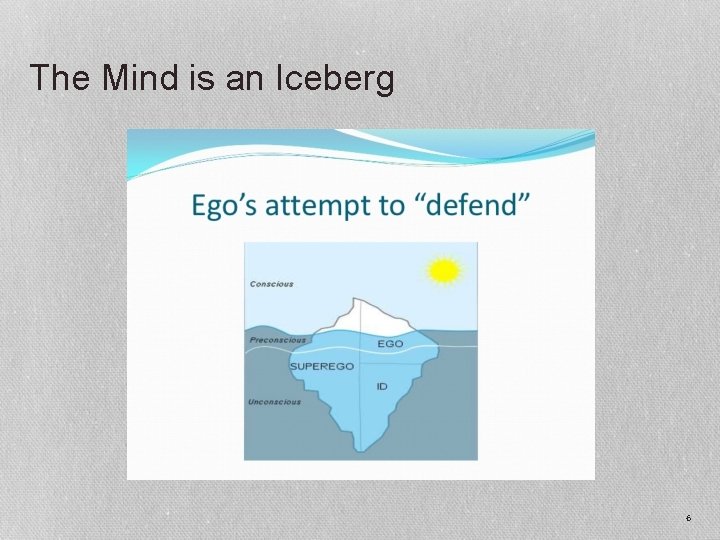
Freud’s Psychoanalytic Theory • Levels of awareness • Conscious • Preconscious • Unconscious 4
Freud’s Psychoanalytic Theory (Cont. ) • Personality structure • Id • Ego • Superego 5
The Mind is an Iceberg 6
Freud’s Psychoanalytic Theory (Cont. ) • Defense mechanisms and anxiety • Operate on unconscious level • Deny, falsify, or distort reality to make it less threatening • Experiences during the early stages of life determine • Individual’s lifetime adjustment patterns • Personality traits 7
Freudian Theory and Nursing • Formation of personality • Conscious and unconscious influences • Importance of individual talk sessions • Attentive listening • Transference • Countertransference 8
Therapeutic Approaches • Classical psychoanalysis • Not generally used today but important concepts remain valid • Uncover unconscious material • Transference/Countertransference • Defense mechanisms 9
Psychodynamic Therapy • Newer psychoanalytic model • Focuses more on here and now • Uses many tools of psychoanalysis • Best candidates are the “worried well” • Have a clear area of difficulty • Are intelligent and well motivated for change • Rapid back and forth between therapist and patient Copyright © 2018, Elsevier Inc. All rights reserved. 10
Audience Response Questions According to Freud, which aspect of the personality motivates an individual to seek perfection? A. Id B. Ego C. Superego D. Transference Copyright © 2018, Elsevier Inc. All rights reserved. 11
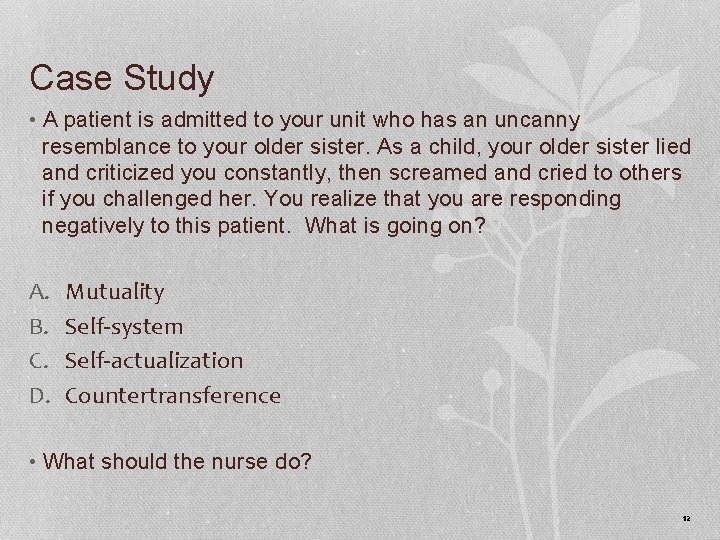
Case Study • A patient is admitted to your unit who has an uncanny resemblance to your older sister. As a child, your older sister lied and criticized you constantly, then screamed and cried to others if you challenged her. You realize that you are responding negatively to this patient. What is going on? A. B. C. D. Mutuality Self-system Self-actualization Countertransference • What should the nurse do? 12
DEVELOPMENTAL THEORIES Copyright © 2018, Elsevier Inc. All rights reserved. 13
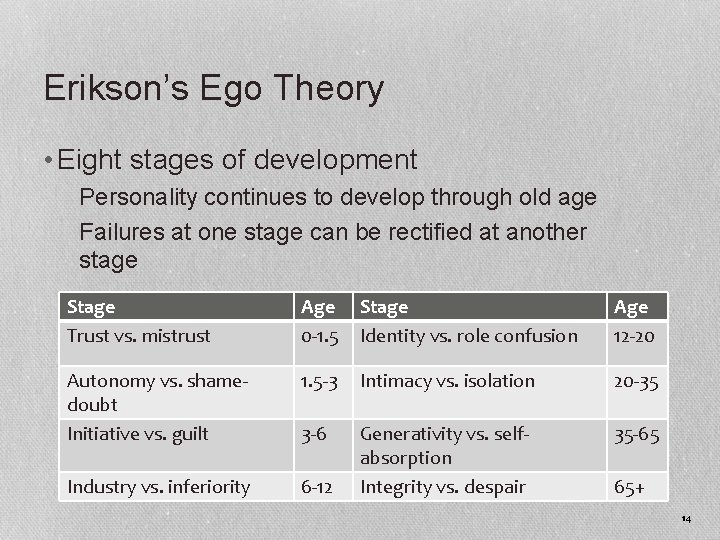
Erikson’s Ego Theory • Eight stages of development Personality continues to develop through old age Failures at one stage can be rectified at another stage Stage Trust vs. mistrust Age 0 -1. 5 Stage Identity vs. role confusion Age 12 -20 Autonomy vs. shamedoubt Initiative vs. guilt 1. 5 -3 Intimacy vs. isolation 20 -35 3 -6 35 -65 Industry vs. inferiority 6 -12 Generativity vs. selfabsorption Integrity vs. despair 65+ 14
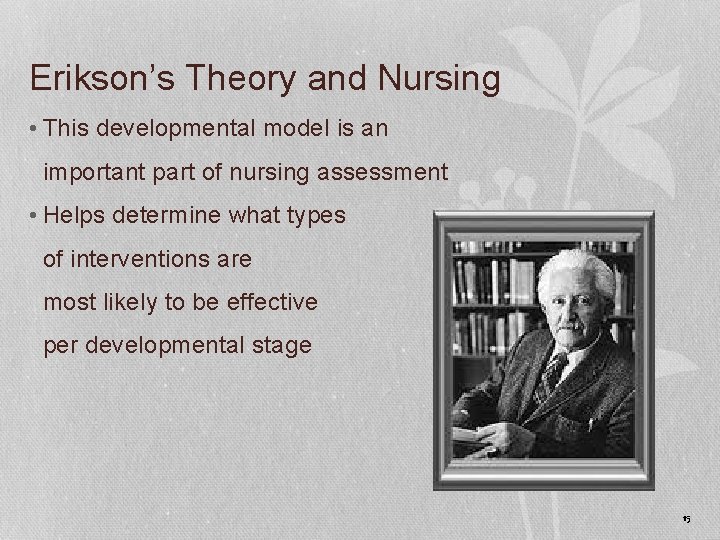
Erikson’s Theory and Nursing • This developmental model is an important part of nursing assessment • Helps determine what types of interventions are most likely to be effective per developmental stage 15
Erikson’s Ego Theory • Personality continues to develop through old age. • Failures at one stage can be rectified at another stage. 16
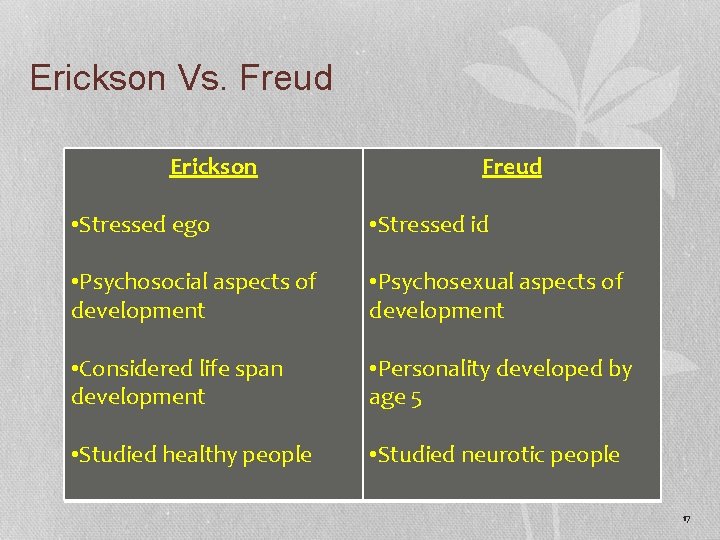
Erickson Vs. Freud Erickson Freud • Stressed ego • Stressed id • Psychosocial aspects of development • Psychosexual aspects of development • Considered life span development • Personality developed by age 5 • Studied healthy people • Studied neurotic people 17
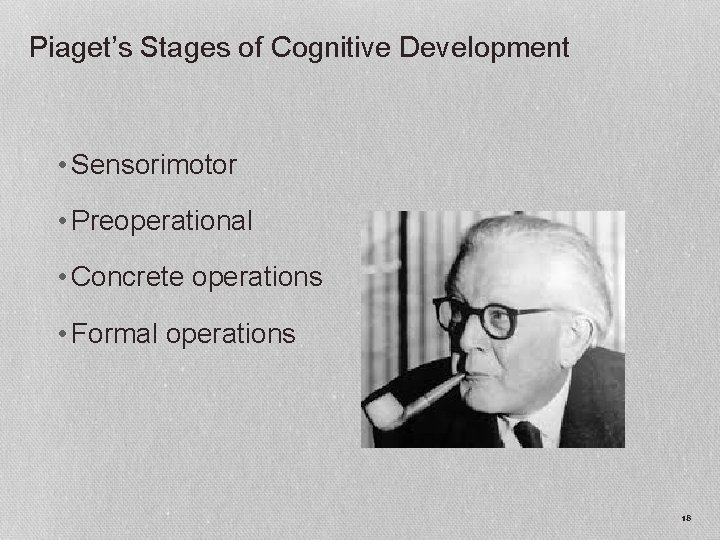
Piaget’s Stages of Cognitive Development • Sensorimotor • Preoperational • Concrete operations • Formal operations 18
Development Theories in Nursing • Developmental model is important part of nursing assessment • Helps determine what types of interventions are most likely to be effective Copyright © 2018, Elsevier Inc. All rights reserved. 19
INTERPERSONAL THEORY 20
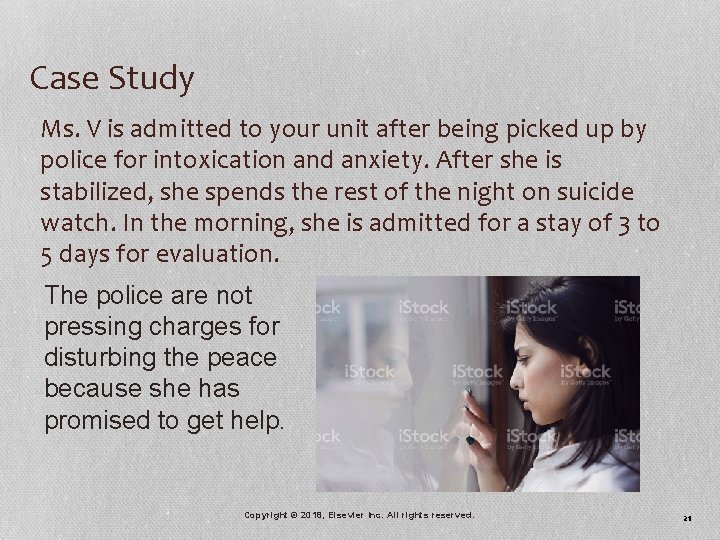
Case Study Ms. V is admitted to your unit after being picked up by police for intoxication and anxiety. After she is stabilized, she spends the rest of the night on suicide watch. In the morning, she is admitted for a stay of 3 to 5 days for evaluation. The police are not pressing charges for disturbing the peace because she has promised to get help. Copyright © 2018, Elsevier Inc. All rights reserved. 21
Sullivan’s Interpersonal Theory • Purpose of all behavior is to get needs met through interpersonal interactions and decrease or avoid anxiety • Personality can be observed within interpersonal relationships • Anxiety - painful feeling or emotion that arises from social insecurity or prevents biological needs from being satisfied • Security operations (observable vs. intrapsychic process) • Act to reduce anxiety and increase security • Self-system - all of the security operations an individual uses to defend against anxiety and ensure self-esteem 22
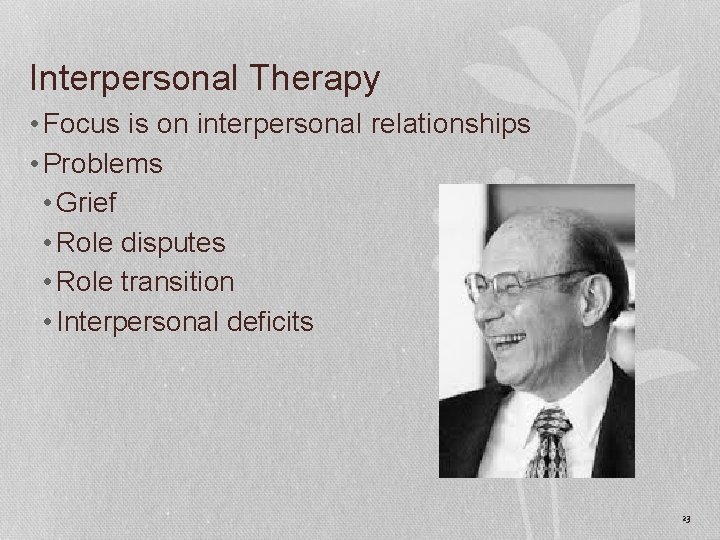
Interpersonal Therapy • Focus is on interpersonal relationships • Problems • Grief • Role disputes • Role transition • Interpersonal deficits 23
Interpersonal Therapy Interpersonal therapy is most effective in treating: Grief and loss Interpersonal disputes Role transition Copyright © 2018, Elsevier Inc. All rights reserved. 24
Case Study Ms. V reveals that she began drinking heavily over the last couple of weeks when her boyfriend tried to break up with her. During her stay she receives medication for depression and begins having sessions of interpersonal therapy. Copyright © 2018, Elsevier Inc. All rights reserved. 25
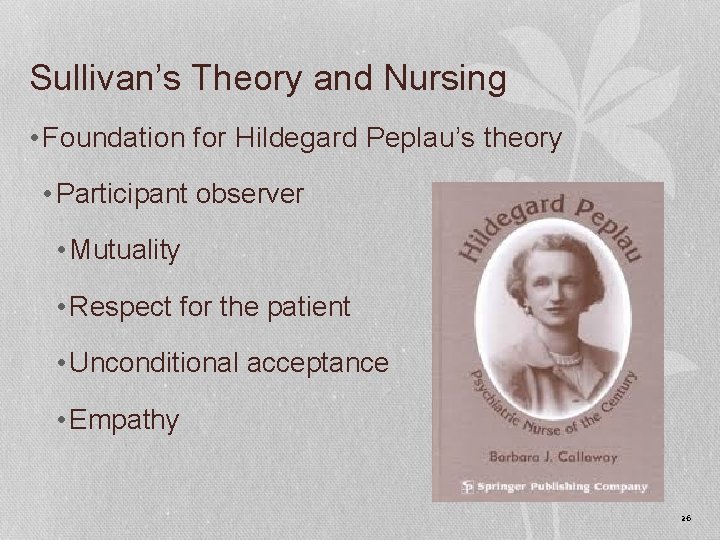
Sullivan’s Theory and Nursing • Foundation for Hildegard Peplau’s theory • Participant observer • Mutuality • Respect for the patient • Unconditional acceptance • Empathy 26
NURSING THEORIES 27
Hildegard Peplau’s Theory of Interpersonal Relationships in Nursing (1952) • Major paradigm shift in nursing • The art of nursing • Provide care, compassion, and advocacy • Enhance comfort and well-being • Focus is on the patient • The science of nursing • Application of knowledge • Nursing is investigative and uses theory • To understand a broad range of human problems and psychosocial phenomena • To intervene in relieving patient’s suffering and promote growth 28
Peplau and the Therapeutic Relationship • Levels of anxiety • Communication • Aim to improve patient’s ability to think and function • Personal growth 29
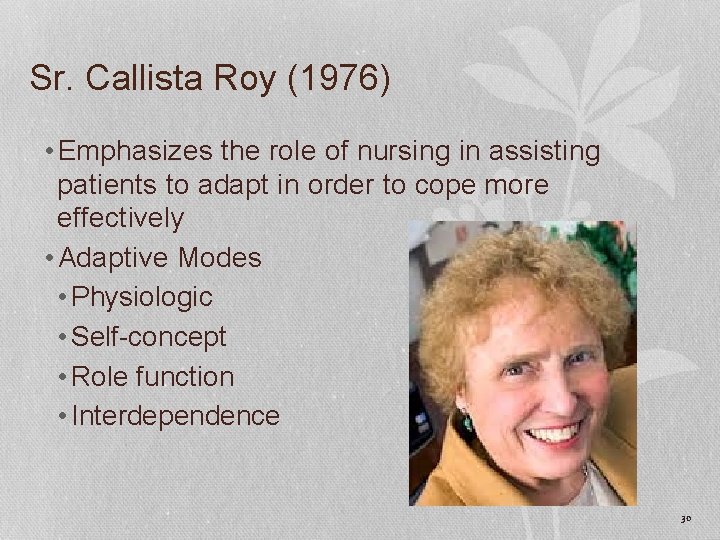
Sr. Callista Roy (1976) • Emphasizes the role of nursing in assisting patients to adapt in order to cope more effectively • Adaptive Modes • Physiologic • Self-concept • Role function • Interdependence 30
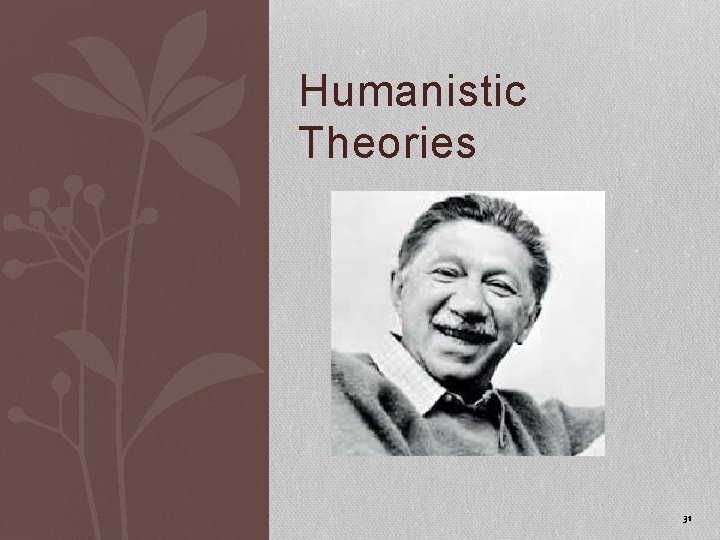
Humanistic Theories 31
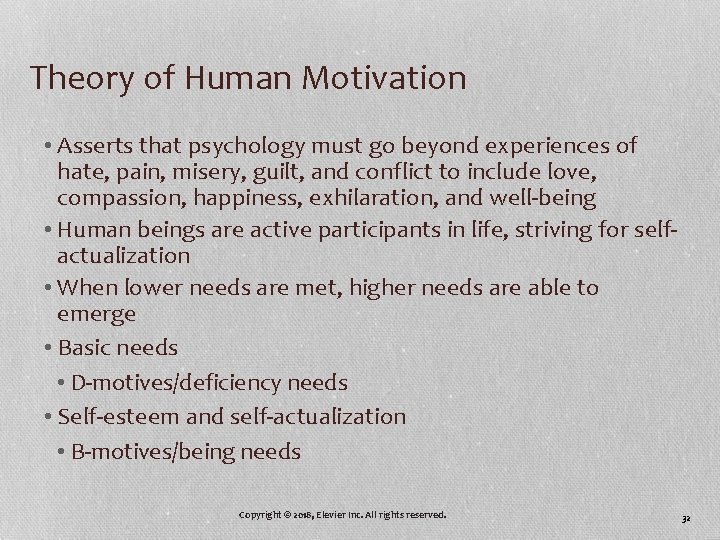
Theory of Human Motivation • Asserts that psychology must go beyond experiences of hate, pain, misery, guilt, and conflict to include love, compassion, happiness, exhilaration, and well-being • Human beings are active participants in life, striving for selfactualization • When lower needs are met, higher needs are able to emerge • Basic needs • D-motives/deficiency needs • Self-esteem and self-actualization • B-motives/being needs Copyright © 2018, Elevier Inc. All rights reserved. 32
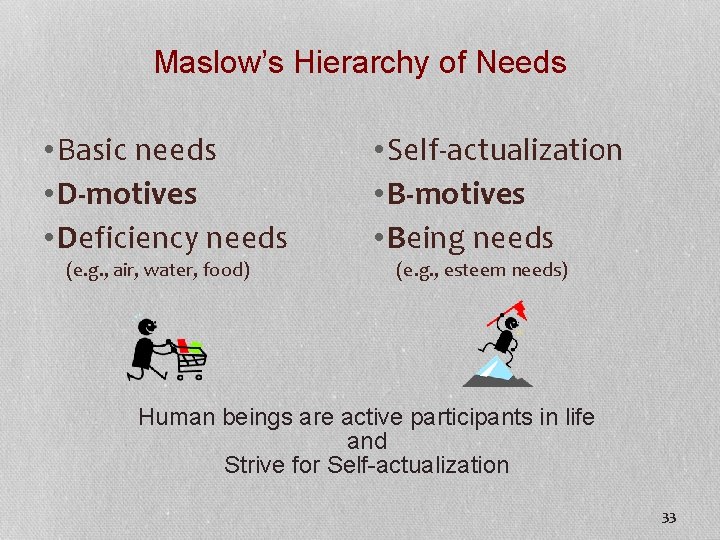
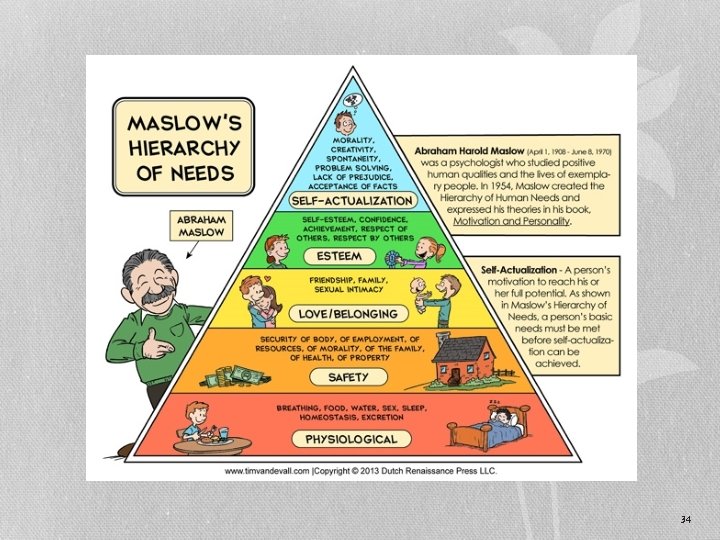
Maslow’s Hierarchy of Needs • Basic needs • D-motives • Deficiency needs (e. g. , air, water, food) • Self-actualization • B-motives • Being needs (e. g. , esteem needs) Human beings are active participants in life and Strive for Self-actualization 33
34
Maslow’s Theory and Nursing • Emphasis on human potential and the patient’s strengths • Needs are fulfilled by and through other humans • A person does the best he/she can at the time • Prioritizing nursing actions in the nurse-patient relationship 35
BEHAVIORAL THEORIES AND THERAPIES 36
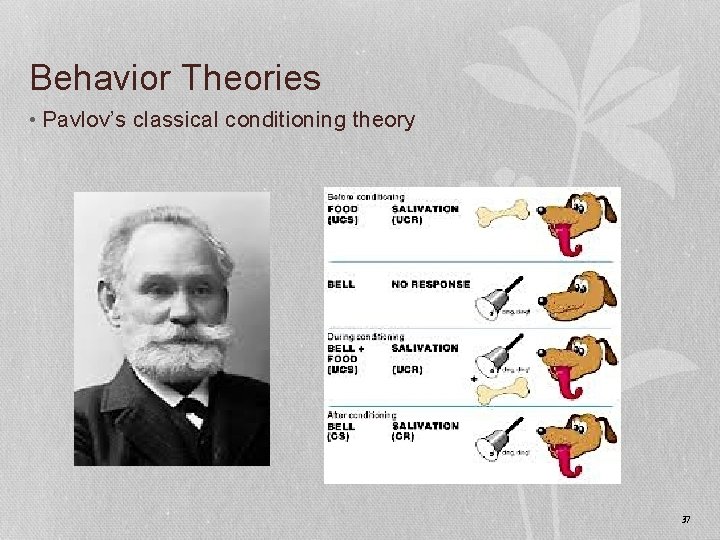
Behavior Theories • Pavlov’s classical conditioning theory 37
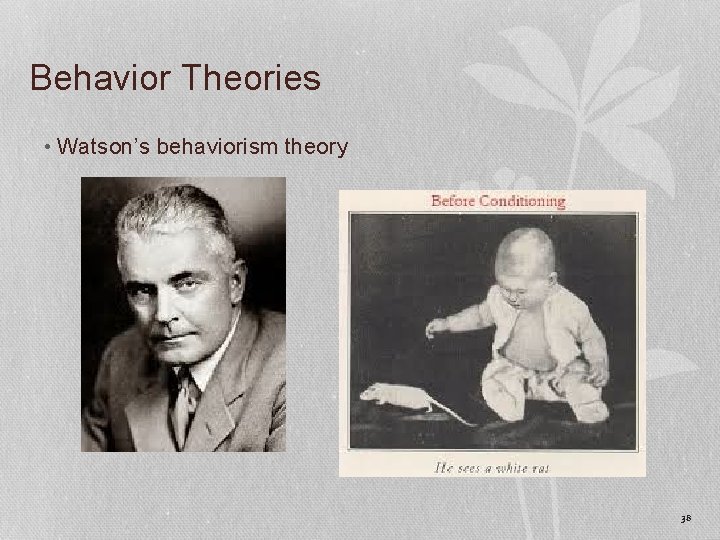
Behavior Theories • Watson’s behaviorism theory 38
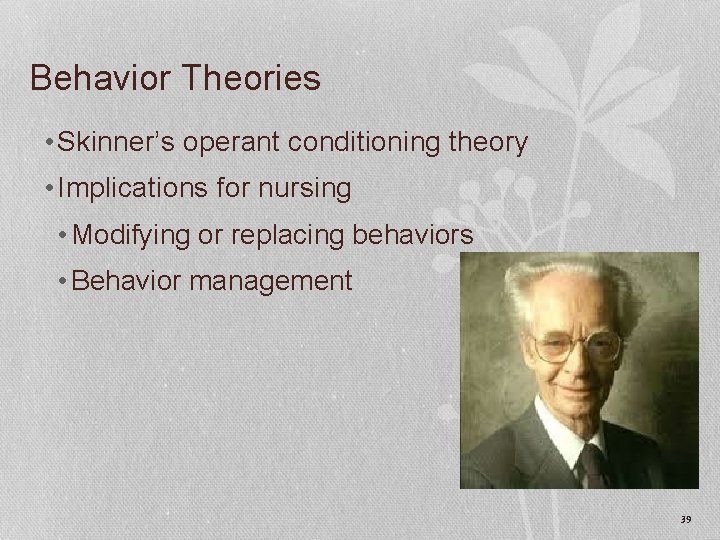
Behavior Theories • Skinner’s operant conditioning theory • Implications for nursing • Modifying or replacing behaviors • Behavior management 39
Behavior Therapy • Modeling • Operant conditioning • Systematic desensitization • Aversion therapy • Biofeedback 40
COGNITIVE THEORIES AND THERAPIES 41
Cognitive Theory • Dynamic interplay between individuals and the environment • Thoughts come before feelings and actions • Thoughts about the world and our place in it are based on our own unique perspectives, which may or may not be based on reality. 42
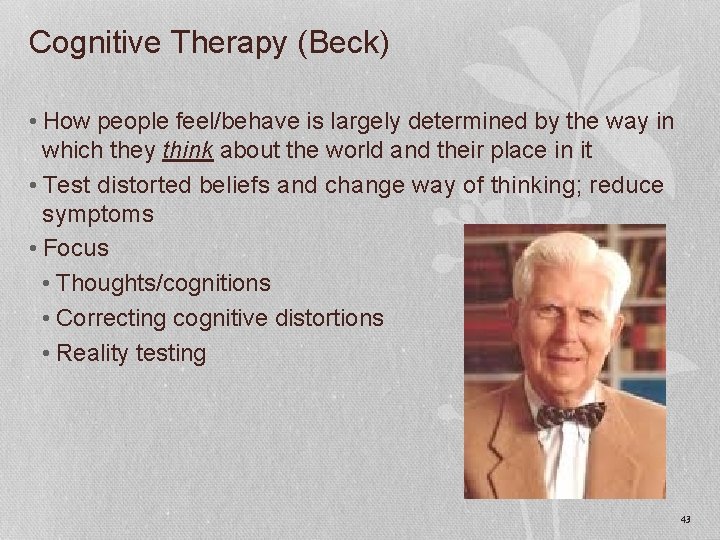
Cognitive Therapy (Beck) • How people feel/behave is largely determined by the way in which they think about the world and their place in it • Test distorted beliefs and change way of thinking; reduce symptoms • Focus • Thoughts/cognitions • Correcting cognitive distortions • Reality testing 43
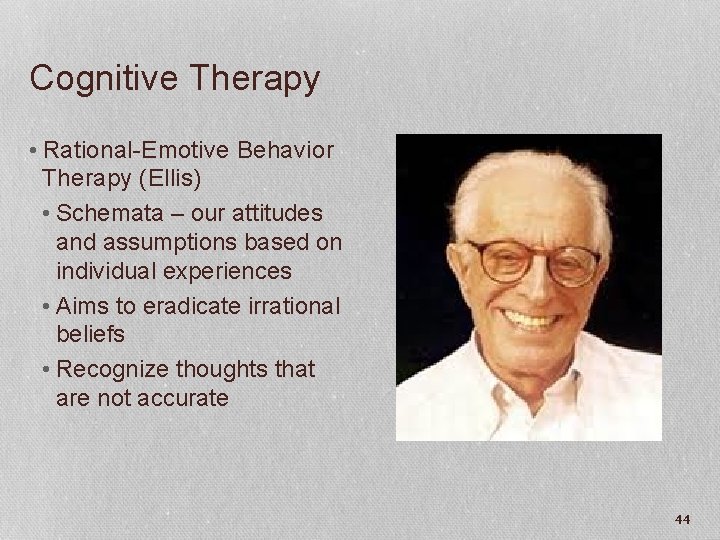
Cognitive Therapy • Rational-Emotive Behavior Therapy (Ellis) • Schemata – our attitudes and assumptions based on individual experiences • Aims to eradicate irrational beliefs • Recognize thoughts that are not accurate 44
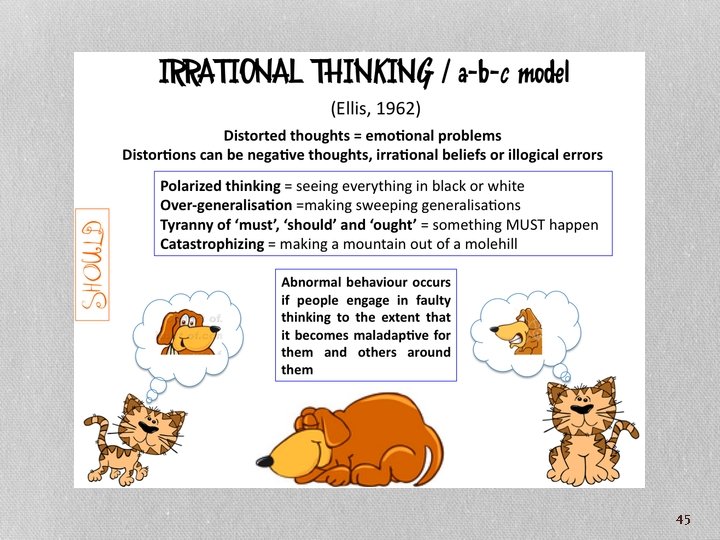
45
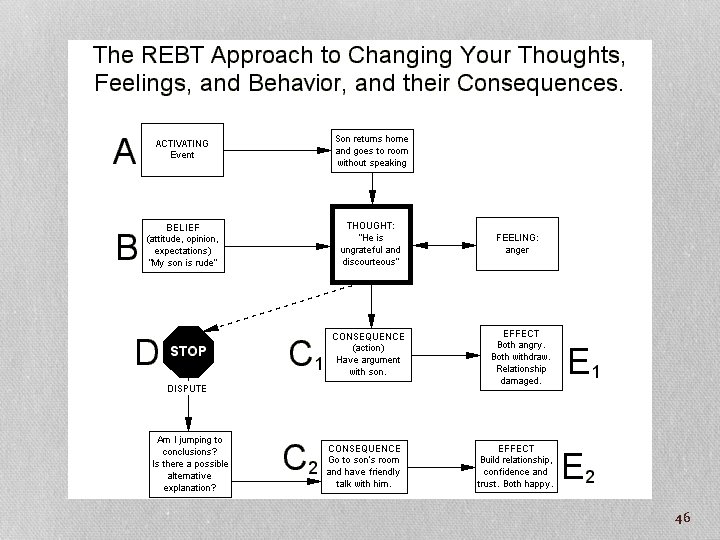
Rational-Emotive Behavioral Therapy 46
BIOLOGICAL THEORIES AND THERAPIES Copyright © 2018, Elsevier Inc. All rights reserved. 47
The Biologic Model • Focus on: • Neurologic • Chemical • Biological • Genetic • How does the body and brain interact to create the following? • Emotions • Memories • Perceptual experiences 48
Biological Theories and Nursing • Consider other influences that play a role in the development and treatment of mental disorders • Social, environmental, cultural, economic • Focus on • Qualities of a therapeutic relationship • Understanding patient’s perspective • Communicating to facilitate recovery • Application of newest biologic research in nursing practice 49
More Biological Therapies • Psychopharmacology therapy • Use of medication to treat psychiatric illness • Brain stimulation therapies • • Electroconvulsive therapy (ECT) Transcranial magnetic stimulation—repetitive (trams) Vegus nerve stimulation (VNS) Deep brain stimulation (DBS) Copyright © 2018, Elsevier Inc. All rights reserved. 50
Milieu Therapy • Use of total environment • People, setting, structure, and emotional climate are all important to healing 51
Newer Therapies • Mindfulness-Based Cognitive Therapy (MBCT) • Elements of CBT • Plus mindfulness-based stress reduction • Goal is to train the brain to accept and observe cognitions without judgment • Dialectical Behavioral Therapy (DBT) • Evidence-based to decrease suicidal and self-injurious behaviors in borderline personality disorder • Eye Movement Desensitization and Reprocessing Therapy (EMDR) • Used to treat post traumatic stress disorder 52
Apps • Study Findings – • Gay, K. , Torous, J. , Pandya, A. Duckworth, K. (2016) Digital technology use among individuals with schizophrenia: Results of an online survey. Journal of Medical Internet Research 3 (2), e 15. doi: 10. 2196/mental. 5379. • Examples: • NAMI AIR • Belly. Bio • My 3 • e. CBT Calm 53
Audience Response Questions Which theorist most influenced the professional practice of psychiatric nursing? A. B. C. D. Harry Stack Sullivan Hildegard Peplau Erikson Ivan Pavlov Copyright © 2018, Elsevier Inc. All rights reserved. 54
Audience Response Questions Schemata, automatic thoughts, and cognitive distortions are terms that relate to A. B. C. D. rational-emotive behavioral therapy. cognitive-behavioral therapy. operant conditioning theory. biofeedback. Copyright © 2018, Elsevier Inc. All rights reserved. 55