
Chapter 2 The world of science Lesson 1

- Slides: 12
Chapter 2 The world of science
Lesson 1: Scientific Explanations n n n Definition: Describes how something works or why something happens Researching information, designing experiments, and making models are used to form scientific explanations Words to look for in explanations are because, due to, as a result of, etc.
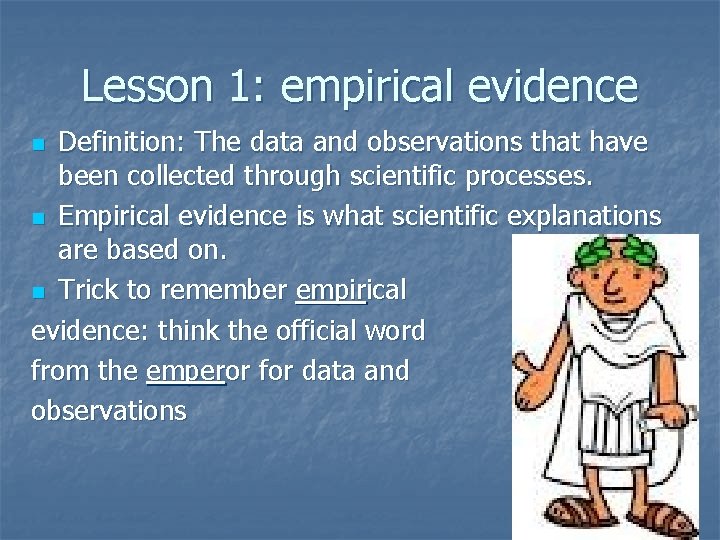
Lesson 1: empirical evidence Definition: The data and observations that have been collected through scientific processes. n Empirical evidence is what scientific explanations are based on. n Trick to remember empirical evidence: think the official word from the emperor for data and observations n
Lesson 1: Opinion n n Definition: What happens when different scientists reach different conclusions from the same evidence. An idea that is formed from evidence but has not need confirmed by evidence. Your personal belief of what has occurred or what can be the cause of something. Similar to subjective reasoning
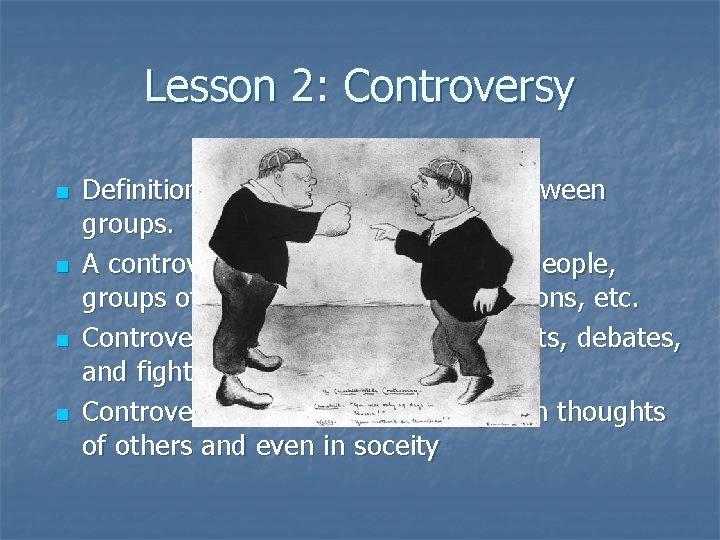
Lesson 2: Controversy n n Definition: A public disagreement between groups. A controversy can happen between people, groups of people, nations, organizations, etc. Controversy can start great arguments, debates, and fights. Controversy often leads to changes in thoughts of others and even in soceity
Lesson 3 n Scientific knowledge changes as a result of new evidence or new interpretations of existing evidence.
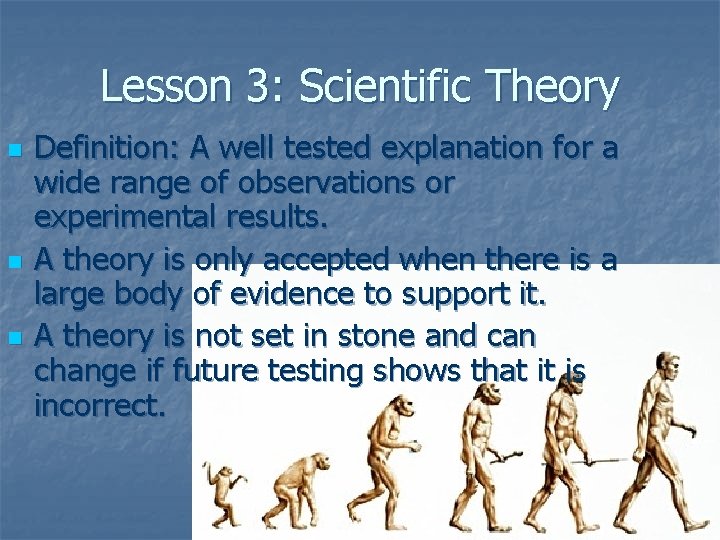
Lesson 3: Scientific Theory n n n Definition: A well tested explanation for a wide range of observations or experimental results. A theory is only accepted when there is a large body of evidence to support it. A theory is not set in stone and can change if future testing shows that it is incorrect.
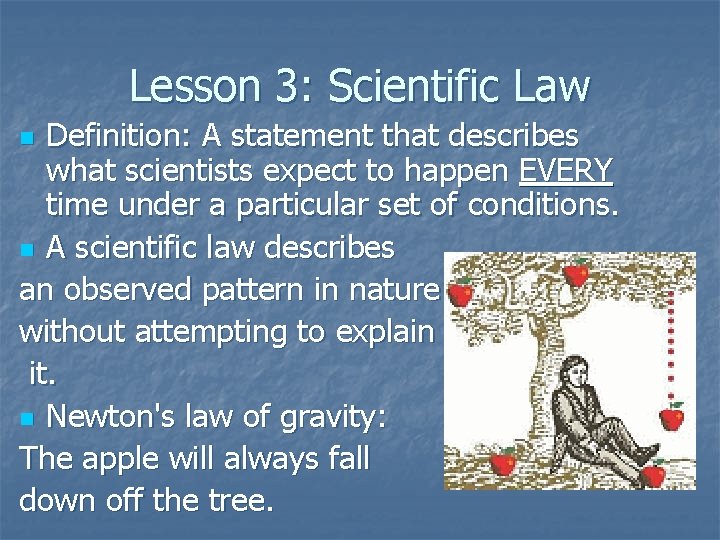
Lesson 3: Scientific Law Definition: A statement that describes what scientists expect to happen EVERY time under a particular set of conditions. n A scientific law describes an observed pattern in nature without attempting to explain it. n Newton's law of gravity: The apple will always fall down off the tree. n
Lesson 4: Model n n n Any representation of an object or process. Models make difficult things easier to understand see how they work Examples of models are pictures, diagrams, computer programs, mathematical equations etc…
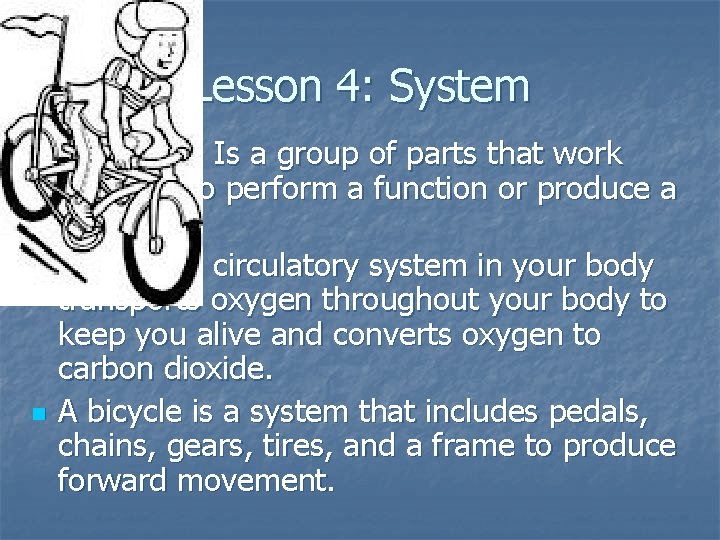
Lesson 4: System n n n Definition: Is a group of parts that work together to perform a function or produce a result. Examples: circulatory system in your body transports oxygen throughout your body to keep you alive and converts oxygen to carbon dioxide. A bicycle is a system that includes pedals, chains, gears, tires, and a frame to produce forward movement.
Lesson 6: Input/ Output n n n Input: the material or energy that goes into a system. Output: the material or energy that comes out of a system Examples from before: Circulatory system: input-> oxygen output-> Carbon dioxide n Bicycle: input-> mechanical work (pedaling) output-> movement forward n
Lesson 4: process/ feedback n n Process: What happens in a system Feedback: is output that changes the system in some way. Example: the process of a circulatory system is that oxygen is being transported and converted to carbon dioxide. The feedback is rate of breathing, higher when exercising and you need more oxygen lower when you are resting and need less.