
Chapter 2 The Physical Layer 2010 1 BandwidthLimited
Chapter 2 The Physical Layer 2010 1
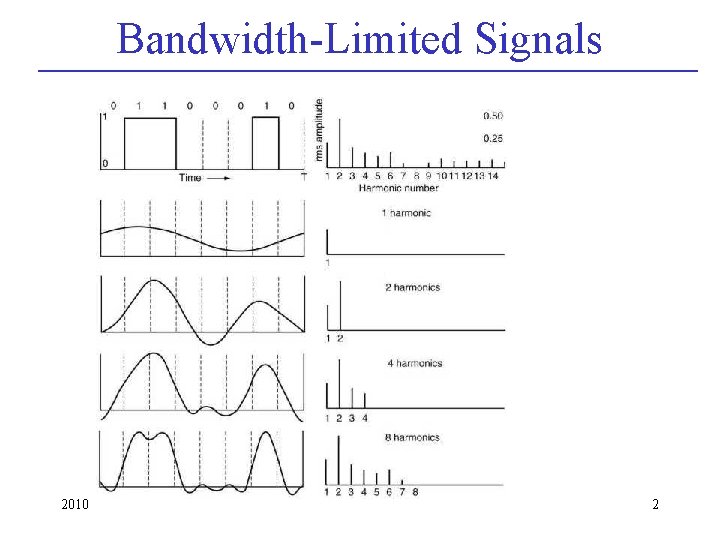
Bandwidth-Limited Signals 2010 2
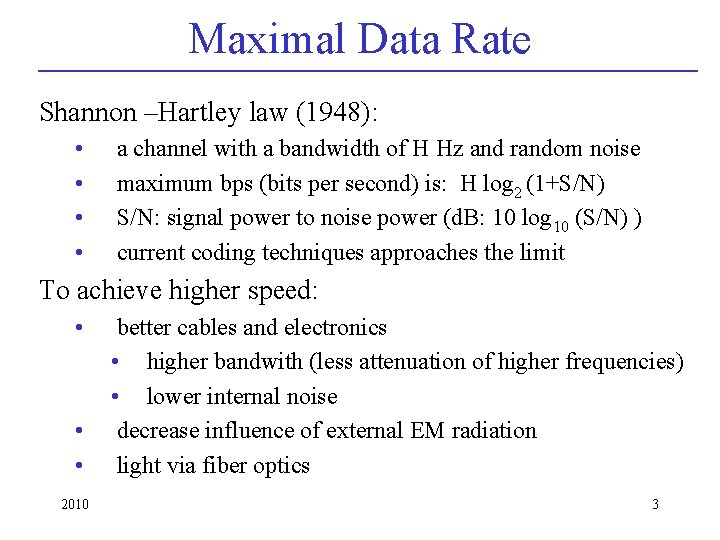
Maximal Data Rate Shannon –Hartley law (1948): • • a channel with a bandwidth of H Hz and random noise maximum bps (bits per second) is: H log 2 (1+S/N) S/N: signal power to noise power (d. B: 10 log 10 (S/N) ) current coding techniques approaches the limit To achieve higher speed: • • • 2010 better cables and electronics • higher bandwith (less attenuation of higher frequencies) • lower internal noise decrease influence of external EM radiation light via fiber optics 3
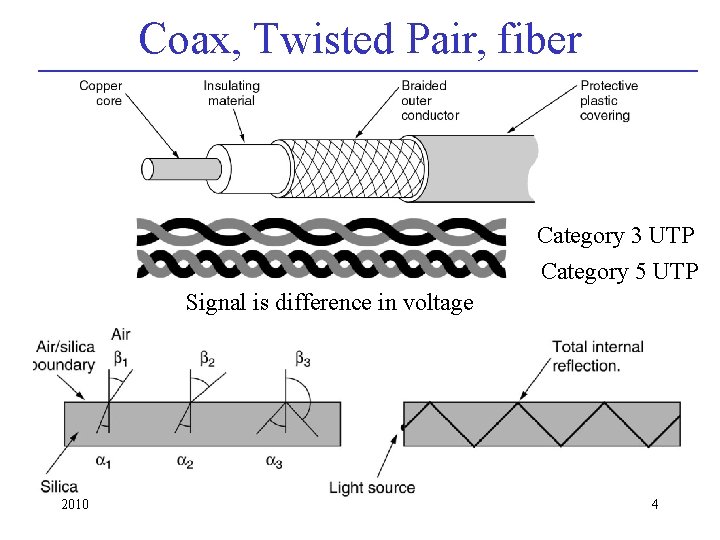
Coax, Twisted Pair, fiber Category 3 UTP Category 5 UTP Signal is difference in voltage 2010 4
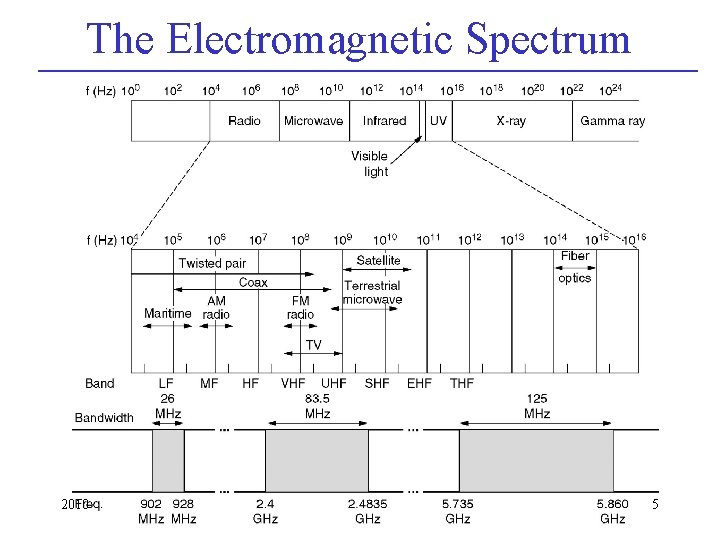
The Electromagnetic Spectrum 2010 5

The Telephone Local Loop: Modems The use of both analog and digital transmissions for a computer to computer call. Conversion is done by the modems and codecs. 2010 6
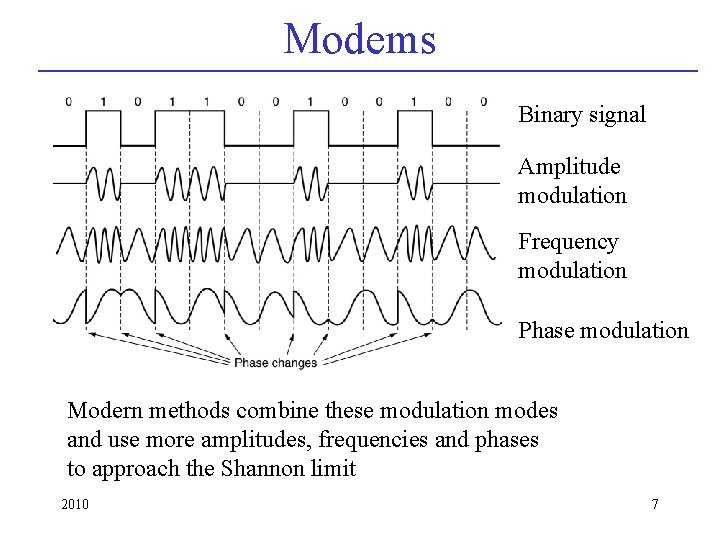
Modems Binary signal Amplitude modulation Frequency modulation Phase modulation Modern methods combine these modulation modes and use more amplitudes, frequencies and phases to approach the Shannon limit 2010 7
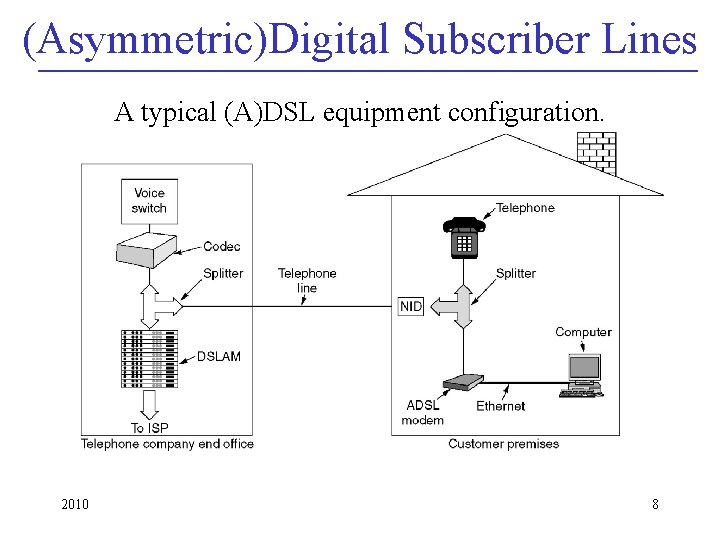
(Asymmetric)Digital Subscriber Lines A typical (A)DSL equipment configuration. 2010 8
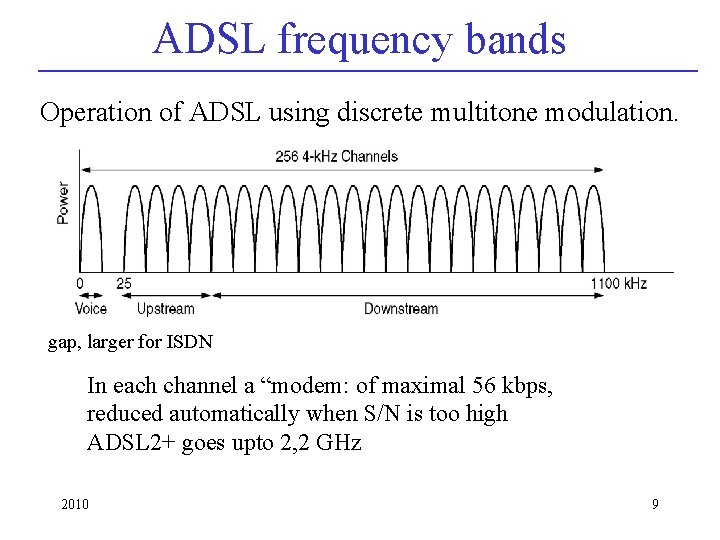
ADSL frequency bands Operation of ADSL using discrete multitone modulation. gap, larger for ISDN In each channel a “modem: of maximal 56 kbps, reduced automatically when S/N is too high ADSL 2+ goes upto 2, 2 GHz 2010 9
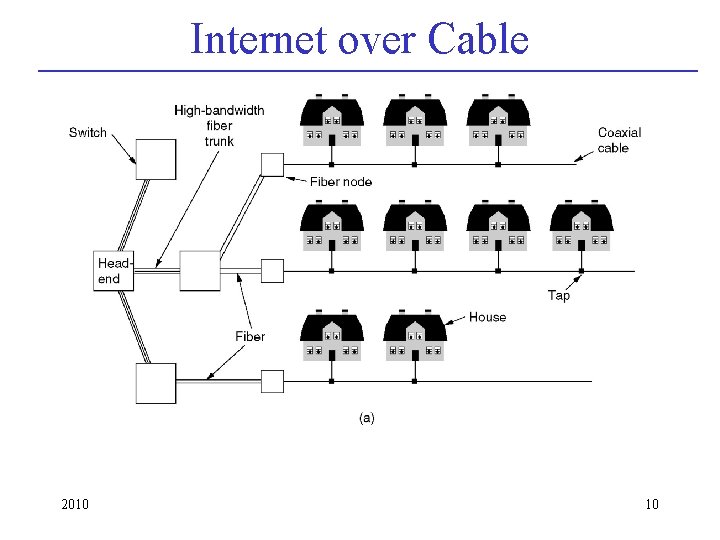
Internet over Cable 2010 10
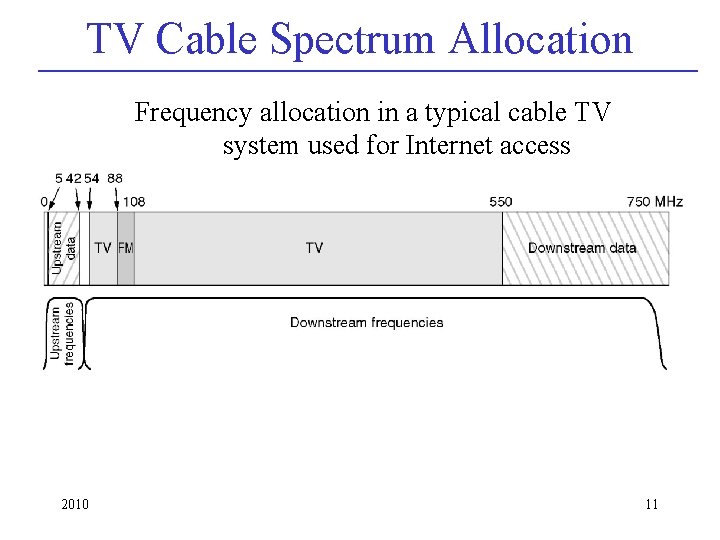
TV Cable Spectrum Allocation Frequency allocation in a typical cable TV system used for Internet access 2010 11
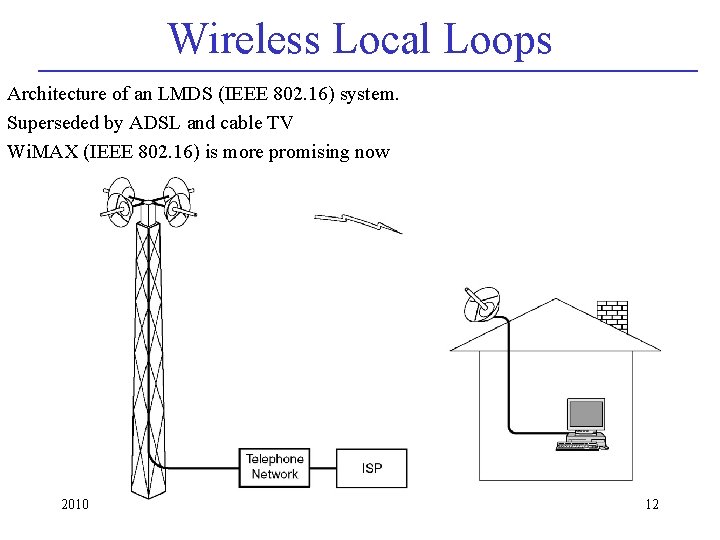
Wireless Local Loops Architecture of an LMDS (IEEE 802. 16) system. Superseded by ADSL and cable TV Wi. MAX (IEEE 802. 16) is more promising now 2010 12
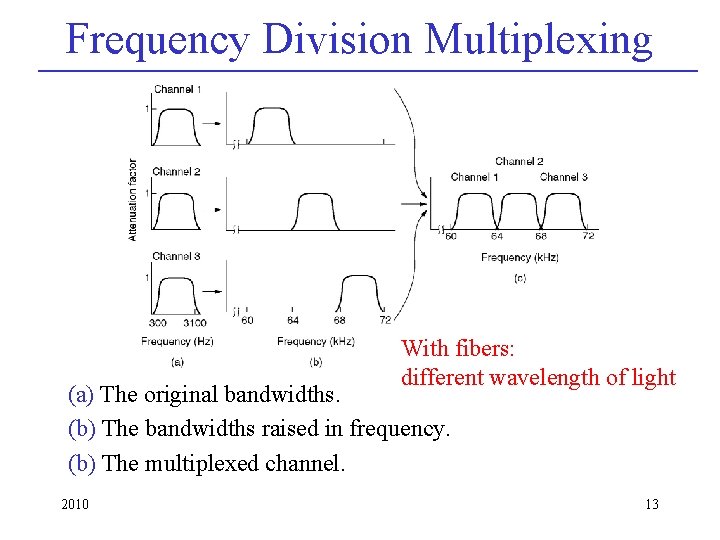
Frequency Division Multiplexing With fibers: different wavelength of light (a) The original bandwidths. (b) The bandwidths raised in frequency. (b) The multiplexed channel. 2010 13
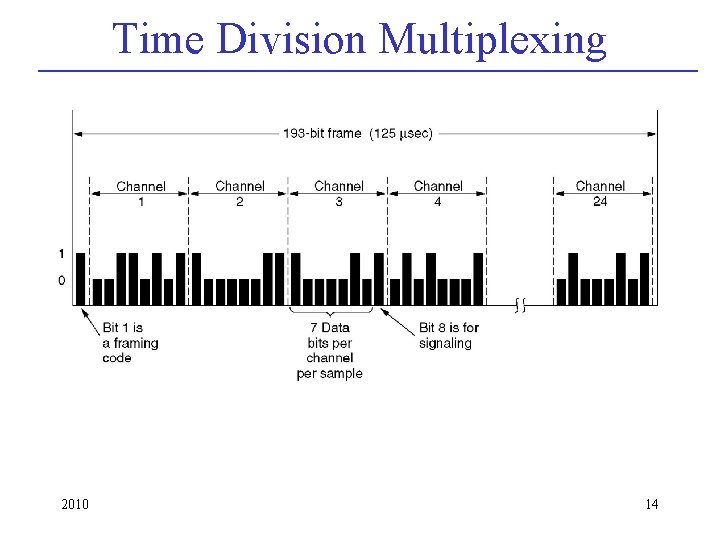
Time Division Multiplexing 2010 14
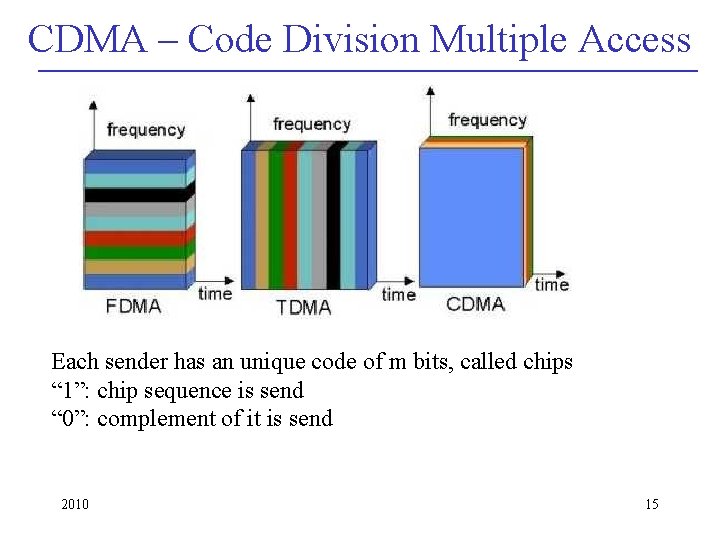
CDMA – Code Division Multiple Access Each sender has an unique code of m bits, called chips “ 1”: chip sequence is send “ 0”: complement of it is send 2010 15
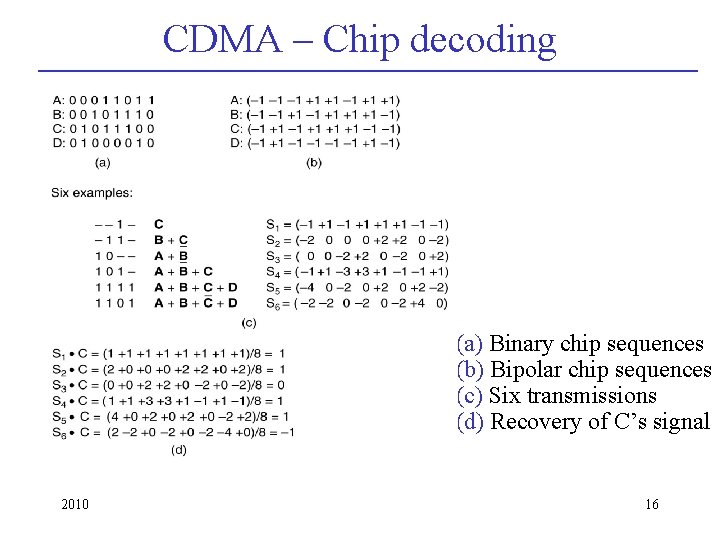
CDMA – Chip decoding (a) Binary chip sequences (b) Bipolar chip sequences (c) Six transmissions (d) Recovery of C’s signal 2010 16
The Mobile Telephone System • • 2010 First-Generation Mobile Phones: Analog Voice Second-Generation Mobile Phones: Digital Voice (GSM) Third-Generation Mobile Phones: Digital Voice and Data (UMTS) Fourth-Generation: based on LTE ? 17
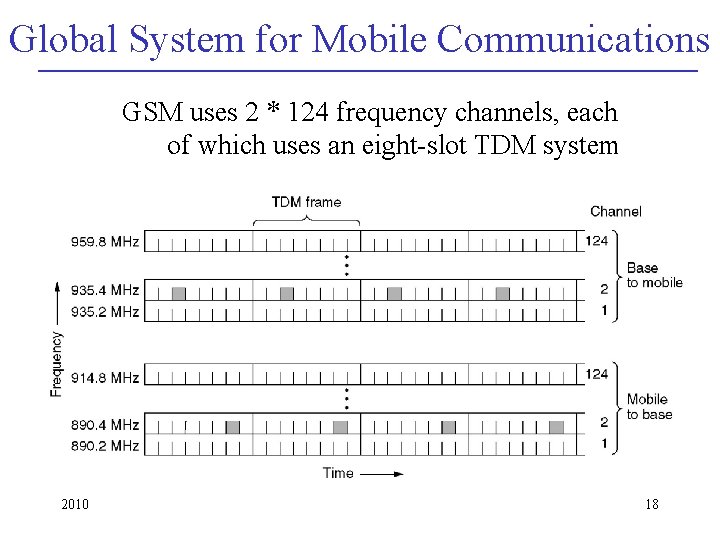
Global System for Mobile Communications GSM uses 2 * 124 frequency channels, each of which uses an eight-slot TDM system 2010 18
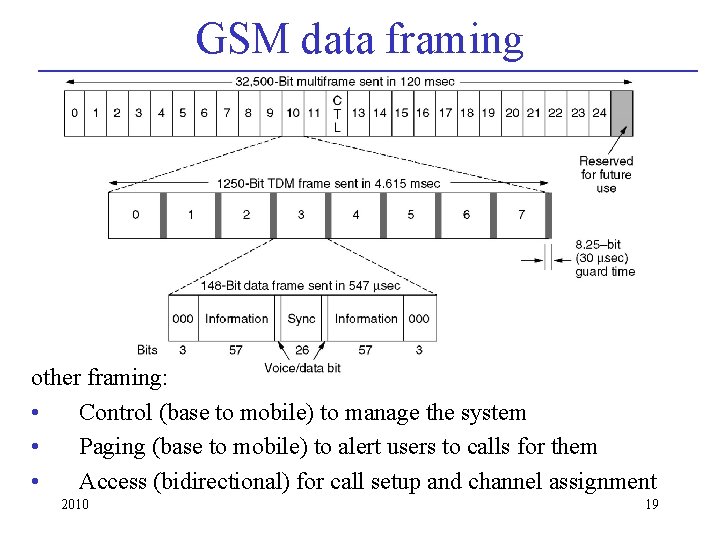
GSM data framing other framing: • Control (base to mobile) to manage the system • Paging (base to mobile) to alert users to calls for them • Access (bidirectional) for call setup and channel assignment 2010 19
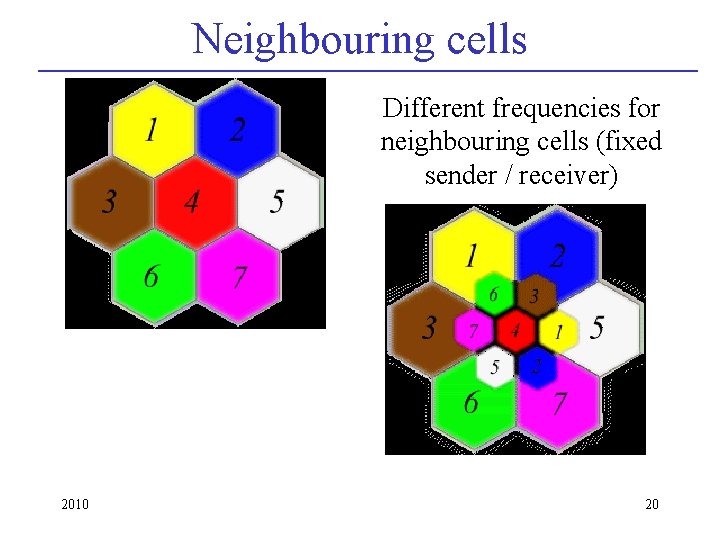
Neighbouring cells Different frequencies for neighbouring cells (fixed sender / receiver) 2010 20
Energy, environment Prediction over 4 year: • 1/3 of IT budget goes to energy bills • 2/3 of that for cooling How to dispose of 512 million old PC’s 2010 21
- Slides: 21