
Chapter 2 The Anatomy of the Brain The
Chapter 2 The Anatomy of the Brain The Systems, Structures, and Cells that Make Up Your Nervous System This multimedia product and its contents are protected under copyright law. The following are prohibited by law: • any public performance or display, including transmission of any image over a network; • preparation of any derivative work, including the extraction, in whole or in part, of any images; • any rental, lease, or lending of the program. Copyright © 2007 by Allyn and Bacon
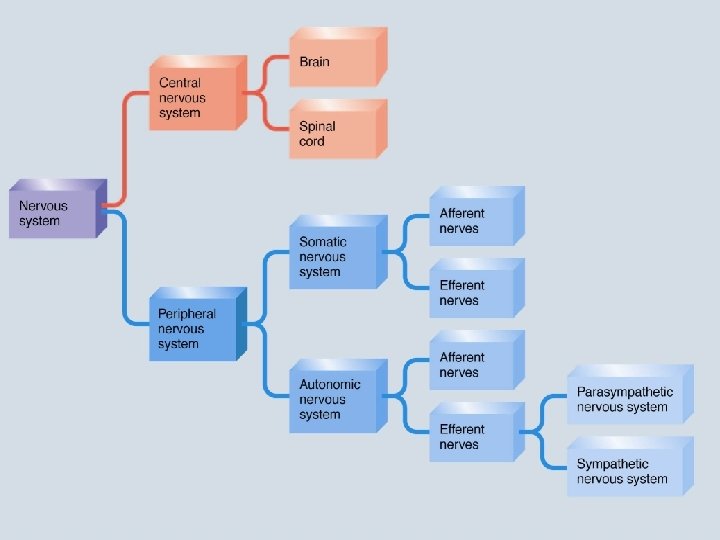
General Layout of the Nervous System n Central Nervous System (CNS) ¨ Brain (in the skull) ¨ Spinal Cord (in the spine) n Peripheral Nervous System (PNS) ¨ Located outside of the skull and spine ¨ Serves to bring information into the CNS and carry signals out of the CNS Copyright © 2007 by Allyn and Bacon
General Layout of the Nervous System n PNS – 2 divisions ¨ Somatic § § Nervous System Afferent nerves (sensory) Efferent nerves (motor) ¨ Autonomic § Nervous System Sympathetic and parasympathetic nerves Copyright © 2007 by Allyn and Bacon
Autonomic Nervous System Sympathetic n “fight or flight” n Second stage neurons are far from the target organ n Parasympathetic n “rest and restore” n Second stage neurons are near the target organ n Copyright © 2007 by Allyn and Bacon
Copyright © 2007 by Allyn and Bacon
Meninges, Ventricles, and CSF n CNS - encased in bone and covered by three meninges ¨ Dura mater - tough outer membrane - weblike ¨ Pia mater - sticks to CNS surface ¨ Arachnoid n Cerebrospinal fluid (CSF) ¨ Fluid serves as cushion Copyright © 2007 by Allyn and Bacon
Protecting the Brain n Chemical protection ¨ The blood-brain barrier – tightly-packed cells of blood vessel (endothelial cells) walls prevent entry of many molecules n Physical protection ¨ Skull ¨ Meninges ¨ Cerebrospinal fluid (CSF) Copyright © 2007 by Allyn and Bacon
Cells of the Nervous System Generally two types n Neurons – specialized for reception, conduction, and transmission n Glial cells – Support cells; outnumber neurons by 10 to 1. n Copyright © 2007 by Allyn and Bacon
Anatomy of Neurons n Neurons – structural classes Multipolar ¨ Unipolar ¨ Bipolar ¨ Interneurons ¨ Copyright © 2007 by Allyn and Bacon
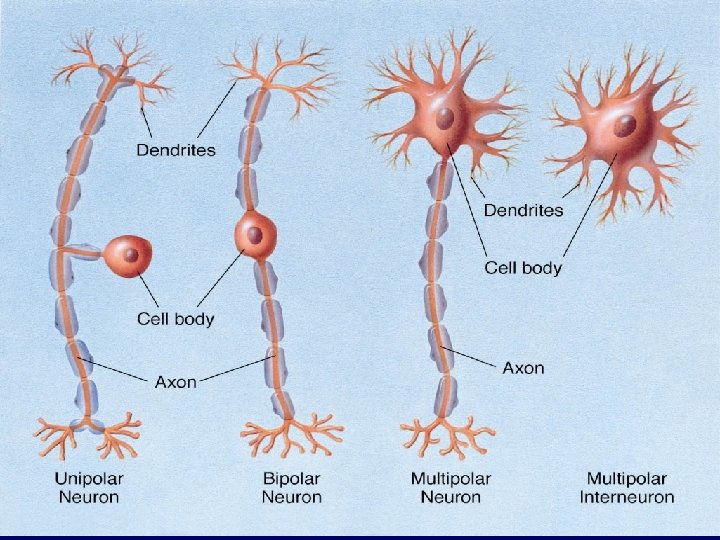
Copyright © 2007 by Allyn and Bacon
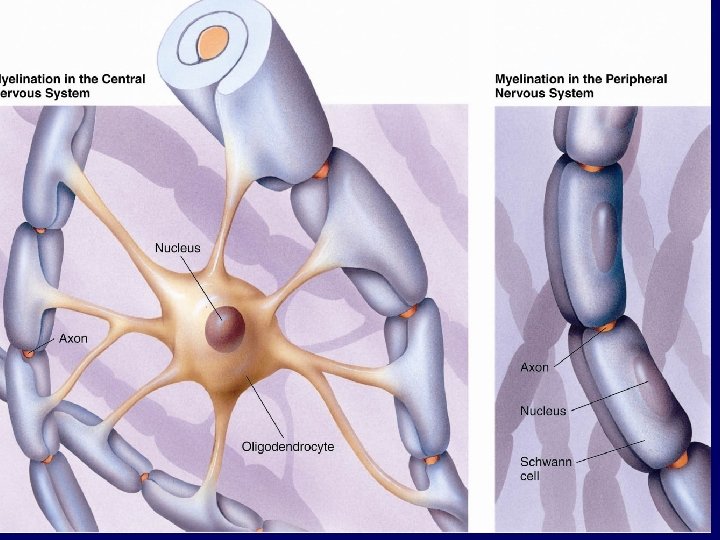
Anatomy of Neurons n Nuclei – clusters of cell bodies in the CNS n Ganglia – clusters of cell bodies in the PNS n Tracts – bundles of axons in the CNS n Nerves – bundles of axons in the PNS Copyright © 2007 by Allyn and Bacon
Glial Cells: The Forgotten Majority n Myelin producers ¨Oligodendrocytes (CNS) ¨Schwann cells (PNS) n Astrocytes – largest, many functions (composed the blood-brain barrier) n Microglia – smallest, involved in response to injury or disease Copyright © 2007 by Allyn and Bacon
Copyright © 2007 by Allyn and Bacon
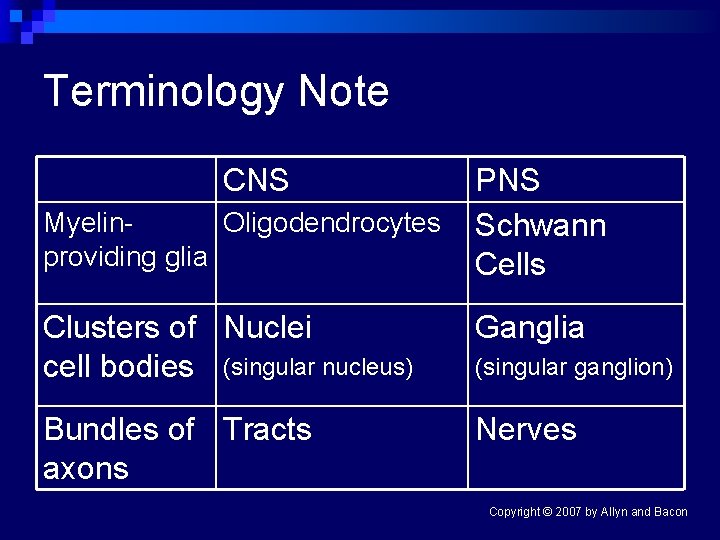
Terminology Note CNS Myelin. Oligodendrocytes providing glia PNS Schwann Cells Clusters of Nuclei cell bodies (singular nucleus) Ganglia Bundles of Tracts axons Nerves (singular ganglion) Copyright © 2007 by Allyn and Bacon
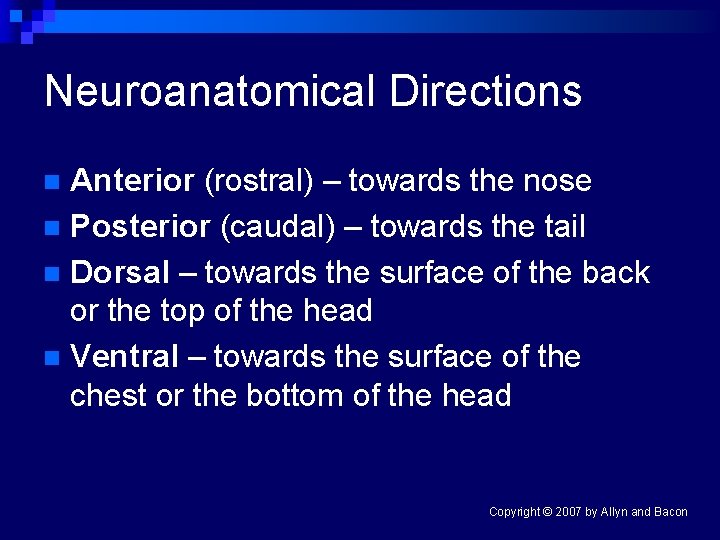
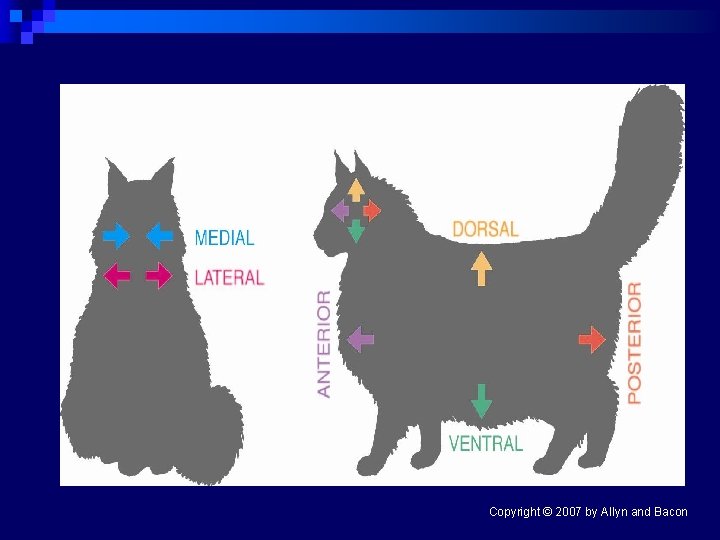
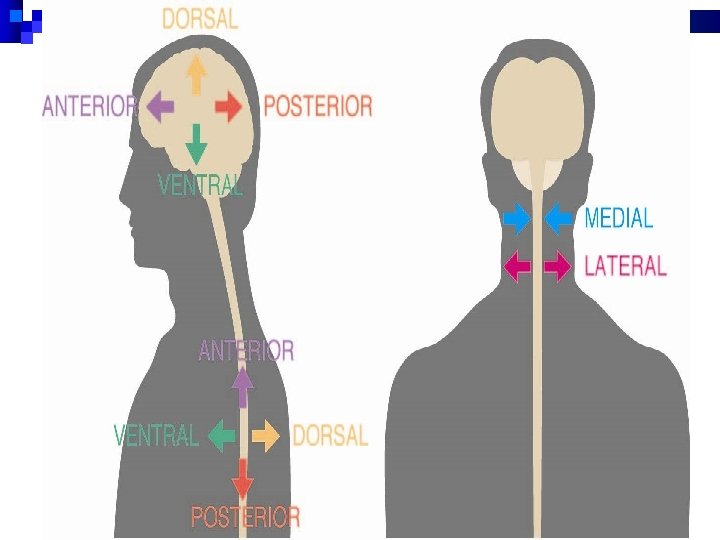
Neuroanatomical Directions Anterior (rostral) – towards the nose n Posterior (caudal) – towards the tail n Dorsal – towards the surface of the back or the top of the head n Ventral – towards the surface of the chest or the bottom of the head n Copyright © 2007 by Allyn and Bacon
Copyright © 2007 by Allyn and Bacon
Copyright © 2007 by Allyn and Bacon
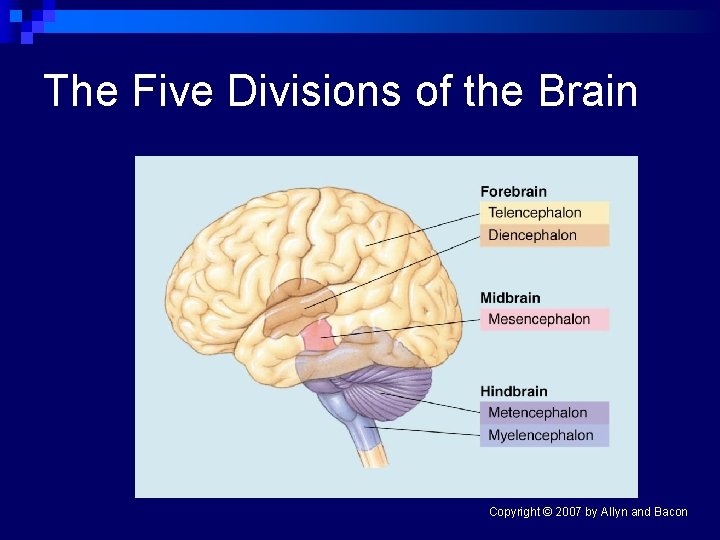
The Five Divisions of the Brain Copyright © 2007 by Allyn and Bacon
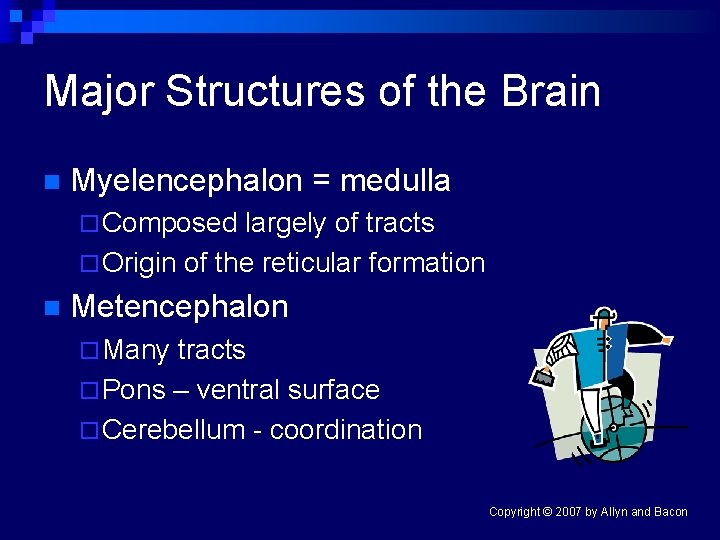
Major Structures of the Brain n Myelencephalon = medulla ¨ Composed largely of tracts ¨ Origin of the reticular formation n Metencephalon ¨ Many tracts ¨ Pons – ventral surface ¨ Cerebellum - coordination Copyright © 2007 by Allyn and Bacon
Major Structures of the Brain n Mesencephalon ¨ Tectum (dorsal surface) Inferior colliculi – audition Superior colliculi - vision ¨ Tegmentum (ventral) – 3 ‘colorful’ structures Periaqueductal gray – analgesia Substantia nigra – sensorimotor Red nucleus– sensorimotor Copyright © 2007 by Allyn and Bacon
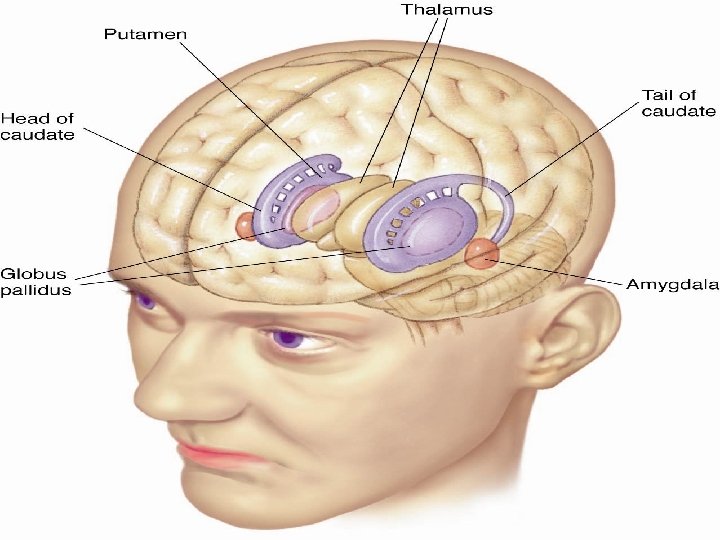
Major Structures of the Brain n Diencephalon ¨ Thalamus – sensory relay nuclei ¨ Hypothalamus § Regulation of motivated behaviors § Controls hormone release by the pituitary n Telencephalon ¨ Cerebral cortex ¨ Limbic system ¨ Basal ganglia Copyright © 2007 by Allyn and Bacon
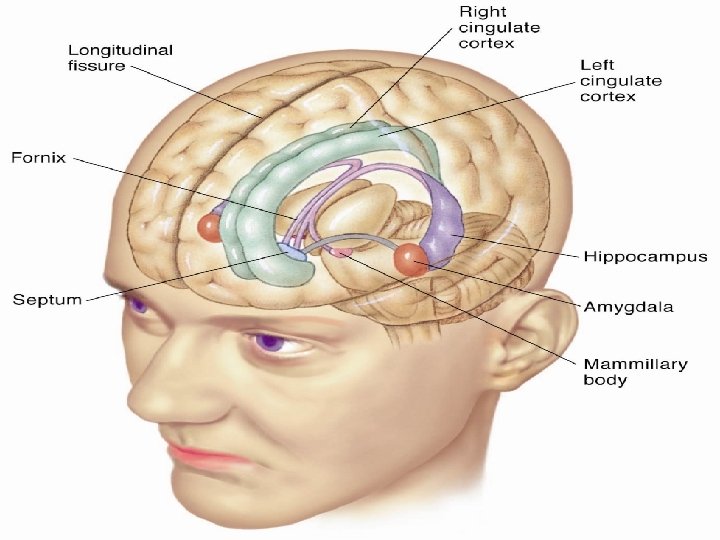
Telencephalon – Cerebral Cortex Convolutions serve to increase surface area. n Longitudinal fissure – a groove that separates right and left hemispheres n Corpus callosum – largest hemisphere-connecting tract n Copyright © 2007 by Allyn and Bacon
Limbic System Regulation of motivated behaviors n “a circuit of midline structures that circle thalamus” n Consists of n ¨ Primitive cortex - hippocampus and cingulated cortex ¨ Subcortical structures - mammillary bodies, amygdala, fornix, septum Copyright © 2007 by Allyn and Bacon
Copyright © 2007 by Allyn and Bacon
Copyright © 2007 by Allyn and Bacon
- Slides: 25