
CHAPTER 2 STRATEGIC PLANNING IN RETAILING Chapter Objectives
CHAPTER 2: STRATEGIC PLANNING IN RETAILING
Chapter Objectives • • To explain what “value” really means and to highlight its pivotal role in retailers’ building and sustaining relationships To describe how both customer relationships and channel relationships may be nurtured in today’s highly competitive marketplace Retail Mgt. 12 e (c) 2013 Pearson Education 2 -2
Chapter Objectives (cont. ) • • • To examine the differences in relationship building between goods and services retailers To discuss the impact of technology on relationships in retailing To consider the interplay between retailers’ ethical performance and relationships in retailing Retail Mgt. 12 e (c) 2013 Pearson Education 2 -3
Definition of Value • • • Value = Results + Process Quality Price + Customer Access Costs Results = Overall quality, instructions, ease of assembly, taste/quality/health, warranty, product testing by retailer Process Quality = Wide aisles, ease of finding, high in-stock position, fun experience, short waiting times Price= Costs + delivery + assembly + credit Customer access costs= warehouse club membership fees, inconvenient location, poor store hours, inadequate parking Retail Mgt. 12 e (c) 2013 Pearson Education 2 -4
What is Value? (cont. ) Channel Perspective • Value is a series of activities and processes (the “value chain”) that provide a certain value for the consumer. Retail Mgt. 12 e (c) 2013 Pearson Education Customer Perspective • Value is a perception that the shopper has of the value chain. • It is the view of all the benefits from a purchase versus the price paid. 2 -5
Retail Value Chain • Represents the total bundle of benefits offered to consumers through a channel of distribution • Store location and parking, retailer ambience, customer service, brands/products carried, product quality, retailer’s in-stock position, shipping, prices, image, and other elements Retail Mgt. 12 e (c) 2013 Pearson Education 2 -6
Potential Pitfalls to Avoid in Planning a Value-Oriented Retail Strategy • • • Planning value solely from a price perspective Providing value-enhanced services that customers do not want or will not pay extra for Competing in the wrong value/price segment Believing augmented elements alone create value Paying lip service to customer service Retail Mgt. 12 e (c) 2013 Pearson Education 2 -7
Figure 2 -2: A Value-Oriented Retailing Checklist • • Is value defined from a consumer perspective? Does the retailer have a clear value/price point? Is the retailer’s value position competitively defensible? Are channel partners capable of value-enhancing services? Does the retailer distinguish between expected and augmented value chain elements? Has the retailer identified potential value chain elements? Is the retailer’s value-oriented approach aimed at a distinct market? Is the retailer’s value-oriented approach consistent? Retail Mgt. 12 e (c) 2013 Pearson Education 2 -8
Figure 2 -2: A Value-Oriented Retailing Checklist (cont. ) • • Is the retailer’s value-oriented approach effectively communicated? Can the target market clearly identify the retailer’s positioning? Does the retailer’s positioning consider sales versus profits? Does the retailer set customer satisfaction goals? Does the retailer measure customer satisfaction levels? Is the retailer careful to avoid the pitfalls in valueoriented retailing? Is the retailer always looking out for new opportunities that will create customer value? Retail Mgt. 12 e (c) 2013 Pearson Education 2 -9
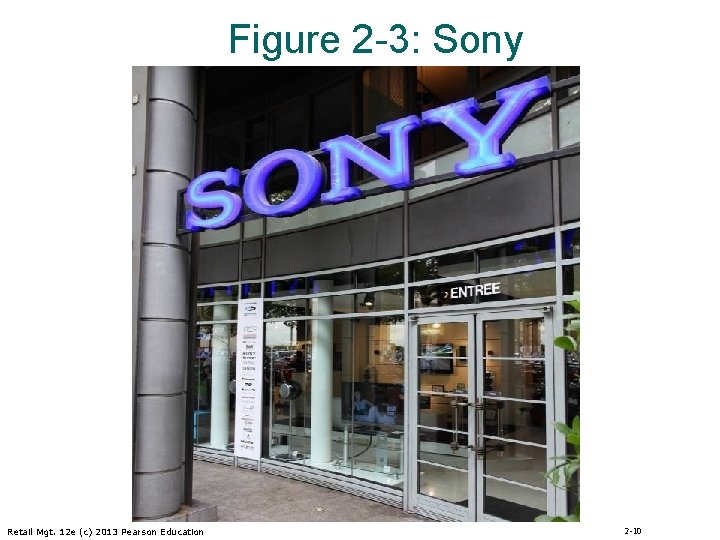
Figure 2 -3: Sony Retail Mgt. 12 e (c) 2013 Pearson Education 2 -10
Customer Service • Expected customer service is the service level that customers want to receive from any retailer such as basic employee courtesy. Retail Mgt. 12 e (c) 2013 Pearson Education • Augmented customer service includes the activities that enhance the shopping experience and give retailers a competitive advantage. 2 -11
Expected Versus Augmented Levels of Customer Service • Expected– Must have elements; do not differentiate retailer. While absence of these expected values provides anguish, presence does not provide satisfaction • Augmented—Services that can provide a competitive advantage. Double warranty, special delivery, product demonstrations Retail Mgt. 12 e (c) 2013 Pearson Education 2 -12
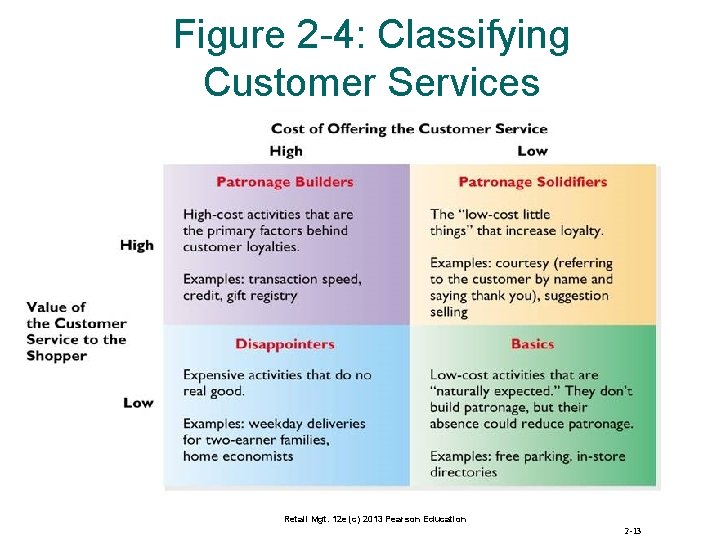
Figure 2 -4: Classifying Customer Services Retail Mgt. 12 e (c) 2013 Pearson Education 2 -13
Fundamental Decisions • • • What customer services are expected and what customer services are augmented for a particular retailer? What level of customer service is proper to complement a firm’s image? Should there be a choice of customer services? Should customer services be free? How can a retailer measure the benefits of providing customer services against their costs? How can customer services be terminated? Retail Mgt. 12 e (c) 2013 Pearson Education 2 -14
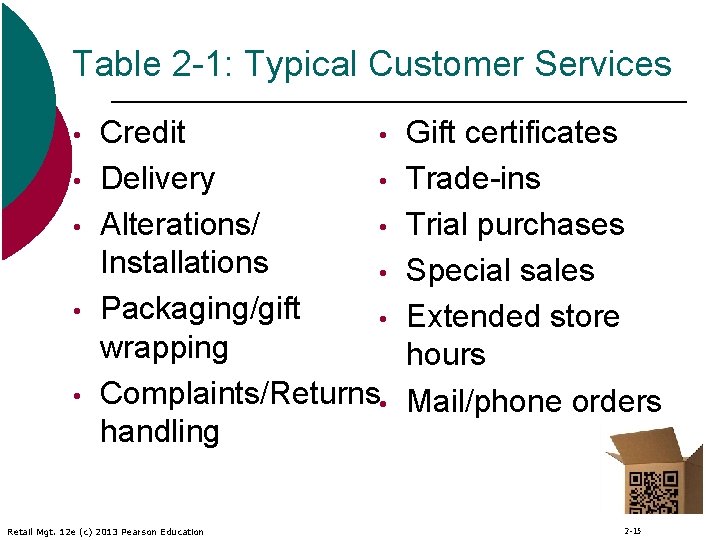
Table 2 -1: Typical Customer Services • • • Credit • Delivery • Alterations/ • Installations • Packaging/gift • wrapping Complaints/Returns • handling Retail Mgt. 12 e (c) 2013 Pearson Education Gift certificates Trade-ins Trial purchases Special sales Extended store hours Mail/phone orders 2 -15
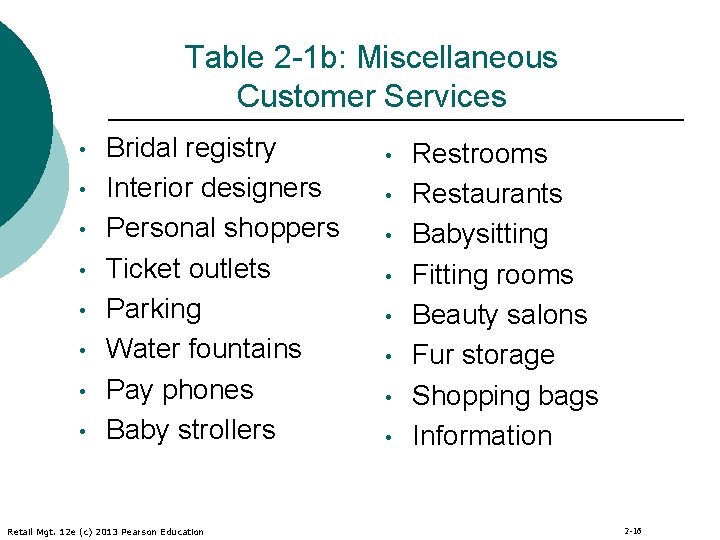
Table 2 -1 b: Miscellaneous Customer Services • • Bridal registry Interior designers Personal shoppers Ticket outlets Parking Water fountains Pay phones Baby strollers Retail Mgt. 12 e (c) 2013 Pearson Education • • Restrooms Restaurants Babysitting Fitting rooms Beauty salons Fur storage Shopping bags Information 2 -16
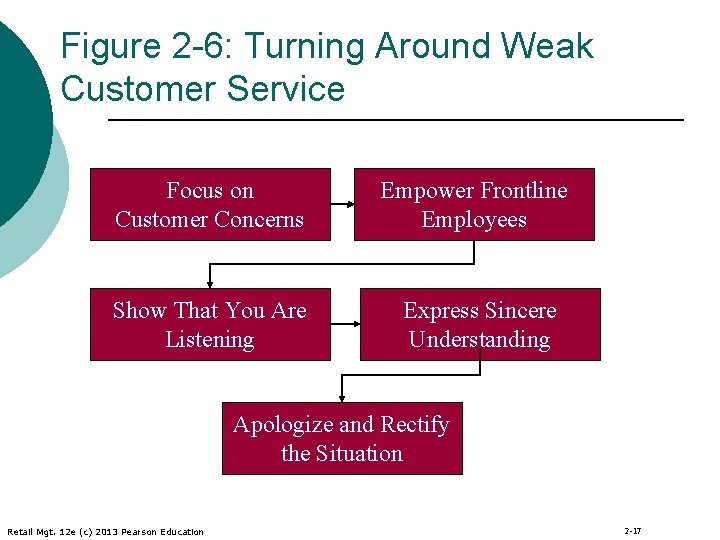
Figure 2 -6: Turning Around Weak Customer Service Focus on Customer Concerns Empower Frontline Employees Show That You Are Listening Express Sincere Understanding Apologize and Rectify the Situation Retail Mgt. 12 e (c) 2013 Pearson Education 2 -17
Principles of Category Management • • • Retailers listen more to customers Profitability is improved because inventory more closely matches demand By being better focused, each department is more desirable for shoppers Retail buyers are given more responsibilities and accountability for category results Retailers and suppliers must share data and be more computerized Retailers and suppliers must plan together Retail Mgt. 12 e (c) 2013 Pearson Education 2 -18
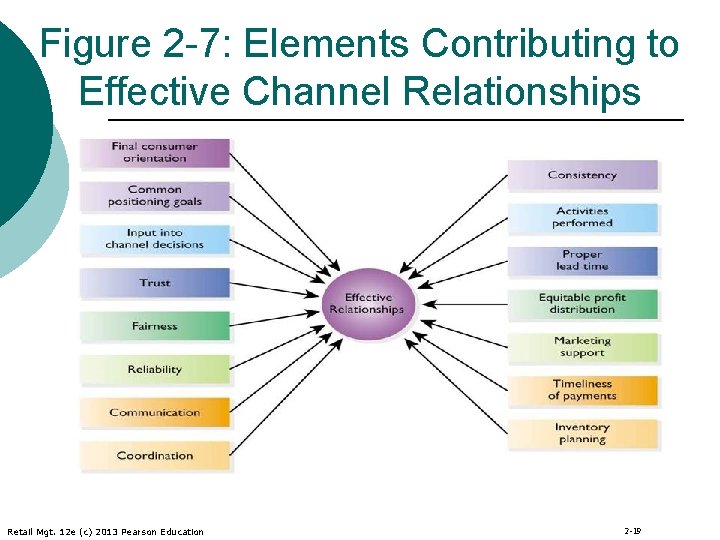
Figure 2 -7: Elements Contributing to Effective Channel Relationships Retail Mgt. 12 e (c) 2013 Pearson Education 2 -19
Three Kinds of Service Retailing • • • Rented goods services– leased cars, hotel rooms, carpet cleaning equipment Owned goods services– plumbing, appliance repair, Non-goods services– haircut, professional services (physician, lawyer) Retail Mgt. 12 e (c) 2013 Pearson Education 2 -20
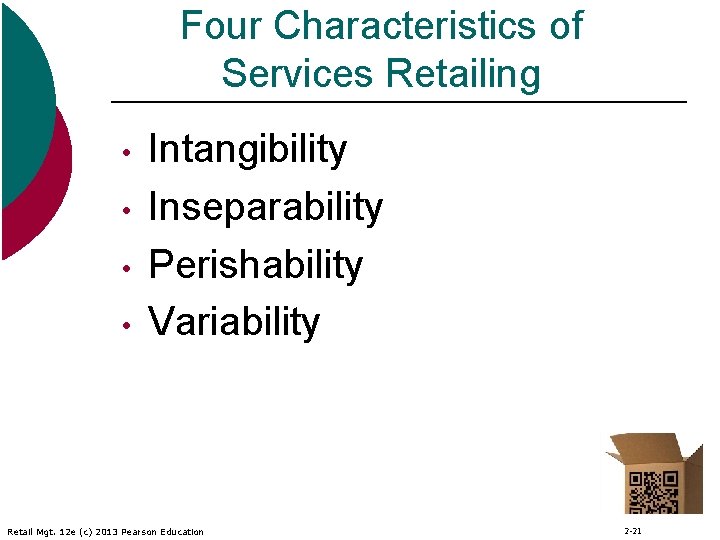
Four Characteristics of Services Retailing • • Intangibility Inseparability Perishability Variability Retail Mgt. 12 e (c) 2013 Pearson Education 2 -21
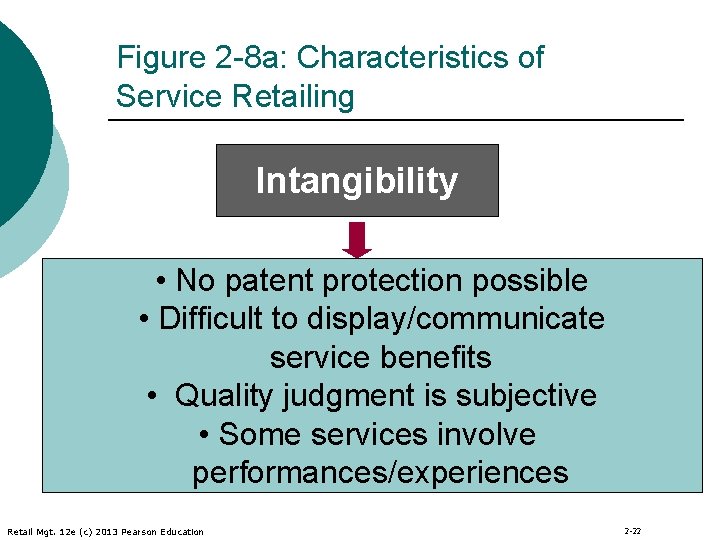
Figure 2 -8 a: Characteristics of Service Retailing Intangibility • No patent protection possible • Difficult to display/communicate service benefits • Quality judgment is subjective • Some services involve performances/experiences Retail Mgt. 12 e (c) 2013 Pearson Education 2 -22
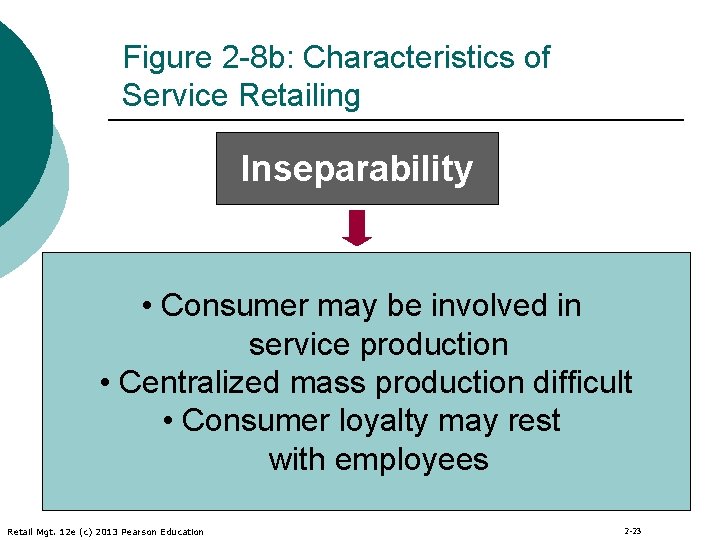
Figure 2 -8 b: Characteristics of Service Retailing Inseparability • Consumer may be involved in service production • Centralized mass production difficult • Consumer loyalty may rest with employees Retail Mgt. 12 e (c) 2013 Pearson Education 2 -23
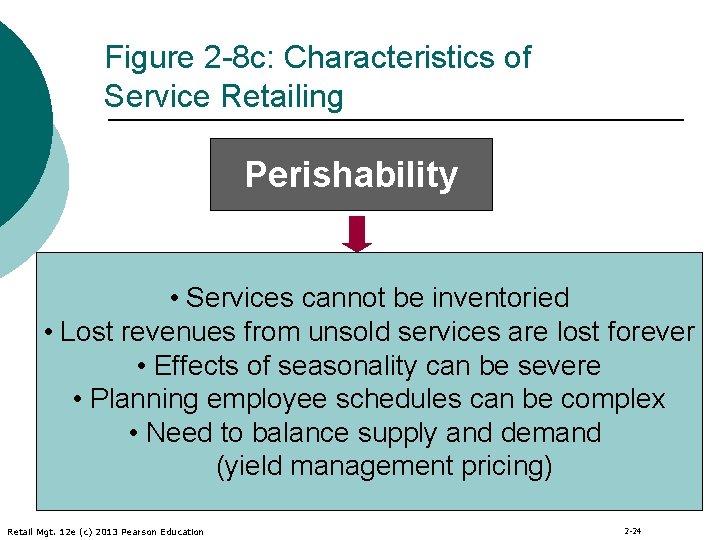
Figure 2 -8 c: Characteristics of Service Retailing Perishability • Services cannot be inventoried • Lost revenues from unsold services are lost forever • Effects of seasonality can be severe • Planning employee schedules can be complex • Need to balance supply and demand (yield management pricing) Retail Mgt. 12 e (c) 2013 Pearson Education 2 -24
Figure 2 -8 d: Characteristics of Service Retailing Variability • Standardization and quality control hard to achieve • Customers may perceive variability even when it does not actually occur • Need to industrialize/mechanize/service blueprint services to factor out variability Retail Mgt. 12 e (c) 2013 Pearson Education 2 -25
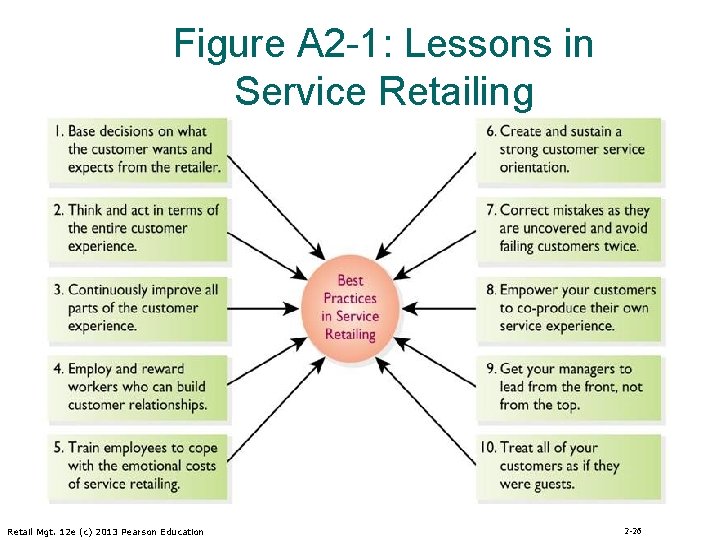
Figure A 2 -1: Lessons in Service Retailing Retail Mgt. 12 e (c) 2013 Pearson Education 2 -26
Figure 2 -10: Technology Icons Retail Mgt. 12 e (c) 2013 Pearson Education 2 -27
Examples of Consumerism in Retailing • • Proper testing of items for safety issues Programming cash registers not to accept payment for recalled goods Charging fair prices for goods in short supply--Home Depot plywood example in hurricane Age labeling of toys, warning labels on goods beyond legal requirements Retail Mgt. 12 e (c) 2013 Pearson Education 2 -28
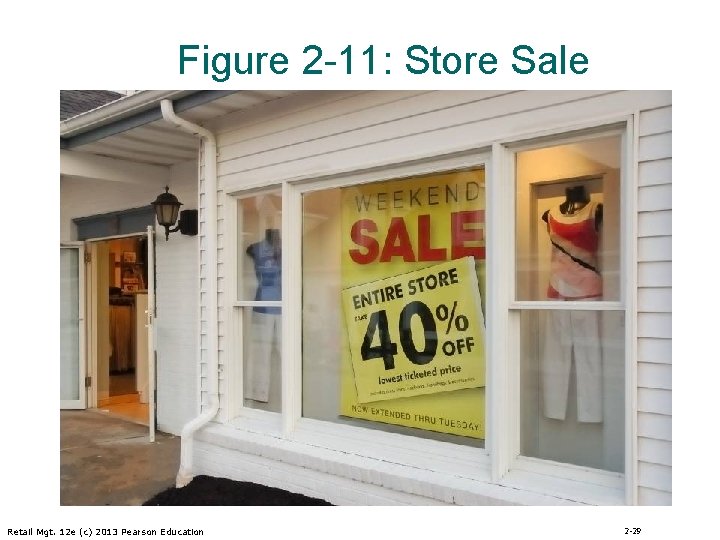
Figure 2 -11: Store Sale Retail Mgt. 12 e (c) 2013 Pearson Education 2 -29
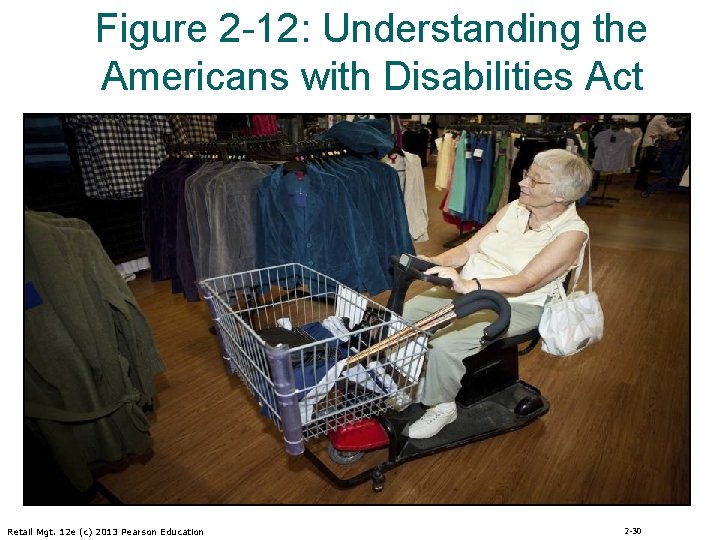
Figure 2 -12: Understanding the Americans with Disabilities Act Retail Mgt. 12 e (c) 2013 Pearson Education 2 -30
All rights reserved. No part of this publication may be reproduced, stored in a retrieval system, or transmitted, in any form or by any means, electronic, mechanical, photocopying, recording, or otherwise, without the prior written permission of the publisher. Printed in the United States of America.
- Slides: 31