
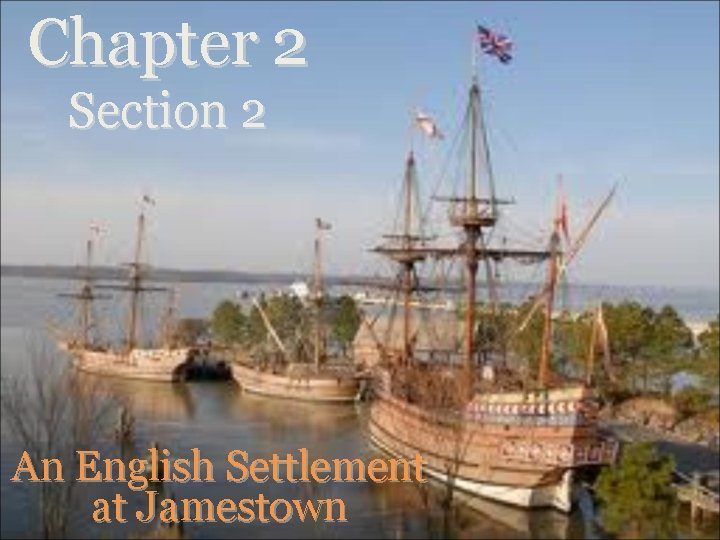
Chapter 2 Section 2 An English Settlement at
- Slides: 24
Chapter 2 Section 2 An English Settlement at Jamestown
Objectives q. Identify the obstacles facing the first English settlers in North America. q. Understand the factors that helped Jamestown to flourish. q. Describe the economic and social inequities that triggered Bacon’s Rebellion. q. Know the key terms.
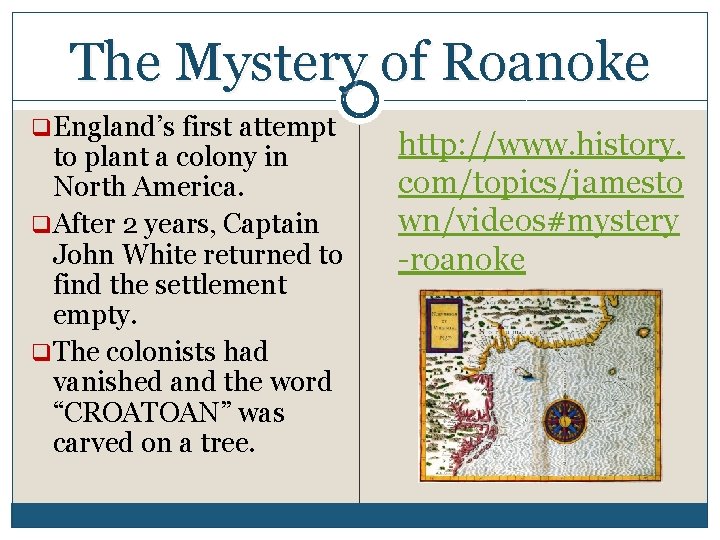
The Mystery of Roanoke q. England’s first attempt to plant a colony in North America. q. After 2 years, Captain John White returned to find the settlement empty. q. The colonists had vanished and the word “CROATOAN” was carved on a tree. http: //www. history. com/topics/jamesto wn/videos#mystery -roanoke
Jamestown q. Jamestown, England’s q. John Smith declared that “he that will not work, first successful colony shall not eat”. was founded in 1607. q. Burned in a fire, Smith q. Funded by the Virginia returned to England. Company, a joint- stock q. Discouraged colonists company chartered by were joined by a second King James I. ship and stayed. q. Challenged by disease, q. A representative famine, laziness, and assembly was formed the Powhatan tribe. called the House of Burgesses
Jamestown http: //www. history. com/ topics/jamestown/videos#
Tobacco q John Rolfe created a high-quality tobacco, which became the main export. q. The success of the tobacco crop created a need for workers. q. The Virginia Company introduced the headright system to attract settlers to come to work. q. Anyone who paid for their own or another’s passage to Virginia would receive 50 acres. q. Plantation owners paid passage for indentured servants from England. q. They received food and shelter with agreement to work for 4 -7 years. q. Africans received the same offer at first.
Tobacco http: //www. history. com/to pics/jamestown/videos#the -value-of-tobacco
Native Americans q. English settlers had no desire to mix with the natives, they wanted them to move. q. Jamestown leaders demanded tributes to be paid by the Powhatan’s. q. Soldiers burned villages and kidnapped children if tributes were not paid. q. Pocahontas’ marriage to John Rolfe brought temporary peace, but colonists continued to take native land. q. In 1624 James I revoked the company charter and made Virginia a royal colony.
Bacon’s Rebellion q. Sir William Berkeley, Virginia’s governor, imposed high taxes that only benefited wealthy land owners in the East. q. A bloody clash between settlers and natives sparked a “battle of the classes” when the governor refused to send help. q. Nathaniel Bacon raised his own army. q. Governor Berkeley declared Bacon’s army illegal. q. Bacon marched on Jamestown in Sept. 1676 confronting leaders for being taxed without representation in the House of Burgesses.
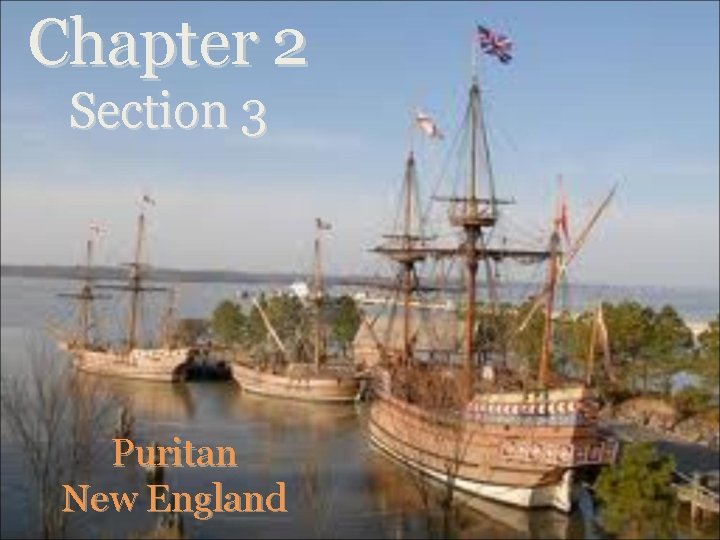
Chapter 2 Section 3 Puritan New England
Objectives q. Identify the motives that led the Puritans to New England. q. Summarize the principles of government established by the dissenters who fled to Rhode Island. q. Know the key terms.
The Puritan Emigration q. Puritans emigrated to q. Some wanted to New England in the 1620’s completely separate. for political, economic, q. The Separatists were and religious reasons. known as the Pilgrims. q. They had a royal charter q. They founded Plymouth for the Massachusetts Bay Colony, the 2 nd Colony led by John permanent English Winthrop. colony. q. They wanted to “purify” q. It was later incorporated the Anglican Church from into the Massachusetts Catholicism. . Bay colony.
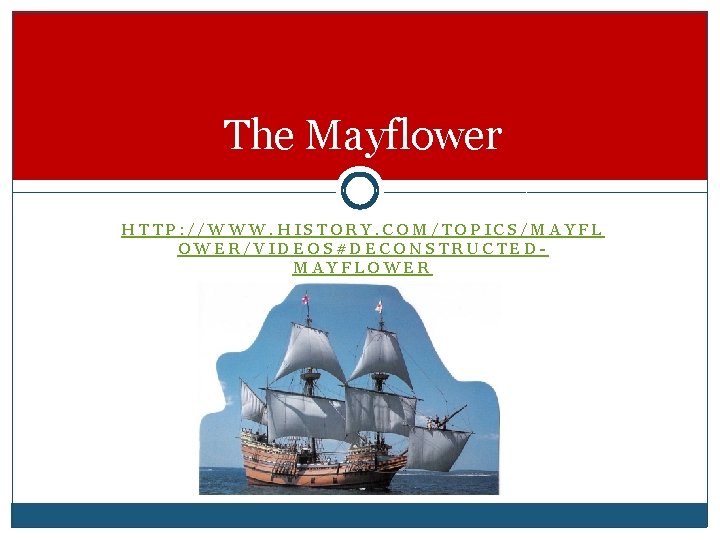
The Mayflower HTTP: //WWW. HISTORY. COM/TOPICS/MAYFL OWER/VIDEOS#DECONSTRUCTEDMAYFLOWER
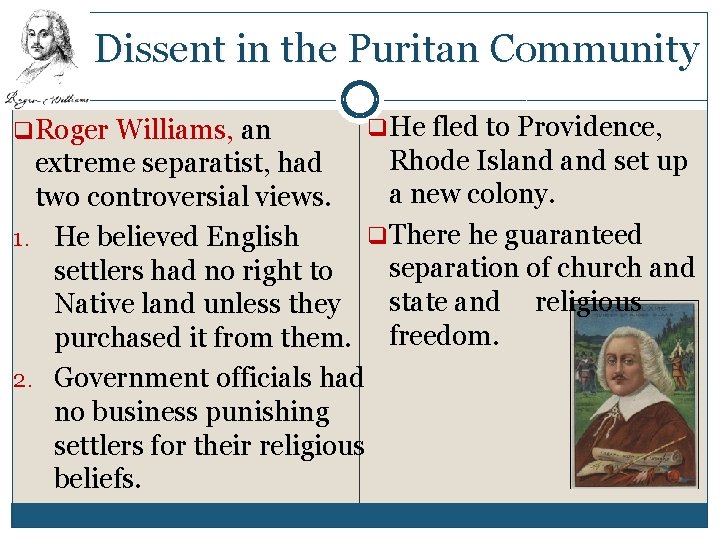
Dissent in the Puritan Community q. Roger Williams, an q. He fled to Providence, Rhode Island set up extreme separatist, had a new colony. two controversial views. q. There he guaranteed 1. He believed English separation of church and settlers had no right to state and religious Native land unless they purchased it from them. freedom. 2. Government officials had no business punishing settlers for their religious beliefs.
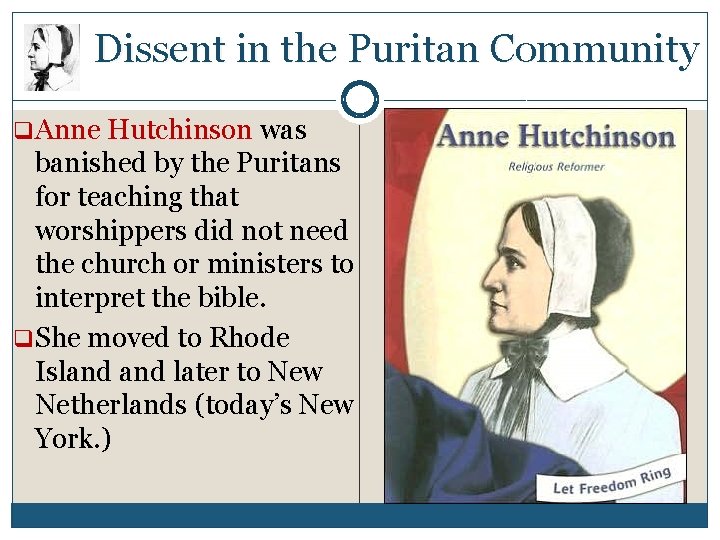
Dissent in the Puritan Community q. Anne Hutchinson was banished by the Puritans for teaching that worshippers did not need the church or ministers to interpret the bible. q. She moved to Rhode Island later to New Netherlands (today’s New York. )
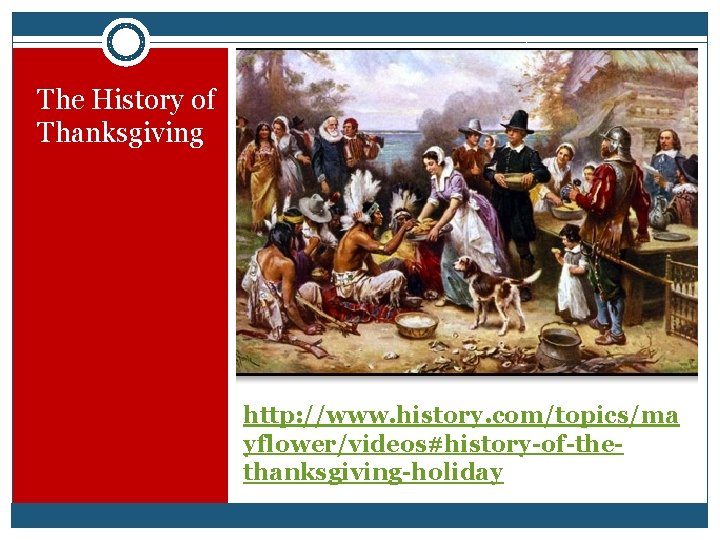
The History of Thanksgiving http: //www. history. com/topics/ma yflower/videos#history-of-thethanksgiving-holiday
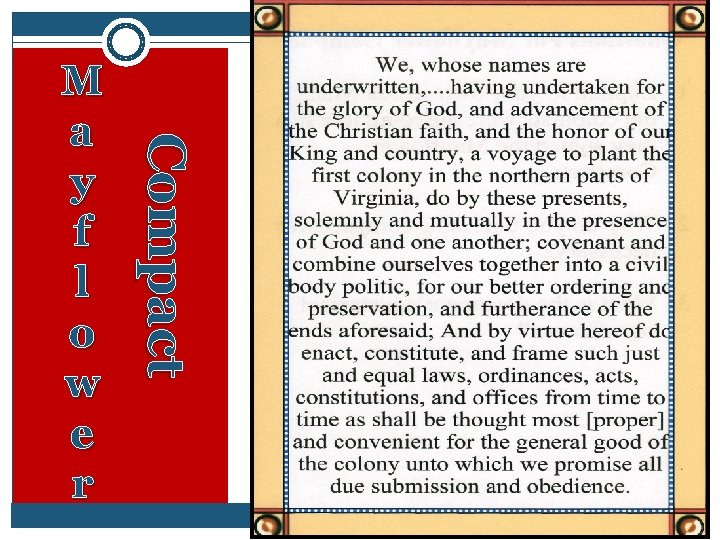
Mayflower Compact q. Agreement signed by the Pilgrims to establish some form of authority for the new colony. q. By signing, they agreed to obey any laws agreed upon for the general good of the colony. q. Formed the foundational principal of today’s American government, “government by the people, for the people. ”
Compact M a y f l o w e r
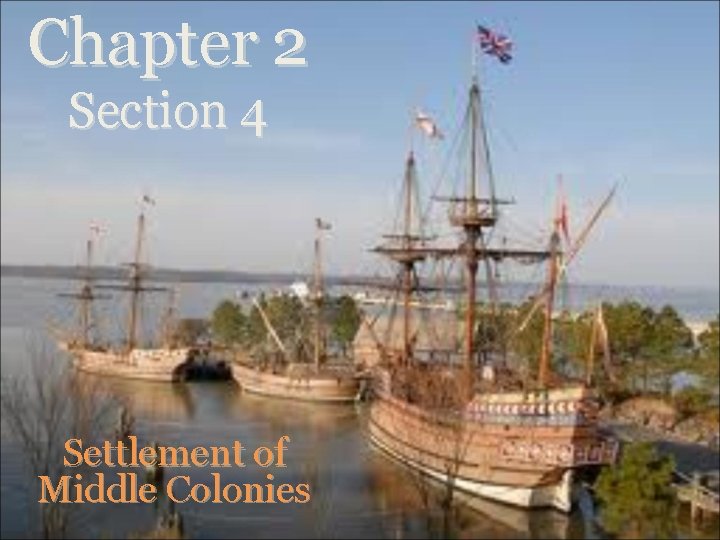
Chapter 2 Section 4 Settlement of Middle Colonies
Objectives q. Describe daily life in New Netherland. q. Explain the reasons for the social and religious diversity of colonial Pennsylvania. q. Know the key terms.
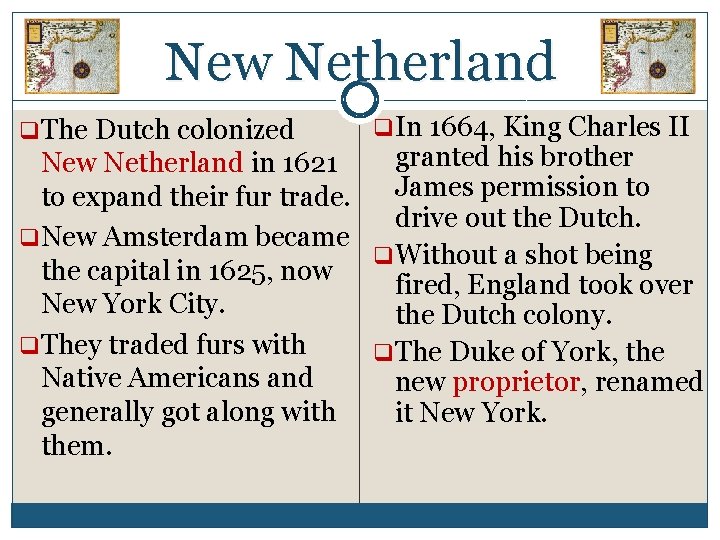
New Netherland q. The Dutch colonized q. In 1664, King Charles II granted his brother New Netherland in 1621 James permission to to expand their fur trade. drive out the Dutch. q. New Amsterdam became q. Without a shot being the capital in 1625, now fired, England took over New York City. the Dutch colony. q. They traded furs with q. The Duke of York, the Native Americans and new proprietor, renamed generally got along with it New York. them.
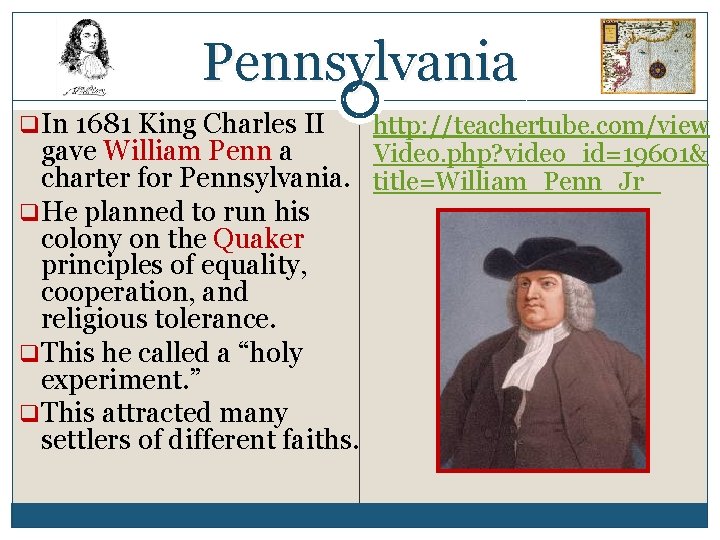
Pennsylvania q. In 1681 King Charles II http: //teachertube. com/view gave William Penn a Video. php? video_id=19601& charter for Pennsylvania. title=William_Penn_Jr_ q. He planned to run his colony on the Quaker principles of equality, cooperation, and religious tolerance. q. This he called a “holy experiment. ” q. This attracted many settlers of different faiths.
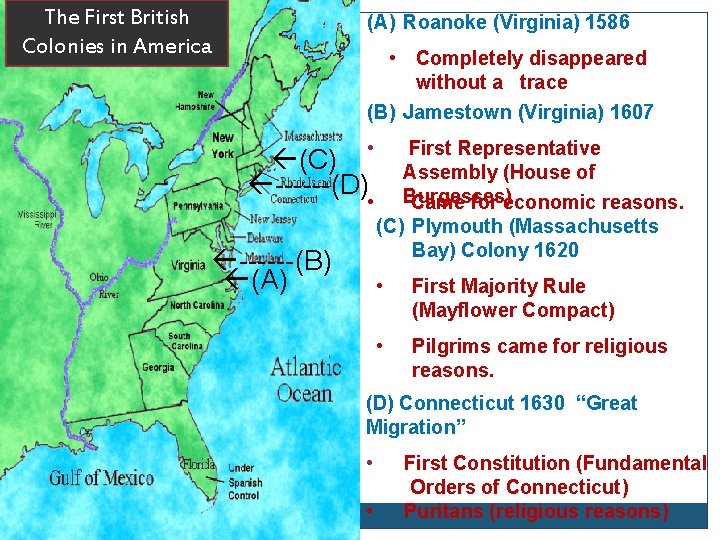
The First British Colonies in America (A) Roanoke (Virginia) 1586 • Completely disappeared without a trace (B) Jamestown (Virginia) 1607 • First Representative Assembly (House of Burgesses) Came for economic reasons. (C) ------(D) • (C) Plymouth (Massachusetts Bay) Colony 1620 ------(B) (A) • First Majority Rule (Mayflower Compact) • Pilgrims came for religious reasons. (D) Connecticut 1630 “Great Migration” • • First Constitution (Fundamental Orders of Connecticut) Puritans (religious reasons)
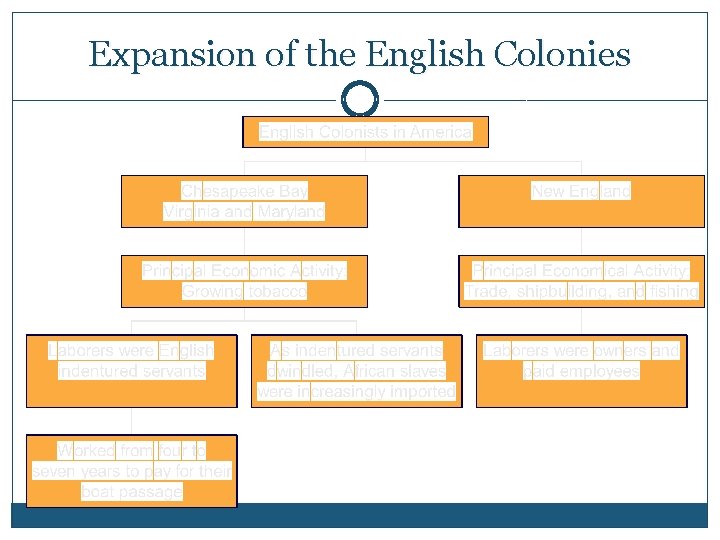
Expansion of the English Colonies