
Chapter 2 Risk Factors Behavior Genes Environment Lesson

Chapter 2 Risk Factors: Behavior, Genes, Environment Lesson 2. 1 2. 2 2. 3 2. 4 Factors Affecting Health and Wellness Behavioral Risk Factors Genetic Risk Factors Environmental and Socioeconomic Risk Factors
Lesson 2. 1 Factors Affecting Health and Wellness
Warm-Up Risk Factors Risk factors for diseases fall into several categories • Genetic • Traumatic • Nutritional • Environmental • Infectious • Behavioral Give one example of a disease or disorder related to each of these risk factors. Copyright Goodheart-Willcox Co. , Inc. May not be posted to a publicly accessible website.
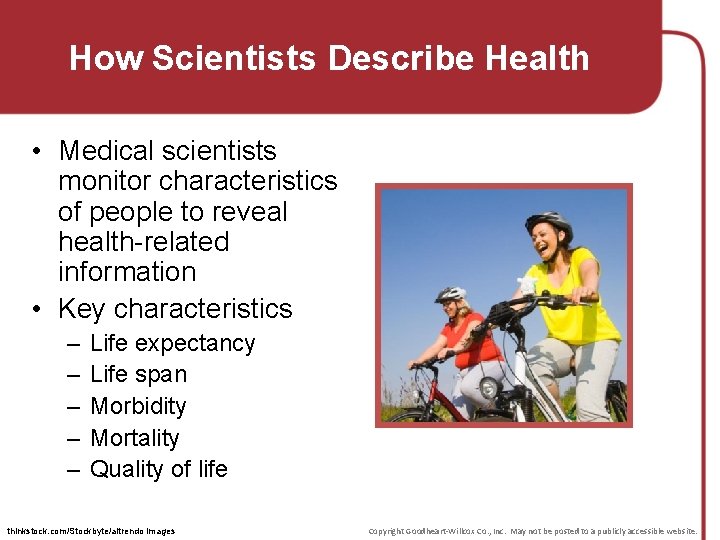
How Scientists Describe Health • Medical scientists monitor characteristics of people to reveal health-related information • Key characteristics – – – Life expectancy Life span Morbidity Mortality Quality of life thinkstock. com/Stockbyte/altrendo images Copyright Goodheart-Willcox Co. , Inc. May not be posted to a publicly accessible website.
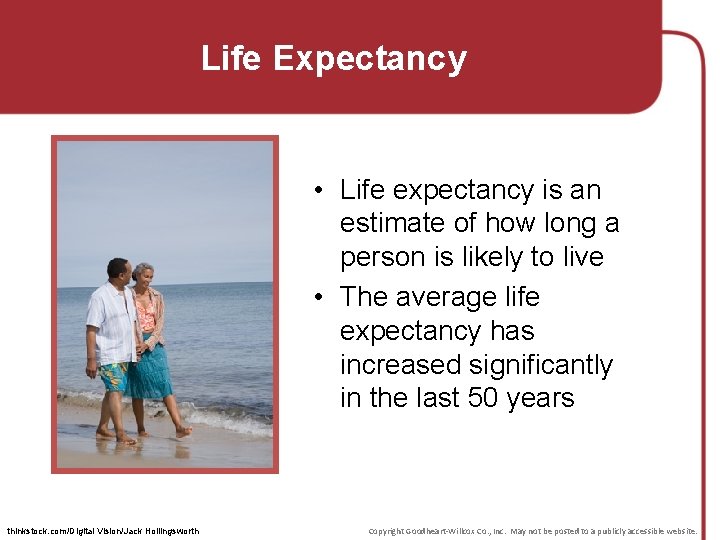
Life Expectancy • Life expectancy is an estimate of how long a person is likely to live • The average life expectancy has increased significantly in the last 50 years thinkstock. com/Digital Vision/Jack Hollingsworth Copyright Goodheart-Willcox Co. , Inc. May not be posted to a publicly accessible website.
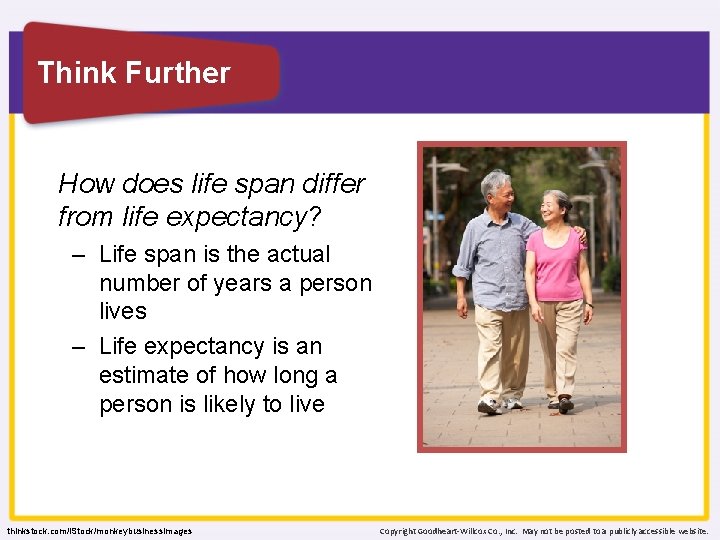
Think Further How does life span differ from life expectancy? ‒ Life span is the actual number of years a person lives ‒ Life expectancy is an estimate of how long a person is likely to live thinkstock. com/i. Stock/monkeybusinessimages Copyright Goodheart-Willcox Co. , Inc. May not be posted to a publicly accessible website.
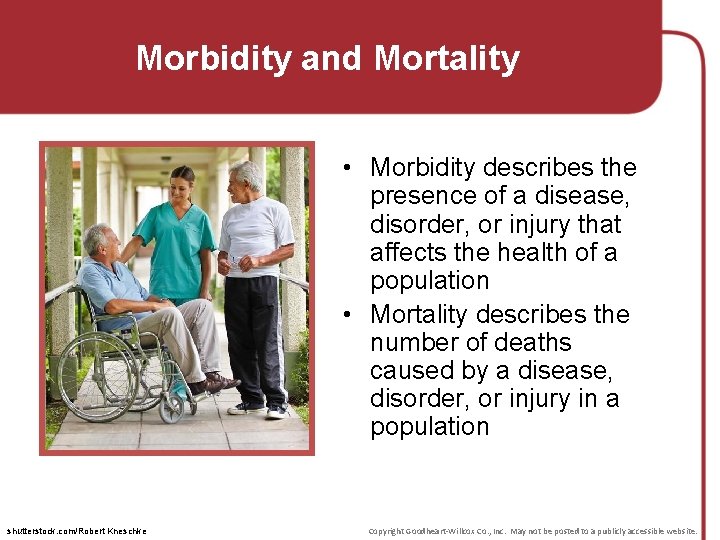
Morbidity and Mortality • Morbidity describes the presence of a disease, disorder, or injury that affects the health of a population • Mortality describes the number of deaths caused by a disease, disorder, or injury in a population shutterstock. com/Robert Kneschke Copyright Goodheart-Willcox Co. , Inc. May not be posted to a publicly accessible website.
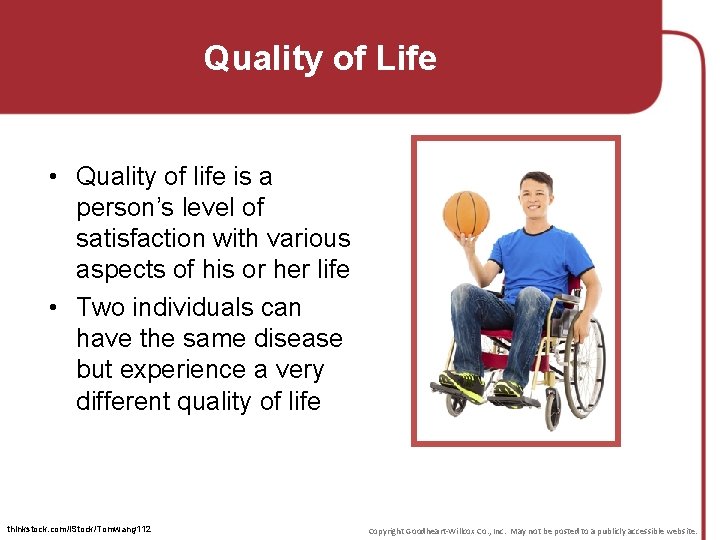
Quality of Life • Quality of life is a person’s level of satisfaction with various aspects of his or her life • Two individuals can have the same disease but experience a very different quality of life thinkstock. com/i. Stock/Tomwang 112 Copyright Goodheart-Willcox Co. , Inc. May not be posted to a publicly accessible website.
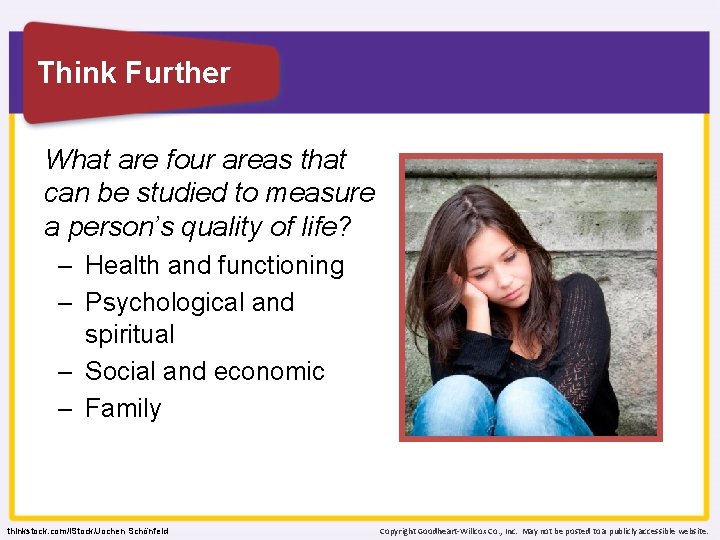
Think Further What are four areas that can be studied to measure a person’s quality of life? ‒ Health and functioning ‒ Psychological and spiritual ‒ Social and economic ‒ Family thinkstock. com/i. Stock/Jochen Schönfeld Copyright Goodheart-Willcox Co. , Inc. May not be posted to a publicly accessible website.
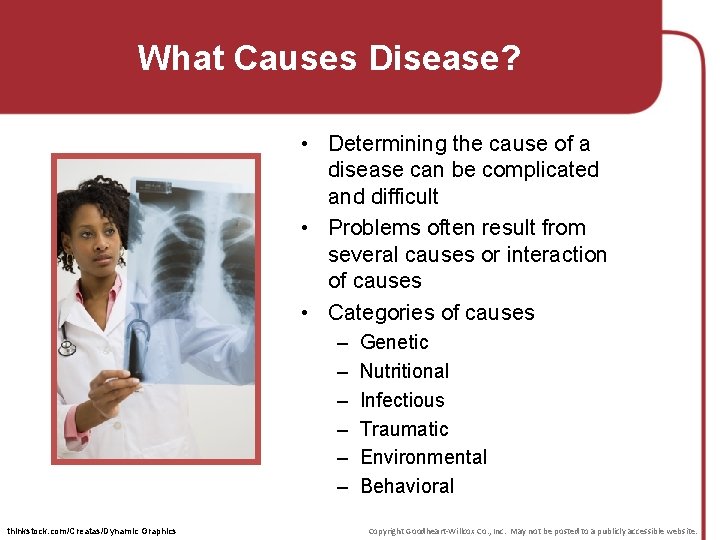
What Causes Disease? • Determining the cause of a disease can be complicated and difficult • Problems often result from several causes or interaction of causes • Categories of causes – – – thinkstock. com/Creatas/Dynamic Graphics Genetic Nutritional Infectious Traumatic Environmental Behavioral Copyright Goodheart-Willcox Co. , Inc. May not be posted to a publicly accessible website.
Think Further Myth or Fact? Having a risk factor for a disease or disorder means that a person is guaranteed to develop that health problem. MYTH – Fact: Having a risk factor for a disease or disorder does not mean that a person is guaranteed to develop that health problem. – Fact: The more risk factors for a disease or disorder a person has, the greater the chance that he or she will develop the disease or disorder. Copyright Goodheart-Willcox Co. , Inc. May not be posted to a publicly accessible website.
Lesson 2. 2 Behavioral Risk Factors
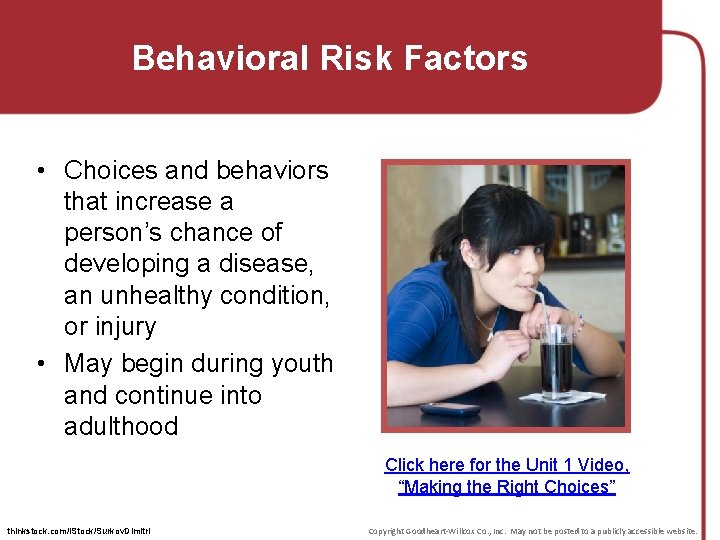
Behavioral Risk Factors • Choices and behaviors that increase a person’s chance of developing a disease, an unhealthy condition, or injury • May begin during youth and continue into adulthood Click here for the Unit 1 Video, “Making the Right Choices” thinkstock. com/i. Stock/Surkov. Dimitri Copyright Goodheart-Willcox Co. , Inc. May not be posted to a publicly accessible website.
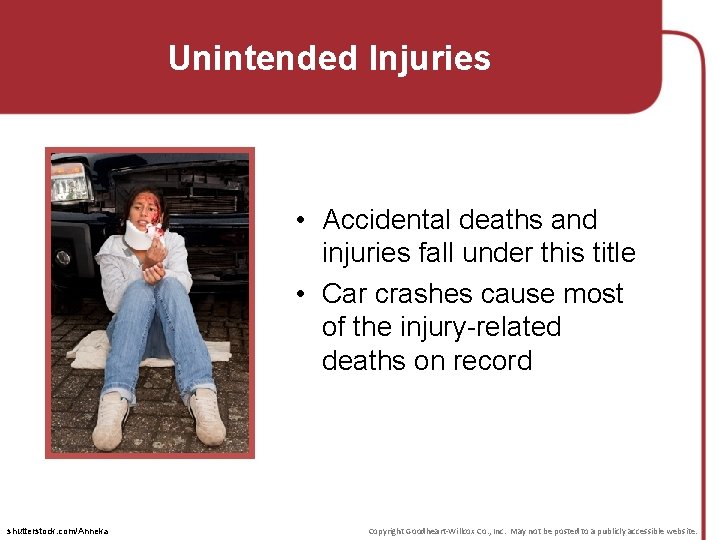
Unintended Injuries • Accidental deaths and injuries fall under this title • Car crashes cause most of the injury-related deaths on record shutterstock. com/Anneka Copyright Goodheart-Willcox Co. , Inc. May not be posted to a publicly accessible website.
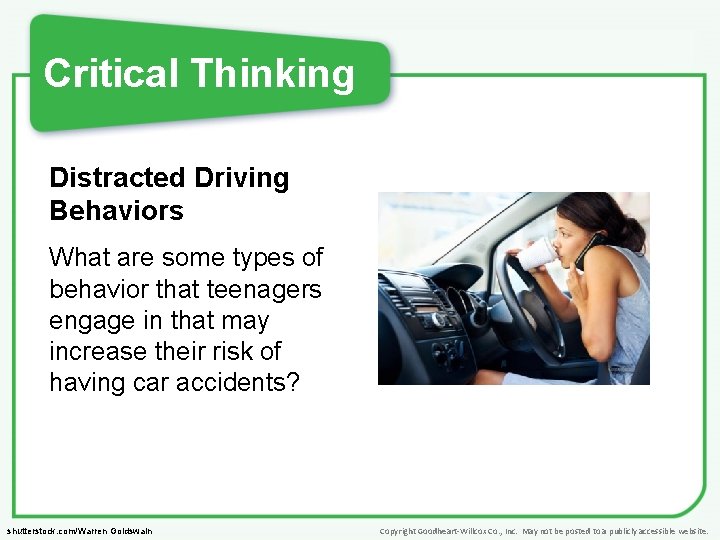
Critical Thinking Distracted Driving Behaviors What are some types of behavior that teenagers engage in that may increase their risk of having car accidents? shutterstock. com/Warren Goldswain Copyright Goodheart-Willcox Co. , Inc. May not be posted to a publicly accessible website.
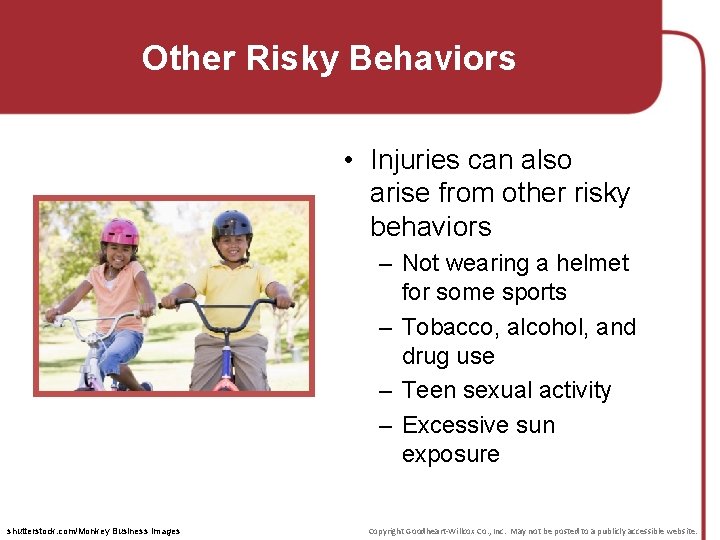
Other Risky Behaviors • Injuries can also arise from other risky behaviors – Not wearing a helmet for some sports – Tobacco, alcohol, and drug use – Teen sexual activity – Excessive sun exposure shutterstock. com/Monkey Business Images Copyright Goodheart-Willcox Co. , Inc. May not be posted to a publicly accessible website.
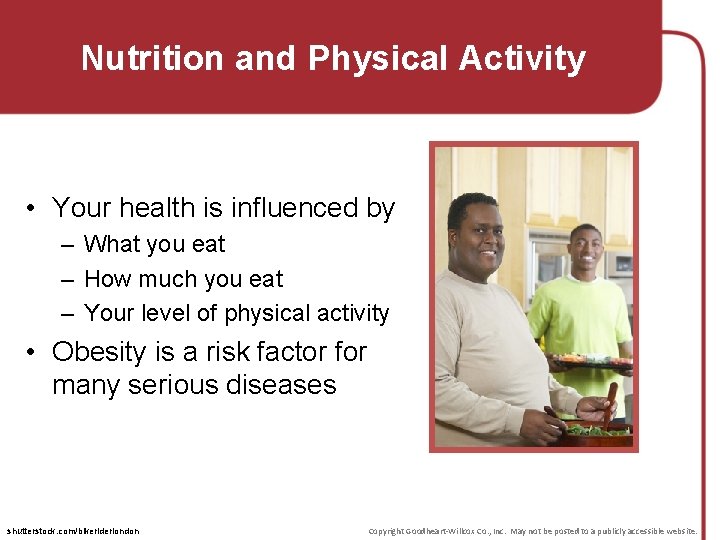
Nutrition and Physical Activity • Your health is influenced by – What you eat – How much you eat – Your level of physical activity • Obesity is a risk factor for many serious diseases shutterstock. com/bikeriderlondon Copyright Goodheart-Willcox Co. , Inc. May not be posted to a publicly accessible website.
Think Further Myth or Fact? Viewing of television, the Internet, movies, and computer games has no impact on health and wellness. MYTH – Fact: The more hours people watch television, the more likely they are to be overweight or obese. – Fact: The more hours people play video games, the more likely they are to be obese. Copyright Goodheart-Willcox Co. , Inc. May not be posted to a publicly accessible website.
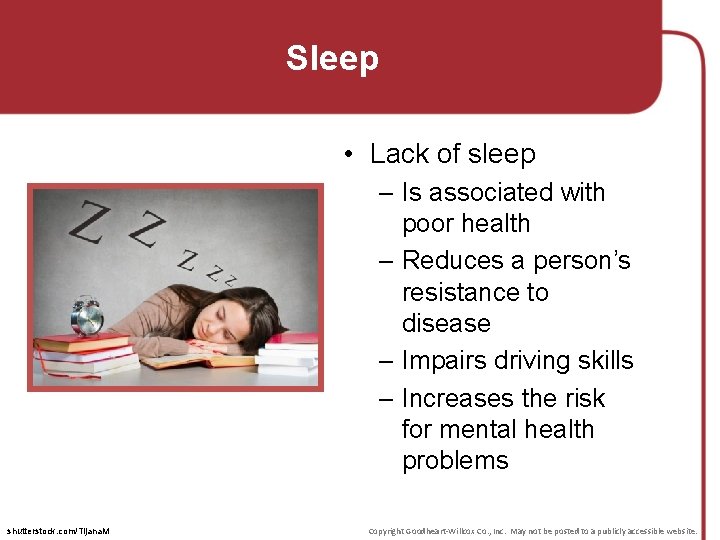
Sleep • Lack of sleep – Is associated with poor health – Reduces a person’s resistance to disease – Impairs driving skills – Increases the risk for mental health problems shutterstock. com/Tijana. M Copyright Goodheart-Willcox Co. , Inc. May not be posted to a publicly accessible website.
Lesson 2. 3 Genetic Risk Factors
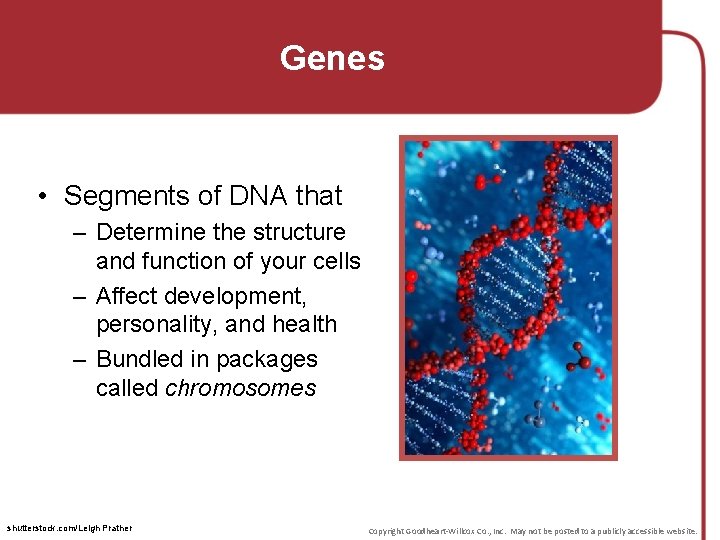
Genes • Segments of DNA that – Determine the structure and function of your cells – Affect development, personality, and health – Bundled in packages called chromosomes shutterstock. com/Leigh Prather Copyright Goodheart-Willcox Co. , Inc. May not be posted to a publicly accessible website.
Genes and Disease • The role of genes in disease development varies • Genes specify how your immune system, which helps fight disease, is built • Some inherited diseases are caused by a single gene shutterstock. com/absolutimages Copyright Goodheart-Willcox Co. , Inc. May not be posted to a publicly accessible website.
Heart Disease, Cancer, and Genes • The causes of heart disease include genetic factors • Genetic factors are associated with some types of cancer – Breast cancer – Colon cancer – Skin cancer shutterstock. com/wavebreakmedia Copyright Goodheart-Willcox Co. , Inc. May not be posted to a publicly accessible website.
Mental Illness, Obesity, and Genes • Genes are involved in the development of some mental disease and disorders • The tendency to become overweight and obese is rooted in genetics shutterstock. com/bikeriderlondon Copyright Goodheart-Willcox Co. , Inc. May not be posted to a publicly accessible website.
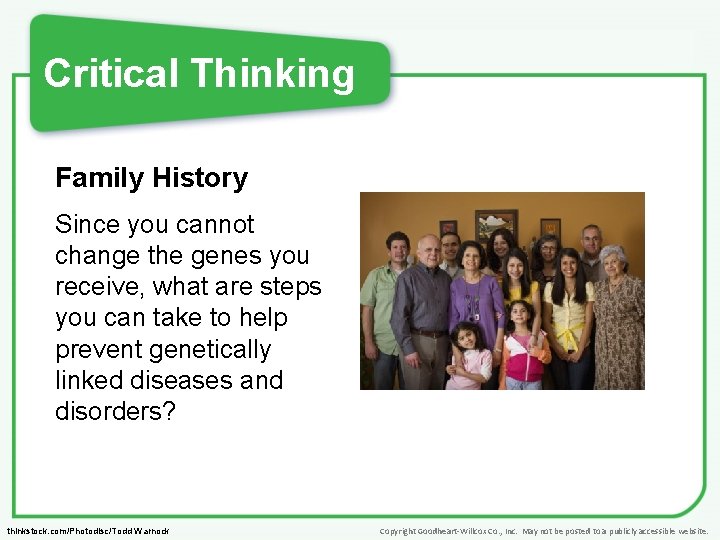
Critical Thinking Family History Since you cannot change the genes you receive, what are steps you can take to help prevent genetically linked diseases and disorders? thinkstock. com/Photodisc/Todd Warnock Copyright Goodheart-Willcox Co. , Inc. May not be posted to a publicly accessible website.
Lesson 2. 4 Environmental and Socioeconomic Risk Factors
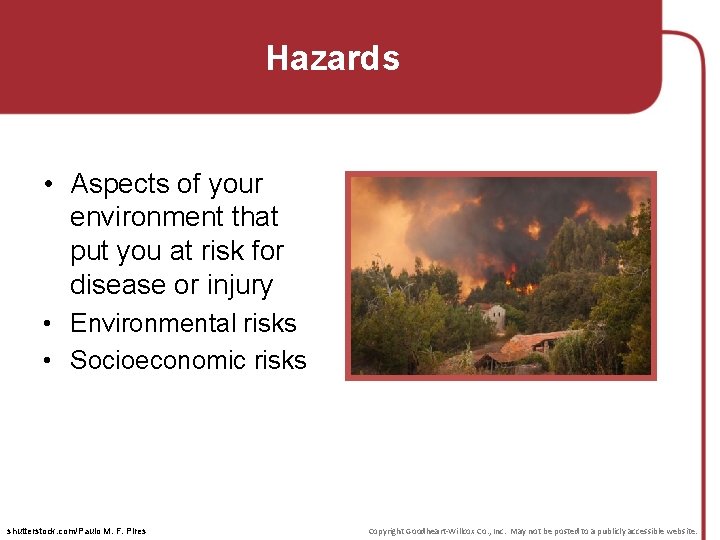
Hazards • Aspects of your environment that put you at risk for disease or injury • Environmental risks • Socioeconomic risks shutterstock. com/Paulo M. F. Pires Copyright Goodheart-Willcox Co. , Inc. May not be posted to a publicly accessible website.
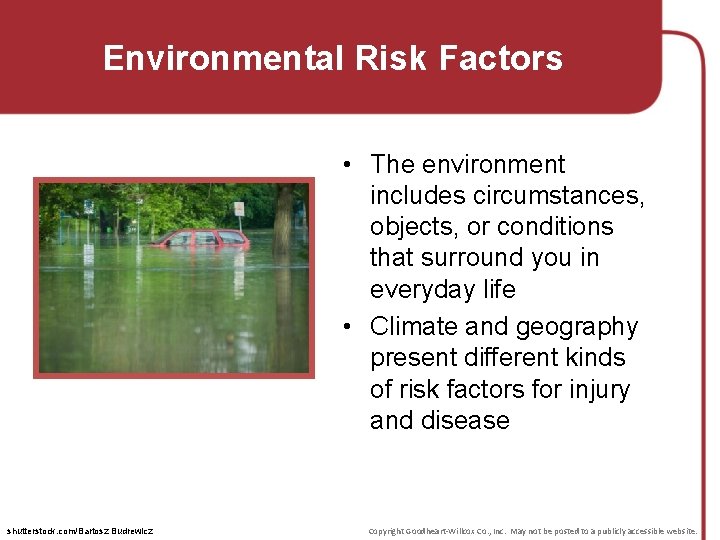
Environmental Risk Factors • The environment includes circumstances, objects, or conditions that surround you in everyday life • Climate and geography present different kinds of risk factors for injury and disease shutterstock. com/Bartosz Budrewicz Copyright Goodheart-Willcox Co. , Inc. May not be posted to a publicly accessible website.
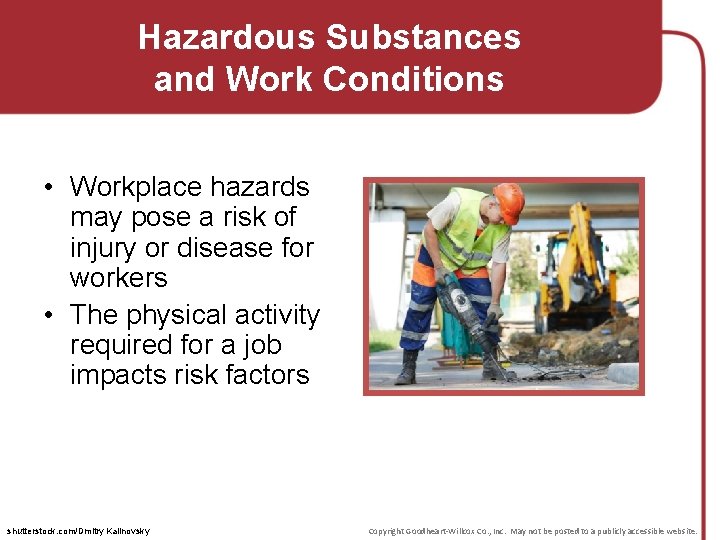
Hazardous Substances and Work Conditions • Workplace hazards may pose a risk of injury or disease for workers • The physical activity required for a job impacts risk factors shutterstock. com/Dmitry Kalinovsky Copyright Goodheart-Willcox Co. , Inc. May not be posted to a publicly accessible website.
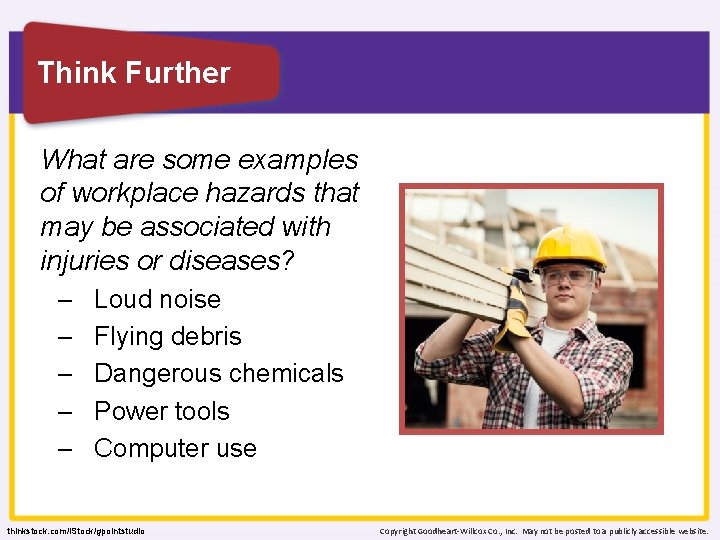
Think Further What are some examples of workplace hazards that may be associated with injuries or diseases? ‒ ‒ ‒ Loud noise Flying debris Dangerous chemicals Power tools Computer use thinkstock. com/i. Stock/gpointstudio Copyright Goodheart-Willcox Co. , Inc. May not be posted to a publicly accessible website.
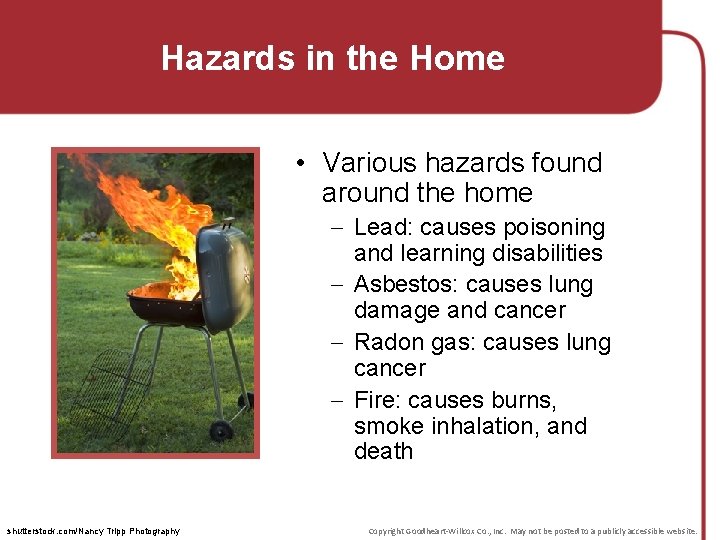
Hazards in the Home • Various hazards found around the home ‒ Lead: causes poisoning and learning disabilities ‒ Asbestos: causes lung damage and cancer ‒ Radon gas: causes lung cancer ‒ Fire: causes burns, smoke inhalation, and death shutterstock. com/Nancy Tripp Photography Copyright Goodheart-Willcox Co. , Inc. May not be posted to a publicly accessible website.
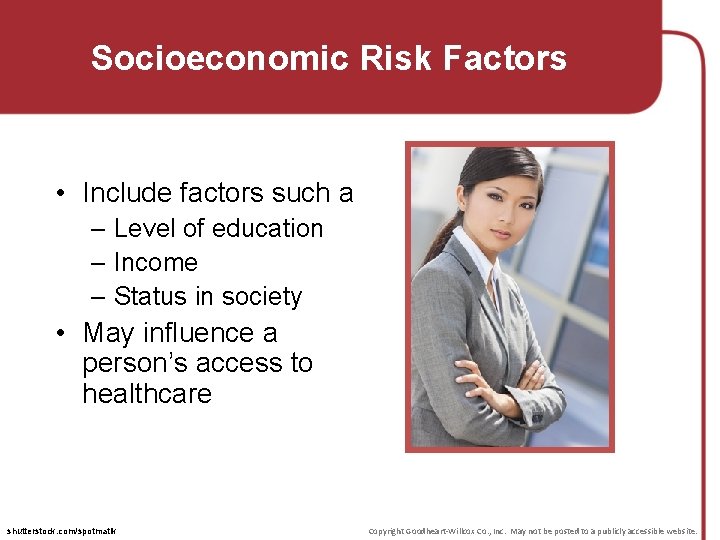
Socioeconomic Risk Factors • Include factors such a – Level of education – Income – Status in society • May influence a person’s access to healthcare shutterstock. com/spotmatik Copyright Goodheart-Willcox Co. , Inc. May not be posted to a publicly accessible website.
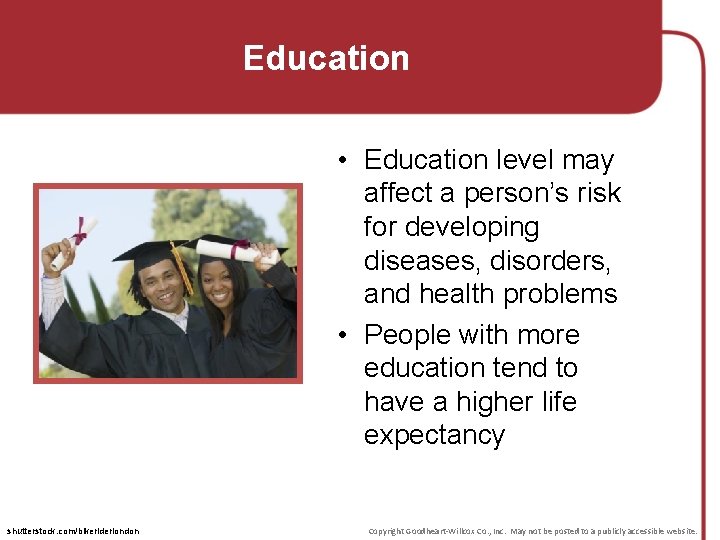
Education • Education level may affect a person’s risk for developing diseases, disorders, and health problems • People with more education tend to have a higher life expectancy shutterstock. com/bikeriderlondon Copyright Goodheart-Willcox Co. , Inc. May not be posted to a publicly accessible website.

Critical Thinking Education and Health The reason for a correlation between education and health is not clear. Why do you think higher education is linked to better health? shutterstock. com/Christopher Edwin Nuzzaco Copyright Goodheart-Willcox Co. , Inc. May not be posted to a publicly accessible website.
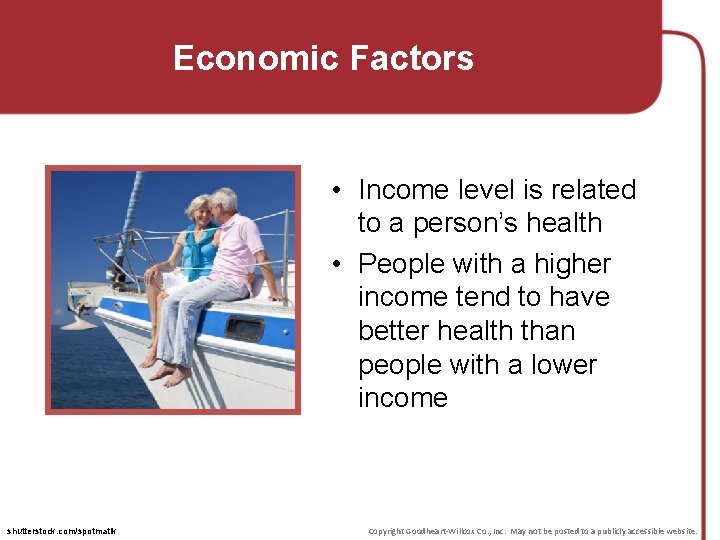
Economic Factors • Income level is related to a person’s health • People with a higher income tend to have better health than people with a lower income shutterstock. com/spotmatik Copyright Goodheart-Willcox Co. , Inc. May not be posted to a publicly accessible website.
- Slides: 36