
Chapter 2 Research Questions Six Factors Affecting Research

- Slides: 10
Chapter 2 Research Questions
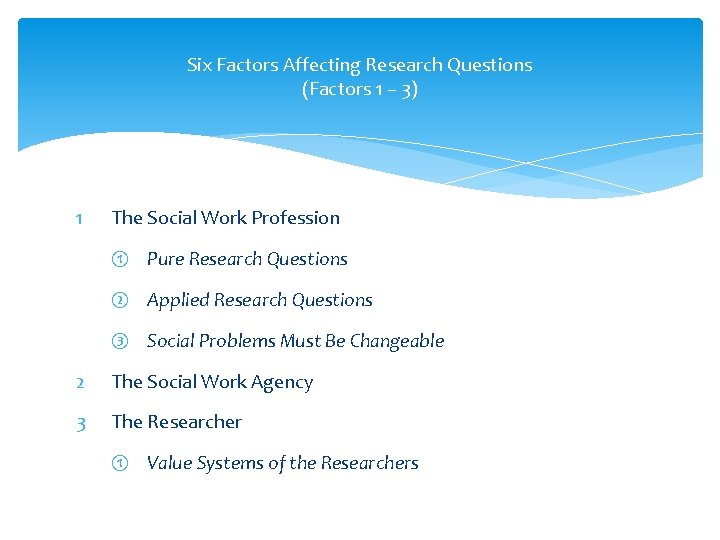
Six Factors Affecting Research Questions (Factors 1 – 3) 1 The Social Work Profession ① Pure Research Questions ② Applied Research Questions ③ Social Problems Must Be Changeable 2 The Social Work Agency 3 The Researcher ① Value Systems of the Researchers
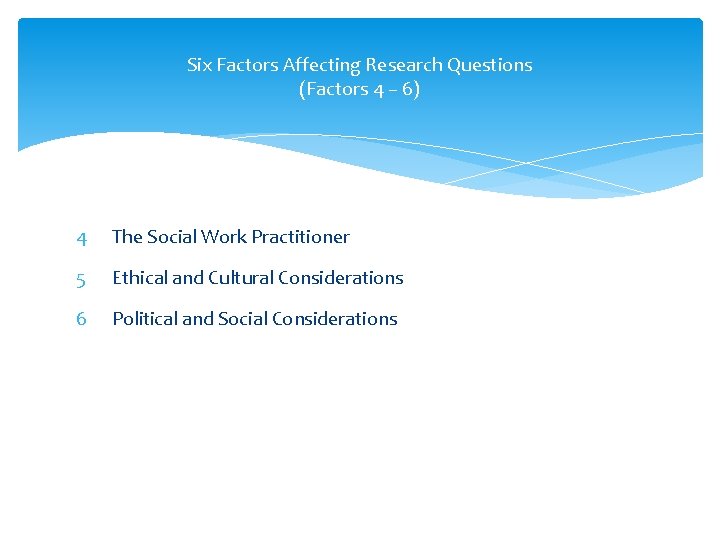
Six Factors Affecting Research Questions (Factors 4 – 6) 4 The Social Work Practitioner 5 Ethical and Cultural Considerations 6 Political and Social Considerations
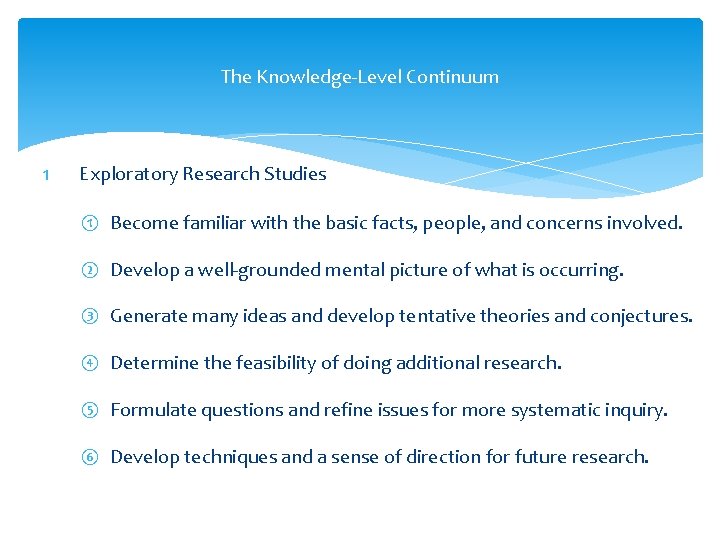
The Knowledge-Level Continuum 1 Exploratory Research Studies ① Become familiar with the basic facts, people, and concerns involved. ② Develop a well-grounded mental picture of what is occurring. ③ Generate many ideas and develop tentative theories and conjectures. ④ Determine the feasibility of doing additional research. ⑤ Formulate questions and refine issues for more systematic inquiry. ⑥ Develop techniques and a sense of direction for future research.
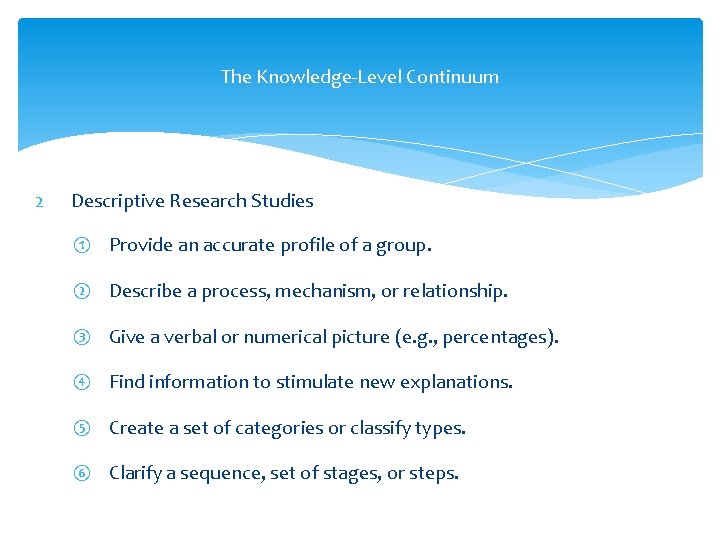
The Knowledge-Level Continuum 2 Descriptive Research Studies ① Provide an accurate profile of a group. ② Describe a process, mechanism, or relationship. ③ Give a verbal or numerical picture (e. g. , percentages). ④ Find information to stimulate new explanations. ⑤ Create a set of categories or classify types. ⑥ Clarify a sequence, set of stages, or steps.
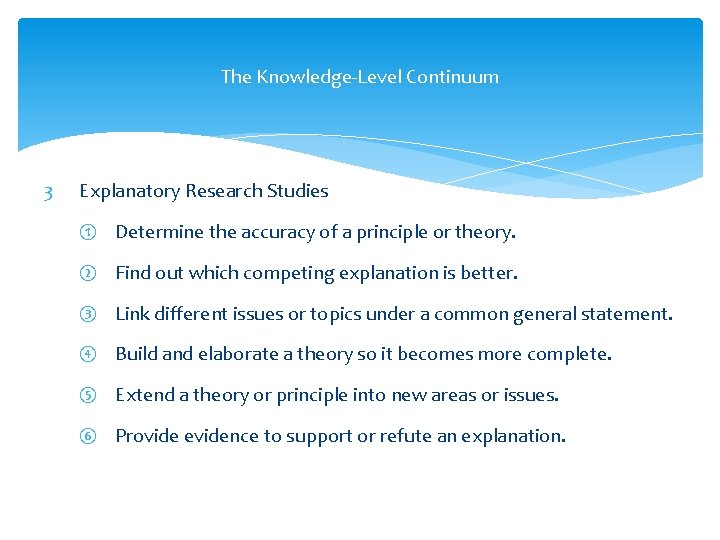
The Knowledge-Level Continuum 3 Explanatory Research Studies ① Determine the accuracy of a principle or theory. ② Find out which competing explanation is better. ③ Link different issues or topics under a common general statement. ④ Build and elaborate a theory so it becomes more complete. ⑤ Extend a theory or principle into new areas or issues. ⑥ Provide evidence to support or refute an explanation.
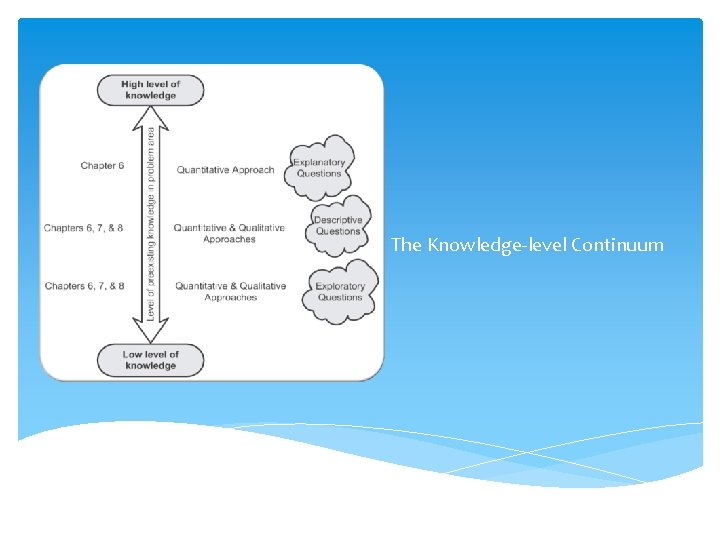
The Knowledge-level Continuum
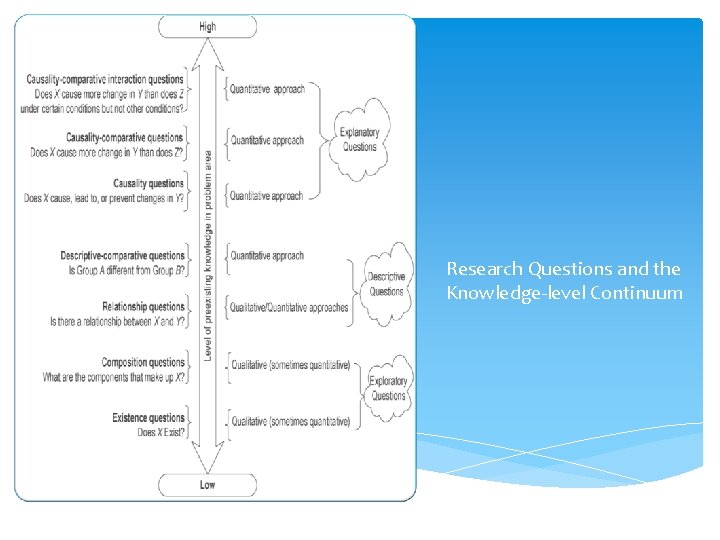
Research Questions and the Knowledge-level Continuum
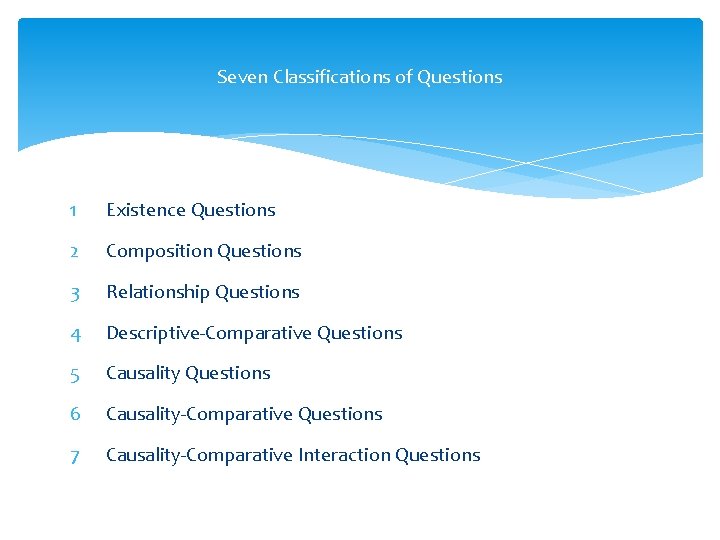
Seven Classifications of Questions 1 Existence Questions 2 Composition Questions 3 Relationship Questions 4 Descriptive-Comparative Questions 5 Causality Questions 6 Causality-Comparative Questions 7 Causality-Comparative Interaction Questions
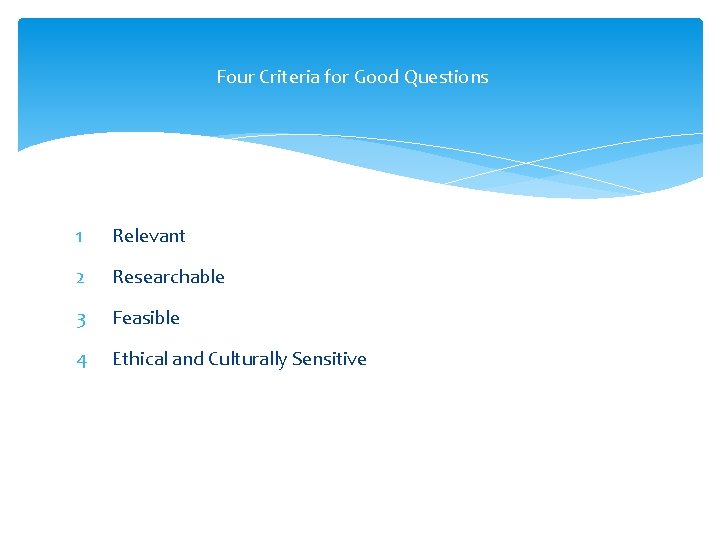
Four Criteria for Good Questions 1 Relevant 2 Researchable 3 Feasible 4 Ethical and Culturally Sensitive