
Chapter 2 Recording Business Transactions Learning Objective 1

Chapter 2 Recording Business Transactions

Learning Objective 1 Explain accounts as they relate to the accounting equation and describe common accounts 2 -2

WHAT IS AN ACCOUNT? • The accounting equation contains three categories: assets, liabilities, and equity. Each part contains accounts. • An account is the detailed record of all increases and decreases that have occurred in an account during a specified period. 2 -3
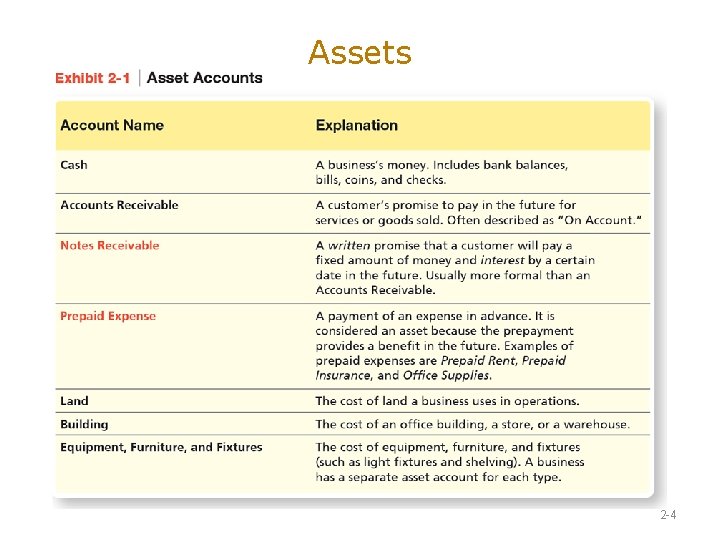
Assets 2 -4
Liabilities 2 -5

Equity 2 -6
Chart of Accounts A chart of accounts is used to organize a company’s accounts. A ledger is a record holding all the accounts of a business, the changes in those accounts, and their balances. 2 -7
Learning Objective 2 Define debits, credits, and normal account balances using double-entry accounting and T-accounts 2 -8
WHAT IS DOUBLE-ENTRY ACCOUNTING? • Transactions always involve at least two accounts. • Accounting uses the double-entry system to record the dual effects of each transaction. – For example, office supplies are purchased for cash requiring an increase in Office Supplies and a decrease in Cash. 2 -9
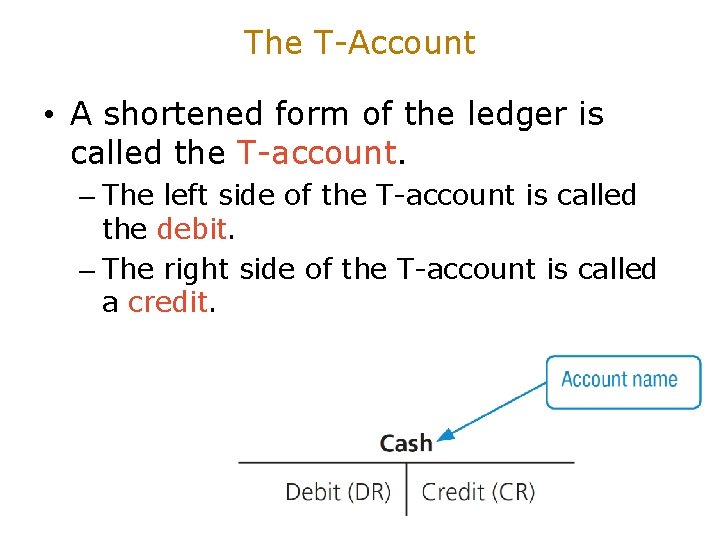
The T-Account • A shortened form of the ledger is called the T-account. – The left side of the T-account is called the debit. – The right side of the T-account is called a credit. 2 -10
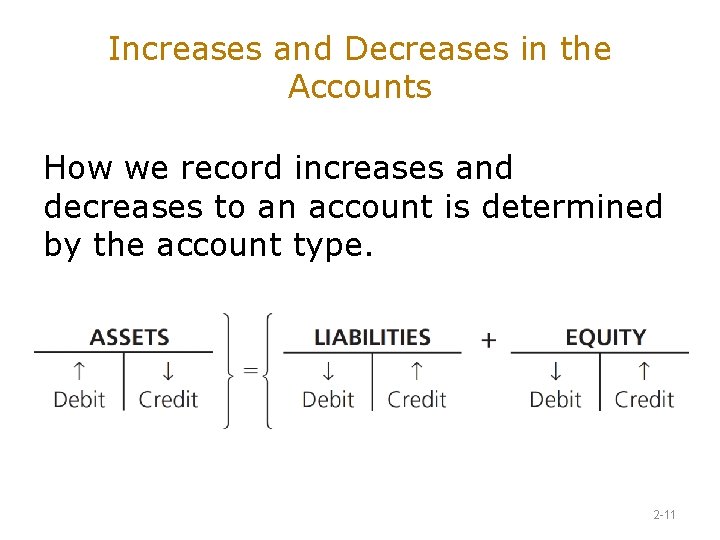
Increases and Decreases in the Accounts How we record increases and decreases to an account is determined by the account type. 2 -11

Increases and Decreases in the Accounts • To increase the Cash account, a business would record a debit to Cash. • To decrease the Cash account, a business would record a credit to Cash. 2 -12

Expanding the Rules of Debit and Credit The accounting equation is expanded to include the rules of debits and credits for the elements of equity: 2 -13
The Normal Balance of an Account • All accounts are summarized on one side of the T-account, called the normal balance. • An account’s normal balance appears on the increase side of the account. – Assets increase with a debit, so the normal balance is a debit. – Liabilities and equity increase with a credit, so the normal balance is a credit. 2 -14
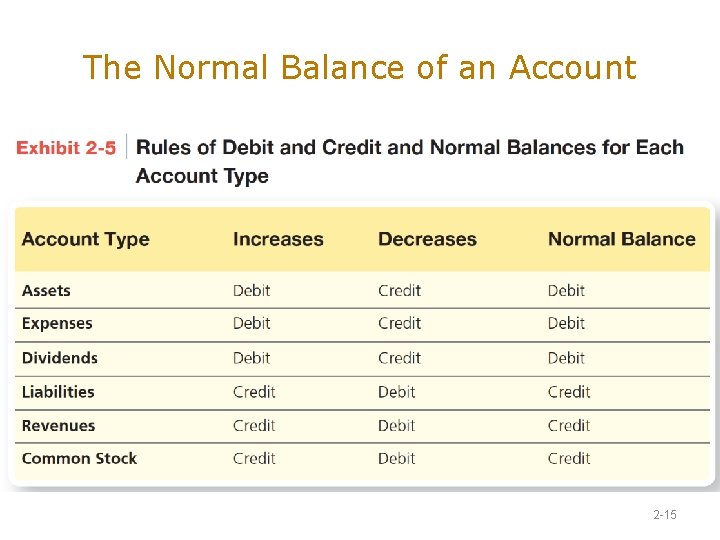
The Normal Balance of an Account 2 -15
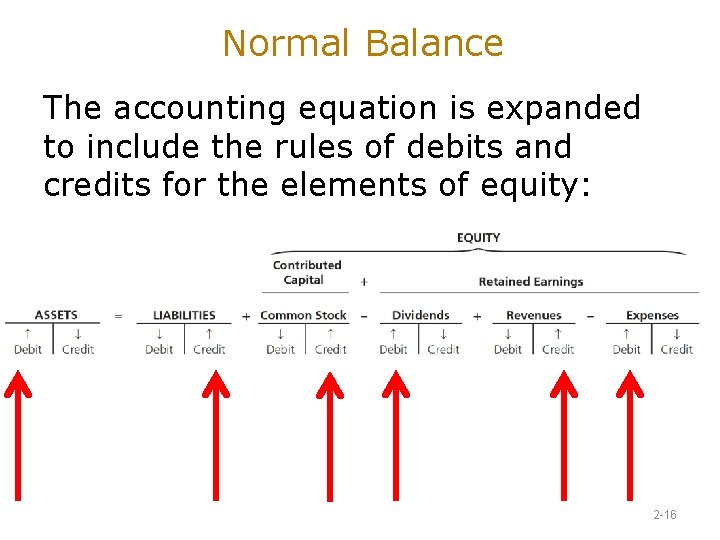
Normal Balance The accounting equation is expanded to include the rules of debits and credits for the elements of equity: 2 -16
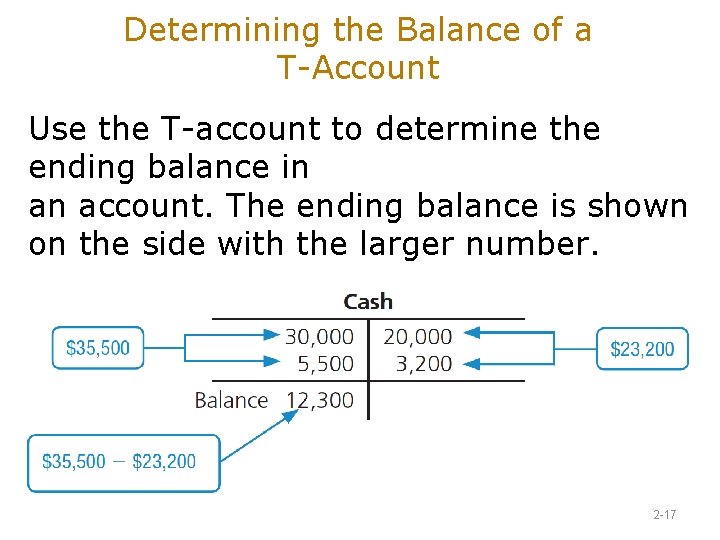
Determining the Balance of a T-Account Use the T-account to determine the ending balance in an account. The ending balance is shown on the side with the larger number. 2 -17
Learning Objective 3 Record transactions in a journal and post journal entries to the ledger 2 -18
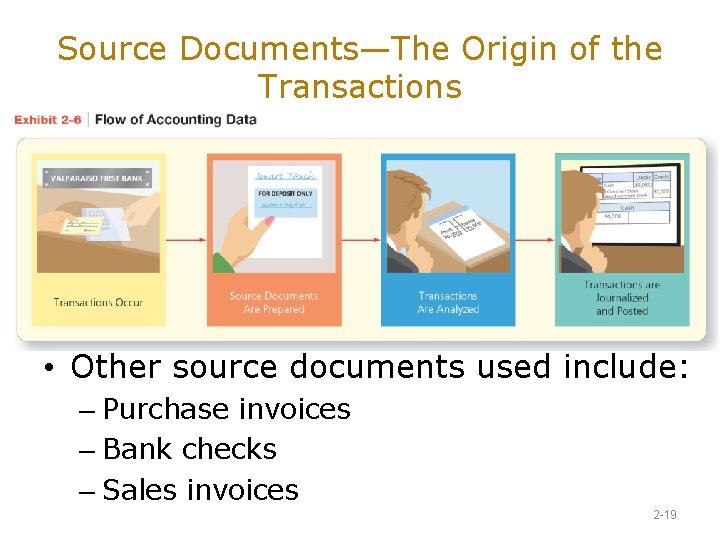
Source Documents—The Origin of the Transactions • Other source documents used include: – Purchase invoices – Bank checks – Sales invoices 2 -19
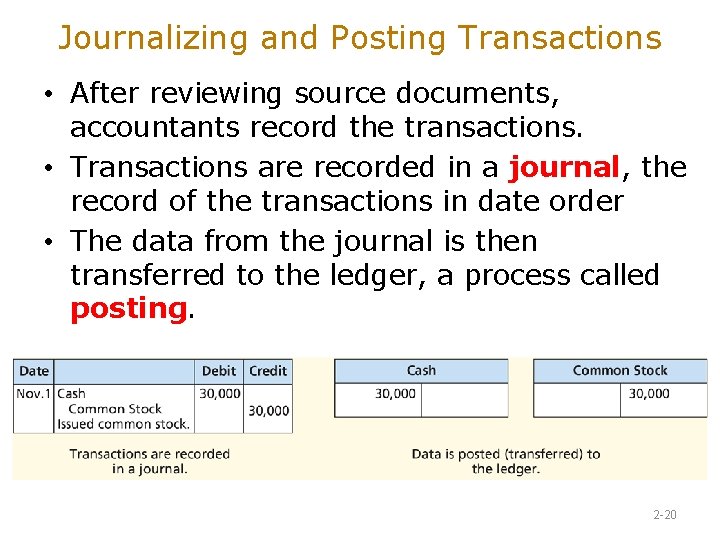
Journalizing and Posting Transactions • After reviewing source documents, accountants record the transactions. • Transactions are recorded in a journal, the record of the transactions in date order • The data from the journal is then transferred to the ledger, a process called posting. 2 -20
Journalizing and Posting Transactions The journalizing and posting process has five steps: • Step 1: Identify the accounts and the account types (asset, liability, or equity). • Step 2: Decide whether each account increases or decreases, then apply the rules of debits and credits. • Step 3: Record the transaction in the journal. • Step 4: Post the journal entry to the ledger. • Step 5: Determine whether the accounting equation is in balance. 2 -21
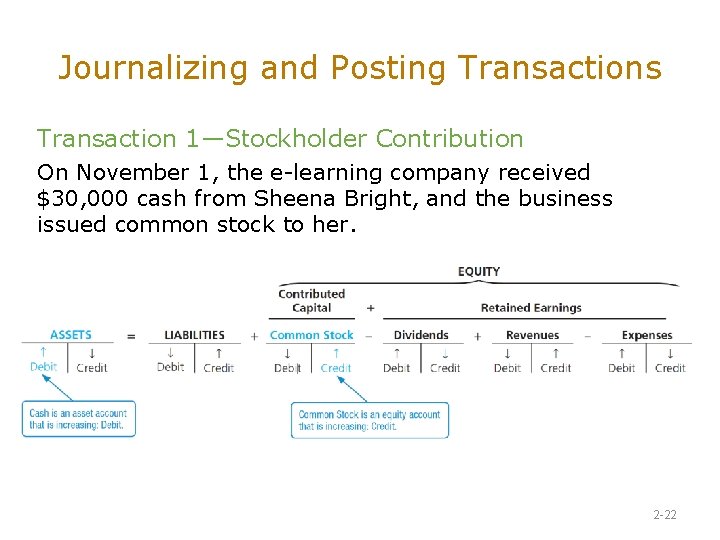
Journalizing and Posting Transactions Transaction 1—Stockholder Contribution On November 1, the e-learning company received $30, 000 cash from Sheena Bright, and the business issued common stock to her. 2 -22
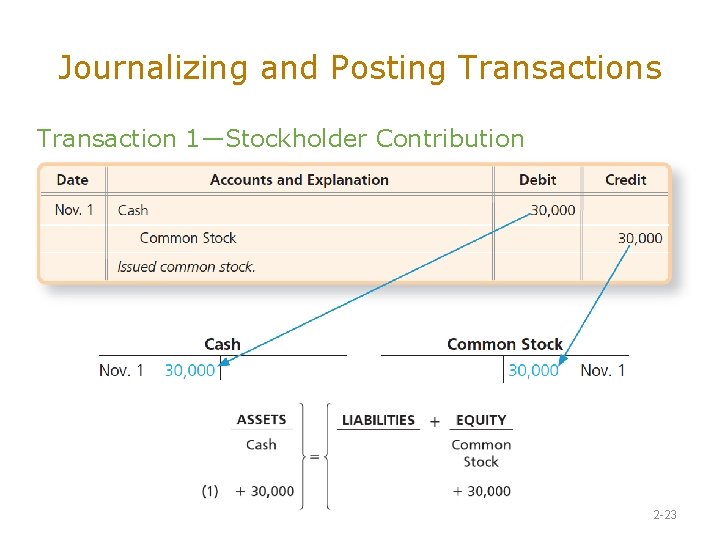
Journalizing and Posting Transactions Transaction 1—Stockholder Contribution 2 -23
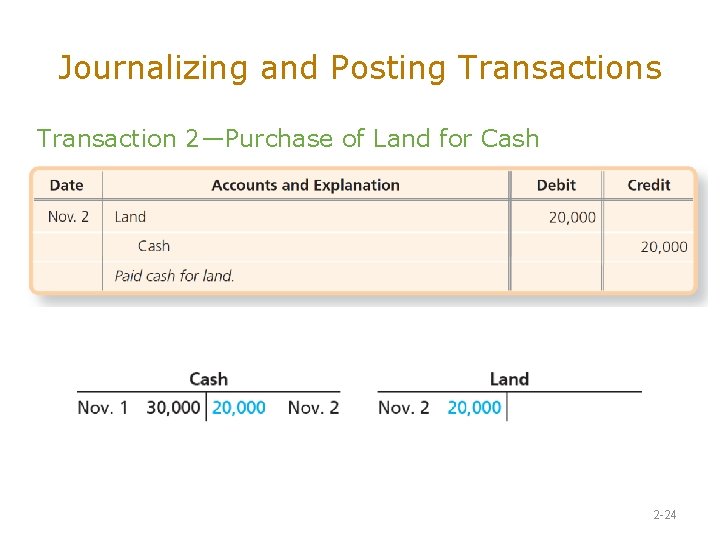
Journalizing and Posting Transactions Transaction 2—Purchase of Land for Cash 2 -24
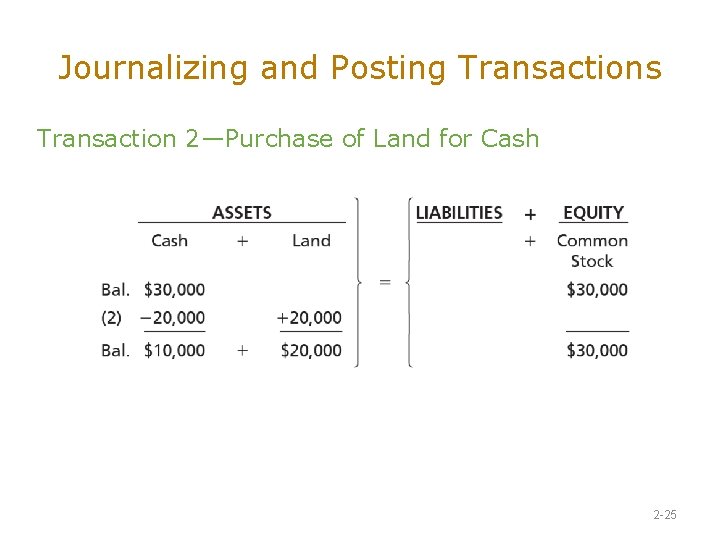
Journalizing and Posting Transactions Transaction 2—Purchase of Land for Cash 2 -25
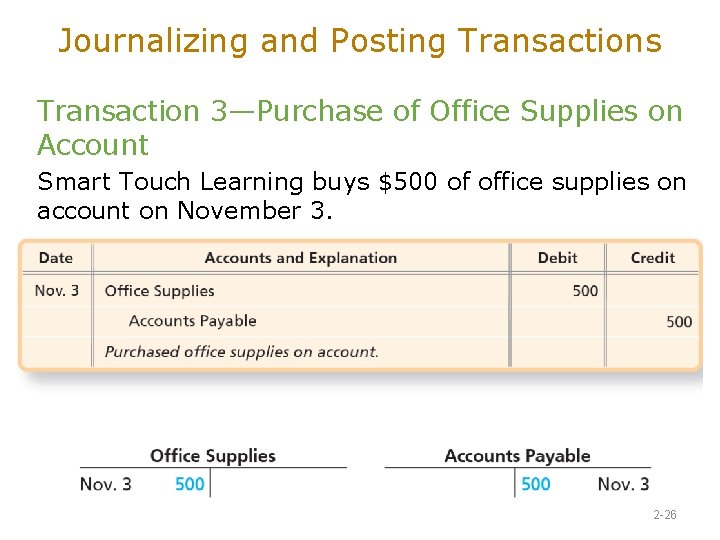
Journalizing and Posting Transactions Transaction 3—Purchase of Office Supplies on Account Smart Touch Learning buys $500 of office supplies on account on November 3. 2 -26
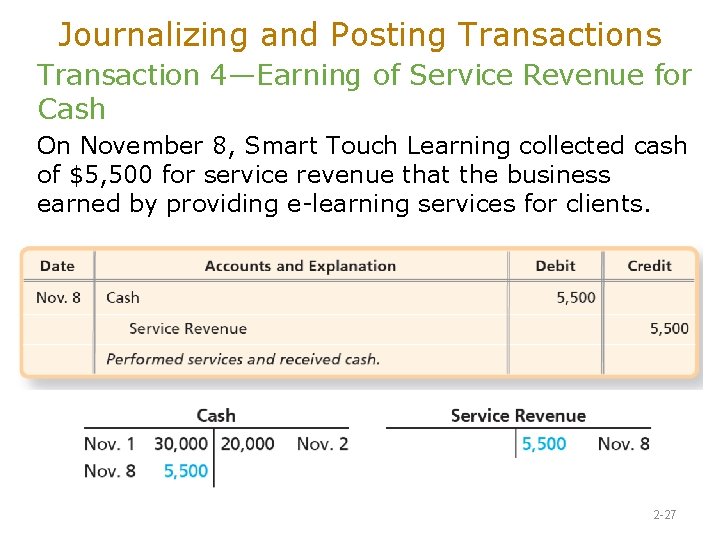
Journalizing and Posting Transactions Transaction 4—Earning of Service Revenue for Cash On November 8, Smart Touch Learning collected cash of $5, 500 for service revenue that the business earned by providing e-learning services for clients. 2 -27
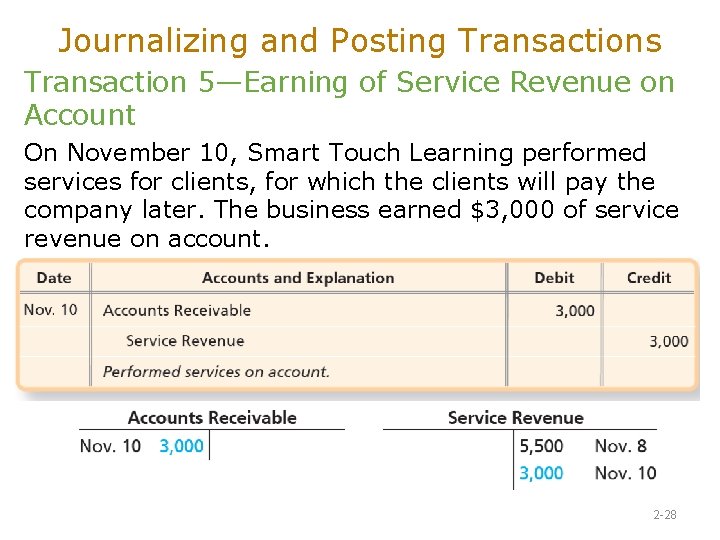
Journalizing and Posting Transactions Transaction 5—Earning of Service Revenue on Account On November 10, Smart Touch Learning performed services for clients, for which the clients will pay the company later. The business earned $3, 000 of service revenue on account. 2 -28
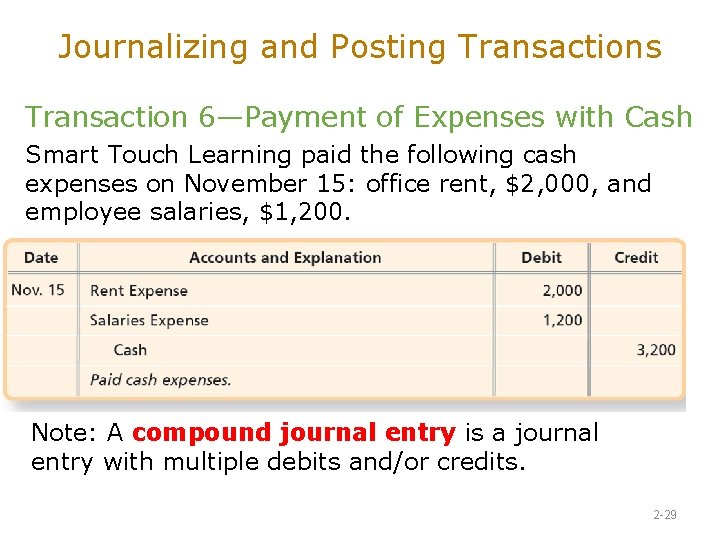
Journalizing and Posting Transactions Transaction 6—Payment of Expenses with Cash Smart Touch Learning paid the following cash expenses on November 15: office rent, $2, 000, and employee salaries, $1, 200. Note: A compound journal entry is a journal entry with multiple debits and/or credits. 2 -29
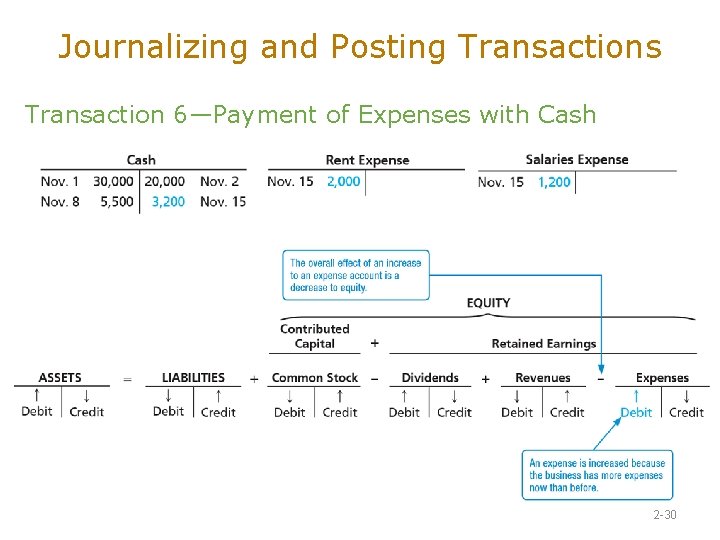
Journalizing and Posting Transactions Transaction 6—Payment of Expenses with Cash 2 -30
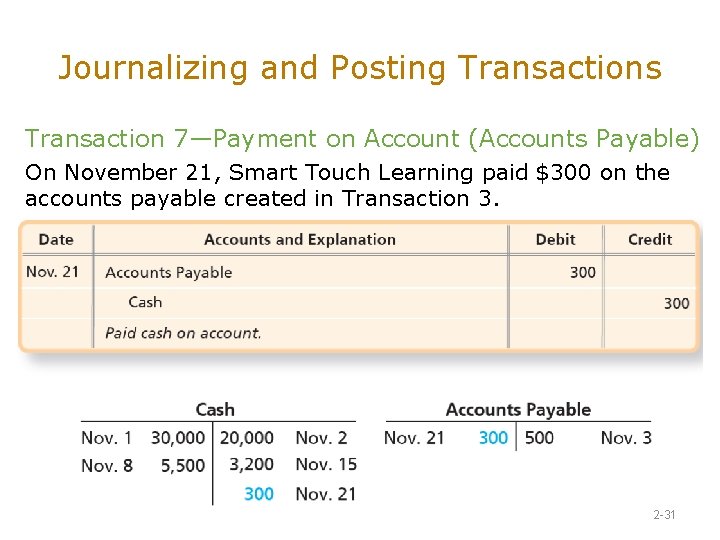
Journalizing and Posting Transactions Transaction 7—Payment on Account (Accounts Payable) On November 21, Smart Touch Learning paid $300 on the accounts payable created in Transaction 3. 2 -31

Journalizing and Posting Transactions Transaction 8—Collection on Account (Accounts Receivable) On November 22, Smart Touch Learning collected $2, 000 cash from a client in Transaction 5. 2 -32
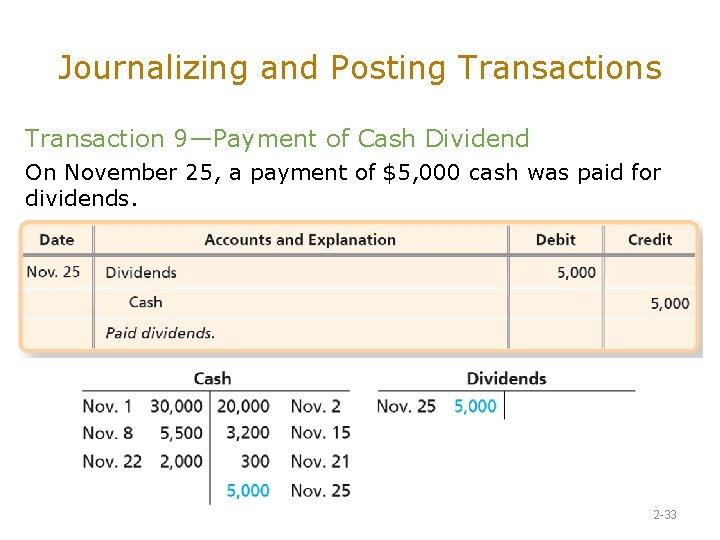
Journalizing and Posting Transactions Transaction 9—Payment of Cash Dividend On November 25, a payment of $5, 000 cash was paid for dividends. 2 -33
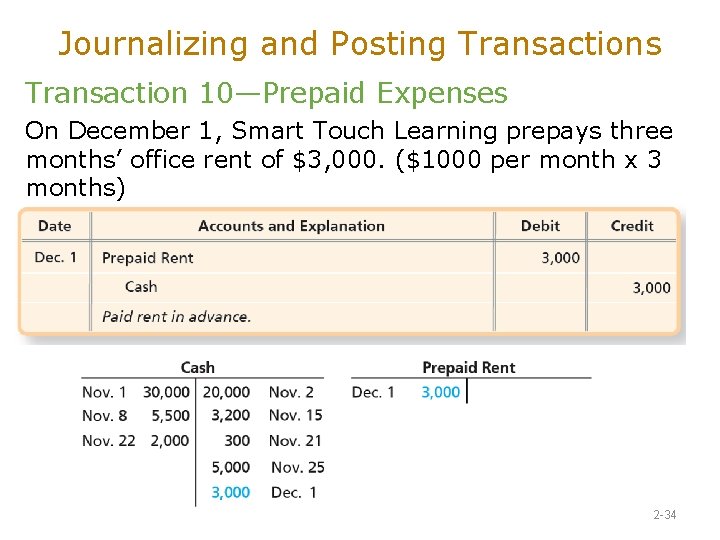
Journalizing and Posting Transactions Transaction 10—Prepaid Expenses On December 1, Smart Touch Learning prepays three months’ office rent of $3, 000. ($1000 per month x 3 months) 2 -34
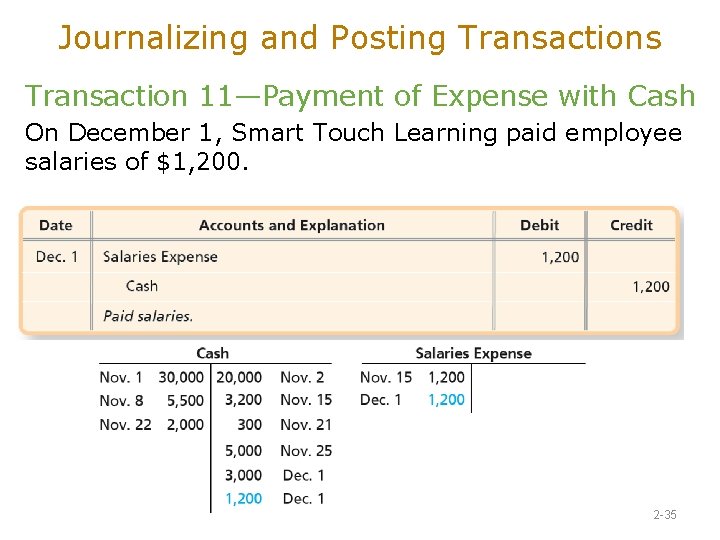
Journalizing and Posting Transactions Transaction 11—Payment of Expense with Cash On December 1, Smart Touch Learning paid employee salaries of $1, 200. 2 -35
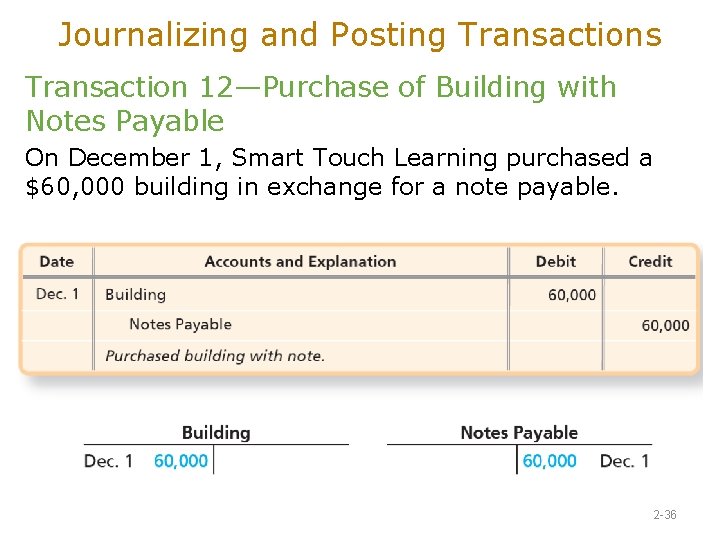
Journalizing and Posting Transactions Transaction 12—Purchase of Building with Notes Payable On December 1, Smart Touch Learning purchased a $60, 000 building in exchange for a note payable. 2 -36
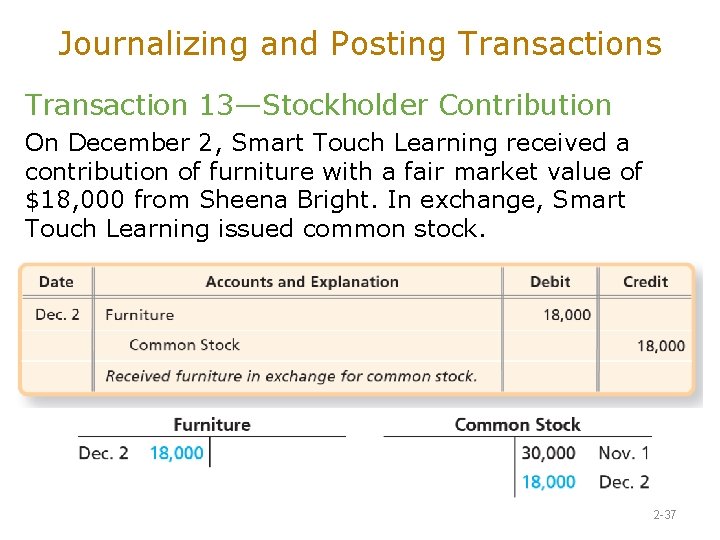
Journalizing and Posting Transactions Transaction 13—Stockholder Contribution On December 2, Smart Touch Learning received a contribution of furniture with a fair market value of $18, 000 from Sheena Bright. In exchange, Smart Touch Learning issued common stock. 2 -37
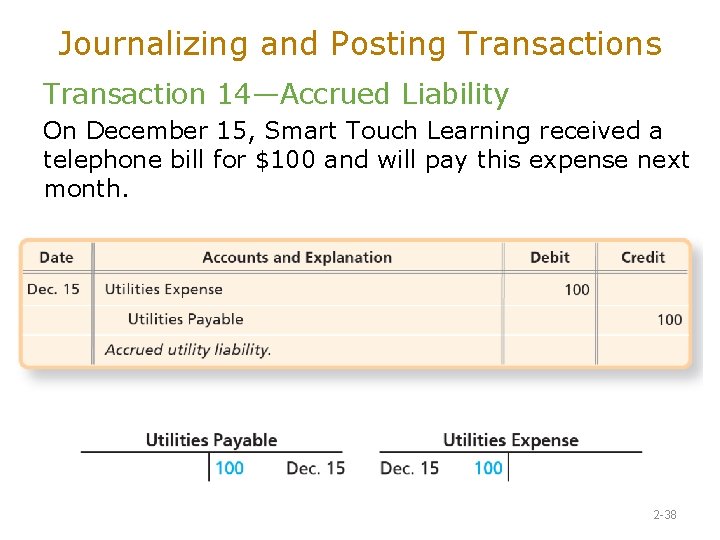
Journalizing and Posting Transactions Transaction 14—Accrued Liability On December 15, Smart Touch Learning received a telephone bill for $100 and will pay this expense next month. 2 -38
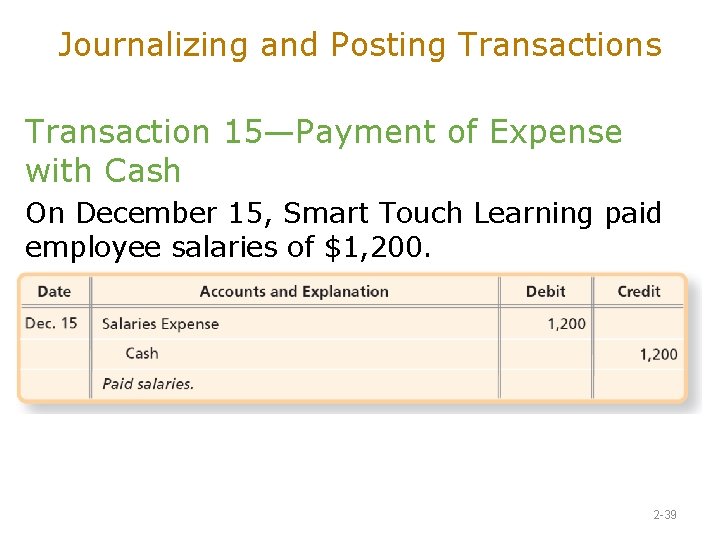
Journalizing and Posting Transactions Transaction 15—Payment of Expense with Cash On December 15, Smart Touch Learning paid employee salaries of $1, 200. 2 -39
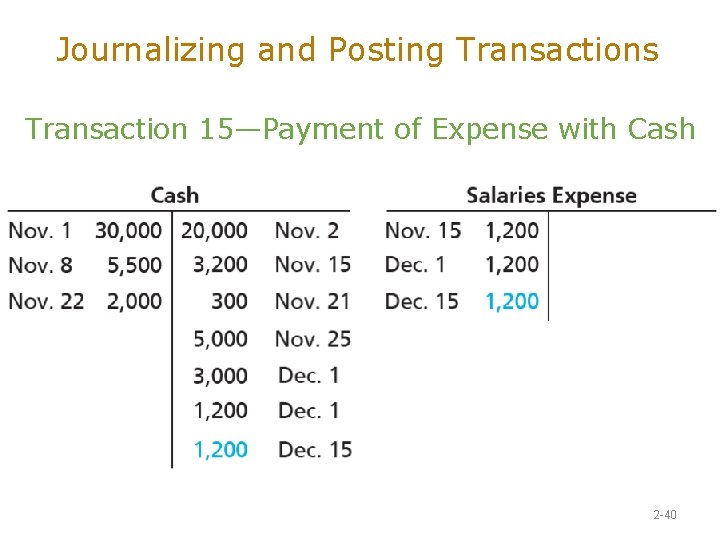
Journalizing and Posting Transactions Transaction 15—Payment of Expense with Cash 2 -40
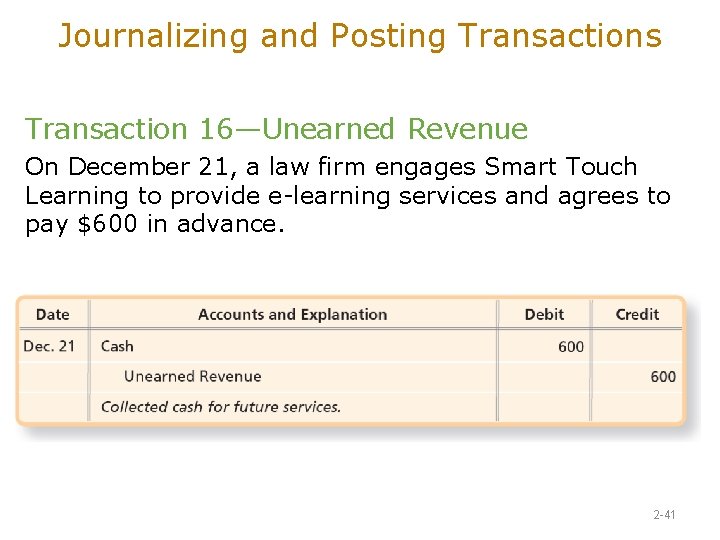
Journalizing and Posting Transactions Transaction 16—Unearned Revenue On December 21, a law firm engages Smart Touch Learning to provide e-learning services and agrees to pay $600 in advance. 2 -41
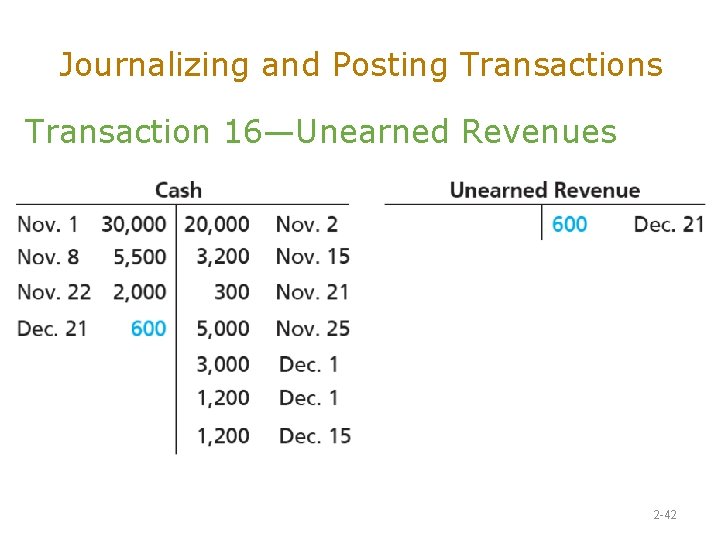
Journalizing and Posting Transactions Transaction 16—Unearned Revenues 2 -42
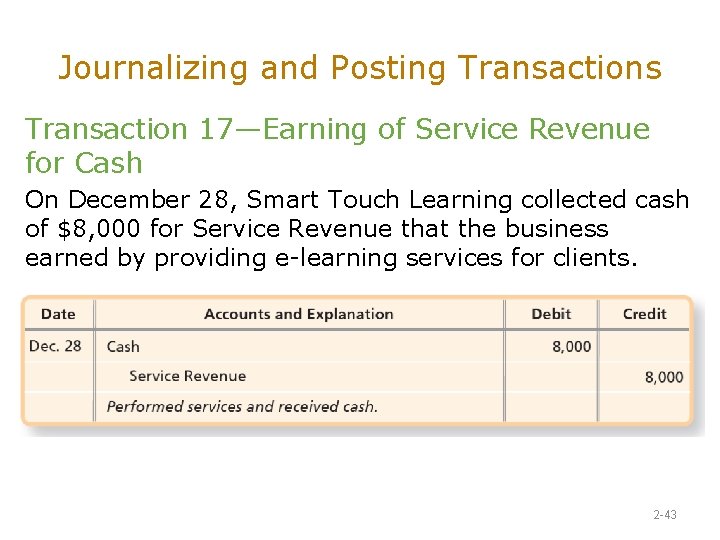
Journalizing and Posting Transactions Transaction 17—Earning of Service Revenue for Cash On December 28, Smart Touch Learning collected cash of $8, 000 for Service Revenue that the business earned by providing e-learning services for clients. 2 -43
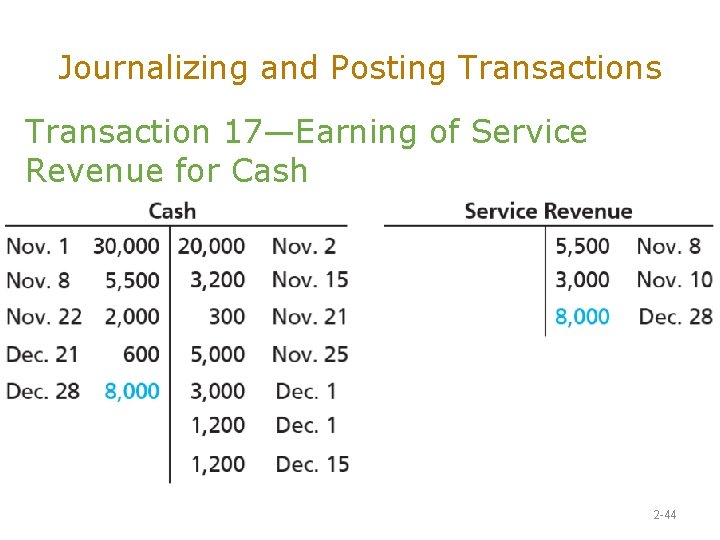
Journalizing and Posting Transactions Transaction 17—Earning of Service Revenue for Cash 2 -44
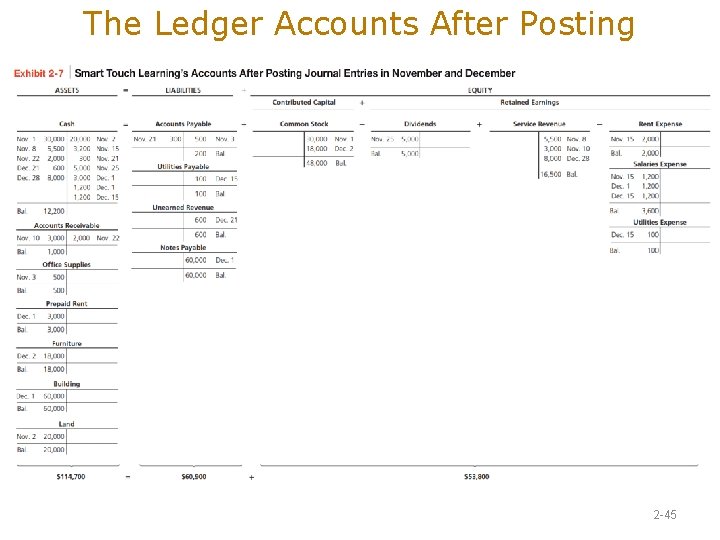
The Ledger Accounts After Posting 2 -45
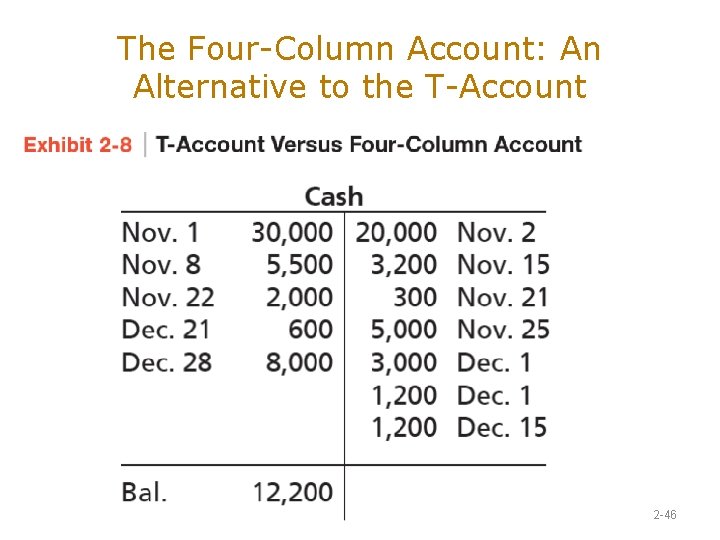
The Four-Column Account: An Alternative to the T-Account 2 -46
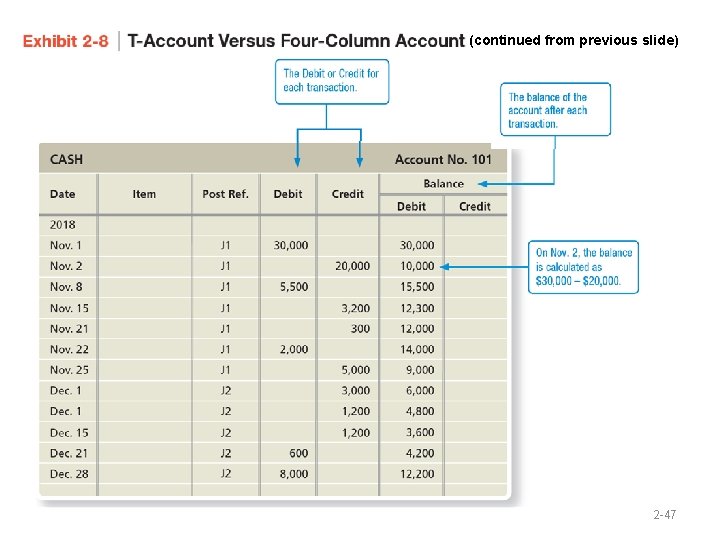
(continued from previous slide) 2 -47
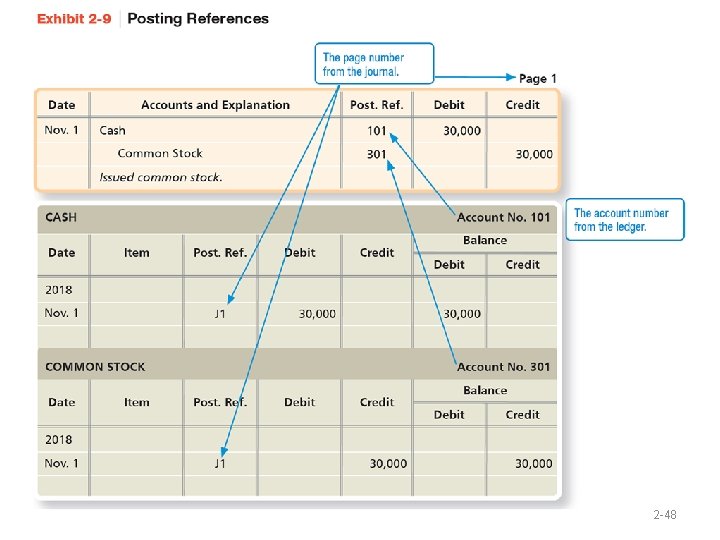
2 -48
Learning Objective 4 Prepare the trial balance and illustrate how to use the trial balance to prepare financial statements 2 -49
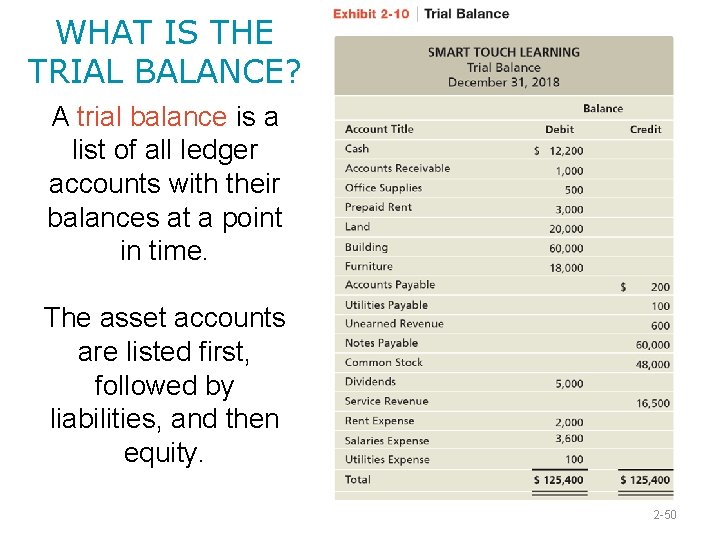
WHAT IS THE TRIAL BALANCE? A trial balance is a list of all ledger accounts with their balances at a point in time. The asset accounts are listed first, followed by liabilities, and then equity. 2 -50
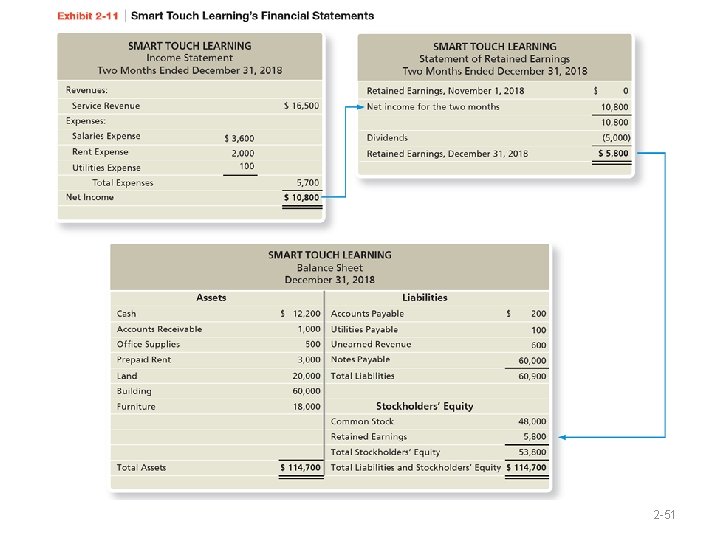
2 -51
Learning Objective 5 Use the debt ratio to evaluate business performance 2 -52
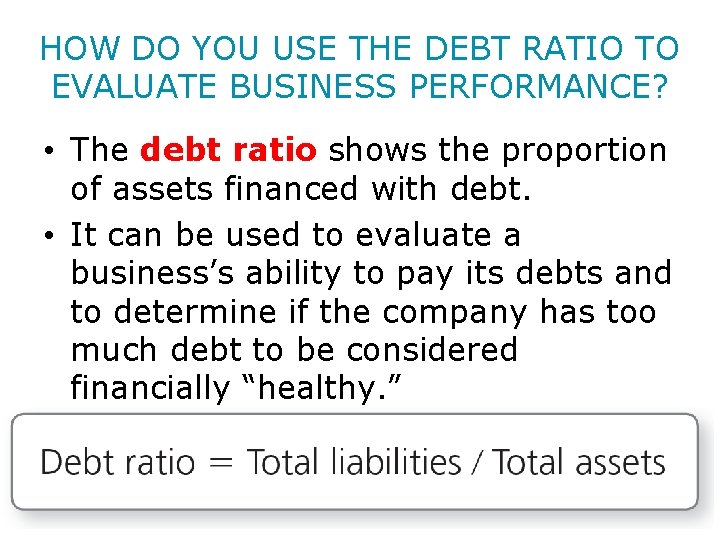
HOW DO YOU USE THE DEBT RATIO TO EVALUATE BUSINESS PERFORMANCE? • The debt ratio shows the proportion of assets financed with debt. • It can be used to evaluate a business’s ability to pay its debts and to determine if the company has too much debt to be considered financially “healthy. ” 2 -53
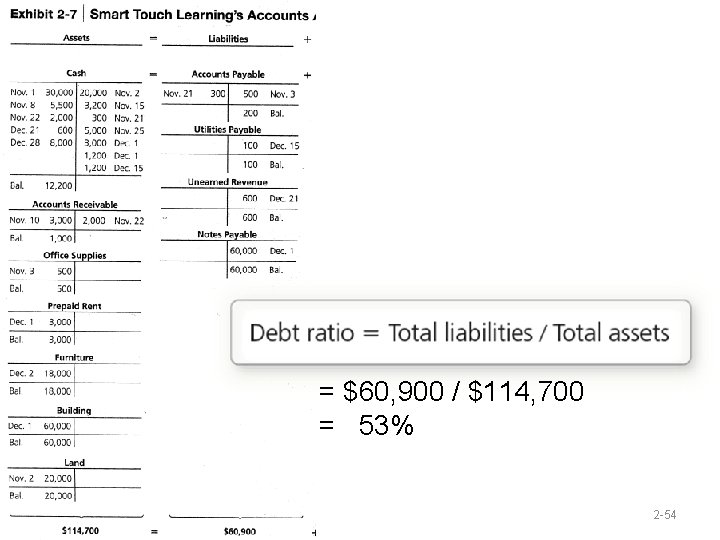
= $60, 900 / $114, 700 = 53% Copyright © 2014 Pearson Education, Inc. Publishing as Prentice Hall 2 -54
- Slides: 54