
Chapter 2 Reactions of Carbon Nucleophiles with Carbonyl
Chapter 2 Reactions of Carbon Nucleophiles with Carbonyl Compounds
Section 1. Habibi Reactions of Carbon Nucleophiles with Carbonyl Compounds The reactions described in this chapter include some of the most useful methods for carbon-carbon bond formation: the aldol reaction, the Robinson annulation, the Claisen condensation and other carbon acylation methods, and the Wittig reaction and other olefination methods. All of these reactions begin with the addition of a stabilized carbon nucleophile to a carbonyl group. The product that is isolated depends on the nature of the stabilizing substituent (Z) on the carbon nucleophile, the substituents (A and B) at the carbonyl group, and the ways in which A, B, and Z interact to complete the reaction pathway from the addition intermediate to the product. Four fundamental processes are outlined below.

Aldol addition and condensation lead to β-hydroxyalkyl or α-alkylidene derivatives of the carbon nucleophile (Pathway A). The acylation reactions follow Pathway B, in which a group leaves from the carbonyl electrophile. In the Wittig and related olefination reactions , the oxygen in the adduct reacts with the group Z to give an elimination product (Pathway C). Finally, if the enolate has an α-substituent that is a leaving group, cyclization can occur, as in. Pathway D. This is observed, for example, with enolates of α-haloesters.

We see that the aldol addition reaction provides β-hydroxy carbonyl compounds or, more generally, adducts with a hydroxy group β to the stabilizing group Z of the carbon nucleophile. Note also the stereochemistry. In some cases, two new stereogenic centers are formed. The hydroxyl group and any C(2) substituent on the enolate can be in a syn or anti relationship.
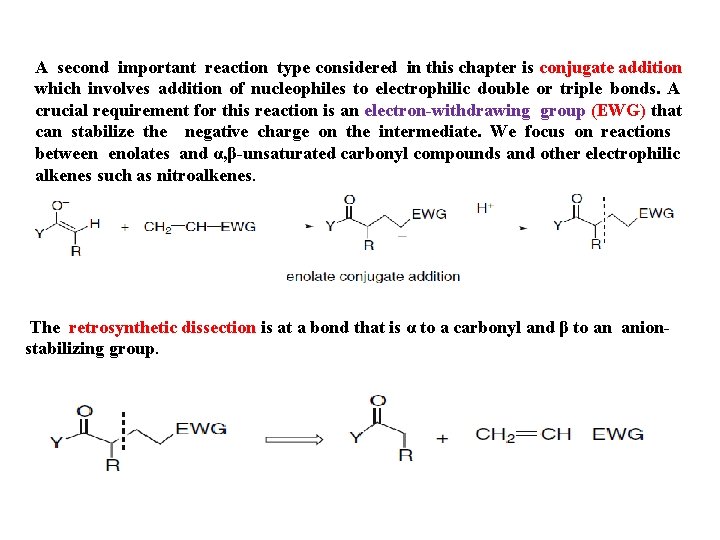
A second important reaction type considered in this chapter is conjugate addition which involves addition of nucleophiles to electrophilic double or triple bonds. A crucial requirement for this reaction is an electron-withdrawing group (EWG) that can stabilize the negative charge on the intermediate. We focus on reactions between enolates and α, β-unsaturated carbonyl compounds and other electrophilic alkenes such as nitroalkenes. The retrosynthetic dissection is at a bond that is α to a carbonyl and β to an anionstabilizing group.
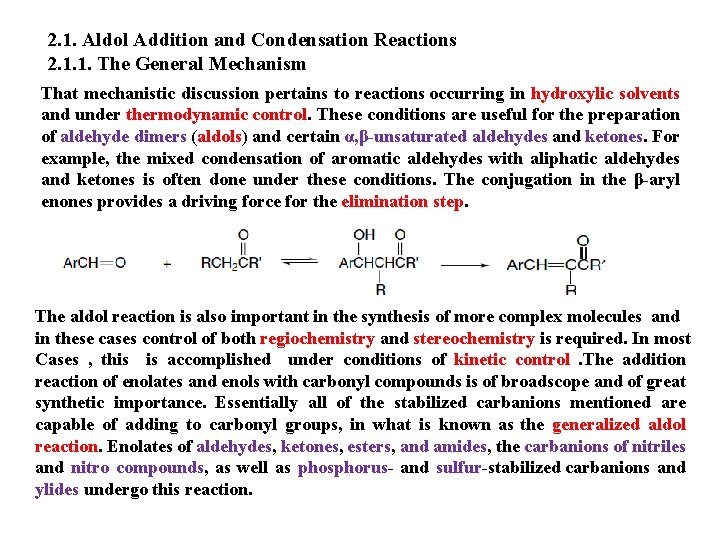
2. 1. Aldol Addition and Condensation Reactions 2. 1. 1. The General Mechanism That mechanistic discussion pertains to reactions occurring in hydroxylic solvents and under thermodynamic control. These conditions are useful for the preparation of aldehyde dimers (aldols) and certain α, β-unsaturated aldehydes and ketones. For example, the mixed condensation of aromatic aldehydes with aliphatic aldehydes and ketones is often done under these conditions. The conjugation in the β-aryl enones provides a driving force for the elimination step. The aldol reaction is also important in the synthesis of more complex molecules and in these cases control of both regiochemistry and stereochemistry is required. In most Cases , this is accomplished under conditions of kinetic control. The addition reaction of enolates and enols with carbonyl compounds is of broadscope and of great synthetic importance. Essentially all of the stabilized carbanions mentioned are capable of adding to carbonyl groups, in what is known as the generalized aldol reaction. Enolates of aldehydes, ketones, esters, and amides, the carbanions of nitriles and nitro compounds, as well as phosphorus- and sulfur-stabilized carbanions and ylides undergo this reaction.
2. 1. Aldol Reactions of Lithium Enolates Entries 1 to 4 in Scheme 2. 1 represent cases in which the nucleophilic component is a lithium enolate formed by kinetically controlled deprotonation. Lithium enolates are usually highly reactive toward aldehydes and addition occurs rapidly when the aldehyde is added, even at low temperature. The low temperature ensures kinetic control and enhances selectivity. When the addition step is complete, the reaction is stopped by neutralization and the product is isolated.

The fundamental mechanistic concept for diastereoselectivity of aldol reactions of lithium enolates is based on a cyclic TS in which both the carbonyl and enolate oxygen are coordinated to the lithium cation. The Lewis acid character of the lithium ion promotes reaction by increasing the carbonyl group electrophilicity and by bringing the reactants together in the TS. Other metal cations and electrophilic atoms can play the role of the Lewis acid, as we will see when we discuss reactions of boron and othermetal enolates. The fundamental concept is that the aldol addition normally occurs through a chairlike TS.
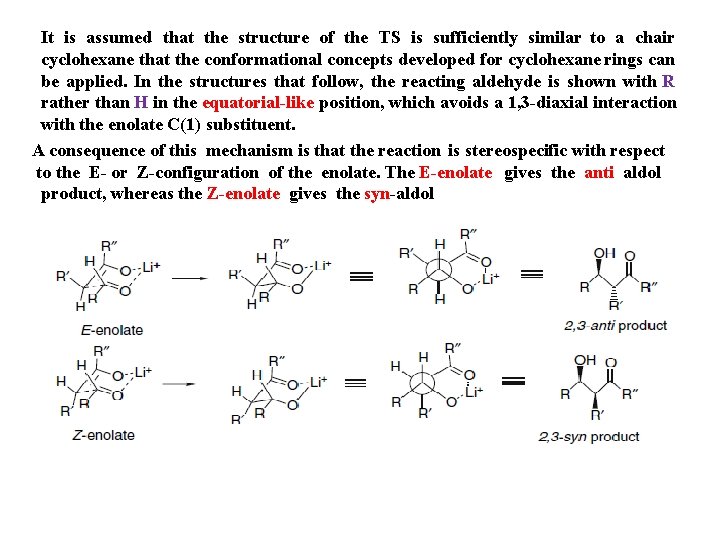
It is assumed that the structure of the TS is sufficiently similar to a chair cyclohexane that the conformational concepts developed for cyclohexane rings can be applied. In the structures that follow, the reacting aldehyde is shown with R rather than H in the equatorial-like position, which avoids a 1, 3 -diaxial interaction with the enolate C(1) substituent. A consequence of this mechanism is that the reaction is stereospecific with respect to the E- or Z-configuration of the enolate. The E-enolate gives the anti aldol product, whereas the Z-enolate gives the syn-aldol
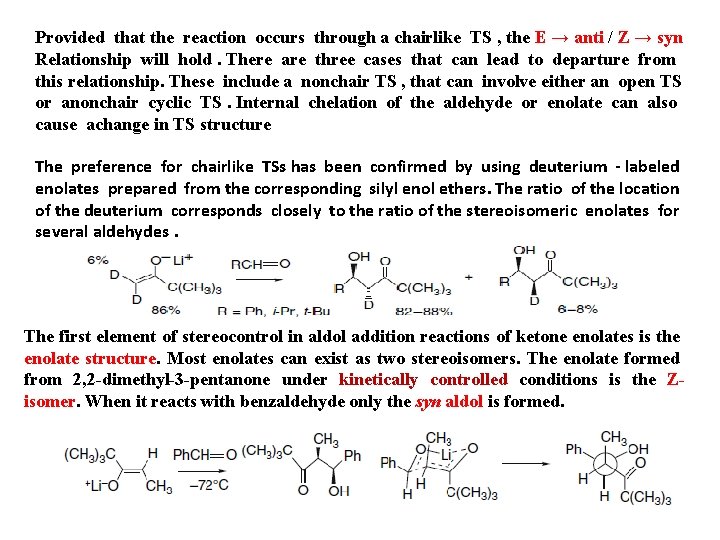
Provided that the reaction occurs through a chairlike TS , the E → anti / Z → syn Relationship will hold. There are three cases that can lead to departure from this relationship. These include a nonchair TS , that can involve either an open TS or anonchair cyclic TS. Internal chelation of the aldehyde or enolate can also cause achange in TS structure The preference for chairlike TSs has been confirmed by using deuterium - labeled enolates prepared from the corresponding silyl enol ethers. The ratio of the location of the deuterium corresponds closely to the ratio of the stereoisomeric enolates for several aldehydes. The first element of stereocontrol in aldol addition reactions of ketone enolates is the enolate structure. Most enolates can exist as two stereoisomers. The enolate formed from 2, 2 -dimethyl-3 -pentanone under kinetically controlled conditions is the Zisomer. When it reacts with benzaldehyde only the syn aldol is formed.

A similar preference formation of the syn aldol is found for other Z-enolates derived from ketones in which one of the carbonyl substituents is bulky. Ketone enolates with less bulky substituents show a decreasing stereoselectivity in the order t-butyl > i-propyl > ethyl. This trend parallels a decreasing preference for stereoselective formation of the Z-enolate. The enolates derived from cyclic ketones are necessarily E-isomers. The enolate of cyclohexanone reacts with benzaldehyde to give both possible stereoisomeric products. The stereoselectivity is about 5: 1 in favor of the anti isomer under optimum conditions.
From these and many related examples the following generalizations can be made About kinetic stereoselection in aldol additions of lithium enolates. (1) The chair TS model provides a basis for analyzing the stereoselectivity observed in aldol reactions of ketone enolates having one bulky substituent. The preference is Z-enolate→syn aldol; E-enolate→anti aldol. (2) When the enolate has no bulky substituent, stereoselectivity is low. (3) Z-Enolates are more stereoselective than E-enolates. The requirement that an enolate have at least one bulky substituent restricts the types of compounds that give highly stereoselective aldol additions via the lithium enolate method. Furthermore, only the enolate formed by kinetic deprotonation is directly available. Whereas ketones with one tertiary alkyl substituent give mainly the Zenolate, less highly substituted ketones usually give mixtures of E- and Z-enolates. Therefore efforts aimed at increasing the stereoselectivity of aldol additions have been directed at two faces of the problem: (1) better control of enolate stereochemistry , and (2) enhancement of the degree of Stereoselectivity in the addition step.

The E: Z ratio can be modified by the precise conditions formation of the enolate. For example, the E: Z ratio for 3 -pentanone and 2 -methyl-3 -pentanone can be increased by use of a 1: 1 lithium tetramethylpiperidide (Li. TMP) -Li. Br mixture to kinetic enolization. The precise mechanism of this effect is still a matter of investigation, but it is probably due to an aggregate species containing bromide acting as the base.
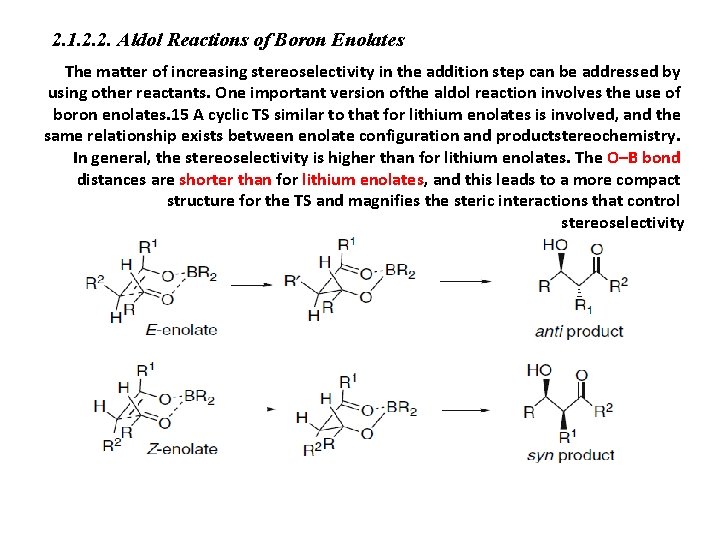
2. 1. 2. 2. Aldol Reactions of Boron Enolates The matter of increasing stereoselectivity in the addition step can be addressed by using other reactants. One important version ofthe aldol reaction involves the use of boron enolates. 15 A cyclic TS similar to that for lithium enolates is involved, and the same relationship exists between enolate configuration and productstereochemistry. In general, the stereoselectivity is higher than for lithium enolates. The O–B bond distances are shorter than for lithium enolates, and this leads to a more compact structure for the TS and magnifies the steric interactions that control stereoselectivity
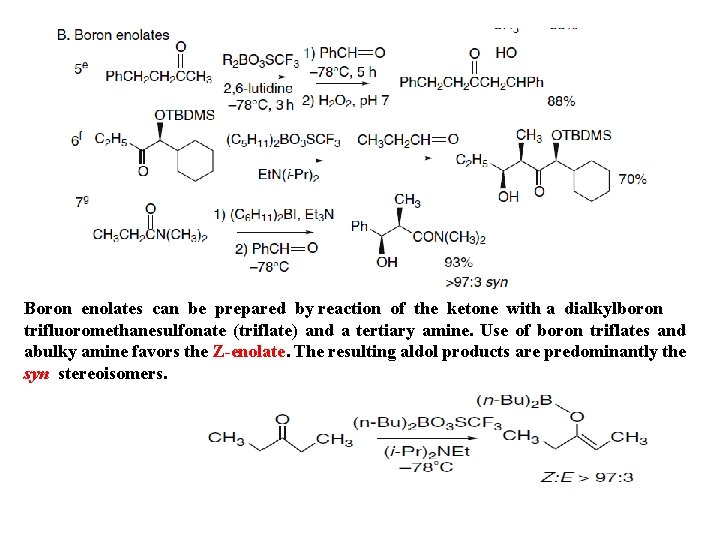
Boron enolates can be prepared by reaction of the ketone with a dialkylboron trifluoromethanesulfonate (triflate) and a tertiary amine. Use of boron triflates and abulky amine favors the Z-enolate. The resulting aldol products are predominantly the syn stereoisomers.
Section 2. Siavashi 2. 1. 3. Aldol Addition Reactions of Enolates of Esters and Other Carbonyl Derivatives The enolates of other carbonyl compounds can be used in mixed aldol reactions. Extensive use has been made of the enolates of esters, thiol esters, amides, and imides, including several that serve as chiral auxiliaries. The methods formation of these enolates are similar to those for ketones. Lithium, boron, titanium, and tin derivatives have all been widely used. The silyl ethers of ester enolates, which are called silyl ketene acetals, show reactivity that is analogous to silyl enol ethers and are covalent equivalents of ester enolates. The silyl thioketene acetal derivatives of thiol esters are also useful. Because of their usefulness in aldol additions and other synthetic methods specially Section there has been a good deal of interest in the factors control the stereoselectivity of enolate formation from esters. For simple esters such as ethyl propanoate, the E-enolate is preferred under kinetic conditions using a strong base such as LDA in THF solution. Inclusion of a strong cation-solvating cosolvent, such as HMPA or DMPU, favors the Z-enolate. These enolates can be trapped analyzed as the corresponding silyl ketene acetals. The relationships are similar to those discussed formation of ketone enolates
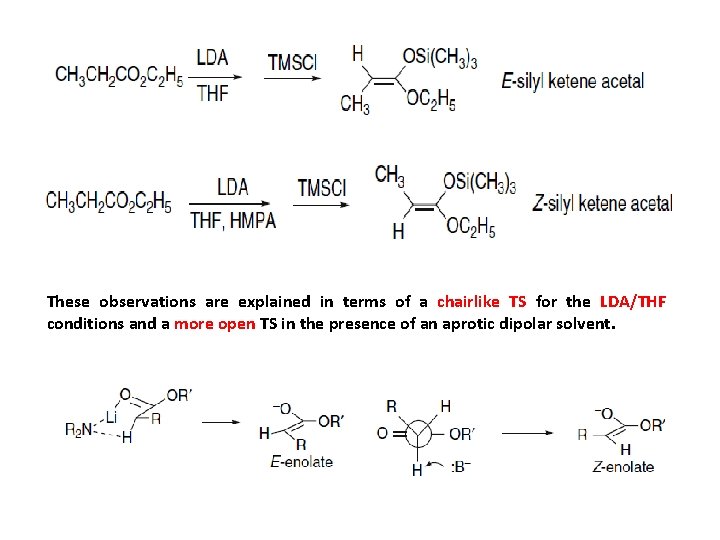
These observations are explained in terms of a chairlike TS for the LDA/THF conditions and a more open TS in the presence of an aprotic dipolar solvent.
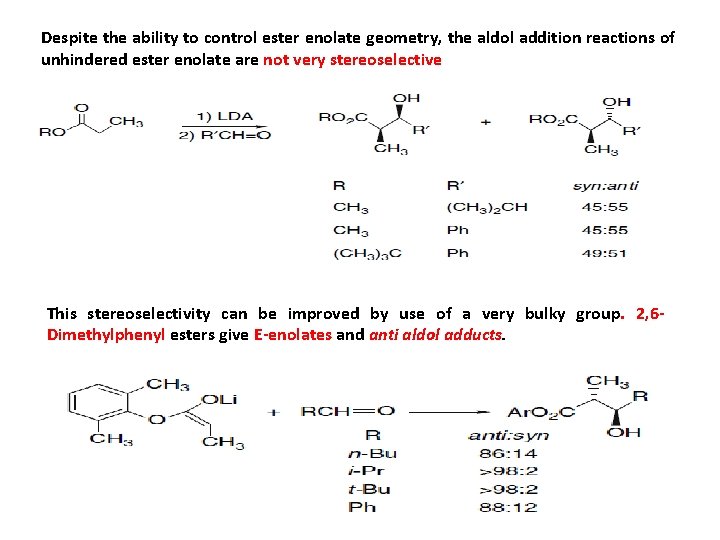
Despite the ability to control ester enolate geometry, the aldol addition reactions of unhindered ester enolate are not very stereoselective This stereoselectivity can be improved by use of a very bulky group. 2, 6 Dimethylphenyl esters give E-enolates and anti aldol adducts.
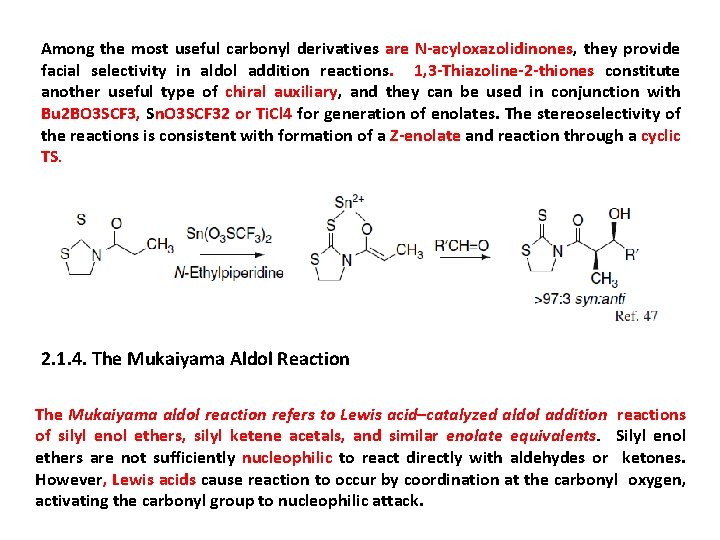
Among the most useful carbonyl derivatives are N-acyloxazolidinones, they provide facial selectivity in aldol addition reactions. 1, 3 -Thiazoline-2 -thiones constitute another useful type of chiral auxiliary, and they can be used in conjunction with Bu 2 BO 3 SCF 3, Sn. O 3 SCF 32 or Ti. Cl 4 for generation of enolates. The stereoselectivity of the reactions is consistent with formation of a Z-enolate and reaction through a cyclic TS. 2. 1. 4. The Mukaiyama Aldol Reaction The Mukaiyama aldol reaction refers to Lewis acid–catalyzed aldol addition reactions of silyl enol ethers, silyl ketene acetals, and similar enolate equivalents. Silyl enol ethers are not sufficiently nucleophilic to react directly with aldehydes or ketones. However, Lewis acids cause reaction to occur by coordination at the carbonyl oxygen, activating the carbonyl group to nucleophilic attack.
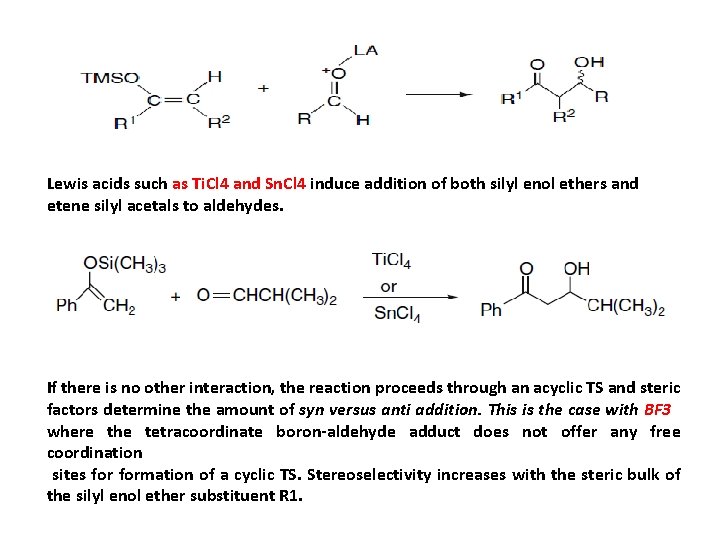
Lewis acids such as Ti. Cl 4 and Sn. Cl 4 induce addition of both silyl enol ethers and etene silyl acetals to aldehydes. If there is no other interaction, the reaction proceeds through an acyclic TS and steric factors determine the amount of syn versus anti addition. This is the case with BF 3 where the tetracoordinate boron-aldehyde adduct does not offer any free coordination sites formation of a cyclic TS. Stereoselectivity increases with the steric bulk of the silyl enol ether substituent R 1.
2. 1. 6. Intermolecular Aldol Reactions and the Robinson Annulations The aldol reaction can be applied to dicarbonyl compounds in which the two groups are favorably disposed for intermolecular reaction. Kinetic studies on cyclization of 5 -oxohexanal, 2, 5 -hexanedione, and 2, 6 -heptanedione indicate that formation of five-member ed rings is thermodynamically somewhat more favorable than formation of six-member ed rings, but that the latter is several thousand times faster. 170 A catalytic amount of acid or base is frequently satisfactory formation of five- and six-member ed rings, but with more complex structures, the techniques required for directed aldol condensations are used.
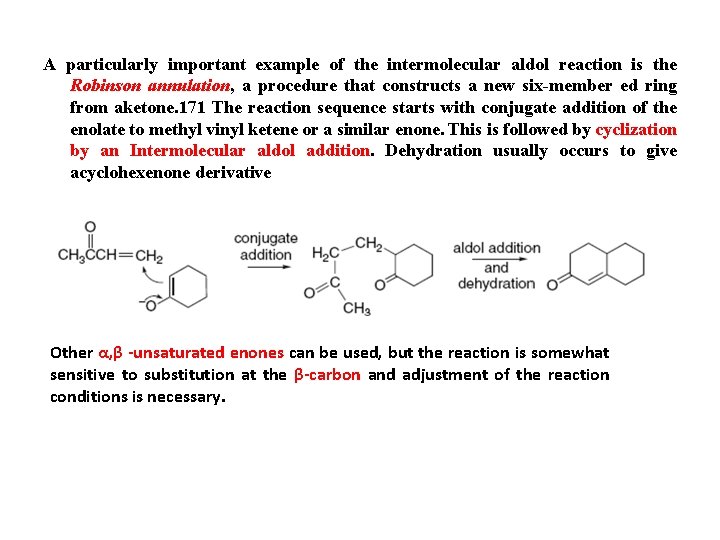
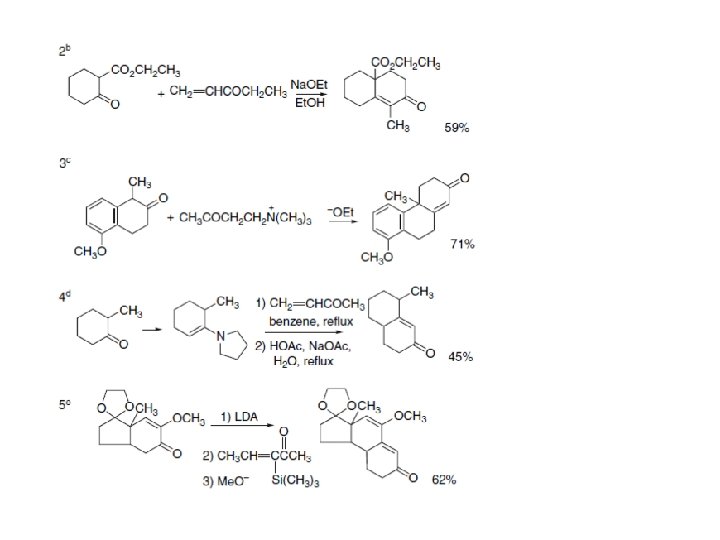
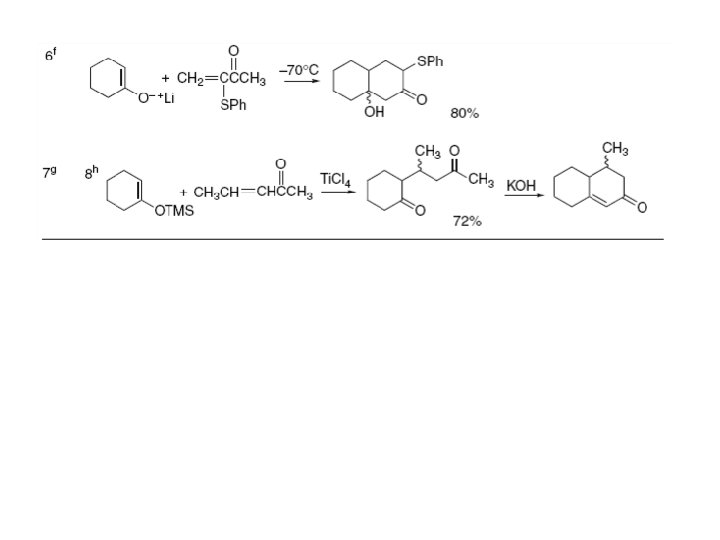
A particularly important example of the intermolecular aldol reaction is the Robinson annulation, a procedure that constructs a new six-member ed ring from aketone. 171 The reaction sequence starts with conjugate addition of the enolate to methyl vinyl ketene or a similar enone. This is followed by cyclization by an Intermolecular aldol addition. Dehydration usually occurs to give acyclohexenone derivative Other α, β -unsaturated enones can be used, but the reaction is somewhat sensitive to substitution at the β-carbon and adjustment of the reaction conditions is necessary.
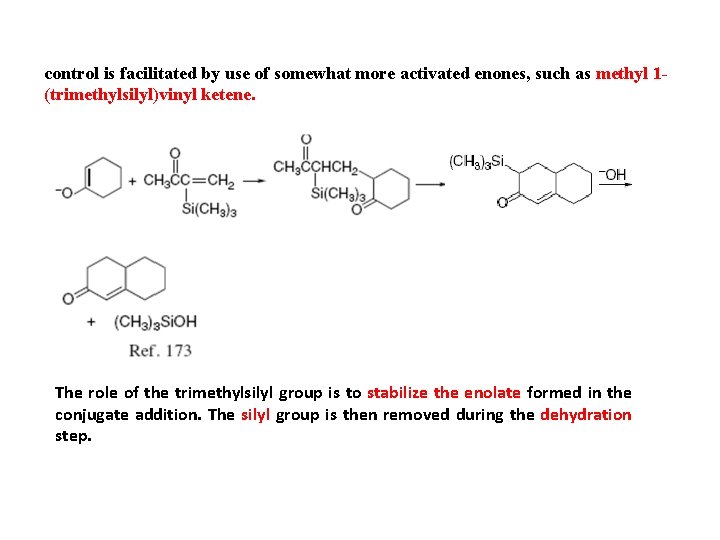
control is facilitated by use of somewhat more activated enones, such as methyl 1(trimethylsilyl)vinyl ketene. The role of the trimethylsilyl group is to stabilize the enolate formed in the conjugate addition. The silyl group is then removed during the dehydration step.
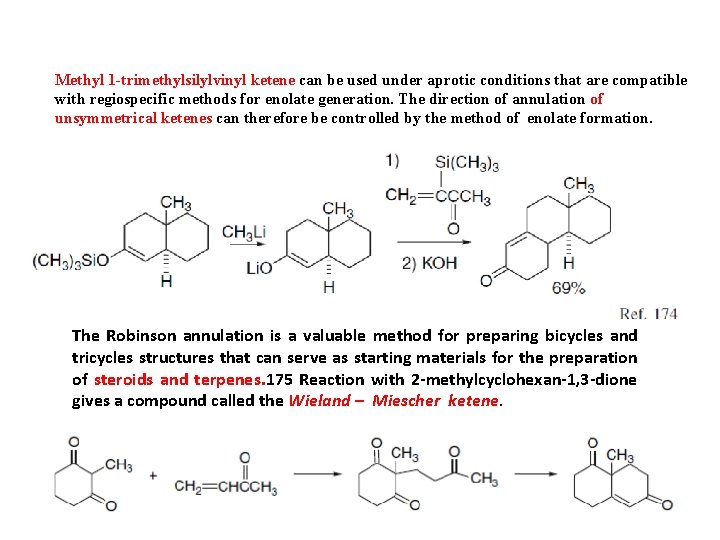
Methyl 1 -trimethylsilylvinyl ketene can be used under aprotic conditions that are compatible with regiospecific methods for enolate generation. The direction of annulation of unsymmetrical ketenes can therefore be controlled by the method of enolate formation. The Robinson annulation is a valuable method for preparing bicycles and tricycles structures that can serve as starting materials for the preparation of steroids and terpenes. 175 Reaction with 2 -methylcyclohexan-1, 3 -dione gives a compound called the Wieland – Miescher ketene.
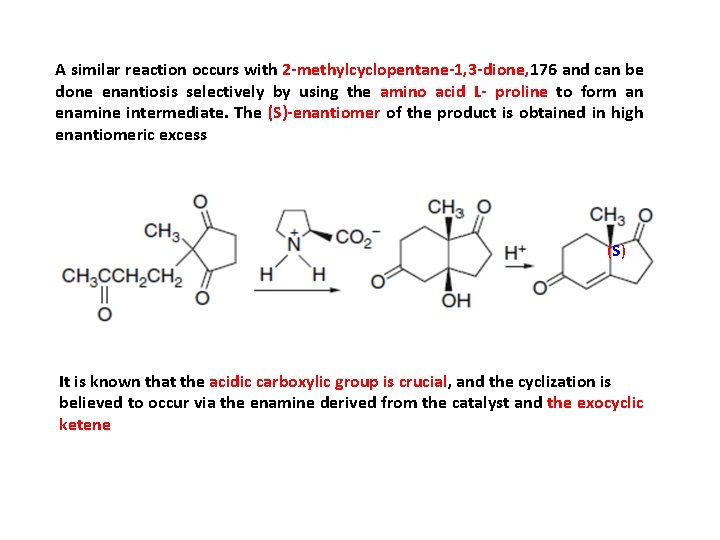
A similar reaction occurs with 2 -methylcyclopentane-1, 3 -dione, 176 and can be done enantiosis selectively by using the amino acid L- proline to form an enamine intermediate. The (S)-enantiomer of the product is obtained in high enantiomeric excess (S ) It is known that the acidic carboxylic group is crucial, and the cyclization is believed to occur via the enamine derived from the catalyst and the exocyclic ketene
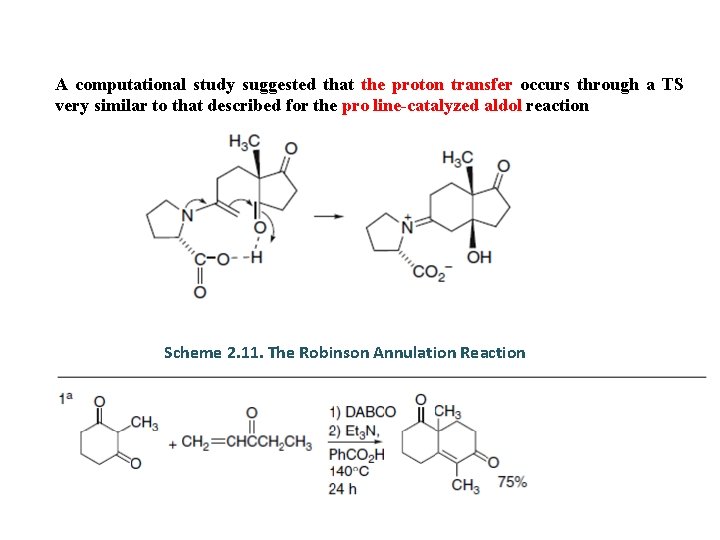
A computational study suggested that the proton transfer occurs through a TS very similar to that described for the pro line-catalyzed aldol reaction Scheme 2. 11. The Robinson Annulation Reaction
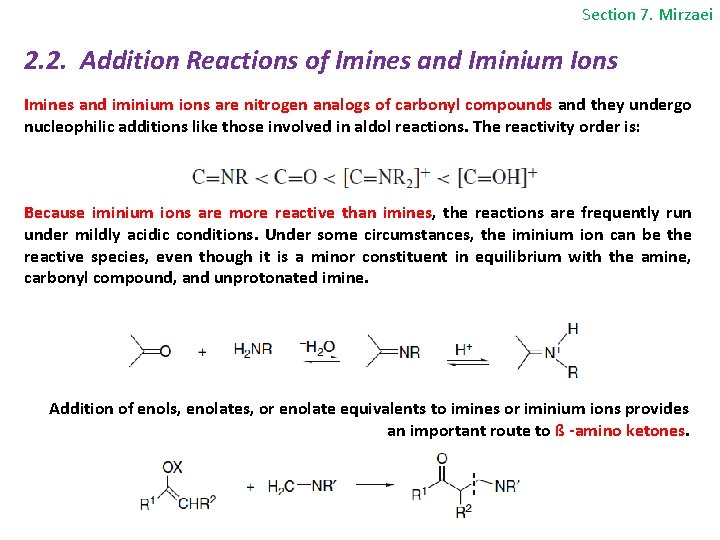
Section 7. Mirzaei 2. 2. Addition Reactions of Imines and Iminium Ions Imines and iminium ions are nitrogen analogs of carbonyl compounds and they undergo nucleophilic additions like those involved in aldol reactions. The reactivity order is: Because iminium ions are more reactive than imines, the reactions are frequently run under mildly acidic conditions. Under some circumstances, the iminium ion can be the reactive species, even though it is a minor constituent in equilibrium with the amine, carbonyl compound, and unprotonated imine. Addition of enols, enolates, or enolate equivalents to imines or iminium ions provides an important route to ß -amino ketones.
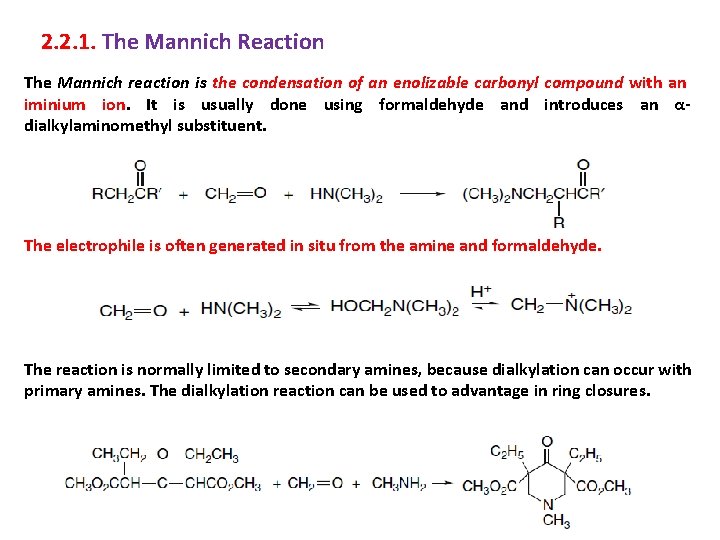
2. 2. 1. The Mannich Reaction The Mannich reaction is the condensation of an enolizable carbonyl compound with an iminium ion. It is usually done using formaldehyde and introduces an αdialkylaminomethyl substituent. The electrophile is often generated in situ from the amine and formaldehyde. The reaction is normally limited to secondary amines, because dialkylation can occur with primary amines. The dialkylation reaction can be used to advantage in ring closures. 30
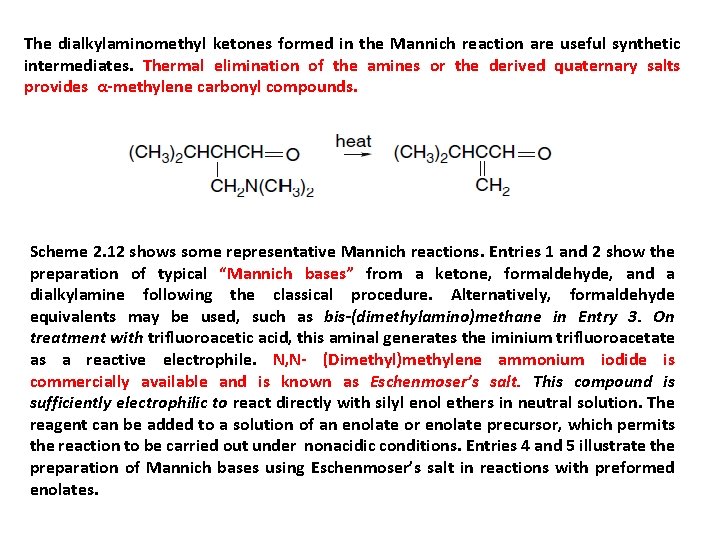
The dialkylaminomethyl ketones formed in the Mannich reaction are useful synthetic intermediates. Thermal elimination of the amines or the derived quaternary salts provides α-methylene carbonyl compounds. Scheme 2. 12 shows some representative Mannich reactions. Entries 1 and 2 show the preparation of typical “Mannich bases” from a ketone, formaldehyde, and a dialkylamine following the classical procedure. Alternatively, formaldehyde equivalents may be used, such as bis-(dimethylamino)methane in Entry 3. On treatment with trifluoroacetic acid, this aminal generates the iminium trifluoroacetate as a reactive electrophile. N, N- (Dimethyl)methylene ammonium iodide is commercially available and is known as Eschenmoser’s salt. This compound is sufficiently electrophilic to react directly with silyl enol ethers in neutral solution. The reagent can be added to a solution of an enolate or enolate precursor, which permits the reaction to be carried out under nonacidic conditions. Entries 4 and 5 illustrate the preparation of Mannich bases using Eschenmoser’s salt in reactions with preformed enolates.
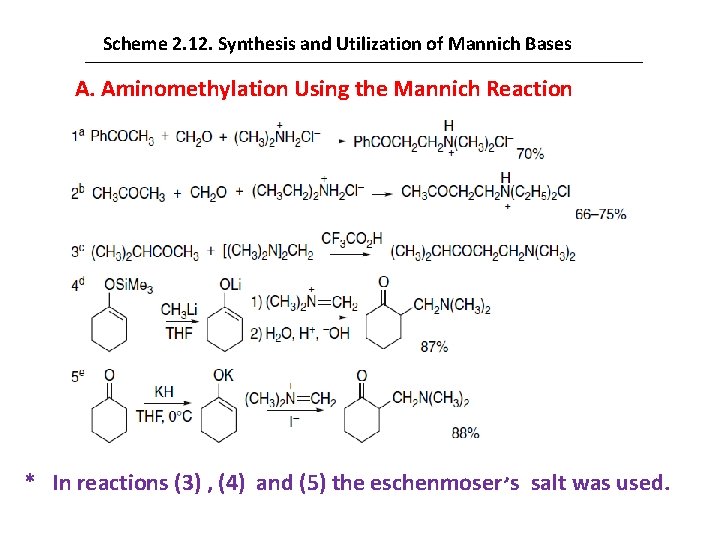
Scheme 2. 12. Synthesis and Utilization of Mannich Bases A. Aminomethylation Using the Mannich Reaction * In reactions (3) , (4) and (5) the eschenmoser s salt was used.
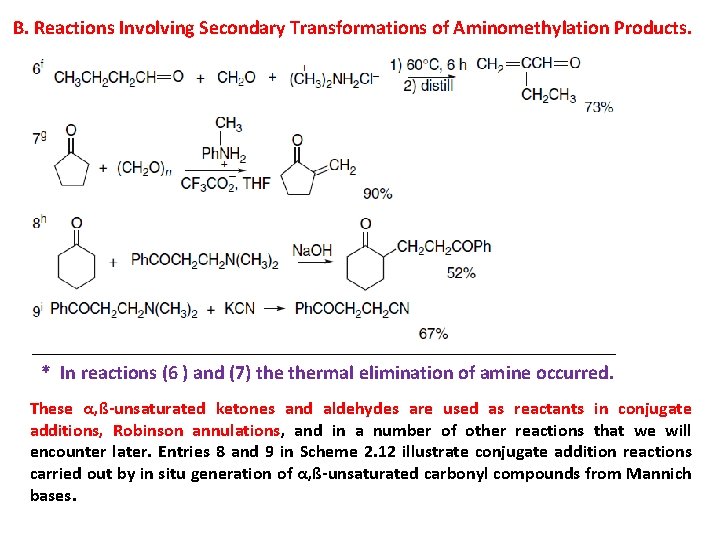
B. Reactions Involving Secondary Transformations of Aminomethylation Products. * In reactions (6 ) and (7) thermal elimination of amine occurred. These α, ß-unsaturated ketones and aldehydes are used as reactants in conjugate additions, Robinson annulations, and in a number of other reactions that we will encounter later. Entries 8 and 9 in Scheme 2. 12 illustrate conjugate addition reactions carried out by in situ generation of α, ß-unsaturated carbonyl compounds from Mannich bases.
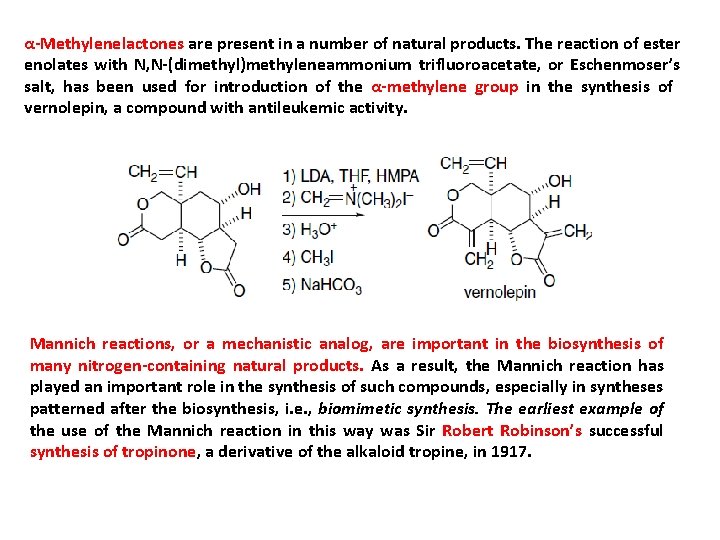
α-Methylenelactones are present in a number of natural products. The reaction of ester enolates with N, N-(dimethyl)methyleneammonium trifluoroacetate, or Eschenmoser’s salt, has been used for introduction of the α-methylene group in the synthesis of vernolepin, a compound with antileukemic activity. Mannich reactions, or a mechanistic analog, are important in the biosynthesis of many nitrogen-containing natural products. As a result, the Mannich reaction has played an important role in the synthesis of such compounds, especially in syntheses patterned after the biosynthesis, i. e. , biomimetic synthesis. The earliest example of the use of the Mannich reaction in this way was Sir Robert Robinson’s successful synthesis of tropinone, a derivative of the alkaloid tropine, in 1917.

As with aldol and Mukaiyama addition reactions, the Mannich reaction is subject to enantioselective catalysis. A catalyst consisting of Ag+ and the chiral imino aryl phosphine 22 achieves high levels of enantioselectivity with a range of N-(2 methoxyphenyl)imines. The 2 -methoxyphenyl group is evidently involved in an interaction with the catalyst and enhances enantioselectivity relative to other N-aryl substituents. The isopropanol serves as a proton source and as the ultimate acceptor of the trimethyl silyl group. 35
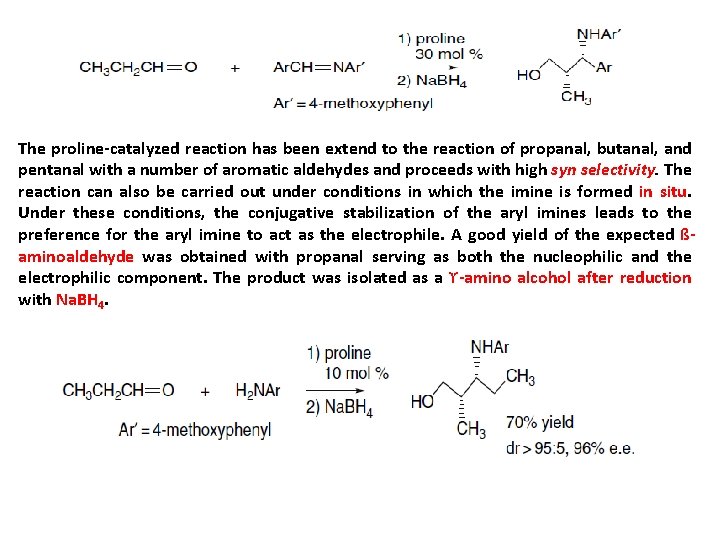
The proline-catalyzed reaction has been extend to the reaction of propanal, butanal, and pentanal with a number of aromatic aldehydes and proceeds with high syn selectivity. The reaction can also be carried out under conditions in which the imine is formed in situ. Under these conditions, the conjugative stabilization of the aryl imines leads to the preference for the aryl imine to act as the electrophile. A good yield of the expected ßaminoaldehyde was obtained with propanal serving as both the nucleophilic and the electrophilic component. The product was isolated as a ϒ-amino alcohol after reduction with Na. BH 4.

2. 2. 2. Additions to N-Acyl Iminium Ions Even more reactive C=N bonds are present in N-acyliminium ions. Gas phase reactivity toward allyltrimethylsilane was used to compare the reactivity of several cyclic N-acyliminium ions and related iminium ions. Compounds with endocyclic acyl groups were found to be more reactive than compounds with exocyclic acyl substituents. Five-membered ring compounds are somewhat more reactive than sixmembered ones. The higher reactivity of the endocyclic acyl derivatives is believed to be due to geometric constraints that maximize the polar effect of the carbonyl group.
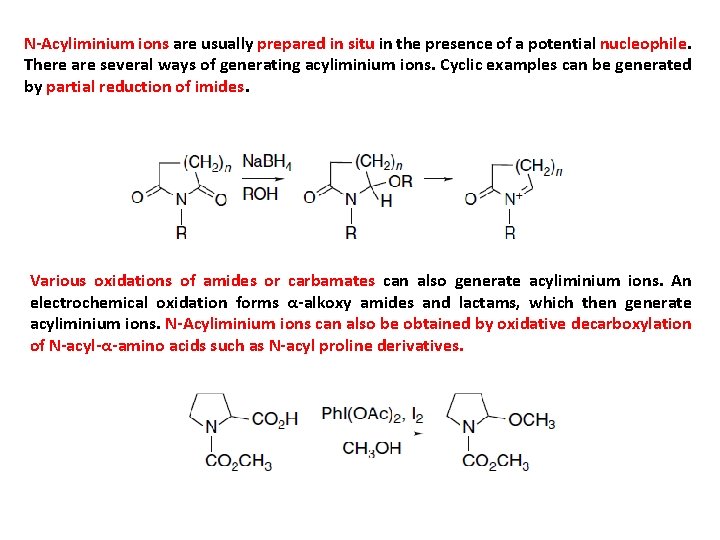
N-Acyliminium ions are usually prepared in situ in the presence of a potential nucleophile. There are several ways of generating acyliminium ions. Cyclic examples can be generated by partial reduction of imides. Various oxidations of amides or carbamates can also generate acyliminium ions. An electrochemical oxidation forms α-alkoxy amides and lactams, which then generate acyliminium ions. N-Acyliminium ions can also be obtained by oxidative decarboxylation of N-acyl-α-amino acids such as N-acyl proline derivatives.
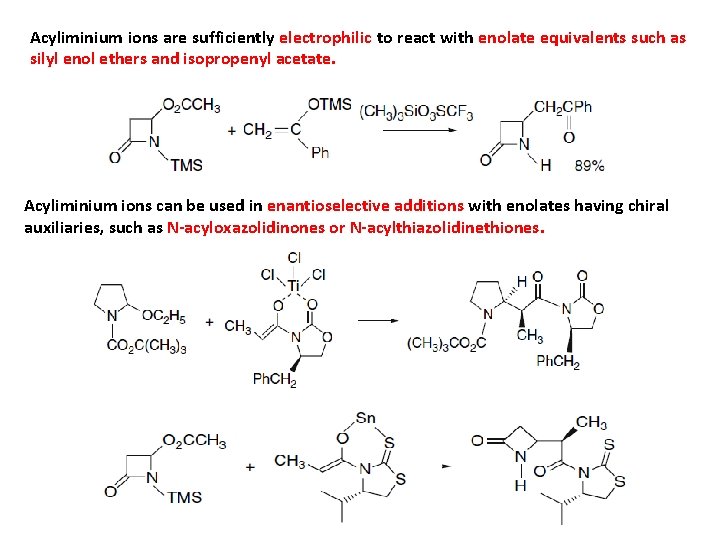
Acyliminium ions are sufficiently electrophilic to react with enolate equivalents such as silyl enol ethers and isopropenyl acetate. Acyliminium ions can be used in enantioselective additions with enolates having chiral auxiliaries, such as N-acyloxazolidinones or N-acylthiazolidinethiones.
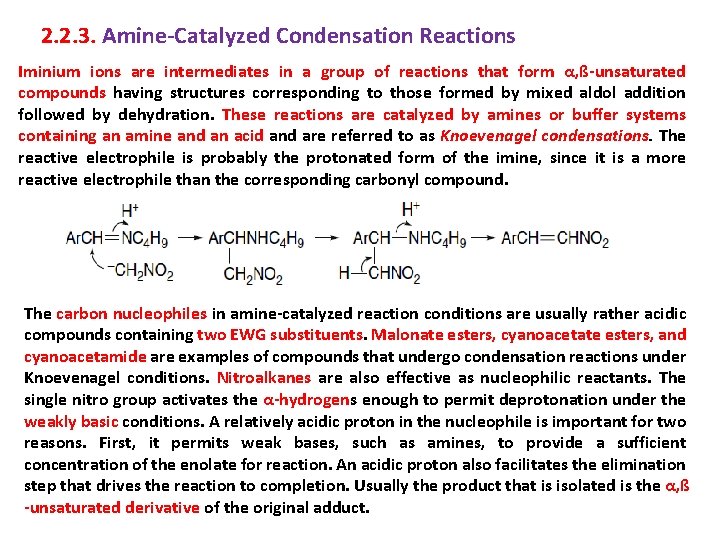
2. 2. 3. Amine-Catalyzed Condensation Reactions Iminium ions are intermediates in a group of reactions that form α, ß-unsaturated compounds having structures corresponding to those formed by mixed aldol addition followed by dehydration. These reactions are catalyzed by amines or buffer systems containing an amine and an acid and are referred to as Knoevenagel condensations. The reactive electrophile is probably the protonated form of the imine, since it is a more reactive electrophile than the corresponding carbonyl compound. The carbon nucleophiles in amine-catalyzed reaction conditions are usually rather acidic compounds containing two EWG substituents. Malonate esters, cyanoacetate esters, and cyanoacetamide are examples of compounds that undergo condensation reactions under Knoevenagel conditions. Nitroalkanes are also effective as nucleophilic reactants. The single nitro group activates the α-hydrogens enough to permit deprotonation under the weakly basic conditions. A relatively acidic proton in the nucleophile is important for two reasons. First, it permits weak bases, such as amines, to provide a sufficient concentration of the enolate for reaction. An acidic proton also facilitates the elimination step that drives the reaction to completion. Usually the product that is isolated is the α, ß -unsaturated derivative of the original adduct.
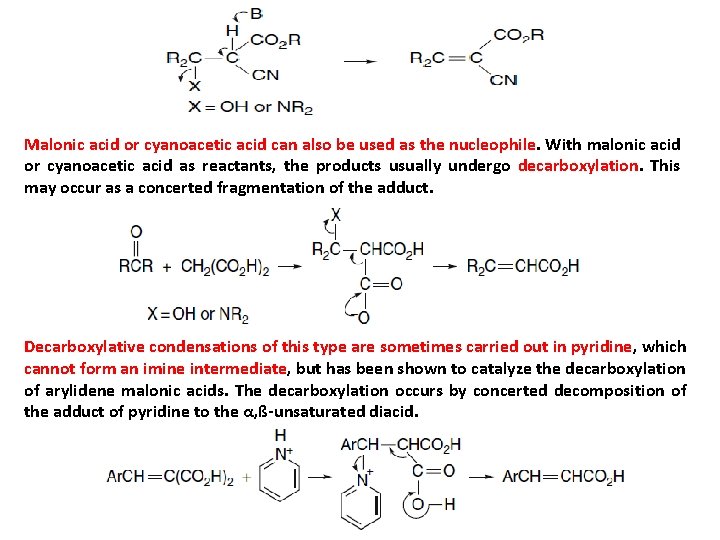
Malonic acid or cyanoacetic acid can also be used as the nucleophile. With malonic acid or cyanoacetic acid as reactants, the products usually undergo decarboxylation. This may occur as a concerted fragmentation of the adduct. Decarboxylative condensations of this type are sometimes carried out in pyridine, which cannot form an imine intermediate, but has been shown to catalyze the decarboxylation of arylidene malonic acids. The decarboxylation occurs by concerted decomposition of the adduct of pyridine to the α, ß-unsaturated diacid.
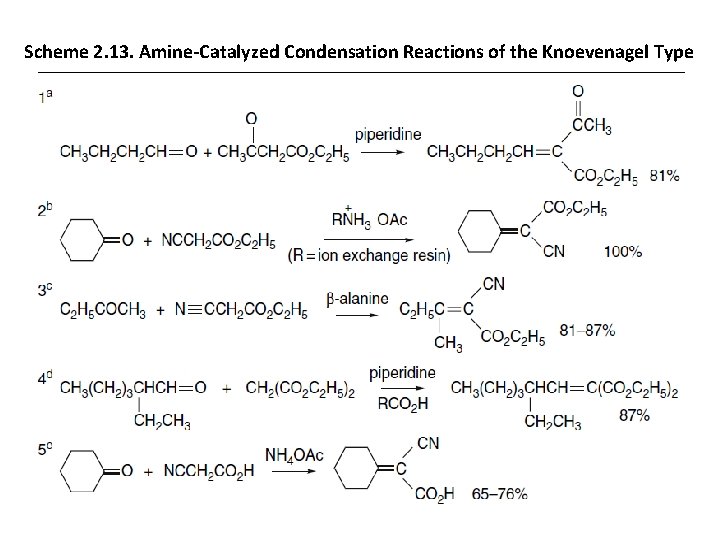
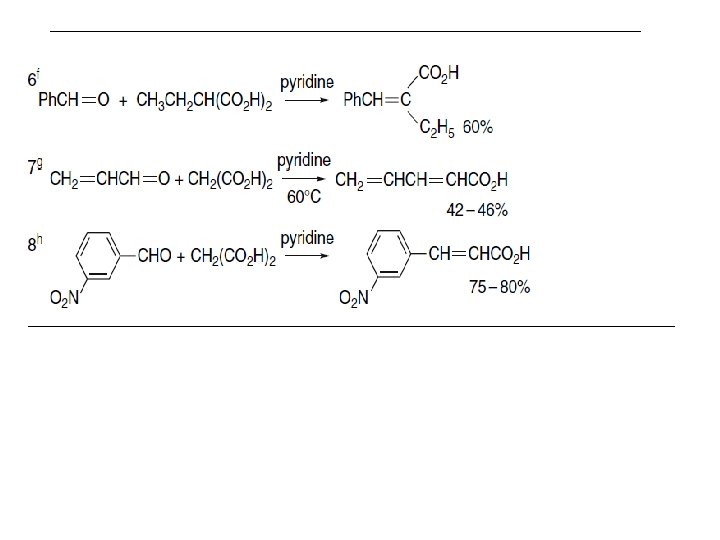
Scheme 2. 13. Amine-Catalyzed Condensation Reactions of the Knoevenagel Type
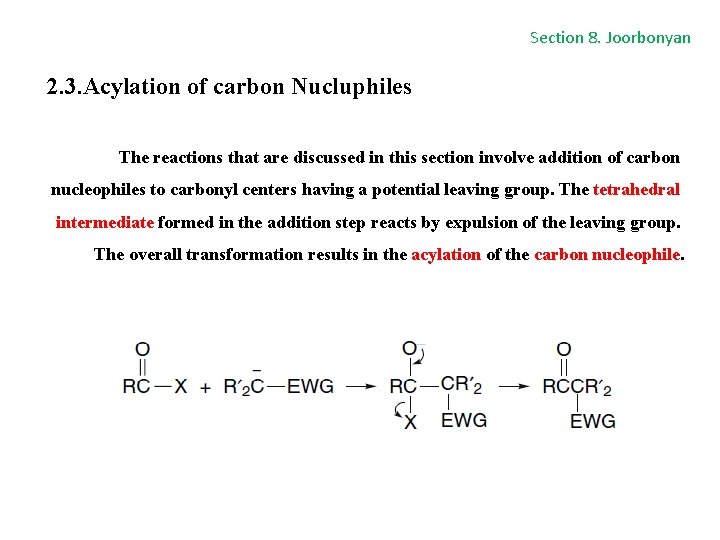
Section 8. Joorbonyan 2. 3. Acylation of carbon Nucluphiles The reactions that are discussed in this section involve addition of carbon nucleophiles to carbonyl centers having a potential leaving group. The tetrahedral intermediate formed in the addition step reacts by expulsion of the leaving group. The overall transformation results in the acylation of the carbon nucleophile.
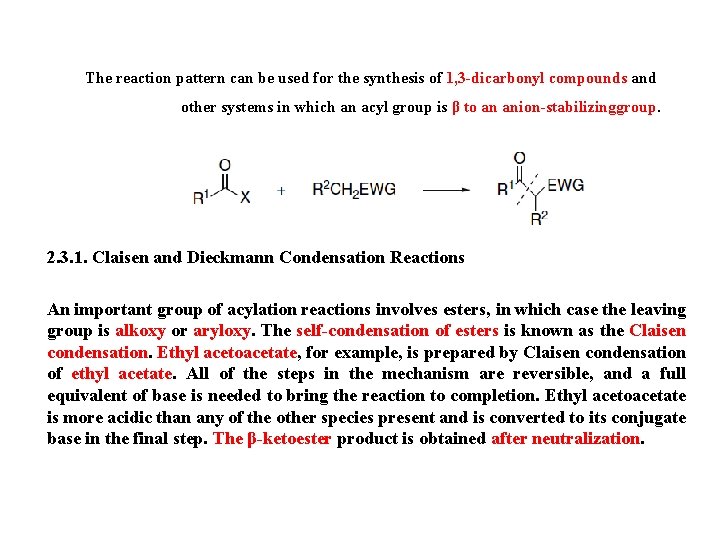
The reaction pattern can be used for the synthesis of 1, 3 -dicarbonyl compounds and other systems in which an acyl group is β to an anion-stabilizinggroup. 2. 3. 1. Claisen and Dieckmann Condensation Reactions An important group of acylation reactions involves esters, in which case the leaving group is alkoxy or aryloxy. The self-condensation of esters is known as the Claisen condensation. Ethyl acetoacetate, for example, is prepared by Claisen condensation of ethyl acetate. All of the steps in the mechanism are reversible, and a full equivalent of base is needed to bring the reaction to completion. Ethyl acetoacetate is more acidic than any of the other species present and is converted to its conjugate base in the final step. The β-ketoester product is obtained after neutralization.
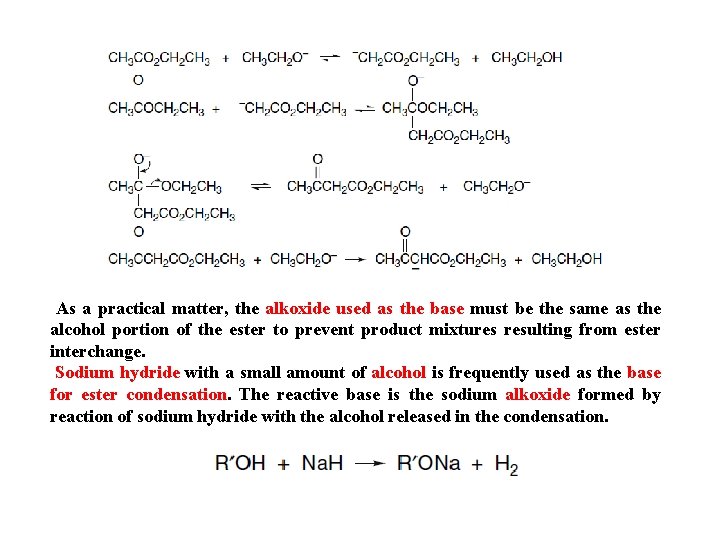
As a practical matter, the alkoxide used as the base must be the same as the alcohol portion of the ester to prevent product mixtures resulting from ester interchange. Sodium hydride with a small amount of alcohol is frequently used as the base for ester condensation. The reactive base is the sodium alkoxide formed by reaction of sodium hydride with the alcohol released in the condensation.
As the final proton transfer cannot occur when α-substituted esters are used, such compounds do not condense under the normal reaction conditions, but this limitatio can be overcome by use of a very strong base that converts the reactant ester completelyto its enolate. Entry 2 of Scheme 2. 14 illustrates the use of triphenylmethylsodium for this purpose. The sodium alkoxide is also the active catalyst in procedures that use sodium metal, such as in Entry 3 in of Scheme 2. 14 The alkoxide is formed by reaction of the alcohol that is formed as the reaction proceeds. The intramolecular version of ester condensation is called the Dieckmann condensation. It is an important method for the formation of five- and six-membered rings and has occasionally been used formation of larger rings. As ester condensation is reversible, product structure is governed by thermodynamic control, and in situations where more than one product can be formed, the product is derived from the most stable enolate. An example of this effect is the cyclization of the diester 25. Only 27 is formed, because 26 cannot be converted to a stable enolate. If 26, synthesized by another method, is subjected to the conditions of the cyclization, it is isomerized to 27 by the reversible condensation mechanism.
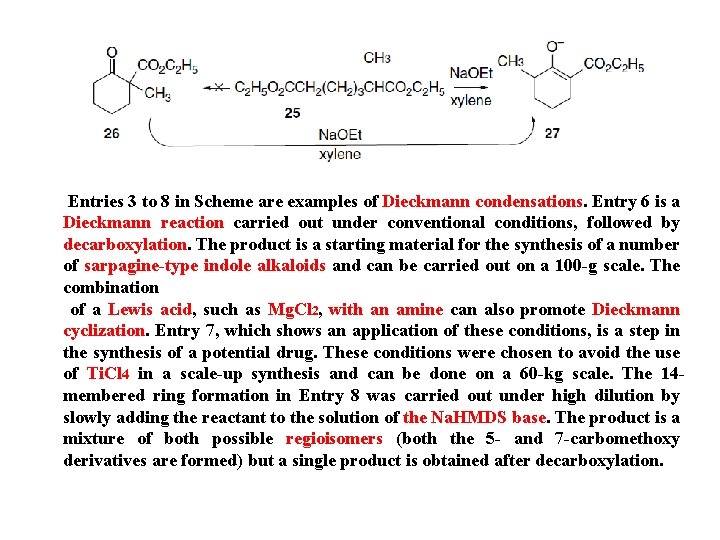
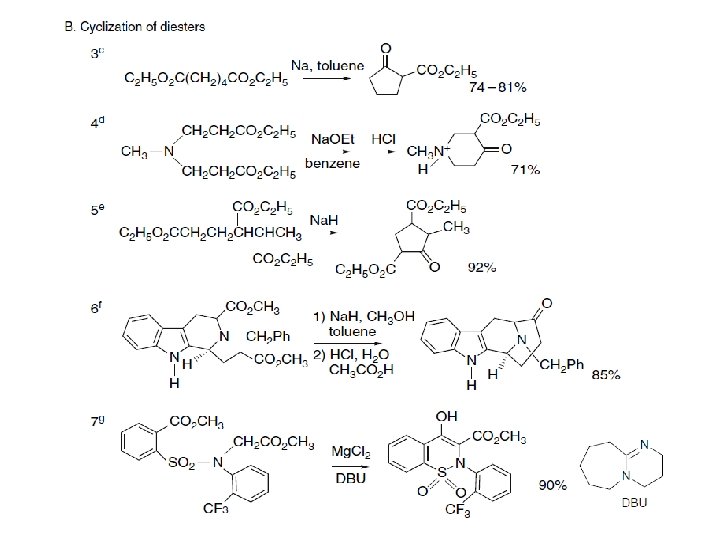
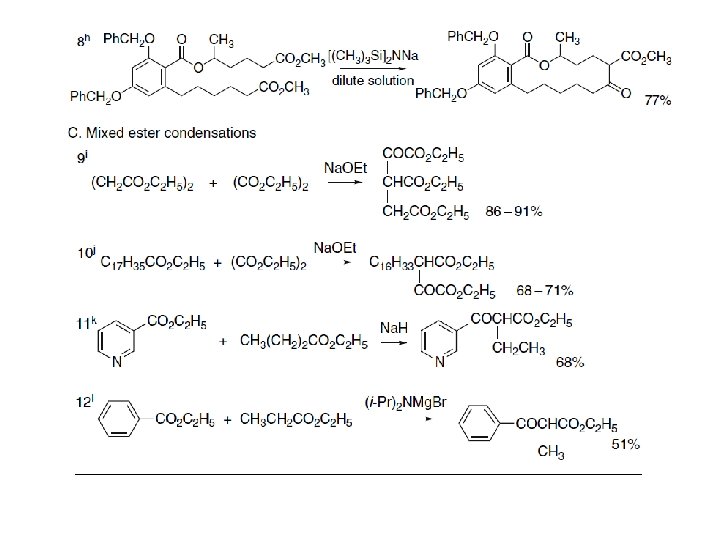
Entries 3 to 8 in Scheme are examples of Dieckmann condensations. Entry 6 is a Dieckmann reaction carried out under conventional conditions, followed by decarboxylation. The product is a starting material for the synthesis of a number of sarpagine-type indole alkaloids and can be carried out on a 100 -g scale. The combination of a Lewis acid, such as Mg. Cl 2, with an amine can also promote Dieckmann cyclization. Entry 7, which shows an application of these conditions, is a step in the synthesis of a potential drug. These conditions were chosen to avoid the use of Ti. Cl 4 in a scale-up synthesis and can be done on a 60 -kg scale. The 14 membered ring formation in Entry 8 was carried out under high dilution by slowly adding the reactant to the solution of the Na. HMDS base. The product is a mixture of both possible regioisomers (both the 5 - and 7 -carbomethoxy derivatives are formed) but a single product is obtained after decarboxylation.
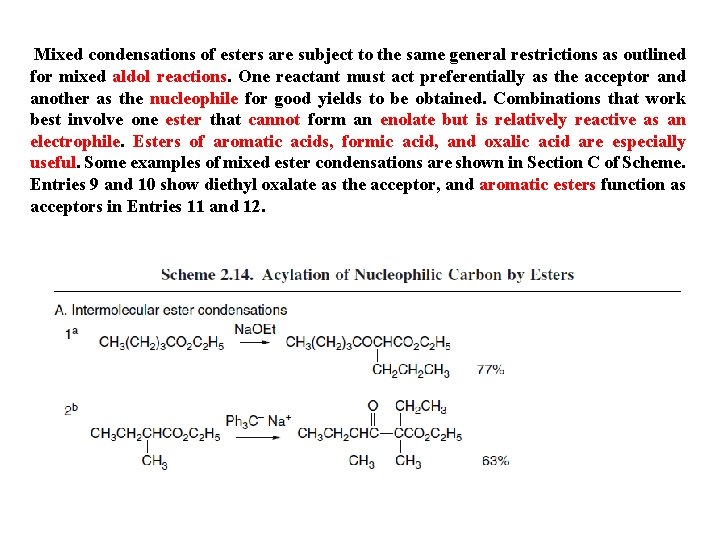
Mixed condensations of esters are subject to the same general restrictions as outlined for mixed aldol reactions. One reactant must act preferentially as the acceptor and another as the nucleophile for good yields to be obtained. Combinations that work best involve one ester that cannot form an enolate but is relatively reactive as an electrophile. Esters of aromatic acids, formic acid, and oxalic acid are especially useful. Some examples of mixed ester condensations are shown in Section C of Scheme. Entries 9 and 10 show diethyl oxalate as the acceptor, and aromatic esters function as acceptors in Entries 11 and 12.
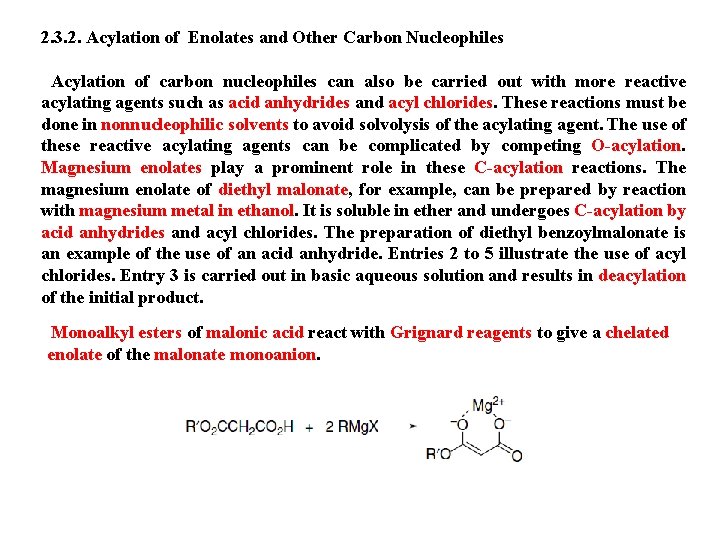
2. 3. 2. Acylation of Enolates and Other Carbon Nucleophiles Acylation of carbon nucleophiles can also be carried out with more reactive acylating agents such as acid anhydrides and acyl chlorides. These reactions must be done in nonnucleophilic solvents to avoid solvolysis of the acylating agent. The use of these reactive acylating agents can be complicated by competing O-acylation. Magnesium enolates play a prominent role in these C-acylation reactions. The magnesium enolate of diethyl malonate, for example, can be prepared by reaction with magnesium metal in ethanol. It is soluble in ether and undergoes C-acylation by acid anhydrides and acyl chlorides. The preparation of diethyl benzoylmalonate is an example of the use of an acid anhydride. Entries 2 to 5 illustrate the use of acyl chlorides. Entry 3 is carried out in basic aqueous solution and results in deacylation of the initial product. Monoalkyl esters of malonic acid react with Grignard reagents to give a chelated enolate of the malonate monoanion.
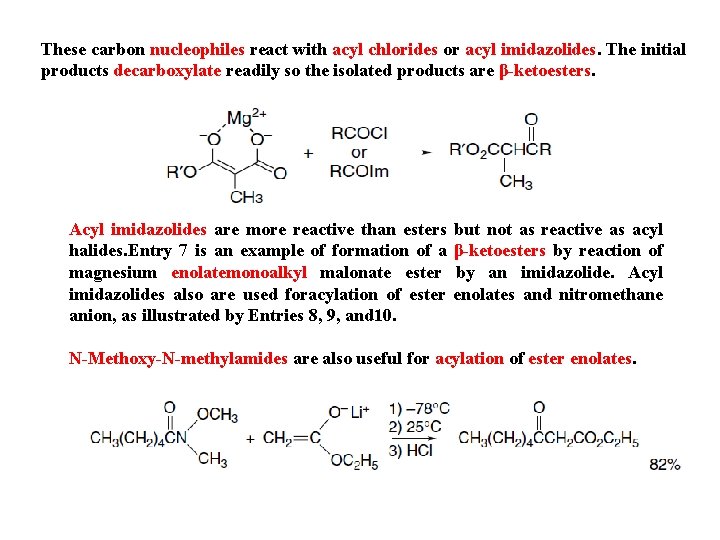
These carbon nucleophiles react with acyl chlorides or acyl imidazolides. The initial products decarboxylate readily so the isolated products are β-ketoesters. Acyl imidazolides are more reactive than esters halides. Entry 7 is an example of formation of a magnesium enolatemonoalkyl malonate ester imidazolides also are used foracylation of ester anion, as illustrated by Entries 8, 9, and 10. but not as reactive as acyl β-ketoesters by reaction of by an imidazolide. Acyl enolates and nitromethane N-Methoxy-N-methylamides are also useful for acylation of ester enolates.
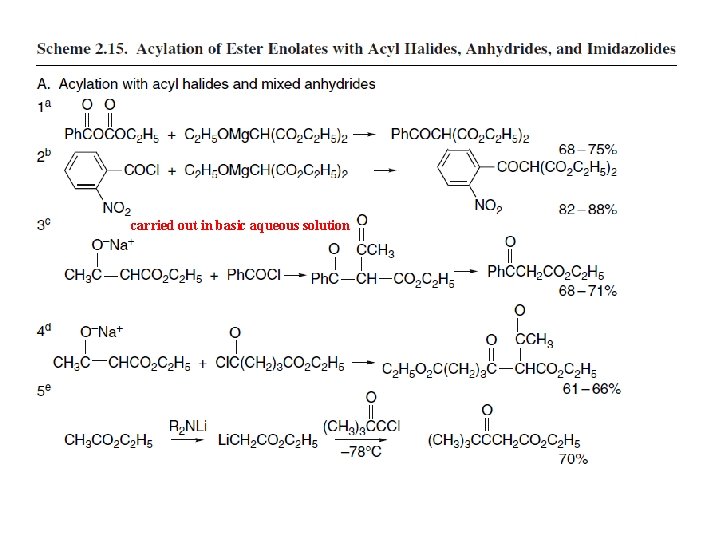
carried out in basic aqueous solution
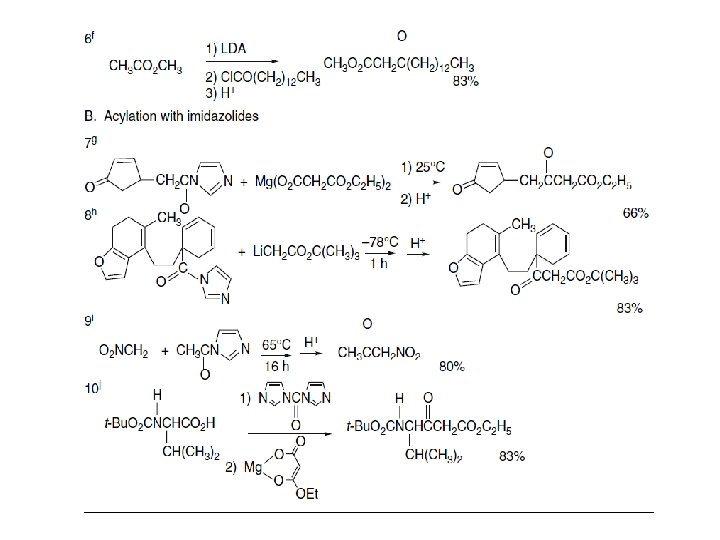
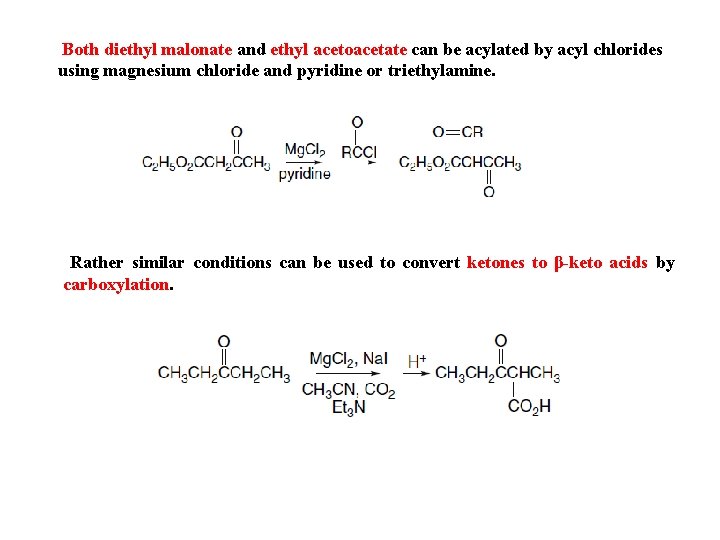
Both diethyl malonate and ethyl acetoacetate can be acylated by acyl chlorides using magnesium chloride and pyridine or triethylamine. Rather similar conditions can be used to convert ketones to β-keto acids by carboxylation.
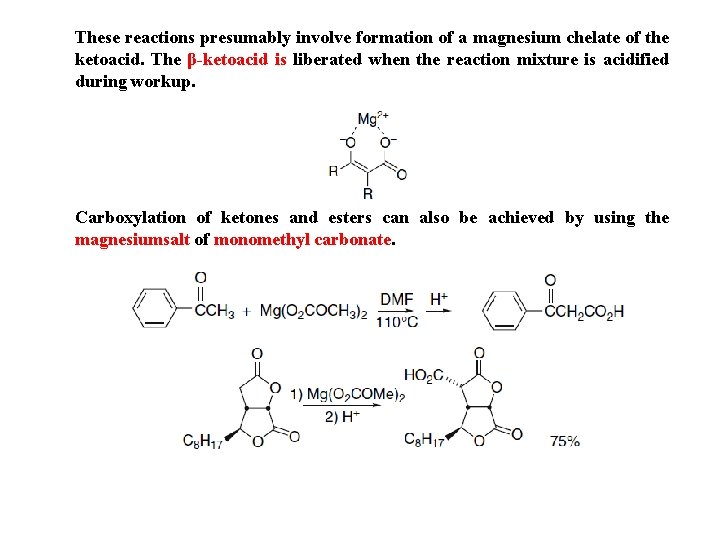
These reactions presumably involve formation of a magnesium chelate of the ketoacid. The β-ketoacid is liberated when the reaction mixture is acidified during workup. Carboxylation of ketones and esters can also be achieved by using the magnesiumsalt of monomethyl carbonate.
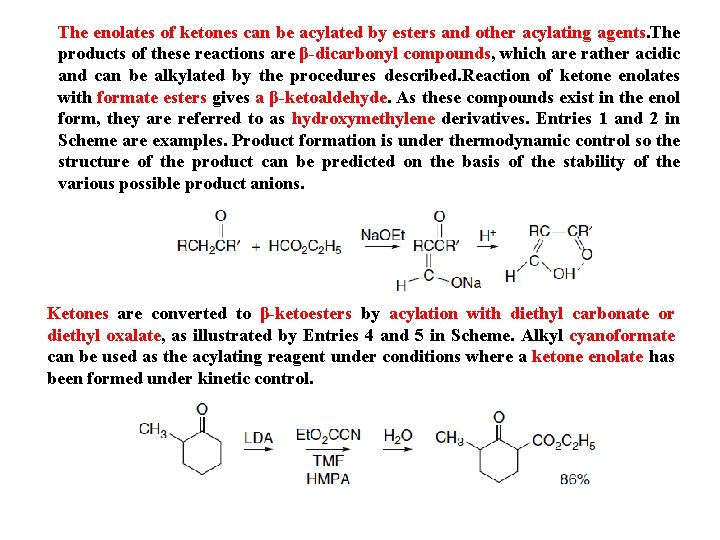
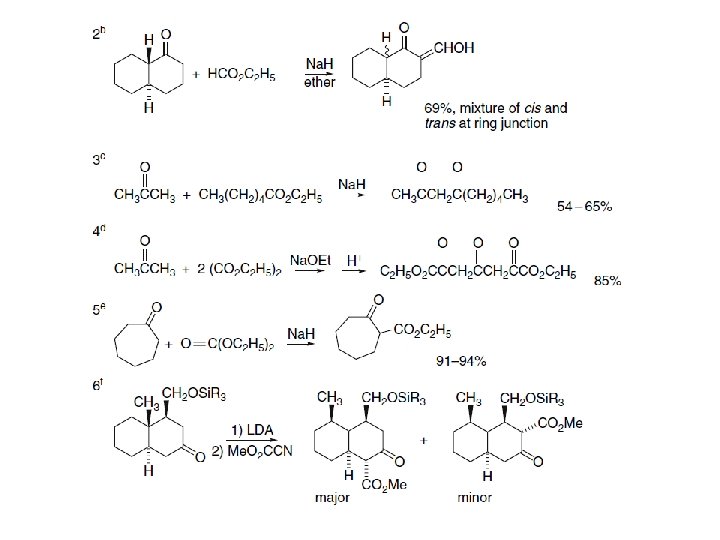
The enolates of ketones can be acylated by esters and other acylating agents. The products of these reactions are β-dicarbonyl compounds, which are rather acidic and can be alkylated by the procedures described. Reaction of ketone enolates with formate esters gives a β-ketoaldehyde. As these compounds exist in the enol form, they are referred to as hydroxymethylene derivatives. Entries 1 and 2 in Scheme are examples. Product formation is under thermodynamic control so the structure of the product can be predicted on the basis of the stability of the various possible product anions. Ketones are converted to β-ketoesters by acylation with diethyl carbonate or diethyl oxalate, as illustrated by Entries 4 and 5 in Scheme. Alkyl cyanoformate can be used as the acylating reagent under conditions where a ketone enolate has been formed under kinetic control.
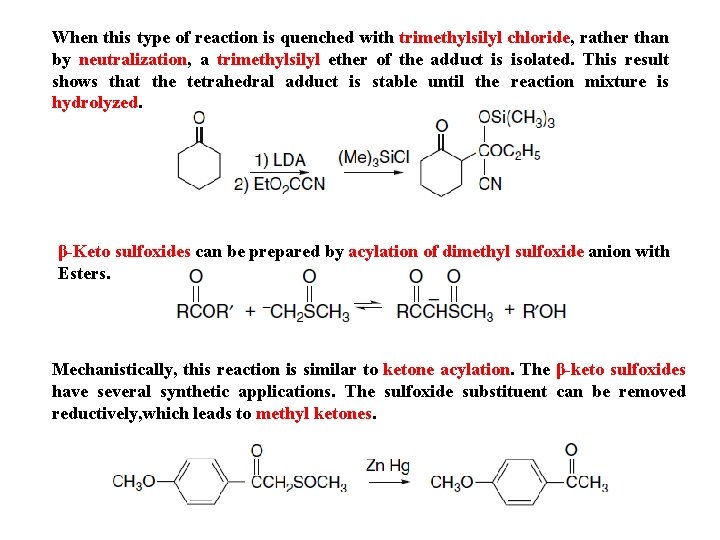
When this type of reaction is quenched with trimethylsilyl chloride, rather than by neutralization, a trimethylsilyl ether of the adduct is isolated. This result shows that the tetrahedral adduct is stable until the reaction mixture is hydrolyzed. β-Keto sulfoxides can be prepared by acylation of dimethyl sulfoxide anion with Esters. Mechanistically, this reaction is similar to ketone acylation. The β-keto sulfoxides have several synthetic applications. The sulfoxide substituent can be removed reductively, which leads to methyl ketones.
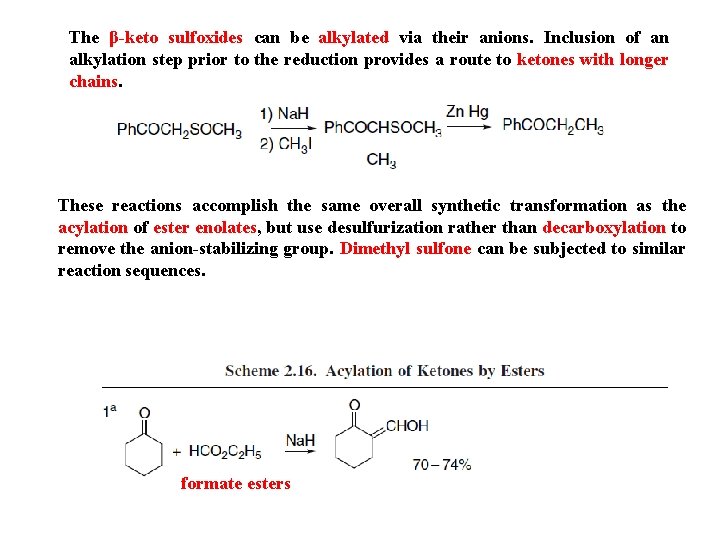
The β-keto sulfoxides can be alkylated via their anions. Inclusion of an alkylation step prior to the reduction provides a route to ketones with longer chains. These reactions accomplish the same overall synthetic transformation as the acylation of ester enolates, but use desulfurization rather than decarboxylation to remove the anion-stabilizing group. Dimethyl sulfone can be subjected to similar reaction sequences. formate esters
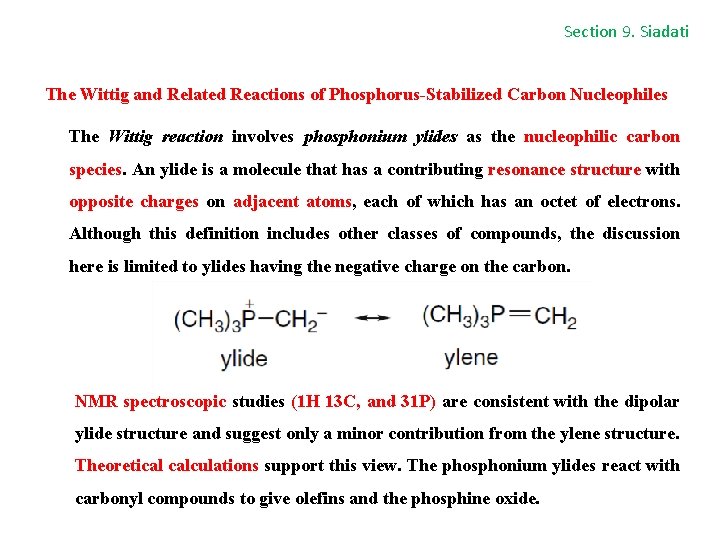
Section 9. Siadati The Wittig and Related Reactions of Phosphorus-Stabilized Carbon Nucleophiles The Wittig reaction involves phosphonium ylides as the nucleophilic carbon species. An ylide is a molecule that has a contributing resonance structure with opposite charges on adjacent atoms, each of which has an octet of electrons. Although this definition includes other classes of compounds, the discussion here is limited to ylides having the negative charge on the carbon. NMR spectroscopic studies (1 H 13 C, and 31 P) are consistent with the dipolar ylide structure and suggest only a minor contribution from the ylene structure. Theoretical calculations support this view. The phosphonium ylides react with carbonyl compounds to give olefins and the phosphine oxide.
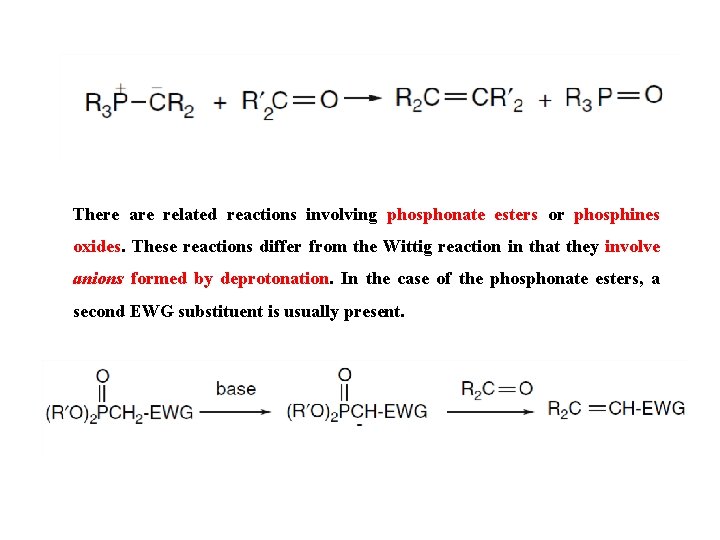
There are related reactions involving phosphonate esters or phosphines oxides. These reactions differ from the Wittig reaction in that they involve anions formed by deprotonation. In the case of the phosphonate esters, a second EWG substituent is usually present.
2. 4. 1. 1. Olefination Reactions Involving Phosphonium Ylides. The synthetic potential of phosphonium ylides was developed initially by G. Wittig and his associates at the University of Heidelberg. The reaction of a phosphonium ylide with an aldehyde or ketone introduces a carbon-carbon double bond in place of the carbonyl bond. The mechanism originally proposed involves an addition of the nucleophilic ylide carbon to the carbonyl group to form a dipolar intermediate (a betaine), followed by elimination of a phosphine oxide. The elimination is presumed to occur after formation of a four-membered oxaphosphetane intermediate. An alternative mechanism proposes direct formation of the oxaphosphetane by a cycloaddition reaction.

There have been several computational studies that find the oxaphosphetane structure to be an intermediate. Oxaphosphetane intermediates have been observed by NMR studies at low temperature. Betaine intermediates have been observed only under special conditions that retard the cyclization and elimination steps.
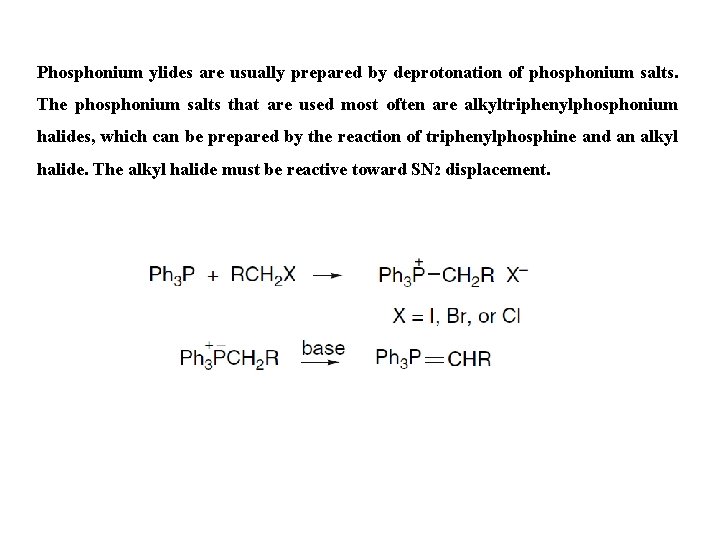
Phosphonium ylides are usually prepared by deprotonation of phosphonium salts. The phosphonium salts that are used most often are alkyltriphenylphosphonium halides, which can be prepared by the reaction of triphenylphosphine and an alkyl halide. The alkyl halide must be reactive toward SN 2 displacement.
Alkyltriphenylphosphonium halides are only weakly acidic, and a strong base must be used for deprotonation. Possibilities include organolithium reagents, the anion of dimethyl sulfoxide, and amide ion or substituted amide anions, such as LDA or Na. HMDS. The ylides are not normally isolated, so the reaction is carried out either with the carbonyl compound present or with it added immediately after ylide formation. Ylides with nonpolar substituents, e. g. , R = H, alkyl, are quite reactive toward both ketones and aldehydes. Ylides having an β-EWG substituent, such as alkoxycarbonyl or acyl, are less reactive and are called stabilized ylides. The stereoselectivity of the Wittig reaction is believed to be the result of steric effects that develop as the ylide and carbonyl compound approach one another. The three phenyl substituents on phosphorus impose large steric demands that govern the formation of the diastereomeric adducts. Reactions of unstabilized phosphoranes are believed to proceed through an early TS, and steric factors usually make these reactions selective for the cis-alkene.
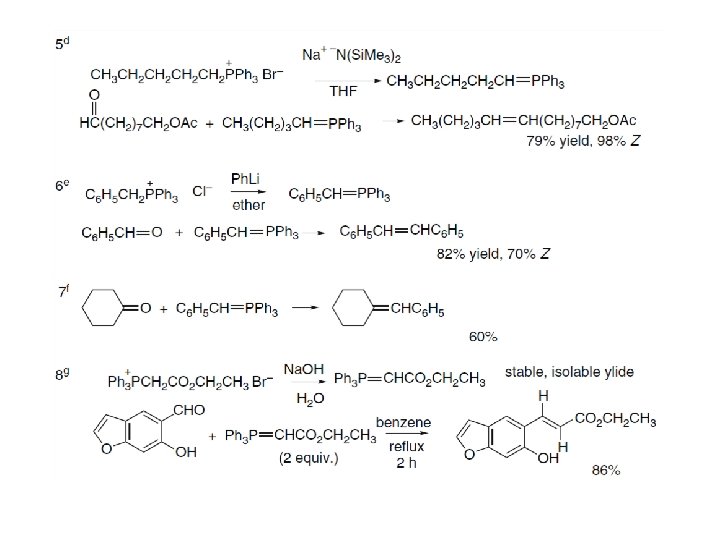
Ultimately, however, the precise stereoselectivity is dependent on a number of variables, including reactant structure, the base used for ylide formation, the presence of other ions, solvent, and temperature. Ketophosphonium salts are considerably more acidic than alkylphosphonium salts and can be converted to ylides by relatively weak bases. The resulting ylides, which are stabilized by the carbonyl group, are substantially less reactive than unfunctionalized ylides. More vigorous conditions are required to bring about reactions with ketones. Stabilized ylides such as (carboethoxy methylidene) triphenylphosphorane (Entries 8 and 9) react with aldehydes to give exclusively trans double bonds.
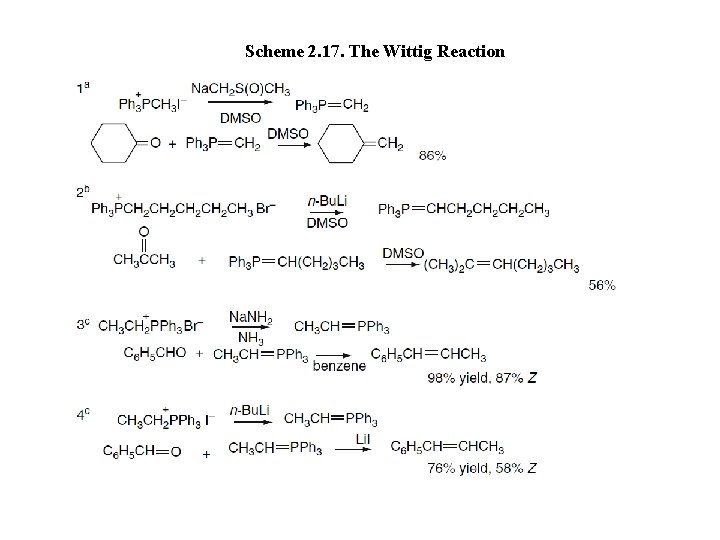
Scheme 2. 17. The Wittig Reaction
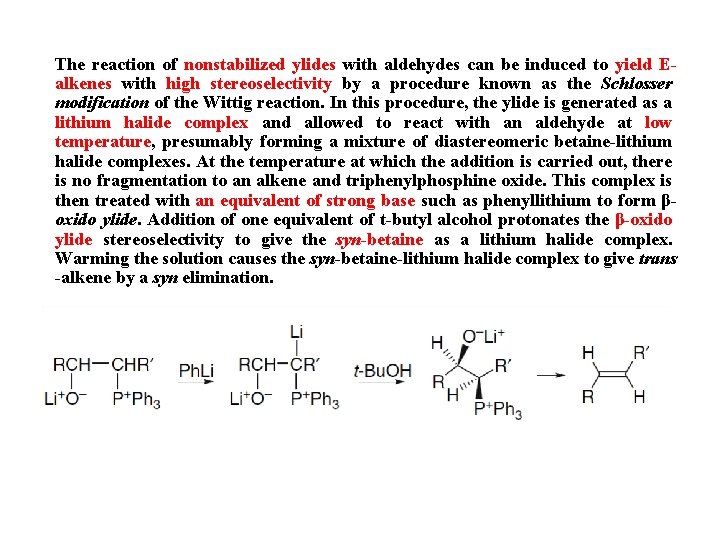
The reaction of nonstabilized ylides with aldehydes can be induced to yield Ealkenes with high stereoselectivity by a procedure known as the Schlosser modification of the Wittig reaction. In this procedure, the ylide is generated as a lithium halide complex and allowed to react with an aldehyde at low temperature, presumably forming a mixture of diastereomeric betaine-lithium halide complexes. At the temperature at which the addition is carried out, there is no fragmentation to an alkene and triphenylphosphine oxide. This complex is then treated with an equivalent of strong base such as phenyllithium to form βoxido ylide. Addition of one equivalent of t-butyl alcohol protonates the β-oxido ylide stereoselectivity to give the syn-betaine as a lithium halide complex. Warming the solution causes the syn-betaine-lithium halide complex to give trans -alkene by a syn elimination.
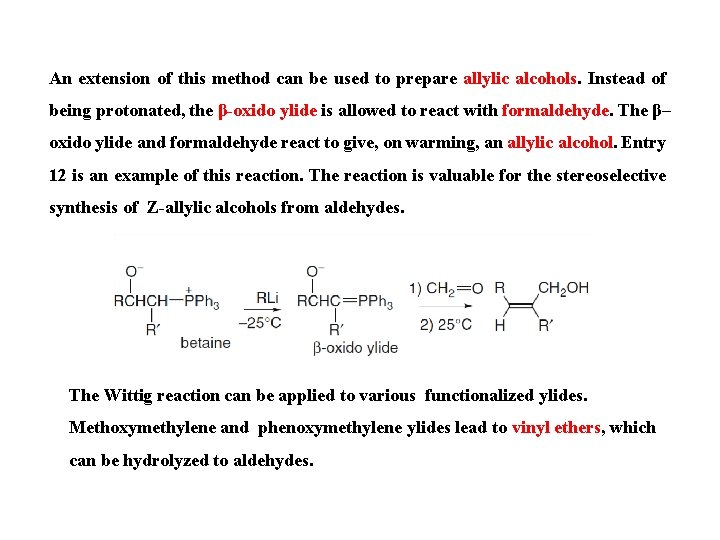
An extension of this method can be used to prepare allylic alcohols. Instead of being protonated, the β-oxido ylide is allowed to react with formaldehyde. The β– oxido ylide and formaldehyde react to give, on warming, an allylic alcohol. Entry 12 is an example of this reaction. The reaction is valuable for the stereoselective synthesis of Z-allylic alcohols from aldehydes. The Wittig reaction can be applied to various functionalized ylides. Methoxymethylene and phenoxymethylene ylides lead to vinyl ethers, which can be hydrolyzed to aldehydes.
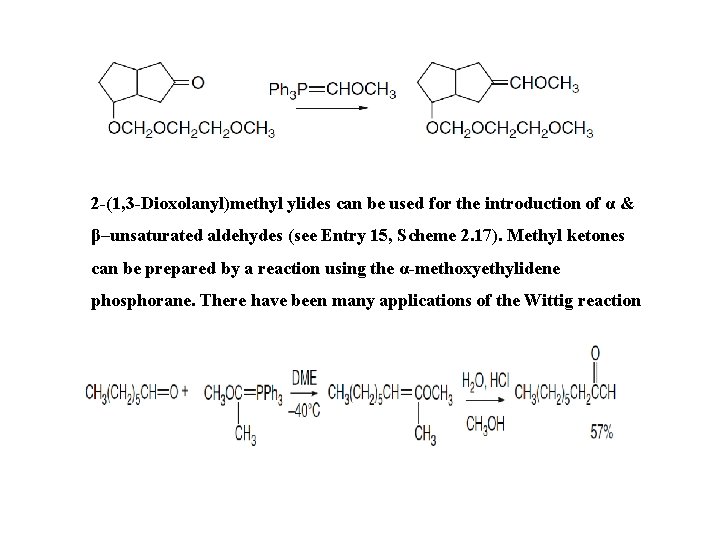
2 -(1, 3 -Dioxolanyl)methyl ylides can be used for the introduction of α & β–unsaturated aldehydes (see Entry 15, Scheme 2. 17). Methyl ketones can be prepared by a reaction using the α-methoxyethylidene phosphorane. There have been many applications of the Wittig reaction in multistep syntheses.

2. 4. 1. 2. Olefination Reactions Involving Phosphonate Anions. An important complement to the Wittig reaction involves the reaction of phosphonate carbanions with carbonyl compounds. The alkylphosphonic acid esters are made by the reaction of an alkyl halide, preferably primary, with a phosphite ester. Phosphonate carbanions are generated by treating alkylphosphonate esters with a base such as sodium hydride, n-butyllithium, or sodium ethoxide. Alumina coated with KF or KOH has also found use as the base. Reactions with phosphonoacetate esters are used frequently to prepare α, βunsaturated esters. This reaction is known as the Wadsworth-Emmons reaction and usually leads to the E-isomer.
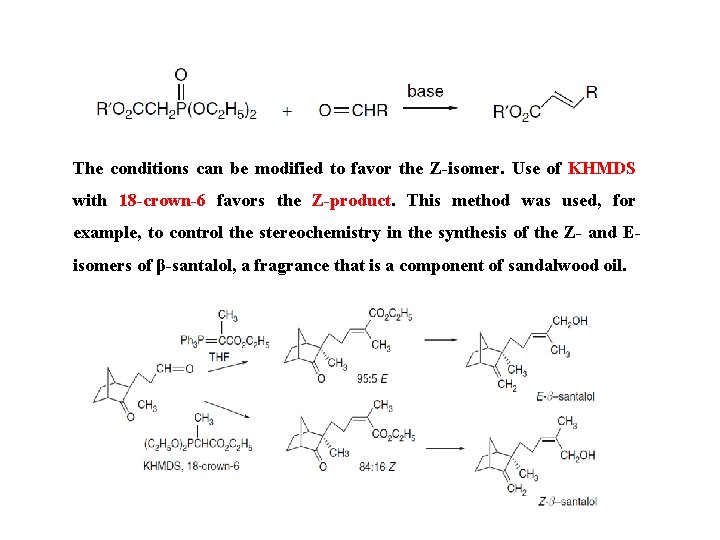
The conditions can be modified to favor the Z-isomer. Use of KHMDS with 18 -crown-6 favors the Z-product. This method was used, for example, to control the stereochemistry in the synthesis of the Z- and Eisomers of β-santalol, a fragrance that is a component of sandalwood oil.

Several modified phosphonoacetate esters show selectivity for the Z-enoate product. Trifluoroethyl, phenyl, 2 -methylphenyl, and 2, 6 -difluorophenyl esters give good Z-stereoselectivity with aldehydes. The trifluoroethyl esters also give Z -selectivity with ketones. Several other methodologies have been developed for control of the stereoselectivity of Wadsworth-Emmons reactions. For example, K 2 CO 3 in chlorobenzene with a catalytic amount of 18 -crown-6 is reported to give excellent Z-selectivity. Another group found that use of excess Na+, added as Na. I, improved Z-selectivity for 2 -methylphenyl esters.
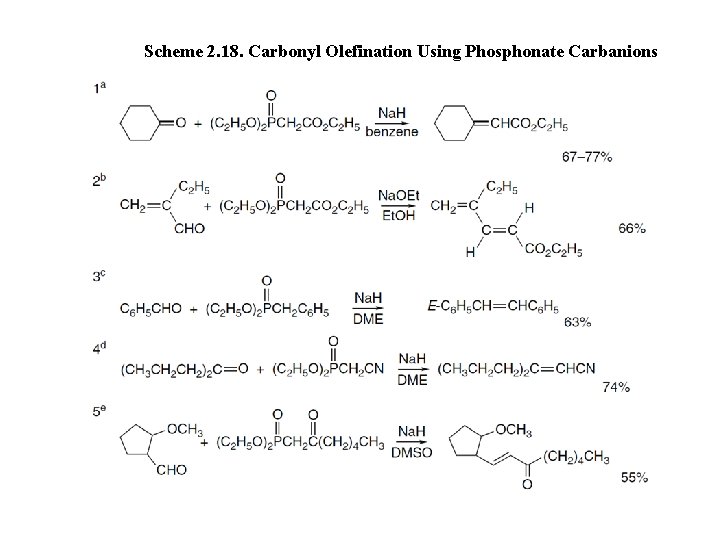
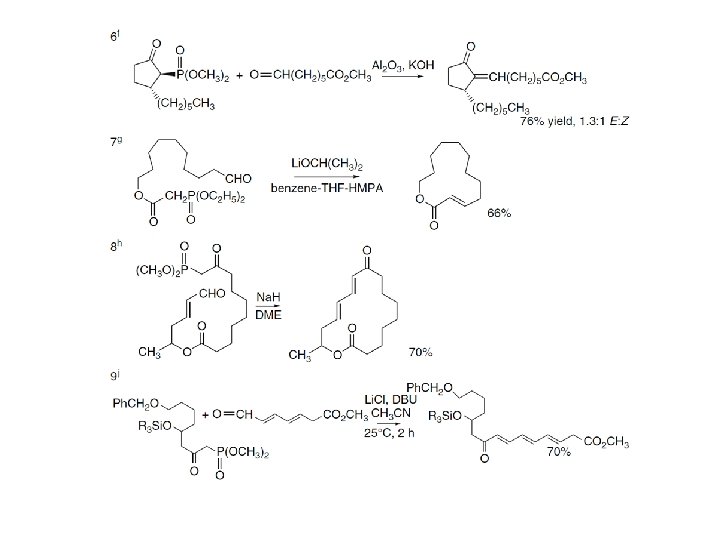
Scheme 2. 18. Carbonyl Olefination Using Phosphonate Carbanions
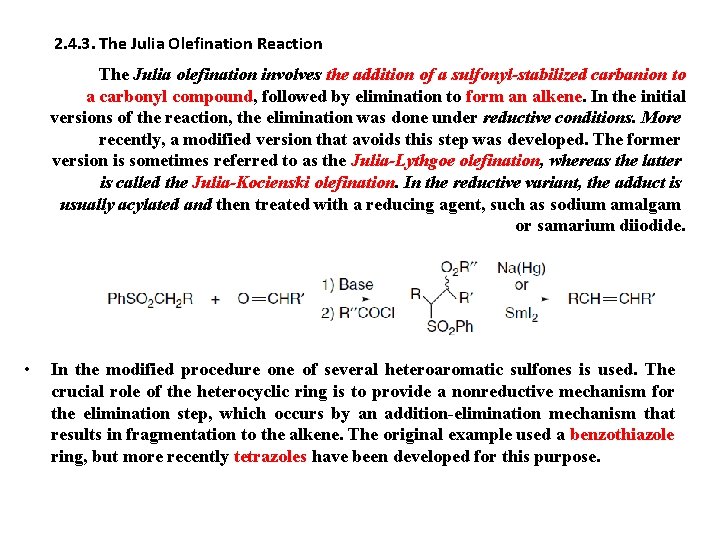
2. 4. 3. The Julia Olefination Reaction The Julia olefination involves the addition of a sulfonyl-stabilized carbanion to a carbonyl compound, followed by elimination to form an alkene. In the initial versions of the reaction, the elimination was done under reductive conditions. More recently, a modified version that avoids this step was developed. The former version is sometimes referred to as the Julia-Lythgoe olefination, whereas the latter is called the Julia-Kocienski olefination. In the reductive variant, the adduct is usually acylated and then treated with a reducing agent, such as sodium amalgam or samarium diiodide. • In the modified procedure one of several heteroaromatic sulfones is used. The crucial role of the heterocyclic ring is to provide a nonreductive mechanism for the elimination step, which occurs by an addition-elimination mechanism that results in fragmentation to the alkene. The original example used a benzothiazole ring, but more recently tetrazoles have been developed for this purpose.
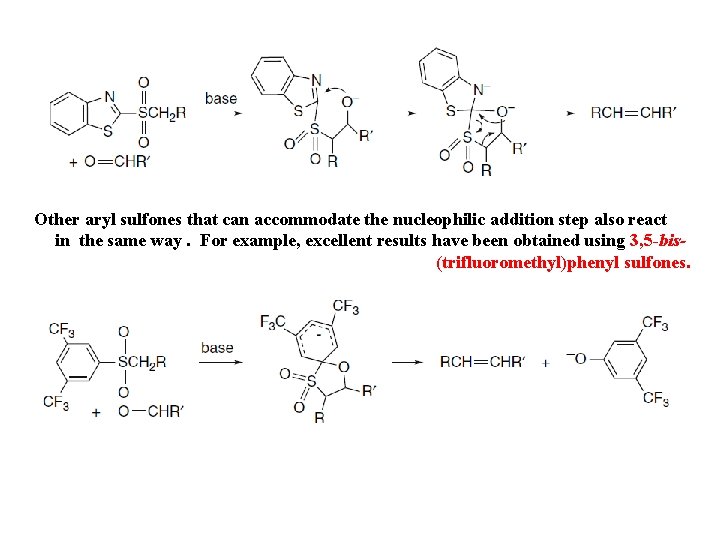
Other aryl sulfones that can accommodate the nucleophilic addition step also react in the same way. For example, excellent results have been obtained using 3, 5 -bis(trifluoromethyl)phenyl sulfones.
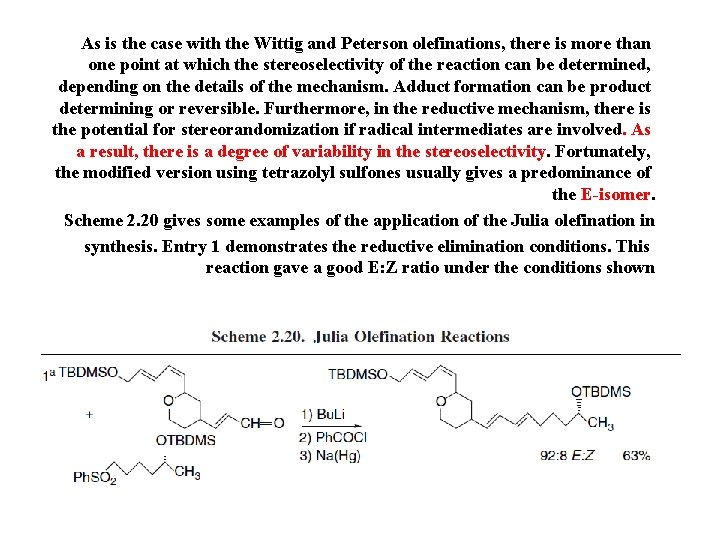
As is the case with the Wittig and Peterson olefinations, there is more than one point at which the stereoselectivity of the reaction can be determined, depending on the details of the mechanism. Adduct formation can be product determining or reversible. Furthermore, in the reductive mechanism, there is the potential for stereorandomization if radical intermediates are involved. As a result, there is a degree of variability in the stereoselectivity. Fortunately, the modified version using tetrazolyl sulfones usually gives a predominance of the E-isomer. Scheme 2. 20 gives some examples of the application of the Julia olefination in synthesis. Entry 1 demonstrates the reductive elimination conditions. This reaction gave a good E: Z ratio under the conditions shown
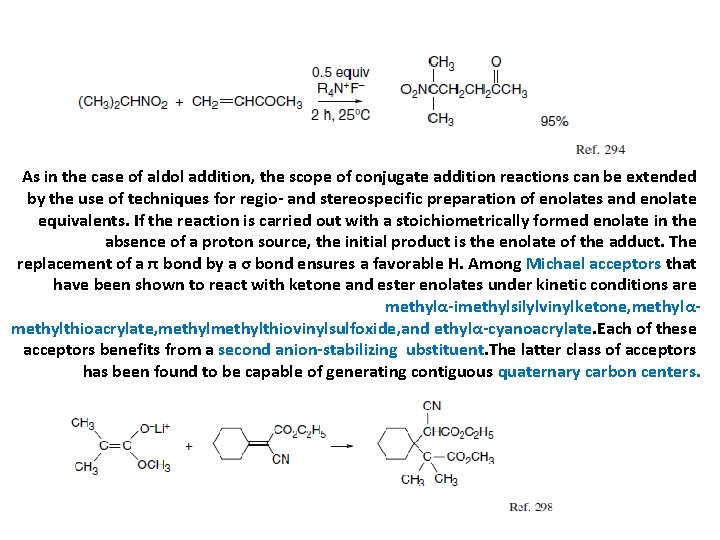
As in the case of aldol addition, the scope of conjugate addition reactions can be extended by the use of techniques for regio- and stereospecific preparation of enolates and enolate equivalents. If the reaction is carried out with a stoichiometrically formed enolate in the absence of a proton source, the initial product is the enolate of the adduct. The replacement of a π bond by a σ bond ensures a favorable H. Among Michael acceptors that have been shown to react with ketone and ester enolates under kinetic conditions are methylα-imethylsilylvinylketone, methylαmethylthioacrylate, methylthiovinylsulfoxide, and ethylα-cyanoacrylate. Each of these acceptors benefits from a second anion-stabilizing ubstituent. The latter class of acceptors has been found to be capable of generating contiguous quaternary carbon centers.
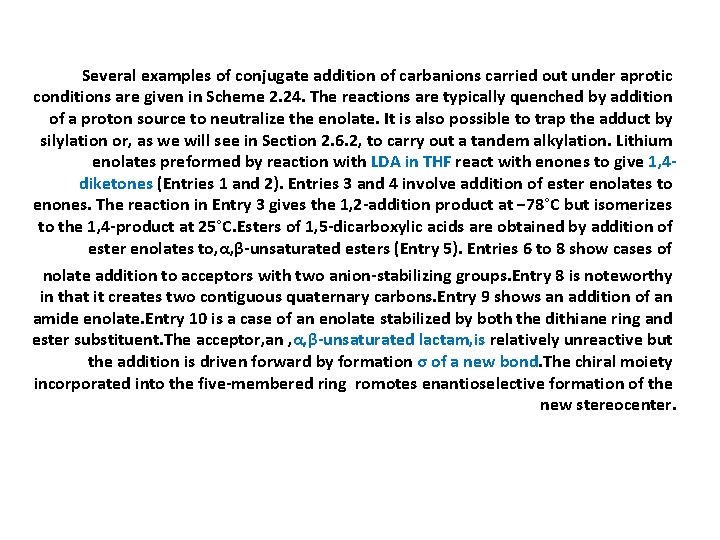
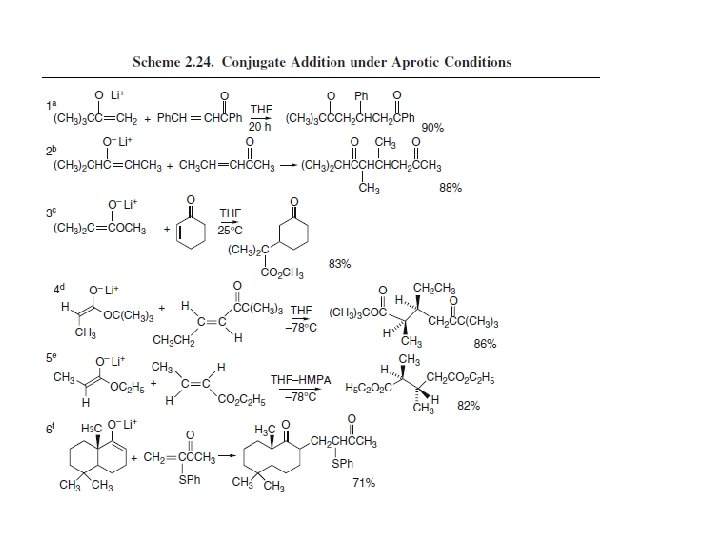
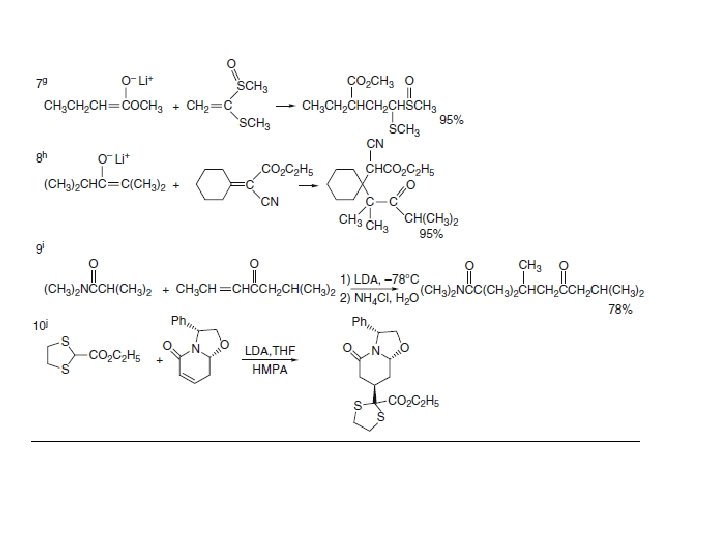
Several examples of conjugate addition of carbanions carried out under aprotic conditions are given in Scheme 2. 24. The reactions are typically quenched by addition of a proton source to neutralize the enolate. It is also possible to trap the adduct by silylation or, as we will see in Section 2. 6. 2, to carry out a tandem alkylation. Lithium enolates preformed by reaction with LDA in THF react with enones to give 1, 4 diketones (Entries 1 and 2). Entries 3 and 4 involve addition of ester enolates to enones. The reaction in Entry 3 gives the 1, 2 -addition product at − 78°C but isomerizes to the 1, 4 -product at 25°C. Esters of 1, 5 -dicarboxylic acids are obtained by addition of ester enolates to, α, β-unsaturated esters (Entry 5). Entries 6 to 8 show cases of nolate addition to acceptors with two anion-stabilizing groups. Entry 8 is noteworthy in that it creates two contiguous quaternary carbons. Entry 9 shows an addition of an amide enolate. Entry 10 is a case of an enolate stabilized by both the dithiane ring and ester substituent. The acceptor, an , α, β-unsaturated lactam, is relatively unreactive but the addition is driven forward by formation σ of a new bond. The chiral moiety incorporated into the five-membered ring romotes enantioselective formation of the new stereocenter.
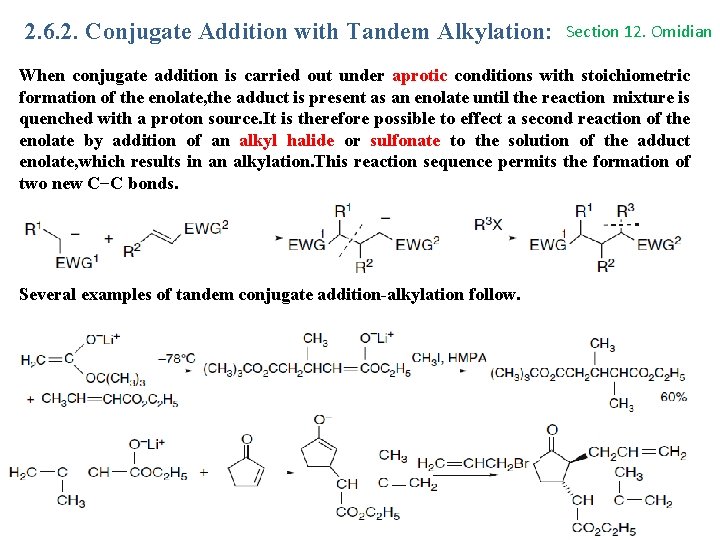
2. 6. 2. Conjugate Addition with Tandem Alkylation: Section 12. Omidian When conjugate addition is carried out under aprotic conditions with stoichiometric formation of the enolate, the adduct is present as an enolate until the reaction mixture is quenched with a proton source. It is therefore possible to effect a second reaction of the enolate by addition of an alkyl halide or sulfonate to the solution of the adduct enolate, which results in an alkylation. This reaction sequence permits the formation of two new C−C bonds. Several examples of tandem conjugate addition-alkylation follow.

Enolate Equivalents Lewis acid–catalyzed 1. silyl enol ethers Ti. Cl 4 2. silyl ketene acetals 3. silyl thioketene acetal 4. Stannyl enolates Mg(Cl. O 4)2 & Li. Cl. O 4 Ti. Cl 4 n-(C 4 H 9)4 N⁺Br⁻
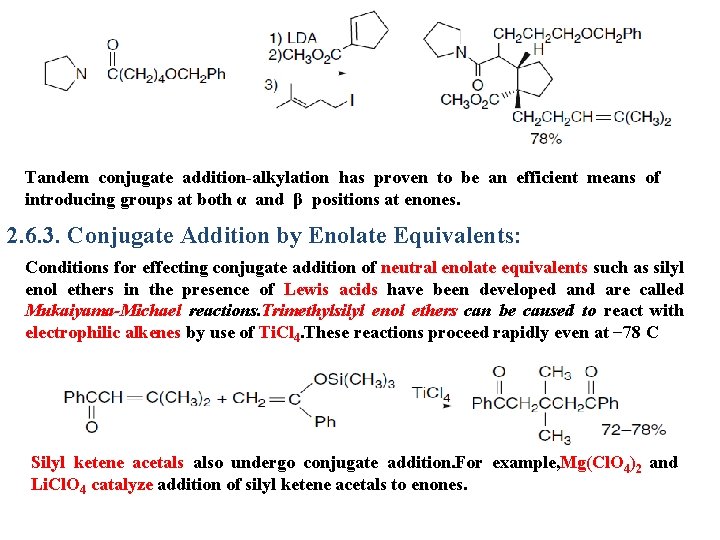
Tandem conjugate addition-alkylation has proven to be an efficient means of introducing groups at both α and β positions at enones. 2. 6. 3. Conjugate Addition by Enolate Equivalents: Conditions for effecting conjugate addition of neutral enolate equivalents such as silyl enol ethers in the presence of Lewis acids have been developed and are called Mukaiyama-Michael reactions. Trimethylsilyl enol ethers can be caused to react with electrophilic alkenes by use of Ti. Cl 4. These reactions proceed rapidly even at − 78 C Silyl ketene acetals also undergo conjugate addition. For example, Mg(Cl. O 4)2 and Li. Cl. O 4 catalyze addition of silyl ketene acetals to enones.
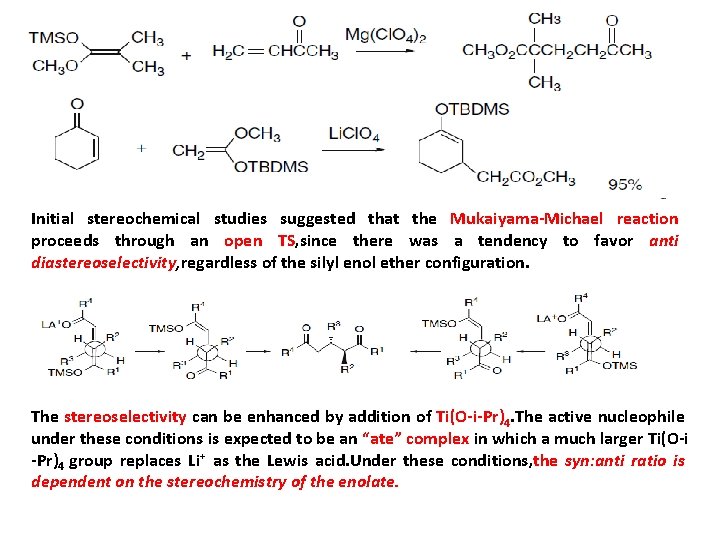
Initial stereochemical studies suggested that the Mukaiyama-Michael reaction proceeds through an open TS, since there was a tendency to favor anti diastereoselectivity, regardless of the silyl enol ether configuration. The stereoselectivity can be enhanced by addition of Ti(O-i-Pr)4. The active nucleophile under these conditions is expected to be an “ate” complex in which a much larger Ti(O-i -Pr)4 group replaces Li⁺ as the Lewis acid. Under these conditions, the syn: anti ratio is dependent on the stereochemistry of the enolate.
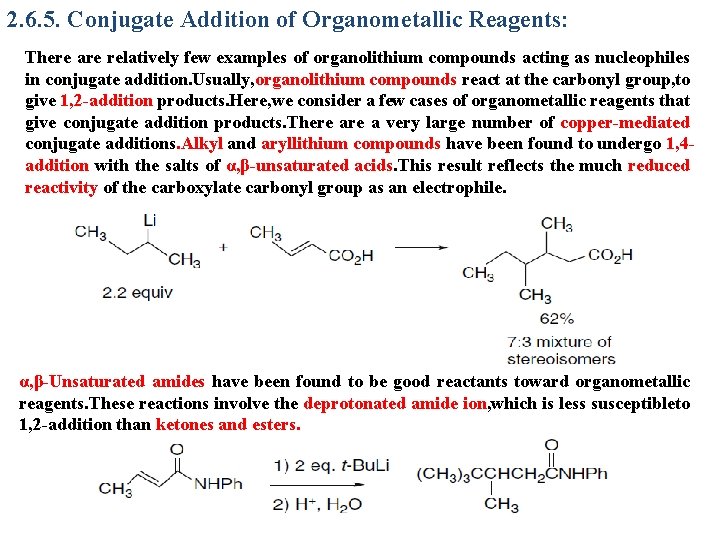
2. 6. 5. Conjugate Addition of Organometallic Reagents: There are relatively few examples of organolithium compounds acting as nucleophiles in conjugate addition. Usually, organolithium compounds react at the carbonyl group, to give 1, 2 -addition products. Here, we consider a few cases of organometallic reagents that give conjugate addition products. There a very large number of copper-mediated conjugate additions. Alkyl and aryllithium compounds have been found to undergo 1, 4 addition with the salts of α, β-unsaturated acids. This result reflects the much reduced reactivity of the carboxylate carbonyl group as an electrophile. α, β-Unsaturated amides have been found to be good reactants toward organometallic reagents. These reactions involve the deprotonated amide ion, which is less susceptibleto 1, 2 -addition than ketones and esters.
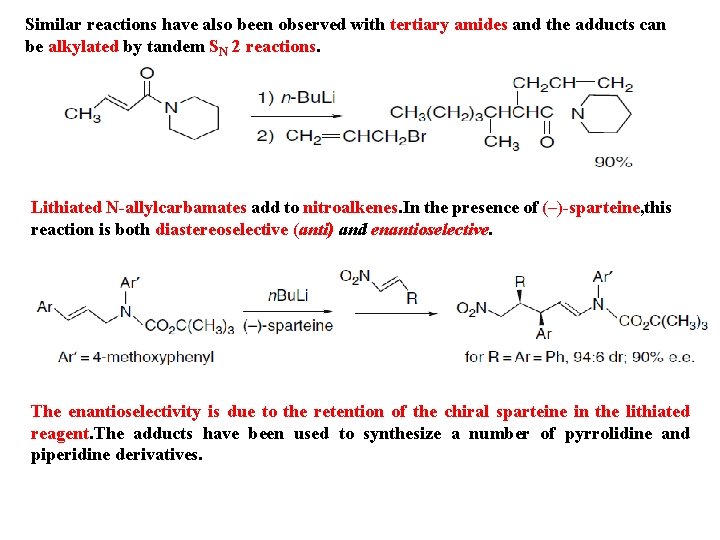
Similar reactions have also been observed with tertiary amides and the adducts can be alkylated by tandem SN 2 reactions. Lithiated N-allylcarbamates add to nitroalkenes. In the presence of (–)-sparteine, this reaction is both diastereoselective (anti) and enantioselective. The enantioselectivity is due to the retention of the chiral sparteine in the lithiated reagent. The adducts have been used to synthesize a number of pyrrolidine and piperidine derivatives.
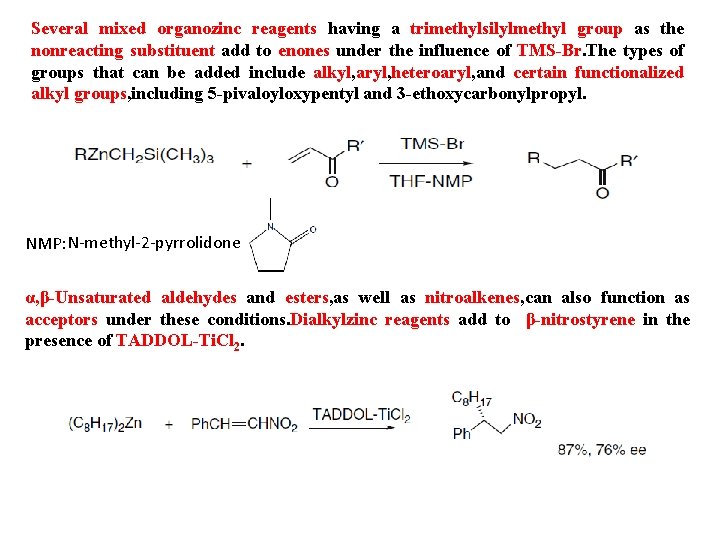
Several mixed organozinc reagents having a trimethylsilylmethyl group as the nonreacting substituent add to enones under the influence of TMS-Br. The types of groups that can be added include alkyl, aryl, heteroaryl, and certain functionalized alkyl groups, including 5 -pivaloyloxypentyl and 3 -ethoxycarbonylpropyl. NMP: N-methyl-2 -pyrrolidone α, β-Unsaturated aldehydes and esters, as well as nitroalkenes, can also function as acceptors under these conditions. Dialkylzinc reagents add to β-nitrostyrene in the presence of TADDOL-Ti. Cl 2.
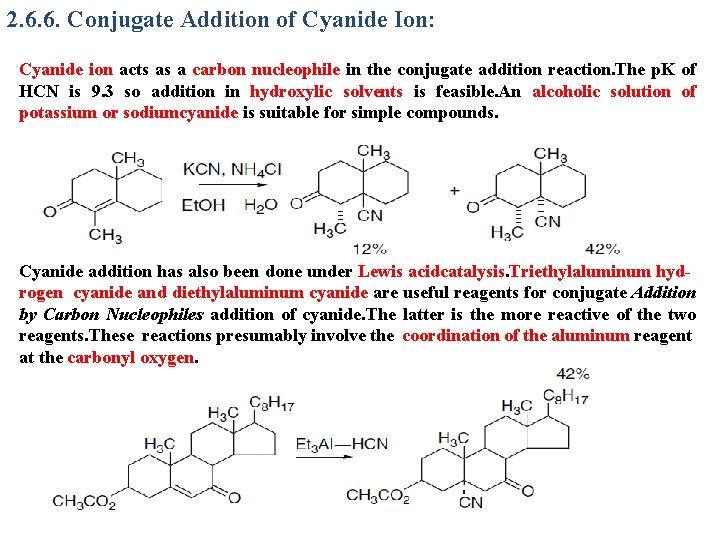
2. 6. 6. Conjugate Addition of Cyanide Ion: Cyanide ion acts as a carbon nucleophile in the conjugate addition reaction. The p. K of HCN is 9. 3 so addition in hydroxylic solvents is feasible. An alcoholic solution of potassium or sodiumcyanide is suitable for simple compounds. Cyanide addition has also been done under Lewis acidcatalysis. Triethylaluminum hydrogen cyanide and diethylaluminum cyanide are useful reagents for conjugate Addition by Carbon Nucleophiles addition of cyanide. The latter is the more reactive of the two reagents. These reactions presumably involve the coordination of the aluminum reagent at the carbonyl oxygen.
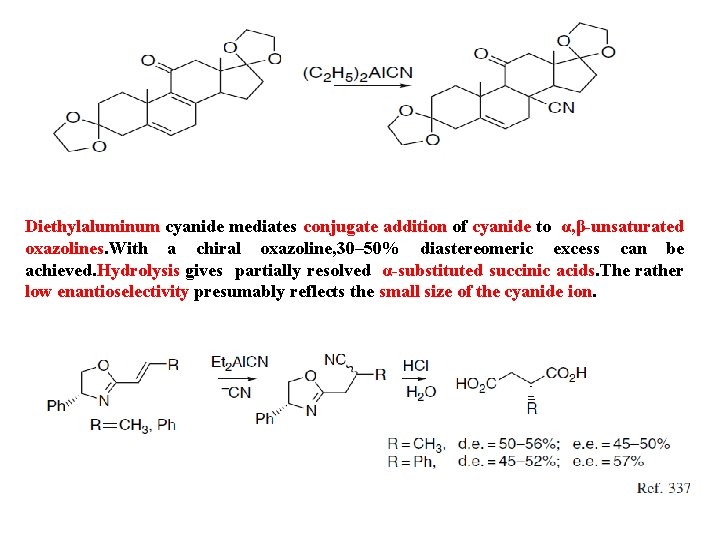
Diethylaluminum cyanide mediates conjugate addition of cyanide to α, β-unsaturated oxazolines. With a chiral oxazoline, 30– 50% diastereomeric excess can be achieved. Hydrolysis gives partially resolved α-substituted succinic acids. The rather low enantioselectivity presumably reflects the small size of the cyanide ion.
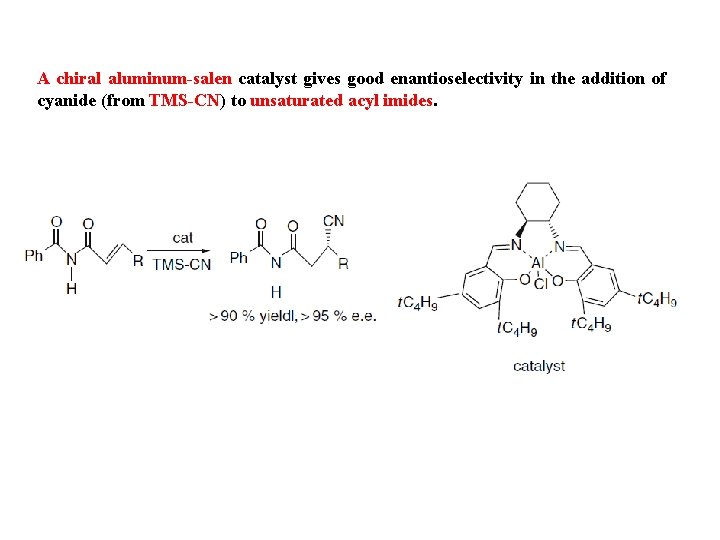
A chiral aluminum-salen catalyst gives good enantioselectivity in the addition of cyanide (from TMS-CN) to unsaturated acyl imides.
- Slides: 95