
CHAPTER 2 PSYCHOLOGICAL RESEARCH METHODS AND STATISTICS SAMPLES
- Slides: 25
CHAPTER 2: PSYCHOLOGICAL RESEARCH METHODS AND STATISTICS
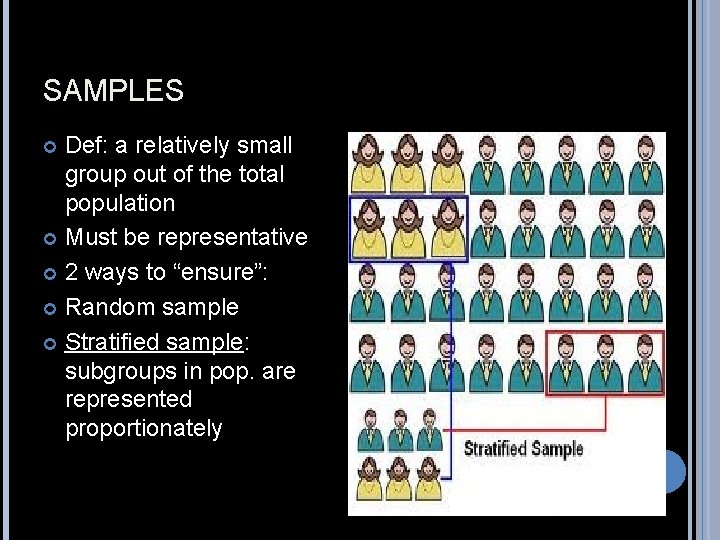
SAMPLES Def: a relatively small group out of the total population Must be representative 2 ways to “ensure”: Random sample Stratified sample: subgroups in pop. are represented proportionately
METHODS OF RESEARCH
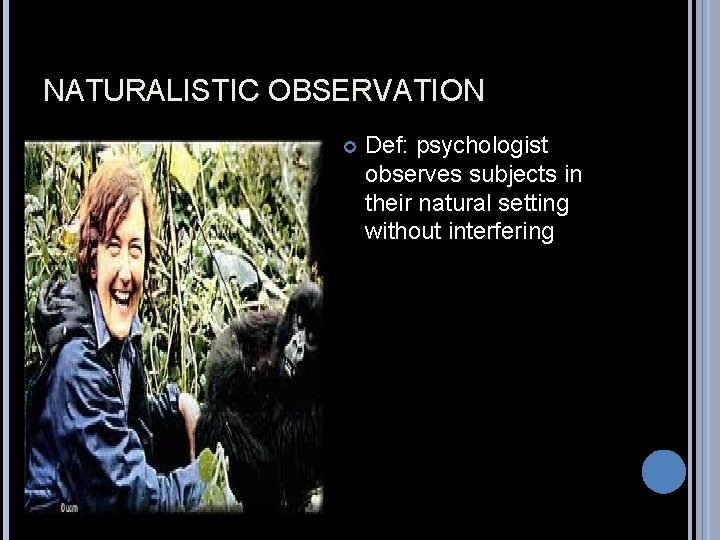
NATURALISTIC OBSERVATION Def: psychologist observes subjects in their natural setting without interfering
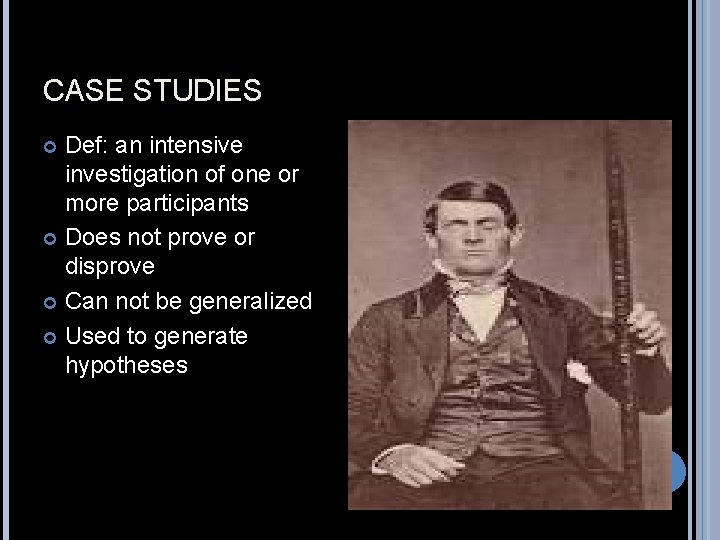
CASE STUDIES Def: an intensive investigation of one or more participants Does not prove or disprove Can not be generalized Used to generate hypotheses
SURVEYS Def: info is obtained by asking many individuals a fixed set of questions Interviews, questionnaires
LONGITUDINAL STUDIES Def: data is collected about a group of participants over a number of years to assess how certain characteristics change or remain the same during development Time consuming Too many variables
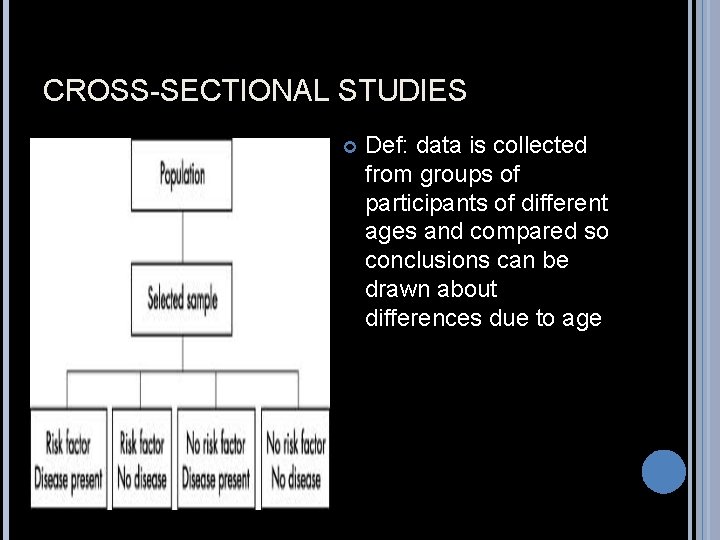
CROSS-SECTIONAL STUDIES Def: data is collected from groups of participants of different ages and compared so conclusions can be drawn about differences due to age
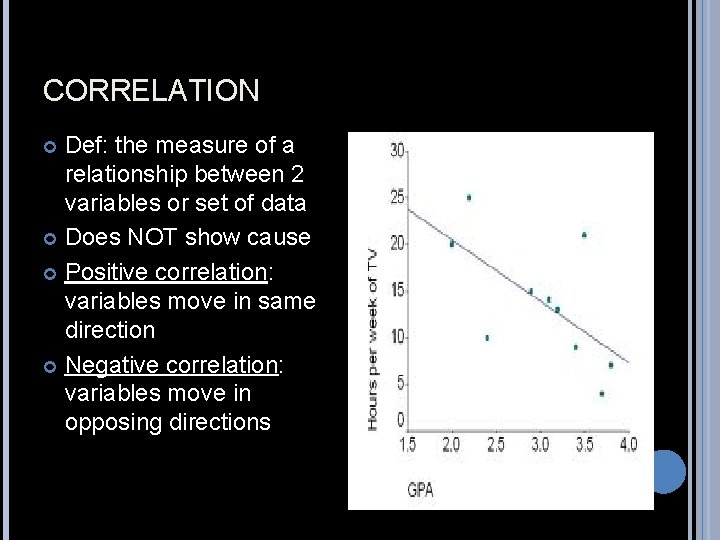
CORRELATION Def: the measure of a relationship between 2 variables or set of data Does NOT show cause Positive correlation: variables move in same direction Negative correlation: variables move in opposing directions
EXPERIMENTS Enables researcher to control the situation Hypothesis: educated guess Variable: any factor capable of change (independent, dependent) Experimental and control group Results must be replicated to be accepted
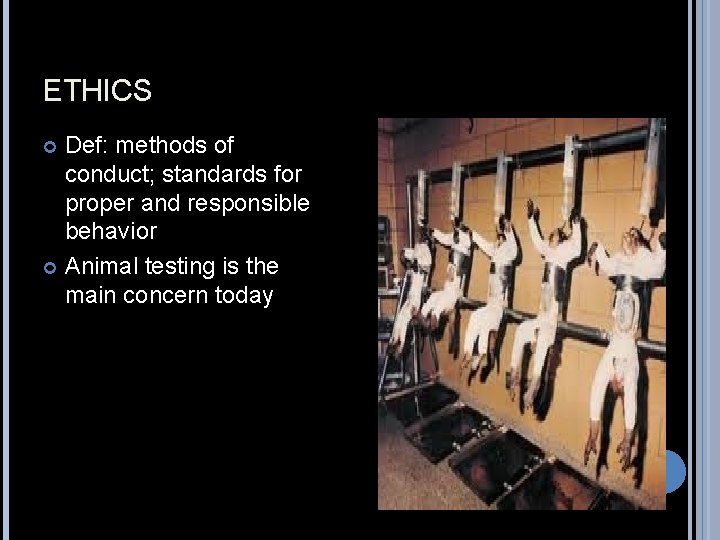
ETHICS Def: methods of conduct; standards for proper and responsible behavior Animal testing is the main concern today
SECTION 2: PROBLEMS AND SOLUTIONS IN RESEARCH
SELF-FULFILLING PROPHECY Def: when a researcher’s expectations influence their behavior and thereby influence the participant’s behavior Any conscious/unconscious cue could change results
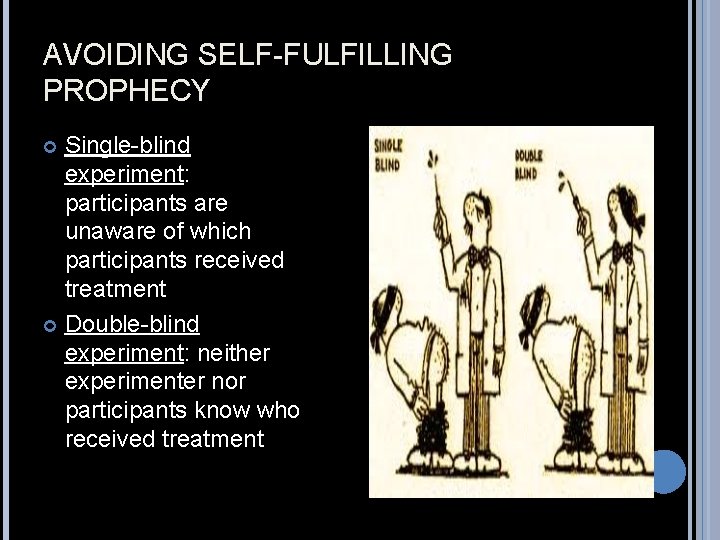
AVOIDING SELF-FULFILLING PROPHECY Single-blind experiment: participants are unaware of which participants received treatment Double-blind experiment: neither experimenter nor participants know who received treatment
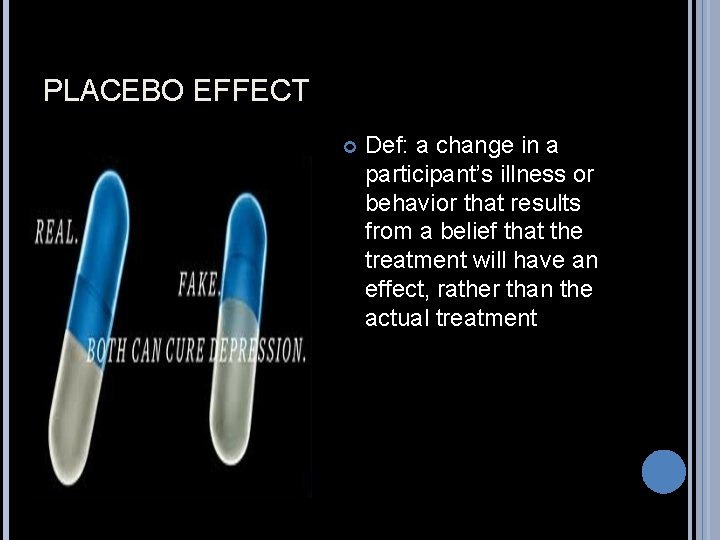
PLACEBO EFFECT Def: a change in a participant’s illness or behavior that results from a belief that the treatment will have an effect, rather than the actual treatment
SECTION 3: STATISTICAL EVALUATION Statistics can lie. In order to avoid that, you must collect meaningful data and evaluate it correctly
STATISTICS Def: branch of math concerned with summarizing and making meaningful inferences from collections of data
DESCRIPTIVE STATISTICS Def: the listing and summarizing of data in a practical and efficient way
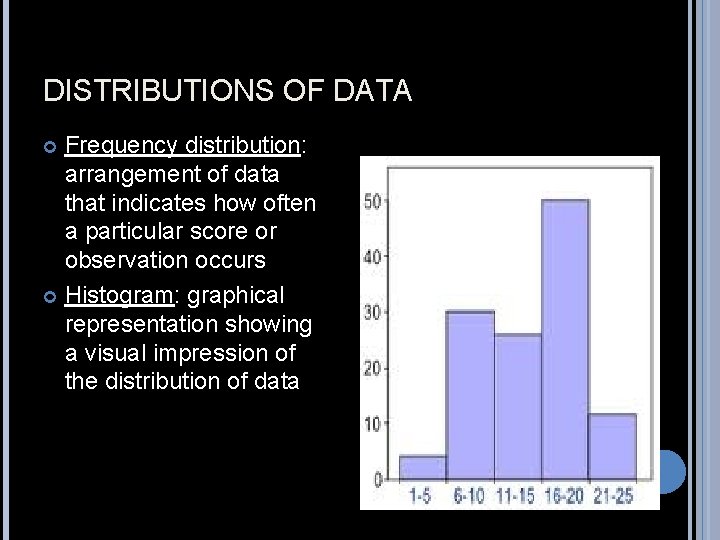
DISTRIBUTIONS OF DATA Frequency distribution: arrangement of data that indicates how often a particular score or observation occurs Histogram: graphical representation showing a visual impression of the distribution of data
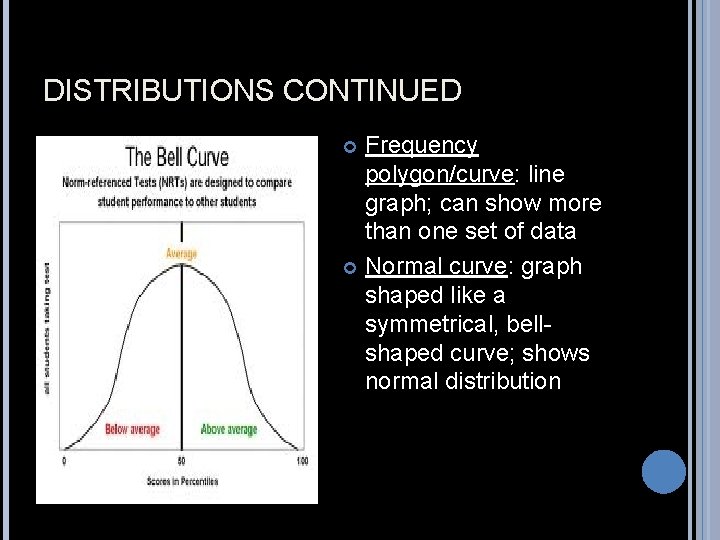
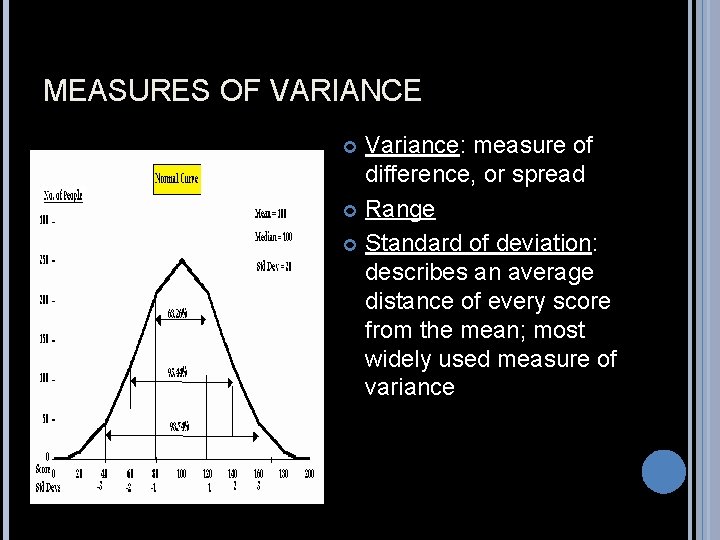
DISTRIBUTIONS CONTINUED Frequency polygon/curve: line graph; can show more than one set of data Normal curve: graph shaped like a symmetrical, bellshaped curve; shows normal distribution
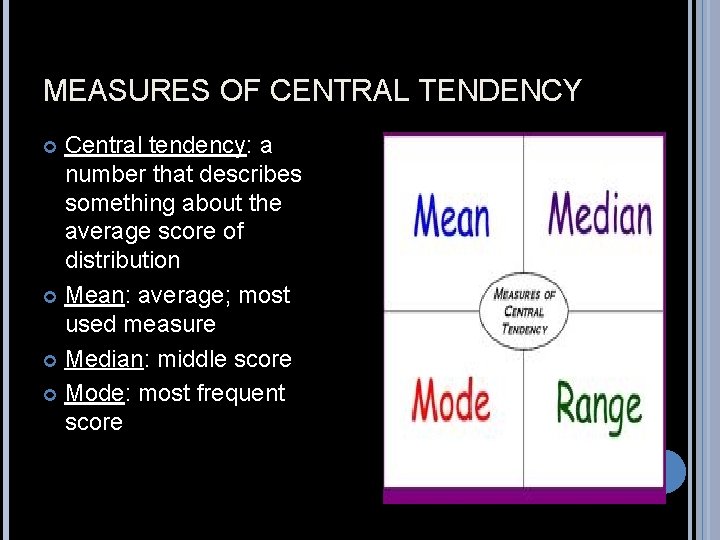
MEASURES OF CENTRAL TENDENCY Central tendency: a number that describes something about the average score of distribution Mean: average; most used measure Median: middle score Mode: most frequent score
MEASURES OF VARIANCE Variance: measure of difference, or spread Range Standard of deviation: describes an average distance of every score from the mean; most widely used measure of variance
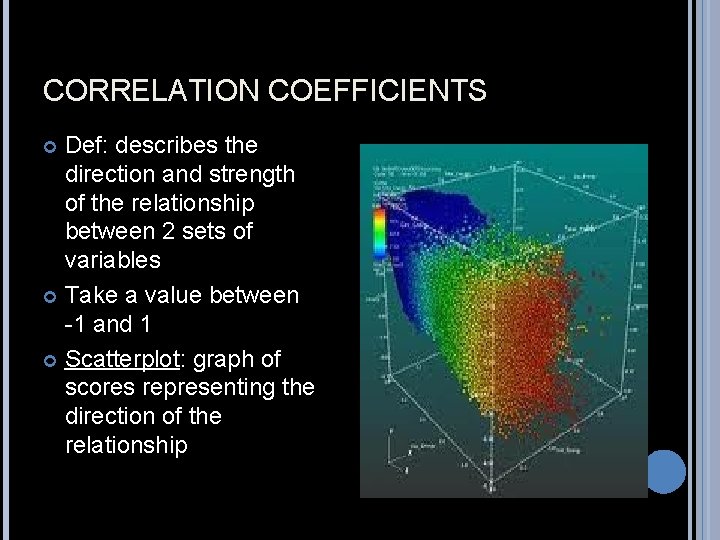
CORRELATION COEFFICIENTS Def: describes the direction and strength of the relationship between 2 sets of variables Take a value between -1 and 1 Scatterplot: graph of scores representing the direction of the relationship
INFERENTIAL STATISTICS Def: numerical methods used to determine whether research data support a hypothesis or whether results were due to chance
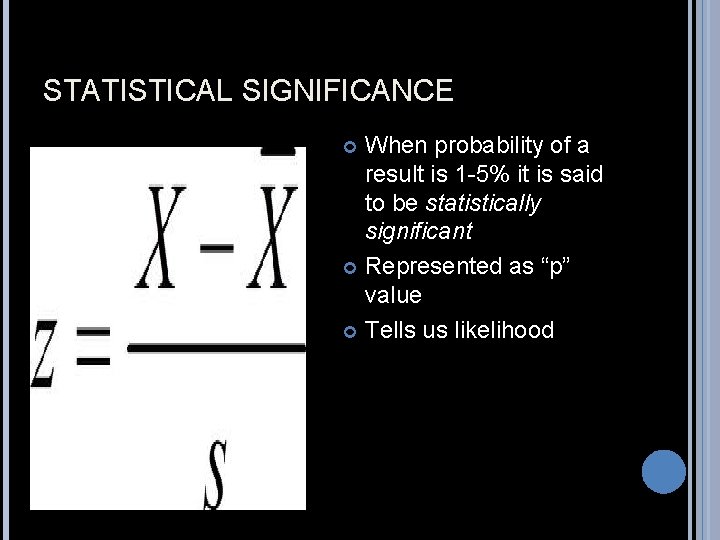
STATISTICAL SIGNIFICANCE When probability of a result is 1 -5% it is said to be statistically significant Represented as “p” value Tells us likelihood