
CHAPTER 2 Power Politics INTERNATIONAL RELATIONS Seventh Edition
- Slides: 9
CHAPTER 2 Power Politics INTERNATIONAL RELATIONS Seventh Edition Joshua S. Goldstein Pearson Education, Inc. © 2006
Realism v. Idealism § Simple assumptions can lead to different conclusions about the international system § Are states the most important actors? § Is the world in a state of anarchy? § Who writes the laws on the world stage? Pearson Education, Inc. © 2006
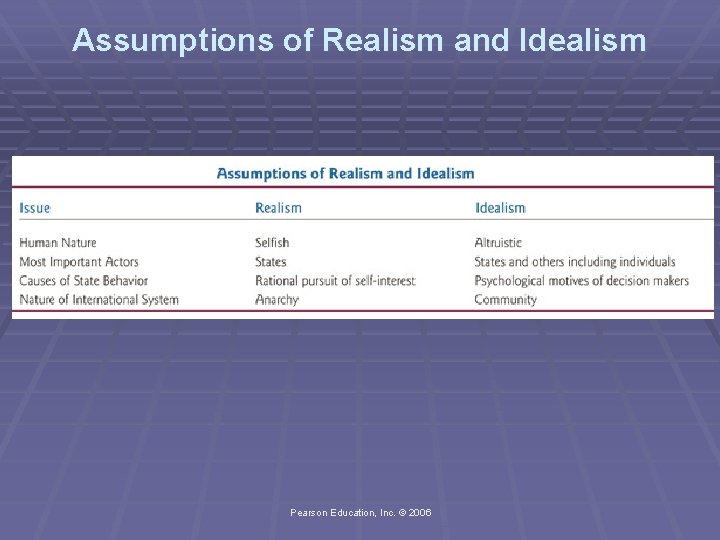
Assumptions of Realism and Idealism Pearson Education, Inc. © 2006
Power § Defining power § Estimating power § Elements of power § Military preparedness § Natural resources § Industrial capacity § Moral legitimacy § Popular support of government Pearson Education, Inc. © 2006
Bargaining § Negotiation § Achieving goals § Reciprocity § Deterrence § Rational actors § Cost-benefit analysis § Game theory § Zero-sum games Pearson Education, Inc. © 2006
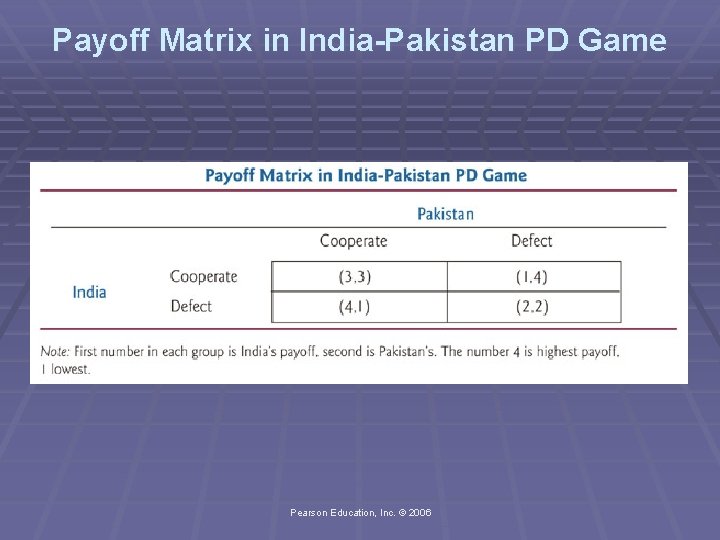
Payoff Matrix in India-Pakistan PD Game Pearson Education, Inc. © 2006
The International System § Anarchy § Sovereignty § Balance of power § Great powers § Multipolar system § Bipolar system § Hegemony Pearson Education, Inc. © 2006
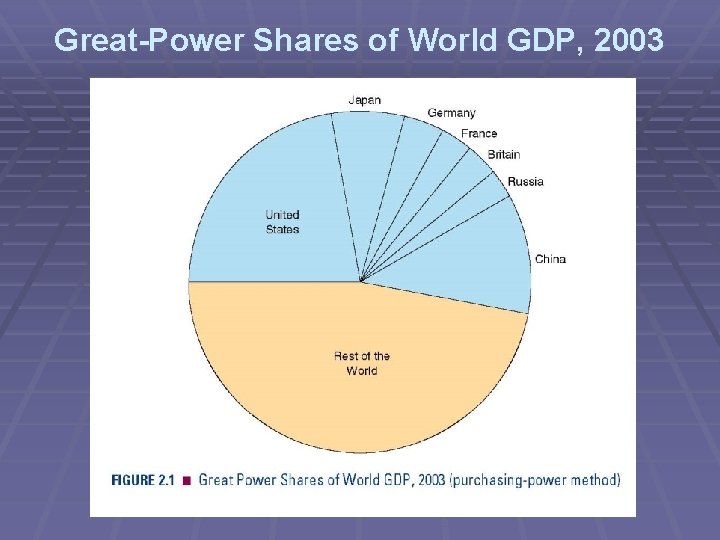
Great-Power Shares of World GDP, 2003 Pearson Education, Inc. © 2006
Alliances § § § § Purposes of alliances Burden sharing NATO Warsaw Pact U. S. -Japanese security treaty The Nonaligned Movement Southeast Asian Treaty Organization (SEATO) Russia and its neighbors Pearson Education, Inc. © 2006