
Chapter 2 Physical Biochemistry 2 1 Energy Conversion
Chapter 2 Physical Biochemistry
2. 1 Energy Conversion in Biological Systems n Sunlight is the source of energy on Earth. n The laws of thermodynamics apply to biological processes. Copyright © 2017 W. W. Norton & Companya
Bioenergetics n Is defined as energy conversion in biological system Copyright © 2017 W. W. Norton & Company
The Importance of Chemical Energy n Chemical energy is used by organisms to perform work. Copyright © 2017 W. W. Norton & Company
Types of Work n Energy conversion in living systems is required for three types of work: Copyright © 2017 W. W. Norton & Company
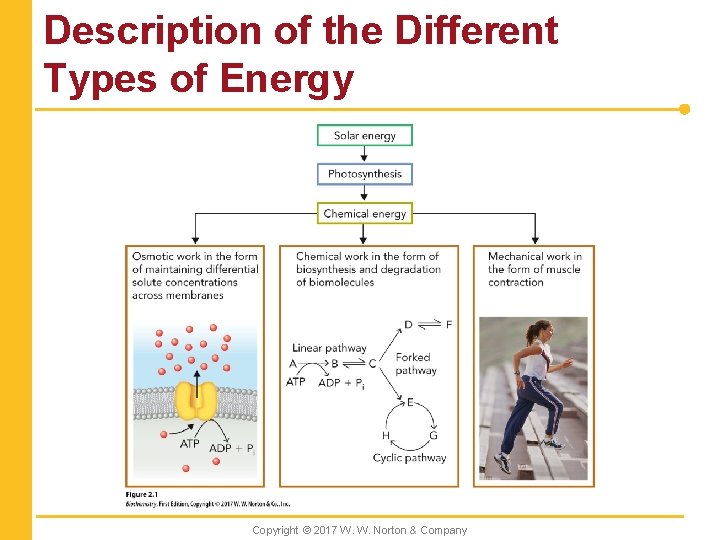
Description of the Different Types of Energy Copyright © 2017 W. W. Norton & Company
Homeostasis vs. Equilibrium n Homeostasis n Equilibrium Copyright © 2017 W. W. Norton & Company
Redox Reactions n A series of linked oxidation–reduction reactions Copyright © 2017 W. W. Norton & Company
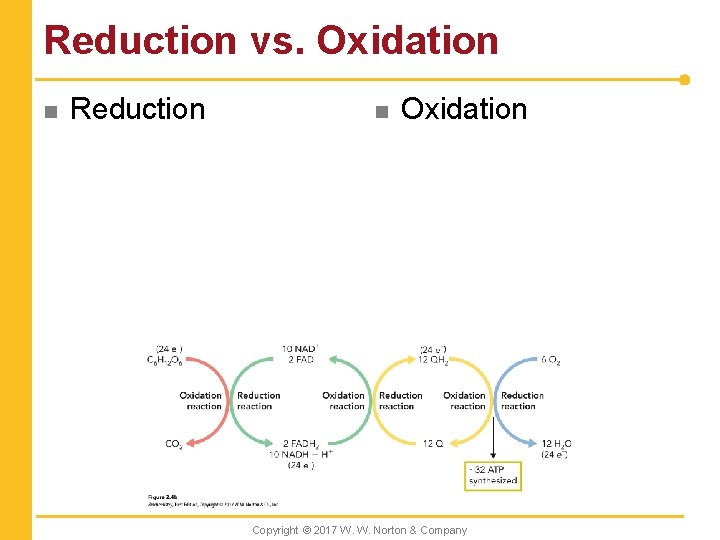
Reduction vs. Oxidation n Reduction n Oxidation Copyright © 2017 W. W. Norton & Company
Thermodynamic Terms n System q n Collection of matter in a defined space Surroundings q All the space not included in the system Copyright © 2017 W. W. Norton & Company
Various Types of Systems n Open n Closed n Isolated Copyright © 2017 W. W. Norton & Company
Laws of Thermodynamics, Part 1 n First law Copyright © 2017 W. W. Norton & Company
Laws of Thermodynamics, Part 2 n Second law Copyright © 2017 W. W. Norton & Company
Varying Descriptions of Enthalpy n Exothermic n Endothermic Copyright © 2017 W. W. Norton & Company
Entropy n A measure of disorder Copyright © 2017 W. W. Norton & Company
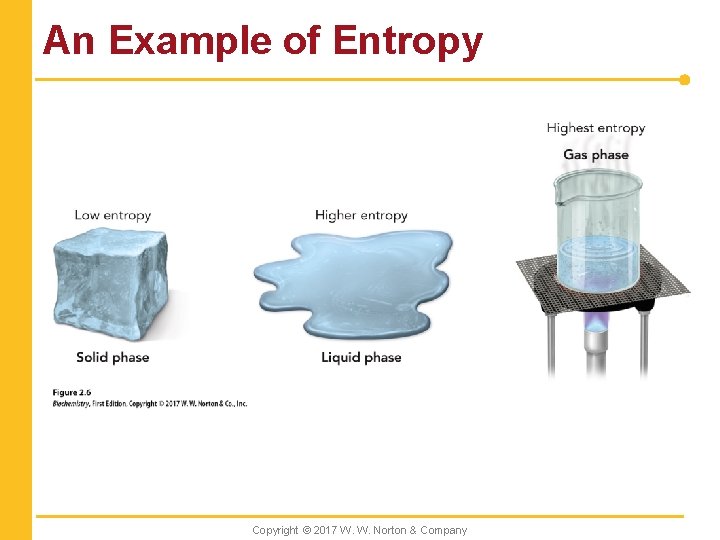
An Example of Entropy Copyright © 2017 W. W. Norton & Company
Gibbs Free Energy (G) n The difference between enthalpy (H) and the entropy (S) of a system at a given temperature G = H – TS Copyright © 2017 W. W. Norton & Company
Exergonic vs. Endergonic Reactions n Exergonic n Endergonic Copyright © 2017 W. W. Norton & Company
Standard Free Energy Change (ΔG°) n Can be used to compare chemical reactions under a defined set of conditions ΔG˚ = ΔH˚ – TΔS˚ Copyright © 2017 W. W. Norton & Company
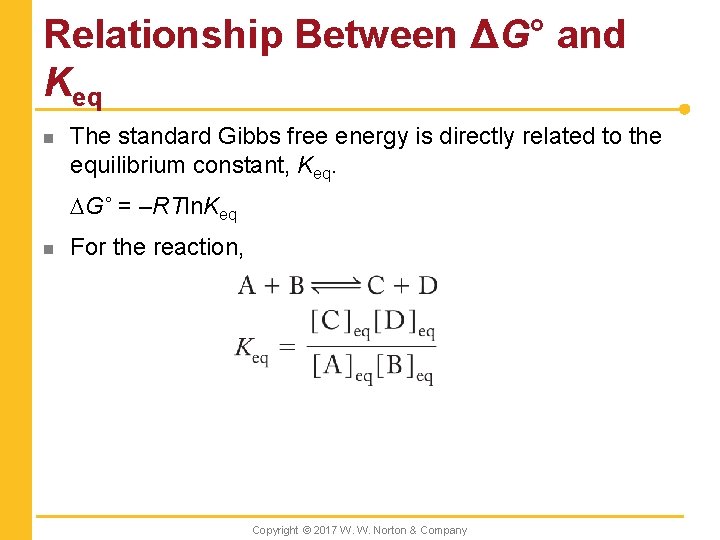
Relationship Between ΔG° and Keq n The standard Gibbs free energy is directly related to the equilibrium constant, Keq. DG˚ = –RTln. Keq n For the reaction, Copyright © 2017 W. W. Norton & Company
Biochemical Standard Conditions (ΔG°′) n The conditions at standard free energy change (ΔG°) remain, but also these other conditions occur: Copyright © 2017 W. W. Norton & Company
Coupled Reactions n If a reaction is endergonic, it can be coupled to an exergonic reaction to become overall favorable. Copyright © 2017 W. W. Norton & Company
![Energy Charge (EC) n The relationship between [ATP], [ADP], and [AMP] at any given](http://slidetodoc.com/presentation_image_h/2ce696998a140cf3cac67a7263d7e820/image-23.jpg "Energy Charge (EC) n The relationship between [ATP], [ADP], and [AMP] at any given")
Energy Charge (EC) n The relationship between [ATP], [ADP], and [AMP] at any given time in the cell Copyright © 2017 W. W. Norton & Company
![Energy Charge as a Function of [ATP], [ADP], and [AMP] Copyright © 2017 W.](http://slidetodoc.com/presentation_image_h/2ce696998a140cf3cac67a7263d7e820/image-24.jpg "Energy Charge as a Function of [ATP], [ADP], and [AMP] Copyright © 2017 W.")
Energy Charge as a Function of [ATP], [ADP], and [AMP] Copyright © 2017 W. W. Norton & Company
Catabolic Pathways n Convert energy-rich compounds into energydepleted compounds Copyright © 2017 W. W. Norton & Company
Anabolic Pathway n Reactions that produce biomolecules from smaller molecules Copyright © 2017 W. W. Norton & Company
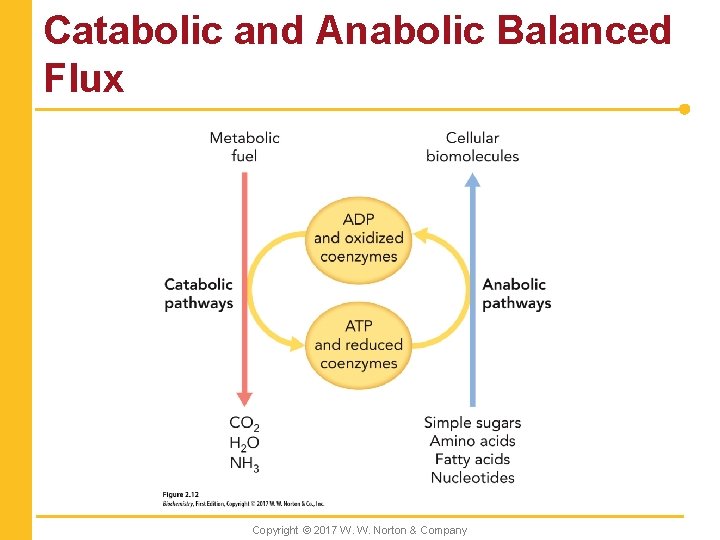
Catabolic and Anabolic Balanced Flux Copyright © 2017 W. W. Norton & Company
2. 2 Water Is Critical for Life Processes n Hydrogen bonding is responsible for the unique properties of water. Copyright © 2017 W. W. Norton & Company

Water Copyright © 2017 W. W. Norton & Company
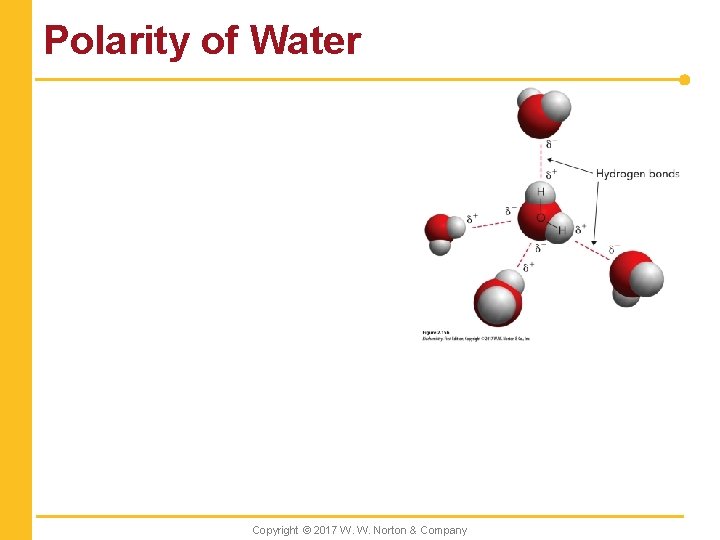
Polarity of Water Copyright © 2017 W. W. Norton & Company
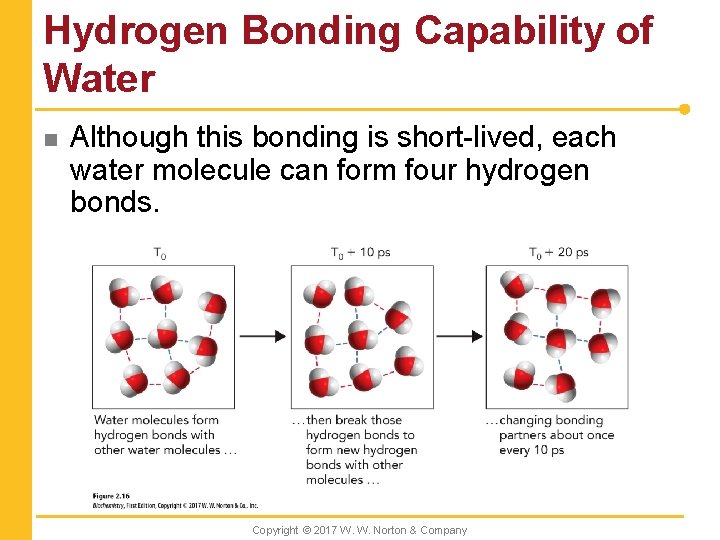
Hydrogen Bonding Capability of Water n Although this bonding is short-lived, each water molecule can form four hydrogen bonds. Copyright © 2017 W. W. Norton & Company
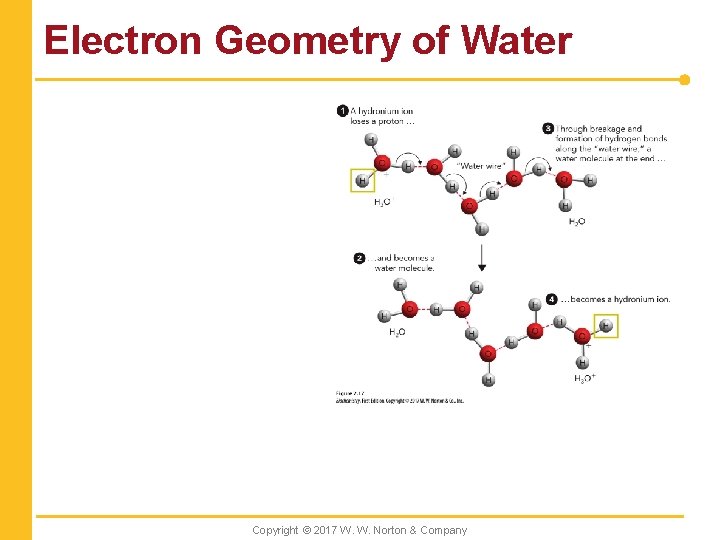
Electron Geometry of Water Copyright © 2017 W. W. Norton & Company
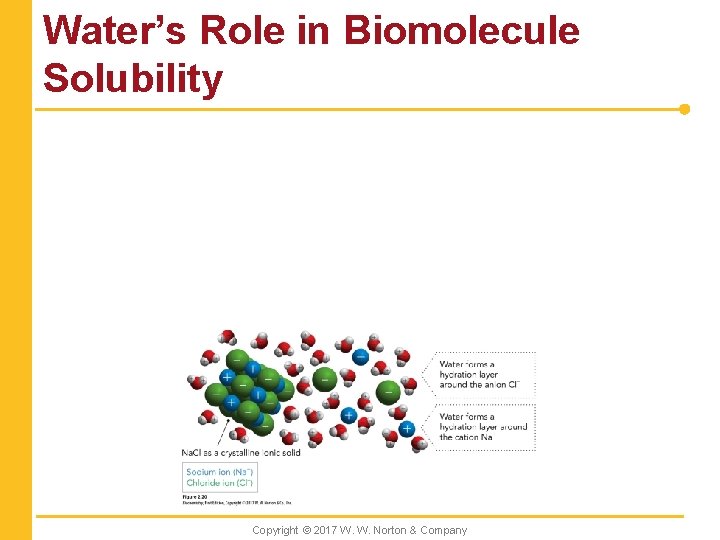
Water’s Role in Biomolecule Solubility Copyright © 2017 W. W. Norton & Company
Weak Noncovalent Interactions in Biomolecules, Part 1 n Hydrogen bonds n Ionic interactions Copyright © 2017 W. W. Norton & Company
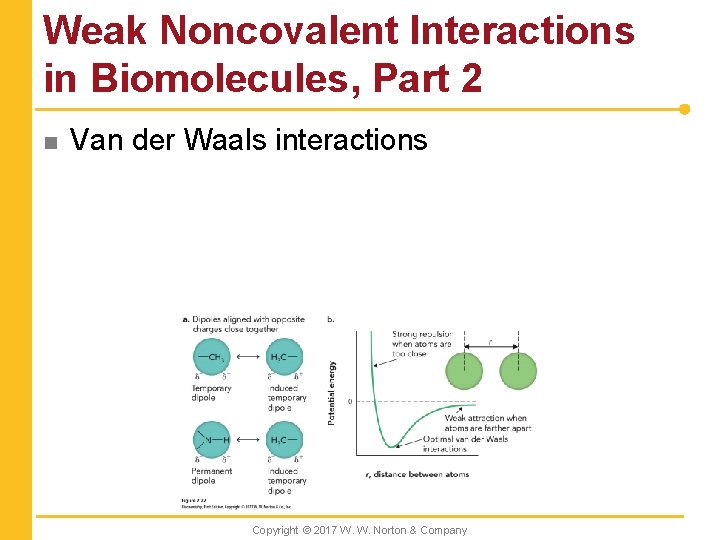
Weak Noncovalent Interactions in Biomolecules, Part 2 n Van der Waals interactions Copyright © 2017 W. W. Norton & Company
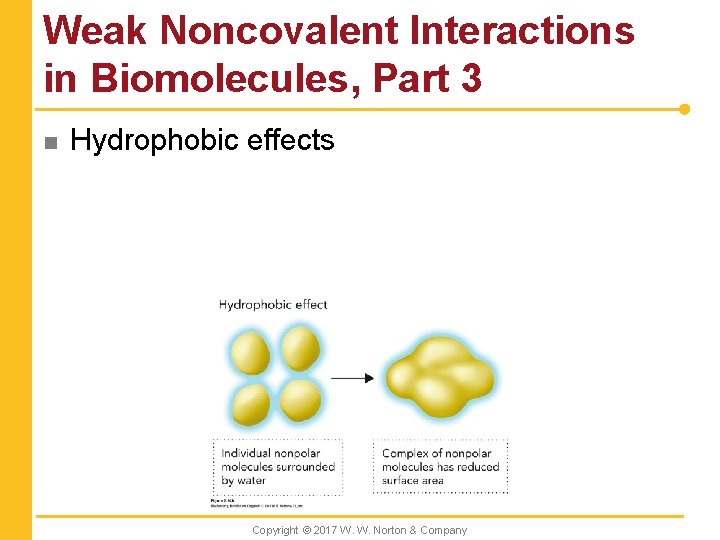
Weak Noncovalent Interactions in Biomolecules, Part 3 n Hydrophobic effects Copyright © 2017 W. W. Norton & Company
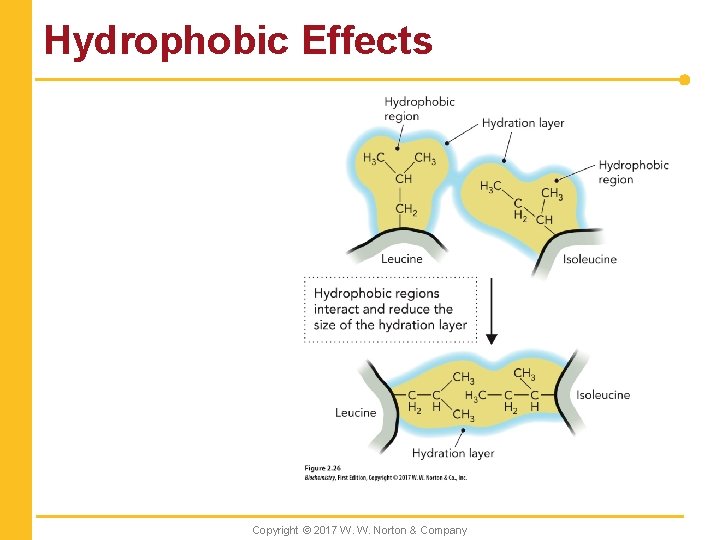
Hydrophobic Effects Copyright © 2017 W. W. Norton & Company
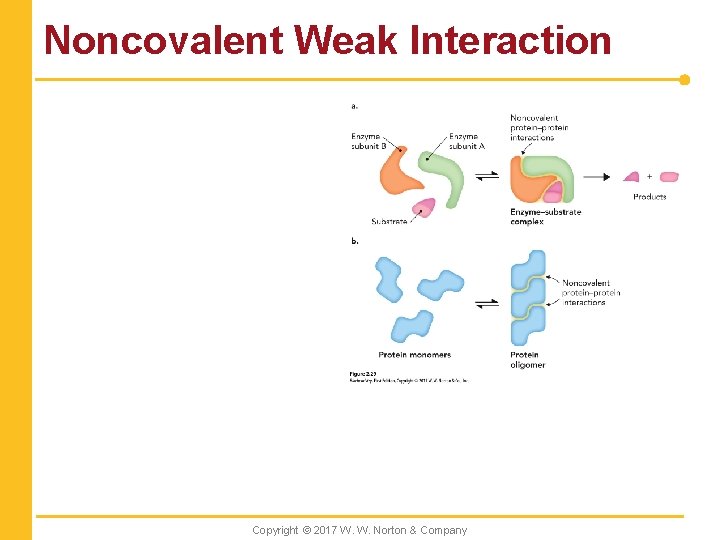
Noncovalent Weak Interaction Copyright © 2017 W. W. Norton & Company
Ionization of Water Copyright © 2017 W. W. Norton & Company
![The p. H Scale n p. H refers to the [H+] and is a](http://slidetodoc.com/presentation_image_h/2ce696998a140cf3cac67a7263d7e820/image-40.jpg "The p. H Scale n p. H refers to the [H+] and is a")
The p. H Scale n p. H refers to the [H+] and is a measure of acidity. n Buffers are aqueous solutions that resist small changes in p. H. Copyright © 2017 W. W. Norton & Company
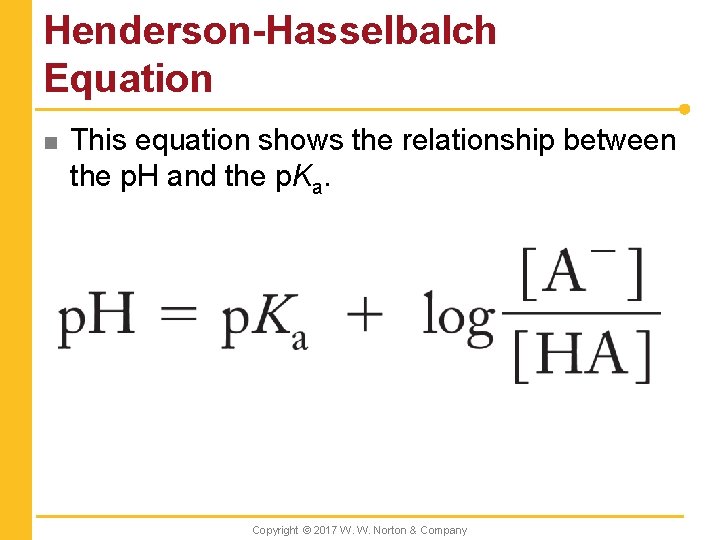
Henderson-Hasselbalch Equation n This equation shows the relationship between the p. H and the p. Ka. Copyright © 2017 W. W. Norton & Company
- Slides: 42