
Chapter 2 Personality Research Methods Measuring personality variables
Chapter 2 Personality Research Methods

Measuring personality variables 4 What is a variable? 4 What kinds of variables are there? – Categorical variables (examples: gender, political affiliation) – Continuous variables (height, weight) 4 How can we measure an aspect of personality as a variable? 4 Psychometrics (psyche – mind, metric – measure): an applied branch of psychology that deals with psychological measurement 4 The most commonly used approach to study human personality: the self-report questionnaire measure
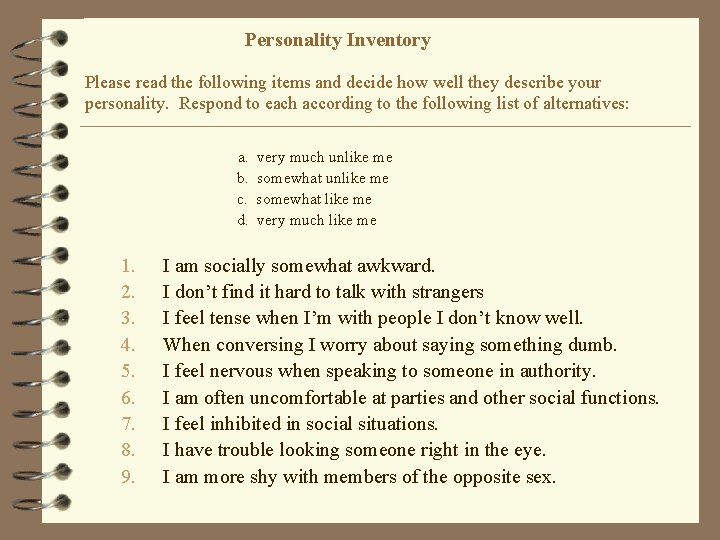
Personality Inventory Please read the following items and decide how well they describe your personality. Respond to each according to the following list of alternatives: a. b. c. d. 1. 2. 3. 4. 5. 6. 7. 8. 9. very much unlike me somewhat like me very much like me I am socially somewhat awkward. I don’t find it hard to talk with strangers I feel tense when I’m with people I don’t know well. When conversing I worry about saying something dumb. I feel nervous when speaking to someone in authority. I am often uncomfortable at parties and other social functions. I feel inhibited in social situations. I have trouble looking someone right in the eye. I am more shy with members of the opposite sex.
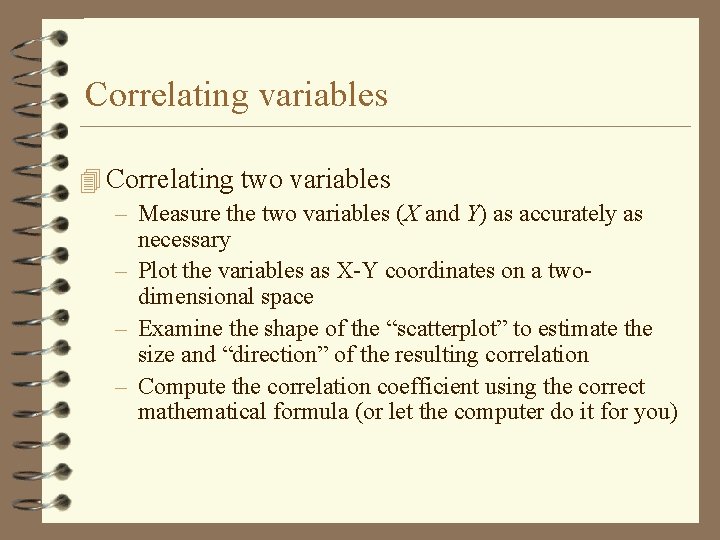
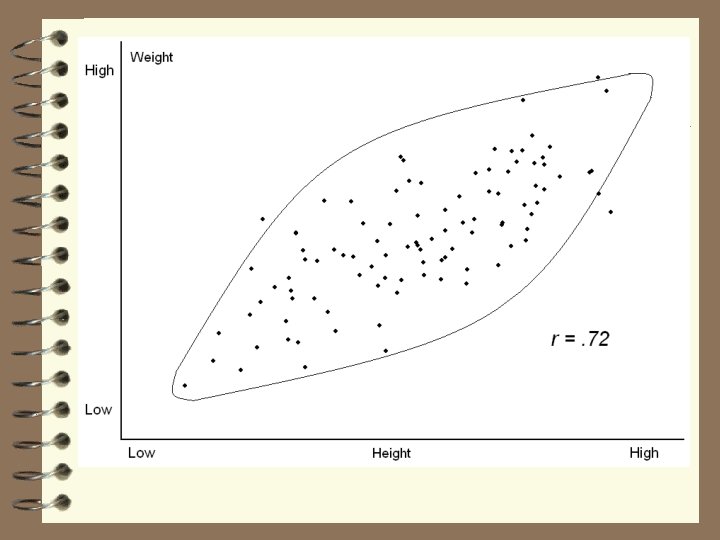
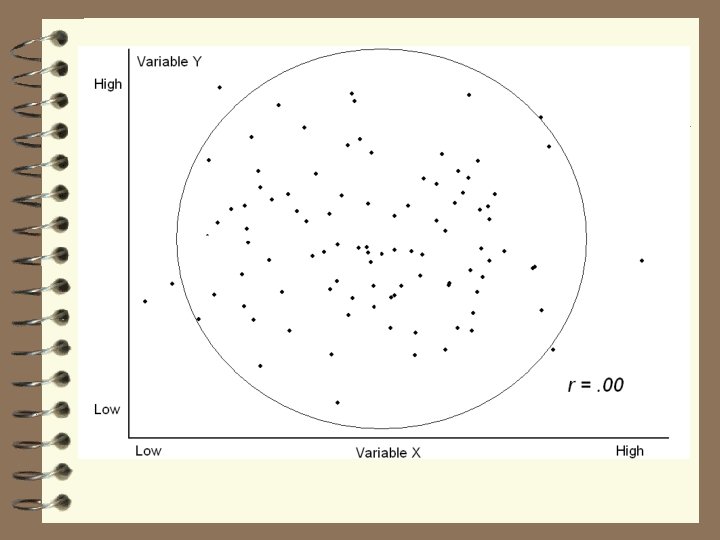
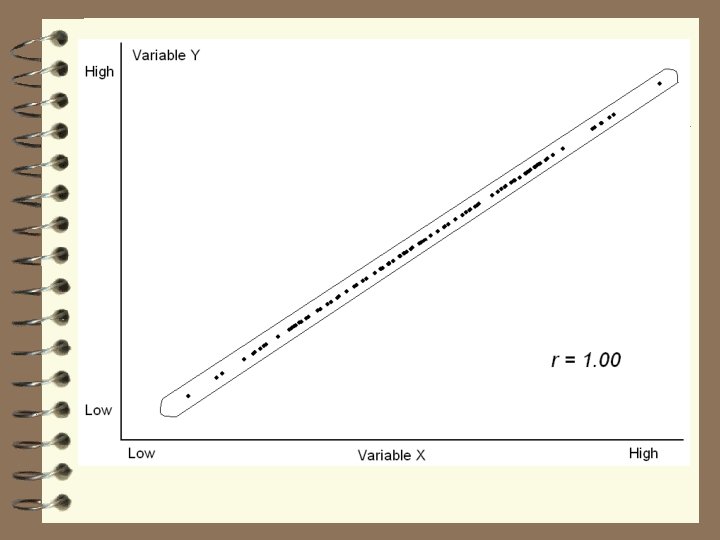
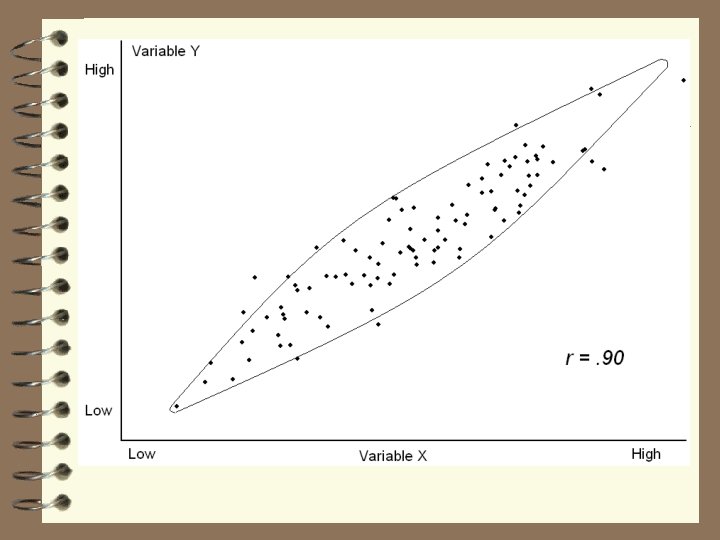
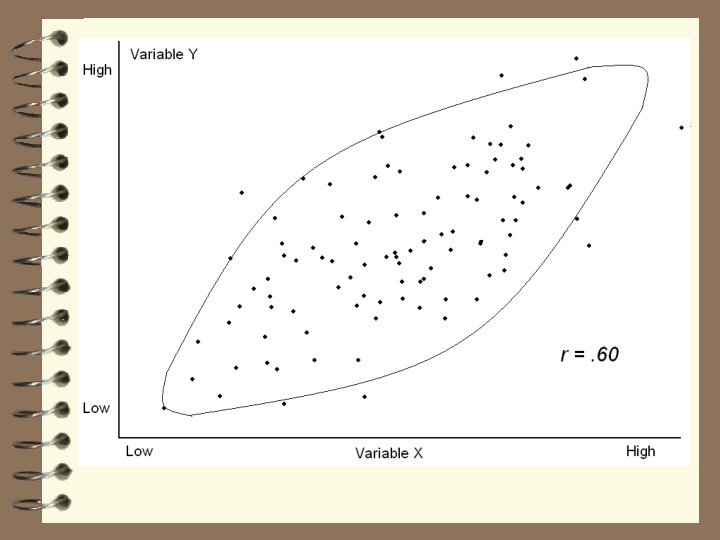
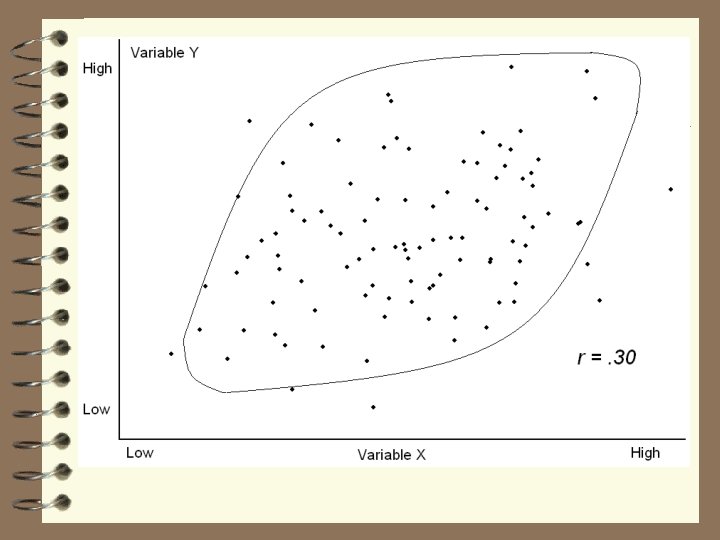
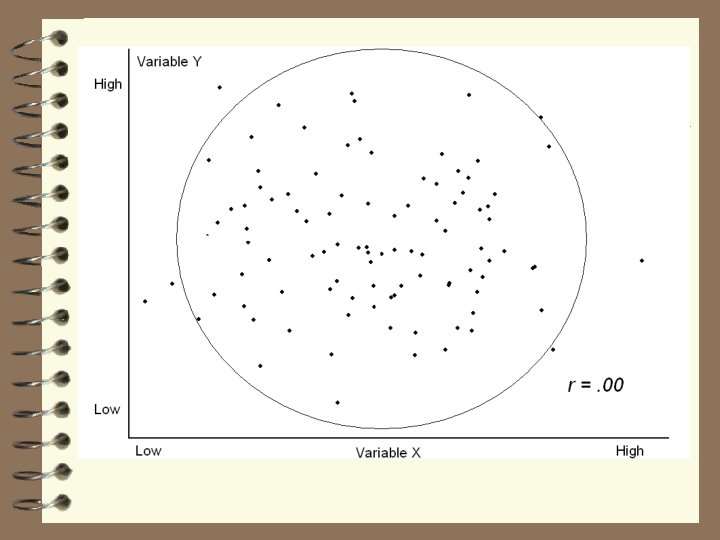
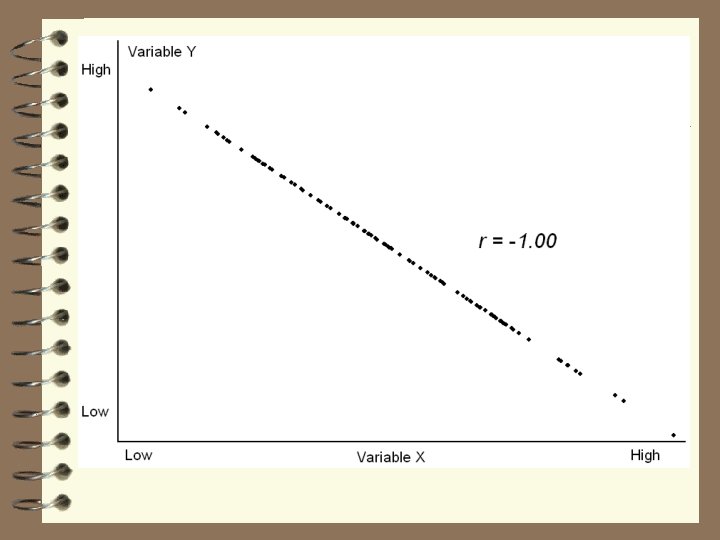
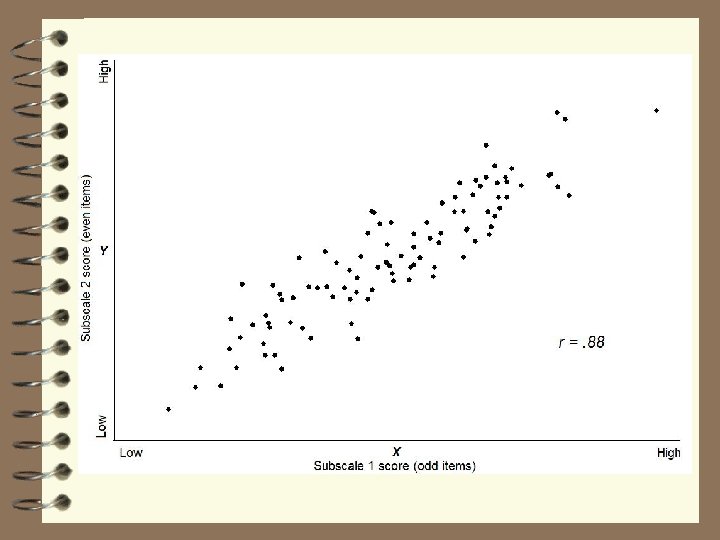
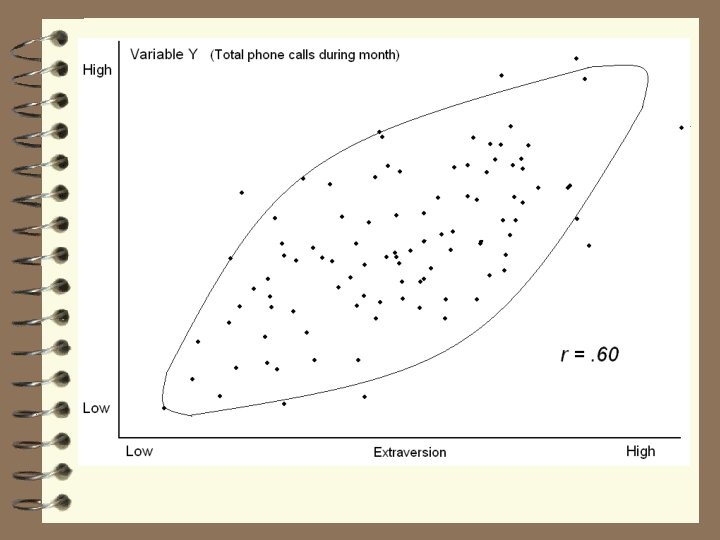
Correlating variables 4 Correlating two variables – Measure the two variables (X and Y) as accurately as necessary – Plot the variables as X-Y coordinates on a twodimensional space – Examine the shape of the “scatterplot” to estimate the size and “direction” of the resulting correlation – Compute the correlation coefficient using the correct mathematical formula (or let the computer do it for you)
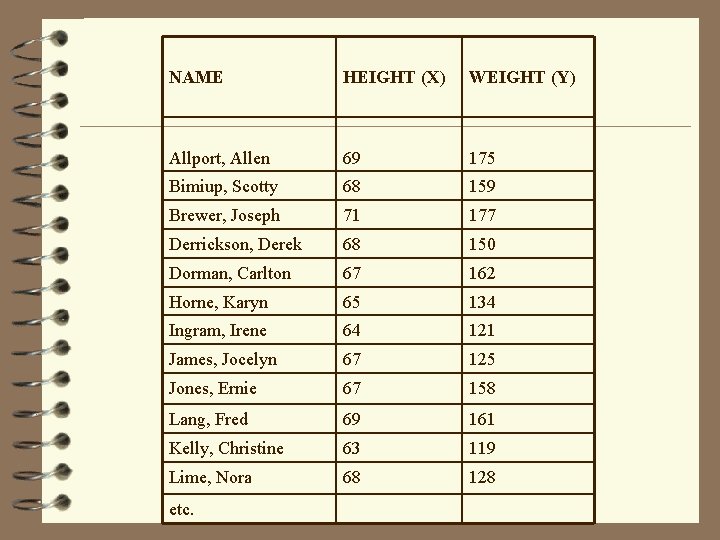
NAME HEIGHT (X) WEIGHT (Y) Allport, Allen 69 175 Bimiup, Scotty 68 159 Brewer, Joseph 71 177 Derrickson, Derek 68 150 Dorman, Carlton 67 162 Horne, Karyn 65 134 Ingram, Irene 64 121 James, Jocelyn 67 125 Jones, Ernie 67 158 Lang, Fred 69 161 Kelly, Christine 63 119 Lime, Nora 68 128 etc.
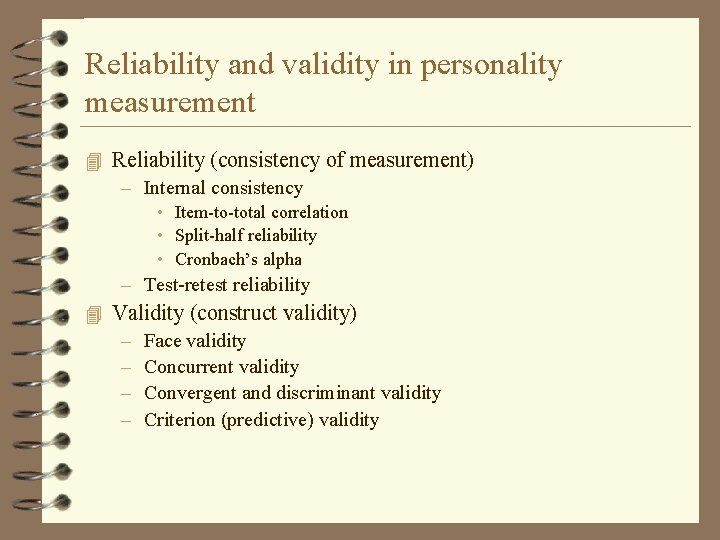
Reliability and validity in personality measurement 4 Reliability (consistency of measurement) – Internal consistency • Item-to-total correlation • Split-half reliability • Cronbach’s alpha – Test-retest reliability 4 Validity (construct validity) – Face validity – Concurrent validity – Convergent and discriminant validity – Criterion (predictive) validity
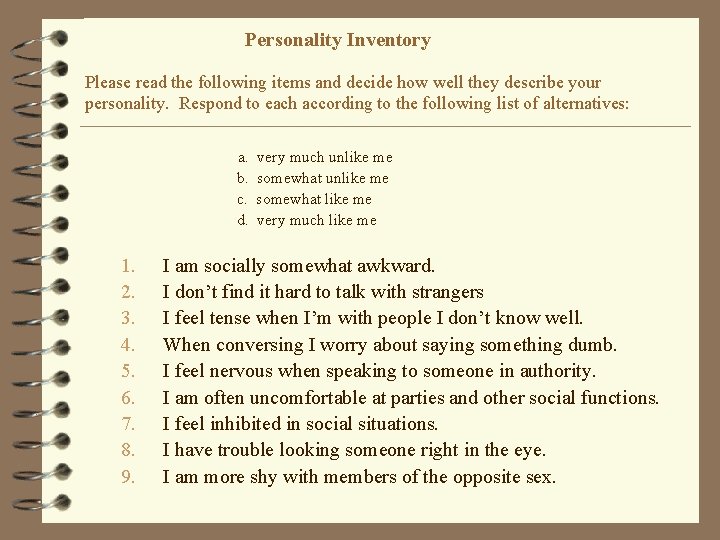
Personality Inventory Please read the following items and decide how well they describe your personality. Respond to each according to the following list of alternatives: a. b. c. d. 1. 2. 3. 4. 5. 6. 7. 8. 9. very much unlike me somewhat like me very much like me I am socially somewhat awkward. I don’t find it hard to talk with strangers I feel tense when I’m with people I don’t know well. When conversing I worry about saying something dumb. I feel nervous when speaking to someone in authority. I am often uncomfortable at parties and other social functions. I feel inhibited in social situations. I have trouble looking someone right in the eye. I am more shy with members of the opposite sex.
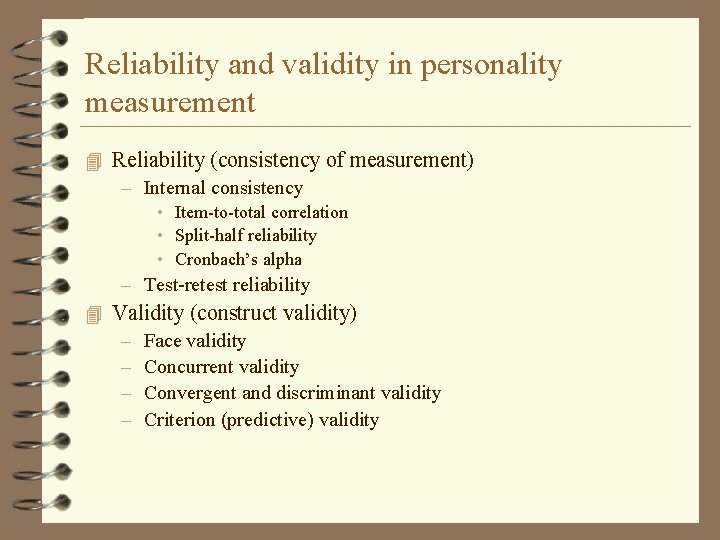
Reliability and validity in personality measurement 4 Reliability (consistency of measurement) – Internal consistency • Item-to-total correlation • Split-half reliability • Cronbach’s alpha – Test-retest reliability 4 Validity (construct validity) – Face validity – Concurrent validity – Convergent and discriminant validity – Criterion (predictive) validity
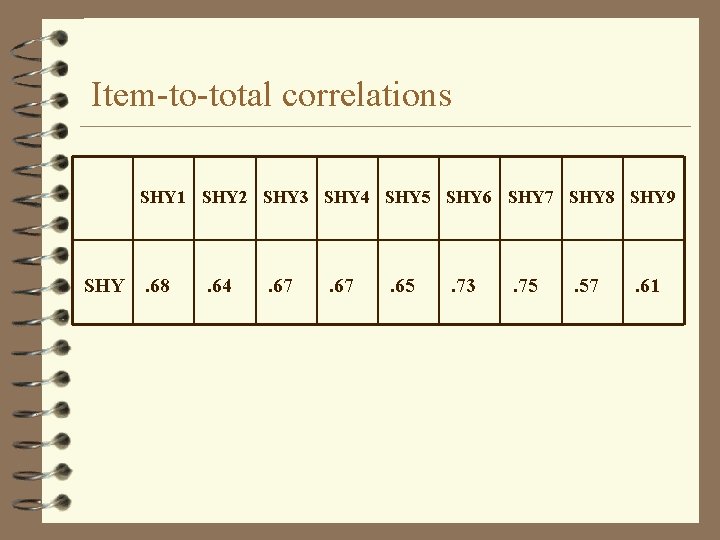
Item-to-total correlations SHY 1 SHY 2 SHY 3 SHY 4 SHY 5 SHY 6 SHY 7 SHY 8 SHY 9 SHY . 68 . 64 . 67 . 65 . 73 . 75 . 57 . 61
Reliability and validity in personality measurement 4 Reliability (consistency of measurement) – Internal consistency • Item-to-total correlation • Split-half reliability • Cronbach’s alpha – Test-retest reliability 4 Validity (construct validity) – Face validity – Concurrent validity – Convergent and discriminant validity – Criterion (predictive) validity
Reliability and validity in personality measurement 4 Reliability (consistency of measurement) – Internal consistency • Item-to-total correlation • Split-half reliability • Cronbach’s alpha – Test-retest reliability 4 Validity (construct validity) – Face validity – Concurrent validity – Convergent and discriminant validity – Criterion (predictive) validity
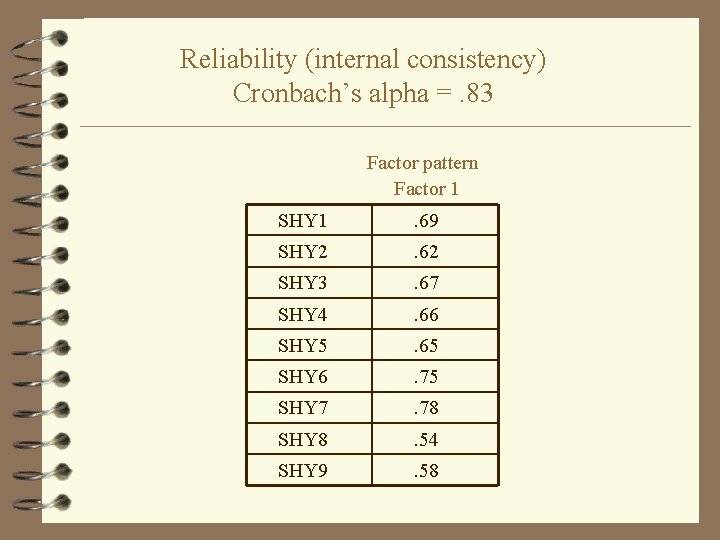
Reliability (internal consistency) Cronbach’s alpha =. 83 Factor pattern Factor 1 SHY 1 . 69 SHY 2 . 62 SHY 3 . 67 SHY 4 . 66 SHY 5 . 65 SHY 6 . 75 SHY 7 . 78 SHY 8 . 54 SHY 9 . 58
Reliability and validity in personality measurement 4 Reliability (consistency of measurement) – Internal consistency • Item-to-total correlation • Split-half reliability • Cronbach’s alpha – Test-retest reliability 4 Validity (construct validity) – Face validity – Concurrent validity – Convergent and discriminant validity – Criterion (predictive) validity
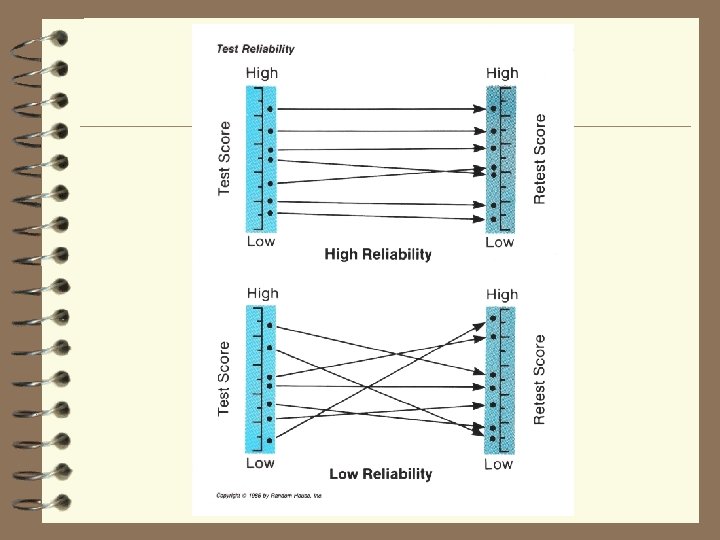
Reliability and validity in personality measurement 4 Reliability (consistency of measurement) – Internal consistency • Item-to-total correlation • Split-half reliability • Cronbach’s alpha – Test-retest reliability 4 Validity (construct validity) – Face validity – Concurrent validity – Convergent and discriminant validity – Criterion (predictive) validity
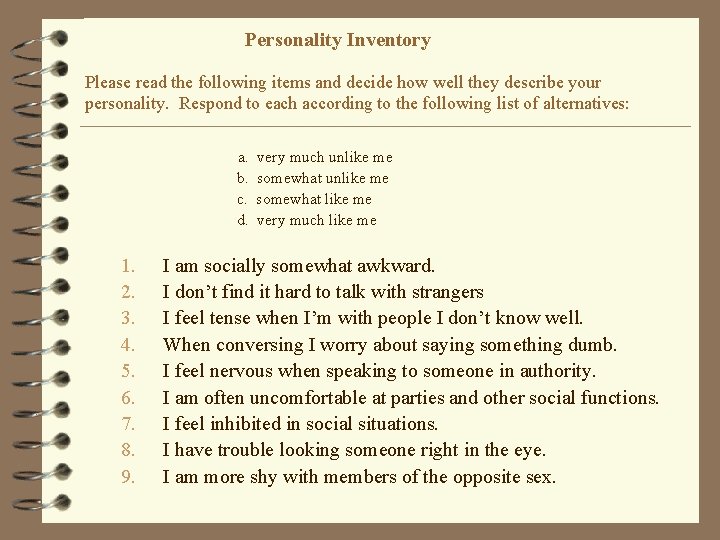
Personality Inventory Please read the following items and decide how well they describe your personality. Respond to each according to the following list of alternatives: a. b. c. d. 1. 2. 3. 4. 5. 6. 7. 8. 9. very much unlike me somewhat like me very much like me I am socially somewhat awkward. I don’t find it hard to talk with strangers I feel tense when I’m with people I don’t know well. When conversing I worry about saying something dumb. I feel nervous when speaking to someone in authority. I am often uncomfortable at parties and other social functions. I feel inhibited in social situations. I have trouble looking someone right in the eye. I am more shy with members of the opposite sex.
Reliability and validity in personality measurement 4 Reliability (consistency of measurement) – Internal consistency • Item-to-total correlation • Split-half reliability • Cronbach’s alpha – Test-retest reliability 4 Validity (construct validity) – Face validity – Concurrent validity – Convergent and discriminant validity – Criterion (predictive) validity
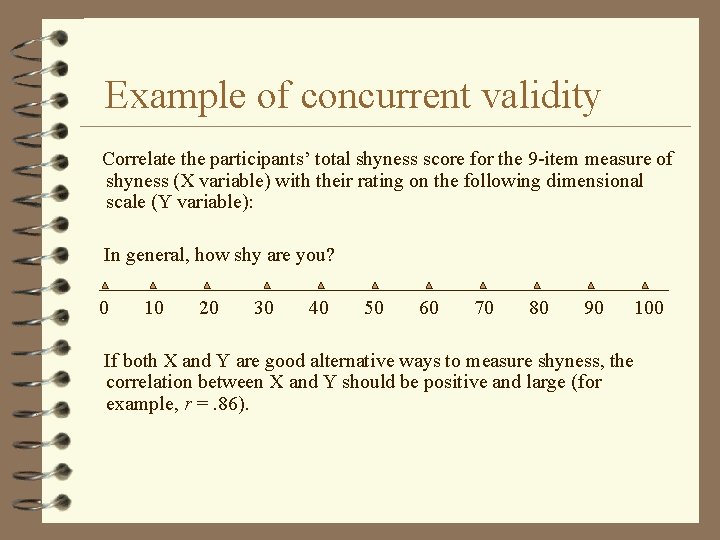
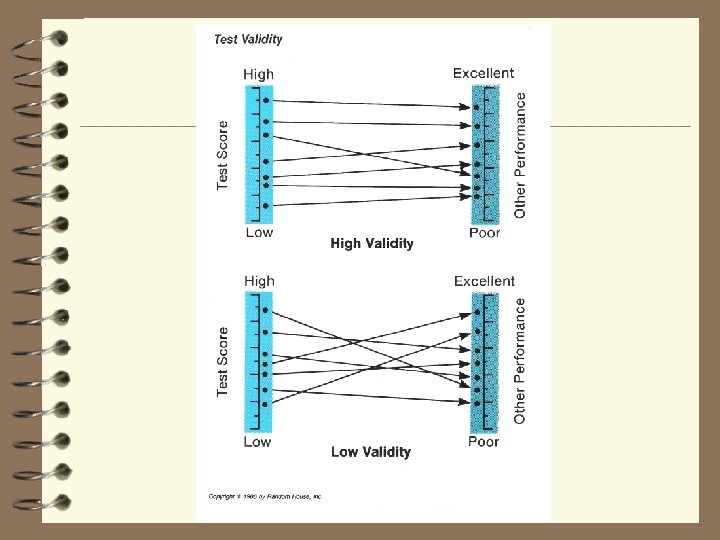
Example of concurrent validity Correlate the participants’ total shyness score for the 9 -item measure of shyness (X variable) with their rating on the following dimensional scale (Y variable): In general, how shy are you? _____________________________ 0 10 20 30 40 50 60 70 80 90 100 If both X and Y are good alternative ways to measure shyness, the correlation between X and Y should be positive and large (for example, r =. 86).
Reliability and validity in personality measurement 4 Reliability (consistency of measurement) – Internal consistency • Item-to-total correlation • Split-half reliability • Cronbach’s alpha – Test-retest reliability 4 Validity (construct validity) – Face validity – Concurrent validity – Convergent and discriminant validity – Criterion (predictive) validity
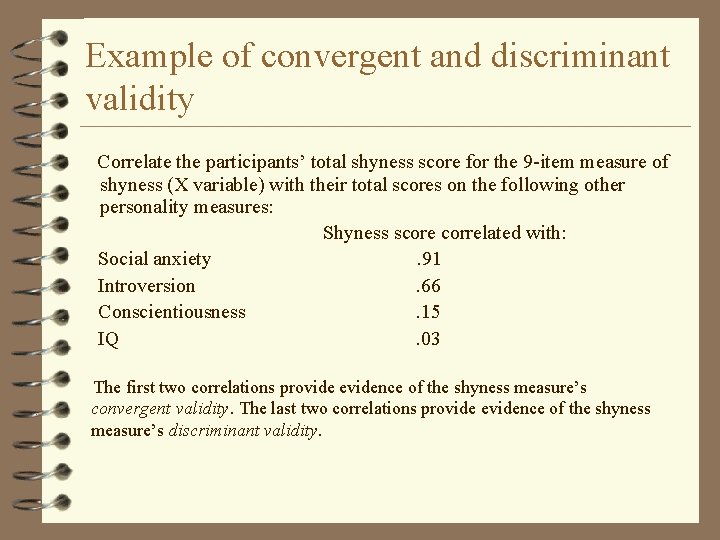
Example of convergent and discriminant validity Correlate the participants’ total shyness score for the 9 -item measure of shyness (X variable) with their total scores on the following other personality measures: Shyness score correlated with: Social anxiety. 91 Introversion. 66 Conscientiousness. 15 IQ. 03 The first two correlations provide evidence of the shyness measure’s convergent validity. The last two correlations provide evidence of the shyness measure’s discriminant validity.
Reliability and validity in personality measurement 4 Reliability (consistency of measurement) – Internal consistency • Item-to-total correlation • Split-half reliability • Cronbach’s alpha – Test-retest reliability 4 Validity (construct validity) – Face validity – Concurrent validity – Convergent and discriminant validity – Criterion (predictive) validity
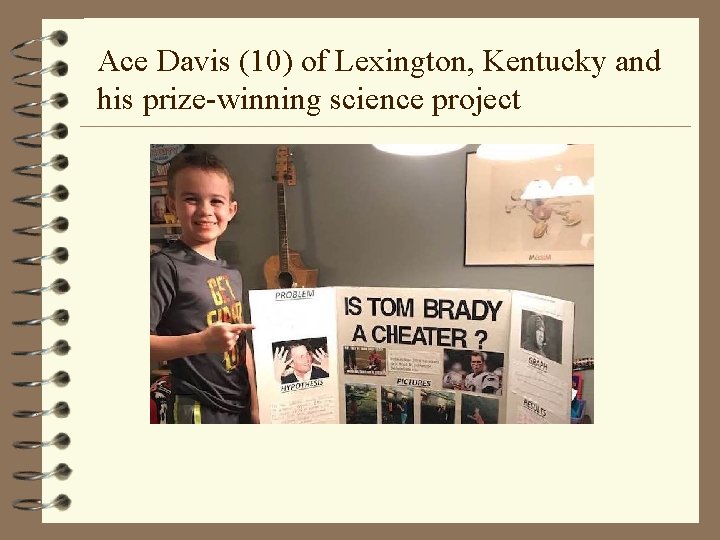
Ace Davis (10) of Lexington, Kentucky and his prize-winning science project
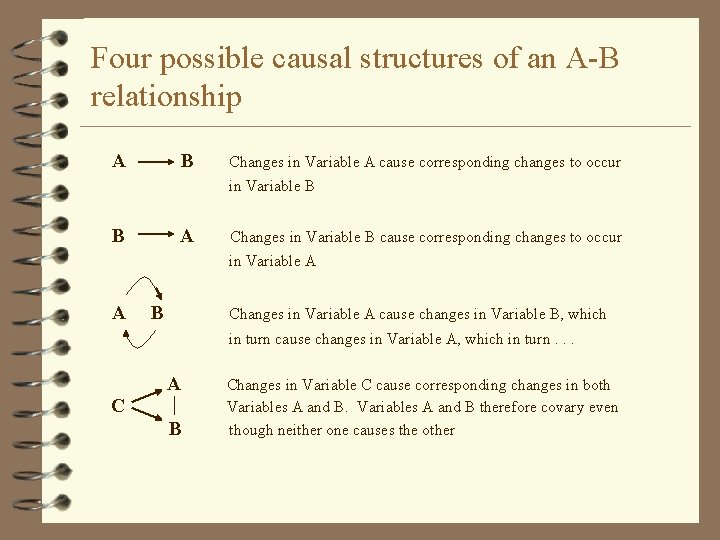
Four possible causal structures of an A-B relationship A B Changes in Variable A cause corresponding changes to occur in Variable B B A Changes in Variable B cause corresponding changes to occur in Variable A A B Changes in Variable A cause changes in Variable B, which in turn cause changes in Variable A, which in turn. . . A C B Changes in Variable C cause corresponding changes in both Variables A and B therefore covary even though neither one causes the other
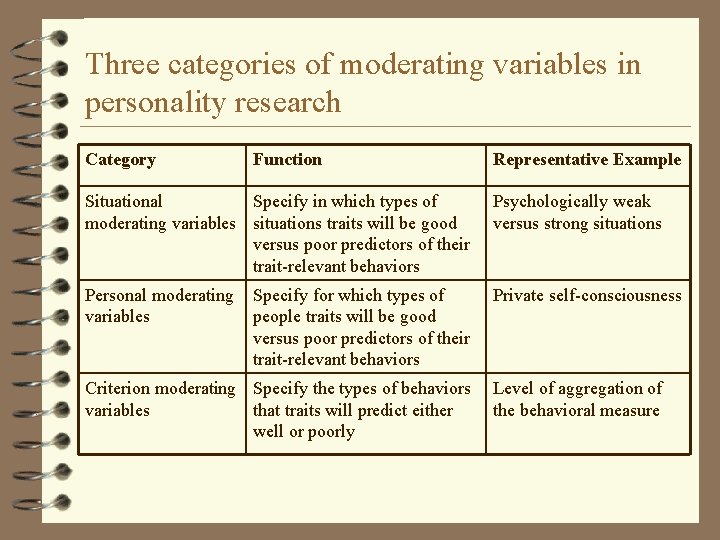
Three categories of moderating variables in personality research Category Function Representative Example Situational Specify in which types of moderating variables situations traits will be good versus poor predictors of their trait-relevant behaviors Psychologically weak versus strong situations Personal moderating variables Private self-consciousness Specify for which types of people traits will be good versus poor predictors of their trait-relevant behaviors Criterion moderating Specify the types of behaviors variables that traits will predict either well or poorly Level of aggregation of the behavioral measure
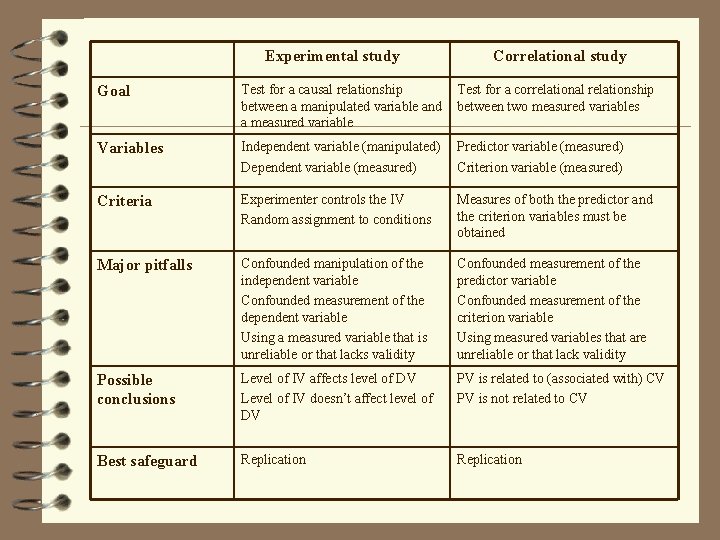
Experimental study Correlational study Goal Test for a causal relationship between a manipulated variable and a measured variable Test for a correlational relationship between two measured variables Variables Independent variable (manipulated) Dependent variable (measured) Predictor variable (measured) Criterion variable (measured) Criteria Experimenter controls the IV Random assignment to conditions Measures of both the predictor and the criterion variables must be obtained Major pitfalls Confounded manipulation of the independent variable Confounded measurement of the dependent variable Using a measured variable that is unreliable or that lacks validity Confounded measurement of the predictor variable Confounded measurement of the criterion variable Using measured variables that are unreliable or that lack validity Possible conclusions Level of IV affects level of DV Level of IV doesn’t affect level of DV PV is related to (associated with) CV PV is not related to CV Best safeguard Replication
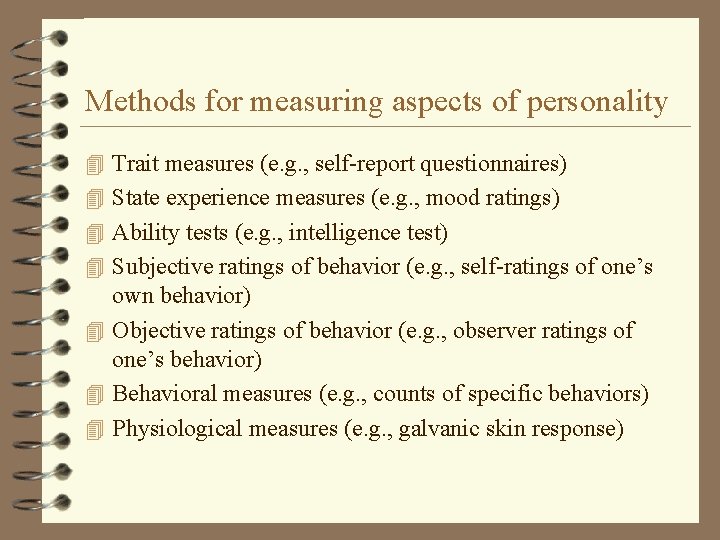
Methods for measuring aspects of personality 4 Trait measures (e. g. , self-report questionnaires) 4 State experience measures (e. g. , mood ratings) 4 Ability tests (e. g. , intelligence test) 4 Subjective ratings of behavior (e. g. , self-ratings of one’s own behavior) 4 Objective ratings of behavior (e. g. , observer ratings of one’s behavior) 4 Behavioral measures (e. g. , counts of specific behaviors) 4 Physiological measures (e. g. , galvanic skin response)
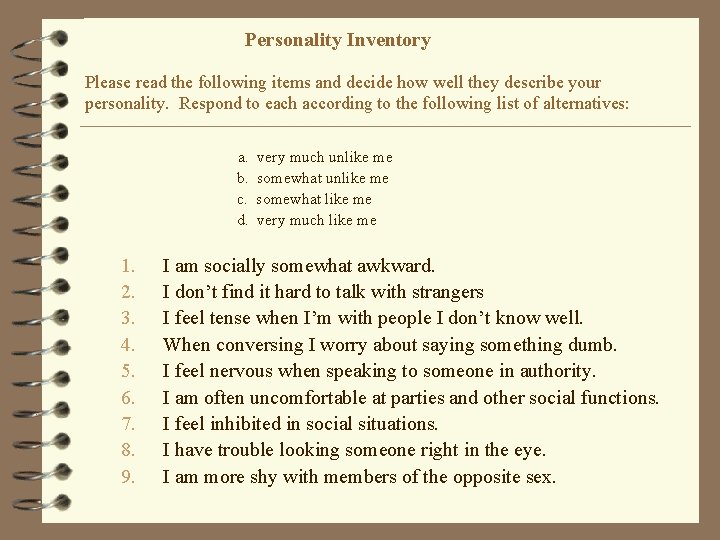
Personality Inventory Please read the following items and decide how well they describe your personality. Respond to each according to the following list of alternatives: a. b. c. d. 1. 2. 3. 4. 5. 6. 7. 8. 9. very much unlike me somewhat like me very much like me I am socially somewhat awkward. I don’t find it hard to talk with strangers I feel tense when I’m with people I don’t know well. When conversing I worry about saying something dumb. I feel nervous when speaking to someone in authority. I am often uncomfortable at parties and other social functions. I feel inhibited in social situations. I have trouble looking someone right in the eye. I am more shy with members of the opposite sex.
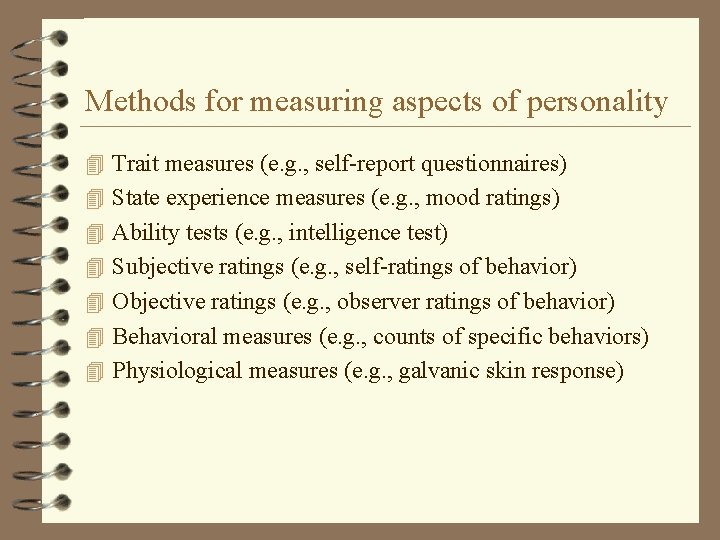
Methods for measuring aspects of personality 4 Trait measures (e. g. , self-report questionnaires) 4 State experience measures (e. g. , mood ratings) 4 Ability tests (e. g. , intelligence test) 4 Subjective ratings (e. g. , self-ratings of behavior) 4 Objective ratings (e. g. , observer ratings of behavior) 4 Behavioral measures (e. g. , counts of specific behaviors) 4 Physiological measures (e. g. , galvanic skin response)
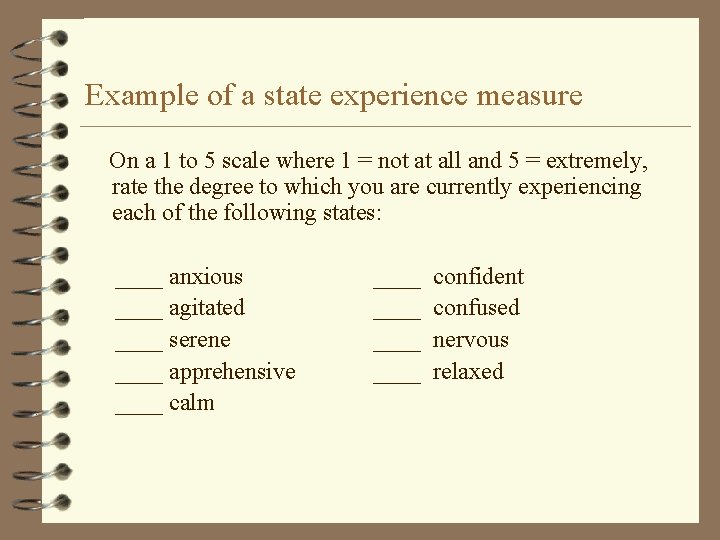
Example of a state experience measure On a 1 to 5 scale where 1 = not at all and 5 = extremely, rate the degree to which you are currently experiencing each of the following states: ____ anxious ____ agitated ____ serene ____ apprehensive ____ calm ____ confident confused nervous relaxed
Methods for measuring aspects of personality 4 Trait measures (e. g. , self-report questionnaires) 4 State experience measures (e. g. , mood ratings) 4 Ability tests (e. g. , intelligence test) 4 Subjective ratings (e. g. , self-ratings of behavior) 4 Objective ratings (e. g. , observer ratings of behavior) 4 Behavioral measures (e. g. , counts of specific behaviors) 4 Physiological measures (e. g. , galvanic skin response)
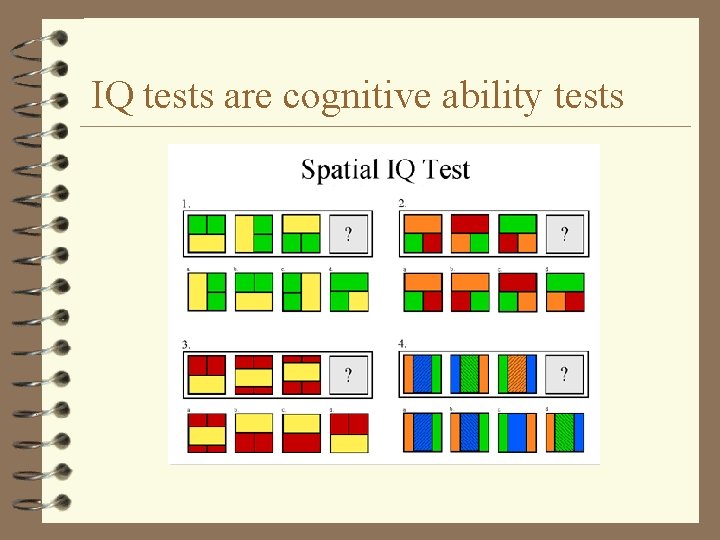
IQ tests are cognitive ability tests
Methods for measuring aspects of personality 4 Trait measures (e. g. , self-report questionnaires) 4 State experience measures (e. g. , mood ratings) 4 Ability tests (e. g. , intelligence test) 4 Subjective ratings (e. g. , self-ratings of behavior) 4 Objective ratings (e. g. , observer ratings of behavior) 4 Behavioral measures (e. g. , counts of specific behaviors) 4 Physiological measures (e. g. , galvanic skin response)
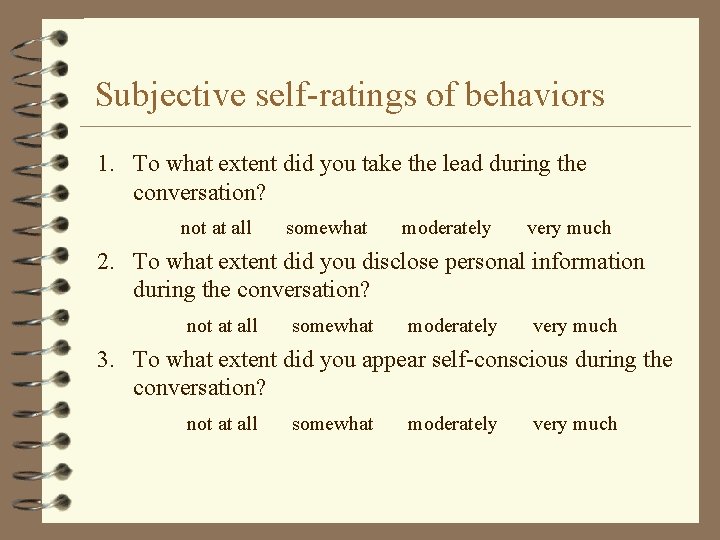
Subjective self-ratings of behaviors 1. To what extent did you take the lead during the conversation? not at all somewhat moderately very much 2. To what extent did you disclose personal information during the conversation? not at all somewhat moderately very much 3. To what extent did you appear self-conscious during the conversation? not at all somewhat moderately very much
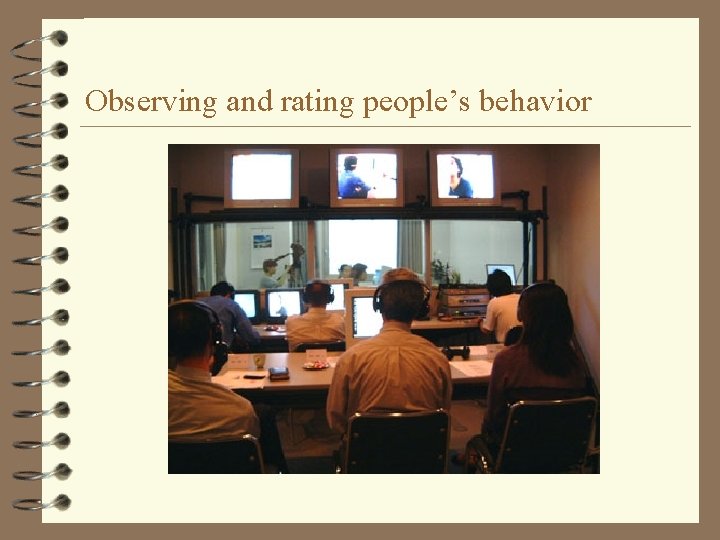
Observing and rating people’s behavior
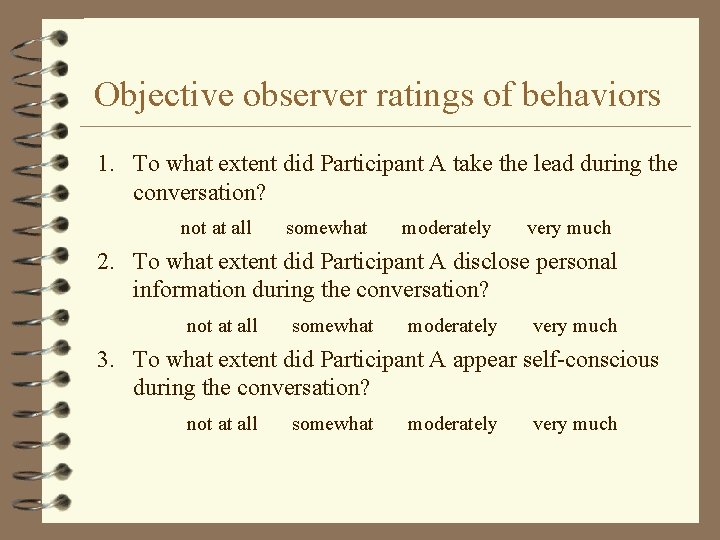
Objective observer ratings of behaviors 1. To what extent did Participant A take the lead during the conversation? not at all somewhat moderately very much 2. To what extent did Participant A disclose personal information during the conversation? not at all somewhat moderately very much 3. To what extent did Participant A appear self-conscious during the conversation? not at all somewhat moderately very much
Methods for measuring aspects of personality 4 Trait measures (e. g. , self-report questionnaires) 4 State experience measures (e. g. , mood ratings) 4 Ability tests (e. g. , intelligence test) 4 Subjective ratings (e. g. , self-ratings of behavior) 4 Objective ratings (e. g. , observer ratings of behavior) 4 Behavioral measures (e. g. , counts of specific behaviors) 4 Physiological measures (e. g. , galvanic skin response)
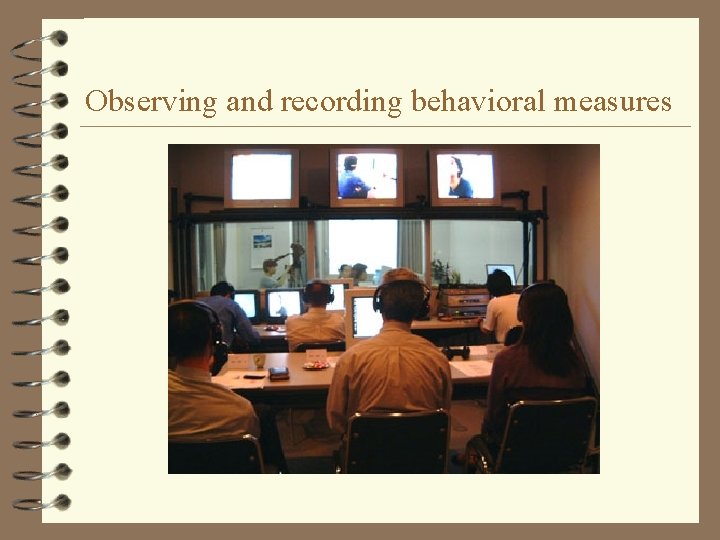
Observing and recording behavioral measures
Methods for measuring aspects of personality 4 Trait measures (e. g. , self-report questionnaires) 4 State experience measures (e. g. , mood ratings) 4 Ability tests (e. g. , intelligence test) 4 Subjective ratings (e. g. , self-ratings of behavior) 4 Objective ratings (e. g. , observer ratings of behavior) 4 Behavioral measures (e. g. , counts of specific behaviors) 4 Physiological measures (e. g. , galvanic skin response)
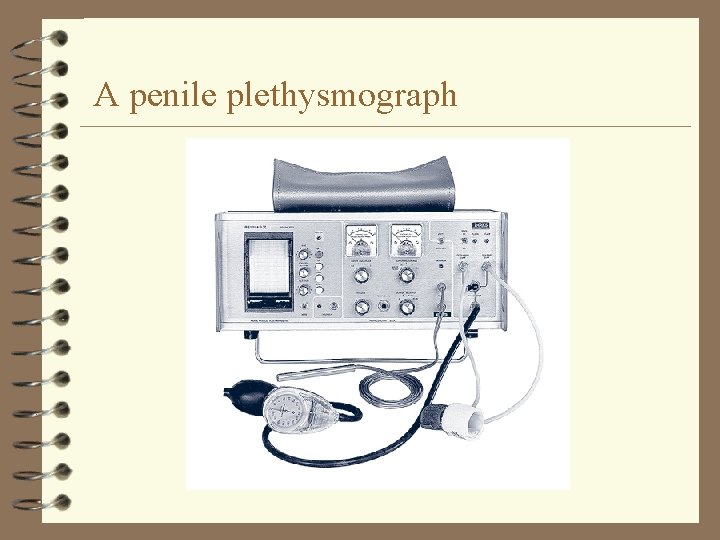
A penile plethysmograph

- Slides: 51