
Chapter 2 Perceiving the Self and Others Perception







- Slides: 34
Chapter 2 Perceiving the Self and Others
Perception A cognitive process through which we interpret our experiences and come to our own unique understandings
Communication Processing n n n Gathering, organizing, & evaluating information Goes beyond senses Involves personal factors
The Perception Process n Selecting n Organizing n Interpreting
Schemas: Organizing Perceptions n n n Mental structures that put together related bits of information Help you understand how things work and how they should proceed Evolve and change over time
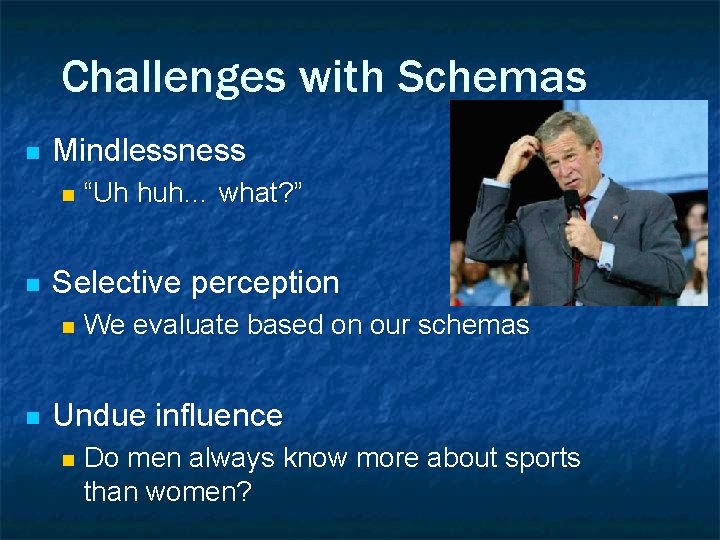
Challenges with Schemas n Mindlessness n n Selective perception n n “Uh huh… what? ” We evaluate based on our schemas Undue influence n Do men always know more about sports than women?
Attributions: Interpreting Perceptions n Using personal characteristics to explain others’ behavior when they don’t fit into our schemas n Emma: “I’m heading over to Mark’s place to help him study for our midterm. He has really been struggling this semester. ” n Caleb: “Well, he was never really a rocket scientist. ”
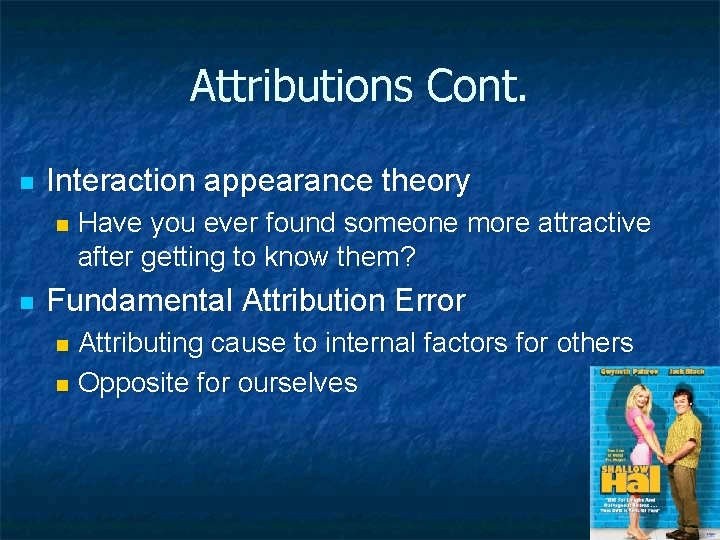
Attributions Cont. n Interaction appearance theory n n Have you ever found someone more attractive after getting to know them? Fundamental Attribution Error Attributing cause to internal factors for others n Opposite for ourselves n
Improving Your Perceptions n Verify your perceptions n Be thoughtful when seeking explanations n Look beyond first impressions
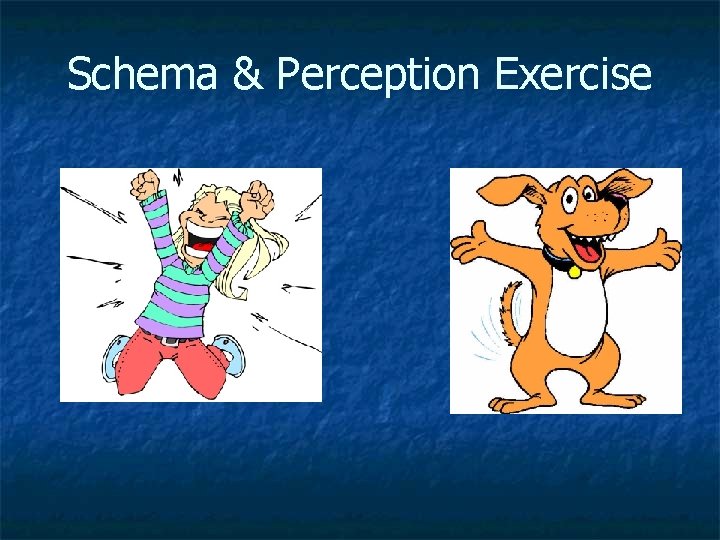
Schema & Perception Exercise
Perception in a Diverse World Culture affects how we perceive ourselves & others *Remember, culture isn’t just limited to race and/or ethnicity
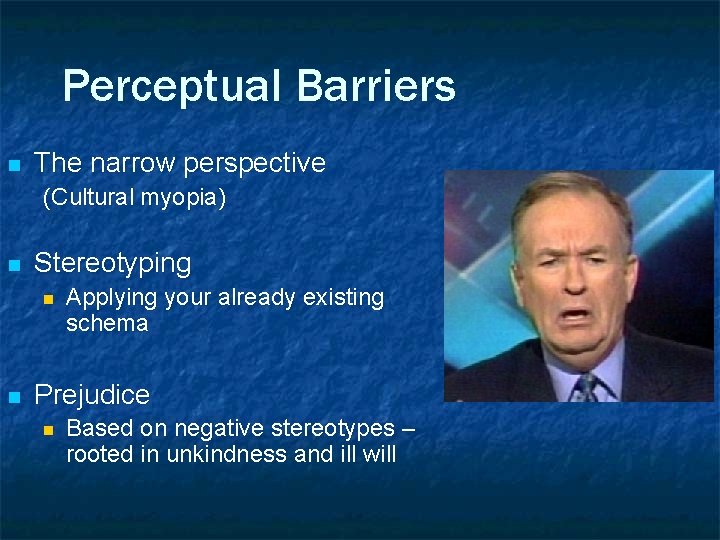
Perceptual Barriers n The narrow perspective (Cultural myopia) n Stereotyping n n Applying your already existing schema Prejudice n Based on negative stereotypes – rooted in unkindness and ill will
Discussion – “And you? ” n What is your opinion on Bill O’Reilly’s comments? Is it insensitive to wish someone “Merry Christmas” if one is not sure that the individual celebrates the holiday? Should salespeople avoid messages about religion entirely? How might your religious beliefs (or lack of beliefs) affect your perceptions on the issue?
Removing Perceptual Barriers n Be mindful n Consider multiple identities and cocultures n Expand your perspective n Deconstruct your schemas
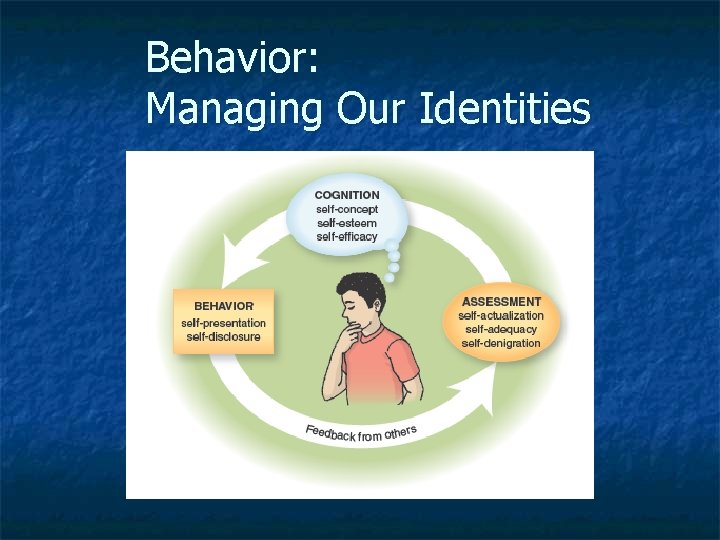
Cognition: Perceiving Ourselves n Self-concept n Self-esteem n Self-efficacy
Self-Concept n Who you think you are n Influenced by thoughts, actions, abilities, values, goals, ideas… n Influences how you communicate n Comes from how others communicate with you n Direct & indirect evidence n n Getting compliments vs. overhearing gossip Social comparison theory n E. G. Women in magazine ads
Self-Esteem n A set of attitudes you hold about your own emotions, thoughts, abilities, skills, behavior, and beliefs. n How you feel about yourself in a particular situation n Linked to Self-Concept: Must know yourself to have attitudes about self.
Self-Efficacy n Ability to predict actual success based on yourself-concept and self-esteem n Self-Efficacy determines the actual choices you will make n Affects your ability to cope with failure and success n Can lead to self-fulfilling prophecies n “I can’t do this” often leads to less effort, and actual failure.
Assessing Our Perceptions of Self n Self-Actualization n The feelings & thoughts you get when you know you have negotiated a communication situation as well as you possibly could n Leads to sense of satisfaction & fulfillment
Assessing Our Perceptions of Self n Self-Adequacy n Assessing your communication competence as sufficient or acceptable n Can lead to contentment or self-improvement
Assessing Our Perceptions of Self n Self-Denigration n A negative assessment about a communication experience. n Self-criticism n Often unwarranted. Often occurs when communicators place undue importance on weaknesses
Behavior: Managing Our Identities n Self-presentation n Intentional communication designed to show elements of self for strategic purposes n Occurs through various channels n Requires self-monitoring
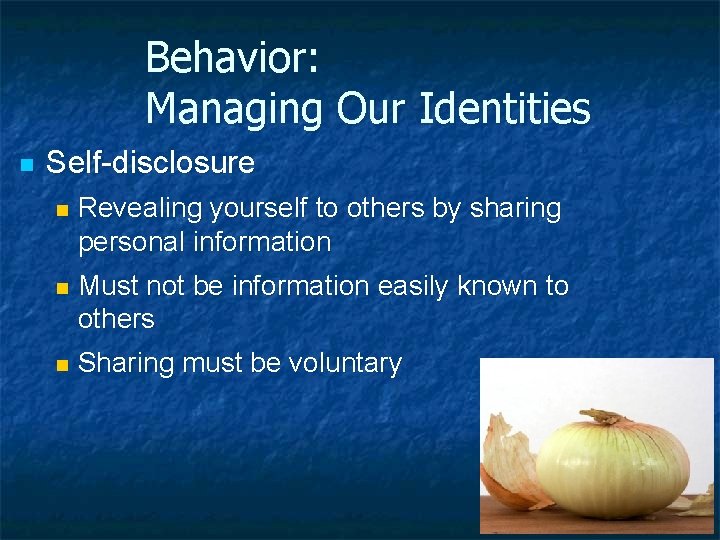
Behavior: Managing Our Identities n Self-disclosure n Revealing yourself to others by sharing personal information n Must not be information easily known to others n Sharing must be voluntary
Behavior: Managing Our Identities
Technology: Managing the Self Online n Self-presentation can be more controlled n Make conscious choices about what to reveal to others n Allows for experimentation with identity
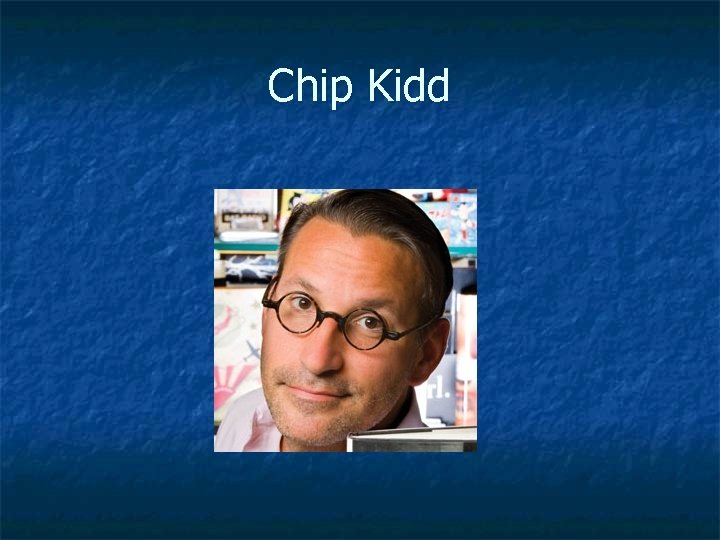
Chip Kidd