
Chapter 2 Part B Chemistry Comes Alive Classes
Chapter 2 Part B: Chemistry Comes Alive:
Classes of Compounds � Inorganic compounds �Water, salts, and many acids and bases �Do not contain carbon � Organic compounds �Carbohydrates, fats, proteins, and nucleic acids �Contain carbon, usually large, and are covalently bonded
Water � 60%– 80% � Most of the volume of living cells important inorganic compound in living organisms because of its properties
Properties of Water � High heat capacity � High heat of vaporization ◦ Absorbs and releases heat with little temperature change ◦ Prevents sudden changes in temperature ◦ Evaporation requires large amounts of heat ◦ Useful cooling mechanism
Properties of Water � Polar solvent properties ◦ Dissolves and dissociates ionic substances ◦ Forms hydration layers around large charged molecules, e. g. , proteins (colloid formation) ◦ Body’s major transport medium
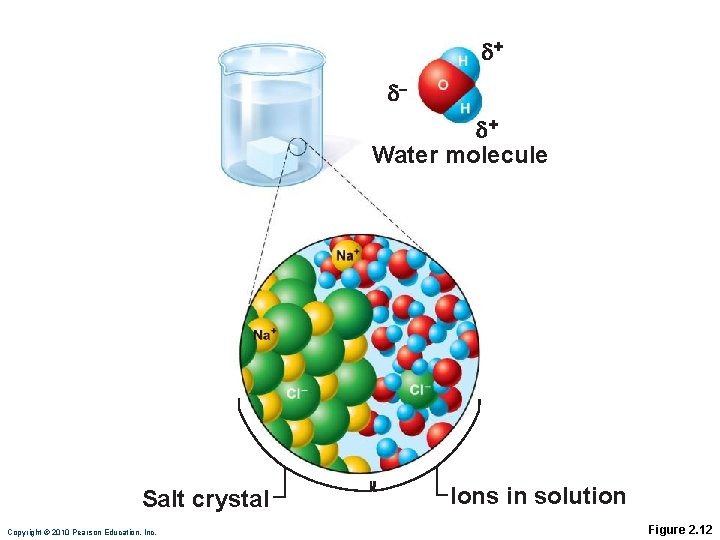
+ – + Water molecule Salt crystal Copyright © 2010 Pearson Education, Inc. Ions in solution Figure 2. 12
Properties of Water � Reactivity ◦ A necessary part of hydrolysis and dehydration synthesis reactions � Cushioning ◦ Protects certain organs from physical trauma, e. g. , cerebrospinal fluid
Salts � Ionic compounds that dissociate in water � Contain cations other than H+ and anions other than OH– � Ions (electrolytes) conduct electrical currents in solution � Ions play specialized roles in body functions (e. g. , sodium, potassium, calcium, and iron)
Acids and Bases � Both are electrolytes ◦ Acids are proton (hydrogen ion) donors (release H+ in solution) �HCl H+ + Cl–
Acids and Bases � Bases are proton acceptors (take up H+ from solution) ◦ Na. OH Na+ + OH– �OH– accepts an available proton (H+) �OH– + H+ H 2 O � Bicarbonate ion (HCO 3–) and ammonia (NH 3) are important bases in the body
Acid-Base Concentration � Acid solutions contain [H+] ◦ As [H+] increases, acidity increases � Alkaline solutions contain bases (e. g. , OH–) ◦ As [H+] decreases (or as [OH–] increases), alkalinity increases
p. H: Acid-Base Concentration � p. H = the negative logarithm of [H+] in moles per liter � Neutral solutions: ◦ Pure water is p. H neutral (contains equal numbers of H+ and OH–) ◦ p. H of pure water = p. H 7: [H+] = 10 – 7 M ◦ All neutral solutions have a p. H 7
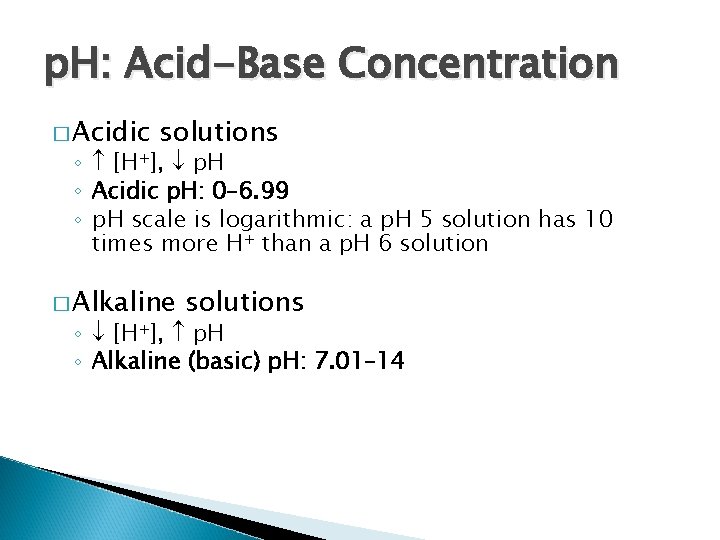
p. H: Acid-Base Concentration � Acidic solutions ◦ [H+], p. H ◦ Acidic p. H: 0– 6. 99 ◦ p. H scale is logarithmic: a p. H 5 solution has 10 times more H+ than a p. H 6 solution � Alkaline solutions ◦ [H+], p. H ◦ Alkaline (basic) p. H: 7. 01– 14
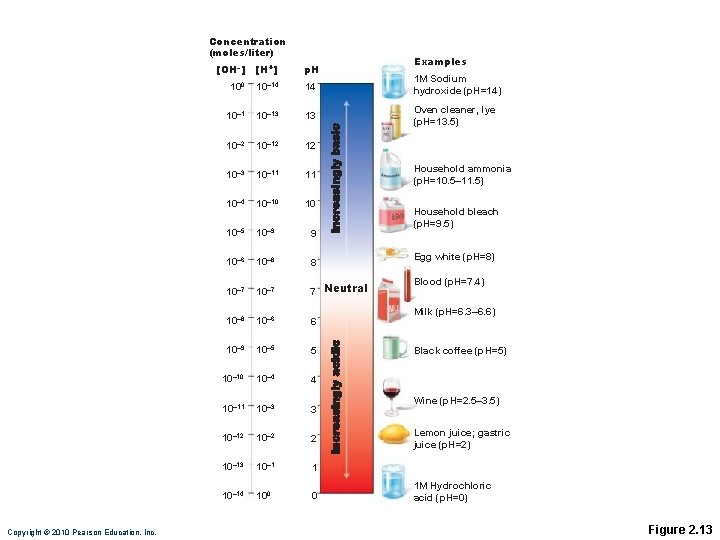
Concentration (moles/liter) Copyright © 2010 Pearson Education, Inc. Examples [OH–] [H+] p. H 100 10– 14 14 1 M Sodium hydroxide (p. H=14) 10– 13 13 Oven cleaner, lye (p. H=13. 5) 10– 2 10– 12 12 10– 3 10– 11 11 10– 4 10– 10 10 10– 5 10– 9 9 10– 6 10– 8 8 10– 7 7 Neutral 10– 8 10– 6 6 10– 9 10– 5 5 10– 10 10– 4 4 10– 11 10– 3 3 10– 12 10– 2 2 10– 13 10– 1 1 10– 14 100 0 Household ammonia (p. H=10. 5– 11. 5) Household bleach (p. H=9. 5) Egg white (p. H=8) Blood (p. H=7. 4) Milk (p. H=6. 3– 6. 6) Black coffee (p. H=5) Wine (p. H=2. 5– 3. 5) Lemon juice; gastric juice (p. H=2) 1 M Hydrochloric acid (p. H=0) Figure 2. 13
Acid-Base Homeostasis � p. H change interferes with cell function and may damage living tissue � Slight � p. H change in p. H can be fatal is regulated by kidneys, lungs, and buffers
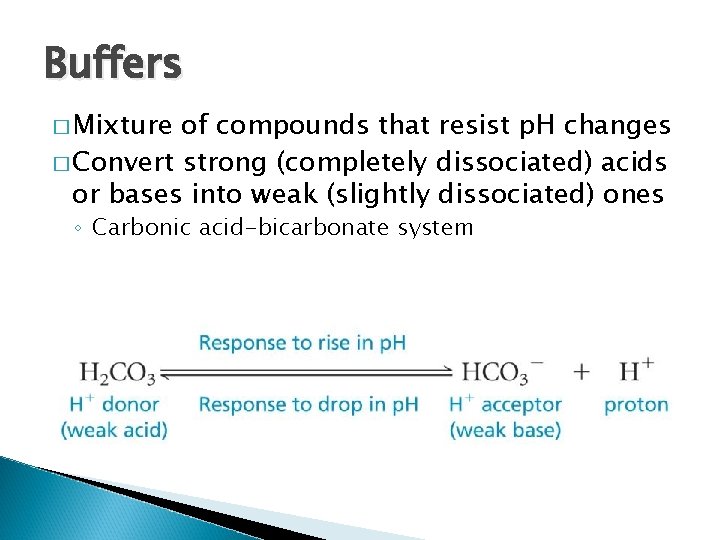
Buffers � Mixture of compounds that resist p. H changes � Convert strong (completely dissociated) acids or bases into weak (slightly dissociated) ones ◦ Carbonic acid-bicarbonate system
Organic Compounds � Contain carbon (except CO 2 and CO, which are inorganic) � Unique � Include to living systems carbohydrates, lipids, proteins, and nucleic acids
Organic Compounds � Many are polymers—chains of similar units (monomers or building blocks) ◦ Synthesized by dehydration synthesis ◦ Broken down by hydrolysis reactions
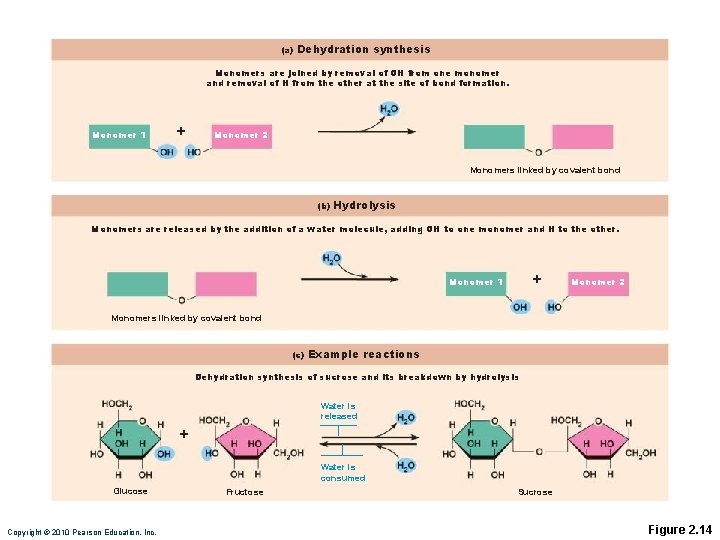
(a) Dehydration synthesis Monomers are joined by removal of OH from one monomer and removal of H from the other at the site of bond formation. Monomer 1 + Monomer 2 Monomers linked by covalent bond (b) Hydrolysis Monomers are released by the addition of a water molecule, adding OH to one monomer and H to the other. + Monomer 1 Monomer 2 Monomers linked by covalent bond (c) Example reactions Dehydration synthesis of sucrose and its breakdown by hydrolysis Water is released + Water is consumed Glucose Copyright © 2010 Pearson Education, Inc. Fructose Sucrose Figure 2. 14
Carbohydrates � Sugars and starches � Contain C, H, and O [(CH 20)n] � Three classes ◦ Monosaccharides ◦ Disaccharides ◦ Polysaccharides
Carbohydrates � Functions ◦ Major source of cellular fuel (e. g. , glucose) ◦ Structural molecules (e. g. , ribose sugar in RNA)
Monosaccharides � Simple atoms � (CH 20)n sugars containing three to seven C
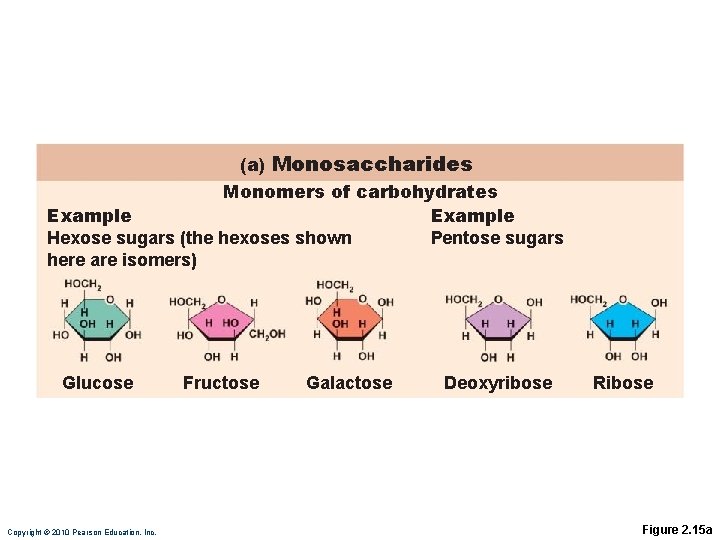
(a) Monosaccharides Monomers of carbohydrates Example Hexose sugars (the hexoses shown Pentose sugars here are isomers) Glucose Copyright © 2010 Pearson Education, Inc. Fructose Galactose Deoxyribose Ribose Figure 2. 15 a
Disaccharides � Double � Too sugars large to pass through cell membranes
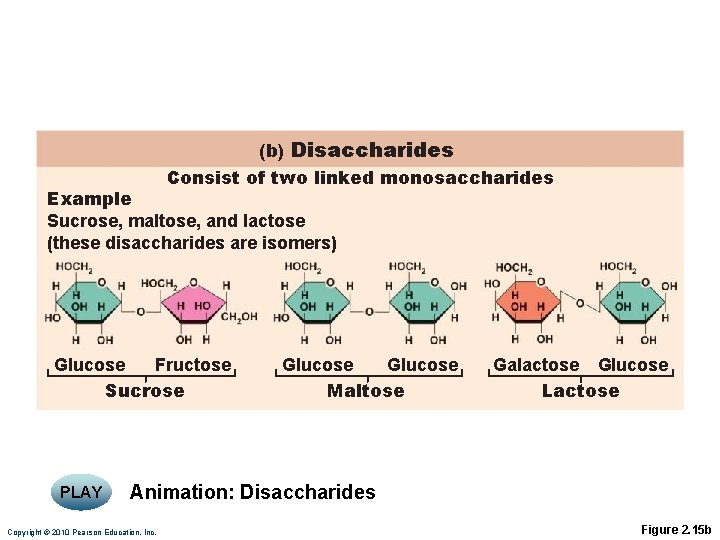
(b) Disaccharides Consist of two linked monosaccharides Example Sucrose, maltose, and lactose (these disaccharides are isomers) Glucose Fructose Sucrose PLAY Glucose Maltose Galactose Glucose Lactose Animation: Disaccharides Copyright © 2010 Pearson Education, Inc. Figure 2. 15 b
Polysaccharides � Polymers glycogen � Not of simple sugars, e. g. , starch and very soluble
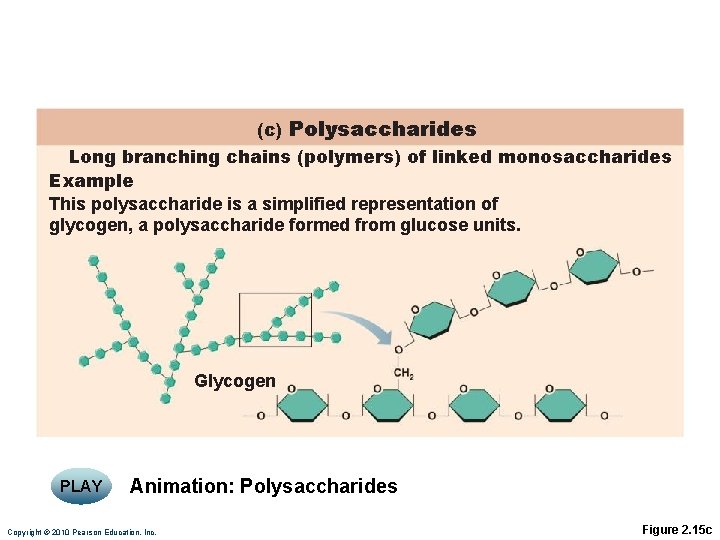
(c) Polysaccharides Long branching chains (polymers) of linked monosaccharides Example This polysaccharide is a simplified representation of glycogen, a polysaccharide formed from glucose units. Glycogen PLAY Animation: Polysaccharides Copyright © 2010 Pearson Education, Inc. Figure 2. 15 c
Lipids � Contain C, H, O (less than in carbohydrates), and sometimes P � Insoluble � Main ◦ ◦ in water types: Neutral fats or triglycerides Phospholipids Steroids Eicosanoids PLAY Animation: Fats
Triglycerides � Neutral fats—solid fats and liquid oils � Composed of three fatty acids bonded to a glycerol molecule � Main functions ◦ Energy storage ◦ Insulation ◦ Protection
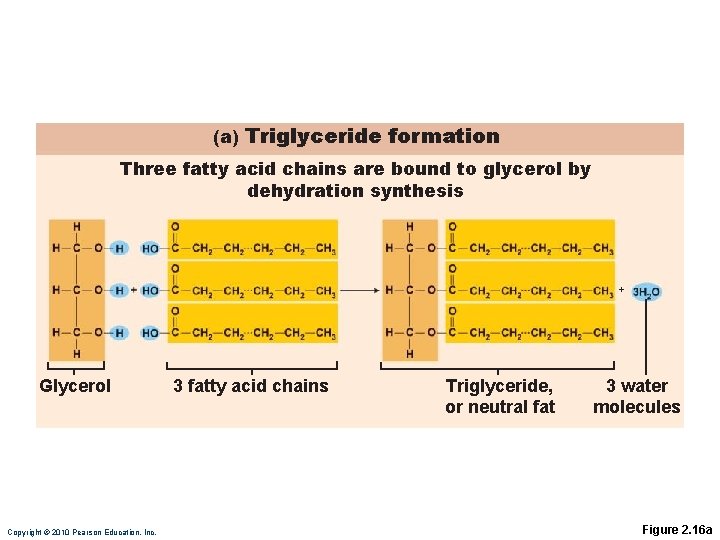
(a) Triglyceride formation Three fatty acid chains are bound to glycerol by dehydration synthesis + Glycerol Copyright © 2010 Pearson Education, Inc. 3 fatty acid chains Triglyceride, or neutral fat 3 water molecules Figure 2. 16 a
Saturation of Fatty Acids � Saturated fatty acids ◦ Single bonds between C atoms; maximum number of H ◦ Solid animal fats, e. g. , butter � Unsaturated fatty acids ◦ One or more double bonds between C atoms ◦ Reduced number of H atoms ◦ Plant oils, e. g. , olive oil
Phospholipids � Modified triglycerides: ◦ Glycerol + two fatty acids and a phosphorus (P)containing group � “Head” and “tail” regions have different properties � Important in cell membrane structure
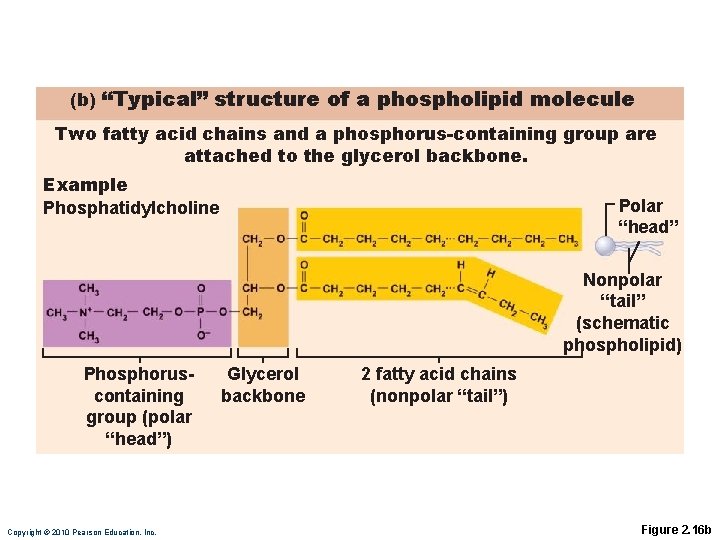
(b) “Typical” structure of a phospholipid molecule Two fatty acid chains and a phosphorus-containing group are attached to the glycerol backbone. Example Phosphatidylcholine Polar “head” Nonpolar “tail” (schematic phospholipid) Phosphoruscontaining group (polar “head”) Copyright © 2010 Pearson Education, Inc. Glycerol backbone 2 fatty acid chains (nonpolar “tail”) Figure 2. 16 b
Steroids � Steroids—interlocking � Cholesterol, bile salts four-ring structure vitamin D, steroid hormones, and
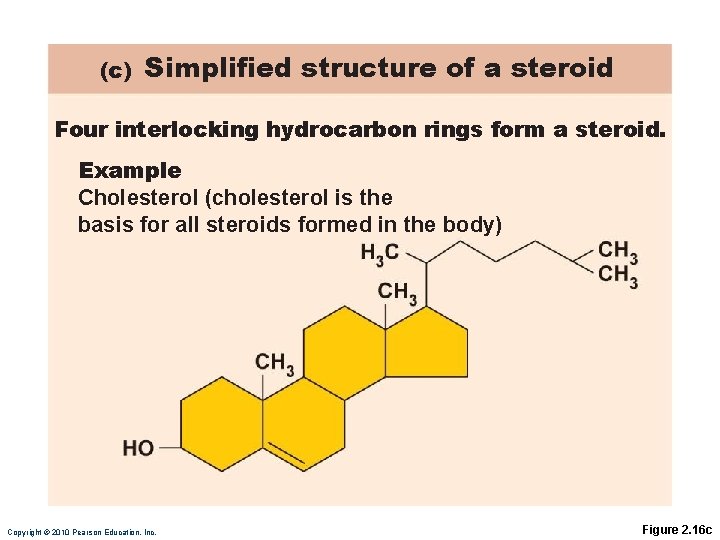
(c) Simplified structure of a steroid Four interlocking hydrocarbon rings form a steroid. Example Cholesterol (cholesterol is the basis for all steroids formed in the body) Copyright © 2010 Pearson Education, Inc. Figure 2. 16 c
Other Lipids in the Body � Other fat-soluble vitamins ◦ Vitamins A, E, and K � Lipoproteins ◦ Transport fats in the blood
Proteins � Polymers of amino acids (20 types) ◦ Joined by peptide bonds � Contain C, H, O, N, and sometimes S and P
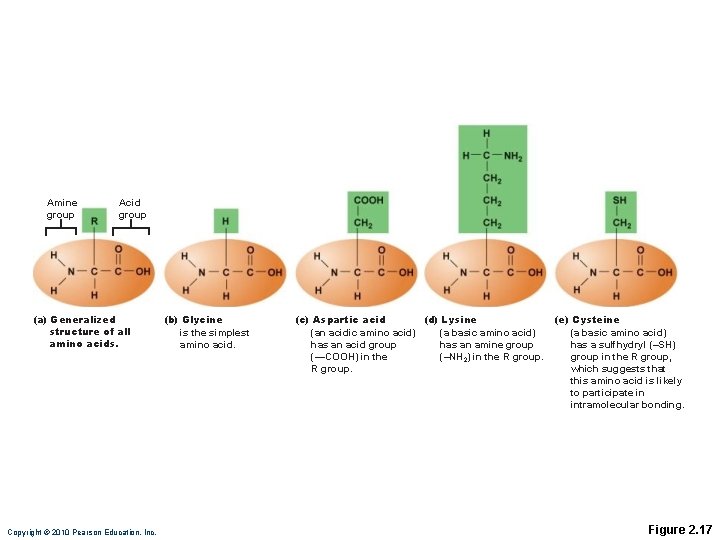
Amine group Acid group (a) Generalized structure of all amino acids. Copyright © 2010 Pearson Education, Inc. (b) Glycine is the simplest amino acid. (c) Aspartic acid (d) Lysine (an acidic amino acid) (a basic amino acid) has an acid group has an amine group (—COOH) in the (–NH 2) in the R group. (e) Cysteine (a basic amino acid) has a sulfhydryl (–SH) group in the R group, which suggests that this amino acid is likely to participate in intramolecular bonding. Figure 2. 17
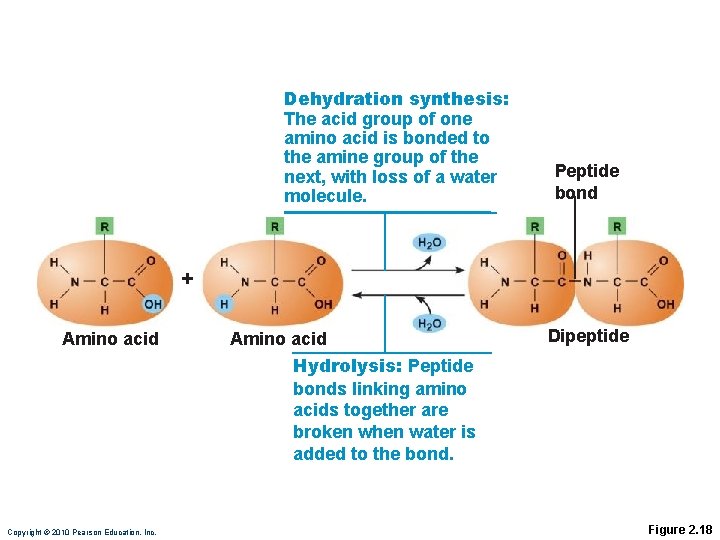
Dehydration synthesis: The acid group of one amino acid is bonded to the amine group of the next, with loss of a water molecule. Peptide bond + Amino acid Dipeptide Hydrolysis: Peptide bonds linking amino acids together are broken when water is added to the bond. Copyright © 2010 Pearson Education, Inc. Figure 2. 18
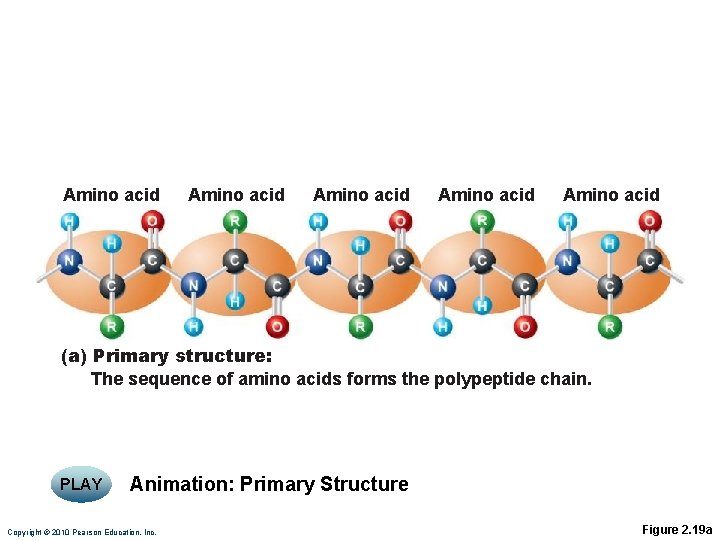
Amino acid Amino acid (a) Primary structure: The sequence of amino acids forms the polypeptide chain. PLAY Animation: Primary Structure Copyright © 2010 Pearson Education, Inc. Figure 2. 19 a
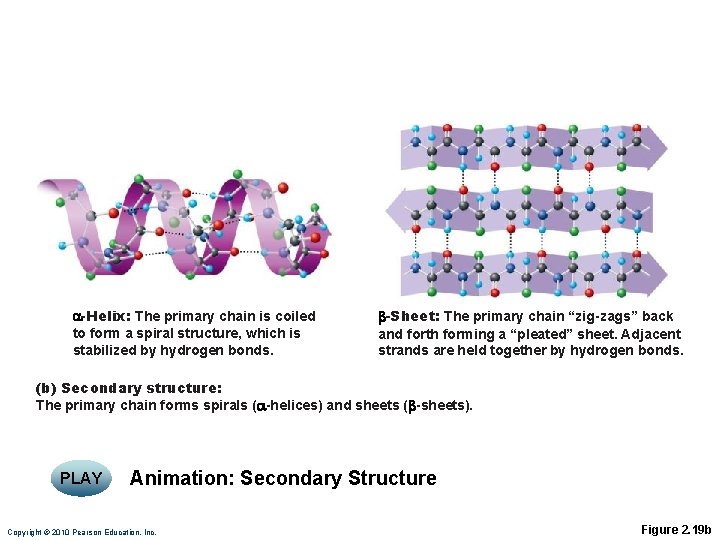
a-Helix: The primary chain is coiled to form a spiral structure, which is stabilized by hydrogen bonds. b-Sheet: The primary chain “zig-zags” back and forth forming a “pleated” sheet. Adjacent strands are held together by hydrogen bonds. (b) Secondary structure: The primary chain forms spirals (a-helices) and sheets (b-sheets). PLAY Animation: Secondary Structure Copyright © 2010 Pearson Education, Inc. Figure 2. 19 b
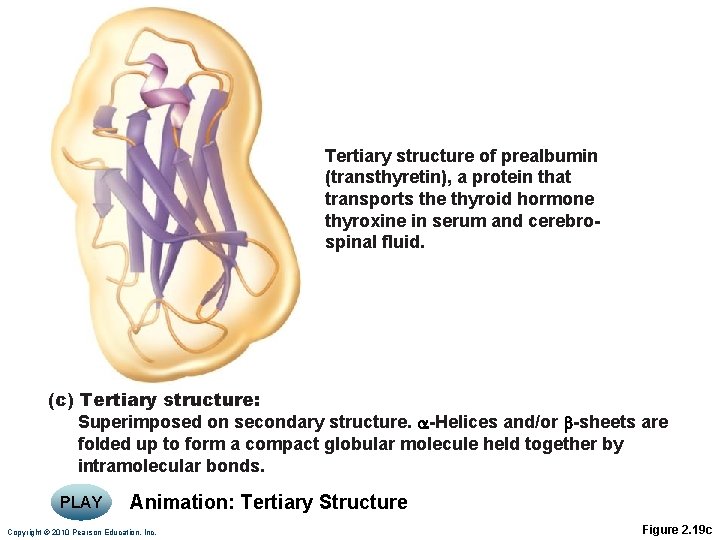
Tertiary structure of prealbumin (transthyretin), a protein that transports the thyroid hormone thyroxine in serum and cerebrospinal fluid. (c) Tertiary structure: Superimposed on secondary structure. a-Helices and/or b-sheets are folded up to form a compact globular molecule held together by intramolecular bonds. PLAY Animation: Tertiary Structure Copyright © 2010 Pearson Education, Inc. Figure 2. 19 c
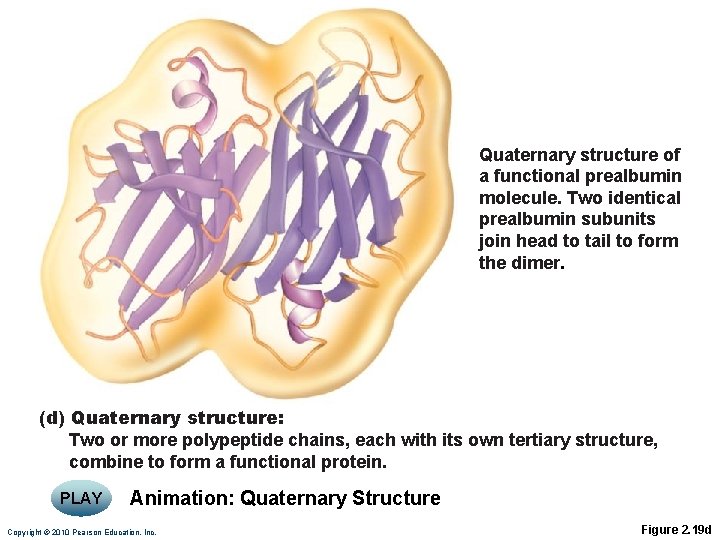
Quaternary structure of a functional prealbumin molecule. Two identical prealbumin subunits join head to tail to form the dimer. (d) Quaternary structure: Two or more polypeptide chains, each with its own tertiary structure, combine to form a functional protein. PLAY Animation: Quaternary Structure Copyright © 2010 Pearson Education, Inc. Figure 2. 19 d
Protein Denaturation � Shape change and disruption of active sites due to environmental changes (e. g. , decreased p. H or increased temperature) � Reversible in most cases, if normal conditions are restored � Irreversible if extreme changes damage the structure beyond repair (e. g. , cooking an egg)
Enzymes � Biological catalysts ◦ An enzyme lowers the activation energy, increases the speed of a reaction (millions of reactions per minute!)
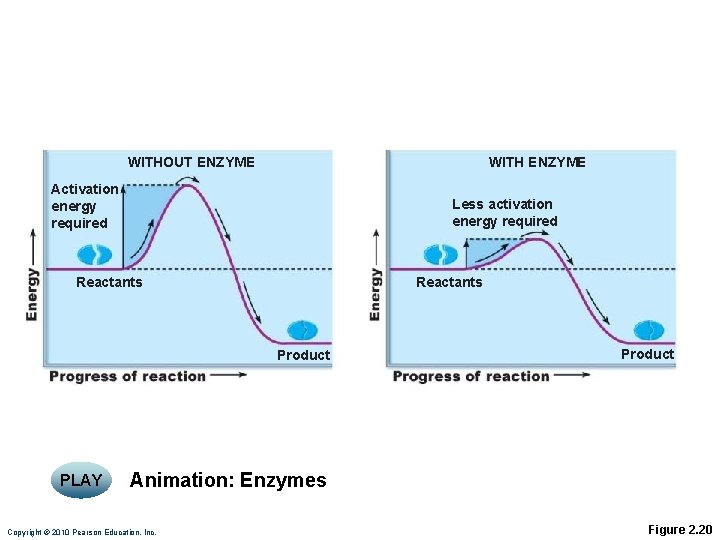
WITHOUT ENZYME WITH ENZYME Activation energy required Less activation energy required Reactants Product PLAY Product Animation: Enzymes Copyright © 2010 Pearson Education, Inc. Figure 2. 20
Nucleic Acids � DNA and RNA ◦ Largest molecules in the body � Contain � Building C, O, H, N, and P block = nucleotide, composed of Ncontaining base, a pentose sugar, and a phosphate group
Adenosine Triphosphate (ATP) � Adenine-containing RNA nucleotide with two additional phosphate groups
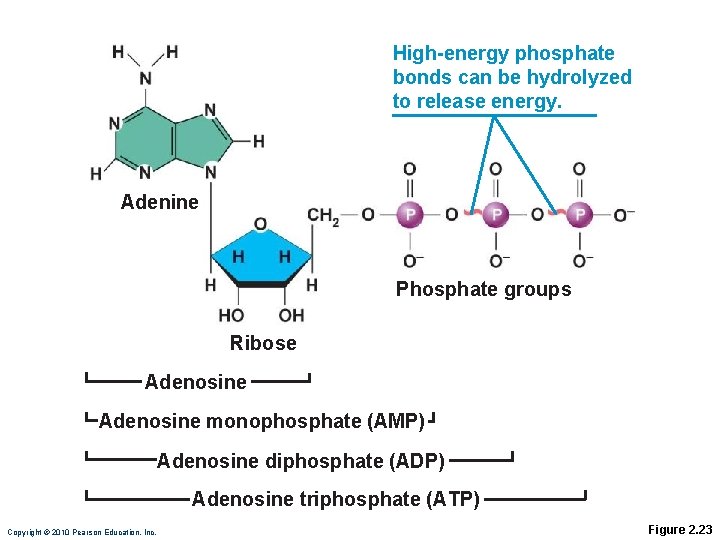
High-energy phosphate bonds can be hydrolyzed to release energy. Adenine Phosphate groups Ribose Adenosine monophosphate (AMP) Adenosine diphosphate (ADP) Adenosine triphosphate (ATP) Copyright © 2010 Pearson Education, Inc. Figure 2. 23
Function of ATP � Phosphorylation: ◦ Terminal phosphates are enzymatically transferred to and energize other molecules ◦ Such “primed” molecules perform cellular work (life processes) using the phosphate bond energy
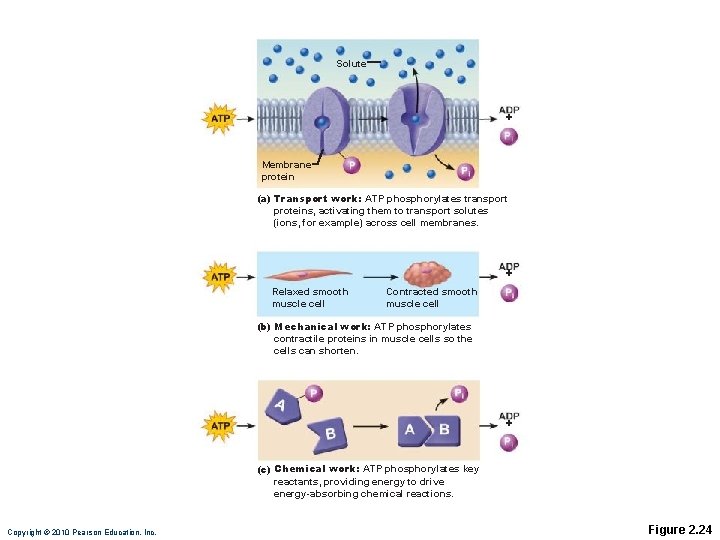
Solute + Membrane protein (a) Transport work: ATP phosphorylates transport proteins, activating them to transport solutes (ions, for example) across cell membranes. + Relaxed smooth muscle cell Contracted smooth muscle cell (b) Mechanical work: ATP phosphorylates contractile proteins in muscle cells so the cells can shorten. + (c) Chemical work: ATP phosphorylates key reactants, providing energy to drive energy-absorbing chemical reactions. Copyright © 2010 Pearson Education, Inc. Figure 2. 24
- Slides: 51