
Chapter 2 Organization Strategy and Project Selection Mc
- Slides: 27
Chapter 2 Organization Strategy and Project Selection Mc. Graw-Hill/Irwin © 2008 The Mc. Graw-Hill Companies, All Rights Reserved
2 -2
Why Project Managers Need to Understand the Strategic Management Process < Changes in the Organization’s Mission and Strategy q Project managers must respond to changes with appropriate decisions about future projects and adjustments to current projects. q Project managers who understand their organization’s strategy can become effective advocates of projects aligned with the firm’s mission. 2 -3
The Strategic Management Process: An Overview < Strategic Management q Provides theme and focus of the future direction for the firm. o Responding to changes in the external environment—environmental scanning o Allocating scarce resources of the firm to improve its competitive position—internal responses to new action programs q Requires strong links among mission, goals, objectives, strategy, and implementation. 2 -4
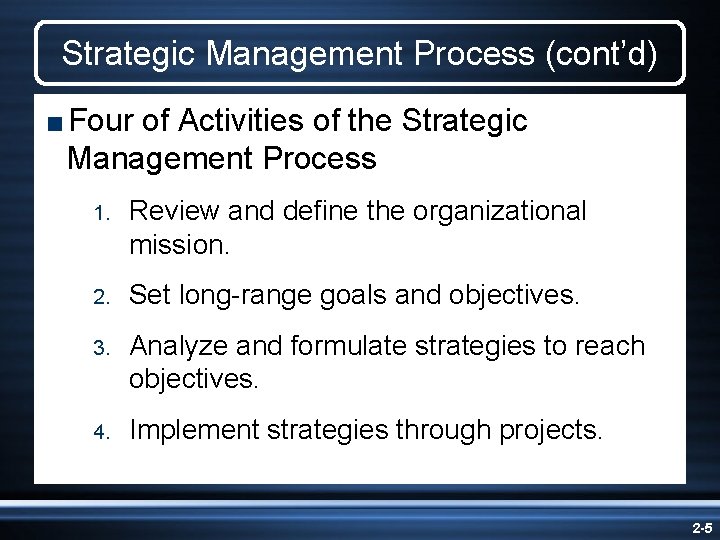
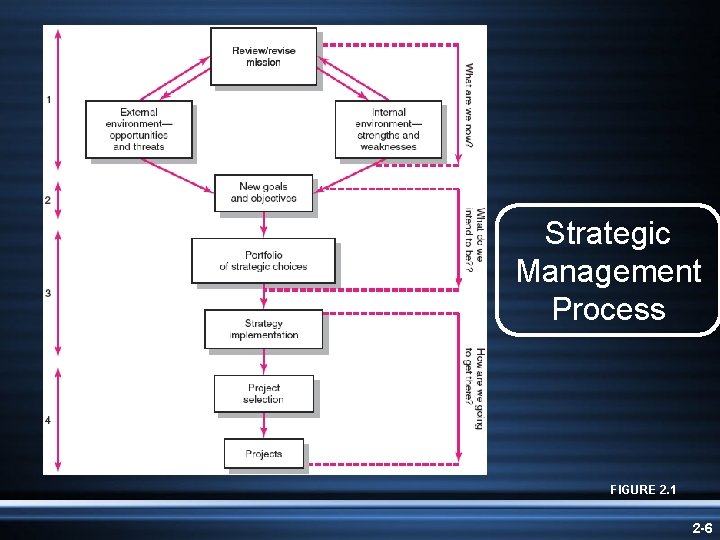
Strategic Management Process (cont’d) <Four of Activities of the Strategic Management Process 1. Review and define the organizational mission. 2. Set long-range goals and objectives. 3. Analyze and formulate strategies to reach objectives. 4. Implement strategies through projects. 2 -5
Strategic Management Process FIGURE 2. 1 2 -6
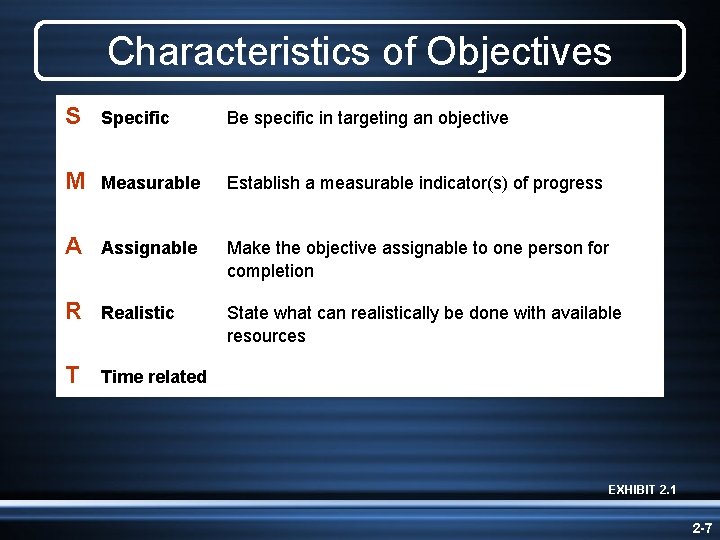
Characteristics of Objectives S Specific Be specific in targeting an objective M Measurable Establish a measurable indicator(s) of progress A Assignable Make the objective assignable to one person for completion R Realistic State what can realistically be done with available resources T Time related EXHIBIT 2. 1 2 -7
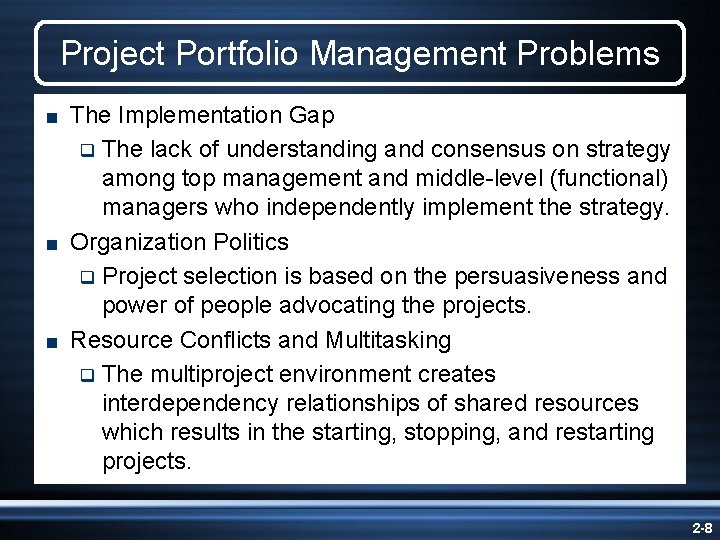
Project Portfolio Management Problems < < < The Implementation Gap q The lack of understanding and consensus on strategy among top management and middle-level (functional) managers who independently implement the strategy. Organization Politics q Project selection is based on the persuasiveness and power of people advocating the projects. Resource Conflicts and Multitasking q The multiproject environment creates interdependency relationships of shared resources which results in the starting, stopping, and restarting projects. 2 -8
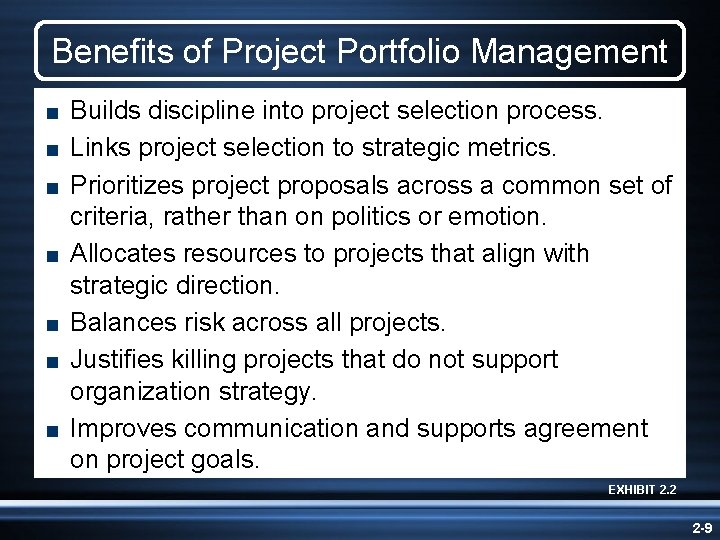
Benefits of Project Portfolio Management Builds discipline into project selection process. < Links project selection to strategic metrics. < Prioritizes project proposals across a common set of criteria, rather than on politics or emotion. < Allocates resources to projects that align with strategic direction. < Balances risk across all projects. < Justifies killing projects that do not support organization strategy. < Improves communication and supports agreement on project goals. < EXHIBIT 2. 2 2 -9
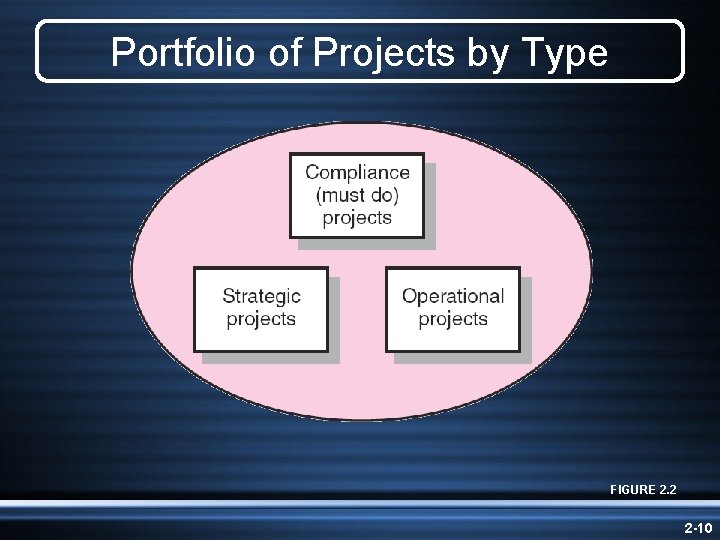
Portfolio of Projects by Type FIGURE 2. 2 2 -10
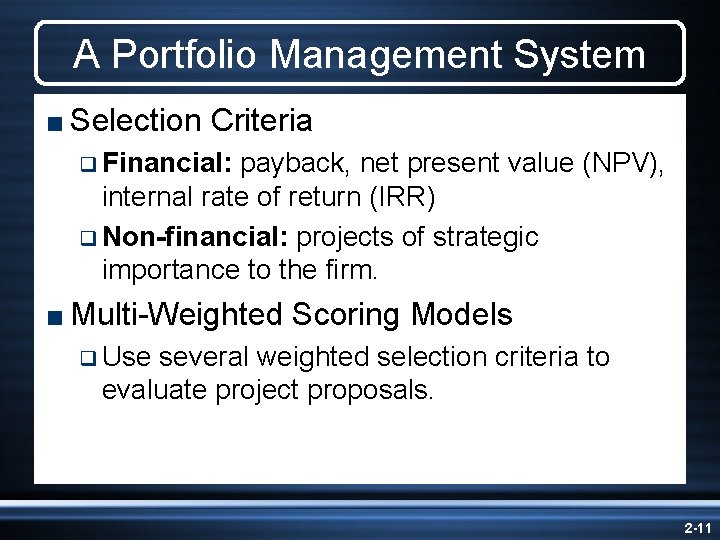
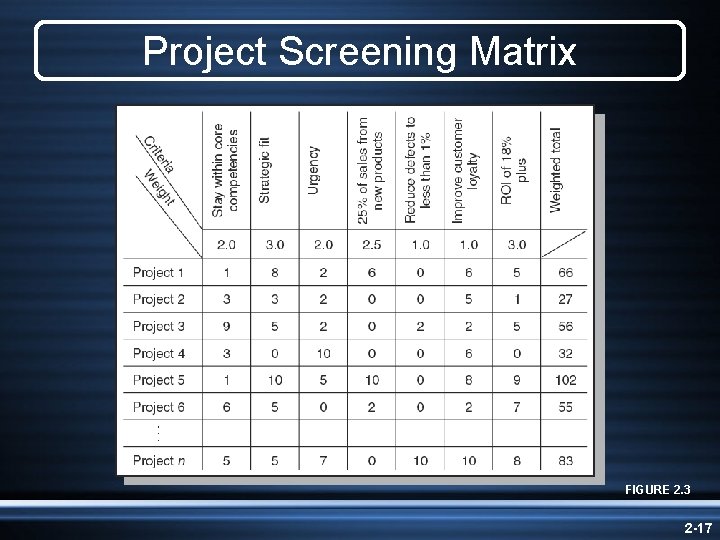
A Portfolio Management System < Selection Criteria q Financial: payback, net present value (NPV), internal rate of return (IRR) q Non-financial: projects of strategic importance to the firm. < Multi-Weighted Scoring Models q Use several weighted selection criteria to evaluate project proposals. 2 -11
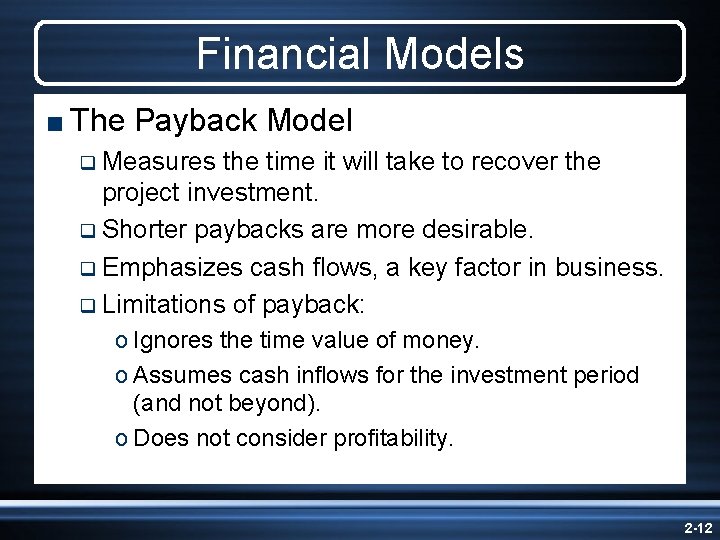
Financial Models < The Payback Model q Measures the time it will take to recover the project investment. q Shorter paybacks are more desirable. q Emphasizes cash flows, a key factor in business. q Limitations of payback: o Ignores the time value of money. o Assumes cash inflows for the investment period (and not beyond). o Does not consider profitability. 2 -12
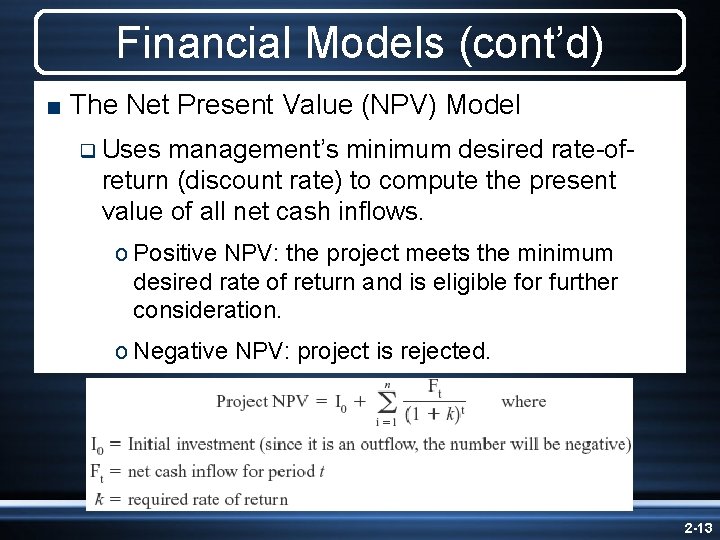
Financial Models (cont’d) < The Net Present Value (NPV) Model q Uses management’s minimum desired rate-ofreturn (discount rate) to compute the present value of all net cash inflows. o Positive NPV: the project meets the minimum desired rate of return and is eligible for further consideration. o Negative NPV: project is rejected. 2 -13
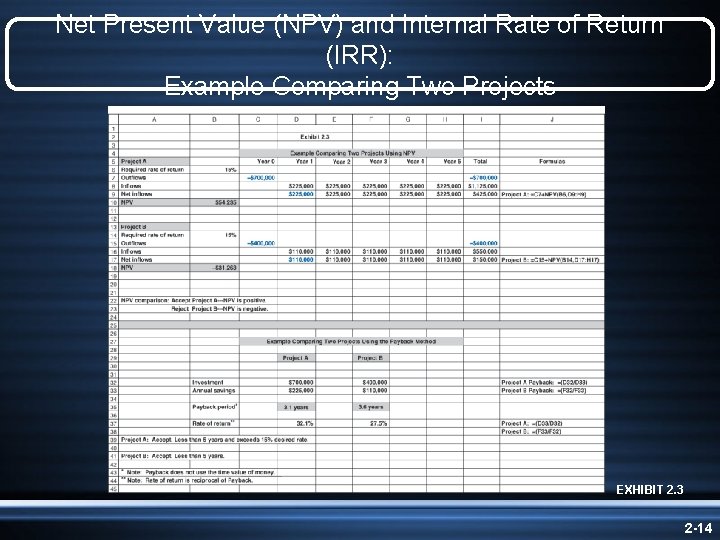
Net Present Value (NPV) and Internal Rate of Return (IRR): Example Comparing Two Projects EXHIBIT 2. 3 2 -14
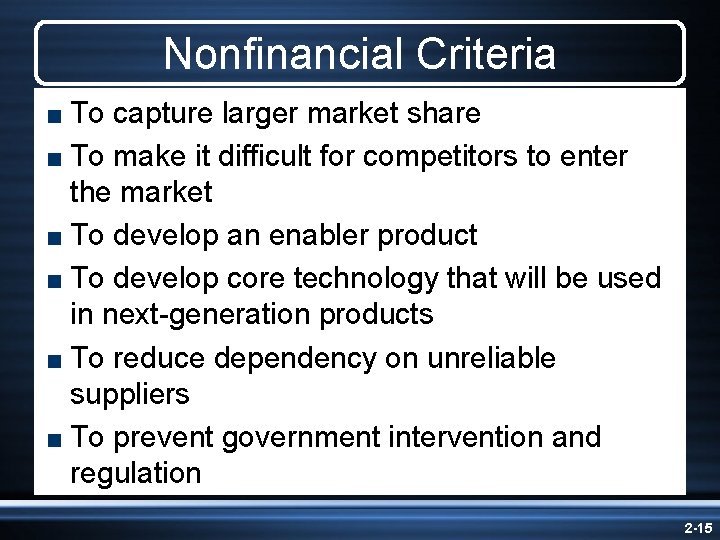
Nonfinancial Criteria < To capture larger market share < To make it difficult for competitors to enter the market < To develop an enabler product < To develop core technology that will be used in next-generation products < To reduce dependency on unreliable suppliers < To prevent government intervention and regulation 2 -15
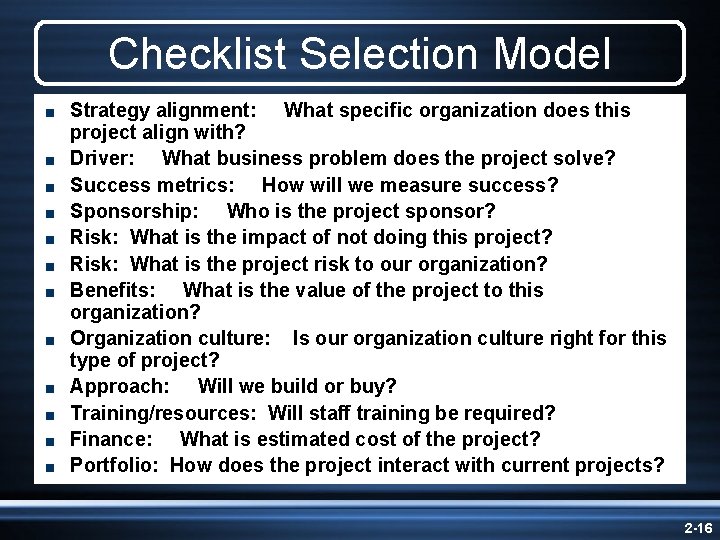
Checklist Selection Model < < < Strategy alignment: What specific organization does this project align with? Driver: What business problem does the project solve? Success metrics: How will we measure success? Sponsorship: Who is the project sponsor? Risk: What is the impact of not doing this project? Risk: What is the project risk to our organization? Benefits: What is the value of the project to this organization? Organization culture: Is our organization culture right for this type of project? Approach: Will we build or buy? Training/resources: Will staff training be required? Finance: What is estimated cost of the project? Portfolio: How does the project interact with current projects? 2 -16
Project Screening Matrix FIGURE 2. 3 2 -17
Applying a Selection Model < Project q Classification Deciding how well a strategic or operations project fits the organization’s strategy. < Selecting q a Model Applying a weighted scoring model to bring projects to closer with the organization’s strategic goals. o Reduces the number of wasteful projects o Helps identify proper goals for projects o Helps everyone involved understand how and why a project is selected 2 -18
Project Proposals < Sources and Solicitation of Project Proposals Within the organization q Request for proposal (RFP) from external sources (contractors and vendors) q < Ranking q Proposals and Selection of Projects Prioritizing requires discipline, accountability, responsibility, constraints, reduced flexibility, and loss of power < Managing the Portfolio Senior management input q The priority team (project office) responsibilities q 2 -19
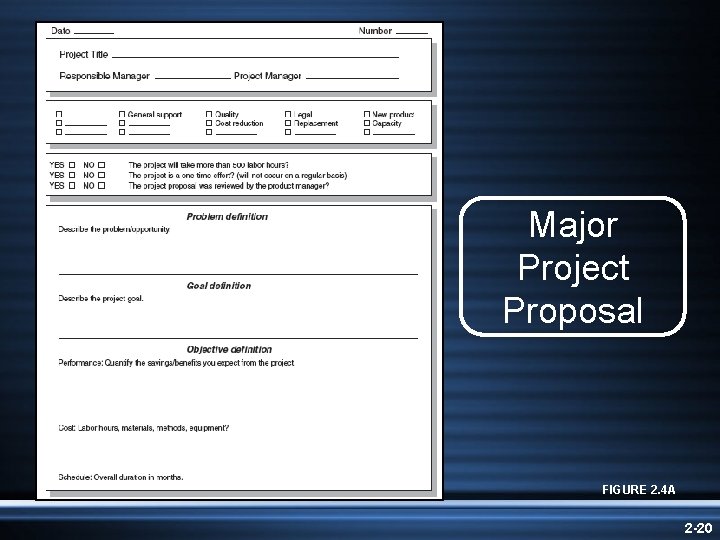
Major Project Proposal FIGURE 2. 4 A 2 -20
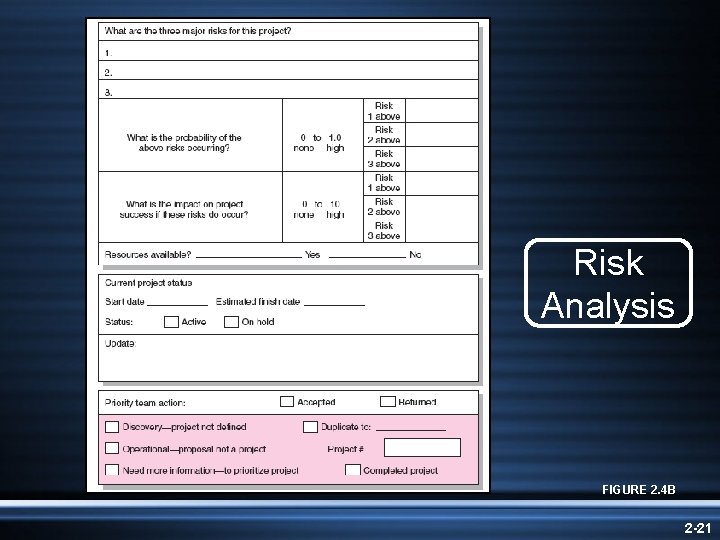
Risk Analysis FIGURE 2. 4 B 2 -21
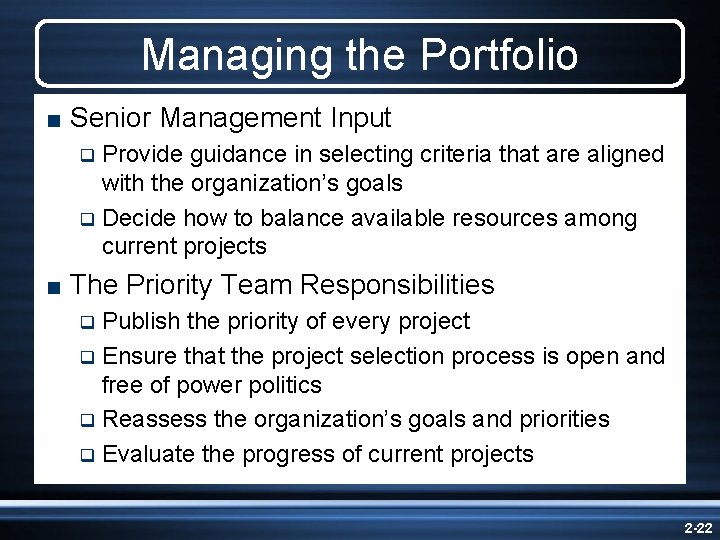
Managing the Portfolio < Senior Management Input Provide guidance in selecting criteria that are aligned with the organization’s goals q Decide how to balance available resources among current projects q < The Priority Team Responsibilities Publish the priority of every project q Ensure that the project selection process is open and free of power politics q Reassess the organization’s goals and priorities q Evaluate the progress of current projects q 2 -22
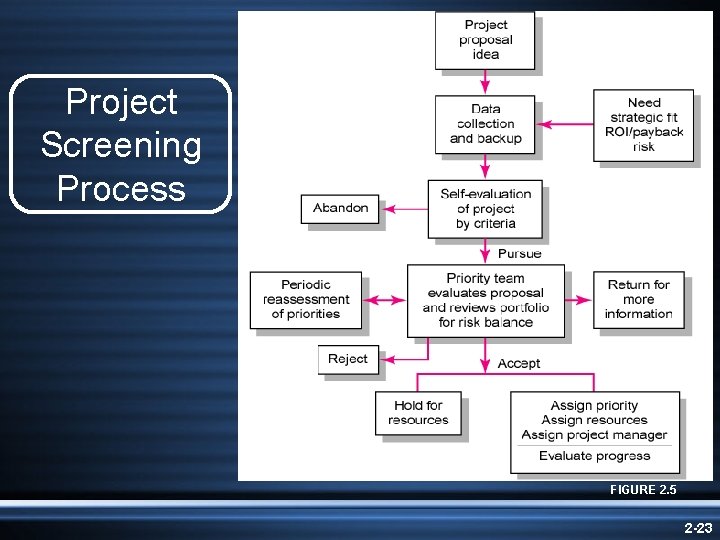
Project Screening Process FIGURE 2. 5 2 -23
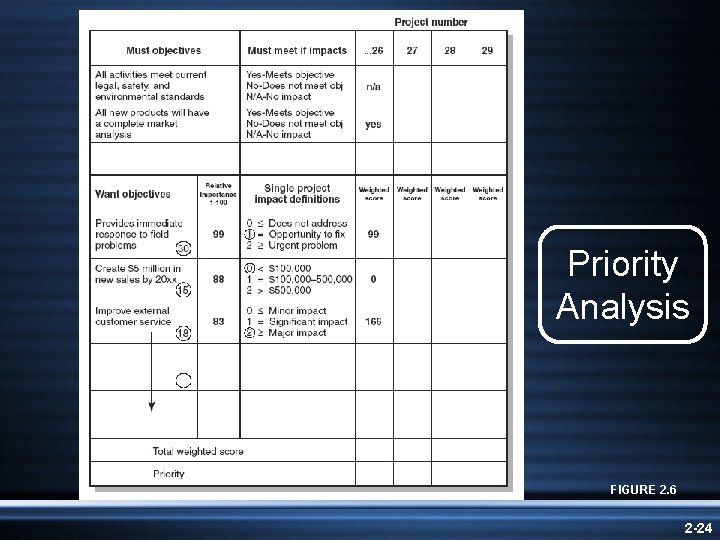
Priority Analysis FIGURE 2. 6 2 -24
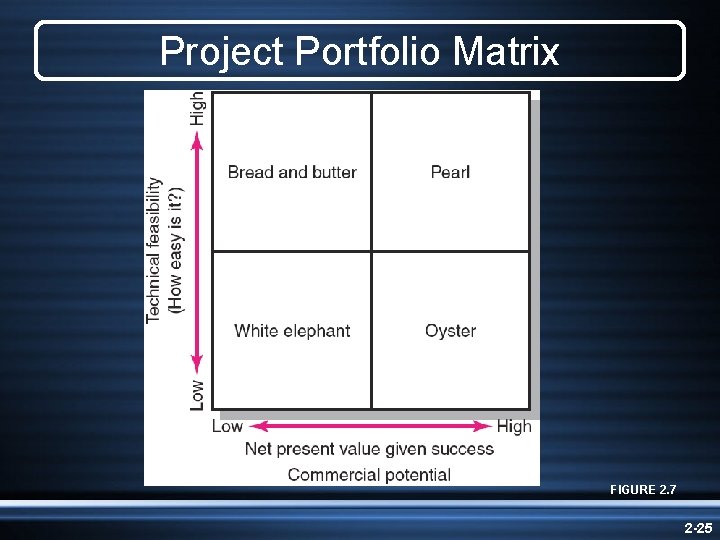
Project Portfolio Matrix FIGURE 2. 7 2 -25
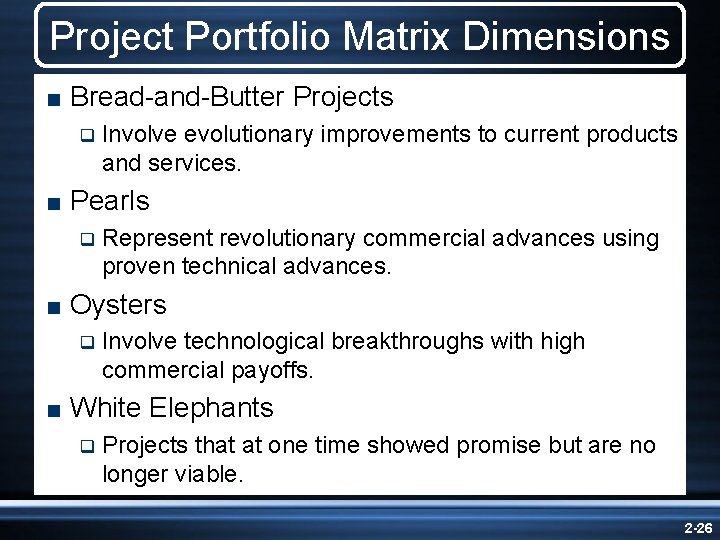
Project Portfolio Matrix Dimensions < Bread-and-Butter q Projects Involve evolutionary improvements to current products and services. < Pearls q Represent revolutionary commercial advances using proven technical advances. < Oysters q Involve technological breakthroughs with high commercial payoffs. < White q Elephants Projects that at one time showed promise but are no longer viable. 2 -26
Key Terms Implementation gap Net present value Payback Organizational politics Priority system Priority team Project portfolio Project screening matrix Sacred cow Strategic management process 2 -27