
CHAPTER 2 Organisational strategy structure culture and policy
- Slides: 11
CHAPTER 2 Organisational strategy, structure, culture and policy
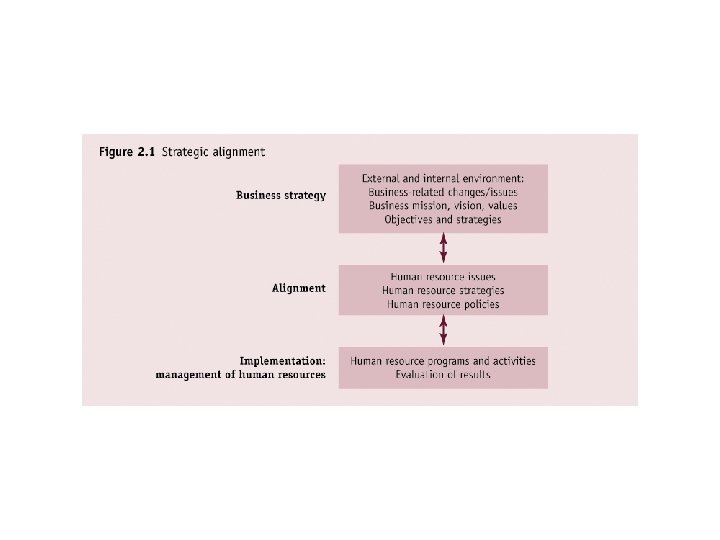
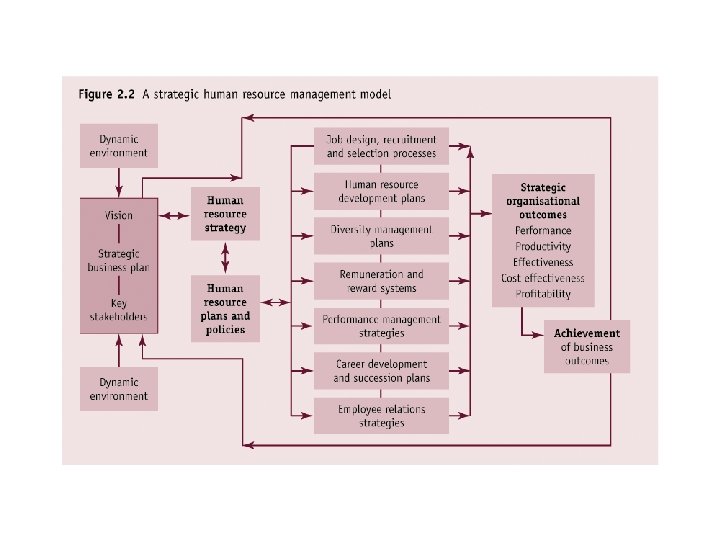
SHRM and business strategy HR and organisational strategy linkages: ( SHRM is a fit between business and HRM strategies) l Accommodative ( HR strategies simply following organizational strategies accommodating the staff needs of already chosen business strategies) l Interactive ( A two way communication process between HRM and corporate planning in which HRM contributes or react to overall strategy) l Fully integrated ( HR specialist is involved in the overall strategic process both formal and informal interaction ; a real reflection of SHRM practices).
Critics of SHRM Can SHRM adopt a flexible and strategic perspective? l Can practitioners implement the SHRM agenda? l
SHRM – strategy, structure, culture and policy Relationships: l Culture l Strategy l Structure
Organisational culture and HRM Organisational culture includes philosophies, values, beliefs, work systems and practices, expectations and limitations on employee behaviour l Four broad types: – Elite – Meritocratic – Collegial – Leader-focused l
Cultural change Excellence theorists believe that culture can be modified to achieve efficiency/profitability l Structural efficiency principle (SEP) and Award restructuring put pressure on organisations to change work practices and modify traditional cultures l l HR specialist drives the process Change can also result from innovative HR approaches l
Principles of effective HR policies Congruency l Compatibility l Clarity l Stability l Flexibility l Cultural appropriateness l Relationships l
HRM structures No HR function l Line managers alone l Line managers, with centralised HR support l Centralised functional generalists l Centralised functional specialists l Decentralised functional generalists or specialists l Contract specialists l
Strategic partnerships The new HR l Devolvement of HRM functions l Joint provision of HR services l Strategic focus of role l