
Chapter 2 Opportunity Recognition and Idea Generation Chapter



- Slides: 30
Chapter 2 Opportunity Recognition and Idea Generation
Chapter Objectives 1. 2. 3. 4. 5. 6. 1 -2 Explain why it’s important to start a new firm when its “window of opportunity” is open. Explain the difference between an opportunity and an idea. Describe three general approaches entrepreneurs use to identify opportunities. Identify the four environmental trends that are most instrumental in creating business opportunities. List the personal characteristics that make some people better at recognizing business opportunities than others. Identify the five steps in the creative process.
Lab Activity – My Half baked Idea § STEP 1 - Find your partner § STEP 2 - In a piece of paper, brains storms any words that come into your mind – 2 minutes § STEP 3 - Choose 3 words and create your business idea based on the 4 items ( PRODUCT, PLACE, PROMOTION, PRICE)
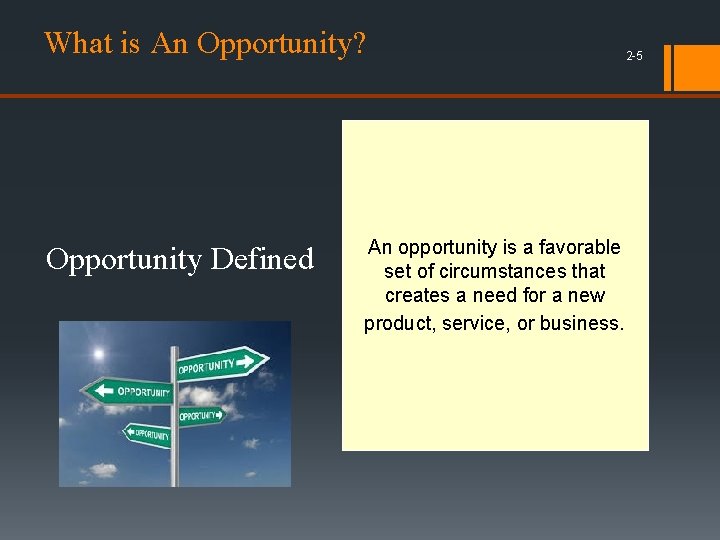
What is An Opportunity? Opportunity Defined An opportunity is a favorable set of circumstances that creates a need for a new product, service, or business. 2 -5
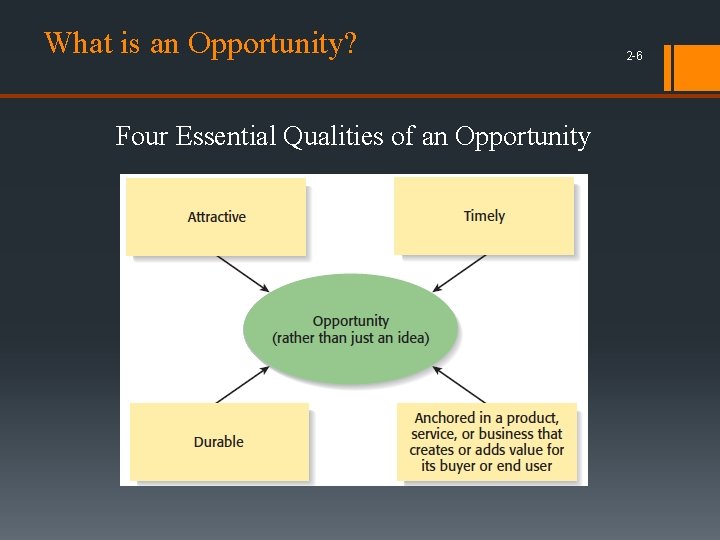
What is an Opportunity? Four Essential Qualities of an Opportunity 2 -6
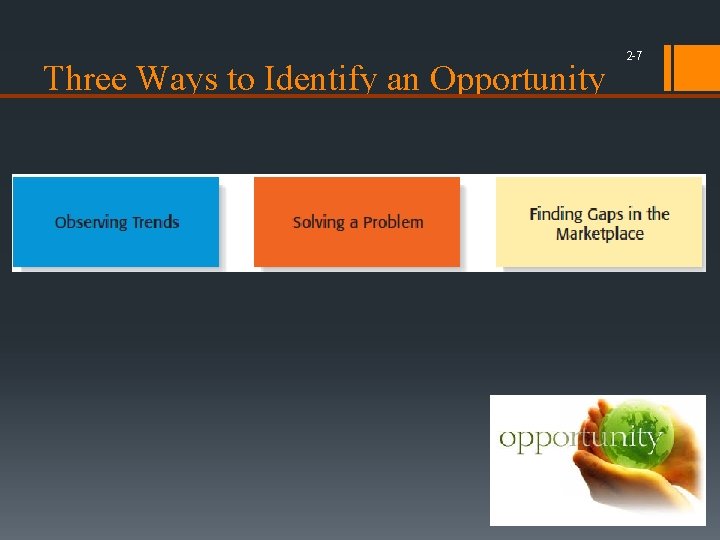
Three Ways to Identify an Opportunity 2 -7
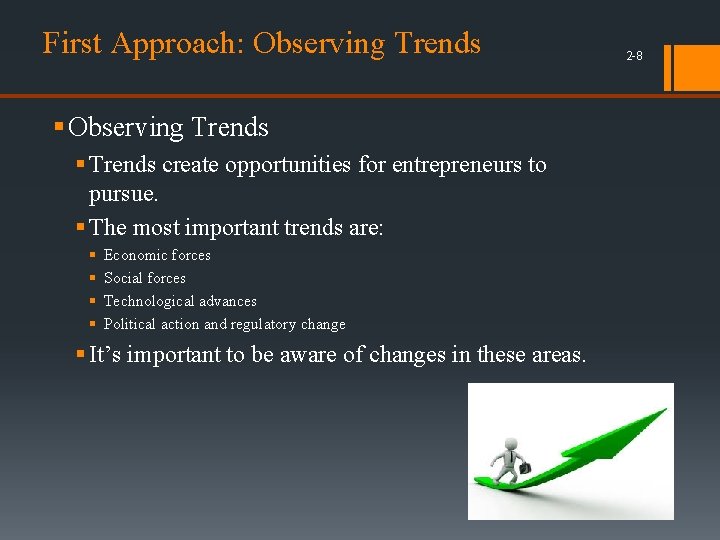
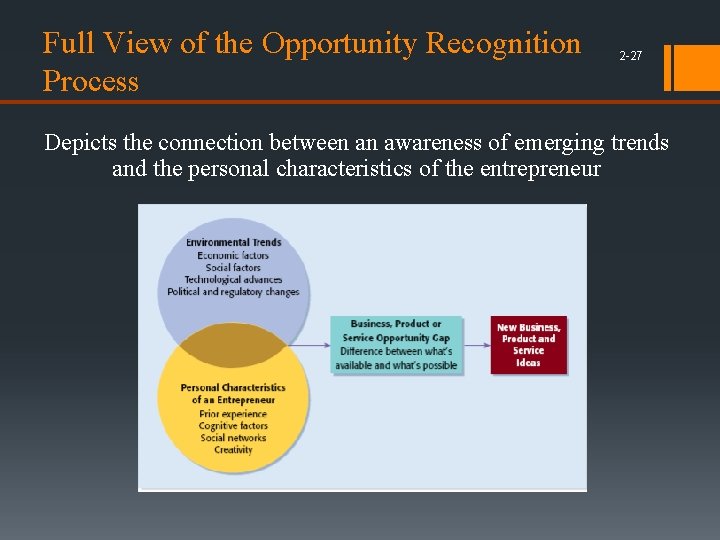
First Approach: Observing Trends § Trends create opportunities for entrepreneurs to pursue. § The most important trends are: § § Economic forces Social forces Technological advances Political action and regulatory change § It’s important to be aware of changes in these areas. 2 -8
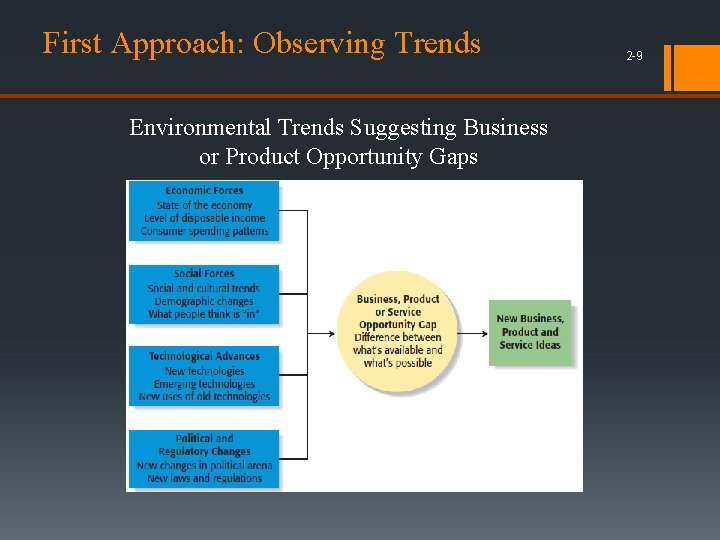
First Approach: Observing Trends Environmental Trends Suggesting Business or Product Opportunity Gaps 2 -9
Trend 1: Economic Forces Economic trends help determine areas that are ripe for new start-ups and areas that start-ups should avoid. 2 -10 Example of Economic Trend Creating a Favorable Opportunity • A weak economy favors start-ups that help consumers save money. • An example is Gas. Buddy. com, a company started to help consumers save money on gas.
Trend 2: Social Forces Social trends alter how people and businesses behave and set their priorities. These trends provide opportunities for new businesses to accommodate the changes. 2 -11 Examples of Social Trends • Aging of baby boomers • The increasing diversity of the workplace • Increasing interest in social networks such as Facebook and Twitter • An increasing focus on health and wellness • Increasing interest in “green” products
Trend 3: Technological Advances in technology frequently create business opportunities. 2 -12 Examples of Entire Industries that Have Been Created as the Result of Technological Advances • Computer industry • Internet • Biotechnology • Digital photography
Trend 3: Technological Advances 2 -13 Example: H 20 Audio Once a technology is created, products often emerge to advance it. An example is H 20 Audio, a company started by four former San Diego State University students, that makes waterproof housings for the Apple i. Phone and i. Pod.
Trend 4: Political Action and Regulatory Changes 2 -14 General Example Political action and regulatory changes also provide the basis for opportunities. Laws to protect the environment have created opportunities for entrepreneurs to start firms that help other firms comply with environmental laws and regulations.
Trend 4: Political Action and Regulatory Changes 2 -15 Specific Example Company created to help other companies comply with a specific law. The No Child Left Behind Act of 2002 requires states to develop criterion-based assessments in basic skills to be periodically given to students in certain grades. Kim and Jay Kleeman, two high school teachers, started Shakespeare Squared, a company that helps high schools comply with the act.
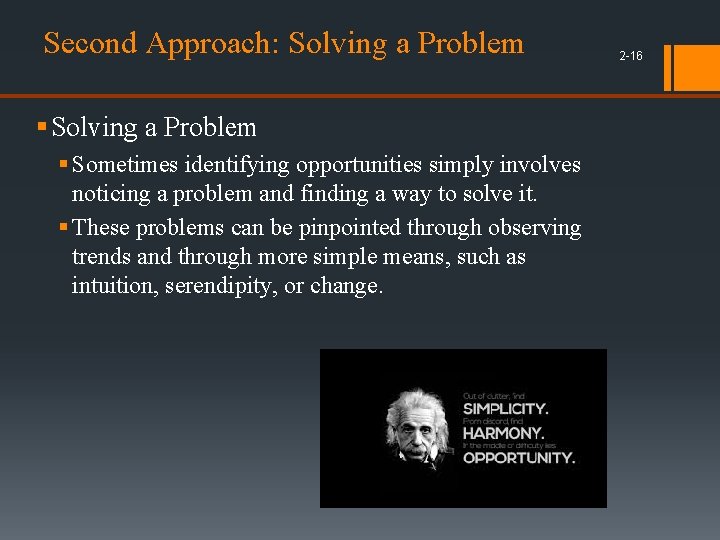
Second Approach: Solving a Problem § Sometimes identifying opportunities simply involves noticing a problem and finding a way to solve it. § These problems can be pinpointed through observing trends and through more simple means, such as intuition, serendipity, or change. 2 -16
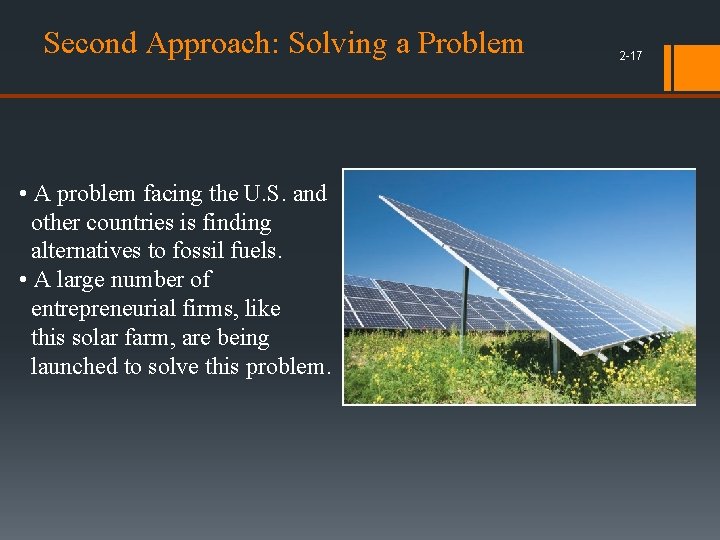
Second Approach: Solving a Problem • A problem facing the U. S. and other countries is finding alternatives to fossil fuels. • A large number of entrepreneurial firms, like this solar farm, are being launched to solve this problem. 2 -17
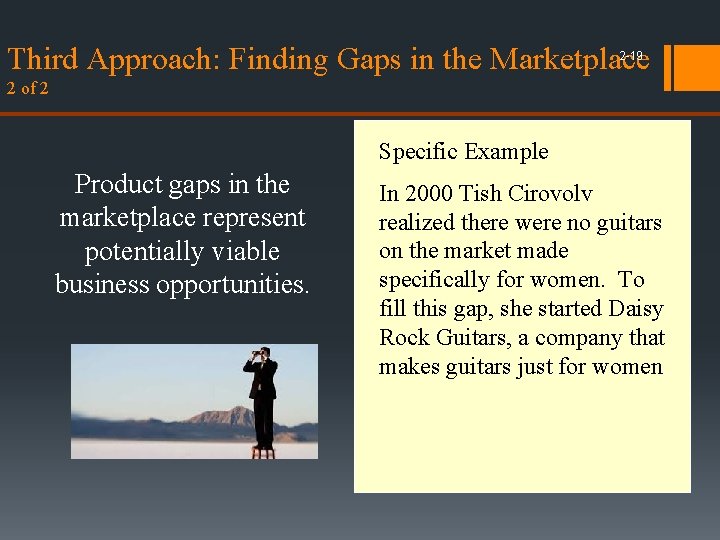
Third Approach: Finding Gaps in the Marketplace 2 -18 Copyright © 2012 Pearson Education, Inc. publishing as Prentice Hall 1 of 2 § Gaps in the Marketplace § A third approach to identifying opportunities is to find a gap in the marketplace. § A gap in the marketplace is often created when a product or service is needed by a specific group of people but doesn’t represent a large enough market to be of interest to mainstream retailers or manufacturers.
Third Approach: Finding Gaps in the Marketplace 2 -19 2 of 2 Specific Example Product gaps in the marketplace represent potentially viable business opportunities. In 2000 Tish Cirovolv realized there were no guitars on the market made specifically for women. To fill this gap, she started Daisy Rock Guitars, a company that makes guitars just for women.
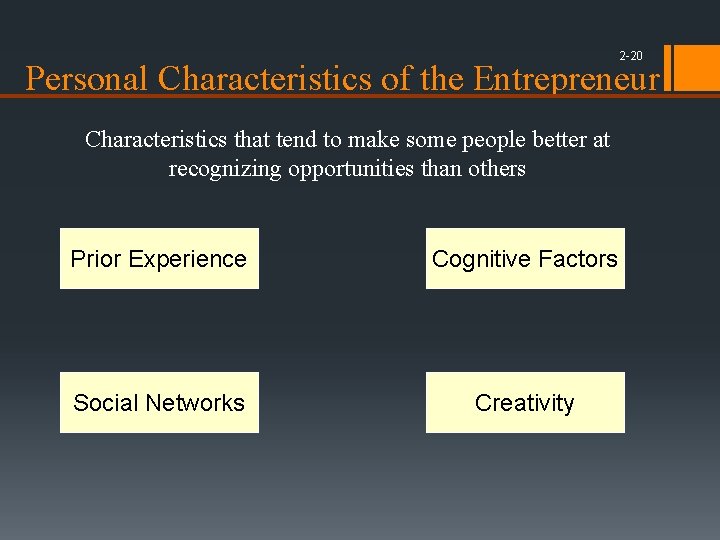
2 -20 Personal Characteristics of the Entrepreneur Characteristics that tend to make some people better at recognizing opportunities than others Prior Experience Cognitive Factors Social Networks Creativity
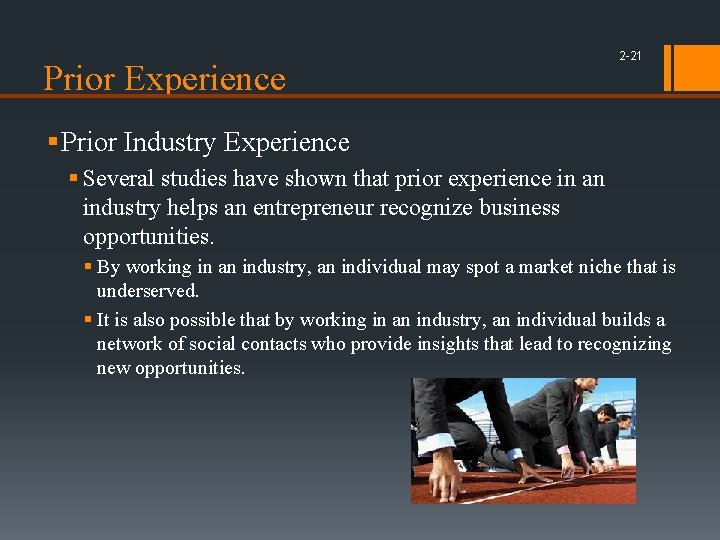
Prior Experience 2 -21 § Prior Industry Experience § Several studies have shown that prior experience in an industry helps an entrepreneur recognize business opportunities. § By working in an industry, an individual may spot a market niche that is underserved. § It is also possible that by working in an industry, an individual builds a network of social contacts who provide insights that lead to recognizing new opportunities.
Cognitive Factors 2 -22 § Cognitive Factors § Studies have shown that opportunity recognition may be an innate skill or cognitive process. § Some people believe that entrepreneurs have a “sixth sense” that allows them to see opportunities that others miss. § This “sixth sense” is called entrepreneurial alertness, which is formally defined as the ability to notice things without engaging in deliberate search.
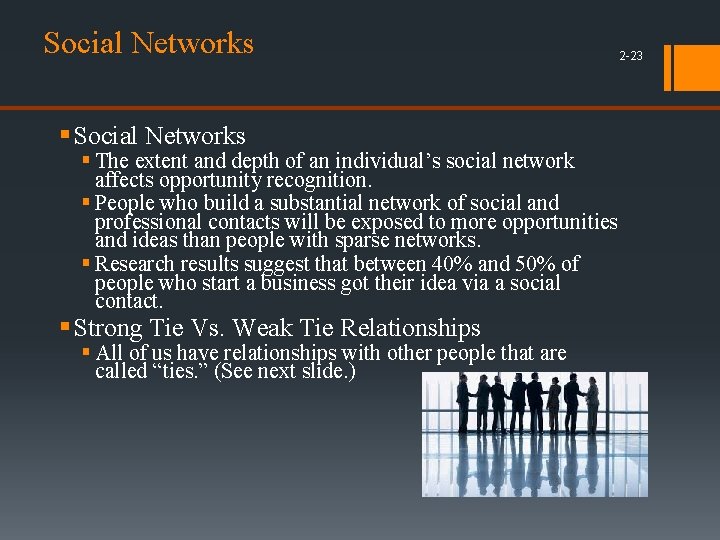
Social Networks § The extent and depth of an individual’s social network affects opportunity recognition. § People who build a substantial network of social and professional contacts will be exposed to more opportunities and ideas than people with sparse networks. § Research results suggest that between 40% and 50% of people who start a business got their idea via a social contact. § Strong Tie Vs. Weak Tie Relationships § All of us have relationships with other people that are called “ties. ” (See next slide. ) 2 -23
Social Networks § Nature of Strong-Tie Vs. Weak-Tie Relationships § Strong-tie relationship are characterized by frequent interaction and form between coworkers, friends, and spouses. § Weak-tie relationships are characterized by infrequent interaction and form between casual acquaintances. § Result § It is more likely that an entrepreneur will get new business ideas through weak-tie rather than strong-tie relationships. (See next slide. ) 2 -24
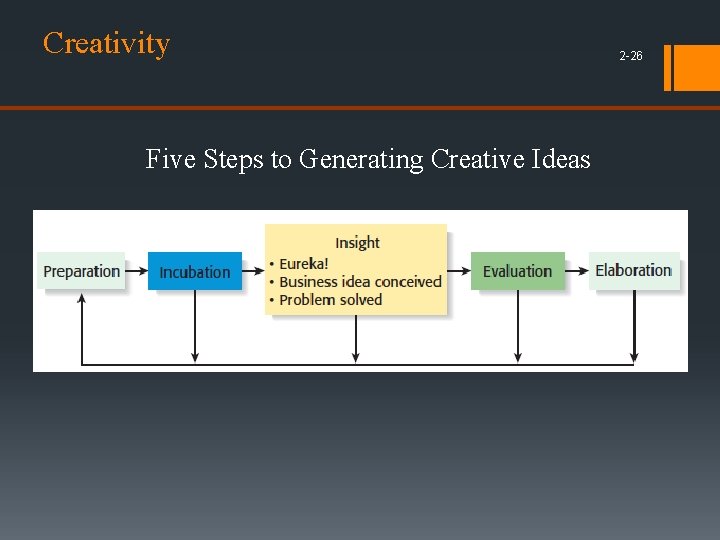
Creativity § Creativity is the process of generating a novel or useful idea. § Opportunity recognition may be, at least in part, a creative process. § For an individual, the creative process can be broken down into five stages, as shown on the next slide. 2 -25
Creativity Five Steps to Generating Creative Ideas 2 -26
Full View of the Opportunity Recognition Process 2 -27 Depicts the connection between an awareness of emerging trends and the personal characteristics of the entrepreneur
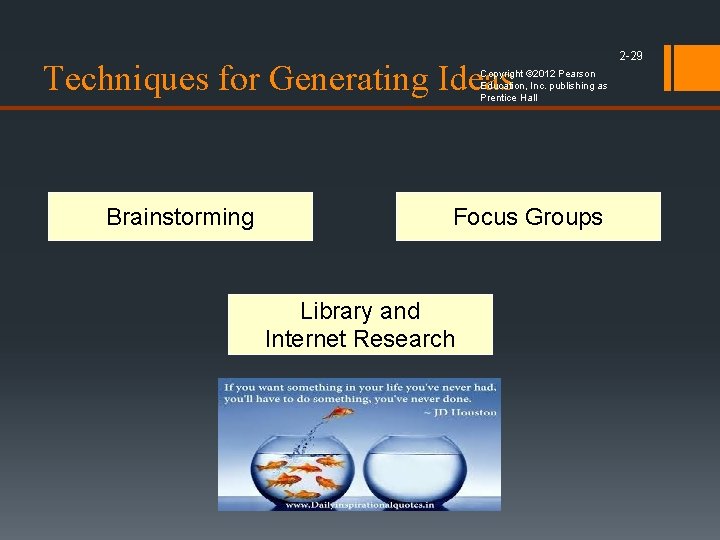
Techniques for Generating Ideas Copyright © 2012 Pearson Education, Inc. publishing as Prentice Hall Brainstorming Focus Groups Library and Internet Research 2 -29
Q&A § Thank you!