
Chapter 2 Nutrition Guidelines Tools for a Healthful
- Slides: 42
Chapter 2 Nutrition Guidelines: Tools for a Healthful Diet
Linking Nutrients, Foods, and Health • Continuum of nutritional status – Overnutrition • Chronic consumption of more than is necessary for good health • Linked to leading causes of deaths in the United States
Linking Nutrients, Foods, and Health • Planning How You Will Eat – Adequacy • The foods you choose to eat provide all the essential nutrients, fiber, and energy in amounts sufficient to support growth and maintain health – Balance • When the amount of energy you eat equals the amount of energy you expend in daily activities and exercise
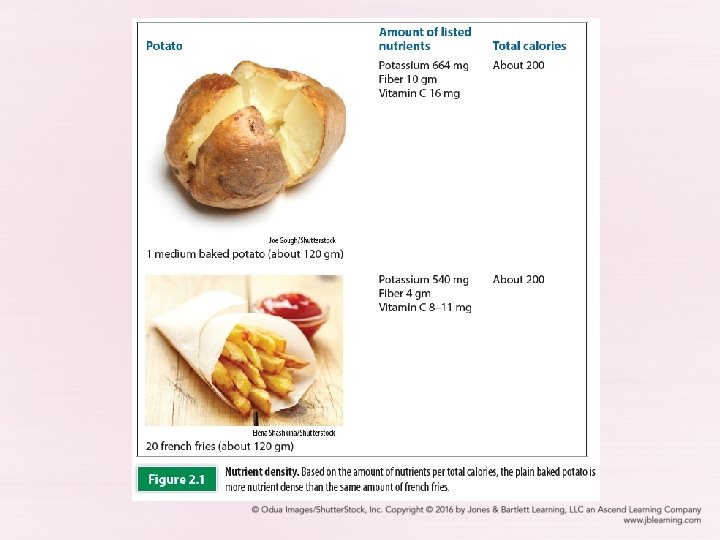
Linking Nutrients, Foods, and Health • Planning How You Will Eat – Calorie Control • Choosing a diet that balances the calories you eat with the amount of calories your body uses – Nutrient Density • Amount of vitamins and minerals relative to the calories the food provides
Linking Nutrients, Foods, and Health • Planning How You Will Eat – Moderation • Not too much or too little – Variety • Include a lot of different foods in your diet
Dietary Guidelines • Intended to help improve overall health • Simple, easy-to-understand statements about food choices • Used to – Develop educational materials – Aid policy makers in designing and carrying out nutrition-related programs
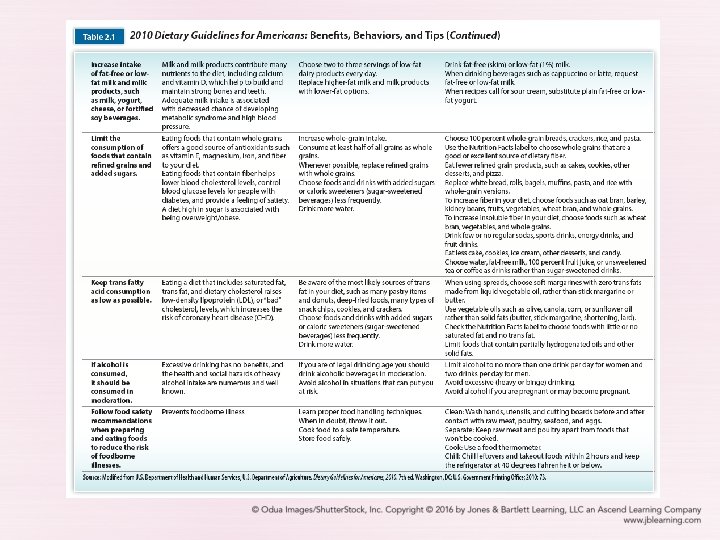
Dietary Guidelines for Americans • Cornerstone of federal nutrition policy and education • Key Recommendations for the Dietary Guidelines for Americans – 23 key recommendations for general population – 6 key recommendations for specific population groups
Dietary Guidelines for Americans • Overarching Concepts 1. Maintain calorie balance over time to achieve and sustain a healthy weight 2. Focus on consuming nutrient-dense foods and beverages
Dietary Guidelines for Americans • Balancing Calories to Manage Weight – Obesogenic environment • Foods and Food Components to Reduce – Sodium, solid fats, added sugars, and refined grains • Foods and Nutrients to Increase – Vegetables, fruits, whole grains, milk and milk products, and some unsaturated oils
Dietary Guidelines for Americans • Recommendations for specific population groups – Women capable of becoming pregnant – Women who are pregnant or breastfeeding – Individuals age 50 years or older
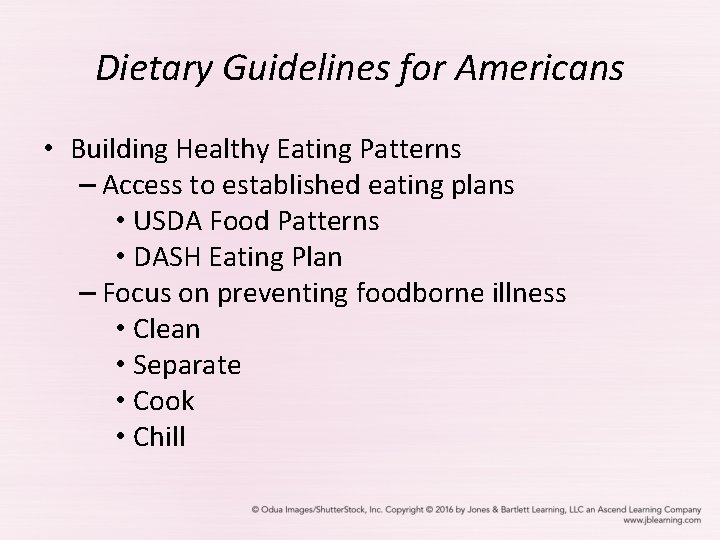
Dietary Guidelines for Americans • Building Healthy Eating Patterns – Access to established eating plans • USDA Food Patterns • DASH Eating Plan – Focus on preventing foodborne illness • Clean • Separate • Cook • Chill
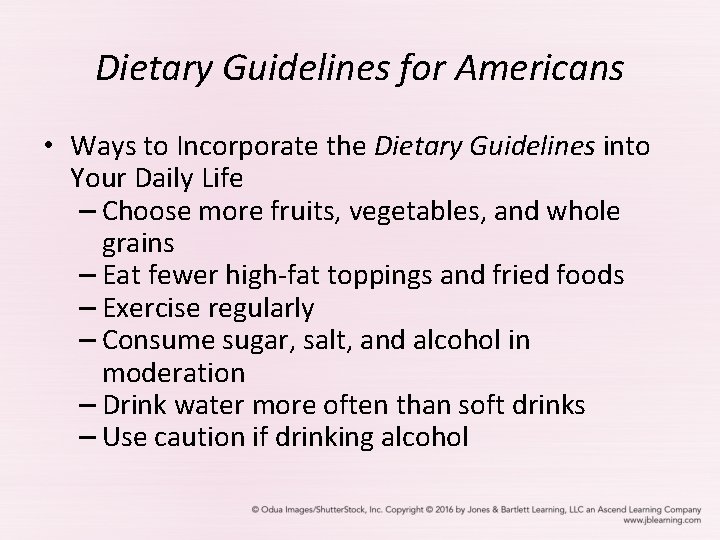
Dietary Guidelines for Americans • Ways to Incorporate the Dietary Guidelines into Your Daily Life – Choose more fruits, vegetables, and whole grains – Eat fewer high-fat toppings and fried foods – Exercise regularly – Consume sugar, salt, and alcohol in moderation – Drink water more often than soft drinks – Use caution if drinking alcohol
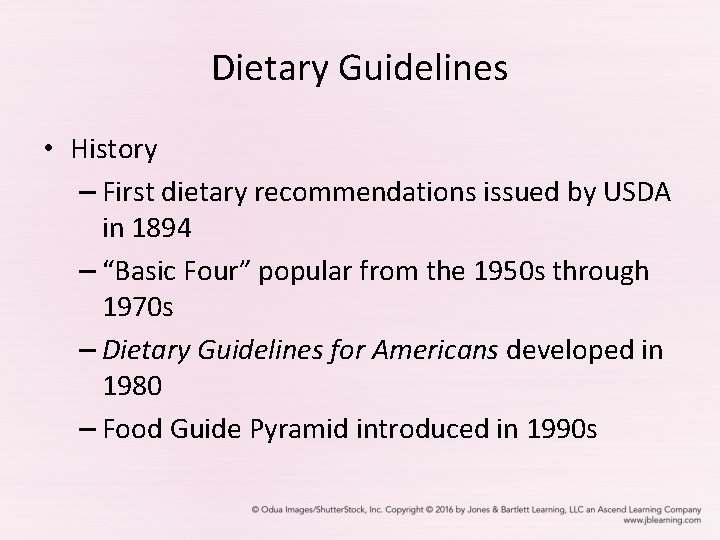
Dietary Guidelines • History – First dietary recommendations issued by USDA in 1894 – “Basic Four” popular from the 1950 s through 1970 s – Dietary Guidelines for Americans developed in 1980 – Food Guide Pyramid introduced in 1990 s
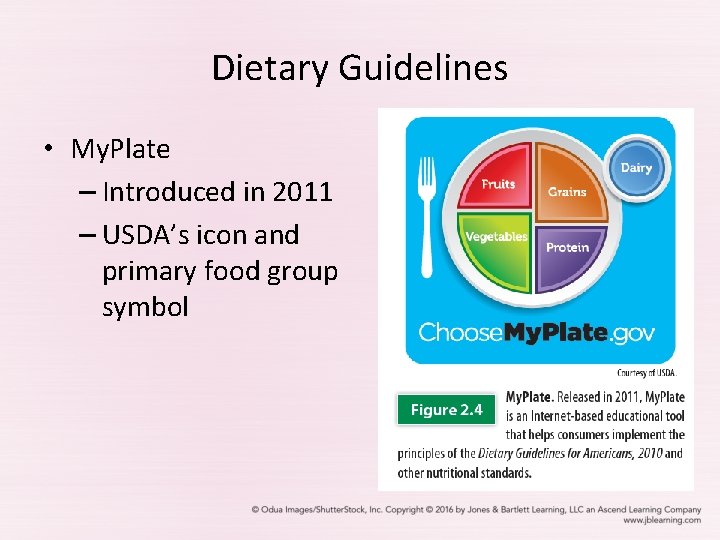
Dietary Guidelines • My. Plate – Introduced in 2011 – USDA’s icon and primary food group symbol
Dietary Guidelines • My. Plate – Conveys key messages • Enjoy food but eat less • Avoid oversized portions • Make half your plate fruits and vegetables • Drink water instead of sugary drinks • Switch to fat-free or low-fat milk • Compare sodium in foods • Make at least half your grains whole grains
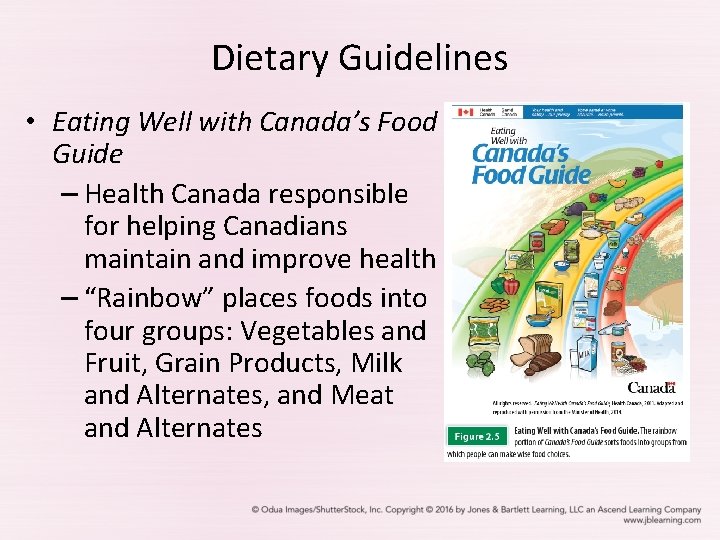
Dietary Guidelines • Eating Well with Canada’s Food Guide – Health Canada responsible for helping Canadians maintain and improve health – “Rainbow” places foods into four groups: Vegetables and Fruit, Grain Products, Milk and Alternates, and Meat and Alternates
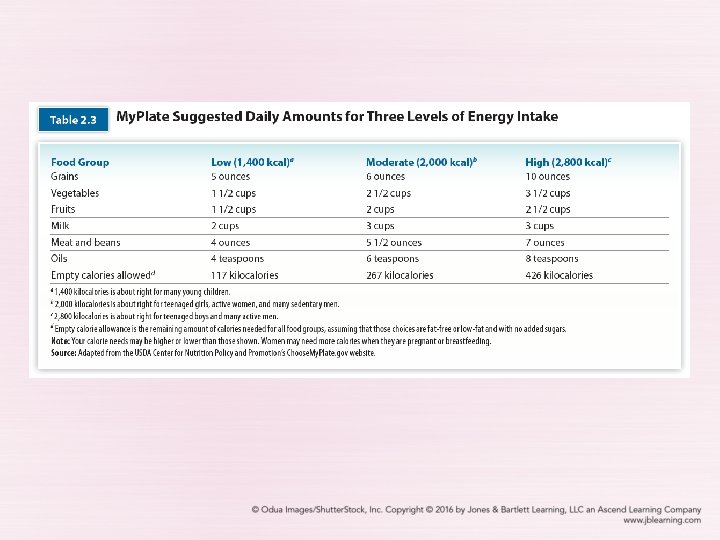
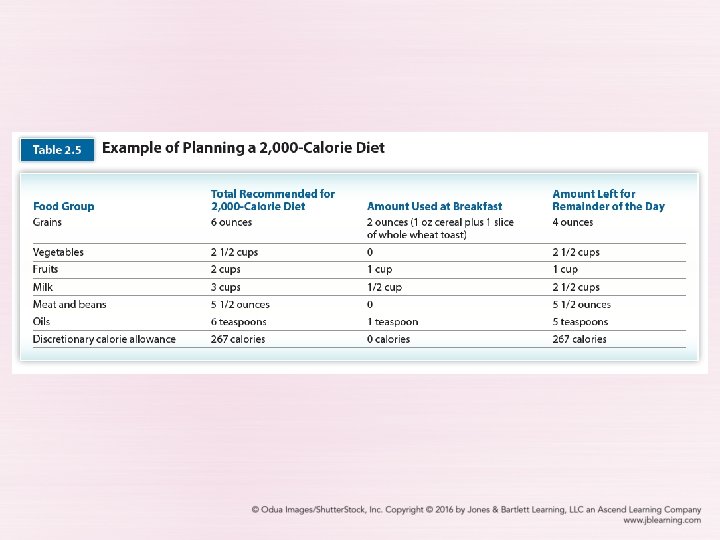
Dietary Guidelines in Diet Planning • Use to – Determine the amount of calories you should consume each day – Familiarize yourself with the types of food in each group, the number of recommended servings, and appropriate serving sizes – Plan your meals and snacks using the suggested serving sizes
Dietary Guidelines
• <Insert Table 2. 5>
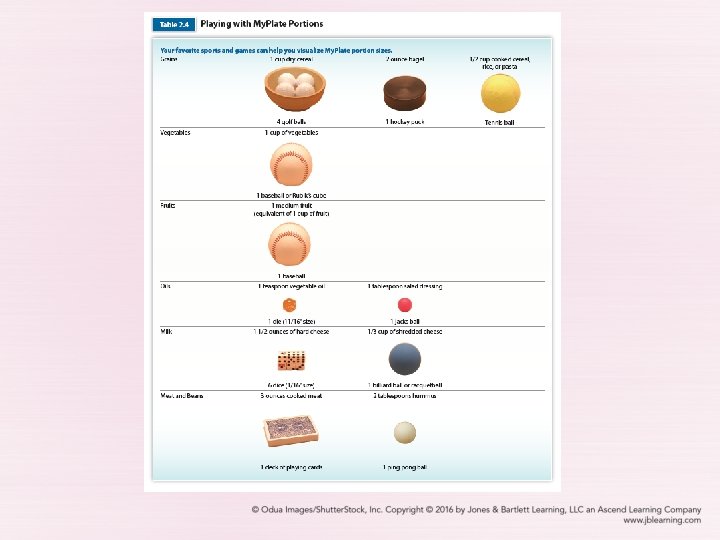
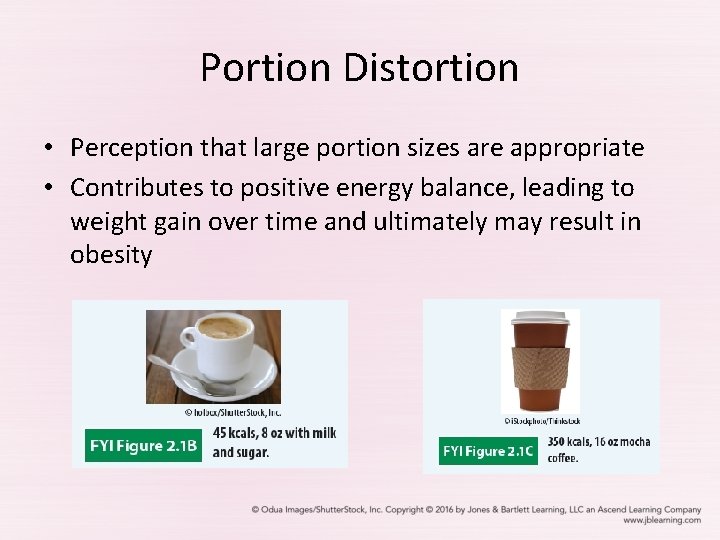
Portion Distortion • Perception that large portion sizes are appropriate • Contributes to positive energy balance, leading to weight gain over time and ultimately may result in obesity
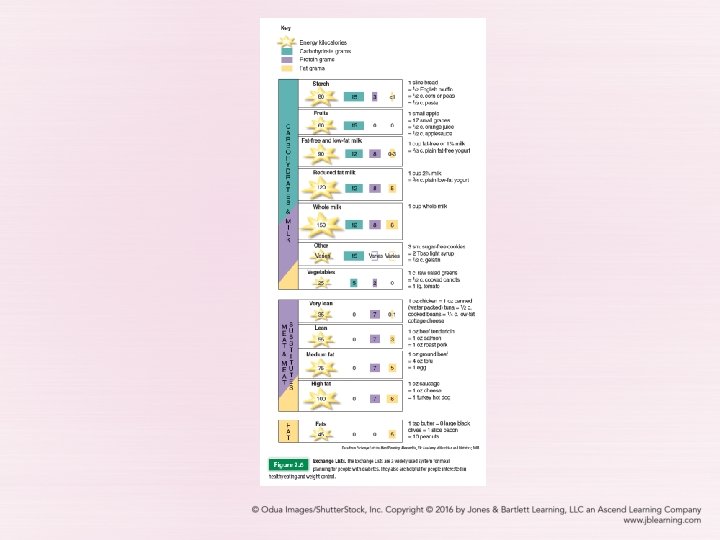
Exchange Lists • Using the exchange lists in diet planning – Help people with diabetes plan meals – Used in many weight control programs – Foods grouped by macronutrient content • Starches • Fruits • Milks • Other carbohydrates • Vegetables • Meats and meat substitutes • Fats
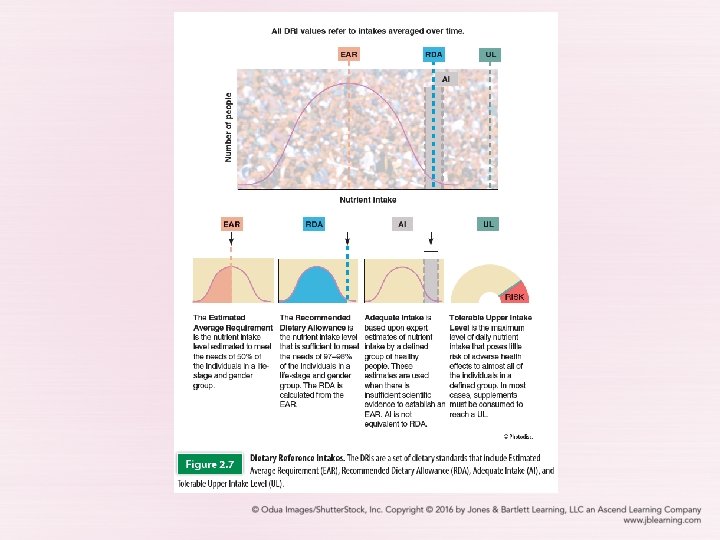
Recommendations for Nutrient Intake: The DRIs • Understanding dietary standards – Dietary Reference Intakes (DRIs) • Recommendations for nutrient intake • Tell us how much of each nutrient we should have in our diets
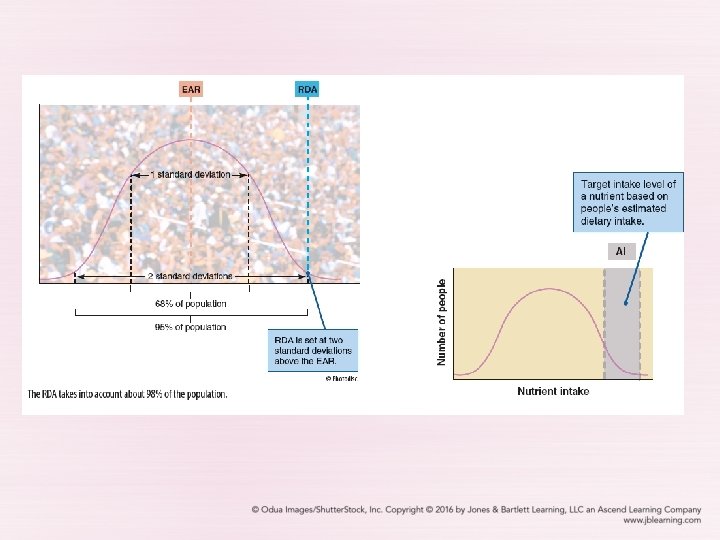
The Dietary Reference Intakes • Estimated Average Requirement (EAR) – Intake value that meets the estimated nutrient needs of 50 percent of individuals in specific life-stage and gender groups • Recommended Dietary Allowance (RDA) – Amount that meets the needs of most people (97 -98%) in a life-stage and gender group
The Dietary Reference Intakes • Adequate Intake (AI) – Nutrient intake that appears to sustain a defined nutritional state or some other indicator of health in a specific population or subgroup • Tolerable Upper Intake Level (Uls) – Maximum levels of daily nutrient intakes that are unlikely to pose health risks to almost all of the individuals in the group for whom they are designed
The Dietary Reference Intakes • Estimated Energy Requirement (EER) – Intake predicted to maintain energy balance in a healthy adult of a defined age, gender, weight, height, and level of physical activity consistent with good health • Acceptable Macronutrient Distribution Ranges (AMDRs) – Range of intakes for a particular energy source associated with reduced chronic disease while providing adequate intakes of essential nutrients
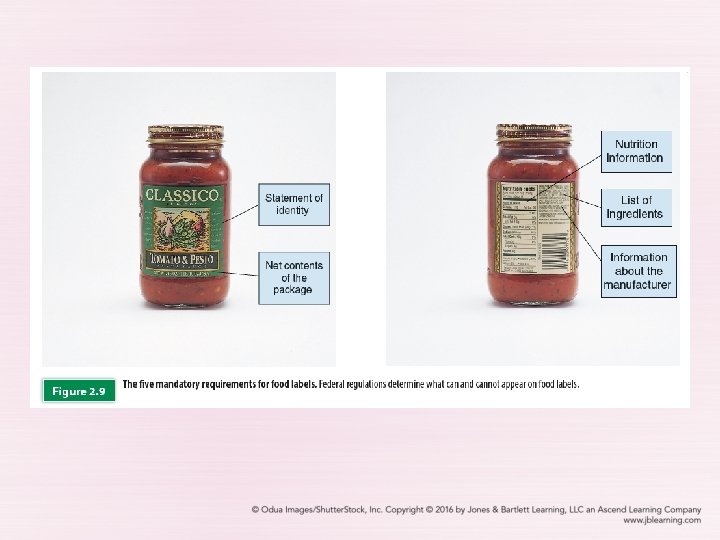
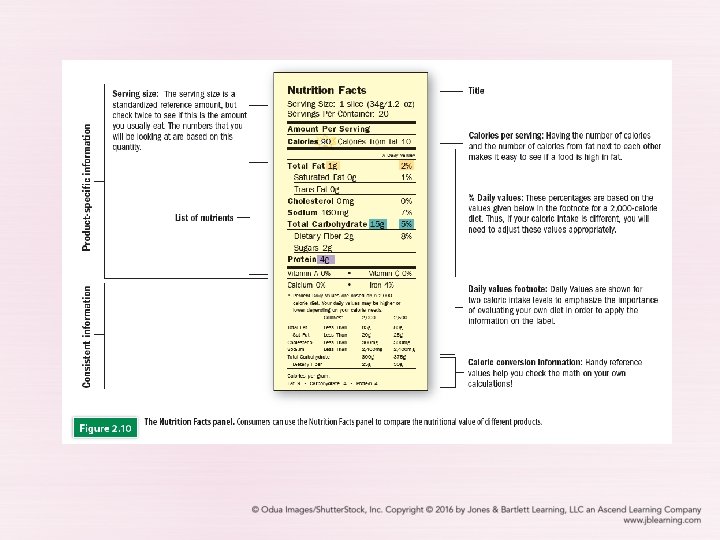
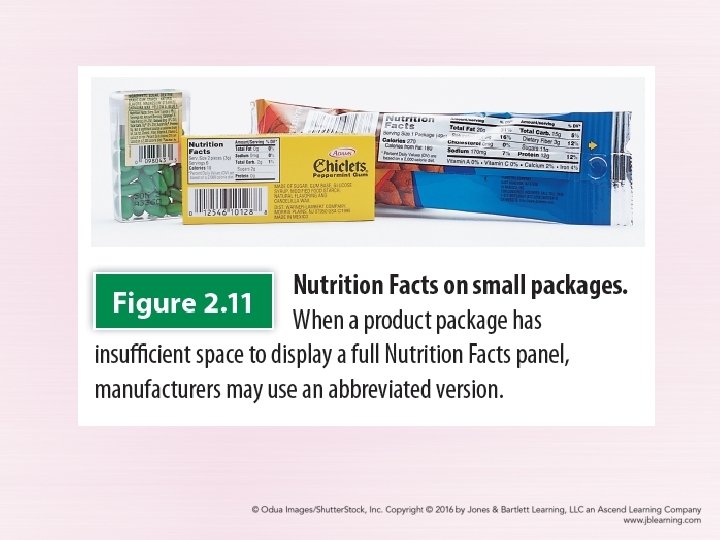
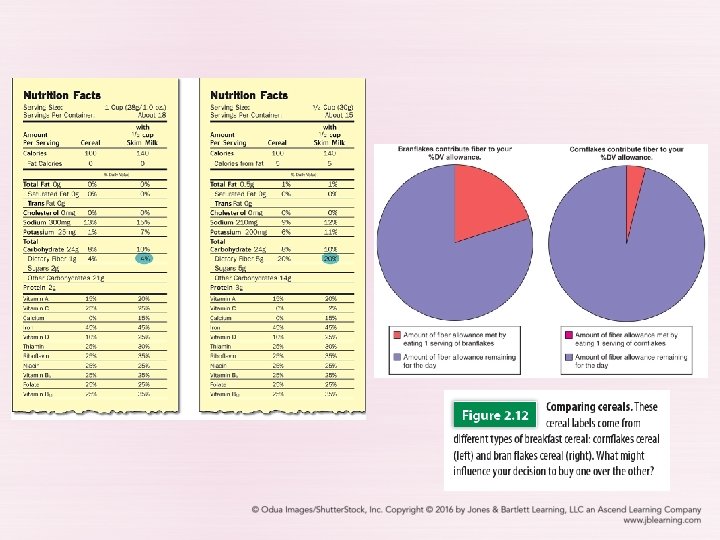
Food Labels • Ingredients and Other Basic Information – Statement of identify/name of the food – New weight of the food contained inside of the package – Name and address of the manufacturer, packer, or distributor – List of ingredients in descending order by weight – Nutrition information
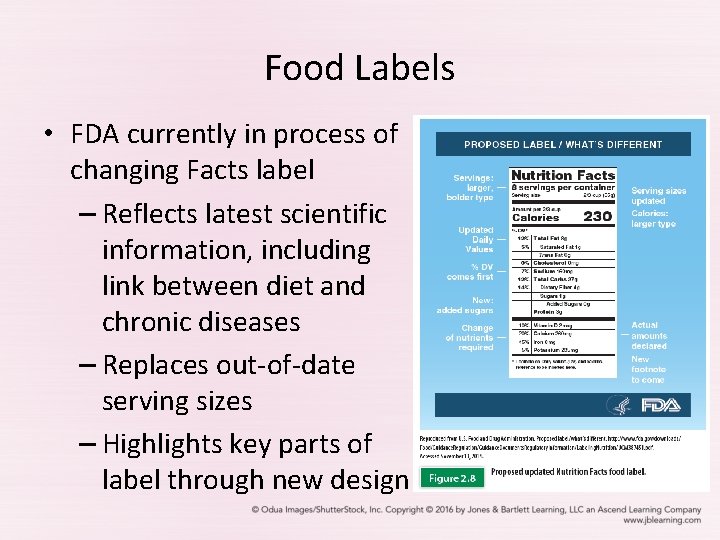
Food Labels • FDA currently in process of changing Facts label – Reflects latest scientific information, including link between diet and chronic diseases – Replaces out-of-date serving sizes – Highlights key parts of label through new design
Claims That Can Be Made for Foods and Dietary Supplements • Nutrient Content Claims – Regulated by the NLEA and FDA • Have made an effort to use meaningful terms • Have reduced the number of potentially misleading label statements
Claims That Can Be Made for Foods and Dietary Supplements • Health claims – Link one or more dietary components to reduced risk of disease – Must be supported by scientific evidence – Approved by FDA • Structure/function claims – Describe potential effects on body structures or functions, such as bone health, muscle strength, and digestion