
CHAPTER 2 NUTRITION CLASSES OF FOOD 7 classes
- Slides: 20
CHAPTER 2 NUTRITION
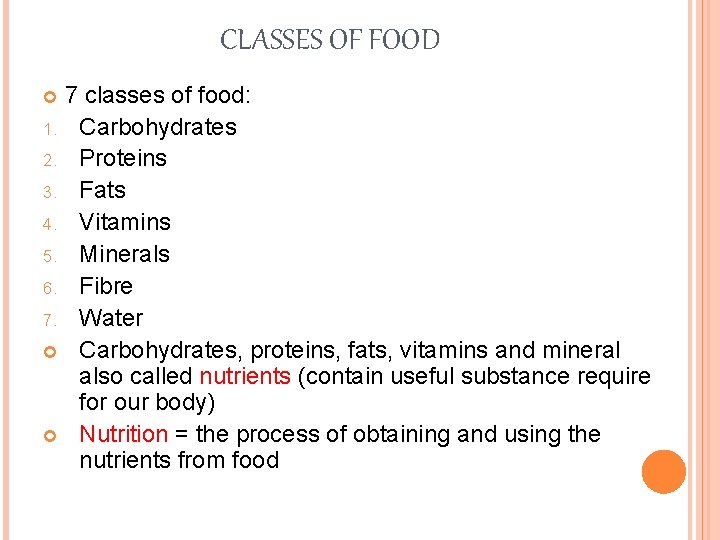
CLASSES OF FOOD 7 classes of food: 1. Carbohydrates 2. Proteins 3. Fats 4. Vitamins 5. Minerals 6. Fibre 7. Water Carbohydrates, proteins, fats, vitamins and mineral also called nutrients (contain useful substance require for our body) Nutrition = the process of obtaining and using the nutrients from food
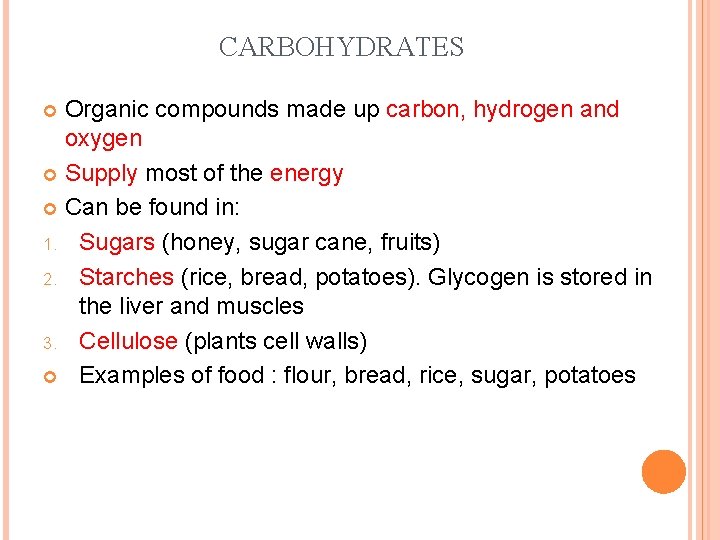
CARBOHYDRATES Organic compounds made up carbon, hydrogen and oxygen Supply most of the energy Can be found in: 1. Sugars (honey, sugar cane, fruits) 2. Starches (rice, bread, potatoes). Glycogen is stored in the liver and muscles 3. Cellulose (plants cell walls) Examples of food : flour, bread, rice, sugar, potatoes
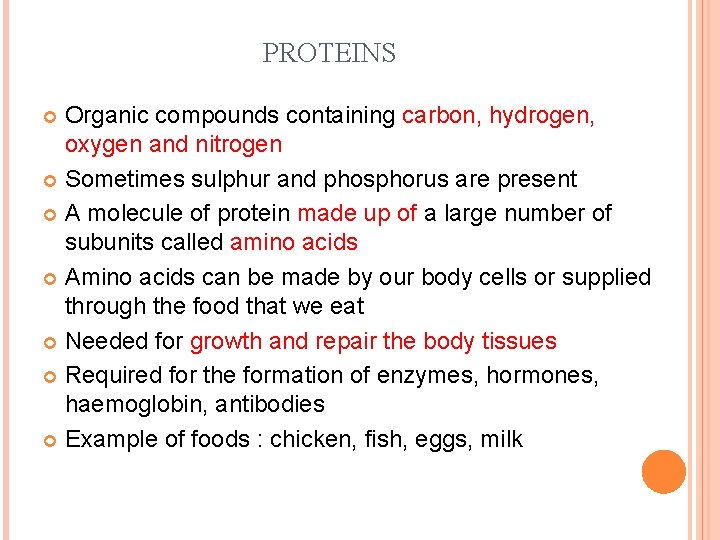
PROTEINS Organic compounds containing carbon, hydrogen, oxygen and nitrogen Sometimes sulphur and phosphorus are present A molecule of protein made up of a large number of subunits called amino acids Amino acids can be made by our body cells or supplied through the food that we eat Needed for growth and repair the body tissues Required for the formation of enzymes, hormones, haemoglobin, antibodies Example of foods : chicken, fish, eggs, milk
FATS Compounds of carbon, hydrogen and oxygen Stored under the skin or around organs in our body Helps to keep warm and protects organs from damage Helps to transport vitamin A, D, E and K Can store a lot of energy Fats are solid, while oils are liquid at room temperature Example of foods : margarine, butter, oil, peanuts
VITAMINS Organic compounds needed in small amounts for health and growth 2 groups: 1. Water-soluble vitamins (B and C) 2. Fat-soluble vitamins (A, D, E and K) **Copy table 2. 1 (page 41)**
MINERALS Inorganic substances needed in small amount for healthy growth and development ** Copy table 2. 2 (Page 42)**
FIBRE Also known as roughage Cannot be digested Can hold a lot of water for faeces remain soft and can pass easily Helps to stimulate peristalsis Fibre can prevent constipation Examples of foods : fruits, vegetables, cereals
WATER Main component of blood and body fluid Function: 1. Control the body temperature 2. Control the concentration of blood 3. Removing excretory products
THE IMPORTANCE OF BALANCED DIET Diet = all food that we eat each day Balanced diet = contains the right amounts of the 7 classes of food to meet the daily requirements of the body The factors influenced the amount of food for daily intake: 1. Sex (the males need more than females) 2. Age (the adults need more than children) 3. Body size (the bigger need more than smaller) 4. Occupation (the sedentary worker need more than office worker) 5. Climate (people live in cold area need more than people live in hot area) People who do not eat a balanced diet can suffer from malnutrition and deficiency disease
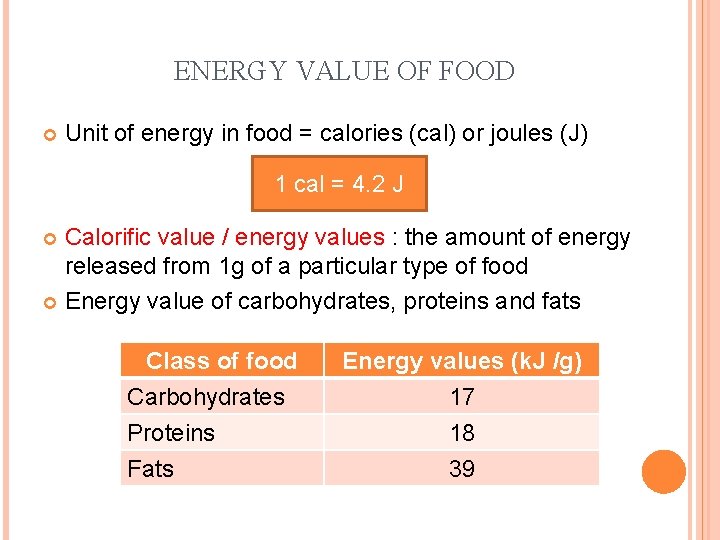
ENERGY VALUE OF FOOD Unit of energy in food = calories (cal) or joules (J) 1 cal = 4. 2 J Calorific value / energy values : the amount of energy released from 1 g of a particular type of food Energy value of carbohydrates, proteins and fats Class of food Carbohydrates Proteins Fats Energy values (k. J /g) 17 18 39
HUMAN DIGESTIVE SYSTEM Digestion = the process of breaking down large food molecules into smaller molecules that can be readily absorbed by the body Occurs in 8 m long tube called gut / alimentary canal Begins at the mouth and ends at the anus Physical digestion : chewing by the teeth and the churning in the stomach Chemical digestion : action of enzymes on food Enzymes = substances which act as catalysts and generally speed up the chemical reactions in our body
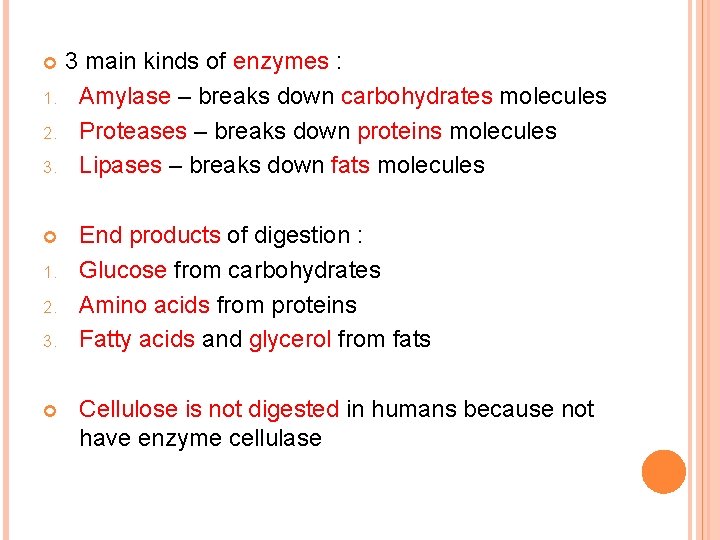
3 main kinds of enzymes : 1. Amylase – breaks down carbohydrates molecules 2. Proteases – breaks down proteins molecules 3. Lipases – breaks down fats molecules 1. 2. 3. End products of digestion : Glucose from carbohydrates Amino acids from proteins Fatty acids and glycerol from fats Cellulose is not digested in humans because not have enzyme cellulase
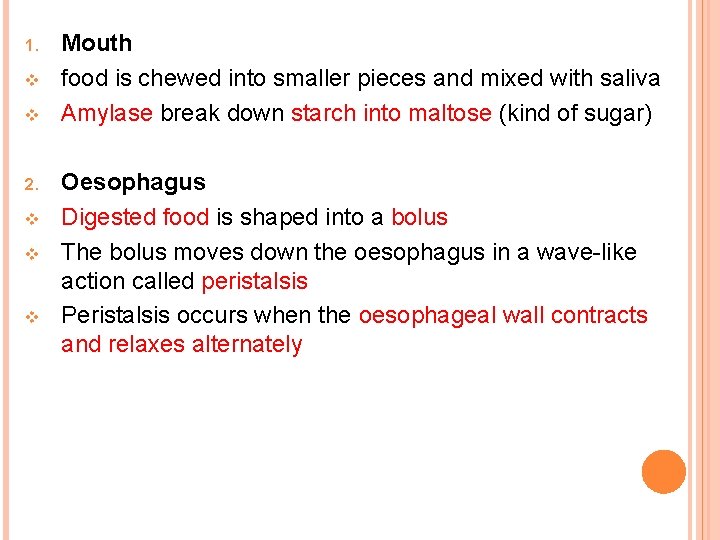
1. v v 2. v v v Mouth food is chewed into smaller pieces and mixed with saliva Amylase break down starch into maltose (kind of sugar) Oesophagus Digested food is shaped into a bolus The bolus moves down the oesophagus in a wave-like action called peristalsis Peristalsis occurs when the oesophageal wall contracts and relaxes alternately
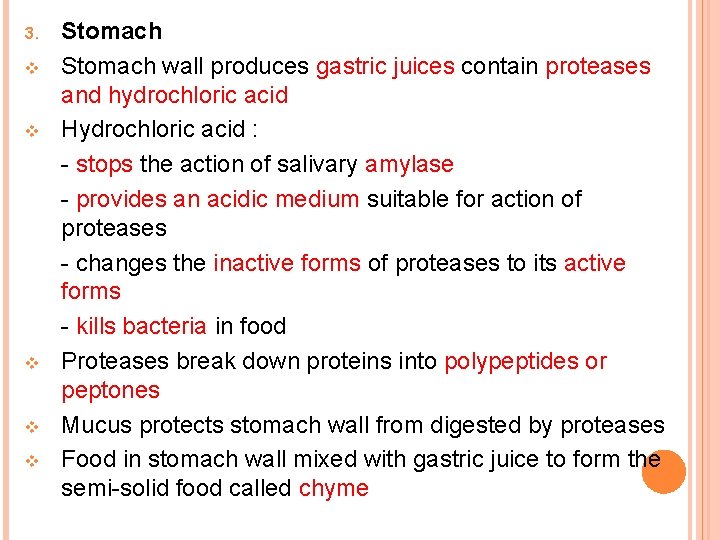
3. v v v Stomach wall produces gastric juices contain proteases and hydrochloric acid Hydrochloric acid : - stops the action of salivary amylase - provides an acidic medium suitable for action of proteases - changes the inactive forms of proteases to its active forms - kills bacteria in food Proteases break down proteins into polypeptides or peptones Mucus protects stomach wall from digested by proteases Food in stomach wall mixed with gastric juice to form the semi-solid food called chyme
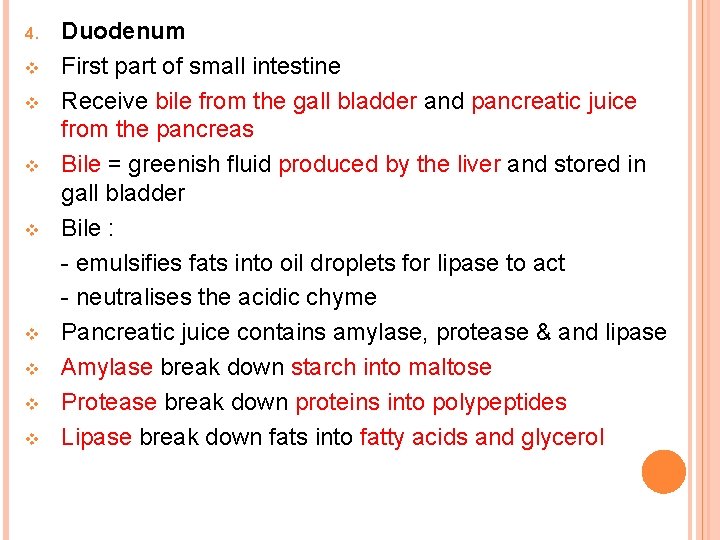
4. v v v v Duodenum First part of small intestine Receive bile from the gall bladder and pancreatic juice from the pancreas Bile = greenish fluid produced by the liver and stored in gall bladder Bile : - emulsifies fats into oil droplets for lipase to act - neutralises the acidic chyme Pancreatic juice contains amylase, protease & and lipase Amylase break down starch into maltose Protease break down proteins into polypeptides Lipase break down fats into fatty acids and glycerol
5. v v Small intestine Secretes intestinal juice contains maltase, protease and lipase Maltase break down maltose into glucose Protease break down polypeptides into amino acids Lipase break down fats into fatty acids and glycerol
ABSORPTION OF DIGESTED FOOD Small intestine is well adapted for the absorption of digested food The surface of small intestine is highly folded and has millions of tiny finger-like projections called villi The surface of small intestine increase the absorption of digested food Digested food is absorbed into bloodstream mainly by diffusion From the bloodstream, the digested food passed into the liver and then to the heart and to all parts of the body
REABSORPTION OF WATER AND DEFECATION Digestion of food is completed in our small intestine The residue from small intestine is mainly water, undigested food, mucus and digestive juices From here, the watery residue moves to the large intestine Water together with dissolved minerals and vitamin, is absorbed into the blood
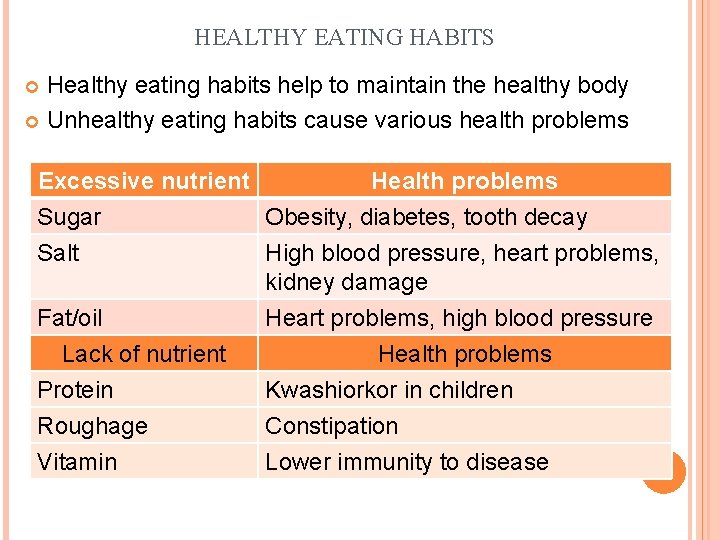
HEALTHY EATING HABITS Healthy eating habits help to maintain the healthy body Unhealthy eating habits cause various health problems Excessive nutrient Health problems Sugar Obesity, diabetes, tooth decay Salt High blood pressure, heart problems, kidney damage Fat/oil Lack of nutrient Protein Roughage Vitamin Heart problems, high blood pressure Health problems Kwashiorkor in children Constipation Lower immunity to disease